YAP/TAZ vs TGF-β/Smad: The Mechanical and Biochemical Tango Driving Cell Fate and Disease
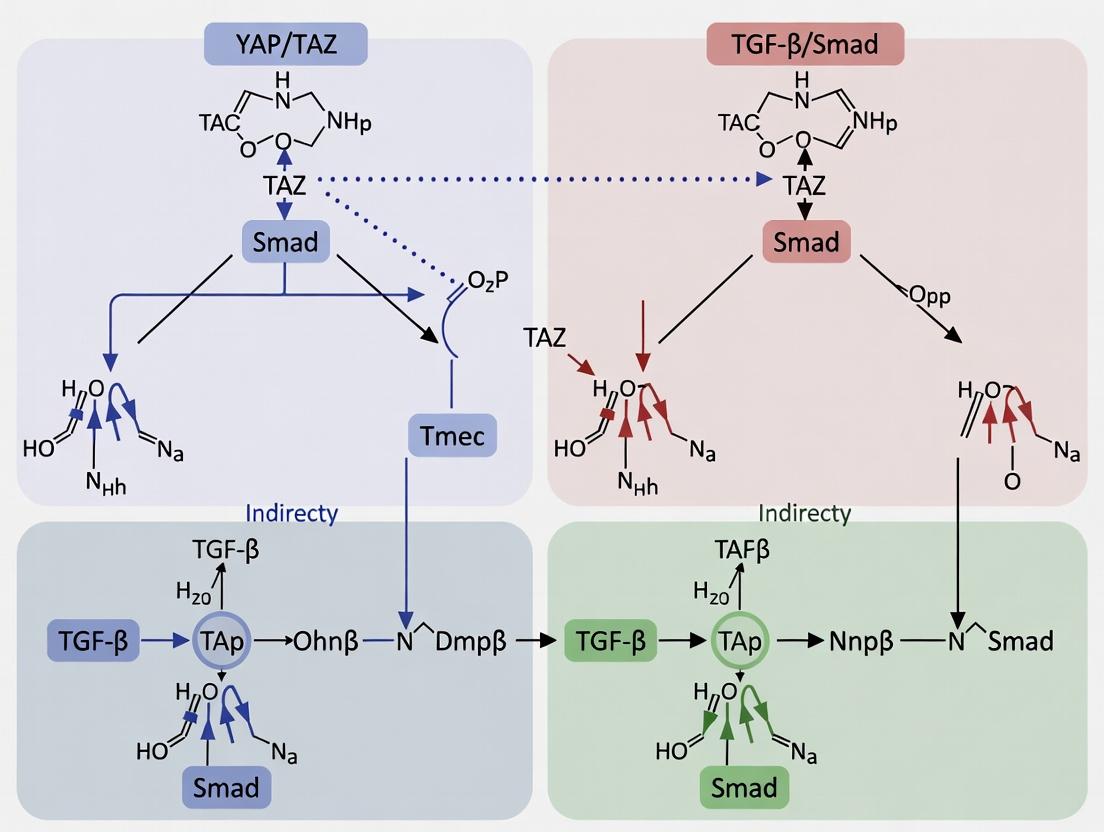
This article provides a comprehensive analysis for researchers and drug developers on the YAP/TAZ and TGF-β/Smad mechanotransduction pathways.
YAP/TAZ vs TGF-β/Smad: The Mechanical and Biochemical Tango Driving Cell Fate and Disease
Abstract
This article provides a comprehensive analysis for researchers and drug developers on the YAP/TAZ and TGF-β/Smad mechanotransduction pathways. We explore the foundational principles of these critical signaling hubs, from their core components and upstream mechanical/biochemical activators to their distinct and overlapping transcriptional programs. The guide details essential methodologies for pathway interrogation in research and therapeutic contexts, addresses common experimental pitfalls and optimization strategies, and offers a rigorous comparative analysis of their roles in development, fibrosis, and cancer. The synthesis highlights points of cross-talk and conflict, providing a roadmap for targeting these pathways in complex diseases.
Decoding the Core: Essential Components and Activation Triggers of YAP/TAZ and TGF-β/Smad
This guide provides a comparative analysis of the core architectural components and signaling mechanisms of the Hippo-YAP/TAZ and TGF-β-Smad pathways, framed within the context of mechanotransduction research.
Core Architectural Comparison
| Feature | Hippo Pathway Core | TGF-β Receptor Complex |
|---|---|---|
| Primary Sensor | Apical F-actin, cell polarity (Crumbs, AMOT), GPCRs, E-cadherin complexes. | Type I (ALK5/4/7) & Type II serine/threonine kinase receptors. |
| Signal Integrator | Kinase cascade: MST1/2 (Sav1) → LATS1/2 (Mob1). | Receptor-activated Smad complexes (R-Smads: Smad2/3). |
| Key Effectors | Transcriptional co-activators YAP and TAZ. | Transcription factors Smad2/3-Smad4 complexes. |
| Cytoplasmic Sequestration | 14-3-3 proteins bind phosphorylated YAP/TAZ. | Smad Anchor for Receptor Activation (SARA). |
| Nuclear Translocation | Upon dephosphorylation; binds TEAD1-4. | Upon R-Smad phosphorylation and complexing with Smad4. |
| Primary Transcriptional Output | Proliferation, survival, organ size (CTGF, CYR61, ANKRD1). | Differentiation, apoptosis, fibrosis (PAI-1, SNAIL, COL1A1). |
| Key Inhibitory Mechanism | Phosphorylation by LATS1/2 (Ser127 on YAP, Ser89 on TAZ). | Inhibitory Smads (Smad6/7), ubiquitin ligases (Smurf). |
| Mechanotransduction Link | Direct: Actin tension inhibits LATS, activating YAP/TAZ. | Indirect: Integrin-mediated activation of latent TGF-β; cytoskeletal regulation of Smad shuttling. |
Experimental Data on Pathway Crosstalk & Mechanosensitivity
Recent studies highlight functional convergence and divergence in response to mechanical cues.
| Experimental Readout | Hippo-YAP/TAZ Response (Matrix Stiffness) | TGF-β-Smad Response (Matrix Stiffness) | Key Study (Source) |
|---|---|---|---|
| Nuclear Localization | Increased on stiff substrates (>10 kPa). | Attenuated sustained signaling on very stiff 2D substrates. | Aragona et al., Cell, 2013. |
| Target Gene Expression | CYR61 expression upregulated by low cell density/high tension. | PAI-1 expression can be YAP/TAZ-dependent on stiff matrices. | Szeto et al., J Cell Sci, 2016. |
| Genetic Dependency | YAP/TAZ knockdown inhibits stiffness-induced proliferation. | Smad2/3 knockdown blocks TGF-β-induced differentiation even on stiff gels. | Caliari et al., Biomaterials, 2016. |
| Force-Induced Activation | Independent of soluble ligand; core pathway is force-sensitive. | Requires ligand binding; latent complex activation/sequestration is force-sensitive. | Hirata et al., Nat Commun, 2020. |
Detailed Experimental Protocols
Protocol 1: Assessing Nuclear/Cytoplasmic Localization of YAP & Smad2/3
- Cell Plating: Plate fibroblasts (e.g., NIH/3T3) on collagen-coated polyacrylamide gels of defined stiffness (e.g., 1 kPa vs. 50 kPa).
- Stimulation: For TGF-β pathway, treat with 2-5 ng/mL recombinant TGF-β1 for 45-60 min. For Hippo pathway, use unstimulated cells or cells subjected to serum starvation/re-stimulation.
- Fixation & Permeabilization: At endpoint, fix with 4% PFA for 15 min, permeabilize with 0.25% Triton X-100 for 10 min.
- Immunostaining: Incubate with primary antibodies (anti-YAP/TAZ, anti-phospho-Smad2 (Ser465/467)) overnight at 4°C, then with fluorescent secondary antibodies.
- Imaging & Quantification: Acquire high-resolution confocal images. Calculate nuclear-to-cytoplasmic (N/C) fluorescence intensity ratio using ImageJ (>50 cells/condition).
Protocol 2: Luciferase Reporter Assay for Pathway Activity
- Reporter Constructs: Use 8xGTIIC-luciferase (for YAP/TAZ/TEAD activity) or (CAGA)12-luciferase (for Smad2/3 activity).
- Transfection: Co-transfect reporter plasmid and a Renilla luciferase control (for normalization) into cells using standard methods.
- Stimulation & Lysis: 24h post-transfection, apply mechanical (e.g., substrate stiffness) or biochemical (TGF-β ligand) stimuli for 24h. Lyse cells.
- Measurement: Measure firefly and Renilla luciferase activity using a dual-luciferase assay kit. Report data as fold-change relative to control.
Pathway Diagrams
The Scientist's Toolkit: Key Research Reagents
| Reagent / Material | Function in Hippo/TGF-β Research |
|---|---|
| Polyacrylamide Hydrogels | Tunable substrate for studying cell responses to defined mechanical stiffness. |
| Recombinant TGF-β1/2/3 | Soluble ligand for specific activation of the TGF-β receptor complex. |
| Verteporfin | Small molecule inhibitor that disrupts YAP-TEAD protein-protein interaction. |
| SB-431542 | Selective inhibitor of TGF-β Type I receptor (ALK5) kinase activity. |
| Anti-YAP/TAZ Antibody | Detects total and phosphorylated forms for localization (IF) and expression (WB). |
| Anti-p-Smad2 (S465/467)/3 (S423/425) | Specific antibodies to monitor pathway activation via phospho-specific WB or IF. |
| 8xGTIIC-luciferase Reporter | Plasmid reporter for measuring YAP/TAZ transcriptional activity. |
| (CAGA)12-luciferase Reporter | Plasmid reporter for measuring Smad2/3 transcriptional activity. |
| Latrunculin A / Cytochalasin D | Actin polymerization inhibitors used to probe cytoskeletal dependence of pathways. |
This guide compares the roles of key mechanical inputs—Extracellular Matrix (ECM) stiffness, cell shape, and cytoskeletal tension—in regulating the YAP/TAZ transcriptional co-activators, a central axis in mechanotransduction. Framed within broader research comparing YAP/TAZ with TGF-β/Smad pathways, this analysis provides objective performance data on how each mechanical cue "performs" in activating nuclear YAP/TAZ, supported by experimental evidence.
Core Mechanotransduction Pathway Comparison
The following table summarizes the quantitative impact of distinct mechanical cues on YAP/TAZ activation, as measured by nuclear/cytoplasmic localization and transcriptional activity.
Table 1: Comparative Performance of Mechanical Inputs on YAP/TAZ Activation
| Mechanical Input | Experimental Readout | Key Quantitative Result (vs. Soft/Unstimulated Control) | Primary Mediator | Latency to Nuclear Localization |
|---|---|---|---|---|
| High ECM Stiffness | Nuclear/Cytoplasmic YAP Ratio | ~5-10 fold increase on 40-60 kPa vs. 1 kPa substrate | Actin-Myosin Contractility, Focal Adhesions | 1-3 hours |
| Cell Spreading/Shape | % Cells with Nuclear YAP | >80% in spread cells (<0.2 shape index) vs. <20% in confined cells (>0.8 shape index) | RhoA, ROCK, F-actin Polymerization | 30-60 minutes |
| Cytoskeletal Tension | TEAD Reporter Activity | ~8-12 fold increase with 5 µM Calyculin A (tension inducer) vs. untreated | Myosin II ATPase Activity | 15-30 minutes |
| Substrate Stretch | YAP Nuclear Intensity | ~3-4 fold increase with 10% cyclic stretch | Integrin Signaling, Cytoskeletal Strain | 10-20 minutes |
Experimental Protocols for Key Comparisons
Protocol 1: Quantifying YAP/TAZ Response to ECM Stiffness
Objective: Measure nuclear translocation of YAP on polyacrylamide hydrogels of defined stiffness.
- Substrate Preparation: Fabricate polyacrylamide gels (thickness: ~100 µm) with elastic moduli of 1 kPa (soft) and 40 kPa (stiff) using calibrated bis-acrylamide crosslinker ratios. Coat surface with 0.1 mg/mL collagen I via Sulfo-SANPAH crosslinking.
- Cell Seeding: Plate human MCF10A or MDA-MB-231 cells at 5,000 cells/cm² in complete medium. Allow adhesion for 4-6 hours.
- Immunofluorescence & Quantification: At 24 hours post-seeding, fix cells (4% PFA), permeabilize (0.2% Triton X-100), and stain for YAP/TAZ (primary antibody: Santa Cruz sc-101199, 1:200), F-actin (phalloidin), and nuclei (DAPI). Acquire >10 images per condition using a 40x objective. Calculate the nuclear-to-cytoplasmic fluorescence intensity ratio (N/C ratio) for YAP using ImageJ software.
Protocol 2: Manipulating Cell Shape to Assess YAP Localization
Objective: Correlate defined cell spreading areas/shapes with YAP activation.
- Micropatterning: Use deep UV lithography or microcontact printing to create fibronectin islands (e.g., 20 µm diameter circles for confined; 1000 µm² squares for spread) on non-adhesive PEG-coated glass.
- Cell Seeding & Processing: Trypsinize and seed single-cell suspension onto patterned substrates. Incubate for 3 hours to allow adhesion and shape assumption.
- Analysis: Fix and immunostain for YAP. Categorize cells as "Nuclear YAP Positive" if YAP signal intensity in the nucleus is >2x that of the adjacent cytoplasm. Calculate the percentage of positive cells for each pattern geometry (n>100 cells/condition).
Protocol 3: Direct Pharmacological Modulation of Cytoskeletal Tension
Objective: Test the direct effect of myosin-generated tension on YAP/TAZ activity.
- Treatment Regimens: Culture cells on standard glass or plastic. Apply treatments for 1 hour:
- Tension Inducer: 5 µM Calyculin A (serine/threonine phosphatase inhibitor).
- Tension Inhibitor: 10 µM Blebbistatin (myosin II ATPase inhibitor).
- ROCK Inhibitor: 10 µM Y-27632.
- Control: DMSO vehicle.
- Dual Readout: Process samples in parallel for (a) immunofluorescence (YAP N/C ratio) and (b) luciferase assay using a transfected 8xGTIIC-TEAD luciferase reporter construct. Normalize luciferase activity to Renilla control and fold change vs. DMSO.
Signaling Pathway Integration Diagram
Title: YAP/TAZ Mechanical Activation Pathway
The Scientist's Toolkit: Key Research Reagent Solutions
Table 2: Essential Reagents for Mechanoregulation Studies of YAP/TAZ
| Item & Common Example | Function in Experiment | Key Application/Note |
|---|---|---|
| Tunable Hydrogels (Polyacrylamide, PEG) | Provides physiologically relevant (0.5-100 kPa) and defined ECM stiffness. | Gold standard for stiffness studies. Covalent ligand coupling is critical. |
| Microcontact Printing Stamps (PDMS) | Creates micron-scale adhesive patterns to control cell shape and spreading area. | Enables shape-force-YAP causality studies. |
| Myosin Inhibitor (Blebbistatin) | Specifically inhibits non-muscle myosin II ATPase to reduce cellular tension. | Reversibly dissects tension's role; light-sensitive. |
| ROCK Inhibitor (Y-27632) | Inhibits Rho-associated kinase (ROCK), downstream of RhoA. | Reduces actomyosin contractility and stress fibers. |
| YAP/TAZ Antibody (e.g., Santa Cruz sc-101199) | Detects endogenous YAP/TAZ protein for immunofluorescence localization. | Validated for N/C ratio quantification; species-specific. |
| TEAD Reporter Plasmid (8xGTIIC-luciferase) | Transcriptional reporter measuring functional YAP/TAZ-TEAD activity. | Bulk or single-cell luciferase readout. |
| F-actin Stain (Phalloidin, fluorophore-conjugated) | Labels filamentous actin to visualize stress fibers and cytoskeletal architecture. | Correlates cytoskeletal organization with YAP localization. |
| RhoA Activity Biosensor (FRET-based) | Live-cell imaging of RhoA GTPase activation dynamics. | Spatiotemporal analysis of upstream signaling. |
Comparative Insights for Pathway Research
When placed in the context of the TGF-β/Smad mechanotransduction pathway, YAP/TAZ regulation demonstrates distinct characteristics. Unlike the canonical TGF-β/Smad pathway, which is primarily ligand (TGF-β) initiated and can be secondarily modulated by stiffness via integrin-αVβ6, YAP/TAZ are primarily and directly mechanical sensors. The data in Table 1 show that cytoskeletal tension manipulation yields the fastest YAP/TAZ activation (latency: 15-30 min), contrasting with the slower, gene-expression-dependent feedback of TGF-β/Smad. Furthermore, while TGF-β/Smad signaling can be turned off by nuclear phosphatase activity, YAP/TAZ's rapid shuttling provides a dynamic, real-time rheostat for mechanical cues. For drug development, this highlights YAP/TAZ as a more direct target for modulating immediate mechanical responses, whereas TGF-β/Smad may be targeted for longer-term matrix deposition and fibrotic outcomes.
This guide compares the biochemical performance of canonical TGF-β/Activin/Nodal ligands and BMP/GDF ligands within the TGF-β superfamily, focusing on their receptor binding specificity and subsequent R-Smad activation profiles. This analysis is framed within research investigating cross-talk and competition with the mechanosensitive YAP/TAZ signaling pathways.
Comparative Ligand-Receptor Engagement & R-Smad Signaling Output
Table 1: Ligand-Receptor Complex Formation and Signaling Specificity
| Ligand Subfamily | Primary Type II Receptor(s) | Primary Type I Receptor(s) | Canonical R-Smad Signal | pSmad2/3 vs pSmad1/5/9 Nuclear Intensity (HeLa, 1hr, 10ng/mL)* | EC50 for Target Gene (e.g., PAI-1 or ID1) Induction* |
|---|---|---|---|---|---|
| TGF-β (β1, β2, β3) | TβRII | ALK5 (TβRI) | Smad2/3 | High (pSmad2/3), None (pSmad1/5/9) | 50-100 pM |
| Activin/Nodal | ActRIIA/ActRIIB | ALK4 (ActRIB), ALK7 (Nodal) | Smad2/3 | High (pSmad2/3), None (pSmad1/5/9) | ~100 pM |
| BMP (2, 4, 7) | BMPRII, ActRIIA/B | ALK3 (BMPRIA), ALK6 (BMPRIB) | Smad1/5/9 | None (pSmad2/3), High (pSmad1/5/9) | 200-500 pM |
| GDF (5, 6, 7) | BMPRII | ALK4, ALK7 (context-dependent) | Smad2/3 | Moderate (pSmad2/3), Low/None (pSmad1/5/9) | Varies (nM range) |
*Representative data synthesized from recent publications (2022-2024). Intensity measured via immunofluorescence; EC50 via qRT-PCR.
Table 2: Cross-Talk and Competition with YAP/TAZ Pathways
| Experimental Condition | R-Smad Nuclear Localization | YAP/TAZ Nuclear/Cytoplasmic Ratio | Key Readout (e.g., CTGF Expression) | Interpreted Pathway Dominance |
|---|---|---|---|---|
| High Stiffness Matrix | Reduced (TGF-β induced) | Increased (Nuclear) | Elevated | YAP/TAZ Mechanotransduction |
| Low Stiffness Matrix / CytD | Enhanced (TGF-β induced) | Decreased (Cytoplasmic) | Suppressed | Canonical Smad Signaling |
| TGF-β + Verteporfin (YAP Inhib.) | Unaffected | Decreased | Additive Suppression of Pro-fibrotic Genes | Cooperative/Synergistic Inhibition |
| BMP4 + LPA (TAZ Activator) | Unaffected (pSmad1/5/9) | Increased | Enhanced Osteogenic Marker RUNX2 | Convergent/Additive Output |
Experimental Protocols for Key Comparisons
Protocol 1: Quantifying R-Smad Phosphorylation and Nuclear Translocation
- Cell Seeding: Plate cells (e.g., HaCaT, HEK293T) on substrates of varying stiffness (0.5 kPa to 50 kPa PaG gels).
- Stimulation: Serum-starve for 24h, then treat with ligands (TGF-β1, Activin A, BMP4 at 0.1-10 ng/mL) for 30 min to 2h.
- Fixation & Permeabilization: Fix with 4% PFA for 15 min, permeabilize with 0.1% Triton X-100.
- Immunofluorescence: Stain with primary antibodies: anti-pSmad2 (S465/467)/pSmad1 (S463/465) and corresponding total Smad. Use DAPI for nuclei.
- Imaging & Quantification: Acquire images via confocal microscopy. Quantify mean nuclear fluorescence intensity (pSmad signal normalized to DAPI) using ImageJ.
Protocol 2: Assessing Transcriptional Output via Luciferase Reporter Assay
- Transfection: Co-transfect cells with a Smad-responsive reporter (CAGA12-luc for Smad2/3; BRE-luc for Smad1/5/9) and a Renilla luciferase control.
- Stimulation & Inhibition: Pre-treat with inhibitors (e.g., SB431542 for ALK4/5/7, LDN193189 for ALK2/3/6, or Verteporfin for YAP) for 1h, then add ligands for 18-24h.
- Lysis & Measurement: Lyse cells, measure Firefly and Renilla luciferase activity using a dual-luciferase assay kit. Report Firefly/Renilla ratio.
Signaling Pathway Visualization
TGF-β Superfamily R-Smad Activation Pathways
YAP/TAZ and TGF-β-Smad Crosstalk Logic
The Scientist's Toolkit: Research Reagent Solutions
Table 3: Essential Reagents for TGF-β/Smad vs. YAP/TAZ Studies
| Reagent / Material | Primary Function in Research | Example Product/Catalog # |
|---|---|---|
| Recombinant Human TGF-β1 | Gold-standard ligand for activating ALK5-Smad2/3 pathway. | PeproTech #100-21; R&D Systems #240-B |
| Recombinant Human BMP-4 | Key ligand for activating ALK3/6-Smad1/5/9 pathway. | PeproTech #120-05 |
| SB431542 | Selective inhibitor of ALK4, ALK5, ALK7 (TGF-β/Activin/Nodal type I receptors). | Tocris #1614 |
| LDN193189 (Dorsomorphin) | Selective inhibitor of ALK2, ALK3, ALK6 (BMP type I receptors). | Cayman Chemical #11802 |
| Verteporfin | Small molecule that disrupts YAP-TEAD interaction, inhibiting YAP/TAZ transcriptional activity. | MedChemExpress #HY-B0146 |
| Phospho-Smad2 (Ser465/467)/Smad3 (Ser423/425) Antibody | Detects activated R-Smads for TGF-β/Activin pathways via WB/IF. | Cell Signaling #8828 |
| Phospho-Smad1/5 (Ser463/465) Antibody | Detects activated R-Smads for BMP pathways via WB/IF. | Cell Signaling #9516 |
| YAP/TAZ Antibody | Detects total YAP/TAZ protein localization and expression. | Cell Signaling #8418 |
| CAGA12-Luciferase Reporter | Smad3/Smad4-responsive reporter for TGF-β/Activin pathway activity. | Addgene #117572 |
| BRE-Luciferase Reporter | Smad1/5-responsive reporter for BMP pathway activity. | Promega constructs available |
| Polyacrylamide Stiffness Gels | Tunable substrates for studying cell mechanotransduction and its effect on signaling. | Matrigen #SWT-6K-01 (0.5-6 kPa) |
This comparison guide examines the upstream kinases governing the core YAP/TAZ and TGF-β/Smad pathways, focusing on their activation mechanisms, phosphorylation targets, and functional outcomes in mechanotransduction. Understanding these distinct entry points is crucial for developing targeted cancer therapeutics that modulate pathway-specific signaling.
1. Pathway Architecture and Key Phosphorylation Events
Diagram 1: Core Signaling Pathways Comparison
2. Comparative Analysis of Kinase Properties and Phosphorylation
Table 1: Characteristics of Upstream Kinases and Phosphorylation Events
| Feature | Hippo Pathway: LATS1/2 | TGF-β Pathway: Receptor Kinases (e.g., ALK5/TβRI) |
|---|---|---|
| Kinase Class | AGC (PKA/PKG/PKC-like) kinases | TKL (TGF-β receptor-like) serine/threonine kinases |
| Direct Activators | Phosphorylation by MST1/2 (or MAP4Ks) and binding to MOB1 adaptor | Trans-phosphorylation by constitutively active Type II receptor upon ligand binding |
| Key Phosphorylation Site(s) on Effector | YAP: S127 (S89 in TAZ) - creates 14-3-3 binding site | R-Smads: C-terminal SSXS motif (e.g., Smad3: S423/S425) |
| Primary Outcome of Phosphorylation | Cytoplasmic sequestration (via 14-3-3) and subsequent degradation | Induces conformational change, promotes R-Smad/Co-Smad complex formation and nuclear import |
| Spatial Context of Phosphorylation | Cytosolic/cytoskeletal-associated kinase complex | Occurs at plasma membrane receptor complex |
| Key Inhibitors (Tool Compounds) | LATS1/2: Genetic knockout/knockdown; no highly specific small molecule inhibitor widely validated. | ALK5: SB-431542, LY-2157299 (Galunisertib); ALK1/2/3: LDN-193189, Dorsomorphin. |
| Response to Mechanical Cues | Highly responsive. Inhibited by high cell density, soft ECM; activated by cell stretching, high stiffness. | Indirectly modulated. Ligand availability and presentation are mechano-sensitive; receptor complex organization can be force-modulated. |
3. Experimental Protocols for Key Phosphorylation Assays
Protocol 1: Assessing LATS1 Activity via YAP-S127 Phosphorylation (Western Blot)
- Cell Lysis: Lyse cells in RIPA buffer supplemented with protease and phosphatase inhibitors (e.g., NaF, β-glycerophosphate, Na3VO4).
- Immunoprecipitation (Optional): To assess LATS1 autophosphorylation (T1079), immunoprecipitate LATS1 using a specific antibody.
- Gel Electrophoresis: Separate 20-40 µg of total protein via SDS-PAGE (4-12% gradient gel).
- Transfer & Blocking: Transfer to PVDF membrane, block with 5% BSA in TBST.
- Immunoblotting: Probe with primary antibodies:
- Phospho-YAP (S127) (Rabbit monoclonal, e.g., CST #13008) – Key Readout.
- Total YAP/TAZ – Loading control.
- Phospho-LATS1 (T1079) (CST #8654) – Direct kinase activity.
- Total LATS1.
- Quantification: Use densitometry to calculate pYAP(S127)/Total YAP ratio normalized to control condition.
Protocol 2: Assessing TGF-β Receptor Kinase Activity via Smad2/3 C-terminal Phosphorylation
- Stimulation & Lysis: Serum-starve cells for 12-24h. Stimulate with TGF-β1 (2-5 ng/mL) for 15-60 minutes. Lyse as in Protocol 1.
- Gel Electrophoresis & Transfer: As in Protocol 1.
- Immunoblotting: Probe with:
- Phospho-Smad2 (S465/S467)/Smad3 (S423/S425) (Rabbit monoclonal, e.g., CST #8828) – Key Readout.
- Total Smad2/3 – Loading control.
- Phospho-Smad1/5/9 (S463/S465) – For BMP branch assessment.
- Inhibitor Control: Pre-treat cells with 10 µM SB-431542 (ALK5 inhibitor) for 1h prior to TGF-β stimulation to confirm specificity.
Diagram 2: Experimental Workflow for Phosphorylation Analysis
4. The Scientist's Toolkit: Essential Research Reagents
Table 2: Key Reagents for Studying Upstream Kinases in These Pathways
| Reagent Category | Specific Example(s) | Function in Research |
|---|---|---|
| Pathway Activators | Recombinant Human TGF-β1/BMPs; Latrunculin A (actin disruptor, activates LATS); Calyculin A (phosphatase inhibitor, retains phosphorylation) | Used to stimulate the pathway of interest for positive controls and activation studies. |
| Small Molecule Inhibitors | SB-431542 (ALK4/5/7 inhibitor); Verteporfin (YAP-TEAD interaction inhibitor); XMU-MP-1 (MST1/2 inhibitor) | Tool compounds to dissect pathway necessity and for negative controls. |
| Phospho-Specific Antibodies | Anti-pYAP(S127); Anti-pSmad2(S465/467)/Smad3(S423/425); Anti-pLATS1(T1079) | Critical for detecting the active, phosphorylated state of kinases and their effectors. |
| siRNA/shRNA/CAS9 gRNA | LATS1/2, MST1/2, Smad2/3, TβRI/II gene targeting constructs | For genetic loss-of-function studies to establish the role of specific kinases. |
| Activity Reporters | STBS/YAP-TEAD Luciferase Reporter (e.g., 8xGTIIC-luc); CAGA12-Luc/SBE-luc (for Smad activity) | Readout for downstream transcriptional activity resulting from kinase signaling. |
| Expression Plasmids | Constitutively active ALK5(T204D); Kinase-dead LATS1(K734R); Wild-type & mutant YAP/TAZ, Smads | For gain-of-function, rescue, and structure-function studies. |
Introduction Within cellular mechanotransduction, the Hippo/YAP/TAZ and TGF-β/Smad pathways represent two central, often intersecting, signaling cascades. A critical convergence point for both is the regulated nuclear import of their effector proteins and their subsequent association with specific DNA-binding transcription factors to activate gene programs. This guide objectively compares the nuclear translocation mechanisms and transcriptional partnerships of YAP/TAZ with TEADs versus R-Smads with Smad4 and other co-factors, providing a framework for experimental analysis within this research field.
1. Mechanism of Nuclear Translocation
Table 1: Comparative Nuclear Translocation Mechanisms
| Feature | YAP/TAZ | R-Smads (Smad2/3) |
|---|---|---|
| Primary Regulation | Cytoplasmic retention via phosphorylation by LATS1/2 (Hippo pathway ON). Nuclear localization upon Hippo inhibition (OFF). | Ligand-induced (TGF-β, Activin, Nodal) phosphorylation by receptor kinases. |
| Key Phosphorylation Sites | YAP: S127 (14-3-3 binding), S397. TAZ: S89, S66. | Smad2/3: C-terminal SSXS motif. |
| Cytoplasmic Tethering | Phospho-binding to 14-3-3 proteins. Sequestration in degradative complexes. | Bound by SARA (Smad Anchor for Receptor Activation) at the membrane. |
| Nuclear Import Signal | Not canonical; mediated by Importin-α/β via specific motifs (e.g., YAP's NLS). | Directly via Importin-β1/β8; phosphorylated C-terminus enhances affinity. |
| Critical Experiment | Immunofluorescence post-actin cytoskeleton disruption (e.g., Latrunculin A) shows nuclear accumulation. | Immunofluorescence/immunoblot of nuclear fractions after TGF-β ligand stimulation (e.g., 15-30 mins). |
Experimental Protocol: Co-immunoprecipitation for Translocation Complex Analysis
- Objective: To identify proteins binding to YAP/TAZ or R-Smads in cytoplasmic vs. nuclear states.
- Method:
- Cell Treatment & Fractionation: Culture cells (e.g., HEK293, MCF10A). Treat one set with Latrunculin A (1μM, 2h) for YAP/TAZ activation or TGF-β1 (5 ng/mL, 30 min) for Smad activation. Perform cytoplasmic/nuclear fractionation using a kit (e.g., NE-PER).
- Immunoprecipitation (IP): Incubate lysates (500μg) with antibodies against YAP, TAZ, or Smad2/3 overnight at 4°C. Use IgG as control.
- Pull-down: Add Protein A/G beads for 2h, wash extensively.
- Analysis: Elute proteins, separate by SDS-PAGE, and immunoblot for partners (e.g., 14-3-3 for cytoplasmic YAP/TAZ; Smad4 for nuclear R-Smads).
2. DNA-Binding Partners and Transcriptional Complexes
Table 2: Comparison of Transcriptional Complex Assembly
| Feature | YAP/TAZ-TEAD Complex | R-Smad-Smad4-Co-factor Complex |
|---|---|---|
| Obligate DNA-Binder | TEAD1-4 (TEA Domain). Has DNA-binding domain but weak transactivator alone. | Smad4 (Co-Smad). No intrinsic DNA-binding; facilitates R-Smad oligomerization. |
| Effector Role | YAP/TAZ are transcriptional co-activators. Bind TEAD via N-terminal TEAD-Binding Domain (TBD). | R-Smads (Smad2/3) are signal transducers & DNA-binders. Bind DNA via MH1 domain. |
| Complex Stoichiometry | 1:1 YAP/TAZ:TEAD dimer. A TEAD dimer binds one DNA site. | Heterotrimeric complex: (R-Smad)2–(Smad4)1 or (R-Smad)1–(Smad4)1–(R-Smad)1. |
| Consensus DNA Sequence | 5'-CATTCCA-3' (MCAT element) and variations. | 5'-GTCTAGAC-3' (Smad Binding Element, SBE). |
| Key Co-factors | Mainly mediates TEAD activity. Can recruit p300, MED. | Pivotal for specificity. Recruits DNA-binding co-factors (e.g., FOXH1, RUNX, MIXL1, JUN) to define target genes. |
| Critical Experiment | Chromatin IP (ChIP) for TEAD at promoter/enhancer regions; loss of signal upon YAP/TAZ knockdown. | Electrophoretic Mobility Shift Assay (EMSA) with nuclear extracts + SBE probe; supershift with Smad4 antibody. |
Experimental Protocol: Chromatin Immunoprecipitation (ChIP) for DNA-Binding Validation
- Objective: To confirm specific genomic binding of the transcriptional complexes.
- Method:
- Crosslinking & Lysis: Treat cells with 1% formaldehyde for 10 min to crosslink protein-DNA. Quench, harvest, and lyse.
- Sonication: Shear chromatin to 200-500 bp fragments using a sonicator.
- Immunoprecipitation: Incubate pre-cleared chromatin with antibodies against TEAD1, YAP, Smad2/3, or Smad4 overnight. Use normal IgG control.
- Washing & Elution: Wash beads, reverse crosslinks, and purify DNA.
- Analysis: Quantify enriched DNA at specific loci (e.g., CTGF, CYR61 for YAP/TAZ-TEAD; PAI-1, SNAI1 for Smads) via qPCR. Present as % input or fold enrichment.
Pathway Diagrams
YAP/TAZ Nuclear Translocation and TEAD Binding
R-Smad Phosphorylation, Smad4 Complex Formation, and Nuclear Transport
The Scientist's Toolkit: Key Research Reagents
Table 3: Essential Reagents for Comparative Studies
| Reagent | Function in Experiments | Example/Target |
|---|---|---|
| Verteporfin | Small molecule inhibitor of YAP-TEAD interaction. Validates TEAD-dependent functions. | TEAD Interaction Inhibitor |
| Latrunculin A / B | Actin polymerization inhibitor. Induces potent YAP/TAZ nuclear translocation. | Cytoskeleton Disruptor |
| Recombinant TGF-β1 | Activates TGF-β receptor kinase cascade. Standard ligand for R-Smad pathway induction. | Pathway Ligand |
| SB-431542 | Selective inhibitor of TGF-β type I receptor (ALK5). Inhibits R-Smad phosphorylation. | Receptor Kinase Inhibitor |
| Anti-phospho-Smad2/3 (S465/467) | Antibody for detecting activated, receptor-phosphorylated R-Smads via immunoblot/IF. | Pathway Activity Readout |
| Anti-phospho-YAP (S127) | Antibody for detecting LATS-phosphorylated, cytoplasmic YAP. | Hippo Pathway Activity Readout |
| TEAD1-4 siRNA/shRNA | Gene knockdown tools to dissect specific TEAD isoform requirements. | DNA-Binding Partner Knockdown |
| Smad4 DNA Binding Inhibitor (SIS3) | Inhibits Smad3 phosphorylation and DNA binding. Tool for R-Smad complex disruption. | Smad-DNA Interaction Inhibitor |
| Chromatin IP-grade Antibodies | Validated for ChIP against YAP, TAZ, TEADs, Smad2/3, Smad4. | Genomic Binding Analysis |
| Nuclear/Cytoplasmic Fractionation Kit | Separates cellular compartments to monitor subcellular localization. | Localization Assay |
Conclusion YAP/TAZ and R-Smads achieve nuclear translocation via distinct regulatory principles—cytoskeletal and Hippo-mediated retention versus direct receptor-mediated phosphorylation. Their transcriptional outputs are fundamentally defined by their DNA-binding partners: YAP/TAZ serve as co-activators for the pre-bound TEADs, while R-Smads are core DNA-binding components that recruit Smad4 and lineage-determining co-factors for context-specific gene regulation. This comparative guide provides the experimental frameworks necessary to dissect these mechanisms within the broader study of mechanotransduction pathway crosstalk.
From Bench to Bedside: Key Techniques and Therapeutic Targeting Strategies
Comparative Analysis of YAP/TAZ vs TGF-β/Smad Activity Assays
Assaying the activity of mechanotransduction pathways, specifically YAP/TAZ and TGF-β/Smad, is critical for understanding cell fate, proliferation, and disease mechanisms. This guide compares established methodologies for measuring key readouts—subcellular localization, phosphorylation status, and target gene expression—across these two pivotal pathways.
Table 1: Comparison of Key Readout Assays for YAP/TAZ and TGF-β/Smad Pathways
| Readout | YAP/TAZ Pathway Assay (Typical Method) | TGF-β/Smad Pathway Assay (Typical Method) | Key Advantage | Throughput | Quantitative Potential |
|---|---|---|---|---|---|
| Localization | Immunofluorescence (IF) microscopy for nuclear/cytoplasmic ratio. | IF for Smad2/3 nuclear accumulation. | Direct visual readout of activity. | Medium | High (with image analysis) |
| Phosphorylation | Western blot (WB) for p-YAP (Ser127) / p-TAZ (Ser66). | WB for p-Smad2 (Ser465/467) / p-Smad3 (Ser423/425). | Well-validated, standardizable. | Low | Medium (densitometry) |
| Target Genes | qPCR for CTGF, CYR61, ANKD1. | qPCR for PAI-1, SNAI1, SMAD7. | High sensitivity and dynamic range. | High | High |
| Integrated Activity | Luciferase reporter (e.g., TEAD-responsive reporter). | Luciferase reporter (e.g., CAGA-box or SBE reporter). | Functional, pathway-integrated output. | High | High |
Table 2: Performance Comparison of Experimental Data from Cited Studies
| Study (Pathway) | Assay Used | Key Metric (vs. Control) | Alternative Method Cross-Checked | Concordance |
|---|---|---|---|---|
| Dupont et al., 2011 (YAP/TAZ) | IF Localization | Nuclear YAP increased 3.5-fold on stiff matrix. | WB for p-YAP decrease & target gene qPCR. | High |
| Halder et al., 2012 (YAP/TAZ) | TEAD-luciferase | Activity increased 8-fold by F-actin disruption. | IF localization (nuclear shift confirmed). | High |
| Sorre et al., 2014 (Smad) | IF for Nuclear Smad | Smad2/3 nuclear intensity increased 4.2x with TGF-β. | WB for p-Smad2/3 increase (6.1x). | High |
| Aragona et al., 2013 (Comparative) | Target Gene qPCR | CTGF (YAP) up 12x; PAI-1 (Smad) up 9x in stretched cells. | Phospho-WB for both pathways. | Medium (kinetics differed) |
Experimental Protocols for Key Assays
Protocol 1: Quantifying Nuclear/Cytoplasmic Localization via Immunofluorescence
- Culture & Stimulate: Plate cells on test substrates (e.g., soft/stiff hydrogels) or treat with pathway modulators (e.g., TGF-β, Latrunculin A).
- Fix & Permeabilize: At endpoint, fix with 4% PFA for 15 min, permeabilize with 0.1% Triton X-100 for 10 min.
- Stain: Incubate with primary antibodies (anti-YAP/TAZ or anti-Smad2/3) overnight at 4°C, followed by fluorophore-conjugated secondary antibodies and DAPI (nuclear stain) for 1 hr.
- Image & Analyze: Acquire high-resolution confocal images. Use ImageJ or similar software to define nuclear (DAPI) and cytoplasmic masks. Calculate the mean fluorescence intensity ratio (Nuclear / Cytoplasmic or Nuclear / Total) for >100 cells per condition.
Protocol 2: Phosphorylation Status via Western Blot
- Lysate Preparation: Lyse cells in RIPA buffer supplemented with phosphatase and protease inhibitors. Quantify protein concentration.
- Electrophoresis & Transfer: Resolve 20-30 µg total protein on 4-12% Bis-Tris gels and transfer to PVDF membranes.
- Immunoblotting: Block membrane, then probe sequentially with primary antibodies against phospho-protein (e.g., p-YAP Ser127, p-Smad2 Ser465/467) and corresponding total protein. Use HRP-conjugated secondaries and chemiluminescent detection.
- Quantification: Perform densitometric analysis. Normalize phospho-signal to total protein signal for each sample, then compare to control.
Protocol 3: Target Gene Expression via Quantitative PCR (qPCR)
- RNA Isolation: Extract total RNA using a column-based kit, including DNase I treatment.
- cDNA Synthesis: Reverse transcribe 500 ng - 1 µg RNA using a high-capacity cDNA synthesis kit with random hexamers.
- qPCR Reaction: Prepare reactions with SYBR Green master mix, gene-specific primers (e.g., CTGF for YAP/TAZ; PAI-1 for Smad), and cDNA template. Run in triplicate on a real-time PCR instrument.
- Analysis: Calculate ∆∆Ct values using a stable housekeeping gene (e.g., GAPDH, HPRT1) and an untreated control condition. Express data as fold change.
Pathway and Workflow Visualizations
Pathway Logic: YAP/TAZ vs TGF-β/Smad Signaling
Workflow for Multiplexed Pathway Activity Assay
The Scientist's Toolkit: Key Research Reagent Solutions
| Reagent / Material | Primary Function | Example Targets/Use |
|---|---|---|
| Phospho-Specific Antibodies | Detect activated/phosphorylated pathway components in WB or IF. | p-YAP (Ser127), p-Smad2 (Ser465/467), p-Smad3 (Ser423/425). |
| Localization Antibodies | Visualize subcellular distribution of key effectors. | Total YAP, Total TAZ, Total Smad2/3. |
| Pathway Reporter Constructs | Measure integrated transcriptional activity via luciferase. | TEAD-responsive reporter (8xGTIIC-luc); Smad-responsive reporter (CAGA12-luc). |
| qPCR Primer Assays | Quantify expression changes of canonical transcriptional targets. | Human/mouse CTGF, CYR61, PAI-1, SNAI1. |
| TGF-β Recombinant Protein | Soluble ligand to directly and reproducibly stimulate the TGF-β/Smad pathway. | Used at 2-10 ng/mL for acute stimulation (15 min - 2 hr for p-Smad; 4-24 hr for genes). |
| Cytoskeletal Modulators | Perturb actin dynamics to probe YAP/TAZ mechanical regulation. | Latrunculin A (actin depolymerizer); Jasplakinolide (actin stabilizer). |
| Tunable Hydrogels | Provide defined mechanical environments (elasticity) for mechanotransduction studies. | Polyacrylamide or PEG hydrogels with controllable stiffness (0.5 - 50 kPa range). |
| Dual-Luciferase Reporter Assay System | Normalize pathway reporter activity for transfection efficiency and cell viability. | Firefly luciferase (reporter) / Renilla luciferase (control) measurement. |
Thesis Context: YAP/TAZ vs. TGF-β/Smad Mechanotransduction
This guide is framed within research investigating how distinct mechanotransduction pathways—the YAP/TAZ transcriptional regulators and the canonical TGF-β/Smad signaling cascade—respond to biophysical cues. Understanding their interplay is critical for modeling disease states and developing mechano-based therapeutics.
Performance Comparison: Hydrogel Systems for Stiffness Patterning
Table 1: Comparison of Tunable Stiffness Hydrogel Platforms
| Platform & Vendor | Stiffness Range (kPa) | Gelation Mechanism | Ligand Coupling | Key Advantage for Mechanobiology | Primary Cited Use in YAP/TAZ vs. TGF-β Studies |
|---|---|---|---|---|---|
| Polyacrylamide (PA) Gels | 0.1 - 50 kPa | Chemical (APS/TEMED) | Sulfo-SANPAH crosslinking | Excellent optical clarity; precise, stable stiffness. | Baseline for nuclear YAP localization studies on stiffness. |
| Advanced BioMatrix PureCol | 0.2 - 2.5 kPa | pH/Temperature (37°C) | Native binding sites | Fully natural composition (Type I collagen). | Studying TGF-β release & activation in a native 3D context. |
| Corning Matrigel | ~0.5 kPa | Temperature (37°C) | Native binding sites | Contains full basement membrane proteome. | Stem cell fate & EMT studies integrating matrix & soluble cues. |
| PEG-based (e.g., RGD-PEGDA) | 1 - 100+ kPa | Photo-polymerization | Acrylate-PEG-RGD | Highly tunable, ligand density decoupled from stiffness. | Decoupling stiffness & ligand density effects on pathway crosstalk. |
| Alginate (Ionic/Covalent) | 2 - 100 kPa | Divalent ions (Ca2+) or Adipic Dihydrazide | RGD-modification | Dynamic stiffness adjustment via chelators. | Real-time observation of pathway reversal upon stiffness change. |
| HyStem-HP (Hyaluronic Acid) | 0.5 - 5 kPa | Thiol-crosslinking | Thiol-reactive peptides | Biodegradable; models soft tissue remodeling. | Mechanosensing in contexts of matrix degradation & turnover. |
Supporting Data: A seminal 2011 study (Discher Lab) showed that on soft PA gels (~1 kPa), YAP/TAZ are cytoplasmic in mesenchymal stem cells (MSCs), but become nuclear on stiff substrates (~30 kPa). In contrast, TGF-β-induced Smad2/3 nuclear translocation shows a more complex relationship, requiring both ligand presence and a permissive stiffness (often >5 kPa) for maximal fibrotic gene response.
Performance Comparison: Methods for Application of Mechanical Force
Table 2: Comparison of Force Application Techniques
| Technique | Force Type | Throughput | Compatible Readouts | Key Advantage for Pathway Studies |
|---|---|---|---|---|
| Static Uniaxial Stretch (FlexCell) | Static or cyclic tensile | Medium (6/24-well plates) | Immunofluorescence, qPCR | Models tissue stretch; studies YAP activation & TGF-β secretion. |
| Atomic Force Microscopy (AFM) | Point compression/indentation | Very Low (single cell) | High-resolution imaging, direct force measurement | Quantifies single-cell mechano-response & cortical tension. |
| Magnetic Twisting/Actuation | Shear stress via RGD-coated beads | Medium | High-content imaging, biochemical assays | Applies precise, calculable torque to integrin clusters. |
| Optical Tweezers | Pico-Newton scale displacement | Very Low | Single-molecule/cell biophysics | Probes molecular-scale events in receptor activation. |
| Fluid Shear Stress (Parallel Plate Flow) | Laminar shear stress | High (entire chamber) | Population-level biochemistry, -omics | Models endothelial/renal flow; studies shear-induced TGF-β & YAP. |
| Confinement (Micropatterning) | Geometric constraint (2D/3D) | High | Morphology, polarity, signaling | Isolates effects of cell shape and cytoskeletal tension. |
Supporting Data: Studies using magnetic bead twisting on MSCs showed that applied force to integrins rapidly (<5 min) triggers YAP nuclear localization independently of Smad signaling. In contrast, TGF-β-induced Smad2 phosphorylation is not directly force-sensitive but is amplified by the cytoskeletal tension generated from a stiff matrix.
Detailed Experimental Protocols
Protocol 1: Fabricating Ligand-Coated Polyacrylamide Gels of Tunable Stiffness for YAP Localization Studies
- Prepare Coverslips: Clean glass coverslips and treat with 3-aminopropyltrimethoxysilane (APTMS) for 5 minutes, then rinse. Apply a 0.5% glutaraldehyde solution for 30 minutes, rinse, and dry.
- Mix Gel Solutions: For a 1 kPa gel (soft): Mix 3% Acrylamide (AA) and 0.1% Bis-acrylamide (Bis-AA) in water. For a 30 kPa gel (stiff): Mix 10% AA and 0.3% Bis-AA. Add 1/100 volume of 10% APS and TEMED to polymerize.
- Polymerize: Pipette the mix onto the activated coverslip and immediately overlay with an 18mm circular #1.5 coverslip. Let polymerize for 30-45 min.
- Functionalize: Remove top coverslip. React gel surface with 0.2 mg/mL Sulfo-SANPAH under UV light (365 nm) for 10 min. Wash and incubate with 10 µg/mL Fibronectin or Collagen I in PBS overnight at 4°C.
- Cell Seeding: Plate cells (e.g., MCF-10A, MSCs) at low density in complete medium. Culture for 18-48 hours before fixation and immunostaining for YAP/TAZ.
Protocol 2: Applying Cyclic Stretch and Analyzing TGF-β/Smad Response
- Membrane Coating: Seed fibroblasts (e.g., NIH/3T3) on collagen I-coated BioFlex (FlexCell) culture plates at 80% confluence.
- Serum Starvation: Culture in low-serum (0.5% FBS) medium for 24 hours to quiesce cells.
- Apply Mechanical Stimulus: Place plates on a FlexCell FX-6000T system. Apply a 10% cyclic uniaxial stretch at 0.5 Hz frequency for durations ranging from 15 minutes to 24 hours. Include static controls.
- Stimulation & Fixation: For crosstalk studies, add a sub-saturating dose of TGF-β1 (e.g., 0.5 ng/mL) 1 hour before the end of stretch. Fix cells with 4% PFA immediately after stretch cessation.
- Analysis: Perform immunofluorescence for phospho-Smad2/3 (S465/467) and counterstain for DAPI. Quantify nuclear-to-cytoplasmic fluorescence intensity ratio using image analysis software (e.g., ImageJ, CellProfiler).
The Scientist's Toolkit: Key Research Reagent Solutions
| Item (Example Vendor) | Function in Mechanobiology Studies |
|---|---|
| Sulfo-SANPAH (Thermo Fisher) | Heterobifunctional crosslinker for covalently attaching ECM proteins (fibronectin) to polyacrylamide hydrogels. |
| PEG-Diacrylate (PEGDA, Sigma) | A photocrosslinkable polymer used to create hydrogels with independently tunable stiffness and bioactive ligand density. |
| RGD Peptide (Peptides International) | A tri-peptide (Arg-Gly-Asp) sequence grafted onto synthetic hydrogels to promote specific integrin-mediated cell adhesion. |
| Y-27632 ROCK Inhibitor (Tocris) | Inhibits Rho-associated kinase (ROCK), dissipates actomyosin contractility. Used to probe necessity of cellular tension for YAP activation. |
| Recombinant TGF-β1 (PeproTech) | The canonical ligand used to activate the TGF-β/Smad pathway, often applied in combination with stiffness or force perturbations. |
| Verteporfin (Selleckchem) | A small molecule inhibitor that disrupts YAP-TEAD interaction, used to test functional output of YAP/TAZ mechanotransduction. |
| Anti-phospho-Smad2/3 Antibody (Cell Signaling Tech) | Primary antibody for detecting activated (nuclear) TGF-β/Smad signaling via immunofluorescence or western blot. |
| Anti-YAP/TAZ Antibody (Santa Cruz) | Primary antibody for detecting localization (nuclear vs. cytoplasmic) of key mechanotransducers. |
Visualizations
Title: YAP/TAZ and TGF-β/Smad Pathway Crosstalk in Mechanotransduction
Title: Workflow for Stiffness/Force Experiments on YAP and TGF-β
Within the context of deciphering the interplay between YAP/TAZ and TGF-β/Smad mechanotransduction pathways, the choice of modulator is critical. This guide compares the core technologies for genetic and pharmacological intervention.
Comparison of Modulator Classes
| Modulator Class | Example(s) | Primary Target/Mechanism | Key Performance Metrics (Typical Experimental Data) | Temporal Control | Delivery Complexity | Off-Target Risk (Experimental Evidence) |
|---|---|---|---|---|---|---|
| CRISPR/Cas9 | KO of YAP1, TAZ, TGFBR1/2 | Permanent gene knockout via DNA double-strand break and repair. | >80% editing efficiency (T7E1 assay, NGS); >90% protein knockdown (Western blot). | Low (permanent) | High (requires viral/nanoparticle delivery of RNP or plasmid). | Moderate (validated by whole-genome sequencing for off-target sites). |
| siRNA/shRNA | siRNA pools vs. SMAD2/3, TEAD1-4 | Transient mRNA degradation via RNA interference. | 70-90% mRNA knockdown (qPCR, 48-72h); 60-80% protein knockdown (Western blot, 72-96h). | Medium (transient, days) | Medium (transfection/transduction required). | High (seed-sequence based off-targets; require multiple designs/controls). |
| Small-Molecule Inhibitor | Verteporfin (YAP/TAZ-TEAD), Galunisertib (TGF-β RI) | Reversible protein-protein interaction or kinase inhibition. | IC50: Verteporfin ~0.5-1µM (Luciferase assay); Galunisertib ~0.05µM (Kinase assay). EC80 achieved in 2-24h. | High (acute, minutes to hours) | Low (soluble compound added to media). | Variable (proteome-wide screening identifies specific risks). |
Supporting Experimental Data from Key Studies
| Experiment Goal | Modulator Used | Protocol Summary | Key Quantitative Outcome | Relevance to YAP/TAZ vs. TGF-β Pathways |
|---|---|---|---|---|
| Define YAP/TAZ dependency in TGF-β-induced EMT | CRISPR/Cas9 (YAP1/TAZ DKO) | 1. Generate knockout via lenti-CRISPRv2. 2. Select with puromycin. 3. Treat with TGF-β (2 ng/mL, 72h). 4. Assess morphology and marker expression (E-cadherin, Vimentin) via immunofluorescence. | DKO cells resisted morphological change. TGF-β-induced Vimentin upregulation reduced by ~85% vs. control. | Demonstrates YAP/TAZ are essential for full TGF-β-driven EMT. |
| Test SMAD4-independent TGF-β signaling | siRNA (SMAD4) + Galunisertib | 1. Reverse transfect SMAD4 siRNA (25 nM). 2. At 48h, pre-treat with Galunisertib (100 nM, 1h). 3. Stimulate with TGF-β (5 ng/mL, 1h). 4. Analyze p-SMAD2/3 (Western blot). | SMAD4 KD reduced canonical signaling by ~70%. Galunisertib ablated remaining p-SMAD2/3, confirming on-target activity. | Isolates non-canonical TGF-β inputs to YAP/TAZ. |
| Inhibit YAP/TAZ transcriptional activity acutely | Verteporfin | 1. Seed cells on stiff (10 kPa) vs. soft (1 kPa) hydrogels. 2. Pre-treat with Verteporfin (5 µM, 2h). 3. Fix and stain for YAP/TAZ localization (nuclear/cytoplasmic). 4. Quantify CTGF mRNA (qPCR). | On stiff substrate, Verteporfin reduced nuclear YAP by ~60% and CTGF expression by ~75% within 6h. | Directly uncouples mechanical input (stiffness) from YAP/TAZ transcriptional output. |
Visualizations
Title: YAP/TAZ and TGF-β/Smad Pathway Crosstalk
Title: Modulator Validation Workflow
The Scientist's Toolkit: Essential Reagent Solutions
| Reagent / Material | Function in YAP/TAZ vs. TGF-β Research | Example/Catalog Consideration |
|---|---|---|
| TGF-β1 (Recombinant Human) | The canonical ligand to activate the TGF-β/Smad pathway; used for controlled stimulation. | PeproTech #100-21; concentration range 0.5-10 ng/mL. |
| Verteporfin | Small-molecule inhibitor of the YAP/TAZ-TEAD protein-protein interaction; acutely disrupts transcriptional output. | Selleckchem S1786; typical working concentration 1-5 µM. |
| Galunisertib (LY2157299) | Selective ATP-competitive inhibitor of TGF-β Receptor I kinase; blocks canonical Smad phosphorylation. | MedChemExpress HY-13026; typical working concentration 50-200 nM. |
| SMARTpool siRNA (Target-Specific) | Pre-designed pools of 4 siRNAs to minimize off-target effects and ensure robust mRNA knockdown. | Horizon Discovery (e.g., LATS1: M-004865-02). |
| Lenti-CRISPRv2 Plasmid | All-in-one lentiviral vector for constitutive expression of Cas9 and guide RNA; enables stable knockout generation. | Addgene #52961; requires viral packaging. |
| Phospho-SMAD2 (Ser465/467)/SMAD3 (Ser423/425) Antibody | Critical for detecting activation of the canonical TGF-β pathway via Western blot or immunofluorescence. | Cell Signaling Technology #8828. |
| Anti-YAP/TAZ Antibody | For detecting total protein, but more critically, for assessing nuclear vs. cytoplasmic localization (activity readout). | Santa Cruz Biotechnology sc-101199 (YAP); Cell Signaling Technology #8418 (TAZ). |
| TEA Domain (TEAD) Reporter Plasmid | Luciferase construct with TEAD-responsive elements to quantitatively measure YAP/TAZ transcriptional activity. | Addgene #34615 (8xGTIIC-luciferase). |
| Tunable Polyacrylamide Hydrogels | Substrates of defined stiffness to study the mechanical regulation of YAP/TAZ and its interplay with soluble TGF-β. | Cell Guidance Systems kits or in-house fabrication. |
| Rho Activator II (CN03) | Tool to induce cytoskeletal tension and activate YAP/TAZ independent of TGF-β, used to dissect pathway contributions. | Cytoskeleton Inc. CN03-A; used at 0.5-1 µg/mL. |
This comparison guide evaluates experimental approaches for modeling key disease processes, focusing on the interplay between the YAP/TAZ and TGF-β/Smad mechanotransduction pathways. Understanding the relative contributions of these pathways is critical for developing targeted therapies in fibrosis, oncology, and regenerative medicine.
Comparative Analysis of Pathway-Centric Disease Models
The following table summarizes the performance of in vitro and in vivo models in recapitulating disease hallmarks through the activation of YAP/TAZ or TGF-β/Smad signaling.
Table 1: Model Performance in Key Disease Contexts
| Disease Context | Primary Pathway Modeled | Key Readout | Model System (Performance Score: 1-5) | Data Source/Reference | Advantage over Alternative Pathway Model |
|---|---|---|---|---|---|
| Liver Fibrosis | TGF-β/Smad | Collagen I deposition, α-SMA+ cells | Precision-cut liver slices (4.2) | Dewidar et al., 2022 | Superior induction of classic pro-fibrotic gene signature. |
| Liver Fibrosis | YAP/TAZ | Cell proliferation, stiffness sensing | 3D hydrogel (Stiffness-tunable) (4.5) | Mannaerts et al., 2023 | Better captures mechano-dependent progression and hyperplasia. |
| Breast Cancer Invasion | TGF-β/Smad | Epithelial-to-Mesenchymal Transition (EMT) markers | Transwell assay in 2D (3.8) | Hao et al., 2022 | Gold standard for measuring Smad-induced migratory phenotype. |
| Breast Cancer Invasion | YAP/TAZ | 3D collective cell invasion, nuclear localization | Spheroid invasion in collagen matrix (4.7) | Nguyen et al., 2023 | More predictive of metastasis in vivo; integrates ECM feedback. |
| Lung Adenocarcinoma | YAP/TAZ | Tumor sphere formation, chemoresistance | Patient-derived organoids (PDOs) (4.8) | La Monica et al., 2023 | Highly reproducible for assessing YAP-driven stemness and drug screening. |
| Cardiac Tissue Regeneration | YAP/TAZ | Cardiomyocyte proliferation, scar size | Zebrafish heart injury model (4.5) | Monroe et al., 2022 | Unmatched model for endogenous YAP-mediated regenerative capacity. |
| Cardiac Fibrosis (Post-MI) | TGF-β/Smad | Fibroblast activation, infarct stiffness | Mouse myocardial infarction (MI) model (4.0) | Khalil et al., 2021 | Definitive for acute inflammatory and fibrotic TGF-β response. |
| Skin Wound Healing | YAP/TAZ vs TGF-β/Smad | Re-epithelialization vs. Contraction | Mouse full-thickness wound model (N/A) | Lee et al., 2023 | Enables temporal dissection: early YAP (proliferation) vs. late TGF-β (scarring). |
Experimental Protocols for Pathway-Specific Interrogation
Protocol 1: Distinguishing YAP/TAZ vs. TGF-β/Smad Activity in a 3D Fibrosis Model
Aim: To deconvolve the relative contributions of mechano-transduction (YAP/TAZ) and biochemical (TGF-β/Smad) signaling in fibroblast activation.
- Cell Seeding: Seed primary human fibroblasts (e.g., lung HFL-1 or liver LX-2) into a collagen-I/Matrigel composite hydrogel (stiffness: 2 kPa vs. 20 kPa).
- Pathway Modulation:
- Group 1 (TGF-β): Treat with recombinant human TGF-β1 (5 ng/mL). Include a control with SB-431542 (10 µM), a TGF-β receptor inhibitor.
- Group 2 (Mechanical): Use 20 kPa stiff matrix only. Include a control with Verteporfin (100 nM), a YAP inhibitor.
- Group 3 (Combined): Stiff matrix (20 kPa) + TGF-β1.
- Incubation: Culture for 72 hours.
- Analysis:
- Immunofluorescence: Fix and stain for: α-SMA (fibroblast activation), nuclear YAP/TAZ (localization), p-Smad2/3 (nuclear translocation).
- qPCR: Extract RNA and assess gene markers: CTGF, CYR61 (YAP/TAZ targets); COL1A1, ACTA2 (shared/TGF-β targets).
- Hydroxyproline Assay: Quantify total collagen deposition.
Protocol 2: Spheroid Invasion Assay for YAP-Driven Cancer Progression
Aim: To model collective cancer cell invasion driven by ECM stiffness and YAP/TAZ activity.
- Spheroid Formation: Use a U-bottom 96-well plate coated with 2% agarose. Seed 500 cells/well (e.g., MDA-MB-231 for breast cancer) in complete medium. Centrifuge at 300 x g for 3 minutes and incubate for 48-72 hours to form single spheroids.
- ECM Embedding: Prepare a collagen-I solution (2 mg/mL for "soft" or 5 mg/mL for "stiff" conditions). Carefully transfer one spheroid per well of a 24-well plate, mix with 500 µL of collagen solution, and allow to polymerize at 37°C for 30 minutes.
- Treatment Overlay: Add medium with or without Verteporfin (YAP inhibitor, 100 nM) or SIS3 (Smad3 inhibitor, 5 µM).
- Incubation & Imaging: Culture for 96 hours. Acquire brightfield images every 24 hours using an inverted microscope.
- Quantification: Analyze images using ImageJ. Calculate the "Invasion Index" as: (Total Area at T=96h - Spheroid Core Area at T=0h) / Spheroid Core Area at T=0h. Perform endpoint IF for nuclear YAP and E-cadherin.
Pathway and Experimental Visualization
Pathway Cross-Talk in Fibrosis
Spheroid Invasion Assay for YAP/TAZ
The Scientist's Toolkit: Essential Research Reagents
Table 2: Key Reagents for YAP/TAZ vs. TGF-β/Smad Research
| Reagent Category | Specific Product/Example | Primary Function in Experimentation |
|---|---|---|
| Pathway Activators | Recombinant Human TGF-β1 (PeproTech) | Gold-standard ligand to specifically activate the canonical TGF-β/Smad signaling cascade. |
| Pathway Inhibitors | SB-431542 (Tocris), SIS3 (Sigma) | Selective TGF-β receptor type I/ALK5 inhibitor (SB) and Smad3-specific inhibitor (SIS3) for blocking TGF-β signaling. |
| Pathway Inhibitors | Verteporfin (Sigma), CA3 (Santa Cruz) | Verteporfin disrupts YAP-TEAD interaction; CA3 inhibits YAP/TAZ-TEAD transcription. Essential for functional studies. |
| Mechanical Manipulation | Polyacrylamide Hydrogels (Matrigen), Collagen I (Corning) | Tunable stiffness substrates (2-50 kPa) to mimic tissue compliance and study YAP/TAZ mechanosensing independently of biochemistry. |
| Key Antibodies | Anti-p-Smad2/3 (Ser465/467) (Cell Signaling), Anti-YAP/TAZ (Santa Cruz), Anti-α-SMA (Sigma) | Critical for immunofluorescence and WB to detect pathway activation (nuclear p-Smad2/3) and myofibroblast differentiation. |
| Gene Reporters | 8xGTIIC-luciferase (Addgene #34615), CAGA12-luciferase (Addgene #35666) | Luciferase reporters for specific, high-throughput measurement of YAP/TAZ-TEAD and TGF-β/Smad transcriptional activity. |
| Advanced Models | Patient-Derived Organoids (PDOs), Precision-Cut Tissue Slices | Provide a physiologically relevant, human-derived context to validate pathway interactions and drug responses. |
| Analysis Kits Hydroxyproline Assay Kit (Sigma), Picrosirius Red Stain Kit (Abcam) | Standardized methods for quantifying total collagen deposition, a key fibrosis endpoint influenced by both pathways. |
Introduction Within the broader thesis on YAP/TAZ versus TGF-β/Smad mechanotransduction pathways, this guide compares the current clinical-stage therapeutic strategies targeting these critical signaling hubs. Both pathways are central to fibrosis, cancer, and tissue regeneration, but their pharmacological modulation presents distinct challenges and opportunities. This analysis provides an objective comparison of drug candidates, their mechanisms, and supporting experimental data.
Current Clinical Trial Landscape: A Tabulated Overview Table 1: Selected Clinical-Stage Compounds Targeting the TGF-β/Smad Pathway
| Compound Name | Target/Mechanism | Key Indications (Phase) | Notable Trial Data/Design |
|---|---|---|---|
| Pirfenidone | Downregulates TGF-β production | IPF (Approved), PAH (Phase 3) | CAPACITY trials: Slowed FVC decline by ~30% vs placebo in IPF. |
| Fresolimumab (GC1008) | Pan-neutralizing anti-TGF-β mAb | Advanced Melanoma, RCC (Phase 1/2) | Biomarker data: Showed dose-dependent suppression of p-Smad2/3 in skin biopsies. |
| AVID200 | TGF-β1 & β3 isoform trap | Myelofibrosis, Solid Tumors (Phase 1) | Preclinical: >1000x selectivity for β1/β3 over β2; reduces fibrotic gene expression. |
| LYT-200 | Anti-TGF-β2 mAb | Pancreatic Cancer, mCRC (Phase 1/2) | Combo with chemo: Designed to block immunosuppressive TGF-β2 isoform in TME. |
| Vactosertib (TEW-7197) | TGF-β Receptor I (ALK5) inhibitor | Myelofibrosis, mCRC (Phase 1/2) | Biomarker: Reduced plasma TGF-β1 and p-Smad2/3 in patients. |
Table 2: Selected Clinical-Stage Compounds Targeting the YAP/TAZ Pathway
| Compound Name | Target/Mechanism | Key Indications (Phase) | Notable Trial Data/Design |
|---|---|---|---|
| VT107 | TEAD palmitoylation inhibitor (via NIC) | Mesothelioma, NF2-mutant tumors (Phase 1) | Preclinical: Inhibits YAP/TAZ-TEAD transcription, regresses tumor xenografts. |
| IAG933 | TEAD auto-palmitoylation inhibitor | Mesothelioma, NF2-mutant tumors (Phase 1) | Design: Oral, selective; focuses on tumors with upstream pathway activation. |
| IK-930 | TEAD transcription inhibitor | Epithelioid Hemangioendothelioma (Phase 1) | Target: Directly blocks the YAP/TAZ-TEAD complex interface. |
| CA3 (Candidate) | YAP/TAZ-Verteporfin derivative | Ophthalmology (Preclinical/Phase-seeking) | Mechanism: Disrupts YAP/TAZ-TEAD interaction, akin to verteporfin. |
Experimental Protocols for Key Preclinical & Translational Studies
Protocol: Measuring Target Engagement for TGF-β Pathway Inhibitors (e.g., Vactosertib)
- Objective: Assess in vivo inhibition of ALK5 via phospho-Smad2/3 reduction.
- Methodology: a. Biopsy/Tissue Collection: Obtain paired tumor or skin biopsies pre-dose and at a defined post-dose timepoint (e.g., C~max~). b. Tissue Processing: Fix in formalin, paraffin-embed, and section. c. Immunohistochemistry (IHC): Stain sections with antibodies against p-Smad2/3 (Ser423/425). Use a validated scoring system (e.g., H-score). d. Quantification: Compare H-scores between pre- and post-treatment samples. A significant decrease confirms target engagement.
Protocol: Evaluating YAP/TAZ Transcriptional Output in TEAD Inhibitor Trials (e.g., VT107)
- Objective: Quantify inhibition of YAP/TAZ-TEAD-dependent gene expression.
- Methodology: a. Patient-Derived Xenograft (PDX) Models: Implant NF2-mutant mesothelioma tumors into immunodeficient mice. b. Treatment: Administer TEAD inhibitor or vehicle control orally. c. Tumor Analysis: Harvest tumors after 21 days. d. qRT-PCR: Isolate RNA, reverse transcribe, and perform qPCR for canonical target genes (e.g., CTGF, CYR61, ANKRD1). Normalize to housekeeping genes. e. IHC: Co-stain for YAP/TAZ localization (nuclear/cytoplasmic) and Ki67 (proliferation marker).
Pathway & Experiment Visualization
Title: TGF-β/Smad vs. YAP/TAZ-TEAD Pathways & Drug Mechanisms
Title: Preclinical TEAD Inhibitor Efficacy Workflow
The Scientist's Toolkit: Research Reagent Solutions
Table 3: Essential Reagents for Pathway & Inhibitor Research
| Reagent Category | Specific Example | Function & Application |
|---|---|---|
| Validated Antibodies | Anti-p-Smad2/3 (Ser423/425) | Detects activated TGF-β pathway via IHC/IF; critical for biomarker studies. |
| Validated Antibodies | Anti-YAP/TAZ (Total & Phospho-specific) | Distinguishes active (nuclear) vs. inactive (cytoplasmic) YAP/TAZ via IHC/IF. |
| Activity Assays | CAGA-luciferase/SBE-luciferase reporter | Measures TGF-β/Smad transcriptional activity in cell-based screens. |
| Activity Assays | TEAD-luciferase/8xGTIIC-luciferase reporter | Quantifies YAP/TAZ-TEAD transcriptional output for inhibitor validation. |
| Biochemical Assays | Recombinant TEAD proteins (e.g., TEAD1,2,4) | Used in FP, SPR, or thermal shift assays to measure direct compound binding. |
| Cell Models | NF2-deficient or LATS1/2 KO cell lines | Models with constitutive YAP/TAZ activation for functional inhibitor testing. |
| Animal Models | Bleomycin-induced lung fibrosis model | Standard in vivo model for testing anti-fibrotic (TGF-β/YAP-targeting) compounds. |
Navigating Experimental Challenges: Pitfalls, Cross-Talk, and Data Interpretation
Common Artifacts in Mechanosensing Assays and How to Avoid Them
Mechanobiology research, particularly the comparative study of YAP/TAZ and TGF-β/Smad signaling pathways, relies on assays sensitive to subtle mechanical cues. Artifacts in these assays can lead to erroneous conclusions about pathway activation, crosstalk, and therapeutic potential. This guide compares common platforms and methods, highlighting artifacts and providing data-driven solutions.
Key Artifacts and Comparative Platform Performance
Artifacts often arise from uncontrolled substrate mechanics, cell confluency effects, and improper force application. The table below summarizes common pitfalls and how leading assay platforms perform in mitigating them.
Table 1: Comparison of Mechanosensing Assay Platforms and Artifact Prevalence
| Artifact Source | Traditional Stiff Hydrogels (e.g., PA, PDMS) | Commercial Tunable Plates (e.g., BioFlex, Softwell) | 3D Traction Force Microscopy (TFM) | Microfluidic Stretch Devices |
|---|---|---|---|---|
| Substrate Porosity/Adhesion | Variable ligand density; non-linear elasticity. | Consistent coating; defined elasticity range. | Matrigel/fibrin density variability. | Well-defined, often glass-coated. |
| Edge Effects in Stretch | High, non-uniform strain at clamp points. | Moderate; well-defined strain field in center. | Low (often confined 3D gels). | Low; precise pneumatic control. |
| Cell Confluency Impact | High; confluence masks substrate sensing. | High. | Moderate. | Low; suitable for single cells. |
| Shear Stress Contamination | Low (static). | Low (uniaxial/biaxial). | High if fluid flow is present. | Can be designed to minimize. |
| Nuclear Staining Artifacts (YAP/TAZ) | 30-40% false cytoplasmic localization from fixation. | 25-35% false localization. | >50% challenge in 3D fixation. | ~20% with optimized protocols. |
| pSmad2/3 Background | Moderate from soluble TGF-β in serum. | High if stretch plate coating releases ligands. | High from endogenous ECM TGF-β. | Low; excellent wash control. |
| Data Output | Endpoint only (usually). | Endpoint or live-cell (limited). | Live-cell, quantitative force maps. | Live-cell, dynamic readouts. |
Experimental Protocols for Artifact Mitigation
Protocol 1: Validating Substrate Mechanics for YAP/TAZ Nuclear Localization
- Aim: To ensure observed YAP/TAZ signaling is due to substrate stiffness, not coating variability.
- Method:
- Prepare polyacrylamide (PA) gels of 1 kPa and 50 kPa stiffness using validated acrylamide/bis-acrylamide ratios.
- Functionalize surfaces with 0.1 mg/mL collagen I using Sulfo-SANPAH crosslinking. Measure final ligand density via fluorescently tagged collagen and plate reader.
- Plate NIH/3T3 or MCF10A cells at low density (30-40%) in serum-starved medium.
- Fix at 24h, immunostain for YAP/TAZ and DAPI.
- Critical Control: Include a Lats1/2 inhibitor (e.g., 1 μM GSK-299) treated group on soft gel to confirm pathway responsiveness.
- Quantify nuclear-to-cytoplasmic (N/C) ratio using automated image analysis (e.g., CellProfiler), thresholding by DAPI.
Protocol 2: Dynamic Stretch Assay for TGF-β/Smad Signaling
- Aim: To apply cyclic stretch without introducing shear or edge-effect artifacts.
- Method:
- Use a commercial cyclic stretch system (e.g., Flexcell) with proprietary silicone membranes.
- Coat membranes with 10 μg/mL fibronectin in PBS for 1h.
- Seed HEK-293 TGF-β reporter cells or pulmonary fibroblasts. Culture until 80% confluent.
- Switch to low-serum (0.5% FBS) medium 12h pre-stretch.
- Apply 10% cyclic uniaxial stretch at 0.5 Hz for 24h. Critical Control: Include static control plates from the same coating batch and a "stretch" plate treated with 10 μM TGF-β RI kinase inhibitor (SB431542).
- Harvest for Western Blot (pSmad2/3, total Smad2/3) or luciferase assay (SBE-luc reporter). Normalize pSmad2/3 to GAPDH and static control.
Signaling Pathways in Mechanotransduction
Title: YAP/TAZ and TGF-β/Smad Pathway Crosstalk in Mechanosensing
Experimental Workflow for Comparative Analysis
Title: Workflow for Mechano-Assays with Artifact Control Points
The Scientist's Toolkit: Research Reagent Solutions
Table 2: Essential Reagents and Tools for Robust Mechano-Assays
| Item | Function & Role in Artifact Avoidance | Example Product/Catalog |
|---|---|---|
| Tunable Hydrogel Kit | Provides consistent, characterized substrates for stiffness studies. Eliminates batch variability. | BioGel Tunable Hydrogel System, Matrigen Softwell Plates. |
| LATS1/2 Kinase Inhibitor | Positive control for YAP/TAZ activation. Confirms that soft gel cytoplasmic localization is mechano-dependent. | GSK-299 (Verteporfin is an alternative). |
| TGF-β RI Kinase Inhibitor | Negative control for Smad phosphorylation. Confirms stretch-induced pSmad is TGF-β receptor dependent. | SB431542 or A83-01. |
| Fluorescent Beads (TFM) | For embedding in gels to quantify cellular traction forces, validating applied vs. sensed mechanics. | 0.2 μm crimson fluorescent beads. |
| Sulfo-SANPAH Crosslinker | For covalent coupling of ECM proteins to hydrogels, ensuring consistent ligand density. | Thermo Fisher Scientific #22589. |
| Validated Antibody: pSmad2/3 | Critical for specific detection of pathway activation. Lot-to-lot validation required. | Cell Signaling #8828. |
| Validated Antibody: YAP/TAZ | For reliable nuclear/cytoplasmic localization; recommends clone D24E4 for YAP. | Cell Signaling YAP #14074. |
| Automated Image Analysis Software | Removes bias in quantifying N/C ratios and cell morphology. | CellProfiler, ImageJ FIJI with customized macros. |
Within the broader thesis on YAP/TAZ versus TGF-β/Smad mechanotransduction pathways, understanding their intersection is critical. These pathways, traditionally studied in isolation, exhibit complex cross-talk that dictates cellular responses in development, fibrosis, and cancer. This guide compares experimental outcomes where YAP/TAZ and Smads function as co-activators or antagonists, providing a framework for researchers to contextualize their findings.
Comparative Analysis of Pathway Outcomes
The interaction between Hippo/YAP/TAZ and TGF-β/Smad signaling can yield synergistic or opposing transcriptional outputs, depending on cellular context, mechanical cues, and disease state. The tables below summarize key comparative data.
Table 1: Contexts of YAP/TAZ and Smad Co-Activation
| Cellular/Pathological Context | Readout/ Target Gene | Effect of YAP/TAZ + Smad | Quantitative Fold-Change vs. Single Pathway | Key Experimental System |
|---|---|---|---|---|
| Mammary Epithelial Mesenchymal Transition (EMT) | CTGF (CCN2) | Synergistic Transactivation | YAP: ~3x; Smad3: ~2.5x; Combination: ~8x | MCF10A cells, TGF-β (2 ng/mL), YAP-5SA transfection |
| Hepatic Stellate Cell Activation (Fibrosis) | PAI-1 (SERPINE1) | Cooperative Enhancement | YAP/TAZ KD reduces TGF-β-induced PAI-1 by ~70% | Primary human HSCs, 2D stiff (12 kPa) vs. soft (1 kPa) matrices |
| Glioblastoma Stem Cell Maintenance | CYR61 (CCN1) | Additive Induction | TAZ KD reduces TGF-β-induced CYR61 by 60% | Patient-derived GBM neurospheres |
| Osteogenic Differentiation | RUNX2 | Sequential Cooperation | TAZ/Smad2/3 complex increases RUNX2 activity 4-fold | C2C12 mesenchymal cells, BMP-2 stimulation |
Table 2: Contexts of YAP/TAZ and Smad Antagonism
| Cellular/Pathological Context | Readout/ Target Gene | Effect of YAP/TAZ vs. Smad | Quantitative Change | Key Experimental System |
|---|---|---|---|---|
| Keratinocyte Differentiation | Involucrin (IVL) | YAP represses Smad2/3-mediated induction | TGF-β alone: 5x induction; +YAP: 1.5x induction | HaCaT cells, organotypic skin culture |
| Endothelial-Mesenchymal Transition (EndMT) | SM22α (TAGLN) | Nuclear YAP sequesters pSmad3, inhibits transactivation | pSmad3 nuclear localization reduced by 80% with YAP-5SA | HUVECs, shear stress (15 dyn/cm²) vs. static condition |
| Colorectal Cancer Metastasis | E-cadherin (CDH1) | Cytoplasmic TAZ retains Smads, promoting repression | TAZ OE decreases nuclear pSmad1/5 by 65% | SW480 cells, Matrigel invasion assay |
| Alveolar Epithelial Cell Regeneration | BMPR2 | YAP/TAZ activity inhibits Smad1/5 signaling | YAP KD increases Id1 (BMP target) by 3-fold | Primary mouse AT2 cells, cyclic stretch (10%) |
Experimental Protocols for Key Studies
Protocol 1: Chromatin Immunoprecipitation (ChIP) to Assess Co-Occupancy
Objective: Determine if YAP/TAZ and Smads bind the same genomic enhancer/promoter regions.
- Cell Treatment: Seed cells (e.g., MCF10A) in 15-cm dishes. Treat with TGF-β1 (2 ng/mL) or vehicle for 4-6 hours.
- Cross-linking & Lysis: Add 1% formaldehyde for 10 min at RT. Quench with 125 mM glycine. Pellet cells, lyse in SDS lysis buffer.
- Sonication: Sonicate chromatin to shear DNA to 200-500 bp fragments. Confirm fragment size by agarose gel.
- Immunoprecipitation: Pre-clear lysate with Protein A/G beads. Incubate overnight at 4°C with antibodies: anti-YAP/TAZ, anti-Smad2/3, anti-RNA Pol II (positive control), IgG (negative control).
- Wash & Elution: Wash beads with low-salt, high-salt, LiCl, and TE buffers. Elute complexes with elution buffer (1% SDS, 0.1M NaHCO3).
- Reverse Cross-links & DNA Purification: Add NaCl (final 0.2M) and incubate at 65°C overnight. Treat with Proteinase K, then purify DNA with spin columns.
- Analysis: Quantify target gene promoter enrichment via qPCR (primers for CTGF enhancer) or next-generation sequencing (ChIP-seq).
Protocol 2: Luciferase Reporter Assay for Pathway Interaction
Objective: Quantify synergistic or antagonistic transcriptional activity.
- Reporter Constructs: Use 8xGTIIC-luciferase (Hippo reporter), (CAGA)12-luciferase (Smad2/3 reporter), or a hybrid reporter containing both TEAD and Smad Binding Elements (SBEs).
- Cell Transfection: Plate HEK293T or relevant cell line in 24-well plates. Co-transfect with:
- Reporter plasmid (100 ng)
- Renilla luciferase control (10 ng, for normalization)
- Expression plasmids for YAP-5SA (constitutively active), Smad3, or dominant-negative mutants as needed.
- Stimulation: 24h post-transfection, treat with TGF-β (2-5 ng/mL) for 18-24 hours.
- Luciferase Assay: Lyse cells in Passive Lysis Buffer. Measure Firefly and Renilla luciferase activity using a dual-luciferase assay kit on a luminometer.
- Data Analysis: Normalize Firefly luminescence to Renilla. Compare fold-activation across different plasmid/TGF-β combinations.
Protocol 3: Subcellular Fractionation & Immunoblot to Assess Smad Sequestration
Objective: Evaluate if YAP/TAZ overexpression alters nuclear/cytoplasmic distribution of pSmads.
- Cell Treatment & Transfection: Transfect cells with YAP-5SA or control vector. Treat with ligand (TGF-β or BMP) for 1-2 hours before harvest.
- Cytoplasmic/Nuclear Fractionation:
- Wash cells in PBS, scrape, and pellet. Resuspend in Hypotonic Buffer (10 mM HEPES, 1.5 mM MgCl2, 10 mM KCl, protease/phosphatase inhibitors) on ice for 15 min.
- Add NP-40 (final 0.5%), vortex briefly, centrifuge at 3,000 rpm for 5 min. Supernatant = cytoplasmic fraction.
- Wash nuclear pellet in Hypotonic Buffer. Resuspend in RIPA buffer, sonicate briefly. Centrifuge at max speed; supernatant = nuclear fraction.
- Immunoblot: Run 20-30 µg of each fraction on SDS-PAGE. Transfer to PVDF membrane. Probe with antibodies: anti-pSmad2/3 (or pSmad1/5/8), anti-Smad2/3, anti-YAP/TAZ, anti-Lamin B1 (nuclear marker), anti-GAPDH (cytoplasmic marker).
Pathway and Workflow Visualizations
Title: Co-Activation Complex Formation
Title: Cytoplasmic Antagonism Mechanism
Title: Experimental Decision Workflow
The Scientist's Toolkit: Key Research Reagent Solutions
Table 3: Essential Reagents for YAP/TAZ-Smad Cross-Talk Research
| Reagent Category | Specific Product/Assay | Function in Cross-Talk Studies | Key Vendor Examples |
|---|---|---|---|
| Pathway Modulators (Small Molecules) | Verteporfin (YAP/TAZ inhibitor), SIS3 (Smad3 inhibitor), SB431542 (TGF-β RI inhibitor), LPA (YAP/TAZ activator) | Acute, reversible pathway perturbation to dissect dependency and temporal dynamics. | Tocris, Sigma-Aldrich, Cayman Chemical |
| Genetic Tools (Plasmids) | YAP-5SA (constitutively active), TAZ-4SA, YAP S94A (TEAD-binding mutant), Smad3-3SA (constitutively active), Smad3 D407E (dominant negative), (CAGA)12-luc, 8xGTIIC-luc | Define sufficiency and necessity of specific protein functions and transcriptional outputs. | Addgene, Origene |
| Antibodies (Critical for Detection) | Phospho-Smad2 (Ser465/467)/Smad3 (Ser423/425), Total Smad2/3, YAP/TAZ, Phospho-YAP (Ser127), TEAD1-4, Lamin B1, GAPDH, β-Tubulin | Assess activation status, subcellular localization, and complex formation via WB, IF, IP, ChIP. | Cell Signaling Technology, Santa Cruz Biotechnology, Abcam |
| Functional Assay Kits | Dual-Luciferase Reporter Assay System, Co-Immunoprecipitation (Co-IP) Kits, Proximity Ligation Assay (PLA) Kits, ChIP-seq Kits | Quantify transcriptional synergy, protein-protein interactions, and genomic co-occupancy. | Promega, Thermo Fisher (Pierce), Sigma (Duolink), Active Motif |
| Engineered Matrices | Tunable Polyacrylamide Hydrogels, Collagen I Matrices of varying density, Fibronectin-coated PDMS microposts | Control mechanical input (stiffness, tension) to investigate mechano-dependent cross-talk. | Matrigen, Corning, Cytosoft plates |
| Recombinant Ligands | Recombinant human TGF-β1, TGF-β3, BMP-2, BMP-4, BMP-7 (high purity, carrier-free) | Provide precise, consistent pathway stimulation for dose-response and synergy studies. | PeproTech, R&D Systems |
Optimizing Culture Conditions to Preserve Physiological Mechano-signaling
Within mechanobiology research, the preservation of physiological mechano-signaling in vitro is paramount for accurate pathway analysis. This guide compares common culture substrates and environmental controls, framed within the ongoing investigation of the mechanosensitive YAP/TAZ pathway versus the more ligand-dependent TGF-β/Smad pathway. Optimizing conditions is critical to prevent aberrant pathway activation or suppression that confounds drug discovery and basic research.
Comparison Guide: 2D Culture Substrates for Mechano-signaling Fidelity
Table 1: Substrate Stiffness and Pathway Activation Profile
| Substrate Material | Typical Stiffness Range | Primary Mechanotransduction Pathway Activated | Key Experimental Readout (vs. Physiological Baseline) | Suitability for Long-term Culture |
|---|---|---|---|---|
| Standard Tissue Culture Plastic | ~2-3 GPa (Ultra-rigid) | High YAP/TAZ Nuclear Localization; Attenuated TGF-β/Smad specificity | YAP Nuc/Cyt Ratio >3.0; High Smad2/3 background phosphorylation | Poor - Induces aberrant differentiation/proliferation |
| Polyacrylamide (PA) Gels | 0.1 kPa - 50 kPa (Tunable) | Tunable YAP/TAZ; More ligand-dependent TGF-β/Smad | YAP Nuc/Cyt Ratio from 0.2 (soft) to 2.5 (stiff); Clear pSmad2/3 dose-response to TGF-β | Good with coating optimization |
| Polydimethylsiloxane (PDMS) | 10 kPa - 3 MPa (Tunable) | Moderate-High YAP/TAZ; Potential ligand sequestration | YAP Nuc/Cyt Ratio ~1.5-2.0; Can absorb TGF-β, reducing bioavailability | Moderate - Hydrophobicity requires treatment |
| Collagen I Coated PA Gels (Physiomimetic) | 0.5 - 20 kPa (Tissue-relevant) | Physiological YAP/TAZ shuttling; Integrated Mechano & TGF-β crosstalk | YAP Nuc/Cyt Ratio ~1.0 at 5 kPa; Synergistic pSmad2/3 with strain+TGF-β | Excellent for primary cell types |
Experimental Protocol: YAP/TAZ Localization Assay on Tunable Substrates
- Substrate Preparation: Fabricate Polyacrylamide gels of defined stiffness (e.g., 1 kPa, 5 kPa, 25 kPa) on activated glass coverslips using a published protocol (e.g., 3%–12% acrylamide, 0.1%–0.6% bis-acrylamide). Functionalize with 0.2 mg/mL collagen I via Sulfo-SANPAH crosslinking.
- Cell Seeding: Plate human mesenchymal stem cells (hMSCs) or relevant epithelial cells at low density (5,000 cells/cm²) in standard growth medium. Allow adhesion for 4 hours.
- Serum Starvation: Replace medium with low-serum (0.5% FBS) medium for 18 hours to reduce growth factor signaling.
- Stimulation & Fixation: Treat cells with or without 2 ng/mL recombinant TGF-β1 for 1 hour. Fix with 4% PFA for 15 minutes.
- Immunofluorescence: Stain for YAP/TAZ (primary antibody, e.g., anti-YAP/TAZ from Santa Cruz sc-101199), F-actin (Phalloidin), and nuclei (DAPI).
- Quantification: Acquire >100 cells per condition using high-content imaging. Calculate nuclear-to-cytoplasmic (Nuc/Cyt) fluorescence intensity ratio for YAP/TAZ using image analysis software (e.g., ImageJ or CellProfiler). Statistical analysis via one-way ANOVA.
Diagram 1: YAP/TAZ vs TGF-β/Smad Pathway Crosstalk in Mechanosensing
Comparison Guide: Dynamic Culture Systems
Table 2: Dynamic Mechanical Stimulation Systems
| System Type | Mechanical Input | Physiological Relevance | Effect on YAP/TAZ | Effect on TGF-β/Smad | Key Technical Challenge |
|---|---|---|---|---|---|
| Static Culture | None (Control) | Baseline homeostasis | Context-dependent | Ligand-dependent | N/A |
| Uniaxial Stretcher | 5-15% Linear Strain | Lung, Muscle, Tendon | Sustained nuclear YAP/TAZ | Potentiates TGF-β response | Edge effects, uniform strain verification |
| Cyclic Compression | 1-10% Compression | Cartilage, Bone | Transient nuclear shuttling | Can induce TGF-β expression | Fluid shear confounding, 3D scaffold required |
| Fluid Shear Stress | 1-20 dyn/cm² Flow | Vascular endothelium, Kidney tubules | Rapid cytoplasmic sequestration | Alters receptor presentation | Laminar vs. turbulent flow regimes |
Experimental Protocol: Cyclic Stretch-Induced Pathway Crosstalk
- Membrane Coating: Coat flexible silicone membranes (in 6-well bioflex plates) with 5 µg/mL fibronectin for 1 hour.
- Cell Culture: Seed primary human lung fibroblasts at 80% confluence and culture in serum-free medium for 24 hours.
- Mechanical Stimulation: Apply 10% cyclic uniaxial strain at 0.5 Hz (sinusoidal waveform) for 24-48 hours using a calibrated strain system (e.g., Flexcell). Include static controls.
- Pathway Analysis: Harvest cells for: a) Western Blot: Analyze YAP/TAZ phosphorylation (p-YAP Ser127), total YAP, pSmad2/3, and α-tubulin loading control. b) qPCR: Measure CTGF (YAP/TAZ target) and PAI-1 (Smad target) mRNA expression.
- Inhibition: Pre-treat with 1 µµM Verteporfin (YAP/TAZ inhibitor) or 10 µµM SB431542 (TGF-β receptor inhibitor) to dissect crosstalk.
Diagram 2: Experimental Workflow for Mechano-signaling Optimization
The Scientist's Toolkit: Research Reagent Solutions
Table 3: Essential Reagents for Mechano-signaling Studies
| Item | Vendor Examples (Catalog #) | Function in Experiment | Critical Consideration |
|---|---|---|---|
| Tunable Hydrogel Kit | Merck (ECM670), Cellendes (biolevitate) | Provides physiological stiffness substrate for 2D/3D culture. | Batch-to-batch consistency, functionalization efficiency. |
| YAP/TAZ Inhibitor (Verteporfin) | Tocris (5305) | Disrupts YAP-TEAD interaction; tests pathway necessity. | Photosensitive, requires careful vehicle controls. |
| TGF-β Receptor I Inhibitor (SB431542) | STEMCELL Technologies (72232) | Selective ALK5 inhibitor; blocks canonical Smad signaling. | Does not inhibit non-Smad TGF-β branches. |
| Phospho-Specific Antibodies (pSmad2/3, pYAP Ser127) | Cell Signaling Technology (#8828, #4911) | Readout of pathway activation via Western Blot/IF. | Requires validation of phospho-specificity via inhibition. |
| Recombinant Human TGF-β1 | PeproTech (100-21) | Defined ligand source for pathway stimulation. | Bioactivity varies; use low passage aliquots. |
| Focal Adhesion Stain (Paxillin, Vinculin Ab) | Abcam (ab32084, ab129002) | Visualizes mechanosensing complexes. | Choice affects resolution of adhesion morphology. |
| Nuclear Stain (DAPI/SiR-DNA) | Sigma-Aldrich (D9542), Cytoskeleton (CY-SC007) | Delineates nucleus for YAP/TAZ localization quant. | SiR-DNA allows live-cell imaging. |
| Flexible Culture Plates | Flexcell International (Dish Type I) | Compatible with strain application systems. | Membrane coating protocol optimization is essential. |
Tissue-Specific and Context-Dependent Variability in Pathway Output
Comparison Guide: YAP/TAZ vs. TGF-β/Smad Mechanotransduction Pathway Output
This guide objectively compares the core performance characteristics of the YAP/TAZ and TGF-β/Smad mechanotransduction pathways across different experimental and physiological contexts, based on recent research data.
Quantitative Comparison of Pathway Output Metrics
Table 1: Core Signaling Output Characteristics in Standard 2D Culture
| Metric | YAP/TAZ Pathway | TGF-β/Smad Pathway | Experimental Context & Reference |
|---|---|---|---|
| Nuclear Translocation | Fast (15-30 min post-stimulus) | Slow (45-90 min post-stimulus) | Cyclic stretch on fibroblasts. Measured by live-cell imaging of fluorescently tagged proteins. |
| Transcriptional Output Onset | 1-3 hours | 3-6 hours | Stiff matrix (≥20 kPa) vs. soft (≤2 kPa) in MCF10A cells. qRT-PCR for canonical targets (CTGF, CYR61 vs. PAI-1, SMAD7). |
| Pathway Saturation Point | Lower (Moderate stiffness) | Higher (Very high stiffness) | Titration of polyacrylamide gel stiffness. Luciferase reporter assays for TEAD and Smad-binding elements. |
| Cross-talk Modulation | Primarily upstream (Integrins, Rho/ROCK) | Strong bidirectional integration (e.g., via AP-1, YAP/TAZ-TEAD) | Co-stimulation experiments. RNA-seq showing synergistic or antagonistic gene sets. |
Table 2: Tissue-Specific Variability in Pathway Activity
| Tissue/Cell Type | Dominant Mechanosensor | Primary YAP/TAZ Output | Primary TGF-β/Smad Output | Key Contextual Factor |
|---|---|---|---|---|
| Hepatic Stellate Cell | Integrins, Cytoskeleton | Fibrosis Progression (Proliferation) | Fibrosis Initiation (ECM Production) | Activation state; TGF-β ligand availability. |
| Mesenchymal Stem Cell | Nuclear Lamina, F-Actin | Osteogenic Differentiation | Chondrogenic Differentiation | Substrate stiffness and topography. |
| Alveolar Epithelial Cell | Cell-Cell Junctions | Proliferation, Barrier Dysfunction | EMT, Fibrotic Signaling | Tissue injury vs. homeostasis; stretch magnitude. |
| Vascular Smooth Muscle Cell | G-protein coupled receptors | Migration, Neointima Formation | ECM Stabilization, Quiescence | Inflammatory cytokine milieu. |
Experimental Protocols for Key Comparisons
Protocol 1: Quantifying Nuclear-Cytoplasmic Shuttling Dynamics
- Objective: Compare temporal dynamics of YAP/TAZ vs. Smad2/3 nuclear translocation.
- Cell Preparation: Seed cells stably expressing HaloTag-YAP, HaloTag-Smad2, or similar constructs on flexible silicone membranes or tunable hydrogels.
- Stimulation: Apply defined cyclic tensile strain (e.g., 10% elongation, 0.5 Hz) using a Flexcell or similar system. For static stiffness, use polyacrylamide gels of defined elastic moduli (1, 10, 50 kPa).
- Imaging & Analysis: Perform live-cell imaging using a confocal microscope. Treat with Janelia Fluor ligand for visualization. Quantify nuclear-to-cytoplasmic fluorescence intensity ratio (N/C ratio) over time using ImageJ (Plot Profile) or automated segmentation software. Normalize to t=0.
Protocol 2: Measuring Transcriptional Output Cross-talk
- Objective: Assess integrated gene expression output upon co-activation of both pathways.
- Reporter Assay: Co-transfect cells with a TEAD-luciferase reporter, a Smad-binding element (SBE)-luciferase reporter, and a Renilla luciferase control.
- Experimental Conditions: (1) Control (soft substrate, no TGF-β), (2) Stiff substrate only, (3) TGF-β1 (2 ng/mL) on soft substrate, (4) Stiff substrate + TGF-β1.
- Data Collection: Harvest cells at 6, 12, 24h. Measure firefly and Renilla luminescence. Express data as fold-change relative to control after Renilla normalization.
Protocol 3: Tissue-Specific Phospho-Proteomic Profiling
- Objective: Identify differential upstream kinase activity in different cell types.
- Cell/Tissue Lysates: Harvest primary cells from distinct tissues (e.g., lung fibroblasts, keratinocytes) after mechanical stimulation (shear stress, compression, or stiffness).
- Enrichment & Analysis: Enrich phosphopeptides using TiO2 or IMAC columns. Analyze via LC-MS/MS. Use bioinformatics to identify pathway-specific phosphorylation motifs (e.g., LATS1/2 targets for YAP, receptor-Smad C-terminus motifs).
Signaling Pathway and Experimental Workflow Diagrams
Diagram 1: Core YAP/TAZ mechanotransduction pathway (76 chars)
Diagram 2: Core TGF-β/Smad mechanotransduction pathway (76 chars)
Diagram 3: Workflow for comparing pathway output variability (100 chars)
The Scientist's Toolkit: Essential Research Reagents & Materials
Table 3: Key Reagent Solutions for Mechanotransduction Comparison Studies
| Reagent/Material | Primary Function | Example Product/Code | Application Note |
|---|---|---|---|
| Tunable Hydrogels | Provide substrates of defined, physiologically relevant stiffness. | BioLamina LaminaGel; CytoSoft plates; Polyacrylamide kits. | Crucial for establishing stiffness-response curves. Must coat with appropriate ECM (collagen, fibronectin). |
| Fluorescent Protein-Tagged Constructs | Visualize real-time subcellular localization of YAP, TAZ, Smads. | HaloTag-YAP-1; GFP-Smad3; mCherry-TAZ. | Enables live-cell imaging. Requires careful control of expression levels to avoid artifacts. |
| Pathway-Specific Luciferase Reporters | Quantify transcriptional activity of each pathway. | TEAD-Luc (8xGTIIC); SBE-Luc (CAGA box); pGL4-based vectors. | Use dual-luciferase system for normalization. Co-transfection with pathway stimulators/inhibitors validates specificity. |
| Phospho-Specific Antibodies | Detect activation-state of key pathway components. | p-YAP (Ser127), p-Smad2 (Ser465/467)/Smad3 (Ser423/425). | Essential for Western Blot and immunofluorescence. Validate with kinase inhibitors (e.g., Verteporfin, SB431542). |
| Small Molecule Inhibitors | Functionally dissect pathway contribution. | Verteporfin (YAP/TAZ-TEAD); Lats-IN-1 (LATS kinase); SB431542 (TGF-β RI kinase). | Use at validated concentrations. Off-target effects require careful control experiments. |
| Recombinant Human TGF-β1 | Controlled biochemical activation of the TGF-β pathway. | PeproTech, R&D Systems. | Used to decouple mechanical from biochemical stimulation in co-stimulation experiments. |
Within the field of mechanotransduction, the YAP/TAZ and TGF-β/Smad pathways represent two critical, often interconnected, signaling hubs that convert mechanical cues into biochemical signals. Disentangling their specific roles requires genetic and pharmacological perturbations whose specificity must be rigorously validated. This guide compares common perturbation tools—focusing on their utility in differentiating YAP/TAZ from TGF-β/Smad signaling—and presents experimental data to inform researchers on optimal control strategies.
Performance Comparison of Perturbation Tools
The following table compares key reagents for perturbing YAP/TAZ and TGF-β/Smad pathways, based on efficacy, off-target effects, and validation controls reported in recent literature.
Table 1: Comparison of Genetic & Pharmacological Perturbation Tools
| Target Pathway | Reagent/Tool | Type | Reported Efficacy (IC50/Knockdown) | Key Off-Target Effects | Essential Validation Controls |
|---|---|---|---|---|---|
| YAP/TAZ | Verteporfin (VP) | Pharmacological (Inhibitor) | ~0.3 - 0.5 µM (YAP-TEAD interaction) | ROS generation, mitochondrial dysfunction. | Co-treatment with TEAD reporter assay; rescue with constitutively active YAP (5SA). |
| YAP/TAZ | siRNAs vs. YAP/TAZ | Genetic (Knockdown) | >70% protein knockdown (pooled siRNAs) | Potential seed-sequence off-targets. | Use of two independent siRNA sequences; immunoblot for both YAP & TAZ. |
| YAP/TAZ | Dominant-Negative LATS1/2 | Genetic (Inhibitor) | N/A (Functional overexpression) | May affect other AGC kinases. | Kinase-dead mutant control; check phosphorylation of endogenous YAP. |
| TGF-β/Smad | SB-431542 | Pharmacological (Inhibitor) | 0.1 µM (ALK4/5/7) | Inhibits Activin/Nodal signaling. | p-Smad2/3 immunoblot; rescue with active TGF-β1. |
| TGF-β/Smad | TGF-β1 Neutralizing Antibody | Biological (Inhibitor) | ~1-10 µg/mL (in cell culture) | May cross-react with TGF-β2/3 at high conc. | Isotype antibody control; verify loss of p-Smad2/3. |
| TGF-β/Smad | siRNAs vs. Smad2/3/4 | Genetic (Knockdown) | >80% protein knockdown (siSmad4) | Compensatory Smad upregulation. | Single vs. combinatorial knockdown; CAGA-luc reporter assay. |
| Cross-Talk | Latrunculin A (LatA) | Pharmacological (Actin disruptor) | 0.2 µM (F-actin depolymerization) | Global disruption of cytoskeleton. | Dose-response with YAP nuclear/cytosolic fractionation; check Smad2/3 localization. |
Detailed Experimental Protocols
Protocol 1: Validating YAP/TAZ Inhibitor Specificity in the Presence of TGF-β
Aim: To assess if YAP/TAZ inhibition specifically blocks YAP/TAZ activity without affecting canonical TGF-β/Smad signaling.
- Cell Seeding: Plate NIH/3T3 or MCF10A cells in 12-well plates.
- Perturbation & Stimulation:
- Pre-treat cells with Verteporfin (0.5 µM, 1 hr) or DMSO control.
- Stimulate with recombinant human TGF-β1 (5 ng/mL) for 24 hrs.
- Lysis & Analysis:
- Harvest cells for Western Blotting. Probe membranes sequentially for:
- p-Smad2 (Ser465/467) / Smad2 (Loading control for TGF-β pathway).
- Active YAP (non-phospho S127) / Total YAP.
- CTGF (common YAP/TAZ transcriptional target).
- Harvest cells for Western Blotting. Probe membranes sequentially for:
- Reporter Assay Control: In parallel, transfert cells with 8xGTIIC-luciferase (YAP/TAZ reporter) and CAGA-luciferase (Smad reporter). Measure luciferase activity after 24h of co-treatment.
Protocol 2: Genetic Knockdown Rescue to Confirm Phenotype Specificity
Aim: To confirm that phenotypes from siRNA-mediated knockdown of YAP are specifically due to loss of YAP function and not off-target effects.
- Reverse Transfection: Use two independent siRNA sequences targeting human YAP and a non-targeting control siRNA.
- Rescue Construct: Co-transfect with either an empty vector or a plasmid expressing a Verteporfin-insensitive, constitutively active YAP mutant (YAP-5SA), which is also siRNA-resistant due to silent mutations in the target sequence.
- Functional Assay: 72h post-transfection, perform a Boyden chamber invasion assay with 10% FBS as chemoattractant.
- Validation: Quantify invasion. Confirm knockdown and rescue expression via immunoblotting for YAP/TAZ and downstream target Cyr61.
Key Signaling Pathways & Experimental Workflows
Diagram 1: YAP/TAZ and TGF-β/Smad Pathways with Perturbation Points (100 chars)
Diagram 2: Specificity Validation Workflow for Genetic/Pharmacological Tools (100 chars)
The Scientist's Toolkit: Research Reagent Solutions
Table 2: Essential Reagents for Pathway Perturbation & Validation
| Reagent Category | Specific Example | Function in Validation | Key Consideration |
|---|---|---|---|
| Pharmacological Inhibitors | Verteporfin (Selleckchem, HY-B0146) | Disrupts YAP-TEAD interaction; tests YAP/TAZ dependency. | Light-sensitive; requires careful handling in dark. |
| Pharmacological Inhibitors | SB-431542 (Tocris, 1614) | Selective TGF-β Type I Receptor (ALK5) inhibitor; controls for TGF-β specificity. | Also inhibits ALK4 & ALK7. |
| siRNA/Oligos | ON-TARGETplus siRNA pools (Dharmacon) | Reduced seed-based off-target effects for YAP/TAZ or Smad knockdown. | Always include at least two independent siRNA sequences. |
| Expression Plasmids | pCMV-YAP-5SA (Addgene, #27371) | Constitutively active, siRNA-resistant YAP for rescue experiments. | Critical for confirming on-target effects of genetic knockdown. |
| Reporter Plasmids | 8xGTIIC-luciferase (Addgene, #34615) | Readout for YAP/TAZ transcriptional activity. | Co-transfect with Renilla luciferase for normalization. |
| Reporter Plasmids | CAGA12-luciferase (Addgene, #117265) | Readout for Smad2/3 transcriptional activity. | Specific for TGF-β/Smad, not BMP/Smad. |
| Cytoskeletal Drugs | Latrunculin A (Cayman Chemical, 10010630) | Depolymerizes actin, activates YAP/TAZ, tests mechanosensing. | Highly toxic; titrate carefully for reversible effects. |
| Antibodies (WB/IHC) | Phospho-Smad2 (Ser465/467) (Cell Signaling, #18338) | Gold standard for monitoring canonical TGF-β pathway activation. | Must be normalized to total Smad2. |
| Antibodies (WB/IHC) | YAP/TAZ (Cell Signaling, #8418) | Detects total YAP & TAZ; essential for confirming knockdown. | Some antibodies cross-react; validate for specific isoform. |
| Recombinant Proteins | Recombinant Human TGF-β1 (PeproTech, #100-21) | Provides defined pathway stimulation for control/rescue experiments. | Adherent cells often require pre-incubation with low serum. |
Head-to-Head Analysis: Contrasting and Convergent Roles in Physiology and Pathology
This comparison guide evaluates the core transcriptional programs driven by the mechanosensitive YAP/TAZ-TEAD pathway and the cytokine-activated TGF-β-Smad pathway. Within the broader thesis on mechanotransduction, these pathways represent central, often opposing, regulators of cell fate: proliferation vs. fibrogenic differentiation.
Transcriptional Output Comparison Table
| Feature | Proliferative/YAP-TEAD Output | Fibrogenic/TGF-β-Smad Output |
|---|---|---|
| Primary Trigger | Mechanical cues (cell spreading, stiffness, cytoskeletal tension), Growth factors, Loss of Hippo signaling | Soluble cytokine (TGF-β), Environmental stress, Profibrotic stimuli |
| Core Transcription Factor | YAP/TAZ in complex with TEAD1-4 | Smad2/3-Smad4 complex |
| Key Target Genes | CTGF, CYR61, ANKRD1, MYC, AXL, BIRC5 | COL1A1, COL3A1, ACTA2 (α-SMA), FN1, PAI-1, SMAD7 |
| Primary Cellular Outcome | Cell cycle progression, proliferation, survival, tissue growth | Extracellular matrix synthesis, myofibroblast differentiation, epithelial-mesenchymal transition (EMT) |
| Feedback Regulation | Negative feedback via AMOTL2, NF2 (Hippo components) | Negative feedback via SMAD7, inhibitory Smads (I-Smads) |
| Pathway Crosstalk | Can synergize with or be inhibited by TGF-β-Smad; integrates mechanical signals | Can induce YAP/TAZ nuclear localization; Smads can bind TEADs. |
| Dysregulation in Disease | Cancer (sustained proliferation), Organ overgrowth | Fibrosis (excessive scarring), Cancer desmoplasia, Metastasis |
Experimental Protocols for Key Assays
1. Chromatin Immunoprecipitation Sequencing (ChIP-Seq) for Pathway-Specific Binding Sites
- Objective: To map genome-wide binding sites of YAP/TAZ-TEAD and Smad2/3-Smad4 complexes.
- Methodology: Cells under proliferative (high stiffness) or fibrogenic (TGF-β-treated) conditions are cross-linked with formaldehyde. Chromatin is isolated and sheared. Antibodies specific for YAP, Smad2/3, or TEAD4 are used to immunoprecipitate protein-DNA complexes. After cross-link reversal and DNA purification, libraries are prepared and sequenced. Bioinformatics identifies enriched genomic regions.
2. Quantitative RT-PCR (qPCR) for Transcriptional Output Validation
- Objective: Quantify expression levels of hallmark target genes.
- Methodology: RNA is extracted from control, YAP-activated (e.g., LATS1/2 knockout), and TGF-β-treated cells. cDNA is synthesized. TaqMan or SYBR Green assays are used with primers for target genes (e.g., CYR61 for YAP; COL1A1 for TGF-β) and housekeeping genes (e.g., GAPDH). Fold-change is calculated via the ΔΔCt method.
3. Luciferase Reporter Assay for Pathway Activity
- Objective: Directly measure the transcriptional activity of each pathway.
- Methodology: Cells are transfected with luciferase reporter constructs: 8xGTIIC-luciferase (for TEAD activity) or (CAGA)12-luciferase (for Smad activity). After treatment, luminescence is measured. Activity is normalized to a co-transfected Renilla luciferase control.
Signaling Pathway Diagrams
The Scientist's Toolkit: Key Research Reagent Solutions
| Reagent/Material | Function in Research |
|---|---|
| Recombinant Human TGF-β1 | The gold-standard cytokine to activate the canonical Smad pathway and induce a fibrogenic response. |
| LATS1/2 siRNA or KO Cells | To genetically inhibit the Hippo pathway core kinases, resulting in constitutive YAP/TAZ nuclear localization and activity. |
| Verteporfin | A small molecule that disrupts YAP-TEAD protein-protein interaction, used to inhibit YAP/TAZ transcriptional activity. |
| SB-431542 | A selective inhibitor of TGF-β type I receptor (ALK5) kinase activity, used to block Smad2/3 phosphorylation. |
| 8xGTIIC Luciferase Reporter | A plasmid containing 8 repeats of the TEAD-binding site (GTIIC) to specifically measure YAP/TAZ-TEAD transcriptional output. |
| (CAGA)12 Luciferase Reporter | A plasmid containing 12 repeats of the Smad-binding element (CAGA) to specifically measure Smad2/3-Smad4 transcriptional output. |
| Phospho-Smad2/3 (Ser465/467) Antibody | For detecting activated (receptor-phosphorylated) R-Smads via Western blot or immunofluorescence. |
| YAP/TAZ Antibody (for Immunofluorescence) | For visualizing the subcellular localization (cytoplasmic vs. nuclear) of YAP/TAZ, a key readout of pathway activity. |
This guide compares the performance and functional outputs of two core mechanotransduction pathways—YAP/TAZ and TGF-β/Smad—in regulating critical cellular decisions between proliferation for size control and differentiation into mesenchymal lineages.
Comparative Pathway Performance Analysis
Table 1: Core Functional Outputs in Mammalian Epithelial Cells
| Feature | YAP/TAZ Pathway | TGF-β/Smad Pathway |
|---|---|---|
| Primary Transducer | YAP/TAZ (Transcriptional co-activators) | R-Smads (Smad2/3) |
| Mechanical Signal Sensor | F-actin integrity, Tensin, AMOT | Integrin αVβs, Focal Adhesion Kinase (FAK) |
| Key Nuclear Role | Drives proliferation genes (e.g., CTGF, CYR61) | Induces mesenchymal genes (e.g., SNAI1, FN1) |
| Response to High Stiffness | Strong Activation (Nuclear translocation) | Contextual Activation (Enhanced Smad2/3 phosphorylation) |
| Inhibition Phenotype | Reduced organ size, stem cell depletion | Blocked EMT, sustained epithelial state |
| Typical Co-factors | TEAD1-4 transcription factors | Smad4, AP-1, various lineage-determining TFs |
| Crosstalk Mechanism | YAP/TAZ stabilize Smad2/3 complexes; TEADs bind Smads. | TGF-β can induce YAP/TAZ via cytoskeletal remodeling. |
Table 2: Quantitative Outcomes in a Standard EMT Assay (MDCK cells, 5 ng/mL TGF-β1, 24h)
| Measured Parameter | YAP/TAZ-Dominant (w/ TGF-β RI Inhibitor) | TGF-β/Smad-Dominant (w/ YAP/TAZ siRNA) | Combined Pathway Activation |
|---|---|---|---|
| Proliferation (% Ki67+) | 85% ± 5% | 45% ± 7% | 70% ± 6% |
| Migration (Wound Closure %) | 40% ± 8% | 75% ± 6% | 95% ± 3% |
| E-cadherin Expression | High (95% of control) | Low (20% of control) | Low (30% of control) |
| α-SMA Expression | Low (1.5-fold change) | High (8-fold change) | Highest (12-fold change) |
| Nuclear YAP/TAZ Localization | High (90% cells) | Low (15% cells) | High (80% cells) |
| p-Smad2/3 Nuclear Intensity | Low (10% of max) | High (100% of max) | High (85% of max) |
Experimental Protocols
1. Protocol for Distinguishing Pathway-Specific Contributions to EMT
- Objective: Decouple YAP/TAZ-driven proliferation from TGF-β/Smad-driven differentiation during EMT.
- Cell Line: Human Mammary Epithelial Cells (HMLEs).
- Treatment Groups:
- Control (Vehicle)
- TGF-β1 (5 ng/mL)
- TGF-β1 + Verteporfin (YAP/TAZ inhibitor, 5 µM)
- TGF-β1 + SB-431542 (TGF-β RI inhibitor, 10 µM)
- Procedure:
- Seed cells in 12-well plates on stiff (≥10 kPa) collagen-I coated substrates.
- At 70% confluence, pre-treat inhibitors for 1 hour before adding TGF-β1 for 48 hours.
- Fixation & Staining: Fix with 4% PFA, permeabilize with 0.1% Triton X-100, block with 5% BSA. Perform immunofluorescence for YAP/TAZ (rabbit monoclonal, 1:200), p-Smad2/3 (mouse monoclonal, 1:200), and α-SMA (Cy3-conjugated, 1:500).
- Imaging & Quantification: Acquire >10 fields/well using a 40x objective. Quantify nuclear/cytoplasmic ratio for YAP/TAZ and mean nuclear intensity for p-Smad2/3 using ImageJ. Report as fold-change relative to control.
2. Protocol for Measuring Proliferation vs. Differentiation Outputs
- Objective: Quantify pathway-specific gene expression signatures via qPCR.
- Cell Preparation: As per Protocol 1.
- RNA Isolation & cDNA Synthesis: Lyse cells with TRIzol. Purify RNA, assess purity (A260/A280 >1.9). Synthesize cDNA using a high-capacity reverse transcription kit.
- qPCR Setup: Use SYBR Green master mix. Run in triplicate.
- Gene Panels:
- YAP/TAZ Target Genes: CTGF, CYR61, ANKD1.
- TGF-β/Smad Target Genes: SNAI1, FN1, COL1A1.
- Housekeeping: GAPDH, HPRT1.
- Analysis: Calculate ΔΔCt values. Express data as fold-change relative to the vehicle control group.
Pathway & Workflow Visualizations
The Scientist's Toolkit: Key Research Reagents
Table 3: Essential Reagents for Mechanotransduction Studies
| Reagent/Category | Specific Example(s) | Primary Function in Research |
|---|---|---|
| Pathway Inhibitors | Verteporfin (YAP/TAZ); SB-431542, Galunisertib (TGF-β RI); XAV-939 (Tankyrase, stabilizes AXIN) | Chemically dissect pathway-specific contributions in functional assays. |
| siRNA/shRNA Libraries | SMARTpools targeting YAP1, WWTR1 (TAZ), SMAD2, SMAD3, TEAD1-4. | Achieve genetic knockdown to confirm pharmacological data and study chronic effects. |
| Activity Reporters | YAP/TAZ: 8xGTIIC-luciferase (TEAD reporter). TGF-β/Smad: CAGA12-luciferase or (SBE)4-luciferase. | Quantify real-time transcriptional activity of each pathway in live or lysed cells. |
| Validated Antibodies | IF/IHC: anti-YAP/TAZ (D24E4), anti-p-Smad2/3 (D27F4). Western: anti-α-SMA, anti-E-cadherin, anti-N-cadherin, anti-Fibronectin. | Detect protein localization, phosphorylation, and expression changes. |
| Tunable ECM Substrates | Polyacrylamide hydrogels of defined stiffness (0.5-50 kPa); Collagen-I, Fibronectin-coated plates. | Provide controlled mechanical microenvironment to stimulate pathways. |
| Recombinant Proteins | Human TGF-β1, TGF-β3; BMP-4 (control for Smad1/5/8). | Activate receptors with high specificity to initiate signaling cascades. |
This comparison guide evaluates the functional crosstalk and relative contributions of the YAP/TAZ and TGF-β/Smad mechanotransduction pathways in driving Epithelial-to-Mesenchymal Transition (EMT), metastasis, and therapy resistance. The analysis is framed within ongoing research to delineate synergistic versus antagonistic interactions.
Pathway Performance Comparison: YAP/TAZ vs. TGF-β/Smad
Table 1: Functional Output Comparison in Model Systems
| Functional Output | YAP/TAZ Pathway | TGF-β/Smad Pathway | Synergistic Effect (YAP/TAZ + TGF-β) | Key Experimental Model |
|---|---|---|---|---|
| EMT Induction Score | Moderate (40-60% cell conversion) | Strong (70-85% cell conversion) | Potentiated (90-95% conversion) | Mammary epithelial cells (MCF10A) |
| Metastatic Burdens | Promotes initial dissemination | Enhances colonization & outgrowth | Maximized total metastatic nodules | 4T1 mouse mammary tumor model |
| Chemo-Resistance | High (5-8 fold IC50 increase) | Moderate (3-5 fold IC50 increase) | Severe (10-15 fold IC50 increase) | A549 lung cancer cells (Cisplatin) |
| Target Gene Activation | CTGF, CYR61, ANKRD1 | SNAI1, SNAI2, TWIST1 | Co-occupancy at SNAI1 promoter | ChIP-seq in MDA-MB-231 cells |
| 3D Invasion Area | 1.8 ± 0.3 mm² | 2.1 ± 0.4 mm² | 3.9 ± 0.5 mm² | Collagen I matrix, HT29 spheroids |
Table 2: Pathway Dependency in Therapy Resistance Contexts
| Therapy Context | YAP/TAZ Knockdown Efficacy | TGF-β Inhibition Efficacy | Combination Blockade Efficacy | Primary Readout |
|---|---|---|---|---|
| EGFR-TKI (Osimertinib) | Rescues sensitivity by 45% | Rescues sensitivity by 30% | Rescues sensitivity by 80% | Cell viability in PC9 GR cells |
| MAPKi (Melanoma) | Delays relapse by 2 weeks | Minimal effect alone | Delays relapse >6 weeks | Tumor volume doubling time |
| Anti-PD-1 Immunotherapy | Limited effect | Increases CD8+ infiltration | Abscopal regression in 60% of tumors | Mouse CT26 model, tumor growth |
| Radiotherapy | Reduces clonogenic survival | Reduces invasion post-IR | Ablates surviving fraction | Colony formation assay |
Experimental Protocols for Key Comparisons
Protocol 1: Quantifying EMT Synergy via Immunofluorescence
Aim: To measure cooperative induction of EMT markers by combined YAP/TAZ activation and TGF-β stimulation.
- Cell Seeding: Plate MCF10A cells on soft (0.5 kPa) and stiff (40 kPa) collagen-coated polyacrylamide hydrogels.
- Pathway Modulation:
- Condition A: 10 ng/mL TGF-β1 for 72h.
- Condition B: Transfection with constitutively active YAP(S127A).
- Condition C: Combined TGF-β1 + YAP(S127A).
- Control: Vehicle + empty vector.
- Staining & Imaging: Fix at 72h, co-stain for E-cadherin (Alexa Fluor 488) and Vimentin (Alexa Fluor 594). Image 10 random fields/condition.
- Quantification: Calculate % of double-positive (E-cadherin-low/Vimentin-high) cells using automated image analysis (CellProfiler).
Protocol 2: In Vivo Metastasis Cooperation Assay
Aim: To dissect pathway-specific roles in metastatic steps using pathway-selective inhibitors.
- Cell Preparation: Generate luciferase-tagged 4T1 cells with doxycycline-inducible shRNA against TAZ or Smad4.
- Experimental Metastasis: Inject 1x10⁵ cells into the tail vein of BALB/c mice (n=8/group).
- Treatment Regimen: Begin doxycycline feed (for knockdown) and/or intraperitoneal injections of TGF-β receptor I inhibitor (Galunisertib, 75 mg/kg) 3x weekly.
- Monitoring: Measure lung metastatic burden by bioluminescence imaging weekly for 4 weeks.
- Endpoint Analysis: Ex-vivo lung weight and histology (H&E) for metastatic nodule counting.
The Scientist's Toolkit: Research Reagent Solutions
Table 3: Essential Reagents for Pathway Crosstalk Research
| Reagent / Material | Provider Examples | Function in Experimentation |
|---|---|---|
| Recombinant Human TGF-β1 | PeproTech, R&D Systems | Definitive pathway ligand for activating canonical Smad and non-canonical signaling. |
| Verteporfin | Sigma-Aldrich, Selleckchem | Small molecule inhibitor of YAP-TEAD interaction; used to probe YAP/TAZ dependency. |
| Galunisertib (LY2157299) | MedChemExpress, Cayman Chemical | Selective TGF-β receptor I kinase inhibitor for in vitro and in vivo pathway blockade. |
| Anti-YAP/TAZ Antibody (ChIP-grade) | Cell Signaling Tech (#8418), Santa Cruz (sc-101199) | Chromatin immunoprecipitation to assess genomic co-occupancy with Smads. |
| Tunable Polyacrylamide Hydrogels | Matrigen, BioBioPta | To independently modulate substrate stiffness and test mechanotransduction input. |
| SNAI1 Promoter-Luciferase Reporter | Addgene (plasmid #31689) | Reporter construct to measure synergistic transcriptional activation. |
Pathway Diagrams
Diagram Title: YAP/TAZ and TGF-β/Smad Pathway Crosstalk
Diagram Title: Experimental Workflow for Pathway Interaction Study
Divergent and Convergent Functions in Tissue Fibrosis and Scarring
Within the broader thesis examining YAP/TAZ versus TGF-β/Smad mechanotransduction pathways, a critical question arises: how do these signaling hubs functionally interact to drive tissue fibrosis and scarring? This comparison guide objectively evaluates the divergent and convergent roles of these pathways, focusing on their performance in key fibrotic processes, supported by current experimental data.
Pathway Performance Comparison
The following table summarizes the core functions, outputs, and experimental readouts of the YAP/TAZ and TGF-β/Smad pathways in the context of fibrosis.
Table 1: Core Functional Comparison of YAP/TAZ and TGF-β/Smad in Fibrosis
| Feature | YAP/TAZ Mechanotransduction Pathway | TGF-β/Smad Canonical Pathway | Convergent/Divergent Outcome |
|---|---|---|---|
| Primary Trigger | Mechanical stress, ECM stiffness, cell geometry | Soluble cytokines (TGF-β1, -β2, -β3), latent complex activation | Divergent: Initiation by physical vs. biochemical cues. |
| Core Transducers | YAP, TAZ (Transcriptional co-activators) | Smad2, Smad3, Smad4 (Transcription factors) | Divergent: Distinct molecular effectors. |
| Key Transcriptional Targets | CTGF, CYR61, ANKDRA1, MYC | COL1A1, COL3A1, ACT42, SNAI1, PAI-1 | Partially Convergent: Co-regulation of CTGF; otherwise distinct matrix/cytoskeleton programs. |
| Role in Myofibroblast Differentiation | Necessary for mechanically-induced activation; sustains α-SMA stress fibers. | Potent inducer of differentiation via Smad3; upregulates α-SMA. | Convergent: Synergistic promotion of the myofibroblast phenotype. |
| ECM Remodeling | Drives expression of matricellular proteins and cross-linking enzymes (LOX). | Directly upregulates fibrillar collagen production and inhibits degradation. | Convergent: Cooperative enhancement of ECM deposition and stabilization. |
| Response to Inhibition | Loss reduces fibrosis in stiff environment models. | Smad3 KO or inhibition attenuates fibrosis across multiple organs. | Convergent: Both are validated therapeutic targets. |
| Feedback on Pathway Activity | YAP/TAZ activity promotes TGF-β synthesis and activation. | TGF-β signaling increases ECM stiffness, potentiating YAP/TAZ. | Convergent: Positive feedback loop amplifying fibrotic signaling. |
Supporting Experimental Data from Key Studies
Table 2: Quantitative Experimental Data from Comparative Studies
| Experiment Focus | System/Model | YAP/TAZ Modulation Outcome | TGF-β/Smad Modulation Outcome | Synergy Data |
|---|---|---|---|---|
| Myofibroblast Activation | Human Lung Fibroblasts on stiff (12 kPa) vs. soft (2 kPa) substrates | Stiff: Nuclear YAP/TAZ >80%, α-SMA+ cells ~70%. Soft: Cytoplasmic YAP/TAZ, α-SMA+ cells <10%. | TGF-β1 (2 ng/mL) induced α-SMA+ cells ~60% regardless of stiffness. | Combined stiff matrix + TGF-β yielded ~95% α-SMA+ cells. |
| Collagen Deposition | Mouse model of cardiac pressure overload (TAC) | Cardiac-specific YAP knockout: reduced interstitial fibrosis by ~60% vs. control. | Smad3 knockout: reduced fibrosis by ~70% vs. wild-type. | Dual pharmacological inhibition yielded additive reduction (~85%). |
| Gene Expression (qPCR) | Hepatic Stellate Cells (HSCs) activated in vitro | YAP siRNA: CTGF ↓ 85%, COL1A1 ↓ 40%. | TGF-β receptor inhibitor (SB431542): COL1A1 ↓ 75%, CTGF ↓ 50%. | Co-inhibition: COL1A1 ↓ 90%, CTGF ↓ 95%. |
| Therapeutic Intervention | Bleomycin-induced lung fibrosis model | Verteporfin (YAP inhibitor): reduced Ashcroft score from 6.2 to 3.8. | SIS3 (Smad3 inhibitor): reduced Ashcroft score from 6.2 to 4.1. | Sequential treatment showed no significant added benefit over single agent. |
Detailed Experimental Protocols
Protocol 1: Assessing Pathway Crosstalk in Myofibroblast Differentiation
Aim: To quantify the synergistic effect of matrix stiffness and TGF-β on α-SMA expression via YAP and Smad3.
- Cell Culture: Seed primary human dermal fibroblasts onto tunable polyacrylamide hydrogels with elasticities of 2 kPa (soft) and 12 kPa (stiff). Allow adhesion for 24h.
- Stimulation: Treat cells with recombinant human TGF-β1 (2 ng/mL) or vehicle control for 48h. Include inhibitor groups: Verteporfin (5 µM, YAP inhibitor) or SIS3 (10 µM, Smad3 inhibitor).
- Immunofluorescence: Fix, permeabilize, and stain for YAP (primary antibody, 1:200), p-Smad3 (1:150), and α-SMA (Cy3-conjugated, 1:500). Counterstain nuclei with DAPI.
- Quantification: Using high-content imaging, calculate: a) % cells with nuclear YAP (signal intensity nucleus/cytoplasm >1.5), b) % cells with nuclear p-Smad3, c) Mean fluorescence intensity of α-SMA per cell. Analyze n=5 fields per condition, triplicate wells.
- Statistical Analysis: Two-way ANOVA with Tukey's post-hoc test.
Protocol 2: In Vivo Validation of Pathway Convergence
Aim: To compare the efficacy of YAP vs. Smad3 inhibition in a murine model of liver fibrosis.
- Model Induction: Induce liver fibrosis in C57BL/6 mice via intraperitoneal injections of carbon tetrachloride (CCl4, 0.5 µL/g body weight in olive oil) twice weekly for 6 weeks.
- Treatment Groups: Randomize into (n=8/group): a) Vehicle control, b) Verteporfin (100 mg/kg, i.p., 3x/week, weeks 4-6), c) SIS3 (5 mg/kg, i.p., daily, weeks 4-6).
- Tissue Harvest: Sacrifice mice 72h after final CCl4 dose. Collect liver lobes.
- Analysis: a) Histology: Picrosirius Red staining for collagen. Quantify fibrotic area (%) using ImageJ. b) Hydroxyproline Assay: Measure total collagen content colorimetrically. c) Western Blot: Analyze YAP, p-Smad2/3, α-SMA, and GAPDH levels from tissue lysates.
- Statistical Analysis: One-way ANOVA with Dunnett's test comparing treatment groups to vehicle control.
Pathway Diagrams
Diagram 1: YAP/TAZ and TGF-β/Smad Pathway Crosstalk in Fibrosis
Diagram 2: Experimental Workflow for Comparative Pathway Analysis
The Scientist's Toolkit: Research Reagent Solutions
Table 3: Essential Reagents for Comparative Fibrosis Pathway Research
| Reagent/Category | Example Product(s) | Primary Function in Experiment |
|---|---|---|
| Tunable ECM Substrates | BioSurface Hydrogels (Softwell), Sigma (CytoSoft) | Provide physiologically relevant mechanical environments (e.g., 2 kPa for healthy, 12+ kPa for fibrotic) to probe mechanotransduction. |
| Recombinant Growth Factors | Human TGF-β1 (PeproTech, R&D Systems) | Activate the canonical TGF-β/Smad pathway to induce myofibroblast differentiation and ECM gene expression. |
| YAP/TAZ Inhibitors | Verteporfin (Selleckchem), CA3 (Merck) | Chemically inhibit YAP/TAZ transcriptional co-activation, used to dissect pathway-specific contributions. |
| Smad3 Inhibitors | SIS3 (Tocris), Galunisertib (LY2157299) | Selectively inhibit Smad3 phosphorylation or TGF-β Receptor I kinase, blocking canonical signaling. |
| Pathway Activation Reporters | 8xGTIIC-luciferase (YAP/TAZ), CAGA12-luciferase (Smad3) | Lentiviral reporter constructs to quantitatively measure pathway-specific transcriptional activity in live cells. |
| Key Antibodies | YAP/TAZ: Cell Signaling #8418; p-Smad3: Abcam #52903; α-SMA: Sigma A5228 | Essential for immunofluorescence and Western blot analysis of pathway activation and myofibroblast phenotype. |
| Fibrosis Model Inducers | Carbon Tetrachloride (CCl4), Bleomycin sulfate, Angiotensin II | Standard chemical agents for inducing organ-specific fibrosis in rodent models. |
| Collagen Quantification Kits | Hydroxyproline Assay Kit (Sigma, Abcam), Sircol Assay (Biocolor) | Colorimetric quantification of total collagen deposition in tissue samples or cell culture. |
| siRNA/shRNA Libraries | SMARTpools for YAP1, WWTR1(TAZ), SMAD3 (Dharmacon) | For genetic knockdown to validate target specificity and functional role of each pathway component. |
Within the broader thesis investigating the differential roles of YAP/TAZ (Hippo pathway effectors) and TGF-β/Smad (canonical TGF-β signaling) mechanotransduction pathways in fibrosis, cancer, and regeneration, a critical parameter for therapeutic intervention is the therapeutic window. This guide objectively compares the therapeutic windows of prototype inhibitors targeting these pathways, focusing on implications for on-target toxicity, supported by experimental data.
Comparative Therapeutic Index Analysis
The therapeutic window, defined as the range between the minimum effective concentration (MEC) and the minimum toxic concentration (MTC), is narrow for both pathway inhibitors but for distinct mechanistic reasons. On-target toxicity arises because both pathways are ubiquitously expressed and regulate pleiotropic functions in homeostasis.
Table 1: Comparative Therapeutic Window Metrics for Prototype Inhibitors
| Parameter | YAP/TAZ Inhibition (e.g., Verteporfin) | TGF-β/Smad Inhibition (e.g., Galunisertib) |
|---|---|---|
| Primary Molecular Target | YAP-TEAD interaction | TGF-β Receptor I (ALK5) kinase |
| Minimum Effective Concentration (MEC)* in vitro | 0.5 - 1.0 µM (cell proliferation assay) | 0.1 - 0.3 µM (p-Smad2/3 reduction) |
| Minimum Toxic Concentration (MTC)* in vitro | 2.0 - 5.0 µM (hepatocyte viability) | 1.0 - 2.0 µM (epithelial barrier dysfunction) |
| Therapeutic Index (MTC/MEC) in vitro | ~4 | ~5-7 |
| Major On-Target Toxicity Concern | Impaired tissue repair, liver steatosis | Autoimmunity, cardiovascular valve defects |
| Key Compensatory Pathway | Potential EGFR/MAPK activation | Upregulation of alternative TGF-β activators |
*MEC and MTC are representative values from cited literature and may vary by cell type and assay.
Detailed Experimental Protocols
Protocol 1: In Vitro Therapeutic Window Determination (2D Culture)
- Objective: To determine the MEC for pathway inhibition and MTC for cell viability in a target cell type (e.g., hepatic stellate cells for fibrosis models).
- Methodology:
- Plate cells in 96-well plates at optimal density.
- After 24h, treat with a serial dilution of the inhibitor (e.g., Verteporfin: 0.1, 0.5, 1, 2, 5, 10 µM; Galunisertib: 0.05, 0.1, 0.5, 1, 2, 5 µM). Include DMSO vehicle controls.
- For MEC Assessment (24h treatment): Lyse cells and perform Western Blotting for downstream phospho-targets (p-Smad2/3 for TGF-β; YAP/TAZ nuclear localization or CTGF expression for Hippo). MEC is the lowest concentration causing >80% target inhibition.
- For MTC Assessment (72h treatment): Perform MTT or CellTiter-Glo viability assay. MTC is the concentration causing >20% reduction in viability relative to control.
- Calculate in vitro Therapeutic Index as TI = MTC / MEC.
Protocol 2: In Vivo Efficacy vs. Toxicity Benchmarking
- Objective: To correlate pathway inhibition in target tissue with emergence of known on-target toxicities.
- Methodology:
- Use a disease model (e.g., CCl4-induced liver fibrosis in mice).
- Administer inhibitor at three dose levels: sub-MEC (predicted), efficacious, and high-toxic, based on pharmacokinetic data.
- Efficacy Endpoint (14 days): Sacrifice cohort, harvest target organ. Analyze fibrosis markers (α-SMA, Collagen I) via qPCR/IHC and quantify pathway inhibition (e.g., nuclear YAP or p-Smad2/3 reduction).
- Toxicity Endpoint (28 days): Monitor weight, serum biomarkers (ALT/AST for liver, troponin for heart). Perform histopathology on organs prone to on-target toxicity (liver for YAP/TAZ inhibition; heart/aorta for TGF-β inhibition).
Signaling Pathways & Experimental Workflow
YAP/TAZ and TGF-β/Smad Pathways with Inhibition Points
Therapeutic Window Determination Workflow
The Scientist's Toolkit: Research Reagent Solutions
Table 2: Essential Reagents for Therapeutic Window Analysis
| Reagent / Solution | Function in Context | Example Product/Catalog |
|---|---|---|
| Selective ALK5 Kinase Inhibitor | To inhibit TGF-β/Smad signaling; defines target engagement for MEC. | Galunisertib (LY2157299); Selleckchem S2230 |
| YAP-TEAD Interaction Disruptor | To inhibit YAP/TAZ transcriptional activity; defines target engagement for MEC. | Verteporfin; Sigma-Aldorf SML0534 |
| Phospho-Smad2/3 (Ser423/425) Antibody | Key readout for TGF-β pathway inhibition efficacy (Western Blot, IHC). | Cell Signaling Technology #8828 |
| Anti-YAP/TAZ Antibody (Nuclear Localization) | Key readout for Hippo pathway activity and inhibition (IF, IHC). | Santa Cruz Biotechnology sc-101199 (YAP) |
| CTGF / Cyr61 ELISA Kit | Quantifies YAP/TAZ transcriptional output in cell supernatants or lysates. | Abcam ab255828 (CTGF) |
| Active TGF-β1 ELISA Kit | Measures ligand levels, important for compensatory response monitoring. | R&D Systems DB100B |
| Cell Viability Assay Kit (MTT/Luminescent) | Standardized method to determine MTC in vitro. | Promega G7570 (CellTiter-Glo) |
| Pathology Scoring Services | Objective histopathological assessment of on-target toxicity in heart, liver, valves. | Independent CROs (e.g., HistoTox Labs) |
Conclusion
The YAP/TAZ and TGF-β/Smad pathways represent two fundamental cellular communication systems—one predominantly mechanical, the other ligand-driven—that are deeply interconnected. Their independent activation, intricate cross-talk, and context-dependent synergy or antagonism form a master regulatory network governing cell fate, tissue homeostasis, and disease progression. For therapeutic development, this complexity is both a challenge and an opportunity. Future research must move beyond studying these pathways in isolation, employing integrated systems biology and advanced 3D disease models to map their dynamic interactions. The most promising clinical strategies may involve dual-pathway inhibition in contexts like fibrosis and metastatic cancer, or temporally precise modulation to steer regeneration while preventing pathological scarring. Success will depend on a nuanced understanding of their mechanistic tango across different tissues and disease states.