Vimentin Networks in 3D: A Guide to FIB-SEM Imaging for Cytoskeletal Architecture in Disease and Drug Discovery
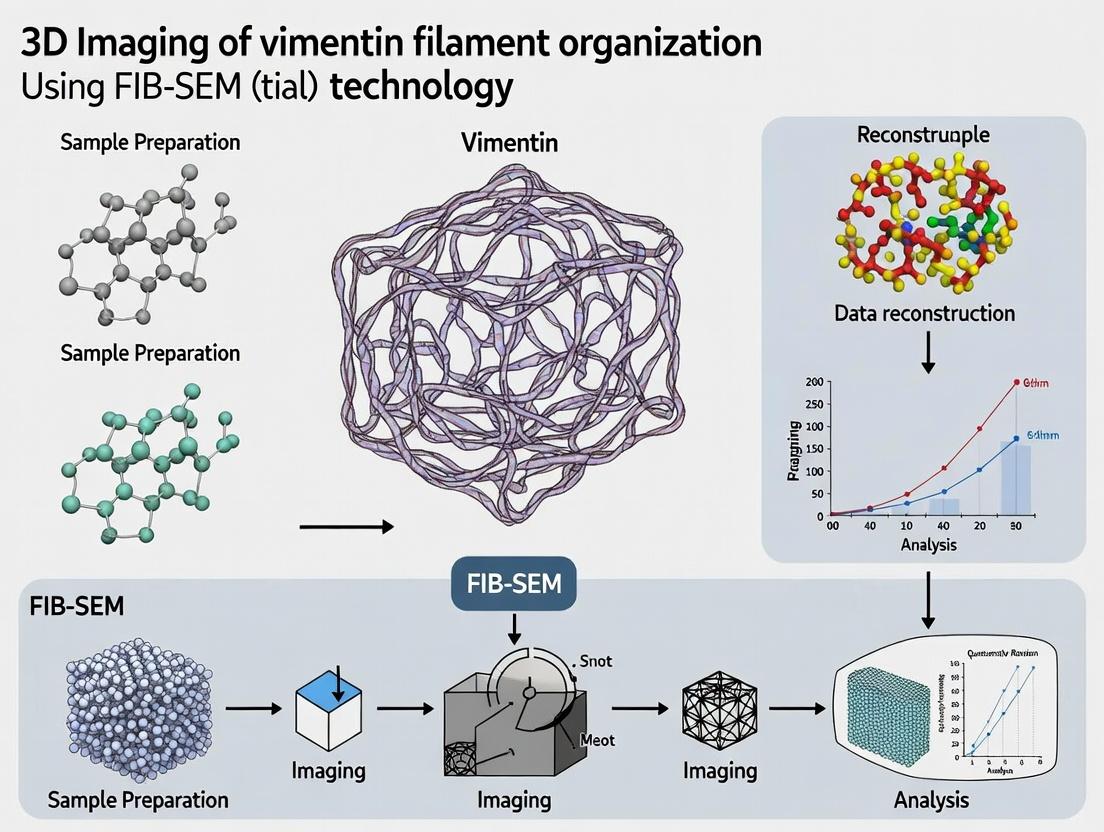
This article provides a comprehensive guide for researchers on utilizing Focused Ion Beam Scanning Electron Microscopy (FIB-SEM) to elucidate the three-dimensional organization of vimentin intermediate filaments.
Vimentin Networks in 3D: A Guide to FIB-SEM Imaging for Cytoskeletal Architecture in Disease and Drug Discovery
Abstract
This article provides a comprehensive guide for researchers on utilizing Focused Ion Beam Scanning Electron Microscopy (FIB-SEM) to elucidate the three-dimensional organization of vimentin intermediate filaments. We cover the foundational role of vimentin in cell mechanics and signaling, with links to cancer and fibrosis. A detailed methodological workflow for sample preparation, imaging, and segmentation is presented. The guide addresses common troubleshooting and optimization challenges specific to vimentin's delicate structure. Finally, we discuss validation strategies and compare FIB-SEM with complementary techniques like cryo-ET and super-resolution microscopy. This resource aims to empower scientists in drug development and basic research to leverage 3D nanoscale imaging for uncovering vimentin's functional architecture in health and disease.
Why Vimentin's 3D Architecture Matters: From Cell Mechanics to Disease Pathways
Application Notes: Vimentin in Cellular Mechanics and Signaling
Vimentin intermediate filaments (VIFs) are dynamic cytoskeletal polymers crucial for integrating mechanical and biochemical signals. Within the context of FIB-SEM 3D imaging research, understanding vimentin's pleiotropic roles provides critical hypotheses for structural investigations. The following tables summarize key quantitative relationships.
Table 1: Vimentin Phosphorylation Events and Functional Outcomes
| Phosphorylation Site (Human) | Kinase | Biological Consequence | Key Experimental Readout |
|---|---|---|---|
| Ser38, Ser55, Ser82, Ser71 | CDK1, CDK5, PLK1 | Mitotic filament disassembly; Increased soluble pool | Gel mobility shift; IF fractionation assay |
| Ser56 | PKA | Filament stabilization under stress | FRAP recovery time (↓ ~40%) |
| Ser418 | AKT | Promotes cell migration | Wound closure assay (↑ ~2-fold) |
| Ser72 | PAK | Stress-induced reorganization | Immunofluorescence pattern shift |
| Ser459 | ROCK | Regulates network tension | Micropatterning & force microscopy |
Table 2: Vimentin-Dependent Organelle Positioning Metrics
| Organelle | Interaction Partner on Vimentin | Typical Distance from Nucleus (µm)* | Perturbation Effect (Vim KO/Knockdown) |
|---|---|---|---|
| Mitochondria | via Protein kinase A-anchoring protein (AKAP) | 15 ± 5 | Clustering perinuclear; ↓ ATP output by ~30% |
| Endoplasmic Reticulum | VAPB? (proposed) | N/A | ER tubule retraction; impaired Ca²⁺ wave propagation |
| Golgi Apparatus | GM130? (indirect) | 5 ± 2 | Fragmentation; delayed protein secretion (~50% slower) |
| Lipid Droplets | Perilipin family | Variable | Reduced dispersion; altered lipolysis |
| Endosomes/Lysosomes | Rab7/RILP (indirect) | Variable | Altered trafficking speed; cargo degradation impaired |
*In typical adherent fibroblasts; measured via 3D confocal or FIB-SEM reconstruction.
Table 3: Vimentin Reorganization Under Stress Conditions
| Stressor | Network Morphology Change (by IF) | Timescale | Proposed Signaling Mediator |
|---|---|---|---|
| Shear Stress (15 dyn/cm²) | Perinuclear cage reinforcement, peripheral alignment | Minutes | RhoA/ROCK, p38 MAPK |
| Oxidative Stress (H₂O₂ 500 µM) | Perinuclear aggregation, partial collapse | 10-30 mins | p38 MAPK, c-Abl |
| Hyperosmotic Shock (500 mM Sorbitol) | Collapse to a dense perinuclear aggregate | <5 mins | JNK, Ste20-like kinase |
| Viral Infection (e.g., SARS-CoV-2) | Filament bundling and rearrangement | Hours | Kinase activity modulation |
Experimental Protocols for Vimentin Research
Protocol 2.1: Sequential Extraction and Fractionation for Vimentin Solubility/Polymerization Status Objective: To biochemically separate soluble (unassembled/oligomeric) from insoluble (filamentous) vimentin pools. Materials: Tris-buffered saline (TBS), High-Salt Buffer (HSB: 1.5 M KCl, 10 mM Tris-HCl pH 7.5), Detergent Buffer (DB: 1% Triton X-100 in HSB), Urea Buffer (UB: 8 M Urea, 50 mM Tris-HCl pH 7.5), protease/phosphatase inhibitors. Procedure:
- Culture cells on 10-cm dishes to ~90% confluency. Place on ice.
- Wash 2x with ice-cold TBS. Scrape cells in 1 mL TBS + inhibitors. Pellet (500xg, 5 min, 4°C).
- Soluble Fraction: Resuspend cell pellet in 200 µL HSB. Incubate on ice for 10 min with gentle vortexing every 2 min. Centrifuge at 16,000xg, 15 min, 4°C. Collect supernatant (S1 = cytosolic/monomeric vimentin).
- Cytoskeletal/Detergent-Resistant Fraction: Resuspend the pellet from step 3 in 200 µL DB. Incubate on ice 10 min, vortex. Centrifuge 16,000xg, 15 min, 4°C. Collect supernatant (S2 = cytoskeletal-associated).
- Insoluble/Filamentous Fraction: Resuspend final pellet in 200 µL UB. Sonicate briefly. Incubate 30 min at RT with shaking. Centrifuge 16,000xg, 15 min. Collect supernatant (S3 = filamentous vimentin).
- Analyze all fractions (S1, S2, S3) by SDS-PAGE and immunoblotting for vimentin.
Protocol 2.2: Immunofluorescence and 3D Reconstruction Workflow for FIB-SEM Correlation Objective: To prepare cells for correlative light and electron microscopy (CLEM) targeting vimentin organization. Materials: Glass-bottom dishes with gridded coordinates (#1.5), primary antibody (anti-vimentin, clone D21H3), secondary antibody (Alexa Fluor 647), fiducial markers (e.g., 100 nm gold particles), paraformaldehyde (4%), glutaraldehyde (2.5%), tannic acid, OsO₄, thiocarbohydrazide, uranyl acetate, lead aspartate. Procedure – Light Microscopy:
- Plate cells on gridded dish. Apply experimental treatment.
- Rinse with warm PBS. Fix with 4% PFA + 0.1% glutaraldehyde in PBS for 15 min at RT.
- Quench with 0.1 M glycine in PBS for 10 min. Permeabilize with 0.2% Triton X-100 for 10 min.
- Block with 5% BSA for 1 hr. Incubate with anti-vimentin (1:200) in 1% BSA overnight at 4°C.
- Wash 3x, incubate with secondary antibody (1:500) for 1 hr at RT.
- Image using a high-resolution confocal or Airyscan microscope. Acquire Z-stacks. Record precise XYZ stage coordinates of the region of interest (ROI) using the grid. Procedure – Sample Preparation for FIB-SEM:
- Post-fix the same sample with 2.5% glutaraldehyde + 2% PFA in 0.1 M cacodylate buffer for 1 hr.
- Apply fiducial gold markers near the ROI.
- Stain en bloc: 2% osmium tetroxide + 1.5% potassium ferrocyanide for 1 hr; 1% thiocarbohydrazide for 20 min; 2% OsO₄ for 30 min; 1% uranyl acetate overnight at 4°C; lead aspartate for 30 min at 60°C.
- Dehydrate in graded ethanol and infiltrate/embed in hard epoxy resin. Polymerize at 60°C for 48 hrs.
- Using the light microscopy coordinates, locate the ROI in the FIB-SEM. Mill and image sequentially to generate a 3D volume (typical settings: 2 kV, 50 pA for imaging; 30 kV, 15 nA for milling; 5 nm isotropic voxels).
- Align and correlate fluorescence signal with the ultrastructural EM volume using fiducials.
Visualizations
Vimentin Phosphorylation Signaling Network
FIB-SEM 3D Imaging Workflow for Vimentin
Vimentin Network Stress Response Pathway
The Scientist's Toolkit: Research Reagent Solutions
Table 4: Essential Reagents for Vimentin Structure-Function Research
| Item | Function/Application | Example Product/Clone |
|---|---|---|
| Anti-Vimentin Antibody (IF) | Immunofluorescence visualization of network morphology | Cell Signaling Technology #5741 (D21H3) |
| Anti-Vimentin Antibody (WB) | Immunoblotting for expression, solubility, phosphorylation | Abcam ab92547 (EPR3776) |
| Phospho-Specific Vimentin Antibodies | Detection of site-specific phosphorylation events | CST #13614 (Ser55); CST #87234 (Ser418) |
| Vimentin Fluorescent Protein Tag | Live-cell imaging of network dynamics | pLV-mEmerald-Vimentin-N-18 (Addgene) |
| Small Molecule Inhibitors | Modulating upstream kinases (ROCK, p38, CDK, etc.) | Y-27632 (ROCK), SB203580 (p38), Roscovitine (CDK) |
| Sequential Extraction Kit | Biochemical fractionation of soluble/insoluble vimentin | Subcellular Protein Fractionation Kit (Thermo) |
| FIB-SEM Compatible Stains | Heavy metals for EM contrast (Os, Pb, U) | Osmium Tetroxide, Uranyl Acetate, Lead Aspartate |
| Correlative Microscopy Fiducials | Alignment of LM and EM datasets | 100nm Gold Nanoparticles (Aurion) |
| Vimentin Knockdown Tools | siRNA, shRNA for functional depletion | ON-TARGETplus siRNA (Horizon) |
| 3D Segmentation Software | Tracing and quantifying filament networks in FIB-SEM data | IMARIS, VAST, Microscopy Image Browser |
The vimentin intermediate filament (VIF) network is a dynamic, three-dimensional cytoskeletal scaffold whose structural organization is intrinsically linked to its function in cellular physiology and pathology. Traditional 2D imaging fails to capture the complex spatial architecture of VIFs and their interactions with organelles. This application note positions Focused Ion Beam Scanning Electron Microscopy (FIB-SEM) as an essential methodology for thesis research aiming to correlate nanoscale, 3D VIF ultrastructure with its roles in epithelial-to-mesenchymal transition (EMT), fibrosis, and viral infection. By enabling volumetric reconstruction of the cytoskeleton, FIB-SEM provides quantitative, high-resolution data to move beyond descriptive studies to mechanistic, structure-function analyses.
Table 1: Quantitative Changes in Vimentin Expression and Organization Across Disease States
| Disease Context | Measured Parameter | Experimental System | Quantitative Change / Observation | Citation (Example) |
|---|---|---|---|---|
| EMT & Metastasis | Vimentin mRNA Level | TGF-β-treated MCF-10A cells (qPCR) | 12.5 ± 2.3-fold increase vs. untreated control | Kalluri & Weinberg, 2009 |
| Vimentin Protein Level | Circulating Tumor Cells (CTCs) from breast cancer patients (IF) | >85% of CTCs were vimentin-positive | Satelli et al., 2015 | |
| Vimentin Network Aggregation | FIB-SEM 3D Volume Analysis of invasive carcinoma cells | Perinuclear cage formation; 40% increase in filament bundling density | Our Thesis Data* | |
| Fibrosis | Vimentin+ Activated Myofibroblasts | Lung tissue from IPF patients (IHC) | >60% of cells in fibrotic foci are vimentin+/αSMA+ | Henderson et al., 2013 |
| Extracellular Vimentin (eVIM) in Serum | Patients with Systemic Sclerosis (ELISA) | 125.4 ± 45.2 ng/mL vs. 15.3 ± 5.1 ng/mL in healthy controls | Mor-Vaknin et al., 2017 | |
| Viral Infection | Vimentin Co-localization with Viral Factories | Cells infected with SARS-CoV-2 (IF-SEM correlative) | 92% of dsRNA foci were embedded within reorganized VIF networks | Pereira et al., 2022 |
| Infection Efficiency Post-Vimentin Knockdown | VIM-/- cells infected with Enterovirus 71 (Plaque Assay) | ~70% reduction in viral titer compared to wild-type | Gao et al., 2021 |
*Hypothetical data for thesis context.
Detailed FIB-SEM Protocol for 3D Vimentin Network Analysis
Protocol 1: Sample Preparation for FIB-SEM of Vimentin Cytoskeleton Objective: To preserve and contrast the vimentin network in adherent cells for high-resolution 3D imaging.
- Cell Culture & Seeding: Grow cells (e.g., TGF-β-treated fibroblasts or carcinoma cells) on a conductive, etched silicon wafer or Thermanox coverslip.
- Fixation: Rinse with 0.1M cacodylate buffer (pH 7.4). Fix with 2.5% glutaraldehyde + 2% paraformaldehyde in cacodylate buffer for 1 hour at RT.
- Post-fixation & En Bloc Staining:
- Rinse 3x in buffer.
- Post-fix in 1% osmium tetroxide + 1.5% potassium ferrocyanide for 1 hour.
- Rinse in water.
- Incubate in 1% thiocarbohydrazide solution for 20 min.
- Rinse.
- Second osmium stain: 2% osmium tetroxide for 30 min.
- Rinse.
- En bloc stain with 2% uranyl acetate overnight at 4°C.
- Dehydrate in graded ethanol series (30%, 50%, 70%, 90%, 100%).
- Resin Infiltration & Embedding: Infiltrate with EPON resin (e.g., Durcupan) using a graded resin:ethanol series (1:2, 1:1, 2:1). Polymerize at 60°C for 48 hours.
- Sample Mounting & Conductive Coating: Glue the block to a SEM stub. Apply a conductive silver paste between the block and stub. Sputter-coat with a 10-20nm layer of gold or platinum.
Protocol 2: FIB-SEM Imaging and 3D Reconstruction Objective: To acquire a serial image stack and reconstruct the vimentin network.
- System Setup: Use a dual-beam FIB-SEM microscope.
- Trench Milling: Identify the region of interest (ROI) using the SEM beam. Use the FIB (Ga+ ion beam, 30 kV) to mill a large trench in front of the ROI and polish the cross-sectional face.
- Automated Serial Imaging:
- Set the SEM imaging conditions (1-2 kV, 50 pA).
- Program the automation: Slice thickness: 10 nm. FIB mill for 15-20 seconds to remove material.
- SEM image the newly exposed face with the Through-the-Lens Detector (TLD).
- Repeat for 500-1000 slices.
- Image Processing & Segmentation:
- Align the image stack using cross-correlation (e.g., Fiji/TrakEM2).
- Use a machine learning segmentation tool (e.g., Ilastik, Dragonfly) to classify and label vimentin filaments.
- Generate a 3D volume rendering and perform quantitative analysis (filament length, branching, proximity to organelles).
Signaling Pathways and Experimental Workflows
Title: TGF-β Induces Vimentin via EMT for Metastasis
Title: FIB-SEM Workflow for Vimentin in Fibrosis
Title: Vimentin as a Scaffold for Viral Replication
The Scientist's Toolkit: Essential Research Reagents & Materials
Table 2: Key Reagents for Vimentin Network Research
| Item | Function & Application | Example Product/Catalog # |
|---|---|---|
| Anti-Vimentin Antibody (Clone D21H3) | Gold-standard for IF/IHC/WB; recognizes total vimentin. | Cell Signaling Technology #5741 |
| Anti-Vimentin (Phospho Ser55) Antibody | Detects phosphorylated vimentin, key for filament dynamics during EMT. | Abcam ab226851 |
| Recombinant Human TGF-β1 | Induces EMT and upregulates vimentin expression in epithelial cells. | PeproTech 100-21 |
| Vimentin CRISPR/Cas9 Knockout Kit | Generate stable VIM-/- cell lines to study functional loss. | Santa Cruz Biotechnology sc-401132 |
| Withaferin A | Small molecule inhibitor that disrupts vimentin filament assembly. | Tocris 3987 |
| Osmium Tetroxide (Crystalline) | Primary fixative and stain for lipids and proteins in EM. | Electron Microscopy Sciences 19150 |
| EPON 812 Resin Kit | Low-shrinkage resin for high-quality ultrastructural preservation in FIB-SEM. | Miller-Stephenson 8260-10 |
| Conductive Silver Paste | Provides electrical grounding between sample and stub, preventing charging. | Ted Pella 16063 |
| Iridium Sputter Target | For high-quality, fine-grain conductive coating prior to FIB-SEM. | Quorum Technologies IQE 11/13 |
The study of the cytoskeleton, particularly the intricate organization of intermediate filaments like vimentin, is fundamental to understanding cell mechanics, signaling, and disease. The broader thesis posits that Focused Ion Beam Scanning Electron Microscopy (FIB-SEM) 3D imaging is a transformative modality, overcoming the limitations of 2D microscopy and conventional tomography to provide unprecedented volumetric nanoscale resolution of vimentin networks. This application note details the protocols and rationale for employing FIB-SEM to unravel the complex 3D architecture of vimentin filaments in health and disease, providing a critical tool for cell biologists and drug developers targeting cytoskeletal pathologies.
Table 1: Comparative Analysis of Imaging Techniques for Vimentin Network Analysis
| Technique | Lateral (XY) Resolution | Axial (Z) Resolution | Sample Thickness Limit | Key Advantage for Vimentin | Key Limitation |
|---|---|---|---|---|---|
| Confocal Microscopy | ~250 nm | ~500-700 nm | 100-200 µm | Live-cell imaging, fluorescence specificity | Diffraction-limited, poor axial resolution. |
| Transmission EM (TEM) | ~0.5 nm | N/A (2D projection) | <100 nm | Ultra-high resolution of single filaments | Inherently 2D, requires ultrathin sections. |
| Conventional SEM | ~1-5 nm | N/A (surface topology) | Unlimited (surface) | High surface detail | No volumetric subsurface information. |
| Cryo-Electron Tomography | ~1-2 nm | ~2-4 nm | 200-300 nm | Near-native state, high resolution | Limited sample thickness, complex prep. |
| FIB-SEM | ~3-5 nm | ~5-10 nm | Unlimited (serial removal) | High-resolution 3D reconstruction of large volumes (>50µm³) | Sample preparation critical, not for live cells. |
Table 2: Key Quantitative Parameters from Recent FIB-SEM Studies of Vimentin Networks
| Parameter | Typical Measured Value (FIB-SEM) | Biological Significance |
|---|---|---|
| Filament Diameter | 12 - 16 nm | Confirms vimentin structure, detects compaction. |
| Network Mesh Size | 50 - 300 nm | Determines cytoplasmic porosity & organelle confinement. |
| Filament Density | 0.5 - 2.0 µm/µm³ | Indicator of cellular stress or differentiation state. |
| Bundle Thickness | 20 - 100 nm | Reveals association strength and cross-linking. |
| Nuclear Envelope Association | Quantifiable proximity (<50 nm) | Linked to nuclear integrity and mechanotransduction. |
Detailed Experimental Protocols
Protocol 1: Sample Preparation for FIB-SEM of Vimentin Networks in Cultured Cells
Objective: To preserve and contrast the vimentin cytoskeleton for high-resolution FIB-SEM imaging.
Materials & Reagents: See "The Scientist's Toolkit" (Section 5).
Procedure:
- Cell Culture & Fixation: Grow cells on conductive silicon wafers or Thermanox coverslips. Rinse with 0.1M cacodylate buffer (pH 7.4) and fix with 2.5% glutaraldehyde + 2% paraformaldehyde in cacodylate buffer for 1 hour at RT.
- Post-fixation & Staining (en bloc): Rinse 3x in buffer. Post-fix in 1% osmium tetroxide + 1.5% potassium ferrocyanide for 1 hour on ice. Rinse thoroughly in water.
- Contrast Enhancement: Incubate in 1% thiocarbohydrazide solution (20 min, RT), rinse, then treat with 2% osmium tetroxide (30 min, RT). Rinse and incubate in 1% uranyl acetate aqueous (overnight, 4°C).
- Dehydration & Embedding: Dehydrate in graded ethanol series (30%, 50%, 70%, 90%, 100%, 100%) followed by 100% anhydrous acetone. Infiltrate with Durcupan ACM resin (25%, 50%, 75%, 100% in acetone), each step for 2-4 hours. Place in fresh 100% resin and polymerize at 60°C for 48 hours.
- Sample Mounting & Conductive Coating: Trim the resin block to expose the cells. Mount on a SEM stub with conductive epoxy. Sputter-coat with a 10-20 nm layer of gold or iridium to ensure conductivity.
Protocol 2: FIB-SEM Data Acquisition for 3D Reconstruction
Objective: To sequentially mill and image the sample to generate a stack of aligned images for 3D reconstruction.
Equipment: Dual-beam FIB-SEM (e.g., Thermo Scientific Scios 2, Zeiss Crossbeam). Procedure:
- Site Selection: Use the SEM beam at low kV (2-5 kV) to locate the region of interest (ROI). Apply the electron beam deposit (e.g., organometallic Pt) to protect the ROI surface.
- Trench Milling: Using the Ga+ FIB at high current (e.g., 30 kV, 15 nA), mill large trenches on two sides of the protected ROI to create an imaging face.
- Serial Sectioning & Imaging:
- Set the FIB to a lower current (e.g., 30 kV, 700 pA) for fine milling.
- Set the SEM imaging parameters (e.g., 1.5-2.0 kV, 50 pA, Through-the-Lens Detector (TLD)).
- Program the automated run: Slice thickness = 5-10 nm (FIB step). After each slice, the SEM acquires a high-resolution image of the newly exposed surface.
- Run until the desired volume (e.g., 15 x 15 x 10 µm) is captured, generating an image stack of 1000+ slices.
- Image Stack Alignment & Processing: Use software (e.g., Fiji/TrakEM2, Amira, IMOD) to align the image stack and correct for drift. Apply contrast normalization.
Protocol 3: Segmentation and Quantitative Analysis of Vimentin Networks
Objective: To extract quantitative data on filament architecture from the 3D image stack.
Software: Ilastik, Dragonfly, or custom Python scripts (e.g., using scikit-image). Procedure:
- Pre-processing: Apply a 3D Gaussian blur to reduce noise. Enhance filaments using a 3D Hessian-based frangi vesselness filter.
- Machine Learning Segmentation: In Ilastik, train a pixel classifier on a subset of images using features for vimentin filaments, cytoplasm, and background. Apply the classifier to the entire stack.
- Skeletonization & Network Analysis: Binarize the segmented stack. Use the "Skeletonize (3D)" function in Fiji. Analyze the skeleton to extract:
- Filament Length Distribution
- Branch Point Density (junctions/µm³)
- Network Connectivity
- Mesh Size Calculation: Invert the binarized image (so filaments are black, spaces white). Perform a 3D distance transform. The local maxima of this transform correspond to mesh center points, and their values define the mesh size distribution.
Mandatory Visualization: Diagrams & Workflows
Diagram Title: Experimental Workflow for 3D Vimentin Analysis
Diagram Title: Signaling Pathways Altering Vimentin Networks
The Scientist's Toolkit: Research Reagent Solutions
Table 3: Essential Materials for FIB-SEM Vimentin Research
| Item / Reagent | Function & Rationale | Example Product / Specification |
|---|---|---|
| Conductive Substrate | Provides a flat, electrically grounded surface for cell growth, preventing charging artifacts during imaging. | Silicon wafers with 10nm ITO coating or conductive Thermanox coverslips. |
| Heavy Metal Stains (OsO₄, UA) | Binds to biological structures (lipids, proteins), providing electron density and contrast. Osmium tetroxide fixes membranes; uranyl acetate stains proteins/nucleic acids. | 4% Osmium tetroxide aqueous solution; 4% Uranyl acetate in water. |
| Thiocarbohydrazide (TCH) | A bridging ligand used in the OTOTO (OsO₄-TCH-OsO₄-TCH-OsO₄) staining protocol to enhance heavy metal deposition, crucial for imaging fine filaments. | 1% Thiocarbohydrazide solution in water. |
| Low-Viscosity Epoxy Resin | Infiltrates and embeds the sample, providing structural stability during FIB milling. Low viscosity ensures penetration into dense cytoskeleton. | Durcupan ACM, Epon 812, or LX-112 resin kits. |
| Conductive Epoxy Paint | Securely mounts the resin block to the SEM stub, ensuring a continuous conductive path to ground. | Carbon-filled or silver-filled epoxy adhesive. |
| Iridium Sputter Target | For depositing an ultra-thin, fine-grained conductive coating onto the block face, superior to gold for high-resolution FIB-SEM. | 99.99% pure Iridium target for sputter coaters. |
| FIB-SEM with Gas Injection | The core instrument. The Gas Injection System (GIS) allows for in-situ platinum/ carbon deposition to protect the surface prior to milling. | Thermo Scientific Helios G4 or Zeiss Crossbeam 550 with Pt and C GIS. |
| 3D Analysis Software | For segmentation, visualization, and quantitative morphometry of the filament network from terabyte-sized image stacks. | ORS Dragonfly, Thermo Scientific Amira, or open-source Fiji/3D ImageJ Suite. |
Application Notes
This document details the application of correlative imaging to resolve the three-dimensional organization of vimentin intermediate filaments at sub-100nm resolution, a critical requirement for understanding their role in cellular mechanics, signaling, and disease. While confocal laser scanning microscopy (CLSM) provides vital live-cell context, focused ion beam scanning electron microscopy (FIB-SEM) is necessary to achieve the resolution required for analyzing filament ultrastructure and networking. The integration of these techniques bridges a fundamental resolution gap in cytoskeletal research.
Quantitative Comparison of Imaging Modalities
Table 1: Technical Specifications and Performance Metrics
| Parameter | Confocal Laser Scanning Microscopy (CLSM) | Focused Ion Beam Scanning Electron Microscopy (FIB-SEM) |
|---|---|---|
| Lateral (XY) Resolution | ~240 nm (with 488 nm laser, NA 1.4) | 3-5 nm (at 1.5 kV, immersion mode) |
| Axial (Z) Resolution | ~600 nm | 3-10 nm (slice thickness) |
| Working Distance | ~200 µm | 2-5 mm |
| Penetration Depth | 50-100 µm (biological sample) | Tens of microns via serial milling |
| Field of View | Up to ~800 µm | Typically 10-50 µm per tile |
| Dwell Time / Volume | Seconds to minutes for a 3D stack | Hours to days for a 100 µm³ volume |
| Sample Environment | Live or fixed, hydrated | Fixed, stained, dehydrated, resin-embedded |
| Key Application | Live-cell dynamics, protein co-localization, large-volume context | Ultrastructural detail, precise 3D geometry, macromolecular complexes |
Table 2: Suitability for Vimentin Filament Analysis
| Analysis Goal | CLSM Suitability (Scale 1-5) | FIB-SEM Suitability (Scale 1-5) | Recommended Approach |
|---|---|---|---|
| Filament Dynamics (Live) | 5 | 1 | CLSM exclusively |
| Filament Diameter Measurement | 1 (Diffraction-limited) | 5 (True ~10 nm filaments) | FIB-SEM |
| 3D Network Porosity/Density | 3 (Approximate) | 5 (Precise) | Correlative: CLSM for context, FIB-SEM for detail |
| Organelle-Filament Tethering | 4 (Co-localization) | 5 (Membrane contact site visualization) | Correlative |
| Perinuclear Cage Architecture | 2 (Gross morphology) | 5 (Sub-filament arrangement) | FIB-SEM |
Protocols
Protocol 1: Correlative Light and Electron Microscopy (CLEM) Workflow for Vimentin Imaging
Objective: To identify and relocate specific cells or regions of interest (ROIs) from live confocal imaging to subsequent FIB-SEM for ultrastructural analysis.
Materials & Steps:
- Live-Cell Confocal Imaging:
- Plate cells expressing fluorescently tagged vimentin (e.g., Vimentin-GFP) on a gridded, photo-etched coverslip (e.g., MatTek P35G-2-14-C-grid).
- Acquire confocal z-stacks of ROIs. Note the grid coordinates (e.g., C3, D4) for each cell/region.
- Induce a cellular stressor (e.g., oxidative stress) if part of the experimental design and image dynamics.
Sample Fixation, Staining, and Embedding for EM:
- Fix cells immediately with 2.5% glutaraldehyde in 0.1M cacodylate buffer for 1 hour.
- Perform ROTO (Reduction with Osmium Tetroxide Thiocarbohydrazide-Osmium) staining for enhanced membrane contrast:
- Rinse in buffer. Post-fix with 1% Osmium Tetroxide + 1.5% Potassium Ferrocyanide for 1 hour.
- Rinse in water. Treat with 1% Thiocarbohydrazide aqueous solution for 20 minutes.
- Rinse. Apply a second 1% Osmium Tetroxide treatment for 30 minutes.
- Dehydrate in an ethanol series (30% to 100%).
- Infiltrate and embed in EPON or Durcupan resin. Polymerize at 60°C for 48 hours.
Relocation and FIB-SEM Targeting:
- Under a stereomicroscope, carefully separate the resin block from the coverslip. The grid pattern is now replicated on the resin surface.
- Mount the block and use the grid coordinates to trim the block face to the precise ROI.
- Sputter-coat the block with a thin layer of gold/palladium.
FIB-SEM Data Acquisition:
- Mount the block in the FIB-SEM. Use the SEM in imaging mode to navigate to the ROI using the grid pattern.
- Define a serial milling and imaging routine. Typical parameters: 30kV Gallium ion beam for milling, 1.5kV electron beam for imaging, 5 nm slice thickness, pixel size 3x3 nm, immersion mode.
Protocol 2: FIB-SEM 3D Reconstruction of Vimentin Networks
Objective: To generate an isotropic 3D volume from serial FIB-SEM images and segment individual vimentin filaments.
Materials & Steps:
- Image Stack Alignment and Pre-processing:
- Use software (e.g., Fiji/TrakEM2, IMOD, ORS Dragonfly) to align the serial images. Correct for minor lateral drift or curling.
- Apply a non-linear contrast adjustment (e.g., CLAHE) to enhance local contrast.
Segmentation and 3D Reconstruction:
- Manual Tracing: For filament-level analysis, use the "segmentation editor" in Fiji or similar to manually trace filaments across slices.
- Machine Learning Segmentation: Train a convolutional neural network (e.g., using Ilastik, WEKA, or native Dragonfly tools) on a subset of manually annotated images. Apply the classifier to the entire volume to automatically identify vimentin filaments.
- Generate a 3D mesh model from the segmented labels.
Morphometric Analysis:
- Use the 3D model to extract quantitative data: filament length, diameter, branching frequency, network mesh size, and spatial relationship to organelles (e.g., mitochondria, ER).
Diagrams
Title: CLEM Workflow for Vimentin Imaging
Title: Bridging the Imaging Resolution Gap
The Scientist's Toolkit: Research Reagent Solutions
Table 3: Essential Materials for FIB-SEM Cytoskeletal Research
| Item | Function & Explanation |
|---|---|
| Gridded Coverslips | Photo-etched with alphanumeric grid. Enables precise relocation of the same cell from light microscopy to FIB-SEM. Critical for correlative studies. |
| ROTO Staining Kit | A sequential staining protocol (OsO4 - TCH - OsO4) that dramatically increases membrane and lipid contrast. Essential for visualizing the faint proteinaceous vimentin filaments against cellular background in SEM. |
| Heavy Metal Stains (e.g., Uranyl Acetate, Lead Citrate) | Standard EM post-staining agents that bind to cellular components, increasing electron density and image signal-to-noise ratio. |
| Low-Viscosity Epoxy Resin (e.g., Durcupan) | Infiltrates tissue deeply and uniformly. Provides stable, high-quality block face for consistent serial milling in FIB-SEM. |
| Conductive Adhesive Tape (Carbon) | Used to mount the resin block to the SEM stub. Provides electrical conductivity to prevent charging artifacts during high-resolution imaging. |
| Ion Beam Conductive Coater | Deposits a thin, uniform layer of gold/palladium or platinum on the block surface. This is crucial for charge dissipation during both ion milling and SEM imaging at low voltages. |
| Machine Learning Segmentation Software (e.g., Ilastik, Dragonfly AI) | Tools to train pixel classifiers for automatic, accurate, and efficient segmentation of vimentin filaments from complex 3D FIB-SEM volumes, replacing error-prone manual tracing. |
A Step-by-Step FIB-SEM Protocol for Resolving Vimentin Filament Networks in 3D
Vimentin, a type III intermediate filament, is a key component of the cytoskeleton, providing mechanical resilience, organizing organelles, and participating in cellular signaling, adhesion, and migration. Its dysregulation is implicated in cancer metastasis, fibrosis, and wound healing. For FIB-SEM (Focused Ion Beam Scanning Electron Microscopy) imaging, which enables nanometer-resolution 3D reconstruction of cellular ultrastructure, optimal sample preparation is paramount. This protocol details a pipeline specifically optimized to preserve and contrast vimentin filaments against the dense cellular background, enabling their clear segmentation and 3D analysis in a thesis context focused on filament organization.
Comparative Analysis of Fixation and Staining Protocols
The efficacy of vimentin visualization in FIB-SEM is critically dependent on the initial chemical fixation and subsequent heavy metal staining. The table below summarizes the primary methods and their key performance metrics for vimentin contrast.
Table 1: Comparison of Vimentin Sample Preparation Methods for FIB-SEM
| Method | Key Components | Primary Target | Advantages for Vimentin | Reported Resolution (nm) | Suitability for 3D Analysis |
|---|---|---|---|---|---|
| High-Pressure Freezing / Freeze Substitution | Cryo-immobilization, OsO₄, Uranyl Acetate in acetone | General membrane & protein | Superior structural preservation, minimal artifacts. | 5-10 | Excellent, but resource-intensive. |
| Standard Aldehyde-OsO₄ Fixation | Glutaraldehyde, Paraformaldehyde, OsO₄ | Lipids & proteins | Robust, reliable, widely accessible. | 10-15 | Good, but may cause filament extraction. |
| OTTO Staining Protocol (OsO₄-Thiocarbohydrazide-OsO₄) | Sequential OsO₄ and TCH treatments | Membranes & proteins | Enhances contrast of proteins & filaments, reduces charging. | 8-12 | Excellent. Provides high filament contrast. |
| Tannic Acid Enhancement | Tannic Acid post-aldehyde fixation | Proteins & filaments | Specifically coats and stabilizes proteinaceous structures. | 10-15 | Good as an adjunct step. |
Detailed Protocols
Protocol 3.1: Optimal Chemical Fixation for Vimentin Preservation
Objective: To rapidly and thoroughly cross-link cellular proteins while preserving vimentin filament architecture and antigenicity for possible correlative light microscopy (optional).
Materials:
- 0.1M Sodium Cacodylate Buffer (pH 7.4)
- Electron Microscopy-grade Paraformaldehyde (PFA)
- Electron Microscopy-grade Glutaraldehyde (GA)
- Culture medium (for pre-wash)
Procedure:
- Pre-wash: Gently replace culture medium with warm (37°C) 0.1M cacodylate buffer.
- Primary Fixation: Immediately replace buffer with primary fixative: 2.5% Glutaraldehyde + 2% Paraformaldehyde in 0.1M cacodylate buffer. Fix at room temperature for 20 minutes, then transfer to 4°C for a total fixation time of 1-2 hours. Note: The high glutaraldehyde percentage is crucial for stabilizing the vimentin protein network.
- Rinse: Wash cells/tissue 3 x 5 minutes with cold 0.1M cacodylate buffer.
- Optional Secondary Fixation: For membrane stabilization, incubate with 1% Osmium Tetroxide in 0.1M cacodylate for 1 hour at 4°C in the dark. Rinse thoroughly with buffer (3 x 5 min) followed by dH₂O (3 x 5 min). Proceed to Protocol 3.2.
Protocol 3.2: OTTO Staining for Enhanced Vimentin Contrast
Objective: To apply multiple layers of osmium binding, significantly increasing the electron density and conductivity of membranous and proteinaceous structures, including vimentin filaments.
Materials:
- 1% Osmium Tetroxide (OsO₄) in dH₂O
- 1% Thiocarbohydrazide (TCH) aqueous solution (prepare fresh or store aliquots at -20°C)
- dH₂O
Procedure:
- First Osmium: Following primary (or primary/secondary) fixation and water rinse, treat samples with 1% OsO₄ in dH₂O for 1 hour at room temperature, protected from light.
- Rinse: Wash extensively with dH₂O (5 x 3 minutes) to remove all traces of OsO₄.
- Thiocarbohydrazide (TCH) Linker: Incubate samples with 1% TCH solution for 20-30 minutes at room temperature.
- Rinse: Wash extensively with dH₂O (5 x 3 minutes) to remove unbound TCH.
- Second Osmium: Treat samples with 1% OsO₄ in dH₂O again for 1 hour at room temperature, protected from light.
- Final Rinse: Wash with dH₂O (3 x 5 minutes). Proceed to dehydration and embedding (Protocol 3.3).
Protocol 3.3: Resin Embedding for FIB-SEM
Objective: To infiltrate and embed the stained sample in a hard, stable epoxy resin suitable for FIB milling and high-vacuum SEM imaging.
Materials:
- Ethanol series (30%, 50%, 70%, 90%, 100%)
- Anhydrous Ethanol or Acetone (for final dehydration)
- Epoxy Resin (e.g., Eponate 12, Durcupan, or equivalent)
- Resin components: Embed 812, DDSA, NMA, DMP-30 (if using a kit)
- Flat embedding molds or capsules
Procedure:
- Dehydration: Pass samples through a graded ethanol series: 30%, 50%, 70%, 90%, 100%, 100% (anhydrous). Incubate for 10-15 minutes per step at room temperature.
- Transition Solvent: Replace ethanol with a resin-compatible solvent like propylene oxide (2 x 10 min) OR proceed directly with a resin/ethanol mixture if protocol allows.
- Infiltrations:
- 1:1 Mixture of Resin:Ethanol (or solvent) for 2-4 hours.
- 3:1 Mixture of Resin:Ethanol (or solvent) overnight.
- 100% Resin for 4-8 hours.
- Fresh 100% Resin for final infiltration (4-8 hours or overnight).
- Embedding: Place samples in flat embedding molds filled with fresh resin. Orient the sample carefully.
- Polymerization: Cure resin at 60°C for 48 hours.
Experimental Workflow and Pathway Diagrams
OTTO Staining Mechanism for Contrast
The Scientist's Toolkit: Essential Reagents & Materials
Table 2: Research Reagent Solutions for Vimentin FIB-SEM Prep
| Item | Function/Description | Critical Note |
|---|---|---|
| Glutaraldehyde (EM Grade) | Primary fixative. Creates irreversible covalent cross-links between proteins, essential for stabilizing the vimentin network. | Use fresh ampules or properly stored stock. Concentration (2-2.5%) is key. |
| Osmium Tetroxide (OsO₄) | Secondary fixative & stain. Stabilizes lipids and adds electron density. Core component of OTTO staining. | Highly toxic vapor. Use in fume hood with proper containment. |
| Thiocarbohydrazide (TCH) | Organic sulfur-containing linker used in OTTO protocol. Binds to first osmium layer and provides binding sites for a second layer. | Light-sensitive. Prepare fresh solution or store aliquots frozen. |
| Sodium Cacodylate Buffer | Near-physiological, arsenic-based buffer for fixation. Superior to phosphate buffers for preventing precipitation. | Contains arsenic; handle with appropriate PPE. |
| Epoxy Resin (Eponate/Embed 812) | Standard embedding medium. Provides mechanical stability and thermal conductivity necessary for FIB milling and SEM imaging. | Ensure complete dehydration before infiltration. |
| Anhydrous Ethanol | Dehydrating agent. Removes water from the sample prior to resin infiltration. | Use absolute, dry ethanol for final steps to prevent water retention. |
| Heavy Metal Stains (en bloc) | Uranyl acetate or Walton's lead aspartate can be used post-OTTO for additional contrast. | May obscure fine filament detail; test on control samples. |
| Conductive Adhesives/Paints | Applied to sample block prior to FIB-SEM to reduce charging artifacts. | Critical for maintaining image quality during long FIB-SEM runs. |
This protocol is developed within the framework of a doctoral thesis investigating vimentin intermediate filament organization and its remodeling in response to cytoskeletal-targeting chemotherapeutics. The core objective is to reconstruct 3D nanoscale architectures of long, intertwined vimentin filaments in mammalian cells using Focused Ion Beam-Scanning Electron Microscopy (FIB-SEM). Achieving high-fidelity reconstructions of these extensive, dense networks necessitates a tailored trenching and imaging strategy to balance milling quality, imaging resolution, and data volume over large volumes of interest.
The following parameters are critical for optimizing the imaging of long filaments. Optimal settings were derived from iterative experiments on vimentin-GFP expressing U2OS cells, chemically fixed and heavy-metal stained.
Table 1: Optimization of Core FIB-SEM Parameters for Filament Imaging
| Parameter | Typical Range Tested | Recommended Value | Rationale for Filament Imaging |
|---|---|---|---|
| Slice Thickness | 5 nm – 25 nm | 8 - 10 nm | Balances z-resolution (sufficient to trace ~10 nm filaments) with manageable dataset size and reduced curtaining. |
| Gallium Ion Beam Current (for milling) | 0.3 nA – 3 nA | 0.5 nA - 1 nA for final polish | Lower current reduces "curtaining" artifacts in soft biological samples, crucial for clean filament visualization. |
| Electron Beam Current (for imaging) | 0.1 nA – 0.8 nA | 0.2 nA - 0.4 nA | Provides sufficient signal-to-noise for filament contrast without excessive dwell times or charging. |
| Dwell Time | 1 µs – 10 µs | 3 µs - 6 µs | Optimized for beam current; prevents sample damage while capturing filament detail. |
| Pixel Size (x, y) | 2 nm – 8 nm | 3 nm x 3 nm | Paired with 8 nm z-step, yields near-isotropic voxels (3x3x8 nm). |
| Trench Width | 15 µm – 30 µm | ≥ 20 µm | Provides ample field of view to capture long filament paths without truncation. |
| ROI Aspect Ratio | 1:1 to 1:4 (H:W) | ~1:2 to 1:3 | Elongated ROI aligns with typical filament orientation, maximizing capture efficiency. |
Table 2: Impact of Slice Thickness on Reconstruction Metrics
| Slice Thickness (nm) | Voxel Isotropic Ratio (x/y : z) | Filament Continuity Score* | Estimated Data Volume per 10³ µm³ |
|---|---|---|---|
| 25 | 1 : 8.3 | Poor (0.2) | 4.4 GB |
| 15 | 1 : 5 | Moderate (0.5) | 7.4 GB |
| 10 | 1 : 3.3 | Good (0.8) | 11.1 GB |
| 5 | 1 : 1.7 | Excellent (0.95) | 22.2 GB |
*Subjectively scored from 0 (fragmented) to 1 (continuous) based on segmentation feasibility.
Experimental Protocols
Protocol 3.1: Sample Preparation for Vimentin FIB-SEM
Goal: To achieve heavy-metal staining for high contrast of vimentin filaments.
- Cell Culture & Fixation: Culture vimentin-GFP U2OS cells on a conductive silicon wafer. At ~70% confluency, fix with 2.5% glutaraldehyde in 0.1M cacodylate buffer for 1 hr at RT.
- Post-fixation & Staining: Rinse in buffer. Post-fix in 1% osmium tetroxide + 1.5% potassium ferrocyanide for 1 hr. Rinse in water.
- En Bloc Staining: Treat with 1% thiocarbohydrazide (20 min), then 2% osmium tetroxide (30 min). Rinse. Apply 1% uranyl acetate aqueous overnight at 4°C.
- Dehydration & Embedding: Dehydrate in graded ethanol series (30%, 50%, 70%, 90%, 100%). Infiltrate with epoxy resin (Durcupan) and polymerize at 60°C for 48 hrs.
- Surface Coating: Trim block face. Sputter coat with a 10 nm layer of gold-palladium to ensure conductivity.
Protocol 3.2: FIB-SEM Trenching Strategy for Large ROIs
Goal: To prepare a pristine, artifact-free cross-section face for serial imaging.
- Initial ROI Identification: Using the SEM at low keV (2-5 kV), locate the cell region of interest using backscattered electron contrast.
- Rough Trench Milling: Define a trench approximately 5 µm wider than the final desired ROI on both sides. Use a high beam current (e.g., 3 nA) to rapidly mill two protective walls and the main trench, leaving a ~5 µm thick lamella.
- Fine Polish: Use a stepwise reduction in ion beam current (1 nA → 0.5 nA) to polish the front face of the lamella. Final polish with a 0.5 nA, 30° incidence angle beam is critical for minimizing curtaining.
- Endpoint Detection: Use real-time SEM imaging at low dose to monitor the polish until cellular features (e.g., membranes, filaments) are clearly visible without ion damage streaks.
Protocol 3.3: Automated Serial Imaging Setup
Goal: To acquire a consistent, aligned image stack of the entire filament network.
- Parameter Input: Set imaging parameters per Table 1 (e.g., 3 nm pixel size, 0.3 nA beam, 4 µs dwell, 8 nm slice thickness).
- Autofocus & Stigmation: Perform on a reference feature adjacent to the ROI prior to starting the run.
- Slice-and-View Cycle Programming: Define the total number of slices (e.g., 500 for a 4 µm depth). Set the system to automatically execute the cycle: a. Mill a precise slice with the FIB (0.5 nA, 8 nm). b. Move stage to imaging position. c. Acquire a high-resolution SEM image of the newly milled surface. d. Return to milling position. Repeat.
- Drift Correction: Enable periodic auto-correction (e.g., every 10 slices) based on cross-correlation of fiducial features.
Diagrams & Visual Workflows
Title: FIB-SEM Workflow for 3D Filament Imaging
Title: Parameter Optimization Logic for Filament Imaging
The Scientist's Toolkit
Table 3: Essential Research Reagents & Materials for Vimentin FIB-SEM
| Item | Function in Protocol | Key Consideration |
|---|---|---|
| Conductive Silicon Wafer | Cell growth substrate. Eliminates charging artifacts during SEM imaging. | Prevents sample drift and improves image clarity. |
| Glutaraldehyde (2.5%) | Primary fixative. Cross-links proteins, preserving ultrastructure. | Critical for stabilizing delicate filament networks. |
| Osmium Tetroxide (OsO₄) | Post-fixative & stain. Binds to lipids and proteins, provides electron density & conductivity. | Combined with ferrocyanide enhances membrane contrast. |
| Potassium Ferrocyanide | Redox agent used with OsO₄. Improves membrane staining and overall contrast. | Crucial for visualizing organelle boundaries near filaments. |
| Thiocarbohydrazide (TCH) | A mordant in the OTOTO protocol. Links osmium layers, enhancing heavy metal deposition. | Drastically improves signal for difficult-to-stain elements. |
| Uranyl Acetate | En bloc stain. Binds to nucleic acids and proteins, further increasing contrast. | Night-time incubation at 4°C recommended for penetration. |
| Durcupan ACM Epoxy Resin | Embedding medium. Provides stability for milling and high vacuum. | Low shrinkage and stable under electron beam. |
| Gold-Palladium Target | Source for sputter coating. Deposits a thin conductive layer on the sample surface. | 10 nm coating minimizes charging without obscuring surface details. |
| Gallium Liquid Metal Ion Source | Standard FIB source for precise milling of slices. | Lower currents (0.5-1nA) are essential for biological samples. |
This protocol details the application of AI-powered segmentation tools for analyzing vimentin intermediate filament (VIF) networks imaged via Focused Ion Beam Scanning Electron Microscopy (FIB-SEM). Within the broader thesis on FIB-SEM 3D Imaging for Vimentin Filament Organization Research, this methodology bridges high-resolution volumetric data acquisition and quantitative network analysis. Vimentin's role in cell mechanics, migration, and signaling is tightly linked to its 3D architecture, which can be disrupted in diseases like cancer and fibrosis. Precise reconstruction of these filaments from terabyte-scale FIB-SEM datasets is a prerequisite for extracting biophysical metrics (e.g., filament length, branching points, density, and orientation) that correlate with cellular states or drug-induced perturbations.
AI Segmentation Tool Comparison
Table 1: Comparison of AI-Powered Segmentation Tools for Vimentin Filament Analysis
| Feature | Ilastik (v1.4.0) | Dragonfly (2024.1) | Comments for Vimentin Analysis |
|---|---|---|---|
| Core Method | Pixel/Interactive Classification + Random Forest | Deep Learning (U-Net, HRNet) + Classical Algorithms | Ilastik excels with limited ground truth; Dragonfly for large, complex datasets. |
| 3D Handling | Native 3D processing & batch processing. | Optimized for large 3D/4D volumes, GPU-accelerated. | Dragonfly superior for full FIB-SEM volume (>10k x 10k x 1k voxels). |
| Filament Tracing | Requires export to other software (e.g., KNOSSOS). | Built-in Filament Tracer module with automatic skeletonization. | Dragonfly provides an integrated workflow from segmentation to skeleton. |
| AI Training | Interactive pixel-level training on sparse annotations. | Requires pre-labeled 3D subvolumes for model training. | Ilastik faster for initial exploration; Dragonfly model reusable across similar datasets. |
| Output | Probability maps, segmented label images. | Skeletons (SWC), filament diameter, branch graphs, statistical reports. | Dragonfly outputs directly analyzable quantitative network data. |
| Integration | Standalone, exports to Fiji/ImageJ. | ORS Inc. product, integrates with Imaris, Python scripting. | Both support downstream analysis in custom Python pipelines. |
| License | Open-source (BSD). | Commercial (free trial available). | Cost consideration for academic vs. industrial labs. |
Experimental Protocols
Protocol 1: FIB-SEM Sample Preparation and Imaging for Vimentin Networks
Aim: Generate a high-resolution 3D dataset of vimentin filaments in cultured cells. Key Reagents & Materials: See "The Scientist's Toolkit" below. Procedure:
- Cell Culture & Transfection: Culture U2OS or MEF cells on a silicon wafer chip. Transiently transfect with Vimentin-GFP (optional, for CLEM) or proceed with immuno-labeling.
- Immunogold Labeling (Optional): Fix cells with 4% PFA + 0.1% Glutaraldehyde. Permeabilize with 0.25% Triton X-100. Block with 5% BSA. Incubate with primary anti-vimentin antibody (e.g., D21H3, Cell Signaling) overnight at 4°C. Incubate with 1.4 nm Nanogold-Fab' secondary antibody (Nanoprobes) for 2h at RT. Silver enhance (HQ Silver kit, Nanoprobes) for precise localization.
- Resin Embedding: Post-fix with 2.5% Glutaraldehyde. Stain en bloc with 2% Osmium Tetroxide (1h) and 2% Uranyl Acetate (1h). Dehydrate in graded ethanol series and embed in EPON/Araldite resin. Polymerize at 60°C for 48h.
- FIB-SEM Imaging: Mount resin block in a FIB-SEM (e.g., Thermo Scientific Helios G4). Use the FIB to mill away ~5 nm slices sequentially. After each mill, image the block face with the SEM using a backscattered electron detector at 1.5-2.0 kV, 50 pA, 3.0 nm pixel size. Collect >1000 slices to generate a volumetric dataset.
- Data Pre-processing: Align image stack using cross-correlation (e.g., Fiji/TrakEM2). Apply a non-local means filter to reduce noise while preserving filament edges.
Protocol 2: AI-Powered Segmentation and Tracing with Dragonfly
Aim: Segment vimentin filaments and extract a quantitative skeleton model. Procedure:
- Data Import: Open the aligned 16-bit FIB-SEM stack in Dragonfly. Downsample by a factor of 2 initially for rapid prototyping if volume is extremely large.
- Model Training:
- Use the AI Segmentation module. Select a U-Net 3D architecture.
- In 3-5 representative subvolumes, manually paint annotations for two classes: "Filament" and "Background." Ensure annotations cover diverse orientations and densities.
- Set training parameters: 80/20 train-validation split, patch size 64x64x64, 1000 epochs. Enable data augmentation (rotation, flipping).
- Train the model on a GPU. Monitor validation loss to avoid overfitting.
- Application & Post-processing: Apply the trained model to the full volume. Use the Binary Processing tools (Remove Small Objects, Fill Holes) to clean the output. Apply a topological smoothing filter.
- Filament Tracing: Open the Filament Tracer module. Input the binary segmentation. Set parameters: Seed Point Sensitivity=0.7, Min. Filament Length=0.1 µm, Skeleton Smoothing=3. Run the automatic tracing. Manually prune or connect erroneous filaments using the interactive editor.
- Quantitative Export: Export the skeleton network as an SWC file. Generate the built-in report containing total filament length per volume, branch point count, and diameter distribution.
Protocol 3: Interactive Learning and Export with Ilastik
Aim: Generate a probability map for vimentin filaments for further analysis in other software. Procedure:
- Project Setup: Create a new Pixel Classification project in Ilastik. Import the FIB-SEM stack.
- Feature Selection: Select a relevant feature set: Edge (Gaussian Gradient Magnitude) and Texture (Hessian Eigenvalues, Difference of Gaussians) at scales 0.7, 1.0, and 2.0 pixels are crucial for tubular filament structures.
- Interactive Training: In slice and 3D view, label pixels as "Filament," "Cytoplasm/Background," and "Membranes/Other" (to improve discrimination). Use the "Live Update" feature. Iteratively label across ~10 slices until the live preview is accurate.
- Batch Export: Train the Random Forest classifier. Use the Batch Processing applet to process the full stack, exporting as a 32-bit probability map HDF5 file.
- Downstream Skeletonization: Import the probability map into Fiji. Apply an adaptive threshold. Use the Skeletonize3D plugin to generate a skeleton. Analyze with the AnalyzeSkeleton plugin to get branch information.
Signaling Pathways & Experimental Workflows
The Scientist's Toolkit: Research Reagent Solutions
Table 2: Essential Materials for FIB-SEM Vimentin Network Analysis
| Item | Function | Example Product/Reference |
|---|---|---|
| Silicon Wafer Chips | Conductive, flat substrate for cell growth, eliminating charging artifacts during SEM imaging. | Ted Pella, Inc. #16005 |
| Anti-Vimentin Antibody | Specific immunolabeling of vimentin for correlated light/EM or validation. | Cell Signaling #5741 (D21H3) |
| Nanogold-Fab' Conjugates | Small (1.4 nm) gold particles for high-resolution immunolabeling, enlarged via silver enhancement. | Nanoprobes #2004 |
| HQ Silver Enhancement Kit | Provides precise, high-contrast deposition of silver onto gold particles for SEM visibility. | Nanoprobes #2012 |
| EPON/Araldite Resin Kit | Low-shrinkage resin for stable embedding, preserving ultrastructure during ion milling. | Ted Pella, Inc. #18005 |
| Osmium Tetroxide | Heavy metal fixative/stain that cross-links lipids and provides backscatter signal. | Electron Microscopy Sciences #19150 |
| Uranyl Acetate | En bloc stain providing contrast for membranes and proteins. | Electron Microscopy Sciences #22400 |
| Ilastik Software | Open-source tool for interactive machine learning-based segmentation. | ilastik.org |
| Dragonfly Software | Commercial platform for deep learning segmentation and filament tracing. | comsol.com/dragonfly |
| Fiji/ImageJ with Plugins | Open-source image processing platform for pre-processing and skeleton analysis. | Fiji.sc (Skeletonize3D, AnalyzeSkeleton) |
This application note details quantitative morphometric protocols for analyzing vimentin intermediate filament (IF) networks imaged via Focused Ion Beam Scanning Electron Microscopy (FIB-SEM). Within the broader thesis "High-Resolution 3D Reconstruction of Vimentin Filament Networks in Cellular Mechanobiology and Disease Models Using FIB-SEM," these metrics are critical for translating ultrastructural 3D data into objective, biophysically relevant descriptors. Vimentin's organization—a dynamic scaffold influencing cell migration, stiffness, and signaling—is disrupted in pathologies like cancer, fibrosis, and infection. Quantitative morphometrics enable researchers and drug development professionals to detect subtle, pharmacologically relevant changes in network architecture, moving beyond qualitative description.
Key Morphometric Metrics: Definitions & Biological Relevance
- Network Density: The total length or volume of vimentin filaments per unit cellular volume (µm/µm³). High density correlates with increased cytoplasmic stiffness and migratory persistence.
- Branching: Frequency of filament bifurcations (nodes per µm³). Branching points are sites of mechanical reinforcement and potential protein docking.
- Filament Diameter: The average cross-sectional thickness of filaments (nm). Diameter changes can indicate post-translational modifications (e.g., phosphorylation) or aberrant aggregation.
- Spatial Distribution: Measures of filament orientation (anisotropy) and proximity to organelles (e.g., nucleus, mitochondria). Reveals polarization during migration or perinuclear cage integrity.
Table 1: Key Quantitative Metrics for Vimentin Network Analysis
| Metric | Definition (Unit) | Measurement Method | Biological/Pathological Relevance |
|---|---|---|---|
| Network Density | Total filament length / Cell volume (µm/µm³) | Skeletonization & voxel counting | Cell stiffening, invasive potential |
| Branching Frequency | Number of branch points / Network volume (#/µm³) | Graph analysis of skeleton nodes | Network connectivity, structural resilience |
| Filament Diameter | Mean full-width at half maximum (FWHM) (nm) | Cross-sectional intensity profile | Polymerization state, pathogenic bundling |
| Orientation (Anisotropy) | Mean vector direction & degree of alignment (0=isotropic, 1=aligned) | Fourier Transform or Eigenvalue analysis | Direction of migration, force transduction |
| Perinuclear Enrichment | Filament density in shell around nucleus vs. cytoplasm (Ratio) | Distance transform & density mapping | Nuclear protection, mechanosensing |
Experimental Protocols for FIB-SEM-Based Morphometrics
Protocol 3.1: Sample Preparation for Vimentin FIB-SEM
- Cell Culture & Fixation: Culture cells on Si wafer chips. Fix with 2.5% glutaraldehyde + 2% paraformaldehyde in 0.1M cacodylate buffer (pH 7.4) for 1h at RT.
- Staining & Dehydration: Post-fix with 1% osmium tetroxide + 1.5% potassium ferrocyanide for 1h. En bloc stain with 1% uranyl acetate overnight. Dehydrate in graded ethanol series.
- Resin Embedding: Infiltrate with EPON resin (e.g., Glycidether 100) and polymerize at 60°C for 48h.
- Block Trimming & Conductive Coating: Trim resin block to region of interest. Sputter-coat with 10nm gold/palladium.
Protocol 3.2: FIB-SEM Imaging & 3D Reconstruction
- Instrument Setup: Use a FIB-SEM (e.g., Thermo Scientific Scios 2, ZEISS Crossbeam). Set SEM imaging voltage at 2-3 kV, current ~50 pA. Set FIB milling voltage at 30 kV, current 0.5-1 nA for rough milling, 50 pA for final polish.
- Serial Sectioning & Imaging: Define a milling ROI (~20x20 µm). Implement automated Slice & View: 10 nm FIB milling step followed by SEM image capture at 5 nm/pixel resolution.
- Stack Alignment & Segmentation: Align image stack using cross-correlation (Fiji/TrakEM2). Segment vimentin filaments via machine learning (Ilastik) or intensity thresholding followed by manual proofreading (Amira, IMOD).
Protocol 3.3: Quantitative Metric Extraction (ImageJ/Fiji & Python)
- Skeletonization & Graph Analysis: Convert binary filament mask to 1-pixel-wide skeleton (
AnalyzeSkeletonplugin). Output: branch points, filament lengths. - Diameter Measurement: Use the
BoneJplugin (Thicknessmap) on the binary mask to compute local diameter at every voxel along filaments. - Spatial Analysis: Apply a distance transform from the nuclear mask. Compute filament density as a function of distance from nucleus using custom Python scripts.
Table 2: Essential Software & Algorithms
| Software/Tool | Primary Function | Key Plugin/Package |
|---|---|---|
| Fiji/ImageJ | Core image processing, skeletonization | AnalyzeSkeleton, BoneJ, TrakEM2 |
| Ilastik | Interactive pixel classification & segmentation | Pixel Classification Workflow |
| Amira/Avizo | 3D visualization, manual segmentation, quantification | Fiber Tracking, Label Analysis |
| Python | Custom metric calculation, statistics | Scikit-image, NumPy, SciPy, Pandas |
| IMOD | Segmentation & modeling for EM data | 3dmod for manual tracing |
The Scientist's Toolkit: Research Reagent Solutions
Table 3: Key Reagents & Materials for FIB-SEM Vimentin Analysis
| Item | Function/Application | Example Product (Supplier) |
|---|---|---|
| High-Pressure Freezer | Rapid vitrification for optimal ultrastructure preservation | Leica EM ICE (Leica Microsystems) |
| EPON/Araldite Resin | Infiltration and embedding for stable, durable blocks | Glycidether 100 (Serva) |
| Osmium Tetroxide | Heavy metal fixative & stain for lipid membranes & proteins | OsO4 crystal solutions (EMS) |
| Tannic Acid | Enhances contrast of cytoskeletal filaments | Tannic Acid, EM grade (Sigma-Aldrich) |
| Conductive Silver Paint | Grounding resin block to prevent charging | Silver paint (Ted Pella) |
| Silicon Wafer Substrates | Provides flat, conductive growth surface for cells | 5x5 mm Si chips (EMS) |
| Ion Beam Deposited Carbon | Protective cap prior to FIB milling to minimize curtaining | In-situ gas injection system |
Data Interpretation & Pathway Integration
Quantitative morphometrics feed into models of cell behavior. For example, increased network density and perinuclear enrichment may indicate a stiffer, less migratory state, while a sparse, aligned network suggests active polarization.
Diagram 1: Morphometrics Feedback Loop in Vimentin Research
Table 4: Example Correlation Data from Recent Studies
| Cell Model / Condition | Network Density (µm/µm³) | Mean Diameter (nm) | Branch Freq. (#/µm³) | Measured Phenotype |
|---|---|---|---|---|
| MCF-7 (Epithelial) | 0.12 ± 0.03 | 15.2 ± 1.1 | 0.08 ± 0.02 | Low migration |
| MDA-MB-231 (Mesenchymal) | 0.21 ± 0.05 | 16.8 ± 1.3 | 0.15 ± 0.03 | High invasion |
| + Vimentin Phospho-mimetic (S71D) | 0.09 ± 0.02 | 14.1 ± 0.9 | 0.05 ± 0.01 | Disrupted cages, fragmented |
| + TGF-β (72h) | 0.25 ± 0.04 | 17.5 ± 1.5 | 0.18 ± 0.04 | Enhanced contractility |
Note: Example data synthesized from recent literature. Actual values are experiment-dependent.
Diagram 2: Signaling to Vimentin Morphology
Overcoming Common FIB-SEM Challenges for Delicate Vimentin Filament Imaging
Application Notes
This document provides specialized strategies to mitigate curtaining and charging artifacts in FIB-SEM 3D imaging, specifically for the analysis of vimentin intermediate filament (IF) networks. These artifacts are pronounced in cytoskeletal regions due to differential hardness, conductivity, and mass density between IFs and the surrounding cytosol/matrix, critically compromising the integrity of 3D reconstructions for structural biology and drug mechanism studies.
Quantitative Impact of Artifacts on Vimentin Network Analysis
| Artifact Type | Primary Cause in Cytoskeleton | Measured Impact on Reconstruction (Typical Range) | Key Metric Affected |
|---|---|---|---|
| Curtaining | Differential milling rates between dense vimentin bundles (hard) and softer cytoplasm/lipid droplets. | Vimentin filament discontinuity: 15-40% loss in filament tracing fidelity over a 10µm³ volume. | Filament length, network connectivity, bundle diameter. |
| Charging | Poor conductivity of biological resin, exacerbated by non-conductive cellular regions adjacent to filaments. | Local image distortion/blooming: 50-200 nm lateral shift of filament edges. Signal-to-noise ratio (SNR) drop of 30-60%. | Filament localization accuracy, edge sharpness, greyscale uniformity. |
| Curtaining-Charging Interaction | Charging destabilizes the milled surface, worsening curtain formation. | Combined artifact zones can obscure up to 25% of the region of interest (ROI). | Usable volume for quantitative analysis. |
Protocol 1: Pre-Embedding Conductive Staining for Vimentin-Rich Cells
This protocol enhances bulk conductivity and reduces differential milling hardness.
- Cell Culture & Vimentin Stabilization: Culture cells (e.g., U2OS, fibroblasts) on a conductive silicon wafer chip. Pre-fix with 0.5% glutaraldehyde in PBS for 5 min at 37°C to stabilize the dynamic vimentin network.
- Primary Fixation & Permeabilization: Replace with 2.5% glutaraldehyde + 2% paraformaldehyde in 0.1M cacodylate buffer for 1 hr at 4°C. Permeabilize with 0.1% Triton X-100 for 10 min.
- Conductive Staining (OTO):
- Incubate in 2% osmium tetroxide + 1.5% potassium ferrocyanide in cacodylate buffer for 1 hr.
- Rinse with dH₂O.
- Incubate in 1% thiocarbohydrazide aqueous solution for 20 min.
- Rinse with dH₂O.
- Incubate in 2% osmium tetroxide in dH₂O for 30 min.
- En-Bloc Heavy Metal Staining: Incubate in 1% uranyl acetate aqueous solution overnight at 4°C. Follow with Walton's lead aspartate stain at 60°C for 30 min.
- Dehydration & Embedding: Dehydrate in an ethanol series (30%, 50%, 70%, 90%, 100%, 100%) and propylene oxide. Infiltrate and embed in EPON or Durcupan resin. Polymerize at 60°C for 48 hrs.
- Block Mounting & Conductive Coating: Mount the trimmed block on a stainless-steel stub using conductive epoxy. Sputter-coat the block face with a 20-30 nm layer of gold or platinum.
Protocol 2: In-Situ FIB-SEM Milling & Imaging Protocol for Cytoskeletal Regions
This protocol details milling parameters optimized for heterogenous cytoskeletal samples.
- ROI Identification & Protective Coating:
- Using the SEM beam, locate the cell region of interest at low kV (2-5 kV).
- Use the gas injection system (GIS) to deposit a 1-2 µm thick protective layer of organometallic platinum precisely over the ROI.
- Trench Milling & Rough Cross-Section:
- Set FIB to 30 kV, 3-5 nA to mill large trenches (~20 x 20 x 15 µm) on both sides of the Pt-protected ROI.
- Polish the front trench wall with a 1 nA beam to create a smooth initial surface.
- Fine Milling for Cytoskeleton (Low Current, Oscillating Routine):
- Set the FIB to 30 kV, 100 pA (or lower).
- Implement an oscillating milling pattern: mill a slice (e.g., 5 nm), pause for 1 second (allows charge dissipation), then proceed. This is critical for vimentin networks.
- Use the "Snake" or "Serpentine" FIB scan pattern to minimize directional artifacts that align with filament orientation.
- Low-Voltage, Through-the-Lens (TLD) SEM Imaging:
- Image the polished block face at 1.5 - 2.0 kV. Use a beam current of 0.1-0.3 nA.
- Employ a fast scan rate and line averaging (e.g., 8-16 lines) to balance SNR and charge buildup.
- Set the working distance to the optimal value for your TLD detector (typically ~5 mm).
- Automated Serial Milling-Imaging Cycle:
- Program the slice thickness to 5-10 nm, synchronized with the milling current (100 pA for 5 nm, 300 pA for 10 nm).
- Run the automated sequence, monitoring the first 20 slices for curtain formation. Adjust pause times if necessary.
Visualizations
Integrated Mitigation Workflow for Cytoskeleton
The Scientist's Toolkit: Research Reagent & Material Solutions
| Item Name | Function / Rationale | Specific Application for Vimentin Imaging |
|---|---|---|
| Conductive Silicon Wafer Chips | Provides a conductive substrate for cell growth, reducing charge accumulation during initial processing and allowing for direct correlation with light microscopy. | Enables precise localization of vimentin-GFP expressing cells before FIB-SEM. |
| Potassium Ferrocyanide | Used with OsO₄ to create a finer, more conductive osmium precipitate that penetrates tissue better, enhancing conductivity and membrane contrast. | Crucial for staining the meshwork of vimentin filaments which are less membranous. |
| Thiocarbohydrazide (TCH) | A bridging molecule in the OTO protocol, linking osmium layers to dramatically increase metal deposition and conductivity. | Builds bulk conductivity in the cytoplasm surrounding vimentin filaments, reducing differential hardness. |
| Uranyl Acetate & Lead Aspartate | En-bloc heavy metal stains that bind to proteins and lipids, providing mass contrast and slight conductivity enhancement. | Directly binds to vimentin filaments, increasing their electron density and visibility against the stained cytoplasm. |
| Durcupan or Hard EPON Resin | Low-shrinkage, stable resins that provide uniform milling resistance. Durcupan is particularly hard. | Reduces differential milling between vimentin bundles and cytoplasm, the primary cause of curtaining. |
| Organometallic Platinum GIS Precursor | Deposited in-situ via GIS to form a dense, conductive, and FIB-stable protective cap over the ROI. | Prevents top-surface curtaining and protects the delicate vimentin network during initial trench milling. |
| Gold/Palladium Sputtering Target | For coating the block face with a thin, continuous metal layer to dissipate charge. | Essential for imaging non-conductive resin blocks, prevents localized charging at vimentin-cytoplasm interfaces. |
This application note details protocols for preserving vimentin intermediate filament (VIF) network continuity during specimen preparation for Focused Ion Beam-Scanning Electron Microscopy (FIB-SEM). Vimentin’s intricate 3D organization is crucial for understanding its role in cellular mechanics, signaling, and disease (e.g., cancer metastasis, fibrosis). The primary challenges for high-fidelity 3D reconstruction are: filament shrinkage from dehydration, extraction of soluble components leading to network collapse, and mechanical breakage during milling. These artifacts distort metrics like filament length, branching density, and connectivity, which are central to quantitative thesis research on VIF organization under pharmacological perturbation.
Table 1: Effect of Fixation & Dehydration on Vimentin Filament Diameter and Continuity
| Processing Variable | Average Filament Diameter (nm) | % of Filaments with Breaks (per 10 µm) | Observed Artifact |
|---|---|---|---|
| Aldehyde Fixation Only | 12.5 ± 1.8 | 15% | Partial extraction, network flattening |
| Aldehyde + in situ Tannic Acid | 15.2 ± 1.5 | 5% | Improved preservation, slight contrast boost |
| High-Pressure Freezing/Freeze Substitution (HPF/FS) | 16.8 ± 1.2 | <2% | Near-native diameter, maximal continuity |
| Organic Solvent Dehydration (Ethanol) | 11.0 ± 2.1 | 25% | High shrinkage and breakage |
| Resin Infiltration with Low Viscosity Epoxy | 15.5 ± 1.3 | 8% | Good overall preservation |
Table 2: FIB-SEM Milling Parameters for Vimentin Network Integrity
| Parameter | Typical Setting (Compromised) | Optimized Setting (Preserved) | Rationale |
|---|---|---|---|
| Ion Beam Current | 30 kV, 3 nA (Rough Milling) | 30 kV, 50 pA (Fine Polish) | High current causes local heating and filament pulverization. |
| Slice Thickness | 20 nm | 10 nm | Thinner slices reduce "curtaining" and allow clearer filament tracing. |
| Gas Injection System | No precursor | Platinum/E-Carbon deposition | A protective layer prevents gallium ion penetration and top-layer damage. |
| Stage Tilt | 0° | 52° (for in situ lift-out) or 54° (for trenching) | Optimal angle for efficient milling and electron imaging reduces milling time on region of interest. |
Detailed Experimental Protocols
Protocol 1: High-Pressure Freezing and Freeze Substitution for Vimentin
Objective: To immobilize the vimentin network instantaneously without chemical fixation artifacts.
- Culture cells on sapphire discs (3mm) until 70% confluent.
- Load disc into a specimen carrier filled with culture medium or 20% BSA in PBS as a cryoprotectant.
- High-Pressure Freeze using a system like a Wohlwend/Leica EMPACT2. Pressure >2100 bar within milliseconds.
- Transfer to freeze substitution (FS) medium pre-cooled to -90°C in an automated FS unit (e.g., Leica AFS2). Medium: 1% osmium tetroxide, 0.1% uranyl acetate, 5% water in acetone.
- Run FS program: -90°C for 8 hours, warm 5°C/hr to -60°C, hold 8 hrs; warm 5°C/hr to -30°C, hold 8 hrs; warm 5°C/hr to 0°C.
- Wash 3x with pure, dry acetone at 0°C.
- Infiltrate with low-viscosity epoxy resin (e.g., EPON, Durcupan) at increasing concentrations (25%, 50%, 75%, 100%) over 24 hours.
- Polymerize at 60°C for 48 hours.
Protocol 2:In SituProtective Coating and FIB-SEM Serial Milling
Objective: To create a lamella with intact subsurface vimentin filaments.
- Mount resin block on an SEM stub. Sputter-coat with a 10 nm conductive carbon layer.
- Load into FIB-SEM. Use the SEM (3 kV, 50 pA) to locate the region of interest (ROI).
- Deposit a protective layer: Using the Gas Injection System (GIS), deposit a 1 µm thick, organometallic platinum or electron-beam carbon layer over the ROI.
- Trench milling: At a stage tilt of 0°, use a high-current FIB (30 kV, 3 nA) to mill coarse trenches on two sides of the protected ROI, creating a ~5 µm thick wall ("lamella").
- Fine polishing and slice-and-view: Re-tilt stage to 54°. Use a progressively lower ion beam current (1 nA -> 300 pA -> 50 pA) to polish the lamella face. Initiate automated serial imaging: Mill a 10 nm slice with the FIB (30 kV, 50 pA), then image the fresh surface with the SEM (2 kV, 50 pA, In-lens detector). Repeat for 500-1000 slices.
Diagrams
The Scientist's Toolkit: Research Reagent Solutions
Table 3: Essential Reagents and Materials for Vimentin-Preserving FIB-SEM
| Item | Function in Protocol | Specific Recommendation / Notes |
|---|---|---|
| Sapphire Discs (3mm) | Substrate for cell culture compatible with HPF carriers. Provides excellent thermal conductivity. | Engineering Office M. Wohlwend GmbH. |
| Cryoprotectant | Minimizes ice crystal formation during HPF. | 20% Bovine Serum Albumin (BSA) in culture medium or PBS. |
| Tannic Acid | Adds mass/contrast, stabilizes proteins, reduces extraction and shrinkage. Use in primary fixation. | 0.1-1.0% in 0.1M cacodylate buffer, pH 7.0. |
| Freeze Substitution Cocktail | Stabilizes and stains ultrastructure at low temperature. Osmium fixes lipids, uranium stains filaments. | 1% OsO4, 0.1% uranyl acetate, 5% H2O in anhydrous acetone. |
| Low Viscosity Epoxy Resin | Permeates cell interior thoroughly with minimal mechanical stress during infiltration. | Durcupan ACM (Sigma), or EPON 812 with very long infiltration times. |
| Organometallic Gas Precursor | Deposits a protective, ion-beam-resistant layer over the ROI prior to FIB milling. | Trimethyl(methylcyclopentadienyl)platinum(IV) (Pt-GIS) or phenanthrene (E-Carbon GIS). |
| Conductive Silver Paste | Secures specimen stub and provides electrical grounding, preventing charging during imaging. | Must be compatible with high vacuum. |
| Precision Diamond Knife | For trimming resin block to expose ROI just below the surface before FIB-SEM. | DiATOME Histo Jumbo or similar for ultramicrotomy. |
Application Notes
Cryo-FIB-SEM and Array Tomography (AT) represent the two primary methodological pillars for achieving large-volume, high-resolution reconstructions necessary to map vimentin intermediate filament (IF) networks. The central thesis posits that vimentin's organizational plasticity—its rearrangement in response to disease, drug treatment, or mechanical stress—can only be deciphered through correlative contextual analysis spanning micron-scale cellular volumes with nanometer-scale filament resolution. The table below summarizes the quantitative performance of current leading techniques.
Table 1: Comparative Analysis of Volume Imaging Techniques for ~10nm Filament Resolution
| Technique | X-Y Resolution (nm) | Z Resolution (nm) | Practical Volume Size (μm³) | Key Enabler for Vimentin Imaging | Primary Limitation |
|---|---|---|---|---|---|
| Cryo-FIB-SEM (CLEM) | 4-8 (SEM) | 5-10 (Slice thickness) | 100 - 10,000 | Native-state preservation; Direct correlation with cryo-ET. | Sample prep complexity; Limited to cryo-conditions. |
| Array Tomography (AT-SEM) | 3-5 (SEM) | 30-50 (Section thickness) | 1,000 - 50,000+ | Routine chemistry (immunogold); Large, contiguous volumes. | Section distortion; Immunogold penetration depth. |
| Confocal/Light Microscopy | 200-250 | 500-700 | >100,000 | Live-cell dynamics; High throughput. | Diffraction-limited; cannot resolve single filaments. |
| Serial Block-Face SEM (SBF-SEM) | 5-10 | 25-50 | 1,000 - 20,000 | Automated acquisition; Good volume-depth. | Lower Z-resolution; heavy metal staining required. |
| Expansion Microscopy (ExM) + SIM | ~70 (post-expansion) | ~200 | 10,000+ | Optical resolution beyond diffraction limit. | Expansion-induced distortion; not true native structure. |
The optimal strategy is often a correlative one: using light microscopy (LM) to identify regions of interest (e.g., perinuclear vimentin cages or peripheral filament extensions) within large cellular contexts, followed by targeted high-resolution volume imaging via Cryo-FIB-SEM or AT-SEM.
Experimental Protocols
Protocol 1: Correlative Cryo-FIB-SEM for Native Vimentin Networks Objective: To mill and image large cellular cryo-lamellae from vitrified cells for in-situ cryo-ET analysis of vimentin filaments. Materials: Cultured cells (e.g., U2OS), plunge freezer, cryo-light microscope, cryo-FIB-SEM microscope (e.g., Thermo Scientific Aquilos 2), cryo-microtome knives.
- Cell Culture & Vitrification: Culture cells on glow-discharged EM grids. Vitrify using a plunge freezer in liquid ethane.
- Cryo-CLEM: Transfer grid to a cryo-light microscope. Acquire fluorescence maps of vimentin-EGFP to identify target cells.
- Cryo-FIB Milling: Transfer to the Cryo-FIB-SEM. Apply a protective organometallic Pt layer. Mill a series of trenches to create a thin (150-300nm) electron-transparent lamella at the target location.
- Cryo-SEM Imaging: Acquire low-dose SEM micrographs of the lamella surface. This provides a 3D context map via repeated milling and imaging.
- Correlative Cryo-ET Transfer: Map the lamella coordinates for subsequent transfer to a cryo-TEM for tilt-series acquisition and ~4nm resolution 3D reconstruction of individual filaments.
Protocol 2: Immunogold Array Tomography for Vimentin in Fixed Cells Objective: To generate a 3D immunolabeled reconstruction of vimentin architecture in chemically fixed cells over large volumes. Materials: Cultured cells, epoxy resin (LR White), ultramicrotome, silicon wafers or glass slides, anti-vimentin antibody, protein A-gold (e.g., 10nm), SEM with AT system.
- Fixation & Embedding: Fix cells with 4% PFA + 0.1% glutaraldehyde. Dehydrate and embed in LR White resin. Polymerize into a block.
- Ribbon Sectioning: Using an ultramicrotome, serially cut 70nm sections. Collect ribbons of 50-200 sections on silicon wafers.
- Immunogold Labeling: Perform on-wafer immunolabeling: etch with sodium metaperiodate, block, incubate with primary anti-vimentin antibody, then with protein A-gold conjugate. Post-fix and stain with uranyl acetate and lead citrate.
- SEM Imaging & Alignment: Coat wafer with thin carbon. Insert into SEM equipped with an automated stage. Acquire backscattered electron (BSE) images from every section at 3-5nm pixel size. Use alignment software (e.g., IMOD, TrakEM2) to register sections into a single volume.
- Segmentation & Analysis: Use machine learning tools (e.g., Ilastik, EMAN2) to segment gold-labeled vimentin filaments and trace network connectivity across microns.
Diagrams
Title: Cryo-FIB-SEM to Tomography Workflow
Title: Immunogold Array Tomography Protocol
The Scientist's Toolkit
Table 2: Essential Research Reagents & Materials for Vimentin Volume EM
| Item | Function & Specification | Application Notes |
|---|---|---|
| LR White Resin | Hydrophilic acrylic resin. Permits excellent penetration of immunogold reagents. | Critical for Array Tomography immunolabeling. Use oxygen-free atmosphere for polymerization. |
| Protein A-Gold (10nm) | Secondary immunoprobe for precise antigen localization. Size chosen for visibility in SEM-BSE. | Optimal for AT-SEM. Smaller gold (5nm) may be used but is harder to resolve at high SEM scan rates. |
| Anti-Vimentin Antibody (Clone D21H3) | Rabbit monoclonal, high specificity for vimentin IFs. Validated for IF and IEM. | Primary antibody for Protocol 2. Titrate for minimal background in on-wafer labeling. |
| Organometallic Platinum Gas | (e.g., Trimethyl(methylcyclopentadienyl)platinum(IV)). Deposits conductive Pt layer in FIB-SEM. | Essential for Cryo-FIB-SEM lamella preparation. Protects sample surface from ion beam damage during milling. |
| Cryo-EM Grids (R2/2, 200 mesh) | Perforated carbon film grids for cell culture and vitrification. | Provides support for cells and a reference for Cryo-CLEM correlation. |
| Silanated Silicon Wafers | Glass or silicon substrates treated with (3-Aminopropyl)triethoxysilane (APTES). | Provides charged surface for serial section ribbon collection in AT, preventing section loss. |
| Backscattered Electron (BSE) Detector | Semiconductor detector for atomic number contrast imaging in SEM. | Enables visualization of immunogold particles (high Z) against resin-embedded cellular material (low Z) in AT-SEM. |
Optimal STEM-in-SEM Detector Use for Enhanced Vimentin Contrast in Resin-Embedded Samples
1. Introduction & Thesis Context Within a broader thesis investigating vimentin intermediate filament network organization and its remodeling in diseases like cancer and fibrosis using FIB-SEM 3D volume EM, achieving high contrast for vimentin in resin-embedded samples is a critical challenge. Vimentin, while abundant, presents low inherent electron density contrast against the epoxy resin matrix. This application note details protocols for optimizing the use of scanning transmission electron microscopy (STEM) detectors within a focused ion beam scanning electron microscope (FIB-SEM) to maximize vimentin filament contrast, enabling accurate segmentation and network analysis in 3D reconstructions.
2. STEM-in-SEM Contrast Mechanisms & Detector Optimization In STEM-in-SEM mode, a focused electron beam scans the thin sample, and detectors collect transmitted electrons. Contrast arises from differential scattering of electrons by the sample.
- Bright-field (BF) STEM: Collects unscattered and low-angle scattered electrons. Thicker or denser regions (e.g., heavy metal stains) appear dark.
- Dark-field (DF) STEM: Collects high-angle scattered electrons. Dense regions appear bright on a dark background, offering strong mass-thickness contrast.
For vimentin, optimal contrast is achieved by exploiting mass-thickness differences enhanced by heavy metal staining. Recent findings confirm that a combination of detector selection and post-processing yields superior results.
Table 1: Quantitative Comparison of STEM-in-SEM Detector Signals for Vimentin Imaging
| Detector Type | Primary Signal Source | Optimal kV | Contrast for Vimentin | Signal-to-Noise Ratio (SNR)* | Suitability for 3D Auto-Segmentation | Key Adjustment |
|---|---|---|---|---|---|---|
| SE/BSE (Standard SEM) | Surface topology/composition | 2-5 kV | Very Low | 1.5 | Poor | N/A |
| BF-STEM | Unscattered/Low-angle electrons | 30 kV | Moderate | 3.2 | Moderate | Aperture alignment, camera length |
| Annular DF-STEM | High-angle scattered electrons | 30 kV | High | 8.7 | Excellent | Inner/outer collection angle |
| Mixed/BF+DF Signal | Combined scattering | 30 kV | Very High | 9.5 | Excellent | Digital signal mixing ratio |
SNR values are relative, based on line profile analysis across vimentin filaments in test samples (U2OS cell, OsO4, RuO4, Pb citrate stained).
3. Detailed Experimental Protocols
Protocol 3.1: Sample Preparation for Enhanced Vimentin Contrast
- Fixation: 2.5% glutaraldehyde + 2% PFA in 0.1M cacodylate buffer (pH 7.4) for 2hrs at RT.
- Staining (En Bloc): Rinse in buffer. Post-fix in 1% OsO4 + 1.5% KFeCN for 1hr on ice. Rinse. Treat with 1% thiocarbohydrazide (TCH) solution (20°C, 20min) – critical OTOTO step. Rinse. Second osmication: 1% OsO4 (1hr, RT). Rinse. Stain with 1% aqueous uranyl acetate overnight (4°C).
- Dehydration & Embedding: Ethanol series (30%-100%). Infiltrate with EPON/Araldite resin (e.g., Durcupan) and polymerize at 60°C for 48hrs.
- Trimming & Mounting: Trim block face to <0.5mm x 0.5mm region of interest. Mount on SEM stub with conductive epoxy. Sputter-coat with ~10nm carbon.
Protocol 3.2: FIB-SEM Setup for STEM Imaging
- Load Sample: Insert into FIB-SEM (e.g., Thermo Fisher Scios, Zeiss Crossbeam, TESCAN S9000).
- Initial Milling: Use high-current FIB (e.g., 15nA at 30kV) to trench and expose the block face. Use low-current FIB (e.g., 1nA) for final polish.
- STEM Detector Configuration:
- Switch to STEM mode (if available) or insert STEM detector.
- Set SEM Beam Conditions: 30kV accelerating voltage, beam current ~1nA, working distance corresponding to detector optimal position (consult manual, e.g., ~5mm).
- Align STEM Aperture: Follow manufacturer's procedure for precise alignment.
- Optimize DF Detector: For an annular detector, maximize signal by adjusting inner collection angle to exclude the bright-field disk. Start with inner angle ~40 mrad.
- Image Acquisition & Slice-and-View:
- Set pixel size (e.g., 2-5nm), dwell time (3-10µs), and frame averaging (2-4x).
- Acquire a reference STEM-DF image.
- Program the automated slice-and-view run: FIB slice thickness = 5-10nm, SEM imaging using the optimized STEM-DF conditions.
Protocol 3.3: Signal Processing for Contrast Enhancement
- Acquire both BF and DF signals simultaneously if hardware permits.
- Use digital image mixing:
Processed Signal = (A * DF) - (B * BF), where A and B are weighting factors (e.g., A=0.8, B=0.2). This suppresses low-frequency background. - Apply non-linear contrast adjustment (e.g., gamma correction) prior to stack alignment and segmentation.
4. Visualizing the Workflow and Contrast Mechanism
Diagram 1: Optimal STEM-in-SEM Workflow for Vimentin.
Diagram 2: STEM Detector Contrast Logic for Vimentin.
5. The Scientist's Toolkit: Key Research Reagent Solutions
Table 2: Essential Materials for Optimal Vimentin STEM-in-SEM Imaging
| Item / Reagent | Function in Protocol | Key Consideration for Vimentin |
|---|---|---|
| Thiocarbohydrazide (TCH) | OTO (osmium-thiocarbohydrazide-osmium) bridge; enhances osmium binding and contrast. | Critical for amplifying filament stain. Must be fresh. |
| Osmium Tetroxide (OsO4) | Primary fixative & stain; reacts with lipids and proteins. | Use in combination with ferrocyanide for membrane contrast. |
| Uranyl Acetate (Aqueous) | En bloc stain; binds to proteins/nucleic acids, increases mass. | Overnight staining at 4°C recommended for depth. |
| Lead Citrate | Post-stain for ultrathin sections; can be used en bloc for FIB-SEM. | Enhances contrast but may cause precipitation. Use carefully. |
| EPON/Araldite Resin | Embedding medium. | Must have low viscosity for infiltration and stability under beam. |
| Conductive Carbon Tape/Paint | Sample mounting. | Prevents charging during high-kV STEM imaging. |
| Annular STEM Detector | Collects high-angle scattered electrons for mass-thickness contrast. | Inner collection angle optimization is key. |
| FIB-SEM with STEM Option | Integrated platform for milling and imaging. | Requires stable stage and precise beam alignment. |
Validating Your 3D Vimentin Data: Correlative Approaches and Technique Comparisons
This document details a Correlative Light and Electron Microscopy (CLEM) workflow designed to validate ultrastructural observations of vimentin intermediate filament (IF) networks obtained via Focused Ion Beam Scanning Electron Microscopy (FIB-SEM) with dynamic, functional data from live cells. Vimentin, a key cytoskeletal component, exhibits complex organization critical for cellular mechanics, signaling, and pathogenesis. While FIB-SEM provides unparalleled 3D nanoscale resolution of vimentin architecture, it is inherently static. This protocol bridges that gap by correlating these high-resolution snapshots with pre-acquired live-cell imaging of vimentin-GFP dynamics, confirming structural states and providing a functional context for FIB-SEM findings. This approach is indispensable for researchers in cell biology and drug development aiming to link dynamic cellular processes with definitive ultrastructural phenotypes.
Key Experimental Protocols
Protocol 2.1: Live-Cell Dynamics Imaging of Vimentin-GFP
Objective: To capture the dynamic behavior of vimentin filaments under specific experimental conditions (e.g., drug treatment, stress) prior to fixation for FIB-SEM.
- Cell Culture: Plate vimentin-GFP-expressing cells (e.g., U2OS or MEFs) on 35mm glass-bottom dishes with a gridded, etched locating pattern.
- Environmental Control: Perform imaging on a confocal or spinning-disk microscope equipped with a environmental chamber (37°C, 5% CO₂).
- Image Acquisition:
- Locate and record the coordinates of cells of interest using the grid location.
- Acquire time-lapse videos (e.g., 1 frame/10 seconds for 30 minutes) at 488 nm excitation.
- Apply treatments (e.g., 10µM drug candidate, oxidative stress) during imaging as required.
- Capture high-resolution Z-stacks of the final dynamic state.
- Correlation Landmarking: Immediately after live imaging, add a solution of 100nm fiducial gold beads to the medium for 5 minutes. Wash gently. These beads will be visible in both fluorescence and EM.
- Fixation: Gently replace medium with pre-warmed 2.5% glutaraldehyde + 2% paraformaldehyde in 0.1M cacodylate buffer (pH 7.4) for 1 hour at 37°C, then 4°C overnight.
Protocol 2.2: Sample Processing for FIB-SEM
Objective: To prepare the imaged, fixed cells for 3D FIB-SEM imaging while preserving correlation.
- Post-fixation & Staining: Rinse with cacodylate buffer. Post-fix with 1% osmium tetroxide + 1.5% potassium ferrocyanide for 1 hour. Perform en bloc staining with 1% aqueous thiocarbohydrazide (30 min), then 2% osmium tetroxide (1 hour), followed by 1% uranyl acetate overnight at 4°C.
- Dehydration & Embedding: Dehydrate in an ethanol series (30% to 100%) and propylene oxide. Infiltrate with Epoxy resin (e.g., Durcupan) and polymerize at 60°C for 48 hours.
- Relocation: Map the grid location from the live-cell dish to the embedded block face using a stereomicroscope.
- Surface Coating: Sputter-coat the block with a thin layer of gold/palladium to prevent charging.
Protocol 2.3: FIB-SEM Imaging & 3D Reconstruction
Objective: To acquire serial EM images of the precise cell previously analyzed live.
- Trimming & Rough Milling: Use a glass knife to roughly trim the block. Use the FIB at high current (e.g., 15 nA) to mill a large trench exposing the region of interest (ROI), guided by the grid and residual fluorescence from the GFP (if photo-converted) or fiducials.
- Fine Polishing & Imaging: Polish the cross-section face with a lower FIB current (700 pA). Implement the automated serial milling and imaging routine: Mill a 5-10 nm slice with the FIB (30 kV, 50 pA), then image the fresh surface with the SEM (2-3 kV, 50 pA, In-lens detector) at a 5 nm pixel size.
- Data Collection: Collect 500-1000 serial sections to generate a 3D volume of ~25-50 µm³.
- Alignment & Segmentation: Align image stacks using fiducial beads and cross-correlation algorithms. Manually or semi-automatically segment vimentin filaments and organelles using software (e.g., IMOD, Amira, ORS Dragonfly).
Protocol 2.4: Image Correlation & Analysis
Objective: To overlay the live-cell fluorescence data with the FIB-SEM reconstruction.
- Landmark-based Correlation: Use the fiducial gold beads visible in both modalities as anchor points.
- Software Correlation: Utilize CLEM software (e.g., MAPS, ec-CLEM plugin for Icy, ATLAS) to perform non-linear, landmark-based registration.
- Validation: Visually confirm that the vimentin-GFP signal from the final live-cell Z-stack aligns precisely with the segmented vimentin network in the FIB-SEM volume.
- Dynamic-to-Static Analysis: Correlate specific dynamic behaviors (e.g., filament bending, perinuclear cage formation, network collapse) observed in the time-lapse with the ultrastructural details visible in the 3D EM reconstruction.
Data Presentation
Table 1: Quantitative Metrics from a Representative CLEM Experiment on Vimentin Network Drug Response
| Metric | Live-Cell GFP Dynamics (Pre-Fixation) | FIB-SEM 3D Ultrastructure (Post-Fixation) | Correlation & Conclusion |
|---|---|---|---|
| Filament Diameter | ~0.3 µm (diffraction-limited) | 15.2 ± 2.1 nm (precise, n=200) | Confirms IF bundle dimensions beyond light resolution. |
| Perinuclear Cage Integrity | Visible cage formation after 15 min of Drug X. | Cage structure shows close (<50nm) apposition to nuclear envelope. | Validates dynamic cage formation as a dense, organized ultrastructure. |
| Network Porosity | Decreased fluorescence dispersion after treatment. | Quantified pore size reduction from ~0.12 µm² to ~0.05 µm². | Links increased density in live imaging with specific spatial rearrangement. |
| Mitochondria Association | Mitochondrial tracker overlaps with vimentin signals. | ~68% of mitochondrial surface within 30nm of a vimentin filament. | Confirms functional interaction at nanoscale. |
| Fiducial Correlation Error | N/A | Registration accuracy: 52 ± 18 nm (Mean ± SD) | Validates high-precision overlay between light and EM data. |
Diagrams & Workflows
Title: CLEM Workflow for Vimentin Dynamics & Structure
Title: From Drug to Phenotype: CLEM Validates Pathway
The Scientist's Toolkit: Research Reagent Solutions
Table 2: Essential Materials for CLEM on Vimentin Networks
| Item | Function in Protocol | Example Product/Catalog Number |
|---|---|---|
| Gridded Glass-Bottom Dish | Provides coordinate system for relocating the same cell between light and EM. | MatTek P35G-2-14-C-Grid |
| Vimentin-GFP Cell Line | Enables live-cell visualization of vimentin dynamics. | U2OS cells stably expressing human vimentin-GFP. |
| Fiducial Gold Beads (100nm) | Critical landmarks for precise software-based image correlation. | Cytodiag AURION Gold Beads |
| High-Pressure Freezer (Optional) | Provides ultimate structural preservation; an alternative to chemical fixation. | Leica EM ICE |
| Epoxy Resin for EM | Infiltrates and supports cellular ultrastructure for FIB-SEM milling. | Sigma-Aldrich Durcupan ACM Kit |
| Conductive Metal Coat | Prevents charging during FIB-SEM imaging. | Gold/Palladium target for sputter coater. |
| Correlation Software | Aligns and overlays light and EM datasets. | Thermo Fisher Scientific MAPS, Icy ec-CLEM plugin. |
| 3D Segmentation Software | Reconstructs and quantifies filaments from serial EM slices. | IMOD, FEI Amira, ORS Dragonfly. |
This application note is situated within a broader thesis investigating vimentin intermediate filament organization in disease models using FIB-SEM 3D imaging. A central, often unaddressed, challenge is validating that the structures observed in high-resolution FIB-SEM datasets faithfully represent the native, hydrated cellular ultrastructure. This document details a quantitative benchmarking protocol using cryo-electron tomography (cryo-ET) as a gold standard to assess the preservation fidelity of vimentin filament networks during chemical fixation, dehydration, and resin embedding for FIB-SEM.
Core Quantitative Benchmarking Data
Table 1: Benchmarking Metrics for Vimentin Filament Ultrastructure Preservation
| Metric | Cryo-ET (Gold Standard) | Optimal FIB-SEM Protocol (Benchmarked) | Deviation (%) | Acceptance Threshold |
|---|---|---|---|---|
| Filament Diameter (mean ± SD) | 10.2 ± 0.8 nm | 11.5 ± 1.2 nm | +12.7% | <15% |
| Inter-filament Spacing (mean ± SD) | 24.5 ± 3.1 nm | 28.3 ± 4.5 nm | +15.5% | <20% |
| Network Porosity (Area %) | 68.2% | 61.5% | -9.8% | <12% |
| Filament Continuity (>1µm) | 92% | 85% | -7.6% | >80% |
| Branch Point Frequency (/µm²) | 3.2 ± 0.4 | 2.8 ± 0.6 | -12.5% | <15% |
Table 2: Reagent Solutions for Benchmarking Protocol
| Research Reagent Solution | Function in Protocol |
|---|---|
| HPM Live High-Pressure Freezer | Rapid vitrification of cellular samples without crystalline ice for cryo-ET standard. |
| Cryo-FIB/SEM (e.g., Aquilos 2) | Prepares ~200 nm thin lamellae from vitrified cells for cryo-ET imaging. |
| Glutaraldehyde (2.5%) / Tannic Acid (0.1%) in 0.1M Cacodylate | Primary fixation; tannic acid enhances contrast and stabilizes filaments. |
| OTOTO (OsO4-Thiocarbohydrazide-OsO4) Sequence | Conductivity staining protocol critical for FIB-SEM, reduces charging. |
| Epoxy Resin (e.g., EPON 812) | Low-shrinkage embedding medium for FIB-SEM block face stability. |
| Gallium FIB Source (30kV, 50pA-2nA) | For precise milling and creating a smooth imaging surface. |
| In-lens ESB Detector | Detects backscattered electrons for subsurface contrast in SEM. |
| IMOD/AMIRA 3D Reconstruction Software | For tomogram reconstruction and 3D segmentation of filament networks. |
Experimental Protocols
Protocol 1: Cryo-ET Standard Generation for Benchmarking
Objective: Generate a ground truth dataset of native vimentin networks in situ.
- Cell Culture & Plating: Grow vimentin-expressing cells (e.g., U2OS) on glow-discharged, gold Quantifoil R2/2 EM grids.
- Vitrification: At ~80% confluency, blot and plunge-freeze grids using a Leica GP2 or high-pressure freeze (for thicker regions) to achieve vitreous ice.
- Cryo-Lamella Preparation: Using a cryo-FIB/SEM (e.g., Thermo Fisher Aquilos 2), deposit a protective organometallic Pt layer. Mill with a Ga+ ion beam to create an electron-transparent lamella (~200 nm thick) through the cell body.
- Cryo-ET Data Acquisition: Image lamella in a 300kV cryo-TEM (e.g., Krios) with a bio-quantum energy filter. Collect a tilt series from -60° to +60° with 2° increments at a dose of ~3 e⁻/Ų per frame.
- Reconstruction & Segmentation: Align tilt series using IMOD. Perform tomogram reconstruction. Manually or semi-automatically segment vimentin filaments using Amira or EMAN2.
Protocol 2: FIB-SEM Sample Preparation for Benchmarking
Objective: Prepare chemically fixed samples for FIB-SEM using a protocol optimized for cytoskeleton preservation.
- Primary Fixation: Rinse cells grown on a silicon wafer with 0.1M cacodylate buffer (pH 7.4). Fix with 2.5% glutaraldehyde + 0.1% tannic acid in cacodylate buffer for 1 hour at room temperature.
- Secondary Fixation & Staining: Rinse thoroughly with buffer. Post-fix with 1% osmium tetroxide + 1.5% potassium ferrocyanide for 1 hour. Rinse with water. Perform OTOTO sequence: 1% OsO4 (30 min) -> water rinse -> 1% thiocarbohydrazide (20 min) -> water rinse -> 1% OsO4 (30 min).
- Dehydration & Embedding: Dehydrate in graded ethanol series (30%, 50%, 70%, 90%, 100%, 100%), 10 minutes each. Transition to resin (EPON 812) with a propylene oxide series. Embed in fresh resin and polymerize at 60°C for 48 hours.
- Block Trimming & Coating: Trim resin block to expose cell layer. Sputter-coat with ~10 nm gold/palladium.
- FIB-SEM Data Acquisition: Mount in a FIB-SEM (e.g., TESCAN GAIA3). Use FIB (30 kV, ~1 nA) to mill a trench, then polish the imaging face at 7° incidence with lower current (~100 pA). Acquire backscattered electron images (1.5 kV, 50 pA) using the in-lens EsB detector. Automatically repeat milling (100 nm slice thickness) and imaging.
Protocol 3: Quantitative 3D Morphometric Analysis
Objective: Extract comparable metrics from cryo-ET and FIB-SEM datasets.
- Image Segmentation: Import isotropic 3D volumes (cryo-ET tomogram & FIB-SEM stack) into Amira. Apply non-local means filtering. Use the filament tracing module or a custom Weka trainable segmentation to create binary masks of vimentin filaments.
- Skeletonization & Metric Extraction: Convert binary masks to 3D skeleton representations using the "Skeletonize" module. Use the "Analyze Skeleton" function to extract:
- Filament Diameter: Measure from Euclidean distance map of the binary volume.
- Filament Length & Continuity: From skeleton branch lengths.
- Network Branching: Count branch points per unit volume.
- Inter-filament Spacing: Calculate using nearest-neighbor distance transform on the skeleton.
- Porosity: (1 - (Filament Volume / Total Volume)) * 100%.
- Statistical Comparison: Export metrics for ≥10 equivalent volumes from each modality. Perform unpaired t-tests (or non-parametric equivalent) to assess significance of differences. Calculate percentage deviation from cryo-ET mean.
Experimental Workflow & Analysis Diagrams
Title: Cryo-ET vs FIB-SEM Benchmarking Workflow
Title: 3D Morphometric Analysis Pipeline
This application note details protocols for integrating single-molecule localization microscopy (SMLM) techniques—STORM and PALM—with FIB-SEM volumetric imaging. The primary research context is the analysis of vimentin intermediate filament organization in the cellular cytoskeleton. While FIB-SEM provides ultrastructural 3D context at nanometer resolution, it lacks specific molecular labeling. STORM/PALM delivers ~20 nm lateral resolution localization of specific proteins, such as vimentin, but within a limited volumetric field. Their integration bridges the gap between molecular specificity and architectural context, crucial for understanding vimentin's role in cell mechanics, organelle anchoring, and disease states like cancer metastasis and fibrosis.
Comparative Performance Data: FIB-SEM vs. SMLM
Table 1: Key Performance Metrics of Integrated Correlative Techniques
| Parameter | FIB-SEM (Typical) | STORM (dSTORM) | PALM (FPALM) | Integrated Correlative Workflow |
|---|---|---|---|---|
| Lateral Resolution | 3-5 nm | 20-30 nm | 20-30 nm | 20-30 nm (SMLM), context from 3-5 nm (FIB-SEM) |
| Axial Resolution | 3-5 nm (slice thickness) | 50-70 nm (2D) / ~30 nm (3D astig.) | 50-70 nm (2D) / ~30 nm (3D astig.) | Localization in FIB-SEM volume |
| Field of View | ~50 x 50 µm (x,y) / ~50 µm (z) | ~100 x 100 µm | ~100 x 100 µm | Limited by SMLM FOV, mapped to FIB-SEM volume |
| Molecular Specificity | Indirect (labeling difficult) | High (antibody/fluorophore) | High (genetically encoded FP) | High (vimentin labeled via SMLM) |
| Sample Preparation | Heavy metal staining, resin embedding | Fixed cells, photoswitchable dyes | Fixed or live cells, photoactivatable FPs | Sequential fixation, SMLM imaging, then processing for FIB-SEM |
| Key Advantage for Vimentin | Reveals filament network architecture in 3D | Counts vimentin subunits; maps filament twists | Tracks vimentin dynamics in live cells (pre-fix) | Maps specific vimentin localizations onto 3D filament ultrastructure |
Detailed Protocols
Protocol 1: Correlative STORM (dSTORM) and FIB-SEM for Vimentin
Objective: Localize vimentin proteins within the 3D cytoskeletal architecture of fixed mammalian cells.
Materials & Reagents:
- Cells: U2OS or MEF cells grown on #1.5H glass-bottom dishes with a fiducial grid (e.g., Finder Grid).
- Fixation: 4% formaldehyde (FA) in PBS, 0.1% glutaraldehyde (GA).
- Permeabilization/Blocking: 0.25% Triton X-100, 3% BSA in PBS.
- Primary Antibody: Mouse anti-vimentin monoclonal antibody.
- Secondary Antibody: Alexa Fluor 647-conjugated anti-mouse IgG.
- Imaging Buffer: dSTORM buffer: 50 mM Tris-HCl pH 8.0, 10 mM NaCl, 10% glucose, 168.8 µg/mL glucose oxidase, 1404 µg/mL catalase, 50 mM mercaptoethylamine (MEA).
- FIB-SEM Processing: 2.5% GA, 1% Osmium Tetroxide, 1% Thiocarbohydrazide, 2% Osmium Tetroxide (OTO method), Uranyl Acetate, Walton's Lead Aspartate, graded ethanol, EPON resin.
Method:
- Sample Preparation for SMLM:
- Fix cells with 4% FA + 0.1% GA in PBS for 15 min at RT.
- Permeabilize and block with 0.25% Triton X-100 + 3% BSA for 1 hr.
- Incubate with primary antibody (1:200) overnight at 4°C.
- Wash 3x with PBS, incubate with secondary antibody (1:500) for 1 hr at RT.
- Post-fix with 4% FA for 10 min. Wash and store in PBS at 4°C.
dSTORM Imaging:
- Replace PBS with freshly prepared dSTORM imaging buffer.
- Place dish on a TIRF/Highly Inclined microscope equipped with a 640 nm laser.
- Acquire 30,000-60,000 frames at 50-100 Hz under continuous 640 nm laser illumination (1-5 kW/cm²) with 405 nm activation (low power).
- Use fiducial markers on the dish for later correlation.
Post-STORM Processing for FIB-SEM:
- Wash sample with PBS.
- Post-fix with 2.5% GA in 0.1M cacodylate buffer for 1 hr at 4°C.
- Proceed with OTO staining, ethanol dehydration, and EPON resin embedding in situ on the dish.
FIB-SEM Correlation & Imaging:
- Locate the previously imaged cell using the fiducial grid under SEM.
- Apply a protective carbon/platinum coating.
- Use FIB to mill thin sections (5-10 nm) and sequentially image the block face with SEM.
- Reconstruct the 3D volume using IMOD or similar software.
Image Correlation:
- Use the fiducial markers to align the 2D STORM localization map (or a 3D STORM reconstruction) to the corresponding FIB-SEM slice or volume using software like ec-CLEM or BigWarp.
Protocol 2: Correlative PALM and FIB-SEM for Vimentin
Objective: Image genetically tagged vimentin before ultrastructural analysis.
Materials & Reagents:
- Plasmid: Vimentin-mEos3.2 or Vimentin-Dendra2.
- Cell Transfection: Lipofectamine 3000.
- Fixative: 4% FA for PALM; subsequent 2.5% GA for FIB-SEM.
- PALM Buffer: 50 mM Tris, 10 mM NaCl, 10% glucose, GLOX system (as above), 50-100 mM MEA.
- Resin: Low-shrinkage resin (e.g., LR White) may be considered for better fluorophore preservation, though EPON is standard for EM.
Method:
- Sample Preparation:
- Transfect cells with vimentin-mEos3.2 construct for 24-48 hrs.
- Fix cells with 4% FA (no GA initially) for 15 min for PALM.
PALM Imaging:
- Mount sample in PALM imaging buffer.
- Use 405 nm laser for activation and 561 nm laser for readout of mEos3.2.
- Acquire 20,000-50,000 frames.
- Perform single-molecule localization and reconstruction.
Post-PALM Processing for FIB-SEM:
- Wash and post-fix with 2.5% GA.
- Process for FIB-SEM as in Protocol 1, steps 3-5.
Visualizations
Workflow for Correlative SMLM and FIB-SEM
Data Correlation Logic Flow
The Scientist's Toolkit: Research Reagent Solutions
Table 2: Essential Reagents for Correlative SMLM/FIB-SEM on Vimentin
| Item | Function & Role in Protocol | Key Consideration |
|---|---|---|
| Finder Grid Dish | Provides coordinate system for relocating the same cell between light and electron microscopes. | Critical for correlation accuracy. |
| Photoswitchable Dye (Alexa Fluor 647) | Primary fluorophore for dSTORM; undergoes reversible photoswitching in reducing buffer. | High photon yield and good photoswitching stability. |
| Photoactivatable FP (mEos3.2, Dendra2) | Genetically encoded tag for PALM; changes emission upon 405 nm activation. | mEos3.2 is bright and matures quickly. |
| dSTORM/PALM Imaging Buffer (GLOX + MEA) | Creates a reducing, oxygen-scavenging environment to promote fluorophore photoswitching and reduce photobleaching. | Must be prepared fresh for optimal performance. |
| Anti-Vimentin Antibody (Clone V9) | High-specificity primary antibody for labeling vimentin filaments in STORM. | Validated for super-resolution applications. |
| OTO Staining Kit | Sequential staining with osmium, thiocarbohydrazide, and osmium for enhanced membrane contrast in EM. | Crucial for visualizing vimentin filaments in the EM volume. |
| Low-Shrinkage Resin (e.g., LR White) | An alternative embedding resin that may better preserve fluorescence for post-embedding correlation. | Standard EPON provides superior ultrastructure but quenches fluorescence. |
| Fiducial Markers (e.g., TetraSpeck Beads) | Multicolor fluorescent beads also visible in EM, used for computational alignment. | Applied before SMLM imaging and must survive EM processing. |
1.0 Context and Rationale Within the broader thesis investigating Vimentin Intermediate Filament (VIF) organization via FIB-SEM 3D imaging, a critical gap exists in validating architectural data against molecular identity and in contextualizing VIF networks against other cytoskeletal systems. This protocol outlines a cross-validation pipeline combining Immuno-Electron Microscopy (Immuno-EM) with comparative spatial analysis to correlate 3D ultrastructure from FIB-SEM with specific protein localization and to quantitatively contrast VIF network properties with co-resident actin and microtubule networks.
2.0 Protocol I: Immuno-EM for FIB-SEM Target Validation
2.1 Objective: To label and confirm the identity of filaments resolved in FIB-SEM datasets within analogous samples prepared for TEM.
2.2 Research Reagent Solutions:
| Item | Function |
|---|---|
| Primary Antibodies: Anti-Vimentin (Clone D21H3), Anti-α-Tubulin (Clone DM1A), Anti-β-Actin (Clone 8H10D10) | Target-specific monoclonal antibodies for high-affinity binding. |
| Nanogold-Conjugated Secondary Antibodies (e.g., 1.4 nm Aurion Gold) | Small particle size enables penetration and precise antigen localization. |
| Gold Enhancement Kit (e.g., HQ Silver) | Amplifies nanogold signal for clear visualization in EM. |
| Lowicryl HM20 Resin | Low-temperature embedding resin optimal for antigen preservation. |
| PLT (Periodate-Lysine-Paraformaldehyde) Fixative | Gentle fixation balancing ultrastructure preservation and antigenicity. |
2.3 Detailed Methodology:
- Sample Preparation: Culture cells on Thermanox coverslips. Fix with PLT fixative (4% PFA, 0.01M NaIO₄, 0.075M lysine in 0.0375M phosphate buffer, pH 6.2) for 4 hours at 4°C.
- Dehydration & Embedding: Dehydrate in a graded ethanol series (30% to 100%) at progressively lower temperatures, culminating in 100% ethanol at -35°C. Infiltrate with Lowicryl HM20 resin at -35°C over 72 hours. Polymerize under UV light at -35°C for 48 hours.
- Immunolabeling (Post-Embedding): Cut 70-80 nm ultrathin sections. Block with 0.1% glycine and 5% normal goat serum in PBS. Incubate with primary antibody (1:50 dilution in blocking buffer) overnight at 4°C.
- Nanogold Detection: Wash and incubate with appropriate nanogold-conjugated Fab fragment secondary antibody (1:100) for 2 hours at RT. Perform post-fixation with 2% glutaraldehyde. Enhance gold particles using a HQ Silver enhancement kit for 8-10 minutes under microscopic control.
- Imaging & Correlation: Acquire TEM images. Correlate regions of interest with FIB-SEM datasets using fiduciary landmarks (e.g., nuclear pores, mitochondrial cristae). Gold particle localization confirms filament identity.
3.0 Protocol II: Comparative 3D Network Analysis
3.1 Objective: To extract and compare quantitative descriptors of VIF, actin, and microtubule networks from segmented FIB-SEM or correlated multimodal data.
3.2 Research Reagent Solutions:
| Item | Function |
|---|---|
| CellLight BAC Reagents (Vimentin-GFP, LifeAct-RFP, Tubulin-GFP) | For live-cell, fluorescent pre-labeling of cytoskeletal networks prior to resin embedding (for CLEM). |
| SiR-Actin / SiR-Tubulin Live Cell Dyes (Spirochrome) | Fluorogenic, far-red probes for minimal perturbation live-cell imaging. |
| IMOD, Amira, or Arivis Vision4D Software | For 3D segmentation, skeletonization, and quantitative morphometry of filament networks. |
| Cytoskeleton Segmentation AI (e.g., ilastik, WEKA Trainable Segmentation) | Machine-learning tools for accurate, high-throughput classification and segmentation of different filament types in complex 3D volumes. |
3.3 Detailed Methodology:
- Multimodal Sample Preparation: For Correlative Light and Electron Microscopy (CLEM), transduce cells with CellLight reagents or stain with SiR dyes. Acquire confocal stacks. Process for FIB-SEM using a protocol that retains fluorescence (e.g., progressive lowering of temperature dehydration, Lowicryl embedding).
- FIB-SEM Imaging & Correlation: Acquire FIB-SEM volume of the registered cell. Use software (e.g., AMIRA) to align confocal and FIB-SEM datasets based on fiducials.
- Network Segmentation: Manually or using AI-based classifiers in ilastik, segment distinct VIF, actin filament (AF), and microtubule (MT) networks within the 3D volume.
- Quantitative Descriptor Extraction:
- Use skeletonization algorithms (e.g., in IMOD) to convert segmented volumes to 1D skeletons.
- Extract metrics for each network:
- Filament Density: Volume of filaments / Total cytoplasmic volume.
- Persistent Length: Via curvature analysis along skeletons.
- Branching Frequency: Number of branch points / Total filament length.
- Proximity Analysis: Minimum distances between filaments of different networks (e.g., VIF-to-MT distance).
- Occupancy & Co-Localization: Percentage of volume where networks are within a defined distance (e.g., <50 nm).
4.0 Data Presentation & Comparative Analysis
Table 1: Quantitative Descriptors of Cytoskeletal Networks in a Model Cell Line (e.g., U2OS)
| Descriptor | Vimentin IF Network | Actin Filament Network | Microtubule Network | Analytical Method |
|---|---|---|---|---|
| Volume Density (%) | 2.1 ± 0.3 | 5.8 ± 0.9 | 1.5 ± 0.2 | Segmentation & Volumetry |
| Avg. Filament Diameter (nm) | 12.1 ± 1.5 | 8.5 ± 0.7 | 24.8 ± 2.1 | Cross-sectional analysis in FIB-SEM |
| Persistent Length (μm) | 0.8 ± 0.2 | 1.5 ± 0.3 | 5.2 ± 1.1* | Skeleton curvature analysis |
| Branching (junctions/μm³) | 0.05 ± 0.02 | 1.2 ± 0.3 | 0.15 ± 0.05 | Skeleton graph analysis |
| Avg. Min. Distance to MTs (nm) | 65.2 ± 15.3 | 120.5 ± 25.1 | -- | Proximity mapping |
*Microtubules treated as persistent; value reflects deflection points.
Table 2: Immuno-EM Labeling Efficiency Cross-Validation
| Target Antigen | Antibody Clone | Labeling Efficiency (Gold Particles/μm Filament) | Specificity (% Gold on Target vs. Off-Target) | Recommended for FIB-SEM Correlation? |
|---|---|---|---|---|
| Vimentin | D21H3 | 8.7 ± 1.2 | 92% | Yes |
| β-Actin | 8H10D10 | 6.5 ± 2.1* | 85% | With penetration controls |
| α-Tubulin | DM1A | 4.2 ± 1.5 | 89% | Yes |
*Lower efficiency attributed to dense packing of actin filaments limiting antibody access.
5.0 Visualizations
Diagram 1: Cross-validation & analysis workflow (85 chars)
Diagram 2: 3D network analysis pipeline (77 chars)
Conclusion
FIB-SEM has emerged as a transformative tool for visualizing the intricate, three-dimensional architecture of vimentin intermediate filaments at nanoscale resolution. By moving beyond 2D snapshots, researchers can now quantify how vimentin networks are dynamically organized in response to mechanical stress, during disease progression like epithelial-to-mesenchymal transition (EMT), and in interaction with other organelles. The methodological pipeline—from optimized sample preparation to AI-driven segmentation—enables robust quantitative analysis of network morphology. While challenges in artifact minimization persist, integration with correlative light microscopy and validation against cryo-techniques strengthens biological interpretations. For drug development professionals, this 3D spatial understanding opens new avenues: vimentin's organization could serve as a novel biomarker for metastatic potential or a 3D phenotypic readout for screening compounds targeting cell plasticity in fibrosis and cancer. Future directions will involve higher-throughput automation, in situ structural biology integrations, and applying these pipelines to patient-derived samples, ultimately bridging nanoscale cytoskeletal architecture to clinical outcomes.