The Cellular Highway
How Insulin Directs Glucose Transporters Through Molecular Switches, Tracks and Tethers
Introduction
Imagine your body's trillions of cells as bustling cities with intricate gate systems that control which nutrients enter and when. For glucose—the fundamental fuel that powers every cellular activity—the gatekeeper is a remarkable protein called GLUT4. In conditions like type 2 diabetes, this gate system breaks down: glucose remains in the bloodstream rather than entering cells, leading to potentially serious health consequences.
What keeps this system functioning properly is insulin, the master regulator that commands glucose transporters through an elegant cellular dance. Recent research has revealed that insulin doesn't merely open gates—it operates a sophisticated transportation network complete with molecular switches that activate the system, cellular tracks that guide the transporters, and specialized tethers that dock them precisely at the membrane.
This article unravels the captivating journey of GLUT4 transporters from their storage depots to the cell surface, exploring how understanding these mechanisms could revolutionize our approach to metabolic diseases.
Did You Know?
In type 2 diabetes, cells become resistant to insulin, causing GLUT4 transporters to remain trapped inside cells even when insulin levels are high.
Global Impact
Over 500 million people worldwide have diabetes, with the majority having type 2 diabetes related to insulin resistance.
The Glucose Transport Mechanism: Beyond Simple Diffusion
Glucose cannot simply diffuse through the fatty cell membrane; it requires specialized transport proteins. Among the fourteen known glucose transporters (GLUTs), GLUT4 is uniquely designed for regulated glucose uptake in response to insulin. Unlike other GLUT proteins that provide baseline glucose transport, GLUT4 operates like a strategic reserve force, kept in storage until summoned 5 .
GLUT4 Translocation Process
Insulin Binding
Insulin binds to its receptor on the cell surface, triggering intracellular signaling.
Signal Cascade
Molecular signals activate pathways that mobilize GLUT4 storage vesicles.
Vesicle Transport
GLUT4 vesicles travel along cytoskeletal tracks to the plasma membrane.
Fusion & Activity
Vesicles fuse with the membrane, exposing GLUT4 to facilitate glucose uptake.
In the absence of insulin, approximately 90% of GLUT4 remains sequestered within specialized intracellular compartments known as the GLUT4 storage compartment (GSC) 5 . When we eat carbohydrate-rich foods, blood glucose levels rise, triggering pancreatic beta cells to release insulin into the bloodstream. As insulin circulates to various tissues, it binds to specific insulin receptors on the surface of muscle, fat, and other responsive cells 2 . This binding initiates a cascade of intracellular events that ultimately mobilizes GLUT4 storage vesicles (GSVs) from their hiding places and directs them to the cell surface 1 .

Visualization of cellular transport pathways (Image: Unsplash)
Once these vesicles reach the plasma membrane, they dock and fuse, inserting GLUT4 proteins into the membrane where they can facilitate glucose transport into the cell. After insulin levels drop, the process reverses: GLUT4 proteins are internalized via endocytosis and returned to their storage compartments, awaiting the next signal 5 . This continuous recycling process allows cells to precisely regulate glucose uptake according to the body's metabolic needs.
| Transporter | Tissue Distribution | Primary Function | Regulation |
|---|---|---|---|
| GLUT1 | Ubiquitous | Basal glucose uptake | Constitutive |
| GLUT2 | Liver, pancreas | Glucose sensing, transport | Constitutive |
| GLUT3 | Brain, neurons | Neuronal glucose supply | Constitutive |
| GLUT4 | Muscle, fat, heart | Insulin-stimulated uptake | Insulin-dependent |
| GLUT5 | Small intestine | Fructose transport | Dietary fructose |
Molecular Switches: The Signaling Cascade That Activates Transport
The insulin signaling pathway represents a sophisticated communication network that translates an external hormonal signal into precise intracellular actions. The process begins when insulin binds to the extracellular α-subunits of its receptor, activating the intracellular tyrosine kinase domains of the β-subunits 2 . This activation triggers a phosphorylation cascade that branches into multiple pathways, with two being particularly crucial for GLUT4 translocation: the PI3K-Akt pathway and the TC10 pathway 2 8 .
PI3K-Akt Pathway
The primary signaling route for insulin-stimulated GLUT4 translocation, involving sequential activation of insulin receptor, IRS proteins, PI3K, and Akt.
TC10 Pathway
A parallel pathway that regulates cytoskeletal rearrangements necessary for optimal GLUT4 translocation and spatial organization.
The PI3K-Akt pathway serves as the primary signaling route. Once activated, the insulin receptor phosphorylates Insulin Receptor Substrate (IRS) proteins, which then recruit and activate phosphatidylinositol 3-kinase (PI3K) 2 . PI3K generates lipid messengers that attract Akt (also known as protein kinase B) to the membrane, where it becomes fully activated. Akt functions as a critical molecular switch that regulates multiple downstream targets, including the Rab GTPase-activating protein AS160 (Akt substrate of 160 kDa) 1 2 .
When insulin signaling is inactive, AS160 maintains specific Rab proteins in their GDP-bound state, effectively locking GLUT4 vesicles in storage. Insulin-stimulated Akt phosphorylation inactivates AS160's GAP activity, allowing Rab proteins to transition to their active GTP-bound state 1 8 . This molecular switch release enables GLUT4 vesicles to mobilize from their sequestered compartments and begin their journey toward the cell membrane.
The parallel TC10 pathway, operating through the adapter protein c-Cbl, complements the PI3K pathway by regulating cytoskeletal rearrangements necessary for optimal GLUT4 translocation 2 . This pathway is particularly important for the spatial organization of the transport process, ensuring that GLUT4 vesicles reach their destination efficiently. Together, these pathways create a robust and highly regulated system that ensures glucose uptake responds appropriately to insulin levels.

Complex molecular signaling networks inside cells (Image: Unsplash)
Cellular Tracking System: How GLUT4 Navigates the Cell Interior
The journey of GLUT4 from intracellular storage to the plasma membrane represents a remarkable feat of cellular logistics. This transport occurs along two primary cytoskeletal networks: microtubules that form long-distance highways, and actin filaments that provide local delivery routes 2 7 .
Microtubules
Long-distance transport highways for GLUT4 vesicles
Actin Filaments
Local delivery routes near the cell membrane
Molecular Motors
Kinesin and myosin proteins that move vesicles
Molecular motors serve as the cellular delivery vehicles that transport GLUT4 vesicles along these tracks. Kinesin motors move vesicles toward the cell periphery along microtubules, while myosin motors facilitate shorter movements along actin filaments 2 . Recent research using stochastic queuing models suggests that GLUT4 vesicles may actually queue along microtubules while awaiting access to fusion sites at the plasma membrane 7 . In this model, insulin acts not by accelerating the motors themselves, but by increasing the number of active fusion sites available, effectively opening more "gates" for arriving vesicles.
Once GLUT4 vesicles approach the plasma membrane, they undergo a sophisticated docking and fusion process mediated by an elaborate tethering system. The process involves specialized proteins called SNAREs—VAMP2 on the vesicles (v-SNARE) and syntaxin 4 on the plasma membrane (t-SNARE) 2 . These complementary proteins interact like molecular zippers, pulling the vesicle and plasma membranes close enough to fuse.
Several regulatory proteins fine-tune this fusion process, including Munc18c, Synip, and NSF, which ensure that fusion occurs only at the appropriate time and location 2 . Disruption of these tethering systems impairs glucose uptake, demonstrating their critical role in the overall process. In fact, mice with reduced Munc18c expression exhibit decreased insulin sensitivity and impaired GLUT4 translocation in skeletal muscle 2 .

Intricate network of cellular transport systems (Image: Unsplash)
A Groundbreaking Experiment: Visualizing GLUT4 Dispersal with Super-Resolution Microscopy
In 2022, a team of researchers published a groundbreaking study in Scientific Reports that fundamentally advanced our understanding of insulin's action on GLUT4 . While previous research had established that insulin stimulates GLUT4 translocation to the plasma membrane, this investigation revealed a previously overlooked dimension of regulation: insulin-controlled dispersal of GLUT4 within the membrane itself.
Methodology
The researchers employed direct Stochastic Optical Reconstruction Microscopy (dSTORM), a super-resolution imaging technique that bypasses the diffraction limit of conventional light microscopy. This allowed them to visualize individual GLUT4 molecules at the plasma membrane with unprecedented resolution . They worked with adipocytes (fat cells) expressing an engineered GLUT4 protein containing an external HA tag, enabling specific labeling of only those GLUT4 molecules that had reached the cell surface.
Cell Culture Systems
3T3-L1 adipocytes, HeLa cells, and induced pluripotent stem cell-derived cardiomyocytes
Insulin Stimulation
Cells were treated with 100 nM insulin for 20 minutes or left unstimulated as controls
Specific Labeling
Fixed cells were incubated with anti-HA antibodies conjugated to Alexa Fluor 647 to tag surface GLUT4
Imaging and Analysis
dSTORM image sequences were collected using TIRF microscopy and processed to determine the distribution patterns of GLUT4 molecules
Key Results and Implications
The research team discovered that insulin stimulation not only increased the number of GLUT4 molecules at the plasma membrane but also fundamentally changed their organizational pattern. In unstimulated cells, GLUT4 predominantly existed in tight clusters at the membrane. However, insulin treatment triggered a dramatic transition to a dispersed state, with GLUT4 molecules spreading out across the membrane surface .
Before Insulin
GLUT4 molecules form tight clusters at the membrane
After Insulin
GLUT4 molecules disperse across the membrane
This phenomenon of insulin-stimulated GLUT4 dispersal was observed across all three cell types studied, suggesting it represents a fundamental aspect of GLUT4 regulation rather than a cell-specific peculiarity. Importantly, when the researchers examined the transferrin receptor (another recycling membrane protein), they found no similar insulin-dependent dispersal, indicating the specificity of this mechanism to GLUT4 .
| Experimental Condition | GLUT4 Distribution Pattern | Functional Consequence |
|---|---|---|
| Basal (no insulin) | Clustered organization | Limited glucose transport capacity |
| Acute insulin stimulation | Dispersed organization | Enhanced glucose transport capacity |
| Insulin-resistant cells | Retained clustering | Impaired glucose transport |
| Larger adipocytes | Reduced dispersal | Contributor to insulin resistance |
Even more compelling were the findings under conditions of insulin resistance. When adipocytes were exposed to chronic high insulin levels to induce insulin resistance, both GLUT4 translocation and dispersal were significantly impaired. The researchers also observed that larger adipocytes—known to be more insulin resistant—consistently showed reduced GLUT4 dispersal compared to smaller cells from the same population .
These findings established that insulin regulates GLUT4 at multiple levels: it controls the quantity of GLUT4 at the membrane, its organizational state once there, and the dynamic equilibrium between clustered and dispersed populations. This deeper understanding helps explain why simply measuring total GLUT4 protein levels provides an incomplete picture of insulin sensitivity.
The Scientist's Toolkit: Key Reagents and Methods for GLUT4 Research
Understanding the complex dance of GLUT4 translocation requires specialized research tools and methodologies. Over decades, scientists have developed a sophisticated toolkit to visualize, quantify, and manipulate the various components of this system. Here we highlight some of the most critical reagents and approaches that have propelled our understanding of insulin-regulated glucose transport.
| Research Tool | Primary Function | Key Insights Enabled |
|---|---|---|
| HA-GLUT4-GFP constructs | Simultaneous tracking of translocation (HA tag) and cellular distribution (GFP) | Visualization of GLUT4 trafficking in live cells |
| Phospho-specific antibodies | Detection of activated signaling molecules (Akt, AS160) | Mapping insulin signaling pathways |
| Wortmannin | PI3-kinase inhibitor | Established PI3K necessity for insulin-stimulated glucose uptake |
| dSTORM microscopy | Super-resolution imaging beyond diffraction limit | Revealed GLUT4 dispersal patterns at nanoscale |
| Dominant-negative mutants | Functionally impaired proteins (e.g., AS160) that disrupt specific steps | Identification of essential pathway components |
The HA-GLUT4-GFP recombinant protein has been particularly transformative. This engineered GLUT4 contains an external hemagglutinin (HA) epitope tag that allows researchers to specifically label and quantify only those GLUT4 molecules that have reached the cell surface, while the GFP (green fluorescent protein) tag enables visualization of total cellular GLUT4 distribution . This dual tagging approach has been instrumental in distinguishing between GLUT4 translocation and subsequent dispersal.
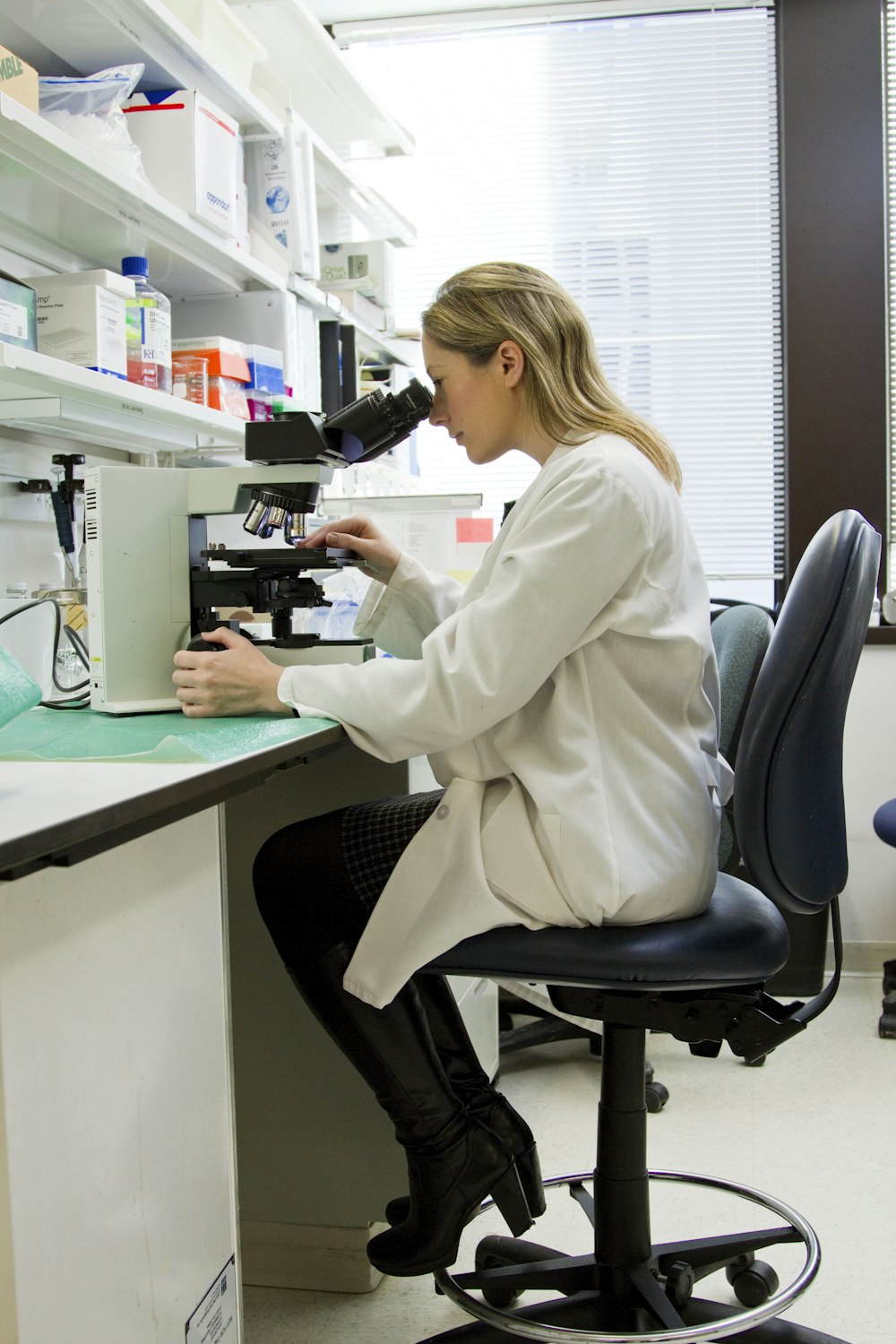
Advanced microscopy equipment used in cellular research (Image: Unsplash)
Pharmacological inhibitors like wortmannin (which blocks PI3-kinase activity) have helped establish the necessity of specific signaling components. When researchers treat cells with wortmannin, insulin-stimulated GLUT4 translocation is completely blocked, demonstrating the essential nature of the PI3-kinase pathway in this process 2 .
Advanced imaging technologies continue to push the boundaries of what we can observe. While conventional fluorescence microscopy revealed the broad strokes of GLUT4 translocation, the recent application of super-resolution techniques like dSTORM has uncovered previously invisible details, such as the nanoscale organization of GLUT4 at the plasma membrane . These technological advances continue to deepen our understanding of this critical physiological process.
Conclusion: From Molecular Insights to Therapeutic Innovations
The intricate journey of GLUT4—governed by molecular switches, guided along cellular tracks, and tethered at precise destinations—represents one of the most elegantly regulated processes in human physiology. The system's complexity ensures that glucose, a vital but potentially damaging nutrient when improperly managed, enters cells in carefully controlled quantities exactly when needed.
Current Treatments
Medications like metformin improve insulin sensitivity and GLUT4 translocation
Emerging Therapies
PPARβ/δ agonists and oxytocin-based treatments show promise
Future Targets
GLUT4 dispersal mechanisms and cytoskeletal integrity
Our growing understanding of these mechanisms has profound implications for addressing the global epidemic of type 2 diabetes. Current medications like metformin and thiazolidinediones already work in part by improving insulin sensitivity and GLUT4 translocation 5 . However, emerging research points to new therapeutic possibilities: compounds that target the PPARβ/δ nuclear receptor show promise in increasing insulin receptor levels and combatting insulin resistance 4 , while investigations into oxytocin's role in stimulating insulin secretion through GLP-1 reveal another potential avenue for intervention 6 .
The discovery of GLUT4 dispersal as a regulated step adds another potential target for therapeutic development. If we can develop compounds that specifically enhance GLUT4 dispersal at the plasma membrane, we might be able to improve glucose uptake even in cases where translocation itself is partially impaired. Similarly, interventions that maintain the integrity of the microtubule and actin networks could preserve glucose transport in aging and metabolic disease.
As basic science continues to unravel the subtleties of insulin signaling and GLUT4 trafficking, each new discovery brings potential applications that could improve the lives of millions affected by metabolic disorders. The cellular highway of glucose transport, once a black box, is now revealing its secrets—and with them, promising routes to better health.