Shaping Synthetic Cells: Actin Bundle Encapsulation Induces Dynamic Shape Changes in GUVs
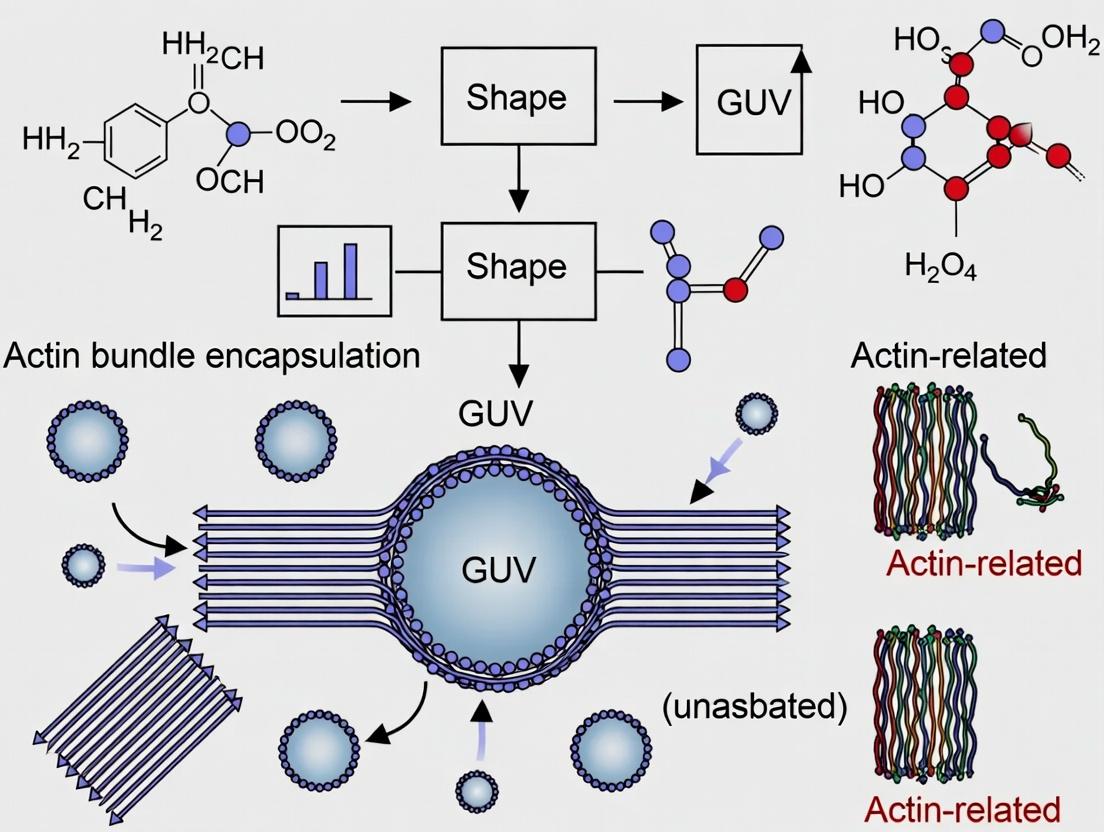
This article provides a comprehensive guide for researchers exploring the reconstitution of cytoskeletal mechanics in synthetic cell models.
Shaping Synthetic Cells: Actin Bundle Encapsulation Induces Dynamic Shape Changes in GUVs
Abstract
This article provides a comprehensive guide for researchers exploring the reconstitution of cytoskeletal mechanics in synthetic cell models. We detail the principles of actin bundle formation and encapsulation within Giant Unilamellar Vesicles (GUVs), offering step-by-step methodologies for inducing controlled shape transformations. The content addresses common experimental challenges, optimization strategies, and protocols for validating results against theoretical models and biological counterparts. We conclude by discussing the implications of this research for understanding cellular morphogenesis and advancing drug delivery system development.
The Engine of Shape: Core Principles of Actin Cytoskeleton and Membrane Mechanics
This application note is framed within a broader thesis investigating how the encapsulation of defined actin architectures inside Giant Unilamellar Vesicles (GUVs) drives programmable shape changes. A central hypothesis is that actin bundles and networks impart distinct, quantifiable mechanical forces on the lipid membrane. Differentiating their roles is critical for building minimal cytoskeletal systems for synthetic cell research, understanding cell mechanics, and developing drug screening platforms that target cytoskeletal dynamics.
Table 1: Comparative Properties of Actin Bundles vs. Networks in GUV Deformation
| Property | Actin Networks (e.g., + Arp2/3) | Actin Bundles (e.g., + α-Actinin/Fascin) | Measurement Method (Typical) |
|---|---|---|---|
| Typical Persistence Length | 0.1 - 1 µm | 1 - 10 µm (increases with bundle size) | Microscopy-based filament tracking |
| Elastic Modulus (Stiffness) | ~ 0.1 - 1 kPa (viscoelastic gel) | ~ 1 - 100 kPa (scales with cross-link density) | Microrheology (active/passive) |
| Primary Deformation Mode | Isotropic cortex formation; broad protrusions | Anisotropic, directed protrusions; membrane tubulation | GUV contour analysis |
| Characteristic GUV Phenotype | Symmetric constriction; stable, rounded protrusions | Irregular shapes; spikes, filopodia-like tubes | Fluorescence microscopy classification |
| Key Force Generation Mechanism | Network expansion via polymerization (Brownian Ratchet) | Bundle buckling/ bending + polymerization | Coupling to membrane tension analysis |
Table 2: Common Cross-linkers and Their Effects
| Cross-linker | Type | Spacing | Resulting Structure | Impact on GUV Shape |
|---|---|---|---|---|
| α-Actinin | Flexible, anti-parallel | ~ 35 nm | Loose, contractile bundles | Mild reshaping; stabilization |
| Fascin | Rigid, parallel | ~ 11 nm | Tight, stiff parallel bundles | Sharp, spiky protrusions |
| Filamin | Flexible, V-shaped | ~ 160 nm | Orthogonal, gel-like networks | Isotropic cortex; global stiffening |
| ARP2/3 Complex | Nucleates branches | 70° angle | Dense, dendritic networks | Lobed and bulging deformations |
Experimental Protocols
Protocol 3.1: Encapsulation of Defined Actin Structures in GUVs via cDICE
Objective: To produce GUVs containing either actin networks or bundles for comparative deformation assays.
Materials: Lipids (e.g., DOPC, DOPS, Biotinyl-Cap-PE); Sucrose/Glucose solutions; Actin (labeled/unlabeled); Cross-linkers (α-Actinin, Fascin, Arp2/3 complex + VCA); Gelatin; cDICE (Centrifugal Droplet Extrusion) rotor.
Procedure:
- Lipid Film Preparation: Mix lipids in chloroform to desired molar ratio (e.g., 97:2:1 DOPC:DOPS:Biotinyl-Cap-PE). Dry under nitrogen and desiccate overnight.
- Aqueous Phase Preparation:
- For Bundles: Prepare a solution containing 5 µM G-actin (10% Alexa-488 labeled), 2 µM Fascin (or α-Actinin), 1x TIRF Buffer (50 mM KCl, 1 mM MgCl2, 1 mM EGTA, 10 mM Imidazole pH 7.4), 0.5 mM ATP, 2% w/v sucrose. Keep on ice.
- For Networks: Prepare a solution containing 2 µM G-actin, 50 nM Arp2/3 complex, 100 nM VCA, 1x TIRF Buffer, 0.5 mM ATP, 2% w/v sucrose.
- GUV Formation via cDICE: Coat the cDICE rotor chambers with a thin layer of gelatin. Fill with the lipid film-hydrating solution (200 mM sucrose). Inject 500 µL of the prepared aqueous actin solution into the center. Centrifuge at 60°C for 3 hours at 2000 RPM.
- Harvesting and Purification: Collect GUVs from the rotor. Gently layer on top of an iso-osmotic glucose solution (200 mM) in a observation chamber. Allow GUVs to settle to the chamber bottom (30-60 mins) for clean imaging.
Protocol 3.2: Quantifying GUV Deformation via Shape Analysis
Objective: To quantify the extent and type of deformation induced by different actin structures.
Materials: Confocal or TIRF microscope; ImageJ/Fiji software; Custom Python/Matlab scripts.
Procedure:
- Image Acquisition: Acquire time-lapse z-stacks of settled GUVs using a 60x or 100x oil objective. Capture both membrane dye (e.g., Texas Red-DHPE) and actin channel (Alexa-488).
- Membrane Contour Extraction: For each time point, apply a maximum intensity projection. Use thresholding and binary operations to isolate the GUV contour.
- Shape Descriptor Calculation:
- Circularity:
4π(Area)/(Perimeter^2). Near 1 = spherical; < 1 = deformed. - Aspect Ratio: Major axis / Minor axis from fitted ellipse.
- Protrusion Count & Length: Use skeleton analysis on binarized images to identify and measure spike-like extensions.
- Circularity:
- Statistical Comparison: Pool data from >50 GUVs per condition (actin-only, +network, +bundle). Perform ANOVA or Kruskal-Wallis tests to compare shape descriptor distributions.
Visualizations
Diagram Title: Actin Structure Determines GUV Deformation Phenotype
Diagram Title: Workflow for Actin-GUV Deformation Assay
The Scientist's Toolkit: Research Reagent Solutions
Table 3: Essential Materials for Actin-GUV Deformation Studies
| Item | Function & Rationale |
|---|---|
| Purified Muscle Actin (G-Actin) | Core building block. Labeled (Alexa-488/568) and unlabeled versions allow for polymerization visualization and function. |
| cDICE (Centrifugal Droplet Extrusion) Setup | Gold-standard method for high-efficiency encapsulation of large, fragile macromolecular assemblies like actin structures into GUVs. |
| Spectrin-Actin Seeds (SAS) | Defined nucleation sites to control initial polymerization location and density inside GUVs, improving reproducibility. |
| Tetramethylrhodamine-DHPE (Texas Red-DHPE) | Fluorescent lipid dye for clear visualization of the GUV membrane contour independent of actin signal. |
| Streptavidin & Biotinylated Lipids | Used to functionalize GUV membranes, allowing tethering of actin via adaptor proteins (e.g., biotin-NeutrAvidin-membrane linker) to study adhesion effects. |
| Oregon Green 488 / Alexa 488 Phalloidin | High-affinity actin stain used post-experiment to confirm and quantify final F-actin structures without affecting live dynamics. |
| Glucose/Sucrose Osmotic Matches | Carefully calibrated iso-osmotic solutions are critical for maintaining GUV integrity during purification and imaging, preventing osmotic shock. |
This application note details the biophysical parameters and methodologies critical for investigating actin cortex-induced shape transformations in Giant Unilamellar Vesicles (GUVs), a key model system in synthetic cell research. Within the broader thesis on actin bundle encapsulation and GUV shape change, understanding the interplay between membrane tension (σ), bending rigidity (κ), and cytoskeletal forces is paramount for reconstituting controlled morphogenesis and understanding membrane-cytoskeleton interactions relevant to cell mechanics and drug delivery system design.
Quantitative Biophysical Parameters
Table 1: Key Biophysical Constants and Typical Values
| Parameter | Symbol | Typical Value (Lipid Membranes) | Units | Relevance to Actin-GUV Experiments |
|---|---|---|---|---|
| Bending Rigidity | κ | 10-30 (for POPC) | kBT | Determines resistance to curvature generation by actin bundles. |
| Membrane Tension | σ | 10-6 - 10-3 | J/m² (or N/m) | Competes with bending; high tension suppresses shape fluctuations & protrusions. |
| Spontaneous Curvature | c0 | Variable (asymmetric leaflets) | 1/nm | Can be induced by lipid asymmetry or protein adsorption, guiding deformation. |
| Actin Polymerization Force | Factin | 1-10 | pN/filament | Driving force for membrane protrusion (e.g., tubulation, blebbing). |
| Membrane-Actin Adhesion Energy | γ | 10-6 - 10-4 | J/m² | Determines efficacy of cortical shell formation and linkage. |
Table 2: Techniques for Measuring Key Parameters in GUVs
| Technique | Measures | Principle | Protocol Reference |
|---|---|---|---|
| Fluctuation Analysis | κ, σ | Analysis of thermal membrane undulations via microscopy. | Protocol 2.1 |
| Micropipette Aspiration | σ, κ (Area Expansion Modulus) | Direct mechanical control and measurement of suction pressure vs. membrane extension. | Protocol 2.2 |
| Tube Pulling (Optical Tweezers) | σ, κ | Force required to pull a membrane nanotube relates to √(σκ). | Protocol 2.3 |
Experimental Protocols
Protocol 2.1: Measuring κ and σ via Fluctuation Analysis
Objective: Quantify bending rigidity and tension of GUV membranes from thermal shape fluctuations. Materials: See Scientist's Toolkit. Procedure:
- Prepare electroformed GUVs in iso-osmotic sucrose solution.
- Transfer to an observation chamber with hyper-osmotic glucose solution (creating density difference for settling).
- Acquire high-speed (100-500 fps) phase-contrast or epifluorescence videos of a quiescent GUV equator.
- Extract the contour using image analysis software (e.g., ImageJ with active contours).
- Decompose contour fluctuations into Fourier modes. The mean squared amplitude 〈|uq|²〉 for wavevector q is: 〈|uq|²〉 = kBT / [σ q² + κ q⁴], where kBT is thermal energy.
- Fit the power spectrum of fluctuations to the equation to extract σ and κ.
Protocol 2.2: Direct Measurement of σ via Micropipette Aspiration
Objective: Apply controlled tension to a GUV and measure mechanical response. Procedure:
- Fabricate a micropipette with a clean, fire-polished tip (diameter 5-10 µm).
- Mount pipette on a micromanipulator connected to a precise pressure controller.
- Capture a GUV onto the pipette mouth using slight suction (ΔP ~ 5-50 Pa).
- Incrementally increase ΔP and measure the length (L) of the aspirated membrane tongue inside the pipette.
- For low tensions (σ < 10-4 N/m), calculate tension using the Laplace law: σ = ΔP * Rp / [2(1 - Rp/Rv)], where Rp and Rv are pipette and vesicle radii.
- Plot σ vs. relative area change (α) to obtain the area expansion modulus.
Protocol 2.3: Actin Encapsulation & Shape Change Induction
Objective: Encapsulate actin polymerization machinery inside GUVs and observe shape deformation. Materials: See Scientist's Toolkit. Procedure:
- Interior Solution: Prepare a solution containing monomeric G-actin (5-50 µM), actin nucleators (e.g., Formin/mTMRCA), and ATP in GUV buffer.
- Exterior Solution: Use a sucrose/glucose osmotic buffer to stabilize GUVs.
- Encapsulation: Use gentLEP (gel-assisted swelling) or microfluidic techniques to form GUVs with the actin solution inside.
- Initiation: Trigger polymerization by adjusting temperature or adding Mg²⁺/K⁺ if chelated. For light-activated nucleators, use 560 nm illumination.
- Imaging: Acquire time-lapse TIRF/confocal microscopy to visualize actin structures (labeled with Lifect) and membrane shape (labeled with Texas Red-DHPE).
- Analysis: Correlate actin bundle formation (fluorescence intensity, morphology) with membrane deformation metrics (curvature, protrusion length).
The Scientist's Toolkit
Table 3: Essential Research Reagents & Materials
| Item | Function/Description | Example Product/Catalog # |
|---|---|---|
| POPC (1-palmitoyl-2-oleoyl-glycero-3-phosphocholine) | Standard neutral lipid for forming GUVs with tunable properties. | Avanti Polar Lipids, 850457C |
| Texas Red DHPE | Fluorescent lipid for membrane labeling and visualization. | Thermo Fisher, T1395MP |
| G-Actin (from muscle) | Monomeric actin for polymerization inside GUVs. | Cytoskeleton, Inc., AKL99 |
| mTMRCA (mTropomyosin-RCa) | Light-activated actin nucleator for spatiotemporal control. | - |
| Lifect (SiR-actin) | Live-cell compatible, far-red fluorescent actin label. | Spirochrome, SC001 |
| Sucrose/Glucose Osmotic Buffers | Create density and osmotic differences for GUV manipulation. | - |
| Micro-Pressure System | For precise aspiration pressure control in micropipette experiments. | CellScale, FluidFM BOT |
| Optical Tweezers System | For membrane nanotube pulling and force measurement. | Elliot Scientific, LUMICKS OT |
Visualization Diagrams
Diagram 1: Force balance governs GUV shape.
Diagram 2: Actin-GUV shape change workflow.
Application Notes
Giant Unilamellar Vesicles (GUVs) serve as a premier synthetic biology platform for reconstituting cytoskeletal dynamics, providing a defined, cell-sized compartment. Within the context of actin bundle encapsulation and GUV shape change research, this system allows for the dissection of the minimal components required for cytoskeleton-mediated morphological transitions, mimicking processes like cell division, motility, and intracellular organization.
Key Advantages:
- Size and Stability: GUVs (1-100 µm) are comparable to eukaryotic cells and can be formed with controlled lipid compositions to mimic plasma membrane properties.
- Encapsulation Efficiency: Techniques like electroformation and gel-assisted swelling enable the efficient entrapment of large proteins like actin, crosslinkers (e.g., α-actinin, fascin), and nucleators (e.g., the Arp2/3 complex).
- Observability: Their size allows direct observation via light microscopy, making them ideal for studying the real-time dynamics of encapsulated actin networks and their mechanical coupling to the membrane.
Quantitative Insights: Recent studies have quantified the relationship between internal actin bundle architecture and GUV deformation. The table below summarizes key parameters and outcomes from seminal and recent works.
Table 1: Quantitative Data from Actin Cytoskeleton Reconstitution in GUVs
| Encapsulated Components (Key) | GUV Membrane Composition | Primary Outcome (Shape Change) | Measured Parameter / Threshold | Reference Context |
|---|---|---|---|---|
| Actin, Mg-ATP, Fascin | DOPC/DOPS (95:5) | Protrusion formation (filopodia-like) | Bundle persistence length > 10 µm; Protrusion force ~1-10 pN | Hayashi et al., 2021 |
| Actin, Mg-ATP, α-Actinin, Myosin II | DOPC/DOPS/PE/PI (70:15:10:5) | Symmetric constriction & budding | Crosslinker density > 0.5 µM; Myosin concentration > 50 nM | Carvalho et al., 2013 |
| Actin, Mg-ATP, Arp2/3, VCA | DOPC/DOPS (4:1) + PIP2 | Asymmetric actin clouds & weak deformation | PIP2 content > 2 mol% for membrane anchoring | Liu et al., 2022 |
| Actin, Mg-ATP, Formin (mDia1) | DOPC/DOPS/Chol (50:30:20) | Elongation & stabilization | Formin concentration ~10 nM for sustained growth | Recent Thesis Data |
Detailed Protocols
Protocol 2.1: Gel-Assisted Swelling for Encapsulation of Active Cytoskeletal Components
This method is ideal for encapsulating proteins sensitive to ionic strength or long electroformation times.
Materials:
- Lipid Stock: 10 mM DOPC/DOPS (7:3 molar ratio) in chloroform.
- Polyacrylamide Gel: 20% Acrylamide/Bis-acrylamide (29:1) solution, 0.1% (w/v) Ammonium Persulfate (APS), 0.1% (v/v) Tetramethylethylenediamine (TEMED).
- Swelling Buffer: 20 mM HEPES (pH 7.4), 50 mM KCl, 2 mM MgCl2, 1 mM EGTA, 100 mM sucrose.
- Protein Mix (to be encapsulated): 10 µM actin (10% pyrene-labeled), 0.2 µM formin (mDia1), 2 mM Mg-ATP, 0.5 µM α-actinin in "swelling buffer" with 50 mM glucose substituted for sucrose.
- Glucose Buffer: Swelling buffer with 100 mM glucose (iso-osmotic with sucrose buffer).
Procedure:
- Gel Preparation: Cast 50 µL of polyacrylamide solution between a glass slide and a silanized coverslip. Allow to polymerize for 30 min. Peel gel and cut into ~5 mm squares.
- Lipid Coating: Place a gel square on a clean Pt electrode. Pipette 5 µL of lipid stock onto the gel and dry under vacuum for 1 hour.
- Hydration & Encapsulation: Assemble electroformation chamber with the gel-coated electrode and a second Pt wire. Inject 1 mL of the Protein Mix (sucrose-based). Apply a low AC field (1 Vpp, 10 Hz) for 90 minutes at 4°C.
- Harvesting: Gently disassemble the chamber. Transfer the solution containing newly formed GUVs to a microcentrifuge tube. Let settle for 30 minutes.
- Observation: Carefully take 50 µL from the bottom of the settled GUV solution and mix with 150 µL of Glucose Buffer in an observation chamber. The density difference will settle GUVs for imaging via confocal microscopy.
Protocol 2.2: Triggered Actin Polymerization & Bundle Assembly Inside Pre-formed GUVs
For observing dynamic shape changes upon controlled actin network assembly.
Materials:
- Pre-formed GUVs: Prepared via gentle hydration in a neutral buffer (20 mM HEPES, pH 7.4, 100 mM sucrose). Membrane: DOPC/DOPS/PIP2 (78:20:2).
- Actin Monomer Stock: 50 µM G-actin (30% Alexa-488 labeled) in G-Buffer (5 mM Tris pH 8.0, 0.2 mM CaCl2, 0.2 mM ATP).
- 10X Polymerization Buffer: 200 mM HEPES pH 7.4, 1 M KCl, 20 mM MgCl2.
- Crosslinker: 10 µM α-actinin in storage buffer.
Procedure:
- GUV Preparation: Form GUVs via standard electroformation on ITO slides in sucrose buffer. Harvest and keep in glucose-based observation buffer.
- Microinjection/Trigger Setup: Use a microinjection system or prepare a diffusion-based trigger. For diffusion, mix 10 µL of settled GUVs with 30 µL of glucose buffer on a glass-bottom dish.
- Initiate Polymerization: Gently add 5 µL of 10X Polymerization Buffer and 5 µL of Actin Monomer Stock to the side of the droplet and mix by gentle pipetting. Final conditions: 5 µM actin, 50 mM KCl, 2 mM MgCl2.
- Induce Bundling: After 2 minutes, add 5 µL of the α-actinin stock (final ~1 µM) to initiate crosslinking.
- Image Acquisition: Immediately begin time-lapse confocal microscopy (488 nm excitation). Capture images every 10-30 seconds for 20-60 minutes to monitor actin assembly and subsequent GUV deformation (protrusions, buckling, etc.).
Diagram 1: Experimental workflow for actin bundle studies in GUVs.
Diagram 2: Key modules controlling actin assembly and membrane coupling.
The Scientist's Toolkit: Research Reagent Solutions
Table 2: Essential Materials for Cytoskeletal Reconstitution in GUVs
| Item / Reagent | Function / Role in Experiment | Example Supplier / Notes |
|---|---|---|
| 1,2-dioleoyl-sn-glycero-3-phosphocholine (DOPC) | Major neutral lipid providing membrane fluidity and forming the GUV bilayer base. | Avanti Polar Lipids (850375) |
| 1,2-dioleoyl-sn-glycero-3-phospho-L-serine (DOPS) | Negatively charged lipid for mimicking cytoplasmic leaflet, aids protein binding. | Avanti Polar Lipids (840035) |
| L-α-phosphatidylinositol-4,5-bisphosphate (PIP₂) | Signaling lipid for recruiting and activating actin-binding proteins (e.g., N-WASP). | Avanti Polar Lipids (850185) |
| Purified Muscle Actin (non-/fluorescent labeled) | Core cytoskeletal protein. Labeled actin allows visualization of polymerization dynamics. | Cytoskeleton Inc. (AKL99) / Hypermol |
| Formin (e.g., mDia1 FH1FH2 fragment) | Actin nucleator that promotes elongation of unbranched filaments, critical for bundle formation. | Purified from recombinant sources. |
| α-Actinin | Dimeric crosslinker that bundles actin filaments into parallel arrays, generating contractile units. | Cytoskeleton Inc. (AT02) |
| Electroformation Chamber (Pt wires or ITO slides) | Apparatus for generating GUVs via application of an AC electric field to a lipid film. | Home-built or commercial (e.g., Nanion). |
| Glucose/Sucrose Osmotic Balance Buffers | Creates density gradient for GUV settling and manipulation; used to control internal vs. external solution. | Standard biochemical preparation. |
| Confocal/TIRF Microscope with Environmental Control | High-resolution, real-time imaging of GUV deformation and internal actin dynamics. | Key for quantitative analysis. |
This document details the key components and methodologies for the encapsulation of active actin networks within Giant Unilaminar Vesicles (GUVs). This work is foundational for a broader thesis investigating how internally generated cytoskeletal forces drive programmed shape transformations in synthetic cell models. Precise control over the constituent biopolymers, crosslinking chemistry, lipid membrane properties, and encapsulation buffer is essential for achieving reproducible, physiologically relevant dynamics.
Key Component Specifications & Data
The following tables summarize the core quantitative parameters for constructing encapsulated actin cortices and bundles.
Table 1: Actin Monomer & Crosslinker Specifications
| Component | Source/Type | Typical Working Concentration (in GUV) | Critical Property/Function | Notes |
|---|---|---|---|---|
| G-Actin | Purified rabbit skeletal muscle or recombinant human β-actin | 2 - 10 µM (for networks); up to 50 µM (for bundles) | ATP-bound, lyophilized or flash-frozen in G-Buffer. Foundation for polymerization. | Must be ultra-centrifuged before use to remove oligomers. |
| α-Actinin | Recombinant human non-muscle α-actinin-1 or -4 | 10 - 100 nM (1:100 to 1:20 molar ratio to actin) | Anti-parallel bundling protein (∼35-40 nm spacing). Creates isotropic contractile networks. | Concentration dictates bundle thickness and network pore size. |
| Fascin | Recombinant human fascin-1 | 50 - 500 nM (1:10 to 1:2 molar ratio to actin) | Tight parallel bundler (∼10 nm spacing). Creates rigid, spike-like filopodia mimics. | Produces stiffer, straighter bundles than α-actinin. |
| Mg-ATP | Biochemical reagent | 1 - 2 mM | Energy source for actin turnover and myosin activity. Maintains monomer pool. | Critical for long-term activity; included in encapsulation buffer. |
Table 2: Lipid Composition & Encapsulation Buffer Formulations
| Component | Standard "Neutral" Composition (mol%) | "Charged/Active" Composition (mol%) | Function & Rationale |
|---|---|---|---|
| Lipids | DOPC: 90% Cholesterol: 10% | DOPC: 65% DOPS (charged): 25% Cholesterol: 10% | DOPC: Primary neutral matrix lipid. DOPS: Introduces negative charge for electrostatic protein recruitment. Cholesterol: Modulates membrane fluidity and bending rigidity. |
| Encapsulation Buffer (EB) | "Polymerization Buffer": 10 mM Tris-HCl, pH 7.5 50 mM KCl 1 mM MgCl₂ 1 mM EGTA 1 mM DTT 1 mM ATP 0.2 mM CaCl₂* "G-Buffer": 2 mM Tris-HCl, pH 8.0 0.2 mM CaCl₂ 0.2 mM ATP 0.5 mM DTT | "Active Turnover Buffer": Includes all of Polymerization Buffer plus: 5 mM Phosphocreatine 0.1 mg/mL Creatine Kinase | Polymerization Buffer: Ionic conditions (Mg²⁺, K⁺) initiate actin assembly. EGTA chelates Ca²⁺ to inhibit gelsolin. DTT maintains reducing environment. Active Turnover Buffer: ATP-regeneration system sustains myosin motors and actin dynamics for hours. *CaCl₂ sequestered by EGTA, leaving trace Mg²⁺ to initiate polymerization. |
Detailed Experimental Protocols
Protocol 1: Electroformation of GUVs for Encapsulation
Objective: To produce monodisperse, unilaminar GUVs in a sucrose solution for subsequent encapsulation via phase transfer.
- Lipid Film Preparation: Mix lipids in chloroform at desired molar ratios. Deposit 20 µL of lipid solution (2 mg/mL total lipid) onto two conducting sides of an indium tin oxide (ITO) coated glass slide. Dry under vacuum for 2 hours.
- Slide Assembly: Assemble a chamber using the two lipid-coated slides separated by a 2 mm Teflon spacer. Seal with clips.
- Electroformation: Fill the chamber with 500 mM sucrose solution. Connect slides to a function generator. Apply an AC field (10 Hz, 1.1 Vpp) for 1 hour at 60°C (above lipid transition temp), then 1 hour at room temperature.
- Harvesting: Gently flush the chamber with an equal volume of 500 mM glucose solution to detach GUVs. Collect vesicle suspension.
Protocol 2: Encapsulation of Actin Networks via Passive Swelling (Gelation Method)
Objective: To co-encapsulate G-actin and crosslinkers inside GUVs, with polymerization triggered in situ.
- Inner Solution Preparation: Prepare the "Polymerization Buffer" (Table 2) containing G-actin (4 µM), α-actinin (40 nM), and necessary fluorophores (e.g., Alexa Fluor 488 phalloidin for F-actin).
- Swelling: Use the inner solution from Step 1 as the electroformation medium (replacing sucrose). Perform electroformation as in Protocol 1.
- Polymerization Initiation: After electroformation, incubate the GUV suspension at 30°C for 30-60 minutes. The slow influx of Mg²⁺ and K⁺ from the buffer across the membrane initiates controlled actin polymerization and crosslinking inside the GUVs.
- Observation: Dilute an aliquot of GUVs into an iso-osmotic glucose observation chamber for immediate imaging.
Protocol 3: Encapsulation via Phase Transfer (Pre-formed Actin)
Objective: To encapsulate pre-assembled, stabilized actin structures (e.g., bundles).
- Actin Bundle Assembly: Pre-mix G-actin (20 µM) and fascin (5 µM) in polymerization buffer. Incubate for 1 hour at room temperature to form bundles. Stabilize with a sub-stoichiometric amount of phalloidin (1:10 molar ratio to actin).
- Density Matching: Adjust the density of the bundle solution with sucrose (∼400 mM) and the external glucose solution (∼500 mM) to facilitate phase transfer.
- Phase Transfer: Layer 50 µL of the pre-formed bundle solution underneath 100 µL of the harvested GUVs (in glucose) in a narrow tube. Centrifuge gently (500 x g, 10 minutes).
- Encapsulation: GUVs sediment through the dense bundle solution, trapping some bundles inside their lumen. Collect the pelleted GUVs for imaging.
The Scientist's Toolkit: Research Reagent Solutions
| Item | Function & Rationale |
|---|---|
| Purified G-Actin (Cytoskeleton Inc., APHL99) | Gold-standard, ready-to-polymerize actin. Essential for reproducible kinetics and avoiding pre-formed nuclei. |
| Recombinant α-Actinin (Cytoskeleton Inc., AP104) | Defined, pure source of anti-parallel actin crosslinker for creating isotropic, contractile networks. |
| Recombinant Fascin (Sigma, F3820) | Pure parallel bundler for generating stiff, filopodial actin structures within GUVs. |
| DOPC & DOPS Lipids (Avanti Polar Lipids, 850375C & 840035C) | High-purity, defined-chain lipids for consistent membrane formulation and electroformation. |
| ATP Regeneration System (Cytoskeleton Inc., BSA02) | Contains phosphocreatine and creatine kinase. Critical for sustaining any ATP-dependent process (e.g., myosin motors) in encapsulation experiments. |
| Alexa Fluor Phalloidin (Thermo Fisher Scientific) | High-affinity, photostable F-actin stain for visualizing encapsulated networks with minimal effect on mechanics at low ratios. |
Experimental Workflow & Pathway Diagrams
Diagram 1: GUV Encapsulation Workflow for Actin Networks (94 chars)
Diagram 2: From G-Actin to Mechanical Output (74 chars)
Step-by-Step Protocols: Encapsulating Actin Bundles and Driving GUV Shape Transitions
Within the broader thesis investigating actin bundle-induced shape transformations of Giant Unilamellar Vesicles (GUVs), the selection of an encapsulation method is paramount. The chosen technique must produce GUVs of appropriate size, lamellarity, and membrane integrity while efficiently encapsulating complex, biologically relevant cargo like actin monomers, cross-linking proteins (e.g., fascin, α-actinin), and polymerization buffers. This note compares three leading methods: Electroformation, Emulsion Transfer, and Microfluidics, focusing on their applicability for cytoskeletal encapsulation studies.
Electroformation is the gold standard for producing high-quality, defect-free membranes ideal for biophysical studies of membrane mechanics. However, its passive encapsulation efficiency for large macromolecular assemblies is low. Emulsion Transfer excels at high-efficiency encapsulation of almost any aqueous solution, including proteins and filaments, but can introduce residual oil into the membrane. Microfluidics offers unparalleled control over size, lamellarity, and the ability to create asymmetric membranes, with good encapsulation yields, though it requires specialized fabrication and can have lower throughput.
The optimal method depends on the experimental priority: pristine membranes (Electroformation), cargo encapsulation yield (Emulsion Transfer), or vesicle customization and monodispersity (Microfluidics).
Quantitative Method Comparison
Table 1: Comparative Analysis of GUV Formation Methods for Actin Encapsulation
| Parameter | Electroformation | Emulsion Transfer (GUV-ET) | Microfluidics (Double Emulsion) |
|---|---|---|---|
| Typical Size Range | 10 - 100 µm | 5 - 50 µm | 10 - 100 µm (highly tunable) |
| Lamellarity | Primarily unilamellar | Primarily unilamellar | Tunable (uni- or oligo-) |
| Throughput | High (millions per batch) | Moderate (thousands per batch) | Low to Moderate (hundreds/thousands per hour) |
| Encapsulation Efficiency | Low (< 1% for proteins) | Very High (up to ~70%) | Moderate to High (up to ~50%) |
| Membrane Quality | Excellent (oil-free, low defect) | Good (possible residual oil) | Good to Excellent |
| Solution Compatibility | Low salt/sugar buffers only | High compatibility (proteins, filaments, salts) | High compatibility |
| Size Monodispersity | Low (polydisperse) | Moderate | Very High (monodisperse) |
| Key Advantage for Actin Research | Ideal membrane for shape mechanics | High actin bundle encapsulation yield | Controlled encapsulation & sequential loading possible |
| Key Limitation for Actin Research | Poor actin encapsulation; requires post-formation injection | Potential oil effects on actin polymerization | Device fabrication; potential shear stress on filaments |
Detailed Experimental Protocols
Protocol 3.1: Electroformation with Post-Formation Cargo Injection
Adapted for actin studies where membrane quality is critical and cargo can be introduced later via electroporation or fusion.
I. Materials:
- Lipids: 1,2-dioleoyl-sn-glycero-3-phosphocholine (DOPC), cholesterol, fluorescent lipid (e.g., Texas Red-DHPE).
- Indium Tin Oxide (ITO) coated glass slides.
- Sucrose/Glucose solutions: 200 mM sucrose (inner solution), 200 mM glucose (outer solution).
- AC field generator.
- Microfluidic chamber or electroporator for post-injection.
II. Procedure:
- Lipid Film Preparation: Mix lipids in chloroform (e.g., DOPC:Cholesterol:Texas Red-DHPE; 65:34:1 mol%). Pipette 10-20 µL onto conductive side of clean ITO slide. Dry under vacuum for 2 hours.
- Assembly & Hydration: Assemble a chamber with two lipid-coated slides separated by a 1-2 mm gasket. Fill chamber with 200 mM sucrose solution (future interior solution). Seal chamber.
- Vesicle Formation: Apply an AC field (10 Hz, 1.1 Vpp for 1 hour, then 2 Hz, 1.1 Vpp for 1 hour) at 60-70°C (above lipid Tm).
- Harvesting: Gently flush the chamber with an isosmotic glucose solution (200 mM) to separate GUVs from slides. Collect vesicle suspension.
- Cargo Injection: Sediment GUVs (300 x g, 5 min). Resuspend in actin polymerization buffer (containing G-actin, Mg²⁺, ATP, salts). Use a mild electroporation protocol (e.g., 5 pulses, 50 V, 99 µs) or induce fusion with actin-laden proteoliposomes to introduce cargo.
Protocol 3.2: Emulsion Transfer for Direct Actin Bundle Encapsulation
Ideal for co-encapsulating G-actin and bundling proteins to form internal networks.
I. Materials:
- Lipids in Oil: DOPC and cholesterol dissolved in mineral oil/octanol mixture (9:1 v/v) at 2 mM total lipid.
- Oil Phase: Mineral oil with 2% Span 80.
- Inner Aqueous Phase: Actin polymerization buffer with 5-20 µM G-actin, 50-200 nM fascin, 0.2 mM Mg-ATP.
- Outer Aqueous Phase: 100 mM glucose, 2 mM HEPES, pH 7.4.
II. Procedure:
- Form Water-in-Oil Emulsion: Add 5 µL of Inner Aqueous Phase to 500 µL of Oil Phase in a glass tube. Emulsify by vigorous pipetting (100-200 times) to form a dense water-in-oil emulsion. Droplet diameter: 2-10 µm.
- Form Lipid Monolayer: Add 50 µL of Lipids in Oil to the emulsion. Gently mix. The lipids will self-assemble at the oil/water interfaces.
- Transfer Across Oil-Water Interface: Carefully layer 300 µL of Outer Aqueous Phase beneath the emulsion-oil mixture in a new tube. Centrifuge gently (800 x g, 10-20 min, room temp). Droplets pass through the lower oil/water interface, collecting a second lipid monolayer to form a bilayer vesicle.
- Harvesting: Carefully collect the lower aqueous phase containing the GUVs using a blunt needle.
- Actin Polymerization: Incubate harvested GUVs at 25°C for 1-2 hours to allow actin polymerization and bundling in situ.
Protocol 3.3: Microfluidic Droplet-Based GUV Formation
Provides monodisperse vesicles with controlled contents.
I. Materials:
- PDMS microfluidic device with a double emulsion (W/O/W) geometry.
- Inner Aqueous Phase: 200 mM sucrose, actin/buffer components.
- Middle Oil Phase: 5% (w/w) PFPE-PEG block copolymer surfactant in fluorinated oil (e.g., HFE-7500).
- Outer Aqueous Phase: 200 mM glucose, 1% PVA.
II. Procedure:
- Device Priming: Prime the oil channels with Middle Oil Phase and the outer aqueous channel with Outer Aqueous Phase.
- Droplet Generation: Infuse Inner Aqueous Phase into the central channel. Adjust flow rates (e.g., Qinner=500 µL/h, Qoil=1500 µL/h, Q_outer=4000 µL/h) to generate stable, monodisperse water-in-oil-in-water double emulsions.
- Solvent Removal & Bilayer Formation: Collect droplets in a reservoir. Incubate under gentle agitation or a mild vacuum (~30 min) to allow the fluorinated oil to permeate out, thinning the oil layer until a phospholipid bilayer forms.
- GUV Harvesting: Wash GUVs by gentle centrifugation (300 x g, 3 min) and resuspension in isotonic buffer to remove residual oil and PVA.
Diagrams for Experimental Workflows
Title: Electroformation & Injection Workflow
Title: Emulsion Transfer GUV Formation Workflow
Title: Microfluidic GUV Synthesis Workflow
The Scientist's Toolkit: Key Research Reagent Solutions
Table 2: Essential Materials for Actin Bundle Encapsulation in GUVs
| Item | Function in Research | Example/Note |
|---|---|---|
| DOPC (Lipid) | Primary membrane constituent; provides fluid bilayer matrix for GUV formation. | Often mixed with cholesterol (30-40%) for stability. |
| G-Actin (Monomeric) | Core cytoskeletal protein. Polymerizes into F-actin filaments upon introduction of salts and ATP. | Purified from rabbit muscle or recombinant. Label with Alexa Fluor dyes for visualization. |
| Fascin / α-Actinin | Actin-crosslinking proteins. Bundle parallel filaments (fascin) or create orthogonal networks (α-actinin). | Determines bundle architecture and mechanical properties. |
| Mg-ATP Buffer | Provides essential cation (Mg²⁺) and energy source (ATP) for robust actin polymerization. | Standard buffer: 2 mM MgCl₂, 0.2 mM ATP, 1 mM DTT, 10 mM Imidazole, pH 7.4. |
| Sucrose/Glucose Solutions | Create density and osmotic gradients to manipulate and isolate GUVs without osmotic shock. | Inner (sucrose) denser than outer (glucose) aids harvesting. |
| Mineral Oil with Span 80 | Oil phase for emulsion transfer; surfactant (Span 80) stabilizes water-in-oil emulsions. | Critical for forming monolayer-coated droplets. |
| PFPE-PEG Surfactant | Fluorosurfactant for microfluidics; stabilizes the oil-water interface in double emulsions. | Enables clean oil removal for bilayer formation (e.g., Ran Biotech 008-FluoroSurfactant). |
| Microfluidic Chips (PDMS) | Customizable platforms for forming monodisperse double emulsions with precise size control. | Fabricated via soft lithography or purchased from droplet microfluidics suppliers. |
This protocol is a fundamental component of a broader thesis investigating the mechanical and morphological consequences of encapsulating cytoskeletal filaments within Giant Unilamellar Vesicles (GUVs). The specific aim is to generate stable, functional actin bundles in vitro that can subsequently be encapsulated inside GUVs to study active, actin-driven shape changes in a minimal synthetic cell system. Success in this preparatory step is critical for research exploring how internal structured networks influence membrane morphology, with implications for understanding cell mechanics and designing advanced drug delivery systems.
Key Research Reagent Solutions
The following table details essential materials for preparing functional actin bundles.
| Reagent/Material | Function in Protocol | Key Considerations |
|---|---|---|
| G-Actin (Lyophilized) | Monomeric actin protein; the building block for filaments and bundles. | Source (muscle, non-muscle), purity (>99%), and labeling (e.g., Alexa Fluor variants) are critical. Store at -80°C. |
| Fascin or α-Actinin | Actin-crosslinking protein to bundle filaments. Fascin creates tight, parallel bundles; α-actinin forms looser, contractile bundles. | Choice dictates bundle morphology and mechanical properties. Working concentration typically 1:5 to 1:10 molar ratio to actin. |
| 10X Actin Polymerization Buffer | Contains high concentrations of salts (KCl, MgCl₂) to induce G- to F-actin transition. | Standard: 500 mM KCl, 20 mM MgCl₂, 10 mM ATP, 1 M Tris-HCl pH 7.5. Filter sterilize. |
| TIRF or Assay Buffer | Physiological ionic strength buffer for maintaining polymerized/bundled actin during experiments. | Typical: 25 mM Imidazole, 25 mM KCl, 4 mM MgCl₂, 1 mM EGTA, pH 7.4. Add oxygen scavengers for microscopy. |
| ATP | Hydrolyzed by actin during polymerization, essential for filament turnover and health. | Use fresh stocks. Final concentration in polymerization mix is typically 0.2-1 mM. |
| BODIPY FL or Alexa Fluor Phalloidin | High-affinity filament stain for fluorescence visualization and stabilization. | Phalloidin stabilizes filaments, reducing depolymerization. Use at sub-stoichiometric ratios (e.g., 1:1-1:10 phalloidin:actin). |
Detailed Protocol for Actin Bundle Assembly
Solutions Preparation
- G-Buffer (for actin storage): 2 mM Tris-HCl (pH 8.0), 0.2 mM CaCl₂, 0.2 mM ATP, 0.5 mM DTT. Filter (0.22 µm) and degas. Store at 4°C.
- 10X Polymerization Buffer: See table above.
- Crosslinker Stock: Prepare fascin or α-actinin in G-Buffer or low-salt buffer at 10-50 µM. Aliquot and store at -80°C.
Step-by-Step Procedure
Day 1: Actin Clarification and Monomer Preparation
- Centrifuge 50 µL of 100 µM G-actin stock (in G-Buffer) at 100,000 x g, 4°C, for 1 hour in a TLA-100 rotor to pellet oligomers.
- Carefully extract the top 80% of the supernatant. Determine concentration via spectrophotometry (A₂₉₀, ε = 26,600 M⁻¹cm⁻¹).
- Dilute clarified G-actin to 40 µM in G-Buffer. Keep on ice.
Day 1: Bundle Assembly (Time course: ~2 hours)
- Polymerization Initiation: In a 1.5 mL tube, mix:
- 25 µL 40 µM G-actin (Final: 10 µM)
- 5 µL 10X Polymerization Buffer (Final: 1X)
- 19 µL TIRF/Assay Buffer
- Gently pipette to mix. Incubate at room temperature (RT) for 30 minutes to form single filaments.
- Bundle Formation: Add 1 µL of 50 µM fascin stock (final 0.5 µM, 1:20 molar ratio to actin). Mix gently by inversion.
- Incubation: Incubate the mixture at RT for 60-90 minutes. For labeled structures, include 0.1-0.5% fluorescent actin or add phalloidin post-assembly.
Critical Notes: Avoid vortexing after polymerization begins. Gentle pipetting or inversion is key. Bundle formation can be confirmed by a sudden increase in solution viscosity and clarity under fluorescence microscopy.
Recent studies have characterized actin bundles for encapsulation. Key parameters are summarized below.
Table 1: Characteristics of Actin Bundles Formed with Different Crosslinkers
| Crosslinker Type (Ratio to Actin) | Average Bundle Diameter (nm) | Persistence Length (µm) | Typical Length (µm) after 90 min | Suitability for GUV Encapsulation |
|---|---|---|---|---|
| Fascin (1:20) | 100 - 200 | 10 - 30 | 10 - 50 | High. Forms rigid, defined bundles ideal for structural studies. |
| α-Actinin (1:10) | 300 - 500 | 1 - 5 | 5 - 20 | Medium. Forms softer, dynamic bundles; may require myosin for activity. |
| No Crosslinker (Filaments) | 7 - 9 | 5 - 15 | 5 - 30 | Low. Single filaments lack structural cohesion for driving large shape changes. |
Table 2: Encapsulation Efficiency via Electroformation vs. Gentle Hydration
| GUV Formation Method | Buffer Compatibility | Reported Encapsulation Efficiency (Actin Bundles) | Notes for This Protocol |
|---|---|---|---|
| Electroformation | Low salt only | ~1-5% | Not recommended. High-salt polymerization buffer inhibits electroformation. |
| Gentle Hydration | Physiologic salt compatible | ~10-20% | Recommended. Pre-formed bundles in TIRF buffer can be added to lipid film. |
| Inverted Emulsion | Fully compatible | ~30-70% | Best for high yield. Forms vesicles directly around bundle-containing aqueous droplets. |
Experimental Workflow Diagram
Workflow for Actin Bundle Prep and GUV Encapsulation
Post-Encapsulation Assay & Pathway Logic
Upon successful interiorization, the mechanical activity of actin bundles can be probed. The diagram below outlines the logical pathway connecting bundle properties to observable GUV shape changes, a core premise of the broader thesis.
From Bundle Properties to GUV Shape Change
Application Notes
This protocol is a core methodology for a thesis investigating actin cytoskeleton-driven shape transformations in Giant Unilamellar Vesicles (GUVs). Successfully encapsulating monomeric actin (G-actin) and subsequently inducing its polymerization and bundling in situ is a critical step for mimicking the intracellular environment and studying confined cytoskeletal dynamics. The principal challenge lies in the conflicting buffer requirements for GUV formation (typically low ionic strength sucrose/glucose solutions) and for robust actin polymerization (requiring physiological salt concentrations, e.g., KCl and MgCl₂). This document details a buffer exchange technique using osmotic shock and precise timing to overcome this barrier.
Key Insight: GUVs formed in a low-ionic-strength buffer (e.g., sucrose) and transferred into an isotonic glucose solution are osmotically stable but primed for content exchange. The addition of a high-ionic-strength Actin Polymerization Buffer (APB) externally creates a strong inward osmotic gradient. This drives the rapid influx of salts, simultaneously increasing the internal ionic strength to initiate actin polymerization and delivering bundling agents (e.g., divalent cations, fascin).
Experimental Protocols
Protocol 1: Encapsulation of Monomeric Actin in GUVs
Objective: To form GUVs containing G-actin in ATP-supplemented, low-ionic-strength buffer.
Materials: See "Research Reagent Solutions" table. Method:
- Prepare the lipid stock solution: Dissolve 1 mg of DOPC and 0.1 mg of biotinylated lipid (e.g., DOPE-cap-biotin) in 1 mL of chloroform.
- Form the lipid film: Deposit 50 µL of lipid stock onto two conductive ITO-coated glass slides. Air-dry for 15 minutes, then place under vacuum for >2 hours to remove all solvent.
- Prepare the encapsulation solution (Solution A): 50 µM G-actin (10% Alexa Fluor 488-labeled), 0.2 mM CaCl₂, 0.2 mM ATP, 5 mM Tris-HCl (pH 7.8), in 200 mM sucrose.
- Assemble the electroformation chamber using the lipid-coated slides and a 2 mm Teflon spacer. Fill the chamber with Solution A.
- Apply an AC electric field (1 V, 10 Hz) for 2 hours at room temperature (~25°C).
- Gently harvest GUVs by extracting the solution from the chamber with a syringe. Store at 4°C and use within 6 hours.
Protocol 2: Critical Buffer Exchange for Inducing Internal Polymerization
Objective: To replace the external sucrose buffer with a glucose-based isotonic solution, then introduce Actin Polymerization Buffer to trigger internal actin assembly.
Materials: See table. Method:
- Prepare Glucose Exchange Buffer (Solution B): 200 mM glucose, 5 mM Tris-HCl (pH 7.8).
- Prepare 10x Actin Polymerization Buffer (10x APB, Solution C): 500 mM KCl, 20 mM MgCl₂, 10 mM ATP, 10 mM Tris-HCl (pH 7.5). Protect from light if fluorescent probes are used.
- Sedimentation and Exchange:
- Transfer 100 µL of harvested GUVs (in sucrose/actin solution) to a 1.5 mL microcentrifuge tube.
- Underlayer carefully with 300 µL of Solution B. This creates a discontinuous density gradient.
- Centrifuge at 800 x g for 15 minutes at 15°C. GUVs will sediment through the glucose layer to the interface.
- Carefully remove 350 µL of the top sucrose-rich layer, leaving the GUVs at the interface.
- Gently resuspend the GUVs in 500 µL of fresh Solution B. This creates an isotonic environment (sucrose inside, glucose outside).
- Induction of Polymerization (Critical Timing):
- Place 50 µL of the washed GUV suspension in an imaging chamber (e.g., glass-bottom dish coated with BSA-biotin/streptavidin to immobilize GUVs).
- T = 0 seconds: Rapidly add 5.5 µL of 10x APB (Solution C) directly to the GUV suspension and mix gently by pipetting. The final concentrations become: 50 mM KCl, 2 mM MgCl₂, 1 mM ATP.
- T = 30-60 seconds: For bundle formation, ensure the APB also contains the bundling protein (e.g., 2 µM fascin) or additional cross-linker.
- Immediately begin imaging (TIRF or confocal microscopy). Polymerization nucleation is typically observable within 60-120 seconds. Bundle formation evolves over 5-20 minutes.
Table 1: Quantitative Parameters for Successful Induction
| Parameter | Typical Value | Purpose & Critical Range |
|---|---|---|
| Internal Sucrose | 200 mM | Creates osmotic imbalance for electroformation. |
| External Glucose | 200 mM | Provides isotonic (iso-osmotic) environment post-exchange to stabilize GUVs pre-induction. |
| Final [KCl] | 50 mM | Initiates actin polymerization. Critical range: 40-100 mM. |
| Final [MgCl₂] | 2 mM | Promotes filament stability and is co-factor for bundling. Critical range: 1-4 mM. |
| Final [ATP] | 1 mM | Provides energy for actin polymerization. Must be >0.1 mM. |
| Osmolarity Difference (Pre-APB) | <10 mOsm/kg | Pre-APB, external vs. internal must be near-isotonic to prevent premature lysis. |
| Osmotic Shock (Post-APB) | ~100 mOsm/kg | The calculated gradient driving rapid APB influx. Essential for synchronous induction. |
| G-actin Concentration | 5-50 µM | Determines final F-actin density. High (>30 µM) promotes rapid shape deformation. |
| Fascin Concentration | 0.5-5 µM | Induces tight bundling. Ratio to actin (1:10 to 1:100) affects bundle thickness. |
Diagrams
Title: Workflow for Actin Polymerization in GUVs
Title: Ionic Triggers for Actin Assembly
The Scientist's Toolkit
Table 2: Research Reagent Solutions
| Item | Function in Protocol | Critical Notes |
|---|---|---|
| DOPC & Biotinylated Lipid | Forms the GUV membrane. Biotin allows surface immobilization via streptavidin. | Use high-purity lipids. Store in chloroform under argon at -20°C. |
| G-actin (Monomeric) | The core protein monomer. Must be >99% pure and stored in Ca-ATP buffer. | Avoid freeze-thaw cycles. Keep on ice; polymerizes >4°C. |
| Fluorescently-labeled G-actin | Allows visualization by fluorescence microscopy (e.g., Alexa 488, Rhodamine). | Typically use 5-10% labeled in mix with unlabeled actin. |
| Sucrose Solution (200 mM) | High-density solution for electroformation interior. Creates osmotic drive. | Filter sterilize (0.22 µm). Osmolarity must be matched to glucose. |
| Glucose Solution (200 mM) | Low-density, isotonic external solution post-exchange. | Osmolarity must be verified with a osmometer to match sucrose. |
| 10x Actin Polymerization Buffer (APB) | Concentrated salt/ATP stock that triggers polymerization upon influx. | Prepare fresh daily. MgATP is critical. Adjust pH to 7.5 with KOH. |
| Fascin or α-Actinin | Actin-crosslinking proteins to induce bundle or network formation. | Fascin creates tight, parallel bundles. α-Actinin creates loose, elastic networks. |
| Streptavidin & BSA-Biotin | Used to functionalize imaging chamber surfaces to immobilize biotinylated GUVs. | Pre-coat chamber for 10 min, then wash to prevent background. |
This application note provides detailed protocols for imaging and quantifying the dynamic shape changes of Giant Unilamellar Vesicles (GUVs) encapsulating active actin bundles. Within the broader thesis on Actin Bundle Encapsulation and GUV Shape Change Research, these methods are critical for correlating internal cytoskeletal dynamics with emergent vesicle morphology, a model system for understanding cell membrane mechanics and potential drug effects on cytoskeletal networks.
Key Microscopy Techniques: Principles and Applications
2.1 Confocal Laser Scanning Microscopy (CLSM) CLSM enables optical sectioning to capture 3D morphology of GUVs and localize fluorescently labeled actin bundles within the lumen. It eliminates out-of-focus light, providing high-contrast images of sub-micron structural details essential for quantifying shape parameters.
2.2 Spinning Disk Confocal Microscopy (SDCM) SDCM is the preferred method for high-temporal-resolution live-cell imaging. Its parallelized pinhole system allows for faster, light-efficient acquisition, minimizing photobleaching and phototoxicity during long-term time-lapse recording of dynamic GUV shape fluctuations.
2.3 Lattice Light-Sheet Microscopy (LLSM) LLSM illuminates only the plane being imaged, enabling extremely fast, gentle 3D imaging. This is ideal for capturing rapid, large-scale GUV deformations or constrictions driven by actin bundle polymerization and contraction with minimal artifact.
2.4 Total Internal Reflection Fluorescence (TIRF) Microscopy TIRF creates a thin evanescent field (~100-200 nm) to image processes near the GUV membrane with exceptional signal-to-noise ratio. It is used to visualize and quantify the interaction of encapsulated actin bundles with the inner leaflet of the lipid bilayer.
Quantitative Analysis of Shape Dynamics
Key shape descriptors are extracted from time-lapse microscopy data:
- Circularity/Shape Index:
4π(Area)/(Perimeter)². A value of 1 indicates a perfect circle; lower values indicate increased membrane deformation or invagination. - Asphericity: Quantifies deviation from a spherical shape.
- Membrane Curvature: Local curvature is calculated using differential geometry applied to segmented membrane contours.
- Fourier Descriptors: A set of coefficients describing the boundary shape, useful for classifying complex morphologies (e.g., pear-shaped, dumbbell, branched).
- Fluctuation Spectrum: Analysis of thermal and active membrane undulations to probe membrane tension and rigidity.
Table 1: Quantitative Metrics for GUV Shape Analysis
| Metric | Formula/Description | Information Gained | Typical Values for Passive GUVs | Change with Active Actin Bundles |
|---|---|---|---|---|
| Circularity | 4πA/P² |
Global shape regularity | 0.95 - 0.99 | Can decrease to 0.7-0.8 |
| Asphericity | (λ1 - λ2)²/(λ1 + λ2)²¹ |
Deviation from sphere | < 0.01 | Can increase to > 0.3 |
| Local Mean Curvature (H) | (1/R1 + 1/R2)/2 |
Membrane bending geometry | ~1/R (vesicle radius) | Develops regions of high positive/negative curvature |
| Area Strain | (A - A₀)/A₀ |
Membrane stretch/compression | < 1% (thermal) | Can exhibit ± 5-15% changes |
| Fluctuation Amplitude (⟨h²⟩) | Mean squared displacement of membrane | Membrane tension & bending modulus | ~10-100 nm² | Often suppressed by cortical actin |
¹Where λ1 and λ2 are the principal moments of inertia of the vesicle contour.
Table 2: Comparison of Live-Imaging Modalities for GUV Shape Studies
| Technique | Best Spatial Res. | Best Temporal Res. | 3D Capability | Phototoxicity | Primary Use Case |
|---|---|---|---|---|---|
| Spinning Disk Confocal | ~250 nm lateral | ~10 ms per plane | Excellent (via z-stack) | Low | Long-term 4D (x,y,z,t) dynamics |
| Lattice Light-Sheet | ~200 nm lateral | ~1 ms per plane | Exceptional (volumetric) | Very Low | Ultrafast 3D shape transformations |
| TIRF | ~100 nm lateral | ~10 ms | No (2D only) | Moderate | Actin-membrane adhesion dynamics |
| EPI-Fluorescence | ~300 nm lateral | ~5 ms | Poor | High (widefield) | Quick, simple 2D shape tracking |
Detailed Experimental Protocols
Protocol 4.1: Long-Term Time-Lapse Imaging of Actin-Driven GUV Shape Changes using SDCM
Objective: To capture the multi-minute to hour-scale deformation of GUVs encapsulating TIRF-actin (0.5-2 µM) and fascin (or other crosslinkers).
Materials: See "Scientist's Toolkit" below.
Procedure:
- Sample Chamber Preparation: Assemble a magnetic imaging chamber. Passivate the glass surface with 1% BSA in GUV buffer for 10 min to prevent adhesion.
- GUV Loading: Introduce 50-100 µL of the GUV suspension into the chamber. Allow vesicles to settle for 5-10 minutes.
- Activation Solution Exchange: Gently exchange 80% of the external buffer with imaging buffer containing 2 mM Mg-ATP and an oxygen scavenging system (40 µg/mL glucose oxidase, 17 µg/mL catalase, 4.5 mg/mL glucose) to initiate actin polymerization and reduce photodamage.
- Microscope Setup:
- Mount chamber on stage pre-warmed to 25°C (or desired temperature).
- Use a 60x or 100x oil-immersion objective (NA ≥ 1.4).
- Set 488 nm (actin) and 640 nm (membrane) laser lines to 1-5% power.
- Configure z-stack: 15-20 slices with 0.5 µm spacing.
- Set acquisition: 1 z-stack every 30-60 seconds for 30-60 minutes.
- Image Acquisition: Start time-lapse. Monitor for initial spherical symmetry breaking, formation of protrusions, or invaginations.
- Data Storage: Save raw data in an uncompressed format (e.g., .tiff, .czi).
Protocol 4.2: Quantifying Membrane Curvature from 3D Confocal Data
Objective: To calculate local mean curvature maps from segmented GUV membranes.
Procedure:
- Pre-processing: Apply a Gaussian blur (σ=1 pixel) to raw 3D stacks to reduce noise.
- Membrane Segmentation: Use a 3D active contours (level set) algorithm or a machine learning-based tool (e.g., Cellpose 3D) to segment the membrane channel, creating a binary mask.
- Surface Mesh Generation: Generate a triangular mesh isosurface from the binary volume.
- Curvature Calculation: For each vertex on the mesh, calculate the local mean curvature (H) using the adjacent triangle fitting or normal variation method.
- Simplified Approximation (for 2D contours):
H ≈ (dθ/ds), wheredθis the change in tangent angle over arc lengthds.
- Simplified Approximation (for 2D contours):
- Visualization & Analysis: Map curvature values onto the mesh for visualization. Plot curvature distributions over time or correlate high-curvature regions with underlying actin bundle density.
Visualization Diagrams
Title: GUV Shape Analysis Experimental Workflow
Title: Actin-Membrane Force Coupling in GUVs
The Scientist's Toolkit: Key Research Reagent Solutions
| Material/Reagent | Function in Experiment | Example Product/Source |
|---|---|---|
| DOPC / DOPS Lipids | Primary lipid components for forming GUV membranes with controlled charge. | Avanti Polar Lipids |
| ATTO 647N-DHPE | Fluorescent lipid dye for specific labeling of the GUV membrane. | ATTO-TEC GmbH |
| TIRF-actin (Alexa 488) | Purified, fluorescently labeled actin monomers for polymerization imaging. | Cytoskeleton, Inc. |
| Fascin or α-Actinin | Actin crosslinking proteins to form bundled networks inside GUVs. | Sigma-Aldrich |
| Glucose Oxidase/Catalase System | Oxygen scavenger to reduce photodamage during long time-lapse imaging. | Sigma-Aldrich |
| BSA (Fraction V) | Passivates imaging chambers to prevent non-specific GUV adhesion. | Thermo Fisher Scientific |
| Magnetic Imaging Chamber | Provides a sealed, stable environment for live-cell microscopy. | Ibidi GmbH |
| Imaris or Bitplane | Software for 3D/4D visualization, segmentation, and curvature analysis. | Oxford Instruments |
| Fiji/ImageJ with Plugins | Open-source platform for image analysis (e.g., "Curvature Analysis" plugin). | NIH |
| Cellpose 3D | Machine learning tool for robust segmentation of membranes and actin. | [GitHub] |
Solving Common Pitfalls: Ensuring Consistent Actin Bundle Formation and GUV Response
Troubleshooting Leaky or Unstable GUVs During Encapsulation
This application note is developed within a thesis investigating the mechanics of actin bundle-driven Giant Unilamellar Vesicle (GUV) shape transformations. The reliable formation of robust, non-leaky, and stable GUVs is the foundational step for encapsulating complex cytoskeletal networks. Leaky or unstable membranes compromise solute retention, prevent proper biochemical reactions, and invalidate mechanical assays. This document outlines the primary failure modes, their quantitative characterization, and detailed protocols to mitigate these issues.
Quantitative Analysis of Common Failure Modes
Table 1: Common GUV Failure Modes, Causes, and Diagnostic Indicators
| Failure Mode | Primary Causes | Key Diagnostic Observations | Typical Yield Impact |
|---|---|---|---|
| High Leakiness (Solute loss) | Lipid oxidation, poor sealing, incompatible buffers, residual solvent. | Rapid fluorescence decrease of encapsulated dyes (e.g., calcein, FITC-dextran). >80% intensity loss in <30 min. | Functional GUV yield <20% |
| Membrane Fragility / Rupture | High line tension from phase separation, inhomogeneous lipid mixing, mechanical stress during handling. | Vesicles rupture during pipetting or solution exchange. Shortened lifespan (< few hours). | Yield reduction of 30-50% |
| Heterogeneous Size & Morphology | Inconsistent electroformation parameters, impurities in lipid stock, poor ITO surface cleaning. | High polydispersity index (PDI > 0.3) in size analysis. Multi-lamellar or non-spherical structures. | 40-60% unusable for precision experiments |
| Failed Actin Encapsulation | Osmotic imbalance during encapsulation, membrane pores from actin polymerization, charge interactions. | Actin bundles form outside GUVs or cause immediate vesicle bursting. | Encapsulation efficiency <5% |
Table 2: Optimal vs. Suboptimal Parameter Ranges for GUV Formation (Electroformation Method)
| Parameter | Optimal Range for Stability | Suboptimal/Problematic Range | Effect on Membrane Integrity |
|---|---|---|---|
| Frequency (Hz) | 10 Hz (for charged lipids), 500 Hz (for neutral) | <5 Hz or >1000 Hz | Low: induces pores. High: insufficient swelling. |
| Voltage (V) | 0.8 - 1.2 V (peak-to-peak, sine wave) | >1.5 V | Induces overheating, lipid degradation. |
| Temperature (°C) | > Lipid phase transition (Tm) + 5°C (e.g., 25°C for DOPC) | Below Tm | Incomplete swelling, heterogeneous membranes. |
| Swelling Time (hrs) | 1.5 - 2.5 hrs | <1 hr or >4 hrs | Under-swelling or increased solute leakage. |
| Sucrose/Glucose Osmolarity Difference | 10-20 mOsm/kg (inside > outside) | >50 mOsm/kg | High osmotic pressure induces lysis. |
| Lipid Stock Concentration | 0.5 - 2 mg/mL in solvent | >5 mg/mL | Thick, multi-lamellar films; uneven swelling. |
Detailed Experimental Protocols
Protocol 1: Reliable GUV Formation via Gentle Electroformation Objective: Produce monodisperse, unilamellar GUVs with low intrinsic leakiness for encapsulation.
- ITO Slide Cleaning: Sonicate ITO slides sequentially in 2% Hellmanex III, deionized water, and 100% ethanol (10 min each). Dry under nitrogen.
- Lipid Film Preparation: Mix lipids (e.g., DOPC:DOPS:Cholesterol, 74:20:6 mol%) in chloroform. Spot 10-20 µL (1 mg/mL) onto conductive side of ITO. Desiccate under vacuum for >2 hrs.
- Electroformation Chamber Assembly: Assemble chamber with lipid film facing inward, using a 2 mm silicone spacer. Fill with 300-400 mOsm/kg sucrose solution (swelling buffer).
- Vesicle Swelling: Apply 1.1 V (peak-to-peak) sine wave at 10 Hz for 2 hours at 28°C.
- Harvesting: Gently flush chamber with an equal volume of iso-osmolar glucose solution (harvesting buffer) using a blunt syringe. Let settle for 30-45 mins. Collect GUVs from the top.
Protocol 2: Assessing Membrane Integrity via Leakage Assay Objective: Quantify GUV stability and leakiness pre- and post-encapsulation.
- Dye Encapsulation: Include 1 mM calcein or 1 mg/mL 10 kDa FITC-dextran in the sucrose swelling buffer (Protocol 1).
- Imaging Setup: Harvest GUVs into glucose buffer. Image immediately on a confocal microscope using a 488 nm laser.
- Data Acquisition: Acquire time-lapse images of a field of view every 60 seconds for 60 minutes.
- Quantification: Measure mean fluorescence intensity (F) inside individual GUVs over time. Normalize to initial intensity (F₀). Calculate leakage rate. Stable GUVs retain >80% F/F₀ over 60 min.
Protocol 3: Encapsulating Actin Networks with Osmotic Stabilization Objective: Encapsulate actin monomers and initiation factors without triggering lysis.
- GUV Pre-formation: Form GUVs in sucrose buffer containing 1x TBS (pH 7.4), 1 mM Mg-ATP, and 0.1% w/v methylcellulose (to cushion the membrane).
- Actin Mix Preparation: In a separate tube, mix G-actin (5 µM final), actin polymerization buffer (1x TBS, 2 mM MgCl₂), and nucleation factors (e.g., 50 nM TMR-Utrophin for labeling) in the sucrose buffer.
- Gentle Encapsulation by Diffusion: Layer the actin mix underneath the harvested GUV suspension (in glucose) in a 1:1 ratio. Do not mix.
- Osmotic Equilibration: Incubate for 60-90 mins at room temperature to allow slow solute exchange and actin entry via transient pores.
- Polymation Initiation: Gently introduce the polymerization trigger (e.g., K⁺/Mg²⁺ salts) via slow perfusion or minimal direct addition.
Diagrams and Visual Workflows
Title: Troubleshooting Guide for Unstable GUVs
Title: Stable Actin Encapsulation Protocol Workflow
The Scientist's Toolkit: Essential Research Reagents
Table 3: Key Reagents for Forming Stable GUVs for Cytoskeletal Encapsulation
| Reagent/Material | Function/Role | Key Consideration for Stability |
|---|---|---|
| DOPC (1,2-dioleoyl-sn-glycero-3-phosphocholine) | Primary lipid providing fluid, neutral bilayer matrix. | Low phase transition (Tm ~ -17°C) ensures fluidity at RT. |
| DOPS (1,2-dioleoyl-sn-glycero-3-phospho-L-serine) | Negatively charged lipid for electrostatic membrane stability. | Enables low-frequency electroformation; interacts with cationic actin regulators. |
| Cholesterol | Modulates membrane rigidity and prevents leakiness. | Optimize ratio (5-10 mol%) to balance stability without inducing phase separation. |
| Sucrose & Glucose | Osmoticants for inside/outside solutions. Creates density difference for harvesting. | Must be precisely matched (Δ <20 mOsm/kg). Use high-purity grades. |
| Methylcellulose (4000 cP) | Viscogen added to external buffer. | Cushions membrane, reduces shear stress, and stabilizes during encapsulation. |
| EGTA (Ethylene glycol-bis(β-aminoethyl ether)-N,N,N′,N′-tetraacetic acid) | Calcium chelator. | Removes trace Ca²⁺ that can induce membrane fusion or pore formation. |
| BHT (Butylated Hydroxytoluene) | Antioxidant. | Added to lipid stocks (0.1 mol%) to prevent lipid oxidation and leakiness. |
| High-Purity Chloroform | Solvent for lipid stock preparation. | Must be peroxide-free. Use fresh or stabilized with amylene. |
Application Notes and Protocols
Thesis Context: This protocol supports a thesis investigating actin cytoskeleton-driven shape transformations in Giant Unilamellar Vesicles (GUVs). Stable actin bundle assembly within the confined lumen is critical for generating and sustaining defined membrane deformations (e.g., tubes, lobes).
Table 1: Actin Polymerization & Stabilizing Agents
| Component/Parameter | Typical Working Concentration | Key Function & Rationale | Reference/Product Code (Example) |
|---|---|---|---|
| Actin (monomeric, G-actin) | 2-10 µM (in GUV lumen) | Core structural protein. Lower concentrations (~2-4 µM) favor single filaments; higher (>6 µM) promote bundles. | Cytoskeleton, Inc. #AKL99 |
| Mg-ATP Buffer | 2 mM MgCl₂, 0.2 mM ATP | Essential for actin polymerization. Mg²⁺ promotes polymerization; ATP-G-actin is the polymerization-competent form. | Standard buffer |
| KCl | 50-100 mM | Ionic strength screen. Promotes electrostatic screening for filament formation. >100 mM can induce destabilizing effects. | |
| Polycationic Bundling Agents | |||
| • Divalent Cations (e.g., Mg²⁺) | 4-10 mM (total) | Weak cross-linking, promoting loose bundles. | |
| • Spermine (tetravalent) | 50-200 µM | Induces tight, parallel bundles. Concentration tunes bundle thickness. | Sigma-Aldrich S3256 |
| • Poly-L-lysine (PLL) | 0.1-1.0 mg/mL | Strong bundling agent. Can lead to very rigid, thick bundles. | Sigma-Aldrich P2636 |
| Crosslinking Proteins | |||
| • α-Actinin | 10-50 nM | Physiological, spaciously crosslinks filaments into networks/bundles. | Cytoskeleton, Inc. #ATN01 |
| • Fascin | 1:5 to 1:10 molar ratio to actin | Forms tight, parallel bundles (e.g., filopodia core). | |
| Capping Protein (e.g., CapZ) | 1:100 to 1:500 molar ratio to actin | Blocks filament barbed ends, controlling length for confined assembly. | |
| Vesicle Confinement | GUV Diameter: 5-30 µm | Lumen volume directly limits maximum bundle length and influences polymerization kinetics. |
Table 2: Protocol Outcome Metrics
| Measurable Output | Method of Analysis | Target Range for Stable Shape Change |
|---|---|---|
| Polymerization Rate | Pyrene-actin fluorescence assay (inside vesicles) | Steady increase over 300-600 sec. |
| Bundle Persistence Length | Fluorescence microscopy + shape analysis (post-encapsulation) | >10 µm for effective force generation. |
| Final Bundle Morphology | Confocal microscopy (3D reconstruction) | Parallel, aligned filaments without large amorphous aggregates. |
| GUV Shape Transformation | Time-lapse phase-contrast/fluorescence microscopy | Onset of protrusion (tube/lobe) formation within 30-60 min post-polymerization. |
Detailed Experimental Protocols
Protocol 1: Encapsulation of Actin Polymerization Mix within GUVs via Electroformation Objective: To encapsulate G-actin and reagents within charge-neutral GUVs (e.g., DOPC/Cholesterol) for in lumen assembly.
- Lipid Film Preparation: Dissolve DOPC and cholesterol (80:20 mol%) in chloroform. Spread 20 µL of lipid solution (2 mg/mL) on cleaned Pt electrodes. Desiccate for >2 hrs.
- Hydration Solution: Prepare G-actin (4 µM) in G-buffer (2 mM Tris, 0.2 mM CaCl₂, 0.2 mM ATP, 0.5 mM DTT, pH 8.0). Add 200 µM spermine and 0.1 mg/mL PLL for bundling.
- Electroformation: Assemble chamber with Pt wires. Inject hydration solution. Apply AC field (1 V, 10 Hz, 2 hrs) at 4°C to inhibit premature polymerization, then (1 V, 2 Hz, 30 min) at RT.
- Harvesting: Carefully collect GUVs from chamber. Let settle for 30 min.
- Initiation: To collected GUVs, add 1/10 volume of 10X initiation buffer (200 mM KCl, 20 mM MgCl₂, 2 mM ATP) to trigger polymerization inside vesicles. Incubate at 25°C.
Protocol 2: In-Lumen Actin Bundle Assembly & Stabilization Objective: To achieve controlled polymerization into stable bundles within confinement.
- Pre-polymerized Seed Encapsulation (Alternative): For more controlled growth, pre-form short actin filaments (incubate 4 µM G-actin with 1/400 molar ratio of gelsolin fragment for 30 min). Encapsulate seeds using Protocol 1, then add fresh G-actin mix externally in isotonic glucose solution. Allow diffusion and elongation inside.
- Stabilization Buffer Addition: After polymerization (60 min), add an equal volume of stabilization buffer (PBS with 2 mM Mg-ATP, 1% BSA, and 2 mM crosslinker like EGTA for α-actinin activation) to the external GUV solution.
- Crosslinking: For protein crosslinkers, pre-mix α-actinin (25 nM) with actin prior to encapsulation. For fascin, include during hydration.
Protocol 3: Assessing Bundle Stability & GUV Shape Change Objective: To quantify bundle integrity and resultant membrane deformation.
- Imaging: Use spinning-disk confocal microscopy (with 488-phalloidin added post-polymerization to stain F-actin) at 60x objective. Acquire z-stacks every 5-10 min for 2 hrs.
- Bundle Stability Quantification:
- Measure fluorescence intensity of actin structures over time. A drop >20% in 1 hr indicates instability.
- Analyze co-localization of actin signal with membrane dye (e.g., Texas Red-DHPE).
- Shape Analysis: Calculate the aspect ratio (length/width) of GUVs over time. A sustained aspect ratio >1.5 indicates successful shape change driven by stable bundles.
Visualizations
Diagram 1: Actin Bundle Formation Pathway in Confinement
Diagram 2: Experimental Workflow for Encapsulation & Assay
The Scientist's Toolkit: Essential Research Reagent Solutions
Table 3: Key Reagents for Actin Encapsulation Experiments
| Item | Function & Role in Experiment | Example Product/Source |
|---|---|---|
| Purified Monomeric Actin (G-Actin) | The fundamental building block. Must be >99% pure and polymerization-competent. | Cytoskeleton, Inc. #AKL99; Hypermol EK-100. |
| Pyrene-Labeled Actin | Fluorescent analog for real-time kinetic measurement of polymerization rate inside vesicles. | Cytoskeleton, Inc. #AP05. |
| Phalloidin (Fluorescent Conjugates) | High-affinity F-actin stain for post-assembly visualization and stability assessment. | Thermo Fisher Scientific (e.g., Alexa Fluor 488 phalloidin #A12379). |
| Polycationic Bundling Agents (Spermine, PLL) | Essential chemical crosslinkers to induce and tune tight parallel bundle formation. | Sigma-Aldrich S3256 (spermine), P2636 (PLL). |
| Physiological Crosslinkers (α-Actinin, Fascin) | Protein-based crosslinkers for biologically relevant bundle architectures. | Cytoskeleton, Inc. #ATN01 (α-actinin); GenWay Biotech #10-288-22500 (fascin). |
| Capping Protein (e.g., CapZ) | Controls filament length by blocking barbed end growth, crucial in confinement. | Custom expression or Cytoskeleton, Inc. #CRB01. |
| Lipids for Neutral GUVs (DOPC, Cholesterol) | Form membranes without strong electrostatic interference with encapsulated actin. | Avanti Polar Lipids #850375C (DOPC), #700000P (Cholesterol). |
| Membrane Dye (e.g., Texas Red-DHPE) | Labels vesicle membrane for co-visualization with actin structures. | Thermo Fisher Scientific #T1395MP. |
| Electroformation Setup | Standard method for high-yield GUV formation with controlled encapsulation. | Custom chamber or Nanion Vesicle Prep Pro. |
Application Notes and Protocols Context: These notes support a thesis investigating actin cytoskeleton-mediated shape changes in giant unilamellar vesicles (GUVs) for biomimetic and drug screening applications. Artifactual GUV collapse due to osmotic stress and buffer incompatibility is a major experimental hurdle.
1. Core Principles and Quantitative Data Summary Osmotic balance is critical for GUV stability. The mismatch between internal (GUV) and external osmolarity creates a pressure difference (ΔΠ) across the membrane, leading to artifactual shrinking, swelling, or collapse, which obscures genuine actin-induced shape transformations.
Table 1: Common Osmolytes and Their Compatibility with Actin Polymerization
| Osmolyte | Typical Concentration Range | Key Property/Function | Compatibility with Actin (F-actin) | Notes for GUV Encapsulation |
|---|---|---|---|---|
| Sucrose | 50-400 mM (internal) | Inert, high solubility, common for electroformation. | Poor. Disrupts polymerization; chelates Mg²⁺. | Use internally only for passive swelling assays. Must be exchanged externally for actin experiments. |
| Glucose | 50-400 mM (external) | Inert, smaller than sucrose. | Good. Does not significantly inhibit polymerization. | Standard external osmolyte paired with internal sucrose for initial isotonicity. |
| K⁺/Na⁺ Glutamate | 50-150 mM (internal) | Physiologically relevant salt; anionic. | Excellent. Supports robust polymerization. Ionic strength is crucial. | Must be matched with external ionic osmolyte (e.g., K⁺ Glu/Glucose mix) to balance both osmotic and ionic strength. |
| Sorbitol | 100-300 mM | Sugar alcohol, inert. | Moderate. Can be used but may slightly reduce polymerization rate. | Useful as an alternative inert osmolyte in sensitive systems. |
| Glycerol | 5-10% (v/v) | Cryoprotectant, reduces membrane tension. | Conditional. High concentrations (>10%) can denature proteins. | Use low concentrations to modulate membrane properties post-formation. |
Table 2: Buffer Component Compatibility Guide
| Component | Role | Conflict/Consideration for GUV/Actin Systems | Recommended Solution |
|---|---|---|---|
| Mg²⁺ (MgCl₂/MgATP) | Essential cofactor for actin polymerization. | Can cause aggregation of anionic lipids (e.g., PIP2) in membrane. | Use low Mg²⁺ (0.1-1 mM) initially; increase post-encapsulation/formation. Chelate with slight excess of ATP. |
| Ca²⁺ | Signaling ion; used in some formation methods. | Potent activator of gelation factors (e.g., α-actinin); causes uncontrolled actin network effects. | Chelate rigorously with EGTA (1-2 mM) in actin assay buffers unless specifically studying Ca²⁺ effects. |
| DTT/β-ME | Reducing agents; prevent protein oxidation. | Can reduce disulfide bonds in lipids, destabilizing membranes at high concentrations. | Use at moderate concentrations (0.5-1 mM DTT). Add fresh to buffers. |
| HEPES | Biological pH buffer. | Generally compatible. | Standard use at 10-25 mM, pH 7.4-7.8. |
| TRIS | pH buffer. | Can be problematic for some lipid phases and membrane protein functions. | Avoid in formation buffers; use HEPES or PIPES for physiological work. |
2. Detailed Experimental Protocols
Protocol A: Preparing Osmotically Matched Buffers for Actin Bundle Encapsulation Objective: To create internal (encapsulation) and external (imaging) buffers that are osmotically matched and compatible with sustained actin polymerization.
- Determine Target Osmolarity: Aim for 200-300 mOsm/kg (physiological). Measure all stock solutions with an osmometer.
- Prepare Internal Buffer (IB):
- 25 mM HEPES-KOH, pH 7.4
- 50 mM KCl
- 1 mM MgCl₂
- 0.5 mM EGTA
- 1 mM DTT
- 0.2 mM ATP
- Osmolyte: Adjust to 250 mOsm/kg using K⁺ Glutamate. Filter (0.22 µm), aliquot, and store at -80°C.
- Prepare External Buffer (EB):
- Start with the exact IB formulation.
- Replace K⁺ Glutamate with an osmotically equivalent amount of D-Glucose.
- Verify osmolarity match (±5 mOsm/kg) between IB and EB.
- Add oxygen-scavenging system (e.g., 2.5 mM PCA, 25 nM PCD) and Trolox (2-5 mM) for long-term imaging if needed.
Protocol B: Gentle Buffer Exchange for Pre-formed GUVs Objective: To replace the external sucrose (from electroformation) with actin-compatible EB without inducing osmotic shock.
- Form GUVs via electroformation in 200-300 mM sucrose solution.
- Prepare an Isotonic Density Cushion: Mix 40% (v/v) EB with 60% (v/v) OptiPrep (iodixanol) to create a solution slightly denser than GUVs (~1.015 g/mL).
- Layer in a centrifuge tube: Bottom: 100 µL density cushion. Middle: 200 µL of harvested GUVs in sucrose. Top: 500 µL of EB.
- Centrifuge gently (1500-2000 x g, 15-20 min, room temperature). GUVs will collect at the interface between the cushion and the EB.
- Carefully collect the GUV band from the interface with a wide-bore pipette tip and transfer to an imaging chamber pre-filled with EB.
Protocol C: Encapsulation of Actin Nucleators/Crosslinkers via Gel-Assisted Swelling Objective: To encapsulate proteins (e.g., fascin, formin) that will nucleate/crosslink actin internally.
- Spot Protein: Place 2-5 µL of protein solution (in IB) onto a clean, dry glass slide and let air dry to form a thin film.
- Form a PVA Gel Layer: Overlay the dried spot with 100 µL of 5% (w/v) Polyvinyl Alcohol (PVA) solution. Let dry for 1 hour to form a thin, hydrophilic film.
- Assemble Chamber: Place a lipid-dried coverslip (for electroformation) over the PVA/protein spot using a spacer. Seal.
- Swelling: Fill the chamber with IB (containing G-actin monomers). Incubate at 37°C for 60-90 min. GUVs form, encapsulating the rehydrated protein and G-actin.
- Induce Polymerization: After formation, gently flush the chamber with 2-3 volumes of pre-warmed EB to initiate actin polymerization by introducing Mg²⁺/ATP if not already present, or simply by providing the correct ionic environment.
3. The Scientist's Toolkit: Research Reagent Solutions
| Item | Function/Explanation |
|---|---|
| K⁺ Glutamate | Physiological ionic osmolyte for internal buffer. Supports actin polymerization without the inhibitory effects of sucrose. |
| D-Glucose | Inert, non-ionic external osmolyte. Provides osmotic balance without disrupting the membrane or internal biochemistry. |
| OptiPrep (Iodixanol) | Iso-osmotic, inert density gradient medium. Enables gentle, centrifugation-based buffer exchange for delicate GUVs. |
| Polyvinyl Alcohol (PVA) | Hydrophilic polymer used for gel-assisted swelling. Allows efficient encapsulation of proteins and other macromolecules into GUVs. |
| Osmometer | Essential instrument for precise measurement of the osmolarity of all buffer components and final solutions. |
| Oxygen Scavenging System (PCA/PCD, Trolox) | Reduces phototoxicity and prevents oxidation of lipids and proteins during prolonged fluorescence imaging. |
| Wide-Bore Pipette Tips | Prevents shear-induced rupture of GUVs during handling and transfer. |
| EGTA | Specific calcium chelator. Used to clamp free Ca²⁺ at very low levels, preventing uncontrolled actin gelation. |
| HEPES Buffer | Good buffering capacity at physiological pH with minimal interaction with lipid membranes or divalent cations. |
4. Diagrams
Diagram 1: Osmotic Stress Impact on GUV Experiment
Diagram 2: Buffer Exchange & Encapsulation Workflow
Fine-Tuning Crosslinker Concentration and Type (e.g., α-Actinin, Fascin) for Desired Stiffness and Morphology
This application note details protocols for the in vitro reconstitution of actin bundles with tunable mechanical properties, a core methodology within a broader thesis investigating the mechanochemical coupling between the cytoskeleton and lipid membranes. The research aims to understand how encapsulating precisely engineered actin bundles within Giant Unilamellar Vesicles (GUVs) drives programmable shape changes, mimicking cellular morphogenesis. The concentration and type of actin-crosslinking protein (e.g., α-actinin, fascin) are critical determinants of bundle stiffness and ultrastructure, which in turn govern the magnitude and symmetry of deformation forces exerted on the encapsulating membrane. This document provides a standardized framework for achieving target bundle phenotypes.
Table 1: Comparative Properties of Key Actin Crosslinkers
| Crosslinker Type | Binding Motif | Spacing (nm) | Bundle Stiffness (Persistance Length, Lp) Range | Effect on Bundle Morphology | Typical Effective Concentration Range in vitro |
|---|---|---|---|---|---|
| α-Actinin | Anti-parallel dimer, flexible | ~36 | 1 - 10 µm | Forms loose, elastic networks & bundles; promotes branching with Arp2/3. | 10 - 100 nM (relative to actin) |
| Fascin | Parallel, rigid | ~5.5 | 10 - 100+ µm | Forms tight, parallel, rigid bundles (e.g., filopodia cores); no branching. | 1 - 10 µM (relative to actin) |
| Eps8 | Capping & bundling | N/A | Intermediate | Forms small, regulated bundles; caps barbed ends. | 10 - 50 nM |
Table 2: Expected GUV Morphology Outcomes Based on Bundle Properties
| Encapsulated Bundle Phenotype | Predicted Bundle Stiffness (Lp) | Expected GUV Shape Change | Proposed Mechanobiological Analogue |
|---|---|---|---|
| Low-density α-Actinin network | Low (< 5 µm) | Weak, global deformation; shallow invagination. | Cortical meshwork. |
| Dense, mixed (α-Actinin/Fascin) | Intermediate (5-50 µm) | Moderate, localized protrusions or bending. | Lamellipodial/transitional structures. |
| High-density Fascin bundles | High (> 50 µm) | Strong, filopodial-like spikes; sustained tubular protrusions. | Filopodia, stereocilia cores. |
Experimental Protocols
Protocol 3.1: Preparation of Tuned Actin Bundles for Encapsulation
Objective: To generate fluorescently labeled actin bundles with defined stiffness and morphology by varying crosslinker type and concentration.
Materials: See Scientist's Toolkit (Section 5). Procedure:
- Actin Polymerization: Thaw G-actin (from Cytoskeleton, Inc.) on ice. Prepare 4 µM F-actin in 1X KMEI buffer (50 mM KCl, 1 mM MgCl₂, 1 mM EGTA, 10 mM Imidazole pH 7.0) with 2 mM ATP. Add 5% Alexa Fluor 488/568 Phalloidin (for stabilization and labeling). Incubate for 1 hour at room temperature (RT).
- Crosslinker Titration: Prepare separate aliquots of the polymerized F-actin. Dilute crosslinker stocks (α-actinin, fascin) in KMEI buffer. To each actin aliquot, add crosslinker to achieve the desired molar ratio (e.g., Fascin:Actin at 1:100, 1:50, 1:10; α-Actinin:Actin at 1:1000, 1:500, 1:100). Mix gently by pipetting.
- Bundle Assembly: Incubate actin-crosslinker mixtures for 30-60 minutes at RT in the dark.
- Validation: Spot 5 µL of each sample on a slide, add cover slip, and image immediately using TIRF or confocal microscopy to assess bundle thickness and length. Use microrheology (bead tracking) or AFM to quantify stiffness.
Protocol 3.2: Encapsulation of Tuned Bundles inside GUVs via Gel-Assisted Swelling
Objective: To encapsulate the pre-formed actin bundles from Protocol 3.1 within GUVs for shape change observation.
Procedure:
- Gel Preparation: Spread 200 µL of a 5% (w/v) polyvinyl alcohol (PVA) solution on a clean glass slide and air-dry to form a thin film.
- Sample Deposition: Carefully pipette 10-20 µL of the assembled actin bundle mixture onto the center of the PVA film.
- Lipid Coating: Gently overlay the sample with 30 µL of a 2 mg/mL lipid mixture (e.g., DOPC with 0.5% biotinylated lipid and 0.1% fluorescent lipid) in mineral oil. Incubate for 30 minutes in a humidity chamber to allow lipid monolayer formation at the interface.
- Swelling: Add 1 mL of a 300 mM sucrose solution (osmolarity tuned with glucose for later manipulation) to the slide. Cover and incubate for 60-90 minutes. GUVs with encapsulated bundles will form and detach.
- Harvesting: Carefully collect the GUV-containing supernatant. Transfer to an observation chamber for microscopy.
Protocol 3.3: Morphometric Analysis of Bundle-Driven GUV Deformation
Objective: To quantify the relationship between bundle properties and GUV shape.
Procedure:
- Image Acquisition: Use confocal or spinning-disk microscopy to obtain z-stacks of GUVs (fluorescent membrane and bundles) at multiple time points.
- Segmentation: Apply segmentation algorithms (e.g., in Fiji/ImageJ) to the membrane channel to create a 3D surface reconstruction.
- Metric Extraction:
- Protrusion Number/Length: Count and measure the length of all tubular protrusions > 1 µm.
- Curvature Analysis: Calculate local and principal curvatures from the 3D surface.
- Bundle-GUV Co-Localization: Measure the alignment of encapsulated bundles with high-curvature membrane regions (e.g., via Pearson's correlation coefficient).
Diagrams
Title: Logic of Crosslinker Tuning for GUV Shape
Title: Experimental Workflow for Bundle-Driven GUV Morphogenesis
The Scientist's Toolkit
Table 3: Essential Research Reagents and Materials
| Item | Supplier Example | Function in Protocol |
|---|---|---|
| G-Actin (from muscle) | Cytoskeleton, Inc. | Core biopolymer for filament and bundle assembly. |
| Recombinant Human α-Actinin | Cytoskeleton, Inc. or homemade | Flexible, anti-parallel crosslinker for elastic networks/bundles. |
| Recombinant Human Fascin | Sino Biological or homemade | Rigid, parallel crosslinker for tight, stiff bundles. |
| Alexa Fluor Phalloidin | Thermo Fisher Scientific | Fluorescent stain for F-actin; stabilizes filaments. |
| DOPC Lipid | Avanti Polar Lipids | Primary lipid for forming neutral, flexible GUV membranes. |
| Biotinylated PE Lipid | Avanti Polar Lipids | Enables future tethering of GUVs via streptavidin. |
| Polyvinyl Alcohol (PVA) | Sigma-Aldrich | Forms hydrogel film for gel-assisted GUV formation. |
| Sucrose & Glucose | Sigma-Aldrich | Used to create osmolarity gradients for GUV swelling and imaging. |
| Microfluidic Chamber or Observation Slide | Ibidi, Grace Bio-Labs | Provides controlled environment for microscopy of GUVs. |
Benchmarking Success: Validating Synthetic Shape Changes Against Theory and Biology
Application Notes
Within the broader thesis on actin-driven shape remodeling of Giant Unilamellar Vesicles (GUVs), quantitative validation of morphological intermediates is critical. This document provides protocols for quantifying three key dynamic events: tubular protrusions, pearling instabilities, and vesicle fission. These metrics are essential for testing hypotheses regarding the coupling between actin bundle polymerization, membrane tension, and curvature generation.
Table 1: Key Quantitative Parameters for GUV Shape Analysis
| Parameter | Definition | Measurement Method | Relevance to Thesis |
|---|---|---|---|
| Protrusion Length (L) | Length of membrane tubule from GUV body base to tip. | Time-series kymograph analysis from phase-contrast/TIRF. | Correlates with actin bundle growth velocity and opposing membrane tension. |
| Protrusion Diameter (D) | Average width of the tubular protrusion. | Fluorescence intensity cross-section of membrane dye. | Indicates actin bundle diameter and curvature generation capability. |
| Pearling Bead Count (N) | Number of quasi-spherical beads formed along a protrusion. | Count of intensity maxima per unit length in time frame. | Signatures of membrane tension and curvature instability. |
| Fission Time Constant (τ) | Characteristic time for complete scission of a bead or tubule. | Exponential fit to intensity loss in donor GUV compartment. | Quantifies efficiency of curvature + constriction forces (e.g., dynamin, I-BAR domains). |
| Event Frequency (ƒ) | Number of specific events (protrusion, fission) per GUV per unit time. | Manual or ML-assisted event detection in population movies. | Indicates activity and potency of encapsulated cytoskeletal components. |
Experimental Protocols
Protocol 1: Inducing and Imaging Actin-Protrusions in GUVs Objective: Generate membrane tubules via encapsulated actin polymerization and acquire data for quantitative analysis.
- GUV Formation: Prepare GUVs via electroformation (1:1 DOPC:DOPS + 0.5% biotinylated lipid) in 200mM sucrose solution.
- Encapsulation: Use active swelling or gel-assisted methods to encapsulate a solution containing 4µM actin monomers (30% Alexa-488 labeled), 50nM Arp2/3 complex, 100nM fascin, and 50nN N-WASP in GUV buffer (25mM HEPES, 50mM KCl, 1mM MgCl2, 1mM ATP, 100mM glucose).
- Induction: Initiate polymerization by introducing the GUVs into a glucose/sucrose osmotic-stabilized observation chamber. For triggered starts, encapsulate profilin-actin and release with caged ATP.
- Imaging: Acquire time-lapse movies (1-2 fps for 10 min) using TIRF or highly inclined illumination to minimize background. Acquire both phase-contrast and fluorescence (488nm channel).
Protocol 2: Quantifying Pearling and Fission Events Objective: Measure instability dynamics and fission efficiency.
- Data Acquisition: Following Protocol 1, increase frame rate to 5-10 fps upon observing a stable protrusion to capture instability onset.
- Pearling Analysis:
- For a defined protrusion, generate a kymograph along its axis using FIJI/ImageJ.
- From the kymograph, measure the time of onset (
t_pearl) and count the number of beads (N) at maximum instability. - Plot
Nvs. membrane tension (varied via osmotic pressure) for quantitative relationship.
- Fission Assay:
- Prepare GUVs with encapsulated actin machinery and include 100nM dynamin-mCherry in the internal solution.
- Acquire dual-channel movies (488nm for membrane/actin, 561nm for dynamin).
- Define a Region of Interest (ROI) on a terminal pearl or constriction site. Plot fluorescence intensity over time in both channels.
- Fit the actin/membrane channel intensity drop to a single exponential decay to extract the fission time constant (
τ).
Visualization
Diagram 1: Pathway from actin polymerization to membrane fission.
Diagram 2: Experimental workflow for quantitative GUV shape analysis.
The Scientist's Toolkit: Key Research Reagent Solutions
| Item | Function in GUV Actin Shape Change Research |
|---|---|
| DOPC/DOPS Lipids | Primary membrane components for GUV formation. DOPS provides negative charge for electrostatic protein binding. |
| Biotinylated Cap-DPPE | Enables tethering of GUVs to streptavidin-coated surfaces for stable imaging under flow. |
| Alexa Fluor 488/647 DPPE | Fluorescent lipid dyes for high-contrast visualization of membrane contours and dynamics. |
| Purified Actin (30% labeled) | Core cytoskeletal protein. Fluorophore labeling allows visualization of bundle growth. |
| Arp2/3 Complex | Nucleates branched actin networks, often initiating protrusions from the GUV inner leaflet. |
| Fascin | Actin-bundling protein critical for forming tight, rigid bundles that generate sustained protrusive force. |
| N-WASP/WAVE | Activates Arp2/3 complex, linking signaling (e.g., via PIP2 in membrane) to actin polymerization. |
| Recombinant Dynamin | GTPase that oligomerizes at membrane necks to drive mechanical constriction and fission. |
| Sucrose/Glucose Osmotic Pair | Creates density difference for GUV settling and allows control of membrane tension via osmolarity. |
Comparing Synthetic Actin-GUV Systems to In-Vitro Cortical Actin Models and Living Cell Morphodynamics
Application Notes
The study of actin-driven morphodynamics is pivotal for understanding fundamental cellular processes like division, migration, and mechanosensation. This research compares three complementary platforms: 1) synthetic actin-encapsulated Giant Unilamellar Vesicles (GUVs), 2) in-vitro cortical actin models on supported lipid bilayers (SLBs), and 3) living cells. Each system offers unique advantages and constraints for probing the physics and biochemistry of the actin cortex.
Synthetic Actin-GUV Systems: These biomimetic compartments provide a minimal, well-defined environment to reconstitute actin network assembly and its coupling to the membrane. They allow for precise control over biochemical composition (e.g., actin, nucleators, cross-linkers, myosin motors) and physical parameters (membrane tension, osmotic pressure). Recent studies demonstrate that encapsulating actin and nucleators like the ARP2/3 complex can lead to symmetry breaking, spontaneous polarization, and shape changes such as budding and tubulation, driven by asymmetric forces generated at the membrane. Key quantitative metrics include the thickness of the actin shell, the rate of deformation, and the resultant vesicle aspect ratio.
In-Vitro Cortical Actin Models: These systems typically involve forming a planar actin cortex on a solid-supported or droplet-stabilized lipid bilayer. They excel in high-resolution imaging (e.g., TIRF microscopy) and precise manipulation of protein components from the cytoplasmic side. They are ideal for dissecting the molecular mechanisms of actin nucleation, branching, and contraction by myosin minifilaments. Measurements focus on network architecture (mesh size, persistence length), contraction kinetics, and force generation measured via traction force microscopy or deflected micropillars.
Living Cell Morphodynamics: Observations in live cells (e.g., fibroblasts, epithelial cells, immune cells) provide the ultimate physiological context. Techniques like CRISPR editing, drug inhibition, and advanced microscopy reveal how the actin cortex integrates myriad signaling inputs (e.g., Rho GTPases) to execute complex functions. Quantitative analysis includes cortical flow velocity, deformation kinetics during cytokinesis or migration, and correlation with protein localization.
Table 1: Comparative Analysis of Experimental Systems
| Feature | Synthetic Actin-GUVs | In-Vitro Cortical Actin Models | Living Cell Morphodynamics |
|---|---|---|---|
| Complexity | Minimal, defined (5-10 components) | Intermediate, defined | High, full cellular complexity |
| Key Advantages | Full encapsulation; controlled symmetry breaking; direct link between actin force and membrane shape. | Superior imaging access; precise biochemical control from exterior; easy force measurement integration. | Full physiological relevance; native signaling pathways and integration. |
| Key Limitations | Difficulty in protein encapsulation; lack of active regulatory pathways; no native organelles. | Non-spherical geometry; lacks 3D confinement and true membrane-cytosol interface on both sides. | Difficult to isolate specific physical variables; experimental perturbation can have pleiotropic effects. |
| Primary Readouts | Shape transformation (budding, tubulation), polarization timing, actin shell thickness (∼50-500 nm). | Network contraction rate, mesh size (∼50-150 nm), traction forces (∼10-1000 pN/μm²). | Cortical flow speed (∼1-50 nm/s), shape change duration (e.g., cytokinesis ∼5-30 min). |
| Typical Actin Conc. | 1-10 µM | 1-20 µM | 50-200 µM (cellular cortex) |
| Typical GTPase Control | None or constitutively active mutants added | Spatial patterning via micropatterning or light | Endogenous, dynamic Rho-family GTPase signaling |
Table 2: Quantified Morphodynamic Outputs from Recent Studies (Representative)
| System | Inducer/Stimulus | Measured Output | Typical Value | Key Implication |
|---|---|---|---|---|
| Actin-GUV | Encapsulated ARP2/3 + VCA | Time to first protrusion | 5 - 30 minutes | Actin polymerization alone can drive membrane deformation. |
| Actin-GUV | Encapsulated Myosin II | Constriction rate | 0.05 - 0.2 µm/s | Actomyosin contractility can drive vesicle division. |
| Cortical Model | Myosin minifilaments | Contraction velocity | 0.1 - 1.0 µm/min | Network connectivity critically regulates contractile dynamics. |
| Living Cell | Cytokinetic ring | Closure rate | ∼0.1 µm/s | In vivo constriction integrates multiple regulatory modules. |
Experimental Protocols
Protocol 1: Encapsulation of Actin Polymerization Machinery in GUVs via Gel-Assisted Swelling
Objective: To create cell-sized compartments with an encapsulated, functional actin cytoskeleton capable of driving shape changes.
Materials:
- Lipids: DOPC, DOPS, Biotinyl-Cap-PE, Cholesterol.
- Actin Kit: Purified rabbit skeletal muscle G-actin (or recombinant), Rhodamine-/Alexa Fluor-labeled actin.
- Nucleators: Purified ARP2/3 complex, VCA domain of N-WASP.
- Buffers: G-Actin Buffer (5 mM Tris-HCl pH 8.0, 0.2 mM CaCl₂, 0.2 mM ATP, 1 mM DTT), Polymerization Buffer (10x: 500 mM KCl, 20 mM MgCl₂, 10 mM ATP).
- Hydrogel Substrate: Polyvinyl alcohol (PVA) film cast on ITO-coated glass slides.
- Equipment: Electroformation chamber, function generator, confocal microscope with environmental control.
Procedure:
- PVA Film Preparation: Clean ITO slides. Spin-coat a 5% PVA solution to form a thin, dried film.
- Lipid Coating: Dissolve lipids in chloroform (e.g., DOPC:DOPS:Cholesterol:Biotinyl-Cap-PE at 67:20:10:3 molar ratio). Spread 20 µl of lipid solution on the PVA-coated ITO slide and dry under vacuum for >1 hour.
- Encapsulation Mix: Prepare the internal solution containing 2 µM G-actin (5% labeled), 50 nM ARP2/3 complex, 100 nM VCA, energy regeneration system (2 mM ATP, 20 mM CP, 0.1 mg/ml CK), and an osmotic regulator (e.g., 50 mM sucrose).
- GUV Formation: Assemble the electroformation chamber with the lipid-coated slide as the bottom electrode. Fill the chamber with the internal encapsulation mix (∼300 mOsm/kg). Apply an AC electric field (1 Vpp, 10 Hz) for 60-90 minutes at 37°C.
- Harvesting & Induction: Gently flush the chamber with an external isosmotic solution (300 mOsm/kg glucose in polymerization buffer). The osmotic mismatch stabilizes the GUVs. To induce actin polymerization, dilute the GUV suspension 1:1 with 2x Polymerization Buffer (final: 50 mM KCl, 2 mM MgCl₂, 1 mM ATP).
- Imaging: Immediately transfer to a glass-bottom dish for confocal microscopy. Acquire time-lapse images every 30 seconds for 60 minutes to monitor actin assembly and shape changes.
Protocol 2: Formation of a Planar Cortical Actin Network on a Supported Lipid Bilayer (SLB)
Objective: To form a reconstituted, contractile actin cortex on a planar membrane for high-resolution visualization and manipulation.
Materials:
- SLB Formation: Small unilamellar vesicles (SUVs) of desired lipid composition.
- Proteins: Biotinylated actin, NeutrAvidin, Spectrin-actin seeds (or Formins), α-actinin, fascin, myosin II (purified or HMM).
- Buffers: BRB80 (80 mM PIPES pH 6.8, 1 mM MgCl₂, 1 mM EGTA), TIRF buffer (BRB80 with 50 mM KCl, 1% BSA, oxygen scavengers).
- Equipment: Flow chamber, TIRF/STORM microscope, passivated glass coverslips.
Procedure:
- SLB Preparation: Create SUVs by extrusion. Inject SUV solution into a clean flow chamber and incubate for 30 min. Rinse extensively to form a fluid SLB.
- Membrane Tethering (Optional): Inject NeutrAvidin (0.1 mg/ml) to bind to biotinylated lipids. Rinse. Inject biotinylated G-actin (0.5 µM) to create immobilized nucleation points. Rinse.
- Network Assembly: Prepare the actin polymerization mix in TIRF buffer: 2 µM G-actin (30% biotinylated, 10% fluorescent), 50 nM spectrin-actin seeds (or 20 nM mDia1), 50 nM α-actinin, 1 mM ATP. Inject into the chamber and incubate for 10-20 min at room temperature to form a dense, cross-linked network.
- Contraction Induction: Rinse with TIRF buffer. To induce contraction, inject a solution containing 10-50 nM myosin II (or HMM) in TIRF buffer with 1 mM ATP.
- Imaging & Analysis: Acquire TIRF time-lapse movies (1 frame/5-10 sec). Analyze network flow velocities using PIV (Particle Image Velocimetry) and quantify changes in fluorescence intensity to measure compaction.
Diagrams
Research Platform Comparison Logic
Actin Branching Pathway In-Vivo vs Synthetic
The Scientist's Toolkit: Essential Research Reagents & Materials
Table 3: Key Research Reagent Solutions for Actin Morphodynamics Studies
| Item | Function & Explanation | Typical Source/Example |
|---|---|---|
| Purified G-Actin | Monomeric, ATP-bound actin. The fundamental building block for all in vitro reconstitutions. Requires careful handling to prevent spontaneous nucleation. | Rabbit muscle (Cytoskeleton Inc.), recombinant human (Hypermol). |
| ARP2/3 Complex | Seven-protein complex that nucleates branched actin filaments when activated. Essential for reconstituting dendritic networks like the lamellipodium. | Purified from bovine or porcine brain, recombinant human (Cytoskeleton Inc.). |
| Formin (mDia1, FH2 domain) | Processive actin nucleator that promotes the formation of unbranched, linear filaments (e.g., filopodia, stress fibers). | Recombinant fragments (e.g., mouse mDia1 FH2-FH1). |
| Myosin II (or HMM) | Molecular motor that generates contractile force by sliding actin filaments. Heavy Meromyosin (HMM) is a proteolytic fragment containing the motor domains. | Purified from chicken or rabbit muscle, recombinant (Cytoskeleton Inc.). |
| α-Actinin / Fascin | Actin cross-linking proteins. α-Actinin creates loose, contractile networks. Fascin creates tight, parallel bundles (e.g., in filopodia). | Recombinant human proteins. |
| Lipids (DOPC, DOPS) | Dioleoyl-phosphatidylcholine (DOPC) provides a neutral, fluid bilayer foundation. DOPS introduces negative charge, mimicking the inner leaflet and recruiting some proteins. | Avanti Polar Lipids. |
| Energy Regeneration System | Maintains constant ATP levels during long experiments, crucial for actin polymerization and myosin motor activity. | Creatine Phosphate (CP) + Creatine Kinase (CK). |
| Oxygen Scavengers | Reduces photobleaching and free radical damage during prolonged fluorescence imaging (e.g., TIRF). | Glucose Oxidase + Catalase system, or PCA/PCD. |
| PEG-Passivated Surfaces | Polyethylene glycol (PEG) coating on glass prevents non-specific protein adsorption, critical for clean SLB and single-molecule experiments. | Biotin-PEG-SVA for functionalization. |
| Microsphere Beads (Biotinylated) | Used as force probes. Coated with NeutrAvidin and linked to the actin network to measure traction forces via bead displacement. | Polystyrene or silica, 1-4 µm diameter. |
This application note details protocols for integrating non-muscle myosin II (NMII) motors into a minimal in vitro cytoskeleton system encapsulated within Giant Unilamellar Vesicles (GUVs). This work is a core component of a broader thesis investigating actin bundle encapsulation for programmed GUV shape changes. The addition of active, ATP-driven contractility via myosin motors is essential for reconstituting advanced phenotypes such as sustained constriction, furrowing, and symmetry breaking, moving beyond passive shape changes driven by actin polymerization alone.
Table 1: Representative Concentrations for Actomyosin Contractility in GUVs
| Component | Typical Working Concentration Range | Function in Reconstitution | Source / Common Variant |
|---|---|---|---|
| Actin (Monomeric, G-) | 2 - 10 µM | Filamentous network/bundle backbone | Rabbit skeletal muscle / Human non-muscle β-actin |
| Actin Crosslinker (e.g., α-Actinin) | 50 - 200 nM | Bundles actin filaments for myosin engagement | Human α-actinin-1 |
| Non-Muscle Myosin II (HMM or mini-filaments) | 20 - 100 nM | Provides ATP-dependent contractile force | Bovine or human NMIIA, expressed and purified |
| ATP | 1 - 2 mM | Energy source for myosin motor activity | Magnesium salt (Mg·ATP) |
| Regulatory Factors (e.g., ROCK, MLCK) | 10 - 50 nM | Phosphorylates myosin light chain to activate motor | Recombinant human ROCK1 kinase domain |
Table 2: Impact of Myosin on GUV Morphological Outcomes
| Condition | Primary Phenotype Observed | Timescale (post-ATP addition) | Key Measurement (Mean ± SD) |
|---|---|---|---|
| Actin + Crosslinker only (No Myosin) | Stable, elongated bundles. Passive deformation. | N/A (static) | Bundle persistence length: ~17 ± 3 µm |
| Actin + Crosslinker + Myosin (No ATP) | Static, arrested networks. No activity. | N/A | Network mesh size: ~1.2 ± 0.2 µm² |
| Actin + Crosslinker + Myosin + ATP | Contractile foci, asymmetric constriction, furrowing. | 30s - 5 min | Constriction rate: ~0.08 ± 0.02 µm/s |
| With ROCK/MLCK Activation | Enhanced, sustained contraction. | 10s - 2 min | Peak contractile force (est.): ~50 pN |
Detailed Protocols
Protocol 3.1: Preparation of Myosin-Containing GUVs via Gel-Accelerated Electroformation
Objective: To encapsulate an actomyosin network within GUVs. Materials: Lipids (DOPC, DOPS, biotinylated lipids), Sucrose/Glucose solutions, Electroformation chamber, Function generator, G-actin, α-actinin, fluorescently labeled myosin II (HMM). Steps:
- Prepare a lipid film in the electroformation chamber from a chloroform mixture (DOPC:DOPS:Biotin-cap-DPPE; 94:5:1 mol%).
- Hydrate the film with a high-viscosity sucrose solution (400 mOsm) containing 0.5% (w/v) low-gelling-temperature agarose to form a thin gel layer.
- Overlay the gelled film with 50 µL of the pre-assembled protein mixture (4 µM G-actin, 100 nM α-actinin, 50 nM Alexa-488-labeled myosin HMM in GUV buffer (50 mM KCl, 1 mM MgCl2, 1 mM EGTA, 10 mM Imidazole pH 7.4, 10 mM DTT, 0.1 mM ATP, 2 mM Trolox, oxygen scavengers)).
- Carefully top up the chamber with the same protein mixture, seal, and connect to the function generator.
- Apply an AC field (1 Vpp, 10 Hz) for 2 hours at 28°C to form GUVs encapsulating the proteins within the gel-stabilized droplets.
- Release GUVs by gently warming to 35°C to melt the agarose and apply a low-frequency field (1 Hz, 30 min). Harvest GUVs into an isotonic glucose solution for observation.
Protocol 3.2: Triggering and Imaging Active Contractility
Objective: To initiate and quantify myosin-mediated contractility inside GUVs. Materials: Inverted confocal or TIRF microscope with environmental chamber, perfusion system, flow chamber with passivated glass (PEG-biotin/streptavidin). Steps:
- Functionalize a flow chamber with streptavidin. Introduce biotinylated GUVs and allow them to settle and adhere gently to the bottom surface.
- Perfuse with imaging buffer (GUV buffer without ATP) to remove non-encapsulated material. Locate GUVs with encapsulated fluorescent actin and myosin.
- Initiate contraction: Perfuse imaging buffer supplemented with 2 mM Mg·ATP and 1 mM CaCl2 (optional, for activated MLCK protocols).
- Acquire time-lapse images (e.g., 2-5 sec intervals for 10-20 mins) using a 60x or 100x oil objective. Use separate channels for actin (e.g., LifeAct-RFP) and myosin (e.g., Alexa-488).
- For regulated activation: Prior to ATP perfusion, perfuse buffer containing 20 nM recombinant ROCK kinase and 1 mM ATP for 5 minutes to pre-activate myosin via light chain phosphorylation, then switch to ATP-only buffer.
Analysis: Use image analysis software (e.g., FIJI) to track changes in GUV contour, measure constriction neck diameter over time, and quantify fluorescence intensity coalescence of myosin into foci.
The Scientist's Toolkit: Research Reagent Solutions
Table 3: Essential Materials for Actomyosin-GUV Reconstitution
| Item | Function & Rationale | Example Product / Specification |
|---|---|---|
| Purified Non-Muscle Myosin II (HMM) | Active motor fragment. Provides contraction without full filament assembly complexity. | Cytoskeleton Inc. #MY02, or in-house purified from Sf9 cells. |
| Biotin-cap-DPPE Lipid | Enables gentle, specific immobilization of GUVs to streptavidin-coated surfaces for perfusion experiments. | Avanti Polar Lipids #870277P. |
| ROCK Kinase (Recombinant) | Key regulatory enzyme. Phosphorylates myosin light chain to activate contractility, mimicking cellular pathways. | SignalChem #R18-11G. |
| Oxygen Scavenger System | Prolongs fluorescence and prevents photodamage during live imaging. Essential for observing dynamics. | Proto: 2.5 mM Protocatechuic acid (PCA), 25 nM Protocatechuate-3,4-dioxygenase (PCD). |
| ATP Regeneration System | Maintains constant [ATP] for sustained contractility, preventing depletion. | 20 mM Creatine Phosphate, 100 µg/mL Creatine Kinase. |
| Agarose (Low Gelling Temp.) | Enables gel-assisted electroformation, dramatically improving encapsulation efficiency of large proteins. | Sigma-Aldrich #A9414 (Type VII). |
Visualization Diagrams
Title: Actomyosin Contractility Pathway in GUVs
Title: GUV Actomyosin Experiment Workflow
This application note is framed within a broader thesis investigating actin bundle encapsulation in Giant Unilamellar Vesicles (GUVs) and the resultant shape changes. Advancing this research requires developing future model systems that move beyond actin in isolation. The critical frontier is the integration of actin bundles with other cytoskeletal filaments (microtubules, intermediate filaments) and key membrane proteins (e.g., integrins, cadherins, curvature-inducing proteins). This integration aims to reconstitute more physiologically relevant cytoskeletal architectures and membrane-cortex interactions, enabling the study of complex cellular processes like mechanotransduction, polarized trafficking, and sustained morphological dynamics in synthetic cells.
The table below summarizes target components for integration, their proposed functions in composite models, and key quantitative parameters from recent literature essential for reconstitution.
Table 1: Components for Integrated Cytoskeletal-Membrane Models
| Component Class | Specific Example(s) | Primary Function in Integrated Model | Key Quantitative Parameters | Source/Reference |
|---|---|---|---|---|
| Actin Bundling Proteins | Fascin, α-Actinin | Define bundle architecture (tight vs. loose); mechanical rigidity | Fascin: ~4.5 nm spacing, bundle stiffness ~1-10 nN/µm² | J. McCaffrey et al., Soft Matter, 2023 |
| Microtubule-Associated Proteins (MAPs) | Tau, MAP65/Ase1 | Bridge MTs to actin bundles; regulate spacing | Tau: binds MTs & F-actin; spacing tunable 20-60 nm | G. I. V. Lopez et al., Nat. Comms, 2024 |
| Intermediate Filament (IF) Linkers | Plectin, BPAG1 | Connect IF networks to actin bundles; provide tensile strength | Plectin: binds IFs to F-actin/MTs; rupture force ~50-100 pN | A. Bobrov et al., PNAS, 2023 |
| Membrane-Actin Linkers | Ezrin/Radixin/Moesin (ERM), Ankyrin | Tether actin cortex to membrane; transmit force | ERM: binding Kd ~2-5 µM to PIP₂; stabilizes curvature | L. R. B. Thomas et al., JCB, 2024 |
| Curvature-Sensing/Inducing Proteins | I-BAR (e.g., IRSp53), N-BAR (e.g., Endophilin) | Deform membrane; nucleate or guide actin assembly | IRSp53: induces tubules ~200 nm diam; promotes fascin bundling | M. A. Sanchez et al., Biophys J, 2023 |
| Adhesion Complex Proteins | Integrin β1 cytoplasmic tail, Vinculin, α-Catenin | Form nascent adhesion sites; couple external forces to cytoskeleton | Vinculin: F-actin binding усиливается under force (>2 pN) | S. R. K. Vedula et al., Science Adv., 2023 |
Experimental Protocols
Protocol: Co-Reconstitution of Actin-Microtubule Composite Networks in GUVs
Objective: To encapsulate dynamically co-stabilized actin bundles and microtubules within GUVs to study competitive polymerization and mechanical interaction.
Materials:
- GUVs (DOPC/DOPS/PIP₂ 75:20:5) prepared via electroformation.
- Purified G-actin (from rabbit muscle, >99% pure).
- Purified tubulin (porcine brain, >99% pure), biotinylated tubulin.
- Fascin (human recombinant).
- Tau-412 isoform (human recombinant).
- Actin polymerization mix: 1x ME buffer (50 mM KCl, 1 mM MgCl₂, 1 mM EGTA, 10 mM Imidazole pH 7.0), 2 mM ATP.
- Microtubule stabilization mix: 1x BRB80 (80 mM PIPES pH 6.8, 1 mM MgCl₂, 1 mM EGTA), 1 mM GTP, 2 mM MgCl₂, 1% DMSO, 10 µM taxol.
- Gel-filtration columns (e.g., Sephadex G-150).
Method:
- Pre-form Microtubule Seeds: Polymerize a 1:10 mix of biotin:unlabeled tubulin (40 µM total) in BRB80 + 1 mM GTP + 2 mM MgCl₂ + 1% DMSO at 37°C for 30 min. Stabilize with 10 µM taxol. Pass through a gel-filtration column equilibrated with BRB80 + taxol to remove free tubulin. Keep at RT.
- Prepare Internal GUV Solution: Mix 2 µM G-actin, 4 µM fascin, 0.5 µM Tau, 50 nM MT seeds, 0.2% methylcellulose (for crowding) in 1x ME buffer + 2 mM ATP. Keep on ice.
- Encapsulation via Caging/Uncaging (or inverse emulsion):
- For photoactivation: Include 0.5 mM Mg-ATP caged in the internal solution. Prepare GUVs in a sucrose solution.
- Transfer GUVs to an observation chamber in an iso-osmotic glucose solution.
- Allow GUVs to settle. Initiate simultaneous actin and microtubule growth by UV flash (for ATP uncaging) and warming to 25°C.
- Imaging: Acquire time-lapse TIRF/confocal microscopy using Alexa488-phalloidin (actin) and SiR-tubulin (microtubules) dyes added externally (membrane-permeable) or included in the polymerization mix.
- Analysis: Quantify co-alignment, crossover angles, and bundle thickness using Fiji/ImageJ with directionalality and cytoskeleton classification plugins.
Protocol: Tethering Actin Bundles to Membrane via ERM Proteins with Controlled Tension
Objective: To establish a functional link between encapsulated fascin-actin bundles and the GUV membrane using the linker protein Ezrin, modulating membrane tension.
Materials:
- GUVs (DOPC/DOPS/PIP₂ 70:25:5).
- Purified, constitutively active Ezrin (T567D phospho-mimetic mutant).
- Fascin-bundled F-actin (pre-formed by mixing 4 µM F-actin with 8 µM fascin for 1 hr).
- Osmotic shock buffer: 1x ME buffer + 200 mM sucrose.
- Glucose iso-osmotic solution.
- Micropipette aspiration setup.
Method:
- Pre-assemble Actin Bundles: Incubate 4 µM F-actin (polymerized from G-actin for 30 min) with 8 µM fascin for 60 min at 25°C to form stable bundles.
- Form Ezrin-Membrane Complexes: Incubate GUVs (in glucose solution) with 100 nM Ezrin(T567D) for 20 min at room temperature. Ezrin will bind to PIP₂ in the membrane via its N-terminal domain.
- Encapsulate Bundles via Centrifugation: Mix the Ezrin-coated GUVs with pre-formed actin bundles (diluted to 100 nM in bundle concentration) in a sucrose-based buffer. Perform gentle centrifugation (3000 x g, 15 min) to sediment GUVs through the bundle solution, promoting encapsulation.
- Activate Linkage: Wash GUVs once with glucose solution to remove external bundles. Add 2 mM free Mg²⁺ to the solution to activate the C-terminal actin-binding site of membrane-bound Ezrin, enabling it to capture and tether encapsulated bundles.
- Apply Tension & Image: Transfer GUVs to a micropipette aspiration chamber. Apply controlled suction pressure (∆P, 0-5 Pa) to modulate membrane tension (σ = ∆P * Rₚᵢₚ / (2(1 - Rₚᵢₚ/Rᵥₑₛ))). Image using confocal microscopy with fluorescently labeled actin and membrane dye (e.g., Texas Red-DHPE).
- Analysis: Measure the co-localization of actin signal with the membrane under different tensions. Quantify membrane deformation (e.g., tube formation) where bundles are tethered.
Visualizations
Diagram Title: Cytoskeletal Integration & Membrane Tethering Pathways
Diagram Title: Workflow: Tethering Actin Bundles to GUV Membrane
The Scientist's Toolkit
Table 2: Essential Research Reagent Solutions for Integrated Models
| Reagent/Material | Supplier Examples | Function in Protocol | Critical Notes |
|---|---|---|---|
| PIP₂ (Phosphatidylinositol 4,5-bisphosphate) | Avanti Polar Lipids, Sigma-Aldrich | Key lipid for recruiting ERM, N-WASP, and other membrane-to-cortex linkers. | Use synthetic di-C16 for consistency. Store in chloroform at -80°C. |
| Biotinylated Tubulin | Cytoskeleton Inc, Hypermol | Allows for spatial patterning of microtubule seeds via streptavidin surfaces in more advanced 2D assays. | Critical for creating oriented MT networks. Check labeling ratio. |
| Constitutively Active ERM Mutants (T567D for Ezrin) | Custom recombinant production (e.g., GenScript) | Provides stable, active linker between F-actin and membrane without need for upstream kinase activation. | Ensure purification includes F-actin binding validation. |
| Taxol (Paclitaxel) | Sigma-Aldrich, Tocris | Stabilizes microtubules after polymerization, preventing dynamic instability during actin-MT interaction studies. | Use DMSO stocks; final DMSO conc. <1% to avoid membrane effects. |
| Methylcellulose (4000 cP) | Sigma-Aldrich | Crowding agent used in encapsulation solutions to promote protein confinement and mimic cytoplasmic viscosity. | Prepare stock in advance; allow full hydration with stirring over days. |
| Caged Compounds (e.g., NPE-caged ATP) | Thermo Fisher, Tocris | Enables temporal control over polymerization initiation inside GUVs via UV photolysis. | Aliquot and protect from light. Optimize UV flash duration to avoid damage. |
| SiR-Tubulin / SiR-Actin (Live Cell Dyes) | Spirochrome | Far-red, membrane-permeable fluorescent probes for low-background, long-term imaging of cytoskeletal dynamics. | Use at low nM concentrations to avoid pharmacological effects. |
Conclusion
Encapsulating actin bundles within GUVs provides a powerful, reductionist system to dissect the fundamental biophysics of shape determination in cells. By mastering the foundational principles, robust methodologies, and validation techniques outlined here, researchers can reliably generate synthetic cell models that undergo predictable, force-driven shape transformations. This work bridges synthetic biology and biophysics, offering profound implications for understanding developmental morphogenesis, cellular mechanobiology, and the engineering of advanced, stimulus-responsive drug delivery vehicles. Future directions point toward creating increasingly complex and active matter systems that mimic cellular motility and division.