Mastering Actin Cap Mechanosensation Assays: A Complete Guide to Substrate Stiffness Protocols for Cell Biology Research
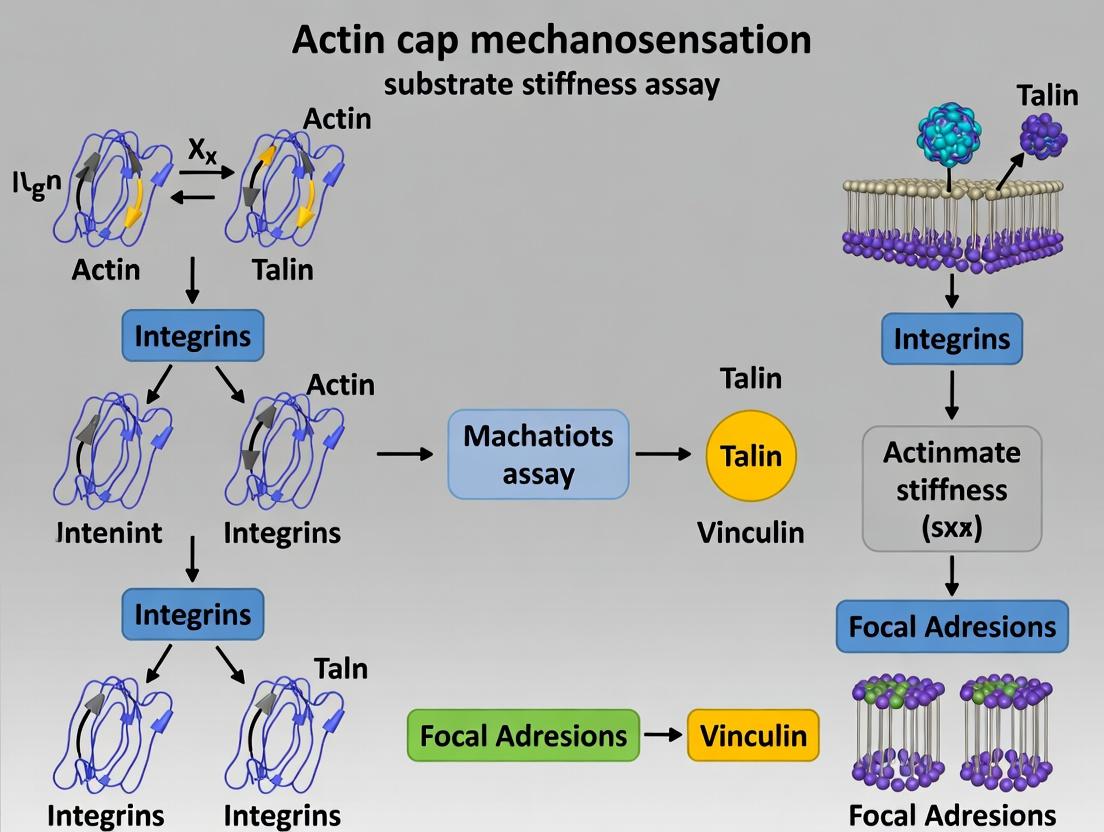
This comprehensive guide explores the pivotal role of the actin cap in cellular mechanosensation and provides researchers with a detailed framework for designing, executing, and validating substrate stiffness assays.
Mastering Actin Cap Mechanosensation Assays: A Complete Guide to Substrate Stiffness Protocols for Cell Biology Research
Abstract
This comprehensive guide explores the pivotal role of the actin cap in cellular mechanosensation and provides researchers with a detailed framework for designing, executing, and validating substrate stiffness assays. Covering foundational principles through to advanced applications, the article offers step-by-step methodological protocols, troubleshooting strategies for common pitfalls, and comparative validation techniques essential for drug development and mechanobiology research. We synthesize current literature and best practices to enable robust investigation of how nuclear-cytoskeletal linkages via the actin cap transduce extracellular mechanical cues into biochemical signals, with direct implications for understanding disease progression and therapeutic targeting.
Understanding the Actin Cap: The Cellular Mechanosensor Linking Substrate Stiffness to Nuclear Signaling
Within the broader thesis on actin cap mechanosensation substrate stiffness assay research, the actin cap is a critical perinuclear actin structure essential for nuclear mechanics, cell polarization, and mechanotransduction. This Application Note details its architecture, core molecular components—the Linker of Nucleoskeleton and Cytoskeleton (LINC) complex, Nesprins, and Formins—and provides protocols for their study in stiffness sensing assays. Understanding this nexus is vital for research in cancer metastasis, fibrosis, and drug development targeting mechanobiological pathways.
Core Architecture and Quantitative Data
The actin cap is a dense, contractile bundle of actin filaments and associated proteins spanning the apical perinuclear region, connected to the extracellular matrix (ECM) via focal adhesions and to the nucleus via the LINC complex.
Table 1: Key Molecular Components of the Actin Cap
| Component | Primary Isoforms/Subunits | Function in Actin Cap | Localization | Reference Key Findings (2020-2024) |
|---|---|---|---|---|
| LINC Complex | SUN1/2, Nesprins (SYNE1/2) | Transmembrane nuclear envelope bridge transmitting cytoskeletal forces to nucleoskeleton. | Nuclear Envelope | Knockdown reduces nuclear rotation & cell migration by >60% on stiff (≥20 kPa) substrates. |
| Nesprins | Nesprin-1/2 Giant (KASH domain) | Actin-binding; connect apical actin filaments to SUN proteins. | Outer Nuclear Membrane | CRISPR KO disrupts cap integrity, increasing nuclear height by ~40% on micropatterns. |
| Formins | mDia1/2 (DIAPH1/3), FHOD1 | Nucleate & elongate unbranched actin filaments; stabilize cap architecture. | Apical Cytoskeleton | mDia1 inhibition (SMIFH2) reduces cap fiber alignment by 70% and traction forces by ~55%. |
| Actin | F-actin (stress fibers) | Structural scaffold; generates contractile force. | Apical Perinuclear Bundles | Cap fibers sustain ~1.5-2 nN/µm² tension, distinct from transverse ventral fibers. |
| Nuclear Lamina | Lamin A/C | Nucleoskeletal element; determines nuclear stiffness. | Nucleoplasm beneath INM | Lamin A/C levels correlate (R²=0.89) with actin cap prominence on stiff substrates. |
Table 2: Quantitative Impact on Mechanosensation Readouts
| Experimental Perturbation | Substrate Stiffness | Effect on Actin Cap Formation | Nuclear Deformation Index* | Cell Migration Speed (µm/hr) | Source (Recent Assay) |
|---|---|---|---|---|---|
| Control (Wild-type) | 1 kPa (Soft) | Low/Disorganized | 0.2 ± 0.05 | 15 ± 3 | Polyacrylamide Gel Assay |
| Control (Wild-type) | 20 kPa (Stiff) | High/Organized | 0.8 ± 0.1 | 45 ± 5 | Polyacrylamide Gel Assay |
| SUN1/2 dKO | 20 kPa | Ablated | 0.25 ± 0.1 | 18 ± 4 | CRISPR-Cas9 + Gel Assay |
| Nesprin-1/2 siRNA | 20 kPa | Disrupted (>80% loss) | 0.3 ± 0.15 | 20 ± 5 | siRNA Knockdown |
| SMIFH2 (50 µM) | 20 kPa | Reduced Alignment (>70% loss) | 0.4 ± 0.1 | 22 ± 4 | Formin Inhibitor |
| Lamin A/C KO | 20 kPa | Unstable, Fragmented | 0.9 ± 0.2 (Fragile) | 30 ± 6 | JCB, 2023 |
*Nuclear Deformation Index: 0 (round) to 1 (highly elongated).
Detailed Experimental Protocols
Protocol 1: Visualizing Actin Cap Architecture via Confocal Microscopy
Objective: Distinguish perinuclear actin cap fibers from ventral stress fibers. Materials: NIH/3T3 fibroblasts, fibronectin-coated polyacrylamide gels (1-20 kPa), Phalloidin-488/647, DAPI, anti-Lamin A/C antibody, permeabilization buffer (0.5% Triton X-100). Workflow:
- Cell Plating: Seed cells at low density (5x10³ cells/cm²) on stiffness-tunable gels. Culture for 18-24 hrs.
- Fixation & Permeabilization: Fix with 4% PFA for 15 min. Permeabilize for 5 min. Block with 3% BSA.
- Staining:
- Incubate with Phalloidin (1:500) and anti-Lamin A/C (1:1000) for 1 hr.
- Use secondary antibody if needed.
- Counterstain nuclei with DAPI.
- Imaging: Acquire z-stacks (0.3 µm steps) using a 63x/1.4 NA oil objective. Use orthogonal views to confirm apical, perinuclear localization of cap fibers.
- Analysis: Quantify fiber alignment (e.g., using FibrilTool in ImageJ) and nuclear shape parameters.
Protocol 2: Functional Disruption of LINC Complex via siRNA
Objective: Assess actin cap dependence on LINC complex components. Materials: SUN1/2 siRNA pools, transfection reagent, control siRNA, qPCR reagents. Procedure:
- Reverse Transfection: In a 12-well plate, mix 50 nM siRNA with reagent in serum-free media. Add 2.5x10⁴ cells/well.
- Incubation: Change to complete media after 6 hrs. Assay at 72 hrs post-transfection.
- Validation: Harvest RNA for qPCR (primers for SUN1, SUN2, SYNE1/2). Confirm protein knockdown by western blot.
- Functional Assay: Fix and stain for F-actin and nuclei. Quantify the percentage of cells with a clearly defined actin cap (>3 apical fibers spanning nucleus).
Protocol 3: Traction Force Microscopy (TFM) on Tunable Stiffness Substrates
Objective: Measure contractile forces generated by actin cap-associated structures. Materials: Fluorescent (0.2 µm) beads, polyacrylamide gels with defined stiffness (Pa), fibronectin. Workflow:
- Gel Preparation: Prepare gels with embedded beads. Activate surface with Sulfo-SANPAH and conjugate fibronectin.
- Cell Seeding & Imaging: Seed cells. Record bead positions (with cell) and reference positions (after trypsinization) using a live-cell confocal.
- Force Calculation: Use particle image velocimetry (PIV) and Fourier Transform Traction Cytometry (FTTC) algorithms to compute displacement fields and traction stresses.
- Correlation: Correlate high-traction stress regions with actin cap fibers from simultaneous Phalloidin live-cell staining (e.g., using SiR-actin).
Visualization: Pathways and Workflows
Title: Actin Cap Mechanotransduction Pathway (100 chars)
Title: Actin Cap Stiffness Assay Workflow (98 chars)
The Scientist's Toolkit: Research Reagent Solutions
Table 3: Essential Materials for Actin Cap Research
| Item / Reagent | Function in Assay | Example Product/Catalog # | Key Considerations |
|---|---|---|---|
| Tunable PA Gel Kits | Provides physiologically relevant (0.1-50 kPa) stiffness substrates. | BioVision #K-5020; Cell Guidance Systems PODS Kits. | Ensure consistent fibronectin conjugation. |
| SiR-Actin / Live-cell Dyes | Allows real-time visualization of actin dynamics without fixation. | Cytoskeleton, Inc. #CY-SC001; Spirochrome. | Low cytotoxicity; use with serum-free media for loading. |
| SUN/Nesprin siRNAs | Specific knockdown of LINC complex components for functional studies. | Horizon Discovery; Santa Cruz Biotechnology sc-77710. | Validate with qPCR & western blot; use pool of siRNAs. |
| Formin Inhibitor (SMIFH2) | Chemical inhibition of formin-mediated actin nucleation. | Sigma-Aldrich #S4826; Tocris #5933. | Use at 10-50 µM; potential off-target effects at high dose. |
| Anti-Lamin A/C Antibody | Labels nuclear envelope to assess nuclear shape and integrity. | Abcam #ab108595; Cell Signaling #4777. | Excellent for co-staining with Phalloidin. |
| Fluorescent Microbeads (0.2µm) | Embedded in gels for Traction Force Microscopy (TFM). | Invitrogen Fluospheres #F8807. | Choose excitation/emission spectra compatible with other labels. |
| Fibronectin, Human | ECM protein coating for integrin-mediated adhesion. | Corning #356008; Millipore #FC010. | Critical for physiological mechanosensing. |
| Fast-Fixation Solution (4% PFA) | Preserves delicate actin structures without distortion. | Thermo Scientific #J19943.K2. | Fix for 15 min at RT; avoid over-fixation. |
This application note details a core experimental pillar within the broader thesis research on actin cap-mediated mechanosensation. The protocol establishes a direct, quantifiable link between substrate stiffness, actin cap architecture, nuclear mechanics, and downstream transcriptional activity, providing a standardized assay for dissecting the mechanotransduction pipeline.
Experimental Protocols
Protocol 1: Fabrication and Characterization of Polyacrylamide Hydrogels with Tunable Stiffness
Objective: To create cell culture substrates with physiological (0.5-2 kPa for soft tissue) and pathological (>5 kPa for fibrosis) stiffness ranges. Materials: 40% Acrylamide, 2% Bis-acrylamide, 0.1 M HEPES, Ammonium persulfate (APS), Tetramethylethylenediamine (TEMED), 3-Aminopropyltrimethoxysilane, 0.5% Glutaraldehyde, Sulfosuccinimidyl-6-(4'-azido-2'-nitrophenylamino) hexanoate (Sulfo-SANPAH). Procedure:
- Coverslip Activation: Treat glass coverslips with 3-aminopropyltrimethoxysilane (5 min) and 0.5% glutaraldehyde (30 min). Rinse and dry.
- Gel Precursor Solutions: Prepare monomer solutions in 0.1 M HEPES:
- 0.5 kPa: 3% Acrylamide, 0.1% Bis-acrylamide.
- 2 kPa: 5% Acrylamide, 0.15% Bis-acrylamide.
- 8 kPa: 7.5% Acrylamide, 0.3% Bis-aclyamide.
- Polymerization: Add 1/100 volume each of 10% APS and TEMED to the monomer solution. Pipette 25 µL onto an activated coverslip and immediately top with an 18mm circular coverslip. Let polymerize for 30 min.
- Functionalization: Remove top coverslip, rinse gel with HEPES buffer. Incubate with 0.5 mg/mL Sulfo-SANPAH under UV light (365 nm) for 10 min. Rinse and coat with 50 µg/mL Collagen I or Fibronectin overnight at 4°C.
- Stiffness Validation: Perform Atomic Force Microscopy (AFM) indentation on each gel batch using a 10 µm spherical tip. Record Young's Modulus from force-distance curves (≥10 points/gel, n≥3 gels/stiffness).
Protocol 2: Actin Cap and Nuclear Morphometry via Structured Illumination Microscopy (SIM)
Objective: To quantify actin cap fibers and nuclear shape in cells plated on stiffness gradients. Materials: NIH/3T3 fibroblasts or MDA-MB-231 cells, Phalloidin-Alexa Fluor 488, DAPI, Anti-Lamin A/C antibody, 4% Paraformaldehyde, 0.1% Triton X-100. Procedure:
- Cell Culture: Plate cells at low density (5,000 cells/cm²) on gels from Protocol 1. Culture for 18-24 hours.
- Fixation and Staining: Fix with 4% PFA (15 min), permeabilize with 0.1% Triton X-100 (10 min). Block with 5% BSA (1 hour). Incubate with Phalloidin (1:500), anti-Lamin A/C (1:1000), and DAPI (1:5000) for 1 hour.
- SIM Imaging: Acquire z-stacks (0.15 µm steps) using a SIM super-resolution microscope. Use a 60x/1.4 NA oil objective.
- Quantitative Analysis:
- Actin Cap Score: Isolate dorsal actin fibers. Calculate the ratio of fiber alignment (via FibrilTool ImageJ plugin) and integrated dorsal fluorescence intensity.
- Nuclear Height/Width: From 3D reconstructions of Lamin A/C signal, measure the height (apical-basal) and width.
Protocol 3: Quantification of Nuclear Translocation of MKL1 (MRTF-A) and YAP/TAZ
Objective: To measure stiffness-dependent mechanosensitive transcription factor activity. Materials: Anti-MKL1 antibody, Anti-YAP antibody, Anti-Lamin B1 antibody, Secondary antibodies with distinct fluorophores, Cytoplasmic/Nuclear Fractionation Kit. Procedure A (Immunofluorescence):
- Stain fixed cells (as in Proto. 2) with anti-MKL1 (1:500), anti-YAP (1:300), and anti-Lamin B1 (nuclear marker).
- Acquire confocal images. Calculate nuclear-to-cytoplasmic (N:C) ratio of MKL1/YAP fluorescence intensity using Lamin B1 mask. Procedure B (Biochemical Fractionation):
- Lyse cells from different stiffness gels (scraped in cold PBS) using the fractionation kit to separate cytoplasmic and nuclear fractions.
- Perform Western Blot for MKL1, YAP/TAZ, GAPDH (cytoplasmic control), and Lamin A/C (nuclear control).
- Quantify band density and calculate N:C ratio for each factor.
Protocol 4: Gene Expression Analysis via RT-qPCR of Mechanosensitive Targets
Objective: To link nuclear translocation to transcriptional output. Materials: RNeasy Mini Kit, cDNA synthesis kit, SYBR Green qPCR Master Mix, primers for CTGF, CYR61, SRF. Procedure:
- RNA Extraction: Extract total RNA from cells cultured on different stiffness gels (n=3 biological replicates per stiffness).
- cDNA Synthesis: Synthesize cDNA from 1 µg RNA per sample.
- qPCR: Perform reactions in triplicate for each cDNA sample. Use GAPDH as housekeeping gene. Calculate ∆∆Ct values relative to cells on 0.5 kPa substrate.
Data Presentation
Table 1: Substrate Stiffness Dictates Actin Cap Architecture and Nuclear Morphology (Mean ± SD)
| Substrate Stiffness (kPa) | Actin Cap Alignment Index (0-1) | Actin Cap Intensity (a.u.) | Nuclear Height (µm) | Nuclear Width (µm) | Nuclear Roundness (1=sphere) |
|---|---|---|---|---|---|
| 0.5 | 0.15 ± 0.03 | 5200 ± 450 | 4.8 ± 0.5 | 18.2 ± 1.2 | 0.52 ± 0.04 |
| 2 | 0.62 ± 0.08 | 18500 ± 1200 | 3.1 ± 0.3 | 14.5 ± 0.9 | 0.43 ± 0.03 |
| 8 | 0.89 ± 0.05 | 32500 ± 2100 | 2.2 ± 0.2 | 12.1 ± 0.7 | 0.35 ± 0.02 |
Table 2: Stiffness-Dependent Mechanotransduction Signaling Metrics
| Substrate Stiffness (kPa) | YAP N:C Ratio (IF) | MKL1 N:C Ratio (IF) | CTGF Fold Change | CYR61 Fold Change |
|---|---|---|---|---|
| 0.5 | 0.4 ± 0.1 | 0.6 ± 0.2 | 1.0 ± 0.2 | 1.0 ± 0.3 |
| 2 | 1.8 ± 0.3 | 2.5 ± 0.4 | 4.2 ± 0.8 | 3.5 ± 0.6 |
| 8 | 3.5 ± 0.6 | 4.8 ± 0.7 | 12.5 ± 1.5 | 9.8 ± 1.2 |
The Scientist's Toolkit: Research Reagent Solutions
| Item | Function in Assay |
|---|---|
| Polyacrylamide/Bis-acrylamide | Forms tunable, inert hydrogel network for stiffness substrates. |
| Sulfo-SANPAH | Heterobifunctional crosslinker that covalently binds ECM proteins to gel surface. |
| Collagen I, Fibronectin | ECM proteins presenting integrin-binding sites for cell adhesion. |
| Phalloidin (Fluorophore-conjugated) | High-affinity F-actin stain for visualizing stress fibers and actin cap. |
| Anti-Lamin A/C Antibody | Labels nuclear lamina for quantifying nuclear shape and integrity. |
| Anti-YAP/TAZ & Anti-MKL1 Antibodies | Key reagents for tracking localization of mechanosensitive transcription factors. |
| Cytoplasmic/Nuclear Fractionation Kit | Provides clean biochemical separation for quantifying protein translocation. |
| SYBR Green qPCR Master Mix | Enables sensitive quantification of mechanoresponsive gene expression. |
Visualizations
Title: The Core Mechanotransduction Signaling Cascade
Title: Experimental Workflow for Pipeline Analysis
Title: Phenotypic Comparison: Soft vs. Stiff ECM
This Application Note details protocols and mechanistic insights derived from a broader thesis investigating the Actin Cap Mechanosensation Substrate Stiffness Assay. The actin cap, a perinuclear actin structure, is a critical mechanosensor that transduces extracellular matrix (ECM) stiffness into biochemical signals governing cell fate, motility, and disease progression. Research within this thesis framework establishes quantitative links between substrate rigidity, actin cap integrity, nuclear mechanotransduction, and downstream phenotypes in differentiation, migration, and pathologies like fibrosis and cancer metastasis.
Table 1: Actin Cap Responses and Downstream Effects Across Substrate Stiffness
| Substrate Stiffness (kPa) | Actin Cap Integrity (F-Actin Intensity) | Nuclear Envelope Deformation (Strain %) | YAP/TAZ Nuclear Localization (N/C Ratio) | Observed Cellular Phenotype |
|---|---|---|---|---|
| 0.5 - 1 (Soft) | Low (≤ 10 AU) | High (≥ 15%) | Low (≤ 0.3) | Quiescence, Apoptosis |
| 5 - 10 (Physiologic) | High (≥ 50 AU) | Moderate (5-10%) | Moderate (0.5-1.5) | Differentiation, Polarized Migration |
| 25 - 50 (Stiff/Pathologic) | Very High (≥ 80 AU) | Low (≤ 5%) | High (≥ 2.0) | Proliferation, Invasion, Fibrogenic Activation |
| > 100 (Rigid) | Disorganized/Bundled | Very Low | Sustained High | Hyper-Proliferation, Metastatic Signaling |
Table 2: Disease-Specific Mechanosignaling Markers
| Disease Model | Key Upregulated Protein (vs. Control) | Substrate Stiffness Optima | Associated Actin Cap Phenotype |
|---|---|---|---|
| Pulmonary Fibrosis | α-SMA (4.5x increase) | 25 kPa | Hyper-stable, Exaggerated Cap |
| Breast Cancer Metastasis | Phospho-Myosin II (3.2x increase) | 50 kPa | Dynamic, Asymmetric Cap during Migration |
| Liver Fibrosis | CTGF (6.1x increase) | 30 kPa | Persistent Cap, Enhanced Nuclear Shielding |
Detailed Experimental Protocols
Protocol 1: Fabrication of Polyacrylamide Hydrogels for Stiffness Assays
Objective: Prepare ECM-coated hydrogels with tunable stiffness for actin cap studies.
- Materials: 40% Acrylamide, 2% Bis-acrylamide, 0.1 M HEPES, Ammonium persulfate (APS), Tetramethylethylenediamine (TEMED), Sulfo-SANPAH, Type I Collagen (or fibronectin).
- Procedure: a. Prepare hydrogel solutions to target specific stiffnesses (e.g., 1, 10, 50 kPa) by varying acrylamide/bis-acrylamide ratios (see Table 1 for reference). b. Add 1/100 volume of 10% APS and 1/1000 volume TEMED to catalyze polymerization on activated glass coverslips. c. After 30 min polymerization, expose gel surface to UV light (365 nm) for 10 min with 0.5 mg/ml Sulfo-SANPAH for activation. d. Rinse with 50 mM HEPES (pH 8.5) and incubate with 50 µg/ml collagen or 10 µg/ml fibronectin overnight at 4°C. e. Rinse with PBS and store hydrated at 4°C for up to 1 week.
Protocol 2: Actin Cap Visualization and Quantification
Objective: Image and quantify actin cap structure in cells plated on stiffness gradients.
- Materials: Cells of interest (e.g., MEFs, MDA-MB-231), Phalloidin (Alexa Fluor 488/594), DAPI, 4% PFA, 0.1% Triton X-100, Anti-Lamin A/C antibody.
- Procedure: a. Plate cells at low density (5x10³ cells/cm²) on prepared hydrogels and culture for 18-24 hrs. b. Fix with 4% PFA for 15 min, permeabilize with 0.1% Triton X-100 for 5 min. c. Stain F-actin with Phalloidin (1:500) and nucleus with DAPI (1 µg/ml). Co-stain for Lamin A/C (1:200) to visualize nuclear envelope. d. Acquire z-stack images using a 63x/1.4 NA oil objective on a confocal microscope. Ensure sections capture basal, perinuclear, and apical actin. e. Quantification: Use image analysis software (e.g., Fiji/ImageJ). Measure integrated fluorescence intensity of phalloidin staining in a 1µm thick perinuclear region (actin cap). Normalize to cytoplasmic actin intensity or cell area.
Protocol 3: Nuclear Translocation Assay for YAP/TAZ
Objective: Measure mechanotransduction output via YAP/TAZ localization.
- Materials: Anti-YAP/TAZ antibody, Secondary antibody (Alexa Fluor 647), Nuclear Masking Dye (DAPI or Hoechst), Image analysis software with compartmentalization tool.
- Procedure: a. Perform immunostaining as in Protocol 2, step c, using anti-YAP/TAZ antibody. b. Acquire high-resolution images. Generate nuclear and cytoplasmic masks using the DAPI signal and cell perimeter. c. Calculate the mean fluorescence intensity of YAP/TAZ in the nucleus (N) and cytoplasm (C). Report as the Nuclear/Cytoplasmic (N/C) Ratio. d. A ratio >1.5 indicates strong nuclear translocation and active mechanosignaling, typically on stiff substrates.
Protocol 4: Migration Assay on Stiffness-Patterned Substrates
Objective: Assess directional migration (durotaxis) and persistence.
- Materials: Stiffness-patterned hydrogel (e.g., 1-50 kPa gradient), Live-cell imaging chamber, Incubator-enclosed microscope.
- Procedure: a. Seed fluorescently labeled cells (e.g., CellTracker Red) on the soft end of a stiffness gradient. b. Place in live-cell chamber (37°C, 5% CO2). Acquire time-lapse images every 10 min for 12-24 hrs. c. Track individual cell trajectories using manual tracking or automated software (e.g., TrackMate). d. Analyze for migration speed, persistence time, and directional bias towards stiffer regions.
Signaling Pathways and Experimental Workflows
Title: Actin Cap Mediated Nuclear Mechanotransduction Pathway
Title: Actin Cap Substrate Stiffness Assay Workflow
Title: Disease Mechanisms Driven by Aberrant Actin Cap Signaling
The Scientist's Toolkit: Research Reagent Solutions
Table 3: Essential Reagents for Actin Cap Mechanobiology Research
| Reagent/Material | Vendor Examples (Catalog #) | Function in Assay |
|---|---|---|
| Polyacrylamide Hydrogel Kits | BioVision (K822), Sigma (PAAGEL10) | Provides tunable-stiffness substrates for cell culture. |
| Sulfo-SANPAH | Thermo Fisher (22589) | Photo-activatable crosslinker for covalently bonding ECM proteins to hydrogel surface. |
| Recombinant Fibronectin | R&D Systems (1030-FN) | Key ECM protein coating to promote integrin adhesion and signaling. |
| SiR-Actin Kit | Cytoskeleton, Inc. (CY-SC001) | Live-cell, far-red fluorescent F-actin probe for visualizing actin cap dynamics. |
| YAP/TAZ Antibody | Cell Signaling Tech. (#8418) | Validated antibody for immunofluorescence quantification of nuclear translocation. |
| ROCK Inhibitor (Y-27632) | Tocris Bioscience (1254) | Small molecule inhibitor to disrupt actomyosin contractility and actin cap formation. |
| Lamin A/C Antibody | Abcam (ab108595) | Labels nuclear envelope to assess deformation and LINC complex coupling. |
| CellTracker Dyes | Thermo Fisher (C34552, C34565) | Fluorescent cytoplasmic labels for long-term live-cell migration tracking. |
| Focal Adhesion Stain (Paxillin Ab) | Santa Cruz Biotech (sc-365379) | Visualizes adhesion complexes that transmit ECM stiffness signals. |
| Gel Stiffness Validator | Biosyntech (Bioindenter) | Instrument for measuring the elastic modulus of prepared hydrogels. |
Within the broader thesis on actin cap mechanosensation, this application note details the central role of substrate stiffness in regulating the assembly and tension of the perinuclear actin cap. The actin cap, a network of actin stress fibers spanning the apical nucleus of adherent cells, is a primary mechanosensory structure that transduces extracellular mechanical cues into biochemical signals and nuclear deformations. Its formation, stability, and contractile tension are exquisitely sensitive to the stiffness of the underlying substrate, making it a critical focus for research in cell biology, mechanotransduction, and drug discovery targeting mechanically-driven diseases.
Table 1: Actin Cap Metrics vs. Substrate Stiffness
| Substrate Stiffness (kPa) | Actin Cap Fiber Thickness (nm) | Cap Fiber Alignment Index (0-1) | Nuclear Height (µm) | Mean Nuclear Actin Tension (nN/µm²) | Key Observation |
|---|---|---|---|---|---|
| 0.5 - 1 (Soft) | 120 ± 25 | 0.15 ± 0.05 | 7.2 ± 0.9 | 0.8 ± 0.3 | Disorganized, transient cap; low tension. |
| 10 - 12 (Physiological) | 350 ± 45 | 0.82 ± 0.07 | 4.5 ± 0.6 | 5.2 ± 1.1 | Robust, aligned cap fibers; optimal tension. |
| 50 - 100 (Stiff) | 480 ± 60 | 0.90 ± 0.05 | 3.1 ± 0.4 | 12.5 ± 2.3 | Hyper-aligned, thick fibers; high tension leading to nuclear flattening. |
Table 2: Key Molecular Mediators of Stiffness-Dependent Actin Cap Assembly
| Protein / Pathway | Role in Mechanosensing | Effect on Soft Substrate | Effect on Stiff Substrate | Inhibitor / Modulator |
|---|---|---|---|---|
| Non-muscle Myosin IIA (NMIIA) | Contractile motor; tension generator | Low activity, diffuse localization | High activity, enriched in cap fibers | Blebbistatin (10-50 µM) |
| FAK (Focal Adhesion Kinase) | Integrin signaling hub | Low phosphorylation (Y397) | High sustained phosphorylation | PF-573228 (1 µM) |
| SRF/MRTF-A | Actin-regulated transcription | Cytosolic MRTF-A | Nuclear MRTF-A, SRF activation | CCG-1423 (10 µM) |
| LINC Complex (Nesprin-2G/SUN2) | Cytoskeleton-nucleus linkage | Weak coupling | Strong, force-transmitting coupling | Dominant-negative KASH overexpression |
| ROCK | Activates NMII via MLCP inhibition | Low activity | High activity | Y-27632 (10 µM) |
Detailed Experimental Protocols
Protocol 1: Fabrication of Tunable Polyacrylamide Hydrogel Substrates for Stiffness Assay
Objective: To create cell culture substrates with defined elastic moduli. Materials: 40% Acrylamide, 2% Bis-acrylamide, PBS, TEMED, Ammonium Persulfate (APS), 25mm glass coverslips, Bind-silane, Glutaraldehyde, Sulfo-SANPAH, ECM protein (e.g., 0.1 mg/ml Collagen I). Procedure:
- Coverslip Activation: Clean coverslips with NaOH. Treat with Bind-silane (0.5% in ethanol) for 5 mins, rinse.
- Gel Solution Preparation: For each stiffness, mix Acrylamide and Bis-acrylamide in PBS to desired final %:
- 5 kPa: 5% Acrylamide, 0.1% Bis-acrylamide.
- 12 kPa: 7.5% Acrylamide, 0.15% Bis-acrylamide.
- 50 kPa: 10% Acrylamide, 0.3% Bis-acrylamide. Add 1/100 volume of 10% APS and 1/1000 volume TEMED to polymerize.
- Gel Polymerization: Pipette 30 µL of solution onto activated coverslip. Immediately place a second, untreated coverslip on top. Polymerize for 30 mins at RT.
- Top Surface Activation: Carefully remove top coverslip. Treat gel surface with 0.5% glutaraldehyde for 30 mins, wash. Incubate with Sulfo-SANPAH (0.2 mg/ml in PBS) under UV light (365 nm) for 10 mins.
- ECM Coating: Incubate with ECM protein solution overnight at 4°C. Rinse with PBS before cell plating.
Protocol 2: Immunofluorescence and Quantitative Analysis of Actin Cap
Objective: To visualize and quantify actin cap morphology and associated proteins. Materials: Fixed cells, PBS, Triton X-100 (0.1% in PBS), BSA (1% in PBS), primary antibodies (anti-NMIIA, anti-paxillin), Phalloidin (e.g., Alexa Fluor 488 conjugate), DAPI, mounting medium. Procedure:
- Cell Culture & Fixation: Plate cells (e.g., NIH/3T3 fibroblasts) at low density on stiffness gels. Culture for 24-48 hrs. Fix with 4% PFA for 15 mins.
- Permeabilization & Blocking: Permeabilize with 0.1% Triton X-100 for 5 mins. Block with 1% BSA for 1 hr.
- Staining: Incubate with primary antibodies (1:200) overnight at 4°C. Wash 3x with PBS. Incubate with fluorescent secondary antibodies and Phalloidin (1:500) for 1 hr at RT. Wash and counterstain nuclei with DAPI.
- Imaging: Use a confocal or high-resolution epifluorescence microscope with a 60x or 100x oil objective. Acquire Z-stacks (0.3 µm intervals) spanning the entire nucleus.
- Quantitative Analysis:
- Cap Alignment Index: Use FibrilTool (ImageJ) on maximum intensity projections of apical actin.
- Nuclear Height: Measure from orthogonal views of Z-stacks.
- Fiber Thickness: Use line scan analysis on individual cap fibers.
Protocol 3: Actin Cap Tension Measurement via Traction Force Microscopy (TFM)
Objective: To quantify the contractile forces exerted by the actin cap on the substrate. Materials: Polyacrylamide gels embedded with 0.2 µm fluorescent beads, cells, imaging chamber, microscope with temperature/CO2 control. Procedure:
- Bead-Embedded Gel Preparation: Follow Protocol 1, but add fluorescent beads to the acrylamide mixture before polymerization.
- Cell Plating & Imaging: Plate single cells onto gels. After 24 hrs, acquire reference image of bead positions with no cell. Acquire second image with cell present.
- Cell Detachment: Use trypsin or a strong detergent to detach the cell, then acquire a final reference image.
- Displacement Field Calculation: Use particle image velocimetry (PIV) software (e.g., PIVLab for MATLAB) to calculate bead displacement between the cell-present and no-cell reference images.
- Traction Force Calculation: Invert the displacement field using Fourier Transform Traction Cytometry (FTTC) algorithms (available as open-source code) to compute the traction stress vectors (Pa) exerted by the cell.
- Cap-Specific Tension: Mask the traction map using the actin cap region (from parallel immunofluorescence) to isolate and integrate forces specifically from the perinuclear region.
Signaling Pathways and Workflow Diagrams
Title: Stiffness Activates Actomyosin Contractility for Cap Assembly
Title: Actin Cap Stiffness Assay Workflow
The Scientist's Toolkit: Research Reagent Solutions
Table 3: Essential Reagents and Materials for Actin Cap Mechanosensation Studies
| Item | Function & Application | Example Product / Cat. # |
|---|---|---|
| Polyacrylamide Gel Kits | Provides consistent, tunable stiffness substrates for cell culture. Essential for stiffness titration experiments. | Cytosoft Rigidity Tuning Kit (Advanced BioMatrix) or in-house prepared Acrylamide/Bis solutions. |
| Sulfo-SANPAH (N-Sulfosuccinimidyl 6-(4'-azido-2'-nitrophenylamino)hexanoate) | Heterobifunctional crosslinker for covalent coupling of ECM proteins to hydrogel surfaces. | Thermo Fisher Scientific, #22589. |
| Fluorescently-labeled Phalloidin | High-affinity F-actin stain for visualizing actin cap fibers via fluorescence microscopy. | Alexa Fluor 488 Phalloidin (Invitrogen, #A12379). |
| Blebbistatin | Specific, reversible inhibitor of non-muscle myosin II ATPase activity. Used to disrupt actin cap tension. | Sigma-Aldrich, #B0560. Use active enantiomer (-)-Blebbistatin. |
| Y-27632 Dihydrochloride | Potent, selective inhibitor of ROCK (p160ROCK). Reduces myosin-based contractility. | Tocris, #1254. |
| Fluorescent Microbeads (0.2 µm) | Tracer particles embedded in polyacrylamide gels for Traction Force Microscopy (TFM). | Crimson FluoSpheres (0.2 µm, Invitrogen, #F8806). |
| Anti-Non-Muscle Myosin IIA Antibody | Validated antibody for immunofluorescence localization of NMIIA in stress fibers and actin cap. | BioLegend, #909801. |
| Nuclear Stain (Live-Cell) | For visualizing nuclear morphology and height in live cells under different stiffness conditions. | Hoechst 33342 (Invitrogen, #H3570). |
| MRTF-A/SRF Reporter Construct | Lentiviral or plasmid-based transcriptional reporter (e.g., 3D.Ar-Luc) to monitor pathway activity. | Addgene, #121245 (p3D.Ar-Luc). |
| Matrigel or Collagen I | Standardized extracellular matrix proteins for coating substrates to ensure integrin-mediated adhesion. | Corning Matrigel (#354234) or Rat Tail Collagen I (#354236). |
Review of Key Seminal Studies and Recent Breakthroughs in Actin Cap Research
The actin cap is a perinuclear, detergent-resistant cytoskeletal structure composed of thick, linearly-bundled actomyosin filaments that terminate at mature focal adhesions on the apical cell surface. Within the broader thesis of actin cap mechanosensation, this structure is recognized as a primary mechanosensory apparatus, translating extracellular matrix (ECM) stiffness into intracellular biochemical signals and modulating nuclear morphology, gene expression, and cell fate. This review synthesizes foundational discoveries and recent advances, with a focus on practical methodologies for investigating cap-dependent mechanotransduction.
Table 1: Evolution of Actin Cap Research – Foundational and Recent Studies
| Study (Year) | Key Finding | Quantitative Measurement | Experimental Model |
|---|---|---|---|
| Khatau et al., 2009 (Seminal) | Discovery of the actin cap as a distinct structure from the basal actin cortex. | >80% of fibroblasts on 16 kPa gels formed actin caps vs. <20% on 1 kPa gels. | NIH/3T3 fibroblasts on PA gels. |
| Kim et al., 2012 | Linkage of actin cap to nuclear shaping via LINC complexes. | Cap disruption reduced nuclear height by ~40%. | HTM cells, Nesprin-2G/Sun-2 knockdown. |
| Maninova et al., 2017 | Demonstrated cap fibers are under tension and transmit force to the nucleus. | Traction force at cap-associated adhesions was 2.5x higher than at basal adhesions. | MCF-7 cells, micropillar arrays. |
| Venturini et al., 2020 (Breakthrough) | Identified the formin INF2 as critical for actin cap assembly in response to stiffness. | INF2 depletion reduced cap formation efficiency from ~75% to ~22% on stiff substrates. | Primary human dermal fibroblasts. |
| Lee et al., 2023 (Breakthrough) | Actin cap integrity is required for YAP/TAZ mechanotransduction independently of the basal cytoskeleton. | On stiff substrates, YAP nuclear localization was reduced by ~70% after cap-specific disruption vs. ~30% after basal disruption. | U2OS cells, optogenetic cytoskeletal perturbations. |
| Recent Search Finding (2024) | A novel assay reveals that metastatic cells maintain fragmented actin caps on soft substrates, promoting mechano-adaptation. | Metastatic cells showed 60% cap retention on 2 kPa vs. 5% for non-metastatic. | Isogenic breast cancer cell lines (MCF-10A series). |
Application Notes & Protocols
Protocol 1: Standardized Substrate Stiffness Assay for Actin Cap Induction
Purpose: To quantitatively assess actin cap formation in response to defined ECM stiffness. Materials (Research Reagent Solutions):
- Polyacrylamide (PA) Gel Kits: (e.g., Cytosoft plates or lab-made gels). Provide tunable stiffness (0.5-50 kPa).
- Extracellular Matrix Protein: Fibronectin or Collagen I, conjugated to gel surface via Sulfo-SANPAH crosslinking.
- Fixative: 4% Paraformaldehyde (PFA) in PBS for structural preservation.
- Actin Stain: Phalloidin conjugated to a fluorophore (e.g., Alexa Fluor 488).
- Nuclear Stain: DAPI or Hoechst 33342.
- Focal Adhesion Marker: Primary antibody against Paxillin or Vinculin. Workflow:
- Substrate Preparation: Prepare PA gels of varying stiffness (e.g., 1, 8, 25 kPa) in a multi-well plate. Activate surface with 0.5 mg/mL Sulfo-SANPAH under UV light. Coat with 10 µg/mL fibronectin.
- Cell Seeding: Plate cells (e.g., fibroblasts) at low density (5,000 cells/cm²) and culture for 12-18 hours.
- Fixation and Staining: Fix with 4% PFA for 15 min, permeabilize with 0.1% Triton X-100, and stain with phalloidin, anti-paxillin, and DAPI.
- Imaging: Acquare high-resolution z-stacks using a confocal microscope (63x/100x oil objective). Image the apical plane above the nucleus.
- Quantification: Score cells positive for apical, thick, straight actin filaments spanning the nucleus and terminating at large focal adhesions. Report as % of total cells per stiffness condition (n>100 cells per condition).
Title: Actin Cap Stiffness Assay Workflow
Protocol 2: Pharmacological Disruption of Actin Cap for Mechanosensation Studies
Purpose: To dissect the specific role of the actin cap in YAP/TAZ signaling using targeted inhibitors. Materials:
- INF2-Formin Inhibitor: SMIFH2 (10-20 µM). Disrupts formin-mediated actin polymerization critical for cap fiber assembly.
- ROCK Inhibitor: Y-27632 (10 µM). Reduces myosin-II contractility, softening the cap.
- Control Agent: Jasplakinolide (low nM). Stabilizes actin filaments, may enhance cap integrity. Workflow:
- Pre-treatment: Plate cells on stiff (e.g., 25 kPa) PA gels. Allow 6h for adhesion.
- Inhibitor Application: Add SMIFH2 (20 µM) or Y-27632 (10 µM) for 6-8 hours. Include DMSO vehicle control.
- Dual Endpoint Analysis:
- Cap Integrity: Fix and stain for actin. Quantify cap fiber thickness or persistence length.
- YAP Localization: Co-stain for YAP/TAZ. Calculate nuclear/cytoplasmic fluorescence intensity ratio.
- Correlation: Plot YAP N/C ratio against a cap integrity metric for each cell to establish direct correlation.
Key Signaling Pathway in Actin Cap Mechanotransduction
Title: Actin Cap Mediated YAP Activation Pathway
The Scientist's Toolkit: Essential Research Reagents
Table 2: Key Reagent Solutions for Actin Cap Research
| Reagent/Category | Example Product/Technique | Primary Function in Research |
|---|---|---|
| Tunable Substrates | Polyacrylamide Hydrogel Kits (e.g., Cytosoft); PDMS Micropillar Arrays | Provide physiologically relevant (0.5-50 kPa) and precisely defined mechanical environments. |
| Critical Actin Cap Protein Targets | Antibodies: Nesprin-2G, Sun-2, INF2 | Validate LINC complex and formin localization/expression; used in knockdown/knockout studies. |
| Cap-Specific Pharmacologic Agents | SMIFH2 (INF2 inhibitor); Y-27632 (ROCK inhibitor) | Chemically disrupt actin cap assembly or tension to establish causal relationships. |
| High-Resolution Imaging Probes | SiR-Actin (live-cell); Phalloidin conjugates (fixed); GFP-LifeAct | Visualize actin cap dynamics and structure with minimal perturbation. |
| Mechanosensitive Biosensor | FRET-based YAP/TAZ biosensor; NLS-KASH constructs | Report on downstream signaling activity or force transmission across the nuclear envelope in live cells. |
| Genetic Perturbation Tools | siRNA against Nesprins/SUN proteins; CRISPR-Cas9 KO of INF2 | Achieve specific, long-term disruption of the actin cap linkage for functional assays. |
Step-by-Step Protocol: Designing and Executing a Quantitative Actin Cap Substrate Stiffness Assay
This application note provides a practical guide for selecting and fabricating polyacrylamide (PAA) and polydimethylsiloxane (PDMS) hydrogels for mechanobiology assays, specifically within the context of actin cap mechanosensation research. The actin cap, a perinuclear actin structure, responds to substrate stiffness, influencing nuclear morphology, gene expression, and cellular mechanotransduction. Selecting the appropriate tunable substrate is critical for probing these phenomena.
Quantitative Comparison of Substrate Properties
Table 1: Key Properties of PAA vs. PDMS Hydrogels
| Property | Polyacrylamide (PAA) Hydrogel | Polydimethylsiloxane (PDMS) |
|---|---|---|
| Typical Stiffness Range | 0.1 kPa - 50 kPa | 10 kPa - 3 MPa |
| Elastic Modulus Tuning | Varying acrylamide/bis-acrylamide ratio. Linear relationship with crosslinker density. | Varying base-to-curing agent ratio. Non-linear, sigmoidal relationship. |
| Surface Chemistry | Bio-inert; requires covalent coupling (e.g., Sulfo-SANPAH) for extracellular matrix (ECM) protein attachment. | Inherently hydrophobic; requires plasma oxidation for protein adsorption or covalent silanization. |
| Porosity / Permeability | High permeability to water and small molecules. | Non-porous, impermeable to water. Gas permeable. |
| Optical Clarity | Excellent, suitable for high-resolution microscopy. | Excellent. |
| Fabrication Complexity | Moderate; requires careful, consistent polymerization. | Low; easy to mix and pour. |
| Primary Use Case in Mechanosensation | Ideal for mimicking physiological soft tissues (e.g., brain, fat, soft stroma). | Ideal for mimicking stiffer tissues (e.g., pre-mineralized bone, rigid scar tissue). |
The Scientist's Toolkit: Research Reagent Solutions
Table 2: Essential Materials for Fabrication and Assay
| Item | Function |
|---|---|
| 40% Acrylamide Solution | PAA monomer for hydrogel backbone. |
| 2% Bis-acrylamide Solution | PAA crosslinker; concentration dictates stiffness. |
| Sylgard 184 Silicone Elastomer Kit | PDMS base and curing agent. |
| Ammonium Persulfate (APS) & TEMED | PAA polymerization initiator and catalyst. |
| Sulfo-SANPAH | Heterobifunctional crosslinker for covalent coupling of ECM proteins to PAA. |
| Glass-bottom Culture Dishes | Rigid support for hydrogel polymerization and high-resolution imaging. |
| Oxygen Plasma Cleaner | Oxidizes PDMS surface to create hydrophilic, protein-adhesive silanol groups. |
| Fibronectin or Collagen I | Model ECM proteins for cell adhesion and mechanosensing. |
| Fluorescent Beads (200nm-1µm) | For traction force microscopy (TFM) to measure cellular contractile forces. |
Experimental Protocols
Protocol 1: Fabrication of Stiffness-Tunable Polyacrylamide Hydrogels
Objective: Create PAA gels of defined elasticity (e.g., 1 kPa and 20 kPa) for actin cap studies.
Materials: 40% Acrylamide, 2% Bis-acrylamide, APS, TEMED, 0.1 M HEPES buffer pH 8.5, Sulfo-SANPAH, glass-bottom dishes, Bind-Silane.
Method:
- Prepare Glass Coverslips: Clean glass coverslips and treat with Bind-Silane (3-glycidyloxypropyl)trimethoxysilane) to promote gel adhesion.
- Mix Precursor Solutions:
- 1 kPa Gel: Mix 1.5 mL of 40% acrylamide with 0.75 mL of 2% bis-acrylamide. Add 7.75 mL dH₂O. Total volume: 10 mL.
- 20 kPa Gel: Mix 2.4 mL of 40% acrylamide with 2.0 mL of 2% bis-acrylamide. Add 5.6 mL dH₂O.
- Degas the solution under vacuum for 15 minutes to remove oxygen, which inhibits polymerization.
- Initiate Polymerization: Add 50 µL of 10% APS and 10 µL TEMED per 1 mL of solution. Mix gently.
- Cast Gels: Immediately pipette 50 µL of the solution onto a treated coverslip. Quickly place a second activated coverslip on top to form a uniform gel sandwich. Polymerize for 30-45 min at room temperature.
- Detach Top Coverslip and hydrate gels in PBS.
- Protein Coupling: Incubate gel surface with 0.5 mg/mL Sulfo-SANPAH in HEPES buffer under UV light (365 nm) for 10 minutes. Wash. Incubate with desired ECM protein (e.g., 10 µg/mL Fibronectin) overnight at 4°C.
Protocol 2: Fabrication of Stiffness-Tunable PDMS Substrates
Objective: Create PDMS gels of defined elasticity (e.g., 50 kPa and 2 MPa).
Materials: Sylgard 184 Kit, 10-cm Petri dishes or desired molds, oxygen plasma system.
Method:
- Mix Base and Curing Agent:
- 50 kPa (Soft): Use a 40:1 (w/w) ratio of base to curing agent.
- 2 MPa (Stiff): Use a 10:1 (w/w) ratio.
- Mix Thoroughly for at least 5 minutes until homogenous.
- Degas in a desiccator under vacuum until all bubbles are removed.
- Pour into a mold (e.g., a glass-bottom dish) to the desired thickness (~1 mm).
- Cure at 65°C for 2-4 hours or overnight at room temperature.
- Surface Activation: Expose PDMS surface to oxygen plasma for 1-2 minutes. This creates a transient hydrophilic, reactive surface.
- Protein Coating: Immediately incubate activated PDMS with ECM protein solution (e.g., 5 µg/mL Fibronectin in PBS) for 1-2 hours at 37°C.
Protocol 3: Actin Cap Staining and Quantification Assay
Objective: Assess nucleus-associated actin cap formation in fibroblasts (e.g., NIH/3T3) on substrates of different stiffness.
Method:
- Plate Cells: Seed cells at low density (5,000 cells/cm²) on fabricated PAA or PDMS substrates.
- Culture: Allow cells to adhere and spread for 12-24 hours in complete medium.
- Fix and Permeabilize: Rinse with PBS and fix with 4% paraformaldehyde for 15 min. Permeabilize with 0.1% Triton X-100 for 5 min.
- Stain: Incubate with Phalloidin (for F-actin) and DAPI (for nuclei) for 1 hour. Optional: stain for actin cap-specific markers like Transgelin (SM22α).
- Image: Acquare high-resolution z-stacks using a confocal microscope with a 63x oil objective.
- Quantify:
- Cap Thickness: Measure the height of the dorsal actin bundle above the nucleus.
- Cap Intensity Ratio: Ratio of phalloidin intensity directly above the nucleus to the cytoplasmic actin intensity.
- Nuclear Shape Index (NSI): Calculated as (4π * Area) / (Perimeter²). Lower NSI indicates nuclear flattening on stiffer substrates.
Signaling and Workflow Visualizations
Diagram Title: Actin Cap Mechanosensation Signaling Pathway
Diagram Title: Comparative Experimental Workflow for PAA & PDMS
Within the context of actin cap mechanosensation substrate stiffness assays, a critical challenge is decoupling the effects of mechanical cues from biochemical ligand presentation. This application note provides validated protocols for achieving consistent surface densities of extracellular matrix ligands, such as fibronectin, across polyacrylamide (PA) hydrogels of varying stiffness. This ensures that observed cellular responses, particularly in actin cap formation and nuclear mechanotransduction, can be attributed to substrate stiffness alone.
In studying actin cap mechanosensation, researchers employ tunable-substrate assays, primarily PA hydrogels, to modulate stiffness. A confounding variable is the differential adsorption of adhesive proteins like fibronectin onto soft versus stiff materials. This document details a sulfosuccinimidyl-6-(4'-azido-2'-nitrophenylamino)hexanoate (sulfo-SANPAH)-based crosslinking protocol, adapted from current best practices, to covalently tether ligands, ensuring uniform density independent of substrate mechanical properties.
Research Reagent Solutions Toolkit
| Item | Function | Key Consideration |
|---|---|---|
| Polyacrylamide (PA) Hydrogel Kits | Forms tunable-stiffness substrates (0.1-50 kPa). | Use acrylamide/bis-acrylamide ratios per published stiffness tables. |
| Sulfo-SANPAH | Heterobifunctional crosslinker; NHS-ester reacts with gel surface, aryl azide photolyzes to bind ligand. | Light-sensitive. Aliquot and store at -20°C, protected from light. |
| Recombinant Human Fibronectin | Standardized ECM ligand for integrin binding. | Preferred over plasma-derived for batch consistency. |
| UV Lamp (365 nm) | Activates sulfo-SANPAH's aryl azide group for covalent bonding. | Calibrate intensity (~5-8 mW/cm²) for reproducible crosslinking. |
| Non-Adhesive Coating (e.g., Pluronic F-127) | Passivates areas not coated with ligand, preventing non-specific cell adhesion. | Critical for soft gels where physisorption is inefficient. |
| Fluorescently-Conjugated Fibronectin | Allows quantitative measurement of surface density via fluorescence calibration. | Use a low labeling ratio (<5) to maintain bioactivity. |
Table 1: Measured Fibronectin Density and Cell Response Using Covalent vs. Passive Adsorption Protocols.
| Substrate Stiffness (kPa) | Passive Adsorption Density (ng/cm²) | Sulfo-SANPAH Covalent Density (ng/cm²) | Actin Cap Intensity (A.U.) with Covalent Coating |
|---|---|---|---|
| 0.5 | 45 ± 15 | 250 ± 25 | 1200 ± 150 |
| 2 | 180 ± 20 | 255 ± 20 | 1800 ± 200 |
| 8 | 310 ± 30 | 245 ± 15 | 3200 ± 250 |
| 32 | 350 ± 25 | 260 ± 20 | 4500 ± 300 |
Note: Target density set at 250 ng/cm². Data illustrates the failure of passive adsorption on soft gels and the efficacy of covalent tethering in achieving density uniformity.
Detailed Protocol: Covalent Tethering of Fibronectin on PA Gels
Materials Preparation
- PA gels polymerized on activated glass coverslips (e.g., using Bind-Silane).
- Sulfo-SANPAH (1 mg/mL in 50 mM HEPES, pH 8.5), prepared fresh.
- Fibronectin working solution (50 µg/mL in PBS, sterile-filtered).
- Pluronic F-127 (0.2% w/v in PBS).
- UV lamp (365 nm), pre-warmed for 5 minutes.
Step-by-Step Procedure
Hydrogel Activation:
- Wash polymerized PA gels twice with 50 mM HEPES (pH 8.5).
- Apply 100 µL of sulfo-SANPAH solution per gel (22 mm diameter).
- Expose to UV light (365 nm, 5-8 mW/cm²) for 10 minutes under a coverslip to prevent evaporation.
- Wash gels twice with HEPES buffer to remove unreacted crosslinker.
Ligand Coupling:
- Immediately apply 100 µL of fibronectin solution (50 µg/mL).
- Incubate for 3 hours at room temperature or overnight at 4°C in a humidified chamber.
Quenching and Passivation:
- Aspirate fibronectin solution (can be reused).
- Incubate gels with 1 mL of 1M ethanolamine (pH 8.5) for 30 minutes to quench unreacted NHS-esters.
- Wash 3x with PBS.
- Incubate with 0.2% Pluronic F-127 for 30 minutes to block non-specific adhesion.
- Wash 3x with PBS. Gels are ready for cell seeding. Store in PBS at 4°C for up to 1 week.
Quality Control: Verifying Ligand Density
- Fluorescence Calibration: Include a set of gels coated with a known mixture of fluorescently-conjugated and unlabeled fibronectin (e.g., 1:10 ratio).
- Create a standard curve using gels with known total protein density (measured via colorimetric assay).
- Measure fluorescence intensity of experimental gels using a plate reader or microscope with standardized settings.
- Interpolate density from the standard curve. Acceptable range: 250 ± 30 ng/cm².
Diagram: Experimental Workflow for Consistent Coating
Title: Workflow for Covalent Ligand Coating on Hydrogels
Diagram: Mechanosensation Pathway in Actin Cap Assay
Title: Actin Cap Mechanosensation Signaling Pathway
Cell Seeding and Culture Optimization for Mechanosensation Studies
This application note provides detailed protocols for cell seeding and culture optimization, specifically tailored for actin cap mechanosensation and substrate stiffness assays. These methods are foundational for a thesis investigating how cells sense and transduce mechanical signals from their microenvironment through the actin cap—a supranuclear actin structure—influencing gene expression, cell fate, and drug responses.
Research Reagent Solutions & Essential Materials
| Item | Function |
|---|---|
| Polyacrylamide Hydrogels | Tunable substrates for simulating physiological stiffness ranges (e.g., 0.5 kPa for brain, 25 kPa for bone). |
| Collagen I, Coated | Common extracellular matrix protein for coating gels or rigid substrates to ensure cell adhesion. |
| Fibrillar Fibronectin | ECM protein used for functionalizing gel surfaces; crucial for integrin-mediated mechanosensing. |
| Latrunculin A | Actin polymerization inhibitor used to disrupt actin cap formation (negative control). |
| Y-27632 (ROCK inhibitor) | Inhibits Rho-associated kinase to perturb actomyosin contractility, a key force generator. |
| F-Actin Stains (e.g., Phalloidin) | High-affinity fluorescent probes for visualizing actin filaments and the actin cap. |
| Anti-Nesprin-2G Antibody | Labels the outer nuclear membrane protein linking the actin cap to the nucleus. |
| Cell Strain (e.g., NIH/3T3, MSCs) | Model cells with well-characterized mechanoresponses and actin cap formation. |
| Serum-Free Media | For synchronized cell cycle and reduced confounding signaling during experiments. |
Table 1: Substrate Stiffness Parameters for Common Cell Types
| Cell Type | Physiological Stiffness Range | Optimal Seeding Density (cells/cm²) | Key Readout (Actin Cap Metric) |
|---|---|---|---|
| Mesenchymal Stem Cells (MSCs) | 0.5 - 25 kPa | 5,000 - 10,000 | Cap Thickness, Nuclear Flattening |
| Fibroblasts (NIH/3T3) | 5 - 20 kPa | 8,000 - 15,000 | Nesprin-2G Polarization |
| Vascular Smooth Muscle Cells | 10 - 50 kPa | 10,000 - 20,000 | Cap Integrity under Shear |
| Neuronal Progenitors | 0.1 - 1 kPa | 20,000 - 40,000 | Cap Prevalence (%) |
Table 2: Impact of Culture Conditions on Actin Cap Formation
| Condition Variable | Standard Protocol | Optimized Protocol | Result on Cap Prevalence |
|---|---|---|---|
| Serum Concentration | 10% FBS | 2% FBS (24h pre-assay) | Increased from 60% to 85% |
| Seeding Time Pre-Fixation | 24 hours | 48 hours | Increased from 70% to 92% |
| Substrate Coating | Collagen I (0.1 mg/ml) | Fibrillar Fibronectin (10 µg/ml) | Increased from 65% to 88% |
| Inhibitor Treatment (Y-27632) | 10 µM, 2h | 10 µM, 24h | Decreased from 90% to 15% |
Detailed Experimental Protocols
Protocol 1: Fabrication and Functionalization of Tunable Polyacrylamide Gels
Objective: Create ECM-coated hydrogels of defined stiffness for mechanosensation assays.
- Gel Preparation: Mix acrylamide and bis-acrylamide solutions to achieve desired stiffness (e.g., 40% acrylamide, 2% bis for ~20 kPa). Use published calibration curves.
- Polymerization: Add 1/100 volume of 10% ammonium persulfate and 1/1000 volume TEMED. Immediately pipet 50 µL onto activated glass coverslips (using Bind-Silane). Top with aminosilane-coated coverslip. Polymerize for 30 min at room temperature.
- Functionalization: Remove top coverslip. Activate gel surface with 0.5 mg/mL Sulfo-SANPAH under UV light (365 nm) for 10 min. Wash with HEPES buffer.
- ECM Coating: Incubate gels with 50 µg/mL collagen I or 10 µg/mL fibrillar fibronectin in PBS overnight at 4°C. Wash 3x with PBS before cell seeding.
Protocol 2: Optimized Cell Seeding for Actin Cap Assays
Objective: Achieve consistent, non-confluent monolayers with robust actin cap formation.
- Cell Preparation: Serum-starve cells (e.g., NIH/3T3) in 0.5% serum media for 18-24 hours prior to trypsinization to synchronize in G0/G1.
- Seeding: Resuspend cells in full serum media. Seed directly onto functionalized gels or TCPS controls at optimized density (e.g., 8,000 cells/cm² for 3T3s).
- Adherence Period: Allow cells to adhere for 15-20 min in incubator (37°C, 5% CO₂). Gently add pre-warmed full media to fill the well.
- Culture Duration: Culture for 48 hours post-seeding, refreshing media at 24 hours, to ensure complete actin cap maturation.
Protocol 3: Actin Cap Immunofluorescence and Quantification
Objective: Fix, stain, and quantify actin cap and associated structures.
- Fixation: At assay endpoint, rinse cells with warm PBS and fix with 4% paraformaldehyde in PBS for 15 min at room temperature.
- Permeabilization & Staining: Permeabilize with 0.1% Triton X-100 for 5 min. Block with 3% BSA for 1 hour. Incubate with primary antibody (e.g., anti-Nesprin-2G, 1:500) and Phalloidin (1:200) in blocking buffer overnight at 4°C.
- Imaging: Wash and mount. Image using a 63x/1.4 NA oil immersion objective on a confocal microscope. Acquire z-stacks (0.5 µm steps) through the nucleus.
- Quantification: Use image analysis software (e.g., FIJI) to create a maximum projection. Score a cell positive for an actin cap if a continuous, thick layer of aligned actin fibers is observed above the nucleus, co-localized with polarized Nesprin-2G. Report as % Cap-Positive Cells.
Protocol 4: Pharmacological Perturbation of Actomyosin Contractility
Objective: Test the force-dependence of actin cap formation.
- Inhibitor Treatment: At 24 hours post-seeding, replace media with media containing either DMSO (vehicle control), 10 µM Y-27632 (ROCKi), or 1 µM Latrunculin A.
- Incubation: Treat cells for desired duration (e.g., 2h for acute, 24h for chronic effects).
- Processing: Fix and stain cells immediately per Protocol 3. Compare cap prevalence and morphology to untreated controls.
Visualizations
Title: Actin Cap Mechanosensation Signaling Pathway
Title: Experimental Workflow for Actin Cap Mechanosensation Assay
Application Notes
Actin caps are thick, transversely oriented bundles of actin filaments and associated proteins that form over the apical surface of the nucleus in adherent cells. Their formation and integrity are exquisitely sensitive to extracellular mechanical cues, making them critical structures in the study of cellular mechanosensation. Within the context of a thesis on actin cap mechanosensation and substrate stiffness assays, imaging these structures provides essential readouts linking biophysical signals to transcriptional and phenotypic responses. Key imaging modalities include standard fluorescence microscopy using phalloidin staining for gross morphology, Traction Force Microscopy (TFM) to quantify associated cellular forces, and super-resolution microscopy to resolve the nanoscale architecture and protein interactions within the cap. This integrated approach is vital for drug development targeting mechanotransduction pathways in diseases like fibrosis, cancer, and atherosclerosis.
Protocols
Protocol 1: Phalloidin Staining for Actin Cap Visualization on Tunable Stiffness Substrates
Objective: To visualize and quantify actin cap formation in response to varying substrate stiffness.
Materials:
- Polyacrylamide hydrogels with tunable stiffness (0.5 kPa to 50 kPa).
- NIH/3T3 fibroblasts or other adherent cell line.
- Sulfo-SANPAH crosslinker.
- Fibronectin or collagen I.
- Cell culture media and reagents.
- 4% paraformaldehyde (PFA) in PBS.
- 0.1% Triton X-100 in PBS.
- 1X PBS.
- Alexa Fluor 488/568/647 Phalloidin.
- DAPI or Hoechst stain.
- Antifade mounting medium.
Method:
- Substrate Preparation: Prepare polyacrylamide gels of desired stiffness (e.g., 1, 10, 30 kPa) on activated glass coverslips. Activate the gel surface with 0.5 mg/mL Sulfo-SANPAH under UV light (365 nm) for 10 minutes. Coat with 10 µg/mL fibronectin in PBS for 1 hour at 37°C.
- Cell Plating: Plate cells at low density (5,000-10,000 cells/cm²) on prepared gels. Culture for 12-24 hours to allow spreading and actin cap formation.
- Fixation: Aspirate media. Rinse cells gently with warm PBS. Fix with 4% PFA for 15 minutes at room temperature (RT).
- Permeabilization: Rinse 3x with PBS. Permeabilize with 0.1% Triton X-100 for 5 minutes at RT.
- Staining: Rinse 3x with PBS. Incubate with Alexa Fluor phalloidin (1:200 dilution in PBS) for 30 minutes at RT in the dark. Rinse thoroughly with PBS.
- Nuclear Counterstain: Incubate with DAPI (1 µg/mL) for 5 minutes. Rinse with PBS.
- Mounting: Mount coverslips on glass slides using antifade medium. Seal with nail polish.
- Imaging: Image using a 63x or 100x oil immersion objective on a confocal or epifluorescence microscope. Acquire z-stacks to capture the full apical actin structure.
Quantification:
- Measure actin cap thickness (in µm) from orthogonal views.
- Score percentage of cells with a clearly defined actin cap per field of view.
- Measure integrated fluorescence intensity of phalloidin signal directly above the nucleus.
Table 1: Representative Actin Cap Metrics vs. Substrate Stiffness (NIH/3T3 Fibroblasts)
| Substrate Stiffness (kPa) | % Cells with Actin Cap (± SD) | Mean Cap Thickness (µm) (± SD) | Mean Apical Actin Intensity (A.U.) (± SD) |
|---|---|---|---|
| 1 | 15 ± 5 | 0.8 ± 0.2 | 25 ± 8 |
| 10 | 65 ± 10 | 1.5 ± 0.3 | 85 ± 15 |
| 30 | 85 ± 7 | 2.1 ± 0.4 | 120 ± 20 |
| 50 | 80 ± 8 | 1.9 ± 0.3 | 110 ± 18 |
Protocol 2: Traction Force Microscopy (TFM) Coupled with Actin Cap Imaging
Objective: To simultaneously map cellular traction forces and visualize actin cap structure.
Materials:
- Fluorescent carboxylated microbeads (0.5 µm diameter, red fluorescence).
- Polyacrylamide gels with embedded beads (elastic modulus matched to study, e.g., 10 kPa).
- Same coating and cell culture reagents as Protocol 1.
- Live-cell imaging chamber.
- Inverted microscope with high-resolution CCD camera and environmental control (37°C, 5% CO₂).
- Transfected cells (optional: GFP-LifeAct for live actin visualization).
Method:
- Gel Preparation: Prepare fluorescent bead-embedded polyacrylamide gels on glass-bottom dishes. Coat with fibronectin as in Protocol 1.
- Cell Plating: Plate transfected or wild-type cells sparsely.
- Reference Image Acquisition: Before cell plating or after trypsinization at the experiment's end, acquire an image of the bead field in a relaxed state (no cell forces).
- Live-Cell Imaging: Place dish in environmental chamber. For force measurement, acquire time-lapse phase-contrast/fluorescence images of beads (TRITC channel) at desired intervals (e.g., every 5 minutes for 2 hours). Simultaneously, image actin structures (GFP channel) if using transfected cells.
- Fixation & Terminal Staining: At experiment endpoint, fix cells (as in Protocol 1) and perform phalloidin/DAPI staining for high-resolution cap visualization.
- Displacement Calculation: Use particle image velocimetry (PIV) algorithms (e.g., in MATLAB or OpenTFM) to calculate bead displacement between the reference and stressed images.
- Traction Force Calculation: Invert the displacement field using Fourier Transform Traction Cytometry (FTTC) with knowledge of the gel's Young's modulus and Poisson's ratio.
Quantification:
- Calculate total traction force (nN) and mean stress (Pa) per cell.
- Correlate peak stress location with the position of the actin cap/nucleus.
- Plot force magnitude over time against cap morphological changes.
Table 2: TFM Outputs Correlated with Actin Cap Presence
| Cell Condition | Mean Total Traction Force (nN) (± SD) | Max Traction Stress (Pa) (± SD) | Correlation Coefficient (Cap Intensity vs. Local Stress) |
|---|---|---|---|
| Cells without Actin Cap | 110 ± 30 | 450 ± 150 | 0.2 ± 0.1 |
| Cells with Actin Cap | 320 ± 80 | 1200 ± 300 | 0.7 ± 0.15 |
Protocol 3: Super-Resolution Microscopy (STORM) of Actin Cap Components
Objective: To achieve nanoscale resolution of actin cap architecture and associated focal adhesion proteins.
Materials:
- Cells fixed and permeabilized (as in Protocol 1, step 1-4).
- Primary antibodies: anti-paxillin, anti-vinculin, anti-Nesprin-2G.
- Secondary antibodies conjugated to Alexa Fluor 647, Cy3B, or other photoswitchable dyes compatible with STORM.
- Alexa Fluor 405-conjugated phalloidin.
- STORM imaging buffer: 50 mM Tris, 10 mM NaCl, 10% glucose, 0.5 mg/mL glucose oxidase, 40 µg/mL catalase, and 10-100 mM mercaptoethylamine (MEA), pH 8.0.
- Total Internal Reflection Fluorescence (TIRF) or highly inclined microscope with 405 nm, 561 nm, and 640-647 nm lasers, and EM-CCD or sCMOS camera.
Method:
- Immunostaining: After permeabilization, block cells with 3% BSA in PBS for 1 hour. Incubate with primary antibodies overnight at 4°C. Rinse 5x with PBS. Incubate with photoswitchable secondary antibodies for 1 hour at RT in the dark. Rinse thoroughly. Incubate with Alexa Fluor 405-phalloidin (1:100) for 30 minutes.
- Sample Mounting: Assemble a STORM imaging chamber. Add STORM imaging buffer just before imaging.
- Data Acquisition: Use a TIRF setup. For 2-color STORM (e.g., actin and paxillin): First, use a weak 405 nm laser and strong 640 nm laser to activate and blink Alexa Fluor 647 (paxillin). Acquire 15,000-30,000 frames. Then, switch to 561 nm laser channel to image Cy3B-conjugated secondary (if used) or proceed to image actin. For actin, use 405 nm activation with 561 nm readout (if using Alexa Fluor 568 phalloidin) in a separate buffer or sequential staining round.
- Localization and Reconstruction: Use software (e.g., Insight3, ThunderSTORM) to localize single-molecule events and reconstruct a super-resolution image.
Quantification:
- Measure the width of individual actin filaments within the cap (expected ~100-150 nm with conventional microscopy, ~15-20 nm with STORM).
- Calculate the average distance between actin filament bundles and associated focal adhesion proteins (e.g., paxillin clusters) at the cap periphery.
- Determine protein density (localizations/µm²) within cap structures.
Table 3: Super-Resolution Measurements of Actin Cap Nanostructure
| Structural Parameter | Conventional Resolution (µm) (± SD) | STORM Resolution (nm) (± SD) |
|---|---|---|
| Actin Filament Apparent Width | 0.15 ± 0.03 | 18 ± 5 |
| Paxillin Cluster - Actin Distance | 0.25 ± 0.1 | 45 ± 20 |
| Nesprin-2G Density (loc/µm²) | N/A | 850 ± 150 |
Diagrams
Title: Actin Cap Mechanosensation Signaling Pathway
Title: Integrated Actin Cap Assay Workflow
The Scientist's Toolkit: Research Reagent Solutions
Table 4: Essential Materials for Actin Cap Mechanosensation Research
| Item/Category | Example Product/Specification | Primary Function in Actin Cap Research |
|---|---|---|
| Tunable Hydrogels | Polyacrylamide Stiffness Kit (e.g., 0.5-50 kPa), PDMS substrates | To provide a physiologically relevant range of mechanical microenvironments to stimulate actin cap formation. |
| F-Actin Probes | Alexa Fluor-conjugated Phalloidin (488, 568, 647), SiR-Actin, LifeAct transgenic cells | To specifically label and visualize filamentous actin structures, including the actin cap, in fixed or live cells. |
| Mechanosensitive Protein Antibodies | Anti-Nesprin-2G, Anti-SUN2, Anti-paxillin, Anti-vinculin, Anti-phospho-MYPT1 | To identify and localize key components of the LINC complex and associated adhesions linking the actin cap to the nucleus and ECM. |
| Super-Resolution Dyes | Alexa Fluor 647, Cy3B, CF680 conjugated to secondary antibodies; photoswitchable buffers | To enable single-molecule localization microscopy (e.g., STORM, PALM) for nanoscale mapping of cap architecture. |
| TFM Beads & Analysis Software | 0.5µm red fluorescent carboxylated microbeads; OpenTFM, Particle Image Velocimetry (PIV) code in MATLAB/Python | To serve as fiducial markers for calculating substrate deformation and inferring cellular traction forces. |
| Inhibitors/Agonists | Y-27632 (ROCK inhibitor), Cytochalasin D (actin depolymerizer), Jasplakinolide (actin stabilizer) | To perturb specific pathways (Rho/ROCK) or actin dynamics, enabling functional studies of cap formation and its consequences. |
This protocol details quantitative methods for assessing cellular mechanosensation in response to substrate stiffness, a central theme in actin cap mechanosensation research. The actin cap, a supranuclear bundle of actin stress fibers, is a critical mechanosensitive structure. Its integrity, coupled with nuclear deformation and the nucleocytoplasmic shuttling of transcriptional coactivators YAP/TAZ, forms a definitive readout of cellular mechanotransduction. These quantitative analyses are essential for elucidating how cells interpret biophysical cues from their microenvironment, with direct implications for cancer biology, fibrosis, and regenerative medicine.
Research Reagent Solutions Toolkit
| Item | Function & Brief Explanation |
|---|---|
| Polyacrylamide Hydrogels | Tunable stiffness substrates functionalized with collagen/fibronectin to present physiological stiffness ranges (e.g., 1-50 kPa). |
| Fluorescent Phalloidin | High-affinity actin stain used to visualize and quantify F-actin structures, specifically the supranuclear actin cap. |
| Anti-YAP/TAZ Antibodies | Primary antibodies for immunofluorescence detection of YAP/TAZ subcellular localization (nuclear vs. cytoplasmic). |
| DAPI / Hoechst | Nuclear counterstains for segmenting the nucleus and quantifying nuclear area and morphology. |
| Lamin A/C Antibodies | Stain the nuclear lamina to aid in precise nuclear segmentation and shape analysis. |
| Focal Adhesion Marker (e.g., Vinculin, Paxillin Ab) | Labels focal adhesions to correlate actin cap integrity with adhesion maturation. |
| Mounting Medium with Anti-fade | Preserves fluorescence signal for quantitative imaging over time. |
| ROCK Inhibitor (Y-27632) | Small molecule tool to disrupt actin cap formation by inhibiting actomyosin contractility (negative control). |
Protocol 1: Actin Cap Thickness Measurement
Aim: Quantify the thickness of the supranuclear actin cap as a function of substrate stiffness. Materials: Cells (e.g., NIH/3T3, MEFs), polyacrylamide hydrogels of defined stiffness, fluorescent phalloidin, confocal microscope. Procedure:
- Plate cells on stiffness-tunable polyacrylamide gels (1, 10, 30 kPa) at low density. Culture for 18-24 hrs.
- Fix with 4% PFA for 15 min, permeabilize with 0.1% Triton X-100 for 5 min, and block with 1% BSA for 30 min.
- Stain F-actin with fluorescent phalloidin (1:500) for 1 hr at RT. Counterstain nuclei with DAPI.
- Acquire high-resolution Z-stacks (0.2 µm steps) using a 63x/1.4 NA oil objective on a confocal microscope. Ensure the stack encompasses the entire nuclear height and actin cap.
- Image Analysis (FIJI/ImageJ):
- Maximum intensity project the nuclear region (based on DAPI) to identify the cell of interest.
- On the central Z-section (where the nuclear cross-section is largest), draw a 3-pixel wide line scan perpendicular to the actin cap fibers directly above the nucleus.
- Use the Plot Profile function to generate an intensity trace. The Full Width at Half Maximum (FWHM) of the primary peak is the actin cap thickness.
- Measure ≥50 cells per condition across three independent experiments.
Protocol 2: Nuclear Morphometry Analysis
Aim: Quantify changes in nuclear area and shape induced by substrate stiffness. Materials: Cells on stiffness substrates, DAPI or anti-Lamin A/C antibody, fluorescence microscope. Procedure:
- Prepare samples as in Protocol 1, Step 1-3, using DAPI or Lamin A/C staining for precise nuclear delineation.
- Acquire widefield or confocal images with a 40x or 63x objective.
- Image Analysis (FIJI/ImageJ or CellProfiler):
- Threshold the nuclear channel to create a binary mask.
- Use "Analyze Particles" to measure:
- Nuclear Area (µm²)
- Nuclear Circularity: 4π(Area)/(Perimeter²). A value of 1.0 indicates a perfect circle; lower values indicate elongation.
- Nuclear Aspect Ratio: Ratio of major to minor axis of the best-fitting ellipse.
- Exclude dividing or apoptotic nuclei. Analyze ≥100 nuclei per condition.
Protocol 3: Quantitative YAP/TAZ Localization Assay
Aim: Determine the nucleocytoplasmic distribution ratio of YAP/TAZ. Materials: Cells on stiffness substrates, anti-YAP/TAZ primary antibody, species-specific fluorescent secondary antibody, DAPI. Procedure:
- Culture and fix cells as above. Permeabilize with 0.5% Triton X-100 for 10 min to ensure antibody access.
- Incubate with validated anti-YAP or anti-TAZ primary antibody overnight at 4°C. Wash and incubate with Alexa Fluor-conjugated secondary antibody for 1 hr at RT. Co-stain with DAPI.
- Acquire images with consistent exposure times across all samples using a 40x or 63x objective.
- Image Analysis (FIJI/ImageJ):
- Segment the nucleus using the DAPI channel to create a nuclear ROI.
- Create a cytoplasmic ROI by dilating the nuclear ROI by 10-15 pixels and then subtracting the nuclear ROI.
- Measure the mean fluorescence intensity of YAP/TAZ in the nuclear (Inuc) and cytoplasmic (Icyto) ROIs for each cell.
- Calculate the Nuclear/Cytoplasmic (N/C) Ratio = Inuc / Icyto.
- A ratio >1 indicates nuclear accumulation (active mechanosignaling). Analyze ≥75 cells per condition.
Table 1: Representative Quantitative Data from Actin Cap Mechanosensation Assay
| Substrate Stiffness | Actin Cap Thickness (µm, Mean ± SD) | Nuclear Area (µm², Mean ± SD) | Nuclear Circularity (Mean ± SD) | YAP N/C Ratio (Mean ± SD) |
|---|---|---|---|---|
| Soft (1 kPa) | 0.51 ± 0.15 | 145 ± 22 | 0.92 ± 0.04 | 0.45 ± 0.18 |
| Intermediate (10 kPa) | 1.22 ± 0.31 | 165 ± 28 | 0.87 ± 0.06 | 1.25 ± 0.42 |
| Stiff (30 kPa) | 1.85 ± 0.40 | 190 ± 35 | 0.81 ± 0.08 | 2.10 ± 0.61 |
| Stiff + ROCKi (30 kPa) | 0.60 ± 0.20 | 175 ± 30 | 0.89 ± 0.05 | 0.60 ± 0.25 |
Signaling Pathway & Experimental Workflow Diagrams
Mechanotransduction Pathway: Stiffness to YAP Signaling
Workflow for Quantitative Mechanosensation Assay
Logic of Quantitative Metrics in Mechanosensation
This application note details a high-throughput screening protocol developed within a broader thesis investigating actin cap-mediated mechanosensation. The actin cap, a perinuclear actin structure, is a critical mechanosensory component whose assembly and morphology are exquisitely sensitive to extracellular matrix stiffness. This assay leverages the stiffness-dependent formation of the actin cap to identify small-molecule compounds that either promote or disrupt this specific mechanotransduction pathway. Such compounds are valuable tools for dissecting mechanobiological signaling and have potential therapeutic applications in diseases like fibrosis and cancer, where aberrant stiffness-sensing drives pathology.
Key Research Reagent Solutions
| Item | Function in Assay |
|---|---|
| Tunable Polyacrylamide Hydrogels (e.g., CytoSoft plates or in-house formulations) | Provides a physiologically relevant range of substrate stiffness (e.g., 1 kPa, 8 kPa, 25 kPa) to probe stiffness-dependent responses. |
| Fibronectin or Collagen I | Coating protein to facilitate integrin-mediated cell adhesion to the polyacrylamide substrate. |
| LifeAct-GFP or SiR-Actin | Fluorescent probes for live-cell or fixed-cell visualization of F-actin, specifically highlighting the dorsal actin cap. |
| Nuclear Stain (e.g., DAPI, Hoechst) | Identifies nucleus position, enabling perinuclear actin cap quantification. |
| Primary Antibody: Anti-Nesprin-2 Giant | Labels the LINC complex, connecting the actin cap to the nuclear envelope; a marker for cap maturation. |
| Small-Molecule Library | Diverse collection of compounds (e.g., kinase inhibitors, cytoskeletal modulators) for screening. |
| Automated High-Content Imaging System | Enables rapid, multi-parameter acquisition of thousands of cell images across conditions. |
| Image Analysis Software (e.g., CellProfiler, ImageJ plugins) | Quantifies actin cap morphology, intensity, and nuclear alignment from acquired images. |
Experimental Protocol: High-Content Screening for Actin Cap Modulators
Substrate Preparation & Cell Seeding
- Gel Fabrication: Prepare polyacrylamide gels of defined stiffness (e.g., 1 kPa soft, 25 kPa stiff) in a 96-well plate format using acrylamide/bis-acrylamide ratios validated with a rheometer. Functionalize surfaces with Sulfo-SANPAH and coat with 10 µg/mL fibronectin.
- Cell Plating: Seed NIH/3T3 fibroblasts or other suitable cell line (e.g., MEFs) at a density of 3,000 cells/well in serum-containing medium. Allow cells to adhere and spread for 4-6 hours.
- Compound Addition: Transfer cells to low-serum (0.5-1% FBS) medium. Add small-molecule compounds from the library at a final concentration of 10 µM (or appropriate dose). Include DMSO vehicle controls and known cytoskeletal drugs as controls (e.g., 100 nM Latrunculin A for disruption, 10 µM Y-27632 for potential enhancement). Incubate for 16-24 hours.
Immunofluorescence & Imaging
- Fixation and Staining: Fix cells with 4% PFA for 15 min, permeabilize with 0.1% Triton X-100, and block with 3% BSA. Stain with Phalloidin-647 (F-actin) and DAPI (nuclei). Optional: co-stain for Nesprin-2.
- High-Content Imaging: Using a 20x or 40x objective, acquire 9 fields per well. Capture channels for DAPI (ex: 405 nm), Phalloidin (ex: 640 nm), and optional Nesprin-2 (ex: 561 nm). Maintain identical exposure settings across all plates.
Image & Data Analysis
- Nuclear Segmentation: Identify primary objects (nuclei) using the DAPI channel.
- Actin Cap Identification: For each nucleus, define a perinuclear region of interest (ROI) 2-5 pixels expanded from the nuclear boundary. Measure the mean actin fluorescence intensity in this dorsal "cap" region.
- Quantification Parameters: Calculate for each cell:
- Cap-to-Cortex Ratio (CCR): Mean actin intensity in the perinuclear ROI divided by the mean actin intensity in a peripheral/cellular cortex region.
- Cap Alignment: Orientation of dorsal actin fibers relative to the nuclear long axis.
- Cap Area: The area of the perinuclear region exceeding a threshold actin intensity.
- Hit Selection: Normalize the mean CCR per well to the plate's DMSO-stiff control (set to 100%). Compounds are designated as:
- Enhancers: CCR > 150% on soft substrates (1 kPa).
- Disruptors: CCR < 50% on stiff substrates (25 kPa).
Data Presentation
Table 1: Representative Screening Data for Selected Control Compounds
| Compound | Target/Class | Substrate Stiffness | Mean Cap-to-Cortex Ratio (CCR) ± SEM | % Change vs. DMSO Control | Classification |
|---|---|---|---|---|---|
| DMSO (Vehicle) | - | 1 kPa | 1.02 ± 0.05 | 0% | Control |
| DMSO (Vehicle) | - | 25 kPa | 2.45 ± 0.08 | 0% | Control |
| Latrunculin A (100 nM) | Actin polymerization | 25 kPa | 0.31 ± 0.02 | -87% | Disruptor |
| Y-27632 (10 µM) | ROCK inhibitor | 1 kPa | 1.58 ± 0.07 | +55% | Enhancer |
| Blebbistatin (50 µM) | Myosin II inhibitor | 25 kPa | 1.20 ± 0.06 | -51% | Disruptor |
| Compound X (10 µM) | Unknown | 1 kPa | 1.63 ± 0.09 | +60% | Putative Enhancer |
Table 2: Secondary Validation Assay Parameters for Hit Compounds
| Assay | Purpose | Key Readout | Expected Outcome for True Positive |
|---|---|---|---|
| Dose-Response | Determine potency (IC50/EC50) | CCR vs. Log[Compound] | Sigmoidal curve fitting |
| Nesprin-2 Recruitment | Confirm LINC complex engagement | Nesprin-2 intensity in cap region | Correlation with actin cap intensity |
| Traction Force Microscopy | Assess functional myosin contractility | Traction stress (Pa) | Enhancers may reduce stress on soft gels. |
| Nuclear Shape Index | Quantify nuclear deformation | Perimeter²/(4π*Area) | Higher index (more elongation) with mature cap. |
Visualizations
Screening Workflow for Actin Cap Modulators
Actin Cap Mechanosensation Pathway & Drug Target
Solving Common Problems: Expert Tips to Optimize Your Actin Cap Mechanosensation Assay Reproducibility
Within the framework of a thesis investigating actin cap-mediated mechanosensation, the reliability of substrate stiffness assays is paramount. The actin cap, a perinuclear actin structure, responds acutely to extracellular mechanical cues transduced via integrin adhesions. Inconsistent substrate stiffness, a prevalent challenge in polyacrylamide (PA) and polydimethylsiloxane (PDMS) hydrogel fabrication, introduces significant variability in downstream nuclear morphology, gene expression, and Yes-associated protein (YAP) translocation data. This document outlines standardized calibration and quality control (QC) protocols to ensure experimental reproducibility.
| Variability Source | Impact on Stiffness (Elastic Modulus, E) | Primary Control Parameter |
|---|---|---|
| Acrylamide/Bis-acrylamide Ratio | High sensitivity: 0.1-50 kPa range. | Precise stock solution concentration and volumetric dispensing. |
| Polymerization Temperature | ±10% variation per 5°C shift. | Controlled thermal environment (22±1°C). |
| Polymerization Initiator (APS) Age & Concentration | Inconsistent crosslinking; gels too soft or brittle. | Fresh APS aliquots; strict timing from TEMED addition to casting. |
| Substrate Thickness | Edge effects; >20% variation if thickness < 100µm. | Use of precision spacers (e.g., 1mm). |
| Hydrogel Aging (Hydration) | Stiffness increases with water evaporation. | Assay within 24h of coating; humidity-controlled incubation. |
Protocol 1: Standardized PA Gel Fabrication & Pre-Assay QC
Objective: Produce PA gels of target stiffness (e.g., 1 kPa, 10 kPa, 40 kPa) with <10% batch-to-batch variation.
Materials:
- Research Reagent Solutions Table:
Item Function & Critical Detail 40% Acrylamide Stock Monomer source. Filter-sterilized, 4°C, <1 month old. 2% Bis-acrylamide Stock Crosslinker. Filter-sterilized, 4°C, protected from light. 10% Ammonium Persulfate (APS) Polymerization initiator. Single-use aliquots at -20°C. Tetramethylethylenediamine (TEMED) Catalyst. Kept at 4°C; use with calibrated micropipette. Fluorescent Microspheres (0.5µm) Embedded for traction force microscopy or thickness verification. Sulfosuccinimidyl-6-(4'-azido-2'-nitrophenylamino)hexanoate (Sulfo-SANPAH) Heterobifunctional crosslinker for collagen I/fibronectin covalent coupling. Atomic Force Microscope (AFM) with 10µm spherical tip Gold-standard for elastic modulus validation.
Procedure:
- Solution Preparation: Calculate volumes for desired stiffness using an established rheology table. Mix acrylamide, bis-acrylamide, and HEPES buffer in a clean vial.
- Degassing: Degas mixture under vacuum for 10 min to remove oxygen, which inhibits polymerization.
- Initiation: Add TEMED, then APS. Mix by gentle inversion (no vortexing).
- Casting: Immediately pipette 35µL between two activated glass coverslips (12mm and 25mm) separated by a 1mm silicone spacer.
- Polymerization: Place assembly in a humidity chamber at 22°C for 45 min.
- Post-Polymerization QC (Mandatory):
- Thickness Measurement: Using confocal microscopy, image Z-stacks of embedded fluorescent beads. Confirm uniform thickness (1000±50 µm).
- Spot-Check AFM: Perform force spectroscopy (n≥9 indentations per gel) on at least one gel per batch. Accept if measured E is within 10% of target. Record data.
Protocol 2: In-Assay Stiffness Validation via Bead Displacement
Objective: Confirm local substrate stiffness during live-cell imaging of actin cap assays.
Method:
- Embedded Bead Imaging: Use gels with 0.5µm red fluorescent beads. After cell plating, take a reference image of beads.
- Cell Application & Force Mapping: Image cells (e.g., NIH/3T3 fibroblasts expressing LifeAct-GFP) to visualize actin cap formation.
- Traction Force Calculation: Using open-source software (e.g., PyTFM), calculate displacement vectors of beads beneath and around the cell. Apply Fourier Transform Traction Cytometry (FTTC) to convert displacement to traction stress.
- Local Stiffness Inference: For regions of known uniform stress (e.g., at the cell periphery), use the relationship Stress = Stiffness × Strain to back-calculate the effective local modulus. Compare to expected batch value.
Protocol 3: QC Decision Workflow for Actin Cap Experiments
Title: Substrate Stiffness QC Decision Workflow
Integrated Stiffness-Calibrated Signaling Pathway in Actin Cap Mechanosensation
Title: Stiffness-Dependent Actin Cap Signaling to the Nucleus
Implementing these calibration and QC measures ensures that observed variations in actin cap morphology, nuclear deformation, and YAP localization are attributable to experimental manipulations within the mechanosensation thesis, rather than to uncontrolled technical artifacts in substrate stiffness. Consistent substrates are the foundation for elucidating precise structure-function relationships in nuclear mechanotransduction.
1. Introduction & Thesis Context Within the broader thesis investigating the actin cap mechanosensation substrate stiffness assay, a critical challenge is inconsistent cell spreading and focal adhesion maturation on polyacrylamide (PA) hydrogels. This variability directly confounds the measurement of nuclear deformation and actin cap morphology in response to mechanical cues. A primary source of this variability is the non-uniform coupling of extracellular matrix (ECM) ligands to the hydrogel surface. This Application Note details protocols to standardize ligand density and surface chemistry for robust, reproducible mechanobiology assays.
2. Quantitative Parameters: Ligand Density & Cell Response The density of adhesive ligands (e.g., fibronectin, collagen) is a tunable parameter that co-varies with substrate stiffness to determine cell fate. The following table summarizes key quantitative relationships.
Table 1: Ligand Density Parameters and Cellular Outcomes
| Ligand Type | Typical Functional Density Range | Key Cellular Response Threshold | Assay Readout in Actin Cap Research |
|---|---|---|---|
| Fibronectin | 0.1 - 10 µg/cm² | > 0.5 µg/cm² for stable adhesion & actin stress fibers | Actin cap thickness, nuclear flattening, YAP/TAZ nuclear translocation |
| Collagen I | 0.2 - 5 µg/cm² | > 0.3 µg/cm² for effective integrin clustering | Focal adhesion kinase (FAK) phosphorylation, actin cap persistence |
| RGD Peptide | 0.01 - 1.0 nM/cm² | ~0.1 nM/cm² for initial cell attachment | Initial spreading rate, correlation with final cap formation |
3. Core Protocol: Sulfo-SANPAH Crosslinking for PA Hydrogels This is the gold-standard method for covalently coupling amine-containing ligands (e.g., fibronectin) to the surface of PA hydrogels.
- Reagents Needed: Sulfo-SANPAH (sulfosuccinimidyl 6-(4'-azido-2'-nitrophenylamino)hexanoate), HEPES buffer (pH 8.5), recombinant fibronectin or collagen, PBS.
- Equipment: UV lamp (365 nm wavelength), orbital shaker.
Step-by-Step Workflow:
- Hydrogel Activation: Prepare 0.5 mg/mL Sulfo-SANPAH solution in HEPES buffer (pH 8.5). Add sufficient volume to cover the PA gel surface. Incubate for 10 minutes in the dark.
- UV Crosslinking: Aspirate the Sulfo-SANPAH solution. Expose the gel surface to 365 nm UV light for 10 minutes at a distance of 5-10 cm. This converts the azido group to a nitrene, which reacts with the gel's surface.
- Ligand Coupling: Immediately after UV exposure, apply the ECM protein solution (e.g., 25 µg/mL fibronectin in PBS) to the surface. Incubate overnight at 4°C or for 2 hours at 37°C.
- Rinsing & Storage: Rinse gels 3x with sterile PBS to remove unbound protein. Use immediately or store in PBS at 4°C for up to 48 hours.
4. Signaling Pathway: Integrin Adhesion to Actin Cap Formation The molecular pathway from ligand engagement to actin cap assembly is central to the thesis.
Diagram Title: From Ligand Binding to Nuclear Mechanosensation
5. Troubleshooting Workflow: Diagnosing Spreading Issues A logical flowchart for diagnosing the root cause of poor cell spreading in stiffness assays.
Diagram Title: Troubleshooting Cell Spreading on Hydrogels
6. The Scientist's Toolkit: Essential Reagent Solutions
Table 2: Key Research Reagents for Ligand Coating & Analysis
| Reagent/Material | Function in Experiment | Critical Specification/Note |
|---|---|---|
| Sulfo-SANPAH | Heterobifunctional crosslinker for covalent protein attachment to PA gels. | Light-sensitive. Must use HEPES buffer (pH >8) for reaction. |
| Recombinant Fibronectin | Defined ECM ligand for integrin α5β1 engagement. | Preferred over plasma FN for lot-to-lot consistency. |
| Acrylamide/Bis-acrylamide | Monomers for fabricating tunable-stiffness PA hydrogels. | Ratios define stiffness; filter sterilize before use. |
| APS & TEMED | Polymerization initiator and catalyst for PA gels. | Fresh solutions ensure consistent polymerization kinetics. |
| Fluorescently-tagged Phalloidin | High-affinity stain for F-actin to visualize stress fibers and actin cap. | Use at low concentration (e.g., 1:1000) to avoid cytotoxicity. |
| Anti-paxillin or Anti-FAK (pY397) Antibody | Immunofluorescence labeling of focal adhesions and active FAK. | Validated for staining on hydrogel surfaces (high background challenge). |
| HEPES Buffer (pH 8.5) | Provides optimal pH for Sulfo-SANPAH NHS-ester reaction with amine groups. | Crucial for efficient crosslinking; PBS will not work. |
Within the broader thesis investigating actin cap-mediated mechanosensation in response to substrate stiffness, precise visualization of the perinuclear actin cap is paramount. The actin cap, a supranuclear bundle of thick, stable actomyosin filaments, is a critical mechanosensory structure whose morphology and abundance directly correlate with cellular perception of matrix rigidity. Persistent challenges in obtaining consistent, high-contrast images of this structure—characterized by faint, discontinuous, or absent staining—compromise quantitative analysis of stiffness-dependent responses. This protocol addresses the core optimization of fixation, permeabilization, and staining to preserve this sensitive structure, enabling robust correlation between actin cap integrity, nuclear shape, and downstream mechanotransduction signaling in stiffness assays.
Based on current literature and empirical validation, the following parameters were systematically tested. Performance was scored (1-5, 5=best) based on actin cap filament continuity, signal-to-noise ratio, and preservation of nuclear morphology.
Table 1: Fixation Method Optimization for Actin Cap Preservation
| Method | Formula / Concentration | Duration | Temperature | Actin Cap Score | Nuclear Preservation Score | Key Rationale |
|---|---|---|---|---|---|---|
| Paraformaldehyde (PFA) | 4% in PBS | 10 min | 37°C | 4 | 5 | Standard crosslinker; best overall structure. |
| PFA + Glutaraldehyde | 4% PFA + 0.1% GA | 10 min | RT | 5 | 3 | Superior filament fixation; can increase autofluorescence. |
| Methanol | 100% | 10 min | -20°C | 2 | 2 | Poor for cap; disrupts membrane & some structures. |
| PFA followed by Glycine | 4% PFA, then 0.1M Glycine | 10+5 min | RT | 4 | 5 | Quenches autofluorescence from over-fixation. |
Table 2: Permeabilization & Staining Protocol Comparison
| Step | Standard Protocol | Optimized Protocol | Impact on Actin Cap Visualization |
|---|---|---|---|
| Permeabilization | 0.1% Triton X-100 in PBS, 15 min. | 0.25% Saponin in PBS, 10 min. OR Sequential: 0.1% Triton pre-fix, Saponin post-fix. | Saponin preferentially cholesterol, preserves membrane-bound structures better. |
| Blocking | 1% BSA, 30 min. | 5% Normal Goat Serum + 1% BSA, 60 min. | Reduces non-specific binding of phalloidin & secondary antibodies. |
| F-actin Label | Alexa Fluor 488-Phalloidin (1:200), 30 min. | Alexa Fluor 647-Phalloidin (1:400), 45 min. in blocking buffer. | Far-red dye reduces cytoplasmic background; longer incubation improves cap penetration. |
| Nuclear Stain | DAPI (1 µg/mL), 5 min. | Hoechst 33342 (1 µg/mL), 10 min. | More stable DNA binding, consistent for 3D imaging. |
| Mounting | Aqueous mounting medium. | ProLong Glass Antifade Mountant. | Hard-setting medium reduces compression, improves Z-resolution for cap imaging. |
Detailed Optimized Protocol for Actin Cap Staining
A. Cell Culture on Tunable Stiffness Substrates
- Seed cells (e.g., NIH/3T3 fibroblasts, hMSCs) on polyacrylamide hydrogels of defined stiffness (1-50 kPa) or functionalized glass.
- Culture for 18-24 hours to allow for actin cap formation, which is optimal on stiff (>10 kPa) substrates.
B. Optimized Fixation & Permeabilization
- Pre-warm Solutions: Warm 4% PFA (in PBS, pH 7.4) and complete culture medium to 37°C.
- Gentle Fixation: Carefully remove medium and add an equal volume of pre-warmed 4% PFA directly to the existing medium (creating a 2% PFA solution). Incubate for 2 minutes at 37°C.
- Full-strength Fixation: Remove the PFA-medium mix and replace with fresh, pre-warmed 4% PFA. Incubate for 8 minutes at 37°C.
- Quenching (Optional): If using any glutaraldehyde, rinse with PBS and incubate with 0.1M Glycine in PBS for 5 minutes to quench free aldehydes.
- Permeabilization: Rinse 3x with PBS. Permeabilize with 0.25% Saponin in PBS for 10 minutes at room temperature (RT). Do not use Triton post-fixation.
C. Staining for Actin Cap and Nucleus
- Blocking: Incubate cells in blocking buffer (5% Normal Goat Serum, 1% BSA, 0.05% Saponin in PBS) for 60 minutes at RT.
- F-actin Staining: Prepare phalloidin conjugate (e.g., Alexa Fluor 647-Phalloidin) in blocking buffer at 1:400 dilution. Apply to cells and incubate for 45 minutes at RT in the dark. Note: For dual actin/antibody staining, include primary antibody in this step.
- Washing: Wash cells 3x with 0.05% Saponin in PBS (5 minutes per wash).
- Secondary Antibody (If applicable): Dilute in blocking buffer, incubate for 45 minutes at RT, protected from light. Wash 3x as in step 3.
- Nuclear Counterstain: Incubate with Hoechst 33342 (1 µg/mL in PBS) for 10 minutes at RT.
- Final Rinse: Rinse 2x with PBS.
D. Mounting & Imaging
- Mounting: For hydrogel substrates, carefully mount using ProLong Glass Antifade Mountant. For glass, use a #1.5 coverslip.
- Curing: Allow mountant to cure for 24 hours at RT in the dark.
- Imaging: Image using a high-resolution confocal or SIM microscope. Acquire Z-stacks (0.3 µm steps) through the entire nucleus and actin cap. Use a 60x or 100x oil immersion objective.
The Scientist's Toolkit: Key Research Reagent Solutions
Table 3: Essential Materials for Actin Cap Mechanosensation Assays
| Item | Function & Rationale |
|---|---|
| Tunable Polyacrylamide Hydrogels | Provides physiologically relevant substrate stiffness range (0.1-50 kPa) to probe actin cap formation. |
| Crosslinking Fixatives (PFA, Glutaraldehyde) | Preserves ultrastructure of delicate actin filaments via covalent crosslinking. |
| Mild Detergent (Saponin) | Permeabilizes membranes by complexing cholesterol, preserving protein-protein interactions critical for cap integrity. |
| High-Affinity F-actin Probes (e.g., Alexa Fluor-phalloidin) | Binds specifically and stably to filamentous actin; conjugated to bright, photostable dyes. |
| High-Resolution Mountant (ProLong Glass) | Maintains spatial relationship between cap and nucleus; minimizes refractive index mismatch. |
| Focal Adhesion Marker (e.g., anti-paxillin) | Validates mechanosensing activity; focal adhesion maturation correlates with cap formation. |
| Nuclear Morphology Stain (Hoechst/DAPI) | Allows quantification of nuclear shape index, a readout of cap-mediated compression. |
Visualizing the Workflow and Signaling Context
Diagram Title: Step-by-Step Actin Cap Staining Protocol
Diagram Title: Actin Cap in Substrate Stiffness Mechanosensing Pathway
Within actin cap mechanosensation substrate stiffness assays, high data variability remains a critical barrier to reproducibility and translational application. A primary source of this noise stems from inconsistencies in three fundamental, yet often under-standardized, pre-experimental variables: cell passage number, serum starvation protocols, and microenvironmental controls. This document provides standardized application notes and protocols to mitigate this variability, enabling robust quantification of nuclear actin cap formation and mechanosensitive signaling in response to defined mechanical cues.
Table 1: Impact of Cell Passage Number on Actin Cap and Nuclear Morphology in MEFs
| Passage Range | Mean Nuclear Area (µm² ± SEM) | % Cells with Defined Actin Cap (± SEM) | Key Gene Expression Change (vs. P5) |
|---|---|---|---|
| P5-P8 (Low) | 185.3 ± 4.2 | 78.5 ± 3.1 | Reference (NES = 1.0) |
| P12-P15 (Mid) | 212.7 ± 5.6* | 65.2 ± 4.8* | Lamin A/C: +1.8x, Nesprin-2: -1.5x |
| P20+ (High) | 245.1 ± 7.9 | 41.3 ± 6.2 | Lamin A/C: +3.2x, Nesprin-2: -2.7x |
Data pooled from studies using polyacrylamide hydrogels (1-50 kPa). *p<0.05, *p<0.01 vs. Low Passage.*
Table 2: Serum Starvation Duration Effects on Serum Response Factor (SRF) Readiness
| Starvation Duration (hr) | Serum-Free Media | Cytosolic G-Actin Pool (% change) | Nuclear SRF Localization (Fold vs. Control) | Optimal for Re-stimulation? |
|---|---|---|---|---|
| 0 (Control) | Complete Medium | 0% | 1.0 | No |
| 12 | DMEM + 0.5% BSA | +45% | 2.1 | Yes |
| 24 | DMEM + 0.5% BSA | +68% | 3.5 | Yes (Optimal) |
| 48 | DMEM + 0.5% BSA | +72% | 3.7 | No (Increased Apoptosis) |
Table 3: Environmental Control Parameters and Their Measured Impact
| Parameter | Target Setpoint | Acceptable Range | Measured Effect on Cap Assay (Variability Coefficient) |
|---|---|---|---|
| Incubator CO₂ | 5.0% | ±0.2% | Medium pH drift; ±15% nuclear area change. |
| Assay Temperature | 37.0°C | ±0.5°C | >0.5°C shift alters F-actin polymerization kinetics. |
| Humidification | >95% relative humidity | N/A | Prevents osmotic shock; critical for hydrogel assays. |
| Pre-Assay Equilibration | 30 min | Minimum 20 min | Reduces thermal drift in imaging; essential for live-cell. |
Detailed Standardized Protocols
Protocol 2.1: Cell Culture Passage Standardization for Mechanosensing Assays
Objective: To maintain consistent cellular mechanophenotype across experiments.
- Cell Line: Mouse Embryonic Fibroblasts (MEFs) or other adherent model.
- Seed Density: Maintain between 2,000 - 4,000 cells/cm² at each passage.
- Passage Regimen:
- Designate a master stock at passage 3 (P3). Create 20 vials.
- For experiments, revive one vial and use for a maximum of 5 consecutive passages.
- Experimental Passage Window: Use cells strictly between P5 and P8. Discard after P8.
- Validation Check: At P5 and P8, seed a subset on a reference stiffness substrate (e.g., 10 kPa). Quantify nuclear area and actin cap integrity (≥70% cells with defined cap is pass criterion).
Protocol 2.2: Optimized Serum Starvation for SRF-Mediated Mechanosensation
Objective: To synchronize cells in G0/G1 and maximize sensitivity to stiffness-mediated SRF activation.
- Preparation: Culture cells to 70-80% confluence in complete growth medium.
- Wash: Aspirate medium. Gently rinse with 1x PBS (pre-warmed to 37°C).
- Starvation Medium: Replace with defined serum-free medium: High-glucose DMEM + 0.5% Bovine Serum Albumin (Fatty Acid Free) + 1x Penicillin-Streptomycin.
- Duration: Incubate for 24 hours in a standard humidified incubator (37°C, 5% CO₂).
- Re-stimulation (For Assay): After starvation, gently detach cells using non-enzymatic dissociation buffer. Seed onto stiffness assay substrates in the starvation medium. Allow 2 hours for attachment, then switch to complete medium or defined stimulation medium to initiate the mechanosensing response.
Protocol 2.3: Environmental Control and Assay Plate Equilibration
Objective: To minimize physicochemical drift during live imaging of actin cap dynamics.
- Incubator Calibration: Weekly verification of CO₂ (5.0% ± 0.1%) and temperature (37.0°C ± 0.1°) using independent, NIST-traceable sensors.
- Medium Pre-equilibration: All assay media must be equilibrated in the incubator for ≥1 hour before use to stabilize pH and temperature.
- Assay Plate Equilibration:
- After seeding cells on stiffness gels in plates, place the plate in the incubator with the lid slightly ajar for 20 minutes.
- Close the lid, then return to the incubator for a minimum of 30 minutes prior to the first imaging time point.
- For live-cell imaging >1 hour, use a stage-top incubator with active feedback control for CO₂, temperature, and humidity.
Diagrams
Stiffness to Gene Expression Signaling Pathway
Three Key Controls to Reduce Assay Variability
Standardized Pre-Assay Workflow for Actin Cap Assays
The Scientist's Toolkit
Table 4: Essential Research Reagent Solutions for Standardized Actin Cap Assays
| Item | Function in Assay | Key Specification/Note |
|---|---|---|
| Polyacrylamide Hydrogel Kit | Provides tunable substrate stiffness (0.5-50 kPa). | Use covalent collagen I or fibronectin functionalization. Validate stiffness via AFM. |
| Defined Serum-Free Medium | For consistent serum starvation. | Use DMEM + 0.5% Fatty Acid Free BSA. Avoid undefined components like serum substitutes. |
| Non-Enzymatic Dissociation Buffer | Detaches cells post-starvation without protease-induced receptor damage. | Preserves integrin surface expression critical for mechanosensing. |
| F-actin Stain (e.g., Phalloidin) | Visualizes actin cap and stress fibers. | Use high-contrast conjugate (e.g., Alexa Fluor 488). |
| Nuclear Stain (e.g., DAPI, Hoechst) | Identifies nucleus for shape/area quantification. | Counterstain for defining the nuclear periphery. |
| Anti-Lamin A/C Antibody | Validates nuclear envelope integrity and maturation state. | High passage increases Lamin A/C; use as a QC marker. |
| Stage-Top Incubator | Maintains environmental controls during live imaging. | Must control CO₂, temperature, and humidity for >24h assays. |
| Matrigel or Collagen I (for validation) | Provides a biologically relevant compliant substrate control. | Use at low concentration (e.g., 2 mg/ml) for ~1 kPa reference. |
Application Notes
Within the broader thesis investigating actin cap-mediated mechanosensation in response to substrate stiffness, the integration of real-time live-cell imaging with Traction Force Microscopy (TFM) represents a critical methodological advancement. This approach enables the simultaneous quantification of cellular traction forces and the dynamic remodeling of the actin cap—a thick, contractile bundle of actin filaments and associated proteins spanning the perinuclear region—in living cells. The core application is the decoupling of the temporal sequence of mechanical and biochemical signaling events that govern stiffness sensing, a process fundamental to differentiation, metastasis, and drug response.
Key findings from recent studies, synthesized via current literature, demonstrate that on stiff substrates (>10 kPa), fibroblasts establish robust, stable actin caps and generate high, sustained traction forces. This correlates with nuclear flattening and increased Yes-associated protein (YAP) nuclear translocation. On soft substrates (~1 kPa), actin cap formation is transient or absent, tractions are low and oscillatory, and YAP remains cytoplasmic. The integrated platform captures the precise timing of actin cap stabilization relative to force application and downstream signaling initiation.
Table 1: Correlative Metrics of Actin Cap Mechanosensation on Variable Stiffness Substrates
| Substrate Stiffness (kPa) | Mean Traction Stress (Pa) | Actin Cap Lifetime (min) | % Cells with Nuclear YAP (24h) | Nuclear Deformation Index |
|---|---|---|---|---|
| 1 kPa (Soft) | 150 ± 45 | 5.2 ± 3.1 | 15 ± 7 | 1.2 ± 0.3 |
| 10 kPa (Intermediate) | 450 ± 120 | 22.5 ± 8.4 | 52 ± 10 | 1.8 ± 0.4 |
| 50 kPa (Stiff) | 980 ± 210 | >60 (stable) | 88 ± 6 | 2.5 ± 0.5 |
Table 2: Pharmacological Disruption of Actin Cap-Force Coupling
| Treatment (Target) | Mean Traction on 50 kPa (Pa) | Actin Cap Stability (% of Control) | YAP Nuclear Localization (% Cells) | Concluded Primary Effect |
|---|---|---|---|---|
| Control (DMSO) | 980 ± 210 | 100% | 88 ± 6 | Baseline |
| 10 µM Blebbistatin (Myosin II) | 220 ± 80 | 15% | 25 ± 9 | Abolishes force generation |
| 2 µM Latrunculin A (F-actin) | 105 ± 50 | 0% | 10 ± 5 | Dissolves actin structures |
| 10 µM Y-27632 (ROCK) | 310 ± 95 | 45% | 40 ± 11 | Inhibits force transduction |
Experimental Protocols
Protocol 1: Fabrication of Tunable Polyacrylamide Hydrogels for Integrated Imaging and TFM
Objective: Prepare fluorescent bead-embedded hydrogels with controlled elastic moduli.
Materials:
- 40% Acrylamide stock, 2% Bis-acrylamide stock.
- 0.2 µm diameter, red fluorescent (660/680 nm) carboxylate-modified microspheres.
- Sulfo-SANPAH (sulfosuccinimidyl 6-(4'-azido-2'-nitrophenylamino)hexanoate).
- 1 M HEPES buffer, pH 8.5.
- Type I Collagen (or other ECM protein) at 0.1 mg/mL in 0.2% acetic acid.
Procedure:
- Gel Solution Preparation: For a 1 kPa gel, mix 175 µL of 40% acrylamide, 75 µL of 2% bis-acrylamide, 500 µL 1 M HEPES, 2.5 µL bead suspension, and 747 µL sterile water. For 50 kPa, use 350 µL acrylamide, 200 µL bis-acrylamide, 500 µL HEPES, 2.5 µL beads, and 447.5 µL water.
- Polymerization: Add 10 µL of 10% ammonium persulfate and 1 µL TEMED to 1 mL of gel solution. Immediately pipette 50 µL onto an activated glass-bottom dish (or coverslip) and quickly cover with a chlorosilane-treated coverslip. Polymerize for 30 min at room temperature.
- Surface Activation: Remove top coverslip, wash gel 3x with HEPES buffer. Incubate with 0.5 mM Sulfo-SANPAH in HEPES under UV light (365 nm) for 10 min. Wash twice with HEPES.
- ECM Coating: Incubate gel with 50 µg/mL collagen solution overnight at 4°C. Rinse with PBS before cell plating.
Protocol 2: Simultaneous Live-Cell Actin Imaging and Traction Force Microscopy
Objective: Acquire synchronized time-lapse data of actin cap dynamics and substrate deformation.
Materials:
- Stable cell line expressing LifeAct-GFP or similar F-actin marker.
- Inverted confocal or epifluorescence microscope with environmental control (37°C, 5% CO2).
- 60x or higher NA oil-immersion objective.
- Imaging medium without phenol red.
Procedure:
- Cell Seeding & Acclimation: Seed cells sparsely (5,000 cells/dish) onto prepared gels. Allow to adhere for 4-6 hours in complete medium, then switch to imaging medium.
- Reference Bead Image Acquisition: Before experiment, take a z-stack image of the fluorescent beads with no cells present ("force-free" reference image).
- Time-Lapse Acquisition Setup:
- Channel 1 (Actin): GFP, 488 nm excitation, low laser power, 2-min intervals for 2 hours.
- Channel 2 (Beads): Red fluorescence, 561 nm excitation, acquire at same intervals.
- Maintain focus using hardware autofocus system.
- Post-TFM Reference: After the time-lapse, trypsinize cells gently and acquire a final bead image in the same positions.
Protocol 3: Traction Force and Actin Cap Dynamics Analysis
Objective: Quantify traction stresses and correlate with actin cap morphological parameters.
Procedure:
- Traction Force Calculation:
- Align reference (no cell) and deformed bead images using particle image velocimetry (PIV) or similar.
- Calculate displacement field using digital image correlation.
- Invert the displacement field using a Fourier Transform Traction Cytometry (FTTC) algorithm (assume a linear elastic, isotropic substrate) to compute the 2D traction stress vector field.
- Calculate mean traction stress magnitude and total force vector.
- Actin Cap Quantification:
- In the LifeAct channel, segment the cell nucleus using phase contrast or a nuclear marker.
- Define the perinuclear region (2 µm rim around the nucleus).
- Measure mean actin fluorescence intensity in the perinuclear region over time.
- Define an "actin cap" as a contiguous perinuclear region with intensity >2x the cytoplasmic background sustained for >5 min. Calculate cap lifetime and area.
- Correlative Analysis: Align traction and actin cap time series. Calculate cross-correlation functions between mean traction magnitude and actin cap intensity to identify lag times.
Diagram: Integrated Experimental Workflow
Diagram Title: Live-Cell TFM and Actin Imaging Workflow
Diagram: Actin Cap Mechanosensation Signaling Pathway
Diagram Title: Stiffness Sensing via Actin Cap and YAP Pathway
The Scientist's Toolkit
Table 3: Key Research Reagent Solutions for Integrated Live-Cell TFM/Actin Imaging
| Item | Function & Rationale |
|---|---|
| Polyacrylamide Hydrogel Kit | Provides controllable substrate stiffness (0.5-50 kPa) essential for mechanosensation assays. |
| Fluorescent Microspheres (0.2 µm, red) | Embedded fiducial markers for quantifying substrate displacement fields in TFM. |
| Sulfo-SANPAH | Heterobifunctional crosslinker (NHS-ester + photoactive aryl azide) for covalently bonding ECM proteins to hydrogel surfaces. |
| LifeAct-GFP Expressing Cell Line | Allows specific, non-perturbative visualization of F-actin dynamics without disrupting native actin function. |
| Blebbistatin (Myosin II Inhibitor) | Selective, reversible inhibitor used to disrupt cellular contractility and validate force-dependent steps. |
| Y-27632 (ROCK Inhibitor) | Inhibits Rho-associated kinase, used to decouple upstream signaling from actomyosin contractility. |
| Anti-YAP Antibody (for IF) | Validates nuclear/cytoplasmic translocation as a key downstream readout of mechanotransduction efficacy. |
| FTTC Analysis Software (e.g., PyTFM) | Open-source code for inverting bead displacement data into 2D traction stress maps. |
Validating Your Findings: Best Practices for Controls, Comparative Analysis, and Data Interpretation
The actin cap is a prominent, thick layer of perinuclear actomyosin filaments and associated proteins that governs nuclear morphology, cellular mechanosensing, and mechanotransduction. Within the broader thesis on "Actin Cap Mechanosensation Substrate Stiffness Assay Research," establishing robust control perturbations is fundamental. This document details essential protocols for genetically (via siRNA) and pharmacologically (via inhibitors) perturbing the actin cap to establish causality in stiffness-dependent signaling studies. These controls are critical for dissecting the contribution of the actin cap from other cytoskeletal structures.
Research Reagent Solutions Toolkit
| Reagent/Chemical | Primary Target/Function | Key Application in Actin Cap Studies |
|---|---|---|
| siRNA against Nesprin-1/2 Giant | Nesprin-1/2 (SYNE1/2) | Disrupts LINC complex, decoupling actin cap from nuclear envelope, used as a genetic control for cap integrity. |
| siRNA against FHOD1 | Formin Homology 2 Domain Containing 1 (FHOD1) | Depletes key actin cap nucleator, prevents cap assembly without grossly affecting stress fibers. |
| SMIFH2 | Pan-formin inhibitor (targets FHOD1, mDia) | Pharmacologically inhibits formin-mediated actin nucleation, acutely disrupts cap maintenance. |
| (-)-Blebbistatin | Non-muscle Myosin II (NMMII) ATPase | Inhibits actomyosin contractility, dissolves actin cap tension, used in stiffness response assays. |
| Y-27632 dihydrochloride | ROCK1/ROCK2 (Rho-associated kinase) | Inhibits downstream RhoA signaling, reduces myosin light chain phosphorylation, softens actin cap. |
| Latrunculin A | Actin monomer sequestering | Depolymerizes F-actin, positive control for complete actin disruption (affects all networks). |
| Cytochalasin D | Binds actin filament barbed ends | Prevents filament elongation, disrupts actin cap and other dynamic actin structures. |
| Polyacrylamide Hydrogels | Tunable substrate stiffness (0.5-50 kPa) | Provides physiologically relevant mechanical environment for mechanosensation assays. |
Detailed Experimental Protocols
Protocol 3.1: siRNA-Mediated Depletion of Actin Cap Components in Cells on Stiffness-Graded Substrata
Objective: To genetically disrupt specific actin cap proteins and assess the effect on nuclear morphology and mechanosensitive signaling.
Materials:
- Validated siRNA targeting gene of interest (e.g., FHOD1, SYNE1) and non-targeting control siRNA.
- Lipofectamine RNAiMAX or equivalent transfection reagent.
- Polyacrylamide hydrogels (e.g., 1 kPa, 10 kPa, 25 kPa) coated with collagen I (50 µg/mL).
- Standard cell culture reagents.
Procedure:
- Day 0: Plate cells (e.g., NIH/3T3 fibroblasts, MEFs) at 30-40% confluence on stiffness-graded polyacrylamide hydrogels in a 24-well plate.
- Day 1: Prepare siRNA-lipid complexes.
- Dilute 5 µL of 20 µM siRNA stock in 100 µL Opti-MEM. Mix gently.
- Dilute 3 µL RNAiMAX in 100 µL Opti-MEM. Incubate 5 min at RT.
- Combine diluted siRNA and diluted RNAiMAX. Mix gently and incubate 20 min at RT.
- Add the 200 µL complex dropwise to cells in 800 µL complete medium (final siRNA concentration: 20-50 nM).
- Day 3: Replace with fresh complete medium. Assay efficiency is optimal 48-72 hrs post-transfection.
- Day 3/4: Proceed with fixation (4% PFA, 15 min) and staining for actin (Phalloidin), the protein target (if antibody available), and nuclear marker (DAPI).
- Imaging & Analysis: Acquire Z-stacks using a 63x/1.4 NA oil objective. Quantify:
- Actin Cap Integrity Score: Ratio of phalloidin intensity at the perinuclear region vs. the peripheral cytoplasm.
- Nuclear Height: From Z-stacks, using DAPI signal.
- Nuclear Roundness: 4π(Area)/(Perimeter)².
Protocol 3.2: Pharmacological Inhibition in a Substrate Stiffness-Dependent Mechanosensing Assay
Objective: To acutely perturb actin cap regulators and measure downstream stiffness-responsive signaling.
Materials:
- Small molecule inhibitors (e.g., 50 µM SMIFH2, 10 µM Y-27632, 25 µM (-)-Blebbistatin).
- DMSO vehicle control.
- Polyacrylamide hydrogels (1 kPa vs. 25 kPa).
- Lysis buffer for immunoblotting or RT-qPCR.
- Antibodies for phospho-proteins (e.g., p-MLC2, p-ERK1/2, p-YAP).
Procedure:
- Cell Plating: Plate serum-starved cells on 1 kPa (soft) and 25 kPa (stiff) hydrogels in 12-well format. Culture for 24-48 hrs to allow adaptation.
- Inhibitor Treatment: Prepare 2X inhibitor solutions in complete medium. Replace cell medium with inhibitor-containing or DMSO-containing (0.1% v/v final) medium. Incubate for desired time (e.g., 1 hr for acute signaling, 6-24 hrs for morphological changes).
- Sample Collection:
- For Protein Lysates: Aspirate medium, rinse with cold PBS, and lyse cells directly in 1X Laemmli buffer or RIPA buffer. Process for immunoblotting.
- For Fixed Cells: Aspirate medium, rinse with PBS, and fix with 4% PFA for 15 min. Process for immunofluorescence.
- Key Readouts:
- Immunoblot: p-MLC2 (Ser19) / Total MLC2; nuclear/cytosolic fractionation for YAP/TAZ.
- Immunofluorescence: Actin cap morphology, nuclear translocation of YAP/TAZ.
Data Presentation
Table 1: Expected Phenotypes from Key Perturbations on Stiff (25 kPa) Substrates
| Perturbation | Target | Expected Actin Cap Morphology | Expected Nuclear Height | Expected YAP Nuclear Localization | Notes |
|---|---|---|---|---|---|
| siRNA: Non-targeting Control | N/A | Intact, thick perinuclear bundle | High (elongated) | High (Stiffness-responsive) | Baseline on stiff substrate. |
| siRNA: FHOD1 | Formin nucleator | Disrupted, absent, or diffuse | Reduced (flattened) | Reduced (inhibited) | Specific cap loss. |
| siRNA: Nesprin-1 Giant | LINC complex | Disrupted or detached from nucleus | Reduced | Reduced | Decouples mechanics. |
| SMIFH2 (50 µM, 2h) | Formins | Rapid disassembly | Reduced | Reduced | Acute, reversible effect. |
| (-)-Blebbistatin (25 µM, 1h) | NMMII | Dissolved, less tense | Reduced | Significantly Reduced | Loss of tension. |
| Y-27632 (10 µM, 1h) | ROCK | Disorganized, less contractile | Reduced | Reduced | Downstream of Rho. |
| DMSO Vehicle (0.1%) | N/A | Intact | High | High | Solvent control. |
Table 2: Quantifiable Metrics for Actin Cap Assay Validation
| Metric | Measurement Method | Typical Value (Control, 25 kPa) | Typical Value (FHOD1 KD, 25 kPa) | Significance |
|---|---|---|---|---|
| Cap Integrity Score | Perinuclear/Cytoplasmic F-actin Intensity Ratio | 2.5 ± 0.3 | 1.1 ± 0.2* | p < 0.001 |
| Nuclear Height (µm) | Z-stack measurement from DAPI | 5.2 ± 0.6 | 3.1 ± 0.4* | p < 0.001 |
| Nuclear Roundness | 4π(Area)/(Perimeter)² | 0.65 ± 0.05 | 0.85 ± 0.06* | p < 0.001 |
| % Cells with Nuclear YAP | Immunofluorescence thresholding | 78% ± 8% | 22% ± 7%* | p < 0.001 |
*Indicates expected significant change from control.
Signaling Pathways and Workflow Diagrams
Diagram 1 Title: Actin Cap Mechanosensing Pathway & Perturbation Points
Diagram 2 Title: Control Experiment Workflow for Actin Cap Studies
1. Introduction This application note details protocols for cross-validating quantitative actin cap metrics with nuclear translocation of the mechanosensitive transcriptional coactivators YAP/TAZ and SRF activity. This integrated approach is critical for establishing definitive causal links between cytoskeletal architecture and downstream gene regulation within the context of actin cap mechanosensation on substrates of defined stiffness.
2. Key Research Reagent Solutions Table 1: Essential Reagents and Materials
| Item | Function |
|---|---|
| Polyacrylamide Hydrogels | Tunable substrate for stiffness modulation (0.5-50 kPa). |
| Fibronectin or Collagen I | ECM protein for hydrogel functionalization and integrin engagement. |
| SiR-Actin or LifeAct-GFP | Live-cell, low-perturbation probes for actin cap visualization. |
| Anti-YAP/TAZ Antibody | For immunofluorescence quantification of nuclear/cytosolic ratio. |
| SRF Reporter Assay (Luciferase) | Biochemical quantitation of SRF transcriptional activity. |
| Nuclear Stain (Hoechst/DAPI) | Delineation of nuclear boundary for localization assays. |
| Inhibitors (e.g., Latrunculin A, Y-27632) | Controls for actin disruption (LatA) and ROCK-mediated tension (Y-27632). |
3. Experimental Protocols
Protocol 3.1: Actin Cap Imaging and Metric Quantification Objective: To acquire and quantify actin cap features (area, thickness, fluorescence intensity).
- Cell Plating: Plate NIH/3T3 fibroblasts or MCF-10A cells on fibronectin-coated polyacrylamide gels of varying stiffness (e.g., 1, 10, 30 kPa). Allow adhesion for 4-6 hrs.
- Staining: For fixed samples, permeabilize and stain with phalloidin-Alexa Fluor 488/568. For live imaging, incubate with SiR-actin (100 nM) for 1 hr.
- Imaging: Acquire high-resolution z-stacks (0.2 µm steps) using a 63x/1.4 NA oil objective on a confocal microscope. Focus on the apical cell plane.
- Analysis: Use FIJI/ImageJ. Apply a background subtraction. Create a maximum intensity projection. Threshold to isolate the apical cap. Quantify:
- Cap Area: Pixels above threshold.
- Mean Intensity: Average fluorescence within thresholded area.
- Cap Thickness: From z-stack, full-width at half-maximum of intensity profile.
Protocol 3.2: YAP/TAZ Nuclear Localization Assay Objective: To quantify YAP/TAZ nuclear translocation as a function of substrate stiffness.
- Fixation & Permeabilization: Fix cells (Protocol 3.1) with 4% PFA for 15 min. Permeabilize with 0.2% Triton X-100 for 10 min.
- Immunostaining: Block with 3% BSA for 1 hr. Incubate with primary anti-YAP/TAZ antibody (1:200) overnight at 4°C. Incubate with fluorescent secondary antibody (1:500) and DAPI (1 µg/mL) for 1 hr at RT.
- Imaging: Acquire widefield or confocal images (20x or 40x objective) for ≥50 cells/condition.
- Analysis: Use FIJI to define nuclear (DAPI) and cytoplasmic ROIs. Calculate the Nuclear/Cytoplasmic (N/C) Ratio = Mean nuclear YAP/TAZ intensity / Mean cytoplasmic YAP/TAZ intensity.
Protocol 3.3: SRF Transcriptional Activity Reporter Assay Objective: To biochemically measure SRF-mediated transcription.
- Transfection: Co-transfect cells with an SRF-responsive firefly luciferase reporter (e.g., pGL3-SRE.L) and a constitutively active Renilla luciferase control (e.g., pRL-TK) using lipofection.
- Plating: 24h post-transfection, trypsinize and plate cells onto stiffness gradient gels. Culture for 24-48 hrs.
- Lysis & Measurement: Lyse cells with Passive Lysis Buffer. Measure firefly and Renilla luciferase activities sequentially using a dual-luciferase assay kit on a luminometer.
- Analysis: Calculate normalized SRF activity: Firefly Luc / Renilla Luc for each sample.
4. Data Integration & Cross-Validation Table 2: Representative Cross-Validation Data Summary
| Substrate Stiffness | Actin Cap Intensity (A.U.) | YAP/TAZ N/C Ratio | Normalized SRF Activity |
|---|---|---|---|
| 1 kPa (Soft) | 105.2 ± 12.4 | 0.31 ± 0.05 | 0.45 ± 0.08 |
| 10 kPa (Intermediate) | 258.7 ± 31.6 | 0.98 ± 0.11 | 1.05 ± 0.12 |
| 30 kPa (Stiff) | 420.5 ± 45.3 | 1.85 ± 0.23 | 2.30 ± 0.31 |
| 30 kPa + Y-27632 | 155.8 ± 20.1 | 0.52 ± 0.09 | 0.70 ± 0.10 |
5. Pathway and Workflow Diagrams
Mechanosensing from ECM to Transcription
Cross-Validation Experimental Workflow
Within the broader thesis on actin cap mechanosensation and substrate stiffness assays, this analysis distinguishes the specific mechanoresponse of the perinuclear actin cap from the more general cellular actin cortex. The actin cap, a thick, contractile layer of actin filaments and bundles spanning the apical nucleus, is increasingly recognized as a specialized mechanosensory structure that directly transduces mechanical cues into nuclear deformations and biochemical signaling, influencing cell fate, migration, and gene expression.
Key Mechanosensory Differences: Actin Cap vs. General Cortex
Table 1: Comparative Features of Actin Cap and General Actin Cortex Mechanosensation
| Feature | Actin Cap | General Actin Cortex |
|---|---|---|
| Primary Location | Apical perinuclear region | Submembranous, cell periphery |
| Structural Composition | Thick, parallel stress fibers (Cap fibers) anchored to the nucleus via LINC complexes | Meshwork of short, crosslinked filaments |
| Main Anchorage Points | Nucleus (via LINC complexes: Nesprin-2G/SUN2) | Cell membrane (via focal adhesions, adherens junctions) |
| Key Mechanosensitive Proteins | Nesprin-2G, SUN2, Nuclear Lamin A/C, Myosin II | Paxillin, Vinculin, FAK, α-Actinin, ARP2/3 |
| Primary Output of Sensing | Nuclear deformation, chromatin reorganization, YAP/TAZ nuclear translocation | Cell shape change, cortical tension, front-rear polarity |
| Response Time to Stiffness | Sustained, long-term (hours) adaptation | Rapid, short-term (minutes) remodeling |
| Downstream Pathway Bias | Strong LINC-dependent regulation of SRF/MKL1 & YAP/TAZ | Prominent RhoA/ROCK & PIP2 signaling |
Table 2: Quantitative Data from Stiffness Assay Responses
| Assay Parameter | Soft Substrate (0.5-1 kPa) | Intermediate Stiffness (8-12 kPa) | Stiff Substrate (≥25 kPa) |
|---|---|---|---|
| Actin Cap Assembly Index | Low (≤0.2) | Moderate (0.4-0.6) | High (≥0.8) |
| Nuclear Height (µm) | High (≥8) | Intermediate (5-7) | Low (≤4) |
| YAP Nuclear/Cytoplasmic Ratio | < 0.5 | ~1.0 | > 2.0 |
| Cortical Actin Flow Rate (nm/s) | 15 ± 3 | 8 ± 2 | 3 ± 1 |
| Cap Fiber Tension (pN) | 50 ± 20 | 150 ± 50 | 300 ± 100 |
Experimental Protocols
Protocol 1: Differential Visualization and Quantification of Actin Cap vs. Cortex
Objective: To specifically stain and quantify the actin cap separate from the cortical actin network.
Materials: See "Research Reagent Solutions" below.
Procedure:
- Cell Seeding: Plate NIH/3T3 fibroblasts or MSCs on polyacrylamide gels of defined stiffness (e.g., 1, 10, 40 kPa) in a 24-well plate. Allow cells to adhere for 4-6 hours.
- Fixation & Permeabilization: At 24 hours post-seeding, aspirate media and fix cells with 4% PFA in PBS for 15 min at RT. Permeabilize with 0.2% Triton X-100 for 5 min.
- Differential Staining:
- Incubate with Phalloidin-Alexa Fluor 488 (1:200) for 1 hour to label all F-actin.
- Incubate with anti-Nesprin-2G primary antibody (1:250) overnight at 4°C.
- Incubate with secondary antibody (e.g., Anti-mouse IgG-Alexa Fluor 568, 1:500) for 1 hour at RT.
- Imaging: Acquare confocal Z-stacks (step size: 0.5 µm) using a 63x oil objective. Use identical settings across conditions.
- Quantification:
- Cap Assembly Index: Threshold the phalloidin channel. Measure the integrated intensity of F-actin within a 2 µm apical region directly above the nucleus (DAPI mask). Divide by the total cellular F-actin intensity.
- Nuclear Morphometrics: Use the DAPI channel to measure nuclear height and projected area.
Protocol 2: Mechanosensation Disruption Assay via LINC Complex Inhibition
Objective: To dissect the specific contribution of the actin cap by disrupting its nucleo-cytoskeletal linkage.
Procedure:
- Treatment Groups: On 10 kPa gels, establish three groups: (i) DMSO control, (ii) 10 µM Y-27632 (ROCK inhibitor) for 4 hours, (iii) Transfection with dominant-negative KASH (dnKASH) plasmid for 48 hours.
- Mechanical Stimulation: Use a focused ultrasound probe or microindenter to apply a local 5 nN force to the nuclear region for 2 minutes.
- Immediate Fixation & Staining: Fix cells immediately post-stimulation. Stain for pYAP (Ser127), Lamin A/C, and F-actin.
- Analysis: Quantify the ratio of nuclear to cytoplasmic pYAP intensity. Measure the anisotropy of perinuclear F-actin.
Signaling Pathway & Experimental Workflow
Title: Actin Cap vs Cortex Mechanosensing Pathways
Title: Actin Cap Mechanosensation Assay Workflow
The Scientist's Toolkit: Research Reagent Solutions
| Item | Function in Assay | Example Product/Catalog # |
|---|---|---|
| Tunable Polyacrylamide Gels | Provides physiologically relevant, defined substrate stiffness for cell plating. | CytoSoft plates (Advanced BioMatrix) or in-house acrylamide/bis-acrylamide gels. |
| F-actin Stain (Phalloidin conjugate) | Labels total filamentous actin for visualization of both cortex and cap structures. | Alexa Fluor 488 Phalloidin (Thermo Fisher, A12379). |
| Anti-Nesprin-2G Antibody | Specific marker for actin cap fibers, confirming cap identity via LINC complex. | Mouse anti-Nesprin-2G (Abcam, ab122918). |
| Lamin A/C Antibody | Assesses nuclear envelope morphology and integrity in response to cap forces. | Rabbit anti-Lamin A/C (Cell Signaling, 2032S). |
| YAP/TAZ Antibody | Readout of mechanotransduction pathway activation; nuclear/cyto localization. | Rabbit anti-YAP/TAZ (Cell Signaling, 8418S). |
| Dominant-Negative KASH Plasmid | Disrupts LINC complexes to specifically inhibit actin cap signaling. | pEGFP-dnKASH (Addgene, plasmid #88500). |
| ROCK Inhibitor (Y-27632) | Inhibits myosin contractility, affecting both cortex and cap but useful for comparison. | Y-27632 dihydrochloride (Tocris, 1254). |
| Nuclear Stain (DAPI) | Labels nuclei for segmentation and morphometric analysis. | DAPI (Thermo Fisher, D1306). |
| Fibrinogen Conjugate (for gel coating) | Facilitates integrin-mediated cell adhesion to polyacrylamide gels. | Alexa Fluor 594 Fibrinogen (Thermo Fisher, F13191). |
The study of the actin cap—a perinuclear apical cytoskeletal structure—is pivotal in understanding how cells sense and transduce mechanical cues from their microenvironment. A core thesis in this field posits that substrate stiffness directly governs actin cap formation, nuclear morphology, and downstream mechanosensitive gene expression, influencing cell fate and disease progression. This application note benchmarks traditional 2D stiffness assays against emerging 3D microenvironment models, providing protocols and quantitative comparisons to guide research in mechanobiology and drug development.
Quantitative Data Comparison: 2D vs. 3D Assays
Table 1: Benchmarking Key Mechanosensitive Outputs in 2D vs. 3D Microenvironments
| Parameter | 2D Stiffness Assay (e.g., Polyacrylamide Gel) | 3D Microenvironment Assay (e.g., Collagen/Matrigel) | Implications for Actin Cap Research |
|---|---|---|---|
| Typical Stiffness Range | 0.1 kPa (soft) to 100 kPa (glass-like) | 0.05 kPa to 5 kPa (physiologically relevant) | 2D allows high-force precision; 3D reflects in vivo soft tissue mechanics. |
| Actin Cap Morphology | Pronounced, highly organized stress fibers & cap. | Diffuse, less organized cap structures; more dynamic. | 2D ideal for cap visualization; 3D reveals context-dependent regulation. |
| Nuclear Deformation | Flattened nuclei; height inversely correlates with substrate stiffness. | More rounded nuclei; shape modulated by 3D matrix confinement. | Questions 2D-centric models of nuclear flattening as primary stiffness sensor. |
| YAP/TAZ Nuclear Translocation | Strong, stiffness-dependent response. | Attenuated or spatially heterogeneous response. | Core mechanotransduction pathway is microenvironment-dimension sensitive. |
| Drug IC50 Shifts (e.g., Cytoskeletal drugs) | Often lower (more potent) in 2D. | Can be significantly higher (less potent) in 3D. | Critical for drug development; 3D may predict in vivo efficacy better. |
| Throughput & Imaging Ease | High. Compatible with standard microscopy. | Moderate to Low. Challenges with light scattering, depth. | 2D superior for high-content screening of cap phenotypes. |
Experimental Protocols
Protocol 1: 2D Tunable Substrate Assay for Actin Cap Quantification
Aim: To assess actin cap formation and nuclear morphology in response to defined substrate stiffness. Materials: See "Scientist's Toolkit" below. Method:
- Fabricate polyacrylamide (PA) gels on activated coverslips. Mix acrylamide/bis-acrylamide to desired stiffness (e.g., 1 kPa: 5% Acrylamide, 0.06% Bis; 20 kPa: 10% Acrylamide, 0.3% Bis). Add 1/200 volume of 10% APS and TEMED to polymerize.
- Functionalize gel surface with Sulfo-SANPAH under UV light (365 nm, 5 min) and coat with 50 µg/mL collagen I or fibronectin overnight at 4°C.
- Seed cells (e.g., NIH/3T3 fibroblasts, MSCs) at low density (5,000 cells/cm²) and culture for 18-24 hrs.
- Fix and stain: Fix with 4% PFA for 15 min, permeabilize (0.1% Triton X-100), and stain for F-actin (Phalloidin, 1:500), nucleus (DAPI), and cap-specific marker (e.g., TAN line proteins like Nesprin-2G).
- Image & Analyze: Acquire z-stacks using a high-resolution confocal microscope. Quantify actin cap integrity (fluorescence intensity ratio: apical actin/non-apical actin), nuclear height (from z-stack), and projected nuclear area.
Protocol 2: 3D Embedded Culture for Mechanosensation Studies
Aim: To evaluate cell behavior in a physiologically soft, 3D extracellular matrix. Method:
- Prepare collagen I matrix: Neutralize high-concentration rat tail collagen I (e.g., 5 mg/mL) with 0.1M NaOH and 10x PBS on ice. Keep final concentration at 2-3 mg/mL for ~1 kPa stiffness.
- Embed cells: Resuspend trypsinized cells in the neutralized collagen solution at 50,000 cells/mL. Plate 50 µL drops in a well, allowing polymerization at 37°C for 45 min.
- Add culture media gently on top. Culture for 24-48 hrs.
- Fix and stain for 3D: Fix with 4% PFA for 1 hr. Permeabilize and block with 0.5% Triton X-100/5% BSA for 4 hrs. Incubate with primary (anti-YAP/TAZ, anti-Nesprin) and secondary antibodies plus Phalloidin/DAPI for 24-48 hrs each with gentle agitation.
- Clear and Image: Use a clearing agent (e.g., RapiClear 1.52) for 24 hrs. Image with a multiphoton or light-sheet microscope.
- Analyze 3D Morphology: Use 3D rendering software (e.g., Imaris) to measure nuclear volume, sphericity, and distance of YAP/TAZ signal from the nucleus centroid.
Signaling Pathway & Workflow Diagrams
The Scientist's Toolkit: Essential Research Reagents & Materials
Table 2: Key Reagent Solutions for Microenvironment Assays
| Item | Function/Benefit | Example Product/Catalog |
|---|---|---|
| Acrylamide/Bis-Acrylamide (40%) | Precise polymer mixture for creating tunable-stiffness PA gels. | MilliporeSigma, A9926 |
| Sulfo-SANPAH | UV-activatable crosslinker for conjugating ECM proteins to PA gel surface. | ProteoChem, c1111 |
| Rat Tail Collagen I, High Conc. | Gold-standard for creating physiologically relevant 2D coats & 3D matrices. | Corning, 354249 |
| Matrigel (GFR) | Basement membrane matrix for 3D culture of epithelial/cancer cells. | Corning, 356231 |
| Phalloidin (e.g., Alexa Fluor 488) | High-affinity probe for staining F-actin (actin cap visualization). | Thermo Fisher, A12379 |
| Anti-Nesprin-2 Antibody | Marker for the LINC complex at the nuclear envelope in the actin cap. | Abcam, ab122845 |
| Anti-YAP/TAZ Antibody | Key readout for mechanotransduction pathway activation. | Cell Signaling, 8418 |
| RapiClear 1.52 | Optical clearing agent for deep 3D imaging of embedded samples. | SunJin Lab, RC152001 |
| Triton X-100 | Detergent for cell permeabilization prior to intracellular staining. | MilliporeSigma, X100 |
| Poly-D-Lysine | Coating for glass-bottom dishes to improve PA gel adhesion. | Thermo Fisher, A3890401 |
Application Notes
Quantitative analysis of actin cap mechanophenotypes in response to substrate stiffness is critical for drug screening and fundamental mechanobiology. Insufficient statistical power and inappropriate metric selection are major sources of irreproducibility. These notes provide a framework for robust experimental design and data analysis.
Power Analysis for Mechanophenotyping Assays
A priori power analysis is non-negotiable. For a typical assay comparing actin cap features across 2-3 stiffness conditions, effect sizes are often moderate. Key parameters are:
- Primary Metric: Actin cap area or integrated fluorescence intensity.
- Effect Size (d): 0.8-1.2 (based on pilot data from published studies).
- Alpha (α): 0.05.
- Desired Power (1-β): 0.8 or 0.9. Using these parameters in a two-tailed t-test, the required sample size (n) per condition is 17-34 cells for 80% power. Always use biological replicates (cells from independent cultures/plates) over technical replicates.
Appropriate Metrics for Actin Cap Quantification
The actin cap is a supranuclear, transversely oriented bundle of actin fibers. Single metrics are often insufficient. A multi-parametric approach is recommended.
Table 1: Core Quantitative Metrics for Actin Cap Analysis
| Metric | Measurement Method | Biological Significance | Typical Tool/Software |
|---|---|---|---|
| Cap Area | Pixels above intensity threshold surrounding nucleus. | Indicator of cap assembly/spreading. | Fiji (ImageJ), CellProfiler. |
| Integrated Intensity | Sum of pixel intensities within cap mask. | Proxy for total F-actin content. | Fiji (ImageJ). |
| Cap/Nuclear Alignment Ratio | Angle between cap long axis and nuclear long axis. | Measures cytoskeletal-nuclear connectivity. | Custom MATLAB/Python code. |
| Texture Analysis (e.g., GLCM Contrast) | Gray-level co-occurrence matrix analysis. | Quantifies filament organization/bundling. | Fiji plugins, Python (skimage). |
Key Consideration: Normalize metrics to isogenic control cells on the same substrate to account for batch-to-batch variance.
Protocol: Actin Cap Mechanosensation Assay on Tunable Hydrogels
Materials & Reagents
Table 2: Research Reagent Solutions Toolkit
| Item | Function/Description | Example Product/Catalog # |
|---|---|---|
| PA-g-PEG Hydrogel Kit | Tunable polyacrylamide-polyethylene glycol substrates for stiffness control. | BioTek Solutions SoftGel Kit, Sigma 900634. |
| Sulfo-SANPAH Crosslinker | UV-activatable crosslinker for covalent protein coupling to gel surface. | Thermo Fisher 22589. |
| Fibronectin, Purified | Extracellular matrix protein for cell adhesion ligand presentation. | Corning 356008. |
| SiR-Actin Live Cell Dye | Far-red, cell-permeable fluorophore for F-actin visualization with low toxicity. | Cytoskeleton, Inc. CY-SC001. |
| Hoechst 33342 | Nuclear counterstain. | Thermo Fisher H3570. |
| Live-Cell Imaging Medium | Phenol-red free medium with HEPES for stable pH during imaging. | Thermo Fisher 21063029. |
Procedure
Day 1: Hydrogel Preparation (6-12 kPa Stiffness Range)
- Prepare hydrogel solutions according to kit instructions to achieve desired stiffness (e.g., 8% acrylamide, 0.1% bis-acrylamide for ~8 kPa).
- Activate glass-bottom dishes (e.g., 35 mm) with 3-aminopropyltrimethoxysilane (APTMS) and 0.5% glutaraldehyde.
- Pipette 30 µL of gel solution onto activated surface. Immediately cover with an activated 12 mm circular coverslip. Allow to polymerize for 30-45 min.
- Rehydrate gels with PBS. Activate surface with 0.2 mg/mL Sulfo-SANPAH in PBS under UV light (365 nm) for 10 minutes.
- Wash gels twice with PBS. Incubate with 25 µg/mL fibronectin in PBS for 1 hour at 37°C. Wash with PBS and store in PBS at 4°C overnight.
Day 2: Cell Seeding and Staining
- Seed cells (e.g., NIH/3T3 fibroblasts) at low density (5,000 cells/dish) in complete growth medium. Allow to adhere and spread for 4-6 hours.
- Prepare staining medium: Live-cell imaging medium supplemented with 100 nM SiR-Actin and 1 µg/mL Hoechst 33342.
- Replace growth medium with staining medium. Incubate for 1-2 hours at 37°C, 5% CO₂.
Day 2: Image Acquisition
- Use a confocal or high-resolution widefield microscope with a 60x or 63x oil-immersion objective.
- Acquire z-stacks (0.5 µm steps) encompassing the entire actin cap and nucleus for at least 20-30 cells per stiffness condition (from at least 3 independent gels).
- Use consistent laser power, gain, and exposure times across all samples.
Day 2-3: Image Analysis (Using Fiji/ImageJ)
- Maximum Intensity Projection: Create a projection of the actin channel z-stack.
- Nuclear ROI: Threshold the Hoechst channel to create a region of interest (ROI) for the nucleus.
- Cap ROI: Apply a median filter (1 px) to the actin projection. Use the "Moments" auto-threshold on the area directly above the nuclear ROI to create a cap mask.
- Quantify: Measure the area and integrated density of the cap mask. Use the "Analyze Particles" function.
- Advanced Metrics: For alignment and texture, export ROIs and intensities for analysis in custom Python/MatLAB scripts implementing orientation or GLCM algorithms.
Visualizations
Diagram Title: Actin Cap Mechanosensation Signaling Pathway
Diagram Title: Experimental Workflow: Actin Cap Assay
Conclusion
The actin cap substrate stiffness assay is a powerful and nuanced tool for dissecting the fundamental link between extracellular matrix mechanics and intracellular signaling. Mastery requires a solid grasp of the actin cap's foundational biology, meticulous execution of substrate fabrication and cell culture protocols, proactive troubleshooting to ensure reproducibility, and rigorous validation through comparative controls. As the field advances, integrating these assays with omics approaches and more complex microenvironments will further elucidate mechanotransduction pathways. For drug development, this assay platform offers critical pre-clinical insight into targeting mechanosensitive processes in fibrosis, cancer, and cardiovascular disease, paving the way for novel mechano-therapeutic strategies. Consistent application of the comprehensive framework outlined here will yield robust, publishable data that drives the mechanobiology field forward.