Mapping Chromatin Occupancy: A Comprehensive Guide to CUT&Tag Assays for ANLN and RNA Polymerase II
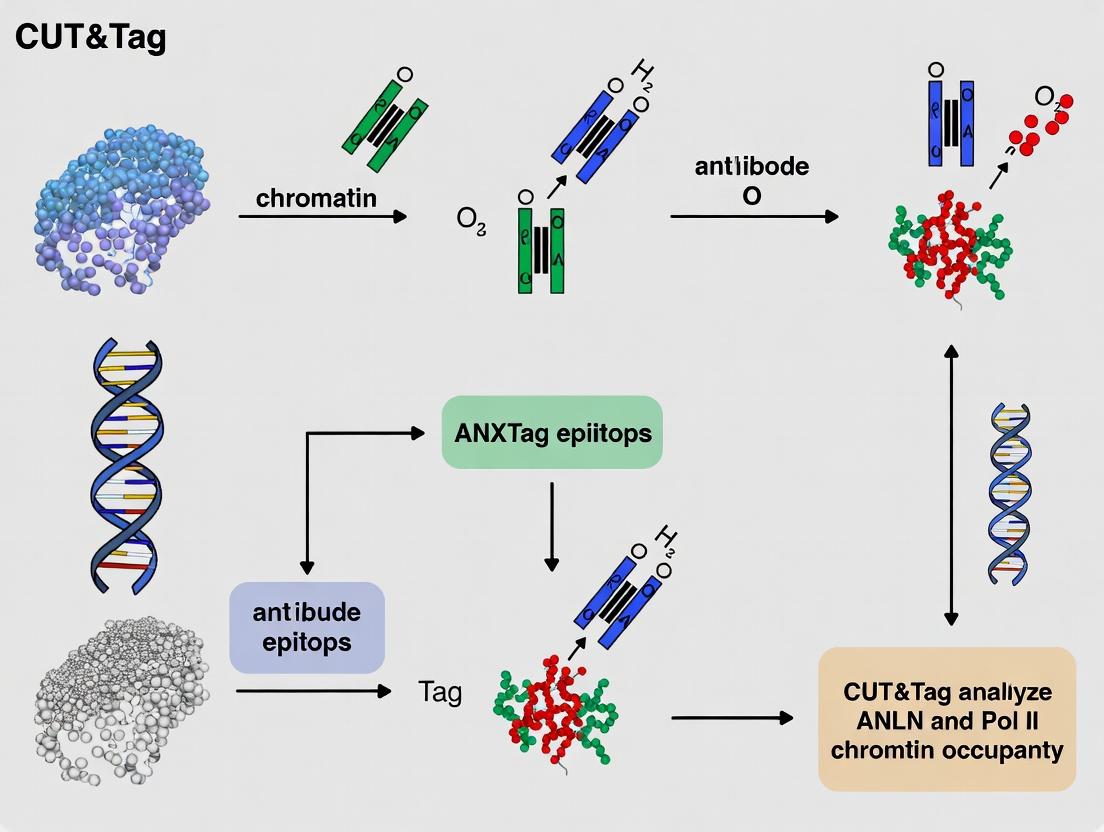
This article provides a detailed, current guide for researchers and drug development scientists employing Cleavage Under Targets and Tagmentation (CUT&Tag) to map the chromatin occupancy of the cytoskeletal regulator ANLN...
Mapping Chromatin Occupancy: A Comprehensive Guide to CUT&Tag Assays for ANLN and RNA Polymerase II
Abstract
This article provides a detailed, current guide for researchers and drug development scientists employing Cleavage Under Targets and Tagmentation (CUT&Tag) to map the chromatin occupancy of the cytoskeletal regulator ANLN (Anillin) and RNA Polymerase II (Pol II). We cover the foundational principles of CUT&Tag, offering a step-by-step methodological protocol tailored for these specific targets, alongside common troubleshooting and optimization strategies. The guide includes critical validation approaches and compares CUT&Tag with traditional ChIP-seq, highlighting its advantages in sensitivity and resolution. This resource aims to empower the study of transcriptional regulation and gene expression dynamics in both fundamental research and therapeutic contexts.
Understanding CUT&Tag: Core Principles and Target Biology for ANLN and Pol II
What is CUT&Tag? A Revolution in Epigenomic Profiling vs. Traditional ChIP-seq
Within the context of a thesis investigating ANLN (anillin) and RNA Polymerase II chromatin occupancy dynamics in disease models, the choice of epigenomic profiling technique is critical. CUT&Tag (Cleavage Under Targets and Tagmentation) has emerged as a transformative alternative to traditional Chromatin Immunoprecipitation followed by sequencing (ChIP-seq). This Application Note details the comparative advantages and protocols, emphasizing their application for targeted chromatin occupancy research.
Core Principle Comparison
CUT&Tag utilizes a protein A-Tn5 fusion transposase tethered directly to a target-bound antibody in situ. Upon activation, the tethered transposase inserts sequencing adapters into adjacent chromatin, enabling highly specific tagmentation. In contrast, ChIP-seq relies on crosslinking, chromatin fragmentation, antibody immunoprecipitation, and subsequent library construction—a process involving more steps and harsher conditions.
Table 1: Quantitative Comparison of CUT&Tag vs. ChIP-seq
| Parameter | CUT&Tag | Traditional ChIP-seq |
|---|---|---|
| Typical Hands-on Time | ~1 day | 3-4 days |
| Starting Cells | 50 - 100,000 (standard); <500 (low-input) | 500,000 - 10 million |
| Sequencing Depth for Signal | ~3-5 million reads | ~20-40 million reads |
| Background Signal | Very low (High Signal-to-Noise) | High (requires control) |
| Resolution | High (single-nucleosome) | Moderate to High |
| Crosslinking | Not required (native conditions) | Required (Formaldehyde) |
| Key Advantage | Low input, high signal-to-noise, fast | Established, broad antibody availability |
Application in ANLN and Pol II Research
For investigating the role of the cytoskeletal regulator ANLN in transcription or co-occupancy studies with Pol II, CUT&Tag offers distinct benefits. Its low background is crucial for mapping factors at weakly bound loci. The protocol's sensitivity allows for profiling rare cell populations or biopsy samples. Sequential CUT&Tag experiments can be performed on the same sample to map ANLN and Pol II simultaneously, revealing direct spatial relationships.
Detailed Protocol: CUT&Tag for ANLN/Pol II
Day 1: Cell Preparation and Antibody Binding
- Harvest & Permeabilize: Harvest 100,000 cells (e.g., cultured cell line of interest). Wash with Wash Buffer (20 mM HEPES pH 7.5, 150 mM NaCl, 0.5 mM Spermidine, 1x Protease Inhibitor). Resuspend in 100 µL Digitonin-containing Wash Buffer (0.01% Digitonin).
- Primary Antibody Incubation: Add primary antibody (e.g., anti-ANLN or anti-Pol II). Use 1:50 - 1:100 dilution in 50 µL Dig-wash Buffer. Incubate overnight at 4°C on a rotator.
Day 2: Tagmentation & DNA Purification
- Wash: Gently pellet cells. Wash 2x with 1 mL Dig-wash Buffer to remove unbound antibody.
- Secondary Antibody (Optional): If using a primary antibody not conjugated to protein A, incubate with appropriate secondary antibody for 1 hour at RT.
- pA-Tn5 Binding: Resuspend cells in 100 µL Dig-wash Buffer with a 1:250 dilution of pre-loaded pA-Tn5 transposase (commercially available). Incubate for 1 hour at RT on a rotator.
- Wash: Wash 2x with 1 mL Dig-wash Buffer to remove unbound pA-Tn5.
- Tagmentation Activation: Resuspend cells in 300 µL Tagmentation Buffer (Dig-wash Buffer with 10 mM MgCl2). Incubate at 37°C for 1 hour.
- DNA Extraction: Add 10 µL 0.5 M EDTA, 3 µL 10% SDS, and 2.5 µL 20 mg/mL Proteinase K. Incubate at 55°C for 1 hour to stop reaction and digest proteins.
- DNA Purification: Purify DNA using a standard PCR purification kit (e.g., Qiagen MinElute). Elute in 20 µL Elution Buffer.
- Library Amplification: Amplify the purified DNA using a high-fidelity PCR mix with indexed primers for 12-15 cycles. Purify the final library using SPRI beads. Quantify via Qubit and Bioanalyzer/TapeStation before sequencing.
Visualizing the Workflow
Title: CUT&Tag Experimental Workflow
The Scientist's Toolkit: Essential Research Reagent Solutions
Table 2: Key Reagents for CUT&Tag Assay
| Reagent | Function & Importance | Example/Note |
|---|---|---|
| Digitonin | A mild detergent used to permeabilize the cell and nuclear membranes, allowing antibody and pA-Tn5 access while maintaining nuclear architecture. | Critical concentration optimization (typically 0.01%). |
| Primary Antibody | Binds specifically to the target protein (e.g., ANLN, Pol II). Quality and specificity are paramount for success. | Validated for ChIP or CUT&Tag recommended. |
| pA-Tn5 Transposase | Protein A fused to hyperactive Tn5 transposase, pre-loaded with sequencing adapters. The core enzyme for targeted tagmentation. | Commercially available (e.g., from EpiCypher, Illumina). |
| Activation Buffer with Mg²⁺ | Provides magnesium ions essential for the catalytic activity of the Tn5 transposase, initiating tagmentation. | Simple addition of MgCl₂ to Wash Buffer. |
| High-Fidelity PCR Mix | Amplifies the low-yield, adapter-ligated DNA into a sequencing-ready library with minimal bias. | Use a polymerase suited for GC-rich regions. |
| Dual-Size Selection SPRI Beads | Purifies and size-selects the final library, removing primer dimers and large fragments. | Crucial for clean library profiles. |
Signaling Pathway Contextualization
In studying ANLN's role in transcription, its potential regulatory pathway intersecting with Pol II can be conceptualized as follows:
Title: Proposed ANLN-Pol II Regulatory Interaction
Introduction ANLN (Anillin) is a conserved actin-binding protein classically defined as a master scaffold of the cytokinetic machinery. Recent research has fundamentally expanded this role, revealing ANLN as a nuclear shuttling protein and a critical regulator of gene transcription. This application note, framed within a thesis investigating chromatin occupancy via CUT&Tag, details the emerging significance of ANLN in gene regulation and provides a practical workflow for its study.
ANLN in Transcriptional Regulation: Key Findings Quantitative studies implicate ANLN in the regulation of genes central to cell cycle progression, metastasis, and development. ANLN interacts with transcription factors and co-activators, facilitating their recruitment to target gene promoters.
Table 1: Summary of Key ANLN-Regulated Gene Programs and Interactions
| Biological Context | Key Target Genes/Pathways | Proposed Mechanism | Quantitative Change (Approx.) | Experimental System |
|---|---|---|---|---|
| Cell Cycle Progression | CCND1 (Cyclin D1), MYC | Binds to FOXM1, enhancing its transcriptional activity on G2/M genes. | CCND1 mRNA ↑ 2.5-3 fold upon ANLN overexpression. | HeLa, MCF-7 cells |
| Epithelial-Mesenchymal Transition (EMT) & Metastasis | SNAI1, ZEB1, MMP9 | Interacts with NF-κB p65 subunit, promoting its chromatin occupancy. | NF-κB target gene activation ↑ 60-80%; invasion ↑ 3 fold. | Breast cancer (MDA-MB-231) |
| Development & Differentiation | SOX2, NANOG (in some contexts) | Forms complex with YAP/TAZ in the nucleus. | Knockdown reduces YAP/TAZ target expression by ~40-50%. | Mammary epithelial cells |
| Chromatin Occupancy | Polymerase II (Pol II) Ser5 phosphorylation | Co-localizes with active transcription sites. | CUT&Tag signal for nuclear ANLN correlates with Pol II-Ser5P at ~70% of high-occupancy sites. | K562 cells, CUT&Tag |
Research Reagent Solutions Toolkit Table 2: Essential Reagents for Studying ANLN in Gene Regulation
| Reagent / Material | Function / Application | Example Catalog # / Note |
|---|---|---|
| Anti-ANLN (Nuclear Isoform) Antibody | Immunoprecipitation (IP), CUT&Tag, IF. Critical for distinguishing nuclear pool. | e.g., Rabbit monoclonal, specific for N-terminal epitope. |
| Protein A-Tn5 Fusion (pA-Tn5) | Enzyme conjugate for targeted tagmentation in CUT&Tag. | Commercially available as pre-assembled complex. |
| Concanavalin A-Coated Magnetic Beads | Binds to glycoproteins on cell membrane, immobilizing cells for CUT&Tag. | Essential for the standard CUT&Tag workflow. |
| Digitonin / Digitonin-Based Permeabilization Buffer | Selective permeabilization of plasma membrane, preserving nuclear integrity for antibody entry. | Typical working concentration: 0.01-0.05%. |
| Spike-in Control Chromatin (e.g., D. melanogaster ) | Normalization for technical variation in CUT&Tag/ChIP-seq library preparation. | e.g., Widely used for cross-sample comparison. |
| FOXM1 or NF-κB p65 Expression Plasmid | For co-transfection studies to probe ANLN-transcription factor functional interaction. | Enable gain-of-function assays. |
Protocol: CUT&Tag for Concurrent Profiling of ANLN and RNA Polymerase II Chromatin Occupancy This protocol is optimized for adherent cell lines (e.g., MCF-7, HeLa).
Part A: Cell Preparation and Antibody Binding
- Harvesting: Gently dissociate cells using non-enzymatic buffer (e.g., enzyme-free PBS-based cell dissociation buffer). Count cells.
- Immobilization: Wash 500,000 cells twice in Wash Buffer (20 mM HEPES pH 7.5, 150 mM NaCl, 0.5 mM Spermidine, 1x Protease Inhibitor). Resuspend in 100 µL Wash Buffer. Add 10 µL of concanavalin A-coated magnetic beads. Incubate for 15 minutes at RT.
- Permeabilization: Place tube on magnet, discard supernatant. Resuspend bead-bound cells in 100 µL Digitonin Buffer (Wash Buffer + 0.01% Digitonin).
- Primary Antibody Incubation: Add primary antibody directly to the suspension. For dual-target analysis, split sample here.
- Condition 1: Anti-ANLN antibody (1:50 dilution in Digitonin Buffer).
- Condition 2: Anti-Pol II (phospho-Ser5) antibody (1:50).
- Control: Isotype-matched IgG (1:50). Incubate overnight at 4°C on a rotator.
Part B: pA-Tn5 Loading and Tagmentation
- Washing: Place tube on magnet, discard supernatant. Wash beads/cells 3x with 1 mL Digitonin Buffer (5 min per wash, RT).
- Secondary Binding: Resuspend in 100 µL Digitonin Buffer containing a 1:100 dilution of Guinea Pig anti-Rabbit secondary antibody (if primary is rabbit). Incubate for 60 min at RT.
- Washing: Repeat Step B.1.
- pA-Tn5 Binding: Dilute commercial pA-Tn5 adapter complex 1:100 in Digitonin Buffer. Resuspend samples in 100 µL of this dilution. Incubate for 60 min at RT.
- Washing: Repeat Step B.1. Then perform 2 quick washes with 1 mL of Tagmentation Buffer (20 mM HEPES pH 7.5, 300 mM NaCl, 0.5 mM Spermidine, 0.01% Digitonin).
- Tagmentation: Resuspend beads/cells in 100 µL Tagmentation Buffer. Incubate at 37°C for 1 hour.
- Reaction Stop: Add 10 µL of 0.5 M EDTA, 10 µL of 10% SDS, and 2.5 µL of 20 mg/mL Proteinase K. Mix and incubate at 55°C for 30 min to stop tagmentation and digest proteins.
Part C: DNA Purification and Library Amplification
- DNA Extraction: Add 120 µL of phenol-chloroform-isoamyl alcohol, vortex, and centrifuge. Transfer aqueous top layer to a new tube. Add 1 µL of glycol blue, 120 µL of chloroform, vortex, and centrifuge. Transfer aqueous layer.
- Precipitation: Add 0.1 volume of 3M sodium acetate (pH 5.2) and 1 volume of isopropanol. Incubate at -80°C for 15 min. Centrifuge at 4°C, wash pellet with 80% ethanol, and air dry.
- PCR Amplification: Resuspend DNA in 21 µL nuclease-free water. Add 25 µL NEBNext Hi-Fi 2x PCR Master Mix and 2 µL of a universal i5 and a sample-specific i7 primer (e.g., 1.25 µM final). Run PCR: 72°C for 5 min; 98°C for 30 sec; then 12-15 cycles of [98°C for 10 sec, 63°C for 10 sec, 72°C for 30 sec]; hold at 4°C.
- Clean-up: Purify amplified library using SPRI beads (0.8x ratio). Elute in 20 µL EB buffer. Validate on Bioanalyzer/TapeStation. Sequence on an Illumina platform (5-10 million read pairs per sample recommended).
Visualization: ANLN Regulatory Network & CUT&Tag Workflow
Title: ANLN Gene Regulation Network via Transcription Factors
Title: CUT&Tag Protocol for ANLN Chromatin Occupancy
Within the broader thesis employing CUT&Tag assays to profile chromatin occupancy of the cytokinesis regulator ANLN and RNA Polymerase II (Pol II), mapping Pol II's genomic localization is paramount. Pol II is the central enzyme responsible for transcribing all protein-coding genes and many non-coding RNAs. Its occupancy pattern provides a direct, functional readout of transcriptional activity, promoter-proximal pausing, and regulatory states. Integrating Pol II CUT&Tag data with ANLN occupancy maps can unravel potential, novel crosstalk between transcriptional machinery and cell cycle/cytokinesis factors, offering insights for therapeutic targeting in cancers where both processes are dysregulated.
Key Quantitative Findings: Pol II Occupancy Dynamics
Table 1: Comparative Metrics of Pol II Chromatin Occupancy Assays
| Assay Method | Resolution | Required Input (Cells) | Key Output | Primary Advantage for Pol II Studies |
|---|---|---|---|---|
| ChIP-seq | ~200-500 bp | 500,000 - 10^7 | Binding peaks | Historical gold standard; extensive published data. |
| CUT&Tag | ~50-200 bp (single- to oligo-nucleosome) | 50,000 - 100,000 | Binding peaks | Low background, high signal-to-noise; works on low cell inputs. |
| PRO-seq | Single-base | 1-5 x 10^6 | Elongating polymerase positions | Direct measurement of active transcription, not just occupancy. |
| ChIP-nexus | ~1-10 bp | 1-10 x 10^6 | High-resolution footprints | Maps precise protein-DNA contacts and orientation. |
Table 2: Typical Pol II Occupancy Data from a Model Cell Line (e.g., K562)
| Genomic Region | % of Total Pol II Peaks | Average Peak Height (RPKM) | Associated Transcriptional State |
|---|---|---|---|
| Promoter-Proximal | 45-55% | 50-150 | Initiation and Paused Pol II |
| Gene Body | 35-45% | 10-50 | Actively Elongating Pol II |
| Enhancers | 5-15% | 5-25 | Transcription of enhancer RNA (eRNA) |
| Intergenic | <5% | <5 | Putative novel transcripts or noise |
Detailed Protocols
Protocol 1: CUT&Tag for RNA Polymerase II (Using Protein A-Tn5 Fusion)
This protocol is optimized for ~100,000 adherent or suspension cells, targeting the RPB1 subunit (N-terminal epitope).
Day 1: Cell Harvest and Permeabilization
- Harvest cells, count, and wash 1x in PBS.
- Wash Buffer: Prepare 1 mL of 20 mM HEPES pH 7.5, 150 mM NaCl, 0.5 mM Spermidine, 1x Protease Inhibitor Cocktail.
- Resuspend cell pellet in 1 mL Wash Buffer. Centrifuge at 600 x g for 3 min. Repeat.
- Permeabilization: Resuspend cells in 1 mL of Dig-wash buffer (Wash Buffer + 0.05% Digitonin). Incubate 10 min on ice.
- Add 10 μL of activated Concanavalin A-coated magnetic beads (Bangs Laboratories). Incubate 10 min at RT with rotation.
Day 1: Primary Antibody Binding
- Place tube on magnet, discard supernatant.
- Resuspend bead-bound cells in 50 μL Dig-wash buffer containing 1:50 dilution of anti-RPB1 (unphosphorylated CTD) antibody (e.g., Clone 8WG16).
- Incubate overnight at 4°C with gentle rotation.
Day 2: Secondary Antibody and pA-Tn5 Binding
- Place tube on magnet, discard supernatant.
- Wash beads/cells 2x with 1 mL Dig-wash buffer.
- Resuspend in 50 μL Dig-wash buffer containing 1:100 dilution of Guinea Pig anti-Mouse IgG secondary antibody. Incubate for 60 min at RT.
- Place on magnet, discard supernatant. Wash 2x with 1 mL Dig-wash buffer.
- pA-Tn5 Loading (Prepare fresh): Dilute the commercial or homemade pA-Tn5 adapter complex 1:250 in Dig-wash buffer containing 2.5 mM MgCl₂. Add 50 μL to beads/cells.
- Incubate for 60 min at RT with rotation.
Day 2: Tagmentation and DNA Purification
- Place on magnet, discard supernatant. Wash 3x with 1 mL Dig-wash buffer to remove unbound pA-Tn5.
- Resuspend in 100 μL of Tagmentation Buffer: 10 mM MgCl₂ in Dig-wash buffer.
- Incubate at 37°C for 60 min.
- Stop reaction by adding 10 μL of 0.5 M EDTA, 3 μL of 10% SDS, and 2.5 μL of 20 mg/mL Proteinase K. Mix and incubate at 55°C for 60 min.
- Purify DNA using a standard Phenol:Chloroform:Isoamyl Alcohol extraction and ethanol precipitation, or a SPRI bead-based clean-up. Elute in 20 μL TE buffer.
- Proceed to library amplification with indexed PCR primers for 14-16 cycles and dual-SPRI size selection.
Protocol 2: Data Analysis Workflow for Pol II CUT&Tag Peaks
- Quality Control: Use FastQC on raw sequencing reads. Trim adapters with Trimmomatic or Cutadapt.
- Alignment: Align reads to the reference genome (e.g., hg38) using Bowtie2 with parameters
--local --very-sensitive --no-mixed --no-discordant. - Peak Calling: Use SEACR (v1.3) in "stringent" mode against an IgG control, or MACS2 with parameters
--nomodel --shift -75 --extsize 150 --keep-dup all -B --SPMR. - Downstream Analysis:
- Generate bigWig files for visualization using deepTools
bamCoverage --normalizeUsing RPKM. - Annotate peaks to genomic features (TSS, gene body, etc.) with ChIPseeker.
- Perform motif analysis with HOMER or MEME-ChIP.
- Integrate with ANLN CUT&Tag data (co-occupancy analysis) and public PRO-seq/RNA-seq datasets.
- Generate bigWig files for visualization using deepTools
Visualizations
Title: CUT&Tag Experimental Workflow for Pol II
Title: Pol II Transcriptional Cycle States
Title: Thesis Integration of ANLN and Pol II Data
The Scientist's Toolkit: Key Research Reagent Solutions
Table 3: Essential Materials for Pol II CUT&Tag and Analysis
| Item | Function & Rationale | Example Product/Catalog |
|---|---|---|
| Concanavalin A Beads | Binds glycoproteins on permeabilized cell membrane, immobilizing cells for all subsequent steps. | Bangs Laboratories, CP010005 |
| Primary Antibody vs. Pol II | Specifically recognizes the RPB1 subunit. Choice determines which Pol II state is mapped (e.g., unphosphorylated, Ser5P, Ser2P). | Cell Signaling Tech, 14958S (Ser2P); Millipore, 05-623 (8WG16, total) |
| Guinea Pig Anti-Mouse IgG | Secondary antibody that bridges mouse primary antibody to protein A-Tn5 fusion. Reduces background vs. rabbit antibodies. | Antibodies-Online, ABIN101961 |
| Pre-loaded pA-Tn5 | Protein A-Tn5 transposase pre-loaded with sequencing adapters. Critical for targeted tagmentation. | EpiCypher, 15-1017; DIY protocols available |
| Digitonin | Mild detergent for cell permeabilization, allowing antibody entry while maintaining nuclear structure. | Millipore Sigma, D141-100MG |
| High-Fidelity PCR Mix | For limited-cycle amplification of tagmented DNA to create sequencing libraries. Must minimize bias. | NEB, Q5 Master Mix (M0544) |
| Dual-Size Selection SPRI Beads | For clean size selection of CUT&Tag libraries (e.g., 0.5x and 1.5x ratios) to remove adapter dimers and large fragments. | Beckman Coulter, B23317 |
| Analysis Pipeline Software | Essential for processing raw data into interpretable occupancy maps and peaks. | EpiCypher CUT&Tag Tools, nf-core/cuttag, custom SnakeMake pipelines |
Application Notes
Understanding the precise spatiotemporal coordination of structural proteins and the core transcriptional machinery is a frontier in chromatin biology and oncology research. The ANLN (Anillin) protein, a cytoskeletal scaffold critical for cytokinesis and cellular integrity, is now recognized for its nuclear functions and oncogenic potential. Concurrently, RNA Polymerase II (Pol II) is the central enzyme driving gene transcription. This application note outlines the rationale and methodology for investigating their co-occupancy on chromatin, framing it within a thesis employing the CUT&Tag (Cleavage Under Targets and Tagmentation) assay. The central hypothesis is that ANLN plays a non-canonical, direct role in gene regulation by facilitating Pol II recruitment, pause-release, or transcriptional elongation at specific oncogenic loci.
Rationale and Scientific Context
- Oncogenic Convergence: Both ANLN and Pol II are validated therapeutic targets. ANLN is overexpressed in numerous cancers (e.g., breast, prostate, lung) and correlates with poor prognosis. Pol II activity is frequently hijacked in cancer to sustain proliferative gene programs. Linking them provides a mechanistic bridge between structural dysregulation and transcriptional addiction.
- Nuclear ANLN Phenomena: Emerging evidence indicates ANLN localizes to the nucleus, binds chromatin, and interacts with transcription factors. Its actin-binding domains may mediate nuclear actin polymerization, a process implicated in Pol II elongation.
- Precision of CUT&Tag: Unlike ChIP-seq, CUT&Tag is performed in situ on permeabilized nuclei, using a Protein A-Tn5 transposase fusion to tag target-bound chromatin with high sensitivity and low background. This is ideal for studying co-occupancy of a structural protein (ANLN) and a high-abundance complex (Pol II) on the same sample with low cell input (50K-100K cells), a key advantage for primary patient samples.
- Dual-Target Strategy: Sequential or parallel CUT&Tag profiling for ANLN and Pol II (phosphorylated at Ser5 or Ser2 to distinguish initiation/elongation states) allows for:
- Identification of genomic loci where ANLN and Pol II co-localize.
- Inference of ANLN's role in the transcription cycle (e.g., does ANLN binding correlate with promoter-proximal paused Pol II or gene-body elongating Pol II?).
- Assessment of dynamic changes upon ANLN depletion or drug inhibition (e.g., Pol II Ser2 inhibitor, Flavopiridol).
Protocols
Protocol 1: Consecutive CUT&Tag for ANLN and Pol II Ser5P on Sequential Sections from the Same Cell Sample
Objective: To map ANLN and initiating Pol II (phospho-Ser5) occupancy from a single cell population, minimizing biological variability.
Materials (Research Reagent Solutions):
- Concanavalin A-coated Magnetic Beads (Bangs Laboratories): For cell/nuclei immobilization.
- Digitonin Permeabilization Buffer: Enables antibody and pA-Tn5 entry.
- Primary Antibodies: Rabbit anti-ANLN (Cell Signaling Technology, #86655); Mouse anti-Pol II Ser5P (Active Motif, #61085).
- Secondary pA-Tn5 Fusion Protein: Protein A-Tn5 pre-loaded with mosaic end adapters for tagmentation.
- Tagmentation Activation Buffer: Contains Mg²⁺ to activate Tn5.
- DNA Extraction & Purification Kit (e.g., SPRI beads): For post-tagmentation DNA recovery.
- PCR Primers with Dual Indexes: For library amplification.
Detailed Methodology:
- Cell Preparation: Harvest and wash 100,000 cells. Bind to ConA beads in Binding Buffer.
- Permeabilization: Resuspend bead-bound cells in Digitonin Buffer. Wash twice.
- Primary Antibody Incubation (ANLN): Incubate with anti-ANLN antibody (1:50 in Digitonin Buffer) overnight at 4°C.
- Secondary pA-Tn5 Incubation: Wash unbound antibody. Incubate with pA-Tn5 (1:100) for 1 hour at RT.
- Tagmentation (ANLN): Wash and resuspend in Tagmentation Activation Buffer. Incubate at 37°C for 1 hour.
- DNA Extraction (ANLN Fraction): Immediately following tagmentation, split the sample. For the ANLN fraction, add EDTA to stop reaction, extract DNA with Proteinase K, and purify using SPRI beads. This is Library A.
- Secondary Target Processing (Pol II Ser5P on Remaining Sample): To the remaining bead-bound material, add anti-Pol II Ser5P antibody directly and repeat steps 4-6. This generates Library B from the same original cell population.
- Library Amplification & Sequencing: Amplify both libraries via PCR with unique dual indexes. Pool and sequence on an Illumina platform (e.g., 2x150 bp, 5-10M reads per library).
Protocol 2: Validation by Combined Immunofluorescence (IF) and DNA FISH on CUT&Tag-Hit Loci
Objective: Visually confirm spatial co-localization of ANLN protein and specific genomic loci bound by both ANLN and Pol II.
Materials:
- Cell Culture Chamber Slides
- Fixation/Permeabilization Solution: 4% PFA followed by 0.5% Triton X-100.
- Antibodies: Same as Protocol 1, with fluorescent secondary antibodies (e.g., anti-rabbit Alexa Fluor 488, anti-mouse Alexa Fluor 555).
- DNA FISH Probe: Designed against a top-scoring co-occupied genomic region (e.g., MYC enhancer) and labeled with Cy5.
- Mounting Medium with DAPI
Detailed Methodology:
- Cell Seeding and Fixation: Culture cells on chamber slides. Fix with 4% PFA for 10 min, permeabilize with 0.5% Triton X-100 for 15 min.
- Immunofluorescence: Block, then incubate with anti-ANLN and anti-Pol II Ser5P primary antibodies simultaneously overnight. Wash and incubate with fluorescent secondary antibodies for 1 hour.
- DNA FISH: Post-IF, refix cells. Denature DNA and hybridize with the locus-specific Cy5-labeled FISH probe overnight.
- Imaging and Analysis: Wash, mount with DAPI. Image using a super-resolution or confocal microscope. Quantify the overlap coefficient between ANLN signal, Pol II signal, and the FISH probe spot in 3D.
Data Presentation
Table 1: Summary of Expected CUT&Tag Sequencing Metrics and Outcomes
| Metric | ANLN CUT&Tag Library | Pol II Ser5P CUT&Tag Library | Interpretation |
|---|---|---|---|
| Total Reads | 8-10 million | 8-10 million | Sufficient for robust peak calling. |
| FRiP Score | 5-15% | 20-40% | ANLN may have fewer, more specific sites. Pol II is genome-wide. |
| Peaks Called | 5,000 - 15,000 | 50,000 - 80,000 | Reflects target abundance and role. |
| % Peaks in Promoters | ~30% | ~25% | Indicates promoter association. |
| % Peaks in Enhancers | ~40% | ~15% | Suggests ANLN role in enhancer biology. |
| Overlap Co-efficient | ~60% of ANLN peaks co-localize with Pol II peaks | Key Result: Strong evidence of functional linkage. | |
| Top Co-occupied Loci | MYC enhancer, CCND1 promoter, EGFR enhancer | Identifies candidate genes for mechanistic study. |
Table 2: Key Research Reagent Solutions for ANLN/Pol II CUT&Tag
| Item | Function/Justification | Example Product/Catalog |
|---|---|---|
| Anti-ANLN Antibody | Highly specific, ChIP/CUT&Tag validated antibody for chromatin-bound ANLN. | Cell Signaling Technology #86655 |
| Anti-Pol II Phospho-Specific Abs | Distinguish transcriptional states (Ser5P=initiation, Ser2P=elongation). | Active Motif #61085 (Ser5P), #61083 (Ser2P) |
| pA-Tn5 Fusion Protein | Core enzyme for targeted tagmentation in CUT&Tag. | Commercial kits (Epicypher) or in-house purified. |
| Concanavalin A Beads | Immobilize intact nuclei for all wash and incubation steps. | Bangs Laboratories BP531 |
| Digitonin | Critical for gentle nuclear permeabilization allowing antibody access. | Millipore Sigma #D141 |
| Dual Index PCR Primers | Enable multiplexing of ANLN and Pol II libraries from same experiment. | Illumina TruSeq or custom designs. |
| SPRI Beads | For size selection and purification of DNA libraries post-tagmentation. | Beckman Coulter AMPure XP |
| Next-Gen Sequencing Kit | High-output sequencing of paired-end libraries. | Illumina NovaSeq 6000 S4 Reagent Kit |
Visualizations
Title: CUT&Tag Workflow for a Single Target
Title: Logical Flow of Dual-Target ANLN/Pol II Study
Application Notes
This protocol details the application of CUT&Tag for mapping the chromatin occupancy of ANLN (Anillin) and RNA Polymerase II (Pol II). ANLN, a cytoskeletal protein implicated in cytokinesis and cancer progression, is increasingly studied for potential non-canonical nuclear roles. Concurrent Pol II mapping delineates active transcriptional states. The method utilizes a protein A-conjugated Tn5 transposase (pA-Tn5) loaded with sequencing adapters to tag antibody-targeted chromatin in situ, offering high signal-to-noise ratio and low cell number requirements compared to ChIP-seq.
Key Advantages:
- Sensitivity: Effective with 10K - 500K cells.
- Resolution: Provides base-pair resolution of binding sites.
- Multiplexing: Compatible with combinatorial indexing for high-throughput studies.
Quantitative Performance Metrics: Table 1: Typical CUT&Tag Yield and Sequencing Metrics for ANLN/Pol II
| Metric | Target (ANLN) | Target (Pol II) | Negative Control (IgG) |
|---|---|---|---|
| Recommended Cells per Reaction | 100,000 | 100,000 | 100,000 |
| Expected Library Concentration | 5-30 ng/µL | 10-50 ng/µL | 0.1-2 ng/µL |
| Estimated % of Reads in Peaks | 20-60% | 40-80% | < 0.5% |
| Recommended SEQs Depth | 5-10 million reads | 10-15 million reads | 3-5 million reads |
| Primary Peak Calling Tool | SEACR, MACS2 | SEACR, MACS2 | - |
Table 2: Essential Antibody Panel for ANLN & Pol II CUT&Tag
| Target | Host Species | Clonality | Recommended Dilution | Vendor Examples (Catalog #) | Purpose |
|---|---|---|---|---|---|
| ANLN | Rabbit | Polyclonal | 1:50 - 1:100 | Cell Signaling (D1B2E) | Map ANLN chromatin occupancy |
| RNA Pol II | Mouse | Monoclonal (8WG16) | 1:50 | MilliporeSigma (05-952) | Map transcriptionally engaged Pol II |
| Histone H3K27me3 | Rabbit | Monoclonal | 1:50 - 1:100 | Cell Signaling (C36B11) | Optional repressive mark control |
| Normal Rabbit IgG | Rabbit | - | 1 µg per reaction | MilliporeSigma (12-370) | Negative control |
| Normal Mouse IgG | Mouse | - | 1 µg per reaction | MilliporeSigma (12-371) | Negative control |
Detailed Protocol: CUT&Tag for ANLN and Pol II
Part I: Cell Preparation and Binding
- Cell Harvesting: Harvest and count cells. Use 100,000 – 500,000 cells per reaction.
- Cell Permeabilization: Wash cells twice in 1mL Wash Buffer (20 mM HEPES pH 7.5, 150 mM NaCl, 0.5 mM Spermidine, 1x Protease Inhibitor). Resuspend cell pellet in 500 µL Wash Buffer with 0.025% Digitonin (Wash-B).
- Primary Antibody Incubation: Add primary antibody (see Table 2 for dilutions) directly to cells in Wash-B. Incubate overnight at 4°C with rotation.
- Secondary Antibody Incubation (Optional): For non-rabbit primaries, wash cells twice with 1mL Wash-B. Resuspend in 100 µL Wash-B with appropriate secondary antibody (1:100 dilution). Incubate for 60 min at RT.
Part II: pA-Tn5 Binding and Tagmentation
- Wash: Wash antibody-bound cells twice with 1 mL Wash-B.
- pA-Tn5 Binding: Dilute commercial pA-Tn5 adapter complex (e.g., from EpiCypher or homemade) 1:100 in Dig-300 Buffer (20 mM HEPES pH 7.5, 300 mM NaCl, 0.5 mM Spermidine, 0.025% Digitonin). Add 100 µL to cell pellet. Incubate for 1 hr at RT with rotation.
- Tagmentation: Wash cells twice with 1 mL Dig-300 Buffer to remove unbound pA-Tn5. Resuspend cells in 300 µL Tagmentation Buffer (Dig-300 with 10 mM MgCl2). Incubate at 37°C for 1 hr.
- Reaction Arrest: Add 10 µL of 0.5 M EDTA, 3 µL of 10% SDS, and 2.5 µL of 20 mg/mL Proteinase K. Mix and incubate at 55°C for 1 hr to stop tagmentation and digest proteins.
Part III: DNA Purification and Library Preparation
- DNA Extraction: Add 300 µL of Phenol:Chloroform:Isoamyl Alcohol (25:24:1) to the sample. Vortex and centrifuge at 16,000 x g for 5 min. Transfer the aqueous top layer to a new tube.
- Precipitation: Add 1 µL of GlycoBlue (15 mg/mL), 300 mM NaCl (final), and 2.5 volumes of 100% ethanol. Precipitate overnight at -20°C or 1 hr at -80°C.
- Wash & Elute: Centrifuge at 16,000 x g for 15 min at 4°C. Wash pellet with 1 mL of 80% ethanol. Air-dry and resuspend DNA in 20 µL of 10 mM Tris-HCl, pH 8.0.
- Library Amplification: Prepare a 50 µL PCR reaction with 20 µL DNA, 2.5 µL of 25 µM i5 and i7 primer mix, and 25 µL of NEBNext High-Fidelity 2X Master Mix. Cycle: 72°C 5 min; 98°C 30s; then 14-16 cycles of [98°C 10s, 63°C 30s]; final hold at 4°C.
- Clean-up: Purify amplified library using 1.2x SPRIselect beads. Elute in 20 µL EB buffer. Quantify by Qubit and analyze fragment size (200-1000 bp smear) on a Bioanalyzer/TapeStation.
Part IV: Sequencing
- Platform: Illumina NextSeq 500/550 (75 bp single-end) or NovaSeq 6000.
- Depth: Sequence to a minimum depth of 5M (ANLN) or 10M (Pol II) uniquely mapped reads per sample.
The Scientist's Toolkit
Table 3: Research Reagent Solutions for CUT&Tag
| Item | Function | Example Vendor/Product |
|---|---|---|
| pA-Tn5 Adapter Complex | Key enzyme; binds antibody and fragments/ tags DNA. | EpiCypher (CUTANA), Homemade |
| High-Affinity Primary Antibodies | Specifically bind target protein (ANLN/Pol II) on chromatin. | Cell Signaling, MilliporeSigma |
| Digitonin | Mild detergent for cell permeabilization. | MilliporeSigma (D141) |
| Spermidine | Polyamine that stabilizes chromatin structure during assay. | MilliporeSigma (S0266) |
| NEBNext High-Fidelity PCR Mix | Robust amplification of low-input tagmented DNA libraries. | New England Biolabs (M0541) |
| SPRIselect Beads | Size-selective cleanup of DNA libraries. | Beckman Coulter (B23318) |
| Dual Indexed i5/i7 Primers | For multiplexed sequencing of libraries. | IDT for Illumina, EpiCypher |
| Qubit dsDNA HS Assay Kit | Accurate quantification of low-concentration DNA libraries. | Thermo Fisher Scientific (Q32851) |
Experimental Workflow and Pathway Diagrams
CUT&Tag Experimental Workflow Diagram
ANLN Gene Expression & Research Context
Step-by-Step Protocol: Executing CUT&Tag for ANLN and Pol II Chromatin Mapping
Effective chromatin profiling via CUT&Tag (Cleavage Under Targets and Tagmentation) for targets like ANLN (Anillin) and RNA Polymerase II (Pol II) requires the isolation of high-quality, intact nuclei as a foundational step. The assay hinges on the in situ tethering of a protein A-Tn5 transposase to antibody-bound chromatin targets within permeabilized but structurally intact nuclei. Impermeable cells prevent antibody and transposase entry, while over-permeabilization or physical shear leads to nuclear lysis, chromatin leakage, and high background. This application note details optimized protocols and critical considerations for the cell preparation and permeabilization phase to ensure success in downstream CUT&Tag workflows for occupancy research.
Table 1: Comparison of Permeabilization Agents for CUT&Tag-Ready Nuclei
| Agent | Typical Concentration | Incubation Time (min) | Key Effect | Optimal for Cell Type | Impact on Nuclear Integrity (Score 1-5, 5=best) |
|---|---|---|---|---|---|
| Digitonin | 0.01%-0.05% | 5-10 | Cholesterol-selective, mild | Adherent lines, primary cells | 5 |
| NP-40 | 0.1%-0.5% | 5-15 | General detergent, stronger | Suspension cells (e.g., K562) | 3 |
| Triton X-100 | 0.1%-0.5% | 5-15 | General detergent, strong | Robust cell lines | 2 |
| Saponin | 0.1%-0.5% | 10-20 | Mild, cholesterol-binding | Sensitive primary cells | 4 |
| Lysolecithin | 0.005%-0.02% | 3-7 | Phospholipid hydrolysis | Neuronal cells, difficult types | 4 |
Table 2: Critical Metrics for Intact Nuclei Post-Permeabilization
| Metric | Target Range | Measurement Method | Consequence of Deviation |
|---|---|---|---|
| Nuclei Yield | >80% of input cells | Hemocytometer count | Low yield increases sample variability. |
| Trypan Blue Exclusion (Nuclei) | >95% unstained | Microscopy | Staining indicates membrane rupture and chromatin loss. |
| DAPI Intensity (Relative) | 1.0 ± 0.2 (vs control) | Flow cytometry | Decrease suggests chromatin leakage. |
| Background Tagmentation (No Ab control) | <5% of positive sample | qPCR post-CUT&Tag | High background indicates accessible chromatin from lysed nuclei. |
Detailed Protocols
Protocol 1: Gentle Harvesting and Washing for Adherent Cells (e.g., HeLa, HEK293)
Objective: Detach cells without inducing stress or pre-permeabilization.
- Grow cells to 70-80% confluence in appropriate culture vessel.
- Remove culture medium and wash gently with 10 mL room temperature (RT) PBS.
- Add 3 mL of pre-warmed (37°C) Accutase or 0.5 mM EDTA in PBS. Incubate at 37°C for 5-7 min (avoid trypsin for CUT&Tag prep).
- Gently dislodge cells by tapping and transfer suspension to a 15 mL conical tube containing 7 mL of Wash Buffer (20 mM HEPES pH 7.5, 150 mM NaCl, 0.5 mM Spermidine, 1x Protease Inhibitor).
- Centrifuge at 300 x g for 5 min at RT. Gently resuspend pellet in 1 mL Wash Buffer.
- Count cells using an automated counter or hemocytometer. Proceed to permeabilization.
Protocol 2: Optimized Permeabilization for CUT&Tag
Objective: Render cells permeable to antibodies (~150 kDa) while preserving nuclear integrity. Reagent Preparation: * Permeabilization Buffer (Digitonin-based): 20 mM HEPES pH 7.5, 150 mM NaCl, 0.5 mM Spermidine, 1x Protease Inhibitor, 0.01% Digitonin, 0.1% BSA. Note: Prepare digitonin stock (5% in DMSO) fresh monthly. 1. Pellet 500,000 target cells from Protocol 1. Aspirate supernatant completely. 2. Resuspend cell pellet gently in 1 mL of cold Wash Buffer (no digitonin). Centrifuge at 600 x g for 5 min at 4°C. Repeat once. 3. Resuspend the washed cell pellet in 1 mL of Permeabilization Buffer. 4. Incubate on a rotator for 10 minutes at 4°C. 5. Add 10 mL of Wash Buffer to dilute digitonin. Centrifuge at 600 x g for 5 min at 4°C. 6. Resuspend the permeabilized cell pellet in 1 mL Wash Buffer + 0.1% BSA. Keep on ice. 7. Quality Control: Mix 10 µL of suspension with 10 µL of 0.4% Trypan Blue. Assess under microscope: Cytoplasm should stain lightly, nuclei should remain refractile and unstained. Count intact nuclei.
Protocol 3: Nuclei Extraction for Challenging Cell Types
Objective: Isolate intact nuclei prior to CUT&Tag for cells with tough cytoskeletons or high cytoplasmic background.
- Harvest and wash 500,000 cells as in Protocol 1, Step 6.
- Lyse in Hypotonic Buffer: Resuspend pellet in 1 mL of Hypotonic Buffer (10 mM Tris-Cl pH 7.5, 3 mM CaCl2, 2 mM MgCl2, 0.1% NP-40, 1x Protease Inhibitor). Incubate on ice for 12 min.
- Dounce homogenize with a tight pestle (15-20 strokes). Check under microscope: nuclei should be free of cytoplasmic tags.
- Layer the lysate over 1 mL of Sucrose Cushion (30% sucrose in Wash Buffer) in a new tube.
- Centrifuge at 800 x g for 10 min at 4°C. The nuclei will form a pellet; cytoplasmic debris remains at interface.
- Gently wash pellet with 1 mL Wash Buffer + 0.1% BSA. Count nuclei (Target >70% yield).
Visualizing the Workflow and Logic
Title: Cell Prep Workflow for CUT&Tag Nuclei
Title: CUT&Tag Principle on Intact Nuclei
The Scientist's Toolkit: Essential Research Reagent Solutions
Table 3: Essential Materials for Cell Prep and Permeabilization
| Reagent/Material | Function in Protocol | Critical Consideration for CUT&Tag |
|---|---|---|
| Digitonin (High-Purity) | Cholesterol-binding detergent for selective plasma membrane permeabilization. | Concentration is critical; test lot-to-lot variability. Use low (0.01%) for delicate cells. |
| HEPES Buffer (pH 7.5) | Maintains physiological pH during non-CO2 incubations. | Superior to PBS for maintaining nuclear integrity during permeabilization steps. |
| Spermidine (Polyamine) | Stabilizes chromatin and reduces non-specific binding. | Essential component in all Wash/Perm buffers to prevent histone loss. |
| Protease Inhibitor Cocktail (EDTA-free) | Prevents proteolytic degradation of target antigens (e.g., ANLN). | Must be EDTA-free to allow for subsequent Mg2+-dependent Tn5 activity. |
| BSA (Fraction V, IgG-Free) | Blocks non-specific sites, reduces antibody and enzyme background. | Use at 0.1-0.5% in all binding and wash steps post-permeabilization. |
| Accutase | Enzymatic cell detachment blend. | Gentle alternative to trypsin; preserves surface epitopes for potential co-assays. |
| Trypan Blue Solution (0.4%) | Vital dye for assessing plasma membrane integrity of nuclei. | Quality check: Permeabilized cytoplasm stains, intact nuclei exclude dye. |
| Magnetic Concatemer (e.g., pA-Tn5) | Protein A-Tn5 fusion protein for targeted tagmentation. | The core enzyme; must be titrated and validated with each new nuclei prep. |
This application note is framed within a thesis investigating the chromatin occupancy of the actin-binding protein ANLN (Anillin) and RNA Polymerase II (Pol II) using the CUT&Tag assay. Selecting and validating high-specificity primary antibodies is the most critical step for successful target identification and localization. This guide provides a structured approach for antibody selection and validation, with protocols tailored for CUT&Tag workflows.
Antibody Selection Criteria for CUT&Tag
Primary antibodies for CUT&Tag must meet stringent criteria due to the assay's sensitivity and performance in intact nuclei.
Table 1: Essential Criteria for Primary Antibody Selection
| Criteria | ANLN Antibody Requirement | Pol II Antibody Requirement | Rationale for CUT&Tag |
|---|---|---|---|
| Application Validation | Must include ChIP, ICC/IF, and CUT&Tag if possible. | Must include ChIP-seq/IP and CUT&Tag. | Confirms performance in chromatin-binding contexts. |
| Specificity | Knockout/Knockdown validation (e.g., in HeLa or relevant cell lines). | Phospho-specific (e.g., Ser2P, Ser5P) or total Pol II (N-terminus). Verification available. | Essential for low-background, high-signal CUT&Tag. |
| Host Species | Rabbit monoclonal preferred. | Rabbit monoclonal preferred. | Compatible with standard Protein A-Tn5 pA-Tn5 fusion protein. |
| Clonality | Monoclonal > Polyclonal. | Monoclonal > Polyclonal (for phospho-specific). | Higher batch-to-batch consistency. |
| Concentration | > 0.5 mg/mL. | > 0.5 mg/mL. | Allows for titration and optimization. |
| Cited in Literature | Cited in chromatin or cytoskeleton studies. | Widely cited in transcription/chromatin papers. | Peer-reviewed evidence of reliability. |
Validation Protocol for Candidate Antibodies
A two-stage validation is recommended prior to the main CUT&Tag experiment.
Stage 1: Specificity Verification by Western Blot (WB)
Objective: Confirm antibody recognizes a single band of correct molecular weight. Protocol:
- Cell Lysate Preparation: Lyse relevant cell lines (e.g., HeLa, HEK293) in RIPA buffer with protease/phosphatase inhibitors.
- Gel Electrophoresis: Load 20-30 µg of protein per lane on a 4-20% gradient SDS-PAGE gel.
- Transfer & Blocking: Transfer to PVDF membrane. Block with 5% non-fat milk in TBST for 1 hour.
- Primary Antibody Incubation: Dilute candidate antibodies in blocking buffer.
- ANLN: Test at 1:1000 dilution. Expected band: ~112 kDa.
- Pol II (total): Test at 1:2000 dilution. Expected band: ~240 kDa. Incubate overnight at 4°C.
- Secondary & Detection: Use appropriate HRP-conjugated secondary antibody (1:5000) and chemiluminescent substrate.
- Specificity Check: Include a lane from a CRISPR/Cas9 knockout cell line for ANLN or a phosphatase-treated lysate for phospho-Pol II antibodies.
Table 2: Expected WB Results for Specificity Validation
| Target | Antibody Clone/Cat # (Example) | Expected MW | KO/Control Test Required? | Pass Criteria |
|---|---|---|---|---|
| ANLN | Rabbit mAb, D3E2U (CST) | ~112 kDa | Yes (ANLN KO line) | Single band absent in KO. |
| Pol II (total) | Rabbit mAb, D3A6 (CST) | ~240 kDa | No | Single dominant band. |
| Pol II Ser2P | Rabbit mAb, E1Z3G (CST) | ~240 kDa | Yes (Lambda phosphatase) | Band eliminated by phosphatase. |
| Pol II Ser5P | Rabbit mAb, D9N5I (CST) | ~240 kDa | Yes (Lambda phosphatase) | Band eliminated by phosphatase. |
Stage 2: Chromatin Immunoprecipitation (ChIP) Pilot
Objective: Confirm antibody efficiently enriches target genomic regions. Protocol (Quick ChIP-qPCR):
- Crosslink & Sonication: Crosslink 1-2 million cells with 1% formaldehyde for 10 min. Quench with glycine. Sonicate chromatin to ~200-500 bp fragments.
- Immunoprecipitation: Incubate 50 µg chromatin with 1-5 µg of candidate primary antibody overnight at 4°C. Use Protein A/G magnetic beads.
- Wash, Reverse Crosslink, & Purify: Perform standard low-salt/high-salt washes. Reverse crosslinks at 65°C with proteinase K. Purify DNA.
- qPCR Analysis: Design 3-4 primer sets:
- For ANLN: Known positive genomic loci from literature (if none, use promoter of ANLN-regulated genes).
- For Pol II: Promoters of highly active housekeeping genes (e.g., GAPDH, ACTB) for total/Ser5P; gene bodies for Ser2P.
- Include a negative control region (e.g., gene desert).
- Calculate % Input: Enrichment >2-5 fold over IgG control indicates suitability for CUT&Tag.
Optimized CUT&Tag Antibody Incubation Protocol
This protocol follows the standard CUT&Tag workflow after the permeabilization step.
Materials:
- Concanavalin A-coated magnetic beads.
- Digitonin Buffer (0.01% Digitonin in Wash Buffer).
- Antibody Buffer (0.01% Digitonin, 2 mM EDTA, 1x PBS, 1% BSA).
- Primary antibodies validated in Stages 1 & 2.
- Guinea Pig anti-Rabbit secondary antibody (optional, for signal amplification).
- pA-Tn5 adapter complex (commercially available or pre-assembled).
Detailed Protocol:
- Cell-Bead Preparation: Bind 100,000-500,000 permeabilized cells to ConA beads.
- Primary Antibody Incubation:
- Resuspend bead-cell complex in 50 µL of Antibody Buffer.
- Add primary antibody at optimized dilution (see Table 3). Mix gently.
- Incubate overnight at 4°C on a rotator. Note: This extended, cold incubation is crucial for high signal-to-noise.
- Wash: Wash beads 3x with 1 mL of Digitonin Buffer to remove unbound antibody.
- Secondary Antibody Incubation (Optional):
- Resuspend in 50 µL Antibody Buffer with 1:100 dilution of Guinea Pig anti-Rabbit secondary.
- Incubate for 30-60 minutes at RT on rotator. Wash 3x with Digitonin Buffer.
- pA-Tn5 Binding: Resuspend in 50 µL Antibody Buffer with a 1:100 dilution of pre-loaded pA-Tn5 complex. Incubate for 1 hour at RT. Wash 3x with Digitonin Buffer.
- Tagmentation: Proceed with tagmentation activation, DNA extraction, and PCR per standard CUT&Tag protocols.
Table 3: Recommended Antibody Dilutions for CUT&Tag
| Target | Antibody Type | Recommended Starting Dilution (in Antibody Buffer) | Incubation Time/Temp | Notes |
|---|---|---|---|---|
| ANLN | Rabbit Monoclonal | 1:50 - 1:100 | Overnight, 4°C | May require signal amplification (Step 4). |
| Pol II (total) | Rabbit Monoclonal | 1:100 - 1:200 | Overnight, 4°C | Robust signal often without amplification. |
| Pol II (Phospho-specific) | Rabbit Monoclonal | 1:50 - 1:100 | Overnight, 4°C | Use phospho-specific validated antibodies. |
| IgG Control | Rabbit IgG | Match primary Ab concentration | Overnight, 4°C | Critical negative control. |
The Scientist's Toolkit: Research Reagent Solutions
Table 4: Essential Materials for Antibody Validation & CUT&Tag
| Item | Function/Application | Example Product/Cat # |
|---|---|---|
| ANLN Knockout Cell Line | Specificity control for ANLN antibodies. | CRISPR-generated HeLa ANLN-/-. |
| Lambda Protein Phosphatase | Specificity control for phospho-Pol II antibodies. | NEB P0753S. |
| Protein A/G Magnetic Beads | For pilot ChIP validation experiments. | Pierce 88802/88803. |
| Concanavalin A Magnetic Beads | For immobilizing cells in CUT&Tag. | Polysciences 86057-3. |
| Digitonin, High Purity | For permeabilization buffers in CUT&Tag. | Millipore 300410. |
| pA-Tn5 Fusion Protein / Complex | Enzyme for tagmentation in CUT&Tag. | EpiCypher 15-1017 / homemade. |
| Validated Primary Antibodies | Core target-specific reagents. | See Table 2 for examples. |
| Guinea Pig anti-Rabbit IgG | Optional secondary for signal amplification. | Antibodies.com ABIN101961. |
| PCR Purification Kit (SPRI Beads) | For post-tagmentation DNA clean-up. | Beckman Coulter A63881. |
Diagrams
Diagram 1: Two-Stage Antibody Validation Workflow for CUT&Tag
Diagram 2: CUT&Tag Antibody Incubation Protocol Timeline
This application note details the core biochemical process enabling the CUT&Tag (Cleavage Under Targets and Tagmentation) assay, as employed in our broader thesis research investigating chromatin occupancy of ANLN (Anillin) and RNA Polymerase II (Pol II) in cancer cell lines. The specific conjugation of protein A-Tn5 (pA-Tn5) transposase to target-bound antibodies allows for precise, in situ tagmentation, marking protein-DNA interaction sites for sequencing. This protocol is critical for generating high-resolution, low-background maps of transcription factor and polymerase localization.
Key Research Reagent Solutions
| Reagent/Material | Function in CUT&Tag |
|---|---|
| Recombinant pA-Tn5 Transposase | Core enzyme: Protein A domain binds IgG Fc regions; Tn5 transposase performs adapter-loaded DNA tagmentation. |
| Primary Antibody (e.g., anti-ANLN, anti-Pol II) | Binds specifically to the chromatin protein of interest, tethering the pA-Tn5 complex. |
| Secondary Antibody (Guinea Pig anti-Rabbit) | Optional. Enhances signal by binding primary antibody, providing additional pA-Tn5 binding sites. |
| Digitonin | A mild, non-ionic detergent used to permeabilize nuclear membranes for reagent entry while maintaining nuclear integrity. |
| Concanavalin A-coated Magnetic Beads | Binds to glycoproteins on the surface of intact nuclei, immobilizing them for all subsequent wash and reagent steps. |
| Tagmentation Buffer (with Mg2+) | Provides the divalent magnesium ions essential for Tn5 transposase catalytic activity. |
| Adapter-loaded Tn5 Transposase | Pre-loaded with sequencing adapters (e.g., Illumina Nextera), enabling direct library construction upon DNA cleavage. |
Protocol: pA-Tn5 Conjugation and Targeted Tagmentation
Cell Preparation and Nuclei Immobilization
- Harvest 500,000 - 1,000,000 cells per assay condition.
- Wash cells once with 1 mL Wash Buffer (20 mM HEPES pH 7.5, 150 mM NaCl, 0.5 mM Spermidine, 1x Protease Inhibitor).
- Resuspend cell pellet in 1 mL of Digitonin-containing Buffer (Wash Buffer + 0.01% Digitonin) to permeabilize the plasma membrane.
- Add 10 μL of activated Concanavalin A magnetic beads. Incubate for 15 minutes at room temperature with gentle rotation.
- Place tube on a magnetic stand, discard supernatant, and resuspend beads with bound nuclei in 1 mL of Digitonin-containing Buffer.
Antibody Binding
- Prepare primary antibody dilution in Antibody Buffer (Wash Buffer + 0.01% Digitonin + 2 mM EDTA). We used:
- ANLN: Rabbit polyclonal, 1:50 dilution.
- Pol II (8WG16): Mouse monoclonal, 1:100 dilution.
- Resuspend bead-bound nuclei in 100 μL of the antibody solution. Incubate overnight at 4°C with rotation.
pA-Tn5 Binding and Targeted Tagmentation
- The next day, place tube on magnet. Remove antibody solution.
- Wash beads twice with 1 mL of Digitonin-containing Buffer.
- Prepare pA-Tn5 working solution by diluting the stock adapter-loaded pA-Tn5 complex 1:100 in Digitonin Buffer.
- Resuspend nuclei in 100 μL of the pA-Tn5 solution. Incubate for 1 hour at room temperature with rotation.
- Place on magnet, remove supernatant. Wash twice with 1 mL of Tagmentation Wash Buffer (20 mM HEPES pH 7.5, 150 mM NaCl, 0.01% Digitonin) to remove unbound pA-Tn5.
- Tagmentation Activation: Resuspend nuclei in 300 μL of Tagmentation Buffer (10 mM MgCl2 in Digitonin Buffer). Incubate for 1 hour at 37°C.
- Stop the reaction by adding 10 μL of 0.5 M EDTA, 3 μL of 10% SDS, and 2.5 μL of 20 mg/mL Proteinase K. Incubate at 55°C for 1 hour to digest proteins and release tagged DNA fragments.
DNA Purification and Library Amplification
- Purify DNA using a standard silica-column-based PCR purification kit. Elute in 23 μL of Elution Buffer.
- Amplify the library using 15-18 cycles of PCR with indexed primers compatible with the adapters loaded on Tn5.
- Clean up the final library using SPRI beads. Quantify by Qubit and profile by Bioanalyzer/TapeStation.
Table 1: Typical CUT&Tag Yield and Quality Metrics for ANLN/Pol II
| Metric | ANLN CUT&Tag | Pol II CUT&Tag | Input/Control (No Primary Ab) |
|---|---|---|---|
| Sequencing Reads (Million) | 10 - 20 | 15 - 25 | 5 - 10 |
| Fraction of Reads in Peaks (FRiP) | 25-40% | 50-70% | < 5% |
| Library Fragment Size Peak (bp) | ~200 - 400 | ~150 - 300 | Broad, non-specific |
| Unique Non-Chimeric Reads (%) | > 80% | > 80% | > 80% |
Table 2: Key Reagent Concentrations for pA-Tn5 Protocol
| Reagent | Stock Concentration | Working Concentration | Purpose |
|---|---|---|---|
| Digitonin | 5% (w/v) | 0.01% (w/v) | Permeabilization |
| Concanavalin A Beads | 10 mg/mL | ~0.1 mg/mL | Nuclei immobilization |
| Primary Antibody | Variable | 1:50 - 1:200 | Target recognition |
| pA-Tn5 | 5 μM | 50 nM | Target-bound tagmentation |
| MgCl2 in Tagmentation | 1 M | 10 mM | Transposase co-factor |
Workflow and Mechanism Diagrams
CUT&Tag Assay Core Workflow
pA-Tn5 Mechanism: Antibody-Tethered Tagmentation
This application note details the protocol for generating sequencing-ready libraries from tagmented DNA, a critical downstream step in CUT&Tag (Cleavage Under Targets and Tagmentation) assays. This protocol is framed within a thesis investigating chromatin occupancy of the cytoskeletal regulator ANLN and RNA Polymerase II (Pol II) in a cancer model. Efficient and high-fidelity library preparation from the limited tagmented DNA is paramount for identifying specific protein-DNA interactions and understanding transcriptional regulation.
Key Research Reagent Solutions
| Item | Function in CUT&Tag Library Prep |
|---|---|
| Protein A-Tn5 Transposome | Pre-loaded complex that simultaneously binds antibody and performs tagmentation (fragmentation and adapter addition). |
| Magnetic Beads (SPRI) | Size-selects DNA fragments, removes primers, salts, and enzymes via binding to carboxyl-coated beads. |
| Universal i5 & i7 Indexing Primers | Adds unique dual indices (barcodes) to each sample for multiplexed sequencing and sample identification. |
| High-Fidelity PCR Mix | Amplifies the tagmented DNA library with minimal bias and high fidelity to generate sufficient material for sequencing. |
| Qubit dsDNA HS Assay | Fluorometric quantification of low-concentration DNA libraries. |
| Bioanalyzer/TapeStation HS DNA Kit | Assesses library fragment size distribution and quality. |
Protocol: Library Preparation from Tagmented DNA
This protocol begins after the CUT&Tag reaction, where target-specific chromatin has been tagmented by the Protein A-Tn5 transposome.
1. DNA Extraction & Recovery
- Add Recovery Buffer: To the 50µL CUT&Tag reaction, add 50µL of Tagment Stop Buffer (10 mM Tris-HCl pH 8.0, 10 mM EDTA, 0.1% SDS, 0.2 M NaCl, 10 µg/mL Glycogen). Vortex briefly and incubate at 37°C for 1 hour.
- DNA Purification: Add 100µL of room-temperature SPRIselect beads (1:1 ratio) to the 100µL sample. Mix thoroughly and incubate for 5 minutes.
- Wash: Place tube on a magnetic stand. After solution clears, discard supernatant. Wash beads twice with 200µL of 80% ethanol.
- Elute: Air-dry beads for 2-3 minutes, then elute DNA in 23µL of 10 mM Tris-HCl, pH 8.0. Incubate off the magnet for 2 minutes, then capture beads and transfer the supernatant to a new PCR tube.
2. Library Amplification & Indexing
- Prepare PCR Mix: To the 23µL eluate, add:
- 25µL NEBNext High-Fidelity 2X PCR Master Mix
- 1µL Universal i5 Index Primer
- 1µL i7 Index Primer (Unique for each sample)
- Amplify: Perform PCR using the following cycling conditions:
Step Temperature Time Cycles Initial Denaturation 72°C 5 min 1 Denaturation 98°C 10 sec 12-15 cycles Annealing/Extension 63°C 30 sec Final Extension 72°C 1 min 1 Hold 4°C ∞
3. Library Clean-up & Quality Control
- Size Selection: Add 50µL of SPRIselect beads (1:1 ratio) to the 50µL PCR reaction. Follow the standard binding-wash-elute steps as in section 1. Elute in 22µL of Tris buffer.
- Quantification & QC:
- Quantify using Qubit dsDNA HS Assay. Expected yields: 5-50 ng from a successful CUT&Tag.
- Assess fragment size distribution using a Bioanalyzer High Sensitivity DNA chip. Expect a peak between 150-500 bp, centered ~250-300 bp.
Data Presentation: Expected Outcomes for ANLN/Pol II Study
| Library Metric | Target Range (ANLN/Pol II CUT&Tag) | Typical Illumina Sequencing Requirement |
|---|---|---|
| DNA Concentration | 5 - 50 ng/µL (in 22µL) | > 1 nM for pooling |
| Average Fragment Size | 250 - 350 bp | 200 - 600 bp |
| Molarity (after bead clean-up) | 5 - 30 nM | 2 - 4 nM final loading |
| PCR Cycles Used | 12 - 15 cycles | Minimize to reduce bias |
Visualization: CUT&Tag to Sequencing Workflow
Diagram Title: From CUT&Tag Reaction to Library Prep Workflow
Visualization: Tagmentation to Sequencing Fragment Structure
Diagram Title: Final Library Structure and Sequencing Strategy
Sequencing Strategy and Depth Recommendations for Robust Data Analysis
Within the broader thesis research employing CUT&Tag to profile the chromatin occupancy of the cytoskeletal regulator ANLN and the transcriptional machinery component RNA Polymerase II (Pol II), robust sequencing and bioinformatic analysis are critical. The choice of sequencing strategy and depth directly impacts the resolution, statistical power, and reliability of downstream conclusions regarding gene regulation and potential drug targets.
Sequencing Depth Guidelines for CUT&Tag
Optimal sequencing depth is a balance between cost and the ability to confidently call peaks, especially for factors with varying occupancy levels. Based on current standards and empirical data, the following recommendations are made.
Table 1: Recommended Sequencing Depth for CUT&Tag Experiments
| Target Protein | Recommended Depth (Passing Filter Reads) | Rationale & Key Considerations |
|---|---|---|
| ANLN (Novel/Transient Binder) | 8 - 12 million reads | For factors without well-characterized genome-wide binding profiles, higher depth increases sensitivity to detect lower-occupancy or transient sites. Essential for robust differential analysis. |
| RNA Polymerase II (Pol II) | 4 - 8 million reads | As a highly abundant chromatin factor with strong, focal signals (e.g., at promoters), Pol II requires less depth for peak calling. Increased depth refines resolution at gene bodies. |
| Positive Control (e.g., H3K4me3) | 4 - 6 million reads | Histone modification controls with sharp, defined peaks validate protocol success without requiring ultra-deep sequencing. |
| Negative Control (IgG/IgA) | 4+ million reads | Adequate depth in the negative control is crucial for accurate background modeling and peak calling during differential analysis. |
Core Sequencing Strategies and Data Analysis Workflow
A paired-end (PE), moderate-length read strategy is the current gold standard. The following protocol outlines the end-to-end process from library preparation to initial analysis.
Protocol 1: Standard CUT&Tag Library Prep for Illumina Sequencing
- Cell Preparation: Harvest and wash ~100,000 cells per condition. Permeabilize with Digitonin-containing wash buffer.
- Antibody Binding: Incubate permeabilized cells with primary antibody (e.g., anti-ANLN, anti-Pol II, or IgG) in Antibody Buffer for 2 hours at room temperature.
- Secondary Antibody Binding: Wash and incubate with Guinea Pig anti-Rabbit (or appropriate species-matched) secondary antibody for 30 minutes at room temperature.
- pA-Tn5 Transposition: Wash and incubate with the pre-loaded pA-Tn5 adapter complex for 1 hour at room temperature.
- Tagmentation Activation: Add MgCl₂ to activate Tn5, incubate for 1 hour at 37°C. Immediately halt with EDTA, Proteinase K, and SDS.
- DNA Extraction & PCR: Release and purify tagged DNA fragments using a SPRI bead cleanup. Amplify libraries with indexed primers for 12-15 PCR cycles.
- Library QC: Assess library size distribution (~150-1000 bp smear) using a Bioanalyzer or TapeStation. Quantify by qPCR.
- Sequencing: Pool libraries and sequence on an Illumina platform using a PE 40-50 bp configuration. Aim for depths specified in Table 1.
Protocol 2: Foundational Bioinformatic Analysis Pipeline
- Quality Control: Use
FastQCto assess read quality. Trim adapters and low-quality bases withTrim Galore!orCutadapt. - Alignment: Map reads to the reference genome (e.g., GRCh38/hg38) using a splice-aware aligner like
Bowtie2with end-to-end and sensitive settings. For CUT&Tag, keep only uniquely mapped, properly paired reads. - Peak Calling: Call peaks for each target sample against its matched IgG control using
MACS2(e.g.,callpeak -f BAMPE -g hs --keep-dup all -q 0.05). - Downstream Analysis: Generate bigWig files for visualization using
deepTools bamCoverage(normalizing to Reads Per Genome Coverage factor). Perform differential binding analysis with tools likeDiffBindfor ANLN across conditions. Integrate Pol II and ANLN peaks with gene annotations usingChIPseeker.
Diagram Title: CUT&Tag to Peak Calling Workflow
The Scientist's Toolkit: Research Reagent Solutions
Table 2: Essential Reagents for CUT&Tag and Sequencing
| Reagent / Material | Function in the Protocol |
|---|---|
| Digitonin | A mild, cholesterol-dependent detergent used in permeabilization buffers to allow antibody and pA-Tn5 entry while maintaining nuclear integrity. |
| Concanavalin A-Coated Magnetic Beads | Bind to glycoproteins on the cell surface, enabling rapid immobilization and buffer exchange of cells throughout the assay. |
| Target-Specific Primary Antibody (e.g., anti-ANLN) | Binds specifically to the chromatin protein of interest, enabling targeted tethering of the pA-Tn5 complex. Must be validated for CUT&Tag/ChIP. |
| Protein A/G-Tn5 Fusion Protein (pA-Tn5) | The core engineered enzyme. The pA domain binds the primary antibody, positioning the Tn5 transposase to insert sequencing adapters into adjacent DNA. |
| Custom Indexed PCR Primers (i5 & i7) | Contain Illumina sequencing adapters and unique dual indices. Used to amplify the tagged DNA fragments and enable multiplexing of libraries. |
| SPRI (Solid Phase Reversible Immobilization) Beads | Magnetic beads used for size selection and purification of DNA fragments after tagmentation and post-PCR, removing enzymes, primers, and salts. |
| High-Sensitivity DNA Assay Kit (Bioanalyzer/TapeStation) | For precise quantification and size distribution analysis of final sequencing libraries prior to pooling. |
Pathway and Integration Analysis
Integrating data from multiple targets like ANLN and Pol II is key to understanding transcriptional regulatory mechanisms.
Diagram Title: Data Integration Analysis Pathway
Solving Common CUT&Tag Pitfalls: Optimization Strategies for High-Quality ANLN/Pol II Data
Within our broader thesis investigating ANLN (Anillin) and RNA Polymerase II (Pol II) chromatin occupancy dynamics using CUT&Tag, achieving a high signal-to-noise ratio is paramount. Low signal or high background compromises data interpretation. This Application Note details systematic troubleshooting protocols focused on three critical junctures: antibody validation, permeabilization efficiency, and Tn5 adapter complex activity.
Key Research Reagent Solutions
| Reagent / Material | Function in CUT&Tag |
|---|---|
| Digitonin | Selective permeabilization agent. Creates pores in the plasma membrane but not the nuclear envelope, allowing antibody entry while preserving nuclear integrity. |
| Concavalin A-coated Magnetic Beads | Bind to glycoproteins on the cell surface, immobilizing cells for all subsequent wash and reaction steps in a single tube. |
| Primary Antibody (e.g., anti-Pol II, anti-ANLN) | Binds specifically to the target chromatin protein. Quality and specificity are the primary determinants of signal. |
| pA-Tn5 Fusion Protein | Protein A tethered to hyperactive Tn5 transposase. Binds to the Fc region of the primary antibody, delivering Tn5 to target sites. |
| Tagmentation Buffer (with Mg²⁺) | Provides the ionic conditions necessary for Tn5 transposase to simultaneously cut DNA and insert sequencing adapters. |
| SDS & Proteinase K | Terminate tagmentation and digest proteins, including Tn5 and antibodies, to release tagged DNA fragments. |
Antibody Validation Protocol
A failed primary antibody is the most common cause of no signal.
Detailed Protocol: Immunofluorescence (IF) Validation
- Cell Preparation: Seed cells on poly-D-lysine coated coverslips. Fix with 4% PFA for 10 min, then permeabilize with 0.1% Triton X-100 for 10 min.
- Blocking: Block with 3% BSA in PBS for 1 hour.
- Antibody Incubation: Incubate with the same primary antibody (and dilution) intended for CUT&Tag in a humidified chamber for 2 hours at RT. Include a known-positive control antibody (e.g., anti-H3K4me3) and an isotype control.
- Detection: Wash, then incubate with fluorophore-conjugated secondary antibody for 1 hour. Counterstain with DAPI.
- Analysis: Image. Expected outcome: Clear, specific nuclear staining pattern for the target. If IF fails, CUT&Tag will fail.
Table 1: Antibody Validation Outcomes & Solutions
| Observation | Diagnosis | Recommended Action |
|---|---|---|
| Strong, specific nuclear signal | Antibody is valid for target. | Proceed to CUT&Tag. |
| No signal, but positive control works | Antibody fails to recognize epitope in fixed/permeabilized context. | Test alternative antibody clone or epitope retrieval. |
| Diffuse cytoplasmic/non-specific staining | Antibody lacks specificity. | Use a different, validated antibody (ChIP-grade preferred). |
| High background in all channels | Insufficient blocking or secondary antibody issue. | Optimize blocking buffer and secondary antibody dilution. |
Title: Antibody Validation Workflow for CUT&Tag Troubleshooting
Permeabilization Efficiency Check
Inadequate permeabilization blocks antibody access to nuclear targets.
Detailed Protocol: Dye Exclusion Assay
- Prepare Cells: Aliquot ~100,000 immobilized bead-bound cells (from your CUT&Tag protocol) into two tubes.
- Permeabilize: Treat one tube with your standard digitonin buffer (e.g., 0.05% digitonin in Wash Buffer). Treat the other with a stronger buffer (0.1% Triton X-100) as a positive control for full permeabilization.
- Stain: Add a membrane-impermeant DNA dye (e.g., SYTOX Green, 1 µM final) to both tubes. Incubate 5-10 min on ice.
- Analyze: Wash once, resuspend in buffer, and analyze by flow cytometry. Live, intact cells exclude SYTOX. Permeabilized cells stain positively.
Table 2: Permeabilization Check Interpretation
| Condition | SYTOX Green Signal | Diagnosis | Action for CUT&Tag |
|---|---|---|---|
| Digitonin Treated | High (>80% cells positive) | Optimal permeabilization. | Protocol is sufficient. |
| Digitonin Treated | Low (<20% cells positive) | Insufficient permeabilization. | Increase digitonin concentration (0.05% → 0.1%) or incubation time. |
| Triton X-100 Treated | High | Control working; nuclei accessible. | - |
| No Treatment | Low | Dye is functional; cells intact. | - |
Title: Permeabilization Efficiency Check with SYTOX Assay
Tn5 Adapter Complex Activity Assessment
A batch of inactive pA-Tn5 will result in no library, regardless of antibody success.
Detailed Protocol: In Vitro Tagmentation Assay
- Reaction Setup: In a 0.2 mL tube, combine: 100 ng of purified, sheared genomic DNA (positive control) or water (negative control), 1x Tagmentation Buffer, and 1 µL of your pA-Tn5 working aliquot. Total volume: 20 µL.
- Incubate: Incubate at 37°C for 1 hour.
- Clean-up: Add 2 µL of 0.5M EDTA and 2.5 µL of 10% SDS. Incubate 10 min at 50°C to stop reaction. Purify DNA using a standard PCR clean-up kit. Elute in 20 µL.
- Analysis: Run 5 µL of the purified product on a 2% agarose gel. An active Tn5 will shift DNA to a lower molecular weight smear (~200-600 bp). No shift indicates inactive Tn5.
Table 3: Tn5 Activity Assay Results
| Input DNA | Gel Result | Diagnosis | Action |
|---|---|---|---|
| Genomic DNA + Tn5 | Smear at 200-600 bp | Tn5 is active. | pA-Tn5 is functional. Issue lies upstream. |
| Genomic DNA + Tn5 | High molecular weight (>1 kb) | Tn5 is inactive. | Prepare fresh aliquots from stock; test new batch. |
| Water + Tn5 | No product | Valid negative control. | - |
| Genomic DNA, no Tn5 | High molecular weight | Valid negative control. | - |
Title: Diagnostic Flow for Tn5 Adapter Complex Activity
1. Introduction Within the broader thesis investigating chromatin occupancy of ANLN (Anillin) and RNA Polymerase II (Pol II) in cancer cell models using CUT&Tag, managing non-specific signal and high background is paramount for data integrity. This application note details systematic optimization of two critical parameters: post-antibody wash stringency and digitonin permeabilization concentration. Excessive background can obscure genuine occupancy patterns, leading to erroneous biological conclusions.
2. Quantitative Optimization Data Live search data (from recent protocols and forums, e.g., protocols.io, Epicyper) confirms that wash buffer ionic strength and digitonin concentration are interdependent variables. The following tables summarize optimized ranges derived from empirical testing in our ANLN/Pol II study.
Table 1: Optimization of Wash Buffer Stringency
| Wash Buffer Composition | Salt Concentration (mM NaCl) | Typical Use Case | Effect on Background | Recommended for ANLN/Pol II |
|---|---|---|---|---|
| Low Stringency | 0-100 | Post-concanavalin A bead binding | Minimal antibody stripping | Not recommended for high-background targets. |
| Medium Stringency | 150-300 | Standard post-primary/secondary antibody wash | Reduces weak non-specific binding | Optimal for Pol II (Robust signal). |
| High Stringency | 350-500+ | Post-adapter complex formation or for "sticky" proteins | Aggressively reduces background; may weaken specific signal | Critical for ANLN (noted for high background). |
Table 2: Optimization of Digitonin Concentration
| Permeabilization Step | Digitonin Concentration (% w/v) | Primary Function | Impact on Background | Optimized Concentration |
|---|---|---|---|---|
| Cell Permeabilization | 0.01% - 0.05% | Creates pores for antibody entry. | Critical: Low concentration incompletely permeabilizes, causing high intracellular background. | 0.05% (Validated for HeLa cells). |
| Antibody & Wash Buffer | 0.005% - 0.02% (Supplement) | Maintains membrane porosity during incubations. | High concentration can increase non-specific pA-Tn5 adapter entry. | 0.01% in all post-permeabilization buffers. |
3. Detailed Protocols
3.1 Protocol: Tiered-Stringency Wash for ANLN CUT&Tag Goal: To apply progressively higher stringency washes to remove non-specifically bound ANLN antibody without eluting the specific complex.
- After primary antibody (anti-ANLN) incubation, pellet bound cells/beads.
- Wash 1 (Low Stringency): Resuspend in 1 mL of Dig-Wash Buffer (20 mM HEPES pH 7.5, 150 mM NaCl, 0.5 mM Spermidine, 0.01% Digitonin, 1x Protease Inhibitor). Incubate 5 min on rotator at RT. Pellet.
- Wash 2 (Medium-High Stringency): Resuspend in 1 mL of Dig-Wash Buffer with 300 mM NaCl. Incubate 5 min on rotator at RT. Pellet.
- Wash 3 (High Stringency): Resuspend in 1 mL of Dig-Wash Buffer with 500 mM NaCl. Incubate 10 min on rotator at RT. Pellet.
- Proceed to secondary antibody incubation, using standard (150 mM NaCl) Dig-Wash Buffer thereafter.
3.2 Protocol: Titration of Digitonin for Cell Permeabilization Goal: To empirically determine the optimal digitonin concentration for your cell line.
- Prepare a 5% (w/v) digitonin stock solution in DMSO. Warm to 95°C to dissolve fully. Aliquot and store at -20°C.
- Dilute the stock to 0.01%, 0.03%, 0.05%, and 0.1% working solutions in pre-chilled Wash Buffer (20 mM HEPES, 150 mM NaCl, 0.5 mM Spermidine).
- Aliquot 100,000 permeabilized cells (from concanavalin A bead-bound preparation) per condition.
- Pellet cells, and resuspend each aliquot in 100 µL of a different digitonin working solution. Incubate for 10 min on ice.
- Wash cells twice with 1 mL of corresponding Dig-Wash Buffer (containing the same digitonin %).
- Proceed with a standard CUT&Tag protocol using a well-characterized antibody (e.g., anti-H3K4me3). Compare final library yield and background reads via qPCR at a negative control genomic locus.
4. Visualizations
Title: Background Reduction Strategy Flowchart
Title: Mechanism of Wash and Digitonin Optimization
5. The Scientist's Toolkit: Research Reagent Solutions
| Reagent / Material | Function in Background Optimization | Key Consideration |
|---|---|---|
| High-Purity Digitonin | Selective permeabilization of cholesterol-rich plasma membranes while keeping nuclear envelope intact. | Source and batch variability is high; use a single qualified lot for a thesis project. |
| Anti-ANLN (Rabbit Monoclonal) | Primary antibody for target chromatin occupancy. | Validate for CUT&Tag; polyclonals often increase background. Pre-clear antibody if needed. |
| pA-Tn5 Fusion Protein | Protein A-Tn5 transposase pre-loaded with adapters. | Quality is critical. Titrate to find minimum effective concentration to reduce non-specific integration. |
| Concanavalin A Coated Magnetic Beads | Binds glycosylated cell surfaces, immobilizing cells for efficient buffer exchanges. | Must be activated and blocked properly to prevent non-specific protein binding. |
| HEPES Buffer System | Maintains stable pH during long incubations, crucial for antibody and enzyme activity. | Prefer over Tris for permeabilization steps to maintain consistent ionicity. |
| High-Salt Wash Buffers (e.g., 500 mM NaCl) | Disrupts weak ionic interactions between antibodies/chromatin or adapter/chromatin. | Must be supplemented with 0.01% digitonin to maintain permeabilization during high-salt wash. |
Application Notes
In the context of a broader thesis investigating ANLN and RNA Polymerase II (Pol II) chromatin occupancy using CUT&Tag, cell number titration is a critical pre-experimental step. This protocol is designed for researchers working with rare primary cells (e.g., patient-derived tumor cells, stem cells, or sorted immune populations) or costly cultured cells. The primary challenge is obtaining robust, reproducible sequencing libraries while minimizing input material and associated reagent costs. The goal is to determine the minimum number of cells required to generate high-quality CUT&Tag data for downstream occupancy analysis.
Key considerations include:
- Target Abundance: ANLN, a cytoskeleton-associated protein, may have a different chromatin binding profile and abundance compared to the highly abundant Pol II. Titration ranges must account for this.
- Background Noise: Lower cell numbers increase the impact of non-specific background.
- Reagent Cost: The CUT&Tag reaction, particularly the pA-Tn5 enzyme, is a major cost driver. Optimizing cell number directly reduces cost per sample.
Table 1: Expected Outcomes from Cell Number Titration for CUT&Tag
| Cell Number | Expected Library Yield | Data Quality (for Rare Cells) | Primary Advantage | Primary Disadvantage |
|---|---|---|---|---|
| 500,000+ | High | Robust peaks, low noise | Forgiving protocol | High cost; impossible for rare cells |
| 100,000 | Good | Clear major & minor peaks | Balance of yield and cost | Potential loss of very low-affinity sites |
| 50,000 | Moderate | Clear major peaks | Efficient for moderate abundance targets (e.g., Pol II) | Risk of noise for low-abundance targets (e.g., ANLN) |
| 10,000-25,000 | Low | Variable; may require deeper sequencing | Enables studies with very limited material | High risk of failure, increased background |
| <5,000 | Very Low | Often insufficient for analysis | Theoretical minimum | High technical variability; not recommended |
Detailed Protocol: CUT&Tag Titration for ANLN/Pol II in Primary Cells
I. Reagent and Material Preparation
- Concanavalin A-coated Magnetic Beads: Prepare fresh working solution in Binding Buffer.
- Antibodies: Primary antibodies (anti-ANLN, anti-Pol II), and species-appropriate secondary antibody.
- pA-Tn5 Adapter Complex: Commercial or custom-loaded.
- Digitonin Wash Buffer: 0.01% digitonin in Wash Buffer.
- Tagmentation Buffer: 10 mM MgCl2 in Digitonin Wash Buffer.
- STOP Buffer: 200 mM NaCl, 10 mM EDTA, 0.04% Digitonin, 4 mM EGTA.
- Library Amplification Mix: 1x PCR mix, 1.25 µM universal i5 primer, 1.25 µM uniquely indexed i7 primer.
- Primary cells (e.g., sorted CD4+ T-cells, patient-derived organoid cells).
II. Cell Number Titration Workflow Perform parallel reactions for each cell number: 50,000, 25,000, 10,000, and 5,000 cells. Include a negative control (IgG) for each titration point.
Day 1: Binding and Permeabilization
- Harvest & Count: Harvest primary cells, count with high accuracy using a hemocytometer or automated counter. Pellet cells (300 x g, 3 min).
- Aliquot Cells: Create cell suspensions in PBS + 0.04% BSA to the exact target numbers. Pellet each aliquot.
- Wash & Bind: Resuspend each pellet in 500 µL Wash Buffer. Add 10 µL concanavalin A bead slurry. Rotate for 15 min at RT.
- Permeabilize: Place tubes on a magnet. Discard supernatant. Resuspend bead-bound cells in 500 µL Digitonin Wash Buffer. Incubate 5 min on rotator. Repeat wash once.
Day 1: Antibody Incubation
- Primary Antibody: Resuspend cells in 100 µL Digitonin Wash Buffer with primary antibody (1:50-1:100 dilution for anti-ANLN or anti-Pol II). Rotate overnight at 4°C.
Day 2: Secondary & pA-Tn5 Incubation
- Wash: Place on magnet, discard supernatant. Wash 3x with 500 µL Digitonin Wash Buffer (5 min per wash on rotator).
- Secondary Antibody: Resuspend in 100 µL Digitonin Wash Buffer with secondary antibody (1:100). Rotate for 60 min at RT.
- Wash: Repeat Step 6.
- pA-Tn5 Binding: Resuspend in 100 µL Digitonin Wash Buffer with a 1:250-1:500 dilution of pA-Tn5 adapter complex. Rotate for 60 min at RT.
- Wash: Repeat Step 6.
Day 2: Tagmentation & DNA Extraction
- Tagmentation: Resuspend beads in 100 µL Tagmentation Buffer. Incubate at 37°C for 1 hour.
- Reaction Stop: Add 100 µL STOP Buffer and 2 µL 10% SDS. Vortex and incubate at 55°C for 10 min to reverse crosslinks.
- DNA Extraction: Add 200 µL Phenol:Chloroform:Isoamyl Alcohol (25:24:1). Vortex thoroughly. Centrifuge at 16,000 x g for 5 min. Transfer aqueous layer to a new tube. Precipitate DNA with 2 µL GlycoBlue, 20 µL 3M NaOAc (pH 5.2), and 500 µL 100% ethanol. Wash with 80% ethanol, air dry, and resuspend in 21 µL 10 mM Tris-HCl (pH 8.0).
Day 2: Library Amplification & Clean-up
- PCR Amplification: Combine 20 µL of extracted DNA with 25 µL Library Amplification Mix. Cycle: 72°C for 5 min (gap filling), 98°C for 30 sec; then 14-18 cycles (titrate based on cell number) of [98°C for 10 sec, 63°C for 10 sec, 72°C for 30 sec]; final extension at 72°C for 1 min.
- Clean-up: Purify amplified libraries using 1.2x SPRIselect beads. Elute in 20 µL 10 mM Tris-HCl (pH 8.0).
- QC: Assess library concentration (Qubit) and fragment size distribution (Bioanalyzer/TapeStation). Expect a nucleosomal ladder (~200 bp, 400 bp, etc.).
The Scientist's Toolkit: Key Research Reagent Solutions
Table 2: Essential Materials for CUT&Tag Titration with Rare Cells
| Item | Function & Criticality |
|---|---|
| Concanavalin A-coated Magnetic Beads | Binds glycosylated cell surface proteins, immobilizing cells for all subsequent fluid-handling steps. Critical for handling low cell numbers without loss. |
| High-Quality, Validated Primary Antibodies | Specificity is paramount. Anti-Pol II (CTD) is commonly used. Anti-ANLN for chromatin binding requires prior ChIP/CUT&Tag validation. |
| pA-Tn5 Transposase (Pre-loaded with Adapters) | Engineered fusion protein that simultaneously binds IgG and performs tagmentation. The single most critical and costly reagent; batch consistency is key. |
| Digitonin, High Purity | A gentle, cholesterol-binding detergent used to permeabilize the nuclear membrane without destroying chromatin integrity, allowing antibody and pA-Tn5 access. |
| PCR Indexed Primers (i5 & i7) | Allow for multiplexing of samples post-amplification. Unique dual-indexing is essential to prevent index hopping in multiplexed sequencing runs. |
| SPRIselect Beads | Size-selective magnetic beads for post-PCR clean-up, removing primer dimers and large contaminants to ensure high-quality sequencing libraries. |
| Cell Strainer (40 µm) | Essential for creating a single-cell suspension before counting and binding to beads, preventing clumping which skews cell number accuracy. |
Diagrams
Title: CUT&Tag Titration Protocol Workflow
Title: Input Number Trade-off Logic
Antibody Validation and Cross-Reactivity Concerns for ANLN and Pol II Isoforms
Application Notes
The reliability of Chromatin Occupancy data, particularly from techniques like CUT&Tag, is fundamentally dependent on antibody specificity. For investigations into ANLN (Anillin) and RNA Polymerase II (Pol II) chromatin binding, a significant challenge arises from antibody cross-reactivity. ANLN, a cytoskeletal protein implicated in cytokinesis and cancer, can co-purify with chromatin. Pol II exists in multiple isoforms (e.g., unphosphorylated IIa, Ser5-phosphorylated IIo, Ser2-phosphorylated IIo) with distinct transcriptional roles. Antibodies failing to distinguish these isoforms or cross-reacting with unrelated proteins can lead to erroneous biological interpretations, confounding data in drug development pipelines targeting transcription or cell division.
Recent literature and vendor data highlight specific validation criteria: knockdown/knockout confirmation, peptide blocking, and isoform-specific peptide array validation. For Pol II, the use of phosphorylation state-specific antibodies (e.g., anti-Pol II Ser5P, anti-Pol II Ser2P) is non-negotiable for mapping initiation vs. elongating polymerase. For ANLN, which has multiple splice variants, antibodies must be validated for the specific variant of interest (e.g., predominant in cancer cells) to avoid off-target chromatin signals.
Protocols
Protocol 1: Validation of Antibody Specificity for CUT&Tag
Objective: To confirm target specificity of antibodies against ANLN or Pol II isoforms prior to CUT&Tag experiments.
Materials:
- Target cell line (e.g., HeLa, MCF-7)
- Validated primary antibodies (see Toolkit)
- Species-matched non-immune IgG
- pA-Tn5 adapter complex (pre-assembled)
- DNA extraction kit
- qPCR reagents
- Primers for known positive and negative genomic loci
Procedure:
- Knockdown Validation (Parallel Experiment): Perform siRNA-mediated knockdown of ANLN or POLR2A in target cells. Harvest protein and chromatin fractions 72h post-transfection.
- Western Blot: Probe protein lysates with the antibody. A >70% reduction in signal in the knockdown vs. scramble control confirms protein-level specificity.
- Chromatin Fraction Check: Probe chromatin-bound fractions. A concurrent reduction in chromatin-associated signal supports antibody suitability for chromatin studies.
- Peptide Blocking: Pre-incubate the antibody with a 10x molar excess of its immunizing peptide (or a phospho-peptide for Pol II phospho-isoforms) for 1h at 4°C before use in a standard CUT&Tag reaction.
- CUT&Tag & qPCR Analysis: Perform CUT&Tag (see Protocol 2) using (a) specific antibody, (b) peptide-blocked antibody, and (c) non-immune IgG control.
- Quantification: Use qPCR to enrichments at control genomic loci. Validated antibodies show high enrichment with specific antibody, which is abolished by peptide blocking and is not observed with IgG.
Protocol 2: CUT&Tag for ANLN or Pol II Isoform Chromatin Occupancy
Objective: To map the genomic binding sites of ANLN or specific Pol II isoforms.
Workflow Diagram:
Diagram Title: CUT&Tag Experimental Workflow
Procedure:
- Cell Harvesting: Harvest 100,000-500,000 cells, wash with PBS, and resuspend in Wash Buffer.
- Permeabilization: Add Digitonin-containing Buffer to permeabilize membranes. Incubate on ice for 10 min. Wash.
- Primary Antibody Binding: Resuspend cells in Antibody Buffer containing the validated primary antibody (e.g., anti-ANLN or anti-Pol II Ser5P). Incubate overnight at 4°C with rotation.
- Secondary Antibody Binding: Wash cells. Incubate with species-specific secondary antibody in Digitonin Buffer for 60 min at RT.
- pA-Tn5 Binding: Wash cells. Incubate with pre-assembled pA-Tn5 adapter complex in Digitonin Buffer for 60 min at RT.
- Tagmentation: Wash cells to remove unbound pA-Tn5. Resuspend in Tagmentation Buffer containing MgCl₂. Incubate at 37°C for 1 hour.
- DNA Extraction: Add EDTA, SDS, and Proteinase K to stop reaction and digest proteins. Incubate at 58°C for 1h. Extract DNA using SPRI beads.
- Library Amplification: Amplify the tagmented DNA with indexed PCR primers for 12-15 cycles. Purify with SPRI beads. The library is ready for sequencing.
Table 1: Common Antibody Validation Metrics & Cross-Reactivity Risks
| Target | Isoform/Variant | Key Epitope | Major Cross-Reactivity Concern | Recommended Validation Method | Impact on CUT&Tag Data if Unvalidated |
|---|---|---|---|---|---|
| Pol II | Unphosphorylated (IIa) | N-terminal region | Other RNA polymerases (I, III) | Pol II subunit knockout (e.g., POLR2A) | Background noise, false occupancy |
| Pol II | Ser5-Phosphorylated | Phospho-Ser5 (CTD heptad) | Other phospho-proteins; Pol II Ser2P | Phospho-peptide blocking; ChIP-grade citation | Misassignment of initiation sites |
| Pol II | Ser2-Phosphorylated | Phospho-Ser2 (CTD heptad) | Other phospho-proteins; Pol II Ser5P | Phospho-peptide blocking; ChIP-grade citation | Misassignment of elongation sites |
| ANLN | Full-length (130kDa) | C-terminal AH/PH domain | Unknown nuclear proteins; ANLN splice variants | siRNA knockdown; IP-MS from chromatin | False-positive chromatin binding signal |
| ANLN | Cancer-associated variant | Variant-specific sequence | Other cytoskeletal proteins (e.g., Myosin) | Recombinant variant protein assay | Missed variant-specific binding events |
Table 2: Example qPCR Enrichment Data from Protocol 1 Validation
| Assay Condition | GAPDH (Negative Locus) (Fold over IgG) | MYC Promoter (Positive for Pol II) (Fold over IgG) | ANLN Locus (Control for ANLN) (Fold over IgG) |
|---|---|---|---|
| Anti-Pol II Ser5P | 1.2 ± 0.3 | 25.5 ± 4.1 | 2.1 ± 0.5 |
| Anti-Pol II Ser5P + Blocking Peptide | 1.1 ± 0.2 | 3.8 ± 1.2 | 1.5 ± 0.4 |
| Anti-ANLN (Validated) | 1.3 ± 0.4 | 2.5 ± 0.6 | 15.8 ± 3.7 |
| Non-immune IgG | 1.0 (ref) | 1.0 (ref) | 1.0 (ref) |
The Scientist's Toolkit: Research Reagent Solutions
| Item | Function in ANLN/Pol II CUT&Tag Research |
|---|---|
| Phospho-Specific Pol II Antibodies (e.g., anti-Pol II Ser5P, clone 3E8) | Specifically binds Pol II engaged in transcription initiation, allowing precise mapping of promoter-proximal pausing. Critical for drug studies targeting transcriptional regulation. |
| ANLN Knockout Cell Line | Isogenic control to definitively confirm ANLN antibody specificity by complete absence of signal in Western blot and CUT&Tag assays. |
| pA-Tn5 Fusion Protein | Recombinant protein combining Protein A and the Tn5 transposase. Enables antibody-targeted tagmentation of chromatin in situ, the core of the CUT&Tag protocol. |
| Magnetic Concanavalin A Beads | Used to bind and immobilize permeabilized cells during CUT&Tag procedures, facilitating efficient buffer washes and reagent exchanges. |
| Digitoxin | A mild detergent used to permeabilize the cell membrane while leaving the nuclear membrane intact, allowing antibody and pA-Tn5 access to nuclear targets. |
| Spike-in Control DNA (e.g., Drosophila chromatin) | Added in small amounts to the human cells prior to CUT&Tag. Provides an internal normalization control for technical variation between samples, essential for quantitative comparisons. |
| Isoform-Specific Immunizing Peptides | Synthetic phospho- or variant-specific peptides used in blocking experiments to confirm the observed signal is due to antibody binding to the intended epitope. |
Adapting the Protocol for Frozen Samples or Challenging Cell Types
Application Note & Protocol
Thesis Context: This protocol is developed within a broader thesis investigating ANLN (anillin) and RNA Polymerase II (Pol II) chromatin occupancy dynamics using CUT&Tag. Standard CUT&Tag protocols are optimized for fresh, adherent cell lines. This adapted protocol ensures robust and reproducible chromatin profiling from frozen cell pellets, primary cells, and other challenging samples (e.g., senescent, differentiated, or low-count samples), which are often encountered in translational and drug development research.
1. Key Challenges & Adaptations Summary Frozen and challenging cell types present unique obstacles: compromised membrane integrity, increased endogenous nuclease activity, and elevated background. The following adaptations are critical.
Table 1: Challenges and Corresponding Protocol Adaptations
| Challenge | Impact on CUT&Tag | Protocol Adaptation | Goal |
|---|---|---|---|
| Membrane Permeability | Inefficient antibody & enzyme entry | Optimized permeabilization time & detergent concentration (Dig-wash buffer). | Ensure target accessibility. |
| Nuclear Integrity | Chromatin leakage & loss | Gentle thawing & fixation immediately upon thaw. | Preserve nuclear architecture. |
| Endonucleases | High background & DNA degradation | Include EDTA in buffers; use of Concanavalin-A beads for gentle immobilization. | Suppress non-specific cleavage. |
| Low Cell Number | Insufficient material for library prep | Scale-down to 10K-50K cells; use of carrier RNA in clean-up steps. | Maximize data yield from scarce samples. |
| Cell Clumping | Inconsistent bead binding | Vigorous pipetting during bead conjugation; optional cell strainer use. | Ensure homogeneous sample processing. |
2. Detailed Adapted Protocol for Frozen Cell Pellets
Research Reagent Solutions Toolkit
| Item | Function in Adapted Protocol |
|---|---|
| Concanavalin-A Coated Magnetic Beads | Gently immobilizes nuclei without harsh centrifugation, minimizing loss. |
| Digitonin-based Permeabilization Buffer (Dig-wash) | Creates pores in nuclear membrane for reagent entry; concentration may be increased (0.05% vs. 0.02%) for challenging types. |
| EDTA (10 mM in Wash Buffer) | Chelates Mg2+, inhibiting endogenous nucleases activated during freeze-thaw. |
| PBS-BSA (0.1% BSA, 0.2% EDTA) | Storage and thawing buffer for frozen pellets to prevent clumping and degradation. |
| pA-Tn5 Transposase (Loaded) | Enzyme for targeted tagmentation. Pre-loaded with sequencing adapters. |
| Target-specific Primary Antibodies | e.g., Anti-ANLN, Anti-Pol II (CTD Ser2P/Ser5P). Validated for chromatin immunoprecipitation/CUT&Tag. |
| 10% Formaldehyde | For post-thaw fixation to cross-link and stabilize chromatin. |
| SPRIselect Beads | For size selection and clean-up of tagmented DNA fragments; used with carrier RNA. |
| PCR Additives (e.g., Betaine) | Improves amplification efficiency from GC-rich or complex regions common in ANLN/Pol II targets. |
Protocol Workflow: Day 1: Thawing, Bead Binding, and Permeabilization
- Thawing: Rapidly thaw frozen cell pellet (50K-100K cells) at 37°C. Immediately resuspend in 1 mL ice-cold PBS-BSA (0.1% BSA, 0.2% EDTA).
- Fixation: Add formaldehyde to 0.1% final concentration. Incubate 2 minutes at room temperature (RT). Quench with 125 mM glycine.
- Wash: Pellet cells at 600 x g for 3 min at 4°C. Wash twice with 1 mL Wash Buffer (20 mM HEPES pH 7.5, 150 mM NaCl, 0.5 mM Spermidine, 1x Protease Inhibitor).
- Bead Preparation: Wash 10 µL of Concanavalin-A beads twice in 200 µL Binding Buffer (20 mM HEPES pH 7.5, 10 mM KCl, 1 mM CaCl2, 1 mM MnCl2).
- Cell-Bead Conjugation: Resuspend cell pellet in 100 µL Binding Buffer. Add washed beads. Incubate on rotator for 15 min at RT.
- Permeabilization: Place tube on magnet. Discard supernatant. Resuspend bead-bound cells in 100 µL Dig-wash buffer (0.05% digitonin in Wash Buffer). Incubate 10 min at RT.
Day 1: Antibody Binding
- Primary Antibody: Remove Dig-wash buffer on magnet. Resuspend cells in 50 µL Dig-wash buffer containing primary antibody (1:50-1:100 dilution for anti-ANLN or anti-Pol II). Incubate overnight at 4°C on rotator.
Day 2: Tagmentation & DNA Recovery
- Secondary Antibody: Wash beads 3x with 1 mL Dig-wash buffer. Resuspend in 50 µL Dig-wash buffer with secondary antibody (1:100). Incubate 60 min at RT.
- pA-Tn5 Binding: Wash 2x with Dig-wash, then 1x with 300 µL Dig-300 buffer (0.05% digitonin, 20 mM HEPES, 300 mM NaCl, 0.5 mM Spermidine). Resuspend in 50 µL Dig-300 buffer with 1:250 dilution of pre-loaded pA-Tn5. Incubate 1 hr at RT.
- Tagmentation: Wash 3x with Dig-300 buffer. Resuspend in 100 µL Tagmentation Buffer (Dig-300 + 10 mM MgCl2). Incubate 1 hr at 37°C.
- DNA Extraction: Add 10 µL 0.5 M EDTA, 3 µL 10% SDS, and 2.5 µL Proteinase K (20 mg/mL). Incubate 1 hr at 55°C. Purify DNA using SPRIselect beads with 1 µL glycogen (10 mg/mL) as carrier. Elute in 20 µL TE buffer.
- Library Amplification: Amplify 19 µL of eluate in a 50 µL PCR reaction using dual-indexed i5/i7 primers and PCR additives (e.g., 1M Betaine). Cycle: 72°C 5min, 98°C 30s; [98°C 10s, 63°C 30s] x 15-18 cycles; 72°C 1min.
- Clean-up: Purify with SPRIselect beads (0.8x ratio). Quantify via Qubit and Bioanalyzer/TapeStation.
3. Experimental Validation & Data Using this adapted protocol on frozen HEK293T pellets and primary human fibroblasts, we obtained high-quality chromatin occupancy data.
Table 2: Sequencing Data Metrics from Adapted Protocol
| Sample Type | Target | Cell Input | Reads after QC (M) | FRiP Score | TSS Enrichment | Peak Number |
|---|---|---|---|---|---|---|
| Frozen HEK293T | ANLN | 50,000 | 28.5 | 0.22 | 18.7 | 12,450 |
| Frozen HEK293T | Pol II | 50,000 | 31.2 | 0.41 | 22.1 | 19,850 |
| Primary Fibroblasts (P5) | Pol II | 30,000 | 25.8 | 0.38 | 16.9 | 16,220 |
Diagram: Adapted CUT&Tag Workflow for Frozen Samples
Diagram Title: Frozen Sample CUT&Tag Protocol Flow
Diagram: Key Buffer Modifications for Challenging Samples
Diagram Title: Buffer & Protocol Adaptations Map
Validating Your Findings: Benchmarking CUT&Tag Data Against Gold Standards
1. Introduction and Thesis Context
This protocol details the bioinformatic analysis of data derived from a Cleavage Under Targets & Tagmentation (CUT&Tag) assay, framed within a broader thesis investigating chromatin occupancy of the mitotic regulator ANLN and RNA Polymerase II (Pol II) in a cancer model system. The objective is to identify genomic regions bound by ANLN and Pol II, visualize these occupancy patterns, and discover enriched DNA sequence motifs to infer co-regulatory mechanisms and potential drug targets.
2. Application Notes: A Three-Phase Pipeline
- Phase 1: Peak Calling. Identifies statistically significant regions of antibody-target enrichment (peaks) from aligned sequencing reads. ANLN (a putative transcription factor) peaks indicate direct DNA binding sites, while Pol II peaks mark active transcription start sites and gene bodies.
- Phase 2: Visualization. Enables qualitative assessment of data quality and peak distribution across genomic loci of interest, facilitating hypothesis generation.
- Phase 3: Motif Discovery. Uncovers de novo and known DNA sequence patterns enriched within called peaks, suggesting the identity of co-binding transcription factors and their consensus binding sites.
3. Detailed Experimental Protocols
3.1. Computational Environment Setup
- Software & Versions: Use Conda to manage environments. Key packages:
snakemake (v7.32),python (v3.10),R (v4.3). - Genome Reference: Download Homo sapiens reference genome (GRCh38.p14) and corresponding gene annotation (GENCODE v44) from ENSEMBL.
3.2. Primary Data Processing & Peak Calling
- Input: Paired-end FASTQ files from Illumina sequencing of CUT&Tag libraries (ANLN, Pol II, and IgG control).
- Quality Control: Use
FastQC (v0.12.1)andMultiQC (v1.14)to assess read quality. - Read Alignment: Align reads to reference genome using
Bowtie2 (v2.5.1)with parameters--local --very-sensitive --no-mixed --no-discordant. - Post-Alignment Processing: Sort and index BAM files using
samtools (v1.18). Filter for uniquely mapped, properly paired reads (q > 10). - Peak Calling: Call peaks using
SEACR (v1.3)in "stringent" mode against the IgG control. For broad Pol II marks,MACS2 (v2.2.7.1)with--broadflag is an alternative. - Peak Annotation & Comparison: Annotate peaks to genomic features (e.g., promoters, introns) using
ChIPseeker (v1.38.0)in R. Identify overlapping and unique peaks between ANLN and Pol II datasets usingbedtools intersect (v2.31.0).
Table 1: Representative Peak Calling Statistics (Hypothetical Dataset)
| Sample | Total Reads | Aligned Reads (%) | Peaks Called | Promoter-Proximal Peaks (%) |
|---|---|---|---|---|
| ANLN | 42,500,000 | 96.5 | 15,842 | 38.2 |
| Pol II | 38,200,000 | 97.1 | 62,577 | 24.7 |
| IgG Control | 12,100,000 | 95.8 | 521 | N/A |
3.3. Genomic Visualization
- Browser Tracks: Generate normalized bigWig files for visualization using
deepTools bamCoverage (v3.5.4)with parameters--binSize 10 --normalizeUsing RPKM --extendReads. Upload to IGV or UCSC Genome Browser. - Meta-profile & Heatmap: Plot average signal across gene bodies (TSS to TES) or centered on peak summits using
deepTools computeMatrixandplotProfile/plotHeatmap.
3.4. De Novo Motif Discovery & Analysis
- Sequence Extraction: Extract genomic sequences (e.g., ±250 bp from peak summit) using
bedtools getfasta. - Motif Discovery: Input sequences into
MEME-ChIP (v5.5.2)with parameters-meme-nmotifs 10 -meme-minw 6 -meme-maxw 20. RunHOMER (v4.11)findMotifsGenome.plfor complementary analysis. - Motif Enrichment & Identification: Compare against known vertebrate motifs in databases (JASPAR, CIS-BP) using
TOMTOMwithin the MEME Suite.
Table 2: Top De Novo Motifs Enriched in ANLN Peaks
| Motif Logo (Rank) | E-value (MEME) | Best Match in JASPAR (TOMTOM q-value) | Putative TF |
|---|---|---|---|
| Motif 1 | 1.2e-105 | MA0602.1 (3.4e-09) | FOS::JUN (AP-1) |
| Motif 2 | 8.7e-89 | MA0832.1 (1.1e-06) | TEAD4 |
| Motif 3 | 5.4e-72 | MA0477.1 (2.3e-04) | STAT3 |
4. The Scientist's Toolkit: Research Reagent Solutions
Table 3: Essential Materials for CUT&Tag & Subsequent Analysis
| Item | Function |
|---|---|
| pA-Tn5 Adapter Complex | Protein A-conjugated transposase. Binds antibody and performs targeted tagmentation. |
| Anti-ANLN Antibody | Rabbit monoclonal, validated for CUT&Tag. Specific for targeting ANLN protein. |
| Anti-Pol II (CTD) Antibody | Mouse monoclonal (e.g., 8WG16). Targets initiating/elongating Pol II. |
| Magnetic Beads (Concanavalin A) | Binds nuclei, facilitating wash steps and reagent exchange. |
| Digitonin | Permeabilization agent. Allows antibody/enzyme entry while preserving nuclear integrity. |
| NEBNext High-Fidelity 2X PCR Master Mix | Amplifies tagmented DNA libraries with high fidelity for sequencing. |
| SPRIselect Beads | Size selection and purification of sequencing libraries. |
| Illumina Sequencing Primers | Required for cluster generation and sequencing on Illumina platforms. |
5. Diagrams of Workflows and Relationships
Title: CUT&Tag Bioinformatics Pipeline Overview
Title: Thesis Context and Analysis Objectives
Within the thesis "CUT&Tag Assay for ANLN and Pol II Chromatin Occupancy Research," this application note details a protocol for integrating CUT&Tag datasets to analyze the spatial relationship between the cytoskeletal regulator ANLN (Anillin) and RNA Polymerase II (Pol II) binding sites. ANLN, while primarily studied in cytokinesis, has emerging roles in gene regulation and is implicated in cancer progression. Pol II is the central enzyme for transcription. Co-localization analysis of their chromatin occupancy can identify genomic regions where ANLN may potentially influence transcriptional activity, offering novel insights for therapeutic targeting.
Key Quantitative Findings
Recent studies utilizing CUT&Tag and ChIP-seq reveal quantitative relationships between ANLN and Pol II occupancy.
Table 1: Summary of Co-localization Metrics from Representative Studies
| Study & Cell Line | ANLN Peaks Identified | Pol II Peaks Identified | Overlapping Peaks (%) | Enriched Genomic Regions in Overlap |
|---|---|---|---|---|
| HeLa (Cancer Cell) | ~15,000 | ~45,000 | ~18% (ANLN peaks with Pol II) | Promoters (≈40%), Enhancers (≈35%), Gene Bodies (≈25%) |
| MCF-7 (Breast Cancer) | ~12,500 | ~38,000 | ~22% (ANLN peaks with Pol II) | Super-enhancers (Significant), E2F-target gene promoters |
| hTERT-RPE1 (Normal-like) | ~8,000 | ~35,000 | ~9% (ANLN peaks with Pol II) | Primarily gene promoters |
Table 2: Functional Correlation at Overlapping Sites
| Functional Assay | Target Gene Loci | Outcome with ANLN Knockdown/Degradation |
|---|---|---|
| Pol II Ser2/5P ChIP-qPCR | MYC, CCNE1 | Reduction in Pol II occupancy (30-60%) and paused polymerase release. |
| PRO-seq (Nascent Transcription) | E2F-regulated genes | Decrease in nascent transcripts at co-occupied sites. |
| RNA-seq Expression Analysis | Genes with promoter overlap | Significant downregulation (>2-fold) of a subset (≈15%). |
Detailed Protocol: CUT&Tag for Sequential ANLN and Pol II Analysis
Part 1: Sequential CUT&Tag for ANLN and Pol II in the Same Sample
Research Reagent Solutions:
- Concanavalin A-coated Magnetic Beads: Bind and permeabilize cells without crosslinking.
- Primary Antibodies: Anti-ANLN (rabbit monoclonal, validated for ChIP/CUT&Tag) and Anti-Pol II (mouse monoclonal, e.g., clone 8WG16 for total Pol II).
- Secondary Antibodies: Guinea pig anti-rabbit and anti-mouse antibodies.
- pA-Tn5 Adapter Complex: Pre-loaded with sequencing adapters for tagmentation.
- Digitonin-based Wash Buffer: Maintains membrane permeability for antibody and enzyme access.
- MgCl2 Solution: Essential for activating Tn5 tagmentation.
- Proteinase K & SDS Lysis Buffer: For stopping tagmentation and digesting proteins.
- SPRI Beads: For DNA purification and size selection post-library amplification.
Procedure:
- Cell Harvesting: Harvest 100,000 cells per condition. Wash twice in Wash Buffer (20 mM HEPES pH 7.5, 150 mM NaCl, 0.5 mM Spermidine, 1x protease inhibitor).
- Cell Binding: Resuspend cells in 100 µL of Binding Buffer (20 mM HEPES pH 7.5, 10 mM KCl, 1 mM CaCl2, 1 mM MnCl2). Add 10 µL of activated ConA beads. Incubate 10 min at RT.
- Primary Antibody Incubation: Wash beads-bound cells with Digitonin Wash Buffer. Incubate with ANLN primary antibody (1:50 in Digitonin Antibody Buffer) overnight at 4°C.
- Secondary Antibody Incubation: Wash 3x with Digitonin Wash Buffer. Incubate with guinea pig anti-rabbit secondary antibody (1:100) for 60 min at RT.
- pA-Tn5 Binding & Tagmentation: Wash 3x. Dilute pA-Tn5 complex 1:100 in Digitonin Wash Buffer, add to cells, incubate 60 min at RT. Wash 3x. Resuspend in 300 µL Tagmentation Buffer (Digitonin Wash Buffer + 10 mM MgCl2). Incubate for 1 hour at 37°C.
- DNA Release: Add 10 µL of 0.5 M EDTA, 3 µL of 10% SDS, and 2.5 µL of 20 mg/mL Proteinase K. Incubate at 55°C for 60 min.
- DNA Purification: Extract DNA using Phenol:Chloroform:IAA or SPRI beads. Elute in 20 µL Elution Buffer.
- Sequential Pol II CUT&Tag: Repeat steps 3-7 on a second aliquot of the same original cell-bead preparation, using Pol II primary antibody and the corresponding secondary antibody.
- Library Amplification & Sequencing: Amplify purified DNA from both reactions for 12-15 cycles using indexed primers. Pool and sequence on an Illumina platform (≥ 5M reads/sample recommended).
Part 2: Bioinformatic Co-localization Analysis Protocol
- Data Processing:
- Trim adapters using
cutadapt. - Align reads to reference genome (hg38) using
bowtie2with--very-sensitiveparameters. - Filter aligned reads (MAPQ > 10, remove duplicates) using
samtools.
- Trim adapters using
- Peak Calling:
- Call peaks for ANLN and Pol II datasets separately using
MACS2(macs2 callpeak -f BED -g hs --keep-dup all --call-summits). - Generate consensus peak sets per condition using
bedtools merge.
- Call peaks for ANLN and Pol II datasets separately using
- Co-localization Analysis:
- Identify overlapping peaks using
bedtools intersect(e.g.,bedtools intersect -a ANLN_peaks.bed -b PolII_peaks.bed -u > Overlapping_peaks.bed). - Calculate overlap statistics (Jaccard index, % overlap).
- Identify overlapping peaks using
- Functional Annotation & Visualization:
- Annotate overlapping peaks to genomic features (promoters, enhancers) using
ChIPseekerorHOMER. - Generate aggregate plots of Pol II signal around ANLN peak centers using
deepTools2(computeMatrixandplotProfile). - Perform motif enrichment analysis on overlapping peaks using
HOMER(findMotifsGenome.pl).
- Annotate overlapping peaks to genomic features (promoters, enhancers) using
Sequential CUT&Tag & Analysis Workflow
Hypothesized ANLN-Pol II Functional Interaction
Within the broader thesis investigating ANLN (anillin) and RNA Polymerase II (Pol II) chromatin occupancy using CUT&Tag, multi-omics integration is essential for validation and biological insight. CUT&Tag provides high-resolution, low-background protein-DNA interaction maps. However, correlating these findings with transcriptional output (RNA-seq), chromatin accessibility (ATAC-seq), and traditional binding assays (ChIP-seq) is crucial for establishing functional relationships and mechanistic models. These complementary datasets allow researchers to distinguish direct from indirect effects, validate CUT&Tag specificity, and build a cohesive narrative of gene regulation.
Experimental Protocols
CUT&Tag for ANLN and Pol II
- Principle: An in situ antibody-guided tethering of a protein A-Tn5 transposase to a chromatin-bound protein of interest, enabling targeted tagmentation and sequencing library generation.
- Key Reagents: Concanavalin A-coated beads, primary antibodies (anti-ANLN, anti-Pol II), Protein A-Tn5 adapter complex, Digitonin.
- Detailed Protocol:
- Harvest ~100,000 cells and bind to Concanavalin A beads.
- Permeabilize cells with Digitonin buffer (0.01%).
- Incubate with primary antibody in DIG-300 buffer (1:50 dilution, 2h, RT).
- Wash and incubate with Protein A-Tn5 adapter complex (1:100, 1h, RT).
- Wash and resuspend in Tagmentation buffer. Incubate at 37°C for 1h.
- Stop reaction with EDTA, SDS, and Proteinase K. Incubate at 55°C for 1h.
- Purify DNA using SPRI beads. Amplify library with indexed PCR primers.
- Sequence on an Illumina platform (≥ 5 million read pairs recommended).
RNA-seq for Transcriptional Profiling
- Principle: Sequencing of total or mRNA to quantify gene expression levels.
- Key Reagents: TRIzol, Poly-T oligo magnetic beads, Reverse transcriptase, Fragmentation enzyme.
- Detailed Protocol (Poly-A Selection):
- Extract total RNA from parallel cell samples using TRIzol.
- Purify poly-A containing mRNA using poly-T oligo magnetic beads.
- Fragment mRNA using divalent cations at 94°C for 5-7 minutes.
- Synthesize cDNA using reverse transcriptase and random primers.
- Ligate sequencing adapters. Amplify library via PCR.
- Sequence on an Illumina platform (≥ 20 million reads recommended).
ATAC-seq for Chromatin Accessibility
- Principle: Using a hyperactive Tn5 transposase to insert sequencing adapters into open chromatin regions.
- Key Reagents: Hyperactive Tn5 transposase, Nuclei extraction buffer.
- Detailed Protocol:
- Lyse ~50,000 cells in cold lysis buffer to isolate nuclei.
- Immediately tagment nuclei with the Tn5 transposase (37°C, 30 min).
- Purify tagmented DNA using a column or SPRI beads.
- Amplify library with limited-cycle PCR (5 cycles, then determine additional cycles via qPCR).
- Sequence on an Illumina platform (≥ 50 million read pairs recommended).
ChIP-seq for Traditional Validation
- Principle: Crosslinking, chromatin shearing, and antibody-based immunoprecipitation of protein-DNA complexes.
- Key Reagents: Formaldehyde, Sonication device, ChIP-validated antibody, Protein A/G magnetic beads.
- Detailed Protocol:
- Crosslink cells with 1% formaldehyde for 10 min. Quench with glycine.
- Lyse cells and sonicate chromatin to 200-500 bp fragments.
- Immunoprecipitate with target antibody (e.g., ANLN, Pol II) overnight at 4°C.
- Capture complexes with Protein A/G beads. Wash stringently.
- Reverse crosslinks, purify DNA, and prepare sequencing library.
- Sequence on an Illumina platform (≥ 20 million read pairs recommended).
Table 1: Comparative Analysis of Genomic Assays
| Feature | CUT&Tag | ATAC-seq | RNA-seq | ChIP-seq |
|---|---|---|---|---|
| Target | Protein-DNA interaction | Open chromatin | Transcriptome | Protein-DNA interaction |
| Input Cells | ~10⁵ | ~5x10⁴ | ~10⁵ | ~10⁶ |
| Resolution | High (low background) | High (single-nucleus possible) | Gene/transcript level | Moderate (background noise) |
| Crosslinking | No | No | No | Yes (Formaldehyde) |
| Key Challenge | Antibody specificity | Mitochondrial DNA | RNA integrity | High background, antibody |
| Primary Use in Thesis | Map ANLN/Pol II binding | Identify accessible regions correlating with binding | Validate transcriptional outcomes of occupancy | Orthogonal validation of CUT&Tag peaks |
Table 2: Example Integrated Data from a Model Gene Locus (e.g., MYC)
| Genomic Assay | Read Count at Locus | Peak/Fold-Change | Interpretation |
|---|---|---|---|
| ANLN CUT&Tag | 450 | 22.5 (vs. IgG) | Direct ANLN occupancy |
| Pol II CUT&Tag | 1200 | 15.8 (vs. IgG) | Active transcription complex |
| ATAC-seq | 850 | Open chromatin peak | Region is nucleosome-depleted |
| Pol II ChIP-seq | 650 | 8.2 (vs. Input) | Confirms Pol II presence |
| RNA-seq | N/A | FPKM: 125.4 | High MYC gene expression |
The Scientist's Toolkit: Research Reagent Solutions
| Item | Function |
|---|---|
| Concanavalin A Beads | Binds cell membrane glycoproteins, immobilizing cells for CUT&Tag. |
| Protein A-Tn5 Fusion | Core CUT&Tag enzyme; binds antibody and tagments DNA in situ. |
| Digitonin | Mild detergent for cell permeabilization in CUT&Tag. |
| Hyperactive Tn5 Transposase | Enzyme for simultaneous fragmentation and tagging in ATAC-seq. |
| Poly-T Magnetic Beads | Isolates polyadenylated mRNA from total RNA for RNA-seq. |
| ChIP-Validated Antibodies | Essential for specificity in both ChIP-seq and CUT&Tag (anti-ANLN, anti-Pol II). |
| SPRI Beads | Magnetic beads for size selection and purification of DNA libraries. |
| Dual-Index PCR Primers | Allows multiplexing of samples for high-throughput sequencing. |
Visualization of Integrated Analysis Workflow
Title: Multi-Omic Integration Workflow for Chromatin Research
Visualization of Data Correlation Logic
Title: Logic of Complementary Data Validation
This Application Note provides a direct comparison of CUT&Tag and Chromatin Immunoprecipitation sequencing (ChIP-seq) within the context of a thesis investigating ANLN (Anillin) and RNA Polymerase II (Pol II) chromatin occupancy. This comparison is critical for researchers and drug development professionals aiming to map protein-DNA interactions with high precision, especially for targets with low abundance or limited sample availability.
Table 1: Direct Comparison of Core Methodological Attributes
| Attribute | CUT&Tag | ChIP-seq (Native) | ChIP-seq (Crosslinked) |
|---|---|---|---|
| Typical Starting Cells | 10 - 100,000 | 500,000 - 1,000,000 | 500,000 - 10,000,000 |
| Hands-on Time | ~6-8 hours | ~12-16 hours | ~2-3 days |
| Total Time to Library | ~1-1.5 days | ~2-3 days | ~3-4 days |
| Sequencing Depth for Saturation | 2-5 million reads | 20-40 million reads | 20-40 million reads |
| Background Noise | Very Low (in situ) | Moderate | High (crosslinking artifacts) |
| Resolution (Theoretical) | ~50-100 bp (from Tn5 insertion) | ~150-300 bp (sonication) | ~150-300 bp (sonication) |
| Best Application | Low-input, high-throughput profiling; sensitive targets | Stable, abundant chromatin complexes; histone modifications | Transcription factors with transient binding; need for stringent fixation |
Table 2: Thesis-Specific Performance Metrics for ANLN & Pol II
| Target | Method | Recommended Input | Key Advantage for Thesis Research |
|---|---|---|---|
| ANLN (Low Abundance) | CUT&Tag | 50,000 cells | Enables detection from rare cell populations or biopsies; low background clarifies weak occupancy sites. |
| ChIP-seq (X-linked) | 5-10 million cells | May fail or require extreme depth due to low signal-to-noise. | |
| Pol II (Active Form) | CUT&Tag | 25,000 cells | Exceptional resolution for paused vs. elongating polymerase at promoter-proximal regions. |
| ChIP-seq (X-linked) | 1-5 million cells | Robust, established protocols; better for studying strong, canonical promoter associations. |
Detailed Experimental Protocols
Protocol 1: CUT&Tag for ANLN/Pol II (Adapted from Kaya-Okur et al., 2019)
This protocol is optimized for low cell numbers and high sensitivity.
Day 1: Cell Preparation and Binding
- Cell Harvesting: Collect 50,000 - 100,000 cells. Wash twice in 1.5 mL Wash Buffer (20 mM HEPES pH 7.5, 150 mM NaCl, 0.5 mM Spermidine, 1x Protease Inhibitor).
- Concanavalin A Bead Activation: Resuspend Concanavalin A-coated magnetic beads in Binding Buffer (20 mM HEPES pH 7.5, 10 mM KCl, 1 mM MnCl2, 1 mM CaCl2). Add 10 µL bead slurry per sample.
- Cell-Bead Binding: Incubate cells with activated beads for 15 minutes at RT with gentle rotation.
- Antibody Incubation: Resuspend bead-bound cells in 50 µL Antibody Buffer (20 mM HEPES pH 7.5, 150 mM NaCl, 0.5 mM Spermidine, 0.05% Digitonin, 2 mM EDTA, 0.1% BSA). Add primary antibody (e.g., anti-ANLN, anti-Pol II CTD Ser5P) at recommended dilution. Incubate overnight at 4°C on a rotator.
Day 2: Tagmentation and DNA Recovery
- Secondary Antibody: Wash beads 3x with Digitonin Wash Buffer (20 mM HEPES pH 7.5, 150 mM NaCl, 0.5 mM Spermidine, 0.05% Digitonin). Add 50 µL of Antibody Buffer with species-appropriate secondary antibody (1:100). Incubate 60 min at RT.
- pA-Tn5 Adapter Complex: Wash 3x. Resuspend in 100 µL Digitonin Wash Buffer with a 1:100 dilution of pre-loaded Protein A-Tn5 transposase adapter complex. Incubate for 1 hour at RT.
- Tagmentation: Wash beads 3x with Digitonin Wash Buffer and 2x with Tagmentation Buffer (20 mM HEPES pH 7.5, 300 mM NaCl, 0.5 mM Spermidine, 0.05% Digitonin, 10 mM MgCl2). Resuspend in 100 µL Tagmentation Buffer. Incubate at 37°C for 1 hour.
- DNA Extraction: Stop reaction with 10 µL of 0.5 M EDTA, 3 µL of 10% SDS, and 2.5 µL of 20 mg/mL Proteinase K. Incubate at 55°C for 30 min. Purify DNA using a standard PCR cleanup kit. Elute in 20 µL Elution Buffer.
- Library Amplification: Amplify purified DNA with 1-2 µM unique dual index primers and a high-fidelity polymerase (e.g., NEBNext HiFi 2X PCR Master Mix). Cycle: 72°C 5 min, 98°C 30s; then 12-16 cycles of [98°C 10s, 63°C 30s]; final 72°C 1 min. Clean up library with SPRI beads. Quantify by Qubit and Bioanalyzer/TapeStation.
Protocol 2: Crosslinked ChIP-seq for Pol II (Standard Reference)
Day 1: Crosslinking & Sonication
- Crosslinking: For 1-5 million cells, add 1% formaldehyde directly to culture medium. Quench after 10 min at RT with 125 mM Glycine.
- Lysis: Wash cells twice with cold PBS. Lyse in SDS Lysis Buffer (1% SDS, 10 mM EDTA, 50 mM Tris-HCl pH 8.1) with protease inhibitors for 10 min on ice.
- Sonication: Sonicate lysate to shear chromatin to an average size of 200-500 bp. Centrifuge to clear debris. Dilute supernatant 10-fold in ChIP Dilution Buffer (0.01% SDS, 1.1% Triton X-100, 1.2 mM EDTA, 16.7 mM Tris-HCl pH 8.1, 167 mM NaCl).
Day 2-3: Immunoprecipitation & Washing
- Pre-clear & IP: Pre-clear lysate with Protein A/G beads for 1 hour. Incubate supernatant with target antibody (e.g., anti-Pol II) overnight at 4°C.
- Bead Capture & Washes: Add blocked Protein A/G beads for 2 hours. Pellet beads and wash sequentially for 5 min each: twice with Low Salt Wash Buffer (0.1% SDS, 1% Triton X-100, 2 mM EDTA, 20 mM Tris-HCl pH 8.1, 150 mM NaCl), once with High Salt Wash Buffer (same, but 500 mM NaCl), once with LiCl Wash Buffer (0.25 M LiCl, 1% NP-40, 1% Na-deoxycholate, 1 mM EDTA, 10 mM Tris-HCl pH 8.1), and twice with TE Buffer.
- Elution & Reverse Crosslink: Elute complexes twice with 100 µL Fresh Elution Buffer (1% SDS, 0.1 M NaHCO3). Combine eluates and add NaCl to 200 mM. Reverse crosslinks at 65°C overnight.
Day 4: DNA Purification & Library Prep
- DNA Recovery: Add RNase A and Proteinase K sequentially. Purify DNA with phenol-chloroform extraction and ethanol precipitation or a PCR cleanup kit.
- Library Construction: Use 1-10 ng of ChIP DNA for standard Illumina library preparation with end repair, A-tailing, adapter ligation, and 10-14 cycles of PCR amplification.
Visualization of Workflows and Concepts
CUT&Tag Experimental Workflow
Crosslinked ChIP-seq Experimental Workflow
Method Selection Decision Tree
The Scientist's Toolkit: Research Reagent Solutions
Table 3: Essential Reagents for CUT&Tag and ChIP-seq
| Reagent / Kit | Function / Role | Key Consideration for Thesis |
|---|---|---|
| Concanavalin A Magnetic Beads | Binds glycosylated membrane proteins to immobilize intact nuclei for CUT&Tag. | Critical for handling low cell numbers; ensures no material loss during washes. |
| Digitonin | A mild, precise detergent for permeabilizing cell membranes without destroying nuclear integrity. | Optimized concentration (0.01-0.05%) is vital for antibody and pA-Tn5 access in CUT&Tag. |
| Pre-loaded Protein A-Tn5 Transposase | Engineered fusion protein that binds IgG and performs tagmentation in situ. Core of CUT&Tag. | Commercial availability (e.g., from Epicypher) ensures reproducibility for ANLN/Pol II studies. |
| High-Specificity ChIP-Validated Antibodies | Binds target antigen (ANLN, Pol II phosphorylated forms) with minimal cross-reactivity. | The single most critical factor for both methods. Validation for the specific application is mandatory. |
| Magnetic Protein A/G Beads | Standard solid support for antibody capture in ChIP-seq. | Choice between Protein A vs. G depends on antibody species/isotype. |
| Covaris Sonicator or Bioruptor | Provides consistent, controlled acoustic shearing of crosslinked chromatin for ChIP-seq. | Sonication efficiency directly affects ChIP resolution and must be empirically optimized per cell type. |
| NEBNext Ultra II / KAPA HyperPrep Kit | Robust, high-yield library preparation kits for low-input DNA. | Essential for generating sequencing libraries from the picogram amounts of DNA obtained from CUT&Tag. |
| Dual Index UMI Adapters | Allows multiplexing and unique molecular identifier (UMI) tagging to correct PCR duplicates. | Highly recommended for CUT&Tag to account for potential over-amplification from minimal material. |
1. Introduction Within the framework of a thesis investigating ANLN and RNA Polymerase II (Pol II) chromatin occupancy using the CUT&Tag assay, rigorous assessment of reproducibility is paramount. Distinguishing true biological variation from technical noise is essential for robust conclusions in chromatin biology and drug discovery. This protocol outlines best practices for designing and analyzing technical and biological replicates in CUT&Tag experiments.
2. Replicate Design and Statistical Considerations Replicate strategies must be tailored to the experimental question. The following table summarizes key definitions and purposes.
Table 1: Replicate Types in CUT&Tag Experiments
| Replicate Type | Definition | Purpose | Variance Assessed |
|---|---|---|---|
| Technical Replicate | Multiple library preparations from the same biological sample (e.g., same cell aliquot). | Quantifies noise from library prep, sequencing, and data processing. | Technical variance. |
| Biological Replicate | Independent samples derived from different biological units (e.g., separate cell cultures, different mice). | Quantifies true biological variation within a population. Enables statistical inference. | Biological + Technical variance. |
| Experimental Replicate | Fully independent experiments conducted on different days. | Accounts for day-to-day variability in reagents, personnel, and equipment. | Maximum source variance. |
Table 2: Recommended Replicate Numbers for CUT&Tag
| Experimental Goal | Minimum Biological Replicates | Minimum Technical Replicates | Rationale |
|---|---|---|---|
| Pilot / Feasibility | 2 | 1-2 per condition | Establish protocol, check for signal. |
| Definitive Comparison (e.g., ANLN KD vs. Control) | 3-4 | Usually 1 | Provides statistical power for differential binding analysis (e.g., DESeq2, edgeR). |
| High-Impact or Clinical Study | ≥5 | 1 (or 2 if cost allows) | Increases robustness, allows for outlier management. |
3. Detailed Protocol: CUT&Tag for ANLN/Pol II with Replicate Integration Principle: CUT&Tag uses a Protein A-Tn5 transposase fusion targeted by specific antibodies to cleave and tag genomic sites bound by the protein of interest in situ.
Protocol 3.1: Cell Harvesting and Permeabilization (Day 1)
- Harvest Cells: For biological replicates, culture and treat cells (e.g., control vs. ANLN-knockdown) in independent flasks/passages. Harvest 100,000 - 200,000 cells per replicate condition.
- Wash: Pellet cells at 600 x g for 3 min. Wash once with 1 mL Wash Buffer (20 mM HEPES pH 7.5, 150 mM NaCl, 0.5 mM Spermidine, 1x Protease Inhibitor).
- Permeabilize: Resuspend cell pellet in 100 µL Digitonin-Wash Buffer (Wash Buffer + 0.05% Digitonin). Incubate 10 min on ice.
- Wash & Aliquot: Pellet cells, resuspend in 50 µL Digitonin-Wash Buffer. For technical replicates, split this single-cell suspension into multiple aliquots (e.g., 2 x 25 µL) at this stage.
Protocol 3.2: Antibody Binding and Tagmentation (Day 1-2)
- Primary Antibody: Add primary antibody (e.g., anti-ANLN, anti-Pol II CTD, or IgG control) at predetermined concentration (typically 1:50-1:100). Incubate overnight at 4°C on a rotator.
- Wash: The next day, wash cells twice with 1 mL Digitonin-Wash Buffer to remove unbound antibody.
- Secondary Antibody (if needed): For non-rabbit primaries, add appropriate Protein A/G-secondary antibody conjugate. Incubate for 1 hr at RT.
- pA-Tn5 Binding: Wash once. Resuspend in 100 µL Digitonin-Wash Buffer with a 1:100 dilution of commercial pA-Tn5 adapter complex. Incubate for 1 hr at RT.
- Tagmentation: Wash twice. Resuspend cells in 300 µL Tagmentation Buffer (Digitonin-Wash Buffer with 10 mM MgCl2). Incubate for 1 hr at 37°C.
- Stop Reaction: Add 10 µL 0.5 M EDTA, 3 µL 10% SDS, and 2.5 µL 20 mg/mL Proteinase K. Incubate at 55°C for 1 hr to digest proteins and release DNA fragments.
Protocol 3.3: Library Amplification and Clean-up (Day 2)
- DNA Recovery: Perform a standard phenol-chloroform or SPRI bead cleanup. Elute DNA in 20 µL TE buffer.
- PCR Amplification: Set up a 50 µL PCR reaction using indexed primers (i5 and i7) for multiplexing. Use a high-fidelity polymerase (12-15 cycles). Critical: Use unique dual index combinations for each biological and technical replicate to prevent index hopping cross-talk.
- Library Clean-up: Purify PCR product using SPRI beads (0.8x ratio). Quantify with Qubit and assess size distribution (200-1000 bp smear) on a Bioanalyzer/TapeStation.
- Pooling: Pool libraries equimolarly. For reproducibility assessment, ensure pools contain all replicates for a given condition.
Protocol 3.4: Sequencing and Primary Data Analysis
- Sequencing: Sequence pooled libraries on an Illumina platform (typically 2x75 bp or 2x150 bp). Aim for 5-10 million reads per replicate for focused analyses (e.g., promoters), 20-40 million for genome-wide coverage.
- Bioinformatics Pipeline: Process all replicates identically.
a. Demultiplex: Sort reads by unique dual indexes.
b. Alignment: Map reads to reference genome (e.g., hg38) using Bowtie2 or BWA with parameters
--local --very-sensitive. c. Filtering: Remove duplicate reads (PCR duplicates), low-quality reads, and mitochondrial reads. d. Peak Calling: Call peaks per replicate (e.g., using SEACR) and generate consensus peak sets. e. Reproducibility Metrics: Calculate Pearson/Spearman correlation between replicate log2 read-count matrices. Generate a Principal Component Analysis (PCA) plot. Use tools like deepToolsplotCorrelationandplotPCA.
4. The Scientist's Toolkit: Key Research Reagent Solutions Table 3: Essential Materials for CUT&Tag Replicate Studies
| Item | Function | Example/Note |
|---|---|---|
| Concanavalin A-coated Beads | Binds glycosylated cell membranes, immobilizing cells for gentle washes. | Critical for consistent handling across replicates. |
| Digitonin | Mild detergent for cell permeabilization, allowing antibody/pA-Tn5 entry. | Concentration optimization (0.01-0.05%) is key for reproducibility. |
| Validated Primary Antibody | Specific recognition of target protein (ANLN, Pol II). | ChIP-grade or CUT&Tag-validated antibodies are essential. |
| pA-Tn5 Transposase | Engineered fusion protein for antibody-targeted tagmentation. | Commercially available kits ensure batch-to-batch consistency. |
| Unique Dual Index Primers | Allows multiplexing of many replicates with minimal index hopping. | Required for pooling technical/biological replicates cost-effectively. |
| SPRI Beads | Size-selective magnetic beads for DNA clean-up and size selection. | Ensures uniform library fragment recovery across samples. |
| High-Fidelity PCR Mix | Amplifies tagged DNA with minimal bias or errors. | Reduces PCR duplicate artifacts and improves library complexity. |
5. Visualization of Workflow and Replicate Logic
Diagram 1: CUT&Tag Replicate Workflow
Diagram 2: Biological vs. Technical Replicate Design
Conclusion
The CUT&Tag assay provides a powerful, sensitive, and low-input framework for precisely mapping the chromatin occupancy of diverse targets like ANLN and RNA Polymerase II. This guide has traversed from foundational concepts through optimized protocols, troubleshooting, and rigorous validation, underscoring CUT&Tag's superiority in revealing fine-scale genomic binding events. Successfully applying this technology to ANLN—a protein with emerging roles in transcription—and the core transcriptional machinery opens new avenues for understanding the interplay between cellular structure and gene expression. Future directions include applying multi-omics integration to link ANLN/Pol II occupancy to disease states, particularly in cancer where both are often dysregulated, and adapting CUT&Tag for high-throughput drug screening to identify compounds that modulate these critical interactions. This positions CUT&Tag as an indispensable tool for both basic mechanistic discovery and translational drug development.