Light-Switch Cell Biology
How GFP-Compatible Molecular Tools are Revolutionizing Cytoskeleton Research
The Cellular Highway System
Imagine a bustling city within every single one of your cells—a sophisticated network of transportation highways that shuttle vital cargo, provide structural support, and coordinate precise division when cells multiply. This intricate infrastructure, known as the microtubule cytoskeleton, serves as the fundamental framework governing cellular architecture, movement, and division 4 . Just as disrupting a city's road network would cause chaos, disrupting microtubules with drugs halts essential cellular processes, which is why many cancer therapies target this very system.
Until recently, scientists lacked precision tools to manipulate these cellular highways—drugs affected microtubules throughout the cell simultaneously, making it impossible to study specific subcellular regions.
Now, a breakthrough technology dubbed "STEpos" has emerged, offering unprecedented optical control over microtubule dynamics using light-responsive epothilone-based stabilisers that work harmoniously with standard GFP imaging 1 3 . This innovation opens new frontiers in cellular research, allowing scientists to manipulate cytoskeletal functions with spatial and temporal precision previously unimaginable.
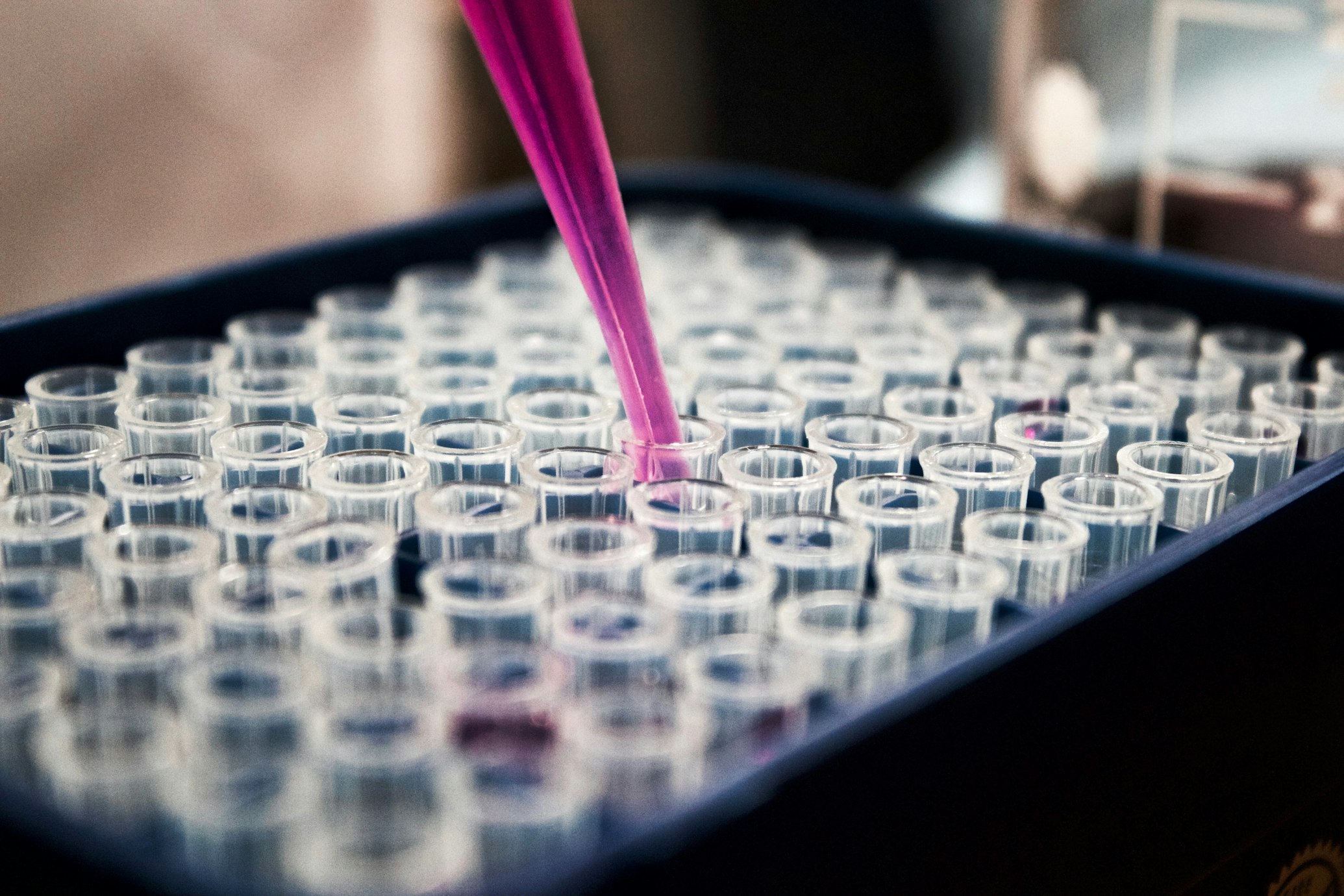
Visualization of cellular infrastructure showing microtubule networks (conceptual representation)
Microtubules: The Dynamic Framework of Life
The Architecture of Cellular Highways
Microtubules are remarkable biological polymers that form hollow, tube-like structures within cells, measuring only about 25 nanometers in diameter—approximately 1/4000th the width of a human hair 4 . These dynamic structures continuously grow and shrink through the polymerization and depolymerization of α/β-tubulin protein subunits, arranged in thirteen linear protofilaments that form the hollow tube structure 4 .
This constant remodeling allows microtubules to perform diverse functions:
- Intracellular transport: Serving as tracks for motor proteins like kinesin and dynein that carry vesicles, organelles, and vital molecular cargo throughout the cell
- Cell division: Forming the mitotic spindle apparatus that precisely segregates chromosomes during cell division
- Cell motility and shape: Providing structural support and facilitating cell movement
- Neuronal development: Guiding the growth and maintenance of nerve cell extensions like axons and dendrites 1 4
Microtubule Facts
Microtubule Functions and Their Cellular Roles
| Microtubule Function | Cellular Role | Significance |
|---|---|---|
| Structural Scaffold | Cell shape maintenance | Prevents cellular collapse |
| Intracellular Transport | Vesicle/organelle movement | Enables nutrient distribution |
| Mitotic Spindle Formation | Chromosome segregation | Ensures accurate cell division |
| Cell Motility | Cilia/flagella movement | Facilitates cellular locomotion |
| Neuronal Architecture | Axon/dendrite guidance | Critical for nervous system development |
The Revolution of Photopharmacology
Bringing Light-Control to Cellular Biology
Photopharmacology represents an emerging field at the intersection of optics, chemistry, and biology, focused on developing light-responsive small molecules that can be activated or deactivated with precise spatial and temporal control 2 5 . Unlike conventional drugs that affect all treated cells simultaneously, photopharmaceuticals enable researchers to target specific cells—or even subcellular regions—with unprecedented precision using carefully calibrated light patterns.
Optical Precision
Photopharmacology enables micron-scale spatial control and second-scale temporal precision in manipulating cellular processes.
Reversible Control
Many photopharmaceuticals allow reversible switching between active and inactive states using different light wavelengths.
Approaches to Optical Control of Microtubules
Azobenzene-based taxanes (AzTax)
These early photoswitchable stabilisers, derived from paclitaxel (Taxol), allowed optical control over microtubule stability but suffered from limitations including poor solubility and potential incompatibility with GFP imaging 2 .
Photoswitchable microtubule destabilisers
Tools like Photostatins (PSTs), SBTubs, and HITubs provided optical control over microtubule disassembly but lacked equivalent stabilising counterparts 1 .
Optogenetic methods
These genetic approaches allow control of specific proteins but require genetic engineering, limiting their application across diverse biological models 2 .
Research Gap: Despite these advances, the development of practical, GFP-compatible microtubule stabilisers remained elusive—until the STEpo breakthrough.
STEpos: A Groundbreaking Molecular Design
The Epothilone Advantage and Styrylthiazole Innovation
The STEpo (StyrylThiazole Epothilone) platform represents a strategic departure from previous approaches, harnessing the power of epothilones—natural products that stabilize microtubules with potency comparable to taxanes but with superior pharmacological properties 1 . Epothilones' simpler chemical structure offers more straightforward modification opportunities compared to the complex taxane framework, making them ideal candidates for photopharmaceutical engineering.
Molecular Structure of STEpo
Active Form (E-isomer)
Inactive Form (Z-isomer)
The styrylthiazole photoswitch undergoes reversible E→Z photoisomerization when exposed to 405 nm light
The true innovation of STEpos lies in their incorporation of a novel styrylthiazole (SBT) photoswitch, which replaces the traditional azobenzene group used in earlier photopharmaceuticals 1 . This molecular engineering feat delivers several transformative advantages:
GFP-orthogonality
The SBT photoswitch remains completely unaffected by standard GFP imaging conditions (around 490 nm excitation), enabling simultaneous fluorescence imaging and optical control without unintended activation or deactivation 1 .
Metabolic stability
Unlike some azobenzenes that can be cleaved by cellular reducing agents, the SBT scaffold demonstrates remarkable resistance to degradation in the intracellular environment, ensuring consistent performance 1 .
Precise optical control
The SBT switch undergoes reversible E→Z photoisomerization when exposed to 405 nm light (a standard laser line in microscopes), allowing micron- and second-scale spatiotemporal precision 1 .
Comparing Photoswitchable Microtubule-Targeting Reagents
| Reagent Class | Photoswitch Type | Microtubule Action | GFP Compatible | Key Advantages |
|---|---|---|---|---|
| STEpo | Styrylthiazole (SBT) | Stabilisation | Yes | GFP-orthogonal, metabolically stable |
| AzTax | Azobenzene | Stabilisation | No | Reversible switching |
| PST | Azobenzene | Destabilisation | Partial | Visible light switching |
| SBTub | Styrylbenzothiazole | Destabilisation | Yes | GFP-orthogonal, robust |
| HITub | Hemithioindigo | Destabilisation | Varies | All-visible switching |
Inside the Groundbreaking Experiment: Validating STEpo Functionality
A Step-by-Step Approach to Scientific Validation
To confirm that STEpos function as designed, researchers conducted a series of rigorous experiments testing their ability to optically control microtubule dynamics and cellular processes. The experimental methodology followed these key steps:
Chemical Synthesis
STEpo compounds were synthesized by integrating the styrylthiazole photoswitch into the epothilone framework at strategic positions 1 .
In Vitro Testing
Compounds were tested in cell-free systems to measure direct effects on tubulin polymerization 1 .
Cellular Testing
Researchers evaluated how STEpo isomers affected cell division and viability in human cell cultures 1 .
Subcellular Precision
Using targeted illumination with confocal microscopy, scientists applied STEpos to specific regions within individual cells 1 .
Live-Cell Imaging
Through live-cell microscopy, the team directly visualized how STEpo activation influences microtubule dynamics 1 .
Neuronal Studies
Researchers applied STEpos to primary neurons to examine effects on neurite outgrowth and guidance 1 .
Compelling Results and Their Significance
The experimental results demonstrated that STEpos function as highly effective, optically controlled microtubule stabilizers with remarkable properties:
- Potent Bioactivity Mid-nanomolar
- Significant Photoswitchable Dynamic Range High
- Spatiotemporal Precision Micron-scale
STEpo Performance Metrics
Key Experimental Findings with STEpos
| Experimental Parameter | Result | Biological Significance |
|---|---|---|
| Potency (IC50) | Mid-nanomolar range | Substantial improvement over previous optical stabilisers |
| Spatial Precision | Micron-scale | Enables manipulation of single cellular compartments |
| Temporal Resolution | Second-scale | Matches natural microtubule dynamics timescales |
| GFP Compatibility | Full orthogonality | Enables simultaneous imaging and manipulation |
| Metabolic Stability | High resistance to degradation | More consistent performance in extended experiments |
The Scientist's Toolkit: Essential Research Reagents
The field of cytoskeleton photopharmacology has expanded dramatically in recent years, providing researchers with an extensive toolkit for optical control of microtubule dynamics. These reagents each offer unique properties suited to different experimental requirements and biological models.
| Reagent Name | Chemical Class | Primary Function | Key Features | Ideal Applications |
|---|---|---|---|---|
| STEpo | Styrylthiazole-epothilone conjugate | Optical microtubule stabilisation | GFP-orthogonal, high potency | High-precision studies requiring GFP imaging |
| AzTax | Azobenzene-taxane conjugate | Optical microtubule stabilisation | Reversible switching, moderate potency | General optical stabilisation where GFP not needed |
| PST (Photostatins) | Azobenzene-colchicinoid | Optical microtubule destabilisation | Rapid switching, visible light response | Optical control of cell division, reversible effects |
| SBTub | Styrylbenzothiazole-colchicinoid | Optical microtubule destabilisation | GFP-orthogonal, metabolically stable | Long-term studies in sensitive biological models |
| HITub | Hemithioindigo-colchicinoid | Optical microtubule destabilisation | All-visible light switching | Deep-tissue applications, minimal UV exposure |
Tool Selection Guide
When choosing between photopharmacological tools, consider:
- Imaging requirements (GFP compatibility)
- Desired microtubule action (stabilization vs. destabilization)
- Experimental timeframe (metabolic stability)
- Light source availability (wavelength requirements)
Experimental Considerations
Successful implementation requires attention to:
- Proper controls (dark vs. light conditions)
- Light dosing parameters (intensity, duration)
- Cellular health during illumination
- Validation of spatial precision
Future Horizons: From Fundamental Research to Therapeutic Potential
The development of STEpos and related photopharmaceuticals opens exciting avenues for both fundamental biological research and potential therapeutic applications. In basic research, these tools enable scientists to address previously inaccessible questions about how local microtubule dynamics influence cellular behavior 1 .
Unanswered Questions
- How does stabilizing a specific segment of a neuronal axon influence synaptic development?
- How does precisely patterned microtubule stabilization guide cell migration during embryonic development?
- What are the local versus global effects of microtubule manipulation on cellular signaling?
Neuroscience Applications
In the realm of neuroscience, STEpos offer particular promise for studying nerve regeneration and repair. Since microtubule-stabilizing drugs have shown potential in promoting axon regeneration after spinal cord injury, the ability to locally control this stabilization with light could optimize regenerative outcomes while minimizing off-target effects 1 .
Imaging Compatibility
The GFP-compatibility of STEpos enables long-term imaging studies in transgenic model organisms expressing fluorescent tubulin variants, providing unprecedented views of cytoskeletal dynamics during development and disease progression.
Therapeutic Potential
While therapeutic applications in humans remain longer-term goals, the precision offered by STEpos suggests future possibilities for light-controlled therapies where specific tissue regions require microtubule stabilization while sparing surrounding healthy tissue. Such approaches could potentially improve the therapeutic window of microtubule-targeting agents, transforming how we treat conditions ranging from cancer to neurodegenerative diseases.
Cancer Therapy
Localized microtubule stabilization in tumors
Neurodegenerative Diseases
Targeted stabilization in affected neurons
Ophthalmology
Precise treatment of retinal conditions
Regenerative Medicine
Guiding tissue repair processes
Conclusion: Illuminating the Path Forward
The development of STEpos represents more than just another laboratory reagent—it embodies a fundamental shift in how we approach the study and manipulation of cellular processes. By marrying the precision of light-based control with the practical advantages of small-molecule drugs, these GFP-compatible molecular tools offer researchers unprecedented power to decipher the complex language of cytoskeletal dynamics.
As photopharmacology continues to evolve, technologies like STEpos will undoubtedly expand our understanding of life's inner workings, illuminating previously dark corners of cell biology and potentially paving the way for a new class of precision therapeutics. In the intricate dance of cellular life, where timing and positioning are everything, having a light-switch for cellular highways may well prove to be one of the most valuable tools a scientist can wield.