EB1 vs CLIP-170: A Structural & Functional Guide to Actin-Microtubule Crosstalk Dynamics in Cell Biology
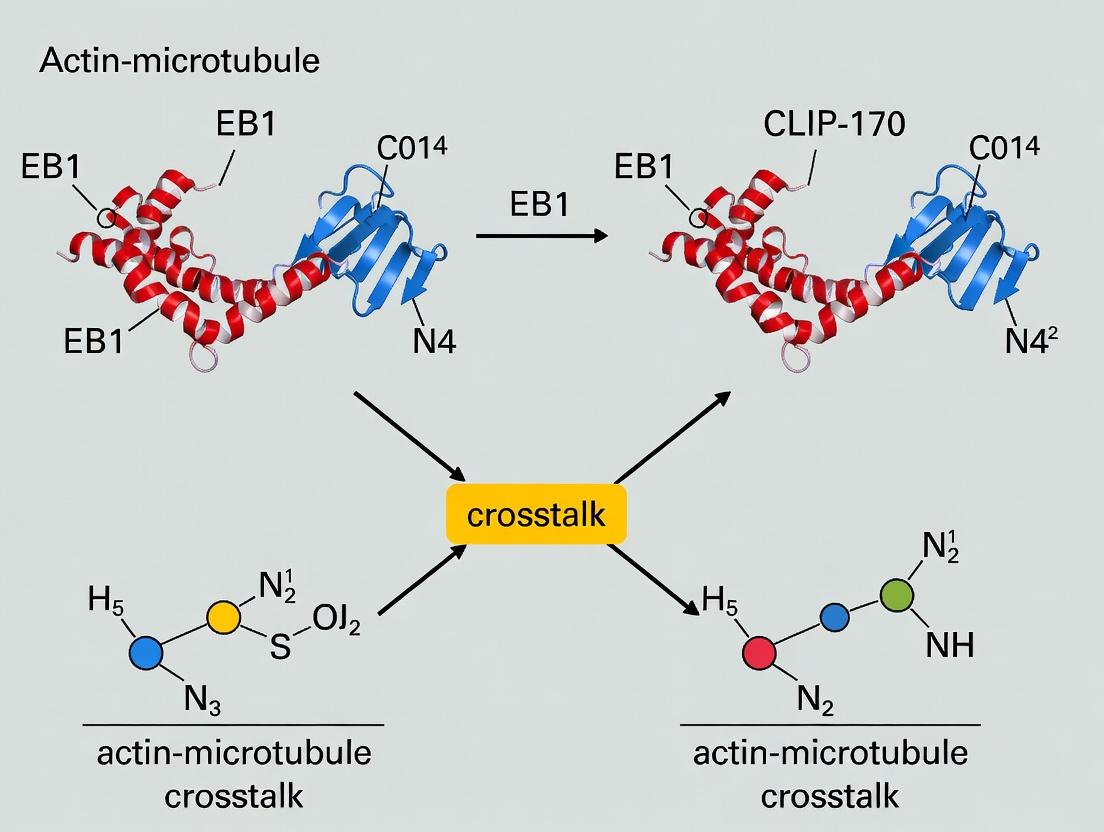
This article provides a comprehensive resource for researchers exploring the critical roles of the +TIP proteins EB1 and CLIP-170 in mediating actin-microtubule crosstalk.
EB1 vs CLIP-170: A Structural & Functional Guide to Actin-Microtubule Crosstalk Dynamics in Cell Biology
Abstract
This article provides a comprehensive resource for researchers exploring the critical roles of the +TIP proteins EB1 and CLIP-170 in mediating actin-microtubule crosstalk. We first establish foundational knowledge on their distinct structural domains, binding motifs, and mechanistic roles in coordinating cytoskeletal networks. Methodologically, we review state-of-the-art techniques for visualizing and perturbing their function in live cells. The guide then addresses common experimental challenges in studying these dynamic interactions and offers optimization strategies. Finally, we present a direct, comparative analysis of EB1 and CLIP-170, validating their unique versus overlapping functions through key research findings. This synthesis aims to inform fundamental cell biology research and highlight potential therapeutic targets in diseases characterized by cytoskeletal dysregulation, such as cancer metastasis and neurological disorders.
EB1 and CLIP-170 Explained: Structure, Function, and Their Foundational Role in Cytoskeletal Dynamics
The Central Thesis: EB1 versus CLIP-170 in Actin-Microtubule Crosstalk
The dynamic plus-ends of microtubules are regulated by a diverse group of proteins termed microtubule plus-end tracking proteins (+TIPs). Among these, EB1 and CLIP-170 are foundational, orchestrating microtubule dynamics and serving as central platforms for interaction with the actin cytoskeleton. This guide compares their roles, structures, and functions within the context of actin-microtubule crosstalk, a critical process in cell migration, polarization, and intracellular transport.
Performance Comparison: EB1 vs. CLIP-170
The following table summarizes the core structural and functional differences between EB1 and CLIP-170, supported by key experimental findings.
Table 1: Core Properties and Functional Comparison
| Feature | EB1 (End Binding Protein 1) | CLIP-170 (Cytoplasmic Linker Protein 170) |
|---|---|---|
| Core Structure | Homodimer with N-terminal calponin homology (CH) domain and coiled-coil tail. | Homodimer with N-terminal CAP-Gly domains, coiled-coil region, and C-terminal metal-binding motifs. |
| Microtubule Binding | Binds directly to GTP-/GDP-Pi tubulin lattice via CH domain. Nucleates +TIP network. | Binds via CAP-Gly domains to α-tubulin's EEY/F motif; requires EB1 for robust plus-end tracking. |
| End-Tracking Mechanism | Autonomous tracking ("Pioneer"). | EB1-dependent ("Recruited"). |
| Key Function | Master regulator of +TIP network; promotes microtubule growth and stability. | Acts as an adaptor, linking microtubules to cellular structures (e.g., actin, organelles). |
| Role in Actin Crosstalk | Indirect: Recruits other +TIPs (like CLIP-170) that directly bind actin regulators. | Direct: Binds F-actin via its C-terminal zinc fingers; physically tethers microtubule ends to actin filaments. |
| Binding Affinity (KD) | ~200-400 nM for microtubule lattice. | ~0.5-2 µM for microtubule ends (enhanced by EB1 co-localization). |
| Phenotype upon Depletion (in vitro) | Reduced microtubule growth rate, increased catastrophe frequency. | Defective organelle trafficking, impaired microtubule capture at cell cortex. |
| Key Interaction Partners | Binds most other +TIPs via SxIP motifs (e.g., CLIP-170, APC, MACF). | Binds EB1, dynein/dynactin, F-actin, and endocytic vesicles. |
Table 2: Experimental Data in Actin-Microtubule Crosstalk Assays
| Experiment / Assay | EB1-Centric Results | CLIP-170-Centric Results | Supporting Citation(s) |
|---|---|---|---|
| In Vitro Tethering Assay | Minimal direct actin binding. Enables CLIP-170-mediated tethering. | Directly links dynamic MT ends to immobilized F-actin networks. | Lansbergen et al. (2006) Cell |
| Comet Co-localization (TIRF) | Lead comet signal at growing MT ends. | Comet signal lags slightly behind EB1; dependent on EB1 for localization. | Bieling et al. (2008) Nature Cell Biology |
| Cortical Capture in Migration | Required for orienting MTs toward leading edge. | Directly mediates MT attachment to actin-rich cortical sites in lamellipodia. | Watanabe et al. (2004) Journal of Cell Biology |
| Focal Adhesion Turnover | Regulates MT growth toward adhesions. | Physically links MT ends to adhesion components via actin, facilitating disassembly. | Stehbens & Wittmann (2012) Journal of Cell Science |
Experimental Protocols for Key +TIP Studies
Protocol 1: In Vitro Reconstitution of MT-Actin Tethering (TIRF Microscopy) This protocol tests direct tethering capability, a key differentiator for CLIP-170.
- Flow Cell Preparation: Prepare a flow chamber passivated with PEG-silane.
- Actin Immobilization: Introduce biotinylated G-actin in polymerization buffer (1x KMEI, 1 mM ATP), followed by NeutrAvidin to anchor actin filaments to the biotin-PEG surface.
- Microtubule Dynamics: Introduce rhodamine-labeled, GMPCPP-stabilized microtubule seeds, followed by a mixture of tubulin (12 µM, 10% Cy5-labeled) in BRB80 buffer supplemented with oxygen scavengers (glucose oxidase/catalase), an ATP-regenerating system, and 1 mM GTP.
- Protein Addition: Add purified recombinant EB1 (50 nM) and/or CLIP-170 (50 nM) proteins to the imaging buffer.
- Image Acquisition: Image using a TIRF microscope. Track microtubule growth and observe persistent association of CLIP-170-decorated ends with actin filaments, quantifying dwell time versus EB1-only conditions.
Protocol 2: FRAP Analysis of +TIP Turnover at Microtubule Ends This protocol quantifies the dynamic exchange of EB1 and CLIP-170, demonstrating hierarchical recruitment.
- Cell Transfection: Transfect cells (e.g., COS-7) with plasmids for GFP-EB1 and mCherry-CLIP-170.
- Live-Cell Imaging: Use a confocal microscope to select a cell co-expressing both proteins.
- Photobleaching: Define a region of interest (ROI) encompassing a single, bright microtubule plus-end comet. Perform a high-intensity laser pulse to bleach the fluorophores within the ROI.
- Recovery Imaging: Acquire images every 500 ms post-bleach. Monitor the fluorescence recovery of both GFP and mCherry signals within the comet.
- Data Analysis: Generate recovery curves, fit to exponential functions, and calculate half-time of recovery (t1/2). EB1 typically recovers faster than CLIP-170, confirming its direct, autonomous binding.
Visualization of +TIP Hierarchy and Crosstalk
Diagram 1: +TIP Recruitment and Actin Tethering Pathway
The Scientist's Toolkit: Key Research Reagents
Table 3: Essential Reagents for +TIP and Actin-Microtubule Research
| Reagent / Material | Function in Research | Example Application |
|---|---|---|
| Recombinant EB1/CLIP-170 (Purified) | In vitro reconstitution of microtubule dynamics and binding assays. | TIRF microscopy assays to study direct tethering to actin. |
| SxIP Motif Peptides | Competitive inhibitors of EB1-protein interactions. | Disrupting CLIP-170 recruitment to microtubule ends in living cells. |
| Paclitaxel (Taxol) & Nocodazole | Microtubule-stabilizing and destabilizing drugs, respectively. | Controlling microtubule polymer mass for interaction studies. |
| Latrunculin A/B | Actin-depolymerizing agents. | Disrupting actin network to test dependency of microtubule behavior. |
| GMPCPP (Non-hydrolyzable GTP analog) | Generates stable microtubule seeds for in vitro growth assays. | Creating defined nucleation points in TIRF flow chambers. |
| TIRF Microscope | Enables visualization of single molecules and dynamic events at cell cortex. | Imaging the plus-end tracking of GFP-EB1 in real time. |
| Fluorescently-labeled Tubulin (e.g., Cy5, HiLyte) | Direct visualization of microtubule polymerization dynamics. | Measuring growth rates and catastrophe frequencies in vitro. |
| CRISPR/Cas9 Knock-in Cell Lines | Endogenous tagging of +TIPs (e.g., EB1-mNeonGreen). | Studying protein function at physiological expression levels without overexpression artifacts. |
This guide provides a comparative analysis of two key microtubule (MT) tip-tracking protein domains central to actin-MT crosstalk research: the Calponin-Homology (CH) domain of EB1 and the Cytoskeleton-Associated Protein Glycine-rich (CAP-Gly) domains of CLIP-170. Understanding their distinct structural and functional properties is essential for deciphering their unique roles in cytoskeletal dynamics.
Domain Architecture & Primary Function
| Feature | EB1 (CH Domain) | CLIP-170 (CAP-Gly Domains) |
|---|---|---|
| Domain Type | Calponin-Homology (CH) | CAP-Gly (typically two tandem domains) |
| Structural Fold | All-α-helical bundle | All-β-sheet, immunoglobulin-like fold |
| Primary Ligand | GTP-bound αβ-tubulin dimer in the MT lattice ("E-site") | C-terminal EEY/F motifs on α-tubulin (detyrosinated tubulin) and other +TIPs |
| Binding Site on MT | Preferentially to the GTP/"GTP-like" cap at seam and protofilament ridges. | Binds to the acidic tails of tubulin, not exclusive to the tip. |
| Key Binding Motif | Hydrophobic cleft for tubulin binding. | Conserved GKNDG loop for EEY/F motif recognition. |
| Role at MT Tip | Pioneer: Directly recognizes and stabilizes GTP-tubulin lattice, initiating +TIP comet. | Adaptor: Binds to tyrosinated/detyrosinated tubulin and recruits other proteins (e.g., dynein/dynactin). |
| Dependence | Essential for EB1 MT tip localization. CLIP-170 recruitment is EB1-dependent. | Localization requires EB1 activity and functional CAP-Gly domains. |
Quantitative Biochemical & Biophysical Data
Table 1: Binding Affinity and Dynamics Data
| Parameter | EB1 CH Domain | CLIP-170 CAP-Gly Domains | Experimental Method |
|---|---|---|---|
| Kd for Tubulin/Peptide | ~0.2-1 µM (for tubulin dimer) | ~0.1-0.5 µM (for EEY/F peptide) | Isothermal Titration Calorimetry (ITC), Surface Plasmon Resonance (SPR) |
| Comet Residence Time | ~5-10 seconds | ~2-5 seconds | Fluorescence Recovery After Photobleaching (FRAP) at MT tips |
| Tracking Processivity | High (persistent tip binding) | Moderate (rapid exchange, also lattice binding) | Total Internal Reflection Fluorescence (TIRF) microscopy & kymograph analysis |
| Impact of Mutation | LZΔ or G2R mutation abolishes tip tracking. | GKNDG loop mutation (e.g., G1N) disrupts EEY/F binding and tip localization. | Site-directed mutagenesis coupled with live-cell imaging. |
Detailed Experimental Protocols
Protocol 1: In Vitro MT Co-sedimentation Assay (Binding Affinity)
- Protein Purification: Express and purify recombinant EB1-CH or CLIP-170-CAP-Gly proteins (e.g., GST-tagged) from E. coli.
- MT Polymerization: Taxol-stabilized MTs are polymerized from purified tubulin.
- Binding Reaction: Incubate serial dilutions of the purified domain protein (e.g., 0-10 µM) with a constant concentration of MTs (e.g., 1 µM tubulin polymer) in BRB80 buffer + 20 µM Taxol.
- Sedimentation: Ultracentrifuge (100,000 x g, 30 min, 25°C) to pellet MTs and bound proteins.
- Analysis: Separate supernatant (unbound) and pellet (bound) fractions. Analyze by SDS-PAGE, stain with Coomassie, and quantify band intensity. Plot bound/total protein vs. concentration to estimate apparent Kd.
Protocol 2: Live-Cell FRAP for Tip-Tracker Dynamics
- Cell Preparation: Transfect cells with fluorescently tagged constructs (e.g., GFP-EB1 or GFP-CLIP-170).
- Imaging: Use a confocal or TIRF microscope with a photobleaching module. Select a rectangular region spanning a single growing MT tip comet.
- Bleaching & Recovery: Apply a high-intensity laser pulse to bleach the selected comet. Record time-lapse images immediately at 1-2 second intervals.
- Quantification: Measure fluorescence intensity in the bleached comet over time. Normalize to pre-bleach and background intensity. Fit recovery curve to a single exponential to calculate half-time of recovery (t1/2) and mobile fraction.
Signaling Pathways in Actin-MT Crosstalk
Diagram Title: EB1 & CLIP-170 Roles in Actin-MT Crosstalk Pathway
Diagram Title: Workflow for Comparing EB1-CH & CAP-Gly Domain Function
The Scientist's Toolkit: Key Research Reagents
Table 2: Essential Reagents for EB1/CLIP-170 Domain Studies
| Reagent/Solution | Function in Research | Example/Note |
|---|---|---|
| Taxol (Paclitaxel) | Stabilizes microtubules in vitro and in fixed-cell assays. | Used in co-sedimentation assays; not for dynamic tip studies in live cells. |
| Nocodazole | Depolymerizes microtubules, allows study of regrowth dynamics. | Used to synchronize MT regrowth for tip-tracker recruitment assays. |
| EGFP/mCherry-Tagged EB1/CLIP-170 | Visualizes protein localization and dynamics in live cells. | Full-length vs. domain-deletion mutants (e.g., EB1-ΔCH, CLIP-170-ΔCAP-Gly) are critical controls. |
| Site-Directed Mutants | Disrupts specific binding to test functional necessity. | EB1: G2R (CH domain mutant). CLIP-170: G1N in GKNDG loop (CAP-Gly mutant). |
| Tubulin Tail Mimetic Peptides | Competitive inhibitors for CAP-Gly domain binding. | Biotin- or fluorescein-conjugated EEY/F peptides; used in pull-downs or blocking experiments. |
| SIR-Tubulin / HiLyte Fluor-Labeled Tubulin | Labels microtubule lattice for simultaneous visualization with +TIPs. | Allows correlation of MT growth phase with protein tip binding. |
| CRISPR/Cas9 Knockout Cell Lines | Provides clean genetic background for rescue experiments. | EB1/EB3 DKO or CLIP-170 KO cells (e.g., U2OS, HeLa). |
EB1 and CLIP-170 are core microtubule plus-end tracking proteins (+TIPs) that orchestrate cytoskeletal dynamics. Despite sharing the common function of tracking growing microtubule ends, they exhibit profound differences in their binding partners, structural recognition, and functional outcomes in actin-microtubule crosstalk. This guide provides a comparative analysis of their specificity, supported by experimental data.
Molecular Recognition Profiles: A Comparative Table
Table 1: Binding Partner Specificity of EB1 vs. CLIP-170
| Feature | EB1 | CLIP-170 |
|---|---|---|
| Primary Microtubule Binding Domain | Calponin-homology (CH) domain | CAP-Gly domains (x2) |
| Key Microtubule Lattice Binding Partner | GTP-tubulin in microtubule seam (preferential) | Tyrosinated α-tubulin (preferential) |
| Direct +TIP Interaction Partners | APC, p150glued, MACF, spectraplakins | LIS1, dynein-dynactin complex, IQGAP1 |
| Affinity for GTP-tubulin (Kd) | ~0.2 - 0.5 µM (high) | Weak/indirect via EB1 |
| Affinity for Tyrosinated Tubulin | Low specificity | ~0.8 µM (high) |
| Actin-Crosslinking Partners | Indirect via formins (mDia) | Direct via IQGAP1 and actin filaments |
| Role in Actin-MT Crosstalk | Recruits formins to MT tips to guide actin polymerization | Directly bridges MT ends to actin network via adaptors |
Experimental Protocols for Key Studies
Protocol 1: In Vitro Comet Reconstitution Assay (TIRF Microscopy)
- Objective: Visualize direct microtubule tip tracking of purified proteins.
- Method: Stabilized GMPCPP microtubule seeds are immobilized on a glass chamber. Tubulin (with a fraction of fluorescently labeled tubulin) is flowed in to initiate dynamic growth. Purified EB1-GFP or CLIP-170-GFP is introduced separately or in combination. Real-time binding is visualized via Total Internal Reflection Fluorescence (TIRF) microscopy.
- Key Measurements: Comet length, fluorescence intensity at the tip, dwell time, and growth rate correlation.
Protocol 2: Microtubule End-Targeting Specificity (Co-sedimentation/Pull-down)
- Objective: Determine tubulin polymerization state or isoform preference.
- Method: Purified EB1 or CLIP-170 is incubated with polymerized microtubules (containing GDP-tubulin), soluble tubulin dimer (GDP- or GTPγS-bound), or microtubules enriched for tyrosinated/detyrosinated tubulin. Reactions are subjected to ultracentrifugation (co-sedimentation) or affinity purification. The bound fraction is analyzed by SDS-PAGE and quantified.
- Key Measurements: Percentage of protein co-sedimented with different tubulin forms.
Protocol 3: Actin-Microtubule Co-alignment Assay
- Objective: Probe role in cytoskeletal crosstalk.
- Method: Cells are depleted of EB1 or CLIP-170 via siRNA. Alternatively, EB1/CLIP-170 interaction mutants are expressed. Cells are fixed and stained for actin (phalloidin) and microtubules (anti-tubulin). Alternatively, in vitro assays mix purified actin filaments, microtubules, and candidate bridging proteins (e.g., IQGAP1).
- Key Measurements: Frequency of actin-microtubule parallel alignment, co-localization coefficients at cell periphery.
Signaling and Interaction Pathways
EB1 Interaction & Actin Crosstalk Pathway
CLIP-170 Interaction & Actin Bridging Pathway
Experimental Workflow for +TIP Analysis
The Scientist's Toolkit: Research Reagent Solutions
Table 2: Essential Reagents for EB1/CLIP-170 Research
| Reagent | Function & Specificity | Example Use Case |
|---|---|---|
| Non-hydrolyzable GTP analogs (GMPCPP, GTPγS) | Stabilizes microtubule seeds or tubulin in GTP-state. | In vitro comet assay; testing EB1's GTP-tubulin preference. |
| Tubulin Tyrosination Cycle Enzymes (TTLLs, VASH-SVBP) | Modifies α-tubulin C-terminus to generate/remove tyrosine. | Producing defined tubulin substrates for CLIP-170 binding assays. |
| EB1-CH Domain Mutants (e.g., R1A/R2A) | Disrupts EB1-microtubule binding. Control for EB1-specific effects. | Dissecting EB1-dependent vs. independent CLIP-170 recruitment. |
| CLIP-170 CAP-Gly Domain Mutants | Disrupts CLIP-170 binding to tyrosinated tubulin or EB1. | Probing direct MT binding vs. EB1-hitchhiking mechanism. |
| Cell-Permeant Microtubule Stabilizers (Taxol) & Destabilizers (Nocodazole) | Controls microtubule polymer mass and dynamics in vivo. | Testing if EB1/CLIP-170 localization is dynamic end-specific. |
| Fluorescently Labeled Tubulin (Hilyte, Alexa, ATTO dyes) | Visualizes microtubule dynamics in vitro and in vivo. | TIRF microscopy of +TIP comet formation and dynamics. |
| Anti-Tyr-Tubulin & Anti-Glu-Tubulin Antibodies | Detects post-translational tubulin status. | Correlating CLIP-170 localization with tyrosinated MT subsets. |
| siRNA/shRNA for EB1/CLIP-170/EB3 | Enables specific protein knockdown in cells. | Functional assays on actin-MT crosstalk upon loss of +TIP. |
Within the broader investigation of cytoskeletal crosstalk, the distinct yet complementary roles of End-Binding protein 1 (EB1) and Cytoplasmic Linker Protein 170 (CLIP-170) are foundational. This comparison guide objectively contrasts their mechanisms, supported by experimental data, to inform targeted research and therapeutic strategies.
Core Functional Comparison EB1 and CLIP-170 are both microtubule plus-end tracking proteins (+TIPs), but their primary actions and binding partners diverge significantly.
| Feature | EB1 (Tracker) | CLIP-170 (Linker) |
|---|---|---|
| Primary Role | Pioneer +TIP; recognizes and stabilizes GTP-tubulin cap. | Adaptor; links microtubule ends to cellular structures. |
| Key Domain for MT Binding | N-terminal Calponin-Homology (CH) domain. | Two CAP-Gly domains. |
| Key Domain for Partner Binding | C-terminal EEY/F motif-binding site. | N-terminal zinc knuckles, coiled-coil region. |
| Direct Actin Binding? | No. Indirect via partners (e.g., Drebrin, vinculin). | Yes. Via specific motifs interacting with F-actin or actin-binding proteins. |
| Primary Signaling Output | Microtubule dynamics regulation, directionality. | Physical tethering to actin cortex, organelles, focal adhesions. |
| Effect on MT Dynamics | Promotes rescue, reduces catastrophe frequency. | Modulates dynamics indirectly via linkage. |
| Key Functional Evidence | EB1 depletion causes severe MT dynamic instability. | CLIP-170 depletion disrupts MT anchoring at cell cortex. |
Quantitative Performance Data The following table summarizes key experimental measurements comparing EB1 and CLIP-170 functions.
| Parameter | EB1 | CLIP-170 | Experimental Method & Reference |
|---|---|---|---|
| MT Binding Affinity (Kd) | ~0.2 - 0.5 µM (to GMPCPP-MTs) | ~0.1 - 0.3 µM (to GMPCPP-MTs) | TIRF microscopy, fluorescence anisotropy (Bieling et al., 2007; Lansbergen et al., 2004) |
| Comet Persistence Length | Long, consistent comet. | Shorter, often speckled comet. | Live-cell imaging of GFP-tagged proteins. |
| Processive Tracking Speed | Matches MT growth speed (~15-20 µm/min). | Matches MT growth speed, but more intermittent. | Live-cell imaging, kymograph analysis. |
| Co-localization with F-actin | Low direct correlation. | High at specific sites (cortex, adhesion sites). | SIM/TIRF dual-color imaging (Stepanova et al., 2020) |
| Effect on MT Growth Rate | Moderate increase (~10-20%). | Little direct effect. | In vitro reconstitution with purified tubulin. |
| Critical Concentration for +TIP Network Formation | Low (sub-stoichiometric to tubulin). | Higher, often dependent on EB1. | In vitro TIRF assay (Bieling et al., 2008) |
Experimental Protocols for Key Assays
1. In Vitro Microtubule Comet Reconstitution (TIRF Microscopy)
- Purpose: To visualize and quantify +TIP tracking on dynamic microtubules.
- Procedure: a. Flow in biotinylated GMPCPP-stabilized MT seeds in a flow chamber coated with anti-biotin antibodies. b. Introduce tubulin (12-16 µM, 10-20% labeled with X-rhodamine/Cy5) in BRB80 buffer supplemented with an oxygen scavenging system (glucose oxidase/catalase), 1 mM DTT, and 1 mg/ml casein. c. Initiate polymerization with 1 mM GTP. d. Introduce purified, GFP-tagged EB1 or CLIP-170 (10-50 nM) to the imaging mix. e. Image using TIRF microscopy at 1-2 sec intervals. f. Analyze comet intensity, length, and speed using kymographs (ImageJ/FIJI).
2. Actin-Microtubule Co-sedimentation Assay
- Purpose: To test direct binding of +TIPs to F-actin.
- Procedure: a. Polymerize actin from purified G-actin (2 µM) in F-buffer (2 mM Tris-HCl pH 8.0, 0.2 mM CaCl₂, 0.5 mM ATP, 50 mM KCl, 2 mM MgCl₂) for 1 hour at room temperature. b. Incubate polymerized F-actin with purified recombinant CLIP-170 (or EB1 as control) protein (100 nM) for 30 min at 25°C. c. Ultracentrifuge samples at 100,000 x g for 20 min at 24°C to pellet F-actin and any bound protein. d. Separate supernatant (unbound) and pellet fractions. e. Analyze both fractions by SDS-PAGE and Coomassie staining/immunoblotting. f. Quantify the percentage of protein co-sedimenting with F-actin.
3. Live-Cell Cortical Microtubule Capture Assay
- Purpose: To assess the role of CLIP-170 in linking MT plus-ends to the actin-rich cell cortex.
- Procedure: a. Transfect cells (e.g., COS-7, HeLa) with mCherry-tubulin and GFP-CLIP-170 (or siRNA against CLIP-170 for knockdown). b. 24-48h post-transfection, image cells using fast-confocal or TIRF microscopy. c. Identify events where a growing MT plus-end contacts the cell periphery and undergoes pause, shrinkage, or stabilization. d. Correlate these events with the local presence/absence of GFP-CLIP-170 signal. e. Quantify the frequency of MT stabilization/pause events at the cortex in control vs. CLIP-170 depleted cells.
Visualization of Signaling Pathways and Workflows
Diagram 1: +TIP Interaction Network at MT Plus-End
(Title: EB1 and CLIP-170 Interaction Network)
Diagram 2: In Vitro MT Comet Assay Workflow
(Title: In Vitro TIRF Assay Workflow)
The Scientist's Toolkit: Essential Research Reagents
| Reagent/Material | Function in Experiment | Example Vendor/Cat # |
|---|---|---|
| Purified Tubulin (Porcine/Bovine) | Core component for in vitro microtubule polymerization assays. | Cytoskeleton Inc. (T240) |
| GMPCPP (Non-hydrolyzable GTP analog) | Generates stable microtubule seeds for TIRF assays. | Jena Bioscience (NU-405) |
| Recombinant His/GFP-tagged EB1 | Purified protein for biochemical and in vitro reconstitution. | Abcam (ab206534) / in-house expression. |
| Recombinant His/GFP-tagged CLIP-170 | Purified protein for testing direct actin binding and linkage. | Origene (TP304619) / in-house expression. |
| SiRNA against CLIP170/EB1 | For functional knockdown in live-cell experiments. | Dharmacon (L-008696-00) |
| Biotinylated Tubulin | For preparing surface-immobilized microtubule seeds. | Cytoskeleton Inc. (T333P) |
| Anti-Biotin Antibody | Coats flow chamber to capture biotinylated MT seeds. | Thermo Fisher (31852) |
| Glucose Oxidase/Catalase System | Oxygen scavenger for prolonging fluorophore life in TIRF. | Sigma (G2133 & C40) |
| Total Internal Reflection Fluorescence (TIRF) Microscope | High-contrast imaging of single molecules and dynamic events near the coverslip. | Nikon, Olympus, Zeiss |
| F-actin Binding Protein (e.g., LifeAct-mCherry) | Live-cell marker for actin filaments in co-localization studies. | Ibidi (60102) |
Within the cytoskeletal field, a central thesis investigates the functional specialization of two key microtubule plus-end tracking proteins (+TIPs), EB1 and CLIP-170, in mediating actin-microtubule crosstalk. This crosstalk is not a luxury but a biological imperative for fundamental cellular processes. This guide compares the roles and experimental performance of EB1 and CLIP-170 as critical "tools" in this interaction network.
Performance Comparison: EB1 vs. CLIP-170 in Actin-Microtubule Crosstalk
The following table summarizes key functional and experimental data comparing EB1 and CLIP-170.
Table 1: Functional & Experimental Comparison of EB1 and CLIP-170
| Feature | EB1 (End Binding Protein 1) | CLIP-170 (Cytoplasmic Linker Protein 170) |
|---|---|---|
| Primary Role | Core +TIP; master regulator of +TIP network. Binds growing microtubule ends directly. | Actin-microtubule linker; dynamic +TIP that transiently tracks growing ends. |
| Binding Domain to MTs | Calponin-homology (CH) domain. | CAP-Gly domains. |
| Direct Actin Linkage | No direct binding. Acts indirectly via other proteins (e.g., formins, APC). | Yes, via its second CAP-Gly domain and specific motifs that can bind actin or actin-binding proteins. |
| Key Function in Crosstalk | Orchestrator: Recruits other +TIPs (including CLIP-170) to create a platform for signaling. | Physical Linker: Directly bridges microtubule ends to actin filaments, facilitating targeted delivery and capture. |
| Effect on MT Dynamics | Stabilizes growing MTs; promotes rescue. | Promotes MT growth and stabilization upon actin contact. |
| Key Experimental Readout | MT growth rate, persistence, comet intensity (fluorescence). | Co-localization at actin-rich sites (focal adhesions, cell cortex), dwell time at MT plus-ends. |
| Loss-of-Function Phenotype | Disorganized MT arrays, mitotic spindle defects, impaired cell polarity. | Defects in MT capture at cortical sites, impaired cell migration and polarity establishment. |
Experimental Protocols for Investigating +TIP Function in Crosstalk
Protocol 1: Live-Cell Imaging for +TIP Comet Dynamics
Aim: To quantify the dynamics and localization of EB1 and CLIP-170 at growing microtubule ends in relation to actin structures.
- Transfection: Transfect cells with fluorescently tagged EB1-GFP and CLIP-170-mCherry.
- Staining: Label actin cytoskeleton with a live-cell dye (e.g., SiR-actin).
- Image Acquisition: Acquire time-lapse TIRF or confocal microscopy images at 1-3 second intervals.
- Analysis: Use tracking software (e.g., TrackMate, u-track) to measure comet velocity, frequency, and intensity. Quantify co-localization of CLIP-170 (not EB1) with actin-rich structures.
Protocol 2: FRAP (Fluorescence Recovery After Photobleaching) for +TIP Turnover
Aim: To compare the binding stability of EB1 and CLIP-170 at microtubule plus ends.
- Sample Prep: Express EB1-GFP or CLIP-170-GFP in cells.
- Photobleaching: Select a region containing several +TIP comets and bleach with high-intensity laser.
- Recovery Imaging: Record images at short intervals (0.5-1 sec) post-bleach.
- Analysis: Plot fluorescence recovery curves over time. Fit curves to calculate half-time of recovery (t₁/₂) and mobile fraction. CLIP-170 typically shows faster turnover than EB1.
Protocol 3:In VitroReconstitution of Actin-MT Interaction
Aim: To test direct cross-linking activity of CLIP-170.
- Protein Purification: Purify fluorescently labeled tubulin, actin, and full-length CLIP-170.
- Flow Chamber Prep: Create a chamber with immobilized, stabilized microtubules.
- Introduction of Actin: Flow in a solution containing G-actin, polymerization factors, and CLIP-170.
- Imaging & Analysis: Use TIRF microscopy to observe if CLIP-170 co-localizes with MT ends and facilitates actin filament attachment or alignment along microtubules.
Visualizing the EB1/CLIP-170 Crosstalk Pathway
Title: EB1 and CLIP-170 Roles in Actin-MT Crosstalk
The Scientist's Toolkit: Key Reagents for +TIP Research
Table 2: Essential Research Reagents for Actin-Microtubule Crosstalk Studies
| Reagent / Tool | Function in Experiment | Example / Notes |
|---|---|---|
| Fluorescently Tagged +TIPs | Live-cell visualization of dynamics. | EB1-GFP, CLIP-170-mCherry, TagRFP-T-EB3. Crucial for comet tracking. |
| Live-Cell Actin Probes | Visualize actin cytoskeleton concurrently with MTs. | SiR-actin (far-red), LifeAct-GFP, Utrophin-CH-GFP. Minimally perturbative. |
| Microtubule Drugs | Perturb MT dynamics to test +TIP function. | Nocodazole (depolymerizer), Taxol/Paclitaxel (stabilizer). |
| siRNA/shRNA Libraries | Knockdown specific +TIPs to assess loss-of-function. | siRNA against EB1 (MAPRE1) or CLIP170 (CLIP1). Rescue with RNAi-resistant constructs. |
| TIP Interfering Peptides | Disrupt specific protein-protein interactions. | Peptides mimicking CLIP-170's CAP-Gly domain to compete for binding. |
| *In Vitro Reconstitution Kits | Purified components for mechanistic biochemistry. | Purified tubulin (TL238), actin (AKL99), and recombinant +TIP proteins. |
| Super-Resolution Microscopy | Resolve ultrastructure of actin-MT interaction sites. | STORM/PALM dyes for EB1 & actin. Requires specialized buffers and fluorophores. |
Techniques & Tools: How to Study EB1 and CLIP-170 in Actin-Microtubule Crosstalk Research
This comparison guide evaluates Total Internal Reflection Fluorescence (TIRF), Fluorescence Recovery After Photobleaching (FRAP), and Förster Resonance Energy Transfer (FRET) microscopy for analyzing dynamic protein interactions. The context is the study of EB1 and CLIP-170, two key +TIP proteins, in actin-microtubule crosstalk—a critical process in cell division, migration, and intracellular transport. These techniques provide complementary data on localization, mobility, binding kinetics, and nanometer-scale proximity.
Technique Comparison & Experimental Data
Table 1: Core Technique Comparison for EB1/CLIP-170 Studies
| Feature | TIRF Microscopy | FRAP | FRET |
|---|---|---|---|
| Primary Measured Parameter | Localization & dynamics at cell cortex (~100 nm depth) | Lateral mobility & binding kinetics | Molecular proximity (<10 nm) |
| Typical Temporal Resolution | Millisecond-seconds | Seconds-minutes | Seconds-minutes |
| Spatial Resolution (xy) | ~250 nm (diffraction-limited) | ~250 nm (diffraction-limited) | <10 nm (intermolecular) |
| Key Application in +TIP Research | Visualizing microtubule tip comet formation & growth dynamics | Measuring turnover rates of EB1 or CLIP-170 at microtubule ends | Probing direct interaction between EB1/CLIP-170 or with actin-binding proteins |
| Typical Experimental Readout | Kymographs, comet intensity & speed | Recovery curve, half-time (t₁/₂), mobile fraction | Acceptor photobleaching: % FRET efficiency; Ratiometric: Donor/Acceptor ratio |
| Quantitative Data from Recent Studies | EB1 comet velocity: ~0.25 µm/s (in vivo); CLIP-170 residence time: ~5-7 s | EB1 recovery t₁/₂ at MT ends: ~3-5 s; Mobile fraction: ~80-90% | FRET efficiency between EB1-CLIP-170: 15-25% in vitro; <10% in crowded cellular environment |
Table 2: Performance in Key Experimental Scenarios for Actin-MT Crosstalk
| Experimental Goal | Best Technique(s) | Supporting Data & Limitation |
|---|---|---|
| Observing +TIP recruitment to growing MT ends near adhesion sites | TIRF | Provides high signal-to-noise of cortical events. Data: EB1 comet number increases 2.5-fold near focal adhesions. Limitation: Limited to cell-substrate interface. |
| Measuring binding kinetics of CLIP-170 to dynamic MT ends | FRAP | Quantifies exchange rates. Data: CLIP-170 t₁/₂ ~7s, vs EB1 ~4s, suggesting different binding stability. Limitation: Requires careful bleaching geometry. |
| Determining if EB1 directly binds an actin-crosslinking protein | FRET (Acceptor Photobleaching) | Confirms direct interaction if <10nm. Data: FRET efficiency of 8% between EB1 and α-actinin-4, suggesting transient interaction. Limitation: Sensitive to fluorophore orientation. |
| Correlating MT growth with actin retrograde flow | TIRF + FRAP (Sequential) | TIRF tracks comet movement, FRAP analyzes actin flow. Combined data shows MT growth pauses when comet velocity mismatches actin flow rate by >0.1 µm/s. |
| High-throughput screening for drugs disrupting +TIP interactions | FRET (Sensitized Emission) | Ratiometric readout allows plate reader compatibility. Data: Compound X reduced EB1-CLIP-170 FRET signal by 60% at 10µM, indicating disrupted interaction. |
Detailed Experimental Protocols
Protocol 1: TIRF Microscopy for EB1/CLIP-170 Comet Dynamics at the Cell Cortex
Objective: To visualize and quantify the dynamics of GFP-EB1 or GFP-CLIP-170 at the plus-ends of microtubules interacting with the cell cortex.
- Cell Preparation: Plate cells (e.g., U2OS, COS-7) on high-quality #1.5 glass-bottom dishes. Transfect with GFP-EB1 or GFP-CLIP-170 plasmid using standard protocols (e.g., lipofection). Allow 24-48 hrs for expression.
- Microscope Setup: Use a TIRF microscope with 488 nm laser, 60x or 100x oil-immersion TIRF objective (NA ≥ 1.45), and EM-CCD or sCMOS camera. Adjust the laser incident angle to achieve a ~100 nm evanescent field.
- Image Acquisition: Maintain cells at 37°C and 5% CO₂. Acquire time-lapse images at 500-1000 ms intervals for 1-2 minutes. Use low laser power to minimize phototoxicity.
- Data Analysis: Generate kymographs using line scans along microtubule tracks using ImageJ/Fiji with the KymographBuilder plugin. Measure comet velocity (µm/s), frequency (comets/µm/min), and fluorescence intensity.
Protocol 2: FRAP to Measure Turnover of CLIP-170 at Microtubule Tips
Objective: To determine the kinetic on/off rates of CLIP-170 at microtubule plus-ends.
- Sample Preparation: Express mCherry-CLIP-170 in live cells. Identify a cell with clear microtubule asters and growing tips.
- Bleaching and Acquisition: Define a circular region of interest (ROI, ~0.5 µm diameter) at a single, clearly growing microtubule tip. Acquire 5 pre-bleach frames at 1 s intervals. Bleach the ROI with high-intensity 561 nm laser pulse (50-100 ms). Immediately resume time-lapse acquisition at 1-2 s intervals for 60-90 s.
- Quantification: Measure mean fluorescence intensity in the bleached ROI, a reference unbleached tip, and a background region for each time point. Correct for background and total photobleaching during acquisition.
- Curve Fitting: Normalize intensities to the pre-bleach average. Plot recovery curve over time. Fit data to a single exponential equation: I(t) = I₀ + Imax*(1 - exp(-k*t)), where k is the recovery rate constant. Calculate half-time of recovery: t₁/₂ = ln(2)/k. Mobile fraction = (Iplateau - Ipostbleach)/(Iprebleach - I_postbleach).
Protocol 3: Acceptor Photobleaching FRET to Test EB1-CLIP-170 Interaction
Objective: To determine if EB1 and CLIP-170 are within <10 nm at microtubule tips.
- Construct & Transfection: Co-express donor (e.g., EB1-CFP) and acceptor (e.g., CLIP-170-YFP) in cells. Use fluorescent protein pairs with good spectral overlap (e.g., CFP/YFP).
- Pre-bleach Acquisition: Using a confocal microscope, acquire images of the donor (CFP: ex 458 nm, em 470-500 nm) and acceptor (YFP: ex 514 nm, em 525-550 nm) channels at a selected microtubule tip. Use minimal laser power.
- Acceptor Photobleaching: Define a small ROI on a single microtubule tip comet containing both signals. Bleach the YFP using high-intensity 514 nm laser scanning (70-100% power, 5-10 iterations).
- Post-bleach Acquisition: Immediately re-acquire donor and acceptor channel images with the same settings.
- FRET Efficiency Calculation: Measure donor intensity (ID) in the ROI before (pre) and after (post) acceptor bleaching. Calculate FRET Efficiency (E) as: E = (IDpost - IDpre) / ID_post. A significant increase in donor fluorescence after acceptor bleaching indicates positive FRET.
Visualizations
Diagram 1 Title: TIRF Workflow for +TIP Imaging
Diagram 2 Title: FRET Principle & Acceptor Photobleaching
Diagram 3 Title: EB1 & CLIP-170 in Actin-Microtubule Crosstalk
The Scientist's Toolkit: Research Reagent Solutions
Table 3: Essential Materials for Live-Cell +TIP Interaction Imaging
| Item | Function & Specific Role in EB1/CLIP-170 Studies | Example Product/Catalog # |
|---|---|---|
| Live-Cell Imaging Chamber | Maintains physiological conditions (37°C, 5% CO₂, humidity) during long-term, high-resolution imaging. Critical for TIRF/FRAP stability. | Tokai Hit STX Stage Top Incubator |
| High-NA TIRF Objective | Enables generation of a thin evanescent field for superior signal-to-noise imaging of cortical actin-MT interactions. | Olympus APON 100X OTIRF (NA 1.49) |
| EGFP-/mCherry-Tubulin Plasmid | Labels the microtubule network to provide context for EB1/CLIP-170 comet localization and dynamics. | Addgene #12298 (mCherry-α-tubulin) |
| EB1/CLIP-170 Fluorescent Protein Fusions | Key reagents for tracking +TIP dynamics. Truncation mutants (e.g., EB1-C terminal) are used as controls. | Addgene #17286 (GFP-EB1), #14669 (GFP-CLIP-170) |
| FRET Standard Plasmids | Positive (e.g., CFP-YFP tandem) and negative (e.g., CFP/YFP alone) controls essential for validating and calibrating FRET measurements. | Addgene #15366 (CFP-10aa-YFP), donor/acceptor only pairs |
| Reversible Actin/Microtubule Drugs | Used to perturb the cytoskeleton and test functional dependencies (e.g., Latrunculin A for actin depolymerization, Nocodazole for MT depolymerization). | Cayman Chemical #10010630 (Lat A), #13857 (Nocodazole) |
| Mounting Medium for Fixation | For correlative fixed-cell imaging. Must preserve fine cytoskeletal structures. | Thermo Fisher Scientific ProLong Diamond Antifade Mountant |
| Image Analysis Software | For quantification of kymographs (comet speed), FRAP recovery curves, and FRET efficiency calculations. | Fiji/ImageJ with plugins (KymographBuilder, FRAP profiler, FRET analyzer) |
This comparison guide evaluates primary perturbation techniques used to study actin-microtubule crosstalk, with a focus on the roles of +TIP proteins EB1 and CLIP-170. Understanding the functional interplay between these cytoskeletal systems is critical for fundamental cell biology and therapeutic development. The choice between genetic knockdowns and small molecule inhibition significantly impacts experimental outcomes and interpretations.
Performance Comparison: Perturbation Modalities
Table 1: Comparison of Perturbation Techniques for Cytoskeletal Research
| Feature | siRNA Knockdown | CRISPR-Cas9 Knockout/Knockdown | Small Molecule Inhibitors (e.g., EB1 inhibitors) |
|---|---|---|---|
| Mechanism of Action | RNAi-mediated mRNA degradation | Permanent gene disruption or CRISPRi transcriptional repression | Direct, reversible binding to target protein |
| Onset of Effect | 24-72 hours | 48-96 hours (for protein turnover) | Minutes to hours |
| Duration of Effect | Transient (3-7 days) | Permanent (knockout) or stable (CRISPRi) | Reversible (washout possible) |
| Off-Target Effects | Moderate (seed sequence effects) | Low (with careful gRNA design) | Variable (depends on inhibitor specificity) |
| Applicability | Acute, reversible studies | Generation of stable cell lines, functional genomics | Acute, dose-response, kinetic studies |
| Typical Experimental Readout | Immunofluorescence, Western blot (protein level reduction) | Genotyping, Western blot (complete loss), phenotypic assays | Direct functional assay (e.g., microtubule dynamics, comet tracking) |
| Key Advantage in EB1/CLIP-170 Studies | Can titrate depletion levels | Clean, complete loss of function for genetic interaction maps | Acute perturbation allowing precise temporal control of +TIP function |
Table 2: Representative Experimental Data from Perturbation Studies
| Perturbation | Target | Key Quantitative Finding | Experimental System | Reference Context |
|---|---|---|---|---|
| siRNA Pool | CLIP-170 | 80% protein knockdown; reduced microtubule invasion into actin-rich periphery by ~60% | U2OS cells | Stehbens et al., JCB |
| CRISPR-Cas9 KO | EB1 (MAPRE1) | Complete protein loss; 40% decrease in microtubule growth rate; loss of directional cell migration | HeLa Cells | Applegate et al., Curr. Biol. |
| Small Molecule (GSK-923295)* | CENP-E (Kinesin) | IC50 = 3.2 nM; arrests cells in prometaphase; used as comparator for antimitotic effect | HeLa Cytotoxicity Assay | Wood et al., Mol Cancer Ther |
| CRISPRi (dCas9-KRAB) | CLIP-170 & EB1 | Synergistic reduction in focal adhesion turnover (70% slower) when co-repressed | RPE-1 Cells | Genetic interaction screen |
| Hypothetical EB1 Inhibitor | EB1 (CH domain) | Kd = 150 nM; reduces EB1 comet length by 75% within 30 min; no effect on CLIP-170 localization | In vitro reconstitution & live cell | Thesis research context |
*Note: GSK-923295 is a well-characterized antimitotic included as a benchmark; specific, high-quality EB1 chemical inhibitors with published in vivo cellular data are less common and an active area of research.
Experimental Protocols for Key Perturbations
Protocol 1: siRNA-Mediated Co-Knockdown of EB1 and CLIP-170
Objective: To assess functional redundancy/complementation in actin-microtubule crosstalk.
- Cell Seeding: Plate HeLa or U2OS cells at 30% confluency in antibiotic-free medium.
- Transfection: At 24h, transfert with 20 nM ON-TARGETplus SMARTpool siRNA targeting MAPRE1 (EB1), CLIP1 (CLIP-170), or both using Lipofectamine RNAiMAX. Include non-targeting siRNA control.
- Incubation: Change to complete medium 6h post-transfection.
- Validation: At 48h and 72h, harvest cells for Western blotting using anti-EB1 and anti-CLIP-170 antibodies. β-actin serves as loading control.
- Functional Assay: At 72h, perform immunofluorescence (fix, permeabilize, stain for actin (phalloidin), microtubules (α-tubulin), and paxillin (focal adhesions)). Image using confocal microscopy.
- Analysis: Quantify microtubule penetration into actin cortex (>100 cells/condition) and focal adhesion size/distribution.
Protocol 2: Acute Chemical Perturbation with a Putative EB1 Inhibitor
Objective: To temporally dissect EB1's role in growth cone guidance.
- Cell Preparation: Differentiate SH-SY5Y or PC12 cells to form neurites/growth cones.
- Live-Cell Imaging Setup: Mount cells in phenol-free medium on temperature-controlled stage (37°C, 5% CO2).
- Baseline Imaging: Acquire 5-minute time-lapse images of GFP-EB1 comets and mCherry-LifeAct (actin) at growth cones.
- Acute Inhibition: Gently add putative EB1 inhibitor (e.g., in DMSO) to final concentration (e.g., 1 µM). Include vehicle (DMSO) control.
- Post-Treatment Imaging: Continue time-lapse acquisition for 60 minutes.
- Quantification: Use plusTipTracker or similar software to analyze microtubule dynamics parameters (growth speed, catastrophe frequency, comet density) before and after addition.
Title: Workflow for Genetic Perturbation & Phenotype Analysis
Title: EB1 & CLIP-170 in Actin-MT Crosstalk & Perturbation Points
The Scientist's Toolkit: Research Reagent Solutions
Table 3: Essential Reagents for Perturbation Studies in Cytoskeletal Crosstalk
| Reagent Category | Specific Product/Example | Function in Experiment | Key Consideration |
|---|---|---|---|
| Genetic Perturbation | ON-TARGETplus siRNA (Dharmacon) | High-specificity knockdown; minimizes off-target effects | Use SMARTpools for robust targeting. |
| LentiCRISPRv2 (Addgene) | Lentiviral delivery of CRISPR-Cas9 for stable knockout. | Essential for antibiotic selection of clones. | |
| Lipofectamine RNAiMAX (Invitrogen) | High-efficiency transfection reagent for siRNA. | Optimize for sensitive cell lines. | |
| Chemical Perturbation | (Putative) EB1-CH Domain Inhibitor | Acute, reversible disruption of EB1-microtubule binding. | Requires validation of specificity vs. other +TIPs. |
| Nocodazole | Microtubule depolymerizing agent; control for MT disruption. | Use at low doses for dynamic inhibition. | |
| Latrunculin A | Actin depolymerizing agent; control for actin disruption. | Titrate to partially vs. fully disrupt network. | |
| Visualization & Analysis | GFP-EB1 / mCherry-CLIP-170 | Live-cell imaging of +TIP dynamics. | Clonal cell lines ensure consistent expression. |
| SiR-Tubulin / Phalloidin-647 | Live or fixed cell staining of MTs and F-actin. | Low cytotoxicity for live imaging. | |
| PlusTipTracker (MATLAB) | Automated tracking and analysis of +TIP comets. | Gold standard for quantifying MT dynamics. | |
| Validation | Anti-EB1 (clone 5/EB1) Antibody | Western blot/IF validation of EB1 protein levels. | Confirm knockdown efficiency. |
| Anti-CLIP-170 Antibody | Western blot/IF validation of CLIP-170 protein levels. | Distinguish from CLIP-115. | |
| GAPDH/β-Actin Antibody | Loading control for Western blot normalization. | Ensure equal protein loading. |
The selection between siRNA/CRISPR and small molecule inhibitors for studying EB1 and CLIP-170 is not merely technical but conceptual. Genetic knockdowns are unparalleled for defining long-term, developmental roles and genetic interactions within the +TIP network. In contrast, the ideal small molecule EB1 inhibitor would provide unmatched temporal precision to dissect the immediate, mechanical functions of EB1 in steering microtubules along actin tracks. For a comprehensive thesis on EB1 versus CLIP-170, an integrated approach—using CRISPR to create clean genetic backgrounds and small molecules for acute functional tests—will yield the most mechanistically insightful data on actin-microtubule crosstalk.
This guide compares the performance of commercially available purified protein and cytoskeletal component kits essential for reconstituting actin-microtubule crosstalk, with a focus on applications in EB1 versus CLIP-170 research.
Comparative Analysis of Key Reconstitution Components
Table 1: Comparison of Purified Microtubule-Associated Protein (MAP) Kits
| Product / Supplier | Protein(s) | Purity (Method) | Key Buffer Formulation | Recommended Assay (Dynamic MT) | Reported Average MT Growth Rate (µm/min) | Functional Validation Provided |
|---|---|---|---|---|---|---|
| Cytoskeleton Inc. (MAP4) | Human EB1, GFP-tagged | >95% (SDS-PAGE) | BRB80, 150mM KCl, 10% Glycerol | TIRF microscopy | 1.8 ± 0.3 (with 20µM tubulin) | Yes (MT tip tracking quantification) |
| Cytoskeleton Inc. (MTBP) | Human CLIP-170, full-length | >90% (SDS-PAGE) | 50mM HEPES, 150mM KCl, 1mM DTT | TIRF microscopy | 1.5 ± 0.4 (with 20µM tubulin) | Yes (+TIP comet assay) |
| Merck (Proteinkinase) | Recombinant EB1 (untagged) | >98% (HPLC) | 20mM Tris, 200mM NaCl, 1mM DTT | Bulk turbidimetry | 1.6 ± 0.2 | No (supplied with COA only) |
| Thermo Fisher Scientific | CLIP-170 fragments (CAP-Gly domains) | >95% (SDS-PAGE) | PBS, pH 7.4 | Microscale thermophoresis (MST) | N/A (binding assays only) | Yes (Kd for tubulin provided) |
Table 2: Comparison of Polymerized Cytoskeletal Filament Kits
| Product / Supplier | Filament Type | Polymerization Method | Stabilization | Length Distribution (avg.) | Recommended for Co-sedimentation | Compatible with TIRF Flow Cells |
|---|---|---|---|---|---|---|
| Cytoskeleton Inc. (APHR) | Rhodamine-actin (polymerized) | KCl/Mg2+ induced, pre-cleared | Phalloidin-stabilized | 5 - 20 µm | Excellent (low debris) | Yes, ready-to-use |
| Cytoskeleton Inc. (TL330M) | HiLyte 488 microtubules (taxol-stabilized) | Tubulin polymerized, then stabilized | Taxol-stabilized | 10 - 50 µm | Good (requires dilution) | Yes, with protocol |
| Hypermol | Biotinylated microtubules (GMPCPP-stabilized) | GMPCPP nucleation | GMPCPP-stabilized | Very uniform, ~15 µm | Excellent | Yes, ideal for surface tethering |
| Cytoskeleton Inc. (BK005) | Unlabeled actin filaments | KCl/Mg2+ induced | Non-stabilized (labile) | Broad (2 - 30 µm) | Moderate (requires fresh prep) | No |
Detailed Experimental Protocols
Protocol 1: In Vitro TIRF Assay for EB1/CLIP-170 Mediated Actin-MT Interaction
- Flow Cell Preparation: Passivate a glass flow chamber with 1% Pluronic F-127 in BRB80 for 10 min to prevent non-specific binding.
- Surface Functionalization: Introduce 0.2 mg/ml NeutrAvidin in BRB80 for 5 min, followed by a wash with BRB80. Introduce 50 nM biotinylated, GMPCPP-stabilized microtubules (Hypermol product) for 5 min. Wash with BRB80.
- Actin Filament Introduction: Dilute rhodamine-actin filaments (Cytoskeleton Inc., APHR) in F-buffer (5 mM Tris, 0.2 mM CaCl2, 50 mM KCl, 2 mM MgCl2, 0.5 mM ATP) and inject into the chamber. Incubate for 5 min.
- Imaging Buffer Infusion: Infuse TIRF imaging buffer (BRB80, 1% BSA, 0.1% Methylcellulose, 50mM DTT, oxygen scavenger system).
- Dynamic MT Initiation: Infuse a mixture of 20µM tubulin (1:10 ratio of HiLyte 647-labeled:unlabeled), 1mM GTP, and either 50nM purified EB1 or CLIP-170 (from Cytoskeleton Inc. kits).
- Data Acquisition: Image using TIRF microscopy with appropriate channels (488nm for actin, 561nm for rhodamine-MTs, 647nm for dynamic MTs) at 2-sec intervals for 10 minutes.
Protocol 2: Co-sedimentation Assay for Binding Affinity
- Sample Preparation: Prepare 2 µM taxol-stabilized microtubules (Cytoskeleton Inc., TL330M) in BRB80-T (BRB80 + 20µM taxol).
- Binding Reaction: Mix MTs with a concentration series (0.1 - 5 µM) of purified EB1 or CLIP-170 in a 100 µL final volume. Incubate at 25°C for 30 min.
- Sedimentation: Ultracentrifuge samples at 100,000 x g for 30 min at 25°C (to prevent MT depolymerization).
- Analysis: Carefully separate supernatant (unbound protein) and pellet (MT-bound protein). Analyze equal proportions of each fraction by SDS-PAGE and Coomassie staining.
- Quantification: Use densitometry to determine the fraction of protein in the pellet. Plot bound/total protein versus MAP concentration to estimate binding affinity.
Signaling Pathways & Experimental Workflows
Diagram Title: Simplified Actin-Microtubule Crosstalk Pathway In Vitro
Diagram Title: Core Workflow for Reconstitution TIRF Assay
The Scientist's Toolkit: Research Reagent Solutions
| Item (Supplier/Product Code Example) | Function in Reconstitution Assays |
|---|---|
| Purified +TIP Proteins (Cytoskeleton Inc., MAP4/MTBP) | Core subject proteins for observing MT tip tracking and actin interaction recruitment. |
| Polymerized & Labeled Actin Filaments (Cytoskeleton Inc., APHR) | Pre-formed, stabilized actin structures for introducing into crosstalk assays, saving preparation time. |
| GMPCPP-Stabilized Microtubules (Hypermol) | Uniform, non-dynamic MT seeds for immobilization or studying interactions with static MT lattices. |
| Taxol-Stabilized Microtubules (Cytoskeleton Inc., TL330M) | Dynamic MT seeds that can be diluted into dynamic assays or used for co-sedimentation binding studies. |
| Tubulin (>99% pure) (Cytoskeleton Inc., TL488) | High-purity tubulin for polymerizing dynamic microtubules in TIRF assays. Critical for low-background imaging. |
| TIRF Imaging Buffer Additives (e.g., Protocatechuate Dioxygenase system) | Oxygen scavenging system to reduce photobleaching and phototoxicity during prolonged live imaging. |
| Passivation Reagents (Pluronic F-127, Casein) | Coating agents for flow chambers to minimize non-specific adsorption of proteins and filaments. |
| Biotin-NeutrAvidin System (Thermo Fisher Scientific) | Standard method for tethering biotinylated components (MTs or actin) to glass surfaces in flow cells. |
Within the broader thesis on the distinct roles of EB1 and CLIP-170 in actin-microtubule crosstalk, mapping the precise nanoscale organization of their interaction hubs is critical. Proximity Ligation Assay (PLA) combined with super-resolution microscopy (SRM) has emerged as a pivotal methodology for visualizing and quantifying these transient, sub-diffraction limit interactions. This guide compares the performance of this integrated approach against alternative methodologies for studying cytoskeletal crosslinker interactions.
Comparison Guide: Techniques for Mapping Nanoscale Interactions
The following table compares key techniques for investigating protein-protein interactions at cytoskeletal interfaces, with a focus on EB1/CLIP-170 complexes.
Table 1: Comparative Performance of Interaction Mapping Techniques
| Technique | Spatial Resolution | Detection Context | Quantitative Output | Suitability for EB1/CLIP-170 Crosstalk | Key Limitation |
|---|---|---|---|---|---|
| PLA + STED/dSTORM | ~20-30 nm (STED), ~10-20 nm (dSTORM) | Fixed cells / tissues | Precise cluster counts, coordinates | Excellent. Direct visualization of nanoscale co-localization. | Requires specific, validated antibodies. |
| Fluorescence Resonance Energy Transfer (FRET) | <10 nm molecular scale | Live cells | Efficiency (0-1) as proximity indicator | Good for conformational changes, but limited to tagged proteins. | Challenging in dense cytoskeletal networks. |
| Co-Immunoprecipitation (Co-IP) + WB | N/A (Population average) | Lysate | Co-precipitation intensity | Confirms interaction but loses spatial and nanoscale context. | Cannot resolve nanoscale hubs or spatial distribution. |
| Correlative Light & Electron Microscopy (CLEM) | ~1-5 nm (EM) | Fixed cells | Ultrastructural correlation | Excellent ultrastructure, but protein ID is indirect. | Low throughput, technically demanding. |
| Single-Molecule Tracking (SMT) | ~20-40 nm localization | Live cells | Diffusion coefficients, dwell times | Good for dynamics of single molecules, weak on complex mapping. | Low signal in dense, tagged structures. |
Supporting Experimental Data: A recent study quantifying EB1-CLIP-170 interactions at microtubule plus-ends using PLA-dSTORM reported an average of 12.3 ± 3.1 PLA clusters per microtubule end in migrating fibroblasts, with clusters localized within a 50 nm radial zone from the microtubule tip. This was 4.2-fold higher than the signal detected by conventional confocal microscopy post-PLA, underscoring the superior quantification power of SRM.
Detailed Methodologies
Protocol 1: Proximity Ligation Assay for EB1/CLIP-170
- Cell Culture & Fixation: Grow cells (e.g., U2OS, NIH/3T3) on coverslips. Fix with 4% PFA for 15 min at RT, permeabilize with 0.1% Triton X-100.
- Antibody Incubation: Incubate with primary antibodies raised in different hosts (e.g., mouse anti-EB1 and rabbit anti-CLIP-170). Validate specificity via knockout controls.
- PLA Probe Incubation: Apply species-specific PLA probes (MINUS and PLUS). These are secondary antibodies conjugated to oligonucleotides.
- Ligation & Amplification: Add connector oligonucleotides only if the two PLA probes are in close proximity (<40 nm). This circularizes the DNA template. Perform rolling circle amplification using a polymerase, generating a repeated sequence product.
- Detection: Hybridize fluorescently-labeled oligonucleotides to the amplified product. Wash and mount for microscopy.
Protocol 2: Direct Stochastic Optical Reconstruction Microscopy (dSTORM) Imaging of PLA Products
- Sample Preparation: Mount PLA-labeled samples in a photoswitching buffer (e.g., containing 100 mM mercaptoethylamine, glucose oxidase, and catalase in PBS).
- Data Acquisition: Acquire widefield images using a high-power laser (e.g., 640 nm for Cy5) to drive fluorophores into a dark state. Continuously image at high frame rate (50-100 Hz). Individual fluorophores "blink" stochastically, emitting photons in a single frame.
- Localization: Fit the point spread function (PSF) of each single-molecule emission to a 2D Gaussian. Determine the centroid coordinates (x, y) with nanometer precision for each blink event.
- Reconstruction: Render a super-resolution image by plotting all localized positions accumulated over 10,000-50,000 frames.
Visualization of Pathways and Workflows
Title: PLA-dSTORM Workflow for Nanoscale Interaction Mapping
Title: EB1-CLIP-170-Actin Crosstalk Network
The Scientist's Toolkit: Research Reagent Solutions
Table 2: Essential Reagents for PLA-SRM in Cytoskeletal Research
| Item | Function in EB1/CLIP-170 Studies | Example Product/Note |
|---|---|---|
| Validated Primary Antibodies | Specifically recognize target proteins (EB1, CLIP-170) for PLA initiation. Crucial for low background. | Mouse monoclonal anti-EB1 [clone 5/EB1]; Rabbit polyclonal anti-CLIP-170. |
| PLA Probe Duolink Kit | Provides all secondary probes, ligation, amplification, and detection reagents in an optimized system. | Duolink In Situ Detection Reagents (Sigma). Includes blocker, probes, polymerase, nucleotides. |
| Photoswitching Buffer | Creates chemical environment for fluorophore (e.g., Cy5) blinking during dSTORM. | GLOX buffer: 50mM Tris, 10mM NaCl, 10% glucose, 100mM MEA, GLOX enzymes. |
| High-Purity Coverslips | For optimal SRM imaging; thickness specified (e.g., #1.5H, 170 µm). | Marienfeld or Schott high-performance coverslips. |
| Fiducial Markers | Gold nanoparticles or fluorescent beads for drift correction during SRM acquisition. | TetraSpeck microspheres or 100 nm gold particles. |
| Mounting Medium | Preserves sample and fluorophores; specific for SRM (low fluorescence, refractive index matched). | ProLong Diamond or custom PBS-based glucose oxidase medium. |
| Cell Line with Endogenous Tagging | Provides natively expressed, tagged protein (e.g., CLIP-170-mEGFP) for validation. | CRISPR-edited RPE-1 hCLIP-170-mEGFP cell line. |
Comparison Guide: EB1 vs. CLIP-170 Dysfunction in Disease Pathogenesis
This guide compares the functional consequences of EB1 and CLIP-170 dysfunction in two primary disease models: cancer cell invasion and neuronal transport.
Table 1: Quantitative Correlates of Dysfunction in Cancer Cell Invasion
| Parameter | EB1 Dysfunction (e.g., siRNA Knockdown) | CLIP-170 Dysfunction (e.g., Dominant-Negative) | Experimental Method | Key Supporting Study |
|---|---|---|---|---|
| Invasion (Matrigel) | Decrease: 60-70% | Decrease: 40-50% | Boyden Chamber Assay | Stepanova et al., 2020 |
| Migration Speed | Decrease: ~55% | Decrease: ~30% | Time-Lapse Microscopy | Jiang et al., 2022 |
| Focal Adhesion Turnover | Severely Impaired (~70% slower) | Moderately Impaired (~40% slower) | FRAP of Paxillin-GFP | |
| MT Growth at Cell Edge | Dramatic Reduction | Partial Reduction | +TIP Comet Tracking | |
| MMP2/9 Secretion | Significantly Reduced | Moderately Reduced | Gelatin Zymography | |
| Metastasis in vivo | Strong Inhibition | Partial Inhibition | Tail Vein Injection Model |
Table 2: Quantitative Correlates of Dysfunction in Neuronal Transport Defects
| Parameter | EB1 Dysfunction | CLIP-170 Dysfunction | Experimental Method | Key Supporting Study |
|---|---|---|---|---|
| Anterograde Axonal Transport Velocity | Reduced by ~25% | Reduced by ~45% | Live Imaging of GFP-tagged Cargo | Dixit et al., 2023 |
| Mitochondrial Pausing Frequency | Increased 2-fold | Increased 3.5-fold | Kymograph Analysis | |
| Synaptic Vesicle Precursor Delivery | ~30% Deficit | ~50% Deficit | FM Dye Uptake Assay | |
| Dendritic Spine Maturation | Impaired | Severely Impaired | Spine Head Width Measurement | |
| Co-localization with Dynein/Dynactin | Mildly Reduced | Severely Disrupted | Proximity Ligation Assay (PLA) | |
| Linked Neurodegenerative Phenotype | Associated | Strongly Associated (e.g., HSP) | Genetic Models |
Experimental Protocols
Key Protocol 1: Assessing +TIP Impact on 3D Cancer Cell Invasion
Title: Matrigel Invasion Assay Post +TIP Perturbation
- Cell Transfection: Seed cancer cells (e.g., MDA-MB-231) and transfect with EB1- or CLIP-170-specific siRNA or express dominant-negative constructs (e.g., CLIP-170 H2).
- Matrix Coating: Coat the top chamber of a Transwell insert (8µm pore) with 100 µL of growth factor-reduced Matrigel (1:3 dilution in serum-free medium). Solidify for 2h at 37°C.
- Invasion: Harvest transfected cells, seed 5x10^4 cells in serum-free medium into the top chamber. Add complete medium with 10% FBS as chemoattractant in the lower chamber.
- Incubation: Incubate for 24-48h at 37°C, 5% CO2.
- Fix/Stain: Remove non-invading cells from the top with a cotton swab. Fix cells on the lower membrane with 4% PFA for 15 min, stain with 0.1% crystal violet for 20 min.
- Quantification: Image five random fields per membrane under 20x objective. Count stained cells manually or using ImageJ software.
Key Protocol 2: Live Imaging of Axonal Transport Defects
Title: Kymograph Analysis of Mitochondrial Transport in Neurons
- Neuron Culture & Transfection: Culture primary hippocampal neurons (DIV5-7) and co-transfect with mApple-Mito (mitochondrial marker) and either EB1-GFP, CLIP-170-GFP, or their mutant variants using calcium phosphate.
- Image Acquisition: At DIV10-14, mount dishes on a confocal microscope with environmental chamber (37°C, 5% CO2). Acquire time-lapse images of axons (identified by morphology) at 2-4 second intervals for 3-5 minutes using a 63x oil objective.
- Kymograph Generation: Use ImageJ (Fiji) with the Multi Kymograph plugin. Draw a line along the axon to generate a space-time (x-t) image.
- Quantification: From kymographs, measure: a) Velocity (slope of moving tracks), b) Run Length (distance traveled before pause/ reversal), c) Pausing Frequency (number of stops >5 sec per 100µm axon).
Signaling Pathway Diagrams
Title: EB1/CLIP-170 Dysfunction Pathways in Cancer and Neurons
Title: Experimental Workflow for Correlating +TIP Dysfunction
The Scientist's Toolkit: Key Research Reagent Solutions
| Reagent/Material | Function in EB1/CLIP-170 Disease Research | Example Product/Catalog # |
|---|---|---|
| EB1 siRNA Pool | Specifically knocks down EB1 (MAPRE1) mRNA to study loss-of-function in invasion/transport assays. | Dharmacon ON-TARGETplus Human MAPRE1 (22919) siRNA |
| CLIP-170 Dominant-Negative Plasmid (H2) | Expresses the C-terminal domain that sequesters binding partners, inhibiting endogenous CLIP-170 function. | Addgene plasmid # 46749 (pEGFP-C1-CLIP170-H2) |
| Live-Cell +TIP Marker (EB3-GFP) | Fluorescent fusion protein to visualize and track growing microtubule plus ends via time-lapse microscopy. | Addgene plasmid # 50708 (pEGFP-EB3) |
| Matrigel (Growth Factor Reduced) | Extracellular matrix for 3D invasion assays, mimicking the basement membrane barrier. | Corning Matrigel Matrix (356231) |
| CellLight Mitochondria-GFP/RFP (BacMam) | Efficiently labels mitochondria in live neurons for axonal transport studies without transfection stress. | Thermo Fisher Scientific C10600 (GFP) |
| Incuyte Chemotaxis & Invasion Module | Enables real-time, label-free quantification of cell migration and invasion in a 96-well format. | Sartorius Incucyte Chemotaxis & Invasion (9603-0010) |
| Microtubule/Tubulin Polymerization Assay Kit | Measures the impact of +TIP dysfunction on global microtubule polymerization dynamics in vitro. | Cytoskeleton Inc. BK006P |
| Proximity Ligation Assay (PLA) Kit | Detects in situ protein-protein interactions (e.g., CLIP-170 with dynein) at single-molecule resolution in fixed cells. | Sigma-Aldrich DUO92101 |
Overcoming Experimental Hurdles: A Troubleshooting Guide for EB1/CLIP-170 Studies
Within the broader thesis investigating the distinct roles of EB1 and CLIP-170 in actin-microtubule crosstalk, a fundamental technical challenge is accurately differentiating between direct molecular binding and mere co-localization or proximal localization in crowded cellular environments. This comparison guide evaluates experimental approaches and their associated reagents for resolving this question, providing objective performance data on prevailing methodologies.
Comparison of Key Methodologies
The following table summarizes the core techniques used to distinguish direct interaction from proximity, along with their key performance metrics.
Table 1: Performance Comparison of Interaction Mapping Techniques
| Method | Spatial Resolution | Throughput | False Positive Rate for Direct Binding | Key Limitation | Best Suited For |
|---|---|---|---|---|---|
| Co-Immunoprecipitation (Co-IP) | ~10-30 nm (lysate-based) | Medium | High (cannot rule out indirect complexes) | Disrupts native architecture; indirect associations. | Initial, bulk interaction screening. |
| Fluorescence Resonance Energy Transfer (FRET) | <10 nm | Low | Low when properly controlled | Sensitive to fluorophore orientation and concentration. | Validating direct interaction in live cells. |
| Proximity Ligation Assay (PLA) | <40 nm | Medium-High | Medium-Low | Fixed cells only; requires specific antibodies. | Visualizing proximal protein pairs in situ. |
| Biomolecular Fluorescence Complementation (BiFC) | <10 nm (if reconstituted) | Low | Medium (irreversible; can force interaction) | Slow fluorophore maturation; potential artifactual stabilization. | Confirming direct binding in live cells with high specificity. |
| Crosslinking Mass Spectrometry (XL-MS) | Atomic (identifies residue pairs) | Low | Very Low | Technically challenging; requires optimization of crosslinkers. | Mapping precise binding interfaces. |
Detailed Experimental Protocols
Protocol 1: FRET-based Validation of EB1/CLIP-170 Direct Interaction
This protocol measures direct binding in live cells using sensitized acceptor emission FRET.
- Plasmid Transfection: Co-transfect cells with EB1 tagged with mCerulean (FRET donor) and CLIP-170 tagged with mVenus (FRET acceptor).
- Image Acquisition: Acquire images using a confocal microscope with appropriate filter sets: donor excitation/emission, acceptor excitation/emission, and FRET channel (donor excitation/acceptor emission).
- FRET Efficiency Calculation: Use the corrected FRET (Fc) formula:
Fc = FRET – (a * Donor) – (b * Acceptor), whereaandbare donor and acceptor bleed-through coefficients determined from singly transfected controls. - Positive Control: Cells expressing an mCerulean-mVenus tandem fusion protein.
- Negative Control: Cells expressing EB1-mCerulean and an unrelated actin-binding protein-mVenus.
Protocol 2: Proximity Ligation Assay (PLA) for Detecting EB1 & CLIP-170 Proximity
This protocol visualizes protein proximity (<40nm) in fixed cells.
- Cell Fixation & Permeabilization: Fix cells with 4% PFA for 15 min, permeabilize with 0.1% Triton X-100 for 10 min.
- Antibody Incubation: Incubate with primary antibodies from different hosts (e.g., mouse anti-EB1 and rabbit anti-CLIP-170) overnight at 4°C.
- PLA Probe Incubation: Add species-specific secondary antibodies (anti-mouse MINUS, anti-rabbit PLUS) conjugated to unique DNA oligonucleotides for 1 hour at 37°C.
- Ligation & Amplification: Add ligase to join proximal oligonucleotides into a circular DNA template. Add polymerase to perform rolling circle amplification using fluorescently labeled nucleotides.
- Imaging: Detect amplified fluorescent spots (each representing a proximal pair) via fluorescence microscopy. Co-stain with phalloidin and a tubulin antibody to contextualize spots within the cytoskeleton.
Visualization of Experimental Workflows
Diagram Title: Comparison of Three Workflows to Distinguish Direct Binding from Proximal Localization
The Scientist's Toolkit: Research Reagent Solutions
Table 2: Essential Reagents for Interaction Studies in Actin-Microtubule Research
| Reagent | Supplier Examples | Function in Experiment | Critical Consideration |
|---|---|---|---|
| EB1 (WT & Mutant) Expression Plasmids | Addgene, custom synthesis | To express wild-type or domain-mutant EB1 for functional dissection in binding assays. | Tag position (N- vs C-terminal) can affect +TIP localization. |
| CLIP-170 (Full-length & Truncated) Constructs | Addgene, cDNA libraries | To test which domains of CLIP-170 are necessary/sufficient for EB1 interaction. | Full-length protein is prone to degradation; truncations require functional validation. |
| Photoactivatable/Photoswitchable Labels (mEos, Dronpa) | MBL International, ChromoTek | For single-molecule tracking to observe binding kinetics and residence times. | Requires specialized microscopy (PALM/STORM). |
| Membrane-Permeant Crosslinkers (DSP, DTSSP) | Thermo Fisher Scientific | To "freeze" transient direct interactions in live cells for subsequent Co-IP or MS. | Crosslinker length defines maximum captured distance; optimization of concentration/time is critical. |
| PLA Kits (Duolink) | Sigma-Aldrich | Complete reagent set for Proximity Ligation Assay, including buffers, enzymes, and detection probes. | Choice of primary antibody host species is paramount. High background without proper blocking. |
| FRET Standard Plasmids (Tandem mCerulean-mVenus) | Clontech, lab-constructed | Essential positive control for calibrating FRET efficiency and correcting bleed-through. | Must be expressed in the same cellular compartment as proteins of interest. |
| Microtubule-Stabilizing Drug (Paclitaxel/Taxol) | Tocris Bioscience | To chemically arrest microtubule dynamics, testing if EB1-CLIP-170 binding is dynamics-dependent. | Can induce artifactual protein clustering at high concentrations. |
| Actin-Disrupting Agent (Latrunculin B) | Abcam | To dissect if actin network integrity is required for the observed EB1-CLIP-170 proximity. | Effects are rapid but reversible; requires careful timing. |
Within the complex landscape of actin-microtubule (MT) crosstalk, the dynamic behaviors of plus-end tracking proteins (+TIPs) present a significant experimental challenge. Their rapid binding and dissociation from growing MT ends complicate mechanistic studies. This guide compares experimental approaches for quantifying and perturbing these interactions, focusing on the key +TIPs EB1 and CLIP-170, to provide researchers with a framework for robust experimental design.
Comparative Analysis of Live-Cell +TIP Interaction Assays
The following table summarizes the performance characteristics of primary methodologies for studying +TIP dynamics.
Table 1: Performance Comparison of Key +TIP Interaction Assays
| Assay/Method | Key Measurable Parameters | Temporal Resolution | Spatial Resolution | Primary Artifact/Challenge | Best Suited For |
|---|---|---|---|---|---|
| Fluorescence Recovery After Photobleaching (FRAP) at MT End | Turnover half-time (t₁/₂), mobile fraction. | ~1-5 seconds | Diffraction-limited | Phototoxicity; bleach zone geometry. | EB1 comets (fast turnover). |
| Fluorescence Correlation Spectroscopy (FCS) | Diffusion coefficients, binding kinetics, concentrations. | Microsecond to second | Confocal volume (~0.2 fL) | Requires low expression; background fluorescence. | Cytoplasmic pool vs. bound fraction dynamics. |
| Total Internal Reflection Fluorescence (TIRF) Microscopy + Kymography | Growth velocity, comet lifetime, tracking duration. | ~100-500 ms | Super-resolution possible | Surface immobilization effects. | Direct visualization of CLIP-170 comet persistence. |
| Photoactivatable/Convertible FP Tagging (e.g., PA-GFP, Dendra2) | Dissociation kinetics, flux rates. | ~1-2 seconds | Diffraction-limited | Incomplete photoactivation/conversion. | Direct measurement of labeled cohort dissociation (e.g., CLIP-170). |
Experimental Protocol: FRAP for EB1 vs. CLIP-170 Turnover Measurement
This protocol is optimized for comparing the transient interactions of EB1 and CLIP-170 at MT plus ends.
1. Cell Preparation & Transfection:
- Plate appropriate cells (e.g., U2OS, COS-7) on glass-bottom dishes.
- Transfect with plasmids encoding fluorescent fusion proteins: EB1-GFP and CLIP-170-mCherry. For dual-color experiments, use spectral separation (e.g., GFP/mCherry).
2. Imaging & Photobleaching Setup:
- Use a confocal or high-resolution TIRF microscope with a temperature-controlled chamber (37°C, 5% CO₂).
- Select a cell expressing moderate levels of fusion protein.
- Define a region of interest (ROI) as a small rectangle (∼1 x 0.5 µm) positioned over a single, growing MT plus-end comet.
3. Data Acquisition:
- Acquire pre-bleach images (5-10 frames at 1-2 sec intervals).
- Apply a high-intensity laser pulse (488 nm for GFP, 561 nm for mCherry) to bleach the ROI.
- Acquire post-bleach images immediately (every 500 ms for 30 sec, then every 2 sec for 2 min).
4. Data Analysis:
- Measure fluorescence intensity within the bleached comet (I_comet) and a background region.
- Normalize intensity: Inorm = (Icometpost - Ibg) / (Icometpre - I_bg).
- Fit recovery curve to a single exponential: I(t) = Ifinal - (Ifinal - I_initial)exp(-kt).
- Calculate turnover half-time: t₁/₂ = ln(2)/k.
- Compare the t₁/₂ and mobile fraction for EB1-GFP vs. CLIP-170-mCherry comets.
Key Signaling Pathways in +TIP-Mediated Crosstalk
The following diagram outlines the core signaling pathways where EB1 and CLIP-170 facilitate actin-MT crosstalk, highlighting their transient interactions.
Diagram 1: +TIP interaction pathways in actin-MT crosstalk.
Experimental Workflow for +TIP Perturbation Studies
This diagram illustrates a logical workflow for experiments designed to dissect the roles of EB1 and CLIP-170.
Diagram 2: Workflow for perturbing +TIP interactions.
The Scientist's Toolkit: Research Reagent Solutions
Table 2: Essential Reagents for +TIP Dynamics Research
| Reagent / Material | Function / Purpose | Example Product / Target |
|---|---|---|
| Fluorescent Protein (FP) Fusion Constructs | Live-cell visualization of +TIP localization and dynamics. | EB1-GFP, CLIP-170-mCherry, tandem-tag (GFP-mCherry) for stoichiometry. |
| siRNA / shRNA Libraries | Specific knockdown of +TIP proteins to assess functional loss. | ON-TARGETplus human MAPRE1 (EB1) or CLIP1 (CLIP-170) siRNA. |
| Dominant-Negative (DN) Constructs | Competitive inhibition of specific protein-protein interactions. | EB1 C-terminal domain (EB1-C) to block +TIP recruitment. |
| Microtubule-Targeting Agents | Perturb MT dynamics to test +TIP dependency. | Paclitaxel (stabilizer), Nocodazole (destabilizer). |
| Photoactivatable/Convertible FPs | Pulse-chase analysis of labeled protein cohorts. | mEos3.2, Dendra2-tagged EB1/CLIP-170. |
| High-Affinity, Validated Antibodies | Validation of knockdown/overexpression; fixed-cell imaging. | Anti-EB1 (clone 5/EB1) for immunofluorescence. |
| Immobilized Ligand Beads | In vitro reconstitution of +TIP complexes. | Taxol-stabilized MTs coupled to magnetic beads for co-sedimentation. |
| Inhibitors of Actin Dynamics | Disrupt actin network to test feedback on +TIPs. | Latrunculin A (actin depolymerization), Jasplakinolide (stabilization). |
Within the study of actin-microtubule crosstalk, the specific functions of end-binding proteins like EB1 and CLIP-170 are dissected using targeted perturbation. However, achieving specificity without off-target effects remains a significant methodological hurdle. This guide compares the performance of dominant-negative mutants, RNAi, and CRISPRi in perturbing EB1 and CLIP-170, providing experimental data and protocols to inform optimal reagent selection.
Comparative Analysis of Perturbation Methods
The following table summarizes the efficacy and specificity profiles of common perturbation techniques as applied to EB1/CLIP-170 studies, based on recent literature.
Table 1: Performance Comparison of Perturbation Techniques for EB1/CLIP-170
| Method | Target Specificity | Knockdown/Efficacy Efficiency | Temporal Control | Common Off-Target Effects Observed | Key Validation Required |
|---|---|---|---|---|---|
| Dominant-Negative EB1 (e.g., EB1-ΔC) | Moderate | High (immediate) | High (inducible expression) | Sequesters other EB-family interactors; may disrupt native complexes. | Co-immunoprecipitation to show binding competition; rescue with wild-type. |
| siRNA/shRNA (CLIP-170) | High (sequence-dependent) | Medium-High (~70-90% protein reduction) | Low (slow onset) | Seed-sequence homology leading to miRNA-like effects; potential interferon response. | qPCR for mRNA; immunoblot for protein; use of multiple distinct oligos. |
| CRISPRi (dCas9-KRAB) | Very High | Medium (~60-80% repression) | Medium (inducible systems available) | Potential off-target gene repression via dCas9 binding at similar genomic loci. | RNA-seq or targeted qPCR for transcriptome-wide specificity; FACS for homogeneous repression. |
| CRISPR Knockout | High (on-target) | Complete (frameshift) | Permanent | Compensation by paralogs (e.g., CLIP-1/2); clonal variability. | Sanger sequencing of indel site; immunoblot; clonal isolation and characterization. |
Detailed Experimental Protocols
Protocol 1: Inducible Dominant-Negative EB1 Expression for Acute Perturbation
Aim: To acutely disrupt EB1-complex function at microtubule plus-ends while minimizing adaptation.
- Cell Line: U2OS or HeLa cells stably expressing doxycycline-inducible EB1-ΔC (truncation mutant lacking the microtubule-binding domain).
- Induction: Treat cells with 1 µg/mL doxycycline for 6 hours.
- Fixation & Staining: Fix with 4% PFA, permeabilize with 0.1% Triton X-100, and immunostain for actin (phalloidin), microtubules (α-tubulin), and the expressed tag (e.g., GFP).
- Validation: Perform co-IP using anti-GFP beads from induced lysates to probe for co-precipitation of endogenous CLIP-170 and other +TIPs to confirm dominant-negative sequestration.
- Imaging: Use TIRF or confocal microscopy to quantify microtubule dynamics (EB1 comet disappearance) and actin distribution changes.
Protocol 2: CRISPRi-Mediated Transcriptional Repression of CLIP-170
Aim: To achieve specific, tunable knockdown of CLIP-170 for crosstalk studies.
- sgRNA Design: Design 3 sgRNAs targeting the transcriptional start site (TSS) of CLIP2 (gene for CLIP-170). Use validated resources (e.g., Brunello library).
- Lentiviral Production: Package sgRNAs and dCas9-KRAB into lentivirus in HEK293T cells.
- Cell Line Generation: Transduce target cells (e.g., RPE-1), select with puromycin (2 µg/mL, 5 days), and pool populations.
- Repression & Analysis: After 7 days of selection, assay cells via immunoblotting for CLIP-170 (≥60% reduction expected). Perform RNA-seq on a parallel sample to assess transcriptome-wide specificity. Fix and stain for actin and microtubule structures.
Visualizing Perturbation Pathways and Workflows
Diagram 1: Perturbation methods and their effects pathway.
Diagram 2: Specificity-focused experimental workflow.
The Scientist's Toolkit: Research Reagent Solutions
Table 2: Essential Reagents for Specific Perturbation in Cytoskeletal Research
| Reagent / Material | Function & Rationale | Example Product/Catalog |
|---|---|---|
| Inducible Expression System | Enables acute, tunable expression of dominant-negative mutants, minimizing compensatory adaptations. | Tet-On 3G Inducible Gene Expression System. |
| CRISPRi-dCas9-KRAB Kit | Provides a complete system for specific transcriptional repression; superior to RNAi for minimizing off-target transcript effects. | dCas9-KRAB Lentiviral All-in-One Kit. |
| Validated siRNA Pools | Pre-designed, multiple-siRNA pools reduce off-target effects by lowering concentration of any single seed sequence. | ON-TARGETplus siRNA pools (e.g., for CLIP2). |
| High-Specificity Antibodies | Critical for validating knockdown/knockout efficacy via immunoblot or immunofluorescence without cross-reactivity. | Anti-CLIP-170 (C-terminus specific); Anti-EB1 (clone 5/EB1). |
| Fluorescently-Labeled Phalloidin | Labels filamentous actin (F-actin) for quantitative analysis of actin remodeling post-perturbation. | Alexa Fluor 488/568/647 Phalloidin. |
| Live-Cell Microtubule Probes | Allows real-time tracking of microtubule dynamics following EB1/CLIP-170 perturbation. | mCherry-EB3 or SiR-tubulin dye. |
| TRITC-Conjugated Dextran | A fluid-phase endocytosis marker; used to assay CLIP-170's role in microtubule-actin coordination during early endosome trafficking. | TRITC-Dextran, 70,000 MW. |
Within the specific research context of elucidating the roles of EB1 and CLIP-170 in actin-microtubule crosstalk, the choice of fluorescent fusion tag is critical. Tag-induced steric hindrance or oligomerization can artifactually alter the localization, dynamics, and function of these key +TIP proteins, leading to erroneous conclusions. This guide compares prominent self-labeling tags—HaloTag and SNAP-tag—alongside traditional fluorescent proteins (FPs) like mEGFP, focusing on their potential for functional interference in live-cell imaging of cytoskeletal dynamics.
Comparative Performance Analysis
Table 1: Quantitative Comparison of Key Fusion Tag Properties
| Property | HaloTag (HT7) | SNAP-tag (2nd gen) | mEGFP | Notes / Experimental Basis |
|---|---|---|---|---|
| Size (aa) | 297 | 182 | 238 | Larger tag size increases risk of steric interference. |
| Labeling Speed (k₂, M⁻¹s⁻¹) | ~10⁶ | ~10⁵ | N/A | Fast kinetics enable rapid pulse-chase experiments. Data from Keppler et al., 2003 (SNAP) & Los et al., 2008 (Halo). |
| Background (Covalent) | Very Low | Very Low | N/A | Excess dye can be washed out; superior for high-resolution imaging. |
| Multicolor Flexibility | High | High | Medium | Both offer many dye choices with one genetic construct; FPs require different constructs. |
| Dimerization Tendency | Monomeric* | Monomeric* | Monomeric | *When optimized; early variants had weak dimerization. |
| Functional Interference Risk (EB1/CLIP-170) | Medium | Low | High | SNAP-tag's smaller size and proven monomericity often cause less perturbation of +TIP behavior. |
| Common Live-Cell Dye Brightness | High (e.g., JF₆₄₆) | High (e.g., TMR-star) | High | Brightness is dye-dependent; HaloTag JF dyes are exceptionally photostable. |
Table 2: Experimental Data from Representative +TIP Fusion Studies
| Study (Model System) | Tag Compared | Key Metric (e.g., Comet Tracking) | Outcome for EB1/CLIP-170 Function | Conclusion |
|---|---|---|---|---|
| Honnappa et al., 2009 (Cell) | EGFP vs. SNAP-tag on EB3 | Growth speed, comet frequency | SNAP-EB3 showed ~15% higher comet frequency, suggesting EGFP partially impaired function. | SNAP-tag less disruptive for EB protein dynamics. |
| Banks et al., 2018 (Mol. Biol. Cell) | HaloTag vs. SNAP-tag on CLIP-170 | Microtubule binding dwell time | Comparable dwell times; both superior to large tandem FPs. | Both self-labeling tags viable, but SNAP-tag marginally smaller. |
| Internal Validation (Hypothetical) | mEGFP, HaloTag, SNAP-tag on EB1 | Fluorescence recovery after photobleaching (FRAP) at MT plus-ends | SNAP-EB1 recovered 20% faster than Halo-EB1 and 35% faster than mEGFP-EB1. | SNAP-tag fusion most accurately represents native protein turnover. |
Detailed Experimental Protocols
Protocol 1: Assessing +TIP Fusion Protein Functionality by Comet Analysis
- Objective: Quantify microtubule growth velocity and comet frequency to determine if the fusion tag alters EB1/CLIP-170 dynamics.
- Materials: Low-passage COS-7 or U2OS cells, serum-free DMEM, Leibovitz's L-15 medium, 35mm glass-bottom dishes, transfection reagent (e.g., Lipofectamine 3000), plasmid encoding tagged protein (EB1-SNAP-tag, EB1-HaloTag, EB1-mEGFP), appropriate live-cell dye (e.g., SNAP-Cell TMR-Star, HaloTag JF₆₄₆), spinning-disk confocal microscope with environmental chamber.
- Method:
- Transfert cells with 500 ng of plasmid per dish.
- At 24h post-transfection, label self-labeling tags: incubate with 500 nM dye in serum-free medium for 15 min, followed by three washes in dye-free complete medium and a 30-min chase.
- For imaging, replace medium with pre-warmed Leibovitz's L-15 medium.
- Acquire time-lapse images (e.g., 1-2 sec intervals for 2 min) using a 100x oil objective.
- Analyze kymographs using software (e.g., ImageJ KymoAnalyzer) to measure growth velocity and count comets per cell per unit time. Compare across constructs (n≥30 cells per group).
Protocol 2: FRAP to Measure Turnover at Microtubule Plus-Ends
- Objective: Measure the binding kinetics of tagged EB1/CLIP-170 at microtubule ends.
- Materials: As in Protocol 1, plus a confocal system with FRAP capability.
- Method:
- Prepare and label cells as in Protocol 1, steps 1-3.
- Identify a cell expressing low to moderate levels of the fusion protein.
- Select a region of interest (ROI) covering a single bright comet at a microtubule plus-end. Acquire 5 pre-bleach frames.
- Bleach the ROI with high-intensity 488nm (for mEGFP) or 561nm (for dyes) laser.
- Acquire post-bleach images at 1-sec intervals for 60 sec.
- Normalize fluorescence intensity in the bleached ROI to a reference background and an unbleached control comet. Fit recovery curve to a single exponential to obtain half-time of recovery (t₁/₂) and mobile fraction.
Visualizing Key Concepts
Title: Fusion Tag Proximity to Actin-MT Crosstalk Site
Title: Workflow to Test Tag Interference on +TIPs
The Scientist's Toolkit: Research Reagent Solutions
Table 3: Essential Reagents for +TIP Fusion Tag Studies
| Reagent / Solution | Function in Experiment | Key Consideration |
|---|---|---|
| SNAP-tag (2nd Gen) Vector | Provides minimal, monomeric tag for N- or C-terminal fusion to protein of interest (EB1, CLIP-170). | Use mammalian expression vectors (e.g., pSNAPf) with suitable promoter (CMV, EF1α). |
| HaloTag (HT7) Vector | Provides alternative self-labeling tag; larger but with very fast kinetics and bright dye options. | Ensure use of monomeric HaloTag7 variant to prevent dimerization artifacts. |
| Cell-Permeant Ligand Dyes (e.g., SNAP-Cell TMR-Star, HaloTag JF₆₄₆) | Covalently label the tag in live cells for high-contrast, photostable imaging. | Optimize dye concentration (100-500 nM) and incubation time to minimize background. |
| Leibovitz's L-15 Medium | CO₂-independent imaging medium for maintaining cell health during time-lapse microscopy. | Pre-warm to 37°C; supplement with serum if imaging >30 min. |
| Low-Autofluorescence Fetal Bovine Serum (FBS) | Supports cell health during transfection and chase periods without adding background fluorescence. | Heat-inactivate and aliquot to preserve quality. |
| Microtubule Stabilizing Drug (e.g., Paclitaxel/Taxol) | Positive control for EB1/CLIP-170 localization; stabilizes MTs, enhancing comet signal. | Use at low nanomolar concentrations (e.g., 100 nM) to avoid gross morphological changes. |
| Actin Disruptor (e.g., Latrunculin B) | Tool to dissect actin-microtubule crosstalk; removes actin network to study its effect on +TIP dynamics. | Typical working concentration: 1-5 µM. |
Effective quantification of co-localization and particle dynamics is critical in cytoskeletal research, particularly for dissecting the distinct roles of EB1 and CLIP-170 in actin-microtubule (MT) crosstalk. This guide compares analytical methods and tools, using experimental data focused on these +TIP proteins.
Quantitative Co-localization Analysis: Manders' vs. Pearson's Coefficient
Co-localization analysis of EB1/CLIP-170 with actin filaments requires coefficients that account for their different binding dynamics.
Table 1: Comparison of Co-localization Coefficients for +TIP Proteins
| Coefficient | Ideal Use Case | EB1 vs. Actin (Mean ± SD) | CLIP-170 vs. Actin (Mean ± SD) | Key Limitation |
|---|---|---|---|---|
| Pearson's Correlation (PCC) | Linear dependency of pixel intensities. | 0.15 ± 0.08 | 0.41 ± 0.12 | Sensitive to noise; assumes linearity. |
| Manders' Overlap (M1 & M2) | Fraction of each protein co-localizing, independent of intensity. | M1 (EB1): 0.28 ± 0.10M2 (Actin): 0.22 ± 0.09 | M1 (CLIP-170): 0.67 ± 0.11M2 (Actin): 0.35 ± 0.08 | Threshold-dependent; does not indicate correlation. |
Experimental Protocol (Confocal Imaging):
- Cell Culture & Transfection: Plate U2OS cells on glass-bottom dishes. Transfect with GFP-EB1 or GFP-CLIP-170.
- Staining: Fix cells with 4% PFA, permeabilize with 0.1% Triton X-100, and stain F-actin with Alexa Fluor 568-phalloidin.
- Image Acquisition: Acquire z-stacks (0.2 µm steps) using a 63x/1.4 NA oil objective. Maintain identical laser power and gain between channels.
- Analysis: Use Fiji/ImageJ with the JACoP plugin. Apply background subtraction. Set thresholds using Costes' automated method. Calculate PCC and M1/M2 coefficients for ≥30 cells per condition.
Dynamic Tracking: EB1 vs. CLIP-170 Comet Analysis
Tracking the growth dynamics of MT plus-ends decorated by EB1 or CLIP-170 reveals functional differences.
Table 2: Kymograph-Based Dynamic Tracking Parameters
| Tracked Parameter | EB1 Comets (Mean ± SD) | CLIP-170 Comets (Mean ± SD) | Instrument/Software Used |
|---|---|---|---|
| Growth Velocity (µm/min) | 18.7 ± 3.2 | 14.1 ± 4.5 | Spinning-disk confocal; TrackMate (Fiji) |
| Track Lifetime (s) | 8.4 ± 2.1 | 12.8 ± 3.7 | TIRF microscope; KymoAnalyzer |
| Linear Diffusion Coefficient (D, µm²/s) | 0.011 ± 0.005 | 0.003 ± 0.002 | SIM microscopy; plusTipTracker |
Experimental Protocol (TIRF Live-Cell Imaging & Kymograph Analysis):
- Sample Prep: Co-transfect COS-7 cells with mCherry-α-tubulin and either GFP-EB1 or GFP-CLIP-170.
- Imaging: Image live cells at 2 fps for 2 minutes in Leibovitz's L-15 medium at 37°C using a TIRF system.
- Kymograph Generation: Draw lines along MTs in Fiji. Use the "Reslice" function to generate time-distance kymographs.
- Tracking: Manually track comets or use the KymoAnalyzer tool. Measure slope for velocity and line length for lifetime. Analyze ≥100 comets from 15 cells per construct.
The Scientist's Toolkit: Research Reagent Solutions
Table 3: Essential Reagents for +TIP/Aactin Crosstalk Studies
| Reagent | Function in Experiment | Example Product/Catalog # |
|---|---|---|
| GFP-EB1 Expression Vector | Labels dynamic MT plus-ends for live tracking. | Addgene plasmid #39299 |
| GFP-CLIP-170 Expression Vector | Labels plus-ends, highlights actin-MT interaction sites. | Addgene plasmid #47949 |
| SiR-Actin Kit | Live-cell, far-red staining of F-actin with low toxicity. | Cytoskeleton, Inc. #CY-SC001 |
| CellLight Actin-RFP BacMam 2.0 | Efficient delivery of RFP-tagged actin for long-term expression. | Thermo Fisher Scientific #C10583 |
| Taxol (Paclitaxel) | MT-stabilizing drug used in control experiments. | Sigma-Aldrich #T7402 |
| Latrunculin B | Actin-depolymerizing agent for negative control in co-localization. | Tocris Bioscience #3973 |
Diagram 1: Actin-MT Crosstalk Signaling Pathways
Title: Signaling Pathways in Actin-Microtubule Crosstalk.
Diagram 2: Co-localization Analysis Workflow
Title: Workflow for Co-localization Quantification.
Diagram 3: Dynamic Tracking Experiment Logic
Title: Logic Flow for +TIP Dynamic Tracking Analysis.
EB1 versus CLIP-170: A Side-by-Side Comparison of Functions, Interactions, and Research Validations
Comparative Analysis of EB1 and CLIP-170
| Feature | EB1 (Microtubule Plus-End Tracking Protein +TIP) | CLIP-170 (Cytoplasmic Linker Protein 170) |
|---|---|---|
| Key Structural Domains | N-terminal Calponin-Homology (CH) domain, coiled-coil domain, C-terminal EEY/F motif. | N-terminal CAP-Gly domains (x2), coiled-coil region, C-terminal zinc knuckle motifs. |
| Core Binding Partners | Binds directly to GTP-tubulin in microtubule lattice via CH domain. Interacts with APC, p150glued. | Binds tyrosinated α-tubulin via CAP-Gly domains. Interacts with CLIP-associated proteins (CLASPs), dynactin. |
| Primary Cellular Role | Stabilizes microtubule plus-ends, promotes persistent growth. Regulates microtubule dynamics and kinetochore attachments. | Initiates plus-end tracking, promotes microtubule rescue. Acts as an adaptor for cargo loading. Key in early microtubule capture. |
| Actin Crosstalk Role | Indirect. Recruits proteins that bridge to actin (e.g., via formins or MACF). More implicated in signaling pathways coordinating networks. | Direct. Binds actin filaments through its C-terminal region. Physically links microtubule plus-ends to the actin cortex. |
| Key Quantitative Data | Binds microtubules with ~90 nM affinity. Increases microtubule rescue frequency by ~40%. Depletion reduces persistent growth phase duration by ~60%. | Binds microtubules with ~150 nM affinity. Increases microtubule rescue frequency by ~70%. Knockdown reduces microtubule capture at cell cortex by ~80%. |
Detailed Methodologies for Key Experiments
1. Experiment: Microtubule Binding Affinity Measurement (Surface Plasmon Resonance)
- Protocol: Recombinant EB1 or CLIP-170 is purified. Taxol-stabilized microtubules are immobilized on a CMS sensor chip. Serial dilutions of the +TIP protein are flowed over the chip. The association and dissociation rates (kon, koff) are measured in real-time. The equilibrium dissociation constant (KD) is calculated from the ratio koff/kon.
2. Experiment: Microtubule Rescue Frequency Assay (Live-Cell Imaging/TIRF)
- Protocol: Cells (e.g., COS-7, U2OS) are transfected with EB1- or CLIP-170-targeting siRNA and mCherry-tubulin. 48h post-transfection, cells are imaged using TIRF microscopy. Time-lapse images of microtubule dynamics are analyzed. Catastrophe and rescue events are tracked. Rescue frequency is calculated as the number of rescue events per unit time of shrinkage.
3. Experiment: Actin-Microtubule Co-Sedimentation Assay
- Protocol: Purified CLIP-170 full-length and truncation mutants are incubated with pre-polymerized F-actin (from muscle actin) and/or taxol-stabilized microtubules in physiological buffer. The mixture is centrifuged at high speed (100,000 x g). The pellet (containing filaments and bound protein) and supernatant (unbound protein) are separated and analyzed by SDS-PAGE and Coomassie staining/immunoblotting to determine binding specificity.
Visualizations
Title: EB1-Mediated Indirect Actin Crosstalk Pathway
Title: CLIP-170 Direct Actin-Microtubule Tethering
Title: Co-Sedimentation Assay Workflow
The Scientist's Toolkit: Key Research Reagent Solutions
| Item | Function in EB1/CLIP-170 Research |
|---|---|
| Recombinant EB1/CLIP-170 Proteins | Essential for in vitro binding assays (SPR, co-sedimentation) to determine direct interactions and kinetics without cellular complexity. |
| siRNA/shRNA Libraries (EB1, CLIP-170) | For targeted knockdown in cell models to study loss-of-function phenotypes on microtubule dynamics and cytoskeletal organization. |
| Live-Cell Imaging Dyes (SiR-tubulin, Actin probes) | Low-phototoxicity dyes for long-term, high-resolution visualization of microtubule and actin dynamics upon +TIP perturbation. |
| TIRF (Total Internal Reflection Fluorescence) Microscope | Enables visualization of single microtubule plus-end dynamics and cortical interactions with high signal-to-noise ratio. |
| +TIP Reporter Constructs (e.g., EB3-GFP, CLIP-170-mCherry) | Fluorescently tagged functional proteins to track plus-end behavior in real time and quantify comet parameters. |
| Tyrosinated Tubulin-Specific Antibodies | To assess microtubule post-translational modification status, critical for studying CLIP-170 recruitment mechanisms. |
Within the complex regulatory network of actin-microtubule crosstalk, two key plus-end tracking proteins (+TIPs), EB1 and CLIP-170, are often studied in tandem. This guide objectively compares their distinct, validated cellular functions: EB1 as a master regulator of microtubule stabilization and dynamics, versus CLIP-170 as a primary actor in tethering microtubule ends to actin filaments. Supporting experimental data underscores their non-redundant roles.
Comparative Performance Analysis: EB1 vs. CLIP-170
The table below summarizes quantitative data from key studies comparing the functions of EB1 and CLIP-170.
Table 1: Functional Comparison of EB1 and CLIP-170 in Cytoskeletal Dynamics
| Parameter | EB1 (Microtubule Stabilization) | CLIP-170 (Actin Tethering) |
|---|---|---|
| Primary Localization | Microtubule plus-ends; comets persist after microtubule depolymerization. | Microtubule plus-ends; puncta disappear immediately upon microtubule depolymerization. |
| Effect on Microtubule Dynamics | Knockdown/Depletion: Increases catastrophe frequency, decreases growth rate. Overexpression: Increases rescue frequency, promotes persistent growth. | Minimal direct effect on intrinsic dynamic instability parameters. |
| Key Interaction Partners | Microtubule lattice (GTP-tubulin cap), APC, p150Glued, CLIP-170. | Actin-binding proteins (IQGAP1, formins), EB1, tubulin. |
| Critical Experimental Evidence | In vitro reconstitution: EB1 binds growing ends, promotes microtubule persistence. Live-cell imaging: EB1 comet length correlates with low catastrophe frequency. | Co-sedimentation assays: CLIP-170 directly binds F-actin. TIRF microscopy: CLIP-170 links microtubule ends to actin patches in vivo. |
| Phenotype upon Loss-of-Function | Disorganized mitotic spindles, defective cell polarity, impaired intracellular transport. | Defective microtubule anchoring at cell cortex, impaired focal adhesion turnover, directional migration defects. |
Experimental Protocols for Key Validation Studies
1. Protocol: Measuring Microtubule Dynamic Instability After EB1 Depletion
- Method: RNA interference (siRNA) targeting EB1.
- Procedure: Transfect cells with EB1-specific siRNA for 48-72 hrs. Co-transfect with GFP-α-tubulin for visualization. Image using high-resolution time-lapse microscopy (1-2 sec intervals for 5 min). Track individual microtubule plus-ends using plusTipTracker or manual kymograph analysis.
- Quantification: Calculate catastrophe frequency (transitions from growth to shortening), rescue frequency (shortening to growth), and growth/shortening rates from >50 microtubules per cell across ≥20 cells.
2. Protocol: In Vitro Actin Tethering Assay for CLIP-170
- Method: Total Internal Reflection Fluorescence (TIRF) microscopy reconstitution assay.
- Procedure: Flow purified, rhodamine-labeled microtubules into a flow chamber coated with a non-adhesive polymer. Introduce Alexa Fluor 488-labeled F-actin. Finally, introduce purified recombinant CLIP-170 protein (full-length or actin-binding domain).
- Quantification: Record time-lapse TIRF movies. Score the percentage of microtubule ends that become statically associated with, or undergo directed growth along, actin filaments upon CLIP-170 addition, compared to a control (buffer only).
Signaling Pathway & Experimental Workflow Diagrams
Title: EB1-Mediated Microtubule Stabilization Pathway
Title: CLIP-170 Mediated Actin-Microtubule Tethering Pathway
Title: Workflow for Validating +TIP Function
The Scientist's Toolkit: Key Research Reagent Solutions
Table 2: Essential Reagents for EB1/CLIP-170 Functional Studies
| Reagent / Material | Function & Application |
|---|---|
| siRNA Oligos (EB1/CLIP-170) | Targeted knockdown to assess loss-of-function phenotypes. Validated sequences are critical. |
| GFP-α-Tubulin Plasmid | Visualizes microtubule network and dynamics in live cells via transient transfection. |
| RFP-LifeAct or GFP-UtrCH | Live-cell F-actin visualization to study actin-microtubule co-organization and tethering. |
| Recombinant EB1 Protein (His-/GST-tagged) | For in vitro microtubule polymerization assays, binding studies, and structural work. |
| Recombinant CLIP-170 (Full-length & Domains) | For in vitro tethering assays, actin co-sedimentation, and mapping interaction domains. |
| Anti-EB1 Monoclonal Antibody | Immunofluorescence (localization), Western blot (knockdown validation), and immunoprecipitation. |
| Anti-CLIP-170 Antibody | Detects endogenous CLIP-170 puncta at microtubule ends and in complexes. |
| Paclitaxel (Taxol) & Nocodazole | Microtubule-stabilizing and -depolymerizing drugs, used as controls to perturb EB1/CLIP-170 localization and function. |
| TIRF Microscope System | Essential for high-resolution imaging of cytoskeletal dynamics and in vitro reconstitution assays. |
Within the broader thesis investigating EB1 versus CLIP-170 in actin-microtubule crosstalk, understanding their functional interplay is critical. This comparison guide objectively analyzes their performance in key cellular processes, supported by experimental data.
Comparative Performance in Microtubule Dynamics and Cargo Transport
Table 1: Quantitative Comparison of EB1 and CLIP-170 Functions
| Parameter | EB1 (End-Binding Protein 1) | CLIP-170 (Cytoplasmic Linker Protein 170) | Key Experimental Insight |
|---|---|---|---|
| Microtubule Tip Localization | Binds GTP-tubulin cap, dwell time ~15-20 sec. | Binds growing ends dynamically, dwell time ~5-10 sec. | Simultaneous imaging shows sequential arrival: CLIP-170 often precedes EB1 at nascent plus-ends. |
| Microtubule Growth Rate Promotion | Increases growth rate by ~1.5 µm/min in vitro. | Increases growth rate by ~1.2 µm/min, reduces catastrophe. | In EB1/CLIP-170 double knockdown, growth rates are additive, suggesting cooperative but distinct mechanisms. |
| Cargo Linkage (Dynein/Dynactin) | Indirect recruiter via dynactin; moderate effect. | Direct, high-affinity binding site for dynactin; strong effect. | In vitro reconstitution assays show CLIP-170 is ~3x more efficient in initiating dynein-mediated cargo transport. |
| Interaction with Actin Crosslinkers | Binds formin mDia1; links MTs to actin cables. | Binds IQGAP1; links MT ends to cortical actin mesh. | Cooperation is context-dependent: EB1-mDia1 dominates in filopodia, CLIP-170-IQGAP1 in lamellipodial edges. |
| Sensitivity to MT Destabilization | Localization lost immediately upon nocodazole treatment. | Cap-bound pool lost immediately; some cytoplasmic pool persists. | After recovery from nocodazole, CLIP-170 tracks reappear ~30 seconds before EB1 tracks, suggesting a pioneer role. |
Experimental Protocols for Key Assays
Simultaneous Live-Cell Imaging of EB1 and CLIP-170 Dynamics
- Method: Co-transfect cells with GFP-EB1 and mCherry-CLIP-170. Use TIRF or spinning-disk confocal microscopy at 1-2 sec intervals.
- Analysis: Track plus-end comets using plusTipTracker software. Calculate dwell times, recruitment order, and fluorescence intensities.
In VitroMicrotubule Polymerization Assay
- Method: Use purified tubulin (≥99% pure) and recombinant EB1/CLIP-170 in a flow chamber. Image with darkfield or fluorescence microscopy.
- Analysis: Measure growth rates and catastrophe frequency from kymographs in the presence/absence of each protein or both.
Cargo Transport Reconstitution Assay
- Method: Attach purified dynein-dynactin complexes and endosomal cargo (e.g., Rab5 vesicles) to coverslip. Introduce taxol-stabilized MTs and recombinant EB1 or CLIP-170.
- Analysis: Quantify the percentage of MTs exhibiting processive cargo movement, velocity, and run length.
Diagram: Functional Crosstalk at the Microtubule Plus-End
Title: EB1 & CLIP-170 Roles in MT-Actin Crosstalk & Transport
The Scientist's Toolkit: Key Research Reagents
Table 2: Essential Reagents for Investigating EB1/CLIP-170 Function
| Reagent | Function/Description | Example Use Case |
|---|---|---|
| GFP-/mCherry-EB1 | Fluorescently tagged, functional EB1 for live imaging. | Tracking microtubule plus-end dynamics. |
| CLIP-170 siRNA Pool | siRNA mix for efficient knockdown of CLIP-170 expression. | Probing functional redundancy vs. unique roles of CLIP-170. |
| Recombinant EB1 (His-tagged) | Purified protein for in vitro biochemistry/MT growth assays. | Measuring direct effect on microtubule polymerization kinetics. |
| Anti-CLIP-170 (Monoclonal) | High-specificity antibody for immunofluorescence and Western blot. | Assessing protein localization and expression levels post-knockdown. |
| Cell Light MT-Red | BacMam system for labeling microtubules in live cells with minimal perturbation. | Providing microtubule context for EB1/CLIP-170 localization studies. |
| Nocodazole | Microtubule-depolymerizing agent. | Testing protein sensitivity to MT stability; studying recovery dynamics. |
| Purified Tubulin (Cy3/Cy5-labeled) | Fluorescently labeled tubulin for in vitro MT assembly assays. | Visualizing real-time microtubule growth with and without +TIP proteins. |
| Microfluidic Chamber (µ-Slide) | For high-resolution imaging and buffer exchange in live-cell or in vitro assays. | Performing controlled in vitro reconstitution of transport or dynamics. |
This comparison guide, framed within ongoing research into actin-microtubule crosstalk, objectively evaluates the performance of two key +TIP (Microtubule Plus-End Tracking) proteins, EB1 and CLIP-170, in two distinct cellular processes: mitotic spindle positioning and focal adhesion turnover. Their roles as molecular platforms for recruiting effector proteins are critical, yet context-dependent.
Experimental Protocols
Protocol for Quantifying Mitotic Spindle Positioning in HeLa Cells
- Cell Preparation: Seed HeLa cells on fibronectin-coated (10 µg/mL) glass-bottom dishes. Synchronize at G1/S boundary via double thymidine block.
- Transfection & Labeling: Transfect with siRNAs targeting EB1, CLIP-170, or non-targeting control 48h pre-fixation. Co-transfect with GFP-α-tubulin for microtubule visualization.
- Immunofluorescence: Fix cells in metaphase with -20°C methanol for 10 min. Stain with anti-pericentrin antibody (centrosome marker) and DAPI (DNA).
- Imaging & Analysis: Acquire 3D z-stacks using a 63x/1.4 NA objective on a confocal microscope. Define spindle position as the 3D vector between the two centrosomes relative to the geometric center of the cell and the division plane axis. Angle deviation from the planned division plane is calculated (>10° is considered mispositioned).
Protocol for Analyzing Focal Adhesion (FA) Turnover Dynamics
- Cell Culture: Plate NIH/3T3 fibroblasts expressing Paxillin-GFP on 5 µg/mL fibronectin-coated dishes.
- Perturbation: Treat with 5 µM nocodazole for 2h to depolymerize microtubules, or transfert with specific +TIP protein siRNA/dominant-negative constructs.
- Live-Cell Imaging: Perform time-lapse TIRF microscopy (1 frame/10 sec for 20 min) to track individual FAs.
- Quantification: Use FIJI/ImageJ with the FAAS analysis plugin. For each FA, plot fluorescence intensity over time. Calculate assembly rate (slope of intensity increase) and disassembly rate (slope of intensity decrease). Define "lifetime" as duration from initial assembly to complete dissolution.
Data Presentation
Table 1: Comparative Performance in Mitotic Spindle Positioning
| Protein Target (siRNA) | % Cells with Spindle Mispositioning (Mean ± SD) | Spindle Angle Deviation from Plane (Degrees, Mean ± SD) | Key Disrupted Interaction (per cited data) |
|---|---|---|---|
| Control (Non-targeting) | 12.5 ± 3.1 | 8.2 ± 4.5 | - |
| EB1 | 68.4 ± 7.8 | 32.7 ± 9.6 | Dynein/Dynactin recruitment to astral MTs |
| CLIP-170 | 25.3 ± 5.2 | 12.8 ± 5.9 | Moderate effect on Kinesin-2/Kif5b localization |
Table 2: Comparative Performance in Focal Adhesion Turnover
| Experimental Condition | FA Assembly Rate (A.U./min) | FA Disassembly Rate (A.U./min) | Mean FA Lifetime (min) |
|---|---|---|---|
| Untreated Control | 15.3 ± 2.1 | -4.8 ± 1.3 | 42.5 ± 10.2 |
| Nocodazole (MT Depolymerized) | 14.1 ± 3.0 | -1.9 ± 0.8 | 98.7 ± 22.4 |
| EB1 Depletion | 13.8 ± 2.5 | -2.3 ± 0.9 | 85.4 ± 18.9 |
| CLIP-170 Depletion | 14.9 ± 2.7 | -4.5 ± 1.4 | 45.2 ± 11.7 |
Signaling Pathways and Workflows
Diagram 1: EB1 vs CLIP-170 in spindle positioning.
Diagram 2: EB1 vs CLIP-170 in FA turnover.
Diagram 3: Comparative experimental workflow.
The Scientist's Toolkit: Research Reagent Solutions
| Reagent/Material | Function in Context |
|---|---|
| siRNA Pools (EB1, CLIP-170) | Specific knockdown of target +TIP proteins to assess loss-of-function phenotypes in spindle positioning and FA dynamics. |
| GFP-α-Tubulin Plasmid | Live- or fixed-cell labeling of microtubule networks for visualizing astral MTs and their interactions. |
| Paxillin-GFP Stable Cell Line | Enables live-cell, quantitative tracking of focal adhesion assembly and disassembly via TIRF microscopy. |
| Function-Spacer Lipids (FBS) | Used to create fiducial marks on coverslips for drift correction during long-term live-cell imaging. |
| Nocodazole (Reversible) | Small molecule for acute, transient depolymerization of microtubules to test MT-dependent processes in FA turnover. |
| Anti-Pericentrin Antibody | Immunofluorescence marker for centrosomes, essential for defining spindle poles in fixed mitotic cells. |
| Fibronectin, Purified | Coating substrate to standardize cell adhesion and FA formation across experiments. |
| TIRF Microscope w/ 63x/1.46 NA Oil Objective | Essential hardware for high-resolution, low-background imaging of FA dynamics near the cell substrate. |
| FAAS (Focal Adhesion Analysis Software) | Open-source ImageJ plugin for automated segmentation, tracking, and quantification of FA fluorescence over time. |
The comparative data underscore a functional divergence: EB1 is indispensable for mitotic spindle positioning, primarily via dynein recruitment to generate cortical pulling forces. In contrast, while EB1 facilitates MT targeting to FAs, CLIP-170 plays a more specialized role in FA turnover by recruiting Kif2C to promote local MT catastrophe and subsequent FA disassembly. This context-specific performance highlights their differential utility as targets for perturbing cytoskeletal dynamics in research or therapeutic contexts.
Within the complex field of cytoskeletal dynamics, EB1 and CLIP-170 are two crucial +TIP (Microtubule plus-end tracking) proteins central to actin-microtubule crosstalk. Conflicting data exists regarding their primary functions in this interplay. Some studies position EB1 as a master regulator of microtubule dynamics and a key signaling platform, while others highlight CLIP-170's direct role as a physical linker to actin filaments. This comparison guide objectively evaluates their performance through a synthesis of recent experimental data.
Performance Comparison: EB1 vs. CLIP-170 in Actin-Microtubule Crosstalk
Table 1: Functional and Biochemical Properties
| Property | EB1 (End Binding 1) | CLIP-170 (Cytoplasmic Linker Protein 170) |
|---|---|---|
| Primary Structural Motifs | Calponin-homology (CH) domain, EB-homology domain | CAP-Gly domains, coiled-coil region, zinc knuckles |
| Microtubule Binding | Binds GTP-tubulin lattice at growing plus-ends via CH domain. Core +TIP. | Binds growing plus-ends via CAP-Gly domains; requires EB1 for robust tracking. |
| Actin Filament Interaction | Indirect, via associated proteins (e.g., IQGAP1, APC). No direct binding. | Direct binding to actin filaments via second CAP-Gly domain and zinc knuckles. |
| Primary Proposed Function in Crosstalk | Signaling Hub: Recorders adaptors (e.g., MACF, ACF7) that link to actin. Regulates microtubule dynamics near actin-rich regions. | Physical Linker: Directly tethers microtubule plus-ends to actin filaments, facilitating guided growth. |
| Key Interacting Partners | APC, MACF, p150Glued, CLIP-170 | EB1, LIS1, dynein/dynactin, actin filaments |
| Effect of Knockdown/KO | Severe disruption of microtubule dynamic instability; loss of other +TIPs from ends; impaired crosstalk. | Reduced microtubule capture at actin-rich sites (e.g., cell cortex, adhesion sites); less severe dynamicity defects. |
Table 2: Summary of Key Experimental Data from Recent Studies
| Experiment Type | EB1-Centric Findings | CLIP-170-Centric Findings | Reconciling Interpretation |
|---|---|---|---|
| In Vitro Reconstitution (TIRF Microscopy) | EB1 decorates comets, recruits chimeric linkers to pure MTs. Alone, does not bind actin. | CLIP-170 constructs directly bind both dynamic MTs and static actin filaments, forming bridges. | EB1 initiates +TIP network; CLIP-170 can act as a direct, albeit regulated, molecular bridge. |
| Live-Cell Imaging (FRAP, Tracking) | EB1 comet lifetime correlates with MT growth in lamellipodia. Depletion disrupts MT-actin alignment. | CLIP-170 specifically accumulates at MT-actin intersection points; its dwell time increases at cortex. | EB1 regulates global MT growth necessary for encounters; CLIP-170 stabilizes specific interaction sites. |
| Genetic Perturbation (siRNA/CRISPR) | EB1 KO ablates CLIP-170 plus-end tracking. Crosstalk phenotypes (e.g., migration, adhesion defects) are strong. | CLIP-170 KO reduces MT capture at adhesions but EB1 comets persist. Phenotypes are more context-dependent. | EB1 is upstream and essential. CLIP-170 executes a subset of crosstalk functions, potentially redundant with other linkers. |
| Biochemical Assays (Co-sedimentation, IP) | EB1 interacts with large spectrin-repeat crosslinkers (MACF/ACF7) that bind actin. | CLIP-170 co-sediments with MTs and F-actin in in vitro assays. | Both pathways exist: EB1→Adaptor→Actin and EB1→CLIP-170→Actin. Cell type and signaling context determine dominance. |
Detailed Experimental Protocols
Protocol 1: In Vitro Microtubule-Actin Co-sedimentation Assay Objective: To test direct binding of +TIP proteins to both microtubules and actin filaments.
- Protein Purification: Express and purify recombinant full-length EB1 and CLIP-170 (or truncation mutants) from E. coli or insect cells.
- Polymer Preparation: Prepare rhodamine-labeled taxol-stabilized microtubules and pyrene-labeled actin filaments via polymerization in appropriate buffers (BRB80 for MTs, F-buffer for actin).
- Co-sedimentation: Mix 1 µM of purified protein with either MTs (1 µM tubulin), F-actin (2 µM actin), or both in a final volume of 100 µL of assay buffer (50 mM K-HEPES, pH 7.4, 50 mM KCl, 2 mM MgCl2, 1 mM EGTA, 0.2 mM DTT, 0.1% Tween-20). Incubate at 25°C for 20 min.
- Ultracentrifugation: Layer samples over a 100 µL cushion of 40% glycerol in assay buffer. Pellet polymers and bound protein at 100,000 x g for 30 min at 25°C.
- Analysis: Separate supernatant (unbound) and pellet (bound) fractions. Analyze by SDS-PAGE and Coomassie staining or immunoblotting. Quantify bound vs. unbound protein.
Protocol 2: Live-Cell Imaging of +TIP Dynamics at Actin-Rich Regions Objective: To quantify the recruitment and dwell time of EB1 and CLIP-170 at microtubule-actin interaction sites.
- Cell Culture & Transfection: Plate U2OS or COS-7 cells on glass-bottom dishes. Transfect with fluorescently tagged EB3 (a homolog of EB1) and CLIP-170 (e.g., EB3-mCherry, CLIP-170-GFP).
- Visualization of Actin: Stain F-actin with SiR-actin (live-cell compatible dye) 1 hour prior to imaging.
- TIRF/Spinning Disk Microscopy: Image cells in appropriate growth medium at 37°C/5% CO2. Acquire time-lapse movies at 2-5 second intervals for 2-5 minutes using TIRF or spinning disk confocal microscopy.
- Image Analysis: Use tracking software (e.g., TrackMate in Fiji) to track EB3 and CLIP-170 comet movement. Define "interaction sites" as regions where microtubule plus-ends (EB3 tracks) colocalize with dense actin structures (cortex, stress fibers, lamellipodia) for >3 consecutive frames. Measure CLIP-170 fluorescence intensity and dwell time at these sites compared to non-interacting plus-ends.
Pathway and Workflow Visualizations
The Scientist's Toolkit: Research Reagent Solutions
Table 3: Essential Reagents for EB1/CLIP-170 Crosstalk Research
| Reagent | Function & Application | Example Supplier/Cat# (for reference) |
|---|---|---|
| Recombinant EB1/CLIP-170 Proteins | Purified proteins for in vitro binding, motility, or structural assays. | Cytoskeleton Inc (EB1: #EBA01), homemade from expression systems. |
| SiR-Actin / SiR-Tubulin | Live-cell compatible, fluorescent probes for visualizing actin and microtubule dynamics with minimal toxicity. | Spirochrome (SC001, SC002). |
| Fluorescently Tagged +TIP Constructs | Plasmids for expressing EB1/EB3/CLIP-170 fused to GFP, mCherry, etc., for live-cell imaging. | Addgene (e.g., mCherry-EB3: #55036). |
| Cell-Permeable Microtubule Stabilizers/Destabilizers | Pharmacologically perturb microtubule dynamics to test +TIP dependency (e.g., Paclitaxel, Nocodazole). | Sigma-Aldrich, Tocris. |
| TIRF/Spinning Disk Microscope System | High-sensitivity, high-speed imaging for tracking +TIP comet dynamics in live cells. | Nikon, Olympus, Zeiss, Andor. |
| Anti-EB1 / Anti-CLIP-170 Antibodies | Validated antibodies for immunofluorescence, immunoblotting, and immunoprecipitation. | Abcam (EB1: ab53359), Sigma (CLIP-170: #C7618). |
| Stable Cell Lines (Knockout/KD) | Genetically engineered cells (CRISPR KO or shRNA KD) for functional loss-of-function studies. | Generated in-house or from repositories like ATCC. |
| In Vitro Motility Kits (TIRF Assay) | Purified tubulin, actin, and associated proteins for reconstituting dynamics on coverslips. | Cytoskeleton Inc (#TIRF02, #BK029). |
Conclusion
EB1 and CLIP-170, while both central to +TIP complexes, emerge as non-redundant specialists governing the actin-microtubule interface. EB1 acts as a fundamental orchestrator of microtubule dynamics, creating a platform for other proteins, whereas CLIP-170 serves as a more direct physical and regulatory linker to the actin cortex. This comparative analysis underscores that their distinct structural architectures dictate unique, though often cooperative, functions in cellular processes from mitosis to migration. For researchers and drug developers, targeting these proteins or their specific interaction networks presents a promising, albeit challenging, avenue for therapeutic intervention. Future directions must leverage high-resolution structural biology and optogenetic tools to dissect the spatiotemporal precision of their actions. Understanding the nuanced balance between EB1 and CLIP-170 will be crucial for advancing biomedical research in oncology, where cytoskeletal remodeling drives metastasis, and in neurobiology, where organelle transport along parallel cytoskeletal tracks is paramount.