Decoding the YAP/TAZ Nuclear Shift: How Cytoskeletal Tension Drives Mechanotransduction and Disease
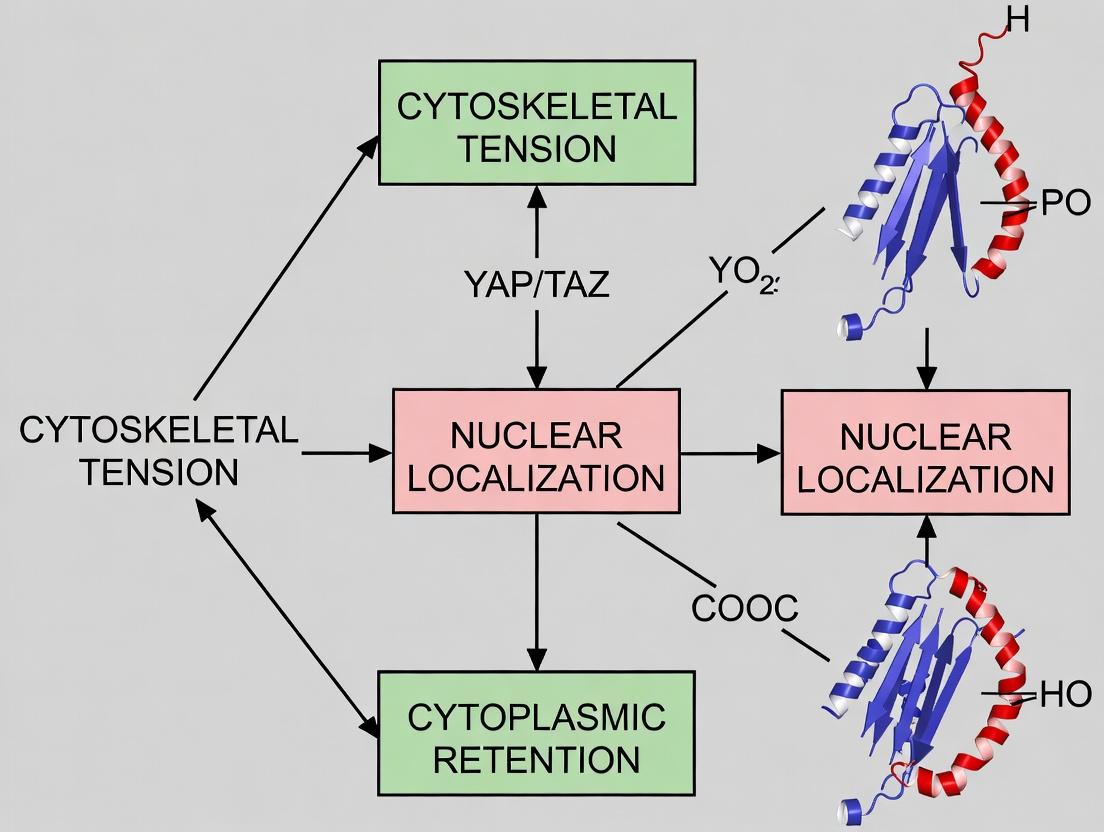
This comprehensive article synthesizes current research on the mechanosensitive transcriptional co-activators YAP and TAZ, focusing on their nuclear localization as a readout of cytoskeletal tension.
Decoding the YAP/TAZ Nuclear Shift: How Cytoskeletal Tension Drives Mechanotransduction and Disease
Abstract
This comprehensive article synthesizes current research on the mechanosensitive transcriptional co-activators YAP and TAZ, focusing on their nuclear localization as a readout of cytoskeletal tension. Designed for researchers, scientists, and drug developers, we explore the foundational biology linking actomyosin contractility to YAP/TAZ activation, detail methodologies for quantifying nuclear translocation and modulating tension, provide troubleshooting for common experimental challenges, and compare validation techniques across 2D, 3D, and in vivo models. The review highlights the pathway's critical role in cancer, fibrosis, and regenerative medicine, offering a roadmap for therapeutic intervention.
The Forceful Signal: Foundational Principles of YAP/TAZ Mechanotransduction
YAP and TAZ as Central Hubs of the Hippo Pathway and Beyond
Abstract This technical whitepaper details the central role of transcriptional coactivators YAP (Yes-associated protein) and TAZ (Transcriptional coactivator with PDZ-binding motif, also known as WWTR1) as integrators of biochemical and biomechanical signals. Framed within the thesis that their nucleocytoplasmic shuttling is a master regulator responsive to cytoskeletal tension, this guide provides an in-depth analysis of the canonical Hippo kinase cascade and its critical crosstalk with cellular architecture. The focus is on mechanistic insights, quantitative data summaries, and practical methodologies for researchers and drug discovery professionals targeting this nexus in cancer and regenerative medicine.
The Core Hippo Pathway: Kinase Cascade and Regulation of YAP/TAZ
The canonical Hippo pathway is a serine/threonine kinase cascade that phosphorylates and inhibits YAP/TAZ. Core components include MST1/2 (Hippo homologs) and LATS1/2 kinases, along with adaptor proteins SAV1 and MOB1.
Experimental Protocol: Assessing YAP/TAZ Phosphorylation and Localization
- Key Assay: Immunofluorescence (IF) and Cellular Fractionation with Western Blotting.
- Methodology:
- Cell Culture & Stimulation: Plate cells on substrates of varying stiffness (e.g., 0.5 kPa vs. 50 kPa polyacrylamide gels) or treat with cytoskeletal drugs (Latrunculin A for actin disruption, Calyculin A for phosphatase inhibition).
- Immunofluorescence: Fix cells (4% PFA), permeabilize (0.1% Triton X-100), block (5% BSA), and incubate with primary antibodies against YAP/TAZ and phospho-YAP (Ser127). Use fluorescent secondary antibodies and nuclear stain (DAPI). Analyze via confocal microscopy; nuclear-to-cytoplasmic (N/C) ratio is a key metric.
- Cellular Fractionation: Lyse cells using a hypotonic buffer followed by detergent. Separate nuclear and cytoplasmic fractions using centrifugation. Validate purity with markers (Lamin B1 for nucleus, GAPDH for cytoplasm).
- Western Blot: Probe fractions or whole-cell lysates with antibodies: total YAP/TAZ, phospho-YAP (Ser127), phospho-YAP (Ser397), phospho-TAZ (Ser89), and LATS1/2 phospho-antibodies (e.g., p-LATS1 Thr1079). Quantify band intensity.
Table 1: Key Phosphorylation Sites and Functional Consequences on YAP/TAZ
| Protein | Phosphorylation Site | Kinase | Functional Consequence |
|---|---|---|---|
| YAP | Ser127 | LATS1/2 | Creates 14-3-3 binding site, promotes cytoplasmic retention. |
| YAP | Ser397 | LATS1/2 | Promotes interaction with SCF(β-TRCP) E3 ubiquitin ligase, leading to degradation. |
| TAZ | Ser89 | LATS1/2 | Creates 14-3-3 binding site, promotes cytoplasmic retention. |
| TAZ | Ser311 | LATS1/2 | Promotes interaction with SCF(β-TRCP) E3 ubiquitin ligase, leading to degradation. |
| YAP/TAZ | Multiple sites (e.g., YAP Ser381) | CK1δ/ε (primed by LATS) | Promotes further phosphorylation and degradation. |
Diagram 1: Core Hippo Pathway and YAP/TAZ Regulation
Beyond Hippo: Cytoskeletal Tension as a Primary Regulator
The thesis central to this guide posits that F-actin integrity and actomyosin-generated tension are dominant regulators of YAP/TAZ activity, often operating in parallel or upstream of the canonical Hippo cascade.
Experimental Protocol: Modulating and Measuring Cytoskeletal Tension
- Key Assay: Traction Force Microscopy (TFM) coupled with YAP/TAZ localization.
- Methodology:
- Substrate Preparation: Fabricate flexible polyacrylamide gels (elastic modulus 1-50 kPa) embedded with fluorescent microbeads (0.2 μm red fluospheres).
- Cell Plating & Imaging: Plate cells on the gel. Acquire time-lapse images of beads (using TRITC filter) and cell morphology (phase contrast/DIC) before and after trypsinization.
- Traction Calculation: Use the bead displacement field between the stressed (cell-adhered) and null (cell-detached) state. Solve the inverse problem of linear elasticity (e.g., using Fourier Transform Traction Cytometry) to compute traction stress vectors (Pa) exerted by the cell.
- Correlative Analysis: Fix cells immediately after live imaging and perform YAP/TAZ immunofluorescence. Correlate the spatial map of traction stress with the N/C ratio of YAP/TAZ on a single-cell basis.
Table 2: Quantitative Effects of Cytoskeletal Perturbations on YAP/TAZ Activity
| Experimental Condition | Measured Parameter | Typical Quantitative Change (vs. Control) | Implication |
|---|---|---|---|
| Latrunculin A (Actin depolymerizer) | Nuclear YAP/TAZ (IF N/C ratio) | Decrease by 70-90% | F-actin polymerization is required for activity. |
| Blebbistatin (Myosin II inhibitor) | Nuclear YAP/TAZ (IF N/C ratio) | Decrease by 50-80% | Actomyosin contractility is required for activity. |
| Stiff Substrate (50-100 kPa) | Nuclear YAP/TAZ (IF N/C ratio) | Increase by 3-5 fold | High tension promotes nuclear localization. |
| Stiff Substrate (50-100 kPa) | CTGF mRNA (qPCR) | Increase by 10-20 fold | Transcriptional output is amplified. |
| Soft Substrate (0.5-1 kPa) | p-YAP(Ser127) (Western blot) | Increase by 2-4 fold | Low tension allows Hippo-mediated inhibition. |
The Scientist's Toolkit: Key Research Reagent Solutions
| Reagent/Category | Example Product/Specifics | Primary Function in YAP/TAZ-Tension Research |
|---|---|---|
| Phospho-Specific Antibodies | Anti-phospho-YAP (Ser127), Anti-phospho-LATS1 (Thr1079) | Detect active Hippo signaling; readout of pathway status. |
| Substrate Stiffness Kits | Polyacrylamide hydrogel kits (e.g., 0.5-50 kPa ranges) | Provide defined mechanical environments to test tension response. |
| Cytoskeletal Modulators | Latrunculin A (F-actin depolymerizer), Jasplakinolide (F-actin stabilizer), Blebbistatin (Myosin II inhibitor), Y-27632 (ROCK inhibitor) | Perturb specific components of the actomyosin machinery. |
| Nuclear/Cytoplasmic Fractionation Kits | Commercial kits with optimized buffers and protocols | Biochemically separate compartments to quantify YAP/TAZ shuttling. |
| TEAD Activity Reporters | 8xGTIIC-luciferase plasmid (Firefly); FRET-based biosensors | Direct readout of YAP/TAZ-TEAD transcriptional activity in live cells. |
| Inhibitors (Tool Compounds) | Verteporfin (YAP-TEAD interaction inhibitor), XAV-939 (Tankyrase inhibitor, stabilizes AXIN/AMOT) | Probe functional consequences of YAP/TAZ inhibition. |
Diagram 2: Cytoskeletal Tension Activates YAP/TAZ via Multiple Mechanisms
Integrated Signaling Nexus: Crosstalk with Other Pathways
YAP/TAZ function as signaling hubs, integrating inputs from Wnt/β-catenin, TGF-β, and GPCR pathways.
Experimental Protocol: Probing Pathway Crosstalk
- Key Assay: Luciferase Reporter Assay with Combinatorial Stimulation.
- Methodology:
- Reporter Transfection: Co-transfect cells with the 8xGTIIC-luciferase reporter (Firefly) and a control Renilla luciferase plasmid (e.g., pRL-TK) for normalization.
- Stimulation: Treat cells with pathway agonists/antagonists (e.g., Wnt3a, LPA for GPCR, TGF-β1) alone and in combination. Include cytoskeletal drugs (e.g., Latrunculin A) to assess dependence.
- Measurement: After 24-48h, lyse cells and measure Firefly and Renilla luciferase activities using a dual-luciferase assay kit. Calculate the Firefly/Renilla ratio for each condition.
- Validation: Confirm results with qPCR for canonical YAP/TAZ target genes (CTGF, CYR61) and potential pathway-specific targets (AXIN2 for Wnt).
Table 3: Crosstalk Pathways and Their Modulation of YAP/TAZ
| Pathway | Key Signal | Effect on YAP/TAZ | Proposed Mechanism of Interaction |
|---|---|---|---|
| Wnt/β-catenin | Wnt ligands, GSK3β inhibition | Synergistic Activation | Disruption of the β-catenin destruction complex sequesters kinases; YAP/TAZ bind to β-catenin/TCF complex. |
| GPCR Signaling | LPA, S1P (via Gα12/13, Gαq/11) | Activation (varies) | Gα12/13 triggers Rho-ROCK-myosin tension. Gαq/11 inhibits LATS via PKC. Gαs inhibits via PKA. |
| TGF-β/SMAD | TGF-β, BMP | Context-Dependent | SMADs complex with YAP/TAZ/TEAD; YAP/TAZ can be required for full TGF-β transcriptional response. |
| Hippo Core | Cell density, NF2/Merlin | Inhibition | Direct kinase cascade phosphorylation as described. |
Diagram 3: YAP/TAZ as a Signaling Integration Hub
Therapeutic Targeting and Future Perspectives
The central role of YAP/TAZ in driving cancer progression, fibrosis, and tissue regeneration makes them compelling drug targets. Strategies include direct YAP/TAZ-TEAD interaction inhibitors (e.g., Verteporfin derivatives), TEAD palmitoylation inhibitors, and upstream targeting of the mechanotransduction apparatus.
Conclusion YAP and TAZ stand at a critical nexus, decoding cellular geometry and tension into transcriptional programs. Their regulation extends far beyond the canonical Hippo pathway, with cytoskeletal forces playing a defining role. This integration of biomechanical and biochemical signals presents both a challenge and an opportunity for therapeutic intervention, necessitating continued in-depth research into the precise mechanisms detailed in this guide.
Within the context of cytoskeletal tension research, the nuclear localization of the transcriptional co-activators YAP (Yes-associated protein) and TAZ (Transcriptional coactivator with PDZ-binding motif) serves as a primary readout for cellular mechanotransduction. This cascade converts extracellular matrix (ECM) stiffness, cell geometry, and applied mechanical forces into specific gene expression programs, regulating cell proliferation, differentiation, and fate. This whitepaper details the core pathway, key experiments, and methodologies driving this field.
Core Mechanotransduction Pathway: Integrins to Transcription
The canonical pathway involves force transmission from the ECM through integrin-based focal adhesions, leading to actomyosin contractility, cytoskeletal remodeling, and ultimately, YAP/TAZ nuclear translocation.
Diagram 1: Core YAP/TAZ Mechanotransduction Pathway
Key Experimental Protocols & Quantitative Data
3.1 Protocol: Modulating Substrate Stiffness to Assess YAP/TAZ Localization
- Objective: To establish a causal relationship between ECM stiffness and YAP/TAZ nuclear localization.
- Materials: Polyacrylamide (PA) hydrogels of tunable stiffness coated with ECM protein (e.g., collagen I, fibronectin). Stiffness is controlled by the ratio of acrylamide to bis-acrylamide.
- Procedure:
- Prepare PA gel solutions to achieve elastic moduli (Young's modulus, E) of ~0.5 kPa (soft, mimicking brain), ~10 kPa (intermediate, mimicking muscle), and ~50 kPa (stiff, mimicking pre-calcified bone).
- Cast gels on activated glass coverslips. Covalently conjugate ECM protein to the gel surface using sulfo-SANPAH.
- Plate cells (e.g., MCF10A, NIH/3T3) at low density on gels and culture for 24-48 hrs.
- Fix, permeabilize, and perform immunofluorescence staining for YAP/TAZ and a nuclear marker (DAPI).
- Image using confocal microscopy and quantify the nuclear-to-cytoplasmic (N/C) fluorescence intensity ratio of YAP/TAZ for >100 cells per condition using image analysis software (e.g., ImageJ, CellProfiler).
- Key Controls: Cells on tissue culture plastic (very stiff, >1 GPa); inhibition of actomyosin contractility with Blebbistatin (10 µM) or ROCK inhibitor Y-27632 (10 µM) on stiff substrates.
3.2 Protocol: Pharmacological Disruption of Actomyosin Tension
- Objective: To determine the necessity of actomyosin contractility for stiffness-induced YAP/TAZ activation.
- Procedure:
- Plate cells on stiff (50 kPa) PA gels or glass.
- After cell adhesion (4-6 hrs), add vehicle (DMSO) or inhibitors: Blebbistatin (myosin II inhibitor, 10-50 µM), Y-27632 (ROCK inhibitor, 10 µM), or Latrunculin A (actin depolymerizer, 100 nM).
- Incubate for 2-4 hours (acute) or 24 hours (chronic).
- Process for immunofluorescence (as in 3.1) or harvest for biochemical analysis (Western blot for phospho-YAP Ser127, total YAP/TAZ, LATS activity markers).
- Data Analysis: Quantify N/C ratio and compare across treatment groups. Expect a significant reduction in nuclear YAP upon inhibitor treatment on stiff substrates.
Quantitative Data Summary: YAP/TAZ Response to Mechanical Cues Table 1: Representative Quantitative Outcomes from Key Mechanotransduction Experiments
| Experimental Condition | Measured Parameter | Typical Result (Relative to Control) | Key Implication |
|---|---|---|---|
| Soft Gel (0.5 kPa) | YAP N/C Intensity Ratio | 0.3 - 0.8 | YAP/TAZ predominantly cytoplasmic. |
| Stiff Gel (50 kPa) | YAP N/C Intensity Ratio | 1.5 - 3.0 | YAP/TAZ accumulates in the nucleus. |
| Stiff Gel + Blebbistatin | YAP N/C Intensity Ratio | ~0.7 (60-70% decrease) | Actomyosin tension is required for activation. |
| Small Micropattern (500 µm²) | % Cells with Nuclear YAP | < 20% | Low cytoskeletal tension from geometric constraint inhibits YAP/TAZ. |
| Large Micropattern (5000 µm²) | % Cells with Nuclear YAP | > 80% | Increased spread area promotes tension and YAP/TAZ activation. |
| Shear Stress (10 dyn/cm²) | TAZ mRNA Target (CTGF) | 3-5 fold increase | Fluid forces activate the pathway. |
Advanced Signaling & Regulatory Crosstalk
The core pathway is modulated by additional mechanical sensors and signaling cascades.
Diagram 2: Integrated Mechanosensory Network
The Scientist's Toolkit: Key Research Reagents
Table 2: Essential Reagents for YAP/TAZ Mechanotransduction Research
| Reagent / Material | Category | Primary Function in Research |
|---|---|---|
| Polyacrylamide Hydrogels | Tunable Substrate | Gold standard for independently controlling substrate stiffness and ECM ligand presentation. |
| Fibronectin/Collagen I | Extracellular Matrix (ECM) | Common ligands for integrin binding and focal adhesion formation. |
| Blebbistatin | Small Molecule Inhibitor | Specific, reversible inhibitor of non-muscle myosin II ATPase, used to dissect actomyosin contractility. |
| Y-27632 | Small Molecule Inhibitor | Potent inhibitor of ROCK (Rho-associated kinase), upstream of myosin activation. |
| Latrunculin A | Small Molecule Inhibitor | Binds actin monomers, preventing polymerization; disrupts the actin cytoskeleton. |
| Lysophosphatidic Acid (LPA) | Biochemical Agonist | Activates Gα12/13-coupled GPCRs to stimulate RhoA, mimicking mechanical activation. |
| Verteporfin | Small Molecule Inhibitor | Disrupts YAP-TEAD protein-protein interaction in the nucleus, used for functional validation. |
| Anti-YAP/TAZ Antibodies | Immunoassay Reagent | For immunofluorescence (localization) and Western blot (expression/phosphorylation). |
| Phospho-YAP (Ser127) Antibody | Immunoassay Reagent | Specific marker for LATS-mediated inhibitory phosphorylation; cytoplasmic retention correlate. |
| siRNA/shRNA vs. LATS1/2 | Genetic Tool | Knockdown to confirm LATS as the key kinase linking cytoskeleton to YAP/TAZ. |
| Fluorescent Actin Probes (e.g., Phalloidin) | Staining Reagent | Visualizes F-actin stress fibers, a key output of cytoskeletal tension. |
Diagram 3: Experimental Workflow for Mechanotransduction Studies
Within the paradigm of cellular mechanotransduction, cytoskeletal tension is the critical physical signal transduced into biochemical responses. A primary axis of contemporary research focuses on how this tension, principally generated by actomyosin contractility, regulates the nuclear localization and transcriptional activity of the YAP/TAZ co-activators. This guide details the core molecular engine of this process—actomyosin contractility—providing technical depth on its components, regulation, and measurement within this specific research context.
Core Components & Regulation of Actomyosin Contractility
Actomyosin contractility arises from the ATP-dependent interaction between filamentous actin (F-actin) and non-muscle myosin II (NMII) motor proteins. NMII exists as a hexameric complex, forming bipolar filaments that slide anti-parallel actin filaments, generating contractile force.
Quantitative Parameters of Contractile Units
Table 1: Key Quantitative Metrics of Actomyosin Contractility
| Parameter | Typical Range / Value | Measurement Method | Biological Significance |
|---|---|---|---|
| Myosin II Motor Step Size | 5–15 nm | Optical trap, single-molecule fluorescence | Determines work efficiency per ATP hydrolyzed. |
| Actomyosin Contraction Velocity | 10–300 nm/s | In vitro motility assays, live-cell imaging | Governs rate of cytoskeletal remodeling. |
| Cellular Traction Force | 1–100 nN/μm² | Traction force microscopy (TFM) | Direct readout of net contractile output on ECM. |
| Actin Retrograde Flow Rate | 10–50 nm/s (lamellipodia) | Fluorescent speckle microscopy | Indicator of balance between polymerization and myosin-driven retrograde flow. |
| Phosphorylated Myosin Light Chain (pMLC) | 10-50% of total MLC in active cells | Western blot, phospho-flow cytometry | Primary biochemical marker of NMII activation. |
Regulatory Signaling Pathways in YAP/TAZ Context
The Rho-ROCK pathway is the master regulator of actomyosin contractility relevant to YAP/TAZ signaling. Downstream effectors phosphorylate and inhibit Myosin Light Chain Phosphatase (MLCP), leading to sustained pMLC levels.
Experimental Protocols for Assessing Actomyosin Contractility
Protocol: Traction Force Microscopy (TFM) on Polyacrylamide Gels
Objective: Quantify cellular contractile forces exerted on a substrate of defined stiffness. Reagents:
- Fluorescent carboxylated microspheres (0.2 μm, red FluoSpheres).
- Acrylamide/Bis-acrylamide stock solutions.
- Sulfo-SANPAH (photosensitive crosslinker).
- Type I Collagen or Fibronectin.
- Traction force analysis software (e.g., PIV, FTTC).
Procedure:
- Gel Fabrication: Prepare polyacrylamide gels (e.g., 1 kPa, 8 kPa) with embedded fluorescent beads in a glass-bottom dish.
- Surface Activation: Coat gel surface with Sulfo-SANPAH under UV light (365 nm, 10 min).
- Protein Conjugation: Incubate with ECM protein (Collagen I, 50 μg/mL, 1 hr).
- Cell Plating: Plate cells (e.g., MCF10A, NIH/3T3) at low density and allow to adhere for 4-6 hrs.
- Imaging: Acquire z-stacks of beads with cells present (loaded state) and after trypsinization (null state) using a confocal microscope.
- Analysis: Compute bead displacement fields between loaded and null states. Use Fourier Transform Traction Cytometry (FTTC) to convert displacements to traction stress vectors.
Protocol: FRET-Based pMLC Biosensor Imaging
Objective: Visualize spatiotemporal dynamics of myosin II activation in live cells. Reagents:
- pMLC biosensor plasmid (e.g., MLCK-FRET biosensor).
- Lipofectamine 3000 or electroporation system.
- Live-cell imaging medium (no phenol red).
- Confocal or epifluorescence microscope with FRET capabilities.
Procedure:
- Transfection: Transfect cells with the pMLC biosensor construct 24-48 hrs prior to imaging.
- Stimulation/Inhibition: Treat cells with ROCK inhibitor (Y-27632, 10 μM) or Rho activator (CN03, 1 μg/mL) as controls.
- FRET Imaging: Acquire time-lapse images of donor (CFP, Ex: 433nm/Em: 475nm) and FRET (Ex: 433nm/Em: 527nm) channels.
- Ratio Analysis: Calculate FRET/Donor ratio images. A higher ratio indicates higher pMLC concentration/activity.
- Correlation: Correlate pMLC-FRET hotspots with cellular regions of high tension (e.g., stress fibers, cell-cell junctions).
Protocol: Stress Fiber Quantification & Myosin II Localization
Objective: Quantify actin cytoskeleton organization and myosin II incorporation. Reagents:
- Phalloidin (conjugated to Alexa Fluor 488/568).
- Anti-Non-Muscle Myosin IIA/B heavy chain antibody.
- Secondary antibody (e.g., Alexa Fluor 647).
- Mounting medium with DAPI.
Procedure:
- Fixation & Permeabilization: Fix cells with 4% PFA for 15 min, permeabilize with 0.1% Triton X-100 for 5 min.
- Staining: Incubate with Phalloidin (1:500) and primary anti-Myosin II antibody (1:250) for 1 hr. Incubate with secondary antibody for 45 min.
- Imaging: Acquire high-resolution confocal z-stacks.
- Analysis: Use FIJI/ImageJ to threshold and binarize actin channel. Apply skeletonize function and analyze number, length, and orientation of stress fibers. Measure myosin II fluorescence intensity co-localized with actin fibers.
The Scientist's Toolkit: Key Reagents & Solutions
Table 2: Essential Research Reagents for Actomyosin & YAP/TAZ Studies
| Reagent / Tool | Category | Primary Function | Example Product/Catalog # |
|---|---|---|---|
| Y-27632 (ROCKi) | Small Molecule Inhibitor | Selective ROCK1/2 inhibitor; reduces pMLC and tension. | Tocris Bioscience #1254 |
| Blebbistatin | Small Molecule Inhibitor | Specific, reversible inhibitor of non-muscle myosin II ATPase. | Sigma-Aldrich #B0560 |
| Calyculin A | Small Molecule Inhibitor | Potent serine/threonine phosphatase inhibitor; increases pMLC by blocking MLCP. | Cell Signaling Technology #12866 |
| Rho Activator I (CN03) | Recombinant Protein | Cell-permeable Rho GTPase activator; increases contractility. | Cytoskeleton, Inc. #CN03 |
| pMLC (Ser19) Antibody | Phospho-specific Antibody | Gold-standard for detecting activated myosin via WB/IF. | Cell Signaling Technology #3671 |
| siRNA Pool (MYH9/10) | Genetic Tool | Knockdown of Non-Muscle Myosin IIA/B heavy chains. | Dharmacon M-006862-00 |
| Polyacrylamide Gel Kits | Tunable Substrate | Fabricate 2D substrates of defined elastic modulus (0.1-50 kPa). | Matrigen #SW-90-001 |
| Cellular Force Microscopy Kit | Traction Force Kit | All-inclusive kit for performing TFM with fluorescent beads. | Ibidi #80226 |
| Myosin Light Chain Kinase (MLCK) FRET Biosensor | Live-cell Biosensor | Genetically-encoded sensor for visualizing pMLC dynamics. | Addgene #35686 |
Integration with YAP/TAZ Nuclear Localization
The actomyosin-generated tension modulates YAP/TAZ primarily through the Hippo pathway kinase LATS1/2. Mechanical forces regulate LATS activity via cytoskeletal sequestration or direct inhibition. High tension leads to LATS inhibition, allowing dephosphorylated YAP/TAZ to accumulate in the nucleus.
Actomyosin contractility is the indispensable force generator that translates extracellular and intracellular cues into cytoskeletal tension, ultimately gatekeeping YAP/TAZ transcriptional programs. Precise quantification of its dynamics—through traction forces, pMLC biosensors, and cytoskeletal architecture—is non-negotiable for rigorous mechanobiology research. Emerging frontiers include the study of pulsatile contractility, the role of specific myosin isoforms, and the development of next-generation tension biosensors to further decode the mechanical lexicon of the cell.
This technical guide examines the core signaling axis that transduces cytoskeletal tension into the nuclear localization of YAP/TAZ, the ultimate effectors of the Hippo pathway. Mechanical cues from the extracellular matrix and cell-cell contacts are integrated by the actin cytoskeleton, with F-actin polymerization serving as a critical signal modulator. This document details the molecular mechanisms, key experimental data, and essential methodologies for investigating how Rho GTPase, ROCK, and LATS1/2 converge to regulate YAP/TAZ activity in response to cytoskeletal dynamics.
Core Mechanotransduction Pathway
The canonical pathway begins with the activation of Rho GTPases (e.g., RhoA) by upstream mechanical or soluble signals. GTP-bound RhoA activates its downstream effector, ROCK (Rho-associated coiled-coil containing protein kinase). ROCK phosphorylates and inhibits Myosin Light Chain Phosphatase (MLCP), while directly phosphorylating Myosin Light Chain (MLC). This leads to increased actomyosin contractility and stress fiber formation. The resultant cytoskeletal tension and F-actin polymerization inhibit the kinase activity of the LATS1/2 complex, a core component of the Hippo pathway. Inhibition of LATS1/2 prevents the phosphorylation and cytoplasmic sequestration of YAP/TAZ, allowing their translocation into the nucleus to drive transcriptional programs for proliferation and survival.
Table 1: Key Quantitative Findings on Regulator Activity and YAP/TAZ Localization
| Experimental Condition | Metric | Value (Mean ± SD) | Key Implication |
|---|---|---|---|
| RhoA Overexpression | % Cells with Nuclear YAP | 85% ± 5% | RhoA activation sufficient for YAP nuclear localization. |
| ROCK Inhibition (Y-27632, 10µM) | % Cells with Nuclear YAP | 22% ± 8% | ROCK activity is necessary for mechanotransduction. |
| Latrunculin A (F-actin depolymerizer, 1µM) | Nuclear/Cytoplasmic YAP Fluorescence Ratio | 0.3 ± 0.1 | Intact F-actin polymer essential for YAP activation. |
| Stiff Matrix (≥30 kPa) vs. Soft Matrix (≤1 kPa) | Phospho-LATS1 (T1079) Level | Decrease of 70% ± 15% | Matrix stiffness inversely correlates with LATS1 activity. |
| Confluent vs. Sparse Cell Culture | Phospho-YAP (S127) Level | Increase of 4.5-fold ± 0.8 | Cell density activates Hippo signaling via LATS. |
Table 2: Common Pharmacological and Molecular Modulators
| Reagent/Tool | Target/Action | Typical Working Concentration | Primary Outcome on Pathway |
|---|---|---|---|
| Y-27632 dihydrochloride | ROCK1/2 inhibitor | 10 µM | Reduces p-MLC, stress fibers, promotes YAP cytoplasmic retention. |
| CN03 (Rho Activator) | GDP/GTP exchange factor mimic, activates Rho | 1-2 µg/mL | Induces stress fibers, promotes YAP nuclear localization. |
| Latrunculin A | Binds actin monomers, depolymerizes F-actin | 0.1-1 µM | Disrupts tension signal, activates LATS, inhibits YAP. |
| Jasplakinolide | Stabilizes F-actin polymers | 0.1-0.5 µM | Hyper-stabilizes F-actin, can paradoxically inhibit YAP via distinct mechanisms. |
| Verteporfin | Disrupts YAP-TEAD interaction | 1-5 µM | Inhibits YAP transcriptional activity post-localization. |
| siRNAs targeting LATS1/2 | Knockdown of LATS kinases | Varies by transfection | Constitutive YAP/TAZ nuclear localization regardless of tension. |
Detailed Experimental Protocols
Protocol 1: Assessing YAP/TAZ Localization by Immunofluorescence
- Cell Seeding & Stimulation: Plate cells on ECM-coated substrates of defined stiffness (e.g., polyacrylamide gels). Treat with pathway modulators (e.g., Y-27632, CN03) for desired duration (typically 2-24 hours).
- Fixation & Permeabilization: Aspirate media, rinse with PBS, and fix with 4% paraformaldehyde for 15 min at RT. Permeabilize with 0.2% Triton X-100 in PBS for 10 min.
- Blocking & Staining: Block in 5% BSA/PBS for 1 hour. Incubate with primary antibodies (e.g., anti-YAP/TAZ, anti-phospho-YAP S127) diluted in blocking buffer overnight at 4°C. Rinse 3x with PBS, then incubate with fluorophore-conjugated secondary antibodies and phalloidin (to label F-actin) for 1 hour at RT, protected from light.
- Imaging & Analysis: Mount with DAPI-containing medium. Acquire high-resolution images using a confocal microscope. Quantify the nuclear/cytoplasmic fluorescence intensity ratio of YAP/TAZ using image analysis software (e.g., ImageJ/FIJI).
Protocol 2: Measuring LATS1/2 Kinase Activity via Western Blot
- Cell Lysis: Harvest cells in RIPA buffer supplemented with protease and phosphatase inhibitors. Clarify lysates by centrifugation.
- Immunoblotting: Resolve equal protein amounts by SDS-PAGE and transfer to PVDF membranes. Block with 5% non-fat milk in TBST.
- Antibody Probing: Probe membranes sequentially with primary antibodies against: phospho-LATS1 (T1079), total LATS1, phospho-YAP (S127), total YAP/TAZ, and a loading control (e.g., GAPDH). Use appropriate HRP-conjugated secondary antibodies.
- Detection & Quantification: Develop using enhanced chemiluminescence. Quantify band intensities. A decrease in phospho-LATS1 (T1079) and phospho-YAP (S127) indicates LATS kinase inhibition and YAP activation.
Protocol 3: FRET-based RhoA Activity Biosensor Assay
- Transfection: Transfect cells with a Raichu-RhoA FRET biosensor plasmid using standard methods (e.g., lipofection).
- Image Acquisition: After 24-48 hours, image live cells on an environmentally controlled microscope capable of rapid sequential CFP and YFP channel acquisition.
- FRET Calculation: Calculate the FRET ratio (YFP emission intensity / CFP emission intensity) after background subtraction. An increased ratio indicates elevated RhoA-GTP levels at the location of interest (e.g., at the cell cortex or adhesion sites).
Pathway and Workflow Diagrams
Title: Core Pathway from RhoA to YAP via Cytoskeletal Tension
Title: Workflow for Analyzing YAP Localization and Pathway Activity
The Scientist's Toolkit: Research Reagent Solutions
Table 3: Essential Research Materials and Reagents
| Item | Function/Application | Example Product/Catalog # |
|---|---|---|
| Anti-YAP/TAZ Antibody | Detects total YAP/TAZ protein for IF and WB. | Cell Signaling Technology #8418 (IF), #14074 (WB) |
| Anti-phospho-YAP (S127) Antibody | Detects LATS-phosphorylated, inactive YAP; key activity readout. | Cell Signaling Technology #13008 |
| Anti-phospho-LATS1 (T1079) Antibody | Direct readout of LATS1 kinase activity (lower signal = inhibition). | Cell Signaling Technology #9157 |
| Rhodamine-Phalloidin | High-affinity fluorescent probe to visualize F-actin structure. | Thermo Fisher Scientific R415 |
| Y-27632 dihydrochloride | Selective, cell-permeable ROCK inhibitor. Used to establish pathway necessity. | Tocris Bioscience #1254 |
| Recombinant RhoA Activator I (CN03) | Enzyme that constitutively activates RhoA. Used to establish sufficiency. | Cytoskeleton, Inc. CN03 |
| Polyacrylamide Gel Kit for Traction Microscopy | To fabricate substrates of tunable stiffness for mechanobiology studies. | Cell Guidance Systems PAA-KIT-10N |
| Raichu-RhoA FRET Biosensor Plasmid | For live-cell imaging and spatiotemporal analysis of RhoA-GTP activity. | Addgene plasmid #129648 |
| Verteporfin | Small molecule that disrupts YAP-TEAD interaction; functional validation tool. | Selleckchem S1786 |
Integrin-Mediated Adhesion and Extracellular Matrix Stiffness as Upstream Cues
This guide details the principal upstream mechanical cues—integrin-mediated adhesion and extracellular matrix (ECM) stiffness—that regulate the YAP/TAZ transcriptional co-activators, central arbiters of cell fate, growth, and homeostasis. Nuclear localization of YAP/TAZ is a canonical readout of cytoskeletal tension generated in response to these physical signals. The integration of these cues defines the cellular mechanical state, dysregulation of which is implicated in fibrosis, cancer progression, and developmental disorders.
Core Mechanotransduction Pathway: From ECM to Nuclear YAP/TAZ
Pathway Logic and Key Components
The pathway initiates with integrin engagement of ECM ligands, a process whose stability and downstream signaling potency are modulated by substrate stiffness. Focal adhesion (FA) maturation recruits and activates structural (e.g., talin, vinculin) and signaling proteins (e.g., FAK, Src). This cascade promotes Rho GTPase activity (notably RhoA), driving actomyosin contractility via ROCK and myosin light chain (MLC) phosphorylation. The resulting cytoskeletal tension is physically transmitted to the nucleus, leading to the inactivation of the cytoplasmic YAP/TAZ retention complex (predominantly the Hippo kinase cascade LATS1/2) and subsequent nuclear translocation. Nuclear YAP/TAZ partner with TEAD transcription factors to regulate target genes (e.g., CTGF, CYR61).
Signaling Pathway Diagram
Diagram Title: Mechanotransduction from ECM to YAP/TAZ Activation.
Table 1: Influence of ECM Stiffness on Cellular & Molecular Outcomes
| Stiffness Range (kPa) | Cell Type | Key Phenotype / Readout | Reported Effect Size (vs. Soft Substrate) | Primary Reference |
|---|---|---|---|---|
| 0.5-1 (Soft) | Mammary Epithelial (MCF-10A) | YAP/TAZ Localization | >80% Cytoplasmic | Dupont et al., Nature 2011 |
| 8-12 (Intermediate) | Mammary Epithelial (MCF-10A) | YAP/TAZ Localization | ~50% Nuclear/Cytoplasmic | Dupont et al., Nature 2011 |
| 40-60 (Stiff) | Mammary Epithelial (MCF-10A) | YAP/TAZ Localization | >70% Nuclear | Dupont et al., Nature 2011 |
| ~1 vs. ~30 | Primary Fibroblasts | Nuclear Area & YAP Signal | 2.5-fold increase | Swift et al., Science 2013 |
| 1 vs. 50 | Mesenchymal Stem Cells (MSCs) | Osteogenic Differentiation (RUNX2) | 4-5 fold increase | Engler et al., Cell 2006 |
| 0.7 vs. 80 | Vascular Smooth Muscle | FA Area (Vinculin Staining) | ~3-fold increase | Peyton & Putnam, JCB 2005 |
Table 2: Pharmacological & Genetic Perturbation Effects on YAP/TAZ
| Intervention Target | Agent/Manipulation | Effect on Actomyosin | Effect on Nuclear YAP/TAZ | Context (Substrate Stiffness) |
|---|---|---|---|---|
| ROCK | Y-27632 (inhibitor) | Inhibits | Abolishes stiffness response | Stiff (>>10 kPa) |
| Myosin II | Blebbistatin (inhibitor) | Inhibits | Abolishes stiffness response | Stiff (>>10 kPa) |
| Integrin β1 | siRNA / Blocking Antibody | Disrupts adhesion | Prevents nuclear localization | Stiff (>>10 kPa) |
| FAK | PF-573228 (inhibitor) | Reduces tension | Significantly reduces | Stiff (>>10 kPa) |
| LATS1/2 | siRNA Knockdown | Independent | Constitutively nuclear (even on soft) | Soft (~0.5 kPa) |
Key Experimental Protocols
Protocol: Fabricating Tunable Stiffness Substrates (Polyacrylamide Hydrogels)
Objective: To create ECM-coated hydrogels with defined elastic moduli for cell plating. Materials: Acrylamide solution (40%), Bis-acrylamide (2%), Ammonium persulfate (APS), Tetramethylethylenediamine (TEMED), 3-Aminopropyltrimethoxysilane (APTES), 0.5% Glutaraldehyde, Sulfo-SANPAH, ECM protein (e.g., Collagen I, Fibronectin). Procedure:
- Coverslip Activation: Clean glass coverslips. Treat with APTES (5 min), wash, then treat with 0.5% glutaraldehyde (30 min). Rinse and dry.
- Gel Solution Preparation: Mix acrylamide and bis-acrylamide in PBS to desired final concentrations (e.g., 5% acrylamide / 0.1% bis for ~1 kPa; 10% acrylamide / 0.3% bis for ~30 kPa). Add 1/100 volume of 10% APS and 1/1000 volume TEMED to initiate polymerization.
- Casting: Immediately pipette ~20-30 µL of solution onto activated coverslip. Quickly place a second clean, hydrophobic coverslip on top to create a thin, flat gel. Polymerize for 30 min at room temperature.
- Ligand Coupling: Carefully separate top coverslip. Wash gel with HEPES buffer (pH 8.5). Apply Sulfo-SANPAH solution (0.5 mg/mL in HEPES) under UV light (365 nm) for 10 min to activate surface. Wash with HEPES buffer.
- ECM Coating: Incubate gel with ECM protein solution (e.g., 0.1 mg/mL collagen I in PBS) overnight at 4°C. Rinse with PBS before cell seeding.
Protocol: Quantifying YAP/TAZ Nuclear Localization via Immunofluorescence
Objective: To quantify the subcellular distribution of YAP/TAZ as a functional readout of mechanotransduction. Materials: Cells plated on test substrates, 4% Paraformaldehyde (PFA), 0.2% Triton X-100, Blocking buffer (e.g., 5% BSA/PBS), Primary antibodies (anti-YAP/TAZ), Fluorescent secondary antibodies, DAPI, Fluorescent mounting medium, Confocal microscope. Procedure:
- Fixation: Aspirate media and fix cells with 4% PFA for 15 min at room temperature (RT).
- Permeabilization: Wash with PBS, then permeabilize with 0.2% Triton X-100 in PBS for 10 min at RT.
- Blocking: Incubate with blocking buffer for 1 hour at RT.
- Primary Antibody: Incubate with anti-YAP/TAZ antibody (diluted in blocking buffer) overnight at 4°C.
- Secondary Antibody: Wash with PBS, then incubate with fluorophore-conjugated secondary antibody and DAPI (for nuclei) for 1 hour at RT in the dark.
- Imaging & Analysis: Mount and image using a confocal microscope with consistent settings. Quantify the nuclear-to-cytoplasmic (N/C) fluorescence intensity ratio for YAP/TAZ using image analysis software (e.g., ImageJ/Fiji). Analyze at least 100 cells per condition.
Protocol: Measuring Cellular Traction Forces via Traction Force Microscopy (TFM)
Objective: To quantify the contractile forces exerted by cells on their substrate. Materials: Polyacrylamide gel embedded with 0.2 µm fluorescent beads, Cells, 4% PFA, Confocal microscope, Computational analysis software. Procedure:
- Prepare Bead-Embedded Gel: Follow Protocol 4.1, but include fluorescent carboxylate-modified beads in the acrylamide/bis solution before polymerization.
- Cell Seeding & Imaging: Seed cells onto coated gel. Acquire a z-stack image of the beads with cells present ("loaded state").
- Detach Cells: Gently trypsinize or lyse cells to fully release traction forces. Acquire a second z-stack image of the beads at the same positions ("null state").
- Force Calculation: Use particle image velocimetry (PIV) to calculate the displacement field of beads between null and loaded states. Input the displacement field and the known gel stiffness into a Fourier-transform-based traction cytometry algorithm to compute the traction stress vector map.
The Scientist's Toolkit: Essential Research Reagents & Materials
Table 3: Key Research Reagent Solutions for Mechanobiology Studies
| Reagent/Material | Supplier Examples | Function in Research |
|---|---|---|
| Tunable Hydrogel Kits (e.g., PA Gel Kits) | Matrigen, BioMatrix, Merck | Provides easy, reproducible substrates of defined stiffness for cell culture. |
| Collagen I, Rat Tail | Corning, Thermo Fisher | The most common fibrillar ECM protein for coating substrates to promote integrin α2β1/α11β1 adhesion. |
| Fibronectin, Human Plasma | MilliporeSigma, Thermo Fisher | Key ECM glycoprotein for integrin α5β1 adhesion, promoting FAK signaling. |
| Y-27632 (ROCK Inhibitor) | Tocris, Selleckchem | Selective inhibitor of ROCK1/2; used to dissect the role of actomyosin contractility. |
| Blebbistatin | Cayman Chemical, Sigma | Specific inhibitor of non-muscle myosin II ATPase; reduces cellular tension. |
| Anti-YAP/TAZ Antibodies (for IF/WB) | Santa Cruz (sc-101199), Cell Signaling Tech (D24E4, D6M3Z) | Key tools for detecting protein localization (IF) and expression/phosphorylation (WB). |
| Cytoskeleton Modulators (e.g., Latrunculin A, Jasplakinolide) | Cytoskeleton Inc., Abcam | Disrupt (Lat A) or stabilize (Jasp) F-actin to probe cytoskeletal integrity's role. |
| Integrin-Blocking Antibodies (e.g., anti-β1, clone AIIB2) | Developmental Studies Hybridoma Bank | Used to specifically inhibit integrin-mediated adhesion and signaling. |
| TRITC-Phalloidin | Thermo Fisher, Cytoskeleton Inc | High-affinity probe for staining and visualizing filamentous actin (F-actin). |
| Verteporfin | Selleckchem | Disrupts YAP-TEAD interaction; used to inhibit YAP/TAZ transcriptional activity. |
Experimental Workflow Diagram
Diagram Title: Integrated Workflow for Mechanotransduction Research.
Nuclear Pore Dynamics and the Retention/Shuttling Mechanism of YAP/TAZ
This whitepaper explores the nuclear pore complex (NPC)-mediated nucleocytoplasmic shuttling of YAP (Yes-associated protein) and TAZ (Transcriptional coactivator with PDZ-binding motif), the central transcriptional effectors of the Hippo pathway. Within the broader thesis context of "YAP/TAZ Nuclear Localization and Cytoskeletal Tension Research," this guide details the precise molecular mechanisms by which mechanical cues, transduced via the actin cytoskeleton, regulate YAP/TAZ activity through nuclear transport. Understanding the dynamics of NPCs and the specific retention/shuttling mechanisms is paramount for dissecting mechanotransduction pathways and identifying therapeutic targets in cancer, fibrosis, and regenerative medicine.
The Nuclear Pore Complex: Architecture and Function
The NPC is a ~110 MDa proteinaceous channel embedded in the nuclear envelope, composed of multiple copies of ~30 different nucleoporins (Nups). It serves as the sole conduit for nucleocytoplasmic transport, governed by a permeability barrier of phenylalanine-glycine (FG)-repeat Nups. Transport of cargoes like YAP/TAZ, which exceed the ~40 kDa diffusion limit, is facilitated by karyopherins (importins/exportins) interacting with nuclear localization signals (NLS) or nuclear export signals (NES) via the RanGTPase cycle.
Table 1: Key Nucleoporins and Transport Factors in YAP/TAZ Shuttling
| Protein | Type | Proposed Role in YAP/TAZ Regulation | Supporting Evidence (Key Refs) |
|---|---|---|---|
| Importin-α/β1 | Karyopherin | Primary import receptor for canonical NLS; binds phosphorylated YAP/TAZ upon LATS1/2 inhibition. | PMID: 27720678 |
| Exportin-1 (XPO1/CRM1) | Exportin | Mediates nuclear export via leucine-rich NES sequences on YAP/TAZ. | PMID: 26166231 |
| Nup153 | FG-Nup (Nuclear Basket) | Docks import complexes; potential tension-sensitive regulator of YAP import. | PMID: 33857403 |
| RanGAP1/RanBP2 | GTPase Activating/Enhancing Complex | Maintains RanGTP gradient (high in nucleus, low in cytoplasm) essential for directional transport. | PMID: 18538659 |
| Tension-Sensitive Nups (e.g., Nup62 subcomplex) | Structural & FG-Nups | Altered conformation or composition under cytoskeletal tension, potentially modulating transport kinetics. | Under active investigation |
Molecular Mechanisms of YAP/TAZ Nuclear Shuttling
YAP/TAZ are intrinsically shuttling proteins. Their subcellular localization is a dynamic equilibrium controlled by phosphorylation-dependent masking/unmasking of NLS/NES motifs, primarily by the LATS1/2 kinases of the Hippo pathway.
Mechanism of Cytoplasmic Retention: Under high cell density or low mechanical tension, active LATS1/2 phosphorylate YAP (Ser127) and TAZ (Ser89). This phosphorylation creates a binding site for 14-3-3 proteins, which sequester YAP/TAZ in the cytoplasm and may also promote nuclear export.
Mechanism of Nuclear Import: Under low cell density, high cytoskeletal tension, or growth factor stimulation, LATS1/2 activity is inhibited. Unphosphorylated YAP/TAZ expose their NLS (monopartite in YAP). Importin-α recognizes the NLS and, with Importin-β1, facilitates translocation through the NPC. Nuclear RanGTP binds Importin-β, causing disassembly and cargo release.
Nuclear Retention & Activation: In the nucleus, YAP/TAZ bind transcription factors (primarily TEADs), which may promote nuclear retention by increasing molecular size/complex formation. Transcriptional activity reinforces pro-growth and pro-survival gene programs.
Title: YAP/TAZ Shuttling Mechanism via the NPC
Quantitative Data on Transport Kinetics and Forces
Table 2: Quantitative Parameters of YAP/TAZ Nucleocytoplasmic Transport
| Parameter | YAP | TAZ | Measurement Method | Reported Value/Range |
|---|---|---|---|---|
| Molecular Weight | ~65 kDa | ~43 kDa | SDS-PAGE / Mass Spec | YAP: 65-70 kDa; TAZ: 43-50 kDa |
| Nuclear Import Rate (k_in) | Variable, phosphorylation-dependent | Variable, phosphorylation-dependent | FRAP / FCS | t½ for recovery: ~2-5 min (active import) |
| Nuclear Export Rate (k_out) | CRM1-dependent | CRM1-dependent | FLIP / LMB treatment | t½ for decay: ~10-30 min |
| Nuclear/Cytoplasmic Ratio (N/C) | Tension-dependent | Tension-dependent | Immunofluorescence / Cell Fractionation | Low tension: 2-10; High tension: 0.1-0.5 |
| Dissociation Constant (Kd) for Importin-α | Low µM range for NLS peptide | Presumed similar | ITC / SPR | ~1-5 µM (for canonical NLS) |
| Force Modulation of NPC Diameter | Indirect effect via NPC components | Indirect effect via NPC components | Atomic Force Microscopy / Super-resolution | Estimated expansion: up to ~30% under tension |
Detailed Experimental Protocols
Protocol 1: Quantitative Analysis of YAP/TAZ Localization by Immunofluorescence and High-Content Imaging
Objective: To measure the nuclear/cytoplasmic ratio of YAP/TAZ in response to cytoskeletal modulators. Materials: See "Scientist's Toolkit" (Table 3). Procedure:
- Seed cells (e.g., MCF10A, NIH/3T3) on fibronectin-coated micropatterned substrates or stiffness-tunable hydrogels.
- Treat cells with pharmacological agents (e.g., 5 µM Latrunculin A for 1h to disrupt actin, or 10 µM Lysophosphatidic Acid (LPA) for 2h to induce tension).
- Fix with 4% PFA for 15 min, permeabilize with 0.2% Triton X-100 for 10 min, and block with 5% BSA for 1h.
- Incubate with primary antibodies (anti-YAP/TAZ, anti-Lamin A/C for nuclear mask) overnight at 4°C.
- Incubate with fluorescent secondary antibodies (e.g., Alexa Fluor 488, 647) and DAPI for 1h.
- Acquire images using a high-content or confocal microscope (≥20 fields/condition).
- Analysis: Use CellProfiler or ImageJ/Fiji software. Segment nuclei (DAPI/Lamin) and cytoplasm (cell outline minus nucleus). Calculate mean fluorescence intensity in each compartment. Report as Nuclear/Cytoplasmic (N/C) ratio or Nuclear Fraction: Inuc / (Inuc + I_cyto).
Protocol 2: Nuclear Export Assay using Leptomycin B (LMB)
Objective: To determine the CRM1/XPO1-dependent export kinetics of YAP/TAZ. Procedure:
- Pre-treat cells under desired mechanical conditions (e.g., on stiff substrate).
- Treat with 20 nM Leptomycin B (CRM1 inhibitor) or vehicle (e.g., ethanol) for 0, 15, 30, 60, 120 minutes.
- Fix and process for immunofluorescence as in Protocol 1.
- Plot the nuclear fraction of YAP/TAZ over time. A rapid increase upon LMB treatment indicates active CRM1-mediated export. Calculate export rate constants by fitting the initial slope.
Protocol 3: Proximity Ligation Assay (PLA) for YAP-Importin-α Interaction
Objective: To visualize and quantify endogenous YAP-Importin-α interactions in situ. Procedure:
- Culture cells on coverslips, fix, permeabilize, and block as standard.
- Incubate with primary antibodies from different hosts (e.g., mouse anti-YAP, rabbit anti-Importin-α).
- Follow manufacturer's protocol for Duolink PLA. Use PLUS and MINUS PLA probes, ligate, and amplify with fluorescent nucleotides.
- Mount with DAPI-containing medium. Each red fluorescent spot represents a single interaction event.
- Quantify spots per cell or per nuclear area under different mechanical contexts.
The Scientist's Toolkit: Key Research Reagents
Table 3: Essential Reagents for Studying YAP/TAZ Nuclear Shuttling
| Reagent / Material | Supplier Examples | Function & Application |
|---|---|---|
| Recombinant LATS2/MOB1 Kinase Assay Kit | SignalChem, BPS Bioscience | In vitro phosphorylation of YAP/TAZ to study phosphorylation-dependent NLS masking. |
| Leptomycin B (LMB) | Cayman Chemical, Sigma-Aldrich | Potent, specific inhibitor of Exportin-1 (XPO1/CRM1). Used to block nuclear export. |
| Importazole | Tocris, Sigma-Aldrich | Cell-permeable inhibitor of Importin-β1-mediated nuclear import. Negative control for import assays. |
| Fibronectin-Coated Polyacrylamide Gels | Matrigen, BioSurface Inc. | Tunable substrate stiffness (0.5-50 kPa) to apply defined mechanical cues to cells. |
| YAP/TAZ-TEAD BRET Biosensor Kit | Montana Molecular | Live-cell biosensor to report nuclear YAP/TAZ transcriptional activity in real time. |
| Validated siRNAs/Nanobody Pools vs. Nups (Nup153, Nup62) | Horizon Discovery, ChromoTek | To knock down or perturb specific nucleoporins and assess impact on YAP/TAZ localization. |
| Anti-YAP/TAZ Phospho-Specific Antibodies (S127/S89) | Cell Signaling Technology #4911, #8418 | Gold-standard for detecting Hippo pathway-inactivated, cytoplasm-retained YAP/TAZ. |
| CellProfiler / ImageJ Macro Pipelines | Open Source (Broad Institute, NIH) | Automated image analysis software for robust quantification of N/C ratios from high-throughput screens. |
Signaling Pathway Integration: Mechanotransduction to Transcription
Cytoskeletal tension, generated by actomyosin contractility and transmitted via focal adhesions and LINC complexes, inhibits the Hippo kinase cascade. This leads to the dephosphorylation and nuclear accumulation of YAP/TAZ. The nuclear pore is the final, regulated checkpoint in this mechano-signaling pathway.
Title: Mechanotransduction to YAP/TAZ Nuclear Import
The regulated passage of YAP/TAZ through the NPC is a critical, dynamic node integrating mechanical and biochemical signals. Drug development efforts are targeting this system at multiple levels: inhibiting nuclear import (e.g., via Importin-α/β interfaces), promoting nuclear export, or disrupting YAP/TAZ-TEAD interactions within the nucleus. A deep understanding of NPC dynamics and the precise shuttling mechanisms, as framed within cytoskeletal tension research, provides a robust foundation for the rational design of novel mechano-therapeutics.
Introduction This whitepaper, framed within the broader thesis of YAP/TAZ nuclear localization as a central integrator of cytoskeletal tension, provides an in-depth technical guide to the mechanisms and experimental interrogation of force-induced transcriptional programs. The transduction of mechanical cues into specific gene expression changes is fundamental to development, tissue homeostasis, and disease. Here, we detail the core pathways, quantitative readouts, and methodologies for researchers investigating this mechanobiology frontier.
Core Mechanotransduction Pathway: From Force to YAP/TAZ to Transcription The primary pathway linking physical force to gene expression centers on the transcriptional co-activators YAP and TAZ. Cytoskeletal tension, generated by actomyosin contractility and transmitted via focal adhesions, regulates their nucleocytoplasmic shuttling. In the nucleus, YAP/TAZ partner primarily with TEAD family transcription factors to drive the expression of a proliferative, pro-survival, and cytoskeletal gene program.
Diagram 1: Core Force to YAP/TAZ to Gene Pathway
Quantitative Data on Force-Induced Transcriptional Targets Key quantitative findings from recent studies on YAP/TAZ transcriptional targets under mechanical stimulation are summarized below.
Table 1: Key Force-Regulated YAP/TAZ Target Genes
| Gene Target | Function | Fold-Change (Stiff Matrix vs. Soft) | Experimental System | Reference (Year) |
|---|---|---|---|---|
| CTGF/CCN2 | Matricellular protein, fibrosis | 8.5 - 12.1x | Human MSCs | Dupont et al. (2011) |
| CYR61/CCN1 | Matricellular protein, angiogenesis | 6.2 - 9.7x | Human MSCs | Dupont et al. (2011) |
| ANLN | Actin-binding, cytokinesis | 4.8x | Mammary Epithelia | Calvo et al. (2013) |
| AREG (Amphiregulin) | EGFR ligand, proliferation | 5.1x | Mammary Epithelia | Calvo et al. (2013) |
| MYC | Transcription factor, proliferation | 3.5x | Various Cell Lines | Zhao et al. (2008) |
| AXL | Receptor tyrosine kinase, survival | 7.3x | Breast Cancer Cells | Calvo et al. (2013) |
Table 2: Pharmacological & Genetic Perturbations of the Pathway
| Intervention/Target | Effect on YAP/TAZ Localization | Effect on Transcriptional Targets (e.g., CTGF) | Key Assay |
|---|---|---|---|
| Latrunculin A (Actin disruptor) | Cytoplasmic Retention | >80% Reduction | qRT-PCR, RNA-seq |
| Blebbistatin (Myosin II inhibitor) | Cytoplasmic Retention | ~70% Reduction | qRT-PCR |
| LATS1/2 Knockout | Constitutive Nuclear | >10x Induction (Baseline) | qRT-PCR, Luciferase |
| ROCK Inhibitor (Y-27632) | Cytoplasmic Retention | ~65% Reduction | Immunofluorescence, qRT-PCR |
| TEAD1-4 VP (Dominant-Negative) | Nuclear (but inactive) | >90% Reduction of Output | Luciferase Reporter |
Detailed Experimental Protocols
Protocol 1: Quantifying YAP/TAZ Nuclear Localization by Immunofluorescence (IF) Objective: To assess force/YAP activation status in fixed cells.
- Cell Plating: Plate cells on ECM-coated substrates of defined stiffness (e.g., 0.5 kPa vs. 50 kPa polyacrylamide gels).
- Stimulation/Treatment: Treat cells with cytoskeletal drugs (e.g., 10 µM Y-27632 for 2h) or vehicle control.
- Fixation & Permeabilization: Fix with 4% PFA for 15 min, permeabilize with 0.5% Triton X-100 for 10 min.
- Immunostaining: Incubate with primary antibody (anti-YAP/TAZ, 1:200) overnight at 4°C. Use species-appropriate Alexa Fluor-conjugated secondary antibody (1:500) for 1h at RT. Co-stain with Phalloidin (F-actin) and DAPI (nucleus).
- Imaging & Analysis: Acquire high-resolution z-stacks using a confocal microscope. Quantify nuclear-to-cytoplasmic fluorescence intensity ratio using ImageJ (plot profile or segmentation-based methods). Analyze >100 cells per condition.
Protocol 2: Measuring Transcriptional Output via Luciferase Reporter Assay Objective: To functionally measure TEAD-dependent transcriptional activity.
- Reporter Construct: Transfect cells with the 8xGTIIC-luciferase reporter (containing 8 copies of the TEAD response element) and a Renilla luciferase control plasmid for normalization.
- Mechanical Manipulation: 24h post-transfection, trypsinize and re-plate cells onto force-application devices (e.g., Flexcell system for cyclic stretch) or stiffness-tunable hydrogels.
- Lysis and Measurement: After 24-48h of mechanical stimulation, lyse cells using Passive Lysis Buffer. Measure firefly and Renilla luciferase activity sequentially using a dual-luciferase assay kit on a plate reader.
- Data Analysis: Calculate the ratio of firefly/Renilla luminescence for each sample. Normalize to the control (e.g., soft/unstrained) condition.
Protocol 3: Identifying Direct Targets via Chromatin Immunoprecipitation (ChIP)-qPCR Objective: To confirm direct binding of YAP/TAZ/TEAD to promoter/enhancer regions of candidate genes.
- Crosslinking & Lysis: Subject mechanically stimulated cells to 1% formaldehyde crosslinking for 10 min. Quench with glycine, harvest, and lyse cells.
- Chromatin Shearing: Sonicate lysates to shear chromatin to fragments of 200-500 bp.
- Immunoprecipitation: Incubate chromatin with antibody against YAP, TAZ, or TEAD1. Use IgG as a negative control. Capture antibody-chromatin complexes with protein A/G beads.
- Elution & Reverse Crosslink: Elute complexes, reverse crosslinks at 65°C overnight, and purify DNA.
- qPCR Analysis: Perform qPCR on purified DNA using primers specific to the promoter region of target genes (e.g., CTGF, CYR61). Enrichment is calculated as % of input relative to control IgG.
Diagram 2: Key Experimental Workflow for Mechano-Transcriptomics
The Scientist's Toolkit: Key Research Reagent Solutions
| Item / Reagent | Function / Purpose | Example Product / Assay |
|---|---|---|
| Tunable-Stiffness Hydrogels | To mimic physiological (soft) or fibrotic (stiff) ECM mechanics. | Bio-PhotoLin GelMA Kits; CytoSoft Plates |
| Flexcell Tension System | To apply controlled cyclic stretch or static tension to cell cultures. | Flexcell FX-6000T System |
| YAP/TAZ/TEAD Antibodies | For immunostaining (IF), Western Blot (WB), and Chromatin IP (ChIP). | Santa Cruz sc-101199 (YAP); Cell Signaling #8418 (TAZ); #12292 (TEAD1) |
| TEAD Reporter Plasmid | To measure transcriptional activity downstream of force. | 8xGTIIC-luciferase (Addgene #34615) |
| LATS Kinase Inhibitor | To pharmacologically mimic force-induced YAP/TAZ activation. | TRULI (Vertex) |
| Actomyosin Modulators | To directly manipulate cytoskeletal tension. | Y-27632 (ROCKi), Latrunculin A (Actin disruptor), Jasplakinolide (Actin stabilizer) |
| Nuclear/Cytoplasmic Fractionation Kit | To biochemically quantify YAP/TAZ localization. | NE-PER Nuclear and Cytoplasmic Extraction Kit |
| Dual-Luciferase Reporter Assay | Gold-standard for quantifying transcriptional activity. | Promega Dual-Luciferase Reporter Assay System |
| YAP/TAZ siRNA Pools | For genetic knockdown to confirm pathway specificity. | ON-TARGETplus SMARTpools (Dharmacon) |
Measuring the Force: Techniques to Induce, Image, and Quantify Nuclear YAP/TAZ
Experimental Paradigms for Modulating Cytoskeletal Tension
Within the broader thesis on YAP/TAZ nuclear localization and mechanotransduction, the direct experimental modulation of cytoskeletal tension serves as a critical methodology. The Hippo pathway effectors YAP and TAZ are exquisitely sensitive to mechanical cues derived from the actomyosin cytoskeleton. Their nucleocytoplasmic shuttling serves as a primary readout for the cellular mechanical state. Therefore, precise manipulation of cytoskeletal tension is indispensable for dissecting the fundamental principles of mechanobiology and for identifying potential therapeutic targets in diseases characterized by aberrant mechanosignaling, such as fibrosis and cancer.
Core Principles of Tension Modulation
Cytoskeletal tension is primarily generated by non-muscle myosin II (NMII) motor proteins acting on actin filaments, regulated by Rho GTPase signaling. Experimental paradigms target this system at multiple levels: upstream receptor signaling, Rho GTPase activity, myosin light chain (MLC) phosphorylation, and the structural integrity of actin networks.
Key Methodological Categories & Quantitative Data
The following table summarizes the primary approaches, their molecular targets, and typical experimental outcomes on YAP/TAZ localization.
Table 1: Summary of Cytoskeletal Tension Modulation Paradigms
| Paradigm Category | Specific Agent/Intervention | Primary Molecular Target | Effect on Actomyosin Tension | Outcome on YAP/TAZ (Nuclear Localization) | Typical Concentration/Dose |
|---|---|---|---|---|---|
| Pharmacological Inhibition | Blebbistatin | Non-muscle Myosin II ATPase | Decrease | Decrease | 10-50 µM |
| Pharmacological Inhibition | Y-27632 | ROCK1/2 (Rho kinase) | Decrease | Decrease | 10-20 µM |
| Pharmacological Inhibition | Latrunculin A / B | Actin Polymerization | Decrease | Decrease | 100 nM - 1 µM |
| Pharmacological Stimulation | Lysophosphatidic Acid (LPA) | RhoGEF → RhoA Activation | Increase | Increase | 1-10 µg/mL |
| Pharmacological Stimulation | Calyculin A | Myosin Light Chain Phosphatase (MLCP) | Increase | Increase | 10-50 nM |
| Genetic Manipulation | siRNA/shRNA vs. ROCK1/2 | ROCK1/2 Protein Ablation | Decrease | Decrease | Varies by construct |
| Genetic Manipulation | Constitutively Active RhoA (CA-RhoA) | RhoA GTPase Activity | Increase | Increase | Varies by construct |
| Mechanical Stimulation | Substrate Stretching | Integrin-mediated Focal Adhesions | Increase (Cyclic) | Increase | 10-15% elongation, 0.5 Hz |
| Mechanical Stimulation | Substrate Stiffening | Integrin-mediated Focal Adhesions | Increase | Increase | Matrix Elasticity: 1 kPa to 50 kPa |
| Topographical Cues | Micropatterned Islands (e.g., small vs. large islands) | Cell Spreading & Adhesion Geometry | Constrained (small) vs. High (large) | Decrease (small) vs. Increase (large) | Island Diameter: 10 µm vs. 50 µm |
Detailed Experimental Protocols
Protocol 1: Pharmacological Modulation and Immunofluorescence Analysis
Objective: To assess YAP/TAZ nuclear translocation in response to ROCK inhibition and LPA stimulation.
Materials: See "Scientist's Toolkit" below. Procedure:
- Cell Seeding: Seed NIH/3T3 or MCF10A cells on glass coverslips in a 24-well plate at 50-60% confluency in complete growth medium. Allow to adhere overnight.
- Serum Starvation: Replace medium with low-serum (0.5% FBS) or serum-free medium for 18-24 hours to synchronize cells in a low-mechanical activity state.
- Pharmacological Treatment:
- Inhibition Group: Treat with Y-27632 (20 µM) in low-serum medium for 2 hours.
- Stimulation Group: Treat with LPA (5 µg/mL) in low-serum medium for 30 minutes.
- Control Group: Low-serum medium only.
- Fixation & Permeabilization: Aspirate medium. Fix cells with 4% paraformaldehyde (PFA) for 15 min at RT. Wash 3x with PBS. Permeabilize with 0.2% Triton X-100 in PBS for 10 min. Wash 3x with PBS.
- Immunostaining: Block with 3% BSA in PBS for 1 hour. Incubate with primary antibody (anti-YAP/TAZ, 1:200) diluted in blocking buffer overnight at 4°C. Wash 3x with PBS. Incubate with fluorophore-conjugated secondary antibody (1:500) and DAPI (1:1000) for 1 hour at RT in the dark. Wash 3x with PBS.
- Mounting & Imaging: Mount coverslips on slides using anti-fade mounting medium. Image using a confocal or epifluorescence microscope with consistent settings. Acquire 20-40 cells per condition across multiple fields.
- Quantification: Use image analysis software (e.g., ImageJ, CellProfiler) to segment nuclei (DAPI channel) and cytoplasm. Calculate the nuclear-to-cytoplasmic (N/C) fluorescence intensity ratio for YAP/TAZ. Perform statistical analysis (e.g., one-way ANOVA) on the mean N/C ratios from 3 independent experiments.
Protocol 2: Modulating Tension via Engineered Substrate Stiffness
Objective: To evaluate YAP/TAZ localization in cells cultured on hydrogels of defined stiffness.
Materials: Polyacrylamide hydrogels kit, collagen I (for coating), sulfo-SANPAH crosslinker. Procedure:
- Hydrogel Fabrication: Prepare polyacrylamide gel solutions of differing acrylamide/bis-acrylamide ratios to yield substrates with elastic moduli of ~1 kPa (soft) and ~25 kPa (stiff). Polymerize droplets on activated glass coverslips.
- Surface Functionalization: Activate gel surface with 1 mM sulfo-SANPAH under UV light for 10 minutes. Wash with HEPES buffer. Coat with collagen I (0.2 mg/mL) overnight at 4°C.
- Cell Culture: Plate cells at low density (5,000 cells/cm²) on the hydrogel substrates and maintain in complete medium for 48 hours to allow full mechanical adaptation.
- Analysis: Fix, immunostain for YAP/TAZ and F-actin (using phalloidin), and image as in Protocol 1. Quantify N/C ratio and correlate with actin stress fiber morphology.
Signaling Pathways and Workflow Diagrams
Title: Core Pathway of Cytoskeletal Tension Regulating YAP/TAZ
Title: Workflow for YAP/TAZ Localization Experiments
The Scientist's Toolkit: Key Research Reagent Solutions
Table 2: Essential Materials for Cytoskeletal Tension Experiments
| Reagent/Material | Vendor Examples (Catalogue #) | Function in Experiment |
|---|---|---|
| Blebbistatin (myosin II inhibitor) | Cayman Chemical (13013), Sigma (B0560) | Directly inhibits NMII ATPase activity, rapidly dissipating contractile tension. Positive control for tension loss. |
| Y-27632 dihydrochloride (ROCK inhibitor) | Tocris Bioscience (1254), Selleckchem (S1049) | Inhibits ROCK-mediated MLC phosphorylation and MLCP inhibition. Standard for probing Rho/ROCK signaling. |
| Latrunculin A (actin disruptor) | Cayman Chemical (10010630) | Sequesters G-actin, preventing polymerization. Used to dismantle the actin network, eliminating its structural role. |
| Lysophosphatidic Acid (LPA) | Avanti Polar Lipids (857130) | Activates Rho via GPCRs to stimulate ROCK and actomyosin contractility. Standard tension inducer. |
| Polyacrylamide Hydrogel Kit | Cell Guidance Systems (PAA01), Merck (PAAGEL) | Provides tunable, physiological substrate stiffness for 2D cell culture mechanobiology studies. |
| Sulfo-SANPAH Crosslinker | ProteoChem (c1101) | UV-activatable heterobifunctional crosslinker for covalently attaching ECM proteins (e.g., collagen) to polyacrylamide gels. |
| Anti-YAP/TAZ Antibody | Santa Cruz (sc-101199), Cell Signaling (D24E4) | Primary antibody for immunofluorescence detection of YAP/TAZ localization. |
| Rhodamine Phalloidin | Cytoskeleton (PHDR1) | High-affinity probe for staining F-actin, allowing visualization of stress fibers and cortical actin. |
| DAPI | Thermo Fisher Scientific (D1306) | Nuclear counterstain for immunofluorescence, essential for defining the nuclear compartment for N/C ratio calculation. |
| siRNA targeting ROCK1/ROCK2 | Dharmacon, Qiagen | For genetic knockdown to confirm pharmacological results and perform long-term tension modulation studies. |
The Hippo pathway effectors YAP (Yes-associated protein) and TAZ (Transcriptional coactivator with PDZ-binding motif) are central mechanotransducers, shuttling into the nucleus to regulate gene expression in response to cytoskeletal tension and extracellular matrix stiffness. Precise quantification of their nuclear-to-cytoplasmic (N/C) ratio is a critical readout of cellular mechanosensing. This technical guide details advanced imaging methodologies essential for investigating this process, focusing on high-resolution immunofluorescence, live-cell dynamics, and Förster Resonance Energy Transfer (FRET)-based biosensors for real-time activity monitoring.
Quantitative Data in YAP/TAZ Mechanobiology
Table 1: Correlation Between Substrate Stiffness and YAP/TAZ Nuclear Localization
| Substrate Elasticity (kPa) | Cell Type | Mean YAP/TAZ N/C Ratio (±SD) | Key Experimental Condition | Citation (Representative) |
|---|---|---|---|---|
| 0.5 | MCF-10A | 0.3 ± 0.1 | Serum Starvation (24h) | Dupont et al., 2011 |
| 2 | MCF-10A | 0.8 ± 0.2 | Serum Starvation (24h) | Dupont et al., 2011 |
| 10 | MCF-10A | 1.9 ± 0.3 | Serum Starvation (24h) | Dupont et al., 2011 |
| Glass (~GPa) | NIH/3T3 | 2.4 ± 0.4 | 10% FBS, Latrunculin A (2µM, 1h) inhibits | Calvo et al., 2013 |
| 1 (Soft) + Cytochalasin D | HeLa | 0.5 ± 0.15 | Disrupts actin filaments | Aragona et al., 2013 |
Table 2: FRET Biosensor Performance Metrics for RhoA Activity (Upstream of YAP/TAZ)
| Biosensor Name | Dynamic Range (ΔR/R0) | Excitation/Emission (Donor) | Key Application in Mechanobiology | Reference |
|---|---|---|---|---|
| RhoA-FLARE | ~70% | 458 nm / 475-495 nm | Tension at focal adhesions | Pertz et al., 2006 |
| RhoA2G | ~60% | 458 nm / 475-495 nm | Response to substrate stiffness | Brock et al., 2019 |
Detailed Experimental Protocols
Protocol 1: Immunofluorescence for YAP/TAZ Localization on Tunable Hydrogels
Objective: Fix and stain cells cultured on polyacrylamide hydrogels of defined stiffness to quantify YAP/TAZ N/C ratio.
- Cell Seeding: Seed 20,000 cells/cm² (e.g., MCF-10A, NIH/3T3) on fibronectin-coated hydrogels (0.5-20 kPa) in a 12-well plate. Culture for 24-48 hrs.
- Fixation: Aspirate medium. Rinse with warm PBS (1x, pH 7.4). Fix with 4% paraformaldehyde (PFA) in PBS for 15 min at room temperature (RT).
- Permeabilization & Blocking: Rinse 3x with PBS. Permeabilize with 0.5% Triton X-100 in PBS for 10 min at RT. Block with 5% normal goat serum and 1% BSA in PBS for 1 hr at RT.
- Primary Antibody Incubation: Incubate with anti-YAP/TAZ primary antibody (e.g., Rabbit anti-YAP, Cell Signaling #14074, 1:400) in blocking buffer overnight at 4°C.
- Secondary Antibody & Phalloidin: Rinse 3x with PBS. Incubate with Alexa Fluor 488-conjugated goat anti-rabbit IgG (1:500) and Alexa Fluor 594-conjugated phalloidin (1:200, for F-actin) in blocking buffer for 1 hr at RT, protected from light.
- Nuclear Stain & Mounting: Rinse 3x with PBS. Incubate with DAPI (300 nM) for 5 min. Rinse and mount coverslips onto slides using ProLong Diamond Antifade mountant.
- Imaging & Analysis: Acquire z-stacks on a confocal microscope (63x/1.4 NA oil objective). Use ImageJ/Fiji software to define nuclear (DAPI) and cytoplasmic (phalloidin-negative) ROIs to calculate mean fluorescence intensity N/C ratio per cell (n>100).
Protocol 2: Live-Cell Imaging of YAP-EGFP Translocation
Objective: Monitor real-time YAP shuttling in response to cytoskeletal drug perturbation.
- Cell Preparation: Seed cells stably expressing YAP-EGFP (or transiently transfected) on glass-bottom dishes or tunable hydrogels.
- Environmental Control: Use a live-cell imaging system with temperature (37°C), humidity, and CO₂ (5%) control.
- Image Acquisition: Using a spinning-disk confocal or widefield microscope with a 40x or 60x oil objective, acquire images every 5-10 minutes for 1-2 hours. Maintain low laser power to minimize phototoxicity.
- Stimulus Addition: After acquiring a 30-minute baseline, add cytoskeletal modulating drugs directly to the dish (e.g., Latrunculin A to 2 µM final, Blebbistatin to 50 µM final).
- Quantification: Track individual cells over time. Measure mean nuclear and cytoplasmic EGFP fluorescence per time point. Plot N/C ratio versus time.
Protocol 3: Using a FRET Biosensor for RhoA Activity
Objective: Measure spatiotemporal RhoA GTPase activity dynamics during cell spreading or mechanical stimulation.
- Biosensor Expression: Transfect cells with a RhoA-FRET biosensor plasmid (e.g., RhoA2G) using appropriate methods (lipofection, nucleofection).
- Imaging Setup: Use an inverted microscope equipped for FRET (e.g., with a dual-emission filter cube or spectral detectors). For RhoA2G (CFP/YFP pair), excite at 458 nm.
- Channel Acquisition: Collect emission simultaneously or sequentially in two channels: Donor (CFP, 475-495 nm) and FRET (YFP, 525-550 nm).
- Ratio Calculation: Acquire images every 30-60 seconds. Calculate the FRET/Donor emission ratio (R) for each pixel or cellular ROI using software (e.g., MetaFluor, NIS-Elements, or Fiji).
- Calibration & Normalization: For comparative experiments, normalize the ratio (R) to the baseline ratio (R0) at time zero to express data as ΔR/R0.
Visualization Diagrams
Title: YAP/TAZ Activation by Cytoskeletal Tension
Title: FRET Biosensor Activation Mechanism
Title: Integrated Imaging Workflow for YAP Research
The Scientist's Toolkit: Research Reagent Solutions
Table 3: Essential Reagents and Tools for YAP/TAZ Mechano-Imaging
| Item | Example Product / Model | Function in Research |
|---|---|---|
| Tunable Hydrogels | CytoSoft Plates (Advanced BioMatrix), Polyacrylamide Kit (Cell Guidance Systems) | Provides physiologically relevant substrate stiffness to test mechanical response. |
| YAP/TAZ Antibodies | Rabbit mAb #14074 (CST), Mouse mAb sc-101199 (Santa Cruz) | Specific detection for immunofluorescence and validation of biosensor signals. |
| Live-Cell Reporter | YAP-EGFP plasmid (Addgene #17843), YAP/TAZ FRET biosensors | Enables real-time tracking of localization or conformational activity. |
| Cytoskeletal Modulators | Latrunculin A (Actin disruptor), Blebbistatin (Myosin II inhibitor), Y-27632 (ROCK inhibitor) | Pharmacological tools to perturb tension upstream of YAP/TAZ. |
| High-Resolution Microscope | Confocal (Zeiss LSM 980), Spinning Disk (Yokogawa), TIRF (Nikon) | Captures subcellular localization and dynamics with minimal photodamage. |
| FRET Filter Set | CFP/YFP (Chroma 89002), or Spectrally tunable system (Leica White Laser) | Essential for precise donor/acceptor separation in biosensor imaging. |
| Image Analysis Software | Fiji/ImageJ, CellProfiler, NIS-Elements AR, Imaris | For automated segmentation, N/C ratio calculation, and FRET ratio analysis. |
| Environmental Chamber | Stage Top Incubator (Okolab), Live-Cell Imaging Chamber | Maintains viability during long-term live-cell experiments. |
Context: Within the study of mechanotransduction, the nuclear translocation of YAP/TAZ transcriptional coactivators serves as a critical readout of cellular response to cytoskeletal tension and mechanical cues. Accurate quantification of their nuclear-to-cytoplasmic (N:C) ratio via image analysis is therefore fundamental to research in cancer, regenerative medicine, and drug development targeting the Hippo pathway.
Core Metrics for N:C Ratio Quantification
Accurate N:C ratio calculation for fluorescence signals (e.g., YAP/TAZ immunostaining) relies on precise segmentation of nuclear (N) and cytoplasmic (C) compartments. The following metrics are standard:
Table 1: Key Quantitative Metrics for N:C Ratio Analysis
| Metric | Formula | Interpretation | Application Note |
|---|---|---|---|
| Mean Intensity Ratio | N:C = Mean_Intensity_Nuc / Mean_Intensity_Cyto |
Most common, measures average translocation. | Sensitive to background fluorescence and thresholding. |
| Integrated Density Ratio | N:C = IntDen_Nuc / IntDen_Cyto |
Accounts for area and intensity. | Better for heterogeneous expression; requires accurate segmentation. |
| Background Corrected Ratio | N:C = (Mean_Nuc - Bkg) / (Mean_Cyto - Bkg) |
Reduces background bias. | Essential for low-signal or high-background images. |
| Normalized N:C Difference | (Mean_Nuc - Mean_Cyto) / (Mean_Nuc + Mean_Cyto) |
Bounded between -1 and 1. | Useful for comparing across experiments. |
Automated Segmentation Tools and Algorithms
Modern tools move beyond manual thresholding to machine learning-based segmentation for robust N:C delineation.
Table 2: Comparison of Automated Segmentation Tools (2024)
| Tool/Platform | Core Algorithm | Nuclear Segmentation | Cytoplasm Definition | Key Advantage for N:C |
|---|---|---|---|---|
| CellProfiler v4.2 | Traditional image processing (Otsu, Watershed) | Excellent | Via whole-cell mask subtraction | High-throughput, pipeline-based, open-source. |
| QuPath v0.5.0 | Pixel classification (Machine Learning) | Excellent (StarDist) | Expand/Cellpose models | Interactive ML, ideal for heterogeneous tissues. |
| Ilastik | Pixel/Feature Classification (Random Forest) | Good (user-trained) | User-trained classifiers | No-coding-required interactive ML training. |
| DeepCell (Mesmer) | Deep Learning (ResNet-based) | State-of-the-art | Whole-cell segmentation model | Superior accuracy in complex co-cultures. |
| FIJI (ImageJ) w/ Plugins | Varied (Classic & ML plugins) | Good (Weka, StarDist) | Manual or via cellpose | Flexibility, extensive plugin ecosystem. |
Experimental Protocol: Quantifying YAP N:C Ratio in Response to Cytoskeletal Tension
This protocol details a standard experiment linking substrate stiffness (modulating cytoskeletal tension) to YAP localization.
A. Cell Culture and Stimulation:
- Seed NIH/3T3 or MCF10A cells on polyacrylamide hydrogels of defined stiffness (0.5 kPa vs. 50 kPa) or glass (GPa) for 24-48 hrs.
- Optional: Treat with cytoskeletal drugs (e.g., 2µM Latrunculin A for actin disruption, 10µM Y-27632 for ROCK inhibition) for 1-2 hours prior to fixation.
B. Immunofluorescence Staining:
- Fixation: 4% paraformaldehyde in PBS for 15 min at RT.
- Permeabilization: 0.5% Triton X-100 in PBS for 10 min.
- Blocking: 5% BSA / 0.1% Tween-20 in PBS for 1 hr.
- Primary Antibody: Incubate with anti-YAP/TAZ antibody (e.g., Santa Cruz sc-101199, 1:200) overnight at 4°C.
- Secondary Antibody: Incubate with Alexa Fluor 488-conjugated secondary (1:500) for 1 hr at RT.
- Nuclear Stain: Counterstain with DAPI (300 nM) or Hoechst 33342.
- Cytoskeletal Stain (Optional): Include Phalloidin (e.g., Alexa Fluor 555, 1:1000) for F-actin visualization.
C. Image Acquisition:
- Acquire images on a confocal or high-content microscope using a 40x or 60x oil objective.
- Set identical exposure times, laser powers, and gain across all experimental conditions.
- Acquire Z-stacks (3-5 slices, 0.5µm step) or single optimal plane images.
- Save images in lossless format (e.g., .tiff, .czi).
D. Image Analysis Workflow (Using CellProfiler/FIJI):
- Preprocessing: Apply mild Gaussian blur (σ=1) to reduce noise. Subtract background (rolling ball radius ~50px).
- Nuclear Segmentation: Use DAPI channel. Apply Otsu thresholding followed by Watershed separation to split touching nuclei.
- Cytoplasmic Segmentation: Using the YAP/TAZ channel or a cytoplasmic marker (if available):
- Method A (Whole-Cell): Identify cell boundaries via adaptive thresholding on a cytoplasmic stain, then subtract nuclear region.
- Method B (Ring Expansion): Define cytoplasm as a ring of fixed width (e.g., 5-10 pixels) extending outward from the nuclear mask.
- Measurement: Measure mean fluorescence intensity of YAP/TAZ signal in the nuclear and cytoplasmic masks for each cell.
- Calculation & Statistics: Compute N:C ratio (Background Corrected) per cell. Analyze >100 cells per condition. Perform statistical tests (e.g., ANOVA, Kruskal-Wallis).
Signaling Pathway and Workflow Visualizations
Diagram Title: YAP/TAZ Regulation by Cytoskeletal Tension via Hippo Pathway
Diagram Title: Automated N:C Ratio Analysis Workflow
The Scientist's Toolkit: Essential Research Reagents & Materials
Table 3: Key Research Reagent Solutions for YAP/TAZ N:C Analysis
| Item | Function & Application | Example Product/Supplier |
|---|---|---|
| Tunable Hydrogels | To provide substrates of defined stiffness for modulating cytoskeletal tension. | Polyacrylamide Hydrogel Kits (Matrigen), PDMS Substrates (SYLGARD). |
| Cytoskeletal Modulators | Pharmacological tools to perturb actin dynamics and Rho/ROCK signaling. | Latrunculin A (actin disruptor), Y-27632 dihydrochloride (ROCK inhibitor). |
| Validated Antibodies | Specific detection of YAP/TAZ proteins for immunofluorescence. | Anti-YAP/TAZ (Santa Cruz sc-101199), anti-YAP (Cell Signaling #14074). |
| Nuclear Counterstains | High-fidelity DNA dyes for accurate nuclear segmentation. | DAPI, Hoechst 33342 (Thermo Fisher). |
| Cell Membrane/Cytoplasm Markers | To aid whole-cell segmentation (alternative to ring expansion). | CellMask dyes, Phalloidin (for F-actin), Cytopainter (Abcam). |
| Mounting Media | Preserve fluorescence and reduce photobleaching for imaging. | ProLong Diamond Antifade Mountant (Thermo Fisher). |
| Analysis Software | Platforms for automated segmentation and quantification. | CellProfiler, QuPath, FIJI/ImageJ2 (Open Source). |
| High-Content Imager | Automated microscope for consistent, high-throughput image acquisition. | ImageXpress systems (Molecular Devices), Opera Phenix (Revvity). |
The Hippo pathway effectors YAP and TAZ are central transcriptional co-activators that translate mechanical cues, particularly cytoskeletal tension, into gene expression programs regulating cell proliferation, differentiation, and organ size. Their nucleocytoplasmic shuttling is directly governed by actomyosin contractility and F-actin integrity. This whitepaper details standard genetic and pharmacological tools used to dissect this relationship, providing a technical guide for perturbing the cytoskeleton and its regulators to study YAP/TAZ localization and activity.
Core Perturbation Agents: Mechanisms and Applications
Table 1: Summary of Perturbation Agents in YAP/TAZ Research
| Agent | Primary Target | Effect on Cytoskeleton | Expected Effect on YAP/TAZ | Common Concentrations/Doses |
|---|---|---|---|---|
| Y-27632 | ROCK1/2 (Rho-associated kinase) | Inhibits myosin light chain phosphorylation, reducing actomyosin contractility | Cytoplasmic retention; decreased transcriptional activity | 5-20 µM (in vitro); 10 mg/kg (in vivo, IP) |
| Latrunculin A | G-actin | Binds and sequesters monomeric actin, preventing polymerization | Rapid F-actin disassembly; typically leads to YAP/TAZ cytoplasmic retention | 0.1 - 1 µM (in vitro) |
| Cytochalasin D | F-actin barbed ends | Caps filament ends, preventing polymerization and inducing depolymerization | F-actin disassembly; can induce YAP/TAZ nuclear localization in low-density/stress conditions | 0.5 - 2 µM (in vitro) |
| siRNA / CRISPR | Gene-specific (e.g., LATS1/2, AMOT, RHO GTPases) | Variable; enables targeted depletion of upstream regulators | Phenotype-dependent; e.g., LATS1/2 KO causes constitutive nuclear localization | siRNA: 10-50 nM; CRISPR: Variable guides & delivery |
Detailed Experimental Protocols
Protocol 1: Assessing YAP/TAZ Localization via Immunofluorescence after Pharmacological Treatment
- Reagents: Cultured cells (e.g., MCF10A, HEK293A), Y-27632 (10 mM stock in H₂O), Latrunculin A (1 mM stock in DMSO), Cytochalasin D (1 mM stock in DMSO), PBS, 4% PFA, 0.1% Triton X-100, blocking buffer (5% BSA), primary antibodies (anti-YAP/TAZ), fluorescent secondary antibodies, DAPI, mounting medium.
- Procedure:
- Seed cells on sterile glass coverslips in a 24-well plate at desired density (critical for tension context).
- Allow cells to adhere for 24 hours.
- Treatment: Replace medium with fresh medium containing vehicle (control), 10 µM Y-27632, 0.5 µM Latrunculin A, or 1 µM Cytochalasin D. Incubate for 2-4 hours (time-course experiments recommended).
- Fixation: Aspirate medium, wash with PBS, fix with 4% PFA for 15 min at RT.
- Permeabilization & Blocking: Wash with PBS, permeabilize with 0.1% Triton X-100 for 10 min, block with 5% BSA for 1 hour.
- Staining: Incubate with primary antibody (1:200-1:500 in blocking buffer) overnight at 4°C. Wash 3x with PBS, incubate with secondary antibody (1:500) and DAPI for 1 hour at RT in the dark.
- Mounting: Wash extensively, mount coverslip on slide, seal.
- Imaging & Analysis: Image using a confocal microscope. Quantify nuclear/cytoplasmic fluorescence intensity ratio using ImageJ (e.g., with "Plot Profile" or compartmental analysis plugins).
Protocol 2: Genetic Perturbation using siRNA followed by Tension Manipulation
- Reagents: siRNA targeting human LATS1, LATS2, or non-targeting control, lipid-based transfection reagent (e.g., Lipofectamine RNAiMAX), serum-free Opt-MEM medium.
- Procedure:
- Reverse Transfection: Seed cells in a 12-well plate. For each well, dilute 5 µL of 20 µM siRNA stock in 125 µL Opt-MEM. In a separate tube, dilute 3 µL transfection reagent in 125 µL Opt-MEM. Combine, incubate 15 min at RT, then add mixture to well.
- Seed 1-2 x 10⁵ cells in 1 mL complete medium directly onto the transfection mix. Gently swirl.
- Incubate for 48-72 hours to allow for protein knockdown.
- Tension Challenge: Trypsinize and re-seed siRNA-treated cells onto substrates of different stiffnesses (e.g., 1 kPa vs. 50 kPa PA gels) or at low (sparse) vs. high (confluent) density for 24 hours.
- Harvest: Process cells for Western blot (lysis in RIPA buffer) to assess YAP/TAZ phosphorylation (phospho-S127-YAP) and total protein, or for immunofluorescence as in Protocol 1.
Signaling Pathway Diagrams
Diagram Title: Cytoskeletal Perturbations and YAP/TAZ Regulation Pathway
The Scientist's Toolkit: Research Reagent Solutions
Table 2: Essential Reagents for YAP/TAZ Mechanobiology Studies
| Reagent/Material | Category | Primary Function in Context | Example Vendor/Product |
|---|---|---|---|
| Y-27632 dihydrochloride | Small Molecule Inhibitor | Selective ROCK1/2 inhibitor; reduces myosin-based contractility to test tension-dependence. | Tocris Bioscience (Cat #1254) |
| Latrunculin A | Natural Toxin / Actin Perturbator | Sequesters G-actin; induces rapid, reversible F-actin depolymerization. | Cayman Chemical (Cat #10010630) |
| Cytochalasin D | Fungal Metabolite / Actin Perturbator | Caps barbed ends of F-actin; disrupts dynamics and network structure. | Sigma-Aldrich (Cat #C8273) |
| ON-TARGETplus siRNA SMARTpools | Genetic Tool | Pre-designed, pooled siRNAs for efficient, specific knockdown of targets (e.g., LATS1, AMOT). | Horizon Discovery |
| LentiCRISPRv2 Vector | Genetic Tool | All-in-one lentiviral plasmid for CRISPR/Cas9-mediated gene knockout. | Addgene (Plasmid #52961) |
| Anti-YAP/TAZ Antibodies (e.g., D24E4, V386) | Detection | Specific detection of total or phosphorylated (S127) YAP/TAZ via IF/WB. | Cell Signaling Technology |
| Polyacrylamide Hydrogels | Substrate Engineering | Tunable stiffness substrates (0.5-50 kPa) to provide defined mechanical environments. | Matrigen (Softwell Plates) |
| Triton X-100 | Detergent | Cell permeabilization for immunofluorescence staining of cytoskeletal and nuclear proteins. | Sigma-Aldrich |
| Fibronectin or Collagen I | Extracellular Matrix (ECM) | ECM coating to ensure specific integrin-mediated adhesion and signaling on gels or glass. | Corning |
| ROCK Activity Assay Kit | Biochemical Assay | Measures ROCK kinase activity in lysates post-perturbation (colorimetric/fluorometric). | Cytoskeleton, Inc. (Cat #BK100) |
The study of cellular mechanotransduction has revealed that mechanical cues from the extracellular matrix (ECM) are critical regulators of cell fate, proliferation, and differentiation. Central to this process are the transcriptional co-activators YAP (Yes-associated protein) and TAZ (Transcriptional coactivator with PDZ-binding motif). Their nucleocytoplasmic shuttling is directly controlled by cytoskeletal tension, which is, in turn, dictated by the physical properties of the cell's substrate. Substrate engineering—the design and fabrication of materials with precisely defined mechanical and topographical features—provides the essential toolkit for deconvoluting these relationships. This whitepaper details the core techniques of tunable stiffness hydrogels, micropatterning, and stretchable platforms as they apply to YAP/TAZ mechanobiology research.
Tunable Stiffness Hydrogels
Hydrogels are cross-linked polymer networks swollen with water, whose stiffness can be tuned to mimic tissues ranging from brain (soft, ~0.1-1 kPa) to pre-calcified bone (stiff, ~30-100 kPa).
Core Chemistry and Fabrication
Polyacrylamide (PA) Hydrogels: The gold standard for 2D stiffness studies.
- Base Components: Acrylamide (monomer), Bis-acrylamide (cross-linker), Ammonium persulfate (APS, initiator), Tetramethylethylenediamine (TEMED, catalyst).
- Stiffness Control: Stiffness (Young's modulus, E) is tuned by varying the ratio of Bis-acrylamide to Acrylamide. A higher cross-linker percentage increases stiffness.
Experimental Protocol: Fabrication of PA Hydrogels for Cell Culture
- Surface Activation: Clean glass coverslips are treated with Bind-Silane (3-(Trimethoxysilyl)propyl methacrylate) to promote covalent bonding of the gel.
- Preparation of Gel Solution: Acrylamide and Bis-acrylamide are mixed in PBS at specific ratios (see Table 1). 0.5% (w/v) of the photoactivatable cross-linker Sulfo-SANPAH may be added for subsequent ECM protein coupling.
- Polymerization: APS and TEMED are added to initiate radical polymerization. The solution is immediately pipetted onto an activated coverslip and topped with a hydrophobic-treated coverslip to create a uniform sheet.
- Gel Functionalization: After polymerization, the top coverslip is removed. For gels made without Sulfo-SANPAH, the surface is activated with Sulfo-SANPAH solution (0.2 mg/mL in 50 mM HEPES, pH 8.5) under UV light (365 nm) for 10 minutes. The gel is then rinsed and coated with ECM proteins (e.g., Collagen I, Fibronectin at 10-50 µg/mL).
Table 1: Standard Polyacrylamide Formulations for Target Stiffness Ranges
| Target Elastic Modulus (kPa) | % Acrylamide | % Bis-acrylamide | Typical Cell Behavior & YAP/TAZ Response |
|---|---|---|---|
| 0.5 - 1 kPa | 5% | 0.03% | Mesenchymal stem cells (MSCs) remain rounded; YAP/TAZ primarily cytoplasmic. |
| ~5-8 kPa | 7.5% | 0.05% | MSCs show moderate spreading; mixed YAP/TAZ localization. |
| ~30-40 kPa | 10% | 0.3% | MSCs spread fully, form strong stress fibers; YAP/TAZ strongly nuclear. |
| >60 kPa | 12% | 0.4% | Maximal cell spreading and tension; sustained nuclear YAP/TAZ. |
Data compiled from standard protocols (Engler et al., 2006; Tse & Engler, 2010) and recent adaptations.
Advanced Hydrogel Systems
- PEG-based Hydrogels: Offer bio-inert, chemically definable platforms. Stiffness is controlled by molecular weight and concentration of PEG-diacrylate (PEGDA) polymers.
- Enzymatically Degradable Hydrogels: Incorporate matrix metalloproteinase (MMP)-sensitive peptides, allowing cells to remodel their microenvironment, directly probing the dynamic interplay between degradation and tension.
Micropatterning for Geometric Control
Micropatterning confines cells to specific adhesive shapes, controlling cell spreading area and cytoskeletal organization independently of stiffness, allowing isolation of geometry-induced tension effects on YAP/TAZ.
Experimental Protocol: Soft Lithography for Micropatterning on Hydrogels
A. Master Fabrication (Photolithography):
- A silicon wafer is coated with a negative photoresist (e.g., SU-8).
- The wafer is exposed to UV light through a photomask containing the desired patterns (e.g., circles, squares, rectangles, fibronectin lines).
- After development, the wafer serves as a topographically patterned "master."
B. Polydimethylsiloxane (PDMS) Stamp Creation:
- PDMS elastomer base and curing agent are mixed (10:1 ratio), poured over the master, and cured at 65°C for 2+ hours.
- The cured PDMS stamp is peeled off, containing the inverse pattern of the master.
C. Microcontact Printing (µCP):
- The PDMS stamp is inked with a solution of ECM protein (e.g., 50 µg/mL Fibronectin in PBS).
- The stamp is dried and gently pressed onto the surface of the prepared PA or PEG hydrogel.
- The stamp is peeled away, transferring the protein pattern onto the gel.
- The non-patterned areas are blocked with a non-adhesive molecule (e.g., 1% Pluronic F-127 or bovine serum albumin) for 30-60 minutes.
- Cells are seeded; they adhere only to the printed protein patterns.
Diagram: Workflow for Micropatterning via Microcontact Printing.
Key Insights from Micropatterning
Confinement to small islands (<1000 µm²) restricts actin cytoskeletal organization, leading to low intracellular tension and cytoplasmic retention of YAP/TAZ, even on stiff substrates. Large adhesive areas or anisotropic shapes (e.g., rectangles) promote actin stress fiber alignment and high tension, driving nuclear YAP/TAZ.
Stretchable Platforms
Stretchable devices apply controlled, dynamic mechanical strain to cells, modeling physiological processes like lung expansion or muscle contraction, and probing the real-time dynamics of YAP/TAZ translocation.
System Design and Protocol
Device: Typically consists of a silicone elastomer (e.g., PDMS) membrane cast in a custom or commercial bioreactor. The membrane is coated with ECM protein.
Experimental Protocol: Cyclic Stretch Assay
- Membrane Preparation: A thin PDMS membrane is created, sterilized (ethanol, UV), and coated with collagen or fibronectin.
- Cell Seeding: Cells of interest are seeded onto the membrane and allowed to adhere and spread for 24-48 hours.
- Application of Strain: The membrane is subjected to uniaxial or equibiaxial stretch using a computer-controlled vacuum or motorized stage. Typical parameters:
- Magnitude: 5-15% surface strain (physiological range).
- Frequency: 0.1-1 Hz (cyclic).
- Duration: 30 minutes to 24 hours.
- Analysis: Cells are fixed during or immediately after stretch and processed for immunofluorescence (YAP/TAZ localization, F-actin) or harvested for biochemical analysis.
Table 2: Common Stretch Parameters and YAP/TAZ Responses
| Strain Type | Magnitude | Frequency | Duration | Observed YAP/TAZ Response (Cell Type Dependent) |
|---|---|---|---|---|
| Static Uniaxial | 10% | N/A | 1-6 hours | Nuclear translocation aligned with the strain axis. |
| Cyclic Uniaxial | 10% | 0.5 Hz | 30 min | Rapid (minutes) nuclear shuttling; enhanced transcription. |
| Cyclic Equibiaxial | 15% | 0.1 Hz | 1 hour | Sustained nuclear localization; requires intact actin cables. |
| High/Pathological | >20% | 1 Hz | 24 hours | Can induce nuclear YAP/TAZ downregulation via damage pathways. |
Diagram: Strain-Induced YAP/TAZ Nuclear Localization Pathway.
The Scientist's Toolkit: Research Reagent Solutions
Table 3: Essential Materials for Substrate Engineering in Mechanobiology
| Item Name / Reagent | Function / Purpose | Example Product / Composition |
|---|---|---|
| Acrylamide/Bis Solution | Monomer and cross-linker for tunable PA hydrogel fabrication. | 40% Acrylamide solution, 2% Bis-accrylamide solution. |
| Sulfo-SANPAH | Heterobifunctional cross-linker; couples hydrogel surface amines to ECM proteins upon UV activation. | N-5-Azido-2-nitrobenzoyloxysuccinimide (sulfo-SANPAH). |
| PDMS Elastomer Kit | Silicone polymer for creating micropatterning stamps and stretchable membranes. | Sylgard 184 (Dow Corning). |
| Pluronic F-127 | Non-ionic surfactant used to block non-specific cell adhesion on hydrogel areas outside patterns. | 1-5% (w/v) solution in PBS. |
| Human Fibronectin | Key ECM protein for promoting cell adhesion and integrin engagement on engineered substrates. | Purified protein, 0.5-1 mg/mL stock. |
| Y-27632 (ROCK Inhibitor) | Small molecule inhibitor of ROCK kinase; used to reduce actomyosin contractility and validate tension-dependence. | 10 mM stock in DMSO, used at 5-20 µM in cell culture. |
| Blebbistatin | Specific inhibitor of non-muscle myosin II ATPase; directly reduces cytoskeletal tension. | 10 mM stock in DMSO, used at 5-50 µM (light-sensitive). |
| Anti-YAP/TAZ Antibody | Primary antibody for immunofluorescence detection and quantification of nucleocytoplasmic localization. | e.g., Rabbit monoclonal anti-YAP/TAZ (D24E4) from Cell Signaling Technology. |
| Fluorescent Phalloidin | High-affinity stain for polymerized F-actin; visualizes stress fibers and cytoskeletal architecture. | Alexa Fluor 488, 568, or 647 conjugates. |
Substrate engineering is indispensable for mechanobiology research focused on YAP/TAZ regulation. By decoupling stiffness, geometry, and dynamic strain, these techniques enable causal testing of how physical cues are transduced into biochemical signals. Integrating quantitative readouts (e.g., YAP/TAZ nuclear/cytoplasmic ratio) with these engineered platforms allows researchers to build predictive models of cell behavior in development, disease, and regeneration, ultimately informing drug discovery strategies targeting mechanotransduction pathways.
Biochemical Fractionation and Western Blot Protocols for Nuclear Enrichment
This technical guide details methodologies for nuclear enrichment and subsequent Western blot analysis of YAP/TAZ, key transcriptional co-activators in the Hippo pathway. Their nucleocytoplasmic shuttling is a critical readout of cellular mechanotransduction, directly regulated by cytoskeletal tension and cell density. Precise biochemical fractionation is therefore essential for dissecting the signaling dynamics in research focused on cellular mechanics, cancer biology, and drug development.
Principles of Subcellular Fractionation
The core principle involves the sequential, gentle lysis of the cell to isolate cytoplasmic components, followed by the lysis of the nucleus to release nuclear proteins. The integrity of the nuclear membrane during the initial step is paramount for a clean separation. Protease and phosphatase inhibitors are mandatory throughout to preserve protein integrity and phosphorylation states, which are crucial for YAP/TAZ regulation.
Detailed Protocol: Cytoplasmic and Nuclear Fractionation
Materials & Reagents
- Hypotonic Buffer A: 10 mM HEPES (pH 7.9), 10 mM KCl, 1.5 mM MgCl2, 0.5 mM DTT, 0.2% NP-40, plus fresh protease/phosphatase inhibitors.
- Nuclear Lysis Buffer C: 20 mM HEPES (pH 7.9), 420 mM NaCl, 1.5 mM MgCl2, 0.2 mM EDTA, 25% Glycerol, 0.5 mM DTT, plus fresh inhibitors.
- PBS (ice-cold, Ca2+/Mg2+-free)
- Cell scraper, pre-chilled microcentrifuge tubes, Dounce homogenizer (optional for adherent cells).
Step-by-Step Procedure
- Cell Culture & Treatment: Grow cells (e.g., MCF10A, HEK293) to desired confluence. Apply experimental treatments modulating cytoskeletal tension (e.g., Latrunculin A, Cytochalasin D for actin disruption; Lysophosphatidic Acid (LPA) for actin polymerization; or seeding at high vs. low density).
- Harvesting: Place culture dish on ice. Wash cells twice with ice-cold PBS.
- Scraping: Gently scrape cells in 1 mL PBS and transfer to a pre-chilled 1.5 mL microcentrifuge tube.
- Pelleting: Centrifuge at 500 x g for 5 min at 4°C. Discard supernatant completely.
- Hypotonic Lysis: Resuspend cell pellet in 500 µL of ice-cold Hypotonic Buffer A. Vortex briefly and incubate on ice for 15 min.
- Separation I: Centrifuge at 3,000 x g for 5 min at 4°C.
- Supernatant (Cytoplasmic Fraction): Transfer carefully to a new tube. Keep on ice.
- Pellet (Nuclei): Proceed to next step.
- Nuclear Wash: Gently wash the nuclear pellet with 500 µL of Hypotonic Buffer A (without NP-40). Centrifuge at 3,000 x g for 5 min. Discard supernatant.
- Nuclear Lysis: Resuspend the purified nuclear pellet in 100-200 µL of high-salt Nuclear Lysis Buffer C. Vortex vigorously for 15-30 seconds every 10 min, for a total of 1 hour on ice.
- Separation II: Centrifuge at 20,000 x g for 15 min at 4°C.
- Supernatant (Nuclear Fraction): Transfer to a new tube. The pellet contains insoluble nuclear material (e.g., chromatin, lamins).
- Protein Quantification: Determine protein concentration for both fractions using a compatible assay (e.g., Bradford, BCA).
Western Blot Analysis for YAP/TAZ Localization
Electrophoresis & Transfer
- Load 20-50 µg of each fractionated protein sample onto a 4-12% Bis-Tris polyacrylamide gel.
- Run at constant voltage (120-150V) until the dye front reaches the bottom.
- Transfer to PVDF or nitrocellulose membrane using standard wet or semi-dry transfer protocols.
Immunoblotting
- Blocking: Block membrane in 5% non-fat dry milk or BSA in TBST for 1 hour at room temperature.
- Primary Antibody Incubation: Dilute primary antibodies in blocking buffer. Incubate overnight at 4°C with gentle agitation.
- Key Antibodies: Anti-YAP/TAZ (e.g., Cell Signaling Technology #8418), anti-Lamin A/C (nuclear marker, e.g., CST #4777), anti-α-Tubulin or GAPDH (cytoplasmic marker, e.g., CST #2144).
- Washing & Secondary: Wash membrane 3x with TBST. Incubate with appropriate HRP-conjugated secondary antibody for 1 hour at RT.
- Detection: Develop using enhanced chemiluminescence (ECL) substrate and image with a chemiluminescence imager.
Data Analysis
Quantify band intensities using software (ImageJ, ImageLab). Normalize YAP/TAZ signal in each fraction to its respective loading control. Calculate the Nuclear-to-Cytoplasmic (N/C) ratio for YAP/TAZ as a quantitative measure of localization.
Table 1: Representative YAP Nuclear/Cytoplasmic Ratio Under Different Cytoskeletal Conditions
| Cell Line | Treatment (10 µM, 2h) | Mean N/C Ratio (YAP) | Std. Deviation | Reference |
|---|---|---|---|---|
| MCF10A | Control (Serum-free) | 0.15 | ± 0.03 | [1] |
| MCF10A | Latrunculin A (Actin Disruptor) | 0.08 | ± 0.02 | [1] |
| MCF10A | Lysophosphatidic Acid (LPA) | 0.95 | ± 0.12 | [1] |
| HEK293A | High Density (Confluent) | 0.20 | ± 0.05 | [2] |
| HEK293A | Low Density (Sparse) | 1.80 | ± 0.25 | [2] |
Table 2: Fractionation Purity Assessment (Marker Protein Distribution)
| Subcellular Fraction | Lamin A/C (Nuclear) | α-Tubulin (Cytosolic) | GAPDH (Cytosolic) |
|---|---|---|---|
| Cytoplasmic Fraction | ≤ 5% | ≥ 95% | ≥ 95% |
| Nuclear Fraction | ≥ 95% | ≤ 5% | ≤ 5% |
The Scientist's Toolkit: Research Reagent Solutions
Table 3: Essential Materials for Nuclear Fractionation & YAP/TAZ Analysis
| Item (Supplier Example) | Function in Protocol | Critical Notes |
|---|---|---|
| NE-PER Kit (Thermo Fisher) | Commercial reagent kit for sequential cytoplasmic and nuclear extraction. | Provides standardized buffers for reproducibility; ideal for initial protocol establishment. |
| Protease/Phosphatase Inhibitor Cocktail (Roche) | Suppresses endogenous proteolytic and dephosphorylation activity. | Essential for preserving YAP phosphorylation (p-YAP Ser127) and total protein integrity. |
| YAP/TAZ Rabbit mAb (CST #8418) | Primary antibody detecting both endogenous YAP and TAZ proteins. | Validated for Western blot; check species reactivity. |
| Phospho-YAP (Ser127) Antibody (CST #13008) | Detects the inhibitory phosphorylation that promotes cytoplasmic retention. | Key for mechanotransduction readouts; use with total YAP antibody. |
| Lamin A/C Antibody (CST #4777) | Nuclear envelope marker for assessing fractionation purity. | A clean nuclear fraction should be highly enriched for Lamin A/C. |
| Halt Phosphatase Inhibitor (Thermo Fisher) | Single-use cocktail to preserve phosphorylation states. | Add fresh to all lysis and fractionation buffers. |
| BCA Protein Assay Kit (Pierce) | For accurate quantification of protein in cytoplasmic and nuclear lysates. | Necessary for equal loading across fractions in Western blot. |
| PVDF Membrane, 0.45 µm (Millipore) | Membrane for protein transfer prior to immunoblotting. | Requires pre-wetting in methanol; offers high protein binding capacity. |
Signaling Pathways and Experimental Workflow
Diagram 1: YAP Regulation & Experimental Workflow (100 chars)
Diagram 2: Nuclear Fractionation Protocol Steps (99 chars)
Abstract: This whitepaper details the mechanistic and experimental investigation of YAP/TAZ transcriptional co-activators, whose nuclear localization and activity are exquisitely sensitive to cytoskeletal tension and cellular architecture. We position YAP/TAZ as central mechanotransducers in three critical pathophysiological contexts: cancer metastasis, fibroblast activation in fibrosis, and stem cell fate specification. The content provides a technical guide for probing the force-sensitive YAP/TAZ axis within these disease models.
The Mechanotransduction Hub: YAP/TAZ Regulation
YAP (Yes-associated protein) and TAZ (Transcriptional coactivator with PDZ-binding motif) are key effectors of the Hippo pathway and are predominantly regulated by mechanical cues. In stiff microenvironments or upon increased actomyosin contractility, YAP/TAZ translocate to the nucleus, where they partner with TEAD transcription factors to drive gene expression promoting proliferation, survival, and cytoskeletal remodeling. This nuclear shuttling serves as a direct readout of cellular mechanosensing.
Table 1: Core Regulators of YAP/TAZ Localization
| Regulatory Input | Effect on YAP/TAZ | Primary Sensor/Mediator |
|---|---|---|
| High Extracellular Matrix (ECM) Stiffness | Promotes Nuclear Localization | Integrins, Focal Adhesions, Actin Stress Fibers |
| High Cell Density / Confluency | Promotes Cytoplasmic Retention | Cell-Cell Junctions (e.g., α-catenin) |
| Serum & Mitogenic Signals | Promotes Nuclear Localization | GPCRs, Rho GTPase |
| LATS1/2 Kinase Activity | Phosphorylates YAP/TAZ, leading to cytoplasmic retention/degradation | Core Hippo Pathway (MST1/2) |
Diagram 1: Mechanochemical regulation of YAP/TAZ nuclear shuttling.
Disease Modeling Applications
Cancer Cell Invasion
YAP/TAZ are pivotal for the invasion and metastatic cascade. In rigid tumor stroma, cancer cell YAP/TAZ are activated, driving a pro-invasive gene program (e.g., CTGF, CYR61, ANLN).
Experimental Protocol: 3D Spheroid Invasion Assay
- Materials: Low-attachment U-bottom plates, Matrigel (or collagen I), invasive cancer cell line (e.g., MDA-MB-231), confocal microscope.
- Procedure:
- Form spheroids (~500 cells) in low-attachment plates over 72h.
- Embed individual spheroids in a 3D gel of Matrigel/Collagen (2-4 mg/mL) in a glass-bottom dish.
- Culture in complete medium. Modulate stiffness using higher collagen concentration or cross-linkers.
- Treat with YAP/TAZ inhibitor (e.g., Verteporfin) or ROCK inhibitor (Y-27632).
- Image spheroids daily for 3-5 days. Quantify invasion by measuring the area of cell dissemination from the spheroid core relative to day 0 using ImageJ.
- Correlate with YAP/TAZ localization via immunofluorescence (IF) on fixed spheroids.
Table 2: Quantified Impact of YAP/TAZ on Invasion Parameters (Example Data)
| Condition | Invasion Area (Fold Change) | Nuclear YAP/TAZ (% Cells) | Matrix Degradation (Puncta/Cell) |
|---|---|---|---|
| Control (Stiff Gel) | 4.2 ± 0.5 | 78% ± 6% | 12 ± 3 |
| + Verteporfin (5µM) | 1.8 ± 0.3 | 22% ± 8% | 4 ± 2 |
| + Y-27632 (10µM) | 1.5 ± 0.2 | 15% ± 5% | 3 ± 1 |
| Soft Gel (1 mg/mL) | 1.4 ± 0.4 | 20% ± 7% | 2 ± 1 |
Fibroblast Activation in Fibrosis
During tissue fibrosis, activated myofibroblasts deposit and remodel a stiff ECM. This stiffness further activates YAP/TAZ in fibroblasts, creating a feed-forward loop sustaining the fibrotic phenotype (α-SMA expression, collagen production).
Experimental Protocol: Traction Force Microscopy (TFM) with YAP/TAZ Readout
- Materials: Polyacrylamide (PAA) gels with fluorescent beads, tuned to physiological (1-5 kPa) and fibrotic (20-50 kPa) stiffness. Primary human lung/dermal fibroblasts.
- Procedure:
- Fabricate PAA gels of defined stiffness on glass-bottom dishes, coated with collagen.
- Plate fibroblasts at low density and allow to adhere for 6-8h.
- Acquire images of bead positions with cells present.
- Detach cells using trypsin and image reference bead positions.
- Compute displacement fields and traction stresses using open-source TFM code.
- Fix cells immediately after imaging for IF staining of YAP/TAZ and α-SMA.
- Correlate per-cell traction force magnitude with nuclear YAP/TAZ intensity.
Diagram 2: YAP/TAZ-driven feed-forward loop in fibrosis.
Stem Cell Differentiation
Mesenchymal stem cell (MSC) fate is directed by substrate mechanics. YAP/TAZ act as nuclear relays of mechanical cues, promoting osteogenic (bone) fate on stiff substrates and adipogenic (fat) fate on soft ones.
Experimental Protocol: Substrate Stiffness-Directed Differentiation
- Materials: PAA or PDMS gels with stiffness ranges: Soft (~0.5-1 kPa for adipogenesis), Intermediate (~10 kPa for myogenesis), Stiff (~30-50 kPa for osteogenesis). Human MSCs.
- Procedure:
- Prepare stiffness-tuned gels in multi-well plates, functionalized with collagen.
- Plate MSCs at defined density in growth medium.
- After 24h, switch to specific differentiation media (osteogenic or adipogenic).
- At day 3-5, fix cells for IF analysis of YAP/TAZ localization.
- At day 14-21, perform endpoint differentiation assays: Alizarin Red S (osteogenesis) or Oil Red O (adipogenesis) staining.
- Quantify differentiation efficiency and correlate with early YAP/TAZ nuclear/cytoplasmic ratios.
Table 3: Stem Cell Fate Decision Mediated by Stiffness & YAP/TAZ
| Substrate Stiffness | YAP/TAZ State | Dominant Lineage Commitment | Key Upregulated Markers |
|---|---|---|---|
| Soft (0.5-2 kPa) | Cytoplasmic / Inactive | Adipogenic | PPARγ, FABP4 |
| Intermediate (8-12 kPa) | Variable | Myogenic | MyoD, Myosin Heavy Chain |
| Stiff (30-100 kPa) | Nuclear / Active | Osteogenic | Runx2, Osteopontin |
The Scientist's Toolkit: Essential Research Reagents
Table 4: Key Reagent Solutions for YAP/TAZ Mechanobiology Research
| Reagent / Material | Function / Application | Example Product / Target |
|---|---|---|
| Verteporfin | Small molecule inhibitor of YAP-TEAD interaction; disrupts transcriptional activity. | Used to probe YAP/TAZ functional dependency. |
| Y-27632 (ROCK Inhibitor) | Inhibits ROCK kinase, reduces actomyosin contractility; forces YAP/TAZ cytoplasmic retention. | Tool to dissect tension-dependent regulation. |
| TGF-β1 | Cytokine inducing fibroblast activation and ECM production; synergizes with stiffness. | Used to model fibrotic priming in vitro. |
| Matrigel / Collagen I | Tunable 3D hydrogel for invasion assays and soft substrate culture. | Provides physiologically relevant 3D microenvironment. |
| Polyacrylamide (PAA) Gels | Synthetically tunable 2D substrates for precise stiffness control. | Gold standard for 2D mechanosensing studies. |
| Anti-YAP/TAZ Antibodies | Immunofluorescence, Western blot for localization and expression. | e.g., Santa Cruz sc-101199 (YAP), Cell Signaling #8418 (TAZ). |
| Latrunculin A / Cytochalasin D | Actin polymerization inhibitors; disrupt tension machinery. | Negative control for actin-dependent YAP/TAZ activation. |
| LPA (Lysophosphatidic Acid) | Serum-borne lipid that activates Rho GTPase; induces YAP/TAZ nuclear localization. | Positive control for soluble activation of pathway. |
Resolving Ambiguity: Troubleshooting Common Pitfalls in YAP/TAZ Mechano-Studies
Within the context of YAP/TAZ nuclear localization as a readout for cytoskeletal tension and Hippo pathway activity, a significant experimental challenge is the inconsistency of results across different cell lines or cellular passages. This variability can confound data interpretation, leading to irreproducible conclusions in mechanobiology and drug discovery research. This guide details the technical sources of this inconsistency and provides standardized protocols to enhance experimental rigor.
Intrinsic Cell Line Factors
Different cell lines possess genetically programmed variations in the expression and activity of core Hippo pathway components and cytoskeletal regulators.
Table 1: Variable Expression of Key Pathway Components Across Common Cell Lines
| Cell Line | LATS1/2 Kinase Activity (Relative) | Merlin (NF2) Expression | F-Actin Organization | Typical YAP/TAZ Nuc/Cyt Ratio (Basal) |
|---|---|---|---|---|
| MCF10A | High | High | Organized Stress Fibers | 0.3 - 0.5 |
| MDA-MB-231 | Low | Low/ Mutated | Disorganized, Cortical | 0.8 - 1.2 |
| HEK293A | Moderate | Moderate | Moderate Bundles | 0.5 - 0.7 |
| U2OS | Moderate to High | Variable | Strong Bundles | 0.4 - 0.9 |
| NIH/3T3 | High | High | Density Variable | 0.2 - 0.6 |
Passage-Dependent Drifts
Cumulative population doublings lead to epigenetic changes, selective pressures, and cellular senescence, directly impacting the mechanosensing apparatus.
Table 2: Impact of Passage Number on Key Parameters
| Parameter | Low Passage (P3-P10) | High Passage (P25+) | Consequence for YAP/TAZ |
|---|---|---|---|
| Cytoskeletal Integrity | Robust, responsive actinomyosin network | Weakened contractility, disrupted filaments | Reduced tension-mediated nuclear import |
| Hippo Pathway Fidelity | Intact kinase cascades | LATS kinase activity often diminished | Increased baseline nuclear localization |
| Nuclear Morphology | Consistent size/ shape | Enlarged, irregular nuclei | Altered nuclear import/export kinetics |
| Senescence Markers | Low (SA-β-gal <5%) | High (SA-β-gal 20-60%) | Chronic inflammatory signaling can aberrantly activate YAP/TAZ |
Standardized Experimental Protocols
Protocol 1: Baseline Characterization for a New Cell Line or Passage
Objective: Establish a reference phenotype for YAP/TAZ localization under controlled conditions.
- Culture Conditions: Plate cells at a standardized density (e.g., 20,000 cells/cm²) on uncoated tissue culture plastic in standard serum conditions (e.g., 10% FBS). Incubate for 24 hours.
- Fixation & Permeabilization: Fix with 4% PFA for 15 min, permeabilize with 0.2% Triton X-100 for 10 min.
- Immunofluorescence (IF):
- Primary Antibodies: Co-stain for YAP/TAZ (rabbit monoclonal, e.g., D24E4) and a nuclear marker (e.g., Lamin A/C or DAPI).
- Secondary Antibodies: Use highly cross-adsorbed fluorescent conjugates (e.g., Alexa Fluor 488 anti-rabbit, Alexa Fluor 555 anti-mouse).
- Image Acquisition: Capture ≥10 fields of view per condition using a 40x or 60x oil objective. Maintain identical exposure times and laser powers across all sessions.
- Quantitative Analysis: Use automated image analysis software (e.g., CellProfiler, ImageJ/FIJI) to segment nuclei and cytoplasm. Calculate the Nuclear to Cytoplasmic (N/C) Fluorescence Intensity Ratio for YAP/TAZ. Report the mean ± SEM from ≥100 cells per condition.
Protocol 2: Functional Validation via Cytoskeletal Perturbation
Objective: Confirm the tension-sensing capability of the cell system.
- Experimental Arms:
- Inhibit Tension: Treat cells with 5 µM Latrunculin A (actin disruptor) or 10 µM Blebbistatin (myosin II inhibitor) for 2 hours prior to fixation.
- Increase Tension: Plate cells on high stiffness (≥50 kPa) polyacrylamide hydrogels or treat with 100 nM Calyculin A (phosphatase inhibitor to increase myosin activity) for 30 minutes.
- Control Arm: Vehicle-treated (e.g., 0.1% DMSO) cells.
- Analysis: Process as in Protocol 1. A functional system will show a significant decrease in YAP/TAZ N/C ratio with tension inhibition and an increase with tension induction compared to control.
Signaling Pathway & Experimental Workflow
Diagram Title: YAP/TAZ Regulation & Variability Sources
Diagram Title: Experimental Validation Workflow
The Scientist's Toolkit: Research Reagent Solutions
Table 3: Essential Reagents for Consistent YAP/TAZ Localization Studies
| Reagent Category | Specific Item / Product Example | Critical Function & Rationale |
|---|---|---|
| Validated Antibodies | Anti-YAP/TAZ (CST #8418 / #8369); Anti-pYAP (Ser127, CST #13008) | Specific detection of total and inactivated (cytoplasmic) YAP. Lot-to-lot validation is essential. |
| Cytoskeletal Modulators | Latrunculin A (Actin disruptor); Blebbistatin (Myosin II inhibitor); Calyculin A (Phosphatase inhibitor) | Positive/Negative controls for tension manipulation. Use high-purity, aliquoted stocks to prevent degradation. |
| Standardized Substrates | Polyacrylamide Hydrogel Kits (e.g., BioPAAm); Collagen I (High Concentration, Rat Tail) | Provide defined mechanical environments. Rigorous coating protocols are required for consistency. |
| Cell Health/Phenotype Assays | Senescence β-Galactosidase Staining Kit; Phalloidin Conjugates (e.g., Alexa Fluor 647) | Monitor passage-dependent drift (senescence) and visualize F-actin architecture. |
| Image Analysis Software | CellProfiler; FIJI (with custom macros) | Enable unbiased, high-throughput quantification of N/C ratios, minimizing observer bias. |
| Critical Culture Additives | ROCK Inhibitor (Y-27632) | Use during thawing/passaging of sensitive lines (e.g., MCF10A) to prevent anoikis and maintain stable phenotypes. |
| Nuclear Marker | DAPI; Hoechst 33342; Anti-Lamin A/C Antibody | Accurate nuclear segmentation for quantification, especially with irregular nuclear shapes. |
Within the broader thesis on YAP/TAZ mechanotransduction, pharmacological disruption of the cytoskeleton serves as a primary tool to dissect the relationship between cellular tension and transcriptional regulation. However, the utility of these chemical probes is critically limited by their off-target effects, which can confound data interpretation and lead to erroneous conclusions about the role of cytoskeletal tension in YAP/TAZ nuclear localization. This guide details the primary disruptors, their documented off-targets, quantitative impact data, and protocols for controlled experimentation.
Major Cytoskeletal Disruptors and Their Off-Target Profiles
Actin-Targeting Compounds
Latrunculin A/B
- Primary Target: Binds G-actin, prevents polymerization, depletes F-actin.
- Key Off-Target Effects: Disruption of mitochondrial morphology and function; induction of oxidative stress pathways independent of actin loss. Alters endocytic trafficking.
Cytochalasin D
- Primary Target: Caps F-actin barbed ends, prevents elongation.
- Key Off-Target Effects: Inhibition of glucose transport (GLUT1/4); modulation of ATP-sensitive potassium channels. Can influence cell cycle progression independently of cytoskeletal collapse.
Jasplakinolide
- Primary Target: Stabilizes F-actin, promotes polymerization.
- Key Off-Target Effects: Induction of apoptosis via mitochondrial membrane permeabilization; inhibition of proteasome activity. Its fluorescence can interfere with imaging.
Microtubule-Targeting Compounds
Nocodazole
- Primary Target: Binds β-tubulin, depolymerizes microtubules.
- Key Off-Target Effects: Activation of the JNK and p38 MAPK stress pathways; disruption of Golgi apparatus and protein secretion; induction of DNA damage response.
Taxol (Paclitaxel)
- Primary Target: Stabilizes microtubules, suppresses dynamics.
- Key Off-Target Effects: Activation of NF-κB signaling; induction of inflammatory cytokine release. Alters cholesterol biosynthesis gene expression.
Vinca Alkaloids (Vinblastine, Vincristine)
- Primary Target: Bind tubulin dimers, prevent polymerization.
- Key Off-Target Effects: Inhibition of nucleic acid and protein synthesis; disruption of calcium/calmodulin signaling.
Quantitative Data on Disruptor Effects
Table 1: Concentration-Dependent Effects of Common Disruptors on YAP/TAZ Localization and Off-Target Markers
| Compound | Primary Target | Effective Dose for Cytoskeletal Disruption (nM-μM) | Dose for Onset of Key Off-Target Effect (nM-μM) | Reported Change in Nuclear YAP/TAZ (%)* | Key Off-Target Marker Impact (e.g., p-JNK, Cleaved Caspase-3) |
|---|---|---|---|---|---|
| Latrunculin A | Actin | 100-500 nM | ~200 nM (Mitochondrial ROS) | -70% to -90% | +300% ROS (2h) |
| Cytochalasin D | Actin | 1-2 μM | ~1 μM (GLUT1 inhibition) | -60% to -85% | -50% Glucose uptake (30min) |
| Jasplakinolide | Actin | 100-500 nM | ~200 nM (Apoptosis) | Variable (+/- 20%) | +40% Caspase-3 (6h) |
| Nocodazole | Microtubules | 5-10 μM | ~5 μM (JNK activation) | -30% to -50% | +250% p-JNK (1h) |
| Taxol | Microtubules | 10-100 nM | ~50 nM (NF-κB activation) | +10% to +30% | +200% p-p65 (4h) |
| Vinblastine | Microtubules | 10-50 nM | ~20 nM (Protein Synthesis) | -20% to -40% | -35% Puromycin incorporation (2h) |
*Approximate range relative to vehicle control. Variability depends on cell type and confluence.
Experimental Protocols for Controlled Studies
Protocol 1: Validating Specificity in YAP/TAZ Translocation Assays
Aim: To isolate cytoskeletal tension effects from off-target signaling.
- Dose-Response & Time-Course: Treat cells (e.g., MCF10A, NIH/3T3) with at least three concentrations of the disruptor (low, medium, high) for multiple time points (15min, 1h, 4h, 24h).
- Parallel Staining: Fix and stain for:
- Primary Readout: F-actin (Phalloidin) or α-tubulin (antibody), and YAP/TAZ (antibody).
- Off-Target Readout: A marker of the compound's known side effect (e.g., phospho-JNK for nocodazole, cleaved caspase-3 for jasplakinolide).
- Quantitative Imaging: Use high-content microscopy. Quantify: i) Cytoskeletal integrity (mean fiber intensity/organization), ii) Nuclear/cytosolic YAP/TAZ ratio, iii) Intensity of off-target marker.
- Correlation Analysis: Determine the concentration/time at which off-target marker elevation precedes or coincides with YAP/TAZ translocation. The "specific window" is where cytoskeletal disruption occurs without significant off-target activation.
Protocol 2: Rescue Experiments with Genetic/Alternative Perturbation
Aim: To confirm observations are due to cytoskeletal loss.
- Genetic Knockdown: Use siRNA/shRNA against target protein (e.g., β-actin, β-tubulin) for 48-72h.
- Pharmacological Comparison: Treat parallel cultures with the pharmacological disruptor.
- Phenotypic Comparison: Assess YAP/TAZ localization, transcriptomic targets (CTGF, CYR61 mRNA), and off-target markers (e.g., stress pathways). Concordance between genetic and low-dose pharmacological perturbation supports specificity.
- Alternative Disruption: Employ non-chemical methods (e.g., micropatterning to reduce spread area, myosin inhibition with Blebbistatin) as orthogonal approaches to alter tension.
Signaling Pathway Diagrams
Diagram 1: Off-target pathways confound YAP/TAZ readouts.
Diagram 2: Experimental workflow for controlling off-target effects.
The Scientist's Toolkit: Research Reagent Solutions
Table 2: Essential Reagents for Controlled Mechanobiology Studies
| Item | Function & Rationale | Example Product/Catalog # |
|---|---|---|
| Validated Cytoskeletal Dyes | High-affinity, bright probes for quantifying F-actin or microtubule mass independently of disruptor fluorescence. | SiR-Actin Kit (Spirochrome, CY-SC001), Tubulin Tracker Deep Red (Thermo Fisher, T34077) |
| Phospho-Specific Antibodies | To detect activation of off-target stress pathways (e.g., JNK, p38) and the canonical Hippo pathway (LATS1/2, YAP Ser127). | p-JNK (Cell Signaling, 4668), p-YAP(Ser127) (CST, 13008) |
| YAP/TAZ Antibody (IF Validated) | For precise quantification of nuclear vs. cytoplasmic localization. Must be validated for immunofluorescence. | YAP/TAZ (D24E4) Rabbit mAb (CST, 8418) |
| siRNA Pools (On-Target) | For genetic depletion of cytoskeletal components (ACTB, TUBA1B) as a control for pharmacological specificity. | ON-TARGETplus SMARTpools (Horizon Discovery) |
| Live-Cell Dyes for Off-Targets | To monitor off-target effects in real-time (e.g., ROS, mitochondrial potential, apoptosis). | CellROX Deep Red (ROS, Thermo, C10422), JC-1 (Mitochondrial potential, Thermo, T3168) |
| Inhibitors of Off-Target Pathways | Used in combination studies to block secondary effects (e.g., JNK inhibitor SP600125) and isolate primary tension loss. | SP600125 (Tocris, 1496) |
| High-Content Imaging System | Automated microscope for acquiring and quantitatively analyzing multi-parameter data (cytoskeleton, localization, markers) from large cell populations. | ImageXpress Micro Confocal (Molecular Devices), Operetta CLS (PerkinElmer) |
| Micropatterned Substrates | Non-chemical method to control cell spreading and intrinsic cytoskeletal tension, serving as an orthogonal perturbation. | Cytoo Soft Chips (Cytoo SA) or Microcontact Printing Kits (Cell Guidance Systems) |
Optimizing Fixeation and Permeabilization to Preserve Native Localization
Within the broader thesis investigating the mechanotransduction pathway linking cytoskeletal tension to YAP/TAZ transcriptional activity, precise subcellular localization is paramount. The core hypothesis posits that applied mechanical forces or altered substrate stiffness modulate actomyosin contractility, leading to F-actin polymerization and stress fiber formation. This cytoskeletal remodeling directly influences the nucleocytoplasmic shuttling of YAP/TAZ. Inactive, phosphorylated YAP/TAZ is sequestered in the cytoplasm, while dephosphorylation allows nuclear import, driving the transcription of pro-growth genes. Accurate validation of this model in situ relies entirely on the faithful preservation of YAP/TAZ protein localization, which is exquisitely sensitive to fixation and permeabilization artifacts. Suboptimal protocols can induce artifactual nuclear translocation or leaching, fundamentally misrepresenting the mechanobiological state of the cell. This guide details optimized protocols to capture the native state.
Quantitative Comparison of Fixation and Permeabilization Methods
Table 1: Comparative Analysis of Fixation Methods for YAP/TAZ Localization Studies
| Method | Formula/Concentration | Fixation Time | Temperature | Key Advantages for YAP/TAZ | Major Drawbacks | Recommended for Cytoskeletal Co-staining? |
|---|---|---|---|---|---|---|
| Formaldehyde (FA) | 4% in PBS, freshly depolymerized from paraformaldehyde (PFA) | 10-15 min | Room Temp (RT) | Excellent protein cross-linking; preserves most epitopes. | Can mask antigens; may induce artifactual clustering. | Yes, good for F-actin (with phalloidin). |
| FA + Triton X-100 Co-fixation | 4% FA + 0.1% Triton X-100 in PBS | 10 min | RT | Simultaneous fixation/permeabilization reduces leaching. | Can distort delicate structures; harsh on some antigens. | Moderate. May partially extract soluble actin. |
| Methanol | 100% cold (-20°C) | 10 min | -20°C | Excellent permeabilization; good for nuclear antigens. | Disrupts membrane lipids; can destroy some structures (e.g., MTOCs). | Poor. Dissolves lipids, disrupts most cytoskeletal architecture. |
| Acetone | 100% cold (-20°C) | 5-10 min | -20°C | Strong dehydration; good for phosphorylated epitopes. | Harsh; causes severe shrinkage and morphology loss. | Poor. Similar issues as methanol. |
| FA followed by Methanol | 4% FA (10 min RT), then 100% MeOH (5 min -20°C) | Sequential | RT then -20°C | Combines FA structure preservation with MeOH permeabilization. | Can be overly harsh; requires optimization. | Variable. Can preserve some F-actin but not optimal. |
Table 2: Permeabilization Agents and Their Impact on Localization Fidelity
| Agent | Type | Typical Concentration | Application Time | Mechanism | Impact on YAP/TAZ Signal | Notes |
|---|---|---|---|---|---|---|
| Triton X-100 | Non-ionic detergent | 0.1% - 0.5% in PBS | 5-15 min (post-fix) | Solubilizes lipids, creates pores in membranes. | High risk of leaching if used post-fix on its own. | Use low concentration (0.1-0.2%) for minimal disruption. |
| Saponin | Glycosidic detergent | 0.05% - 0.1% in PBS | 15-30 min (pre/post-fix) | Binds cholesterol, creates reversible pores. | Gentle; better retention of soluble/nuclear-shuttling proteins. | Must be present in all antibody/ wash steps. Ideal for YAP/TAZ. |
| Digitonin | Glycosidic detergent | 25-100 µg/mL in PBS | 5-10 min (post-fix) | Binds cholesterol selectively, permeabilizes plasma membrane only. | Excellent for preserving nuclear membrane integrity & nuclear content. | Optimal for studying nuclear/cytoplasmic partitioning. |
| Tween-20 | Non-ionic detergent | 0.05% - 0.2% in PBS | 10-20 min (post-fix) | Mild solubilization, often used as a wash additive. | Very mild; may be insufficient for robust antibody penetration. | More common in blocking/wash buffers than as primary permeabilizer. |
| Methanol/Acetone | Organic Solvent | 100% | 5-10 min (as fixative) | Precipitates proteins, dissolves lipids. | Can cause aggregation or translocation artifacts. | See Table 1. |
Detailed Experimental Protocols
Protocol 3.1: Optimal Protocol for Preserving Native YAP/TAZ Localization (Based on Saponin/Digitonin)
Objective: To fix and permeabilize cells while maintaining the true nucleocytoplasmic distribution of YAP/TAZ, co-stained for F-actin to visualize cytoskeletal tension. Materials: See "Scientist's Toolkit" below. Procedure:
- Culture & Stimulation: Plate cells on stiffness-tunable hydrogels or glass coverslips. Apply relevant mechanical or pharmacological stimuli (e.g., Latrunculin A for relaxation, Calyculin A for tension).
- Wash: Gently rinse cells 3x with pre-warmed PBS++ (PBS with Mg2+/Ca2+).
- Fixation: Incubate in 4% PFA in PBS++ for 12 minutes at room temperature.
- Wash: Rinse 3x with PBS. Quench autofluorescence with 50mM NH4Cl in PBS for 10 min.
- Permeabilization & Blocking: Incubate in blocking/permeabilization solution (2% BSA, 0.05% Saponin in PBS) for 60 minutes at room temperature. For digitonin-based method, use 50 µg/mL Digitonin in PBS for 10 min, then block with 2% BSA/PBS.
- Primary Antibody Staining: Dilute anti-YAP/TAZ antibody in blocking solution. Incubate on coverslips for 2 hours at RT or overnight at 4°C.
- Wash: Wash 3x for 5 min each with blocking solution (maintaining saponin).
- Secondary Antibody & Phalloidin Staining: Incubate with fluorescent secondary antibody and Alexa Fluor-conjugated phalloidin (1:200-1:500) in blocking solution for 45-60 minutes at RT, protected from light.
- Wash & Nucleus Stain: Wash 3x with blocking solution, then 1x with PBS. Incubate with DAPI (1 µg/mL) in PBS for 5 min.
- Mounting: Wash 2x with PBS. Mount coverslip onto slide using ProLong Gold/Diamond antifade mountant. Cure overnight in the dark.
- Imaging: Image using a high-resolution confocal microscope within a week. Maintain identical acquisition settings across experimental conditions.
Protocol 3.2: Quantitative Analysis of Nuclear-to-Cytoplasmic (N/C) Ratio
- Image Acquisition: Capture high-resolution z-stacks for YAP/TAZ, DAPI, and F-actin channels.
- Segmentation: Use Fiji/ImageJ or specialized software (e.g., CellProfiler).
- Use DAPI signal to create a nuclear mask.
- Create a cytoplasmic mask by dilating the nuclear mask and subtracting the nuclear region.
- Use the F-actin signal to validate cell boundaries.
- Intensity Measurement: Measure the mean fluorescence intensity of YAP/TAZ within the nuclear mask (In) and the cytoplasmic mask (Ic).
- Calculation: Compute N/C ratio for each cell: N/C = In / Ic.
- Statistics: Analyze data from at least 50-100 cells per condition across biological replicates. Perform appropriate statistical tests (e.g., ANOVA).
Diagrams of Signaling Pathways and Workflows
Diagram 1: YAP/TAZ Mechanotransduction Pathway
Diagram 2: Optimized Immunofluorescence Workflow
The Scientist's Toolkit: Key Research Reagent Solutions
Table 3: Essential Materials for YAP/TAZ Localization Studies
| Reagent | Example Product/Catalog # | Function in Protocol | Critical Note |
|---|---|---|---|
| Paraformaldehyde (PFA) | Thermo Fisher Scientific, 28908 | Primary fixative. Cross-links proteins to preserve structure. | Always use fresh, depolymerized 4% solution in PBS; avoid commercial formalin. |
| Saponin | Sigma-Aldrich, 47036 | Glycosidic permeabilization agent. Creates reversible pores, ideal for retaining soluble proteins. | Must be included in all antibody and wash buffers after fixation. |
| Digitonin | MilliporeSigma, 300410 | Cholesterol-specific permeabilizer. Permeabilizes plasma membrane, preserves nuclear envelope. | Use at low concentration (e.g., 50 µg/mL); ideal for nuclear/cytoplasmic fractionation studies. |
| BSA (Fraction V) | MilliporeSigma, 126609 | Blocking agent. Reduces non-specific antibody binding. | Use at 2-5% in PBS with permeabilizer for blocking and antibody dilution. |
| YAP/TAZ Antibody | Santa Cruz, sc-101199 (YAP) / Cell Signaling, 8418 (TAZ) | Primary detection tool. Must be validated for immunofluorescence. | Titrate for optimal signal-to-noise; use antibodies validated for subcellular localization. |
| Phalloidin Conjugate | Thermo Fisher, A12379 (Alexa Fluor 488) | Stains filamentous actin (F-actin). Visualizes cytoskeletal architecture and stress fibers. | Highly stable and specific. Use at 1:200-1:500 dilution; protect from light. |
| ProLong Diamond | Thermo Fisher, P36970 | Antifade mounting medium. Preserves fluorescence and seals specimen. | Cures hard; has optimal refractive index for high-resolution imaging. |
| Polyacrylamide Hydrogels | Matrigen, Softview 504 | Tunable stiffness substrates. Essential for applying controlled mechanical cues to cells. | Coat with collagen/fibronectin for cell adhesion. Key for mechanobiology studies. |
| ROCK Inhibitor (Y-27632) | Tocris, 1254 | Pharmacological tension modulator. Inhibits actomyosin contractility. | Positive control for cytoplasmic YAP/TAZ localization (low tension). |
| LATS Inhibitor (TRULI) | MedChemExpress, HY-101993 | Pharmacological tension mimetic. Inhibits LATS kinase. | Positive control for nuclear YAP/TAZ localization (high tension signaling). |
Within the paradigm of YAP/TAZ nuclear localization as a readout for cytoskeletal tension and mechanotransduction, a critical confounding variable exists: cell density. At confluence, the classical phenomenon of contact inhibition of proliferation overlaps with, and can be misinterpreted as, mechanosignaling inhibition. This guide provides a technical framework to experimentally separate these two powerful regulatory inputs, ensuring accurate interpretation of YAP/TAZ dynamics in response to genuine mechanical cues.
The Conceptual and Molecular Overlap
Both high cell density (contact inhibition) and low extracellular matrix (ECM) rigidity converge on YAP/TAZ cytoplasmic sequestration. However, the upstream signaling pathways differ. Disentanglement requires targeting specific nodes.
Table 1: Key Distinguishing Features of Contact Inhibition vs. Mechanosignaling
| Feature | Contact Inhibition (Density-Driven) | Pure Mechanosignaling (ECM Rigidity-Driven) |
|---|---|---|
| Primary Trigger | Cell-cell adhesion proteins (e.g., E-cadherin) | Integrin-mediated focal adhesion maturation |
| Key Upstream Signal | Hippo kinase cascade (MST1/2, LATS1/2) activation | Actin cytoskeleton tension & FAK/SRC signaling |
| YAP/TAZ Regulation | LATS-dependent phosphorylation & inactivation | Actin polymerization-dependent nuclear shuttling |
| Dominant Readout | Loss of proliferation (G1/S arrest) | Altered gene expression (CTGF, CYR61) & cell fate |
| Reversibility | Partially reversible upon space creation | Rapidly reversible with substrate stiffness change |
Core Experimental Methodologies for Disentanglement
The "Micropatterned Island" Protocol
Objective: Hold cell-cell contact constant while varying substrate stiffness. Materials: PDMS stamps, fibronectin, soft/hard hydrogel substrates (e.g., Polyacrylamide). Procedure: 1. Fabricate or purchase micropatterned substrates with defined adhesive islands (e.g., 50µm diameter circles). 2. Functionalize islands with ECM protein (e.g., 10 µg/mL fibronectin, 1 hour). 3. Seed cells at clonal density (1 cell per island). Allow attachment (4-6 hours). 4. Monitor until a controlled number of cells per island is achieved (e.g., exactly 4 cells/island via mitotic division). This fixes cell-cell contact. 5. Fix and immunostain for YAP/TAZ (nuclear vs. cytoplasmic), F-actin (Phalloidin), and a cell-cell junction marker (β-catenin). 6. Quantitative Analysis: Compare YAP nuclear/cytoplasmic ratio across islands of identical cell number but on soft (1 kPa) vs. stiff (50 kPa) substrates.
Pharmacological & Genetic Dissection
Objective: Inhibit specific pathway components to isolate their contribution. Key Reagents & Targets: * Latrunculin A (0.1-0.5 µM, 1-2 hr): Disrupts F-actin, specifically abrogates tension-mediated YAP/TAZ activation without directly affecting Hippo kinases. * Cytochalasin D: Alternative F-actin disruptor. * Verteporfin (100 nM, 6 hr): Inhibits YAP-TEAD interaction; a downstream confirmation tool. * LATS1/2 Knockout/Knockdown (siRNA): Ablates the canonical Hippo pathway; if YAP remains cytoplasmic on soft substrates in LATS-null cells, it implicates a LATS-independent, actin-mediated mechanism. * FAK Inhibitor (PF-573228, 10 µM): Blocks integrin-mediated signaling.
The "Monolayer Stretch" Assay
Objective: Apply defined mechanical strain to a confluent monolayer. Procedure: 1. Culture cells to full confluence on flexible silicone membranes coated with collagen I. 2. Serum-starve to minimize proliferation signals. 3. Apply uniaxial cyclic stretch (10-15%, 0.5 Hz) using a calibrated stretch device. 4. Analyze YAP/TAZ localization after 30-60 minutes of stretch vs. static control. 5. Critical Control: Repeat experiment at sub-confluence. The YAP response in confluent vs. sub-confluent cells reveals the permissive/inhibitory role of contact.
Table 2: Expected Experimental Outcomes Matrix
| Experimental Condition | Sub-Confluence | Confluence (Contact Inhibited) |
|---|---|---|
| Soft Substrate (1 kPa) | YAP Cytoplasmic | YAP Cytoplasmic |
| Stiff Substrate (50 kPa) | YAP Nuclear | Key Readout: YAP Localization? |
| + Latrunculin A (on Stiff) | YAP Cytoplasmic | YAP Cytoplasmic |
| + LATS1/2 siRNA (on Soft) | YAP Nuclear* | YAP Nuclear* |
If YAP goes nuclear on soft substrate after LATS knockdown, it confirms softness acts primarily via Hippo. If it remains cytoplasmic, a strong LATS-independent, actin-mediated mechanism is at play.
The Scientist's Toolkit: Research Reagent Solutions
| Item | Function & Rationale |
|---|---|
| Polyacrylamide Hydrogels | Tunable stiffness substrates (0.5-50 kPa) to apply defined mechanical cues. |
| Cytosmart/Sartorius Incucyte | Live-cell imaging to track YAP/TAZ localization and proliferation concurrently. |
| YAP/TAZ Translocation Reporter Cell Line | Stable GFP-YAP expressing line for real-time, quantitative readout. |
| E-cadherin Blocking Antibody (DECMA-1) | Disrupts adherens junctions to probe contact inhibition's specific role. |
| LATS1/2 dKO Cell Line (CRISPR) | Genetic model to study Hippo-independent mechanotransduction. |
| Fibronectin/PLL-PEG Micropatterning | Controls cell shape and contact geometry precisely. |
| Traction Force Microscopy (TFM) Beads | Quantifies cellular contractile forces, the direct output of mechanosignaling. |
Pathway & Experimental Logic Diagrams
Title: Signaling Paths from Confluence and Stiffness to YAP/TAZ
Title: Experimental Workflow for Disentangling Key Inputs
Accurate interpretation of YAP/TAZ dynamics mandates rigorous controls for confluence. By employing geometric confinement (micropatterning), genetic/pharmacological pathway disruption, and dynamic mechanical stimulation, researchers can isolate the specific contributions of cell-cell contact inhibition and genuine mechanotransduction. This precision is fundamental for advancing therapeutic strategies targeting the Hippo/mechanotransduction axis in fibrosis, cancer, and regenerative medicine.
Validating Antibody Specificity for YAP vs. TAZ in Immunofluorescence
Within the broader thesis on the mechanotransduction pathways regulating YAP/TAZ nuclear localization in response to cytoskeletal tension, the unequivocal differentiation between these highly homologous transcriptional coactivators is paramount. YAP (Yes-associated protein 1, YAP1) and TAZ (Transcriptional coactivator with PDZ-binding motif, WWTR1) share approximately 50% sequence identity, leading to significant cross-reactivity concerns in many commercially available antibodies. This guide provides a rigorous, technical framework for validating antibody specificity in immunofluorescence (IF) to ensure precise, interpretable data on their distinct and overlapping roles in cellular mechanosensing.
The Specificity Challenge: Sequence Homology and Epitope Analysis
YAP and TAZ share conserved domain structures, including TEAD-binding domains, WW domains, and a coiled-coil region. The highest sequence divergence occurs in the N-terminal and C-terminal regions, which are the preferred targets for specific antibody generation.
Table 1: Key Sequence Divergence Regions for Antibody Targeting
| Protein | UniProt ID | Recommended Target Region (for Specificity) | Approximate Amino Acids | % Identity in Region vs. Paralogue |
|---|---|---|---|---|
| YAP1 | P46937 | N-terminal region | 50-100 | <25% |
| WWTR1 (TAZ) | Q9GZV5 | C-terminal region (last 50 aa) | 400-450 | <30% |
| YAP1 | P46937 | Linker region between WW domains | 200-250 | ~40% |
| WWTR1 (TAZ) | Q9GZV5 | Unique insert region | 150-200 | ~15% |
Core Validation Strategy: A Multi-Pronged Experimental Workflow
Reliable validation requires converging evidence from multiple orthogonal methods. No single experiment is sufficient to confirm specificity.
Diagram 1: Antibody Specificity Validation Workflow
Detailed Experimental Protocols
Genetic Knockout/Knockdown Validation (The Gold Standard)
This is the most definitive test. Loss of signal in genetically modified cells confirms antibody dependency on the target protein.
Protocol: CRISPR-Cas9 Knockout Validation in Immunofluorescence
- Cell Line Generation: Create isogenic YAP-KO, TAZ-KO, and YAP/TAZ double-KO (DKO) cell lines using CRISPR-Cas9 in your relevant model cell line (e.g., HEK293, MCF10A, U2OS). A wild-type (WT) and a non-targeting guide (NTG) control are essential.
- Fixation & Permeabilization: Culture cells on fibronectin-coated glass coverslips under relevant tension conditions (e.g., stiff vs. soft substrate). Fix with 4% paraformaldehyde (PFA) for 15 min, permeabilize with 0.25% Triton X-100 for 10 min.
- Immunofluorescence Staining: Block with 5% BSA/1% normal goat serum. Incubate with the candidate anti-YAP (e.g., Rabbit mAb #14074, CST) and anti-TAZ (e.g., Mouse mAb #560235, BD Biosciences) antibodies at manufacturer-recommended dilutions overnight at 4°C. Use species-specific, highly cross-adsorbed secondary antibodies conjugated to distinct fluorophores (e.g., Alexa Fluor 488 and 568).
- Imaging & Analysis: Acquire images using constant exposure settings across all genotypes. Quantify mean nuclear fluorescence intensity using segmentation software (e.g., CellProfiler, ImageJ). Signal should be absent only in the respective KO line.
Table 2: Expected Outcomes in KO Validation IF
| Cell Line | Anti-YAP Signal | Anti-TAZ Signal | Interpretation for Anti-YAP Ab |
|---|---|---|---|
| WT Control | High | High | -- |
| YAP-KO | Absent/Low | High | Specific |
| TAZ-KO | High | Absent/Low | No cross-reactivity with TAZ |
| YAP/TAZ DKO | Absent/Low | Absent/Low | Confirms specificity |
Ectopic Overexpression Validation
Overexpression of tagged proteins provides a positive control and can test for cross-reactivity.
Protocol: Overexpression with Epitope Tags
- Transfection: Co-transfect cells with constructs expressing: a) YAP-GFP, b) TAZ-mCherry, c) untagged YAP, d) untagged TAZ, and e) empty vector.
- Staining: Perform IF 24-48h post-transfection using the candidate antibody and anti-GFP/anti-RFP antibodies.
- Analysis: The candidate anti-YAP antibody should co-localize strongly with YAP-GFP but not with TAZ-mCherry in co-transfected cells. Signal should increase in untagged YAP transfection.
Immunoprecipitation and Western Blot (IP-WB) Profiling
Assesses specificity in a denatured state and identifies potential off-target binding.
Protocol:
- Lysate Preparation: Harvest WT, YAP-KO, and TAZ-KO cells in RIPA buffer.
- Immunoprecipitation: Incubate 500 µg lysate with 1-2 µg of the candidate antibody overnight. Capture with Protein A/G beads.
- Analysis: Run eluates and input lysates on SDS-PAGE. Probe western blots with antibodies against YAP, TAZ, and the candidate antibody's host species (to detect heavy/light chains). The candidate should pull down its target protein only.
Peptide Blocking Competition Assay
Confirms the antibody binds to its intended linear epitope.
Protocol:
- Peptide Incubation: Pre-incubate the candidate antibody at working dilution with a 10-20 molar excess of its immunizing peptide (specific) or a scrambled control peptide for 1-2 hours at room temperature.
- Staining: Proceed with standard IF. Specific staining should be significantly reduced only in the specific peptide block condition.
Integration into YAP/TAZ Mechanotransduction Research
Validated antibodies allow precise mapping of YAP/TAZ localization in response to cytoskeletal cues. The Hippo pathway and actomyosin tension are key regulators.
Diagram 2: YAP/TAZ Regulation by Cytoskeletal Tension
The Scientist's Toolkit: Key Research Reagent Solutions
Table 3: Essential Reagents for Specific YAP/TAZ IF Research
| Reagent Category | Specific Example (Company, Catalog #) | Function & Rationale for Use |
|---|---|---|
| Validated Primary Antibodies | Anti-YAP1 (D8H1X) XP Rabbit mAb #14074 (Cell Signaling Technology) | Well-cited, N-terminal target. Robust validation in KO cells. |
| Anti-TAZ (V386) Mouse mAb #560235 (BD Biosciences) | C-terminal target. Specific to TAZ, minimal YAP cross-reactivity. | |
| Genetic Controls | YAP1-KO (e.g., HEK293, MCF10A) and TAZ-KO cell lines | Critical gold-standard for antibody validation. Generate via CRISPR or source from repositories. |
| Expression Constructs | pCMV-YAP1-GFP (Addgene #17843); pCMV-TAZ-Myc (Addgene #32839) | For overexpression validation and rescue experiments. |
| Blocking Peptides | Custom peptides matching immunogen sequence (e.g., GenScript) | For peptide competition assays to confirm epitope binding. |
| Critical Secondary Antibodies | Highly Cross-Adsorbed Alexa Fluor 488/568/647 conjugates (e.g., Invitrogen) | Minimize non-specific background and bleed-through in multiplex IF. |
| Substrate/Tension Modulators | Polyacrylamide Hydrogels of defined stiffness (e.g., Softwell plates) | To experimentally modulate cytoskeletal tension and observe YAP/TAZ translocation. |
| Actomyosin Modulators | Latrunculin A (F-actin disruptor); Y-27632 (ROCK inhibitor); Lysophosphatidic Acid, LPA (Rho activator) | Pharmacological tools to perturb the tension pathway and validate antibody readouts. |
Distinguishing Nuclear Accumulation from Increased Total Protein Expression
In the context of YAP/TAZ mechanotransduction research, accurately differentiating between increased nuclear localization and a general upregulation in total cellular protein is a critical, yet often challenging, experimental task. Misinterpretation can lead to flawed conclusions about the activity of the Hippo pathway and the role of cytoskeletal tension. This guide details the methodological framework and quantitative controls necessary for this distinction.
Core Concepts and Quantitative Data
Table 1: Key Differentiating Features of Nuclear Accumulation vs. Total Upregulation
| Feature | Nuclear Accumulation | Increased Total Expression |
|---|---|---|
| Primary Driver | Altered nucleocytoplasmic transport, upstream signaling (e.g., LATS1/2 inhibition), cytoskeletal tension. | Increased transcription, mRNA stability, or protein stability. |
| Subcellular Distribution | Increased Nuclear/Cytoplasmic (N/C) ratio. Cytoplasmic levels may be stable or decrease. | Proportional increase in both nuclear and cytoplasmic compartments. N/C ratio remains constant. |
| Key Readout | Immunofluorescence N/C ratio, Fractionation + WB nuclear fraction. | Total protein lysate Western Blot (WB), qRT-PCR for mRNA. |
| Response to Cytoskeletal Drugs | Inhibiting tension (e.g., Latrunculin A) decreases nuclear signal and N/C ratio. | May have no specific effect on distribution; total levels may change slowly. |
| Temporal Dynamics | Rapid (minutes to hours) upon stimulus change (e.g., substrate stiffness). | Slower (hours to days), following gene expression timelines. |
Table 2: Expected Experimental Outcomes for YAP/TAZ under Different Conditions
| Experimental Condition | Total YAP/TAZ Protein (WB) | Nuclear YAP/TAZ (IF/WB) | N/C Ratio | Interpretation |
|---|---|---|---|---|
| High Tension (Stiff Matrix) | Unchanged | Increased | Increased | Nuclear Accumulation. |
| Low Tension (Soft Matrix) | Unchanged | Decreased | Decreased | Nuclear Exclusion. |
| LATS1/2 Knockout | Unchanged or Slight Increase | Markedly Increased | Markedly Increased | Nuclear Accumulation. |
| Transcriptional Activation | Increased | Increased | Unchanged | Total Upregulation. |
| Serum Stimulation | Slightly Increased (late) | Rapidly Increased (early) | Increased (early) | Both (early accumulation, late upregulation). |
Experimental Protocols
Definitive Fractionation & Western Blot Protocol
This biochemical method provides quantitative data on protein distribution across fractions.
Protocol:
- Cell Lysis: Grow cells on relevant substrates (e.g., stiff/soft hydrogels). Wash with ice-cold PBS.
- Cytoplasmic Fraction: Lyse cells in a hypotonic buffer (10 mM HEPES, pH 7.9, 10 mM KCl, 0.1 mM EDTA, 0.1% NP-40, plus protease/phosphatase inhibitors) on ice for 15 min. Centrifuge at 3,000 x g for 5 min at 4°C. Collect supernatant as cytoplasmic fraction.
- Nuclear Wash: Wash the pellet gently with the same hypotonic buffer without detergent.
- Nuclear Fraction: Resuspend the pellet in a high-salt RIPA buffer (50 mM Tris, pH 8.0, 150 mM NaCl, 1% NP-40, 0.5% sodium deoxycholate, 0.1% SDS) and vortex vigorously. Incubate on ice for 30 min with periodic vortexing. Centrifuge at 12,000 x g for 15 min at 4°C. Collect supernatant as nuclear fraction.
- Analysis: Perform Western Blot for YAP/TAZ on both fractions. Use Lamin A/C as a nuclear loading control and GAPDH or α-Tubulin as a cytoplasmic loading control. Quantify band intensity. The Nuclear/(Nuclear+Cytoplasmic) ratio is a robust metric.
Quantitative Immunofluorescence (IF) Imaging Protocol
This high-resolution spatial method is ideal for single-cell analysis and heterogeneity.
Protocol:
- Fixation & Permeabilization: Fix cells with 4% PFA for 15 min, permeabilize with 0.2% Triton X-100 for 10 min.
- Staining: Block with 3% BSA, then incubate with primary antibodies against YAP/TAZ and a nuclear marker (e.g., Lamin B1, Hoechst/DAPI). Use highly validated, specific antibodies.
- Image Acquisition: Use a high-quality confocal or widefield microscope with consistent settings across conditions. Acquire Z-stacks or single optimal planes.
- Image Analysis: Use software (e.g., ImageJ, CellProfiler) to:
- Create a nuclear mask from the DNA or nuclear marker signal.
- Create a cytoplasmic mask by dilating the nuclear mask and subtracting the nuclear area.
- Measure the mean fluorescence intensity of YAP/TAZ in the nuclear (In) and cytoplasmic (Ic) compartments for each cell.
- Calculate the Nuclear-to-Cytoplasmic (N/C) Ratio (In / Ic) for hundreds of cells. Plot as a frequency distribution.
Signaling Pathways and Experimental Logic
The Scientist's Toolkit: Research Reagent Solutions
Table 3: Essential Reagents for Nuclear Accumulation Studies of YAP/TAZ
| Reagent / Material | Function & Application | Key Consideration |
|---|---|---|
| Validated Anti-YAP/TAZ Antibodies (e.g., CST #14074, #8418) | Primary detection for IF, WB, and fractionation. Critical for specificity. | Validate for application (IF vs. WB). Phospho-specific antibodies (e.g., p-YAP Ser127) confirm pathway activity. |
| Tunable Polyacrylamide or PDMS Hydrogels | To culture cells on defined, physiologically relevant stiffness (e.g., 0.5 kPa vs. 50 kPa). | Must coat with ECM (e.g., collagen, fibronectin) for integrin engagement. Central to mechano-studies. |
| Cytoskeletal Modulators: Latrunculin A, Cytochalasin D (F-actin disruptors); Y-27632 (ROCK inhibitor); Jasplakinolide (F-actin stabilizer) | To manipulate cytoskeletal tension acutely. Latrunculin A softens cells, expelling YAP/TAZ from nucleus. | Use at optimized concentrations and durations (e.g., 1-2 hrs) to avoid secondary effects. Positive/negative controls. |
| Subcellular Fractionation Kits (e.g., Thermo Scientific NE-PER) | Rapid, standardized preparation of nuclear and cytoplasmic extracts for WB quantification. | Always verify fraction purity with compartment-specific markers (Lamin vs. GAPDH). |
| Nuclear Markers: DAPI, Hoechst (DNA stains), Anti-Lamin A/C or Lamin B1 Antibodies | To define nuclear boundaries for IF analysis and validate nuclear fraction purity. | Use consistent imaging settings. Lamin antibodies are superior for mask creation in segmented cells. |
| Digital Imaging & Analysis Software: ImageJ/Fiji, CellProfiler, or commercial high-content systems. | To objectively quantify fluorescence intensity in segmented nuclear and cytoplasmic regions from multiple cells. | Automate analysis to process 100s of cells. Batch processing ensures consistency. Manual thresholding introduces bias. |
| LATS1/2 siRNA or Inhibitor (e.g., Verteporfin) | Positive control for nuclear accumulation independent of tension. LATS inhibition forces YAP/TAZ into the nucleus. | Confirms the system is responsive to Hippo pathway perturbation. |
Best Practices for Serum Starvation and Stimulation Protocols
This technical guide details optimized serum starvation and stimulation protocols, framed within the context of research investigating the regulation of YAP/TAZ nuclear localization by cytoskeletal tension. Precise control of serum-derived mitogens and mechanical cues is critical for delineating the Hippo pathway and its cytoskeletal modulation. These protocols are foundational for experiments probing mechanotransduction and transcriptional regulation.
Core Principles and Rationale
Serum starvation synchronizes cells in G0/G1 phase by withdrawing mitogens and growth factors, thereby reducing basal signaling. Subsequent stimulation with defined agents allows for the acute activation of specific pathways. For YAP/TAZ studies, this is essential to observe the transition from cytoplasmic sequestration (phosphorylated) to nuclear accumulation (dephosphorylated) in response to mechanical or soluble stimuli.
Detailed Methodologies
Protocol 1: Standard Serum Starvation for Adherent Cell Lines
Objective: To quiesce cells and achieve low baseline YAP/TAZ activity.
- Cell Preparation: Seed cells at appropriate density (e.g., 50-70% confluency) in complete growth medium (with serum) and allow to adhere for 24 hours.
- Starvation: Aspirate complete medium. Wash cell monolayer gently with 1x PBS (pre-warmed to 37°C) to remove residual serum.
- Incubation: Add serum-free medium (SFM) or medium containing low concentration (e.g., 0.1-0.5%) of Charcoal/Dextran-treated Fetal Bovine Serum (FBS) to further reduce hormonal factors.
- Duration: Incubate for 12-24 hours. Critical Note: Excessive starvation (>24h) can induce stress, apoptosis, or alter cytoskeletal architecture.
- Pre-Stimulation Check: Confirm cell viability >95% and assess baseline YAP localization via immunofluorescence (IF).
Protocol 2: Stimulation for YAP/TAZ Nuclear Translocation
Objective: To acutely activate pathways leading to YAP/TAZ dephosphorylation and nuclear import.
- Stimuli Preparation:
- Mechanical Stimulation: Prepare soft (0.5-5 kPa) and stiff (≥30 kPa) polyacrylamide hydrogels coated with fibronectin (5 µg/mL).
- Soluble Stimulation: Prepare stock solutions in appropriate solvent (e.g., DMSO, PBS). Dilute in the starvation medium just before use.
- Stimulation: Aspirate starvation medium and add pre-warmed stimulation medium containing the desired agent or transfer cells to pre-coated hydrogels.
- Key Stimuli & Incubation Times:
- LPA (10 µM) or S1P (1 µM): 30-60 min.
- FBS Serum Spike (10-20% final concentration): 1-3 hours.
- Cytoskeletal Drugs: Latrunculin A (F-actin disruptor, 100 nM, 1-2h), Cytochalasin D (500 nM, 30min), Blebbistatin (Myosin II inhibitor, 10-50 µM, 1-2h).
- Mechanical Cues: Cells on stiff substrates typically show nuclear YAP within 3-6 hours post-seeding.
- Termination: Aspirate medium, wash with PBS, and proceed to fixation for IF or lysis for biochemical analysis.
Table 1: Common Stimuli and Their Effects on YAP/TAZ Localization
| Stimulus / Condition | Typical Concentration | Incubation Time | Primary Effect on Cytoskeleton | YAP/TAZ Localization Outcome |
|---|---|---|---|---|
| Complete Serum Starvation | 0% FBS | 12-24 h | Reduced tension, cortical actin | Cytoplasmic (Inactive) |
| Fetal Bovine Serum (Stimulation) | 10-20% | 1-3 h | Stress fiber formation | Nuclear (Active) |
| Lysophosphatidic Acid (LPA) | 1-10 µM | 30-60 min | RhoA activation, stress fibers | Nuclear (Active) |
| Latrunculin A | 100-500 nM | 1-2 h | F-actin depolymerization | Cytoplasmic (Inactive) |
| Blebbistatin | 10-50 µM | 1-2 h | Inhibits myosin II ATPase | Cytoplasmic (Inactive) |
| Soft Substrate (<5 kPa) | N/A | 3-6 h | Low cytoskeletal tension | Cytoplasmic (Inactive) |
| Stiff Substrate (>30 kPa) | N/A | 3-6 h | High cytoskeletal tension | Nuclear (Active) |
Key Experimental Protocols Cited
Immunofluorescence for YAP/TAZ Localization
- Fixation: After stimulation, fix cells with 4% paraformaldehyde (PFA) in PBS for 15 min at RT.
- Permeabilization: Permeabilize with 0.2% Triton X-100 in PBS for 10 min.
- Blocking: Block with 3% BSA in PBS for 1 hour.
- Primary Antibody: Incubate with anti-YAP/TAZ antibody (1:200-1:500 in blocking buffer) overnight at 4°C.
- Secondary Antibody & Stain: Incubate with fluorophore-conjugated secondary antibody (1:500) and Phalloidin (for F-actin) for 1 hour at RT.
- Mounting: Mount with DAPI-containing mounting medium.
- Imaging: Acquire images using a confocal microscope. Quantify nuclear/cytoplasmic fluorescence ratio.
Cell Lysis and Western Blot for Phospho-YAP
- Lysis: Post-stimulation, lyse cells on ice with RIPA buffer supplemented with protease and phosphatase inhibitors.
- Analysis: Resolve 20-40 µg protein by SDS-PAGE, transfer to PVDF membrane, and probe with antibodies: p-YAP (Ser127), total YAP/TAZ, and Lamin A/C (loading control).
Signaling Pathway and Workflow Visualizations
Diagram 1: YAP/TAZ Regulation by Serum & Cytoskeletal Tension
Diagram 2: Experimental Workflow for Serum Starvation & Stimulation
The Scientist's Toolkit: Research Reagent Solutions
| Item | Function in YAP/TAZ-Tension Research |
|---|---|
| Charcoal/Dextran-treated FBS | Steroid/hormone-stripped serum for low-background starvation media. |
| Lysophosphatidic Acid (LPA) | Potent soluble activator of Rho GTPase to induce actin stress fibers. |
| Latrunculin A & Cytochalasin D | Chemical agents to disrupt F-actin, reducing tension and inactivating YAP/TAZ. |
| Blebbistatin | Specific myosin II ATPase inhibitor to reduce actomyosin contractility. |
| Polyacrylamide Hydrogel Kits | For fabricating tunable-stiffness substrates to test mechanical cues. |
| Fibronectin, Collagen I | ECM coating proteins to provide integrin adhesion sites. |
| YAP/TAZ (D8H1X) XP Rabbit mAb | Widely validated antibody for immunofluorescence and western blot. |
| Phospho-YAP (Ser127) Antibody | Key readout for Hippo pathway kinase activity. |
| RhoA Activation Assay Kit | Pull-down assay to quantify active, GTP-bound RhoA levels post-stimulation. |
| Cell Viability Assay (MTT/WST-1) | Essential control to confirm starvation/stimulation does not induce cytotoxicity. |
Beyond the Microscope: Validating Functional Output and Comparing Model Systems
Within the broader research on mechanotransduction, the Hippo pathway effectors YAP and TAZ serve as critical sensors of cytoskeletal tension. Their nucleocytoplasmic shuttling, regulated by mechanical cues, directly controls the transcriptional output of the TEAD family of transcription factors. This technical guide details the parallel methodologies of TEAD reporter assays and Chromatin Immunoprecipitation followed by quantitative PCR (ChIP-qPCR) to quantitatively correlate YAP/TAZ nuclear localization with TEAD-driven gene expression. Establishing this correlation is foundational for research in cancer biology, regenerative medicine, and drug development targeting the Hippo pathway.
The Mechanotransduction Signaling Pathway
Cellular tension, through actin cytoskeleton remodeling and Rho GTPase activity, inhibits the core kinase cascade (MST1/2, LATS1/2). This inhibition leads to the dephosphorylation and stabilization of YAP/TAZ, enabling their nuclear import. Once in the nucleus, YAP/TAZ bind to TEADs, recruiting co-activators to drive transcription of genes regulating proliferation, survival, and migration.
Diagram 1: YAP/TAZ Activation by Cytoskeletal Tension
Key Research Reagent Solutions
| Reagent / Material | Function in TEAD/YAP Research |
|---|---|
| 8xGTIIC-luciferase Reporter Plasmid | Contains multiple TEAD binding sites upstream of a minimal promoter driving firefly lucuciferase. The gold-standard reporter for measuring TEAD transcriptional activity. |
| YAP/TAZ (D24E4) XP Rabbit mAb (CST #8418) | A widely validated antibody for detecting total YAP/TAZ protein in immunofluorescence (IF) and Western blot (WB). |
| Phospho-YAP (Ser127) Antibody (CST #13008) | Detects the LATS-phosphorylated, cytoplasmic form of YAP. Used for IF/WB to assess Hippo pathway activity. |
| TEAD1 (D3F7L) Rabbit mAb (CST #12292) | Specific antibody for ChIP-qPCR to assess TEAD occupancy at target gene promoters. |
| Recombinant Human Cyr61/CCN1 Protein | A direct transcriptional target of YAP/TAZ-TEAD. Used as a positive control or in validation experiments. |
| Verteporfin | Small molecule that disrupts YAP-TEAD interaction. Essential negative control for reporter and ChIP assays. |
| Latrunculin A | Actin polymerization inhibitor that reduces cytoskeletal tension, leading to YAP/TAZ phosphorylation and cytoplasmic retention. Key tool for mechanistic studies. |
| Nuclear/Cytoplasmic Fractionation Kit | Enables biochemical separation of nuclear and cytoplasmic pools of YAP/TAZ for quantitative analysis of localization. |
Experimental Protocols
Protocol 1: TEAD Luciferase Reporter Assay
This protocol quantifies the functional output of nuclear YAP/TAZ.
Cell Seeding & Transfection: Seed cells (e.g., HEK293A, MCF10A, MDA-MB-231) in 24-well plates. At 60-70% confluence, co-transfect with:
- 200 ng 8xGTIIC-luciferase reporter plasmid.
- 20 ng Renilla luciferase control plasmid (e.g., pRL-TK) for normalization.
- Optional: 100-400 ng YAP/TAZ expression plasmid or siRNA to manipulate pathway activity. Use a standard transfection reagent (e.g., Lipofectamine 3000).
Mechanical/Treatment Modulation (24-48h post-transfection):
- High Tension: Seed cells on stiff (>50 kPa) substrates or treat with 5 ng/mL Lysophosphatidic Acid (LPA) for 24h.
- Low Tension: Seed cells on soft (<1 kPa) substrates or treat with 500 nM Latrunculin A for 6h.
Luciferase Measurement: Lyse cells with Passive Lysis Buffer. Measure Firefly and Renilla luciferase activity sequentially using a dual-luciferase reporter assay system on a luminometer.
Data Analysis: Calculate the ratio of Firefly/Renilla luminescence for each sample. Normalize results to the control condition (e.g., scrambled siRNA or vehicle-treated).
Protocol 2: ChIP-qPCR for TEAD Occupancy
This protocol assesses the physical binding of TEAD to endogenous target gene promoters.
Cross-linking & Cell Harvest: Treat cells (~1x10^7 per condition) with 1% formaldehyde for 10 min at room temperature to cross-link proteins to DNA. Quench with 125 mM glycine for 5 min. Harvest cells in cold PBS with protease inhibitors.
Chromatin Preparation: Lyse cells and sonicate chromatin to shear DNA to fragments of 200-500 bp. Verify fragment size by agarose gel electrophoresis.
Immunoprecipitation: Pre-clear chromatin with Protein A/G beads. Incubate overnight at 4°C with:
- 2-5 µg of anti-TEAD1 antibody (or IgG control).
- Capture immune complexes with Protein A/G beads for 2h.
Washing, Elution, & Reverse Cross-linking: Wash beads stringently. Elute chromatin and reverse cross-links at 65°C overnight.
DNA Purification & qPCR: Purify DNA using a PCR purification kit. Perform qPCR using SYBR Green master mix and primers flanking known TEAD binding sites in promoters of target genes (e.g., CYR61, CTGF).
Data Analysis: Calculate % input or fold enrichment over IgG control using the ΔΔCt method.
Integrated Experimental Workflow
A robust correlation study requires parallel execution of immunofluorescence, reporter assays, and ChIP-qPCR across matched experimental conditions.
Diagram 2: Integrated Workflow for Correlation Analysis
Quantitative Data Presentation
Table 1: Representative Data from a Correlation Experiment (MCF10A cells treated with Latrunculin A vs. LPA)
| Experimental Condition | YAP Nuclear/Cytoplasmic Ratio (IF) | Normalized TEAD Reporter Activity (RLU) | TEAD1 Occupancy at CYR61 Promoter (% Input) |
|---|---|---|---|
| Latrunculin A (Low Tension) | 0.3 ± 0.1 | 1.0 ± 0.2 | 0.8 ± 0.3 |
| Control (Serum Starved) | 1.2 ± 0.3 | 5.5 ± 1.1 | 2.5 ± 0.5 |
| LPA (High Tension) | 4.5 ± 0.8 | 22.3 ± 3.4 | 8.7 ± 1.2 |
| Verteporfin + LPA | 0.8 ± 0.2* | 3.1 ± 0.6* | 1.1 ± 0.4* |
Data are mean ± SD (n=3). RLU: Relative Light Units. *YAP nuclear localization unaffected, but activity blocked.
Table 2: Common TEAD Target Genes and ChIP-qPCR Primer Sequences
| Target Gene | Primer Forward (5'->3') | Primer Reverse (5'->3') | Expected Product Size |
|---|---|---|---|
| CYR61 (Human) | AGTGTGAAGGTGCAGAAAGC | GGTGGTTTCATGGAGTTTCC | 152 bp |
| CTGF (Human) | CCCAACTATGATGCGAGCCA | TGGTGCAGCCAGAAAGCTCA | 168 bp |
| ANKRD1 (Human) | CACAGCTCACCCACCTCTTC | GGCTGAGAGGTTGTCCTTGA | 145 bp |
| Negative Control Region | GCCAAGTTCACCTCCACCTC | CCATTCCCCAAACCTAAAAGG | 200 bp |
The parallel application of TEAD reporter assays and ChIP-qPCR provides a comprehensive framework for linking the mechanical regulation of YAP/TAZ subcellular localization to its ultimate transcriptional function. The quantitative data generated is essential for validating mechanobiological hypotheses, screening for pharmacologic inhibitors, and understanding disease states characterized by aberrant YAP/TAZ activation. This integrated approach is a cornerstone of rigorous research in the field of Hippo pathway mechanotransduction.
The Hippo pathway effectors YAP and TAZ are established mechanosensors, transducing extracellular and cytoskeletal tension into transcriptional programs regulating cell proliferation, differentiation, and organ size. Their nucleocytoplasmic shuttling serves as a primary readout for mechanotransduction studies. This guide provides a comparative analysis of the predominant experimental models—2D monolayers, 3D spheroids/organoids, and in vivo tissue—evaluating their utility for investigating YAP/TAZ regulation by cytoskeletal tension within complex tissue contexts. The choice of model fundamentally dictates the nature of the mechanical and biochemical inputs received, thereby shaping experimental outcomes and biological relevance.
Quantitative Comparison of Model Systems
Table 1: Core Characteristics and YAP/TAZ Readout Considerations
| Feature | 2D Monolayer | 3D Spheroids/Organoids | In Vivo Tissue |
|---|---|---|---|
| Dimensionality & Architecture | Flat, uniform, high surface-area-to-volume ratio. | 3D structure, emergent cell polarity, chemical/mechanical gradients. | Native 3D architecture, integrated vasculature & immune cells. |
| Mechanical Context | Homogeneous, substrate-driven tension (e.g., stiff vs. soft hydrogel). | Heterogeneous, internally generated tension from cell-cell/cell-matrix forces. | Physiologically complex: interstitial pressure, fluid shear, tissue-scale strain. |
| YAP/TAZ Nuclear Localization Typical Pattern | Primarily at monolayer periphery (high tension); uniform on stiff substrates. | Heterogeneous: often nuclear in outer proliferative zone, cytoplasmic in inner lumen/apoptotic core. | Highly tissue- and context-dependent; nuclear in stem/progenitor niches. |
| Throughput & Cost | High throughput, low cost. | Medium throughput, medium cost. | Low throughput, very high cost. |
| Genetic/Pharmacologic Manipulation | Easy, highly efficient. | Moderate; limited by diffusion in core. | Technically challenging; systemic effects. |
| Key Quantitative Metrics | Nuclear-to-cytoplasmic YAP/TAZ ratio (by immunofluorescence), cell spread area, traction force. | % nuclear-positive cells by zone (outer/middle/core), spheroid size/complexity. | Tissue section co-localization analysis (e.g., with stem/progenitor markers). |
Table 2: Impact of Common Experimental Perturbations on YAP/TAZ Across Models
| Perturbation | Effect in 2D | Effect in 3D Spheroid | Effect In Vivo |
|---|---|---|---|
| Rho/ROCK Inhibition (e.g., Y-27632) | Drastic cytoplasmic shift, loss of stress fibers. | Often reduces proliferation in outer zone, can disrupt morphology. | Can impair tissue regeneration, cause developmental defects. |
| Substrate/Matrix Stiffness Increase | Promotes robust nuclear translocation. | In embedded cultures, can alter organoid growth pattern. | Pathologically relevant (e.g., fibrosis, tumor desmoplasia). |
| Cell-Cell Contact Disruption (Low Calcium, E-cadherin inhibition) | Induces nuclear YAP/TAZ. | Can prevent spheroid formation or induce dissociation. | Disrupts epithelial integrity, can promote oncogenic signaling. |
| LATS1/2 Knockout (Hippo pathway inactivation) | Constitutively nuclear YAP/TAZ regardless of tension. | Causes overgrowth, loss of lumen, disrupted patterning. | Leads to massive organomegaly or tumorigenesis in mice. |
Detailed Experimental Protocols
Protocol 1: Quantifying YAP/TAZ Localization in 2D Monolayers on Tunable Hydrogels Objective: To assess the relationship between substrate stiffness and YAP/TAZ nuclear localization.
- Substrate Preparation: Prepare polyacrylamide hydrogels of defined stiffness (e.g., 0.5 kPa, 10 kPa, 50 kPa) on activated glass coverslips using a published protocol (e.g., Tse & Engler, 2010). Coat surface with 0.1 mg/mL collagen I.
- Cell Seeding: Seed epithelial cells (e.g., MCF10A, MDCK) at low density (~10,000 cells/cm²) and culture for 24-48 hrs to allow spreading and adhesion maturation.
- Pharmacological Treatment: Treat cells with 10 µM Y-27632 (ROCK inhibitor) or DMSO control for 2 hours.
- Immunofluorescence (IF):
- Fix with 4% PFA for 15 min.
- Permeabilize with 0.5% Triton X-100 for 10 min.
- Block with 5% BSA for 1 hr.
- Incubate with primary anti-YAP/TAZ antibody (1:200) overnight at 4°C.
- Incubate with fluorescent secondary antibody (1:500) and phalloidin (for F-actin) for 1 hr.
- Mount with DAPI-containing medium.
- Image Acquisition & Analysis: Acquire >50 cells/condition using a 63x objective. Use ImageJ or CellProfiler to segment nuclei (DAPI) and cytoplasm, then calculate the mean nuclear fluorescence intensity divided by mean cytoplasmic fluorescence intensity (N/C ratio) for YAP/TAZ signal.
Protocol 2: Analyzing Zonal YAP/TAZ Distribution in 3D Mammary Organoids Objective: To profile spatial heterogeneity of YAP/TAZ activation in a 3D context.
- Organoid Culture: Embed primary mammary epithelial cells or cell lines (e.g., HC11) in Growth Factor Reduced Matrigel (~5000 cells/50 µL dome). Culture in complete medium (e.g., with FGF2, EGF, Heparin) for 5-7 days, allowing formation of polarized, lumen-containing acini.
- Inhibition Assay: Treat mature organoids with 10 µM Y-27632 or DMSO for 24 hours. Refresh medium with inhibitors.
- Immunostaining for 3D Structures:
- Fix with 4% PFA for 30 min.
- Permeabilize with 0.5% Triton X-100 for 1-2 hrs.
- Block with 5% BSA + 0.1% Tween-20 overnight at 4°C.
- Incubate with primary antibodies (anti-YAP/TAZ, anti-Ki67, anti-cleaved caspase-3) for 48 hrs at 4°C on a shaker.
- Incubate with secondary antibodies for 24 hrs at 4°C.
- Counterstain with DAPI and Phalloidin. Mount for confocal microscopy.
- Confocal Imaging & Zonal Analysis: Acquire Z-stacks of entire organoids. Using IMARIS or similar software, create concentric shells (outer, middle, core) from the organoid periphery. Quantify the percentage of DAPI+ nuclei within each shell that are positive for nuclear YAP/TAZ.
Signaling Pathway & Workflow Diagrams
Diagram Title: YAP/TAZ Mechanotransduction from ECM to Transcription
Diagram Title: Core Workflow for YAP/TAZ Mechanosensing Studies
The Scientist's Toolkit: Key Research Reagent Solutions
Table 3: Essential Materials for YAP/TAZ Mechanobiology Experiments
| Reagent/Material | Function/Application | Example Product/Catalog |
|---|---|---|
| Tunable Polyacrylamide Hydrogels | Provides a substrate of defined, physiologically relevant stiffness to study 2D mechanotransduction. | Matrigen Life Technologies Softwell Plates or in-lab preparation kits. |
| Growth Factor Reduced (GFR) Matrigel | Gold-standard basement membrane extract for 3D organoid culture, providing a soft 3D ECM environment. | Corning Matrigel GFR, Phenol Red-free (Catalog #356231). |
| ROCK Inhibitor (Y-27632 dihydrochloride) | Small molecule inhibitor of ROCK kinase; used to dissociate actomyosin tension, inducing cytoplasmic YAP/TAZ shift. | Tocris Bioscience (Catalog #1254). |
| Phospho-specific YAP Antibodies | Detects the inhibitory LATS-mediated phosphorylation (e.g., p-YAP-S127), indicating cytoplasmic sequestration. | Cell Signaling Technology Anti-phospho-YAP (Ser127) (D9W2I) Rabbit mAb #13008. |
| Total YAP/TAZ Antibodies for IF | For visualizing subcellular localization via immunofluorescence across model systems. | Santa Cruz Biotechnology YAP (63.7) sc-101199; Cell Signaling TAZ (V386) Rabbit mAb #70148. |
| Cytoskeleton Probes (Phalloidin, SiR-Actin) | Labels F-actin to visualize stress fibers and cortical actin, a direct proxy for cytoskeletal tension. | Cytoskeleton, Inc. Fluorescent Phalloidins; Spirochrome SiR-Actin. |
| Nuclear Stain (DAPI, Hoechst) | Critical for segmenting nuclei to calculate nuclear/cytoplasmic ratios of YAP/TAZ signal. | Thermo Fisher Scientific DAPI (D1306). |
| LATS1/2 Knockout Cell Lines (CRISPR) | Genetic tool to abrogate Hippo pathway input, allowing study of tension inputs independent of canonical signaling. | Commercially available from Horizon Discovery or generated in-lab. |
| Live-cell Tension Sensors (e.g., FRET-based) | For direct, dynamic readouts of molecular-scale forces across focal adhesions or cytoskeleton. | pGEX FRET-based tension sensors (from Khalid et al., methods). |
Cross-Validation with Phospho-Specific Antibodies (e.g., pYAP-S127, pLATS1)
Within the broader thesis investigating the regulation of YAP/TAZ nuclear localization by cytoskeletal tension, the precise measurement of key phosphorylation events is paramount. The Hippo pathway effectors YAP and TAZ are phosphorylated and inactivated by the LATS1/2 kinases, with phosphorylation at YAP Ser127 (pYAP-S127) being a canonical readout of pathway activity. Conversely, LATS1 autophosphorylation at Thr1079 is a marker of its activation. Cross-validation using multiple phospho-specific antibodies is essential to ensure data fidelity and avoid artifacts common in phosphoprotein detection. This guide details rigorous methodologies for validating these critical signals in the context of mechanotransduction research.
The Critical Need for Cross-Validation
Phospho-specific antibodies are prone to non-specific binding, lot-to-lot variability, and sensitivity to cellular context. A single antibody stain is insufficient evidence for concluding changes in pathway activity. Cross-validation strengthens experimental conclusions, particularly when linking cytoskeletal perturbations to Hippo pathway signaling.
Key Experimental Protocols for Cross-Validation
Co-Immunoprecipitation and Immunoblotting Protocol
Aim: To confirm specific detection of pYAP-S127 and its correlation with pLATS1 levels under tension modulation.
- Cell Treatment: Seed cells on flexible (low tension) or stiff (high tension) substrates. Treat with Latrunculin A (2 µM, 1 hr) to disrupt actin or Calyculin A (10 nM, 30 min) to inhibit phosphatases.
- Lysis: Use ice-cold RIPA buffer supplemented with PhosSTOP phosphatase inhibitors and complete protease inhibitors. Scrape cells, sonicate briefly (3 x 5 sec pulses), and centrifuge at 16,000 x g for 15 min at 4°C.
- Immunoprecipitation (IP): Pre-clear 500 µg lysate with Protein A/G beads for 30 min. Incubate supernatant with 2 µg of anti-YAP antibody overnight at 4°C. Add beads for 2 hrs, then wash 4x with lysis buffer.
- Immunoblotting: Elute proteins in 2X Laemmli buffer, separate by SDS-PAGE (4-20% gradient gel), and transfer to PVDF. Block with 5% BSA in TBST. Probe with:
- Primary: Anti-pYAP-S127 (1:1000) and anti-pLATS1 (T1079) (1:1000) in 5% BSA/TBST overnight.
- Secondary: HRP-conjugated anti-rabbit IgG (1:5000) for 1 hr.
- Develop with enhanced chemiluminescence and image. Strip and re-probe for total YAP and LATS1.
Immunofluorescence Microscopy with Counterstaining Protocol
Aim: To spatially correlate pYAP-S127 localization with loss of nuclear YAP/TAZ.
- Cell Plating: Plate cells on fibronectin-coated (10 µg/mL) glass-bottom dishes or hydrogels of defined stiffness.
- Fixation & Permeabilization: Fix with 4% paraformaldehyde for 15 min, permeabilize with 0.25% Triton X-100 in PBS for 10 min.
- Blocking & Staining: Block with 10% normal goat serum for 1 hr. Incubate with primary antibody cocktail: mouse anti-pYAP-S127 (1:200) and rabbit anti-YAP/TAZ (1:400) in blocking buffer overnight at 4°C.
- Imaging: Wash and incubate with Alexa Fluor 488 (anti-mouse) and 594 (anti-rabbit) secondary antibodies (1:1000) for 1 hr. Mount with DAPI-containing medium. Image using a confocal microscope with consistent laser power and gain settings across conditions. Quantify nuclear-to-cytoplasmic ratios for both signals.
Phosphatase Treatment Validation Protocol
Aim: To confirm antibody specificity by enzymatic removal of the phosphate group.
- Procedure: Split cell lysates (from tension-stimulated conditions) into three aliquots.
- Aliquot 1: No treatment (control).
- Aliquot 2: Incubate with 400 U Lambda Protein Phosphatase (λ-PPase) + MnCl₂ for 30 min at 30°C.
- Aliquot 3: Incubate with λ-PPase + phosphatase inhibitors (negative control).
- Analysis: Run all samples on the same gel and immunoblot for pYAP-S127. Specific signal should be abolished in Aliquot 2 only.
Table 1: Representative Data from Cross-Validation Experiments
| Experiment Type | Condition (Substrate Stiffness) | pYAP-S127 Signal (Relative Intensity) | pLATS1 Signal (Relative Intensity) | YAP Nuclear/Cytoplasmic Ratio | Correlation (pYAP vs Nuc/Cyt YAP) |
|---|---|---|---|---|---|
| Immunoblot | Soft (0.5 kPa) | 1.00 ± 0.15 | 1.00 ± 0.12 | 1.80 ± 0.20 | Inverse (R² = 0.89) |
| Immunoblot | Stiff (50 kPa) | 0.25 ± 0.08* | 2.75 ± 0.30* | 0.45 ± 0.10* | Inverse (R² = 0.92) |
| Immunofluorescence | Soft (0.5 kPa) | High (Cytoplasmic) | N/A | Low | Strong visual correlation |
| Immunofluorescence | Stiff (50 kPa) | Low/Diffuse | N/A | High | Strong visual correlation |
| Phosphatase Treatment | Stiff Lysate (Pre-λ-PPase) | 1.00 ± 0.10 | 1.00 ± 0.09 | N/A | N/A |
| Phosphatase Treatment | Stiff Lysate (Post-λ-PPase) | 0.05 ± 0.02* | 0.08 ± 0.03* | N/A | N/A |
*Statistically significant difference (p < 0.01) compared to soft control. Data is illustrative, compiled from typical results in the field.
Signaling Pathway and Workflow Diagrams
Diagram 1: Hippo Pathway in Cytoskeletal Tensing
Diagram 2: Cross-Validation Experimental Workflow
The Scientist's Toolkit: Research Reagent Solutions
Table 2: Essential Reagents for Phospho-Specific Cross-Validation
| Reagent Category | Specific Product/Example | Function in Validation |
|---|---|---|
| Phospho-Specific Primary Antibodies | Rabbit anti-pYAP-S127 (Cell Signaling #13008); Rabbit anti-pLATS1 (Thr1079) (Cell Signaling #9157) | Direct detection of target phospho-epitopes. Use antibodies from different hosts for multiplexing. |
| Total Protein Antibodies | Mouse anti-YAP/TAZ (Santa Cruz sc-101199); Rabbit anti-LATS1 (Cell Signaling #9153) | Loading controls and normalization for immunoblots; reference for cellular localization in IF. |
| Phosphatase Inhibitors | PhosSTOP (Roche) or sodium fluoride/sodium orthovanadate | Preserve phosphorylated protein states during lysis and preparation. |
| Validating Enzymes | Lambda Protein Phosphatase (λ-PPase, NEB) | Enzymatic negative control to confirm antibody specificity by removing phosphate groups. |
| Cell Tension Modulators | Polyacrylamide hydrogels of tunable stiffness; Latrunculin A (Actin disruptor); Lysophosphatidic acid (LPA, Rho activator) | Experimental tools to manipulate cytoskeletal tension upstream of Hippo signaling. |
| High-Sensitivity Detection | HRP-conjugated secondaries with ECL Prime (Cytiva); Alexa Fluor 488/594 secondaries (Invitrogen) | Enable detection of low-abundance phosphoproteins for blot and imaging. |
| Blocking Reagents | BSA (Fraction V) or normal goat serum | Reduce non-specific antibody binding, critical for clean phospho-signals. |
| Image Analysis Software | ImageJ (Fiji) with plugins; CellProfiler; Licor Image Studio | Quantify band intensity, calculate nuclear/cytoplasmic ratios, and perform statistical analysis. |
The transcription co-activators YAP (Yes-associated protein) and TAZ (Transcriptional coactivator with PDZ-binding motif) are central mechanotransducers. Their nuclear localization and transcriptional activity are directly controlled by cytoskeletal tension generated from extracellular matrix (ECM) stiffness, cell geometry, and mechanical forces. A core thesis in modern mechanobiology posits that sustained YAP/TAZ nuclear localization drives pro-fibrotic, proliferative, and oncogenic gene programs. However, the complete set of genes and proteins comprising the "mechano-signature" downstream of YAP/TAZ remains incompletely defined. This whitepaper details an integrated multi-omics framework, combining RNA-Seq and mass spectrometry (MS)-based proteomics, to comprehensively define these signatures, offering a systems-level view of mechano-regulated pathways.
Core Experimental Workflow
The following integrated protocol is designed to capture transcriptional and translational changes induced by modulating cytoskeletal tension and YAP/TAZ activity.
2.1. Experimental Perturbations (Key Conditions)
- Substrate Stiffness: Culture cells on tunable hydrogels (e.g., polyacrylamide) mimicking physiological (∼1 kPa) and pathological/fibrotic (∼20-50 kPa) stiffness.
- Cytoskeletal Drug Treatments: Use 1-10 µM Latrunculin A (actin depolymerizer) or 10-100 nM Jasplakinolide (actin stabilizer) to disrupt or hyper-stabilize F-actin. Use 5-20 µM Y-27632 (ROCK inhibitor) to reduce actomyosin contractility.
- Genetic Manipulation: Use siRNA/shRNA to knock down YAP/TAZ or overexpress constitutive nuclear (S127A/S89A) or cytoplasmic (S94A) mutants.
- Control: Include cells on soft substrate or treated with DMSO (vehicle control) with functional YAP/TAZ.
2.2. Integrated RNA-Seq and Proteomics Sampling Protocol
- Cell Culture & Perturbation: Plate cells (e.g., primary fibroblasts, MCF10A, HepG2) on stiffness-patterned plates or treat with cytoskeletal drugs for 24-48 hours.
- Validation: Fix and immunostain for YAP/TAZ (primary antibody) and F-actin (phalloidin). Quantify nuclear/cytoplasmic YAP/TAZ ratio via high-content imaging.
- Parallel Sample Harvest:
- For RNA-Seq: Lyse cells in TRIzol. Isolate total RNA. Assess integrity (RIN > 8.5).
- For Proteomics: Lyse cells in RIPA buffer with protease/phosphatase inhibitors. Quantify protein concentration.
- Multi-Omics Processing:
- RNA-Seq Library Prep: Use poly-A selection or rRNA depletion. Prepare libraries with a strand-specific kit (e.g., Illumina TruSeq). Sequence on a NovaSeq platform (≥30 million paired-end 150bp reads per sample).
- Proteomics Sample Prep: Digest 50 µg protein with trypsin/Lys-C. Desalt peptides. Use Tandem Mass Tag (TMTpro 16-plex) for multiplexed quantification. Fractionate peptides using high-pH reversed-phase HPLC.
- Data Acquisition:
- RNA-Seq: Process raw reads (FASTQ) through a pipeline: adapter trimming (Trim Galore!), alignment (STAR to GRCh38), and gene-level quantification (featureCounts).
- Mass Spectrometry: Analyze fractions on an Orbitrap Eclipse Tribrid MS coupled to a nano-LC. Use a data-dependent acquisition (DDA) method with MS2 (for TMT quantification) and synchronous precursor selection (SPS)-MS3 (for accurate quantification).
2.3. Data Integration and Analysis
- Differential Analysis: For RNA-Seq, use DESeq2. For proteomics, process MS3 spectra using FragPipe and MSFragger. Apply statistical cutoffs (e.g., adjusted p-value < 0.05, |log2 fold change| > 0.58).
- Integration: Perform orthogonal correlation: compare log2FC(RNA) vs. log2FC(Protein) for each gene. Use tools like
OmicsIntegrator2or custom R scripts to build condition-specific networks. - Pathway Enrichment: Conduct Gene Set Enrichment Analysis (GSEA) on separate and integrated gene/protein lists using databases like MSigDB Hallmarks, KEGG, and GO.
Table 1: Representative Quantitative Data from an Integrated Stiffness Experiment (Simulated Data)
| Gene/Protein | Soft Substrate (Log2FC) | Stiff Substrate (Log2FC) | Adjusted P-value (Stiff vs. Soft) | Omics Layer | Associated Function |
|---|---|---|---|---|---|
| CTGF | -1.0 (Ref) | +3.2 (RNA), +2.1 (Protein) | <0.001 | Integrated | ECM regulation, YAP/TAZ target |
| ANLN | -0.5 (Ref) | +2.5 (RNA), +1.8 (Protein) | <0.01 | Integrated | Cytokinesis, Actin binding |
| CYR61 | -0.8 (Ref) | +2.8 (RNA), +1.9 (Protein) | <0.001 | Integrated | Matricellular protein, YAP/TAZ target |
| MYL9 | +0.1 (RNA), +0.5 (Protein) | +1.2 (RNA), +2.0 (Protein) | <0.05 | Proteomics-Predominant | Myosin light chain, contractility |
| ACTA2 (α-SMA) | +0.3 (RNA) | +1.5 (Protein) | <0.05 (Protein only) | Post-transcriptional | Actin isoform, myofibroblast marker |
Visualizing Pathways and Workflows
Diagram Title: YAP/TAZ Mechanotransduction Pathway to Mechano-Signature
Diagram Title: Integrated RNA-Seq & Proteomics Workflow
The Scientist's Toolkit: Key Research Reagent Solutions
Table 2: Essential Materials for Mechano-Signature Experiments
| Item | Category | Function & Rationale |
|---|---|---|
| Tunable Polyacrylamide Hydrogels | Substrate | Precisely control substrate stiffness (0.1-50 kPa) to mimic tissue mechanics. |
| Y-27632 (ROCK Inhibitor) | Small Molecule | Inhibits Rho-associated kinase (ROCK), reducing actomyosin contractility to test tension-dependence. |
| Latrunculin A / Jasplakinolide | Cytoskeletal Drug | Depolymerizes or stabilizes F-actin, respectively, to disrupt the mechanical actin cortex. |
| Anti-YAP/TAZ Antibodies | Antibody | Validate nuclear/cytoplasmic localization via immunofluorescence (IF) or Western blot. |
| TMTpro 16plex Kit | Proteomics Reagent | Enables multiplexed, quantitative comparison of up to 16 samples in one MS run. |
| RNase Inhibitor & Proteinase Inhibitors | Stabilizer | Prevent degradation during parallel RNA/protein extraction from the same cell population. |
| Strand-Specific RNA Library Prep Kit | Sequencing Reagent | Ensures accurate transcriptome profiling and detection of antisense transcription. |
| Collagen I, Fibronectin | ECM Coating | Standardized adhesion ligand coating on hydrogels to ensure integrin engagement. |
| siRNA targeting YAP/TAZ | Genetic Tool | Knockdown to establish gene/protein changes specifically dependent on YAP/TAZ. |
| Orbitrap Eclipse Tribrid Mass Spectrometer | Instrument | High-resolution, sensitive MS platform enabling TMT-SPS-MS3 for accurate proteomics. |
In the study of mechanotransduction, the nuclear localization of YAP/TAZ transcriptional co-activators serves as a pivotal readout of cytoskeletal tension and Hippo pathway activity. While immunofluorescence (IF) microscopy is the established standard, it has limitations in throughput, quantification, and single-cell biochemical resolution. This technical guide benchmarks two alternative methodologies—Electrophoretic Mobility Shift Assay (EMSA) and Proximity Ligation Assay (PLA)—against conventional IF for assessing YAP/TAZ activity. We frame this within the critical thesis that accurate, multiplexed measurement of nuclear YAP/TAZ is essential for elucidating how extracellular matrix stiffness, cell geometry, and pharmacological interventions regulate cell fate and tumorigenesis.
Core Methodologies and Quantitative Benchmarking
Immunofluorescence (IF) for YAP/TAZ Localization
- Protocol: Cells grown on stiffness-tunable hydrogels or patterned substrates are fixed, permeabilized, and stained with validated anti-YAP/TAZ antibodies and a nuclear marker (e.g., DAPI). High-content imaging quantifies the nuclear-to-cytoplasmic (N/C) fluorescence intensity ratio.
Benchmark Data:
Parameter Typical Performance (IF) Advantage Limitation Spatial Resolution ~250 nm (diffraction-limited) Direct visual confirmation of localization. Cannot resolve protein complexes <200 nm. Throughput 10² - 10³ cells/experiment (automated) Single-cell heterogeneity data. Low-throughput for biochemical conditions. Quantification N/C ratio (semi-quantitative) Widely accepted, intuitive metric. Subject to thresholding bias, antibody affinity variability. Multiplexing 3-4 channels (spectral overlap limit) Co-localization with organelle markers. Difficult to confirm direct protein-protein interactions.
Electrophoretic Mobility Shift Assay (EMSA) for TEAD-DNA Binding
- Principle: EMSA measures the functional outcome of YAP/TAZ nuclear localization: binding to TEAD transcription factors and subsequent DNA engagement. Nuclear extracts from tension-modulated cells are incubated with a fluorescently labeled DNA probe containing a TEAD-binding motif (e.g., from CTGF promoter). Shifted bands indicate YAP/TAZ-TEAD-DNA complexes.
- Detailed Protocol:
- Nuclear Extract Preparation: Use a commercial kit to isolate nuclei from treated cells (e.g., on soft/stiff substrates, ±Latrunculin A). Prepare high-salt nuclear extracts.
- Probe Incubation: Mix 5-10 µg nuclear protein with 20 fmol IRDye-labeled DNA probe in binding buffer (10 mM Tris, 50 mM KCl, 1 mM DTT, 5% glycerol, 50 ng/µL poly(dI-dC)). Incubate 20 min at RT.
- Electrophoresis: Load samples on a pre-run 6% non-denaturing polyacrylamide gel in 0.5X TBE. Run at 100V for 60-90 min at 4°C.
- Detection & Quantification: Image gels using an infrared imaging system. Quantify band intensity shift relative to free probe.
Benchmark Data vs. IF:
Parameter EMSA Performance Advantage over IF Disadvantage vs. IF Readout Biochemical activity (TEAD binding) Direct functional measurement, not just localization. Loses single-cell and spatial information. Sensitivity Can detect ~1 fmol complex Highly sensitive to functional changes. Requires large cell numbers (~10⁶ per condition). Quantification Precise band densitometry Truly quantitative, less subjective. Population-average only. Throughput Medium (can run 12-24 conditions) Good for drug dose-response (e.g., Verteporfin screening). Destructive; cannot track live cells.
Proximity Ligation Assay (PLA) for YAP-TEAD Interaction
- Principle: PLA detects endogenous protein-protein interactions (<40 nm proximity) in situ. Antibodies against YAP and TEAD, conjugated to unique oligonucleotides, generate a circular DNA template only if the proteins are interacting. Rolling circle amplification creates a fluorescent spot detectable by standard microscopy.
- Detailed Protocol (Duolink):
- Sample Prep: Fix and permeabilize cells as for IF. Block with Duolink Blocking Solution.
- Primary Antibodies: Incubate with mouse anti-YAP and rabbit anti-TEAD antibodies overnight at 4°C.
- PLA Probe Incubation: Add PLA PLUS and MINUS probes (anti-mouse and anti-rabbit with attached oligonucleotides) for 1h at 37°C.
- Ligation & Amplification: Add ligation solution (30 min, 37°C) to join hybridized oligonucleotides into a circle. Add amplification solution with fluorescently labeled nucleotides (100 min, 37°C).
- Imaging & Analysis: Mount and image. PLA signals (discrete dots) are quantified per nucleus/cell.
Benchmark Data vs. IF & EMSA:
Parameter PLA Performance Advantage Disadvantage Specificity Confirms direct interaction (<40 nm) Superior specificity over co-localization IF. Requires two highly specific, compatible antibodies. Spatial Context Preserved (in situ) Maintains cellular architecture while measuring interaction. Still diffraction-limited. Sensitivity Can detect single complexes Very high sensitivity, low background. Signal amplification can be non-linear. Quantification Discrete dots/cell (countable) More objective than N/C ratio. Optimization intensive; cost per sample is high.
Integrated Signaling Pathway & Workflow Diagrams
Title: YAP/TAZ Activation Pathway & Assay Readout Mapping
Title: Experimental Workflow Comparison for YAP/TAZ Readouts
The Scientist's Toolkit: Essential Research Reagent Solutions
| Reagent / Material | Function & Role in YAP/TAZ-Tension Research | Example Product / Note |
|---|---|---|
| Tunable Stiffness Hydrogels | Provides physiologically relevant ECM stiffness (0.5 - 50 kPa) to modulate cytoskeletal tension directly. | Polyacrylamide or PEG-based kits (e.g., BioPAK, Softwell). |
| Validated Anti-YAP/TAZ Antibodies | Critical for specific detection in IF, PLA, and for confirming EMSA complex supershifts. | Cell Signaling Technology #14074 (YAP), #83669 (TAZ); Santa Cruz sc-101199 (YAP). |
| Anti-TEAD Antibody (for PLA) | Partner antibody for PLA to detect YAP-TEAD interaction. Must be from different host species than YAP antibody. | Cell Signaling Technology #13295 (TEAD1). |
| Duolink PLA Kit | Complete solution for PLA, including probes, amplification nucleotides, and optimized buffers. | Sigma DUO92101 (Red fluorescence). |
| IR-Dye Labeled TEAD Consensus Oligo | High-sensitivity, non-radioactive probe for EMSA. Sequence: 5'-CGA CAA TCG CTA GGA ATG TCA T-3'. | Custom synthesis from IDT with IRDye 800CW label. |
| Nuclear Extraction Kit | Efficient, clean isolation of nuclear proteins for EMSA, minimizing cytoplasmic contamination. | NE-PER Nuclear and Cytoplasmic Extraction Kit. |
| LATS Kinase Inhibitor (e.g., TRULI) | Positive control for YAP/TAZ activation by pharmacological LATS inhibition. | Selleckchem S8776. |
| Verteporfin | Small molecule that disrupts YAP-TEAD interaction; key negative control/inhibitor. | Selleckchem S1786. |
| Latrunculin A | Actin polymerization inhibitor; negative control to reduce tension and inactivate YAP/TAZ. | Tocris 3978. |
The choice of readout for YAP/TAZ nuclear activity in cytoskeletal tension research dictates the biological question answerable. Immunofluorescence remains indispensable for spatial and single-cell heterogeneity analysis. EMSA provides a quantitative, population-based measure of the downstream transcriptional complex activity, ideal for biochemical screening. Proximity Ligation Assay offers a unique middle ground, confirming specific protein-protein interactions within cellular context at high sensitivity. A combinatorial approach, using IF or PLA for initial discovery and EMSA for quantitative validation, delivers the most robust data for advancing the thesis linking mechanical cues to YAP/TAZ-driven cellular outcomes.
This whitepaper provides a comparative analysis of YAP/TAZ activation in two distinct pathophysiological contexts: soft-tissue sarcomas (STS) and hepatic fibrosis. It is framed within the broader thesis that nuclear localization of YAP/TAZ is a convergent, mechano-sensitive endpoint driven by cytoskeletal tension across diverse tissue types, translating biophysical and biochemical cues into transcriptional programs for proliferation, survival, and matrix remodeling. The dichotomy of outcomes—neoplasia versus fibrotic scarring—highlights the critical dependence on cell lineage and microenvironmental context.
Core Signaling Pathways and Regulatory Networks
YAP/TAZ are downstream effectors of the Hippo pathway but are predominantly regulated by Hippo-independent mechanisms in response to cytoskeletal tension, GPCR signaling, and soluble factors.
Diagram 1: Core YAP/TAZ Regulation Network
Comparative Case Study Analysis
Table 1: Comparative Pathophysiology of YAP/TAZ Activation
| Parameter | Soft-Tissue Sarcomas (e.g., UPS, MFS) | Hepatic Fibrosis |
|---|---|---|
| Primary Cell Type | Mesenchymal stem/progenitor cells, Transformed myofibroblasts | Hepatic stellate cells (HSCs), Portal fibroblasts |
| Key Initiating Stimuli | Genetic mutations (e.g., SS18-SSX in SS, NF1 loss), Chronic inflammation, Altered ECM. | Chronic liver injury (viral, toxic, metabolic), Persistent inflammation, Necroptosis. |
| Dominant Mechano-Activator | Increased tumor matrix stiffness, Solid stress from tumor growth. | Collagen cross-linking, Portal hypertension, Increased liver stiffness. |
| Core YAP/TAZ Function | Drives uncontrolled proliferation, cell survival, metabolic reprogramming, invasion, and metastasis. | Drives HSC activation/proliferation, transdifferentiation to myofibroblasts, excessive ECM production. |
| Critical Target Genes | CTGF, CYR61, AXL, MYC, BIRC5 (Survivin). | CTGF, CYR61, TGFβ2, COL1A1, ACTA2 (α-SMA). |
| Interaction with Key Pathways | Co-opts RTK (PDGFR, EGFR) and TGFβ signaling; antagonizes Hippo tumor suppression. | Integrates TGFβ and PDGF signaling amplifies fibrogenic response; Hippo signaling often intact but overridden. |
| Therapeutic Implications | Targeting YAP/TAZ-TEAD interface, FAK inhibitors (to reduce tension), Verteporfin. | Targeting YAP/TAZ-TEAD, Anti-fibrotics (e.g., Nintedanib may indirectly affect YAP), FXR agonists. |
| Study Context | Model System | Key Metric | Result (YAP/TAZ Active vs. Control) | Implication |
|---|---|---|---|---|
| Undifferentiated Pleomorphic Sarcoma (UPS) | Human UPS cell line & mouse xenograft | % YAP/TAZ Nuclear Positivity (IHC) | ~65-80% vs. <10% in normal muscle | Strong correlation with tumor grade and poor prognosis. |
| Hepatic Fibrosis (CCl4 Model) | Mouse CCl4-induced fibrosis | Hepatic Hydroxyproline (μg/g liver) | ~450 μg/g vs. ~150 μg/g (control); reduced by ~50% with YAP knockdown. | YAP/TAZ activity directly correlates with collagen deposition. |
| Soft-Tissue Sarcoma | Patient sarcoma tissue microarray | CTGF mRNA Expression (Fold Change) | 8.5 to 12.5-fold increase vs. adjacent normal tissue. | Validates YAP/TAZ transcriptional output as a biomarker. |
| Liver Fibrosis (NASH) | Human NASH biopsies | Nuclear TAZ+ HSCs per field | 22.3 ± 4.1 vs. 3.2 ± 1.1 in healthy liver. | Confirms pathway activation in human disease progression. |
Detailed Experimental Protocols
Protocol 1: Assessing YAP/TAZ Nuclear Localization (Immunofluorescence)
Objective: Quantify the shift of YAP/TAZ from cytoplasm to nucleus in response to cytoskeletal tension in cultured cells or tissue sections.
- Sample Preparation:
- Cells: Plate cells on stiffness-tunable hydrogels (e.g., 1 kPa vs. 50 kPa) or glass. At confluence, fix with 4% PFA for 15 min, permeabilize with 0.3% Triton X-100 for 10 min.
- Tissues: Deparaffinize and antigen-retrieve formalin-fixed paraffin-embedded (FFPE) sections.
- Immunostaining:
- Block with 5% BSA/0.1% Tween-20 for 1 hour.
- Incubate with primary antibodies (anti-YAP/TAZ, 1:200) and a cytoskeletal marker (e.g., phalloidin for F-actin) overnight at 4°C.
- Incubate with species-appropriate fluorescent secondary antibodies (1:500) and DAPI (1 μg/mL) for 1 hour at RT.
- Imaging & Analysis:
- Acquire high-resolution z-stack images using a confocal microscope.
- Use image analysis software (e.g., ImageJ/FIJI) to create nuclear and cytoplasmic masks based on DAPI and phalloidin signals.
- Calculate the Nuclear-to-Cytoplasmic (N/C) Fluorescence Intensity Ratio for YAP/TAZ. A ratio >1 indicates nuclear enrichment.
Protocol 2: Measuring Transcriptional Output (qPCR of Target Genes)
Objective: Quantify YAP/TAZ transcriptional activity by measuring canonical target gene expression.
- Intervention & RNA Extraction:
- Treat cells with cytoskeletal modulators (e.g., 10 μM Latrunculin A for actin disruption, 5 μM Y-27632 for ROCK inhibition) or vehicle for 6-24 hours.
- Lyse cells and extract total RNA using a silica-membrane column kit. Assess RNA quality (A260/A280 ~2.0).
- Reverse Transcription and qPCR:
- Synthesize cDNA from 1 μg RNA using a reverse transcriptase kit with oligo(dT) primers.
- Prepare qPCR reactions with SYBR Green master mix, gene-specific primers (e.g., for CTGF, CYR61, ANKRD1), and a reference gene (e.g., GAPDH, HPRT).
- Run in triplicate on a real-time PCR system. Use the comparative ΔΔCt method to calculate fold-change relative to control conditions.
Protocol 3: Functional Assessment via CRISPR Knockout in vivo
Objective: Determine the necessity of YAP/TAZ for tumor growth or fibrogenesis in a murine model.
- Model Generation:
- STS: Use a Cre-inducible Yap/Taz knockout mouse crossed with a sarcoma driver model (e.g., KrasG12D; Trp53fl/fl).
- Fibrosis: Generate HSC-specific Yap/Taz knockout mice (using Lrat-Cre or Gfap-Cre) and subject to CCl4 or bile duct ligation (BDL).
- Phenotypic Quantification:
- STS: Measure tumor volume weekly by caliper. At endpoint, weigh tumors and process for IHC (Ki67, cleaved caspase-3).
- Fibrosis: Harvest livers, quantify fibrosis by picrosirius red staining and hydroxyproline assay. Assess HSC activation by α-SMA IHC.
- Statistical Analysis: Compare tumor volumes/fibrosis area between knockout and control cohorts using unpaired two-tailed t-test or ANOVA.
The Scientist's Toolkit: Key Research Reagent Solutions
Table 3: Essential Reagents and Tools for YAP/TAZ Mechanotransduction Research
| Reagent/Tool | Category | Example Product/Model | Primary Function in Research |
|---|---|---|---|
| Stiffness-Tunable Hydrogels | Substrate | Polyacrylamide gels, PDMS microposts | To decouple and experimentally control ECM stiffness as a mechanical input. |
| YAP/TAZ Nuclear Localization Inhibitors | Small Molecule | Verteporfin (a TEAD inhibitor), Doxycycline (for inducible shRNA) | To inhibit YAP/TAZ transcriptional complex formation or expression. |
| Cytoskeletal Modulators | Pharmacologic Agent | Latrunculin A (actin depolymerizer), Y-27632 (ROCK inhibitor), Cytochalasin D | To directly perturb actin tension and test mechanistic causality. |
| Phospho-Specific Antibodies | Immunological Reagent | Anti-p-YAP (Ser127), Anti-p-LATS1 (Thr1079) | To assess Hippo pathway activity status via Western blot or IHC. |
| TEAD DNA-Binding Reporter | Molecular Biology | 8xGTIIC-luciferase reporter plasmid (e.g., pGL3-8xGTIIC) | To quantitatively report YAP/TAZ-TEAD transcriptional activity in live cells. |
| Actin Visualization Probe | Fluorescent Dye | Phalloidin conjugated to Alexa Fluor dyes | To label F-actin and correlate cytoskeletal architecture with YAP/TAZ localization. |
| Traction Force Microscopy (TFM) | Imaging/Assay System | Fluorescent bead-embedded hydrogel, Confocal/FTM microscopy | To quantitatively measure cellular contractile forces generated against the ECM. |
Integrated Signaling Pathways in Disease Contexts
Diagram 2: YAP/TAZ in Soft-Tissue Sarcoma Pathogenesis
Diagram 3: YAP/TAZ in Hepatic Fibrosis Progression
The comparative analysis underscores that YAP/TAZ serves as a universal nuclear relay for cytoskeletal tension, yet its pathological consequences are context-dependent. In soft-tissue sarcomas, it functions as a central oncogenic driver promoting unchecked growth and invasion. In hepatic fibrosis, it acts as a maladaptive regulator of wound healing, perpetuating HSC activation and scar formation. This dichotomy validates YAP/TAZ as a high-priority therapeutic target but necessitates disease-specific therapeutic strategies, informed by deep understanding of the underlying mechanobiology.
The mechanotransduction pathway culminating in the nuclear localization of YAP/TAZ is a cornerstone of cellular response to cytoskeletal tension. This process, critical in development, tissue homeostasis, and diseases like cancer and fibrosis, is regulated by the integration of mechanical cues from the extracellular matrix through the actomyosin cytoskeleton. A central thesis in the field posits that specific, quantifiable changes in integrin-mediated forces directly modulate the Hippo pathway and related effectors to control YAP/TAZ nucleocytoplasmic shuttling. Validating and expanding this thesis requires tools to precisely measure molecular-scale forces and to systematically identify regulatory genes. This whitepaper details the integration of two transformative technologies: DNA-based tension sensors for direct force quantification and CRISPR-based genetic screens for unbiased discovery of novel mechanoregulatory components.
DNA-Based Tension Sensors: Quantifying Forces at the Molecular Scale
Core Principle: These are Förster Resonance Energy Transfer (FRET)-based biosensors where a force-sensitive module (a DNA duplex or hairpin) is inserted between donor and acceptor fluorophores. Applied tension unfolds the DNA, increasing the distance between fluorophores and decreasing FRET efficiency, providing a quantifiable, reversible readout of piconewton (pN) forces.
Experimental Protocol: Generation and Use of an Integrin-Targeted DNA Tension Sensor
1. Sensor Design & Conjugation:
- Module: A dsDNA "spring" with a known unfolding force (e.g., ~12 pN for a specific 50bp sequence).
- Fluorophores: Cy3 (donor) and Cy5 (acceptor) linked to DNA ends.
- Ligand: The DNA construct is conjugated to a cyclic RGD peptide (cRGDfK) via a bio-orthogonal click chemistry (e.g., NHS-ester to amine, followed by maleimide-thiol).
- Control: A tension-insensitive control is created using a PEG linker or a permanently unfolded DNA scaffold.
2. Cell Culture and Labeling:
- Seed cells (e.g., NIH/3T3, MCF10A) on a glass-bottom dish compatible with live-cell imaging.
- At ~60% confluency, replace medium with serum-free, phenol-red-free medium.
- Incubate with the cRGD-DNA tension sensor probe (10-50 nM) for 15-30 minutes at 37°C.
- Gently wash with warm medium to remove unbound probe.
3. Live-Cell FRET Imaging & Data Acquisition:
- Perform imaging on a confocal or TIRF microscope with environmental control (37°C, 5% CO₂).
- Acquire three channels sequentially: Donor (ex: 543nm, em: 565-590nm), Acceptor (ex: 633nm, em: 650-700nm), and FRET (ex: 543nm, em: 650-700nm).
- Capture images every 30-60 seconds for 15-30 minutes to monitor dynamics.
- Optional Stimulation: After baseline acquisition, perturb the system by adding drugs (e.g., 10 µM Lysophosphatidic Acid (LPA) to increase tension via Rho/ROCK; 10 µM Y-27632 (ROCKi) or 1 µM Latrunculin A to decrease tension).
4. Image Analysis and Force Calibration:
- Correct images for bleed-through and background.
- Calculate the FRET efficiency (E) or FRET ratio (Acceptor intensity / Donor intensity) on a pixel-by-pixel basis.
- Apply a calibration curve (established in vitro using known forces) to convert FRET ratio to force in piconewtons (pN).
- Co-stain for YAP/TAZ localization (immunofluorescence) to correlate local force measurements with nuclear translocation.
Data Presentation: Quantitative Force and YAP Correlation Table 1: Representative Data from DNA Tension Sensor Experiments
| Condition (Treatment) | Mean Integrin Tension (pN) ± SEM | FRET Ratio (A/D) ± SEM | % Cells with Nuclear YAP/TAZ >60% | N (Cells) |
|---|---|---|---|---|
| Control (Serum-Free) | 8.2 ± 0.7 | 1.15 ± 0.08 | 22% | 45 |
| + LPA (10 µM, 30 min) | 16.5 ± 1.2 | 0.62 ± 0.05 | 78% | 52 |
| + Y-27632 (10 µM, 30 min) | 4.1 ± 0.5 | 1.85 ± 0.10 | 15% | 41 |
| + Latrunculin A (1 µM, 30 min) | 3.5 ± 0.4 | 1.92 ± 0.12 | 8% | 38 |
Visualization: DNA Tension Sensor Mechanism and Workflow
Diagram 1: DNA Tension Sensor Operating Principle (Max 760px)
CRISPR Screens for Novel Regulators of Mechanotransduction
Core Principle: Genome-wide or targeted CRISPR/Cas9 knockout (KO) or activation (CRISPRa) screens are used to identify genes whose perturbation (loss or gain of function) alters a mechanosensitive readout, such as YAP/TAZ nuclear localization. Cells are transduced with a sgRNA library, selected, and subjected to high-content imaging or FACS sorting based on the readout. Sequencing of sgRNAs from sorted populations reveals enriched or depleted hits.
Experimental Protocol: A FACS-Based CRISPR KO Screen for YAP/TAZ Regulators
1. sgRNA Library and Cell Line Engineering:
- Library: Use a genome-wide (e.g., Brunello) or a targeted (e.g., Kinase/Phosphatase) sgRNA library.
- Cells: Use a Cas9-expressing cell line (e.g., HEK293T-Cas9, U2OS-Cas9) with robust YAP/TAZ tension response. Alternatively, generate a stable Cas9 line via lentiviral transduction and blasticidin selection.
- Transduction: Transduce cells with the lentiviral sgRNA library at a low MOI (~0.3) to ensure single integration. Include puromycin selection (e.g., 2 µg/mL for 5-7 days) to generate a pooled knockout population.
2. Induction of Mechanosensitive Phenotype and Sorting:
- Culture Conditions: Split the pooled population and plate on two different substrates: A) Soft Hydrogel (0.5 kPa) to promote cytoplasmic YAP/TAZ and B) Stiff Plastic/Glass (>1 GPa) to promote nuclear YAP/TAZ.
- Staining: After 48 hours, fix and stain cells for YAP/TAZ (primary antibody, e.g., anti-YAP/TAZ) and DNA (e.g., DAPI).
- FACS Gating Strategy: Use high-content flow cytometry or FACS to sort cells into two bins per condition:
- Bin HIGH: Top 20% nuclear/cytoplasmic YAP ratio.
- Bin LOW: Bottom 20% nuclear/cytoplasmic YAP ratio.
3. Genomic DNA Extraction and Next-Generation Sequencing (NGS):
- Extract genomic DNA from each sorted population (and the unselected pool as reference).
- Amplify the integrated sgRNA cassette via PCR with indexed primers.
- Pool PCR products and perform Illumina sequencing (MiSeq/NextSeq) to a depth of >500 reads per sgRNA.
4. Bioinformatic Analysis:
- Align sequences to the reference sgRNA library.
- Count sgRNA reads in each bin.
- Use statistical packages (MAGeCK, BAGEL, or CRISPRcloud) to identify genes with sgRNAs significantly enriched in the LOW bin on stiff substrate (potential tension pathway activators) or enriched in the HIGH bin on soft substrate (potential tension pathway suppressors).
Data Presentation: Top Hits from a Hypothetical Screen Table 2: Example CRISPR Screen Hits Affecting YAP Localization on Stiff Substrate
| Gene Target | Gene Function Class | Log2 Fold-Change (LOW vs. HIGH Bin) | MAGeCK FDR | Putative Role in Tension Pathway |
|---|---|---|---|---|
| LATS1 | Kinase (Hippo) | -4.21 | 1.2e-07 | Known core inhibitor; validates screen. |
| MYH9 | Non-muscle Myosin IIA | -3.85 | 5.8e-06 | Actomyosin contractility; expected hit. |
| PTK2 (FAK) | Focal Adhesion Kinase | -2.97 | 2.1e-04 | Integrin signaling hub; known regulator. |
| XXXX | Unknown / Novel | -2.45 | 9.8e-04 | Candidate Novel Regulator. |
| NF2 (Merlin) | Cytoskeletal Linker | +2.10 | 3.4e-03 | Known cytoplasmic retainer; loss increases nuclear YAP. |
Visualization: CRISPR Screen Workflow for YAP/TAZ Regulators
Diagram 2: CRISPR Screen Workflow for YAP Regulators (Max 760px)
The Scientist's Toolkit: Essential Research Reagent Solutions
Table 3: Key Reagents and Materials for Integrated Mechanobiology Studies
| Reagent / Material | Supplier Examples | Primary Function in Research |
|---|---|---|
| cRGD-DNA Tension Sensor (Custom) | Sigma-Aldrich (Custom Oligo), Lumicks, Academic Core Facilities | Direct, quantitative measurement of pN-scale integrin tension in live cells. |
| Genome-wide sgRNA Library (Brunello) | Addgene, Sigma-Aldrich | Enables systematic, loss-of-function screening of ~19,000 human genes. |
| Lentiviral Packaging Plasmids (psPAX2, pMD2.G) | Addgene | Essential for producing lentiviral particles to deliver sgRNAs or Cas9. |
| Stable Cas9-Expressing Cell Line | ATCC, Sigma-Aldrich (Calypso), In-house generation | Provides the constant Cas9 nuclease background required for CRISPR screens. |
| Tunable Polyacrylamide Hydrogels | BioVision, Cytoskeleton Inc., In-house preparation | Provides defined stiffness substrates to control cellular tension independently of biochemistry. |
| YAP/TAZ Antibodies (for IF) | Cell Signaling Tech (#8418, #8369), Santa Cruz Biotechnology | Critical for immunofluorescence-based readout of pathway activity (nuclear localization). |
| ROCK Inhibitor (Y-27632) | Tocris Bioscience, Cayman Chemical | Pharmacological tool to inhibit actomyosin contractility and reduce cytoskeletal tension. |
| Lysophosphatidic Acid (LPA) | Sigma-Aldrich | Agonist to activate Rho/ROCK signaling and increase cellular tension. |
| High-Content Imaging System / Confocal Microscope | PerkinElmer, Molecular Devices, Zeiss, Nikon | For automated, quantitative imaging of FRET and YAP/fluorescence in multi-well plates. |
| Fluorescence-Activated Cell Sorter (FACS) | BD Biosciences, Beckman Coulter | Enables high-throughput sorting of cells based on YAP localization for CRISPR screen deconvolution. |
The confluence of DNA-based tension sensors and CRISPR screening technologies provides an unprecedented, two-pronged approach to dissect the mechanics of YAP/TAZ regulation. The sensors offer direct, quantitative validation of force transmission hypotheses, while CRISPR screens enable unbiased discovery of the genetic players within the mechanotransduction network. This integrated methodology moves the field beyond correlation towards causal understanding, accelerating the identification of novel therapeutic targets for mechano-driven diseases.
Conclusion
The nuclear localization of YAP/TAZ serves as a powerful, quantifiable integrator of cytoskeletal tension, bridging extracellular biophysical cues to profound changes in cell fate and tissue homeostasis. From foundational principles to advanced validation, this article underscores the necessity of a multi-faceted methodological approach to accurately capture this dynamic process. For biomedical research and drug development, mastering this pathway is paramount. Future directions involve developing more specific YAP/TAZ inhibitors that target tension-sensitive activation, engineering advanced 3D biomimetic platforms for high-throughput drug screening, and translating mechanobiological insights into novel anti-fibrotic and anti-metastatic therapies. The continued elucidation of this force-sensing axis promises to unlock new paradigms in regenerative medicine and cancer treatment.