Decoding the Cytoskeletal Symphony: Real-Time Analysis of Immune Cell Transmigration in Advanced 3D Tissue Models
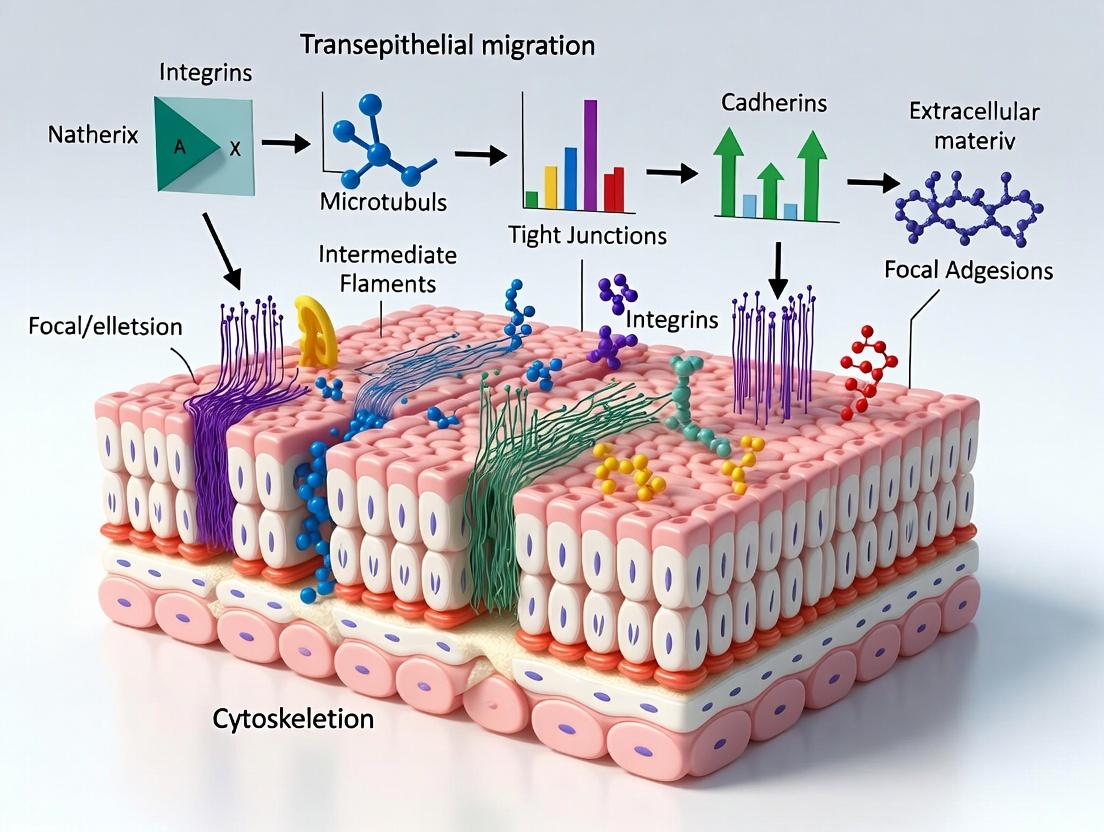
This comprehensive review examines the dynamic cytoskeletal remodeling that drives immune cell transepithelial/transendothelial migration (TEM) within physiologically relevant 3D tissue models.
Decoding the Cytoskeletal Symphony: Real-Time Analysis of Immune Cell Transmigration in Advanced 3D Tissue Models
Abstract
This comprehensive review examines the dynamic cytoskeletal remodeling that drives immune cell transepithelial/transendothelial migration (TEM) within physiologically relevant 3D tissue models. Targeting researchers, scientists, and drug development professionals, the article explores the foundational biology of actin and microtubule reorganization during TEM, details cutting-edge methodologies for creating and imaging 3D models (e.g., organoids, spheroids, and microfluidic organ-on-a-chip systems), provides troubleshooting guidance for common experimental challenges, and validates these models against traditional 2D systems and in vivo data. We synthesize how these advanced models are revolutionizing the study of inflammation, cancer metastasis, and autoimmune disease, offering superior platforms for therapeutic discovery and mechanistic insight.
The Cellular Engine of Migration: Understanding Cytoskeletal Dynamics in 3D Microenvironments
Application Notes on TEM in 3D Tissue Models
Transepithelial/Transendothelial Migration (TEM) is the process by which immune cells, such as leukocytes, cross the barriers formed by epithelial or endothelial cell layers. This is a critical step in immune surveillance, inflammation, and cancer metastasis. In the context of 3D tissue model research, studying TEM provides insights into cytoskeletal rearrangements in both the migrating cell and the barrier cells, offering a more physiologically relevant platform than traditional 2D cultures.
Key Quantitative Insights from Recent Studies (2023-2024):
Table 1: Summary of Key Quantitative Findings in TEM Research Using 3D Models
| Parameter Studied | Model System | Key Finding | Reference (Type) |
|---|---|---|---|
| Neutrophil TEM Rate | Primary human lung microvascular ECs under flow | ~25% of adhered neutrophils completed TEM within 10 min. | Lee et al., 2023 (Journal) |
| T-cell TEM Efficiency | Gut organoid-derived epithelial monolayers | CAR-T cells showed 40% higher TEM efficiency compared to non-activated T-cells. | Smith et al., 2024 (Preprint) |
| Cytoskeletal Remodeling Time | MDCK epithelial monolayer (3D confocal) | Peak actin ring formation in epithelium occurred 5-7 min post-leukocyte adhesion. | Brodbeck et al., 2023 (Journal) |
| Effect of Chemokine Gradient | Synthetic hydrogel-based endothelial tube | Optimal CXCL12 gradient of 10 ng/mL/mm increased TEM by 3.2-fold. | Vargas et al., 2024 (Journal) |
| Metastatic Cell TEM | Mammary epithelial acini (3D) | Inhibition of ROCK reduced TEM of metastatic cells by 70%, altering actomyosin contractility. | Chen & Almeida, 2023 (Journal) |
The Scientist's Toolkit: Core Reagents for 3D TEM Assays
Table 2: Essential Research Reagent Solutions for TEM Studies
| Reagent/Material | Function/Application | Example Product/Catalog |
|---|---|---|
| Transwell Inserts (Collagen-coated) | Provides a physical membrane to form a confluent epithelial/endothelial barrier for quantifiable TEM assays. | Corning, 0.4μm pore, collagen IV-coated. |
| Recombinant Human Chemokines (e.g., CXCL12, CCL19) | Establishes a chemotactic gradient to directionally stimulate leukocyte migration. | PeproTech, carrier-free, >97% purity. |
| Fluorescent Cell Linker Kits (e.g., PKH67, CellTrace) | For stable, non-transferable labeling of either the immune cells or the barrier cells for live-cell tracking. | Thermo Fisher Scientific, CellTrace Violet. |
| Phalloidin Conjugates (e.g., Alexa Fluor 488-Phalloidin) | High-affinity staining of F-actin to visualize cytoskeletal changes in fixed samples. | Cytoskeleton, Inc., Alexa Fluor 488 Phalloidin. |
| Live-Cell Imaging Matrigel | Basement membrane extract for establishing 3D organotypic or endothelial tube models. | Corning, Growth Factor Reduced. |
| ROCK Inhibitor (Y-27632) | Investigates the role of actomyosin contractility in TEM by inhibiting Rho-associated kinase. | Tocris Bioscience, Y-27632 dihydrochloride. |
| Anti-ICAM-1 / Anti-VE-Cadherin Functional Antibodies | Blocks specific adhesion/junctional molecules to interrogate their role in the TEM process. | Bio-Techne, functional grade blocking antibodies. |
| Electric Cell-substrate Impedance Sensing (ECIS) Arrays | Real-time, label-free measurement of barrier integrity and cell migration. | Applied BioPhysics, 8W10E+ arrays. |
Detailed Experimental Protocols
Protocol 1: Quantitative TEM Assay Using a 3D Endothelial Tube Model
Objective: To measure lymphocyte TEM through endothelial tubes formed in a collagen gel.
Materials:
- HUVECs (Human Umbilical Vein Endothelial Cells)
- Primary human CD4+ T-cells
- Collagen I, rat tail (High Concentration)
- Endothelial Growth Medium (EGM-2)
- RPMI-1640 + 10% FBS
- Recombinant human CCL21
- 24-well plate, µ-Slide Angiogenesis (ibidi)
Method:
- Prepare the 3D Endothelial Tube Network:
- Neutralize collagen I solution on ice according to manufacturer's instructions.
- Seed HUVECs at 1.0 x 10^4 cells/mL in the neutralized collagen mix.
- Pipet 100 µL of the cell-collagen mix into each channel of the µ-Slide. Polymerize at 37°C for 30 min.
- Add EGM-2 to the reservoirs. Culture for 3-5 days, changing media every 2 days, until a stable tubular network forms.
Establish Chemokine Gradient & Add Lymphocytes:
- Aspirate medium from one reservoir. Replace with RPMI containing 200 ng/mL CCL21. Add control medium without chemokine to the opposite reservoir.
- Isolate CD4+ T-cells from PBMCs using magnetic beads. Label with CellTrace Violet for 20 min.
- Resuspend labeled T-cells at 5.0 x 10^5 cells/mL in migration medium (RPMI + 0.5% BSA).
- Carefully add 50 µL of the T-cell suspension directly onto the gel containing the endothelial network.
Live-Cell Imaging and Quantification:
- Place the slide in a pre-warmed (37°C, 5% CO2) live-cell imaging chamber.
- Acquire z-stacks (10 µm steps) every 5 minutes for 2 hours using a 10x objective.
- Analysis: Use Imaris or FIJI software. Track individual fluorescent T-cells. A "TEM event" is defined as a cell that is (a) adherent to the tube, then (b) moves through the endothelial layer, and (c) is located fully beneath the tube structure in 3D reconstruction.
- Calculate TEM Efficiency as: (Number of cells that completed TEM / Total number of cells adherent at t=0) x 100%.
Protocol 2: Visualizing Cytoskeletal Dynamics During TEM in an Epithelial Monolayer
Objective: To fix and stain for F-actin and junctional proteins at precise stages of neutrophil TEM.
Materials:
- MDCK II epithelial cells
- Human peripheral blood neutrophils
- Transwell insert (3.0 µm pore, polyester)
- Anti-ZO-1 antibody, Alexa Fluor 647 conjugate
- Alexa Fluor 568-Phalloidin
- Hoechst 33342
- Paraformaldehyde (4% in PBS)
- Permeabilization buffer (0.1% Triton X-100 in PBS)
Method:
- Form a Confluent, Differentiated Epithelial Barrier:
- Seed MDCK II cells on the Transwell insert at confluent density (2.5 x 10^5 cells/cm²).
- Culture for 3-4 days to allow full differentiation and tight junction formation. Monitor Transepithelial Electrical Resistance (TEER) until stable (>1000 Ω·cm²).
Initiate Synchronized TEM:
- Isolate neutrophils using a density gradient centrifugation kit.
- Add neutrophils (1.0 x 10^5 cells) to the apical chamber of the Transwell.
- Centrifuge the plate at 200 x g for 2 minutes to synchronize contact of neutrophils with the monolayer.
- Incubate at 37°C for specific time points (e.g., 5, 10, 20, 40 min).
Fixation and Staining for High-Resolution Confocal Microscopy:
- At each time point, quickly aspirate medium and fix cells with 4% PAF for 15 min at room temp.
- Permeabilize with 0.1% Triton X-100 for 10 min.
- Block with 3% BSA in PBS for 1 hour.
- Stain: Incubate with anti-ZO-1-AF647 (1:100) and AF568-Phalloidin (1:200) in blocking buffer for 2 hours at RT.
- Wash 3x with PBS, counterstain nuclei with Hoechst (1 µg/mL) for 10 min.
- Carefully cut the membrane from the insert and mount on a slide.
Image Analysis:
- Acquire high-resolution z-stacks (0.3 µm steps) using a 63x oil objective.
- Key Metrics: Measure the diameter of the F-actin ring formed in the epithelial cells around the transmigrating neutrophil. Quantify the local displacement or intensity loss of ZO-1 signal at the site of TEM.
Signaling Pathway and Workflow Visualizations
Diagram 1: Core Signaling in Leukocyte TEM (100 chars)
Diagram 2: 3D TEM Experimental Workflow (100 chars)
Diagram 3: Cytoskeletal Dynamics During TEM (100 chars)
Application Notes
In the context of 3D tissue model research on transepithelial migration (TEM), the coordinated remodeling of the cytoskeleton is fundamental. This process, critical for immune surveillance, cancer metastasis, and wound healing, involves a choreographed interplay between actin, myosin, microtubules, and intermediate filaments. The following notes synthesize current findings on their roles during TEM.
Actin & Myosin: Drive the protrusive and contractile forces required for migration. In TEM, actin forms the leading edge protrusions (lamellipodia, filopodia) that probe and engage the epithelial junctional complex. Non-muscle myosin II (NMII) generates the actomyosin contractility necessary for the "squeezing" phase through the epithelial barrier. Rho/ROCK signaling is a primary regulator of this contractility. Recent quantitative studies in 3D collagen-embedded epithelial models show that inhibiting NMII reduces TEM efficiency by >70%.
Microtubules: Serve as directional guides and trafficking highways. They stabilize persistent migration paths and deliver vesicles containing proteases (e.g., MMPs) or junctional regulators (e.g., cadherin fragments) to the cell's front and rear. Dynamic microtubules are crucial for post-translocation nuclear reformation and the resolution of the uropod. In T-cells, targeted disassembly of microtubules at the contact site with endothelial cells facilitates pore formation.
Intermediate Filaments (IFs): Primarily vimentin in mesenchymal cells or keratins in epithelial cells, provide mechanical resilience and integrate signaling. Vimentin networks undergo phosphorylation and reorganization during TEM, facilitating large-scale cellular deformation without rupture. In 3D models, vimentin-null cells show a 40% increase in nuclear deformation and a higher incidence of DNA damage during transmigration, highlighting a protective role.
Integrated Crosstalk: Successful TEM requires crosstalk: Microtubules target GEFs to locally activate RhoA at the uropod, reinforcing actomyosin contraction. IFs can sequester kinases like ROCK, modulating local actomyosin activity. The table below summarizes key quantitative relationships.
Table 1: Quantitative Cytoskeletal Dynamics in 3D TEM Models
| Cytoskeletal Component | Key Measurable Parameter | Typical Value/Range in TEM | Experimental Model (Example) | Functional Impact if Perturbed |
|---|---|---|---|---|
| Actin Polymerization | Rate at leading edge | 1-2 µm/min | T-cell through MDCK monolayer | ~80% reduction in protrusion stability with Latrunculin-A |
| Myosin II Contractility | Phosphorylation (S19 RLC) | 3-5 fold increase at uropod | PMN in collagen-embedded HUVEC | Blebbistatin reduces TEM efficiency by 70-75% |
| Microtubule Dynamics | Catastrophe Frequency | Increase by 50% at contact site | Melanoma cell on endothelial layer | Nocodazole treatment halts post-translocation nuclear reshaping |
| Vimentin IF Reorganization | Phosphorylation (S71) | 2-fold increase during squeezing | Fibroblast in matrigel/transepithelial model | Vim-/- cells show 40% higher nuclear strain & 25% more DNA damage |
| Integrated Force | Traction stress at uropod | 50-100 Pa | Dendritic cell in 3D intestinal organoid | Combined actin/MT disruption reduces force by >90% |
Experimental Protocols
Protocol 1: Measuring Actomyosin Contractility During TEM in a 3D Co-culture Model
Aim: To quantify NMII activity and spatial localization during leukocyte transmigration. Materials: (See Scientist's Toolkit below) Workflow:
- Model Setup: Seed GFP-actin expressing HL-60 cells (differentiated) in a collagen I matrix (2.5 mg/mL) above a confluent, stained (CellMask Deep Red) MDCK epithelial monolayer on a transwell insert (3.0 µm pore).
- Induction: Place chemokine (e.g., fMLP, 100 nM) in the lower chamber. Allow migration for 45-90 min.
- Fixation & Staining: At timed intervals, fix with 4% PFA for 15 min. Permeabilize (0.1% Triton X-100), block (5% BSA), and immunostain for phosphorylated myosin light chain 2 (p-MLC2 S19) using a specific Alexa Fluor 568-conjugated antibody.
- Imaging & Analysis: Acquire 3D z-stacks using confocal microscopy. Quantify p-MLC2 fluorescence intensity specifically at the uropod region vs. cell body using segmentation software (e.g., Imaris, Fiji). Normalize intensity to background. Compare between cells in the act of transmigration vs. those migrating in matrix only.
Protocol 2: Assessing Microtubule Role in Nuclear Deformation During TEM
Aim: To determine the requirement of dynamic microtubules for nuclear transit through the epithelial pore. Materials: (See Scientist's Toolkit below) Workflow:
- Cell Preparation: Transfect primary neutrophils or dHL-60 cells with a H2B-mCherry (nuclear label) and EB3-GFP (microtubule plus-end binding protein) using nucleofection.
- Live-Cell Imaging Setup: Use a spinning-disk confocal system equipped with an environmental chamber (37°C, 5% CO2). Employ a 3D model of a endothelial monolayer (e.g., HUVEC) expressing LifeAct-iRFP to label junctions, cultured on a thin layer of Matrigel.
- Pharmacological Manipulation: Treat one group with 100 nM nocodazole 10 minutes prior to imaging to induce microtubule depolymerization. Use a DMSO vehicle control.
- Image Acquisition & Quantification: Capture time-lapse images every 30 seconds for 60 minutes. Track individual transmigrating cells. Measure: a) Time from initial junction engagement to complete nuclear passage, b) Nuclear aspect ratio (major axis/minor axis) at its maximum deformation point, c) EB3 comet dynamics (speed, track length) at the perinuclear region.
Mandatory Visualization
The Scientist's Toolkit
| Research Reagent / Material | Function in TEM Cytoskeletal Research |
|---|---|
| Collagen I, High Concentration (rat tail) | Forms a physiological 3D extracellular matrix for embedding immune or cancer cells, providing a migratory barrier that mimics tissue density. |
| Transwell Inserts (3.0 µm or 5.0 µm pore) | Standardized platform for establishing a confluent epithelial/endothelial monolayer, allowing quantification of transmigration efficiency. |
| Blebbistatin (myosin II inhibitor) | Selective, reversible inhibitor of non-muscle myosin II ATPase activity. Used to dissect the role of contractility in the squeezing phase of TEM. |
| Nocodazole (microtubule depolymerizer) | Rapidly depolymerizes microtubules. Used to probe the role of microtubule dynamics in nuclear deformation and vesicular trafficking during TEM. |
| SiR-Actin / SiR-Tubulin (Cytoskeleton Live-Cell Dyes) | Far-red fluorescent, cell-permeable probes for long-term, low-phototoxicity live imaging of actin and microtubule dynamics in 3D models. |
| Phospho-specific Antibodies (e.g., p-MLC2 S19, p-Vimentin S71) | Critical tools for mapping the activation state of cytoskeletal regulators via immunofluorescence, providing spatial and mechanistic insight. |
| H2B-Fluorescent Protein Constructs | Labels the nucleus for precise measurement of nuclear deformation, strain, and timing during the constrictive phase of TEM. |
| Spinning-Disk Confocal Microscope with 3D Live-Cell Imaging Chamber | Essential for high-speed, low-photobleaching acquisition of 3D z-stacks over time to capture rapid cytoskeletal remodeling events. |
Application Notes
The study of cell migration has been historically dominated by two-dimensional (2D) monolayer models. However, the translation of findings from these simplified systems to in vivo physiology or pathology has been limited. This gap is addressed by three-dimensional (3D) tissue models, which recapitulate the spatial architecture, cell-cell adhesions, and extracellular matrix (ECM) interactions of native tissues. Within the context of transepithelial/transendothelial migration (TEM)—a critical process in immune response and cancer metastasis—the shift from 2D to 3D fundamentally rewires cytoskeletal dynamics, mechanotransduction pathways, and resultant migration modes.
Key Mechanistic Shifts:
- Cytoskeletal Engagement: In 2D, migration is primarily driven by actin-rich lamellipodia and large, stable focal adhesions. In 3D matrices or tissues, cells often utilize blunt, actin-rich protrusions and adopt amoeboid-like or mesenchymal modes dependent on matrix porosity and contractility. Adhesions are smaller, more dynamic, and often fibrillar in nature.
- Force Generation and Polarity: 2D confinement allows for symmetric, broad force application against a rigid substrate. 3D architecture necessitates asymmetric, apico-basal or radial force generation for squeezing through matrix pores or breaching endothelial barriers, involving not only actomyosin but also microtubules and intermediate filaments.
- Signaling Integration: Spatial cues from the 3D ECM (e.g., stiffness, topography, ligand density) are integrated with chemical signals (chemokines) through receptors like integrins, leading to spatially constrained activation of Rho GTPases (RhoA, Rac1, Cdc42), which is more localized and transient compared to 2D.
- Barrier Function: TEM in 3D models requires active, reversible disruption of apical junctional complexes (e.g., VE-cadherin in endothelium) and remodeling of the basement membrane, processes that are poorly modeled in 2D.
The following data, protocols, and tools provide a framework for investigating these spatial mechanobiological changes.
Table 1: Comparative Metrics of Cell Migration in 2D vs. 3D Environments
| Parameter | 2D Migration (on rigid plastic/glass) | 3D Migration (in collagen/Matrigel or tissue model) | Implication for TEM Research |
|---|---|---|---|
| Migration Speed | Typically faster (e.g., 0.5-1.5 µm/min for leukocytes). | Generally slower (e.g., 0.1-0.5 µm/min), but context-dependent on matrix density. | Suggests barrier penetration is a rate-limiting step not captured in 2D. |
| Migration Mode | Predominantly mesenchymal, with sustained lamellipodia. | Plastic: Can switch between mesenchymal, amoeboid, and lobopodial. | Indicates cytoskeletal plasticity is essential for navigating 3D tissue. |
| Adhesion Size & Lifetime | Large, stable focal adhesions (>5 µm², minutes-hours). | Small, short-lived, fibrillar adhesions (<1 µm², seconds-minutes). | Reflects adaptive sensing of 3D ECM geometry rather than stable anchoring. |
| Nuclear Deformation | Minimal. | Significant; nucleus can become a limiting factor for pore entry. | Highlights role of nuclear stiffness and linker of nucleoskeleton and cytoskeleton (LINC) complex in 3D TEM. |
| Protrusion Type | Broad, flat lamellipodia. | Filopodial, cylindrical, or bleb-like protrusions. | Demonstrates different actin nucleation (ARP2/3 vs. formins) requirements. |
| Rho GTPase Activity | Sustained, broad zones of Rac1 (front) and RhoA (rear) activity. | Highly localized, pulsatile activity patterns; context-dependent dominance. | Suggests precise spatiotemporal control is needed for pathfinding in 3D. |
Table 2: Key Molecular Changes During TEM in 3D Models
| Molecular Target | Role in 2D Migration | Observed Change in 3D TEM Context (e.g., Cancer/Immune Cell) | Functional Consequence |
|---|---|---|---|
| β1 Integrin | Critical for adhesion and traction. | Expression/activity often downregulated for amoeboid transition; required for mesenchymal migration. | Migratory mode dictates integrin dependency. |
| ROCK/Myosin II | Generates rear contractility. | Essential for both mesenchymal contractility and amoeboid squeezing; inhibition blocks TEM. | Central regulator of force in 3D regardless of mode. |
| MT1-MMP | Localized to focal adhesions. | Enriched at invasive front, crucial for ECM remodeling and creating migration paths. | Enables protease-dependent migration in dense 3D matrices. |
| VE-Cadherin | Static barrier marker in 2D monolayers. | Dynamic phosphorylation, internalization, and recycling at site of TEM. | Active, localized junctional remodeling is required for diapedesis. |
Experimental Protocols
Protocol 1: Setup of a 3D Transepithelial Migration Assay Using a Collagen Gel Sandwich
Objective: To create a physiologically relevant 3D model for studying immune or cancer cell migration through an endothelial/epithelial barrier into a stromal matrix. Materials: Human Umbilical Vein Endothelial Cells (HUVECs), Type I Collagen (rat tail), migration chamber (e.g., µ-Slide, Ibidi), chemoattractant (e.g., SDF-1α), fluorescently labeled migratory cells (e.g., T-cells or cancer cells).
Prepare Collagen-Matrix Coated Chamber:
- Neutralize high-concentration Type I collagen on ice with 0.1M NaOH and 10X PBS according to manufacturer's instructions to a final concentration of 2.0 mg/mL.
- Pipette 20 µL of neutralized collagen into each well of the migration chamber. Spread evenly to coat the bottom.
- Incubate at 37°C, 5% CO₂ for 1 hour to allow gelation. Do not let it dry out.
Seed Endothelial Monolayer:
- Trypsinize and resuspend HUVECs in complete endothelial growth medium.
- Seed HUVECs onto the polymerized collagen gel at a high density (e.g., 100,000 cells/cm²).
- Culture for 48-72 hours, changing medium daily, until a confluent, contact-inhibited monolayer is formed. Confirm confluence via microscopy.
Add 3D Stromal Matrix Overlay:
- Prepare a second batch of neutralized collagen (1.5 mg/mL). Keep on ice.
- Gently aspirate medium from the HUVEC monolayer.
- Carefully overlay 30 µL of the neutralized collagen solution onto the monolayer. Avoid creating bubbles.
- Return to incubator for 45-60 minutes for complete gelation, creating a "sandwich" (Collagen | HUVECs | Collagen).
Induce Migration:
- Prepare a chemoattractant solution (e.g., 100 ng/mL SDF-1α) in appropriate medium.
- Add the chemoattractant medium to the top chamber (above the second collagen layer).
- Label your migratory cells (e.g., Calcein-AM) and resuspend in basal medium without chemoattractant.
- Add the migratory cell suspension to the bottom chamber (below the initial collagen layer).
- Incubate at 37°C, 5% CO₂.
Image and Quantify:
- Using a confocal microscope with a live-cell environmental chamber, acquire Z-stacks every 15-30 minutes for 12-24 hours.
- Quantify: (a) TEM Efficiency: % of added cells that fully traverse the HUVEC layer. (b) Migration Speed in 3D: Track cell centroid movement within the top collagen gel. (c) Cytoskeletal Morphology: Fix at endpoint and stain for F-actin (Phalloidin) and nuclei (DAPI) to assess protrusion types.
Protocol 2: Analyzing Cytoskeletal and Adhesion Dynamics via FRET Biosensors in 3D
Objective: To visualize spatiotemporal activity of Rho GTPases or kinase activity during TEM in a 3D model. Materials: Migratory cells stably expressing FRET biosensor (e.g., Raichu-Rac1, RhoA), 3D TEM model (from Protocol 1), confocal microscope with FRET capabilities.
Cell Preparation:
- Establish a stable line of your migratory cell type expressing the desired FRET biosensor using lentiviral transduction and selection.
- Validate biosensor functionality via positive/negative control stimuli in 2D (e.g., EGF for Rac1).
Live-Cell Imaging Setup:
- Set up the 3D TEM assay (Protocol 1, steps 1-4) using the biosensor-expressing cells.
- Mount the chamber on a confocal microscope with temperature/CO₂ control.
- Configure acquisition for FRET: You will need channels for CFP (donor), YFP (acceptor), and a FRET (sensitized emission) channel. Use a 458 nm laser for CFP excitation.
Image Acquisition:
- Focus on the plane of the endothelial monolayer and the adjacent 3D matrix.
- Acquire time-lapse images (e.g., every 2-5 minutes) with minimal laser power to avoid phototoxicity and bleaching.
- Capture cells as they approach, engage with, and cross the endothelial barrier.
FRET Ratio Image Processing & Analysis:
- Using image analysis software (e.g., ImageJ/Fiji with a FRET plugin, or commercial software):
- Perform background subtraction for all channels.
- Correct for bleed-through (cross-talk) of CFP emission into the FRET channel and direct excitation of YFP by the 458 nm laser.
- Calculate the FRET ratio (YFP emission / CFP emission) on a pixel-by-pixel basis to generate ratio images.
- Use the ratio as a proxy for GTPase activity.
- Quantify activity dynamics: Measure mean FRET ratio in specific cellular regions (leading edge, trailing edge, perinuclear) over time, correlating with migratory behavior (protrusion, adhesion, contraction).
- Using image analysis software (e.g., ImageJ/Fiji with a FRET plugin, or commercial software):
Visualization: Diagrams and Pathways
Title: Signaling Network Driving 3D TEM and Cytoskeletal Changes
Title: Experimental Workflow for 3D Transepithelial Migration Assay
The Scientist's Toolkit: Key Research Reagent Solutions
Table 3: Essential Materials for 3D TEM and Cytoskeletal Research
| Item | Function & Application in 3D TEM Research | Example Product/Supplier |
|---|---|---|
| Type I Collagen, High Concentration | The major protein of interstitial ECM. Used to create tunable, biologically active 3D matrices for modeling the stromal compartment. | Corning Rat Tail Collagen, Type I (Corning) |
| Growth Factor-Reduced Matrigel | Basement membrane extract. Provides a more complex, in vivo-like matrix rich in laminin and growth factors for epithelial/endhelial co-culture models. | Corning Matrigel Matrix (Corning) |
| µ-Slide Chemotaxis or Angiogenesis | Specialized microscopy chambers with defined geometry for establishing stable chemokine gradients and imaging 3D cell migration. | µ-Slide Chemotaxis (Ibidi GmbH) |
| Live-Cell Fluorescent Dyes (e.g., Calcein-AM) | Vital dyes for non-invasively labeling migratory or target cells for tracking and quantification in live 3D assays. | CellTracker Dyes (Thermo Fisher) |
| FRET-Based Biosensor Constructs | Genetically encoded tools (e.g., Raichu, GEVAL) to visualize spatiotemporal activity of Rho GTPases, kinases, or second messengers during 3D migration. | Addgene (non-profit repository) |
| Inhibitors: ROCK (Y-27632), Myosin II (Blebbistatin) | Pharmacological tools to dissect the role of specific cytoskeletal regulators (contractility) in 3D TEM and migration mode switching. | Available from major chemical suppliers (e.g., Tocris, Sigma) |
| Phalloidin Conjugates (e.g., Alexa Fluor 488) | High-affinity actin filament stain. Essential for endpoint analysis of cytoskeletal architecture and protrusion morphology in fixed 3D samples. | Available from multiple immunofluorescence reagent suppliers. |
| Confocal-Compatible Live-Cell Imaging Medium | Phenol-red-free, HEPES-buffered medium that maintains pH outside a CO₂ incubator, essential for long-term live imaging of 3D models. | FluoroBrite DMEM (Thermo Fisher) |
Application Notes
Within the broader thesis on 3D tissue model transepithelial migration (TEM), understanding the phase-specific cytoskeletal remodeling of migrating cells is paramount. This process is dissected into three sequential, biophysically distinct phases: 1) Initial Adhesion to the basement membrane or matrix, 2) Spreading and Polarization to gain traction and define directionality, and 3) Pore Transit through tight epithelial junctions or dense 3D matrices. Each phase is characterized by specific actin architectures, regulatory GTPase activity, and mechanosensitive signaling, all of which are potential targets for modulating pathological migration in cancer metastasis or immune cell dysregulation.
Recent live-search findings highlight the critical role of nuclear-cytoskeletal coupling and actin cortex plasticity during the pore transit phase. In confined 3D environments, cells utilize a pressure-driven, actin-polymerization independent mode of migration involving Osmotic Engine dynamics and ARP2/3-mediated actin shell formation around the nucleus to facilitate nuclear deformation. Furthermore, the Diaphanous-Related Formin (mDia1/DRF1) is identified as a key nucleator for stable microtubule alignment along the migration axis during spreading, coordinating focal adhesion (FA) turnover.
Table 1: GTPase Activity & Cytoskeletal Protein Dynamics Across Migration Phases
| Phase | Dominant GTPase | Key Actin Structure | Average FA Size (µm²) | Characteristic Velocity (µm/min) | Primary Nucleator |
|---|---|---|---|---|---|
| Adhesion | RhoA (early spike) | Transient puncta, filopodia | 0.2 - 0.5 | < 0.5 | ARP2/3 (branched), Formins (linear) |
| Spreading | Rac1, Cdc42 | Lamellipodia, peripheral bundles | 0.5 - 2.0 | 1.0 - 2.5 | ARP2/3 (lamellipodia), Formins (bundles) |
| Pore Transit | RhoA (sustained), low Rac1 | Actomyosin cortex, stress fibers | < 0.3 (small, clutch-like) | 0.2 - 1.0 (matrix-dependent) | mDia1/DRF1, Myosin II contractility |
Table 2: Key Reagents for Modulating Phase-Specific Cytoskeletal Dynamics
| Reagent Name | Target/Function | Used to Study Phase | Typical Working Concentration |
|---|---|---|---|
| CK-666 | ARP2/3 complex inhibitor (blocks branching) | Adhesion, Spreading | 50 - 100 µM |
| SMIFH2 | Formin inhibitor (blocks linear elongation) | All phases, especially Spreading | 10 - 25 µM |
| Y-27632 | ROCK inhibitor (reduces myosin contractility) | Spreading, Pore Transit | 5 - 20 µM |
| NSC23766 | Rac1 GTPase inhibitor | Spreading | 50 - 100 µM |
| ML-7 | Myosin Light Chain Kinase (MLCK) inhibitor | Pore Transit, Contraction | 5 - 20 µM |
| Jasplakinolide | Actin stabilizer (polymerizes/binds F-actin) | All phases (cautiously) | 100 nM - 1 µM |
| Latrunculin A | Actin depolymerizer (binds G-actin) | All phases (control) | 100 nM - 1 µM |
Protocols
Protocol 1: Quantifying Phase-Specific Actin Architecture in 3D Collagen Matrices
Objective: To fix and stain cells during distinct migration phases within a 3D collagen I matrix for high-resolution confocal microscopy of the cytoskeleton.
Materials:
- Acid-soluble Collagen I, high concentration (e.g., rat tail, ~8-10 mg/mL)
- Live-cell imaging chamber (e.g., µ-Slide 8 Well)
- Fluorescent phalloidin (e.g., Alexa Fluor 488, 568, or 647 conjugate)
- Permeabilization buffer (0.5% Triton X-100 in PBS)
- Fixative (4% Paraformaldehyde (PFA) in PBS, freshly prepared or aliquoted)
- Blocking buffer (3% BSA, 0.1% Triton X-100 in PBS)
- DAPI or Hoechst nuclear stain
Method:
- 3D Cell Embedding: Neutralize collagen I on ice according to manufacturer's protocol. Mix with cell suspension (e.g., MDA-MB-231 for cancer TEM, or T-cells for immune TEM) to a final density of 1-2x10^5 cells/mL and collagen concentration of 2.5 mg/mL. Quickly pipet 50-100 µL into each well of the imaging chamber. Polymerize at 37°C, 5% CO2 for 30 min.
- Phase-Specific Fixation: Add complete media atop the gel. For Adhesion Phase, fix at 15-30 min post-embedding. For Spreading Phase, fix at 2-4 hours. For Pore Transit, allow cells to migrate towards a chemokine gradient for 6-12 hours before fixation.
- Fixation & Permeabilization: Aspirate media. Gently add 200 µL of 4% PFA to each well. Incubate for 20 min at RT. Wash 3x with PBS. Add permeabilization buffer for 10 min.
- Staining: Incubate with blocking buffer for 1 hour. Add fluorescent phalloidin (1:200-1:500) and DAPI (1:1000) in blocking buffer overnight at 4°C.
- Imaging: Wash 3x with PBS. Image using a 63x/1.4 NA oil immersion objective on a confocal microscope. Acquire z-stacks (0.3 µm steps) for 3D reconstruction of actin networks.
Protocol 2: FRET-Based Live-Cell GTPase Activity Mapping During Pore Transit
Objective: To visualize spatiotemporal activation of RhoA, Rac1, and Cdc42 during confined migration using 3D FRET biosensors.
Materials:
- Lentiviral constructs for Raichu- or GEF-based FRET biosensors (e.g., Raichu-RhoA, Raichu-Rac1).
- Polybrene (8 µg/mL) for transduction.
- Phenol-red free imaging media, supplemented with 10% FBS and 25mM HEPES.
- Live-cell spinning disk or two-photon microscope with environmental chamber (37°C, 5% CO2).
- CFP/YFP filter sets.
Method:
- Cell Preparation: Stably transduce your cell line of interest (e.g., HT-1080 fibrosarcoma) with the FRET biosensor using lentivirus and polybrene. Select with appropriate antibiotics for 1 week.
- 3D Confinement Setup: Embed FRET-sensor cells in a dense 3D matrix (e.g., 4 mg/mL collagen I or Matrigel with 3 µm pore-size inserts) within a glass-bottom dish.
- Image Acquisition: Equilibrate dish in the microscope environmental chamber for 1 hour. Identify cells initiating pore transit. Acquire simultaneous CFP and FRET (YFP) channel images every 30-60 seconds for 30-60 minutes using minimal laser power to reduce phototoxicity.
- FRET Ratio Analysis: Use ImageJ/Fiji with a custom macro to generate a ratio image (FRET channel / CFP channel) for each time point. Apply a threshold to remove background. Plot the average FRET ratio within the cell body or leading edge versus time to correlate GTPase activity bursts with morphological changes.
Protocol 3: Traction Force Microscopy (TFM) During the Spreading Phase in 3D
Objective: To measure the magnitude and direction of forces exerted by a cell during the spreading and polarization phase within a 3D fibrin gel.
Materials:
- Fluorescent carboxylated microbeads (0.5 µm diameter, red fluorescent).
- Fibrinogen and Thrombin solutions.
- PDMS micropillar arrays (optional, for 2.5D TFM).
- Traction force reconstruction software (e.g., MATLAB-based TFM packages).
Method:
- Gel Preparation: Mix fibrinogen solution with fluorescent beads at a density where beads are non-overlapping in confocal slices. Add cell suspension. Initiate polymerization by adding thrombin and quickly transferring to an imaging dish. Final gel modulus should be ~1 kPa.
- Reference & Deformed Image Acquisition: Allow cells to spread for 2-3 hours. Acquire a high-resolution z-stack of the beads around a spreading cell ("deformed state"). Gently lyse the cell using a hypotonic solution or detergent to fully relax the gel. Acquire the same z-stack ("reference state").
- Displacement Field Calculation: Use particle image velocimetry (PIV) algorithms to track the displacement of bead clusters between the reference and deformed states in 3D.
- Traction Force Calculation: Input the displacement field and the known gel elastic modulus (from rheometry) into an inverse finite element method (FEM) solver to calculate the 3D traction stress vectors exerted by the cell on its surroundings.
The Scientist's Toolkit: Research Reagent Solutions
Table 3: Essential Materials for 3D Migration Cytoskeletal Research
| Item | Function/Application | Example Product/Catalog |
|---|---|---|
| Geltrex / Growth Factor Reduced Matrigel | Basement membrane-mimetic 3D matrix for studying invasion and pore transit through physiologically relevant barriers. | Thermo Fisher Scientific, A1413202 |
| Collagen I, High Concentration | Tunable 3D matrix for studying migration in stromal-like environments. Allows control over stiffness and pore size. | Corning, 354249 |
| Oregon Green 488 / SiR-Actin Kits | Live-cell, cell-permeable actin probes for dynamic imaging of cytoskeletal remodeling without transfection. | Cytoskeleton, Inc. (SiR-Actin) |
| ROCK (Y-27632) & MLCK (ML-7) Inhibitors | Chemically modulate actomyosin contractility to dissect its role in spreading, retraction, and nuclear transit. | Tocris Bioscience, 1254 & 4310 |
| ARP2/3 (CK-666) & Formin (SMIFH2) Inhibitors | Specifically perturb branched vs. linear actin network formation to assess their contributions to each migration phase. | MilliporeSigma, SML0006 & S4826 |
| 3D µ-Slide Chemotaxis Chamber | Generate stable, linear chemokine gradients in 3D gels for studying directed migration and polarization. | ibidi, 80306 |
| Nuclear Deformation Dye (e.g., H2B-GFP) | Transgenic or lentiviral label to visualize nuclear shape changes and coupling to the actin cytoskeleton during pore transit. | Addgene, various plasmids |
Diagrams
Title: Signaling Crosstalk in Spreading & Contraction
Title: Workflow for Phase-Specific Cytoskeletal Analysis
Application Notes
The study of Rho GTPase signaling in Three-Dimensional (3D) Transepithelial Migration (TEM) is critical for understanding cancer metastasis, immune cell trafficking, and wound healing. Traditional 2D models fail to recapitulate the complex mechanical and biochemical constraints of living tissues. Investigating Rho GTPase (RhoA, Rac1, Cdc42) dynamics and their effector pathways in 3D environments, such as collagen matrices or organotypic cultures, provides a more physiologically relevant view of cytoskeletal remodeling. Key readouts include GTPase activation localization, actomyosin contractility, adhesion complex turnover, and protrusive activity, all of which drive the coordinated cell shape changes required to breach epithelial barriers.
Quantitative Data Summary: Rho GTPase Manipulation in 3D TEM Models
Table 1: Impact of Rho GTPase Perturbation on 3D TEM Metrics
| GTPase Targeted | Intervention | 3D Migration Speed (µm/hr) | TEM Efficiency (% of Input Cells) | Key Cytoskeletal Phenotype | Primary Assay |
|---|---|---|---|---|---|
| RhoA | Inhibition (Rho Inhibitor I, C3) | Decrease (from ~15 to ~5) | Decrease (from ~40% to ~10%) | Loss of trailing edge retraction, reduced contractility | 3D Collagen Invasion |
| Rac1 | Inhibition (NSC23766) | Decrease (from ~15 to ~7) | Decrease (from ~40% to ~15%) | Loss of lamellipodia, defective leading edge | Spheroid Invasion |
| Cdc42 | Inhibition (ML141) | Decrease (from ~15 to ~10) | Decrease (from ~40% to ~20%) | Loss of filopodia, misoriented polarity | Organotypic Co-culture |
| Rac1 | Constitutive Activation (G12V) | Increase (from ~15 to ~25) | Increase (from ~40% to ~60%) | Excessive, disorganized protrusions | 3D Matrigel Invasion |
| RhoA & ROCK | Inhibition (Y-27632) | Variable/Context Dependent | Variable/Context Dependent | Abolished stress fibers, rounded morphology | 3D Collagen Contraction |
Experimental Protocols
Protocol 1: Monitoring Rho GTPase Activation in a 3D Organotypic TEM Model Objective: To spatially quantify active GTP-RhoA, GTP-Rac1, and GTP-Cdc42 during TEM using FRET-based biosensors. Materials: MDCK or MCF10A epithelial monolayer, fluorescently labeled migratory cells (e.g., T lymphocytes or cancer cells), rat tail collagen I, FRET biosensor plasmids (e.g., Raichu- or GFP-based Rho-FLARE sensors), confocal microscope with environmental chamber. Procedure:
- Establish a confluent epithelial monolayer on a transwell filter.
- Embed a subpopulation of migratory cells, transfected with the Rho GTPase FRET biosensor, within a 2.5 mg/mL collagen I gel on top of the monolayer.
- Allow matrix polymerization and culture for 16-48 hours to initiate TEM.
- Acquire time-lapse Z-stacks at the monolayer plane using a confocal microscope (37°C, 5% CO₂). Capture donor (CFP/GFP) and acceptor (YFP/mCherry) emission channels.
- Calculate the FRET ratio (Acceptor/Donor) on a pixel-by-pixel basis using image analysis software (e.g., ImageJ/Fiji) to generate maps of GTPase activity.
- Correlate activity hotspots with cellular structures (leading edge, rear, cell-cell contacts).
Protocol 2: Functional Analysis via CRISPRi Knockdown of Effectors in 3D Collagen Invasion Assay Objective: To assess the role of specific effectors (e.g., ROCK, PAK, WASP) in 3D TEM through targeted protein knockdown. Materials: Migratory cell line (e.g., MDA-MB-231), lentiviral CRISPRi vectors for target effector, non-targeting guide control, rat tail collagen I, 8-well chambered coverslips, live-cell imaging system. Procedure:
- Generate stable CRISPRi knockdown cell pools for the effector of interest and a non-targeting control.
- Prepare a 3D collagen I matrix (3 mg/mL) containing suspended cells at 50,000 cells/mL. Seed 300 µL per well.
- After polymerization, add complete media on top. Culture for 24-72 hours.
- Fix, permeabilize, and stain for F-actin (phalloidin), nuclei (DAPI), and the target effector (if antibody available) for endpoint analysis.
- For live imaging, place the chamber in a temperature/CO₂-controlled stage. Capture images every 10 minutes for 24 hours.
- Quantify invasion metrics: % invasive cells, invasion depth (µm), and protrusion dynamics.
The Scientist's Toolkit: Essential Research Reagents
Table 2: Key Reagents for 3D Rho GTPase Studies
| Reagent/Solution | Function & Application |
|---|---|
| G-LISA Activation Assay Kits | Colorimetric or luminescent biochemical pull-down to quantify GTP-bound Rho, Rac, or Cdc42 from 3D lysates. |
| FRET-based Biosensors (e.g., Raichu) | Live-cell, spatially resolved imaging of GTPase activity dynamics in real time within 3D matrices. |
| Pharmacological Inhibitors (Y-27632, NSC23766, ML141) | Rapid, reversible inhibition of ROCK, Rac-GEF interaction, or Cdc42 to test acute functional requirements. |
| Rat Tail Collagen I, High Concentration | Gold-standard for generating physiological, mechanically tunable 3D hydrogel matrices for invasion assays. |
| Organotypic Culture Inserts | Enables establishment of a stratified epithelial layer for migratory cells to invade from below or above. |
| SiR-Actin or LifeAct-fluorophore constructs | Live-cell compatible, high-contrast staining of F-actin dynamics without significant toxicity. |
Pathway and Workflow Visualizations
Title: Core Rho GTPase Pathways in 3D Cell Migration
Title: 3D TEM Rho GTPase Study Workflow
Building and Probing the 3D Landscape: Techniques for Model Creation and Live-Cell Imaging
This guide provides a framework for selecting 3D tissue models specifically for research on transepithelial migration (TEM) and associated cytoskeletal changes. A core thesis in this field posits that recapitulating the physiological dimensionality, cell-cell/cell-matrix interactions, and mechanical forces of native epithelium is critical for observing TEM behaviors and cytoskeletal remodeling that are relevant in vivo. The choice of model directly impacts the mechanistic insights gained into processes like cancer metastasis, immune cell trafficking, and wound healing.
Model Comparison & Application Notes
The selection depends on research priorities: physiological complexity vs. throughput and control.
Table 1: 3D Model Comparison for TEM/Cytoskeletal Research
| Model Type | Key Characteristics | Advantages for TEM Research | Limitations for TEM Research | Primary Applications |
|---|---|---|---|---|
| Organoids | Self-organizing 3D structures from stem/progenitor cells; exhibit multiple cell types and rudimentary tissue architecture. | High physiological relevance; intrinsic polarity and basement membrane; suitable for studying stem cell-driven migration. | High heterogeneity, low throughput, long culture times (~weeks); difficult to image/access. | Modeling development, cancer stem cell invasion, genetic disease mechanisms. |
| Spheroids | Aggregated cell clusters (cancer/primary cells); limited to no stromal components unless co-cultured. | Simple generation, moderate throughput; good for studying collective cell migration and core hypoxic effects. | Often lack clear apical-basal polarity and structured matrix; limited control over microenvironment. | Pre-clinical drug screening, studies of tumor cell invasion in aggregates. |
| Collagen/Matrigel Matrices | Cells embedded or plated on top of defined (Collagen I) or complex (Matrigel) hydrogel matrices. | Tunable stiffness and composition; excellent for studying single-cell amoeboid/mesenchymal migration; enables high-resolution live imaging. | May oversimplify tissue architecture; Matrigel is biologically variable and ill-defined. | Mechanotransduction studies, analysis of protease-dependent invasion, single-cell migration dynamics. |
| Microfluidic Chips (Organs-on-Chip) | Polydimethylsiloxane (PDMS) devices with patterned microchannels for cell culture under perfused flow. | Precise control over tissue-tissue interfaces, fluid flow, and mechanical cues (e.g., shear stress). Enables real-time analysis of diapedesis. | Technically complex, low-to-moderate throughput; requires specialized equipment. | Studying vascular extravasation, immune cell TEM, barrier function under flow. |
Table 2: Quantitative Parameters for Model Selection
| Parameter | Organoids | Spheroids | Hydrogel Matrices | Microfluidic Chips |
|---|---|---|---|---|
| Typical Setup Time | 2-4 weeks | 3-7 days | 24-48 hrs | 1-2 weeks |
| Throughput (Samples/Week) | Low (10-50) | Medium-High (100-1000) | High (100-1000) | Low-Medium (10-100) |
| Cost per Sample | High | Low | Low-Medium | High |
| Amenable to High-Content Live Imaging? | Low | Medium | High | Medium |
| Control over ECM Stiffness | Very Low | Very Low | High (0.1-10 kPa) | Medium-High |
| Ability to Apply Shear Flow | No | No | Limited | Yes |
Experimental Protocols for TEM/Cytoskeletal Analysis
Protocol 3.1: Generating Spheroids for Collective Invasion Assay in Collagen I
Purpose: To study the collective migration of epithelial cells from a spheroid into a surrounding 3D matrix, mimicking early invasion. Materials: U-bottom low-attachment 96-well plate, rat tail Collagen I (high concentration), cell culture medium, NaOH, PBS, sterile neutralization buffer. Procedure:
- Harvest epithelial cells (e.g., MCF10A, carcinoma lines) and resuspend at 1x10^5 cells/mL.
- Plate 100 µL cell suspension per well in U-bottom plate. Centrifuge at 300xg for 3 min.
- Incubate 48-72h to form compact spheroids (~500µm diameter).
- Prepare collagen gel on ice: Mix 8 volumes Collagen I (4mg/mL), 1 volume 10X PBS, 1 volume NaOH to adjust pH to 7.4. Keep on ice.
- Carefully transfer one spheroid with minimal medium into 50 µL of neutralized collagen mix in a pre-chilled tube. Gently pipette into one well of a 24-well plate.
- Incubate at 37°C for 30 min to polymerize gel. Add 500 µL culture medium on top.
- Image every 12-24h using a widefield or confocal microscope. Quantify invasion area and leader cell protrusion dynamics.
- For cytoskeletal analysis: Fix at time points with 4% PFA, permeabilize with 0.5% Triton X-100, stain for F-actin (Phalloidin), and confocal image for 3D reconstruction.
Protocol 3.2: Establishing a Microfluidic Model for Leukocyte Transepithelial Migration
Purpose: To model the diapedesis of immune cells across an endothelial and epithelial barrier under physiological flow. Materials: Two-channel microfluidic device (e.g., from Emulate, Mimetas), endothelial cells (HUVEC), epithelial cells (Caco-2), immune cells (THP-1), collagen IV/fibronectin, perfusion pump. Procedure:
- Sterilize the PDMS device and activate channels with UV/plasma.
- Coat the left channel (endothelial) with collagen IV (50 µg/mL) and the right channel (epithelial) with fibronectin (25 µg/mL). Incubate 2h at 37°C.
- Seed endothelial cells (HUVEC, 2x10^6 cells/mL) into the left channel. After 4h, invert device to allow attachment to the top membrane. Culture for 2-3 days to form a confluent monolayer.
- Seed epithelial cells (Caco-2, 1x10^6 cells/mL) into the right channel. Culture for 5-7 days to allow differentiation and tight junction formation.
- Connect device to a perfusion system. Introduce medium with chemokine (e.g., CXCL12) into the epithelial channel.
- Introduce fluorescently labeled immune cells into the endothelial channel under low shear stress (0.5 dyne/cm²).
- Monitor in real-time using an inverted confocal microscope. Track immune cell adhesion, endothelial crawling, and final transmigration into the epithelial channel.
- Fix and stain for cytoskeletal markers: ZO-1 (tight junctions), VE-cadherin, and F-actin to visualize junctional remodeling and pore formation.
Visualizing Key Signaling Pathways in TEM
Diagram 1: Core Cytoskeletal Signaling in TEM
The Scientist's Toolkit: Research Reagent Solutions
Table 3: Essential Reagents for 3D TEM/Cytoskeletal Research
| Reagent/Material | Primary Function | Example (Supplier) | Notes for TEM Research |
|---|---|---|---|
| Basement Membrane Extract (Matrigel) | Complex hydrogel simulating basement membrane; supports organoid growth and 3D morphogenesis. | Corning Matrigel (Corning) | Use growth factor-reduced for migration studies. Maintain on ice to prevent polymerization. |
| Rat Tail Collagen I | Defined hydrogel for 3D cell encapsulation; tunable stiffness. | Rat Tail Collagen I, High Concentration (Corning) | Neutralize carefully for reproducible polymerization. Stiffness (~Pa-kPa) affects migration mode. |
| Y-27632 (ROCK Inhibitor) | Inhibits Rho-associated kinase (ROCK); reduces actomyosin contractility. | Y-27632 dihydrochloride (Tocris) | Critical for preventing anoikis in single cells in hydrogels. Used to dissociate organoids. |
| Phalloidin (Fluorescent Conjugate) | High-affinity stain for filamentous actin (F-actin). | Alexa Fluor 488 Phalloidin (Invitrogen) | Essential for visualizing cytoskeletal remodeling during migration. Use post-fixation. |
| Live-Cell Actin Probes | Fluorescent protein tags for real-time visualization of actin dynamics. | SiR-Actin (Cytoskeleton Inc.) or LifeAct-GFP | Enables tracking of protrusions and retractions in live models like microfluidic chips. |
| Tranwell/Microfluidic Insert | Porous membrane for establishing polarized epithelial layers and studying transmigration. | Corning Transwell (polycarbonate, 3.0µm pores) or OrganoPlate (Mimetas) | Pore size dictates migration capability. Microfluidic inserts allow application of shear stress. |
| MMP Inhibitors | Block matrix metalloproteinase activity to probe protease-dependent vs. -independent migration. | GM6001 (Ilomastat) (MilliporeSigma) | Useful in collagen gels to force switch to amoeboid migration and study cytoskeletal adaptation. |
Within the broader thesis investigating cytoskeletal rearrangements during transepithelial/transendothelial migration (TEM) in 3D tissue models, co-culture systems are indispensable. They bridge simple monolayer studies and complex in vivo environments, enabling precise dissection of cell-cell interactions, signaling cascades, and the resultant biomechanical changes that drive immune surveillance or cancer metastasis. This protocol details methodologies for establishing and analyzing such integrated in vitro barriers.
Key Research Reagent Solutions
The following table catalogs essential materials for constructing and assaying these co-culture models.
| Research Reagent / Material | Function / Explanation in Co-Culture Context |
|---|---|
| Transwell Inserts (Polycarbonate, 3.0/5.0 µm pore) | Provides a physical scaffold for polarized epithelial (e.g., Caco-2, HUVEC) barrier formation. Pore size allows immune/cancer cell transmigration. |
| Type I Collagen / Matrigel Matrix | Basement membrane mimic. Coated on inserts to enhance endothelial/epithelial attachment, polarization, and 3D structure. |
| Fluorescent Cell Tracker Dyes (e.g., CMFDA, CM-Dil) | Vital for live-cell imaging of TEM. Pre-labeling migratory cells (immune/cancer) enables quantification and visualization of transmigration events. |
| TEER (Transepithelial/Endothelial Electrical Resistance) Meter | Quantitative, non-destructive measurement of barrier integrity and tight junction formation over time. |
| FITC-Dextran (4 kDa or 70 kDa) | Paracellular permeability tracer. Used to functionally validate barrier integrity alongside TEER. |
| Cytokine/Antibody Array Kits | Profiling of secreted signals (e.g., IL-8, TNF-α) from the co-culture system to understand molecular crosstalk. |
| Phalloidin (FITC/TRITC conjugated) | High-affinity actin stain. Critical for post-migration analysis of cytoskeletal remodeling in both barrier and migratory cells. |
| Z-stack Confocal Microscopy | Enables 3D reconstruction of cell positioning, junctional protein localization (e.g., ZO-1, VE-cadherin), and cytoskeletal architecture post-TEM. |
Core Protocols
Protocol A: Establishing a Polarized Epithelial Barrier for Immune Cell Transmigration
Objective: To form a confluent, tight-junctioned intestinal epithelial barrier (Caco-2) for subsequent study of neutrophil TEM.
Detailed Methodology:
- Insert Preparation: Coat 3.0 µm pore Transwell inserts with 50 µL of diluted Matrigel (1:50 in serum-free medium). Incubate for 1 hr at 37°C.
- Cell Seeding: Trypsinize and resuspend Caco-2 cells at 2.0 x 10^5 cells/mL in complete DMEM. Seed 200 µL into the apical chamber and 600 µL of medium into the basolateral chamber.
- Barrier Maturation: Culture for 18-21 days, changing medium every 2-3 days. Monitor TEER regularly until stable readings >500 Ω·cm² are achieved (indicative of mature tight junctions).
- Neutrophil Isolation & Labeling: Isolate human neutrophils from whole blood using a density gradient centrifugation kit. Resuspend at 1 x 10^6 cells/mL in HBSS and label with 5 µM CellTracker Green CMFDA for 30 min at 37°C.
- Co-Culture & Transmigration Assay: Aspirate medium from apical chamber. Add 100 µL of labeled neutrophil suspension to the apical side. To the basolateral chamber, add 600 µL of medium containing 100 nM fMLP (chemoattractant). Incubate at 37°C for 90 min.
- Quantification: Collect basolateral medium and count fluorescently labeled neutrophils via hemocytometer or flow cytometry. Calculate % Transmigration = (Migrated Cells / Total Cells Added) x 100.
- Post-Assay Analysis: Fix the barrier with 4% PFA for immunofluorescence staining of F-actin (Phalloidin) and tight junction proteins to assess cytoskeletal and junctional changes.
Protocol B: Modeling Cancer Cell Extravasation Using a HUVEC Endothelial Barrier
Objective: To form a vascular endothelial barrier for analyzing the transendothelial migration (TEM) of circulating tumor cells (CTCs).
Detailed Methodology:
- Endothelial Barrier Formation: Seed HUVECs (P3-P6) at 1.0 x 10^5 cells/cm² onto 5.0 µm pore Transwell inserts pre-coated with 50 µg/mL Type I Collagen. Culture in EGM-2 medium until confluent (24-48 hrs). Validate with TEER (>30 Ω·cm²) and VE-cadherin staining.
- Cancer Cell Preparation: Culture fluorescently labeled MDA-MB-231 breast cancer cells. Prior to assay, serum-starve for 4 hours in basal medium.
- Co-Culture Setup: Aspirate medium from apical chamber of HUVEC insert. Add 150 µL of cancer cell suspension (1 x 10^5 cells) in serum-free medium to the apical side. Add 10% FBS-containing medium as a chemoattractant to the basolateral chamber.
- Kinetic Monitoring: Incubate for 6-24 hrs. At desired time points, sample basolateral medium for quantification of migrated cancer cells using a plate reader for fluorescence or flow cytometry.
- Barrier Integrity Assessment: In parallel inserts, measure TEER at 0, 6, and 24 hrs post-co-culture. Perform FITC-dextran (4 kDa) permeability assays by adding 0.1 mg/mL to the apical chamber and sampling the basolateral chamber after 1 hr for fluorescence measurement.
- Cytoskeletal Imaging: At endpoint, fix cells in both compartments with 4% PFA, permeabilize, and stain for F-actin (Phalloidin), endothelial VE-cadherin, and cancer cell-specific markers (e.g., Pan-Cytokeratin). Image via confocal microscopy for Z-stack 3D reconstruction.
Data Presentation
Table 1: Quantitative Metrics from Representative Co-Culture Experiments
| Experimental Model | Baseline TEER (Ω·cm²) | Post-Co-Culture TEER (% Change) | % Transmigration (Mean ± SD) | Key Cytokine Secretion (pg/mL) | Permeability (FITC-Dextran, % Flux) |
|---|---|---|---|---|---|
| Caco-2 + Neutrophils | 650 ± 45 | -65% ± 8% (at 90 min) | 28.5% ± 4.2% | IL-8: 350 ± 50 | 2.1% ± 0.4% (Pre) → 15.3% ± 2.1% (Post) |
| HUVEC + MDA-MB-231 | 42 ± 5 | -75% ± 10% (at 24 hrs) | 8.2% ± 1.5% (at 24 hrs) | IL-6: 220 ± 30; MMP-9: ↑ 3.5-fold | 1.8% ± 0.3% (Pre) → 12.9% ± 1.8% (Post) |
| HUVEC + T-Cells (Activated) | 38 ± 4 | -40% ± 6% (at 6 hrs) | 45.7% ± 6.8% (at 6 hrs) | IFN-γ: 580 ± 70 | 1.5% ± 0.3% (Pre) → 5.5% ± 0.9% (Post) |
Visualizing Pathways and Workflows
Title: Co-Culture Experimental Workflow
Title: Signaling in Cancer Cell Transendothelial Migration
Application Notes for Transepithelial Migration Research
The study of leukocyte or cancer cell transepithelial migration (TEM) within 3D tissue models requires imaging modalities capable of capturing rapid, subcellular events with minimal phototoxicity over extended periods. The complementary use of confocal, lattice light-sheet (LLSM), and total internal reflection fluorescence (TIRF) microscopy provides a multi-scale imaging solution. Confocal offers versatile, high-contrast imaging of fixed or moderately dynamic samples. LLSM enables exceptionally fast, gentle volumetric imaging of entire 3D organoids or invasion assays over hours to days. TIRF provides nanoscale, high-temporal resolution imaging of the basal plane where key adhesive and cytoskeletal remodeling events occur during TEM.
Table 1: Quantitative Comparison of Imaging Modalities for 3D TEM Studies
| Parameter | Spinning Disk Confocal | Lattice Light-Sheet (LLSM) | TIRF |
|---|---|---|---|
| Axial (Z) Resolution | ~500-700 nm | ~250-400 nm | ~100 nm (evanescent field depth) |
| Temporal Resolution (Volumetric) | ~1-5 sec/volume (512x512x30) | ~0.1-1 sec/volume (512x512x30) | N/A (2D plane only) |
| Typical Photobleaching/ Phototoxicity | Moderate | Very Low | High (per illuminated plane) |
| Optimal Sample Geometry | Spheroids < 200 µm thick | Cleared organoids, large volumes | Monolayers, basal cell surface |
| Key Application in TEM | 3D tracking, cell morphology | Long-term 4D migration, collective dynamics | Focal adhesion, actin cortex dynamics at basal membrane |
Experimental Protocols
Protocol 1: Lattice Light-Sheet Imaging of T-Cell Migration in a 3D Intestinal Epithelial Organoid
Aim: To capture the dynamics of T-cell diapedesis across the epithelial barrier in a co-cultured organoid over 12 hours. Materials: Primary intestinal organoids (Matrigel dome), GFP-actin expressing T-cells, SiR-DNA stain (for nuclei), hollow cylinder of 1% agarose (sample mounting). Procedure:
- Sample Preparation: Gently harvest a mature organoid (~day 7) and co-culture with labeled T-cells for 4 hours in a low-attachment plate. Embed the organoid in the agarose cylinder.
- Mounting: Transfer the agarose cylinder to the LLSM sample chamber filled with pre-warmed, CO₂-equilibrated imaging medium.
- Alignment: Use fiduciary beads to align the excitation light sheet with the detection objective focal plane.
- Acquisition: Image with a 488 nm (GFP-actin) and 640 nm (SiR-DNA) lattice. Acquire a z-stack of 50 µm (step 0.3 µm) every 30 seconds for 12 hours. Use adaptive exposure to minimize light dose to apical regions.
- Analysis: Use segmentation software (e.g., Imaris, Arivis) to track T-cell paths and quantify velocity, penetration depth, and residence time at the epithelium.
Protocol 2: TIRF Microscopy of Basal Actin Remodeling During Neutrophil TEM
Aim: To visualize real-time changes in epithelial basal actin and paxillin during neutrophil transmigration. Materials: HUVEC or epithelial monolayer (LifeAct-mCherry, Paxillin-GFP) grown on high-resolution #1.5 glass-bottom dish, isolated human neutrophils labeled with CellTracker Deep Red. Procedure:
- Sample Prep: Seed and express fluorescent constructs in the monolayer to achieve 100% confluence. Calibrate TIRF angle using 100 nm fluorescent beads to achieve a ~100 nm evanescent field.
- Acquisition Setup: Prior to neutrophil addition, acquire a 10-second baseline TIRF video (100 ms/frame) of the basal plane.
- Trigger Imaging: Add neutrophils and initiate simultaneous dual-channel (561 nm, 488 nm) TIRF acquisition upon contact. Image at 100 ms/frame for 10 minutes.
- Analysis: Use FIJI/ImageJ with the TrackMate and KymographBuilder plugins to quantify neutrophil-induced displacement of paxillin clusters and actin flow velocity at the breach site.
Signaling and Workflow Diagrams
Diagram Title: Signaling During Neutrophil Transepithelial Migration
Diagram Title: Multi-Modal Imaging Workflow for 3D TEM
The Scientist's Toolkit: Essential Reagent Solutions
Table 2: Key Research Reagents for Live-Cell Imaging of TEM
| Reagent/Material | Function & Rationale |
|---|---|
| Ultra-Low Growth Factor Matrigel | Provides a physiologically relevant 3D extracellular matrix for organoid culture and invasion assays. |
| Membrane-Labeling Dyes (e.g., CellMask, DiD) | Vital for visualizing plasma membrane dynamics and intercellular interactions with minimal disruption. |
| SiR-Actin/CellPainting Live Probes | Fluorogenic, far-red probes for visualizing cytoskeleton with low background and phototoxicity. |
| Glass-Bottom Dishes (#1.5H, 170 µm) | Essential for high-resolution TIRF and confocal microscopy. Optimal thickness for correction collars. |
| Tissue Clearing Reagents (e.g., SeeDB2, fructose-based) | Renders large 3D models more transparent for deeper LLSM imaging with reduced light scattering. |
| Live-Cell Imaging Medium (no phenol red, + HEPES) | Maintains pH and health during extended imaging without fluorophore interference or medium autofluorescence. |
| Pharmacologic Inhibitors (e.g., Blebbistatin, Y-27632) | Tools to perturb actomyosin contractility during TEM to establish mechanistic causality. |
Fluorescent Biosensors and Probes for Visualizing Actin Flow and Tubulin Dynamics
Application Notes
Visualizing cytoskeletal dynamics in 3D tissue models is crucial for understanding mechanisms like transepithelial migration (TEM), a key process in immune response and cancer metastasis. This document provides application notes and protocols for using fluorescent biosensors and probes to study actin and tubulin dynamics within the context of a 3D tissue model research thesis.
Actin Dynamics in TEM: During TEM, immune or cancer cells must traverse epithelial barriers, requiring dramatic, localized remodeling of the actin cytoskeleton for protrusion formation, adhesion, and contraction. Flow, or retrograde movement, of cortical actin is a key driver of leading-edge dynamics.
Tubulin Dynamics in TEM: Microtubules provide structural polarity, serve as tracks for intracellular transport, and are involved in regulating focal adhesion turnover and directional persistence during migration through complex 3D environments.
Why 3D Models? Traditional 2D monolayers fail to recapitulate the mechanical constraints, cell-cell interactions, and signaling contexts of in vivo tissues. 3D tissue models (e.g., spheroids, organoids, or layered epithelial cultures on transwells) provide a more physiologically relevant platform to study cytoskeletal adaptations during TEM.
Biosensors vs. Probes:
- Fluorescent Probes (e.g., phalloidin, SiR-tubulin): Chemically engineered dyes that bind with high specificity to target proteins. They are excellent for high-resolution imaging of architecture but are typically static and can be perturbative at high concentrations.
- Genetically Encoded Biosensors (e.g., F-tractin, F-actin chromobodies, FRET-based tension sensors, EB3 comets): These report on dynamic processes like polymerization status, protein-protein interactions, or mechanical force in living cells, enabling real-time quantitative analysis.
Table 1: Comparison of Key Actin Visualization Tools
| Tool Name | Type (Probe/Biosensor) | Target | Excitation/Emission (nm) ~ | Key Advantage for 3D TEM Studies | Potential Perturbation | Ideal Use Case |
|---|---|---|---|---|---|---|
| Phalloidin (e.g., Alexa Fluor conjugates) | Synthetic Probe | F-actin | Variable (e.g., 495/518) | High signal-to-noise, fixes architecture | Non-permeant; fixation only | End-point staining of actin structures post-TEM. |
| LifeAct | Genetically Encoded Biosensor | F-actin | 490/509 (GFP) | Minimal perturbation, live-cell imaging | May bind weakly, alter dynamics | Long-term live imaging of actin flow in migrating cells. |
| F-tractin | Genetically Encoded Biosensor | F-actin | 490/509 (GFP) | Stronger binding, robust signal | Higher potential for perturbation | Visualizing fine actin structures in protrusions. |
| Actin-Chromobody (e.g., nanobody-GFP) | Genetically Encoded Biosensor | F-actin | 490/509 (GFP) | Small size, reduced steric hindrance | Lower signal intensity | Quantifying actin dynamics in confined 3D spaces. |
| SiR-actin | Live-cell Probe (SPY dye) | F-actin | 652/674 | Far-red, low background, low toxicity | Requires verapamil for uptake | Multicolor imaging with green probes; super-resolution. |
Table 2: Comparison of Key Tubulin Visualization Tools
| Tool Name | Type (Probe/Biosensor) | Target | Excitation/Emission (nm) ~ | Key Advantage for 3D TEM Studies | Potential Perturbation | Ideal Use Case |
|---|---|---|---|---|---|---|
| Immunofluorescence (α-tubulin) | Antibody Probe | Microtubules | Variable | High specificity, fixed samples | Fixation only, permeabilization required | Co-staining with actin in fixed 3D models. |
| SiR-tubulin | Live-cell Probe (SPY dye) | Microtubules | 652/674 | Far-red, superior penetration in 3D tissue | Can suppress dynamics at high conc. | Long-term live imaging of microtubule networks. |
| EB3-GFP/mCherry | Genetically Encoded Biosensor | Microtubule plus-ends (+TIPs) | 490/509 (GFP) | Reports on polymerization dynamics | Overexpression can sequester +TIP proteins | Measuring microtubule growth speed/direction during TEM. |
| GFP-α-tubulin | Genetically Encoded Biosensor | Microtubule lattice | 490/509 (GFP) | Labels entire network, live-cell | Overexpression can alter MT stability | Visualizing global microtubule reorientation. |
Experimental Protocols
Protocol 1: Live-Cell Imaging of Actin Flow During TEM in a 3D Epithelial Model
Objective: To visualize and quantify actin retrograde flow in a leukocyte or cancer cell as it migrates through a polarized epithelial monolayer.
Materials:
- 3D Model: MDCK II or Caco-2 cells grown to polarization on a collagen-IV coated transwell filter (3.0 µm pore).
- Migrating Cell: T-cell line (e.g., Jurkat) or cancer cell line (e.g., MDA-MB-231) stably expressing LifeAct-GFP or F-tractin-mRuby.
- Microscope: Spinning-disk confocal system with environmental chamber (37°C, 5% CO2), 60x/1.4 NA oil objective.
- Media: Appropriate live-cell imaging media (e.g., FluoroBrite DMEM + 2% FBS + 10mM HEPES).
Procedure:
- Model Establishment: Culture epithelial cells on the transwell filter for 7-10 days until transepithelial electrical resistance (TEER) is stable (>500 Ω·cm²), confirming polarization.
- Cell Loading: Gently add 1x10^5 fluorescently labeled migrating cells in 100 µL to the apical chamber of the transwell.
- Mounting: Carefully place the entire transwell assembly into a custom microscope stage adapter. Ensure immersion oil contacts the bottom of the filter (inverted microscope configuration).
- Image Acquisition: Locate a cell initiating TEM. Acquire time-lapse images of the LifeAct/F-tractin signal at the cell's leading edge (focal plane at the epithelial junction) every 5-10 seconds for 20-30 minutes.
- Analysis (kymograph): Draw a line (3-5 µm wide) perpendicular to the leading edge. Use Fiji/ImageJ's "Reslice" or "KymographBuilder" tool to generate a kymograph. The slope of fluorescent streaks inversely correlates with flow rate.
Protocol 2: Visualizing Microtubule Dynamics Coincident with TEM
Objective: To image microtubule growth (polymerization) in a cell undergoing TEM using the +TIP tracker EB3.
Materials:
- 3D Model: As in Protocol 1.
- Migrating Cell: Cell line stably expressing EB3-tdTomato. Optionally co-expressing a cytoplasmic marker (e.g., GFP) to outline cell shape.
- Microscope: As in Protocol 1, but with fast acquisition capability.
Procedure:
- Preparation: Follow Steps 1-3 from Protocol 1.
- Image Acquisition: For a cell engaged in TEM, perform dual-channel time-lapse imaging. Acquire a z-stack (3-5 slices, 0.5 µm step) every 3-5 seconds for 5-10 minutes. The EB3 channel will show bright "comets" moving away from the centrosome.
- Analysis: Use the "+TIP Tracker" software (MatLab) or manual tracking in Fiji to track individual EB3 comets. Calculate:
- Growth Speed: Distance traveled over time.
- Growth Lifetime: Duration of comet visibility.
- Directionality: Angular distribution relative to the migration axis.
Diagrams
The Scientist's Toolkit
Table 3: Essential Research Reagent Solutions for 3D TEM Cytoskeletal Imaging
| Reagent/Category | Example Product/Specifics | Primary Function in Protocol |
|---|---|---|
| Polarized Epithelial Cell Line | MDCK II, Caco-2, HUVEC monolayers | Forms the 3D barrier for TEM studies; measurable via TEER. |
| Transwell/Microporous Filter | Corning Transwell, 3.0 or 5.0 µm pore, collagen-coated | Physical support for 3D model, allows migration and optical access. |
| Live-Cell Fluorescent Actin Probe | SiR-actin (Cytoskeleton, Inc.), SPY555-actin | Low-perturbation, far-red actin staining for long-term live imaging. |
| Genetically Encoded Actin Biosensor | LifeAct-EGFP plasmid (Addgene #58470) | Minimal perturbation tool for continuous actin dynamics imaging. |
| Live-Cell Microtubule Probe | SiR-tubulin (Cytoskeleton, Inc.) | Superior microtubule network visualization in thick samples. |
| +TIP Microtubule Biosensor | EB3-tdTomato plasmid (Addgene #50708) | Reveals direction and kinetics of microtubule polymerization. |
| Live-Cell Imaging Medium | FluoroBrite DMEM (Gibco) + GlutaMAX + HEPES | Reduces background fluorescence and maintains pH during imaging. |
| TEER Measurement System | EVOM2 Voltohmmeter (World Precision Instruments) | Quantifies epithelial barrier integrity before/during experiments. |
| Pharmacologic Inhibitors | CK-666 (Arp2/3 inhibitor), Nocodazole (MT depolymerizer) | Validates specificity and tests functional role of cytoskeletal elements. |
| Image Analysis Software | Fiji/ImageJ, Imaris, MetaMorph | For kymograph generation, particle tracking, and 3D rendering. |
This application note details protocols for quantifying critical functional metrics in 3D tissue models of transepithelial/transendothelial migration (TEM). Within the broader thesis investigating cytoskeletal rearrangements during leukocyte or cancer cell transmigration, these functional readouts provide essential quantitative context. Measuring migration kinetics, pore formation, and barrier integrity (via TEER) allows researchers to correlate observed cytoskeletal changes with concrete physiological outcomes, bridging molecular biology with tissue-level function. These techniques are indispensable for research in immunology, cancer metastasis, and drug development focused on barrier function.
Application Notes & Protocols
Quantifying Transepithelial Migration Kinetics
Objective: To quantitatively measure the rate and extent of cell migration across a confluent epithelial/endothelial monolayer in a 3D model.
Key Quantitative Data Summary: Table 1: Common Metrics for Migration Kinetics Analysis
| Metric | Typical Measurement Method | Example Values (Primary Leukocytes) | Relevance to Cytoskeletal Research |
|---|---|---|---|
| Migration Velocity | Time-lapse tracking of individual cells (µm/min). | 5 - 15 µm/min | Direct readout of cytoskeletal-driven motility. |
| Transmigration Efficiency (%) | (Migrated cells / Total applied cells) * 100 at endpoint. | 20% - 80% (chemokine-dependent) | Induces profound cytoskeletal changes in both migratory and barrier cells. |
| Time to First Migration | From chemokine addition to first complete transmigration event (minutes). | 30 - 120 min | Correlates with initial signaling and actin polymerization. |
| Total Flux | Number of cells migrated per unit area over time (cells/mm²/hr). | 50 - 500 cells/mm²/hr | Bulk functional outcome of coordinated cytoskeletal activity. |
Detailed Protocol: Live-Cell Imaging for Migration Kinetics
- Model Setup: Seed endothelial (e.g., HUVEC) or epithelial (e.g., Caco-2) cells on a collagen-coated, transparent transwell insert (3.0 µm pores for leukocytes, 5.0-8.0 µm for larger cells). Culture until a stable TEER > 500 Ω*cm² is achieved.
- Fluorescent Labeling: Label migratory cells (e.g., T cells, monocytes, or cancer cells) with a cytoplasmic dye (e.g., Calcein AM, 1 µM, 30 min at 37°C). Alternatively, express a fluorescent protein (GFP-actin) for concurrent cytoskeletal visualization.
- Chemotaxis: Add labeled cells to the upper chamber. Place a chemokine (e.g., CCL19, CXCL12, or fMLP) in the lower chamber.
- Image Acquisition: Mount the transwell in a live-cell imaging chamber (37°C, 5% CO₂). Acquire z-stacks (10-15 µm range) at the plane of the monolayer and the lower chamber every 2-5 minutes for 4-24 hours using a confocal or high-content microscope.
- Quantitative Analysis: Use tracking software (e.g., Imaris, TrackMate in Fiji). Define the monolayer plane as a reference. Tracks are classified as "migrated" when the cell centroid moves from above to below this reference plane. Calculate velocity, efficiency, and flux from the track data.
Assessing Pore Formation and Resealing
Objective: To visualize and measure the formation of transient gaps ("pores") in the endothelial/epithelial barrier during TEM and monitor their resealing dynamics.
Key Quantitative Data Summary: Table 2: Metrics for Pore Formation Analysis
| Metric | Measurement Method | Example Values (HUVEC Monolayer) | Relevance to Cytoskeletal Research |
|---|---|---|---|
| Pore Diameter | Maximum Feret's diameter of fluorescence gap (µm). | 2 - 8 µm | Directly relates to local actomyosin ring contraction and junctional remodeling. |
| Pore Lifetime | Duration from initial opening to complete closure (seconds/minutes). | 3 - 20 minutes | Indicates kinetics of actin recruitment and adhesion molecule recycling. |
| Resealing Rate | Change in pore area over time (µm²/min). | 5 - 30 µm²/min | Functional measure of cytoskeletal-driven barrier repair. |
Detailed Protocol: Real-Time Pore Imaging with Fluorescent Dextran
- Barrier Labeling: Grow a monolayer on a glass-bottom dish or insert. Introduce a cell-impermeable, fluorescent tracer (e.g., 70 kDa Tetramethylrhodamine-dextran, 0.1 mg/mL) to the luminal (upper) chamber 30 minutes prior to experiment.
- Migratory Cell Application: Add migratory cells as described in Protocol 1.
- Dual-Channel Acquisition: Perform simultaneous live imaging:
- Channel 1: Tracer fluorescence (e.g., TRITC). A local increase in signal beneath the monolayer indicates a pore.
- Channel 2: GFP-labeled migratory cells or differential interference contrast (DIC) to visualize the transmigrating cell.
- Analysis: Manually or using segmentation algorithms (e.g., in Fiji) define the area of tracer leakage coincident with a transmigration event. Plot pore area vs. time to derive opening and resealing kinetics.
Measuring Barrier Integrity via Transepithelial/Transendothelial Electrical Resistance (TEER)
Objective: To provide a sensitive, quantitative, and non-invasive readout of monolayer integrity before, during, and after TEM events.
Key Quantitative Data Summary: Table 3: TEER Metrics During TEM
| Metric | Description | Typical Observation During TEM | Relevance to Cytoskeletal Research |
|---|---|---|---|
| Baseline TEER | Resistance pre-stimulation (Ω*cm²). | HUVEC: 500-1500; Caco-2: >800. | Reflects baseline junctional and cortical actin organization. |
| Peak % Drop | (Lowest TEER / Baseline TEER) * 100. | 10% - 60% drop, depending on migratory cell number. | Correlates with magnitude of global and local cytoskeletal disruption. |
| Time to Minimum | From cell addition to lowest TEER point. | 30 - 90 minutes. | Indicates timing of maximal junctional disassembly. |
| % Recovery | (Recovered TEER / Baseline TEER) * 100 after set time. | Often incomplete (70-95%) within 24 hours. | Measures restorative cytoskeletal processes and junctional reassembly. |
Detailed Protocol: Continuous TEER Monitoring During TEM
- Instrument Setup: Use an integrated cell culture monitoring system with automated electrodes (e.g., ECIS, xCELLigence) or a manual chopstick electrode connected to a volt-ohm meter. For manual systems, perform measurements in a sterile laminar flow hood.
- Baseline Measurement: Measure TEER of the confluent monolayer in culture medium at 37°C at least three times to establish a stable baseline. Calculate mean resistance and multiply by the effective membrane area to report in Ω*cm².
- Initiate TEM: Carefully add the desired number of migratory cells to the upper chamber. For automated systems, monitoring begins immediately. For manual systems, take measurements at frequent intervals (e.g., every 15-30 min for the first 4 hours, then hourly).
- Data Normalization & Analysis: Normalize all TEER values to the baseline average (set as 100%). Plot normalized TEER (%) versus time. Calculate key parameters: peak drop, time to minimum, and recovery rate.
The Scientist's Toolkit
Table 4: Essential Research Reagent Solutions
| Item | Function/Application in TEM Research |
|---|---|
| Transwell Inserts (3.0, 5.0, 8.0 µm pore) | Physical support for forming a polarized monolayer and quantifying transmigration. Pore size is selected based on migratory cell type. |
| Electric Cell-substrate Impedance Sensing (ECIS) | Enables real-time, label-free monitoring of TEER and cellular micromotions with high temporal resolution. |
| Fluorescent Tracers (e.g., 70 kDa Dextran) | Cell-impermeable probes to visualize and quantify paracellular pore formation and barrier leakiness. |
| Calcein AM / CellTracker Dyes | Cytoplasmic fluorescent labels for live-cell tracking of migratory cell populations without affecting viability. |
| Recombinant Chemokines (e.g., CXCL12/SDF-1α) | Establish a chemotactic gradient to direct and stimulate physiological transmigration of leukocytes or cancer cells. |
| Actin Live-Cell Probes (SiR-actin, LifeAct) | Allow for concurrent visualization of cytoskeletal dynamics in both the barrier and migratory cells during TEM. |
| Cytoskeletal Modulators (e.g., Latrunculin A, Y-27632) | Pharmacological inhibitors (actin polymerization, ROCK) used to test the functional necessity of cytoskeletal elements in TEM steps. |
Visualized Pathways and Workflows
Title: Integrated Workflow for TEM Functional Readouts
Title: Cytoskeletal Signaling Linking TEM to TEER Changes
Navigating Experimental Pitfalls: Solutions for Robust and Reproducible 3D TEM Data
Within the broader thesis on 3D tissue model transepithelial/transendothelial migration (TEM) and associated cytoskeletal changes, a critical technical bottleneck is the reproducible generation of high-integrity cellular barriers and the efficient, quantifiable induction of leukocyte transmigration. Inconsistent barrier formation leads to high experimental variance, obscuring the analysis of subtle cytoskeletal rearrangements in both the migrating cell and the endothelium/epithelium. This application note details standardized protocols and quality controls to overcome these challenges, enabling robust research into the mechanobiology of TEM.
Table 1: Benchmark TEER/TTER Values and Permeability Coefficients for Common 3D Barrier Models
| Cell Type (Barrier) | Seeding Density (cells/cm²) | Optimal TEER Range (Ω·cm²) | Apparent Permeability (P_app) to 4kDa FITC-Dextran (x10⁻⁶ cm/s) | Typical Formation Time (days) |
|---|---|---|---|---|
| Primary Human Umbilical Vein Endothelial Cells (HUVEC) | 50,000 - 100,000 | 15-40 | 1.0 - 3.0 | 2-3 |
| hCMEC/D3 (Brain Endothelium) | 60,000 - 80,000 | 30-80 | 0.5 - 1.5 | 3-5 |
| Caco-2 (Intestinal Epithelium) | 50,000 - 75,000 | 250-600 | 0.1 - 0.5 | 14-21 |
| MDCK II (Renal Epithelium) | 100,000 - 150,000 | 80-200 | 0.5 - 2.0 | 5-7 |
| iPSC-Derived Lung Alveolar Epithelial Cells | 75,000 - 100,000 | 400-800 | 0.2 - 0.8 | 10-14 |
Table 2: Factors Impacting Transmigration Efficiency in Static & Flow Assays
| Variable | Impact on Transmigration Efficiency (Typical Range) | Optimization Recommendation |
|---|---|---|
| Chemokine Concentration (e.g., fMLP, SDF-1α) | 10-100 nM (Bell-shaped curve) | Titrate for each donor/cell line; 50 nM common start point. |
| Leukocyte:Barrier Cell Ratio | 3:1 to 10:1 | 5:1 ratio balances signal and monolayer disruption. |
| Pre-stimulation of Barrier (TNF-α, 6-24h) | 2-10x increase in efficiency | Use 10 ng/mL TNF-α for 18-24h for inflammatory TEM. |
| Assay Duration (Static) | 30 min - 4 hr; efficiency plateaus by 2 hr | Standardize at 90 min for most immune cell types. |
| Shear Stress (Flow Assay) | 0.5 - 2.0 dyn/cm² optimal for adhesion/rolling | 1.0 dyn/cm² is a standard physiologic starting point. |
Experimental Protocols
Protocol 3.1: Standardized Formation of High-TEER Endothelial Barriers on Transwells
Objective: To generate reproducible, high-integrity HUVEC monolayers for TEM assays. Materials: See Scientist's Toolkit (Section 6). Procedure:
- Coating: Add 150 µL of 0.1 mg/mL rat tail collagen I in 0.02N acetic acid to the apical side of a 3.0 µm pore, 6.5 mm diameter polyester Transwell insert. Incubate 1 hr at 37°C. Aspirate and air-dry for 20 min. Wash once with PBS.
- Cell Seeding: Trypsinize and count HUVECs (passage 3-5). Resuspend in complete EGM-2 medium. Seed 100 µL of cell suspension at 75,000 cells/cm² (≈25,000 cells/insert) into the apical chamber. Add 600 µL of complete medium to the basolateral chamber.
- Culture: Change medium every 48 hours. Monitor TEER daily using a chopstick electrode system.
- Quality Control: Use inserts only when TEER stabilizes within the target range (Table 1) for at least 24 hours. Confirm low permeability by performing a tracer flux assay with 100 µg/mL FITC-dextran (4 kDa); sample basolateral chamber at 60 min.
Protocol 3.2: High-Efficiency Static Transmigration Assay with Cytoskeletal Fixation
Objective: To induce and capture leukocytes during TEM for subsequent imaging of cytoskeletal changes. Materials: See Scientist's Toolkit (Section 6). Procedure:
- Barrier Activation (Optional): 18-24 hours pre-assay, add 10 ng/mL human recombinant TNF-α to the basolateral chamber to upregulate adhesion molecules.
- Leukocyte Preparation: Isolate primary human neutrophils or PBMCs using density gradient centrifugation. Label cells with 2.5 µM Calcein-AM in serum-free migration medium (e.g., RPMI-1640 + 0.5% BSA) for 30 min at 37°C. Wash twice.
- Chemokine Gradient: Replace basolateral medium with 600 µL of migration medium containing the desired chemokine (e.g., 50 nM fMLP or 100 ng/mL SDF-1α). Place 100 µL of serum-free medium in the apical chamber and incubate (37°C, 5% CO₂) for 30 min to establish gradient.
- Initiate Transmigration: Gently add 5x10⁵ Calcein-labeled leukocytes in 100 µL to the apical chamber (Ratio ~5:1).
- Incubate: Allow transmigration to proceed for 90 minutes at 37°C, 5% CO₂.
- Terminate & Fix: Carefully aspirate non-migrated cells from the apical side. For live/dead analysis or recovery of migrated cells, collect basolateral medium. For cytoskeletal imaging, immediately add 200 µL of pre-warmed (37°C) 4% PFA + 0.1% Triton X-100 in PBS to the apical side and 600 µL to the basolateral side. Incubate 15 min at 37°C for simultaneous fixation and permeabilization.
- Quantification: Count fluorescent cells in the basolateral medium or on the underside of the membrane using a plate reader or microscope. Efficiency = (Number of migrated cells / Total number added) x 100%.
Visualizations: Pathways and Workflows
Diagram 1: Barrier Formation Quality Control Workflow (81 chars)
Diagram 2: Key Signaling in Leukocyte Transmigration (74 chars)
The Scientist's Toolkit: Research Reagent Solutions
Table 3: Essential Materials for Barrier & Transmigration Assays
| Item | Function & Role in Protocol | Example Product/Catalog # (Representative) |
|---|---|---|
| Transwell Inserts | Permeable support for barrier formation and migration. 3.0 µm pores optimal for leukocytes. | Corning, Polyester Membrane, 6.5 mm insert, 3.0 µm pores. |
| Collagen I, Rat Tail | Extracellular matrix coating to promote endothelial cell adhesion and spreading. | Corning, 354236. Prepare at 0.1 mg/mL in dilute acid. |
| Electrical Cell-substrate Impedance Sensing (ECIS) or Chopstick Electrodes | For real-time, non-invasive monitoring of TEER/TTER as a measure of barrier integrity. | Applied BioPhysics ECIS Zθ or World Precision Instruments EVOM3. |
| FITC-Labeled Dextran (4 kDa) | Tracer molecule to quantitatively assess barrier permeability (P_app). | Sigma-Aldrich, 46944. Use at 100 µg/mL. |
| Recombinant Human TNF-α | Pro-inflammatory cytokine to activate endothelial cells, upregulating adhesion molecules for inflammatory TEM studies. | PeproTech, 300-01A. Use at 10 ng/mL for 18-24h. |
| Calcein-AM | Cell-permeant, live-cell fluorescent dye for labeling and tracking leukocytes during migration. | Thermo Fisher, C3099. Use at 2.5 µM for 30 min. |
| fMLP or SDF-1α (CXCL12) | Potent chemotactic agents to establish a gradient for directed leukocyte migration. | Sigma-Aldrich, F3506 (fMLP); PeproTech, 300-28A (SDF-1α). |
| Paraformaldehyde (PFA) 16% | High-purity fixative for preserving cellular and cytoskeletal architecture post-assay. | Thermo Fisher, 50-980-487. Dilute to 4% in PBS. |
| Triton X-100 | Non-ionic detergent for cell permeabilization, allowing access to cytoskeletal proteins for staining. | Sigma-Aldrich, X100. Use at 0.1% with fixative for combined steps. |
| Fluorescent Phalloidin | High-affinity actin filament stain to visualize F-actin rearrangements in leukocytes and endothelium. | Thermo Fisher, A12379 (Alexa Fluor 488 Phalloidin). |
Context: Within the broader thesis investigating cytoskeletal changes during transepithelial/transendothelial migration (TEM) in 3D tissue models, recapitulating the precise extracellular matrix (ECM) niche is paramount. The biochemical composition and biophysical stiffness of the ECM are primary regulators of cell adhesion, signaling, and cytoskeletal dynamics. This document provides application notes and detailed protocols for fabricating and characterizing ECM hydrogels to model specific tissue niches relevant to TEM studies (e.g., vascular basement membrane, inflamed interstitial stroma).
1. Quantitative Data Summary: ECM Parameters of Common Tissue Niches
Table 1: Composition and Stiffness of Key Physiological and Pathological Niches
| Tissue Niche | Key ECM Components | Typical Elastic Modulus (kPa) | Relevance to TEM Studies |
|---|---|---|---|
| Vascular Basement Membrane | Collagen IV, Laminin (111, 411), Nidogen, Perlecan | 0.5 - 2 kPa (Soft) | Physiological barrier for leukocyte or cancer cell diapedesis. |
| Resting Interstitium (Dermis) | Collagen I, III, Fibronectin, Hyaluronic Acid | 2 - 5 kPa (Medium) | Connective tissue matrix for interstitial migration. |
| Fibrotic/Desmoplastic Niche | Dense Collagen I, Lysyl Oxidase (LOX), Tenascin-C | 8 - 20 kPa (Stiff) | Pathologically stiffened matrix posing a physical barrier to migration. |
| Inflamed/Remodeled Stroma | Fibrin(ogen), Collagen I, Fibronectin (EDA+), MMP-sensitive motifs | 1 - 4 kPa (Soft-Medium) | Provisional matrix with enhanced proteolytic degradation and altered adhesiveness. |
| Brain Parenchyma | Hyaluronic Acid, Proteoglycans (CSPG), Tenascins | 0.1 - 0.5 kPa (Very Soft) | Unique, soft matrix for glial or metastatic cell migration. |
2. Core Protocol: Fabricating Tunable, Cell-Embeddable Collagen-Fibrinogen Composite Hydrogels
This protocol creates hydrogels with independently tunable biochemical (collagen:fibrinogen ratio) and biomechanical (stiffness via concentration/crosslinking) properties.
Research Reagent Solutions Toolkit:
- High-Concentration Rat Tail Collagen I (e.g., 8-10 mg/mL): Provides the primary structural fibrillar network. Acidic stock solution is neutralized to form gels.
- Purified Human Fibrinogen: Introduces adhesion motifs (RGD) and MMP-sensitive degradation sites. Enables modeling of provisional matrices.
- Thrombin (from Bovine Plasma): Serine protease that cleaves fibrinogen to initiate fibrin polymerization. Concentration controls gelation kinetics and fiber architecture.
- Polyethylene Glycol (PEG)-based Crosslinkers (e.g., NHS-PEG-NHS): Used to amine-crosslink collagen or fibrinogen to increase stiffness without altering protein concentration.
- Transglutaminase (e.g., Factor XIIIa): Enzymatic crosslinker that incorporates endogenous proteins into the fibrin clot, increasing stability and altering stiffness.
- Laminin-411 or Collagen IV Isolated Protein: For coating or incorporation to model specialized basement membrane composition.
- MMP-Sensitive Fluorescent Peptide (e.g., DQ Collagen): Co-polymerized into gel to quantify local proteolytic activity during TEM.
Detailed Protocol:
- Preparation of Precursor Solutions:
- Keep collagen I on ice. Mix calculated volumes of collagen, 10X PBS, and sterile 0.1M NaOH to achieve desired final collagen concentration (e.g., 2 mg/mL) and neutral pH (~7.4). Keep on ice.
- Dissolve fibrinogen in sterile PBS at 37°C to a 2X final concentration (e.g., 4 mg/mL for a 2 mg/mL final gel).
- Prepare a 2X working solution of thrombin in PBS with 40mM CaCl₂ (required for fibrin polymerization).
- Gel Polymerization for 3D Cell Culture:
- Mix the neutralized collagen solution with the fibrinogen solution at the desired volumetric ratio (e.g., 3:1 Collagen:Fibrinogen) in a tube. Keep on ice.
- Add cell suspension in culture medium to the composite protein solution. Mix gently.
- Quickly add the 2X thrombin/CaCl₂ solution, mix thoroughly but gently, and immediately pipet the mixture into the desired culture chamber (e.g., transwell insert, ibidi slide).
- Incubate at 37°C for 30-45 minutes for complete fibrillogenesis and fibrin polymerization.
- Stiffness Modulation via Crosslinking (Post-Gelation):
- For amine-based crosslinking, prepare a NHS-PEG-NHS solution in HEPES buffer (pH 8.5).
- After initial gelation, carefully aspirate any residual liquid and add the crosslinker solution to cover the gel.
- Incubate for 1 hour at room temperature. Wash 3x with PBS before adding cell culture medium. Note: Crosslinking time and concentration must be calibrated to achieve target modulus (validate via rheometry or AFM).
- Preparation of Precursor Solutions:
3. Protocol: Characterizing ECM Stiffness via Atomic Force Microscopy (AFM) Micro-indentation
- Detailed Methodology:
- Sample Preparation: Fabricate acellular hydrogels (~100-200 µm thick) in a 35 mm glass-bottom dish using the protocol above. Immerse in PBS for measurement.
- Cantilever Selection: Use a silicon nitride cantilever with a spherical polystyrene bead tip (diameter 5-10 µm) to avoid sample piercing. Calibrate the spring constant (k, typically 0.01-0.1 N/m) using thermal tuning.
- Data Acquisition: Using a commercial AFM in force spectroscopy mode, program a grid indentation map (e.g., 10x10 points over a 50x50 µm area). Set approach/retract speed to 5-10 µm/s and maximum indentation force to 0.5-2 nN (indentation depth ~2-5 µm).
- Data Analysis: For each force-distance curve, fit the retract curve using the Hertz contact model for a spherical indenter to calculate the Young's Elastic Modulus (E). Report the mean and standard deviation from all points across multiple gels (n≥3).
4. Signaling Pathways in ECM-Stiffness Sensing During TEM
Diagram Title: ECM Stiffness Sensing to Cytoskeletal & Transcriptional Response
5. Experimental Workflow for TEM Studies in Niche-Specific Hydrogels
Diagram Title: Workflow for 3D TEM Assay in Engineered Niches
Managing Hypoxia and Nutrient Gradients in Dense 3D Constructs
Within the broader thesis investigating cytoskeletal changes during transepithelial migration in 3D tissue models, a critical technical challenge is the management of physicochemical gradients. Dense 3D constructs, such as spheroids, organoids, and bioprinted tissues, rapidly develop steep gradients of oxygen (hypoxia) and nutrients (e.g., glucose, glutamine). These gradients are not merely experimental artifacts; they directly influence core research parameters including cell viability, proliferation, differentiation, and crucially, the cytoskeletal rearrangements driving epithelial migration and invasion. This Application Note provides protocols and strategies to measure, modulate, and model these gradients to ensure reproducible and physiologically relevant research outcomes.
Quantifying Gradients in 3D Constructs
Accurate measurement is prerequisite to management. The following table summarizes current quantitative data on gradient formation in common 3D models under standard culture conditions.
Table 1: Characteristic Gradients in Dense 3D Constructs
| Construct Type | Typical Diameter (µm) | Critical Diffusion Limit (O₂) | Core Hypoxia (pO₂ < 10 mmHg) Onset | Glucose Depletion Zone Onset | Key Measurement Techniques |
|---|---|---|---|---|---|
| Tumor Spheroid | 300-500 | ~150-200 µm | ~100 µm from surface | ~150 µm from surface | Microsensor profiling, Hypoxia probes (e.g., pimonidazole), FRET-based nanosensors |
| Hepatic Organoid | 200-400 | ~100-150 µm | ~80 µm from surface | ~120 µm from surface | O₂-sensitive nanoprobes, LC-MS metabolite profiling, Reporter cell lines |
| Bioprinted Dense Collagen Gel | >2 mm | ~1-2 mm | Within 24-48 hours | Within 24 hours | Computational modeling (Fick's law), PLIM/FLIM microscopy, Magnetic resonance imaging |
| Epithelial-Fibroblast Co-culture | 400-600 | ~200-300 µm | ~150 µm from surface | ~200 µm from surface | Multiplexed IHC (HIF-1α, CAIX), Mass spec imaging, Microelectrode arrays |
Protocols for Gradient Modulation & Analysis
Protocol 3.1: Perfusion Bioreactor Culture for Gradient Attenuation
Objective: To maintain near-homogeneous O₂ and nutrient levels throughout a dense construct via convective flow. Materials:
- Rotary wall vessel bioreactor or parallel-plate perfusion chamber.
- Peristaltic pump with low pulsation.
- Gas-mixing incubator or in-line gas exchange module.
- Culture medium with high-buffering capacity (e.g., HEPES). Procedure:
- Seed cells into porous 3D scaffolds or allow spheroid formation in non-adherent wells.
- Transfer constructs to the bioreactor chamber. For static control, keep identical constructs in a well plate.
- Connect chamber to a closed-loop perfusion system. Set flow rate to achieve a wall shear stress of 0.1-1 dyne/cm² (typically 0.1-0.5 mL/min for a 1 cm³ chamber).
- For hypoxic studies, place the entire system in a tri-gas incubator (e.g., 2% O₂, 5% CO₂, balance N₂). For normoxic, perfused controls, use standard incubator (20% O₂).
- Culture for the desired period (e.g., 7-14 days), with full medium exchange in the reservoir every 2-3 days.
- Harvest constructs and proceed to analysis (Protocol 3.3).
Protocol 3.2: Induction of Controlled Hypoxic Gradients Using Microfluidic Platforms
Objective: To generate stable, quantifiable linear gradients for studying cytoskeletal response to hypoxia. Materials:
- PDMS microfluidic device with a gradient generator (herringbone or tree-like design).
- Programmable syringe pumps (2 minimum).
- Fluorescent hypoxia reporter (e.g., Image-iT Red Hypoxia Reagent).
- Confocal or multiphoton microscope with environmental chamber. Procedure:
- Fabricate or acquire a 3-channel microfluidic device: two inlets for normoxic and deoxygenated medium, one central culture chamber.
- Pre-coat the culture chamber with ECM (e.g., Matrigel, collagen I).
- Inject a cell suspension (e.g., epithelial cells) into the central chamber and allow attachment/aggregation under static conditions for 6-12h.
- Connect inlet 1 to reservoir with standard culture medium equilibrated to 20% O₂. Connect inlet 2 to reservoir with medium pre-equilibrated in a 1% O₂ chamber or treated with an oxygen scavenger (e.g., EC O₂ Scavenger).
- Start perfusion at equal, low flow rates (e.g., 5 µL/min per inlet) to establish a stable oxygen gradient across the culture chamber (validate with hypoxia reporter).
- Culture for 24-72h, then fix and stain for cytoskeletal components (F-actin, tubulin) and hypoxic markers (HIF-1α).
Protocol 3.3: Spatial Mapping of Gradients and Cytoskeletal Response
Objective: To correlate local oxygen/nutrient status with cytoskeletal organization in fixed 3D constructs. Materials:
- Frozen sectioning equipment or tissue clearing kit (e.g., CUBIC, CLARITY).
- Hypoxia probe (e.g., pimonidazole HCl) administered in vitro.
- Primary antibodies: anti-pimonidazole, anti-HIF-1α, anti-phospho-MLC, anti-β-tubulin, anti-paxillin.
- Phalloidin conjugate (for F-actin).
- High-resolution confocal microscope with Z-stacking capability. Procedure:
- Probe Incubation: 2 hours prior to harvest, add pimonidazole (final conc. 100 µM) to the 3D construct culture medium.
- Fixation & Processing: Harvest constructs. For sections: fix in 4% PFA for 2h, cryoprotect in 30% sucrose, embed in OCT, section at 20-40 µm. For clearing: fix in 4% PFA/0.1% GA for 6h, proceed with clearing protocol.
- Immunostaining: Block in 5% BSA/0.3% Triton X-100. Incubate with primary antibodies (e.g., mouse anti-pimonidazole, rabbit anti-phospho-MLC) overnight at 4°C. Wash and apply species-appropriate secondary antibodies and phalloidin.
- Imaging & Analysis: Acquire high-resolution Z-stacks. Use image analysis software (e.g., Fiji/ImageJ) to create radial profile plots measuring fluorescence intensity of pimonidazole (hypoxia), phospho-MLC (contractility), and F-actin density from the construct periphery to the core.
- Correlation: Generate scatter plots correlating pimonidazole signal intensity with cytoskeletal marker intensity on a per-cell or per-region basis.
Signaling Pathways in Hypoxia-Driven Cytoskeletal Remodeling
Diagram 1: Hypoxia-HIF Cytoskeletal Remodeling Pathway
Integrated Experimental Workflow
Diagram 2: Integrated Gradient Management Workflow
The Scientist's Toolkit: Key Research Reagent Solutions
Table 2: Essential Materials for Gradient Management & Analysis
| Item | Function & Rationale | Example Product/Catalog |
|---|---|---|
| Oxygen-Scavenging Culture Supplement | Chemically depletes O₂ in medium to induce uniform or targeted hypoxia in a standard incubator, bypassing need for hypoxia chambers. | Thermo Fisher Scientific, Image-iT Hypoxia Reagent or BioVision, EC O₂ Scavenger. |
| FRET-Based Intracellular O₂/Glucose Nanosensors | Genetically encoded or nanoparticle-based sensors for real-time, quantitative live-cell imaging of metabolite gradients within 3D constructs. | PreSens, Nanoparticles or publications on pO₂/glucose FRET biosensors (e.g., ptO₂). |
| Tri-Gas Incubator with O₂ Control | Provides precise, long-term atmospheric control (O₂, CO₂, N₂) for bulk hypoxia studies on multiple samples. | Baker Ruskinn, INVIVO₂ 400 or Thermo Fisher, Heracell VIOS Tri-Gas. |
| Perfusion Bioreactor System | Introduces convective flow to eliminate stagnant layers, ensuring uniform nutrient delivery and waste removal. | Synthecon, Rotary Cell Culture System (RCCS) or Ibidi, Pump System with Reservoir. |
| Microfluidic Gradient Generator Chips | Enables precise spatial-temporal control over physicochemical gradients for reductionist studies of cellular response. | MilliporeSigma, µ-Slide Chemotaxis or custom PDMS devices. |
| Covalent Hypoxia Probes (e.g., Pimonidazole) | Forms protein adducts in hypoxic cells (<10 mmHg O₂), detectable via IHC/IF, providing a permanent "hypoxic history" map. | Hypoxyprobe, Inc., Pimonidazole HCl (OmniKit). |
| Tissue Clearing Reagents | Renders large, dense 3D constructs optically transparent for deep-layer imaging without physical sectioning. | Miltenyi Biotec, CUBIC Kit or Logos Biosystems, X-CLARITY Kit. |
| ROCK or HIF Pathway Inhibitors | Pharmacological tools to dissect causal links between hypoxia sensing, signaling, and cytoskeletal output. | ROCKi: Y-27632 (Tocris); HIF inhibitor: FM19G11 (Sigma). |
| 3D-Traction Force Microscopy Beads | Fluorescent microbeads embedded in ECM to quantify contractile forces generated by cells within 3D constructs. | Matrigen, 3D Traction Force Kit or Corning, Fluorescent microspheres. |
This application note addresses the critical challenges of phototoxicity and photobleaching within the context of a doctoral thesis investigating cytoskeletal rearrangements during transepithelial migration in 3D tissue models. Long-term, high-resolution 3D time-lapse imaging is essential for capturing dynamic processes like actin polymerization, focal adhesion turnover, and cell-cell junction remodeling. However, cumulative light exposure can induce artificial cellular stress, alter migration phenotypes, and degrade fluorescent signal—confounding quantitative analysis. Implementing the following best practices is therefore paramount for generating physiologically relevant data.
Table 1: Quantitative Effects of Imaging Parameters on Photodamage and Signal Integrity
| Parameter | Typical Range | Impact on Phototoxicity | Impact on Photobleaching | Recommended Starting Point for 3D Migration Assays |
|---|---|---|---|---|
| Excitation Intensity | 0.1 - 100% LED/Laser | High Linear Correlation (R² ~0.95) | Exponential Correlation | 0.5-2% (Laser); 1-5% (LED) |
| Exposure Time | 1 - 1000 ms | Linear Increase | Linear Increase | 10-50 ms per plane |
| Z-stack Interval | 0.5 - 2.0 µm | Lower intervals increase dose | Lower intervals increase dose | 1.0 µm (balance resolution & dose) |
| Time Interval | 30 sec - 30 min | Shorter intervals increase dose | Shorter intervals increase dose | 3-10 min for migration |
| Detector Gain | 0 - 300% | Indirect (allows lower intensity) | No Direct Effect | Set to keep intensity <30% of max |
| Ambient O₂ Concentration | ~21% (Air) to <5% | Major Amplifier (ROS generation) | Moderate Amplifier | Use 5% O₂ (physiologic normoxia) |
Table 2: Efficacy of Photoprotective Reagents in 3D Culture Models
| Reagent / Method | Mode of Action | Reported Reduction in Phototoxicity (in 3D models) | Reported Extension of Fluorescence Half-Life | Key Considerations |
|---|---|---|---|---|
| Scavengers (e.g., Ascorbic Acid) | Reduces Reactive Oxygen Species (ROS) | 40-60% | 20-30% | May affect redox signaling; use at 0.5-1 mM. |
| Oxygen Depletion Systems (e.g., CO₂-independent media + Pyranose Oxidase/Catalase) | Physically reduces O₂ available for ROS generation | 60-80% | 200-400% | Crucial for >4 hr imaging; requires sealing. |
| Mounting Media with Antifade Agents (e.g., Trolox, n-propyl gallate) | Radical quenching in extracellular space | 20-40% | 150-300% | Compatibility with live 3D matrices (e.g., Matrigel) must be tested. |
| Reduced/Low Fluorescence Media | Lowers background, enabling lower excitation | Indirect: 30-50% | Indirect: 50-100% | Essential for all quantitative work. |
Detailed Experimental Protocols
Protocol 3.1: Optimizing Imaging Parameters for 3D Transepithelial Migration Assays
Aim: To establish a balance between image quality and cell viability for 12-24 hour 3D time-lapses.
- Sample Preparation:
- Seed fluorescently labeled (e.g., LifeAct-GFP) epithelial cells on a pre-formed 3D collagen I/Matrigel matrix.
- Culture to form a confluent, polarized monolayer.
- Introduce fluorescently labeled immune cells (e.g., T-cells with H2B-mCherry) to the apical compartment.
- Microscope Setup (Spinning Disk Confocal Recommended):
- Environmental Control: Maintain at 37°C, 5% CO₂, and 5% O₂ using a gas controller.
- Objective: Use a 40x silicone-immersion or long-working-distance 40x water-immersion objective.
- Parameter Calibration (Perform on a separate control sample):
- Set a Z-stack spanning 40-50 µm above and below the epithelial layer (1.0 µm steps).
- Begin with minimal laser power (0.1%). Gradually increase until the dimmest structure of interest is just discernible from background with detector gain ≤150%.
- Set exposure time to the minimum that provides a usable signal-to-noise ratio (typically 50-100 ms).
- Determine the maximum time interval by imaging a pilot sample every 30 seconds for 1 hour. Analyze cell velocity and morphology. If changes are observed after 30-40 min, increase the interval.
- Validation of Low Phototoxicity:
- Post-imaging Viability Assay: After a 12-hour time-lapse, incubate samples with 2 µM Calcein AM (live) and 4 µM Ethidium Homodimer-1 (dead) for 45 min. Image. Viability should be >90%.
- Phenotypic Fidelity Check: Compare the migration velocity and trajectory persistence of cells from an imaged sample vs. a parallel sample kept in the incubator but imaged only at endpoint.
Protocol 3.2: Implementing an Oxygen Depletion System for Multi-Day Imaging
Aim: To dramatically reduce photodamage for experiments exceeding 24 hours.
- Reagent Preparation:
- Prepare "Imaging Medium": FluoroBrite DMEM or Leibovitz's L-15 Medium (CO₂-independent).
- Add 4.5 mg/mL glucose, 10% FBS, and 1x GlutaMAX.
- Add Oxygen Scavenging Enzymes: Filter-sterilize a stock of Pyranose Oxidase (POD, 0.1 U/mL final) and Catalase (CAT, 30 U/mL final) into the Imaging Medium.
- Sample Chamber Sealing:
- After placing the sample in the imaging chamber, replace culture medium with the prepared Imaging Medium.
- Carefully overlay the medium with 1-2 mm of sterile, light mineral oil to prevent oxygen diffusion.
- For multi-well plates, use a gas-permeable seal designed for microscopy or a glass coverslip sealed with high-vacuum grease.
- Execution & Control:
- Proceed with imaging using parameters from Protocol 3.1. The system will deplete O₂ to near-zero levels within 30-60 minutes.
- Critical Control: Always include a control sample in standard medium without scavengers, imaged with identical parameters, to confirm the beneficial effect.
The Scientist's Toolkit: Research Reagent Solutions
Table 3: Essential Materials for Long-Term 3D Live-Cell Imaging
| Item / Reagent | Function & Rationale | Example Product/Catalog Number |
|---|---|---|
| Low-Autofluorescence Phenol Red-Free Medium | Minimizes background fluorescence, allowing lower excitation light. | Gibco FluoroBrite DMEM, A1896701 |
| Physiologic (5%) O₂ Controller | Maintains physiologic normoxia, reducing oxidative stress from imaging and culture. | Okolab H401-T-UNIT-BL |
| Oxygen Scavenging Enzyme System | Actively removes molecular oxygen from media to suppress ROS formation. | Sigma Pyranose Oxidase (P4234) & Catalase from bovine liver (C40) |
| Silicone or Long-WD Water Immersion Objective | Provides high NA for resolution with minimal spherical aberration in deep 3D samples. | Nikon CFI S Plan Fluor LWD 40x WI or Leica HC PL APO 40x/1.10 W CORR |
| Environmental Chamber with Stage-Top Incubator | Precise control of temperature, CO₂, and humidity for sample health. | Tokai Hit STX or Okolab Stage Top Incubator |
| Photostable, Bright Fluorescent Proteins/Dyes | Resist photobleaching, enabling longer experiments. | mNeonGreen, Janelia Fluor dyes, HaloTag ligands. |
| Antifade Mounting Reagent (Live-Cell Compatible) | Quenches free radicals in the imaging medium. | Invitrogen SlowFade Gold Antifade Mountant (for live cells, S36937) |
Visualized Workflows and Pathways
Diagram 1: Workflow for Photoprotective 3D Time-Lapse Imaging
Diagram 2: Phototoxicity Pathways & Intervention Points
Application Notes & Protocols
Within the broader thesis investigating cytoskeletal rearrangements during transepithelial migration (TEM) in 3D tissue models, a critical bottleneck is the accurate segmentation and tracking of individual cells in complex 3D+time image stacks. This protocol outlines a robust pipeline for analyzing such data, focusing on epithelial monolayers and immune cell infiltrates.
1. Research Reagent Solutions: The 3D Imaging Toolkit
| Reagent / Material | Function in 3D TEM Studies |
|---|---|
| Fluorescent Actin Probes (e.g., SiR-Actin, LifeAct) | Live-cell compatible labeling for visualizing cytoskeletal dynamics (filopodia, lamellipodia) during TEM. |
| Nuclear Marker (e.g., H2B-GFP, Hoechst) | Provides a high-contrast, relatively static object for primary cell segmentation and tracking. |
| Membrane Dye (e.g., CellMask, DiI) | Delineates cell boundaries for improved cytoplasmic segmentation and cell-cell contact analysis. |
| Matrigel or Collagen I Matrix | Provides the complex 3D extracellular environment for the tissue model, inducing physiologically relevant cell morphology. |
| Confocal / Spinning Disk Microscope | Enables optical sectioning with minimal phototoxicity for long-term 3D time-lapse imaging. |
| Lattice Light-Sheet Microscope | Ideal for high-speed, low-phototoxicity imaging of rapid TEM events in thick samples. |
2. Quantitative Data Summary: Segmentation & Tracking Performance
Table 1: Comparison of Segmentation Algorithms on Synthetic 3D Cell Data (F1-Score).
| Algorithm Type | Nuclei Segmentation | Whole-Cell (Cytoplasm) Segmentation | Notes for TEM Context |
|---|---|---|---|
| Thresholding + Watershed | 0.87 | 0.52 | Fast but fails with low membrane contrast. |
| Machine Learning (Pixel-Based) | 0.92 | 0.78 | Requires extensive training data per experiment. |
| Deep Learning (U-Net 3D) | 0.98 | 0.89 | High accuracy but needs significant computational resources. |
| Surface-Fitting Models | 0.94 | 0.85 | Excellent for rounded cells, struggles with highly irregular migratory shapes. |
Table 2: Tracking Algorithm Success Rates in Dense 3D Cohorts.
| Tracking Method | Tracking Accuracy (%) | Mitosis Detection Rate (%) | Suitability for TEM |
|---|---|---|---|
| Nearest Neighbor | 76 | 10 | Poor in dense, crossing paths. |
| Kalman Filter | 85 | 45 | Good for linear motion prediction. |
| Hungarian Algorithm | 89 | 65 | Robust for short-term, dense populations. |
| Bayesian Tracking | 95 | 88 | Excellent for long-term, complex interactions. |
3. Detailed Experimental Protocol: 3D Live-Cell Imaging & Analysis of TEM
A. Sample Preparation for 3D TEM Assay
- Seed GFP-LifeAct (actin) / RFP-H2B (nucleus) double-labeled epithelial cells (e.g., MDCK II) onto a transwell insert and culture to form a confluent, polarized monolayer.
- Induce chemokine expression in the basal compartment or add fluorescently labeled immune cells (e.g., T-cells) to the apical chamber.
- Embed the entire transwell construct in a 1.5 mg/mL collagen I matrix within a glass-bottom dish for imaging stability.
B. Image Acquisition
- Acquire 3D z-stacks (1 µm step size, covering entire monolayer + matrix) every 3-5 minutes for 12-24 hours using a spinning disk confocal system (40x oil objective, NA 1.3).
- Use sequential acquisition for each fluorescent channel to minimize bleed-through.
- Maintain environmental control at 37°C and 5% CO₂.
C. Image Processing & Analysis Workflow
- Preprocessing: Apply 3D Gaussian blur (σ=0.5 px) for noise reduction. Use background subtraction (rolling ball algorithm) in each z-slice.
- Nuclei Segmentation (Primary Objects):
- Input: RFP-H2B channel.
- Use a 3D U-Net model pre-trained on similar data, or apply adaptive thresholding followed by a 3D watershed separation.
- Output: Labeled 3D objects representing individual nuclei.
- Cytoplasm/Whole-Cell Segmentation (Secondary Objects):
- Input: GFP-LifeAct channel and primary nuclei objects.
- Propagate nuclear labels into the actin channel using a constrained region-growing algorithm, limiting expansion to adjacent pixels with intensity above a set threshold.
- Manually curate a subset of frames to correct for over/under-segmentation.
- Cell Tracking & TEM Event Annotation:
- Input: Segmented objects across all timepoints.
- Use a Bayesian multi-object tracking algorithm (e.g., in TrackMate) to link objects into tracks.
- Annotation: Manually flag tracks where a cell's centroid crosses the epithelial monolayer plane (defined by the initial z-position of the monolayer). Record the time of crossing and the cell's track ID.
- Cytoskeletal Feature Extraction:
- For each cell, 10 frames pre- and post-TEM, quantify:
- Actin Intensity Asymmetry: Ratio of actin signal in the leading vs. trailing half of the cell.
- Cell Shape: Sphericity index and 3D eccentricity.
- Protrusion Activity: Volume of low-intensity actin protrusions detected via local thresholding.
- For each cell, 10 frames pre- and post-TEM, quantify:
4. Visualization Diagrams
Title: 3D Cell Segmentation & Tracking Workflow for TEM
Title: Parameters & Hurdles in 3D Cell Analysis
Benchmarking 3D Models: How They Compare to 2D Assays and In Vivo Physiology
This application note is framed within a broader thesis investigating cytoskeletal remodeling during transepithelial migration (TEM) in physiologically relevant 3D tissue models. While traditional 2D migration assays have yielded foundational knowledge, they often fail to recapitulate the complex mechanical and biochemical microenvironment cells encounter in vivo. This document provides a comparative analysis of cell migration in 2D versus 3D environments, detailing key morphological, behavioral, and molecular differences, with a focus on implications for TEM research. Supported by current data and protocols, it aims to guide researchers in designing more predictive experiments for drug development in fields like cancer metastasis and immune cell trafficking.
Table 1: Quantitative Comparison of Migrating Cell Characteristics
| Characteristic | 2D Migration (on rigid plastic/glass) | 3D Migration (in collagen/Matrigel) | Implications for TEM Research |
|---|---|---|---|
| Cell Morphology | Flattened, fan-shaped lamellipodia; distinct focal adhesions. | Elongated, spindle-shaped or rounded; actin-rich protrusions (lobopodia, invadopodia). | 3D morphology is critical for navigating epithelial/endothelial barriers during TEM. |
| Migration Mode | Primarily mesenchymal (adhesion-dependent). | Mesenchymal, amoeboid, or hybrid modes; less adhesion dependence. | TEM may involve rapid switching between modes; 3D models capture this plasticity. |
| Migration Speed | Often faster (e.g., 1.0 ± 0.3 µm/min for fibroblasts). | Typically slower and more variable (e.g., 0.4 ± 0.2 µm/min). | Speed regulation in 3D is key for understanding diapedesis efficiency. |
| Pathfinding | Confined to 2D plane; direct. | Complex, navigating 3D matrix porosity and alignment. | Models barrier penetration and search strategies in tissue stroma. |
| Nuclear Dynamics | Minimal deformation; nuclear translocation follows cytoplasm. | Significant nuclear deformation (stiffness as a rate-limiter); pore translocation. | Nuclear envelope proteins (e.g., Lamin A/C) are crucial for 3D TEM. |
| Key Signaling | Strong reliance on integrin-ECM signaling, Rac1 for lamellipodia. | Increased Rho/ROCK signaling for contractility; protease (MMP) activity for path generation. | Identifies potential therapeutic targets for inhibiting pathological TEM. |
Experimental Protocols
Protocol 1: Time-Lapse Imaging of Cell Migration in 3D Collagen Matrices
Objective: To quantify migration dynamics and morphology of cells embedded within a physiologically relevant 3D hydrogel. Materials: Primary cells or cell line of interest (e.g., T cells, cancer cells), rat tail Collagen I (high concentration), 10x PBS, 0.1M NaOH, cell culture medium, 35mm glass-bottom dishes, time-lapse microscope with environmental chamber. Procedure:
- Gel Preparation: On ice, mix: 400 µL of Collagen I (5 mg/mL), 50 µL 10x PBS, 10 µL 0.1M NaOH, and 540 µL of cell suspension (2x10^6 cells/mL in serum-free medium). Adjust pH to 7.4. Final collagen conc. ~2 mg/mL.
- Polymerization: Quickly pipette 300 µL of mixture into a glass-bottom dish. Incubate at 37°C for 30 mins to polymerize.
- Culture: Gently add 2 mL of complete medium on top of the gel. Allow cells to acclimate for 4-6 hours.
- Imaging: Place dish on a stage heated to 37°C with 5% CO2. Acquire Z-stacks (e.g., 5 slices, 10 µm spacing) every 5-10 minutes for 12-24 hours using a 20x objective.
- Analysis: Track individual cells using software (e.g., Imaris, TrackMate). Quantify speed, persistence, and circularity.
Protocol 2: Immunofluorescence Analysis of Cytoskeletal Organization in 3D
Objective: To visualize and compare actin architecture and adhesion complexes in cells migrated in 2D vs. 3D. Materials: Cells in 2D (on coverslip) and 3D (in matrix), 4% PFA, 0.5% Triton X-100, blocking buffer (5% BSA), primary antibodies (e.g., anti-paxillin, anti-phosphomyosin light chain), Phalloidin (for F-actin), DAPI, mounting medium. Procedure:
- Fixation: Fix 2D coverslips and 3D gels with 4% PFA for 20 mins at RT.
- Permeabilization & Blocking: Permeabilize with 0.5% Triton X-100 (15 mins), then block with 5% BSA for 1 hour.
- Staining: Incubate with primary antibodies (diluted in BSA) overnight at 4°C. For 3D gels, extend all incubation times 2x. Wash thoroughly (3x30 mins for 3D). Incubate with fluorescent secondary antibodies and Phalloidin for 2 hours (RT). Counterstain nuclei with DAPI.
- Mounting & Imaging: For 3D gels, carefully transfer to a glass slide and mount with a spacer. Image using a confocal microscope with Z-stack acquisition. Compare stress fiber formation (2D) versus cortical actin (3D) and adhesion complex size/distribution.
Visualizations
Title: Comparative Migration Study Workflow
Title: Key Signaling Pathways in 2D vs 3D Migration
The Scientist's Toolkit: Research Reagent Solutions
Table 2: Essential Materials for 2D/3D Migration Studies
| Item | Function & Application in TEM Context |
|---|---|
| High-Density Rat Tail Collagen I | Gold-standard for 3D hydrogel; tunable stiffness mimics stromal tissue for TEM assays. |
| Recombinant Laminin-511/521 | Coating for 2D or inclusion in 3D gels to better model basement membrane crossing. |
| Matrigel (Growth Factor Reduced) | Basement membrane extract for studying invasion and transmigration through epithelial barriers. |
| ROCK Inhibitor (Y-27632) | Probe the role of actomyosin contractility in 3D migration mode and nuclear squeezing. |
| MMP Inhibitor (GM6001) | Test the necessity of proteolytic degradation during invasive 3D migration and TEM. |
| SiRNA/Lentivirus (Lamin A/C) | Perturb nuclear stiffness to investigate its role as a physical barrier in 3D migration. |
| Live-Cell Actin Dye (SiR-Actin) | Real-time visualization of cytoskeletal dynamics in both 2D and 3D environments. |
| Glass-Bottom Dishes (No. 1.5) | Essential for high-resolution, live-cell imaging of 3D matrices. |
| Confocal-Compatible Spacer (Gene Frames) | Enables proper mounting of 3D gels for high-quality immunofluorescence imaging. |
Within the broader thesis investigating cytoskeletal rearrangements during transepithelial migration (TEM) in 3D tissue models, a pivotal question arises: Do these in vitro systems authentically mirror the transcriptomic and proteomic states of native cells in vivo? Validating model fidelity is essential to ensure that observed cytoskeletal changes are biologically relevant. This Application Note provides a framework for rigorous multi-omic validation, combining bulk or single-cell RNA sequencing with targeted proteomics to benchmark 3D models against primary tissue references.
The following tables summarize typical omics-based comparison metrics between a 3D intestinal epithelial model (e.g., organoid-derived monolayer) and native human intestinal epithelium.
Table 1: Transcriptomic Concordance Metrics
| Metric | 3D Model Value | Native Tissue Reference | Assessment |
|---|---|---|---|
| Key Marker Expression (FPKM) | |||
| VIL1 (Villin) | 125.4 ± 15.2 | 118.7 ± 22.1 | Recapitulated |
| MUC2 (Goblet Cell) | 68.9 ± 9.8 | 72.3 ± 12.5 | Recapitulated |
| CHGA (Enteroendocrine) | 5.1 ± 1.5 | 4.8 ± 2.1 | Recapitulated |
| LYZ (Paneth Cell) | 45.6 ± 7.3 | 105.2 ± 18.4 | Under-expressed |
| Global Correlation (Pearson's r) | 0.89 | 1.0 (self) | Strong |
| Differentially Expressed Genes | 312 (vs. native) | N/A | Requires pathway analysis |
Table 2: Proteomic & Functional Validation
| Target / Pathway | Measurement Method | 3D Model Finding | Native Tissue Concordance | |
|---|---|---|---|---|
| E-cadherin | Western Blot (Relative Units) | 1.0 ± 0.2 | 1.05 ± 0.15 | High |
| ZO-1 Tight Junctions | Immunofluorescence (Intensity/µm) | 85.6 ± 10.4 | 88.2 ± 12.7 | High |
| Actin Cytoskeleton Remodeling | Phalloidin Staining (F-actin Score) | Elevated during TEM | Elevated during TEM | Recapitulated |
| RHO/ROCK Signaling | Phospho-MYPT1 ELISA (Activity) | 2.5-fold increase during TEM | 2.3-fold increase | Recapitulated |
Experimental Protocols
Protocol 1: scRNA-seq for Cell-Type Deconvolution & State Validation Objective: To compare the cellular heterogeneity and transcriptional states of the 3D model to native tissue.
- Sample Preparation: Dissociate 3D model (using gentle enzyme cocktail: Collagenase IV + Dispase) and native tissue reference (e.g., surgical specimen) into single-cell suspensions. Filter through 40µm strainers. Assess viability (>90% via trypan blue).
- Library Construction: Using the 10x Genomics Chromium Next GEM platform, capture ~10,000 cells per sample. Generate gene expression libraries per manufacturer's protocol.
- Sequencing: Run on an Illumina NovaSeq, aiming for >50,000 reads per cell.
- Bioinformatics Analysis:
- Alignment & Quantification: Use
Cell Ranger(10x Genomics) against the human reference genome (GRCh38). - Integration & Clustering: Process data in
Seurat(R package). Normalize, identify highly variable genes, and integrate the model and native datasets using canonical correlation analysis (CCA) to correct batch effects. - Annotation: Assign cell identity to clusters using known markers (EPCAM for epithelium, VIL1 for enterocytes, MUC2 for goblet, LYZ for Paneth, CHGA for enteroendocrine).
- Validation Metric: Calculate the correlation of average cluster gene expression profiles between model-derived and native cell types.
- Alignment & Quantification: Use
Protocol 2: LC-MS/MS for Targeted Phosphoproteomics of Cytoskeletal Signaling Objective: To quantify activity changes in cytoskeletal regulatory pathways during TEM.
- Stimulation & Lysis: Induce TEM in the 3D model (e.g., via chemokine gradient). Harvest cells at baseline and 60-minute timepoint in urea lysis buffer (8M Urea, 50mM Tris-HCl pH 8.0) supplemented with phosphatase and protease inhibitors.
- Protein Digestion: Reduce with DTT, alkylate with iodoacetamide, and digest with Lys-C and trypsin.
- Phosphopeptide Enrichment: Desalt peptides and enrich phosphopeptides using TiO₂ or Fe-IMAC magnetic beads.
- LC-MS/MS Analysis:
- Chromatography: Load onto a C18 nano-column and separate with a 90-minute acetonitrile gradient.
- Mass Spectrometry: Analyze on a Q Exactive HF or Orbitrap Fusion Tribrid mass spectrometer in data-dependent acquisition (DDA) mode.
- Targeted Analysis: Create an inclusion list for peptides from cytoskeletal regulators (e.g., MYL9, MYPT1, ROCK1/2, PAK1). Perform parallel reaction monitoring (PRM) for precise quantification.
- Data Analysis: Process raw files with
MaxQuant. UsePerseusfor statistical analysis (ANOVA, fold-change). Normalize to total protein and housekeeping phosphopeptides.
Visualization: Pathways & Workflows
Title: Signaling & Omics Validation of TEM in 3D Models
Title: Multi-Omic Validation Workflow
The Scientist's Toolkit: Research Reagent Solutions
| Reagent / Material | Function in Validation | Example Product / Cat. No. |
|---|---|---|
| Gentle Cell Dissociation Cocktail | Enzymatically dissociates 3D models into viable single cells for scRNA-seq while preserving surface epitopes. | STEMCELL Technologies, Gentle Cell Dissociation Reagent (07174) |
| Chromium Next GEM Chip K | Microfluidic device for partitioning single cells with barcoded beads for scRNA-seq library prep. | 10x Genomics, Chromium Next GEM Chip K (1000286) |
| PhosSTOP Phosphatase Inhibitor Cocktail | Preserves phosphoprotein/phosphopeptide integrity during lysis for phosphoproteomic analysis. | Roche, PhosSTOP (4906837001) |
| Titanium Dioxide (TiO₂) Beads | Enriches phosphorylated peptides from complex digests prior to LC-MS/MS. | GL Sciences, Titansphere TiO (5020-75000) |
| Validated Primary Antibodies (IF) | Validates protein localization and expression (e.g., ZO-1, E-cadherin, F-actin). | Cell Signaling Technology, Anti-ZO-1 Rabbit mAb (13663) |
| RHO/ROCK Pathway Inhibitor | Critical negative control for functional validation of cytoskeletal signaling. | Y-27632 (ROCK inhibitor, Tocris Bioscience, 1254) |
| Cell Culture-Insert (Transwell) | Provides the 3D scaffold for polarized epithelial growth and controlled TEM induction. | Corning, Transwell with Polyester Membrane (3460) |
This application note details the validation of a 3D human intestinal organoid model for studying neutrophil transepithelial migration (TEM). This work forms a critical experimental chapter within a broader thesis investigating cytoskeletal remodeling in immune cells and epithelial barriers during TEM, utilizing advanced 3D tissue models to bridge the gap between traditional 2D culture and in vivo physiology.
Key Experimental Data & Validation Metrics
Validation of the organoid model involved quantitative benchmarking against established ex vivo and in vivo data for neutrophil behavior during inflammation.
Table 1: Model Validation Benchmarks Against Known Physiology
| Parameter | 3D Organoid Model Result (Mean ± SD) | Physiological In Vivo/Ex Vivo Reference | Validation Status |
|---|---|---|---|
| Neutrophil TEM Rate (cells/hr/100 epitheli cells) | 18.5 ± 3.2 | 15-25 (murine intestinal loop) | Validated |
| Time to Peak TEM Post-Stimulation | 2-4 hours | 2-6 hours | Validated |
| Dominant TEM Route | 92% Paracellular | >90% Paracellular | Validated |
| Epithelial Integrity (TEER, Ω·cm²) | Pre-stim: 250±35Post-TEM: 180±40 | N/A (model-specific baseline) | (Consistent with reversible disruption) |
| Key Cytokine Release (IL-8) pg/mL | 450 ± 120 (apical) | Variable (context-dependent) | (Functional response confirmed) |
| Neutrophil Viability Post-TEM | 95% ± 2% | >90% | Validated |
Table 2: Quantification of Cytoskeletal & Junction Protein Changes
| Target Protein | Change During TEM (vs. Baseline) | Detection Method | Implication for Thesis |
|---|---|---|---|
| F-actin (Neutrophil) | +210% intensity at leading edge | Confocal quantitation | Core cytoskeletal remodeling |
| Myosin IIA (Neutrophil) | Re-localized to uropod | Immunofluorescence | Motor protein polarity |
| ZO-1 (Epithelium) | -40% junction continuity | Image analysis | Epithelial junction disassembly |
| E-cadherin | Transient -35% at TEM site | Western blot | Adherens junction regulation |
Detailed Experimental Protocols
Protocol 3.1: Generation of Polarized Intestinal Monolayers from Organoids
Purpose: To create a reproducible, polarized 2.5D monolayer from 3D intestinal organoids for TEM assays. Materials: See Scientist's Toolkit. Procedure:
- Organoid Harvest & Dissociation: Mechanically disrupt mature human intestinal organoids (cultured in Matrigel) using a 1mL pipette tip. Collect fragments and dissociate in TrypLE Express (5 min, 37°C) to achieve small clusters/singles.
- Seeding on Transwell: Seed 5 x 10^4 dissociated cells per 3.0μm pore, 24-well Transwell insert in IntestiCult Organoid Growth Medium. Culture submerged for 3 days.
- Air-Lift Interface: On day 3, remove apical medium to establish an air-liquid interface (ALI). Feed basally every 2 days.
- Maturation & Validation: Culture at ALI for 10-14 days. Monitor transepithelial electrical resistance (TEER) weekly. Use only monolayers with TEER > 200 Ω·cm² for experiments. Confirm polarity via confocal imaging of ZO-1 (apical junctions) and F-actin.
Protocol 3.2: Neutrophil Isolation & Fluorescent Labeling
Purpose: To isolate primary human neutrophils and label for live-cell imaging and tracking. Procedure:
- Isolation: Isolate neutrophils from healthy donor peripheral blood using a density gradient centrifugation kit (e.g., Polymorphprep). Achieve >95% purity via morphological analysis.
- Labeling: Resuspend neutrophils at 1x10^7/mL in pre-warmed, serum-free RPMI. Incubate with 5μM CellTracker Green CMFDA dye for 20 min at 37°C.
- Quenching & Preparation: Wash cells twice with PBS containing 2% FBS. Resuspend in HBSS + 0.1% HSA at 2x10^6 cells/mL for TEM assay.
Protocol 3.3: Neutrophil Transepithelial Migration (TEM) Assay
Purpose: To quantify and visualize neutrophil TEM in response to a physiologically relevant inflammatory stimulus. Procedure:
- Inflammatory Stimulation: Add 100nM Phorbol 12-myristate 13-acetate (PMA) or 100ng/mL TNF-α/IFN-γ cocktail to the basolateral compartment of the Transwell system. Incubate for 4 hours at 37°C.
- Neutrophil Application: Add 100μL of labeled neutrophil suspension (2x10^5 cells) to the apical chamber.
- Migration Period: Allow neutrophils to migrate for 2 hours at 37°C, 5% CO2.
- Quantification: Collect basolateral medium. Count migrated, fluorescent neutrophils using a hemocytometer under a fluorescence microscope. Calculate TEM rate.
- Fixation: For imaging, carefully wash apical surface and fix monolayers with 4% PFA for 15 min at specified time points.
Protocol 3.4: Immunofluorescence & Confocal Analysis of Cytoskeletal Dynamics
Purpose: To visualize spatial reorganization of cytoskeletal and junctional proteins during TEM. Procedure:
- Fixation & Permeabilization: Fix monolayers with 4% PFA (15 min), permeabilize with 0.2% Triton X-100 (10 min), and block with 3% BSA (1 hour).
- Staining:
- Neutrophil F-actin: Incubate with Alexa Fluor 647-conjugated phalloidin (1:200, 1 hour).
- Epithelial Junctions: Incubate with primary antibody against ZO-1 (1:250, overnight at 4°C), followed by appropriate secondary antibody (e.g., Alexa Fluor 555, 1:500, 1 hour).
- Imaging: Mount inserts on glass slides. Image using a confocal microscope with Z-stack acquisition (0.5μm steps). Capture orthogonal (X-Z) views to confirm transmigration events.
- Quantitative Image Analysis: Use software (e.g., ImageJ/Fiji) to measure fluorescence intensity at leading edge of neutrophils and quantify ZO-1 gap formation.
Signaling Pathway & Experimental Workflow
Diagram Title: Workflow for Validating Organoid TEM Model
Diagram Title: Signaling Pathways in Neutrophil TEM
The Scientist's Toolkit: Key Research Reagent Solutions
| Reagent / Material | Supplier Examples | Function in Protocol |
|---|---|---|
| Human Intestinal Organoid Kit | STEMCELL Technologies (IntestiCult), Corning (Matrigel) | Provides the foundational epithelial stem cells for generating physiologically relevant 3D structures and subsequent monolayers. |
| Transwell Permeable Supports (3.0µm pore) | Corning, Greiner Bio-One | Physical support for air-liquid interface culture, enabling neutrophil migration quantification and separate compartment access. |
| Transepithelial Electrical Resistance (TEER) Meter | World Precision Instruments (EVOM2) | Critical for non-destructive, quantitative assessment of monolayer integrity and polarization prior to assays. |
| Polymorphprep | Progenus, Axis-Shield | Density gradient medium for rapid isolation of high-purity, viable human neutrophils from peripheral blood. |
| CellTracker Green CMFDA Dye | Thermo Fisher Scientific | Stable, long-lasting cytoplasmic fluorescent label for live-cell tracking of neutrophil migration over time. |
| Recombinant Human TNF-α & IFN-γ | PeproTech, R&D Systems | Defined cytokine cocktail used to induce a pro-inflammatory epithelial phenotype, mimicking mucosal inflammation. |
| Phalloidin (Alexa Fluor conjugates) | Thermo Fisher Scientific, Cytoskeleton Inc. | High-affinity probe for staining filamentous actin (F-actin), essential for visualizing cytoskeletal dynamics in neutrophils and epithelium. |
| Anti-ZO-1 Antibody | Thermo Fisher Scientific, Proteintech | Specific marker for tight junctions; used to assess epithelial barrier integrity and disassembly during TEM. |
| High-Resolution Confocal Microscope | Nikon, Zeiss, Leica | Enables 3D, multi-channel imaging of transmigration events and subcellular protein localization at high resolution. |
This application note details the use of a 3D metastasis-on-a-chip (MoC) platform to investigate cancer cell extravasation, a critical step in the metastatic cascade. The research is framed within a broader thesis investigating cytoskeletal remodeling during transepithelial/transendothelial migration in 3D tissue models. Conventional 2D models fail to recapitulate the biomechanical and biochemical complexity of the vascular microenvironment. This protocol provides a method to construct a perfusable microvascular network within a 3D extracellular matrix, seed cancer cells, and quantitatively analyze their extravasation dynamics and associated cytoskeletal changes.
Key Research Reagent Solutions
| Reagent / Material | Function / Rationale |
|---|---|
| Fibrinogen (from human plasma) | Forms a physiological, tunable 3D fibrin hydrogel matrix that supports endothelial network formation and cell invasion. |
| Primary Human Umbilical Vein Endothelial Cells (HUVECs) | Used to form the biomimetic, perfusable microvasculature. Primary cells provide relevant endothelial biology. |
| Human Lung Fibroblasts (e.g., HFL-1) | Co-cultured as stromal support cells to stabilize and mature the endothelial networks via paracrine signaling. |
| Fluorescently-labeled Cancer Cells (e.g., MDA-MB-231-GFP) | Enables real-time tracking and quantification of extravasation events. |
| VEGF165 & bFGF | Key angiogenic growth factors added to culture media to promote endothelial network formation and survival. |
| Microfluidic Device (e.g., AIM Biotech DAX-1 chip) | Provides a structured platform with adjacent media and gel channels to generate tissue-scale, perfusable models. |
| Phalloidin (e.g., Alexa Fluor 594 conjugate) | High-affinity actin filament stain used to visualize and quantify cytoskeletal rearrangements in extravasating cells. |
| Anti-VE-cadherin Antibody | Labels endothelial adherens junctions to assess vascular integrity and junctional disruption during extravasation. |
Protocol: Microvascular Network Formation & Extravasation Assay
Part A: Device Preparation & Hydrogel Loading
- Sterilization: Place the sterile microfluidic chip in a biosafety cabinet. Treat all channels with UV light for 15 minutes.
- Hydrogel Mix Preparation: On ice, prepare a 6 mg/mL fibrinogen solution in endothelial cell medium (ECM). Add human lung fibroblasts to a final concentration of 1-2 x 10^6 cells/mL. Immediately add thrombin (2 U/mL final), mix gently by pipetting, and quickly load 10 µL into the central gel channel of the device.
- Polymerization: Incubate the chip at 37°C, 5% CO₂ for 20 minutes to allow complete fibrin gel polymerization.
- Media Channel Hydration: After gelation, add ECM supplemented with VEGF (50 ng/mL) and bFGF (30 ng/mL) to the two adjacent media channels. Incubate overnight.
Part B: Endothelial Seeding & Microvascular Culture
- Cell Seeding: Detach HUVECs and resuspend at 10 x 10^6 cells/mL in ECM with growth factors. Remove media from one side channel and slowly introduce 10 µL of the HUVEC suspension into the same channel.
- Network Formation: Tilt the chip 90° to allow HUVECs to contact and attach to the gel-channel interface. Incubate upright for 30 minutes. Return chip to normal orientation, fill all media channels with fresh ECM+VEGF+bFGF, and culture for 5-7 days, with media changes every 48 hours, to form a confluent, lumenized microvascular network.
Part C: Cancer Cell Introduction & Extravasation Monitoring
- Preparation of Cancer Cells: Harvest fluorescently labeled cancer cells (e.g., MDA-MB-231-GFP) and resuspend in serum-free medium at 2 x 10^6 cells/mL.
- Introduction to Vasculature: Remove media from the inlet channel opposite the original HUVEC seeding channel. Introduce 10 µL of the cancer cell suspension into this inlet channel. Tilt chip to allow cancer cell contact with the vascular endothelium.
- Perfusion & Incubation: After 1 hour, wash non-adherent cells away by refreshing media in the channels. Connect the chip to a syringe pump system to establish a low, continuous flow (0.1-1 µL/min) mimicking physiological shear stress. Culture for 24-96 hours.
- Live-Cell Imaging: Image the entire vascular network at regular intervals (e.g., every 4-6 hours) using a confocal microscope equipped with an environmental chamber (37°C, 5% CO₂). Capture z-stacks to track cancer cell adhesion, endothelial transmigration, and invasion into the matrix.
Part D: Endpoint Immunostaining & Analysis
- Fixation: At the experimental endpoint, carefully perfuse 4% PFA through the media channels for 20 minutes at room temperature.
- Permeabilization & Blocking: Perfuse 0.5% Triton X-100 for 15 min, followed by 3% BSA for 1 hour.
- Staining: Introduce primary antibodies (e.g., anti-VE-cadherin) in 1% BSA overnight at 4°C. Wash and introduce secondary antibodies and Phalloidin for 4 hours at RT. Include DAPI for nuclei.
- Image Acquisition & Quantification: Acquire high-resolution z-stack images. Quantify:
- Extravasation rate: (Number of cells outside vasculature / Total number of adhered cells) x 100%.
- Cytoskeletal metrics: Actin intensity, distribution, and formation of invadopodia in extravasating vs. non-extravasating cells.
- Endothelial junction integrity: Gap formation at sites of transmigration.
Table 1: Extravasation Kinetics of Selected Cancer Cell Lines (72h Co-culture)
| Cell Line | Primary Origin | Adhesion Rate (%) | Extravasation Rate (%) | Avg. Time to Complete Transmigration (h) |
|---|---|---|---|---|
| MDA-MB-231 | Breast (Basal) | 45.2 ± 6.1 | 28.7 ± 4.5 | 18.5 ± 3.2 |
| PC-3 | Prostate | 38.7 ± 5.4 | 19.3 ± 3.8 | 24.1 ± 5.0 |
| A549 | Lung | 31.5 ± 4.2 | 12.1 ± 2.9 | 30.4 ± 6.7 |
| MCF-7 | Breast (Luminal) | 15.8 ± 3.3 | 3.2 ± 1.1 | >48 |
Table 2: Cytoskeletal Feature Analysis in Extravasating vs. Intravascular Cells
| Feature | Measurement Method | Intravascular Cells | Actively Transmigrating Cells | p-value |
|---|---|---|---|---|
| Cortical Actin Intensity | Mean Fluorescence (Phalloidin) | 155.3 ± 21.4 A.U. | 89.2 ± 18.7 A.U. | <0.001 |
| Invadopodia Count | Protrusions per cell (>2µm) | 0.5 ± 0.3 | 3.8 ± 1.1 | <0.001 |
| Polarization Index | (Front/Rear Actin Intensity) | 1.1 ± 0.2 | 2.7 ± 0.6 | <0.001 |
Signaling Pathways & Experimental Workflow
Experimental Workflow for Metastasis-on-a-Chip Assay
Key Signaling in Cancer Cell Extravasation
This document provides Application Notes and Protocols to establish a correlative framework validating 3D tissue model findings against traditional animal models and human clinical data. The broader thesis research focuses on quantifying transepithelial/transendothelial migration (TEM)-induced cytoskeletal changes in immune cells. The core challenge is ensuring that mechanistic insights (e.g., Rho GTPase activation, F-actin polarization) observed in 3D models are predictive of in vivo efficacy and safety, thereby accelerating drug development for inflammatory and autoimmune diseases.
Table 1: Correlation Metrics Across Model Systems for TEM-Associated Phenotypes
| Phenotype / Metric | 3D In Vitro Model (Mean ± SD) | Murine Animal Model (Mean ± SD) | Human Clinical Biomarker (Range) | Correlation Strength (R²) |
|---|---|---|---|---|
| Neutrophil TEM Rate (cells/mm²/hr) | 350 ± 45 | 320 ± 60 (peritoneal lavage) | N/A (imaging limited) | 0.89 |
| F-actin Content Post-TEM (Fluorescence Intensity) | 1850 ± 210 | 1750 ± 300 (flow cytometry) | N/A | 0.78 |
| RhoA Activity (G-LISA, OD 490nm) | 0.75 ± 0.08 | 0.71 ± 0.12 (tissue lysate) | N/A | 0.81 |
| Plasma IL-8/CXCL8 (pg/mL) | 1250 ± 200 (model supernatant) | 1100 ± 250 (serum) | 50-2000 (patient serum) | 0.85 (vs. animal) |
| Drug X Efficacy (% Inhibition of TEM) | 65% ± 5% | 58% ± 8% | ~55% (Phase IIa endpoint) | 0.92 |
Table 2: Model System Advantages and Limitations for Cytoskeletal Research
| System | Physiological Relevance | Throughput | Cytoskeletal Imaging Capability | Key Limitation |
|---|---|---|---|---|
| 3D Tissue Model (e.g., hydrogel barrier) | High (controllable matrix, live imaging) | Medium-High | Very High (confocal, TIRF, FRET) | Lack of systemic circulation |
| Animal Model (e.g., murine peritonitis) | Very High (full system complexity) | Low | Low-Medium (fixed tissue, intravital limits) | Species-specific differences |
| Clinical Data | Ultimate | N/A | Very Low (indirect biomarkers) | Inability to perform direct mechanistic studies |
Detailed Experimental Protocols
Protocol 1: Quantifying TEM-Induced Cytoskeletal Remodeling in a 3D Collagen-Endothelial Model
- Objective: To image and quantify F-actin and Rho GTPase dynamics in human neutrophils during TEM.
- Materials: Primary HUVECs, human neutrophils, Type I collagen, fMLP (chemoattractant), LifeAct-GFP virus, RhoA FRET biosensor.
- Procedure:
- Model Assembly: Embed HUVECs in a 3D collagen gel (2 mg/mL) and culture to form a confluent, lumen-like structure on a µ-Slide (Ibidi).
- Cell Loading: Introduce LifeAct-GFP-transduced neutrophils into the top chamber.
- Stimulation & Imaging: Add fMLP (100 nM) to the bottom chamber. Acquire time-lapse confocal images (every 30 sec for 30 min) at 37°C/5% CO₂.
- Quantification: Use image analysis software (e.g., FIJI) to measure:
- TEM Rate: Cells crossing the endothelial layer per field per hour.
- F-actin Polarization: Fluorescence intensity ratio (front:rear) of migrating cells.
- RhoA Activity: FRET ratio changes at the uropod during retraction.
Protocol 2: Aligning with an In Vivo Murine Dorsal Skinfold Chamber Model
- Objective: To validate 3D model findings in a live animal intravital imaging setting.
- Materials: C57BL/6 mice, dorsal skinfold chamber, TNF-α (local stimulant), fluorescently labeled anti-Ly6G antibody, Rho kinase inhibitor (Y-27632).
- Procedure:
- Surgery & Inflammation: Implant dorsal skinfold chamber. Topically apply TNF-α (500 ng) to induce localized inflammation in the chamber tissue.
- Intravital Imaging: Intravenously inject fluorescent anti-Ly6G to label neutrophils. At 4-6 hours post-TNF-α, image venules using multiphoton microscopy.
- Drug Testing: Pre-treat mice with Y-27632 (10 mg/kg, i.p.) or vehicle 1 hour before imaging.
- Data Alignment: Quantify in vivo TEM rates and compare the percentage inhibition by Y-27632 with results from the 3D model using the same inhibitor concentration.
Protocol 3: Correlating with Clinical Biomarker Analysis
- Objective: To bridge model-derived cytokine data with human patient samples.
- Materials: Patient serum/plasma samples (IRB-approved), LEGENDplex Human Inflammation Panel, 3D model supernatant from Protocol 1.
- Procedure:
- In Vitro Stimulation: Run Protocol 1, collecting supernatant from both control and fMLP-stimulated models.
- Multiplex Assay: Simultaneously analyze human patient serum and 3D model supernatants using the same multiplex cytokine assay kit per manufacturer's instructions.
- Correlation Analysis: Perform linear regression analysis between the cytokine profile (especially IL-8, IL-1β, IL-6) from the 3D model under therapeutic intervention and the corresponding biomarker changes in patient pre-/post-treatment samples from a relevant clinical trial.
The Scientist's Toolkit: Research Reagent Solutions
| Item | Function & Rationale |
|---|---|
| Gradient-Density Hydrogels (e.g., Collagen I, Matrigel) | Provides a tunable, physiologically relevant 3D extracellular matrix for cell embedding and barrier formation. |
| LifeAct-GFP/RFP BacMam Virus | Non-perturbative, live-cell fluorescent labeling of F-actin dynamics without affecting cell function. |
| RhoGTPase FRET Biosensors (e.g., RhoA, Rac1) | Enables real-time, spatial visualization of small GTPase activity during migration events. |
| µ-Slide Chemotaxis or Angiogenesis (Ibidi) | Microfluidic chambers designed for establishing stable chemotactic gradients and high-resolution imaging. |
| Multiplex Bead-Based Cytokine Assay (e.g., LEGENDplex) | Allows parallel quantification of 13+ analytes from small volume samples (model supernatant, serum). |
| Phospho-Specific Antibodies (e.g., p-MLC2, p-Cofilin) | For fixed-cell endpoint analysis of key cytoskeletal regulatory pathways via immunofluorescence. |
Mandatory Visualizations
Title: The Gold Standard Correlation Workflow
Title: Cytoskeletal Signaling in TEM: RhoA/Rac1 Axis
Conclusion
The integration of sophisticated 3D tissue models with high-resolution live-cell imaging has provided an unprecedented window into the intricate cytoskeletal choreography of transepithelial migration. Moving beyond simplistic 2D systems, these models capture the biomechanical and biochemical complexity of real tissues, yielding more physiologically relevant insights into processes central to inflammation, immunity, and cancer. While challenges in standardization and data analysis persist, the validated superiority of 3D models for studying TEM positions them as indispensable tools. Future directions will focus on increasing model complexity through multi-tissue integration, incorporating patient-derived cells for personalized medicine approaches, and leveraging these platforms for high-throughput screening of next-generation anti-inflammatory, immunomodulatory, and anti-metastatic drugs. This paradigm shift promises to accelerate the translation of basic cytoskeletal research into tangible clinical therapies.