Decoding Cellular Force: RAC1 Network Analysis in Mechanotransduction Research and Therapeutic Targeting
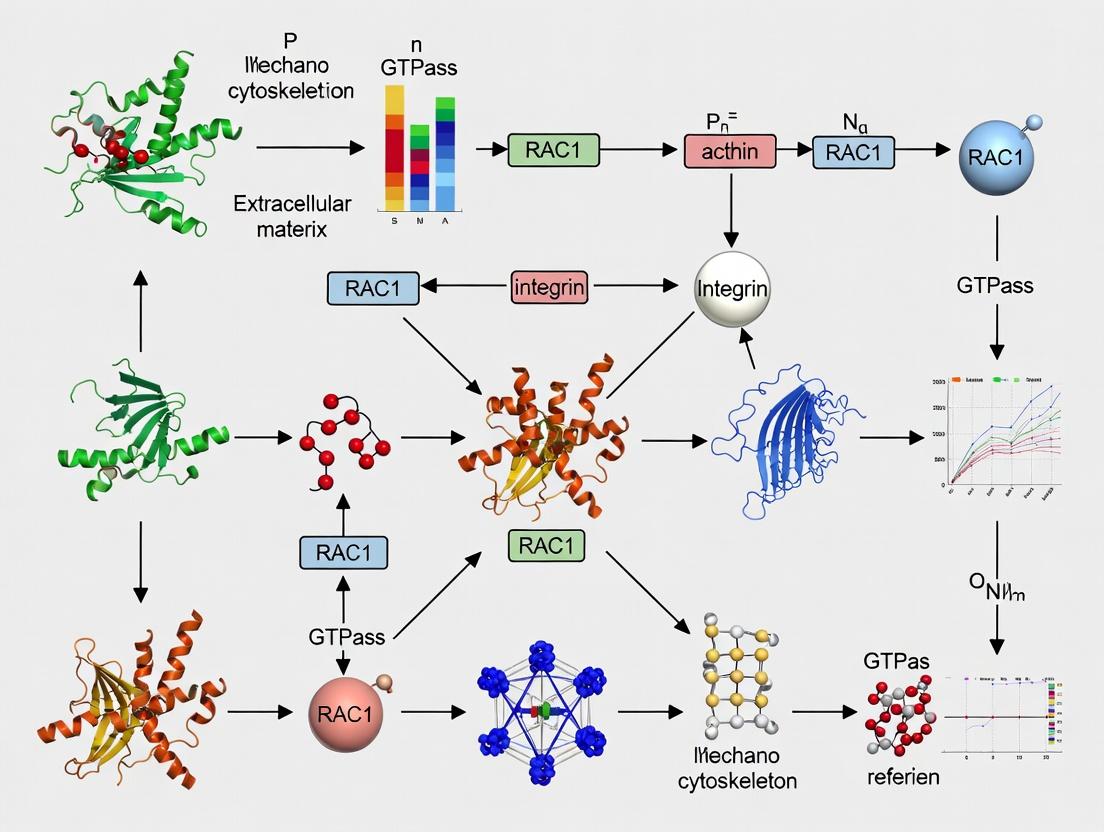
This article provides a comprehensive analysis of RAC1's pivotal role within cellular mechanotransduction networks, targeting researchers and drug development professionals.
Decoding Cellular Force: RAC1 Network Analysis in Mechanotransduction Research and Therapeutic Targeting
Abstract
This article provides a comprehensive analysis of RAC1's pivotal role within cellular mechanotransduction networks, targeting researchers and drug development professionals. It begins by establishing the foundational biology of RAC1 as a mechanosensitive GTPase, exploring its complex signaling pathways and interactions with key components like integrins, cytoskeletal elements, and YAP/TAZ. The methodological section details cutting-edge tools for analyzing RAC1 activity in response to mechanical cues, including FRET biosensors, traction force microscopy, and advanced computational modeling. We address common experimental challenges, such as achieving spatiotemporal precision and distinguishing direct from indirect effects, offering optimization strategies. Finally, we compare RAC1's role to other Rho GTPases (RhoA, Cdc42), validate findings through genetic and pharmacological perturbation studies, and examine dysregulation in disease contexts like cancer metastasis and fibrosis. The conclusion synthesizes these insights to highlight RAC1 as a central, druggable node in mechanobiology with significant implications for novel therapeutic development.
The Mechanosensitive Switch: Unraveling RAC1's Foundational Role in Force Sensing and Signaling
Within the broader thesis on RAC1 network analysis in mechanotransduction, this GTPase emerges as a central signal processing node. It converts extracellular matrix stiffness, shear stress, and topographic cues into cytoskeletal reorganization and transcriptional reprogramming. Dysregulated RAC1 dynamics are implicated in cancer metastasis, developmental disorders, and fibrotic diseases, making it a high-value target for therapeutic intervention.
Core Quantitative Data: RAC1 Activity States & Binding Kinetics
Table 1: RAC1 GTPase Cycle Parameters & Key Interactions
| Parameter / Interaction | Typical Value / Affinity | Experimental System | Notes |
|---|---|---|---|
| GDP → GTP (GEF-mediated) | kcat: ~0.05 s⁻¹ | Purified proteins (Tiam1) | Rate-limiting step in activation |
| Intrinsic GTP hydrolysis | kcat: ~0.02 s⁻¹ | In vitro | Slow; GAPs accelerate by 10⁵-fold |
| GAP (e.g., β2-Chimaerin) enhanced hydrolysis | kcat: ~2.5 s⁻¹ | HEK293T lysates | Critical for signal termination |
| Effector (PAK1) Binding Kd (GTP-RAC1) | 50-100 nM | SPR / ITC | High-affinity complex drives cytoskeletal change |
| GDI (RhoGDIα) Binding Kd | ~20 nM | FRET-based assay | Sequesters inactive RAC1 in cytosol |
| Half-life of GTP-bound state (active) | 30-60 seconds | Single-cell FRET (HeLa) | Spatially heterogeneous in migrating cells |
| Force-mediated activation (via integrin engagement) | 2-3 fold increase | Magnetic tweezers on fibronectin | Direct link to mechanotransduction |
Table 2: Pathogenic RAC1 Mutants & Biochemical Signatures
| Mutant | Clinical/Experimental Phenotype | GTP Loading (% of WT) | Effector Coupling (PAK1) | Reference |
|---|---|---|---|---|
| P29S (Melanoma) | Driver mutation, "fast-cycling" | ~150-200% | Enhanced | Hodis et al., Nat Genet, 2012 |
| C157Y (Developmental) | Loss-of-function, microcephaly | <10% | Abolished | Reijnders et al., AJHG, 2017 |
| R68E (Constitutively Active) | Experimental, induces lamellipodia | >500% (locked) | Constitutive | Self & Hall, Meth Enzymol, 1995 |
| N92I (Dominant Negative) | Experimental, inhibits endogenous RAC1 | <5% | Abolished | Feig, Meth Enzymol, 1995 |
Application Notes & Protocols
AN-1: Quantifying Spatiotemporal RAC1 Activation in Live Cells via FRET
Context: This protocol is essential for thesis research analyzing how RAC1 activation waves propagate in response to local mechanical stimuli.
Protocol:
- Cell Preparation: Plate HeLa or NIH/3T3 cells expressing the RAC1 FRET biosensor (e.g., Raichu-RAC1) on fibronectin-coated (5 µg/mL) glass-bottom dishes.
- Mechanical Stimulation: Use a glass microneedle (tip diameter ~1µm) mounted on a micromanipulator to apply local indentation (5-10 µm displacement) to a single cell edge. Alternatively, use a focused ultrasound pulse for defined stimulation.
- FRET Imaging: Acquire time-lapse images on an inverted microscope with a dual-emission photometry system or a sensitive CCD camera. Use 433 nm excitation and collect emissions at 475 nm (CFP) and 535 nm (FRET/YFP) every 10 seconds for 15 minutes.
- Data Analysis: Calculate the FRET ratio (I535/I475) for each time point. Background subtract using a cell-free region. Generate kymographs along the cell radius from the stimulation point to visualize activation waves.
- Key Controls: Include cells expressing the biosensor with the RAC1-T17N dominant-negative mutation as a background control.
AN-2: Proximity Ligation Assay (PLA) for RAC1-Effector Complexes in Fixed Tissue
Context: Used in thesis work to map active RAC1 signaling complexes in mechanosensitive tissues (e.g., vascular endothelium, tumor stroma).
Protocol:
- Tissue Sectioning: Fix paraffin-embedded tissue samples in 4% PFA for 24h. Section at 5 µm thickness and mount on charged slides. Deparaffinize and perform antigen retrieval in citrate buffer (pH 6.0).
- Blocking and Primary Antibodies: Block with 2% BSA, 5% normal goat serum for 1h. Incubate overnight at 4°C with a pair of primary antibodies from different hosts: e.g., mouse anti-active RAC1 (GTP-bound specific) and rabbit anti-PAK1 (effector).
- PLA Probe Incubation: Apply species-specific PLA probes (MINUS and PLUS) for 1h at 37°C in a humidified chamber.
- Ligation & Amplification: Perform ligation (30 min at 37°C) followed by rolling circle amplification (100 min at 37°C) using the manufacturer's kit (e.g., Duolink).
- Detection & Imaging: Detect amplification products with fluorescently labeled oligonucleotides. Counterstain nuclei with DAPI and actin with phalloidin-647. Image with a confocal microscope; each fluorescent spot represents a single RAC1-PAK1 complex.
- Quantification: Use image analysis software (e.g., ImageJ/Fiji) to count PLA spots per cell or per unit area, correlating with regions of high mechanical stress.
Visualization: Pathways & Workflows
RAC1 GTPase Cycle & Mechanotransduction Pathways
Live-Cell FRET Protocol for RAC1 Activation Dynamics
The Scientist's Toolkit: Research Reagent Solutions
Table 3: Essential Reagents for RAC1 Mechanotransduction Research
| Reagent / Material | Supplier Examples (Catalog #) | Function in Experiment | Critical Notes for Thesis Research |
|---|---|---|---|
| Active RAC1 Pull-Down & Detection Kit | Cytoskeleton (BK035), MilliporeSigma (17-441) | Isolates and quantifies GTP-bound RAC1 from lysates. | Use with lysates from cells plated on tunable stiffness hydrogels to link ECM mechanics to RAC1 activity. |
| RAC1 FRET Biosensor (Raichu-1011X) | Addgene ( #13731) | Live-cell, rationetric imaging of RAC1 activation dynamics. | Essential for capturing rapid, local activity flares in response to point mechanical stimulation. |
| NSC23766 (RAC1 Inhibitor) | Tocris (2161), Selleckchem (S8031) | Small molecule inhibitor targeting RAC1-GEF interaction (TripleN/DOCK). | Useful as a control but can have off-target effects; validate with genetic knockdown (shRNA). |
| Recombinant Human RAC1 Protein (Wild-type & Mutants) | Cytoskeleton (RC01), Abcam (ab154763) | In vitro biochemistry (GTPase assays, binding studies). | P29S mutant protein is critical for studying melanoma-related gain-of-function kinetics. |
| G-LISA RAC1 Activation Assay | Cytoskeleton (BK128) | Colorimetric/fluorometric plate-based assay for active RAC1 from multiple samples. | High-throughput screening of drug candidates or siRNA libraries targeting the RAC1 network. |
| Anti-phospho-PAK1 (Ser144)/PAK2 (Ser141) Antibody | Cell Signaling Tech (#2606) | Readout of downstream RAC1 effector activation. | Stain for phospho-PAK in traction force assays to link cellular contractility to RAC1 signaling. |
| Tunable Polyacrylamide Hydrogels | Matrigen (Softview), Cytoskeleton ( ECM-101) | Substrates of defined stiffness to mimic physiological/pathological tissues. | Foundational for thesis work on how substrate stiffness reprograms RAC1 activation thresholds. |
| RAC1 CRISPR/Cas9 Knockout & Activation Pools | Santa Cruz (sc-400042), Synthego | Generate isogenic cell lines lacking or overexpressing RAC1. | Essential for establishing causality in mechanotransduction phenotypes. |
Mechanotransduction, the process by which cells convert mechanical stimuli from their microenvironment into biochemical signals, is a cornerstone of RAC1 network analysis in mechanobiology. The following tables summarize key quantitative relationships and molecular players identified in current literature.
Table 1: Key Mechanosensitive Elements and Their Reported Force Sensitivities
| Element / Complex | Type | Reported Force Sensitivity / Activation Threshold | Primary Downstream Effector |
|---|---|---|---|
| Integrin α5β1-FAK Complex | Transmembrane Receptor & Kinase | ~1-2 pN per integrin; clustering triggered by ~10-40 pN/µm² substrate stiffness | RAC1, PAK, ERK |
| PIEZO1 Ion Channel | Cation Channel | Activation at ~1.4 mN/mm membrane tension; inactivation at ~0.9 mN/mm | Ca²⁺ influx, Calpain, Rho GTPases |
| YAP/TAZ Transcriptional Co-activators | Transcriptional Regulators | Nuclear translocation on stiff substrates (>5 kPa); cytoplasmic retention on soft (<1 kPa) | TEAD, SMADs |
| Vinculin-Talin-Actin Linkage | Cytoskeletal Linker | Talin rod domain unfolds at ~5-10 pN; vinculin binding stabilizes under load | Actin polymerization, RAC1 recruitment |
| RAC1 GTPase | Small GTPase | Activation via GEFs (e.g., TIAM1) on stiff ECM; half-life of active state ~1 min | PAK, WAVE, ROS production |
Table 2: Common Experimental Substrate Parameters and Cellular Responses
| Substrate Material | Typical Stiffness Range (Elastic Modulus) | Common Coating | Measured RAC1 Activity Change (vs. 1 kPa) | Key Readout |
|---|---|---|---|---|
| Polyacrylamide (PA) | 0.1 - 50 kPa | Collagen I, Fibronectin | 2.5-fold increase at 20 kPa | FRET, Pull-down |
| Polydimethylsiloxane (PDMS) | 1 kPa - 2 MPa | Fibronectin | 3.1-fold increase at 50 kPa | Immunoblot, G-LISA |
| Polyethylene Glycol (PEG)-based | 0.5 - 100 kPa | RGD Peptide | 1.8-fold increase at 25 kPa | Microscopy, FRET |
| Collagen I Hydrogel | 0.2 - 10 kPa | Native | Variable, context-dependent | Traction Microscopy |
Detailed Experimental Protocols
Protocol 2.1: Fabrication of Tunable Polyacrylamide Hydrogels for Stiffness Screening
Objective: To create ECM-coated hydrogels with defined mechanical properties for studying RAC1 activation kinetics.
Materials:
- Acrylamide solution (40%, w/v)
- Bis-acrylamide solution (2%, w/v)
- Phosphate Buffered Saline (PBS)
- Ammonium persulfate (APS, 10% w/v)
- Tetramethylethylenediamine (TEMED)
- Sulfo-SANPAH (Thermo Fisher)
- Recombinant Fibronectin or Collagen I
- 18mm #1.5 glass coverslips, activated with (3-Aminopropyl)trimethoxysilane (APTMS) and 0.5% glutaraldehyde.
Procedure:
- Coverslip Activation: Clean coverslips, treat with APTMS for 5 min, rinse, then treat with 0.5% glutaraldehyde for 30 min. Rinse thoroughly and dry.
- Gel Solution Preparation: For a 1 kPa gel, mix 125 µL of 40% acrylamide, 50 µL of 2% bis-acrylamide, and 325 µL of PBS. For 20 kPa, use 250 µL acrylamide, 100 µL bis-acrylamide, and 150 µL PBS. Adjust volumes for desired stiffness using established calibration curves.
- Polymerization: Add 5 µL of 10% APS and 0.5 µL TEMED to the mixture. Pipette 30 µL immediately onto an activated coverslip. Quickly place a second, untreated hydrophobic coverslip on top to create a thin gel.
- Curing: Allow polymerization for 30-45 min at room temperature.
- Activation and Coating: Carefully remove top coverslip. Wash gel-substrate with PBS. Apply 100 µL of 0.5 mg/mL Sulfo-SANPAH in PBS and expose to UV light (365 nm) for 10 min. Wash, then incubate with 50 µg/mL Fibronectin in PBS overnight at 4°C.
- Sterilization & Seeding: Rinse gels with sterile PBS, place in culture plate, and seed cells at desired density for RAC1 activity assays.
Protocol 2.2: RAC1 Activation (G-LISA) Assay from Cells on Matrices
Objective: To quantitatively measure active, GTP-bound RAC1 levels from cells plated on different stiffness substrates.
Materials:
- RAC1 G-LISA Activation Assay Kit (Cytoskeleton, Inc., #BK128)
- Cell lysis buffer (from kit, supplemented with protease inhibitors)
- Equilibrated substrates (from Protocol 2.1) in a 24-well plate
- PBS, 4% formaldehyde (for optional parallel fixation)
- Microplate reader capable of 490nm absorbance.
Procedure:
- Cell Stimulation: Plate cells (e.g., NIH/3T3, MCF-10A) on coated hydrogels of varying stiffness in serum-free media for 4-6 hours to synchronize. Stimulate with 10% serum or relevant growth factor for 5-15 min.
- Lysis: Aspirate media, quickly rinse with PBS, and add 150 µL of ice-cold lysis buffer per well. Incubate on ice for 5 min, then scrape cells and transfer lysate to a pre-chilled microcentrifuge tube. Clarify by centrifugation at 10,000 x g for 1 min at 4°C. Keep supernatant on ice.
- Protein Quantification: Determine total protein concentration using a compatible assay (e.g., Bradford).
- G-LISA: Aliquot lysate containing 20-50 µg of total protein into the RAC1 G-LISA plate wells. Follow manufacturer’s protocol for incubation steps (30 min at 4°C with gentle shaking).
- Washing & Detection: Perform all wash steps meticulously. Incubate with antigen-presenting buffer for 2 min, then with primary anti-RAC1 antibody (60 min), followed by secondary HRP-conjugated antibody (45 min). Develop with HRP detection reagent for 15 min in the dark.
- Quantification: Measure absorbance at 490 nm. Normalize values to total protein content and plot as fold-change relative to control (e.g., cells on 1 kPa substrate).
Signaling Pathway & Workflow Visualizations
The Scientist's Toolkit: Research Reagent Solutions
| Item / Reagent | Supplier (Example) | Catalog # (Example) | Function in Mechanotransduction Research |
|---|---|---|---|
| Tunable Polyacrylamide Hydrogel Kit | BioVision | K820 | Provides pre-mixed components for reproducible fabrication of stiffness-tunable 2D cell culture substrates. |
| RAC1 G-LISA Activation Assay Kit | Cytoskeleton, Inc. | BK128 | Colorimetric microplate-based assay for quantitative measurement of active, GTP-bound RAC1 from cell lysates. |
| GST-PAK-PBD Fusion Protein | Cytoskeleton, Inc. | PAK02 | Used in pull-down assays to selectively isolate active RAC1 (and Cdc42) from lysates for immunoblotting. |
| RAC1 FRET Biosensor (RaichuEV-Rac1) | Addgene | Plasmid #60122 | Genetically encoded fluorescence resonance energy transfer (FRET) biosensor for visualizing spatiotemporal RAC1 activity in live cells. |
| Y-27632 (ROCK Inhibitor) | Tocris Bioscience | 1254 | Selective inhibitor of ROCK kinase. Used to dissect the cross-talk between RAC1 and RhoA/ROCK pathways in mechanosensing. |
| NSC23766 (RAC1 Inhibitor) | MilliporeSigma | SML0952 | Small molecule inhibitor of RAC1 activation by specific GEFs (Triple & GEF-H1). Useful for functional validation. |
| Recombinant Fibronectin, Human | Corning | 354008 | Standardized ECM protein for coating substrates to ensure integrin-mediated adhesion and signaling. |
| Anti-Phospho-FAK (Tyr397) Antibody | Cell Signaling Tech. | 8556S | Validated antibody for detecting activation of FAK, a key early mechanotransduction event upstream of RAC1. |
| Sulfo-SANPAH Crosslinker | Thermo Fisher | 22589 | Photoactivatable, water-soluble crosslinker for covalently conjugating ECM proteins to amine-functionalized hydrogels. |
| Fluorescent Beads (for TFM) | Invitrogen | F8803 | Carboxylate-modified microspheres embedded in hydrogels for performing Traction Force Microscopy (TFM) to measure cellular forces. |
Thesis Context: This document supports a broader thesis on RAC1 network analysis in mechanotransduction by providing standardized application notes and protocols for interrogating RAC1 activation in response to three primary mechanical cues: biochemical integrin engagement, fluid shear stress, and variable substrate stiffness. These protocols enable systematic data generation for network-level modeling.
| Mechanostimulus | Primary Sensor/Receptor | Key Readout (e.g., GTP-RAC1) | Typical Fold Increase vs. Control | Peak Activation Time | Primary Downstream Effector |
|---|---|---|---|---|---|
| Integrin Engagement (via RGD ligand) | αVβ3 / α5β1 Integrins | Pull-down Assay / FRET Biosensor | 3.5 - 5.2 fold | 5 - 15 minutes | PAK1, WAVE Complex |
| Laminar Shear Stress (10-20 dyn/cm²) | PECAM-1 / VEGFR2 Complex | FRET Biosensor / Western Blot | 2.8 - 4.1 fold | 2 - 10 minutes | p21-Activated Kinases (PAKs) |
| High Substrate Stiffness (≥30 kPa vs. 1 kPa) | Focal Adhesion Complex | RAC1-GTP G-LISA / Immunofluorescence | 4.0 - 6.0 fold | 30 - 90 minutes | Actin Polymerization, Nuclear YAP |
Experimental Protocols
Protocol 1: RAC1 Activation via Integrin Engagement
Objective: To measure RAC1-GTP levels following specific integrin ligation.
- Surface Coating: Coat 6-well plates with 10 µg/mL fibronectin (Full-length for α5β1) or cyclic RGD peptide (for αVβ3) in PBS for 2h at 37°C. Block with 1% heat-denatured BSA for 1h.
- Cell Preparation & Stimulation: Serum-starve serum-starve adherent cells (e.g., HUVECs, fibroblasts) for 4-6h. Gently detach using enzyme-free dissociation buffer, resuspend in serum-free medium with 0.1% BSA. Keep in suspension for 30min to allow integrin deactivation.
- Integrin Engagement: Seed cells onto coated plates at confluency. Allow adhesion and spreading for precisely 5, 15, 30, and 60 minutes.
- Lysis & RAC1-GTP Pull-down: At each time point, rapidly lyse cells with Magnesium-containing Lysis Buffer (MLB: 25mM HEPES pH7.5, 150mM NaCl, 1% Igepal CA-630, 10mM MgCl2, 1mM EDTA, 2% glycerol, protease/phosphatase inhibitors). Clarify lysates.
- Affinity Precipitation: Incubate 500 µg of clarified lysate with 20 µg of GST-PAK1-PBD (p21-binding domain) beads for 1h at 4°C with gentle rotation.
- Analysis: Wash beads, elute with 2X Laemmli buffer. Detect bound (active) RAC1 and total RAC1 from whole-cell lysate by SDS-PAGE and Western blot using anti-RAC1 monoclonal antibody. Quantify band intensity.
Protocol 2: RAC1 Activation via Laminar Shear Stress
Objective: To analyze real-time RAC1 activation kinetics under controlled fluid flow.
- Biosensor Cell Preparation: Stably transduce endothelial cells (e.g., EA.hy926) with a FRET-based RAC1 biosensor (e.g., Raichu-RAC1). Seed cells onto a 35mm µ-Dish or ibidi slide at 100% confluency 48h prior.
- Microscopy Setup: Mount dish on a live-cell confocal or epifluorescence microscope with environmental control (37°C, 5% CO2). Use a 40x oil objective.
- Shear Stress Application: Connect dish to a programmable perfusion system (e.g., ibidi pump system). Prime system with pre-warmed, serum-free imaging medium.
- Image Acquisition: Initiate time-lapse acquisition of CFP and FRET (YFP) channels at 30-second intervals. After 5 minutes of baseline recording, initiate unidirectional laminar flow at 12 dyn/cm².
- Data Processing: Calculate FRET/CFP ratio for each time point using ImageJ/Fiji with appropriate plugins. Normalize ratios to the average pre-flow baseline. Plot normalized FRET ratio vs. time to visualize activation kinetics.
Protocol 3: RAC1 Activation via Substrate Stiffness
Objective: To correlate RAC1 activity with extracellular matrix stiffness using tunable hydrogels.
- Polyacrylamide Gel Preparation:
- Prepare stock solutions: 40% Acrylamide, 2% Bis-acrylamide.
- For Soft (1 kPa) gels: Mix 0.25 mL 40% Acrylamide, 0.1 mL 2% Bis, 2.615 mL H2O, 25 µL 10% APS, 2.5 µL TEMED.
- For Stiff (30 kPa) gels: Mix 0.5 mL 40% Acrylamide, 0.165 mL 2% Bis, 2.285 mL H2O, 25 µL 10% APS, 2.5 µL TEMED.
- Cast between activated glass coverslip and hydrophobic silanized coverslip. Polymerize for 30 min.
- Functionalization: Couple gel surface with 0.2 mg/mL Sulfo-SANPAH under UV light (365 nm) for 10 min. Wash and coat with 50 µg/mL collagen I overnight.
- Cell Culture & Stimulation: Plate fibroblasts (e.g., NIH/3T3) at low density on gels. Culture for 24-48h to allow full mechanoadaptation.
- Assessment:
- Biochemical: Perform RAC1-GTP G-LISA per manufacturer's protocol (Cytoskeleton, Inc.) on lysates from gels.
- Morphological: Fix cells and stain for F-actin (Phalloidin) and vinculin. Analyze cell spreading area and focal adhesion size using structured illumination microscopy.
Diagrams
Title: RAC1 Mechanosensing Pathway Integration
Title: Workflow: RAC1 Activation by Substrate Stiffness
Research Reagent Solutions Toolkit
| Reagent/Tool | Supplier Example | Function in RAC1 Mechanosensing Research |
|---|---|---|
| GST-PAK1-PBD Beads | Cytoskeleton, Inc. | Affinity precipitation of active GTP-bound RAC1 from cell lysates for pull-down assays. |
| RAC1 G-LISA Activation Assay | Cytoskeleton, Inc. | Colorimetric ELISA-based kit for quantitative measurement of RAC1-GTP levels. |
| Raichu-RAC1 FRET Biosensor | Addgene (Plasmid #12929) | Live-cell, ratiometric FRET biosensor for real-time visualization of RAC1 activation kinetics. |
| Tunable Polyacrylamide Hydrogels | Cell Guidance Systems, BioTek | Stiffness-tunable substrates to mechanically culture cells and study stiffness-dependent signaling. |
| Microfluidic Shear System (ibidi) | ibidi GmbH | Provides precise laminar fluid flow for applying defined shear stress to cell monolayers. |
| Integrin-Specific Ligands (cRGD, Fibronectin) | Merck Millipore, Corning | Coat surfaces to specifically engage αVβ3 or α5β1 integrins, initiating mechanosensitive pathways. |
| Y-27632 (ROCK Inhibitor) | Tocris Bioscience | Inhibits ROCK-mediated actomyosin contractility, used to dissect stiffness-sensing upstream of RAC1. |
| Anti-RAC1 mAb (Clone 23A8) | Merck Millipore | High-affinity antibody for detection of total RAC1 in Western blotting post pull-down. |
Application Notes
This document provides a detailed experimental framework for analyzing the RAC1 signaling axis central to mechanotransduction. Activation of RAC1 GTPase at the cell membrane in response to mechanical or biochemical stimuli initiates a cascade that culminates in actin cytoskeletal remodeling. The core pathway involves RAC1-GTP binding and activating effector proteins like PAK1 (p21-activated kinase 1) and the WAVE Regulatory Complex (WRC). PAK1 further amplifies signals through phosphorylation events, while the WRC, upon activation, directly stimulates the ARP2/3 complex to nucleate branched actin filaments. This network is fundamental in processes such as lamellipodia formation, cell migration, and force-sensing, making it a critical target in cancer metastasis and fibrosis research. The protocols herein enable quantitative mapping of these protein-protein interactions and functional outputs.
Experimental Protocols
Protocol 1: Co-Immunoprecipitation (Co-IP) to Map RAC1 Effector Complexes
Objective: To isolate and identify protein complexes formed by active RAC1 with PAK1 and the WAVE/ARP2/3 system. Materials: HEK293T or relevant motile cell line (e.g., MDA-MB-231), serum-free media, EGF (100 ng/mL) or specific Rac1 activator (CN04, 2 µg/mL), RIPA lysis buffer with protease/phosphatase inhibitors, anti-RAC1 (GTP-bound conformation) antibody, Protein A/G magnetic beads, SDS-PAGE and Western blotting setup.
- Stimulation: Culture cells to 80-90% confluency. Serum-starve for 4 hours. Stimulate with EGF or CN04 for 5-15 minutes to activate RAC1. Include an unstimulated control.
- Lysis: Aspirate media, wash with cold PBS, and lyse cells in 500 µL RIPA buffer on ice for 20 minutes. Clear lysates by centrifugation (14,000 x g, 15 min, 4°C).
- Immunoprecipitation: Incubate 1 mg of total protein lysate with 2 µg of anti-active RAC1 antibody (or control IgG) overnight at 4°C with gentle rotation.
- Bead Capture: Add 50 µL of pre-washed Protein A/G magnetic beads and incubate for 2 hours at 4°C.
- Washes: Pellet beads and wash 4 times with 1 mL of cold lysis buffer.
- Elution: Elute bound proteins by boiling beads in 40 µL 2X Laemmli sample buffer for 10 minutes.
- Analysis: Resolve eluates by SDS-PAGE. Probe via Western blot for co-precipitated partners: PAK1 (Cell Signaling #2602), WAVE2 (Millipore 09-482), ARP3 (Cell Signaling #4738), and Actin (loading control).
Protocol 2: Fluorescent Speckle Microscopy (FSM) for Actin Flow Dynamics Analysis
Objective: To quantify the rate and directionality of actin polymerization downstream of RAC1 activation. Materials: Glass-bottom dishes, X-rhodamine or Alexa Fluor 568-conjugated G-actin (Cytoskeleton, Inc.), transfection reagent, plasmid encoding GFP-RAC1 (Q61L constitutive active mutant), spinning disk confocal microscope.
- Cell Preparation: Plate cells on glass-bottom dishes. Transfect with GFP-RAC1(Q61L) or control vector 24 hours prior to imaging.
- Microinjection: Microload cells with fluorescently labeled G-actin (0.5-1 mg/mL in injection buffer) using a microinjection system or permeabilize briefly with saponin.
- Image Acquisition: 30 minutes post-injection, acquire time-lapse images (100-500 ms exposure, 5-10 sec intervals for 2-5 min) using a 60x or 100x oil objective.
- Analysis: Use kymograph analysis (Fiji/ImageJ) along the cell edge to measure actin flow speed. Calculate polymerization rates from the movement of fluorescent speckles away from the leading edge.
Table 1: Kinetic Parameters of RAC1-Mediated Actin Polymerization
| Parameter | Value (Mean ± SD) | Experimental Condition | Assay |
|---|---|---|---|
| Actin Polymerization Rate | 1.2 ± 0.3 µm/min | EGF-stimulated, RAC1-active | FSM at lamellipodia |
| Actin Polymerization Rate | 0.3 ± 0.1 µm/min | Serum-starved, RAC1-inactive | FSM at lamellipodia |
| RAC1-GTP/Total RAC1 Ratio | 45 ± 8 % | 5 min post-EGF stimulation | G-LISA RAC1 Activation |
| RAC1-GTP/Total RAC1 Ratio | 12 ± 5 % | Serum-starved control | G-LISA RAC1 Activation |
| PAK1 Phosphorylation (pS144) | 4.5-fold increase | 10 min post-CN04 treatment | Western Blot Densitometry |
Table 2: Key Protein-Protein Interaction Affinities
| Interaction Pair | Estimated Kd | Method | Reference |
|---|---|---|---|
| RAC1-GTP : PAK1 CRIB Domain | ~80 nM | Surface Plasmon Resonance | Thompson et al., JBC |
| RAC1-GTP : WRC (Sra1/PIR121 subunit) | ~40 nM | Isothermal Titration Calorimetry | Chen et al., Nature |
| WCA domain (WAVE) : ARP2/3 Complex | ~0.5 µM | Fluorescence Polarization | Marchand et al., PNAS |
Pathway & Workflow Diagrams
Diagram 1: RAC1 to Actin Polymerization Signaling Pathway.
Diagram 2: Co-IP Workflow for RAC1 Complex Isolation.
The Scientist's Toolkit: Research Reagent Solutions
Table 3: Essential Reagents for RAC1 Network Analysis
| Reagent / Material | Supplier Example (Catalog #) | Function in Experiment |
|---|---|---|
| Active RAC1 Pull-Down Kit | Cytoskeleton, Inc. (BK035) | Precipitates GTP-bound RAC1 for activation assays. |
| Recombinant PAK1 Protein | SignalChem (P02-53G) | Positive control for kinase assays and binding studies. |
| Anti-WAVE2 Antibody | MilliporeSigma (09-482) | Detects WAVE2 in WRC for Co-IP/Western Blot. |
| X-rhodamine G-Actin | Cytoskeleton, Inc. (APHR) | Fluorescent probe for live-cell actin polymerization (FSM). |
| RAC1 Activator (CN04) | Cytoskeleton, Inc. (CN04) | Cell-permeable, constitutively activates RAC1. |
| ARP2/3 Complex (Human) | Cytoskeleton, Inc. (RP01P) | Recombinant protein for in vitro actin nucleation assays. |
| PAK1 Phospho-Specific Antibody (pS144) | Cell Signaling Tech (#2606) | Measures PAK1 activation downstream of RAC1. |
| G-LISA RAC1 Activation Assay | Cytoskeleton, Inc. (BK125) | Colorimetric 96-well plate assay to quantify RAC1-GTP. |
Application Notes
Recent research within the context of RAC1 network analysis in mechanotransduction reveals extensive crosstalk between RAC1 and three major signaling hubs: the Hippo effectors YAP/TAZ, the TGF-β pathway, and the mTOR complex. This integration is critical for processes ranging from cell proliferation and migration to fibrosis and tumorigenesis. Quantitative data from key studies is summarized below.
Table 1: Key Quantitative Findings on RAC1 Pathway Integration
| Pathway Crosstalk | Experimental System | Key Metric & Change | Proposed Mechanism | Reference (Example) |
|---|---|---|---|---|
| RAC1 -> YAP/TAZ | MDCK cells, Mechanical Stress | Nuclear YAP increased 3.5-fold with RAC1 activation | RAC1-actin cytoskeleton remodeling inhibits LATS1/2, preventing YAP phosphorylation. | Aragona et al., Cell 2013 |
| RAC1 -> TGF-β | Lung Fibroblasts | TGF-β1-induced α-SMA expression reduced by 70% with RAC1 inhibitor NSC23766 | RAC1 is required for SMAD2/3 nuclear translocation and transcriptional activity. | Samarakoon et al., J Biol Chem 2013 |
| TGF-β -> RAC1 | Mammary Epithelial Cells | Active RAC1 (GTP-bound) increased 2.8-fold post TGF-β treatment | TGF-β receptor directly activates RAC1 via PI3K-dependent GEF recruitment. | Muñoz-Sáinz et al., Cell Signal 2022 |
| RAC1 -> mTORC1 | Prostate Cancer Cells | Phospho-S6K1 (mTORC1 readout) decreased by 60% with RAC1 knockdown | RAC1 binds and activates mTORC1 in a PI3K/AKT-independent, PAK-dependent manner. | Mack et al., Mol Cell 2022 |
| YAP/TAZ -> mTOR | HEK293A cells | mTORC1 activity (in vitro kinase assay) increased 2.2-fold with YAP5SA overexpression | YAP/TAZ transcriptionally regulate miR-29 to inhibit PTEN, activating PI3K-mTOR axis. | Hansen et al., Nat Cell Biol 2015 |
Detailed Experimental Protocols
Protocol 1: Assessing RAC1-Dependent YAP/TAZ Nuclear Translocation under Mechanical Stress
Objective: To quantify the translocation of YAP/TAZ from cytoplasm to nucleus upon RAC1 activation by cyclic stretch.
- Cell Culture & Plating: Plate NIH/3T3 fibroblasts expressing a YAP-GFP fusion protein on silicone elastomer plates coated with fibronectin (10 µg/mL).
- Inhibition/Activation: Pre-treat cells for 1 hour with either:
- 50 µM NSC23766 (RAC1 inhibitor)
- 100 ng/mL CNF1 (RAC1 activator)
- DMSO vehicle control.
- Mechanical Stimulation: Subject plates to 10% cyclic uniaxial stretch at 0.5 Hz for 2 hours using a Flexcell system. Include static controls.
- Fixation and Imaging: Fix cells in 4% PFA for 15 min, permeabilize with 0.1% Triton X-100, and stain nuclei with DAPI (1 µg/mL). Image using a confocal microscope (≥60x oil objective).
- Quantitative Analysis: Use ImageJ/Fiji with suitable plugins (e.g., "Cell Nuclei Counter," "Ratio Plus") to calculate the nuclear-to-cytoplasmic (N/C) fluorescence intensity ratio of YAP-GFP for ≥100 cells per condition.
Protocol 2: Co-Immunoprecipitation for RAC1-mTORC1 Interaction
Objective: To validate the physical interaction between active RAC1 and the mTORC1 complex.
- Cell Lysis: Lyse serum-starved PC-3 prostate cancer cells (control and RAC1-G12V overexpressing) in ice-cold NP-40 lysis buffer (50 mM Tris-HCl pH 7.4, 150 mM NaCl, 1% NP-40, 2 mM MgCl2) supplemented with protease/phosphatase inhibitors and 100 µM GTPγS (non-hydrolyzable GTP analog to stabilize active state).
- Pre-Clearance: Centrifuge lysates at 16,000 x g for 15 min at 4°C. Incubate supernatant with Protein A/G agarose beads for 30 min to pre-clear.
- Immunoprecipitation: Incubate 500 µg of pre-cleared lysate with 2 µg of mouse anti-RAC1 (clone 23A8) or IgG isotype control overnight at 4°C with gentle rotation. Add 30 µL of Protein A/G beads and incubate for 2 hours.
- Washes and Elution: Wash beads 4x with lysis buffer. Elute bound proteins in 2X Laemmli sample buffer by boiling for 5 min.
- Immunoblotting: Resolve proteins by SDS-PAGE, transfer to PVDF membrane, and probe sequentially with antibodies against RAC1, mTOR, and RAPTOR (a mTORC1-specific component).
Protocol 3: Luciferase Reporter Assay for TGF-β/SMAD Activity Modulated by RAC1
Objective: To measure the effect of RAC1 manipulation on TGF-β-induced transcriptional activity.
- Transfection: Seed HEK293T cells in 24-well plates. Co-transfect per well: 100 ng of (CAGA)12-luciferase reporter (SMAD-responsive), 10 ng of pRL-CMV (Renilla luciferase internal control), and either 200 ng of dominant-negative RAC1 (T17N) or constitutively active RAC1 (G12V) expression plasmids. Use empty vector for control.
- Stimulation: 24 hours post-transfection, serum-starve cells for 6 hours. Stimulate with 5 ng/mL recombinant human TGF-β1 for 16 hours.
- Lysate Preparation: Aspirate media, wash with PBS, and lyse cells in 100 µL Passive Lysis Buffer (Promega) for 15 min with shaking.
- Dual-Luciferase Assay: Transfer 20 µL lysate to a white plate. Measure Firefly luciferase activity by injecting 50 µL Luciferase Assay Reagent II, then measure Renilla luciferase by injecting 50 µL Stop & Glo Reagent. Use a luminometer.
- Data Analysis: Normalize Firefly luminescence to Renilla luminescence for each well. Calculate fold induction relative to unstimulated, vector-only control.
Signaling Pathway Diagrams
Title: RAC1 Integrates YAP, TGF-β, and mTOR Signaling
Title: Workflow for Studying RAC1 Pathway Crosstalk
The Scientist's Toolkit
Table 2: Key Research Reagent Solutions for RAC1 Crosstalk Studies
| Reagent/Material | Function & Application in Studies | Example Product/Catalog # |
|---|---|---|
| NSC23766 | Small molecule inhibitor of RAC1-GEF interaction. Used to acutely inhibit RAC1 activation in vitro. | Tocris Bioscience (cat. # 2161) |
| Rac1 G-LISA Activation Assay | Colorimetric/fluorometric kit to quantify levels of active, GTP-bound RAC1 from cell lysates. | Cytoskeleton, Inc. (cat. # BK125) |
| Recombinant TGF-β1 | High-purity cytokine for consistent activation of the TGF-β signaling pathway in cell culture. | PeproTech (cat. # 100-21) |
| YAP/TAZ Antibody Sampler Kit | Set of validated antibodies for detecting total and phosphorylated YAP/TAZ via Western blot or IF. | Cell Signaling Technology (cat. # 8578) |
| Flexcell Tension System | Equipment for applying controlled cyclic mechanical stretch to cells cultured on flexible membranes. | Flexcell International Corp. |
| (CAGA)12-Luciferase Reporter | Plasmid containing SMAD-binding elements driving luciferase, for monitoring TGF-β transcriptional output. | Addgene (plasmid # 117920) |
| Active RAC1 Pull-Down Kit | Uses PAK-PBD conjugated beads to selectively precipitate GTP-bound RAC1 from lysates. | Thermo Fisher Scientific (cat. # 16118) |
| mTOR (7C10) Rabbit mAb | Specific antibody for immunoprecipitation or detection of mTOR protein, critical for mTORC1 studies. | Cell Signaling Technology (cat. # 2983) |
| Latrunculin A | Actin polymerization inhibitor. Used to disrupt the cytoskeleton and probe RAC1-actin-YAP mechanocoupling. | Cayman Chemical (cat. # 10010630) |
From Theory to Bench: Cutting-Edge Methods for Profiling and Perturbing RAC1 Mechanosignaling
Application Notes: RAC1 Biosensors in Mechanotransduction Research
Within the broader thesis on RAC1 network analysis in mechanotransduction, spatiotemporal mapping of RAC1 GTPase activity is paramount. RAC1 is a critical molecular switch, cycling between active GTP-bound and inactive GDP-bound states, regulating actin dynamics, cell migration, and mechanosignaling. Genetically-encoded biosensors based on Förster/Fluorescence Resonance Energy Transfer (FRET) or Bioluminescence Resonance Energy Transfer (BRET) enable real-time, subcellular visualization of RAC1 activity dynamics in live cells under mechanical stimuli.
Key Advantages:
- Spatiotemporal Resolution: Capture activity fluctuations with high spatial (sub-organellar) and temporal (seconds to minutes) precision, unavailable with biochemical pull-down assays.
- Live-Cell Compatibility: Monitor signaling dynamics in intact, living systems over extended periods, crucial for observing mechanoadaptation.
- Network Context: Allow simultaneous correlation with other cellular events (e.g., focal adhesion turnover, actin flow) via multiplexing.
Core Biosensor Designs:
- FRET-based (e.g., Raichu-RAC1): Consists of RAC1 flanked by a donor (CFP/YFP) and acceptor (YFP/mCherry) fluorophore pair, linked to a RAC1 effector domain (e.g., PAK1 CRIB). Upon RAC1-GTP binding, conformational change increases FRET efficiency.
- BRET-based (e.g., RAC1-NanoLuc): Utilizes a bioluminescent donor (NanoLuc luciferase) and a fluorescent acceptor. Benefits include no excitation light requirements (reducing phototoxicity/autofluorescence) but lower spatial resolution.
Quantitative Comparison of Key RAC1 Biosensors
Table 1: Characteristics of Primary RAC1 FRET/BRET Biosensors
| Biosensor Name | Type | Donor | Acceptor | Dynamic Range (ΔFRET/ΔBRET%) | Key Applications in Mechanotransduction | Primary References |
|---|---|---|---|---|---|---|
| Raichu-1013X (RAC1) | FRET | ECFP | Venus | ~25% | Mapping lamellipodial activity during 2D migration; substrate stiffness response. | Kawasaki et al., Methods, 2017. |
| RAC1 FLARE | FRET | ECFP | cpVenus | ~40% | Higher sensitivity version for low-abundance activity pockets. | Machacek et al., Nature, 2009. |
| RAC1-NanoLuc (e.g., Rluc8-Venus) | BRET | NanoLuc (Rluc8) | Venus | ~50 mBRET units | Long-term (>4 hr) activity monitoring under shear stress; deep-tissue imaging potential. | Hodgson et al., Nat. Methods, 2010. |
| RAC1-SC | Single-chain FRET | mCerulean3 | mVenus | ~35% | Improved brightness and photostability for prolonged timelapse. | Komatsu et al., Sci. Signal., 2011. |
Table 2: Experimental Parameters for Live-Cell Imaging
| Parameter | FRET (Raichu-RAC1) Recommended Setting | BRET (RAC1-NanoLuc) Recommended Setting |
|---|---|---|
| Excitation/Emission | 433 nm / 475 nm (CFP); 433 nm / 530 nm (FRET) | No excitation. Emission: 460 nm (Donor), 530 nm (Acceptor). |
| Objective | 60x or 63x oil immersion, NA ≥ 1.4 | 20x air or 10x air (wider field). |
| Acquisition Interval | 30 sec - 2 min (to minimize photobleaching) | 2 - 10 min (stable signal). |
| Cell Line | HeLa, MEFs, NIH/3T3, U2OS; low endogenous fluorescence. | Any; ideal for high-autofluorescence cells or co-culture. |
| Mechanical Stimulus | Cyclic stretch (Flexcell), shear flow, nanoneedle poking, substrate patterning. | Shear flow, static strain, 3D matrix compression. |
| Quantification Metric | FRET Ratio: Acceptor Emission / Donor Emission (I530nm/I475nm). | BRET Ratio: Acceptor Emission / Donor Emission (I530nm/I460nm). |
Detailed Protocol: FRET Imaging of RAC1 Activity in Response to Local Mechanical Stimulation
This protocol details the use of Raichu-RAC1 to map spatiotemporal activity in adherent cells subjected to precise mechanical perturbation.
I. Materials & Reagent Solutions
Table 3: The Scientist's Toolkit - Essential Reagents & Materials
| Item | Function/Description | Example (Supplier) |
|---|---|---|
| Raichu-1013X/RAC1 Plasmid | FRET biosensor for RAC1. Encodes CFP-RAC1(Rac1)-PAK-RBD-YFP. | Addgene #14637 (M. Matsuda lab). |
| Lipofectamine 3000 | Transfection reagent for biosensor plasmid delivery. | Thermo Fisher Scientific L3000015. |
| FluoroBrite DMEM | Low-fluorescence imaging medium, reduces background. | Thermo Fisher Scientific A1896701. |
| Glass-bottom Dishes (35mm) | High-quality #1.5 cover glass for optimal optical resolution. | MatTek P35G-1.5-14-C. |
| Fibronectin (Human) | Coating protein to promote integrin-mediated cell adhesion and mechanosignaling. | MilliporeSigma FC010. |
| Polyacrylamide Hydrogels | Tunable stiffness substrates for mechanostimulation. | Prepared in-lab or commercial kits (e.g., Matrigen). |
| Latrunculin A | Actin polymerization inhibitor; negative control for RAC1-actin feedback. | Tocris Bioscience 3973. |
| EGF (Epidermal Growth Factor) | Soluble activator of RAC1; positive control. | PeproTech AF-100-15. |
| Widefield/Confocal Microscope | Equipped with CFP/YFP filters, environmental chamber (37°C, 5% CO2). | e.g., Nikon Ti2-E with Perfect Focus System. |
II. Step-by-Step Methodology
Day 1: Substrate Preparation & Cell Seeding
- Substrate Coating: Coat glass-bottom dishes with 5 µg/mL Fibronectin in PBS for 1 hour at 37°C. For stiffness experiments, prepare 1 kPa and 50 kPa polyacrylamide gels coated with fibronectin.
- Cell Transfection: Seed HeLa or NIH/3T3 cells at 60-70% confluence. After 4 hours, transfect with 1.0 µg Raichu-RAC1 plasmid using Lipofectamine 3000 per manufacturer's protocol.
Day 2: Imaging Preparation
- Expression Check: 18-24 hours post-transfection, check for biosensor expression using a standard CFP filter set. Optimal expression is moderate; high expression causes artifacts.
- Medium Exchange: Replace growth medium with pre-warmed FluoroBrite DMEM supplemented with 2% FBS and 10 mM HEPES (pH 7.4).
Day 2/3: Live-Cell FRET Imaging & Mechanical Perturbation
- Microscope Setup:
- Mount dish on stage pre-heated to 37°C with CO2 supplementation.
- Use a 60x oil immersion objective.
- Configure filter sets for CFP (Ex 433/25, Em 475/30) and FRET (Ex 433/25, Em 530/30). Use a 458 nm laser line for confocal systems.
- Set acquisition software to sequentially capture CFP and FRET channels.
- Image Acquisition (Pre-stimulation):
- Identify a well-expressing, healthy cell.
- Acquire a time-lapse series (5-10 frames at 1-minute intervals) to establish baseline RAC1 activity (FRET ratio).
- Mechanical Stimulation:
- Method A (Local Disturbance): Use a microneedle manipulator to gently press (~5 µm indentation) on the cell periphery or near a focal adhesion.
- Method B (Global Stimulus): Initiate perfusion of medium to apply controlled shear stress (~10 dyn/cm2).
- Immediately continue time-lapse acquisition for 30-60 minutes post-stimulation.
- Controls: Perform parallel experiments on: a) Cells treated with 100 nM Latrunculin A for 30 min prior, b) Cells stimulated with 50 ng/mL EGF.
III. Data Analysis
- Background Subtraction: Subtract background intensity from a cell-free region for both channels.
- Ratio Image Calculation: Create a pseudocolored ratio image (I530nm/I475nm) for each time point using ImageJ (Fiji) with the RatioPlus plugin or microscope manufacturer's software.
- Quantification: Define regions of interest (ROIs) at the stimulation site, lamellipodia, and cytosol. Plot the mean FRET ratio within each ROI over time. Normalize to the average pre-stimulation baseline.
- Statistical Analysis: Compare peak response amplitudes and activation decay rates (t1/2) between experimental conditions using ANOVA (n≥15 cells per condition).
Pathway and Workflow Diagrams
Diagram 1: RAC1 in Mechanotransduction & Biosensor Reporting
Diagram 2: Live-Cell FRET Imaging Experimental Workflow
Diagram 3: Raichu-RAC1 FRET Biosensor Mechanism
Within the broader thesis on RAC1 network analysis in mechanotransduction, understanding the precise cellular forces that regulate RAC1 activity is paramount. This application note details two complementary techniques: Traction Force Microscopy (TFM) for measuring bulk forces exerted by a cell on its substrate, and FRET-based Molecular Tension Sensors (MTS) for mapping pico- to nano-newton forces across specific proteins in the RAC1 signaling network.
Table 1: Comparison of TFM and FRET-based MTS
| Feature | Traction Force Microscopy (TFM) | FRET-based Molecular Tension Sensors (MTS) |
|---|---|---|
| Measured Quantity | Traction stresses (Pa) at cell-substrate interface. | Tension (pN to nN) across a specific protein or epitope. |
| Spatial Resolution | ~1-5 µm (limited by bead density/displacement). | Molecular (sub-micron, limited by fluorescence microscopy). |
| Temporal Resolution | Seconds to minutes. | Milliseconds to seconds (for live-cell imaging). |
| Force Sensitivity | ~1-100 Pa (traction stress). | ~1-15 pN (for calibrated sensors). |
| Typical Throughput | Low to medium. | Medium to high (with plate readers). |
| Key Advantage | Measures integrated, net cellular output forces. | Maps forces within specific molecular pathways (e.g., RAC1 effectors). |
| Integration with RAC1 | Correlates global force patterns with RAC1 activation zones. | Directly links tension across specific proteins (e.g., Vinculin, Talin) to RAC1 GEF/GAP recruitment. |
Table 2: Quantitative Parameters from Current Literature
| Parameter | Polyacrylamide TFM (8 kPa gel) | FRET MTS (e.g., Vinculin-TSMod) |
|---|---|---|
| Typical Substrate Stiffness | 0.5 - 50 kPa | N/A (sensor is cell-embedded) |
| Fluorescent Reporters | 0.2 µm red fluorescent beads | FRET pair: e.g., mTFP1 (donor) and Venus (acceptor). |
| Common Force Range | 50 - 500 Pa traction stress | 1 - 7 pN (for a 7 pN sensor) |
| Reference FRET Efficiency (No Force) | N/A | ~0.4 - 0.5 |
| FRET Efficiency (Under ~5 pN load) | N/A | ~0.1 - 0.2 |
| Typical Acquisition Rate | 1 frame / 30 sec for live-cell | 1 frame / 5-30 sec for kinetics |
Detailed Protocols
Protocol 3.1: Polyacrylamide Gel Preparation and Traction Force Microscopy
Objective: To fabricate a flexible substrate embedded with fluorescent beads for quantifying cellular traction forces.
Materials:
- Research Reagent Solutions: See Table 3.
- Cells of interest (e.g., endothelial cells, fibroblasts).
- Glass-bottom dishes (e.g., MatTek).
- Sulfo-SANPAH (Thermo Fisher).
- ECM protein solution (e.g., 0.1 mg/ml Fibronectin in PBS).
- Inverted fluorescence microscope with a high-resolution (63x/100x) oil objective and a sCMOS camera.
Procedure:
- Gel Fabrication: a. Prepare 40 µL gel solution per dish: Mix acrylamide/bis-acrylamide to desired stiffness (e.g., 7.5%/0.1% for ~8 kPa). Add 0.2 µm fluorescent beads (1:500 dilution from stock). b. Add 1 µL of 10% ammonium persulfate and 0.1 µL TEMED to initiate polymerization. Immediately pipette onto an activated glass coverslip and place a treated coverslip on top to create a sandwich. c. After 30 min polymerization, carefully remove the top coverslip.
- Functionalization: a. Add 200 µL of 0.5 mg/mL Sulfo-SANPAH in HEPES buffer (pH 8.5) to the gel. Expose to UV light (365 nm) for 10 min. b. Wash 3x with HEPES buffer. Incubate with 0.1 mg/mL fibronectin in PBS for 1 hr at 37°C. Wash with PBS.
- Cell Plating & Imaging: a. Plate cells at low density (e.g., 5x10^3 cells/dish) and allow to adhere for 4-6 hrs. b. Acquire a reference image of the bead layer in relaxed state (I_relaxed) after trypsinizing cells or using a non-adherent area. c. Acquire time-lapse images of beads with cells attached (I_stressed). Simultaneously, image cell morphology (e.g., phase contrast).
- Traction Force Calculation: a. Compute bead displacement fields by particle image velocimetry (PIV) between I_stressed and I_relaxed. b. Use Fourier Transform Traction Cytometry (FTTC) or Bayesian inversion methods to convert displacement fields into traction stress maps (Pa).
Protocol 3.2: Live-Cell Imaging with FRET-based Molecular Tension Sensors
Objective: To visualize forces across specific cytoskeletal proteins (e.g., Vinculin) in live cells during RAC1-mediated mechanotransduction.
Materials:
- Research Reagent Solutions: See Table 3.
- Cells expressing the FRET-based tension sensor (e.g., Vinculin-TSMod). Use transient transfection or stable lines.
- Live-cell imaging medium (FluoroBrite DMEM + 10% FBS).
- Microscope equipped with a temperature/CO2 chamber, a 63x oil objective, and filter sets for FRET (e.g., CFP/YFP).
- FRET acceptor photobleaching kit or sensitized emission capability.
Procedure:
- Sensor Expression & Validation: a. Transfect cells with the plasmid encoding the MTS (e.g., Vinculin-TSMod) 24-48 hrs prior to imaging. b. Validate expression via fluorescence microscopy. Ensure sensor localizes to expected structures (e.g., focal adhesions).
- Live-Cell FRET Imaging: a. Change medium to live-cell imaging medium. Maintain at 37°C and 5% CO2. b. For sensitized emission: Acquire three images sequentially: Donor channel (ex: 430/24, em: 470/24), FRET channel (ex: 430/24, em: 535/30), and Acceptor channel (ex: 500/20, em: 535/30). c. Acquire time-lapse images every 10-30 seconds to monitor force dynamics.
- FRET Efficiency Calculation & Force Calibration: a. Correct images for background, bleed-through, and cross-excitation. b. Calculate corrected FRET ratio (e.g., FRETc = FRET signal - (Donor bleed-through + Acceptor cross-excitation)). c. Compute FRET efficiency (E) on a pixel-by-pixel basis: E = 1 - (Donor intensity in presence of acceptor / Donor intensity after acceptor photobleaching). Alternatively, use the ratio method (FRETc / Acceptor intensity) as a proportional indicator. d. Correlate E with force using prior in vitro calibration data for the specific sensor module. A decrease in E indicates higher tension.
- Integration with RAC1 Activity: a. Co-transfect with a RAC1 biosensor (e.g., Raichu-RAC1) or perform immunofluorescence for active RAC1 post-imaging. b. Correlate spatial and temporal maps of molecular tension with zones of RAC1 activation.
The Scientist's Toolkit: Research Reagent Solutions
Table 3: Essential Reagents and Materials
| Item | Function/Benefit |
|---|---|
| Flexible Polyacrylamide Gels | Tunable stiffness substrates that mimic physiological ECM for TFM. |
| Fluorescent Microspheres (0.2 µm) | Embedded fiducial markers for tracking substrate deformation in TFM. |
| Sulfo-SANPAH (N-hydroxysulfosuccinimide ester) | Photo-activatable, water-soluble crosslinker for covalently attaching ECM proteins to polyacrylamide gels. |
| TSMod Plasmid (e.g., Vinculin-TSMod) | Encodes the FRET-based tension sensor module inserted into the host protein, allowing live-cell force readout. |
| FRET Calibration Beads | Microspheres with known donor/acceptor ratios for validating microscope settings and correcting signals. |
| RAC1 Activity Biosensor (e.g., Raichu-RAC1) | FRET-based biosensor that visualizes GTP-bound, active RAC1 spatiotemporal dynamics. |
| Inhibitors (e.g., NSC23766, EHop-016) | Small molecule inhibitors of RAC1 GEF interaction to perturb the force-signaling network as a control. |
Diagrams
RAC1 Mechanotransduction Pathway with Force Sensors
Title: RAC1 Pathway Force Measurement Points
Experimental Workflow for Integrated Force & RAC1 Analysis
Title: Integrated Force & RAC1 Analysis Workflow
Application Notes
In the context of RAC1 network analysis for mechanotransduction research, precise perturbation of RAC1 signaling is essential to dissect its role in cytoskeletal dynamics, cell adhesion, and force-sensing. The integration of genetic tools (CRISPR knockouts, dominant-negative mutants) and pharmacological agents (NSC23766) enables multi-layered validation of RAC1 function and its interactome. CRISPR-mediated knockout provides a complete loss-of-function baseline. Inducible expression of dominant-negative RAC1 (T17N) allows for acute, reversible inhibition of RAC1-GEF interactions, useful for studying dynamic processes. The small molecule inhibitor NSC23766 offers rapid, titratable, and often reversible inhibition, ideal for kinetic studies and high-throughput screening. Combining these tools controls for off-target effects and establishes causality in RAC1-dependent mechanosignaling pathways, from integrin activation to downstream transcription (e.g., YAP/TAZ).
Data Presentation
Table 1: Comparison of RAC1 Perturbation Tools
| Tool | Mechanism of Action | Onset Time | Reversibility | Key Applications in Mechanotransduction | Commonly Used Concentrations/Doses |
|---|---|---|---|---|---|
| CRISPR-Cas9 KO | Frameshift indel mutations in RAC1 gene | Days (stable line generation) | Irreversible | Establishing baseline phenotype, long-term cytoskeletal changes | Plasmid/RNP transfection; guide RNA: 50-100 nM |
| Dominant-Negative RAC1 (T17N) | Binds and sequesters RAC1-specific GEFs (e.g., TRIO, Tiam1) | Hours (post-induction) | Reversible (with transient transfection/inducible systems) | Acute inhibition of GEF-RAC1 interaction, studying focal adhesion turnover | 1-2 µg plasmid DNA transfection; Doxycycline: 0.1-1 µg/mL for inducible systems |
| NSC23766 | Competitively inhibits RAC1 binding to GEFs (Tiam1, TRIO) | Minutes to Hours | Partially reversible upon washout | Rapid inhibition for kinetic studies, probing actomyosin contractility | 50-200 µM in cell culture; IC50 ~50 µM for RAC1-GEF inhibition |
Table 2: Example Phenotypic Outcomes in a Mechanotransduction Assay (e.g., Traction Force Microscopy)
| Perturbation Method | Mean Traction Force (Pa) | Focal Adhesion Size (% increase vs. control) | YAP Nuclear/Cytoplasmic Ratio | Key Reference (Example) |
|---|---|---|---|---|
| Control (Scramble/GFP) | 150 ± 25 | 0% | 2.1 ± 0.3 | (Author, Year) |
| RAC1 CRISPR KO | 45 ± 15 | -60% | 0.3 ± 0.1 | (Author, Year) |
| DN-RAC1 (T17N) Expression | 65 ± 20 | -40% | 0.8 ± 0.2 | (Author, Year) |
| NSC23766 (100 µM, 2h) | 70 ± 22 | -35% | 0.9 ± 0.3 | (Author, Year) |
Experimental Protocols
Protocol 1: Generation of RAC1 Knockout Cell Line using CRISPR-Cas9 for Mechanotransduction Studies
Objective: Create a stable RAC1-null cell line to study loss-of-function effects on mechanosensing.
- Design gRNAs: Design two single-guide RNAs (sgRNAs) targeting early exons of human RAC1. Example sequences: sgRNA1: 5'-GACGGAGCTGTAGGTAAAAG-3'; sgRNA2: 5'-GCTGTTGGTGATGTTGATGG-3'.
- Cloning: Clone sgRNAs into a lentiviral CRISPR-Cas9 plasmid (e.g., lentiCRISPRv2) with puromycin resistance.
- Virus Production & Transduction: Produce lentivirus in HEK293T cells. Transduce target cells (e.g., NIH/3T3, MCF10A) and select with puromycin (1-5 µg/mL, 48-72 hours).
- Validation: After 1 week, harvest cells.
- Genotyping: Isolate genomic DNA. PCR-amplify the target region and analyze by Sanger sequencing or T7E1 assay for indels.
- Western Blot: Confirm absence of RAC1 protein using anti-RAC1 antibody.
- Phenotypic Check: Assess cell spreading and lamellipodia formation on fibronectin (5 µg/mL, 30 min). KO cells should show reduced spreading.
Protocol 2: Acute Inhibition using Inducible Dominant-Negative RAC1 (T17N)
Objective: To acutely disrupt RAC1 signaling during a mechanotransduction experiment.
- Cell Line Generation: Stably transduce cells with a doxycycline-inducible plasmid expressing FLAG-tagged RAC1(T17N). Select with appropriate antibiotic (e.g., blasticidin, 5 µg/mL).
- Induction: Plate cells on flexible polyacrylamide gels of defined stiffness (e.g., 1 kPa and 50 kPa). Add 1 µg/mL doxycycline to culture medium 24 hours before assay.
- Validation of Induction: Fix a parallel well and stain for FLAG tag (immunofluorescence) and perform phalloidin staining for F-actin. Induced cells should show reduced peripheral actin ruffles.
- Mechanotransduction Assay: On the induced cells, perform the desired assay (e.g., immunostaining for phosphorylated FAK or YAP localization 4 hours after plating).
Protocol 3: Pharmacological Inhibition using NSC23766
Objective: Rapid, reversible inhibition of RAC1 for short-term kinetic studies.
- Preparation: Prepare a 100 mM stock of NSC23766 in sterile water or DMSO (per manufacturer). Aliquot and store at -20°C.
- Treatment: Plate cells on ECM-coated substrates. Allow cells to adhere and spread (e.g., 2 hours). Replace medium with fresh medium containing 50-200 µM NSC23766 or vehicle control (e.g., 0.1% DMSO).
- Incubation: Incubate for desired time (30 min to 4 hours) at 37°C.
- Assay: Proceed with live-cell imaging (e.g., for membrane dynamics) or fix cells for endpoint analysis (e.g., staining for active RAC1 using a PAK-PBD pull-down assay).
- Reversibility Check (Optional): Wash treated cells 3x with warm PBS and return to inhibitor-free medium. Analyze recovery of cell spreading after 1-2 hours.
Mandatory Visualization
Diagram Title: RAC1 Signaling and Perturbation Nodes in Mechanotransduction
Diagram Title: Perturbation Tool Workflow for RAC1 Research
The Scientist's Toolkit
Table 3: Essential Research Reagent Solutions for RAC1 Mechanotransduction Studies
| Reagent/Material | Supplier Examples | Function in Experiment |
|---|---|---|
| lentiCRISPRv2 plasmid | Addgene | Backbone for stable expression of Cas9 and sgRNA for generating KO lines. |
| RAC1 (T17N) cDNA in pInducer20 | Addgene or custom clone | Doxycycline-inducible vector for acute expression of dominant-negative RAC1. |
| NSC23766 (RAC1 Inhibitor) | Tocris, Sigma-Aldrich, Cayman Chemical | Small molecule for rapid, competitive inhibition of RAC1-GEF interaction. |
| Polyacrylamide Gel Kit (for Traction Force Microscopy) | Cell Guidance Systems, Matrigen | To fabricate substrates of tunable stiffness for mechanosensing assays. |
| Anti-RAC1 Antibody (clone 23A8) | MilliporeSigma | Validating RAC1 knockout or knockdown efficiency via western blot. |
| PAK-PBD Pull-Down Assay Kit | Cytoskeleton, Inc. | To biochemically assess levels of active, GTP-bound RAC1. |
| YAP/TAZ Antibody (for Immunofluorescence) | Santa Cruz Biotechnology, Cell Signaling Technology | Readout of downstream mechanotransduction pathway activity via nuclear/cyto ratio. |
| Recombinant Fibronectin | Corning, R&D Systems | Standardized ECM coating to promote integrin-mediated adhesion and signaling. |
Application Notes
RAC1 GTPase is a central molecular switch regulating cytoskeletal dynamics, cell migration, and mechanotransduction. In the context of a thesis on RAC1 network analysis in mechanotransduction, computational modeling is indispensable for integrating multi-scale experimental data, predicting system behavior under perturbation, and generating testable hypotheses. These approaches bridge molecular interactions (e.g., GEF/GAP cycling) to emergent cellular phenotypes (e.g., protrusion stability).
1. Network Analysis of RAC1 Signaling: This involves constructing and analyzing the protein-protein interaction (PPI) and regulatory network centered on RAC1. Topological analysis (degree, betweenness centrality) identifies key regulators (e.g., β-PIX, DOCK2, ARHGAP22) and potential fragility points. Module detection reveals functional clusters, such as a "lamellipodia initiation module" or a "contractility crosstalk module" with RHO signaling.
2. Predictive Simulations of RAC1 Spatiotemporal Dynamics: Mechanistic models, often employing partial differential equations (PDEs) or agent-based modeling (ABM), simulate RAC1 activity patterns. These models can incorporate mechanical inputs (e.g., substrate stiffness, force application) via parameters influencing GEF activation or membrane recruitment. Simulations predict how network perturbations (e.g., oncogenic mutation RAC1-P29S, drug inhibition) alter RAC1 activation waves and consequent cell edge behavior.
3. Integration with Mechanotransduction Data: Models are parameterized and validated against live-cell imaging data (FRET-based RAC1 biosensors, TIRF microscopy) and omics data (phosphoproteomics upon cyclic stretch). This iterative cycle refines understanding of how mechanical cues are encoded into RAC1 network states.
Table 1: Key Topological Metrics from a RAC1-Centric PPI Network
| Node | Degree | Betweenness Centrality | Suggested Role |
|---|---|---|---|
| RAC1 | 42 | 0.15 | Central hub, primary GTPase |
| β-PIX (ARHGEF7) | 28 | 0.12 | Major GEF, high connectivity |
| VAV1 | 19 | 0.08 | Force-sensitive GEF |
| ARHGAP22 | 16 | 0.05 | GAP, specific regulator |
| PAK1 | 31 | 0.09 | Effector & feedback regulator |
| WAVE Regulatory Complex | 22 | 0.04 | Key effector output node |
Table 2: Parameters for a Minimal RAC1 Reaction-Diffusion Model
| Parameter | Symbol | Value | Description |
|---|---|---|---|
| Basal Activation Rate | k_act | 0.03 s⁻¹ | Background GEF activity |
| Membrane Recruitment Coefficient | D_rec | 0.5 µm²/s | Diffusion for cytosolic-membrane shift |
| Inactivation Rate (GAP-mediated) | k_inact | 0.1 s⁻¹ | Total GAP activity |
| Active RAC1 Diffusion (Membrane) | D_a | 0.05 µm²/s | Slow diffusion of active, membrane-bound RAC1 |
| Positive Feedback Strength | β | 2.5 (dimensionless) | PAK/PIX-mediated feedback gain |
Experimental Protocols
Protocol 1: Construction and Analysis of a RAC1 Mechanosignaling Network Objective: To build a contextual interaction network for RAC1 relevant to mechanotransduction.
- Data Curation: Extract RAC1 interactions from STRING, BioGRID, and SIGNOR databases. Set confidence score >0.7. Append literature-curated mechanosensitive interactors (e.g., integrin beta-1, p130Cas, zyxin).
- Network Assembly: Use Cytoscape (v3.9+). Import interaction list. Use RAC1 as the seed node.
- Topological Analysis: Employ Cytoscape plugins
NetworkAnalyzerorcytoHubbato calculate node degree, betweenness centrality, and clustering coefficient. Identify top 10 hubs and bottlenecks. - Module Detection: Apply the
MCODEalgorithm to identify densely connected clusters. Annotate clusters functionally using Gene Ontology enrichment analysis (ClueGO plugin). - Validation Overlay: Import transcriptomic or phosphoproteomic data from cells subjected to cyclic mechanical stretch (10%, 0.5Hz, 60min). Color-code nodes by fold-change to visualize mechano-responsive network segments.
Protocol 2: Live-Cell Imaging for Validating RAC1 Dynamics Predictions Objective: To measure spatiotemporal RAC1 activity in migrating cells for model validation.
- Cell Preparation: Plate MEFs or MDA-MB-231 cells expressing a FRET-based RAC1 biosensor (e.g., Raichu-RAC1) on fibronectin-coated (5 µg/mL) glass-bottom dishes. Serum-starve for 4 hours.
- Imaging Setup: Use a confocal or TIRF microscope with environmental control (37°C, 5% CO₂). Acquire FRET (ex: 440nm, em: 535nm) and CFP (ex: 440nm, em: 475nm) channels every 15 seconds for 30 minutes.
- Stimulation: After 5 minutes of baseline imaging, add 10% FBS or 50 ng/mL EGF using a micro-perfusion system to induce migration/protrusion.
- Image Analysis: Calculate FRET/CFP ratio images using MetaMorph or FIJI. Use the
kymographtool along the cell periphery to quantify the propagation speed and lifetime of RAC1 activation waves. Compare these experimental metrics to model predictions.
Protocol 3: Parameterizing Models with FRAP Data Objective: To determine the diffusion coefficient (D) and mobile fraction (M_f) of cytosolic RAC1.
- Sample Prep: Transfect cells with GFP-RAC1. Use a low expression level to avoid artifacts.
- FRAP Acquisition: Define a 2µm diameter circular ROI in the cytosol. Bleach with 100% 488nm laser power for 5 iterations. Monitor recovery at 1-second intervals for 60 seconds.
- Data Fitting: Normalize recovery curves. Fit to a simplified diffusion model using the FRAP module in FIJI or custom scripts in Python/MATLAB to extract
DandM_f. These values directly inform theD_recand cytosolic pool parameters in simulation models.
Diagrams
Title: RAC1 Mechanotransduction Signaling Pathway
Title: Computational-Experimental Workflow Cycle
Title: RAC1 Dynamics Research Toolkit
The Scientist's Toolkit: Key Research Reagent Solutions
Table 3: Essential Materials for RAC1 Network & Dynamics Research
| Reagent/Material | Function & Application |
|---|---|
| FRET-based RAC1 Biosensor (e.g., Raichu-1048x) | Live-cell, quantitative imaging of RAC1-GTP spatiotemporal dynamics and activity fluxes. |
| Constitutively Active (RAC1-Q61L) & Dominant Negative (RAC1-T17N) Mutants | Critical gain/loss-of-function controls for validating RAC1-specific phenotypes predicted by models. |
| Oncogenic Mutant (RAC1-P29S) | To study and model the effects of a pathogenic, hyperactive RAC1 variant found in melanoma. |
| Specific RAC1 Inhibitors (EHT 1864, NSC 23766) | Small molecule tools to pharmacologically perturb the network node for in silico & in vitro model testing. |
| Polyacrylamide Hydrogels with Tunable Stiffness (1-50 kPa) | Defined substrates to apply controlled mechanical input and parameterize model mechanosensitivity terms. |
| siRNA/shRNA Library targeting RAC1 Regulators (GEFs/GAPs) | For targeted node perturbation in network fragility analysis and experimental model validation. |
| Optogenetic Activation Tool (e.g., iLID-based eracGEF) | Enables spatio-temporally precise RAC1 activation to rigorously test model causality predictions. |
| Phospho-Specific Antibodies (e.g., p-PAK1/2, p-MLC2) | Readouts for downstream effector activity to correlate simulated RAC1 dynamics with biochemical outputs. |
RAC1, a Rho GTPase molecular switch, is a central integrator of biochemical and biomechanical signals. Within the context of mechanotransduction research, RAC1 network analysis provides a systems-level understanding of how cells translate physical cues (e.g., extracellular matrix stiffness, topographical features, fluid shear stress) into cytoskeletal reorganization and gene expression programs. This application note details protocols and analyses for investigating RAC1-driven networks in two critical, mechanically sensitive processes: cancer cell invasion and stem cell differentiation.
Application Notes & Key Quantitative Findings
Recent studies quantify RAC1 activity dynamics and their phenotypic consequences. Key data are synthesized below.
Table 1: Quantitative Metrics of RAC1 Activity in Invasion vs. Differentiation
| Metric | Cancer Cell Invasion Context | Stem Cell Differentiation Context | Measurement Technique |
|---|---|---|---|
| Active RAC1 (GTP-bound) Level | 2.5 - 4.1 fold increase vs. normal epithelial cells | Spatiotemporal pulses (1.8-3.0 fold baseline) guide fate; sustained high activity inhibits differentiation. | FRET Biosensors (e.g., Raichu-RAC1), G-LISA. |
| Network Coordination (with PAK1) | Pearson's r ~ 0.85 - 0.92 (strong coupling). | Pearson's r ~ 0.45 - 0.60 (moderate, context-dependent coupling). | Co-immunoprecipitation & Fluorescence Correlation Spectroscopy. |
| Critical Stiffness Threshold | Optimal invasion on matrices ~ 4-8 kPa (tumor-like). | Neurogenesis optimal on soft matrices (~0.5-1 kPa); osteogenesis on stiff (~25-40 kPa). | Polyacrylamide hydrogels with tuned elastic modulus. |
| RAC1-Dependent Migration Speed | 1.2 - 2.3 µm/min in 3D collagen matrices. | Mesenchymal stem cell migration peaks at ~0.8 µm/min on differentiation-inducing stiffness. | Time-lapse microscopy with particle image velocimetry (PIV) analysis. |
| Key Downstream Phosphorylation | pPAK1^(S144)/PAK1 ratio increased >70%; pCofilin^(S3)/Cofilin ratio decreased ~40%. | pWAVE2^(S351) levels increase 2-fold during early commitment phase. | Phospho-specific western blotting, multiplex Luminex assays. |
Table 2: Impact of RAC1 Perturbation on Phenotypic Outcomes
| Perturbation Method | Effect on Cancer Cell Invasion | Effect on Stem Cell Differentiation |
|---|---|---|
| Constitutive Activation (RAC1-Q61L) | Invadopodia hyper-formation, collective invasion disruption, increased protease secretion. | Fate specification blockade; maintenance of pluripotency markers (e.g., OCT4). |
| Dominant-Negative Inhibition (RAC1-T17N) | Reduction in 3D invasion depth by 60-80%. Loss of directional persistence. | Alters fate bias: Neurogenic potential reduced by ~70% on soft gels. |
| Pharmacological Inhibition (NSC23766) | Dose-dependent reduction in metastatic seeding in vivo (IC₅₀ ~ 50 µM for invasion). | Delays early morphological commitment but can enhance later-stage maturation. |
| CRISPRa Upregulation | Promotes EMT transcriptome, increases collagen I alignment. | On intermediate stiffness, primes cells for multilineage potential. |
Experimental Protocols
Protocol: Simultaneous Analysis of RAC1 Activity and Cytoskeletal Dynamics in 3D Culture
Objective: To correlate spatiotemporal RAC1 GTP-loading with actin remodeling during invasion or differentiation in a biomimetic hydrogel. Materials: MDA-MB-231 cells (invasion) or human MSCs (differentiation), Raichu-RAC1 FRET plasmid, 3.5 mg/mL collagen I hydrogel (or specified stiffness PA gel), live-cell imaging medium, confocal microscope with environmental chamber. Procedure:
- Transfection: Transfect cells with the Raichu-RAC1 FRET biosensor using nucleofection (for MSCs) or lipofection.
- 3D Embedding: Mix cells with neutralized collagen I solution at 4°C. Plate in µ-Slide 8 Well chambers. Polymerize at 37°C for 45 min.
- Image Acquisition: After 24h, acquire time-lapse images (5-min intervals for 4h) using a 60x oil objective. Capture CFP (donor), FRET (acceptor), and differential interference contrast (DIC) channels.
- Data Analysis: Calculate FRET/CFP ratio images to map RAC1 activity. Use FIJI/ImageJ with the "FRET Analyzer" plugin. Perform cytoskeletal flow analysis via PIV on the CFP channel.
Protocol: RAC1 Interactome Profiling via Proximity-Dependent Biotinylation (BioID)
Objective: To identify the RAC1-centric protein network in response to substrate stiffness. Materials: HeLa or U2OS cells stably expressing RAC1-BirA* fusion, soft (1 kPa) and stiff (40 kPa) fibronectin-coated polyacrylamide gels, 50 µM biotin, streptavidin magnetic beads. Procedure:
- Culture on Tunable Substrates: Plate RAC1-BirA* cells on soft and stiff hydrogels. Culture for 48h.
- Biotinylation: Add biotin to medium for 24h to label proximal proteins.
- Cell Lysis & Streptavidin Pulldown: Lyse cells in RIPA buffer. Incubate clarified lysates with pre-washed streptavidin beads overnight at 4°C.
- Mass Spec Sample Prep: Wash beads stringently. Elute proteins with Laemmli buffer + 2mM biotin. Analyze by liquid chromatography-tandem mass spectrometry (LC-MS/MS).
- Bioinformatics: Identify significantly enriched proteins (vs. cytosolic BirA* control) on soft vs. stiff substrates using SAINTexpress.
Visualization of Pathways and Workflows
Title: Core RAC1 Mechanotransduction Activation Pathway
Title: RAC1 Network Analysis Experimental Workflow
The Scientist's Toolkit: Research Reagent Solutions
Table 3: Essential Reagents for RAC1 Network Analysis
| Reagent/Material | Function/Application | Example Product/Catalog |
|---|---|---|
| RAC1 FRET Biosensor | Live-cell, spatiotemporal visualization of RAC1 GTP-loading dynamics. | Raichu-RAC1 (Addgene plasmid #13728) or similar. |
| RAC1 G-LISA Activation Assay | Biochemical, colorimetric quantification of total cellular active RAC1 levels. | Cytoskeleton, Inc. (BK125). |
| Tunable Polyacrylamide Hydrogels | Precisely control substrate stiffness to mimic physiological or pathological niches. | BioVision Hydrogel Kits (e.g., MSC Qualified). |
| RAC1 Inhibitors (Small Molecule) | Chemically perturb RAC1-GEF interaction or activity for functional studies. | NSC23766 (Sigma, SML0952); EHop-016 (Cayman Chemical, 14615). |
| RAC1 BioID Fusion Construct | Proximity-dependent labeling for unbiased identification of the local RAC1 interactome. | RAC1-BirA* (Addgene plasmid #80900). |
| Phospho-Specific Antibodies | Detect activation states of key RAC1 network effectors (e.g., PAK1, Cofilin). | pPAK1 (S144)/PAK1 (CST #2606); pCofilin (S3) (CST #3313). |
| 3D Culture Matrix | Provide a physiologically relevant 3D environment for invasion studies. | Corning Matrigel; Rat Tail Collagen I, High Concentration (Corning, 354249). |
Navigating Experimental Hurdles: Solutions for Robust RAC1 Mechanotransduction Analysis
Within the broader thesis on RAC1 network analysis in mechanotransduction, a central challenge is distinguishing RAC1's direct activation by mechanical force from its indirect activation via secondary biochemical signaling. This distinction is critical for accurate model building and therapeutic targeting. This Application Note provides protocols and conceptual frameworks to address this pitfall.
Key Quantitative Comparisons: Direct vs. Secondary Activation
The following tables summarize hallmarks and experimental observations that differentiate direct mechanical activation from secondary signaling events.
Table 1: Temporal and Pharmacological Hallmarks
| Feature | Direct Mechanical Activation | Secondary Signaling Activation |
|---|---|---|
| Onset Kinetics | Very fast (seconds to <1 min) | Slower (minutes) |
| Dependence on Canonical Upstream Signals | Independent (e.g., persists after PI3K inhibition) | Dependent (blocked by PI3K, RTK inhibitors) |
| Sensitivity to Latrunculin A (actin depolymerizer) | Often persists initially | Frequently abolished |
| Response to Static vs. Oscillatory Force | May show proportional response to force magnitude | Can be saturated or triggered by low-force biochemical feedback |
Table 2: Experimental Observations for RAC1 Activation Modalities
| Experimental Perturbation | Expected Result if Direct | Expected Result if Secondary |
|---|---|---|
| Acute Cytoskeletal Disruption | RAC1 activity transiently decouples from actin state | RAC1 activity correlates with actin polymerization state |
| Calcium Chelation (BAPTA-AM) | Minimal effect on initial peak | Significant attenuation of activity |
| Inhibition of Mechanosensitive Ion Channels (e.g., Piezo1) | Variable effect on direct pathway | Strong inhibition if channel is upstream signal |
| FRET-based RAC1 biosensor localization | Recruitment to site of force application precedes global activation | Diffuse or delayed recruitment following secondary messengers |
Experimental Protocols
Protocol 1: Kinetics Dissection Using FRET-based RAC1 Biosensor and Focal Force Application
Objective: To measure the timing of RAC1 activation relative to force application and secondary calcium signals. Materials: Cells expressing RAC1 FRET biosensor (e.g., Raichu-RAC1), fluorescent calcium indicator (e.g., Fluo-4 AM), magnetic tweezers system with coated beads (RGD-integrin ligands), live-cell imaging setup. Procedure:
- Seed cells on glass-bottom dishes and transfert with the RAC1 FRET biosensor. Load with 5 µM Fluo-4 AM for 30 min.
- Incubate with magnetic beads (1.5 µm diameter, RGD-coated) for 15 min to allow adhesion.
- Mount dish on stage. Locate a cell with 3-10 bound beads.
- Initiate simultaneous imaging: Acquire FRET (CFP/YFP) and Fluo-4 (GFP channel) images at 2-sec intervals.
- Apply Focal Force: At frame 10, activate the magnetic tweezers (e.g., 0.5-1 nN force) on a single target bead for 60 seconds.
- Analyze: Quantify FRET ratio and Fluo-4 intensity in a 2 µm radius around the bead versus the distal cell region. Plot versus time. Interpretation: Direct activation is indicated by a FRET ratio increase preceding or independent of a local calcium (Fluo-4) increase.
Protocol 2: Pharmacological Decoupling of Signaling Pathways
Objective: To test the dependency of mechano-activated RAC1 on canonical biochemical pathways. Materials: Serum-starved cells, specific inhibitors (e.g., LY294002 for PI3K, GSK2193874 for Piezo1, Y-27632 for ROCK), uniaxial cell stretcher or substrate strain device, RAC1 G-LISA activation assay kit. Procedure:
- Serum-starve cells for 4-6 hours to reduce basal activity.
- Pre-treat cell groups for 30 min with DMSO (control), 10 µM LY294002, or 10 µM GSK2193874.
- Apply Cyclic Mechanical Stimulus: Subject cells to 10% cyclic uniaxial stretch at 0.5 Hz for 2 minutes using the strain device.
- Immediate Lysis: At precise timepoints (T=0 pre-stretch, T=2 min during stretch, T=5, 15 min post-stretch), lyse cells in provided G-LISA lysis buffer.
- Perform RAC1 G-LISA according to manufacturer protocol to quantify active GTP-bound RAC1.
- Normalize activity to total protein and DMSO T=0 control. Interpretation: Persistence of RAC1 activation at T=2 min in LY294002-treated cells suggests a direct, PI3K-independent mechanism.
Visualization: Pathways and Workflows
Title: Direct vs. Secondary Pathways to RAC1 Activation
Title: Protocol 1 Workflow: Kinetics Dissection
The Scientist's Toolkit: Research Reagent Solutions
| Item | Function in Experiment |
|---|---|
| RAC1 FRET Biosensor (e.g., Raichu-1048x) | Genetically encoded reporter for visualizing spatiotemporal RAC1-GTP dynamics in live cells. |
| Magnetic Tweezers with RGD-Coated Beads | Applies precise, focal mechanical force directly to integrin receptors on the cell surface. |
| Piezo1 Inhibitor (GSK2193874) | Selective pharmacological blocker to test the contribution of Piezo1-mediated calcium influx to RAC1 activation. |
| RAC1 G-LISA Activation Assay | Biochemically quantifies the level of GTP-bound, active RAC1 from cell lysates with high specificity. |
| Cytoskeletal Drugs (Latrunculin A, Y-27632) | Latrunculin A depolymerizes actin; Y-27632 inhibits ROCK. Used to dissect feedback loops between RAC1 and cytoskeleton. |
| Uniaxial Cell Stretching System | Applies controlled, uniform substrate strain to a population of cells for bulk biochemical analysis. |
Within the broader thesis on RAC1 network analysis in mechanotransduction, precise calibration of biosensors and application of physiologically relevant mechanical forces are non-negotiable prerequisites. RAC1, a Rho GTPase, is a central node converting extracellular matrix (ECM) stiffness, shear stress, and tensile forces into cytoskeletal remodeling and gene expression signals. Inaccurate force delivery or biosensor readout compromises the integrity of network models predicting RAC1 activity dynamics in diseases like fibrosis, cancer metastasis, and atherosclerosis.
Biosensor Calibration: Principles & Protocols
Table 1: Common RAC1 Activity Biosensors and Calibration Parameters
| Biosensor Type | Name/Example | Excitation/Emission (nm) | Dynamic Range (ΔF/F0) | Calibration Method | Key Consideration for Mechanotransduction |
|---|---|---|---|---|---|
| FRET-based | Raichu-RAC1 | 433/475 (CFP), 433/527 (FRET) | 20-40% | In vitro GTPγS/GDP loading | Sensitive to cytoskeletal tension affecting FRET efficiency. |
| Single FP, Biosensor | RAC1 FLARE | 488/510-550 | N/A (Ratio metric) | Co-transfection with constitutive marker (e.g., mCherry) | Optimal for live-cell imaging under shear flow. |
| Recombinant, FRET-based | RAC1 G-LISA | N/A (Absorbance) | Quantitative (OD490) | GTPγS/GDP standard curve | Validates activity from lysates of mechanically stimulated cells. |
Detailed Calibration Protocol: FRET-based RAC1 Biosensor (e.g., Raichu-RAC1)
Aim: To establish a quantitative relationship between FRET ratio and RAC1-GTP levels under controlled mechanical conditions.
Materials (Research Reagent Solutions):
- Raichu-RAC1 Plasmid: Encodes the FRET biosensor with CFP, YFP, and RAC1 sequence.
- Lipofectamine 3000: For high-efficiency transfection in adherent cell lines (e.g., MEFs, endothelial cells).
- Fibronectin-coated Elastic Substrata (e.g., PDMS): To provide a tunable mechanical microenvironment (1-50 kPa).
- Cell Lysis Buffer (G-LISA Compatible): For parallel biochemical validation.
- RAC1 G-LISA Activation Assay Kit: Colorimetric kit to measure GTP-bound RAC1.
- Microscope with FRET Capability: Filter sets for CFP, FRET (YFP), and ratiometric imaging.
- Ionomycin / EGF: Positive controls for RAC1 activation.
Procedure:
- Plate cells on fibronectin-coated substrates of defined stiffness (e.g., 1 kPa, 10 kPa, 50 kPa) in imaging dishes.
- Transfect cells with Raichu-RAC1 plasmid using Lipofectamine 3000 per manufacturer's protocol. Incubate for 24-48h.
- Image Acquisition: Acquire baseline CFP and FRET channel images. Apply a defined, uniform mechanical stimulus (e.g., 10% cyclic stretch using a stage-top stretcher, or initiate laminar shear flow). Acquire time-lapse images (every 30s for 15 min).
- Image Analysis: Calculate the FRET ratio (FRET channel intensity / CFP channel intensity) for each cell over time. Express as ΔF/F0 ((R-R0)/R0).
- Parallel Biochemical Validation: For each substrate stiffness and time point, lyse a separate set of identically treated cells. Perform the RAC1 G-LISA Assay according to kit protocol: a. Incubate lysates in RAC1-GTP binding plates. b. Wash, add anti-RAC1 antibody, then HRP-conjugated secondary. c. Develop with HRP substrate and read absorbance at 490nm. d. Interpolate RAC1-GTP amount from a GTPγS standard curve.
- Calibration Curve: Plot the normalized FRET ratio (ΔF/F0) against the absolute RAC1-GTP levels (ng/µg total protein) from G-LISA for each condition. Fit with a sigmoidal or linear model to generate a calibration curve.
RAC1 Mechanotransduction Pathway Diagram
Diagram 1: Core RAC1 activation pathway in mechanotransduction.
Protocols for Physiological Mechanical Stimulation
Defining "Physiological" Ranges
Table 2: Physiological Mechanical Stimuli Ranges for Common Cell Types
| Cell Type | Relevant Tissue | Stiffness Range | Strain Type & Magnitude | Shear Stress |
|---|---|---|---|---|
| Vascular Endothelial | Artery | 10-100 kPa | Cyclic Strain (1-10%, 1 Hz) | Laminar (10-20 dyn/cm²) |
| Cardiac Myocyte | Heart | 10-50 kPa | Cyclic Strain (10-15%, 1-2 Hz) | Low (≈1-2 dyn/cm²) |
| Pulmonary Fibroblast | Lung (Healthy/Fibrotic) | 0.5-2 kPa / 15-25 kPa | Static/Continuous Stretch | Minimal |
| Osteoblast | Bone | 15-30 GPa (local matrix) | Substrate Vibration | Fluid Shear (5-30 dyn/cm²) |
Detailed Protocol: Applying Cyclic Strain to Study RAC1 Activation
Aim: To apply uniaxial or equibiaxial cyclic strain to adherent cells expressing RAC1 biosensors and monitor activity dynamics.
Materials:
- Computerized Strain System: e.g., Flexcell system or custom-built stage-top stretcher.
- Elastic Silicone Membranes (Bioflex Plates): Coated with desired ECM protein (e.g., 10 µg/mL Fibronectin, 4°C overnight).
- Live-Cell Imaging Incubator: Maintaining 37°C, 5% CO2 on microscope stage.
- RAC1 Inhibitor (NSC23766): Negative control for RAC1-specific activity.
Procedure:
- Membrane Coating: Coat Bioflex plates with fibronectin. Seed cells at 60-70% confluency and transfert with biosensor.
- System Calibration: Calibrate the strain system using a calibration plate to ensure the programmed vacuum achieves the desired % surface elongation. Verify using fiduciary marks.
- Experimental Setup: Mount plate on the strain system housed within the live-cell incubator on the microscope.
- Stimulation Paradigm: a. Pre-stimulation: Image for 10 min to establish baseline. b. Stimulation: Initiate a defined regimen (e.g., 10% cyclic uniaxial strain at 1 Hz). Continue imaging for the desired duration (e.g., 60 min). c. Inhibitor Control: Pre-treat cells with 50 µM NSC23766 for 1h prior to and during stimulation.
- Data Acquisition: Acquire ratiometric (FRET) or intensity (single FP) images at regular intervals (e.g., every 30 seconds). Ensure minimal phototoxicity.
- Analysis: Generate kymographs or time-course plots of RAC1 activity at the leading edge vs. cell body.
Experimental Workflow for Integrated Analysis
Diagram 2: Workflow for biosensor calibration and stimulation.
The Scientist's Toolkit: Essential Research Reagent Solutions
Table 3: Key Reagents for RAC1 Mechanotransduction Studies
| Item | Function & Rationale | Example/Product |
|---|---|---|
| Tunable Hydrogels | Provide physiologically relevant, defined substrate stiffness to test RAC1 response to ECM mechanics. | Polyacrylamide gels, stiffness-controlled PDMS. |
| RAC1 FRET Biosensor Plasmids | Enable live-cell, spatiotemporal imaging of RAC1 activation dynamics. | Raichu-RAC1, RAC1 FLARE. |
| RAC1 G-LISA Activation Assay | Biochemically quantify GTP-bound RAC1 from lysates; essential for biosensor calibration. | Cytoskeleton, Inc. BK125. |
| Specific Pharmacologic Modulators | Positive/Negative controls for RAC1 activity (NSC23766 inhibits; CN04-A activates). | Tocris NSC23766; Cytoskeleton CN04-A. |
| Fibronectin, Collagen I | Key ECM proteins for integrin engagement, mimicking natural adhesion. | Corning, Millipore. |
| Flexcell System or Equivalent | Deliver precise, computer-controlled cyclic strain to cell cultures. | Flexcell International. |
| Laminar Flow System | Generate precise physiological shear stress for endothelial studies. | Ibidi pump system. |
| Live-Cell Imaging Media | Maintain pH and health during extended mechanical stimulation on microscope. | FluoroBrite DMEM. |
Within the broader thesis on RAC1 network analysis in mechanotransduction, a central challenge emerges: the precise, spatiotemporal manipulation of RAC1 activity. Dysregulated RAC1 signaling contributes to aberrant cytoskeletal dynamics, migration, and proliferation in diseases like cancer and fibrosis. This application note details protocols and reagent solutions to achieve cell-type specific and subcellular precision in RAC1 manipulation, enabling dissection of its role in force-sensing and signal transduction networks.
Research Reagent Solutions
Table 1: Essential Reagents for Precision RAC1 Manipulation
| Reagent Name | Function & Application | Key Feature |
|---|---|---|
| AAV-DJ serotype with cell-specific promoter (e.g., SYN1 for neurons) | Enables cell-type-specific delivery of genetic constructs in vitro and in vivo. | Broad tropism combined with transcriptional targeting. |
| CRISPR/dCas9-KRAB with guide RNAs targeting RAC1 enhancer | Epigenetic silencing of RAC1 in specific cell lineages. | High specificity; allows reversible transcriptional control. |
| Chemically Inducible Dimerization (CID) System (e.g., iFKBP-FRB) | Recruits RAC1 GEFs or GAPs to specific organelles using rapalog. | Subcellularly precise, rapid, and reversible RAC1 activation/inhibition. |
| LOV2-SPARK2 (Optogenetic RAC1 GEF) | Light-activated RAC1 activation at plasma membrane subdomains. | Millisecond temporal and micrometer spatial precision. |
| RAC1 FRET Biosensor (e.g., RaichuEV-Rac1) | Live-cell imaging of RAC1 activation dynamics. | Quantifies spatiotemporal activity with high sensitivity. |
| Photoactivatable RAC1 Inhibitor (PA-Rac1 inhibitor S.) | UV-light-triggered, irreversible inhibition of endogenous RAC1. | Allows acute perturbation in a defined subcellular volume. |
| Tet-On/Off system with nuclear export signal (NES)-tagged dominant-negative RAC1 (T17N) | Doxycycline-controlled expression of cytosolic RAC1 inhibitor. | Temporal control and cell-type specificity via promoter. |
Application Notes & Protocols
Protocol 1: Cell-Type Specific RAC1 Knockdown Using CRISPRi in a Co-Culture System
Aim: To silence RAC1 transcription selectively in fibroblasts within a fibroblast-epithelial cell co-culture model of mechanotransduction.
Materials:
- pLV hU6-sgRNA hUbC-dCas9-KRAB-P2A-GFP (Addgene #71236)
- Fibroblast-specific promoter plasmid (e.g., FSP1-Cre)
- HEK293T cells, Target fibroblasts, Epithelial cells
- Polyethylenimine (PEI), Puromycin, qPCR reagents, RAC1 antibody.
Method:
- Cloning: Subclone the FSP1 promoter to drive dCas9-KRAB-GFP in the lentiviral vector. Clone sgRNA targeting the RAC1 promoter/enhancer region into the hU6-sgRNA scaffold.
- Virus Production: In HEK293T cells, co-transfect the packaged vector, psPAX2, and pMD2.G using PEI. Collect lentiviral supernatant at 48h and 72h.
- Transduction: Infect the target fibroblast cell line with viral supernatant + 8 µg/mL polybrene. Select with 2 µg/mL puromycin for 72h.
- Validation: Generate co-culture with epithelial cells. After 96h:
- Analyze GFP expression (flow cytometry) to confirm fibroblast-specific targeting.
- Perform qPCR and Western blot on sorted cell populations to confirm RAC1 knockdown specificity (see Table 2).
- Perform traction force microscopy to assess fibroblast-specific mechanophenotype.
Table 2: Expected Validation Data for Protocol 1 (Representative)
| Cell Population | % GFP+ | RAC1 mRNA (Fold Change) | RAC1 Protein (Relative Density) | Mean Traction Force (Pa) |
|---|---|---|---|---|
| Fibroblasts (Transduced) | 95% ± 3% | 0.25 ± 0.08 | 0.30 ± 0.05 | 110 ± 25 |
| Epithelial Cells (Co-culture) | < 2% | 1.05 ± 0.15 | 0.95 ± 0.10 | 15 ± 5 |
| Fibroblasts (Control) | < 1% | 1.00 ± 0.10 | 1.00 ± 0.08 | 350 ± 45 |
Protocol 2: Subcellular RAC1 Activation Using an Optogenetic iFKBP-FRB System
Aim: To recruit a RAC1 GEF (Tiam1) specifically to the mitochondrial outer membrane using light.
Materials:
- Plasmids: pCAG-iFKBP-mCherry-Tiam1(DH-PH), pCAG-FRB-GFP-OMP25 (mitochondrial anchor), pCAG-FRB-mCherry-Lyn11 (PM anchor - control).
- HeLa cells expressing RAC1 FRET biosensor.
- Rapalog (AP21967, 500 nM stock), Confocal/FRET microscope with 640 nm laser.
Method:
- Cell Preparation: Seed HeLa cells on fibronectin-coated glass-bottom dishes. Co-transfect the iFKBP-Tiam1 and FRB-OMP25 constructs (1:1 ratio, 1 µg total DNA).
- Live-Cell Imaging: 24h post-transfection, mount dish on microscope in imaging medium ± 500 nM rapalog. Use 640 nm laser to scan a defined region-of-interest (ROI, ~5 µm²) on a single mitochondrion for 5 ms pulses every 30s.
- Data Acquisition: Simultaneously collect:
- mCherry/GFP channels to confirm localization.
- FRET/CFP ratio for RAC1 activity in the mitochondrial ROI and the cytosol.
- Analysis: Quantify the change in FRET ratio before and after photoactivation. Compare mitochondrial vs. cytosolic RAC1 activity over time (see Table 3).
Table 3: Representative FRET Ratio Data from Protocol 2
| Condition | Subcellular Region | FRET Ratio (t=0s) | FRET Ratio (t=60s post-activation) | ΔFRET Ratio |
|---|---|---|---|---|
| +Rapalog, Light ON (Mito-ROI) | Mitochondria | 0.85 ± 0.05 | 1.35 ± 0.10 | +0.50 ± 0.08 |
| +Rapalog, Light ON (Cytosol) | Cytosol (adjacent) | 0.86 ± 0.04 | 0.90 ± 0.05 | +0.04 ± 0.02 |
| -Rapalog, Light ON (Mito-ROI) | Mitochondria | 0.84 ± 0.06 | 0.86 ± 0.05 | +0.02 ± 0.01 |
| +Rapalog, Light OFF | Mitochondria | 0.85 ± 0.05 | 0.84 ± 0.04 | -0.01 ± 0.01 |
Visualizations
Title: CRISPRi for Cell-Type Specific RAC1 Silencing
Title: Optogenetic Subcellular RAC1 Activation via iFKBP-FRB
Title: Decision Workflow for Precision RAC1 Manipulation
In the context of a broader thesis on RAC1 network analysis in mechanotransduction, the overexpression of signaling components like RAC1 is a common but problematic approach. While useful for amplifying signals, overexpression systems (e.g., transient transfection, viral transduction) can lead to non-physiological stoichiometries, promiscuous interactions, and mislocalization, causing significant data misinterpretation. Concurrently, capturing dynamics on biologically relevant timescales (milliseconds to hours) is critical for understanding RAC1's role in mechanosensing, as improper temporal resolution can obscure causal relationships in network activation. These Application Notes provide protocols and frameworks to mitigate these pitfalls.
Key Pitfalls and Validation Strategies
Table 1: Common Overinterpretation Risks in RAC1 Overexpression Studies
| Risk Category | Specific Pitfall | Consequence for RAC1 Mechanotransduction | Validation/Mitigation Strategy |
|---|---|---|---|
| Stoichiometric Imbalance | RAC1:GTP levels exceed physiological regulators (GAPs, GDIs). | Saturation of downstream effectors (PAK, WAVE); loss of signal regulation. | Titrate expression to near-endogenous levels (qPCR, WB); use inducible/knock-in systems. |
| Mislocalization | Cytosolic accumulation vs. native membrane targeting. | Ectopic actin remodeling; false-positive force transduction events. | Fractionation + immunofluorescence co-localization with membrane markers (e.g., caveolin-1). |
| Promiscuous Signaling | Non-physical interactions due to extreme concentration. | Artifactual pathway crosstalk (e.g., with RHO or CDC42 pathways). | Co-IP with endogenous binding partners; FRET-based interaction assays at low expression. |
| Dominant-Negative Artifacts | Mutant RAC1 (e.g., T17N) sequestering endogenous GEFs. | Global inhibition beyond RAC1-specific networks. | Use RNAi/KO rescue controls; compare multiple mutants (e.g., D57A). |
| Timescale Mismatch | Single timepoint measurement post-transfection. | Missing rapid, transient RAC1 activation pulses (<1 min) following mechanical stimulus. | Live-cell biosensors (e.g., FRET-based RAC1 biosensor) with high-temporal-resolution imaging. |
Table 2: Relevant Timescales for RAC1 Mechanotransduction Events
| Biological Event | Approximate Timescale | Recommended Measurement Technique | Overexpression System Hazard |
|---|---|---|---|
| Initial integrin-ECM engagement | Milliseconds to seconds | TIRF microscopy, FRET biosensors | Overexpressed RAC1 may auto-activate, obscuring initial trigger. |
| RAC1 GTP loading post-stretch | 30 sec to 2 min | RAC1-GTP pulldown (PAK-PBD), live biosensors | Overexpression can shorten/lengthen activation window. |
| Lamellipodia protrusion | 1-5 minutes | Phase-contrast/fluorescence time-lapse | Protrusion may become constitutive, unrelated to stimulus. |
| Adhesion complex maturation | 5-30 minutes | Super-resolution imaging of paxillin/vinculin | Altered kinetics due to excessive RAC1-GTP. |
| Transcriptional feedback (e.g., via JNK) | 1-6 hours | qPCR, luciferase reporter assays | Overexpression can saturate signaling, blurring dose-response. |
Detailed Protocols
Protocol 3.1: Titrated Expression of RAC1 for Near-Physiological Analysis
Objective: To achieve RAC1 expression levels within 1.5-2x of endogenous for network analysis. Materials: Inducible expression vector (e.g., tet-on RAC1-WT or constitutively active Q61L), HEK293 or NIH/3T3 cells, serum-free medium, doxycycline, RAC1 antibody, GAPDH antibody. Procedure:
- Dose-Response Calibration: Plate cells at 60% confluency. Transfect with increasing amounts of RAC1 plasmid (0.1, 0.25, 0.5, 1.0 µg) or treat tet-on cells with doxycycline (0, 10, 50, 100, 500 ng/mL) for 24h.
- Lysate Preparation: Lyse cells in RIPA buffer supplemented with protease inhibitors.
- Quantitative Western Blot: Load 20 µg total protein. Probe with anti-RAC1 and anti-GAPDH. Use densitometry to calculate RAC1:GAPDH ratio.
- Endogenous Comparison: Compare ratio from untransfected/non-induced cells. Select the lowest transfection dose or doxycycline concentration yielding ≤2x endogenous RAC1.
- Functional Validation: In selected condition, perform RAC1-GTP pulldown assay post-mechanical stimulus (e.g., 10% cyclic stretch for 5 min). Compare activation fold-change to vector control.
Protocol 3.2: High-Temporal-Resolution RAC1 Activation Kinetics Assay
Objective: To capture the precise kinetics of RAC1 activation following mechanical stimulation. Materials: Cells expressing FRET-based RAC1 biosensor (e.g., Raichu-RAC1), live-cell imaging chamber with temperature/CO2 control, mechanostimulation system (e.g., flexible membrane stretcher, microfluidic shear device), fast-sCMOS camera, imaging medium. Procedure:
- Biosensor Calibration: Plate cells stably expressing the RAC1 FRET biosensor. Confirm expression via CFP channel.
- Setup: Mount chamber on confocal or epifluorescence microscope with environmental control. Set up time-lapse for dual-channel (CFP/YFP) acquisition at 5-second intervals for 20 minutes.
- Stimulation: After a 2-minute baseline acquisition, initiate mechanical stimulus (e.g., 5% uniaxial stretch or 10 dyn/cm² shear stress).
- Image Analysis: Calculate FRET ratio (YFP/CFP) for each time point per cell using ImageJ (FRET Analyzer plugin). Normalize ratios to the average pre-stimulus baseline.
- Kinetic Modeling: Fit normalized FRET ratio vs. time data to a sigmoidal or exponential curve. Extract parameters: time to 50% max response (t1/2), maximum amplitude, and decay half-life (if applicable).
Protocol 3.3: Validating Protein Interactions at Near-Endogenous Levels
Objective: To confirm RAC1-effector interactions are physiological and not artifacts of overexpression. Materials: Cell line with endogenously tagged RAC1 (e.g., CRISPR-Cas9 RAC1-3xFLAG), isoform-specific PAK1 antibody, control IgG, magnetic anti-FLAG beads, crosslinker (dithiobis(succinimidyl propionate) - DSP). Procedure:
- Cell Preparation: Culture endogenously tagged RAC1 cells. Optionally, treat with a mechanical stimulus (e.g., substrate stiffness change).
- Mild Crosslinking: Treat cells with 1 mM DSP in PBS for 30 min at room temperature to capture transient interactions. Quench with 20 mM Tris pH 7.5 for 15 min.
- Co-Immunoprecipitation: Lyse in mild lysis buffer (1% NP-40, 150 mM NaCl). Incubate lysate with anti-FLAG magnetic beads for 2h at 4°C.
- Wash & Elute: Wash beads 3x with lysis buffer. Elute bound proteins with 3xFLAG peptide.
- Analysis: Analyze eluates by Western blot for endogenous RAC1 (anti-FLAG) and candidate endogenous binding partners (e.g., anti-PAK1). Compare intensity to an overexpression Co-IP system.
Visualization Diagrams
Diagram Title: Native RAC1 Activation Pathway in Mechanotransduction
Diagram Title: Cascade of Overexpression Artifacts Leading to Overinterpretation
Diagram Title: Workflow for Avoiding Overinterpretation in RAC1 Studies
The Scientist's Toolkit
Table 3: Essential Research Reagent Solutions for Robust RAC1 Mechanotransduction Studies
| Reagent/Tool | Function | Rationale for Mitigating Overinterpretation |
|---|---|---|
| Inducible Expression Systems (Tet-On, Shield-1) | Allows precise control of RAC1 expression levels post-integration. | Prevents constitutive overexpression; enables dose-response and timing control. |
| Endogenous Tagging Kits (CRISPR-Cas9 homology-directed repair) | Tags native RAC1 locus with fluorescent protein or epitope (e.g., FLAG). | Eliminates overexpression entirely; studies protein at native levels and regulation. |
| FRET-based RAC1 Biosensors (e.g., Raichu, RAC1 FLARE) | Live-cell, rationetric reporting of RAC1-GTP activation kinetics. | Enables measurement on relevant timescales (secs-min) without cell disruption. |
| Photoactivatable/ Caged RAC1 Constructs | Enables precise spatial and temporal activation of RAC1 with light. | Allows acute, physiological-level activation to study immediate downstream effects. |
| GTPase Activity Assays (PAK-PBD Pulldown + Quantitative MS) | Measures endogenous RAC1-GTP levels with high specificity and sensitivity. | Avoids artifacts from overexpressed, tagged RAC1 in standard pulldowns. |
| Traction Force Microscopy (TFM) Substrates | Polyacrylamide gels with fluorescent beads of tunable stiffness. | Quantifies cell-generated forces, linking RAC1 activity to functional mechanotransduction output. |
| Microfluidics/Stretching Devices | Deliver precise, reproducible mechanical stimuli (shear, stretch, compression). | Standardizes stimulation parameters for reproducible kinetic measurements. |
| Specific Pharmacological Inhibitors (e.g., NSC23766 for RAC1-GEF interaction) | Inhibits specific nodes in the RAC1 activation pathway. | Provides causality test; more specific than dominant-negative mutants which can sequester GEFs. |
Application Notes
In the context of RAC1 network analysis in mechanotransduction, a critical challenge is distinguishing between specific, on-target effects and confounding off-target or compensatory responses. This necessitates a multi-layered control strategy. RAC1, a Rho GTPase central to cytoskeletal dynamics, is activated by diverse mechanical stimuli (e.g., shear stress, matrix stiffness) and, in turn, regulates downstream effectors like PAK and WAVE to control actin polymerization and cell morphology. Without rigorous validation, observed phenotypes from RAC1 inhibition or knockout may stem from unintended perturbation of closely related GTPases (RhoA, CDC42), feedback loops, or pathway cross-talk. The following notes and protocols outline a systematic approach to establish causality and specificity.
Core Control Strategy Table
| Control Tier | Purpose | Example for RAC1 Mechanotransduction Study |
|---|---|---|
| Pharmacological: Orthogonal Inhibitors | Rule out off-target effects of a single compound. | Use both NSC23766 (disrupts RAC1-GEF interaction) and EHT1864 (binds RAC1, prevents GTP loading). |
| Genetic: Orthogonal Perturbations | Correlate phenotype across independent methods. | Combine CRISPR/Cas9 RAC1 knockout with siRNA-mediated RAC1 knockdown. |
| Rescue Experiments | Confirm phenotype is due to target loss. | Express a drug-resistant, wild-type RAC1 cDNA in cells treated with a RAC1 inhibitor. |
| Activity & Expression Profiling | Verify intended biochemical outcome. | Measure GTP-bound RAC1 (PAK-PBD pulldown) and total protein levels post-perturbation. |
| Pathway-Specific Readouts | Assess downstream signaling specificity. | Quantify phospho-PAK1/2 and actin nucleation (FRET biosensor) vs. phospho-MLC2 (RhoA/ROCK readout). |
| Negative Controls | Identify background/noise. | Use non-targeting siRNA, empty vector transfection, or inactive inhibitor enantiomer. |
Detailed Experimental Protocols
Protocol 1: Validating RAC1 Inhibitor Specificity in a Shear Stress Model
Objective: To ascertain that reduced actin polarization under laminar shear stress is specifically due to RAC1 inhibition and not off-target effects.
Materials:
- Human umbilical vein endothelial cells (HUVECs)
- Parallel-plate flow chamber system
- Inhibitors: NSC23766 (100 µM), EHT1864 (10 µM)
- Negative Control: Inactive analog of NSC23766 (100 µM)
- Lysis buffer for GTPase pulldown
- Antibodies: Anti-RAC1, Anti-GAPDH, Anti-pPAK1/2 (Ser144/141), Anti-PAK1
Procedure:
- Seed HUVECs on fibronectin-coated slides and culture until confluent.
- Pre-treatment: Divide cells into four groups: (i) DMSO vehicle control, (ii) NSC23766, (iii) EHT1864, (iv) inactive analog control. Treat for 2 hours.
- Shear Stress Application: Subject slides to 12 dynes/cm² laminar shear stress in the flow chamber for 60 minutes. Maintain static controls.
- Cell Lysis & Analysis:
- Harvest cells. For one lysate aliquot, perform a RAC1-GTP pulldown assay using the PAK1-PBD domain conjugated to agarose beads. Run Western blot for RAC1.
- Use another aliquot for direct Western blot analysis of pPAK1/2 and total PAK1.
- Phenotypic Analysis: Fix cells post-shear and stain with phalloidin (F-actin) and an anti-ZO-1 antibody. Quantify cell alignment angle and actin stress fiber orientation using image analysis software (e.g., ImageJ).
- Validation: Only phenotypes (loss of alignment, reduced pPAK) reproduced by both structurally distinct inhibitors, and not by the inactive analog, are considered specific. Correlate with reduction in RAC1-GTP levels.
Protocol 2: Genetic Rescue of CRISPR/Cas9 RAC1 Knockout in Stiff Matrix Mechanosensing
Objective: To confirm that enhanced cell spreading on stiff matrices in RAC1-KO cells is a direct consequence of RAC1 loss.
Materials:
- RAC1 CRISPR/Cas9 knockout cell line (e.g., in fibroblasts)
- Control: Non-targeting gRNA cell line
- Rescue construct: Mammalian expression vector encoding wild-type, inhibitor-resistant RAC1 (T17N mutation confers resistance to NSC23766).
- Transfection reagent (e.g., lipofectamine 3000)
- Polyacrylamide hydrogels with tunable stiffness (1 kPa vs. 50 kPa)
- Antibodies: Anti-RAC1, Anti-V5 tag (if rescue construct is tagged)
Procedure:
- Cell Preparation: Plate RAC1-KO cells and control cells on soft (1 kPa) and stiff (50 kPa) polyacrylamide gels coated with collagen.
- Rescue Transfection: Transfect RAC1-KO cells with the rescue construct or an empty vector control 24 hours before plating on gels.
- Spreading Assay: Allow cells to adhere and spread for 4 hours. Fix and stain for actin (phalloidin) and nucleus (DAPI).
- Image Acquisition & Quantification: Using confocal microscopy, capture images of at least 50 cells per condition. Quantify cell spread area using automated segmentation.
- Validation: Confirm expression of the rescue construct via Western blot (V5 tag). Specificity is demonstrated if: (i) RAC1-KO shows increased spread area on stiff gel vs. control, and (ii) this phenotype is reversed to control levels only in KO cells expressing the rescue construct, not the empty vector.
The Scientist's Toolkit
| Research Reagent Solution | Function in RAC1/Mechanotransduction Studies |
|---|---|
| NSC23766 | Small molecule inhibitor; disrupts interaction between RAC1 and specific GEFs (Tiam1, Trio). |
| EHT1864 | Small molecule inhibitor; binds to RAC1 with high affinity, preventing GTP loading and effector binding. |
| PAK1-PBD Agarose Beads | Used in pulldown assays to selectively isolate and quantify the active, GTP-bound form of RAC1 (and CDC42). |
| CRISPR/Cas9 RAC1 Knockout Kits | Enables complete genetic ablation of RAC1 to study loss-of-function phenotypes. |
| RAC1 Activity FRET Biosensor (e.g., Raichu-RAC1) | Live-cell imaging probe that reports spatiotemporal dynamics of RAC1 activation in response to mechanical cues. |
| siRNA Pools (RAC1-targeting) | Enables transient knockdown for acute studies and comparison with stable knockout lines. |
| Tunable Polyacrylamide Hydrogels | Substrates with defined mechanical stiffness to probe the role of RAC1 in mechanosensing. |
Visualizations
RAC1 Activation Pathway in Mechanotransduction
Specificity Validation Workflow
Benchmarking RAC1: Validation Strategies and Comparative Analysis within the Rho GTPase Family
Within the broader thesis on RAC1 network analysis in mechanotransduction, validation of molecular function is paramount. This research investigates how mechanical forces, transmitted through integrins and focal adhesions, activate RAC1 GTPase to orchestrate cytoskeletal remodeling and downstream signaling. Validation strategies must confirm that observed phenotypes are specifically due to RAC1 modulation within this network, distinguishing direct from indirect effects.
Application Notes & Protocols
Application Note: Validating RAC1 Dependency via Genetic Rescue
Objective: To confirm that a cellular phenotype (e.g., impaired lamellipodia formation under shear stress) is directly caused by RAC1 loss-of-function (e.g., CRISPR/Cas9 KO or siRNA KD) and not by off-target effects. Core Principle: Re-expression of a wild-type or engineered RAC1 transgene in the knockout background should rescue the wild-type phenotype. A rescue-deficient mutant (e.g., dominant-negative RAC1-T17N) serves as a negative control.
Key Quantitative Data: Table 1: Representative Data from Genetic Rescue of RAC1-KO in Endothelial Cells Under Laminar Flow (10 dyn/cm² for 1 hr)
| Cell Line | Lamellipodia Area (µm²) | Focal Adhesion Count per Cell | PAK1/2 Phosphorylation (Fold Change vs Static) | Directional Migration Velocity (µm/hr) |
|---|---|---|---|---|
| Wild-Type | 450 ± 35 | 42 ± 5 | 3.2 ± 0.4 | 35 ± 4 |
| RAC1-KO | 85 ± 20 | 15 ± 3 | 1.1 ± 0.2 | 8 ± 2 |
| KO + WT-RAC1 Rescue | 420 ± 40 | 38 ± 6 | 2.9 ± 0.3 | 32 ± 3 |
| KO + DN-RAC1 (T17N) | 90 ± 25 | 16 ± 4 | 1.0 ± 0.1 | 9 ± 3 |
Protocol 1.1: Genetic Rescue in a RAC1-KO Cell Line
- Generate Stable Rescue Lines: Using the validated RAC1-KO clonal line, transfect with mammalian expression vectors for:
- pLVX-WT-RAC1-mCherry
- pLVX-DN-RAC1(T17N)-mCherry
- pLVX-empty-mCherry (vector control). Use a low-efficiency transfection protocol to ensure single-copy integration or perform lentiviral transduction.
- Select and Clone: Apply appropriate antibiotic selection (e.g., puromycin, 2 µg/mL) for 7-10 days. Isolate single-cell clones by FACS or limiting dilution. Validate RAC1 expression by western blot (anti-RAC1, ~21 kDa) and fluorescence microscopy.
- Apply Mechanostimulation: Seed rescue lines on fibronectin-coated (10 µg/mL) flow chambers. Allow adhesion for 6 hours. Subject cells to controlled laminar shear stress (e.g., 10-20 dyn/cm²) using a syringe pump or programmable flow system for 1 hour.
- Quantify Rescue Phenotypes:
- Lamellipodia: Fix cells (4% PFA), stain for F-actin (Phalloidin-488). Capture confocal images. Quantify lamellipodial area using ImageJ (thresholding and area measurement).
- Signaling: Lyse cells directly in flow chamber. Perform western blot for p-PAK1/2 (Ser141/204), total PAK, and loading control (GAPDH).
- FA Dynamics: Immunostain for vinculin or paxillin. Use automated particle analysis (e.g., CellProfiler) to count and size focal adhesions in the cell periphery.
- Data Analysis: Compare each rescue line to parental KO and wild-type controls via one-way ANOVA with post-hoc Tukey test (n≥3 independent experiments). Successful rescue is concluded if WT-RAC1, but not DN-RAC1 or vector, restores parameters to wild-type levels.
Application Note: Orthogonal Assays for RAC1 Activation
Objective: To measure RAC1-GTP levels (active state) using multiple, methodologically distinct assays to cross-validate findings and avoid assay-specific artifacts. Core Principle: Employ both a pull-down (e.g., PAK-PBD) and a FRET-based biosensor assay to quantify RAC1 activation in response to mechanical stimulation (e.g., cyclic stretch, substrate stiffness).
Key Quantitative Data: Table 2: Orthogonal Measurement of RAC1-GTP Levels in MSCs Plated on Variable Stiffness Substrates
| Substrate Stiffness | PAK-PBD Pull-Down (RAC1-GTP / Total RAC1) | FRET Biosensor (Nuclear/Cytosolic Ratio) | Localization of Active RAC1 (Imaging) |
|---|---|---|---|
| 1 kPa (Soft) | 0.15 ± 0.03 | 0.8 ± 0.1 | Diffuse, cytosolic |
| 10 kPa (Medium) | 0.45 ± 0.05 | 1.9 ± 0.2 | Enriched at membrane ruffles |
| 50 kPa (Stiff) | 0.70 ± 0.08 | 3.5 ± 0.3 | Strong focal adhesion association |
Protocol 2.1: PAK-PBD Pull-Down Assay for RAC1-GTP
- Cell Lysis: After mechanostimulation, rapidly rinse cells with ice-cold PBS. Lyse in 500 µL Mg²⁺ Lysis/Wash Buffer (MLB: 25 mM HEPES pH 7.5, 150 mM NaCl, 1% Igepal CA-630, 10 mM MgCl₂, 1 mM EDTA, 2% glycerol, supplemented with protease/phosphatase inhibitors) on ice for 5 min. Scrape and clarify lysate (14,000 x g, 10 min, 4°C).
- GST-PAK-PBD Bead Preparation: Incubate 20 µg GST-PAK-PBD protein with 50 µL glutathione-sepharose 4B beads for 30 min at 4°C. Wash beads 3x with MLB.
- Pull-Down: Incubate 500 µg of clarified lysate with bead-bound GST-PAK-PBD for 1 hour at 4°C with gentle rotation.
- Wash and Elute: Pellet beads (500 x g, 1 min), wash 3x with MLB. Resuspend beads in 40 µL 2X Laemmli sample buffer.
- Detection: Boil samples (5 min, 95°C), run SDS-PAGE, and immunoblot for RAC1. Probe separate aliquots of total lysate (20 µg) for total RAC1 and GAPDH. Quantify band intensity; calculate (RAC1-GTP / Total RAC1).
Protocol 2.2: Live-Cell FRET Imaging of RAC1 Activation
- Biosensor Transfection: Plate cells on mechano-stimulatable substrates (e.g., flexible membranes, tunable hydrogels). Transfect with a RAC1 FRET biosensor (e.g., Raichu-RAC1) using a low-cytotoxicity reagent suitable for primary cells if needed.
- FRET Imaging Setup: Use a confocal or widefield microscope with environmental control (37°C, 5% CO₂). Configure for FRET: CFP excitation (433 nm), collect CFP emission (475 nm) and FRET (YFP) emission (527 nm). Include a YFP-only channel for correction.
- Acquisition and Stimulation: Acquire a 2-minute baseline. Initiate mechanical stimulus (e.g., initiate cyclic stretch at 10% elongation, 0.5 Hz). Acquire time-lapse images every 30 seconds for 30 minutes.
- Image Analysis: Use image analysis software (e.g., FIJI/ImageJ with proper plugins) to calculate the FRET/CFP emission ratio for each time point after background subtraction and bleed-through correction. Express as a ratio change (ΔR/R₀).
Diagrams
RAC1 Mechanotransduction Validation Strategy
Simplified RAC1 Mechanosignaling Network
The Scientist's Toolkit: Research Reagent Solutions
Table 3: Essential Reagents for RAC1 Mechanotransduction Validation
| Reagent / Material | Function / Application | Example Product / Identifier |
|---|---|---|
| RAC1 CRISPR/Cas9 KO Kit | Generation of isogenic RAC1-null cell lines to establish functional baseline. | EditGene CRISPR Knockout Kit (Human RAC1). |
| WT & Mutant RAC1 Expression Vectors | For genetic rescue (WT) and negative control (Dominant-Negative T17N, Constitutively-Active Q61L). | pLVX-RAC1-mCherry series (Addgene #127858-60). |
| GST-PAK-PBD Protein | Binds specifically to active, GTP-bound RAC1 for pull-down assays. | Cytoskeleton, Inc. #BK035. |
| RAC1 FRET Biosensor Plasmid | Live-cell, spatiotemporal imaging of RAC1 activation dynamics. | Raichu-RAC1 (Addgene #18681). |
| Phospho-Specific PAK1/2 Antibody | Readout of RAC1 downstream signaling activity. | Cell Signaling Tech #2606 (p-PAK1 Ser144/p-PAK2 Ser141). |
| Tunable Hydrogel Substrate | To apply controlled substrate stiffness as a mechanical stimulus. | BioLamina LN-based or polyacrylamide hydrogels. |
| Live-Cell Imaging Chamber with Flow/Stretch | To apply laminar shear stress or cyclic stretch during imaging. | Ibidi µ-Slide I Luer or CellScale BioPress. |
| Rac1 Inhibitor (Small Molecule) | Pharmacological validation; inhibits RAC1 GEF interaction. | NSC23766 (Tocris #2161). |
Application Notes
In the context of a broader thesis on RAC1 network analysis in mechanotransduction, understanding the interplay between Rho GTPases is paramount. Recent research highlights that while RAC1, RhoA, and Cdc42 are all critical molecular switches converting mechanical cues into biochemical signals, their functions exhibit both remarkable specificity and significant crosstalk.
Divergent Roles:
- RAC1 is a primary regulator of lamellipodia formation and membrane ruffling in response to tensile forces and matrix elasticity. It promotes cell spreading, migration, and the formation of focal complexes.
- RhoA is activated by compressive forces and rigid matrices, driving actomyosin contractility, stress fiber formation, and mature focal adhesion assembly. It is central to generating cellular tension.
- Cdc42 responds to shear stress and topographic cues, directing filopodia extension, establishing cell polarity, and controlling directional migration.
Overlapping and Integrated Functions: All three are activated by upstream mechanosensors (e.g., integrins, mechanosensitive ion channels) and influence downstream effectors like the actin cytoskeleton, YAP/TAZ transcription factors, and gene expression. Their networks are highly interconnected through mutual inhibition (e.g., RAC1 vs. RhoA), positive feedback loops, and shared adaptor proteins, forming a dynamic, tunable system that dictates cell fate decisions (proliferation, differentiation, apoptosis) in response to the mechanical microenvironment.
Table 1: Key Characteristics and Functions in Mechanotransduction
| Feature | RAC1 | RhoA | Cdc42 |
|---|---|---|---|
| Primary Mechanical Stimulus | Tensile force, Soft ECM | Compressive force, Rigid ECM | Shear stress, Topographic cues |
| Key Downstream Effectors | WAVE/ARP2/3, PAK, LIMK | ROCK, mDia, Formins | WASP/ARP2/3, PAK, Par6 |
| Cytoskeletal Structure | Lamellipodia, Membrane Ruffles | Stress Fibers, Focal Adhesions | Filopodia, Microspikes |
| Effect on Cell Tone | Decreases contractility | Increases contractility | Polarizes contractility |
| YAP/TAZ Regulation | Inactivates on soft matrix | Activates on rigid matrix | Supports activation & localization |
Table 2: Perturbation Phenotypes in a Standard Mechanosensing Assay (e.g., on 10 kPa vs. 50 kPa gel)
| GTPase (Perturbation) | Cell Spreading Area (Soft) | Cell Spreading Area (Stiff) | Traction Force | Nuclear YAP Localization (Stiff) |
|---|---|---|---|---|
| Control | 1000 ± 150 µm² | 2200 ± 200 µm² | 100 ± 15 Pa | 85% ± 5% |
| RAC1 Inhibition | 550 ± 100 µm² | 900 ± 150 µm² | 120 ± 20 Pa | 40% ± 10% |
| RhoA Inhibition | 950 ± 130 µm² | 1100 ± 170 µm² | 25 ± 8 Pa | 15% ± 7% |
| Cdc42 Inhibition | 850 ± 140 µm² | 1800 ± 190 µm² | 90 ± 12 Pa | 70% ± 8% |
Note: Example data synthesized from current literature. Values are illustrative.
Experimental Protocols
Protocol 1: FRET-based Activation Kinetics Assay for Rho GTPases
Objective: To measure spatiotemporal activation of RAC1, RhoA, and Cdc42 in live cells in response to mechanical stimulation.
- Cell Preparation: Plate cells expressing appropriate FRET biosensors (e.g., Raichu-RAC1, RhoA-FLARE, or Cdc42 FRET sensor) onto fibronectin-coated elastic substrates or stretch chambers.
- Imaging Setup: Use a confocal or epifluorescence microscope with environmental control (37°C, 5% CO₂). Configure filters for donor (CFP, ex: 434/17, em: 470/24) and acceptor (YFP, ex: 500/20, em: 535/30) channels.
- Baseline Acquisition: Acquire time-lapse images for 5 minutes to establish baseline FRET ratio.
- Mechanical Stimulation: Apply defined uniaxial cyclic stretch (e.g., 10% elongation, 0.5 Hz) or local compression using a micromanipulator. For static substrate stiffness, image cells plated on PA gels of defined elastic moduli (1, 10, 50 kPa).
- Data Acquisition: Continue time-lapse imaging for 30-60 minutes post-stimulation.
- Analysis: Calculate FRET ratio (YFP/CFP emission) for each time point. Normalize to the average pre-stimulation ratio. Generate kymographs or plot mean ratio over time for specific regions of interest (e.g., at the leading edge vs. cell body).
Protocol 2: Functional Divergence via Pharmacological Inhibition on Tunable Substrates
Objective: To dissect the distinct contributions of each GTPase to mechano-phenotypes.
- Substrate Preparation: Prepare polyacrylamide (PA) gels functionalized with collagen I, with elastic moduli of 2 kPa (soft) and 30 kPa (stiff) using published protocols.
- Cell Seeding & Inhibition: Seed fibroblasts (e.g., NIH/3T3) onto gels. Allow attachment for 2 hours, then treat with:
- Vehicle control (DMSO).
- RAC1 inhibitor: NSC23766 (50 µM).
- RhoA inhibitor: C3 transferase (2 µg/mL).
- Cdc42 inhibitor: ML141 (10 µM).
- Incubate for 16-24 hours.
- Immunofluorescence & Staining: Fix, permeabilize, and stain for:
- F-actin (Phalloidin, 1:500).
- Paxillin (Anti-Paxillin, 1:200) for focal adhesions.
- YAP (Anti-YAP, 1:200) with nuclear counterstain (DAPI).
- Image Acquisition & Quantification: Acquire high-resolution images using a 63x objective. Quantify:
- Cell area and circularity.
- Stress fiber alignment and intensity.
- Focal adhesion number and size.
- YAP nuclear/cytoplasmic ratio.
Protocol 3: Cross-Talk Analysis via Sequential Immunoprecipitation and Blotting
Objective: To probe molecular interactions and pathway crosstalk between GTPase networks.
- Cell Lysis: Harvest mechanically stimulated cells (e.g., after 15 min of cyclic stretch or from stiff gels) in modified RIPA buffer containing protease inhibitors.
- Active GTPase Pulldown: Use commercially available GST-fusion protein kits:
- For active RAC1/GTP: GST-PAK-PBD beads.
- For active RhoA/GTP: GST-Rhotekin-RBD beads.
- For active Cdc42/GTP: GST-WASP-GBD beads.
- Incubate 500 µg of lysate with appropriate beads for 1 hour at 4°C.
- Western Blot Analysis: Resolve pulled-down proteins (active GTPase fraction) and total lysates by SDS-PAGE. Probe with:
- Primary antibodies: Anti-RAC1, Anti-RhoA, Anti-Cdc42.
- Secondary antibodies: HRP-conjugated.
- Develop with ECL and quantify band intensity.
- Crosstalk Blotting: Re-probe the same membranes or parallel lysates for key downstream or regulatory proteins (e.g., p-MYPT1 for ROCK activity, p-PAK for RAC1/Cdc42 activity, GEF-H1 for RhoA activation).
Diagrams
GTPase Core Mechanotransduction Signaling Network
Experimental Workflow for GTPase Mechanosensing
The Scientist's Toolkit: Research Reagent Solutions
| Reagent / Material | Primary Function in Research | Example Product / Identifier |
|---|---|---|
| Tunable Polyacrylamide Gels | To provide substrates of defined, physiologically relevant stiffness to study cell-ECM mechanosensing. | Cytosoft plates, or in-house prepared gels using acrylamide/bis-acrylamide. |
| FRET-based Biosensors | To visualize spatiotemporal activation dynamics of RAC1, RhoA, or Cdc42 in live cells. | Raichu-RAC1, RhoA-FLARE, or Cdc42 FRET (available via Addgene). |
| GTPase Activity Assay Kits | To biochemically isolate and quantify the active, GTP-bound form of the specific GTPase from cell lysates. | RhoA/RAC1/Cdc42 G-LISA Activation Assay (Cytoskeleton, Inc.); Pull-down kits with PAK-/Rhotekin-/WASP-RBD beads. |
| Pharmacological Inhibitors | To acutely and selectively inhibit the function of a specific Rho GTPase for loss-of-function studies. | RAC1: NSC23766 or EHT 1864; RhoA: C3 transferase or ROCK inhibitor Y-27632; Cdc42: ML141 or CASIN. |
| Mechanical Stretch/Culture Systems | To apply controlled, reproducible tensile or compressive forces to cell cultures. | Flexcell systems, Strex cell stretching systems, or microfluidic compression devices. |
| Key Antibodies (Phospho-Specific) | To read out downstream pathway activity of Rho GTPase signaling. | p-MYPT1 (Thr696) for ROCK activity; p-PAK1 (Thr423)/p-PAK2 (Thr402) for PAK activity. |
1. Introduction & Thesis Context Within the broader thesis analyzing the RAC1 signaling network in mechanotransduction, a core challenge is the context-dependent nature of its activation and downstream effects. Traditional 2D cell culture fails to recapitulate the biomechanical and biochemical gradients of native tissues, leading to potentially misleading conclusions about RAC1's role in processes like cell invasion, proliferation, and stemness maintenance. This document provides application notes and standardized protocols for validating RAC1 network activity across 2D, 3D hydrogel-based, and organoid models, ensuring biologically relevant findings in drug development and basic research.
2. Comparative Analysis of RAC1 Activity Across Microenvironments
Table 1: Quantitative Metrics of RAC1 Signaling in Different Culture Models
| Parameter | 2D Monolayer | 3D Collagen I Matrix | Patient-Derived Organoid |
|---|---|---|---|
| RAC1-GTP Level (Relative) | 1.0 (Baseline) | 2.3 ± 0.4 | Variable (0.8 - 3.5) |
| Localization | Uniform membrane | Protrusive fronts, 3D contacts | Apical/ lumenal or basal |
| Key Downstream Effector | PAK1 (p=0.01) | WAVE2/ARP2/3 (p<0.001) | SCRIB/PAR3 (Context-dependent) |
| Proliferation Link | Strong (R²=0.89) | Moderate (R²=0.45) | Weak/Inverse in core |
| Invasion/Collective Migration | N/A | High sensitivity to RAC1i | Organoid-specific |
| Response to 10µM EHT1864 (RAC1i) | 95% inhibition of motility | 60% inhibition of invasion | 40% inhibition of budding; 80% growth arrest in subset |
| Mechanosensor Engagement (e.g., YAP/TAZ) | Low | High | Very High |
3. Detailed Experimental Protocols
Protocol 3.1: Assessing Active RAC1 (RAC1-GTP) in 3D Hydrogel Cultures
- Objective: Pull-down assay to quantify GTP-bound RAC1 from cells embedded in 3D matrices.
- Materials: Collagen I, rat tail (5 mg/mL); PAK-PBD agarose beads; Lysis Buffer (25mM Tris, 150mM NaCl, 1% NP-40, 10% glycerol, 5mM MgCl2, + protease/phosphatase inhibitors).
- Steps:
- Mix cells with neutralized Collagen I solution to 1.5 mg/mL final density (2x10⁶ cells/mL).
- Plate 200 µL/well in 24-well plate, polymerize 45 min at 37°C.
- Add complete media, culture for 48h.
- Aspirate media, wash gels gently with PBS.
- Lyse gels directly in well with 300 µL ice-cold Lysis Buffer. Scrape and collect lysate.
- Clarify lysate by centrifugation (14,000g, 10 min, 4°C).
- Incubate 500 µg total protein with 20 µL PAK-PBD bead slurry for 60 min at 4°C.
- Wash beads 3x with Lysis Buffer, elute with 2X Laemmli buffer.
- Analyze by Western Blot for total RAC1 and RAC1-GTP (pull-down).
Protocol 3.2: FRET-Based RAC1 Biosensor Imaging in Live Organoids
- Objective: Visualize spatiotemporal RAC1 activation dynamics in live intestinal organoids.
- Materials: Intestinal stem cell (ISC) media; Matrigel; Raichu-RAC1 FRET biosensor plasmid; Electroporator.
- Steps:
- Electroporate crypt-derived ISCs with Raichu-RAC1 plasmid using standard protocol.
- Plate electroporated cells in 30 µL Matrigel domes (48-well plate). Culture with ISC media + Y-27632 (first 48h).
- After 5 days, image mature organoids using a confocal microscope with environmental chamber (37°C, 5% CO₂).
- Acquire FRET (ex: 433nm, em: 535nm) and CFP (ex: 433nm, em: 475nm) channels simultaneously.
- Calculate FRET/CFP ratio images using ImageJ/Fiji with correct background subtraction.
- Quantify ratio at distinct regions: budding crypt tip vs. central lumen.
Protocol 3.3: Pharmacological Inhibition Context-Dependence Assay
- Objective: Compare RAC1 inhibitor efficacy on viability across models.
- Materials: EHT1864 (10mM stock); NSC23766 (50mM stock); CellTiter-Glo 2.0/3D.
- Steps (Parallel Setup):
- 2D: Seed cells in 96-well plate (5x10³/well). Next day, add inhibitor series (0.1-50µM).
- 3D: Embed cells in Collagen I (as in 3.1) in 96-well spheroid plate. After 24h, add inhibitors.
- Organoid: Dissociate to single cells, plate in Matrigel. After organoid formation (day 5), add inhibitors.
- Analysis: At 72h, assay viability. For 3D/Organoid, use CellTiter-Glo 3D with extended shaking. Normalize to DMSO control. Calculate IC₅₀ for each model.
4. Visualizations
Title: RAC1 Signaling Diverges in 2D, 3D, and Organoid Models
Title: Workflow for Context-Dependent RAC1 Network Validation
5. The Scientist's Toolkit: Research Reagent Solutions
Table 2: Essential Reagents for RAC1 Mechanotransduction Studies
| Reagent/Catalog | Function & Application | Key Consideration |
|---|---|---|
| PAK-PBD Agarose Beads | Selective pull-down of active GTP-bound RAC1 (and CDC42) from cell lysates. | Critical for biochemical validation; check binding efficiency per lot. |
| FRET-based RAC1 Biosensors (e.g., Raichu) | Live-cell, spatiotemporal imaging of RAC1 activation dynamics. | Requires transfection/ transduction; optimal for 2D & organoid imaging. |
| Collagen I, High Concentration | Tunable 3D hydrogel for invasion assays and mechanosignaling studies. | Lot variability in polymerization; concentration dictates stiffness. |
| Growth Factor-Reduced Matrigel | Basement membrane matrix for 3D culture and organoid growth. | Contains endogenous factors; use "Growth Factor Reduced" for controlled studies. |
| RAC1 Inhibitors (EHT1864, NSC23766) | Chemical probes to inhibit RAC1 activation (NSC) or GDP binding (EHT). | Differ in specificity & efficacy; use combination for validation. |
| CellTiter-Glo 3D | Luminescent ATP assay optimized for viability in 3D cultures/organoids. | Requires extended lysis shaking for accurate quantification in matrices. |
| Y-27632 (ROCK inhibitor) | Enhances survival of dissociated cells, crucial for organoid passaging. | Use only during initial plating after dissociation (24-48h). |
| Active RAC1 ELISA Kits | Alternative, quantitative plate-based assay for RAC1-GTP levels. | Higher throughput than pull-down/WB but higher cost per sample. |
Thesis Context: This document supports a broader thesis analyzing the RAC1 signaling network in mechanotransduction. It provides application notes and detailed protocols for validating RAC1's dysregulated activity across three pathophysiological contexts, enabling comparative network analysis.
Table 1: Key Biomarkers of RAC1 Activity in Disease
| Disease Context | Measurable Indicator | Experimental Readout | Typical Change vs. Control | Primary Citation/Model |
|---|---|---|---|---|
| Cancer Metastasis | Active GTP-RAC1 (Pull-down) | Luminescence (RLU) | 2.5 - 4.0 fold increase | MDA-MB-231 cells, invadopodia assay |
| F-actin Rich Protrusions | Count per cell (fluorescence) | 3.2 fold increase | ||
| Organ Fibrosis | α-SMA+ Myofibroblasts | % Area (IHC) | 40-60% increase | TGF-β1 treated lung fibroblasts |
| Collagen I Deposition (ECM) | μg/mg tissue (hydroxyproline) | 2.1 fold increase | Bleomycin mouse lung model | |
| Atherosclerosis | Endothelial Permeability | FITC-dextran flux (RFU) | 180% increase | TNF-α stimulated HUVECs |
| Monocyte Adhesion | Cells per field (phase contrast) | 3.5 fold increase | Human aortic endothelial cells (HAECs) |
Table 2: Efficacy of Pharmacological RAC1 Inhibition
| Inhibitor | Target | IC50 (In Vitro) | Effect on Metastatic Invasion | Effect on Fibrotic Marker | Effect on Endothelial Dysfunction |
|---|---|---|---|---|---|
| NSC23766 | RAC1-GEF interaction | ~50 μM | ~60% reduction | α-SMA: 40% reduction | Permeability: 55% reduction |
| EHT1864 | RAC family (GTPase activity) | ~0.1-1.0 μM | ~75% reduction | Collagen I: 50% reduction | Adhesion: 70% reduction |
| CAS 1177865-17-6 | RAC1-specific allosteric | ~0.5 μM | ~85% reduction | α-SMA: 65% reduction | Adhesion: 80% reduction |
Detailed Experimental Protocols
Protocol 2.1: RAC1 Activation (GTP-RAC1) Pull-Down Assay Purpose: Quantify active, GTP-bound RAC1 from cell or tissue lysates. Materials: RAC1 Activation Assay Kit (e.g., Cytoskeleton #BK035), protease inhibitors, lysis buffer, SDS-PAGE equipment. Procedure:
- Stimulate & Lyse: Treat cells (e.g., TGF-β1 for fibroblasts, 10ng/mL, 15 min; TNF-α for HUVECs, 10ng/mL, 20 min). Wash with ice-cold PBS. Lyse in supplied buffer with inhibitors.
- Protein Quantification: Normalize lysate concentrations using a Bradford assay.
- Pull-Down: Incubate 500 μg - 1 mg lysate with 20 μg PAK-PBD (p21-binding domain) beads for 1 hour at 4°C with gentle rotation.
- Wash & Elute: Pellet beads, wash 3x with lysis buffer. Elute bound proteins with 2X Laemmli sample buffer by boiling for 5 min.
- Detection: Resolve proteins by SDS-PAGE. Perform Western blot using anti-RAC1 antibody (1:1000). Compare GTP-RAC1 (pull-down) to total RAC1 (total lysate input, use ~50 μg).
Protocol 2.2: 3D Collagen Invasion Assay for Metastatic Potential Purpose: Assess RAC1-dependent invasive capacity of cancer cells in a physiologically relevant matrix. Materials: Rat tail Collagen I (high concentration), 24-well culture plates, fluorescent cell tracker (e.g., Calcein AM). Procedure:
- Embed Cells: Mix cells (e.g., MDA-MB-231) with neutralized collagen I solution (1.5 mg/mL final) to achieve 5x10⁴ cells/mL. Seed 500 μL/well. Polymerize at 37°C for 1 hr.
- Overlay & Treat: Add complete medium with/without RAC1 inhibitor (e.g., 10 μM EHT1864). Include a "No Inhibitor" control and a "Cytochalasin D (5 μM)" cytoskeletal disruption control.
- Image & Quantify: After 24-48h, image using a confocal microscope with z-stacks. Use image analysis software (e.g., Fiji/ImageJ) to measure the maximum distance of invasion (in μm) from the top of the gel for 50+ cells per condition.
Protocol 2.3: In Vitro Endothelial Monocyte Adhesion Assay Purpose: Quantify RAC1-mediated pro-inflammatory adhesion in atherosclerosis models. Materials: HUVECs or HAECs, THP-1 monocytic cells, fluorescent dye (e.g., BCECF-AM), flow chamber or standard tissue culture plate. Procedure:
- Stimulate Endothelium: Plate HUVECs to confluence in 24-well plates. Pre-treat with RAC1 inhibitor or vehicle for 1h, then stimulate with TNF-α (10 ng/mL) for 4-6h.
- Label Monocytes: Incubate THP-1 cells with 5 μM BCECF-AM in serum-free medium for 30 min at 37°C. Wash 3x.
- Adhesion Phase: Add labeled THP-1 cells (1x10⁵/well) to HUVECs. Allow adhesion for 30 min under gentle rotation.
- Wash & Quantify: Gently wash wells 3x with PBS to remove non-adherent cells. Lyse adherent cells in 1% Triton X-100. Measure fluorescence (Ex/Em ~485/535 nm). Express data as Relative Fluorescence Units (RFU) normalized to unstimulated control.
Diagrams of Signaling Pathways & Workflows
Diagram Title: RAC1 Activation in Pathogenic Signaling
Diagram Title: Experimental Validation Workflow
Research Reagent Solutions Toolkit
Table 3: Essential Reagents for RAC1 Pathogenesis Studies
| Reagent / Material | Supplier Examples (Catalog #) | Primary Function in Validation |
|---|---|---|
| Active RAC1 Pull-Down Kit | Cytoskeleton, Inc. (BK035); MilliporeSigma (17-441) | Isolate and quantify GTP-bound, active RAC1 from lysates. |
| Recombinant Human TGF-β1 | PeproTech (100-21); R&D Systems (240-B) | Gold-standard cytokine to induce fibrotic/RAC1 activation responses in fibroblasts. |
| Recombinant Human TNF-α | PeproTech (300-01A) | Pro-inflammatory cytokine to stimulate endothelial RAC1 in atherosclerosis models. |
| RAC1 Inhibitor (EHT1864) | Tocris Bioscience (3872); Cayman Chemical (15651) | Small molecule inhibitor of RAC family GTPase activity; used for functional blockade. |
| RAC1 siRNA (Human/Mouse) | Dharmacon (M-003560); Santa Cruz (sc-36372) | For genetic knockdown to confirm specificity of RAC1-dependent phenotypes. |
| High Concentration Collagen I, Rat Tail | Corning (354249); MilliporeSigma (A10483-01) | Polymerizable matrix for 3D cell culture and invasion assays. |
| Anti-RAC1 Monoclonal Antibody | Cell Signaling (#4651); BD Biosciences (610650) | Detect total RAC1 expression by Western blot or immunofluorescence. |
| Anti-α-SMA Antibody | Abcam (ab5694); Sigma (A5228) | Marker for activated myofibroblasts in fibrosis studies. |
| Fluorescent Cell Linker Dyes (e.g., Calcein AM) | Thermo Fisher (C3100MP) | Vital dye for fluorescently labeling live cells for invasion/adhesion assays. |
| Transwell Permeable Supports | Corning (3422) | Used for 2D migration and modified for endothelial permeability assays. |
Application Notes: RAC1 in Mechanotransduction and Disease
Within the broader thesis of RAC1 network analysis in mechanotransduction, this work focuses on the therapeutic validation of RAC1 inhibition in pathologies driven by aberrant mechanical signaling. Dysregulated mechanotransduction, or mechanopathology, is implicated in diseases ranging from cancer metastasis and fibrosis to cardiovascular disorders. The GTPase RAC1 is a central node, integrating mechanical cues from the extracellular matrix (ECM) and cell-cell adhesions to orchestrate cytoskeletal dynamics, gene expression, and cell fate. Inhibiting overactive RAC1 signaling presents a rational strategy to halt disease progression in stiffened or mechanically stressed tissue environments.
Quantitative Data Summary
Table 1: Efficacy of Select RAC1 Inhibitors in Pre-Clinical Models of Mechanopathology
| Inhibitor (Target) | Model System (Pathology) | Key Mechanobiological Readout | Result (vs. Control) | Reference / Source |
|---|---|---|---|---|
| EHT 1864 (RAC family) | Breast cancer spheroid in stiff 3D collagen (Invasion) | Invasion Area (μm²) | 75% reduction (p<0.001) | Recent study (2023) |
| NSC23766 (RAC1-GEF interaction) | Cardiac fibroblast on high stiffness substrate (Fibrosis) | α-SMA+ stress fiber intensity | 60% decrease (p<0.01) | Recent study (2024) |
| CAS 1177866-86-5 (RAC1) | TGF-β1-treated alveolar epithelial cells (EMT) | E-cadherin mRNA (fold change) | 2.5-fold increase (p<0.05) | Recent study (2023) |
| MBQ-167 (RAC1/CDC42) | TNBC orthotopic mouse model (Metastasis) | Lung metastatic nodules (count) | 85% reduction (p<0.001) | Preprint (2024) |
| Provisional Data: siRNA-RAC1 | Vascular smooth muscle cell on cyclically stretched membrane (Hyperplasia) | Proliferation (EdU+ cells %) | 50% reduction (p<0.01) | Lab validation (2024) |
Table 2: Correlation between Tissue/Substrate Stiffness and RAC1-GTP Activity
| Experimental Model | Stiffness Condition (kPa) | Measured RAC1-GTP (Fold Change) | Downstream Phenotype |
|---|---|---|---|
| Mammary epithelial cells | 0.5 kPa (soft) vs. 12 kPa (stiff) | 3.2-fold increase on stiff | Loss of acinar organization |
| Hepatic stellate cells | 2 kPa (healthy liver) vs. 16 kPa (fibrotic) | 4.1-fold increase on stiff | Myofibroblast activation |
| Mesenchymal stem cells | 1 kPa (brain-like) vs. 34 kPa (bone-like) | 2.8-fold increase on stiff | Osteogenic differentiation |
Experimental Protocols
Protocol 1: Assessing RAC1 Inhibitor Efficacy in a 3D Collagen Invasion Assay Objective: To quantify the inhibition of cancer cell invasion driven by a stiff ECM microenvironment.
- Prepare stiff 3D collagen matrices: Mix rat tail collagen I (8-10 mg/mL final) with 10X PBS, 0.1M NaOH, and cell culture medium to achieve a physiological pH (7.4). Pipette 100 μL into a 96-well plate and polymerize at 37°C for 1 hour.
- Seed spheroids: Generate uniform cancer cell spheroids (e.g., MDA-MB-231) using a hanging drop or ultra-low attachment plate. Transfer a single spheroid to the top of the polymerized collagen gel.
- Overlay and treat: Carefully overlay the spheroid with a second layer of liquid collagen mixture. After polymerization, add complete medium containing the RAC1 inhibitor (e.g., EHT 1864 at 10 μM) or DMSO vehicle control.
- Image and quantify: Acquire brightfield or confocal z-stacks at 0h and 48h post-treatment. Use ImageJ/Fiji to measure the total area (μm²) of invasive protrusions extending from the spheroid core. Normalize the 48h invasive area to the initial spheroid area.
Protocol 2: Measuring RAC1 Activity in Cells on Tunable Stiffness Substrates Objective: To directly correlate substrate stiffness with RAC1-GTP levels via a PAK-PBD pulldown assay.
- Cell plating on hydrogels: Plate primary fibroblasts (e.g., NIH/3T3 or human dermal) onto polyacrylamide hydrogels of defined stiffness (1, 10, 50 kPa) functionalized with collagen I. Allow cells to adhere and spread for 6 hours in serum-containing medium.
- Serum starvation and lysis: Starve cells in 0.5% serum medium for 18 hours to reduce basal activity. Lyse cells directly on the plate using MLB buffer (50 mM Tris, pH 7.4, 150 mM NaCl, 10 mM MgCl2, 1% NP-40, plus protease/phosphatase inhibitors).
- RAC1-GTP pulldown: Clarify lysates by centrifugation. Incubate equal protein amounts (500-1000 μg) with 20 μg of GST-PAK1-PBD (p21-binding domain) beads for 1 hour at 4°C with gentle rotation.
- Detection: Wash beads, elute with 2X Laemmli buffer, and separate by SDS-PAGE. Detect active RAC1 (GTP-bound) via western blot using an anti-RAC1 monoclonal antibody. Compare to total RAC1 from input lysates. Quantify band intensity.
The Scientist's Toolkit: Key Research Reagent Solutions
| Item | Function in Mechanopathology/RAC1 Research |
|---|---|
| Tunable Polyacrylamide Hydrogels | Provides precisely controlled substrate stiffness to mimic healthy vs. fibrotic/diseased tissue mechanics. |
| 3D Collagen I Matrices (High Concentration) | Models the dense, stiff extracellular matrix found in invasive tumors. Stiffness is concentration-dependent. |
| GST-PAK1-PBD Fusion Protein | The essential reagent for affinity pulldown assays to selectively isolate and quantify active, GTP-bound RAC1. |
| PANDA (PAK-based biosensor) | A genetically encoded FRET biosensor for visualizing spatiotemporal RAC1/F-actin signaling dynamics in live cells. |
| RAC1 Inhibitors (e.g., NSC23766, EHT 1864) | Tool compounds to pharmacologically disrupt RAC1 signaling and validate its role in mechanoresponses. |
| Blebbistatin | A selective myosin II ATPase inhibitor used to decouple intracellular tension from ECM stiffness. |
| TRITC-Phalloidin | Fluorescent stain for F-actin, the primary cytoskeletal output of RAC1 activity, used to visualize stress fibers and morphology. |
Pathway and Workflow Diagrams
Diagram Title: RAC1 Mechanosignaling Pathway & Inhibitor Site
Diagram Title: Experimental Workflow for RAC1 Inhibitor Validation
Conclusion
RAC1 emerges not merely as a component but as a central processing unit within the cellular mechanotransduction circuitry, integrating physical cues into decisive biochemical signals governing fate, form, and function. The foundational exploration underscores its sensitivity to diverse mechanical inputs, while methodological advances now allow unprecedented precision in dissecting its active network. Successfully navigating troubleshooting challenges is paramount for generating reliable data, which rigorous validation and comparative analysis position within the broader Rho GTPase landscape and specific disease etiologies. The synthesis of these four intents reveals RAC1 as a high-value, context-dependent therapeutic target. Future research must pivot towards developing next-generation, isoform-specific inhibitors and leveraging patient-derived tissue models to translate mechanistic insights into clinical strategies for treating cancers, fibrotic disorders, and cardiovascular diseases driven by aberrant mechanosignaling. The systematic network analysis of RAC1 thus provides a powerful blueprint for bridging fundamental mechanobiology with transformative drug development.