Decoding Cellular Dynamics: FLIM-FRET Imaging for Quantitative Analysis of Actin-Membrane Interactions
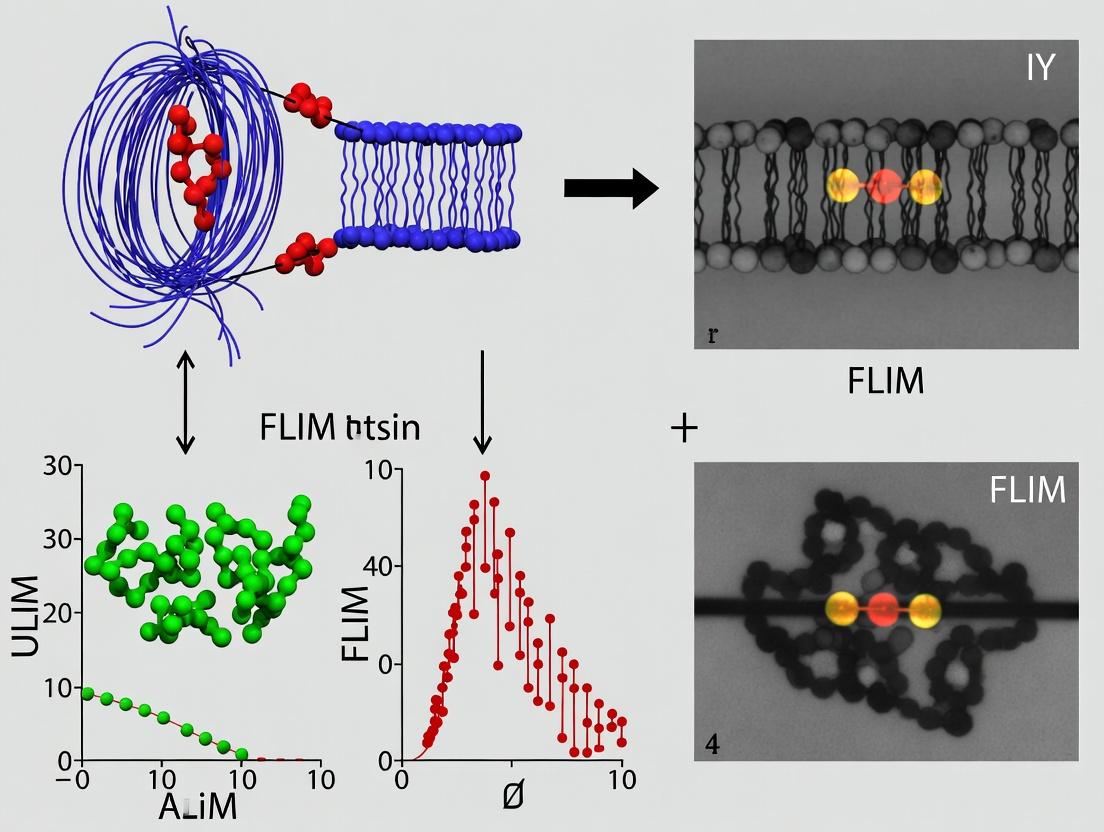
This article provides a comprehensive guide to Fluorescence Lifetime Imaging (FLIM), with a focus on its premier application in measuring Förster Resonance Energy Transfer (FRET) for studying actin-membrane interactions.
Decoding Cellular Dynamics: FLIM-FRET Imaging for Quantitative Analysis of Actin-Membrane Interactions
Abstract
This article provides a comprehensive guide to Fluorescence Lifetime Imaging (FLIM), with a focus on its premier application in measuring Förster Resonance Energy Transfer (FRET) for studying actin-membrane interactions. We cover the fundamental principles of FLIM-FRET, methodological workflows for live-cell imaging, troubleshooting strategies for common experimental challenges, and a comparative analysis with alternative techniques. Aimed at researchers and drug developers, this resource highlights how quantitative FLIM-FRET delivers unparalleled insights into cytoskeletal organization, membrane remodeling, and receptor signaling, offering critical data for fundamental cell biology and therapeutic discovery.
FLIM-FRET Fundamentals: Why Lifetimes Reveal the Secrets of Actin and Membrane Proximity
Application Notes for FLIM in Actin-Membrane Interaction Studies
Fluorescence Lifetime Imaging Microscopy (FLIM) provides a quantitative, environment-sensitive readout independent of fluorophore concentration, making it ideal for studying molecular interactions via Förster Resonance Energy Transfer (FRET). In the context of actin cytoskeleton dynamics at the plasma membrane, FLIM-FRET serves as a "molecular ruler" to map protein-protein interactions with spatial resolution in living cells. This is critical for research into cell signaling, motility, and the mechanistic action of cytoskeletal-targeting drugs.
Key Quantitative Parameters for FLIM-FRET Rulers
Table 1: Critical FLIM Parameters and FRET Indicators
| Parameter | Typical Value (Donor-only) | Value with FRET (Efficient) | Interpretation |
|---|---|---|---|
| Donor Lifetime (τ, ns) | 2.5 - 4.0 (e.g., EGFP) | Decrease by 15-50% | Direct indicator of energy transfer efficiency. |
| FRET Efficiency (E) | 0% | 15% - 50% (for proximal pairs) | Calculated as E = 1 - (τ_DA / τ_D). Proximity metric. |
| Apparent Distance (R, Å) | >100 Å (Förster Radius, R₀) | ~50 - 80 Å (if | R = R₀ * ((1/E)-1)^(1/6); provides angstrom-scale distance. |
| Förster Radius (R₀, Å)* | ~50-60 Å (e.g., GFP-RFP pair) | Constant for a given pair | Distance at which FRET efficiency is 50%. |
*Common pair: EGFP (Donor) / mRFP or mCherry (Acceptor); R₀ ~54 Å.
Table 2: FLIM-FRET Applications in Actin-Membrane Research
| Biological Question | Donor-Acceptor Pair | Measured Outcome | Drug Screening Relevance |
|---|---|---|---|
| Actin-Membrane Linker Engagement (e.g., ERM proteins) | GFP-Ezrin / FYP-Membrane | Lifetime decrease at cortex | Inhibitors of cytoskeletal tethering alter lifetime. |
| Small GTPase Activation (e.g., Cdc42, Rac) | GFP-PBD (Biosensor) | Lifetime shift upon binding | Targeting GTPase signaling pathways in cancer/metastasis. |
| Integrin Clustering & Adhesion Dynamics | GFP-Paxillin / RFP-Vinculin | Lifetime maps at adhesion sites | Evaluate anti-adhesion or pro-migration therapeutic compounds. |
| Membrane Phosphoinositide & Actin Nucleator Interaction | GFP-PIP2 Biosensor / RFP-N-WASP | Localized lifetime changes | Disruptors of membrane signaling nodes. |
Experimental Protocols
Protocol 1: Sample Preparation for FLIM-FRET in Live Cells
Aim: To express fluorescently tagged actin and membrane-interaction proteins for FLIM-FRET measurement.
- Cell Culture & Transfection: Seed appropriate cells (e.g., HeLa, MEFs, NIH-3T3) on 35mm glass-bottom dishes. At 60-70% confluency, co-transfect with plasmids encoding:
- Donor: Actin-Binding Protein (e.g., Utrophin CH domain) fused to EGFP.
- Acceptor: Membrane-Targeting Protein (e.g., Kras C-terminal motif) or interaction partner fused to mCherry.
- Use a 1:2 molar ratio (Donor:Acceptor) and a low total DNA amount (0.5-1 µg) to minimize overexpression artifacts.
- Expression Time: Incubate for 18-24 hours post-transfection to ensure proper protein folding and localization.
- Imaging Medium: Prior to imaging, replace medium with phenol-red-free medium supplemented with 25mM HEPES buffer (pH 7.4).
Protocol 2: Time-Domain FLIM Data Acquisition
Aim: To acquire donor fluorescence lifetime data in the presence and absence of the acceptor. Instrument Setup (Typical TCSPC-based system):
- Microscope: Inverted confocal or multiphoton microscope.
- Excitation: Two-photon laser tuned to 960 nm for simultaneous GFP/mCherry excitation, or 488 nm picosecond pulsed laser for EGFP.
- Detection: Donor emission is filtered through a 520/40 nm or 535/50 nm bandpass filter. A high-speed photomultiplier tube (PMT) and TCSPC module are used.
- Acquisition Parameters:
- Pixel dwell time: 10-50 µs.
- Accumulate photons until the peak pixel count in the donor channel reaches 1000-2000 counts for sufficient SNR.
- Acquire control samples (Donor-only) first to establish reference lifetime (τ_D).
Protocol 3: FLIM Data Analysis and FRET Efficiency Calculation
Aim: To calculate lifetimes and generate FRET efficiency/distance maps.
- Lifetime Decay Fitting: Use dedicated software (e.g., SPCImage, FLIMfit, or open-source tools like FLIMJ).
- Fit the pixel-wise fluorescence decay curve, I(t), to a double-exponential model:
I(t) = α₁ exp(-t/τ₁) + α₂ exp(-t/τ₂) + C- Where τ are lifetimes, α are amplitudes, and C is background.
- Calculate the amplitude-weighted mean lifetime:
τ_mean = (α₁τ₁ + α₂τ₂) / (α₁ + α₂). - FRET Efficiency Map: Compute on a pixel-by-pixel basis:
E = 1 - (τ_DA / τ_D)- Where τDA is the mean lifetime in the presence of acceptor, and τD is the mean lifetime from the donor-only reference.
- Apparent Distance Map (Optional): Compute using the known R₀ for the fluorophore pair:
R = R₀ * ((1/E) - 1)^(1/6)
Mandatory Visualizations
Diagram 1: FLIM-FRET Experimental Workflow (85 chars)
Diagram 2: Actin Nucleation Pathway & FLIM Probes (100 chars)
The Scientist's Toolkit
Table 3: Key Research Reagent Solutions for FLIM-FRET Actin Studies
| Item | Function & Relevance |
|---|---|
| EGFP/mCherry FRET Pair Plasmids | Genetically encoded, well-characterized donor/acceptor with suitable R₀ (~54 Å) for intramolecular distance measurement. |
| Actin Biosensor (e.g., F-tractin, LifeAct, Utrophin) | Tags for labeling actin structures without severe disruption of dynamics. Utrophin CH domain is preferred for minimal perturbation. |
| Membrane Targeting Motif Tags (e.g., Kras C-term, Lyn11) | Fused to acceptor fluorophore to localize probes to the plasma membrane for interaction studies with cortical actin. |
| Phenol-Red Free Imaging Medium with HEPES | Reduces background autofluorescence and maintains pH stability during time-course FLIM measurements. |
| TCSPC FLIM System (e.g., Becker & Hickl, PicoQuant) | Time-Correlated Single Photon Counting hardware and software for precise lifetime decay curve acquisition. |
| FLIM Analysis Software (SPCImage, FLIMfit, FLIMJ) | Essential for fitting complex decay curves, calculating lifetime maps, and deriving FRET efficiency. |
| Validated FRET Positive/Negative Control Constructs (e.g., tandem fusions) | Critical for calibrating system performance and validating observed lifetime changes are due to FRET. |
| Cytoskeletal Modulator Drugs (e.g., Latrunculin A, Jasplakinolide, CK-666) | Pharmacological tools to perturb actin dynamics and validate the specificity of observed FLIM-FRET changes. |
Application Notes: FLIM-FRET for Quantifying Actin-Membrane Proximity
The interface between the actin cytoskeleton and the plasma membrane is a hub for cellular signaling, mechanics, and trafficking. Förster Resonance Energy Transfer (FRET) measured by Fluorescence Lifetime Imaging Microscopy (FLIM) provides a quantitative, ratiometric, and concentration-independent method to probe nanometer-scale interactions at this dynamic interface.
Core Principle: FLIM-FRET utilizes a donor fluorophore (e.g., GFP) tagged to an actin-binding protein (Lifeact) and an acceptor (e.g., mCherry) tagged to a membrane-targeting motif (e.g., the KRas C-terminus or Lyn kinase N-terminus). Efficient energy transfer from donor to acceptor reduces the donor's fluorescence lifetime. This reduction ((\tau) decrease) is a direct indicator of molecular proximity (<10 nm).
Key Quantitative Insights from Recent Studies:
Table 1: Exemplary FLIM-FRET Measurements at the Actin-Membrane Interface
| Donor-Acceptor Pair | Experimental System | Donor Lifetime (No FRET) | Donor Lifetime (With FRET) | FRET Efficiency (%) | Biological Insight |
|---|---|---|---|---|---|
| GFP-Lifeact / mCherry-KRas | Live MEF Cells | 2.50 ns ± 0.05 | 2.15 ns ± 0.08 | ~14% | Basal actin-membrane linkage at nanodomains. |
| GFP-Lifeact / mCherry-Lyn | HeLa Cells, Latrunculin A treated | 2.52 ns ± 0.06 | 2.48 ns ± 0.07 | ~1.6% | Actin disruption abolishes specific linkage. |
| GFP-Moesin / mCherry-CAAX | Drosophila Embryos, Apical Constriction | 2.60 ns ± 0.10 | 2.10 ns ± 0.12 | ~19% | ERM proteins mediate force transmission during morphogenesis. |
Applications in Drug Development: This approach can screen for compounds that modulate cytoskeletal-membrane coupling, relevant to cancer metastasis (invadopodia), immunology (immune synapse), and cardiovascular disease (endothelial barrier integrity). A compound disrupting this interface would show a dose-dependent increase in donor lifetime.
Protocol: FLIM-FRET Imaging of Actin-Plasma Membrane Interaction
Objective: To measure nanometer-scale proximity between F-actin and the inner leaflet of the plasma membrane in live cells using FLIM-FRET.
I. Materials and Transfection
- Cell Line: HeLa or NIH/3T3 cells.
- Plasmids:
- pLifeact-GFP (Donor): labels F-actin.
- pmCherry-CAAX (Acceptor): targets to plasma membrane via prenylation.
- Transfection Reagent: Polyethylenimine (PEI) or similar for 24-hour expression.
- Imaging Medium: FluoroBrite DMEM supplemented with 10% FBS and 25mM HEPES.
- Control Samples: Cells expressing only the Lifeact-GFP donor.
II. Sample Preparation & Imaging
- Seed cells on 35mm glass-bottom dishes 24h before transfection.
- Transfect with donor-only or donor + acceptor plasmid DNA at a 1:2 molar ratio.
- Incubate for 18-24h at 37°C, 5% CO₂.
- Prior to imaging, replace medium with pre-warmed Imaging Medium.
- Image Acquisition: Use a time-correlated single-photon counting (TCSPC) FLIM system (e.g., PicoQuant, Becker & Hickl, or Leica STELLARIS) on an inverted confocal microscope.
- Excitation: 480 nm pulsed laser (40-80 MHz repetition rate).
- Emission: Collect GFP emission through a 525/50 nm bandpass filter.
- Acquisition: Collect photons until the peak donor channel count reaches ~2,000 counts (or for 90-180 seconds) to ensure sufficient statistics for lifetime fitting.
III. Data Analysis with FLIM Software
- Lifetime Fitting: Fit the donor fluorescence decay histogram in each pixel to a double-exponential model:
I(t) = α₁ exp(-t/τ₁) + α₂ exp(-t/τ₂)where α represents amplitude, τ represents lifetime. - Calculate Amplitude-Weighted Mean Lifetime:
τₘₑₐₙ = (α₁τ₁ + α₂τ₂) / (α₁ + α₂) - Generate Lifetime Maps: Color-code images based on τₘₑₐₙ values.
- FRET Efficiency Calculation: Compare donor-acceptor and donor-only samples.
E = 1 - (τₘₑₐₙ(DA) / τₘₑₐₙ(D))where τₘₑₐₙ(DA) is the lifetime with acceptor present, and τₘₑₐₙ(D) is the donor-only lifetime. - Statistical Analysis: Analyze lifetimes from whole cells or regions of interest (ROIs, e.g., peripheral membrane ruffles) from ≥15 cells per condition.
Visualizing Key Pathways and Workflows
Diagram Title: FLIM-FRET Principle & Experimental Workflow
Diagram Title: Core Actin-Membrane Linkage Signaling Axis
The Scientist's Toolkit: Key Research Reagent Solutions
Table 2: Essential Reagents for FLIM Imaging of Actin-Membrane Interactions
| Reagent / Material | Function / Role | Example Product / Target |
|---|---|---|
| FLIM-Compatible Actin Probe | Labels F-actin structure with minimal perturbation for donor or acceptor tagging. | Lifeact (peptide), Utrophin calponin-homology domain, F-tractin. |
| Membrane-Targeting Tag | Targets acceptor fluorophore to the plasma membrane inner leaflet. | CAAX box (prenylation), Lyn N-terminus (myristoylation/palmitoylation), PLCδ-PH domain (PIP₂ binding). |
| Fluorophore Pair for FRET | Donor and acceptor with spectral overlap, high quantum yield, and photosensitivity. | GFP/mCherry, mClover3/mRuby3, SNAP-tag substrates (SNAP-Cell 505/647). |
| TCSPC FLIM System | Hardware/software for precise measurement of fluorescence lifetime decay. | PicoHarp 300, SymPhoTime, SPC-150 NG modules coupled to confocal microscopes. |
| Cytoskeletal Modulators | Pharmacological controls to validate specificity of observed interactions. | Latrunculin A (actin depolymerizer), Jasplakinolide (actin stabilizer), CK-666 (Arp2/3 inhibitor). |
| Live-Cell Imaging Medium | Maintains cell health during imaging, minimizes autofluorescence and phototoxicity. | FluoroBrite DMEM, CO₂-independent medium with serum and HEPES. |
In the study of cellular mechanics and signaling, the interface between the actin cytoskeleton and the plasma membrane is a dynamic hub. Förster Resonance Energy Transfer (FRET) biosensors, especially when quantified via Fluorescence Lifetime Imaging Microscopy (FLIM), provide a powerful, rationetric method to visualize molecular activities like Rho GTPase signaling, lipid modifications, and force generation at this crucial junction. FLIM-FRET is preferred for its insensitivity to fluorophore concentration, excitation intensity, and photobleaching, offering robust quantitative data. This guide details the selection of FRET pairs and protocols optimized for investigating actin-membrane interactions.
Key FRET Pair Selection Criteria
The efficiency of FRET (E) depends critically on the Förster distance (R₀) of the donor-acceptor pair and the actual separation (r). The relationship is E = 1 / [1 + (r/R₀)⁶]. Selection must balance spectral properties, sensor design, and experimental goals.
Table 1: Quantitative Comparison of Common FRET Pairs for Actin-Membrane Biosensors
| Donor (Ex/Em nm) | Acceptor (Ex/Em nm) | R₀ (Å) | Advantages for Actin-Membrane Studies | Common Biosensor Examples |
|---|---|---|---|---|
| CFP (~434/476) | YFP (~514/527) | ~49 | Classic pair; wide availability; well-characterized. | Raichu-RhoA, F-tractin tension sensors. |
| GFP (~488/510) | RFP (~558/583) | ~51 | Brighter than CFP/YFP; better for thick samples. | Actin-cytoskeleton tension modules. |
| mTurquoise2 (~434/474) | cpVenus (~516/528) | ~58 | Higher quantum yield & brightness; superior photon count for FLIM. | Newer RhoGTPase biosensors. |
| mCerulean3 (~433/475) | mCitrine (~516/529) | ~53 | Excellent photostability; mono-exponential decay ideal for FLIM. | PEM (Perturbation Effect Measurement) tension probes. |
| mTFP1 (~462/492) | mCitrine (~516/529) | ~57 | Large Stokes shift; reduces direct acceptor excitation. | Used in optimized membrane localization sensors. |
Experimental Protocols
Protocol 1: FLIM-FRET Calibration and Imaging of a RhoA Biosensor
Objective: To measure RhoA GTPase activity at the leading edge of a migrating cell using a Raichu-RhoA FRET biosensor and FLIM.
Materials:
- Cells (e.g., HT-1080 fibrosarcoma, NIH-3T3 fibroblasts)
- Raichu-RhoA plasmid (CFP-YFP FRET pair)
- Transfection reagent (e.g., Lipofectamine 3000)
- Glass-bottom culture dishes (No. 1.5)
- Live-cell imaging medium (FluoroBrite DMEM, + 10% FBS, + 25mM HEPES)
- Confocal microscope with FLIM capability (e.g., time-correlated single photon counting, TCSPC)
Procedure:
- Seed and Transfect: Seed cells at 60% confluency in a glass-bottom dish 24h prior. Transfect with Raichu-RhoA plasmid using manufacturer's protocol. Incubate for 24-48h.
- Prepare for Imaging: Replace medium with pre-warmed live-cell imaging medium. Equilibrate dish on microscope stage (37°C, 5% CO₂) for 30 min.
- Acquire FLIM Data: a. Use a 440 nm pulsed laser for CFP excitation. b. Collect donor (CFP) emission using a 470/40 nm bandpass filter. c. Set TCSPC parameters: 80 MHz repetition rate, collect until peak donor channel counts reach 10,000 per pixel, or for 90-180 seconds per field. d. Acquire a reference lifetime sample (e.g., untransfected cells or cells expressing donor-only construct).
- Data Analysis: a. Fit lifetime decay curves per pixel using a bi-exponential model: I(t) = α₁ exp(-t/τ₁) + α₂ exp(-t/τ₂). b. Calculate the amplitude-weighted mean lifetime: τmean = (α₁τ₁ + α₂τ₂). c. Generate a color-coded τmean map. A decrease in donor lifetime indicates FRET and active RhoA. d. Quantify lifetimes in regions of interest (e.g., leading edge vs. cell body).
Protocol 2: Validating Membrane Localization of a Biosensor
Objective: To confirm co-localization of an actin-membrane biosensor with the plasma membrane.
Materials:
- Cells expressing the FRET biosensor
- CellMask Deep Red Plasma Membrane Stain (or equivalent)
- Confocal microscope
Procedure:
- Stain Membrane: Incubate live cells expressing the biosensor with CellMask Deep Red (1:1000 dilution in imaging medium) for 5 min at 37°C.
- Wash and Image: Replace with fresh imaging medium. Acquire simultaneous two-channel images: the donor channel of the biosensor and the far-red channel of the membrane stain.
- Analysis: Calculate Pearson's Correlation Coefficient (PCC) or Mander's Overlap Coefficient between the two channels using image analysis software (e.g., ImageJ/Fiji). A PCC > 0.7 indicates strong membrane localization.
Visualization: Pathways and Workflows
Title: Signaling Pathway from Stimulus to FLIM-FRET Readout
Title: FLIM-FRET Experimental Workflow
The Scientist's Toolkit: Research Reagent Solutions
Table 2: Essential Materials for Actin-Membrane FRET/FLIM Experiments
| Item | Function/Benefit | Example Product/Specification |
|---|---|---|
| Genetically-Encoded FRET Biosensor Plasmids | Report on specific molecular activity (e.g., RhoA, Rac1, tension) at the actin-membrane interface. | Raichu-RhoA, ARAP3, F-tractin based tension sensors. |
| Cell Membrane Stain | Validates correct biosensor localization. | CellMask Deep Red, DiI, FM dyes. |
| Live-Cell Imaging Medium | Maintains cell health without background fluorescence. | FluoroBrite DMEM, Leibovitz's L-15 medium. |
| No. 1.5 High-Precision Coverslips/Dishes | Optimal thickness for high-resolution microscopy objectives. | MatTek dishes, Ibidi µ-Slides. |
| Transfection Reagent | Efficient delivery of biosensor plasmids into target cells. | Lipofectamine 3000, FuGENE HD, Nucleofector. |
| FLIM Calibration Standard | Validates instrument performance; provides reference lifetime. | Coumarin 6 (τ ≈ 2.5 ns in ethanol), fluorescent beads. |
| Time-Correlated Single Photon Counting (TCSPC) Module | Essential hardware for precise fluorescence lifetime measurement. | Becker & Hickl SPC-150, PicoHarp 300. |
| FLIM Data Analysis Software | Fits lifetime decay curves and generates lifetime maps. | SPCImage, SymPhoTime, TRI2 (ImageJ). |
Fluorescence Lifetime Imaging Microscopy (FLIM) provides a direct, quantitative measure of Förster Resonance Energy Transfer (FRET) efficiency that is independent of fluorophore concentration and excitation intensity. This is critical for studying dynamic actin-membrane interactions, where protein expression levels and local concentrations at the cortex, filopodia, and lamellipodia are highly variable and sensitive to experimental conditions. Intensity-based FRET methods (e.g., acceptor photobleaching, ratio imaging) are confounded by these factors, leading to ambiguous interpretations of molecular interactions.
Table 1: Quantitative Comparison of FLIM-FRET vs. Intensity-Based FRET Methods
| Parameter | FLIM-FRET | Acceptor Photobleaching FRET | Sensitized Emission/Ratio FRET |
|---|---|---|---|
| Primary Readout | Donor fluorescence lifetime (τ) | Donor intensity change post-bleach | Donor/Acceptor emission ratio |
| Quantitative Basis | Directly proportional to FRET efficiency: E = 1 - (τDA/τD) | Calculated efficiency: E = 1 - (ID(pre)/ID(post)) | Calibration factors (G, α, β) required for E calculation |
| Concentration Dependence | Independent of fluorophore concentration. | Dependent on complete acceptor bleaching, itself concentration-dependent. | Highly sensitive to donor:acceptor expression ratio. |
| Artifact Vulnerability | Low; robust to spectral bleed-through, sample movement, photobleaching. | High; requires irreversible bleaching, can cause phototoxicity, drift. | High; requires meticulous correction for spectral crosstalk. |
| Spatial Mapping | Excellent; pixel-by-pixel lifetime maps provide spatial distribution of interaction. | Limited; comparison of pre- and post-bleach regions. | Good, but maps are sensitive to local expression variations. |
| Typical Precision (E) | ±0.02 - 0.05 (high signal) | ±0.05 - 0.15 (varies with bleaching) | ±0.08 - 0.2 (depends on calibration) |
| Suitability for Live-Cell Actin Dynamics | Excellent; minimal perturbation, true kinetic data. | Poor; destructive, single time-point. | Moderate; rapid but requires stable expression. |
Application Note: Quantifying RhoA Activation at the Leading Edge via FLIM-FRET
Research Context: To understand membrane protrusion driven by actin polymerization, measuring the spatiotemporal activity of small GTPases like RhoA at the plasma membrane is essential. This protocol uses a FLIM-FRET biosensor (e.g., Raichu-RhoA) where GTP-bound, active RhoA induces a conformational change, bringing donor (e.g., mTurquoise2) and acceptor (e.g., cpVenus) into proximity, resulting in a detectable decrease in donor lifetime.
Detailed FLIM-FRET Protocol for Live-Cell RhoA Imaging
Objective: To acquire quantitative maps of RhoA activity in live MDA-MB-231 cells during lamellipodial protrusion.
Materials & Reagents (See Toolkit Section 4)
- Cells: MDA-MB-231 (highly motile).
- Biosensor: pRaichu-RhoA (mTurquoise2/cpVenus).
- Microscope: Confocal or multiphoton system with time-correlated single photon counting (TCSPC) module.
- Software: For FLIM analysis (e.g., SPCImage, FLIMfit, SymPhoTime).
Procedure:
Cell Preparation & Transfection:
- Plate cells on 35mm glass-bottom dishes 24h prior.
- Transfect with pRaichu-RhoA plasmid using a suitable transfection reagent (e.g., Lipofectamine 3000). Use minimal DNA (0.5-1 µg/dish) to avoid overexpression artifacts.
- Culture for 24-48h post-transfection to achieve optimal, non-perturbing expression.
Microscope Setup & Calibration:
- Laser: Tune a pulsed diode laser (e.g., 440 nm) to the donor's (mTurquoise2) excitation peak. Set repetition rate to 40 MHz.
- Detection: Configure spectral detectors. Use a 470/40 nm bandpass filter to collect donor-only emission for lifetime reference. Use a 535/30 nm bandpass filter for FRET channel emission. For FLIM, route only the donor channel signal to the TCSPC detector.
- Reference Measurement: Image cells expressing donor-only (mTurquoise2) construct to establish the reference lifetime (τD). Acquire data until peak photon count reaches 10,000 for a representative cytoplasmic region.
Image Acquisition for FRET Sample:
- Transfer dish to an environmental chamber (37°C, 5% CO2).
- Locate a cell with moderate biosensor expression and clear lamellipodial activity.
- FLIM Acquisition Parameters: Set pixel dwell time to achieve 500-1000 photons per pixel in the brightest region. Acquire a 256x256 pixel image over 90-120 seconds to build a sufficient photon count histogram per pixel.
- Parallel Intensity Imaging: Acquire a standard intensity image of the FRET channel (acceptor emission) to aid in cell morphology assessment.
Data Analysis (Single Exponential Fit Model):
- Load the FLIM data file (.sdt, .ptu, etc.) into analysis software.
- Bin pixels 2x2 or 3x3 if necessary to ensure a minimum of 100 photons per binned pixel for reliable fitting.
- Fit the donor decay curve for each pixel using a single exponential reconvolution model:
I(t) = IRF ⊗ (A * exp(-t/τ)) + B. Where IRF is the Instrument Response Function, τ is the lifetime, A is amplitude, B is background. - Generate Parameter Maps: Create a false-color lifetime (τ) map and a corresponding FRET efficiency map using the formula:
E = 1 - (τ<sub>DA</sub> / τ<sub>D</sub>), where τD is the reference donor-only lifetime. - Region of Interest (ROI) Analysis: Draw ROIs at the leading edge lamellipodia, the cell body, and the trailing edge. Export the mean E value and standard deviation for each ROI for statistical comparison.
Diagram 1: RhoA FLIM-FRET Biosensor Principle
Diagram 2: FLIM-FRET Experimental Workflow
Protocol: Validating a Pharmacological Perturbation on Actin-Membrane Linkage
Research Context: To assess how a novel drug candidate (e.g., an ezrin-radixin-moesin (ERM) inhibitor) affects the linkage between cortical actin and the plasma membrane, using a FRET-based tension sensor (e.g., an actin-plasma membrane linker construct with TSMod).
Objective: Compare the FRET efficiency (via FLIM) of a membrane-cytoskeleton tension sensor in control versus drug-treated conditions.
Procedure:
- Cell Preparation: Co-transfect cells with the tension sensor (e.g., a vinculin-based TSMod) and a membrane marker (e.g., Lyn-mCherry) for segmentation.
- Control FLIM Acquisition: For 10 control cells, acquire FLIM data of the donor fluorophore within the tension sensor as described in Section 2.1.
- Treatment & Test Acquisition:
- Treat cells with the candidate ERM inhibitor (e.g., 10 µM) for 30 minutes.
- Acquire FLIM data for 10 treated cells under identical acquisition parameters.
- Positive Control: Treat a separate set of cells with Latrunculin-A (1 µM, 30 min) to depolymerize actin, which should maximally increase FRET (reduce tension).
- Analysis & Statistics:
- Use the membrane marker channel to create a mask for the cell cortex.
- Apply the mask to the FLIM efficiency (E) map to extract cortical E values.
- Perform statistical testing (e.g., unpaired t-test) between the mean cortical E of control and drug-treated populations. An increase in E indicates a reduction in mechanical tension at the linkage.
Table 2: Expected FLIM-FRET Results from Tension Sensor Perturbation Experiment
| Condition | Predicted Effect on Molecular Tension | Expected Donor Lifetime (τ) | Expected FRET Efficiency (E) | Quantitative Interpretation |
|---|---|---|---|---|
| Control (Untreated) | Baseline tension | τcontrol (Reference) | Econtrol | Baseline linkage force. |
| ERM Inhibitor | Decreased tension (linkage weakened) | τ < τcontrol | E > Econtrol | Sensor is more relaxed, donor and acceptor closer. |
| Latrunculin-A (Actin Depol.) | Strongly Decreased tension | τ << τcontrol | E >> Econtrol | Actin cortex disassembled, sensor fully relaxed. |
| Calyculin A (Actin Hyper-contract) | Increased tension | τ > τcontrol | E < Econtrol | Increased myosin force pulls sensor open. |
The Scientist's Toolkit: Essential Research Reagents & Materials
Table 3: Key Reagents for FLIM-FRET in Actin-Membrane Research
| Item Name | Category | Function & Rationale | Example Product/Specification |
|---|---|---|---|
| mTurquoise2 | Donor Fluorophore | Optimal FRET donor due to long lifetime (~4.0 ns), high quantum yield, and mono-exponential decay. Provides a large dynamic range for lifetime change detection. | mTurquoise2 plasmid (Addgene #54842). |
| cpVenus (or YFP) | Acceptor Fluorophore | Bright, photostable acceptor well-suited for FRET with mTurquoise2/CFP donors. Critical for intensity-based calibration if needed. | cpVenus plasmid. |
| Raichu Biosensors | FRET Biosensors | Validated, genetically-encoded sensors for small GTPase activity (e.g., RhoA, Cdc42, Rac1). Essential for probing signaling at membrane. | pRaichu-RhoA (Addgene #18666). |
| TSMod Tension Sensors | FRET Biosensors | Genetically-encoded sensors that change FRET with mechanical tension. Used to quantify forces across specific actin-membrane linker proteins. | Vinculin-TSMod. |
| Lipofectamine 3000 | Transfection Reagent | For efficient, low-toxicity plasmid delivery into mammalian cells. Consistent transfection efficiency is critical for reproducible FLIM. | Thermo Fisher L3000001. |
| #1.5 Glass-Bottom Dish | Imaging Vessel | High-precision cover glass thickness (0.17mm) is essential for optimal objective lens performance and high-resolution FLIM. | MatTek P35G-1.5-14-C. |
| Latrunculin A | Pharmacological Agent | Actin depolymerizing agent. Serves as a positive control in tension sensor experiments to validate FRET increase upon tension loss. | Cytoskeleton, Inc. LAT-A. |
| TCSPC Module | Instrumentation Hardware | The core component for FLIM. Counts single photons and measures their arrival time relative to the laser pulse, building the decay histogram. | Becker & Hickl SPC-150; PicoQuant PicoHarp 300. |
A Step-by-Step FLIM-FRET Protocol for Live-Cell Imaging of Actin-Membrane Dynamics
Fluorescence Lifetime Imaging Microscopy (FLIM) is a critical tool for investigating protein-protein interactions and the biophysical microenvironment in living cells. Within the context of studying actin cytoskeleton dynamics at the plasma membrane, FLIM applied to FRET (Förster Resonance Energy Transfer) probes (e.g., actin-binding proteins paired with membrane-targeted fluorophores) can reveal spatial and temporal organization of signaling complexes. The choice of FLIM detection technology—Time-Correlated Single Photon Counting (TCSPC) or Wide-Field Time-Gating—fundamentally dictates experimental design, data quality, and biological interpretation.
The following table summarizes the key operational and performance characteristics of the two major FLIM systems, critical for planning experiments in dynamic cellular systems.
Table 1: TCSPC vs. Wide-Field Time-Gating FLIM Systems
| Parameter | TCSPC (Point-Scanning Confocal/Multiphoton) | Wide-Field Time-Gating (e.g., gated CCD/CMOS) |
|---|---|---|
| Acquisition Principle | Records arrival time of single photons relative to laser pulse. Builds histogram per pixel. | Captures a series of full images at defined delay times after the excitation pulse. |
| Temporal Resolution | Very High (< 25 ps typical). | Moderate (200 - 500 ps, depends on gate width). |
| Spatial Resolution | Excellent (confocal/multiphoton optical sectioning). | Limited (wide-field, no inherent optical sectioning). Can be coupled to TIRF. |
| Acquisition Speed | Slow (seconds to minutes per image). Speed vs. SNR trade-off. | Fast (can be video-rate for single-phase measurements). |
| Excitation Regime | Pulsed lasers (Ti:Sapph, picosecond diode, supercontinuum). | Pulsed LEDs, diode lasers, or amplified/frequency-doubled lasers. |
| Typical Detector | Photomultiplier Tubes (PMTs) or Hybrid Detectors. | Gated Image Intensifier coupled to CCD/sCMOS. |
| Best Suited For | High-precision lifetime determination, multi-exponential decay analysis, deep-tissue imaging. | High-speed dynamics, large field-of-view, photosensitive samples, TIRF-FLIM. |
| Primary Limitation | Slow acquisition, potential for photobleaching in scanning. | Lower temporal resolution, complex calibration for multi-exponential fits. |
| Ideal for Actin Studies | Detailed mapping of lifetime heterogeneity in complex 3D structures (e.g., filopodia, stress fibers). | Rapid kinetics of membrane-cytoskeleton linkage during processes like endocytosis or cell edge protrusion. |
Experimental Protocols for Actin-Membrane FLIM
Protocol A: TCSPC-FLIM for Mapping Actin-Protein Interaction via FRET in Fixed Cells. Objective: To quantify the interaction between a membrane-targeted protein (e.g., CAAX-tagged donor) and an actin-binding protein (e.g., LifeAct-tagged acceptor) using FRET-FLIM.
- Sample Preparation: Transfect cells with plasmids encoding donor (e.g., mCherry-CAAX) and acceptor (e.g., GFP-LifeAct). Include donor-only control. Fix with 4% PFA for 15 min.
- System Setup (TCSPC):
- Mount sample on a confocal or multiphoton microscope equipped with TCSPC module.
- Use a 560 nm pulsed diode laser (40-80 MHz rep rate) for mCherry excitation.
- Set emission filter to 580-650 nm.
- Set pixel dwell time to 50-100 µs, frame size to 256x256. Adjust laser power to keep photon count below 1-2% of laser rep rate to avoid pile-up.
- Data Acquisition: Acquire images until 1000-2000 photons are collected at the peak pixel in regions of interest (cell membrane). For donor-only sample, acquire under identical settings.
- Lifetime Analysis: Fit pixel-wise decay histograms using a bi-exponential model in software (e.g., SPCImage, SymPhoTime). Calculate amplitude-weighted mean lifetime (τₘ).
- FRET Efficiency Calculation: Calculate FRET efficiency E = 1 - (τₘ(DA) / τₘ(D)), where τₘ(DA) is lifetime in the presence of acceptor and τₘ(D) is lifetime from donor-only control.
Protocol B: Wide-Field Time-Gated FLIM for Live-Cell Actin Dynamics. Objective: To monitor rapid changes in the actin microenvironment at the basal membrane during drug perturbation.
- Sample Preparation: Culture cells expressing a fluorescent actin biosensor (e.g., GFP-LifeAct) in glass-bottom dishes. Switch to live-cell imaging medium.
- System Setup (Time-Gated):
- Use a wide-field epifluorescence or TIRF microscope with a gated intensifier and sCMOS camera.
- Use a 470 nm pulsed LED (10-40 MHz) for excitation.
- Set a minimum of 8 time gates across the fluorescence decay. Gate width typically 200-500 ps.
- Data Acquisition (Kinetics):
- Focus on the basal membrane (using TIRF if available).
- Acquire a reference lifetime sample (e.g., fluorescein) for system calibration.
- Acquire a pre-stimulus time-series (e.g., 10 frames at 5-sec intervals).
- Add drug (e.g., Latrunculin A, 1 µM) without moving the sample.
- Immediately resume time-series acquisition for 5-10 minutes.
- Rapid Lifetime Analysis: Use a rapid phasor or rapid fitting approach for each time-gated image stack. Generate lifetime maps for each time point. Analyze mean lifetime in user-defined regions at the cell periphery over time.
Visualization: Experimental Pathways and Workflows
Diagram Title: TCSPC FLIM Data Acquisition Workflow
Diagram Title: FLIM-FRET Probes Actin-Membrane Signaling
The Scientist's Toolkit: Key Research Reagents & Materials
Table 2: Essential Reagents for FLIM of Actin-Membrane Interactions
| Item Name | Function/Description | Example/Catalog Context |
|---|---|---|
| Live-Cell Actin Biosensor | Fluorescent protein fused to actin-binding peptide (e.g., LifeAct, F-tractin). Allows visualization of actin dynamics without severe disruption. | GFP-LifeAct, mCherry-UtrCH (utrophin calponin homology domain). |
| FRET Pair Constructs | Genetically encoded donor and acceptor fluorophores linked to proteins of interest to probe molecular proximity. | Donor: mTurquoise2-CAAX (membrane). Acceptor: YPet-LifeAct (actin). |
| Glass-Bottom Culture Dishes | High optical quality #1.5 coverslip bottom for high-resolution and TIRF microscopy. | MatTek dishes, CellVis imaging dishes. |
| Live-Cell Imaging Medium | Phenol-red free medium with buffers (e.g., HEPES) to maintain pH without CO₂ during imaging. | FluoroBrite DMEM, Leibovitz's L-15 medium. |
| Cytoskeleton Modulator Drugs | Pharmacological tools to perturb actin dynamics as positive/negative controls. | Latrunculin A (depolymerizer), Jasplakinolide (stabilizer). |
| Fluorescent Lifetime Reference Standard | Dye with known, single-exponential lifetime for system calibration and validation. | Fluorescein (τ ~4.0 ns in 0.1M NaOH), Coumarin 6. |
| Mounting Medium (Fixed) | Prolong Gold/Diamond with antifade for preserving fluorescence in fixed samples. | Invitrogen ProLong Diamond Antifade Mountant. |
| Cell Transfection Reagent | For introducing plasmid DNA encoding fluorescent constructs into cells. | Lipofectamine 3000, Fugene HD, or electroporation systems. |
This application note details protocols for preparing samples for Förster Resonance Energy Transfer (FRET)-based Fluorescence Lifetime Imaging Microscopy (FLIM) to investigate actin-membrane interactions. The efficacy of FLIM-FRET measurements is critically dependent on rigorous sample preparation, including the precise expression of fluorescently tagged proteins, incorporation of specific labels, and implementation of stringent controls to ensure data validity.
Transfection Protocols for FLIM-FRET Constructs
Successful FLIM requires optimal expression levels to avoid artifacts from protein aggregation or overexpression.
Mammalian Cell Transfection for Actin and Membrane Probes
Objective: Co-express FRET-compatible fluorescent protein (FP) pairs tagging actin (e.g., LifeAct) and a membrane-targeting molecule (e.g., Lyn11 targeting the inner leaflet).
Protocol: Lipofection-based Transfection (HEK293T Cells)
- Day 1: Seed 2x10^5 cells per well in a 6-well plate in 2 mL complete growth medium. Incubate at 37°C, 5% CO₂ until ~70% confluent.
- Day 2 (Transfection): a. For each well, prepare two microcentrifuge tubes. b. Tube A (DNA): Dilute 1.0 µg of total plasmid DNA (e.g., a 1:1 molar ratio of donor and acceptor constructs) in 100 µL of serum-free Opti-MEM. c. Tube B (Lipid): Dilute 3.0 µL of Lipofectamine 3000 reagent in 100 µL of serum-free Opti-MEM. Incubate for 5 min at RT. d. Combine Tube A and Tube B. Mix gently. Incubate for 20 min at RT to form liposome-DNA complexes. e. Add the 200 µL complex mixture dropwise to the well. Gently rock the plate. f. Incubate cells for 24-48 hours at 37°C, 5% CO₂ before imaging.
Critical Notes: Titrate DNA ratios (from 1:1 to 1:4 donor:acceptor) to optimize FRET efficiency. Expression time should be minimized (often 24h) to avoid aberrant cytoskeletal organization.
Alternative: Stable Cell Line Generation
For consistent expression levels, generate stable lines using selection antibiotics (e.g., Puromycin, G418) for 2-3 weeks, followed by fluorescence-activated cell sorting (FACS) to isolate cells with moderate expression.
Table 1: Common FRET Pairs for Actin-Membrane FLIM
| Donor FP | Acceptor FP | Förster Radius (R₀ in nm) | Ideal For Membrane Probe |
|---|---|---|---|
| mCerulean3 | mVenus | 5.4 | Lyn11-mVenus, KRas-mVenus |
| EGFP | mCherry | 5.1 | PH(PLCδ)-mCherry |
| mTurquoise2 | mNeonGreen | 6.2 | Lyn11-mNeonGreen |
Fluorescent Labeling Strategies
Genetic Encoding with FPs
As described in Table 1. Use monomeric FPs to prevent oligomerization artifacts.
Chemical Labeling of Specific Membrane Components
Protocol: Labeling of Cholesterol-Rich Domains with FLIM-Compatible Dye
- Prepare a 1 mM stock solution of a fluorescent cholesterol analog (e.g., TopFluor Cholesterol) in ethanol.
- Serum-starve cells (in imaging dish) for 30 min in phenol-red free medium.
- Dilute TopFluor Cholesterol to 1 µM in serum-free, phenol-red free imaging medium.
- Incubate cells with the dye solution for 2 minutes at 37°C.
- Wash cells 3x with warm, dye-free imaging medium.
- Immediately proceed to FLIM acquisition.
Mandatory Controls for FLIM-FRET Interpretation
Reliable FLIM data requires controls to distinguish specific FRET from artifacts like donor-acceptor spectral bleed-through or environmental quenching.
Control Sample Preparation Protocols
1. Donor-Only Control:
- Transfect cells with the donor-tagged construct (e.g., LifeAct-mCerulean3) alone.
- Purpose: Establishes the baseline fluorescence lifetime (τ_D) in the absence of FRET. Any shortening in experimental samples indicates potential FRET.
2. Acceptor-Only Control:
- Transfect cells with the acceptor-tagged construct (e.g., Lyn11-mVenus) alone.
- Purpose: Used during FLIM setup to ensure no signal from the acceptor is detected in the donor channel (bleed-through control).
3. Positive FRET Control:
- Express a tandem fusion protein of donor and acceptor linked by a short, flexible peptide (e.g., mCerulean3-5aa-mVenus).
- Purpose: Provides a reference for maximum FRET efficiency under the imaging conditions, confirming system sensitivity.
4. Negative Control (Non-Interacting Pair):
- Co-express a donor-tagged cytosolic protein (e.g., mCerulean3) with an acceptor-tagged nuclear protein (e.g., H2B-mVenus).
- Purpose: Verifies that observed lifetime shifts are due to specific interaction, not proximity from overcrowding.
Table 2: Expected FLIM Outcomes for Control Samples
| Sample Type | Expected Mean Donor Lifetime (τ) | Purpose in FLIM-FRET Analysis |
|---|---|---|
| Donor-Only | τ_D (Longest, reference) | Baseline reference lifetime. |
| Experimental (Donor + Acceptor) | τDA < τD | Indicates FRET occurring. |
| Positive Control (Tandem) | τ_DA (Shortest) | Defines minimum lifetime/max FRET. |
| Negative Control | τ ≈ τ_D | Confirms specificity of interaction. |
The Scientist's Toolkit: Research Reagent Solutions
Table 3: Essential Materials for FLIM Sample Preparation
| Item | Function & Rationale |
|---|---|
| Monomeric Fluorescent Protein Plasmids (e.g., mTurquoise2, mNeonGreen) | Genetically encoded, specific tags with minimal perturbation and optimal photostability for FLIM. |
| Lipofectamine 3000 / Polyethylenimine (PEI) | High-efficiency transfection reagents for delivering plasmid DNA to a wide range of mammalian cells. |
| Phenol-Red Free Imaging Medium | Eliminates background autofluorescence, crucial for sensitive FLIM measurements. |
| TopFluor Cholesterol / DiI | Environment-sensitive or structured membrane probes for direct labeling of lipid components. |
| Puromycin Dihydrochloride / G418 Sulfate | Selection antibiotics for generating stable, inducible cell lines with consistent expression. |
| Matrigel / Fibronectin | Extracellular matrix coatings to promote physiologically relevant cell adhesion and spreading. |
| Latrunculin B / Jasplakinolide | Pharmacological agents to disrupt or stabilize actin, used as experimental modulators and system controls. |
Visualized Workflows and Pathways
Diagram 1: FLIM Sample Preparation Workflow
Diagram 2: Actin-Membrane FLIM-FRET Logic
Within the context of FLIM imaging research focused on actin-membrane interactions, optimizing acquisition parameters is critical. These interactions, fundamental to processes like endocytosis and cell migration, are highly dynamic and sensitive to phototoxicity. This Application Note provides protocols and guidelines for balancing acquisition speed, signal-to-noise ratio (SNR), and cell health to yield physiologically relevant FLIM-FRET data for quantifying protein interactions at the membrane-cytoskeleton interface.
Core Parameters and Quantitative Trade-offs
The primary variables in FLIM acquisition are laser power, pixel dwell time, number of frames averaged, and temporal resolution. The table below summarizes their interrelated effects on key imaging outcomes.
Table 1: Quantitative Trade-offs in FLIM Acquisition Parameters
| Parameter | Increase Leads To... | Primary Benefit | Primary Risk |
|---|---|---|---|
| Laser Power | ↑ Photon Count Rate, ↑ Photobleaching | Higher SNR per pixel | Accelerated photobleaching, increased photodamage |
| Pixel Dwell Time | ↑ Photons per pixel, ↑ Total scan time | Improved lifetime precision, higher SNR | Reduced temporal resolution, potential for motion artifacts |
| Frame Averaging | ↑ Effective photons per pixel | Improved lifetime precision and accuracy | Increased total light dose, reduced live-cell viability |
| Temporal Resolution | ↑ Acquisition speed (lower dwell/avg) | Capturing dynamic interactions | Lower SNR, noisier lifetime histograms |
Detailed Experimental Protocols
Protocol 1: Baseline Optimization for Fixed-Cell FLIM-FRET (Actin-Binding Probes)
This protocol establishes a high-SNR benchmark for a given FLIM system and sample preparation.
- Sample Preparation: Plate cells on 35mm glass-bottom dishes. Transfect with a construct expressing an actin-binding protein (e.g., LifeAct) tagged with a donor fluorophore (e.g., GFP). For FRET control, co-transfect with an acceptor-tagged membrane-targeting construct (e.g., KRas-mCherry). Fix with 4% PFA for 15 min.
- Initial Setup: Use a confocal or multiphoton microscope with time-correlated single photon counting (TCSPC) capability. Select a 40x or 60x oil-immersion objective (NA ≥ 1.3).
- Parameter Sweep:
- Set laser power to 1% of maximum. Define a small ROI at the cell periphery.
- Acquire a FLIM image with a pixel dwell time of 50 µs. Record the average photon count per pixel.
- Iteratively increase laser power in 0.5% increments until the peak photon count rate at the detector is below 1-5% of the laser repetition rate (to avoid pulse pile-up) or until significant bleaching is observed over 30 frames.
- With the optimized laser power, repeat acquisition while increasing dwell time from 10 µs to 200 µs. Plot lifetime precision (τ error) vs. dwell time.
- Analysis: Determine the minimum dwell time that yields a lifetime error of <0.1 ns for your structure of interest. This (Laser Power, Dwell Time) pair is your high-SNR baseline.
Protocol 2: Live-Cell Optimization for Dynamic Actin-Membrane Imaging
This protocol adapts the baseline for live cells, prioritizing speed and health.
- Sample Preparation: Plate cells in phenol-red-free imaging medium. Transfert with the same FRET pair. Consider using a cell health indicator dye (e.g., CellROX). Maintain environment at 37°C/5% CO2.
- Speed vs. SNR Calibration:
- Using the baseline laser power, reduce the pixel dwell time to achieve a frame time of 5-10 seconds (e.g., 512x512 pixels at 10 µs dwell = ~2.6s).
- Acquire a time series of 50 frames. Monitor for signs of bleaching (exponential decay of total photon count) or morphology changes (blebbing, rounding).
- Cell Health Assessment:
- If bleaching/toxicity is observed, reduce laser power by 30-50% and compensate by slightly increasing dwell time, keeping frame time under 15 seconds.
- For a quantitative metric, calculate the photon count rate decay constant (λ) over the time series. Aim for λ > 100 frames (i.e., minimal decay).
- Final Parameter Set: The goal is the fastest acquisition possible (shortest dwell, minimal averaging) that maintains a photon count >500-1000 photons per pixel in the region of interest and shows no evidence of phototoxicity over the desired experimental duration.
Visualizing the Optimization Workflow
Diagram 1: FLIM Parameter Optimization Workflow
Signaling Pathway Context for FLIM-FRET Probes
Diagram 2: Key Actin-Membrane Pathway for FLIM Probes
The Scientist's Toolkit
Table 2: Essential Research Reagent Solutions for FLIM of Actin-Membrane Interactions
| Item | Function in FLIM Experiment |
|---|---|
| GFP-tagged Actin-Binding Peptide (e.g., LifeAct-GFP) | Donor fluorophore for FLIM; labels F-actin structures without severe disruption of dynamics. |
| mCherry/RFP-tagged Membrane Targeting Construct (e.g., Lyn11-mCherry) | Acceptor fluorophore for FRET; targets the inner leaflet of the plasma membrane. |
| Phenol-Red Free Imaging Medium | Reduces autofluorescence and background signal, crucial for maximizing photon count from the fluorophore. |
| Environmental Chamber (37°C, 5% CO₂, Humidity) | Maintains cell viability and normal physiology during live-cell, long-term FLIM acquisition. |
| TCSPC Module & High-Sensitivity Detectors (e.g., Hybrid PMT) | Essential hardware for precise time-resolved photon detection; enables accurate lifetime measurements. |
| Cell Health Indicator Dye (e.g., CellROX Deep Red) | A low-fluence reporter for oxidative stress, used to validate that acquisition parameters are not inducing phototoxicity. |
| Immersion Oil (Matched to Objective) | Critical for maximizing numerical aperture (NA) and light collection, directly impacting signal strength. |
Application Notes
Within the broader thesis on FLIM imaging of actin-membrane interactions, Förster Resonance Energy Transfer (FRET) measured by Fluorescence Lifetime Imaging Microscopy (FLIM) is a critical quantitative tool. It allows precise, ratiometric-independent mapping of molecular activities within the dynamic, nanoscale architectures of the cell cortex. This application note details its use in three key compartments where actin dynamics drive fundamental cellular processes.
1. Focal Adhesions (FAs): These are large, integrin-based macromolecular assemblies linking the actin cytoskeleton to the extracellular matrix. FLIM-FRET is used to measure integrin conformational activation, tension sensing via talin stretching, and downstream signaling such as FAK/Src activation. The lifetime decay of a donor fluorophore (e.g., on vinculin) changes when in close proximity to an acceptor-labeled binding partner or biosensor, revealing real-time mechanical and biochemical signaling events during adhesion maturation and disassembly.
2. Membrane Ruffles: Ruffles are sheet-like protrusions driven by Rac1/WAVE-mediated Arp2/3 complex branching. FLIM-FRET applications here focus on probing the activation states of small GTPases (Rac1, Cdc42) using biosensors, and the interaction between actin-binding proteins (e.g., N-WASP) with phospholipids (PIP2) at the ruffle base. The spatial resolution of FLIM allows differentiation between active GTPases at the leading edge versus inactive forms in the cytosol.
3. Endocytic Sites: Clathrin-mediated and other endocytic pathways require precise coordination of actin polymerization with membrane curvature. FLIM-FRET is employed to measure the recruitment and interaction of endocytic adaptors (e.g., Epsin, CALM) with membrane components, and the activation of actin regulators like Hip1R and ARP2/3 at the neck of forming vesicles. This reveals the timing and stoichiometry of the protein interactions driving vesicle scission.
Quantitative Data Summary:
Table 1: Typical FLIM-FRET Parameters and Observations at Key Cellular Sites
| Cellular Site | Biosensor / Pair Target | Typical Donor Lifetime (No FRET) | Lifetime Change (Δτ) with FRET | Biological Readout |
|---|---|---|---|---|
| Focal Adhesions | Vinculin-α-actinin | ~2.4 ns | -0.3 to -0.6 ns | Molecular tension / linkage |
| Focal Adhesions | FAK biosensor (FRET substrate) | ~2.8 ns | -0.5 to -1.0 ns | FAK / Src kinase activity |
| Membrane Ruffles | Rac1 GTPase biosensor (Raichu) | ~2.5 ns | -0.4 to -0.9 ns | Rac1-GTP activation level |
| Endocytic Sites | CLTA-EPN1 (Clathrin-Epsin) | ~2.6 ns | -0.2 to -0.5 ns | Adaptor protein interaction |
| General Cytosol | Unbound donor (mEGFP) | 2.6 - 2.7 ns | 0 ns | Baseline reference |
Experimental Protocols
Protocol 1: FLIM-FRET Imaging of FAK Activity at Focal Adhesions
Objective: To quantify FAK/Src kinase activity within individual focal adhesions in live cells.
Materials: See "Scientist's Toolkit" below. Cell Preparation:
- Seed NIH/3T3 or U2OS cells on fibronectin-coated (5 µg/mL) glass-bottom dishes.
- At 60-70% confluency, transfect with a genetically encoded FAK FRET biosensor (e.g., FLIM-FAK).
- Culture for 24-48 hours in complete medium before serum-starvation (0.5% FBS) for 4-6 hours to reduce basal activity.
FLIM Acquisition:
- Transfer dish to a pre-warmed (37°C, 5% CO2) stage of a confocal microscope equipped with a TCSPC FLIM module.
- Identify expressing cells using low-intensity 488nm excitation. Select adherent, well-spread cells.
- Set up time-correlated single-photon counting (TCSPC) acquisition. Use a 470nm pulsed laser (40-80 MHz repetition rate) for donor excitation.
- Collect donor emission using a 520/35 nm bandpass filter. Acquire images until the peak photon count in adhesions reaches >1000 photons per pixel (typically 3-5 minutes).
- Perform control imaging of cells expressing donor-only (mEGFP) under identical settings.
Data Analysis:
- Fit lifetime decay curves per pixel using a bi-exponential model in software (e.g., SPCImage, FLIMfit).
- Generate lifetime (τ) maps, color-coding by the mean donor lifetime (shorter lifetime = higher FRET = higher activity).
- Manually or automatically segment regions of interest (ROIs) over individual focal adhesions.
- Export the mean lifetime (τ_m) for each ROI. Calculate Δτ = τ_m(ROI) - τ_m(Donor-only reference cell).
- Plot Δτ distributions across multiple cells and conditions.
Protocol 2: Probing Rac1 Activation Dynamics in Membrane Ruffles
Objective: To visualize and quantify the spatiotemporal dynamics of Rac1 GTPase activation during growth factor stimulation.
Materials: See "Scientist's Toolkit" below. Cell Preparation:
- Seed MCF-10A or HeLa cells on glass-bottom dishes.
- Transfect with the Rac1 FRET biosensor "Raichu-Rac1" (donor: mEGFP, acceptor: mRFP).
- Serum-starve cells (0.1% serum) for 16-20 hours prior to imaging to suppress basal ruffling.
FLIM Acquisition & Stimulation:
- Acquire a baseline FLIM image as in Protocol 1, Step 3-4.
- Without moving the field of view, perfuse pre-warmed medium containing 100 ng/mL EGF or 10% FBS.
- Initiate rapid time-lapse FLIM acquisition immediately. Use reduced acquisition time (60-90 seconds per frame) to capture dynamics.
- Continue imaging for 20-30 minutes.
Data Analysis:
- Process time series to generate lifetime maps for each frame.
- Draw ROIs over active membrane ruffles (visible as protrusions in the intensity image).
- Plot the mean lifetime within ruffle ROIs over time. A sharp drop in lifetime indicates Rac1 activation.
- Correlate lifetime changes with ruffle initiation, protrusion, and retraction phases.
Visualizations
Diagram 1: FLIM-FRET Targets in Focal Adhesion Signaling (99 chars)
Diagram 2: Rac1 Activation Pathway at Ruffles (83 chars)
Diagram 3: FLIM-FRET Principle & Lifetime Shift (87 chars)
The Scientist's Toolkit
Table 2: Essential Research Reagents and Materials
| Item | Function/Application | Example Product/Catalog |
|---|---|---|
| FLIM-Compatible Microscope | System for lifetime acquisition. Requires pulsed laser, fast detectors (SPAD/PMT), and TCSPC electronics. | Leica STELLARIS 8 FALCON, Zeiss LSM 980 with NDD & PicoHarp. |
| TCSPC FLIM Module | Time-Correlated Single Photon Counting hardware/software for precise lifetime decay measurement. | Becker & Hickl SPC-150 or PicoQuant SymTime. |
| Genetically Encoded FRET Biosensors | Molecular tools reporting on specific biochemical activities via donor-acceptor pairing. | pRaichu-Rac1 (Addgene #18665), FLIM-FAK (Addgene #14885), mEGFP-mRFP tagged constructs. |
| High NA Objective Lens | For high photon collection efficiency, crucial for fast, accurate FLIM. | Plan-Apochromat 63x/1.40 Oil or 60x/1.49 TIRF. |
| Fibronectin, Human Plasma | Extracellular matrix coating to promote robust focal adhesion formation. | Corning Fibronectin (Pure). |
| Glass-Bottom Culture Dishes | Optimal optical clarity and minimal autofluorescence for high-resolution microscopy. | MatTek P35G-1.5-14-C or Ibidi µ-Dish. |
| FLIM Analysis Software | For fitting lifetime decay curves and generating phasor or lifetime maps. | FLIMfit (Open Source), SPCImage (Becker & Hickl), SymphoTime (PicoQuant). |
| Environmental Chamber | Maintains live cells at 37°C and 5% CO2 during prolonged imaging. | Okolab Bold Line Top Stage Incubator. |
Solving Common FLIM-FRET Challenges: From Photon Starvation to Biosensor Artifacts
This application note details methodologies to overcome the critical challenges of low photon counts and photobleaching in Fluorescence Lifetime Imaging (FLIM). Within the broader thesis on "Quantifying Spatiotemporal Actin-Membrane Interaction Dynamics via FLIM-FRET," these techniques are paramount. Reliable detection of protein interactions, such as between actin-binding proteins and membrane lipids, depends on extracting high-fidelity lifetime data from inherently noisy, photon-sparse, and photolabile samples. This guide provides protocols and solutions to maximize signal-to-noise ratio (SNR) for robust biological inference.
Table 1: Impact of Low Photon Counts and Photobleaching on FLIM Data Quality
| Parameter | Typical Target for Reliable FLIM | Effect of Insufficient Counts | Effect of Severe Photobleaching |
|---|---|---|---|
| Photon Count per Pixel | >1,000 | Increased lifetime fitting error (σ_τ); unreliable decay curves. | Counts decay exponentially during acquisition, distorting lifetime calculation. |
| Total Image Photons | >10^7 | Poor histogram statistics; inaccurate population analysis. | Irreversible loss of signal, terminating experiment. |
| Lifetime Precision (σ_τ/τ) | < 5% | Can exceed 10-50%, rendering differences statistically insignificant. | Introduces a false shortening of measured lifetime. |
| FRET Efficiency Uncertainty | < 3% | Uncertainty can swamp true biological signal (e.g., 10% ΔE). | Can artificially increase or decrease calculated FRET efficiency. |
| SNR (Signal/Background) | > 10 | Difficult to distinguish true fluorescence from background noise. | SNR decreases non-linearly, compromising later image frames. |
Experimental Protocols
Protocol 1: Optimized Sample Preparation for Actin-Membrane FLIM to Minimize Initial Photobleaching
Objective: Prepare cells expressing fluorescently tagged actin (e.g., GFP-LifeAct) and membrane FRET acceptor (e.g., mCherry tagged membrane probe) to maximize initial fluorophore brightness and health. Materials: See "Research Reagent Solutions" Table. Procedure:
- Cell Culture & Transfection: Plate cells on high-quality #1.5 glass-bottom dishes 24h prior. Use low-expression vector systems (e.g., piggyBac transposon) or careful transient transfection to achieve moderate, non-perturbing expression levels. High expression accelerates photobleaching and causes artifacts.
- Antioxidant Imaging Medium: Prior to imaging, replace growth medium with phenol-red free medium supplemented with:
- 5mM Trolox (a water-soluble vitamin E analog, quenches free radicals).
- 1mM Ascorbic Acid (reducing agent).
- 1x OxyFluor or equivalent O₂ scavenging system (e.g., glucose oxidase/catalase). This reduces photobleaching by limiting reactive oxygen species (ROS) generation.
- Seal and Equilibrate: Seal dish lid with vacuum grease or a dedicated chamber lid to limit oxygen influx. Equilibrate for 10 min at imaging temperature (e.g., 37°C) before proceeding.
Protocol 2: Time-Correlated Single Photon Counting (TCSPC) FLIM Acquisition with Adaptive Counting
Objective: Acquire FLIM data of actin cytoskeleton at the cell membrane while dynamically managing photon flux to maximize counts and minimize bleaching. Materials: Confocal or multiphoton microscope with TCSPC module, high-sensitivity detectors (e.g., GaAsP hybrid PMT or SPAD array), 488nm (GFP) or 920nm (two-photon) excitation laser. Procedure:
- Initial Setup:
- Use the lowest laser power that yields a detectable photon arrival rate (typically 0.01-0.1% of laser repetition rate to avoid pile-up).
- Set scan speed to "slow" or "resonant" with high line averaging to build counts per pixel.
- Set detector gain to optimal level (consult manufacturer; avoid excessive gain noise).
- Define Region of Interest (ROI): Use a software ROI to scan only the peripheral membrane region of interest, not the entire cell. This drastically reduces total light exposure.
- Adaptive Acquisition:
- Method A (Threshold-based): Start acquisition. Monitor the integrated photon count histogram in real-time. Continue scanning until the peak pixel in the ROI exceeds the 1,000-photon threshold OR until the total frame count shows signs of decay (indicating bleaching). Stop and save.
- Method B (Time-series with reduced frames): For dynamics, use lower spatial resolution (e.g., 128x128) and higher temporal binning. Collect a short time series (10-20 frames), accepting lower counts (e.g., 200-500/photon/pixel) per frame, then use analytical tools for noise reduction (see Protocol 3).
Protocol 3: Post-Processing for SNR Enhancement in Low-Count FLIM Data
Objective: Extract accurate lifetime and FRET efficiency maps from sub-optimal raw data using computational methods. Materials: FLIM data analysis software (e.g., SPCImage, FLIMfit, TauSense, or custom Python/Matlab scripts). Procedure:
- Spatial Binning: Apply a 2x2 or 3x3 pixel bin to the raw TCSPC data before fitting. This pools photons, increasing effective counts per analytical pixel at the cost of spatial resolution.
- Temporal Global Fitting: For multi-exponential decay analysis (critical for FRET), employ a global fitting approach where the lifetime components (τ₁, τ₂) are linked across all pixels, and only the amplitudes (α₁, α₂) vary. This dramatically improves fit stability with low counts.
- Photon Rejection Filtering: Apply a minimum photon count filter (e.g., mask out all pixels with < 100 photons) to the final lifetime map to prevent display of statistically meaningless data.
- Bayesian or Maximum Likelihood Estimation (MLE) Fitting: Use fitting algorithms that are robust at low counts (e.g., MLE) rather than standard least-squares, which assumes Gaussian noise.
Signaling Pathways and Experimental Workflows
Diagram Title: FLIM-FRET Pathway for Actin-Membrane Interaction
Diagram Title: FLIM SNR Maximization Workflow
The Scientist's Toolkit: Research Reagent Solutions
Table 2: Essential Materials for FLIM of Actin-Membrane Interactions
| Item / Reagent | Function / Rationale | Example Product/Catalog |
|---|---|---|
| #1.5 High-Precision Coverslips | Optimal thickness for high-NA oil immersion objectives; minimizes spherical aberration and light scattering. | Marienfeld Superior, 0.17mm. |
| Anti-Fade / Antioxidant Reagents | Scavenge ROS generated during imaging, directly reducing the rate of photobleaching. | Trolox (Sigma 238813), Ascorbic Acid, OxyFluor (Oxyrase). |
| Low-Expression Fluorescent Protein Vectors | Achieves physiological protein levels, reduces overexpression artifacts, and lowers intracellular fluorophore concentration, reducing self-quenching. | piggyBac transposon vectors, Tet-On systems. |
| Environmentally Stable Fluorophores | More photostable alternatives to traditional FPs for critical acceptors/donors. | mCherry2, mNeonGreen, or HaloTag/SNAP-tag with Janelia Fluor dyes. |
| High-Sensitivity TCSPC Detector | Converts single photons to electronic pulses with high quantum efficiency (>40%) and low timing jitter (<200ps). | Becker & Hickl GaAsP PMT (HPM-100-40), PicoQuant tauSPAD. |
| Multiphoton Laser System | Enables deeper tissue imaging, reduced out-of-focus bleaching, and direct two-photon excitation of fluorophores like GFP. | Coherent Chameleon Vision-S Ti:Sapphire laser. |
| Lifetime Reference Standard | Required for instrument response function (IRF) measurement and system validation. | Fluorescein (τ ~4.0 ns in pH 10 buffer), or proprietary dye slides. |
In Fluorescence Lifetime Imaging (FLIM) studies of actin-membrane interactions, accurate lifetime decay analysis is paramount. Proteins like Rho GTPases or actin-binding probes (e.g., LifeAct) often exist in multiple molecular states—bound/unbound, active/inactive, clustered/isolated—each conferring a distinct fluorescence lifetime. Fitting the decay to a single exponential can obscure these biologically critical heterogeneities, leading to misinterpretation of protein localization, interaction states, and drug effects. Recognizing and correctly fitting multi-exponential decays is thus essential for quantifying co-localization, FRET efficiency, and the stoichiometry of molecular interactions at the membrane-cytoskeleton interface.
Quantifying Multi-Exponential Decay Complexity
The table below summarizes key quantitative metrics and criteria for assessing multi-exponential behavior in FLIM data.
Table 1: Criteria for Multi-Exponential Decay Analysis in FLIM
| Metric / Test | Threshold / Indicator for Multi-Exponentiality | Relevance to Actin-Membrane Studies |
|---|---|---|
| Reduced Chi-Squared (χ²ᵣ) | >1.2 or <0.8 for single-exp fit suggests poor fit | Indicates single-state model is insufficient for complex actin dynamics. |
| Residual Plot Pattern | Non-random, systematic deviations (e.g., "S"-shape) | Suggests multiple lifetime species, e.g., F-actin bound vs. free probe. |
| Mean Lifetime (τₘ) vs. Amplitude-Weighted τ | Significant discrepancy between the two calculations | Hints at multiple components; critical for FRET efficiency calc. at membrane. |
| Bayesian Information Criterion (BIC) Difference | ΔBIC > 10 favors model with more components | Supports 2-exp model for distinguishing membrane-bound vs. cytoplasmic protein. |
| Fractional Amplitude (αᵢ) | A component with α < 0.05 or > 0.95 may be overfit | Validates biological relevance of a minor population (e.g., activated GTPase). |
| Lifetime Component Separation | τ₂/τ₁ > 1.5 (well-separated); <1.2 (poorly separated) | Poor separation challenges fitting stability; may require global or phasor analysis. |
Detailed Experimental Protocol: Validating Multi-Exponential Decays in Actin FLIM
Protocol 1: Systematic Acquisition and Analysis for Membrane-Associated Probes
Objective: To acquire robust time-correlated single-photon counting (TCSPC) FLIM data and perform a stepwise assessment for multi-exponential decays, using cells expressing a FRET-based actin biosensor or a lifetime-sensitive membrane probe.
Materials & Reagents:
- Cell Line: HeLa or NIH/3T3 cells.
- Plasmid: pLifeAct-TagGFP2 (direct labeling) or RaichuEV-Rac1 FRET biosensor.
- Transfection Reagent: Lipofectamine 3000.
- Imaging Medium: Phenol-red free medium with 25mM HEPES.
- Control Reagents: Latrunculin A (actin depolymerizer, 1 µM, 30 min treatment), Jasplakinolide (actin stabilizer, 100 nM, 30 min treatment).
- Microscope: Confocal microscope with TCSPC FLIM module (e.g., Becker & Hickl SPC-150 on a Leica SP8).
- Pulsed Laser: 485 nm laser at 40 MHz repetition rate.
- Software: SPCImage NG, FLIMfit (open-source), or SimFCS for phasor analysis.
Procedure:
Sample Preparation:
- Seed cells on 35mm glass-bottom dishes. At 60-70% confluence, transfect with the actin/membrane probe plasmid using manufacturer's protocol.
- Culture for 24-48 hours. For drug studies, replace medium with imaging medium containing vehicle (control), Latrunculin A, or Jasplakinolide. Incubate for 30 minutes at 37°C before imaging.
FLIM Data Acquisition (TCSPC):
- Focus on cell membrane and cortical actin structures. Set laser power to achieve a peak photon count rate <1% of laser repetition rate (e.g., <400 kHz for 40 MHz) to avoid pile-up distortion.
- Acquire image stack (256 x 256 pixels) until the maximum photon count in the brightest pixel reaches 1000-2000 photons. This ensures sufficient counts for reliable multi-exp fitting.
- Save the raw decay data (
.sdtor equivalent) for each pixel.
Initial Single-Exponential Fit & Quality Check:
- Load the data. Apply a single-exponential reconvolution fit to a region of interest (ROI) on the membrane.
- Record: χ²ᵣ value and inspect the residual plot. A poor fit (per Table 1) necessitates multi-exp testing.
- Calculate the mean lifetime (τₘ = Σ(αᵢτᵢ)) and note its value.
Multi-Exponential Model Testing:
- Apply a bi-exponential model:
I(t) = α₁ exp(-t/τ₁) + α₂ exp(-t/τ₂) + background. - Fix the instrument response function (IRF) accurately. Do not fix the τ values initially.
- Record: χ²ᵣ, τ₁, τ₂, α₁, α₂. Calculate ΔBIC relative to the single-exp model.
- Validate: Ensure the returned lifetimes are physically plausible (e.g., 0.5 ns < τ < 5 ns for GFP variants). Check that fractional amplitudes are >0.05.
- Apply a bi-exponential model:
Global Analysis for Stability (Optional but Recommended):
- For the entire image, link the lifetime values (τ₁, τ₂) across all pixels but allow the amplitudes (α₁, α₂) to vary per pixel.
- This stabilizes the fit and generates robust maps of the fractional contribution of each component, highlighting regions dominated by different molecular states.
Phasor Analysis as a Model-Free Cross-Check:
- Transform the same dataset using the phasor approach:
G(ω) = ∫ I(t) cos(ωt) dt / ∫ I(t) dt,S(ω) = ∫ I(t) sin(ωt) dt / ∫ I(t) dt. - Plot the phasor points for all pixels. A single exponential falls on the universal semicircle. A cluster inside the semicircle confirms the presence of multiple lifetime components.
- The position on the phasor plot directly gives the mean lifetime, independent of fitting models.
- Transform the same dataset using the phasor approach:
Interpretation in Biological Context:
- Correlate the short (τ₁) and long (τ₂) lifetime components with cellular features. For a FRET sensor, the short component often corresponds to the donor interacting with acceptor (active state at membrane). For a simple probe, different components may represent different protein microenvironments.
- Compare the fractional amplitude (α₂) maps between drug-treated and control cells to quantify changes in the population of a specific state.
Visualizing Analysis Workflows and Molecular Interactions
FLIM Multi-Exponential Analysis Decision Workflow
Molecular States Corresponding to FLIM Lifetime Components
The Scientist's Toolkit: Research Reagent Solutions
Table 2: Essential Reagents and Materials for Actin-Membrane FLIM Studies
| Item | Function & Relevance in FLIM | Example Product/Catalog |
|---|---|---|
| Live-Cell Actin Probes | Genetically encoded tags for specific actin visualization with minimal perturbation. Lifetime sensitive to binding status. | LifeAct-TagGFP2 (IBA Lifesciences); F-tractin-TagRFP. |
| FRET-Based Biosensors | Report on activity states of membrane-associated proteins (e.g., Rho GTPases) via donor lifetime changes. | RaichuEV-Rac1 (Addgene #18668); RhoA FLARE. |
| Actin-Targeting Drugs | Positive/Negative controls to perturb actin dynamics and validate lifetime component assignment. | Latrunculin A (dissolver, Cayman Chem #10010630); Jasplakinolide (stabilizer, Cayman Chem #11705). |
| Phenol-Red Free Medium | Reduces autofluorescence background, increasing signal-to-noise ratio for precise decay curve fitting. | Gibco FluoroBrite DMEM. |
| TCSPC FLIM Module | Essential hardware for time-resolved photon counting with picosecond resolution. | Becker & Hickl SPC-150; PicoQuant PicoHarp 300. |
| Global Analysis Software | Enables robust multi-exponential fitting across an entire image by sharing parameters. | FLIMfit (Imperial College London); SPCImage NG. |
| Phasor Analysis Software | Provides model-free lifetime visualization to independently confirm multi-exponential behavior. | SimFCS (LFD, UC Irvine); GLIMPS (École Polytechnique). |
Application Notes for FLIM Imaging of Actin-Membrane Interactions
In Fluorescence Lifetime Imaging (FLIM) studies of actin-membrane interactions, extracting specific Förster Resonance Energy Transfer (FRET) signals is paramount. This requires rigorous identification and mitigation of key biological confounders that can corrupt lifetime measurements, leading to false-positive or false-negative interpretations of protein-protein interactions.
Quantitative Impact of Confounders on FLIM-FRET Measurements
The following table summarizes the typical impact of each confounder on FLIM measurements for actin-binding probes (e.g., GFP-Lifeact) and membrane markers (e.g., FP-tagged membrane targeting sequences).
Table 1: Impact of Biological Confounders on FLIM-FRET Measurements
| Confounder | Primary Effect on FLIM | Typical Lifetime Shift (Example) | Mimics FRET? |
|---|---|---|---|
| Cell Motion / Morphodynamics | Spatial misregistration between donor and acceptor channels; motion blur during lifetime decay acquisition. | Variable; can cause artifactual τ decrease of 0.05-0.2 ns. | Indirectly, via pixel misalignment. |
| Cellular Autofluorescence | Introduces additional, shorter-lifetime decay components (e.g., from NAD(P)H, flavins). | Can reduce average τ by 0.1-0.5 ns depending on intensity contribution. | Yes, short lifetime component reduces <τ>. |
| Donor/Acceptor Expression Level Variance | Non-optimal donor:acceptor ratios; acceptor bleed-through; donor-only population. | High donor-only % increases τ; low acceptor reduces FRET efficiency (increased τ). | No, but obscures true FRET. High expression can cause aggregation. |
| Probe Photophysics (e.g., GFP variants) | pH sensitivity, halide sensitivity, or reversible photobleaching alters intrinsic τ. | GFP τ can vary by ~0.3-0.5 ns with pH (6.0-8.0). | Yes, environmental quenching mimics FRET. |
Experimental Protocols for Confounder Mitigation
Protocol 2.1: Minimizing Motion Artifacts in Live-Cell FLIM
Objective: To acquire motion-artifact-free FLIM data for cortical actin dynamics. Materials: Confocal/TCSPC FLIM system, temperature/CO2 incubation chamber, fibronectin-coated glass-bottom dishes, low-serum imaging medium. Workflow:
- Cell Preparation & Plating: Plate cells expressing actin donor probe (e.g., mNeonGreen-Lifeact) 24-48h prior. Use serum starvation (0.5% FBS, 2h) to reduce baseline motility if appropriate.
- Immobilization: Coat dishes with 5 µg/ml fibronectin for 1h at 37°C to promote firm adhesion. For highly motile cells, consider adding 2 µM Cytochalasin D (cytoskeletal inhibitor) in control experiments only to distinguish motion from FRET effects.
- Microscope Stabilization: Allow stage and environmental chamber to equilibrate for ≥45 minutes before acquisition.
- Acquisition Parameters: Use a short pixel dwell time (e.g., 10 µs) and frame accumulation (e.g., 50-100 frames) to "freeze" motion within the decay histogram collection window. For line-scanning TCSPC, use the fastest resonant scanner mode available.
- Post-Acquisition Registration: Apply rigid or deformable image registration (e.g., using StackReg plugin in Fiji) to the time-gated or intensity images before lifetime fitting.
Protocol 2.2: Characterizing and Subtracting Autofluorescence Background
Objective: To quantify and correct for endogenous fluorophore contribution. Materials: Wild-type (untransfected) cells of the same line and passage, identical culture and imaging conditions. Workflow:
- Control Sample Imaging: Prepare and image wild-type cells under identical conditions (laser power, gain, filter sets) as your experimental samples.
- Spectral & Lifetime Profiling: Acquire an emission spectrum (if possible) and a FLIM decay curve from a cytoplasmic region of interest (ROI) in the wild-type cells. The lifetime decay is best fitted with a multi-exponential model. Note the characteristic short lifetimes (<2.5 ns for NAD(P)H).
- Quantification: Measure the mean intensity of autofluorescence in the donor channel (e.g., 500-550 nm for GFP). Calculate the Signal-to-Autofluorescence Ratio (SAR) for your experimental cells: SAR = (Mean Intensity of transfected cell) / (Mean Intensity of untransfected cell). Proceed only if SAR > 10:1.
- Correction Strategy: If SAR is low (3:1 to 10:1), apply a bi-exponential fitting model where one lifetime component is fixed to the autofluorescence lifetime (τ_af) obtained in step 2. The amplitude of this component can be constrained based on the SAR.
Protocol 2.3: Optimizing and Validating Expression Levels for FLIM-FRET
Objective: To achieve a reproducible donor:acceptor expression ratio for meaningful FRET comparison. Materials: Donor and acceptor plasmids, transfection reagent, flow cytometer or plate reader. Workflow:
- Titration Transfection: Co-transfect cells with a constant amount of donor plasmid (e.g., 0.5 µg GFP-Utrophin) and varying amounts of acceptor plasmid (e.g., 0.1, 0.5, 1.0, 2.0 µg mCherry-Membrane Targeter). Include a donor-only control.
- Expression Analysis (24h post-transfection):
- Harvest a subset of cells and analyze by flow cytometry using appropriate laser lines.
- Plot donor fluorescence (e.g., FITC channel) vs. acceptor fluorescence (e.g., PE-Texas Red channel). Gate for double-positive population.
- Calculate the Median Acceptor:Donor Fluorescence Ratio for each transfection condition.
- FLIM Validation: Image cells from each condition. For the donor-only population, record the reference lifetime (τD(0)). In double-positive cells, plot the measured lifetime (τDA) against the Acceptor:Donor Ratio from cytometry.
- Optimal Range Selection: Identify the acceptor:donor ratio range where τ_DA stabilizes at a minimum value (saturation of binding sites). Use cells within this ratio range for all comparative experiments. Discard cells with expression levels >2 standard deviations from the experiment mean.
Visualization of Workflows and Relationships
Title: FLIM Confounder Identification and Mitigation Workflow
Title: Actin-Membrane Pathway & FLIM-FRET Probe Targeting
The Scientist's Toolkit: Research Reagent Solutions
Table 2: Essential Materials for Confounder-Aware FLIM of Actin-Membrane Interactions
| Item | Function & Relevance to Confounders | Example Product/Catalog |
|---|---|---|
| Low-Autofluorescence Imaging Medium | Reduces background fluorescence from phenol red and serum. Mitigates Autofluorescence. | FluoroBrite DMEM, Gibco |
| Fibronectin, Recombinant Human | Enhances cell adhesion, reducing Cell Motion. Critical for consistent focal adhesion imaging. | Gibco, 33016-015 |
| CellMask Deep Red Plasma Membrane Stain | Non-perturbative acceptor for FLIM-FRET with GFP-actin. Validates expression & localization. | Thermo Fisher, C10046 |
| Cytochalasin D (Cytoskeleton Inhibitor) | Control reagent to halt actin dynamics, isolating motion effects. Use in separate control experiments. | Sigma-Aldrich, C8273 |
| mNeonGreen and mScarlet Fluorescent Proteins | Optimal FRET pair with high brightness, photostability, and well-separated spectra. Reduces cross-talk. | mNeonGreen: NBP2-75282; mScarlet: Addgene #85044 |
| SIR-Actin or SiR-Tubulin Live Cell Dyes | Non-genetic, far-red probes for actin. Allows FLIM of genetically encoded donor at membrane without acceptor overexpression concerns. | Spirochrome, SC001 or SC002 |
| HBS Buffer (HEPES Buffered Saline) | For imaging without CO2 control. Stabilizes pH, reducing environmental quenching of FPs (Expression Level/Probe Photophysics). | Various manufacturers. |
| FuGENE HD Transfection Reagent | Provides low toxicity and consistent co-transfection efficiency for controlling Expression Levels. | Promega, E2311 |
This protocol is framed within a broader thesis investigating actin-membrane interactions using Fluorescence Lifetime Imaging Microscopy (FLIM). Precise quantification of Förster Resonance Energy Transfer (FRET) via FLIM is crucial for studying molecular interactions, such as those between actin-binding proteins and membrane lipids or receptors. Validating the specificity and reproducibility of FRET measurements guards against artifacts and ensures robust biological conclusions.
Optimization Checklist: A Stepwise Guide
Table 1: FRET-FLIM Validation Checklist
| Checkpoint Category | Specific Parameter to Assess | Target/Pass Criteria | Typical Quantitative Benchmark |
|---|---|---|---|
| Sample & Controls | Donor-only lifetime | Uniform, unquenched lifetime | τ_D ≈ 2.4-2.6 ns (e.g., mEGFP) |
| Acceptor-only bleed-through | No lifetime change vs. donor-only | Δτ < 0.05 ns | |
| Positive FRET control | Significant lifetime reduction | Δτ > 0.3 ns (e.g., tandem construct) | |
| Negative FRET control | No lifetime change vs. donor-only | Δτ < 0.1 ns | |
| Microscopy Setup | Laser power stability | < 2% fluctuation over acquisition | Measured via photodiode |
| PMT/Detector linearity | Lifetime independent of intensity | τ variation < 0.1 ns across counts | |
| Temporal calibration | Accurate instrument response (IRF) | FWHM of IRF < 200 ps | |
| Data Acquisition | Photon count per pixel | Sufficient for robust fitting | > 500-1000 photons |
| Field flatness | Uniform lifetime across empty field | CV of τ < 3% | |
| Background/autofluorescence | < 5% of total signal | Region of interest analysis | |
| Data Analysis | Fit quality (χ²) | Goodness of fit | 0.9 < χ² < 1.2 |
| Lifetime component model | Appropriate for system | e.g., Bi-exponential for mixed populations | |
| Reproducibility (n) | Biological & technical replicates | n ≥ 3 independent experiments |
Detailed Experimental Protocols
Protocol 3.1: Sample Preparation for Actin-Membrane FRET-FLIM
Purpose: To generate cells expressing donor- and acceptor-labeled constructs for actin-membrane interaction studies. Materials: See "Research Reagent Solutions" table. Steps:
- Cell Seeding: Plate relevant cells (e.g., HeLa, NIH/3T3) on 35mm glass-bottom dishes 24h prior.
- Transfection: Transfect with plasmids encoding:
- Experimental pair: Donor-actin binding protein (e.g., F-tractin-mEGFP) + Acceptor-membrane anchor (e.g., Lyn-mCherry).
- Donor-only control: F-tractin-mEGFP.
- Acceptor-only control: Lyn-mCherry.
- Positive control: Tandem mEGFP-linker-mCherry.
- Negative control: F-tractin-mEGFP + cytosolic mCherry.
- Use low-transfection efficiency (<30%) to avoid overexpression artifacts.
- Incubate: 24-48h post-transfection in standard culture conditions.
- Imaging Medium: Replace with phenol-red free medium with 10mM HEPES prior to imaging.
Protocol 3.2: FLIM Data Acquisition on a TCSPC System
Purpose: To acquire lifetime data for FRET calculation. Steps:
- System Warm-up: Turn on pulsed laser (e.g., 470nm picosecond diode) and TCSPC electronics 1 hour prior.
- Calibration: Record Instrument Response Function (IRF) using a scattering solution (e.g., Ludox).
- Define Settings:
- Laser repetition rate: 40 MHz.
- Detector: Hybrid PMT.
- Acquisition time: 90-180 seconds per image to achieve >500 photons/pixel in regions of interest.
- Scanning resolution: 512 x 512.
- Sequential Imaging:
- Locate cells using low-intensity 488nm CW light.
- Acquire donor channel (500-550 nm bandpass) under pulsed excitation.
- (Optional) Acquire acceptor sensitized emission channel (580-650 nm) to check for signal.
- Daily Controls: Acquire images of donor-only and positive control samples during each session.
Protocol 3.3: Lifetime Analysis and FRET Efficiency Calculation
Purpose: To extract amplitude-weighted mean lifetimes and calculate FRET efficiency. Software: Use specialized software (e.g., SPCImage, FLIMfit, τ-SPARK). Steps:
- Load decay data and IRF. Perform binning (e.g., 3x3) if necessary to improve SNR.
- Fit decay curves per pixel using a bi-exponential reconvolution model:
I(t) = IRF ⊗ [α₁ exp(-t/τ₁) + α₂ exp(-t/τ₂)]- where α are amplitudes and τ are lifetime components.
- Calculate amplitude-weighted mean lifetime:
τ_mean = (α₁τ₁ + α₂τ₂) / (α₁ + α₂)
- Generate lifetime maps based on τ_mean.
- Calculate FRET Efficiency (E) for test sample:
E = 1 - (τ_DA / τ_D)- where τDA is the mean lifetime of the donor in the presence of the acceptor, and τD is the mean lifetime from the donor-only control from the same day.
- Statistical Testing: Perform ANOVA or t-tests on τ_mean values from replicates of different conditions.
Visualizations
The Scientist's Toolkit: Research Reagent Solutions
Table 2: Essential Reagents & Materials for Actin-Membrane FRET-FLIM
| Item | Example Product/Catalog # | Function in Protocol |
|---|---|---|
| Donor Fluorophore | mEGFP (mEmerald), SGFP2 | Optimal donor for FLIM-FRET; bright, mono-exponential lifetime. |
| Acceptor Fluorophore | mCherry, mScarlet | Good spectral overlap with GFP; low direct excitation. |
| Actin Labeling Construct | F-tractin-mEGFP, LifeAct-mEGFP | Labels dynamic actin structures without major stabilization. |
| Membrane Targeting Construct | Lyn-mCherry (N-terminal myr/palm), CAAX-mCherry | Targets acceptor to inner leaflet of plasma membrane. |
| Positive Control Construct | mEGFP-mCherry tandem (e.g., via 18aa linker) | Constitutively high FRET for system validation. |
| Cell Line | HeLa, NIH/3T3, COS-7 | Easily transfectable, suitable for cytoskeleton studies. |
| Glass-bottom Dish | MatTek P35G-1.5-14-C | High-quality #1.5 glass for high-resolution microscopy. |
| Phenol-red Free Medium | Gibco FluoroBrite DMEM | Reduces background autofluorescence during imaging. |
| TCSPC FLIM System | Becker & Hickl SPC-150, PicoQuant Simple-Tau 152 | System for time-correlated single photon counting. |
| Pulsed Laser | 470-485 nm picosecond diode laser (e.g., LDH-D-C-470) | Excites GFP donor for lifetime measurement. |
| FLIM Analysis Software | SPCImage, FLIMfit, τ-SPARK | Software for lifetime fitting and FRET efficiency calculation. |
FLIM-FRET vs. Other Techniques: Validating and Contextualizing Your Actin-Membrane Data
Application Notes: Evaluating FRET Methodologies in Actin-Membrane Interaction Studies
Understanding the spatial and temporal dynamics of protein-protein interactions at the actin cortex is fundamental to cell biology and drug development. Förster Resonance Energy Transfer (FRET) is a key technique for probing these interactions in live cells. This analysis compares three principal FRET quantification methods—FLIM-FRET, Acceptor Photobleaching (APB), and Spectral FRET—within the context of investigating actin-binding proteins (e.g., ezrin, moesin) and their interaction with membrane receptors or lipids.
Table 1: Quantitative Comparison of FRET Methodologies
| Feature / Parameter | FLIM-FRET | Acceptor Photobleaching (APB) | Spectral FRET (sFRET) |
|---|---|---|---|
| Primary Measured Quantity | Donor fluorescence lifetime (τ) | Donor intensity pre- and post-bleach | Emission spectra of donor and acceptor |
| Key Output | Donor lifetime decrease (Δτ); FRET efficiency (E) | Apparent FRET efficiency (E) from donor dequenching | FRET efficiency (E) and stoichiometry (S) |
| Quantitative Rigor | High; absolute, rationetric | Moderate; relative intensity change | High; spectral unmixing required |
| Spatial Resolution | Excellent (pixel-by-pixel mapping) | Good (pre/post image registration critical) | Good (depends on unmixing accuracy) |
| Temporal Resolution | Moderate-Slow (requires many photons) | Very Slow (bleaching time) | Fast (single acquisition) |
| Cell Viability Impact | Low (low laser power) | High (irreversible bleaching) | Low (typical) |
| Capability for Live-Cell Kinetics | Excellent for steady-state, slower for dynamics | Poor (endpoint measurement) | Excellent for fast dynamics |
| Sensitivity to Concentration/Expression | Low (lifetime is concentration-independent) | High (requires careful expression balance) | High (requires calibration and controls) |
| Instrument Complexity | High (TCSPC or frequency-domain) | Moderate (standard confocal + bleaching) | Moderate (spectral detector or filter sets) |
| Artifact Susceptibility | Low (insensitive to intensity artifacts) | High (bleach drift, registration errors) | Moderate (spectral cross-talk, bleed-through) |
Table 2: Typical Experimental Values in Actin-Membrane Proximity Studies Example: Donor: GFP-Actin Binding Protein (e.g., GFP-ezrin); Acceptor: RFP-Membrane Lipids/Protein
| Condition | FLIM-FRET Donor Lifetime (τ, ns) | APB FRET Efficiency (E%) | sFRET Apparent Efficiency (E%) |
|---|---|---|---|
| Donor Alone (Control) | 2.6 ± 0.1 | 0 ± 2 | 0 ± 3 |
| Donor + Acceptor (Interaction) | 1.9 ± 0.2 | 25 ± 5 | 28 ± 6 |
| Donor + Acceptor + Cytoskeletal Disruptor (e.g., Latrunculin A) | 2.4 ± 0.1 | 8 ± 4 | 10 ± 5 |
Detailed Experimental Protocols
Protocol 1: FLIM-FRET for Actin-Membrane Linker Recruitment
Objective: To measure the recruitment and binding efficiency of an actin-binding protein (ABP) to the plasma membrane using donor fluorescence lifetime.
Key Research Reagent Solutions:
- GFP-tagged ABP plasmid (e.g., GFP-ezrin): Donor fluorophore fused to protein of interest.
- RFP-tagged membrane marker plasmid (e.g., RFP-CAAX, RFP-F-Tractin): Acceptor fluorophore targeted to the inner leaflet or actin filaments.
- Live-cell imaging medium (e.g., FluoroBrite DMEM): Low-fluorescence medium for optimal signal.
- Transfection reagent (e.g., lipofectamine 3000): For plasmid delivery into cultured cells (e.g., HeLa, COS-7).
- Pharmacological agents (e.g., Latrunculin A, Jasplakinolide): To disrupt or stabilize actin dynamics for control experiments.
Methodology:
- Cell Preparation: Seed cells on glass-bottom dishes. Transfect with donor-alone, acceptor-alone, and donor+acceptor constructs at a 1:2 molar ratio to ensure proper pairing. Incubate for 24-48h.
- FLIM System Setup: Use a time-correlated single-photon counting (TCSPC) module on a confocal or multiphoton microscope. Set excitation to 488 nm (for GFP) and collect emission via a 500-550 nm bandpass filter. Adjust laser power to achieve ~1-10 MHz photon count rate to avoid pile-up.
- Data Acquisition: Acquire images until 100-1000 photons per pixel are collected in the peak channel for sufficient lifetime fitting. Perform measurements for all transfection conditions.
- Lifetime Analysis: Fit decay curves per pixel using a bi-exponential model:
I(t) = α1 exp(-t/τ1) + α2 exp(-t/τ2) + C. The amplitude-weighted mean lifetimeτ_m = (α1τ1 + α2τ2)/(α1+α2)is calculated. - FRET Efficiency Calculation:
E = 1 - (τ_DA / τ_D), whereτ_DAis the mean lifetime in donor+acceptor cells andτ_Dis the mean lifetime in donor-only cells. Generate lifetime maps and efficiency histograms.
Protocol 2: Acceptor Photobleaching FRET for Validating Proximity
Objective: To validate close proximity between an ABP and a membrane component via acceptor photobleaching in a fixed region.
Methodology:
- Sample Preparation: Prepare cells expressing both donor and acceptor as in Protocol 1. Optionally, fix cells with 4% PFA for endpoint analysis.
- Pre-bleach Acquisition: Using a confocal microscope, acquire donor (GFP, ex 488/ em 500-550) and acceptor (RFP, ex 561/ em 570-620) channel images of a selected region of interest (ROI, e.g., membrane ruffles).
- Acceptor Bleaching: Define a precise ROI for bleaching. Use the 561 nm laser at 100% power for 5-20 iterations to completely bleach the RFP signal. Verify complete loss of acceptor fluorescence.
- Post-bleach Acquisition: Immediately re-acquire the donor channel image under identical settings as step 2.
- Analysis: Measure the average donor intensity in the bleached ROI pre- (
I_pre) and post-bleach (I_post). Calculate apparent FRET efficiency:E_APB = (I_post - I_pre) / I_post. Correct for donor bleaching during imaging using a control region.
Protocol 3: Spectral FRET for Stoichiometric Analysis of Complexes
Objective: To determine the interaction stoichiometry and efficiency between ABPs and membrane partners using spectral imaging.
Methodology:
- Sample Preparation: As per Protocol 1.
- Spectral Acquisition: Using a microscope equipped with a spectral detector or defined emission fingerprinting, acquire the full emission spectrum (e.g., 500-650 nm) upon excitation of the donor (488 nm). Repeat for acceptor-alone and donor-alone samples.
- Linear Unmixing: Acquire reference spectra from single-labeled donor and acceptor cells. Use these to unmix the dual-labeled cell image into its donor and acceptor contribution components.
- Calculation: Use the sensitized emission (acceptor signal due to FRET upon donor excitation) to calculate FRET efficiency. A common method uses the corrected FRET (cFRET) formula, considering cross-talk coefficients. The stoichiometry
S = A/(A+D)can be calculated, where A and D are the amounts of active acceptor and donor in the complex.
Visualization Diagrams
Title: FRET-Based Probing of Actin-Membrane Linker Proximity
Title: Decision Workflow for Choosing a FRET Method
The Scientist's Toolkit: Key Research Reagent Solutions
Table 3: Essential Materials for FRET-based Actin-Membrane Studies
| Item / Reagent | Function / Role in Experiment |
|---|---|
| GFP/RFP-Tagged Actin-Binding Protein Constructs | Donor/Acceptor pairs for specific labeling of the protein interaction partners. |
| Membrane-Targeted FP (e.g., Lyn11-FP, CAAX-FP) | Labels the inner plasma membrane leaflet to serve as an acceptor for proximity assays. |
| FluoroBrite or phenol-red free medium | Reduces background autofluorescence for sensitive lifetime or intensity measurements. |
| TCSPC Module (e.g., PicoHarp, SPC-150) | Essential hardware for precise time-resolved photon counting in FLIM-FRET. |
| Spectral Unmixing Software (e.g., Zeiss Zen, LAS X) | Software tools to dissect overlapping emission spectra in spectral FRET. |
| Latrunculin A / Jasplakinolide | Pharmacological disruptors/stabilizers of actin filaments; critical negative/positive controls. |
| High-precision Glass Bottom Dishes | Provide optimal optical clarity and minimal background for high-resolution microscopy. |
| Immersion Oil (Corrected for 37°C) | Maintains refractive index matching during live-cell temperature-controlled imaging. |
Application Notes
Integrating Fluorescence Lifetime Imaging Microscopy (FLIM) with high-resolution structural or topological techniques provides a multidimensional view of actin-membrane interactions, crucial for understanding signaling, endocytosis, and cell motility. This synergy maps nanoscale organization to functional protein states via molecular environment sensing.
Table 1: Quantitative Comparison of Complementary Modalities with FLIM for Actin-Membrane Studies
| Modality | Primary Output | Spatial Resolution | FLIM Correlation Advantage | Key Measurable Parameters |
|---|---|---|---|---|
| FLIM-TIRF | Membrane-proximal dynamics & lifetime | ~100 nm laterally | Links actin assembly state (via e.g., FRET) to adhesion/complex formation in real-time. | Lifetime (τ), FRET efficiency, arrival time of molecules. |
| FLIM-STORM | Nanoscale localization & lifetime | ~20 nm laterally | Maps molecular quenching or environmental sensing (e.g., via actin-bound PAINT probes) to super-resolved structures. | Single-molecule localization, cluster density, lifetime per localization. |
| FLIM-AFM | Topography & mechanical properties & lifetime | ~1 nm vertically, ~10 nm laterally | Correlates local membrane tension/stiffness (via actin remodeling) with metabolic or ionic state (via NADH or ion-sensitive lifetimes). | Height, Young's modulus, adhesion force, lifetime per pixel. |
Table 2: Example FLIM-Phasor Signatures in Correlated Actin-Membrane Experiments
| Experimental Condition | NADH(PH) τ₁ / τ₂ (ns) | Free/Bound Ratio | Correlated TIRF/STORM/AFM Observation | Interpretation in Actin Context |
|---|---|---|---|---|
| Active Membrane Ruffling | 0.5 / 3.5 | 40/60 | TIRF: Dynamic actin patches; STORM: Arp2/3 clusters. | Increased bound NADH indicates actin polymerization metabolic demand. |
| Stable Focal Adhesion | 0.4 / 3.8 | 30/70 | TIRF: Paxillin-rich stable zones; AFM: High local stiffness. | Longer bound lifetime correlates with engaged metabolic complexes. |
| Drug (Latrunculin-A) Treatment | 0.8 / 2.8 | 80/20 | TIRF: Loss of structures; AFM: Reduced membrane rigidity. | Shift to free NADH confirms actin depolymerization and metabolic disengagement. |
Protocols
Protocol 1: Correlative FLIM-TIRF for Live-Cell Actin-Membrane Adhesion Dynamics Objective: To simultaneously monitor actin polymerization state (via FRET-FLIM) and integrin adhesion complex dynamics (via TIRF).
- Cell Preparation: Plate HeLa or U2OS cells expressing a FRET-based actin biosensor (e.g., Lifeact-EGFP/mCherry) and a focal adhesion marker (e.g., Paxillin-iRFP670) on fibronectin-coated glass-bottom dishes.
- System Setup: Use a confocal microscope equipped with TIRF and time-correlated single photon counting (TCSPC) FLIM. Align TIRF and confocal/FLIM excitation paths using multicolor fluorescent beads.
- Acquisition:
- TIRF Channel: Acquire 488 nm (EGFP) and 640 nm (iRFP670) TIRF images at 5-sec intervals for 10 mins.
- FLIM Channel: Immediately following each TIRF frame, acquire a TCSPC-FLIM image (excitation: 485 nm pulsed laser, emission: 500-550 nm) for 30 seconds.
- Correlation Analysis: Register TIRF and FLIM stacks using fiduciary markers. Generate phasor plots for FLIM data to calculate FRET efficiency per pixel. Correlate regions of high FRET (indicating F-actin proximity) with Paxillin-iRFP670 intensity and dynamics from TIRF.
Protocol 2: Sequential FLIM-STORM for Nanoscale Actin Architecture Objective: To resolve the nanoscale organization of actin and correlate it with local environmental sensing.
- Sample Preparation: Fix cells, permeabilize, and label F-actin with Alexa Fluor 647-phalloidin. For environmental sensing, incubate with a ruthenium-based oxygen-sensitive probe (e.g., Ru(phen)₃²⁺).
- Sequential Imaging:
- FLIM Acquisition: First, acquire FLIM image of the ruthenium probe (ex: 470 nm, em: 600-650 nm). Its lifetime is inversely proportional to local oxygen concentration.
- STORM Acquisition: Without moving the sample, switch to STORM buffer (containing 100 mM mercaptoethylamine, glucose oxidase/catalase). Acquire 20,000-50,000 frames for Alexa Fluor 647 STORM reconstruction.
- Analysis: Reconstruct STORM image with 20-30 nm precision. Map the FLIM lifetime values onto the corresponding STORM localization clusters. Quantify lifetime distributions within versus outside actin-rich regions.
Protocol 3: Correlative FLIM-AFM for Mechano-Metabolic Mapping Objective: To correlate local membrane stiffness with metabolic state at actin-rich cell peripheries.
- Sample Preparation: Use live fibroblasts or macrophages expressing a genetically encoded biosensor for metabolic state (e.g., SoNar for NADH/NAD⁺ ratio). Use uncoated or collagen-coated substrate.
- Integrated System: Use an inverted microscope with FLIM module and integrated AFM (e.g., Bruker Bio Catalyst or JPK BioAFM).
- Correlative Acquisition:
- Identify a lamellipodium using brightfield/FLIM preview.
- AFM Mapping: Engage a soft cantilever (k ~0.1 N/m). Perform a force-volume map (e.g., 32x32 points) over a 20x20 μm area, acquiring height and Young's modulus at each point.
- FLIM Acquisition: Immediately perform a TCSPC-FLIM acquisition (ex: 405 nm for SoNar) over the same region.
- Data Fusion: Align AFM and FLIM maps using software (e.g., JPK SPM or custom MATLAB script). Create a scatter plot of Young's Modulus vs. Fluorescence Lifetime for all correlated pixels and perform spatial cross-correlation analysis.
Visualizations
Diagram 1: FLIM-TIRF Workflow for Live Dynamics
Diagram 2: Question-Driven Modality Selection
The Scientist's Toolkit
Table 3: Essential Research Reagent Solutions for Correlative FLIM Studies of Actin-Membrane Interactions
| Item | Function/Description | Example Product/Catalog |
|---|---|---|
| FLIM-Compatible Actin Biosensor | Genetically encoded probe for actin polymerization state via FRET. | mEmerald-LifeAct-mCherry (Addgene #54148). |
| Oxygen-Sensitive FLIM Dye | Maps local hypoxia/metabolic activity near membranes. | Ru(phen)₃²⁺ chloride (Sigma 344871). |
| STORM Imaging Buffer Kit | Provides oxygen scavenging and thiol for photoswitching. | "GLOX" buffer: Glucose oxidase, Catalase, Cysteamine. |
| AFM Cantilever for Live Cells | Soft, colloidal-tipped probe for nanomechanical mapping. | Bruker BioSphere (0.06 N/m) or Novascan PNPTR-20. |
| Fiduciary Markers for Registration | Multicolor, sub-diffraction beads for aligning image channels. | TetraSpeck Microspheres, 0.1 μm (Thermo Fisher T7279). |
| Metabolic Modulator (Control) | Induces actin-dependent metabolic shift (positive control). | Oligomycin A (ATP synthase inhibitor). |
Application Notes
Within the broader thesis investigating actin-membrane interactions via Fluorescence Lifetime Imaging (FLIM), benchmarking against orthogonal perturbations is critical to establish the specificity, robustness, and biological relevance of the observed FRET/FLIM signatures. These application notes detail the strategy and outcomes of using biochemical inhibitors and genetic manipulations to validate that FLIM-based actin biosensor readings (e.g., using F-tractin or actin-binding peptide FRET pairs) accurately report on true cytoskeletal remodeling events at the membrane interface.
Key validation pillars include:
- Pharmacological Disruption: Using well-characterized drugs to perturb actin dynamics and confirm expected directional changes in FLIM efficiency.
- Genetic Manipulation: Modifying expression levels of key actin regulators to correlate molecular phenotype with FLIM-based quantitative readouts.
- Cross-Perturbation Correlation: Ensuring consistency between biochemical, genetic, and FLIM data to solidify causal relationships.
The following tables summarize the core benchmarking data derived from these validation experiments.
Table 1: Benchmarking with Pharmacological Perturbations
| Perturbation Agent | Target/Mechanism | Expected Effect on Actin | Observed ΔFRET Efficiency (Mean ± SEM) | FLIM Lifetime Change (τ, ps) | Supports Biosensor Specificity? |
|---|---|---|---|---|---|
| Latrunculin A | Binds G-actin, prevents polymerization | Net depolymerization | -0.08 ± 0.01 | +450 ± 35 | Yes (Loss of structured actin) |
| Jasplakinolide | Stabilizes F-actin, promotes polymerization | Net polymerization/ stabilization | +0.06 ± 0.015 | -320 ± 42 | Yes (Increased ordered actin) |
| CK-666 | Inhibits Arp2/3 complex nucleation | Inhibits branched actin networks | -0.05 ± 0.008 | +280 ± 28 | Yes (Loss of branched structures) |
| Y-27632 | Inhibits ROCK (Rho kinase) | Reduces stress fibers & contractility | -0.04 ± 0.009 | +220 ± 31 | Yes (Loss of tensioned actin) |
Table 2: Benchmarking with Genetic Perturbations (siRNA Knockdown)
| Target Gene | Protein Function | Phenotypic Confirmation (Immunofluorescence) | Observed ΔFRET Efficiency vs. Scramble (Mean ± SEM) | Correlation with FLIM Hypothesis |
|---|---|---|---|---|
| WASF1 (WAVE1) | Activates Arp2/3 for protrusive actin | Loss of lamellipodial structures | -0.07 ± 0.012 | Strong: Supports role in membrane-proximal branching |
| DIAPH1 (mDia1) | Formin, nucleates linear actin | Reduction in stress fibers | -0.03 ± 0.007 | Moderate: Confirms role in specific actin subsets |
| CDC42 | GTPase regulating filopodia & polarity | Loss of filopodia, altered cell shape | -0.055 ± 0.011 | Strong: Links biosensor to specific GTPase pathway |
| ITGB1 (β1-Integrin) | Focal adhesion transmembrane receptor | Reduced adhesion plaques | -0.04 ± 0.01 | Yes: Validates adhesion-linked actin signaling |
Experimental Protocols
Protocol 1: Pharmacological Perturbation for FLIM Validation Objective: To acutely disrupt actin networks and measure corresponding changes in FLIM-FRET efficiency of an actin biosensor (e.g., Actin-CHFP or similar). Materials: Cultured cells (e.g., MEFs, HeLa) expressing the actin FRET biosensor; live-cell imaging medium; DMSO (vehicle control); Pharmacological agents (Latrunculin A, Jasplakinolide, CK-666, Y-27632) prepared as concentrated stocks in DMSO. Procedure:
- Seed cells onto 35mm glass-bottom dishes 24-48 hours prior to imaging. Transfect with biosensor plasmid if not stably expressed.
- Pre-warm live-cell imaging medium to 37°C and equilibrate in a 5% CO2 incubator.
- Acquire a baseline FLIM image set (3-5 fields) for the control (untreated) condition using a time-correlated single-photon counting (TCSPC) confocal microscope with a 40x/1.2NA water immersion objective. Maintain environment at 37°C/5% CO2.
- For Drug Addition: Dilute the drug stock directly into the dish for the desired final working concentration (e.g., 1µM Latrunculin A, 1µM Jasplakinolide, 100µM CK-666, 10µM Y-27632). Swirl gently to mix.
- Incubate cells with the drug for the optimized time (typically 15-30 min for Latrunculin/Jasplakinolide; 60 min for CK-666/Y-27632).
- Without moving the dish, re-acquire FLIM image sets from the same fields of view.
- Data Analysis: Fit fluorescence decay curves per pixel using a bi-exponential model. Calculate the amplitude-weighted mean lifetime (τm). Generate FRET efficiency maps or average τm values for the cell population. Compare pre- and post-treatment data using paired statistical tests.
Protocol 2: Genetic Knockdown Validation via siRNA and FLIM Objective: To correlate reduced expression of a specific actin regulator with changes in biosensor readout. Materials: Cells; siRNA targeting gene of interest (e.g., WASF1) and non-targeting scrambled control; transfection reagent; FLIM compatible growth medium. Procedure:
- Seed cells at 30-40% confluence in antibiotic-free medium 24 hours before transfection.
- Transfert cells with 20-50 nM target siRNA or scrambled control using the manufacturer’s protocol (e.g., using lipid-based transfection reagent).
- At 48-72 hours post-transfection, validate knockdown efficiency via western blot or qPCR on a parallel sample.
- For transient biosensor expression: Co-transfect the siRNA with the actin FRET biosensor plasmid at a 5:1 (siRNA:plasmid) mass ratio, or transfect the biosensor plasmid 24 hours prior to imaging in the knockdown cells.
- At 72 hours post-siRNA transfection, prepare cells for FLIM imaging as in Protocol 1.
- Acquire FLIM datasets for both scrambled control and knockdown cell populations (minimum n=20 cells per condition).
- Data Analysis: Process FLIM data to calculate average lifetime (τm) or FRET efficiency per cell. Perform phenotypic analysis (e.g., cell area, edge dynamics) if required. Compare the two populations using an unpaired t-test or Mann-Whitney test. Correlate the magnitude of FLIM change with the level of protein knockdown.
Mandatory Visualization
Title: Validation Workflow for Actin FLIM Biosensors
Title: Actin Signaling Pathway & Perturbation Points
The Scientist's Toolkit: Research Reagent Solutions
| Item Name | Function in FLIM Actin Validation | Example/Note |
|---|---|---|
| FRET-based Actin Biosensor | Genetically encoded probe whose fluorescence lifetime changes with actin polymerization state or binding of specific proteins. | e.g., F-tractin binding peptide FRET pair, Actin-ChFP, or FLIM-FAB constructs. |
| Latrunculin A | Pharmacological disruptor. Binds G-actin, preventing polymerization. Serves as a negative control for structured actin. | Use at 0.1-1 µM for acute treatment. DMSO vehicle control is essential. |
| Jasplakinolide | Pharmacological stabilizer. Binds and stabilizes F-actin, promoting polymerization. Serves as a positive control. | Use at 0.1-1 µM. Can induce excessive aggregation if overused. |
| CK-666 | Selective, reversible inhibitor of the Arp2/3 complex. Validates role of branched actin networks in the signal. | Working concentration typically 50-100 µM. CK-689 (inactive analog) is the preferred negative control. |
| Y-27632 | ROCK (Rho-associated kinase) inhibitor. Reduces myosin-driven contractility and stress fibers. Tests tension contribution. | Use at 10-20 µM. Effects are often visible within 30-60 minutes. |
| Validated siRNA Pools | For genetic knockdown of specific actin regulators (e.g., WASF1, DIAPH1, CDC42). Confirms molecular specificity of FLIM readout. | Always include non-targeting scrambled siRNA and monitor viability/toxicity. |
| TCSPC FLIM Module | Essential hardware for acquiring time-resolved fluorescence decay data with high precision. | Attached to confocal or multiphoton microscope. Requires high-sensitivity detectors. |
| Live-Cell Imaging Medium | Phenol-red free, HEPES-buffered medium to maintain pH and health during extended imaging without CO2 control. | Often supplemented with serum or growth factors for longer experiments. |
| Glass-Bottom Culture Dishes | Provide optimal optical clarity and high numerical aperture access for FLIM measurements. | #1.5 thickness (0.17 mm) is standard for high-resolution objectives. |
Application Notes
Within the broader thesis on FLIM imaging of actin-membrane interactions, integrating quantitative Förster Resonance Energy Transfer (FRET) data measured by Fluorescence Lifetime Imaging Microscopy (FLIM) with computational models is a cornerstone for moving from qualitative observation to predictive science. This synergy is critical for understanding the nanoscale spatial organization and dynamics of protein complexes, such as those involving actin regulators (e.g., Rho GTPases, PIP2) at the plasma membrane.
FLIM-FRET provides a robust, quantitative readout of molecular proximity (<10 nm) independent of fluorophore concentration. When applied to actin-membrane research, it can directly report on interactions between, for example, actin-binding proteins (Donor) and membrane lipids or raft-associated proteins (Acceptor). The primary quantitative output is the reduction in the donor fluorescence lifetime (τ) in the presence of the acceptor, from which FRET efficiency (E) and, consequently, intermolecular distances (r) can be derived.
These precise, pixel-by-pixel distance constraints serve as critical validation data and boundary conditions for computational models. For instance, molecular dynamics (MD) simulations of actin cortical meshworks or agent-based models of receptor clustering can be iteratively refined until their predicted interaction distances match the in situ distances measured by FLIM-FRET. This closes the loop between experimental cell biology and theoretical biophysics, enabling the generation of testable hypotheses about mechanisms of signal transduction, cytoskeletal remodeling, and the impact of pharmacological interventions.
Key Quantitative Data from FLIM-FRET in Actin-Membrane Studies
Table 1: Core FLIM-FRET Parameters and Their Computational Utility
| Parameter | Symbol | Typical Experimental Range (Example) | Role in Informing Computational Models |
|---|---|---|---|
| Donor Lifetime (No Acceptor) | τ_D | 2.5 - 4.0 ns (e.g., eGFP) | Baseline parameter for system calibration. |
| Donor Lifetime (With Acceptor) | τ_DA | 1.5 - 3.5 ns | Primary experimental observable; used to calculate E. |
| FRET Efficiency | E | 0 - 40% (for specific interactions) | Direct input for model validation; high E indicates close, specific proximity. |
| Calculated Intermolecular Distance | r | 5 - 9 nm (for common FRET pairs) | Provides spatial constraints for MD simulations and structural models. |
| Fraction of Donors in FRET | f_D(A) | 10 - 60% (context-dependent) | Informs model stoichiometry; indicates heterogeneity and clustering. |
| Apparent K_d (from titration) | K_d, app | nM - μM range | Parameter for kinetic models of binding equilibria at the membrane. |
Table 2: Impact of Actin-Membrane Perturbations on FLIM-FRET Metrics
| Experimental Condition | Target Interaction (Example) | Observed Δ in FRET Efficiency (E) | Model Inference |
|---|---|---|---|
| Latrunculin-A (Actin depolymerizer) | PIP2 - Actin Linker Protein | Decrease | Confirms interaction is actin-dependent; model must include cytoskeletal tethering. |
| Cholesterol depletion (MβCD) | Raft Marker - Signaling Protein | Decrease | Validates lipid raft partitioning in the model. |
| Rho GTPase Constitutively Active Mutant | RhoA - Effector Protein at membrane | Increase | Quantifies pathway activation; constrains kinetic parameters in signaling models. |
| Drug Candidate (Inhibitor) | Receptor - Actin Adaptor Protein | Decrease | Provides quantitative dose-response for drug efficacy models (IC50 estimation). |
Detailed Experimental Protocols
Protocol 1: FLIM-FRET Measurement for Actin-Membrane Proximity Assay
Objective: To quantify the in situ proximity between an actin-associated protein (donor) and a membrane-targeted protein or lipid (acceptor).
Key Research Reagent Solutions:
- Plasmid DNA: Donor-tagged actin-binding protein (e.g., Lifeact-eGFP). Acceptor-tagged membrane-targeting construct (e.g., Lyn-mCherry).
- Cell Line: Appropriate model cell line (e.g., HeLa, MEFs).
- Transfection Reagent: Polyethylenimine (PEX) or Lipofectamine 3000.
- Imaging Medium: Phenol-red free medium with 25 mM HEPES.
- Positive Control Construct: Tandem fusion of donor and acceptor (eGFP-mCherry).
- Negative Control: Donor-only expressing cells.
- Pharmacological Agents: Latrunculin-A (1-5 µM, 30 min), Methyl-β-cyclodextrin (5 mM, 1 hr).
Methodology:
- Sample Preparation: Seed cells on 35 mm glass-bottom dishes. Transfect with donor-only, acceptor-only, and donor + acceptor constructs using standard protocols. Include positive control (tandem construct) for system validation. Culture for 24-48 hrs.
- FLIM System Setup: Turn on a time-correlated single-photon counting (TCSPC) FLIM system coupled to a multiphoton or confocal microscope. Use a pulsed laser at 950 nm (for eGFP/mCherry) or appropriate wavelength for your fluorophores. Set donor emission filter (e.g., 500-550 nm for eGFP). Adjust laser power and detector gain to avoid pile-up.
- Data Acquisition:
- For each cell, first acquire a high-resolution confocal image to confirm localization (actin for donor, membrane for acceptor).
- Switch to FLIM mode. Acquire lifetime images until the peak photon count in the brightest pixel reaches ~1000-2000 photons for sufficient fitting accuracy.
- Acquire data for all samples (donor-only, donor+acceptor, controls) under identical instrument settings.
- Lifetime Analysis:
- Fit the fluorescence decay curve for each pixel to a double-exponential model:
I(t) = α1 exp(-t/τ1) + α2 exp(-t/τ2) + C. - Calculate the amplitude-weighted mean lifetime:
τ_mean = (α1τ1 + α2τ2) / (α1 + α2). - Generate lifetime maps (τ_mean) for all conditions.
- Fit the fluorescence decay curve for each pixel to a double-exponential model:
- FRET Calculation:
- Determine the donor-alone lifetime (τ_D) from the donor-only sample.
- For donor+acceptor cells, calculate pixel-wise FRET efficiency:
E = 1 - (τ_DA / τ_D). - Generate maps of E and calculate population averages and distributions.
- Optional: Calculate the fraction of interacting donors and apparent distance (r) using the Förster equation.
Protocol 2: Integrating FLIM-FRET Data into a Computational Model
Objective: To use measured FRET efficiencies (E) to constrain a coarse-grained Monte Carlo model of protein clustering at the membrane-cytoskeleton interface.
Methodology:
- Model Initialization: Create a 2D lattice representing a segment of the plasma membrane. Populate it with agents representing donor and acceptor molecules based on experimental densities. Define initial interaction rules (on/off rates) from literature.
- Model Execution: Run the stochastic simulation to achieve steady-state. For each simulation step, record the pairwise distances between all donor-acceptor pairs within a critical radius (e.g., 1.5x R0).
- In-Silico FRET Calculation: From the simulated distances (r_ij), calculate a predicted FRET efficiency for each donor
i:E_i, sim = Σ_j (R0^6 / (R0^6 + r_ij^6))across all acceptorsj. Compute the population averageE_sim. - Iterative Refinement: Compare
E_simwith the experimentalE_expfrom Protocol 1.- If
E_sim < E_exp, adjust model parameters to promote clustering (e.g., increase attractive forces, reduce energy barriers for complex formation). - If
E_sim > E_exp, adjust parameters to reduce interactions (e.g., increase repulsion, reduce binding affinity).
- If
- Validation: Use the refined model to predict the outcome of a perturbation not used in fitting (e.g., effect of a specific drug concentration on E). Design and perform a new FLIM-FRET experiment to test this prediction.
Mandatory Visualizations
Title: FLIM-FRET and Computational Model Integration Cycle
Title: FLIM-FRET Probes in Rho-Actin Signaling Pathway
The Scientist's Toolkit
Table 3: Essential Research Reagent Solutions for FLIM-FRET of Actin-Membrane Interactions
| Item | Function in FLIM-FRET Actin Research |
|---|---|
| Genetically-Encoded FRET Pairs (e.g., eGFP/mCherry, mNeonGreen/mScarlet) | Donor and acceptor fluorophores for tagging proteins of interest. Newer pairs offer higher brightness and photostability for more robust FLIM. |
| Biosensor Constructs (e.g., RhoA FRET Biosensor) | Reports activation status of signaling proteins in live cells, providing a direct functional readout for models. |
| Membrane/Lipid Probes (e.g., Lyn-tag, CAAX-tag, PH domain fusions) | Targets acceptor fluorophores to specific membrane compartments or lipids (e.g., PIP2) to probe actin-membrane contact. |
| Actin Probes (e.g., Lifeact, F-tractin, Utrophin) | Labels filamentous actin with minimal perturbation. Can be tagged with donor or acceptor to assess proximity to membrane components. |
| TCSPC FLIM Upgrade Module | The essential hardware (e.g., Becker & Hickl, PicoQuant) for a laser scanning microscope to measure fluorescence lifetimes with picosecond resolution. |
| FLIM Data Analysis Software (e.g., SPCImage, FLIMfit, SimFCS) | Specialized software for fitting complex decay curves, calculating lifetime maps, and deriving FRET efficiency. |
| Pharmacological Perturbants (Latrunculin, Jasplakinolide, MβCD) | Tools to disrupt actin dynamics or membrane organization, establishing causality and generating data for model perturbation tests. |
| High-Fidelity Transfection or Electroporation System | Ensures efficient, low-toxicity delivery of FRET plasmid constructs into relevant cell models. |
| Mathematical Modeling Software (e.g., MATLAB, Python with SciPy, COMSOL) | Platform for building and iteratively refining computational models based on FLIM-FRET data constraints. |
Conclusion
FLIM-FRET imaging stands as a powerful, quantitative cornerstone for investigating the nanometer-scale interactions between the actin cytoskeleton and the plasma membrane. By moving beyond static snapshots to provide dynamic, concentration-independent proximity measurements, it offers unparalleled insight into fundamental cellular processes such as adhesion, trafficking, and mechanotransduction. The methodological rigor and troubleshooting frameworks outlined ensure robust data collection, while comparative validation places FLIM findings within the broader experimental landscape. For biomedical research and drug development, mastering FLIM-FRET for actin-membrane studies is pivotal for uncovering novel therapeutic targets, particularly in areas like cancer metastasis, immune cell activation, and neurodegenerative diseases, where these interfaces are critically dysregulated. Future advancements in faster acquisition, deep-learning analysis, and super-resolution FLIM promise to further revolutionize our spatiotemporal understanding of cellular architecture and signaling.