Cytoskeletal Dynamics in Health and Disease: From Molecular Mechanisms to Therapeutic Targeting
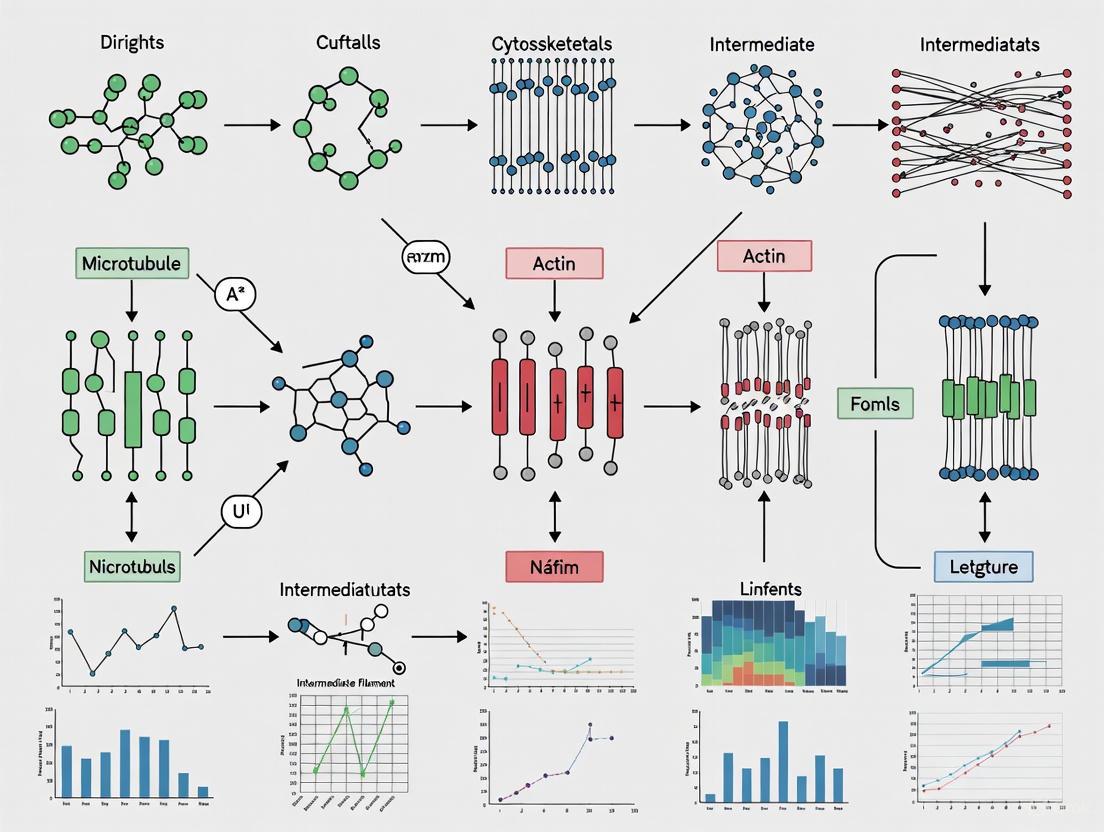
This article provides a comprehensive overview of the cytoskeleton's dynamic role as a central regulator of cellular behavior, bridging fundamental biology with clinical applications.
Cytoskeletal Dynamics in Health and Disease: From Molecular Mechanisms to Therapeutic Targeting
Abstract
This article provides a comprehensive overview of the cytoskeleton's dynamic role as a central regulator of cellular behavior, bridging fundamental biology with clinical applications. We explore the core molecular mechanisms governing actin, microtubule, and intermediate filament dynamics, and detail advanced methodologies for their study in physiological and pathological contexts. The content addresses critical challenges in targeting cytoskeletal pathways, including heterogeneous drug responses in cancer subtypes and cytoskeletal defects in neurodegenerative diseases. By integrating foundational knowledge with emerging technical approaches and validation strategies, this review serves as a resource for researchers and drug development professionals seeking to understand and manipulate cytoskeletal dynamics for therapeutic benefit in oncology, neurology, and regenerative medicine.
The Dynamic Cytoskeleton: Architectural Principles and Regulatory Mechanisms
The cytoskeleton, a dynamic and intricate network of protein filaments, provides the fundamental structural and functional framework for all eukaryotic cells. Comprising three core components—actin filaments, microtubules, and intermediate filaments—this system determines cellular shape, enables mechanical resistance, facilitates intracellular transport, and powers cell motility [1]. Beyond these structural roles, the cytoskeleton is increasingly recognized as a central signaling node that integrates mechanical and biochemical cues to regulate virtually all aspects of cellular behavior, from division and differentiation to disease progression [2]. In specialized tissues, cytoskeletal components enable critical functions: keratin intermediate filaments provide mechanical integrity to epithelial cells, neurofilaments support the elaborate architecture of neurons, and the coordinated action of actin and myosin filaments enables muscle contraction [3] [1]. This whitepaper provides an in-depth technical analysis of these three core cytoskeletal systems, their dynamic interplay, and their collective role in cellular mechanobiology, with particular emphasis on contemporary research methodologies and quantitative biophysical properties relevant to drug discovery and therapeutic development.
Structural and Functional Characteristics
Each cytoskeletal filament type possesses distinct biochemical composition, structural organization, and mechanical properties that define its unique functional contributions to cellular physiology. The table below provides a comprehensive quantitative comparison of these core characteristics.
Table 1: Core Structural and Functional Properties of Cytoskeletal Filaments
| Parameter | Actin Filaments (Microfilaments) | Microtubules | Intermediate Filaments |
|---|---|---|---|
| Diameter | ~7 nm [4] [1] | ~25 nm [4] [1] | ~10 nm [4] [1] |
| Protein Subunit | Actin (G-actin) [1] | α/β-Tubulin heterodimer [5] [1] | Tissue-specific (e.g., Keratin, Vimentin, Lamin) [3] [1] |
| Structure | Two intertwined helical strands (F-actin) [1] | Hollow cylinder of 13 protofilaments [1] | Rope-like, staggered tetramers [3] |
| Polarity | Yes (Barbed/+ and Pointed/- ends) [2] | Yes (Plus/+ and Minus/- ends) [5] | No (Non-polar) [6] |
| ATP/GTP Hydrolysis | ATP [2] | GTP [5] | Not required for assembly [3] |
| Primary Mechanical Role | Tension bearing [1] | Compression resisting [1] | Tensile strength, mechanical stability [5] [1] |
| Dynamic Instability | Yes [3] | Yes [3] | No (more stable) [3] |
The mechanical synergy between these systems is critical for cellular integrity. Actin filaments form a cortical network beneath the plasma membrane that resists tensile forces, while microtubules function as intracellular struts that counteract compressive loads [1]. Intermediate filaments, with their rope-like architecture and exceptional extensibility, provide tensile strength and enhance the cell's ability to withstand large deformations without mechanical failure [6] [1]. This composite material design allows the cytoskeleton to be both strong and resilient, adapting to a wide range of mechanical challenges.
Cytoskeletal Dynamics and Mechanotransduction
Force Generation and Cellular Mechanics
The cytoskeleton is a dynamic structure that continuously remodels in response to intracellular and extracellular signals. Actin filaments generate contractile forces through their association with myosin motor proteins, forming actomyosin complexes that power cell migration, cytokinesis, and changes in cell shape [1] [2]. These force-generating capabilities are particularly evident in stress fibers—contractile bundles of F-actin and myosin II that are connected to focal adhesions and play a crucial role in mechanotransduction [2]. Microtubules exhibit dynamic instability, stochastically switching between growth and shrinkage phases, which allows them to rapidly reorganize the intracellular space and respond to cellular demands [5] [6]. This dynamic behavior is crucial for mitotic spindle formation during cell division and the intracellular positioning of organelles [5].
Integrated Mechanosensing and Signaling
The cytoskeleton serves as a primary mechanotransduction pathway, translating mechanical forces into biochemical signals that regulate gene expression and cell fate [2]. Mechanical stresses are sensed at focal adhesions and transmitted through the cytoskeletal network to the nucleus, influencing nuclear shape, chromatin organization, and tension-dependent signaling pathways such as YAP/TAZ (Yes-associated protein/transcriptional co-activator with PDZ-binding motif) [2]. The perinuclear actin cap, a highly organized network of actomyosin bundles that connects to the nucleus via LINC complexes, plays a particularly important role in this process by physically transducing forces from the extracellular matrix to the nuclear envelope [2]. Recent research has revealed that cytoskeletal proteins, including actin and myosin, also function within the nucleus, where they directly influence transcription by interacting with RNA polymerases and chromatin remodeling complexes [2].
Diagram: Cytoskeletal Mechanotransduction Pathway
The diagram above illustrates the integrated mechanotransduction pathway where external mechanical forces are sensed at focal adhesions, transmitted through cytoskeletal networks, and ultimately influence nuclear signaling and cell fate decisions through effectors like YAP/TAZ.
Experimental Methodologies for Cytoskeletal Research
Traction Force Microscopy and Cytoskeletal Disruption
To investigate the mechanical contributions of specific cytoskeletal components, researchers employ targeted disruption approaches combined with quantitative biomechanical measurements. A representative protocol from a glaucoma study illustrates this methodology [7]:
Objective: To quantify the relative contributions of actin filaments, microtubules, and intermediate filaments to cellular traction force generation and collagen matrix remodeling in human trabecular meshwork cells.
Methodology:
- Cell Culture: Culture normal human high-flow TM cells on compliant type I collagen gels (4.7 kPa stiffness, confirmed by atomic force microscopy) to mimic physiological conditions [7].
- Cytoskeletal Disruption:
- Actin disruption: Treat cells with Latrunculin B (0.5 µM for 4 hours) to depolymerize actin filaments [7].
- Microtubule disruption: Treat cells with Nocodazole (10 µM for 4 hours) to depolymerize microtubules [7].
- Intermediate filament disruption: Treat cells with Acrylamide (5 mM for 4 hours) to disrupt vimentin intermediate filaments [7].
- Force Measurement: Quantify cell-generated traction forces using traction force microscopy, which measures the displacement of fluorescent beads embedded in the collagen substrate [7].
- Collagen Reorganization Assessment: Analyze collagen fibril orientation and strain using quantitative image analysis of second harmonic generation or confocal reflection microscopy [7].
Key Findings: This approach revealed that disruption of actin filaments or microtubules reduced cellular traction forces by approximately 80% (∼10 kPa) and decreased local collagen fibril strain by ∼3.7 arbitrary units. In contrast, intermediate filament disruption produced only modest, non-significant changes, indicating a hierarchical mechanical contribution where actin and microtubules work synergistically as the primary force-transmitting systems [7].
Advanced Imaging and Simulation Approaches
Advanced microscopy techniques are essential for visualizing cytoskeletal dynamics and organization:
Super-resolution Microscopy: MoNaLISA (Molecular Nanoscale Live Imaging with Sectioning Ability) enables time-lapse imaging of whole cells with approximately 50 nm resolution and reduced photodamage. This technique allows tracking of single vimentin intermediate filament dynamics with nanometer precision, revealing distinct mechanical behaviors between perinuclear and peripheral filament pools [8].
Quadruple Optical Trap Experiments: This approach quantitatively characterizes filament-filament interactions. Two filaments are held with four optical traps, brought into perpendicular contact, and moved relative to each other while measuring interaction forces. When combined with simulations parametrized using Cytosim software, this method can determine the kinetic parameters of bonds between cytoskeletal filaments, such as those between vimentin intermediate filaments and microtubules [9].
Diagram: Quadruple Optical Trap Experimental Workflow
Research Reagent Solutions for Cytoskeletal Studies
The table below catalogizes essential research reagents and their applications in cytoskeletal research, with a focus on pharmacological agents used to perturb specific filament systems.
Table 2: Key Research Reagents for Cytoskeletal Manipulation
| Reagent | Target | Mechanism of Action | Common Applications |
|---|---|---|---|
| Latrunculin B | Actin filaments | Binds G-actin, prevents polymerization [7] | Depolymerizes actin to assess its mechanical role [7] |
| Nocodazole | Microtubules | Binds β-tubulin, disrupts polymerization [7] | Depolymerizes microtubules to study force transmission [7] |
| Acrylamide | Vimentin IFs | Disrupts intermediate filament organization [7] | Tests intermediate filament contribution to mechanics [7] |
| Rho/ROCK inhibitors | Actomyosin signaling | Inhibits Rho-associated protein kinase | Reduces cellular contractility; studies mechanotransduction [2] |
| Fluorescent tubulin (GFP-tubulin) | Microtubules | Labels microtubules for live imaging | Visualizes microtubule dynamics and organization [8] |
| Vimentin-rsEGFP2 | Intermediate filaments | Photoactivatable label for super-resolution | Tracks single IF dynamics with MoNaLISA nanoscopy [8] |
| EMTB-3xGFP | Microtubules | Microtubule-binding domain fusion tag | Visualizes microtubules with high signal-to-noise [8] |
Clinical and Therapeutic Implications
Dysregulation of cytoskeletal components contributes significantly to disease pathogenesis, making them attractive therapeutic targets. In glaucoma, pathological stiffening of the trabecular meshwork results from aberrant cytoskeletal dynamics, with actin-microtubule synergy dominating force transmission and collagen strain regulation [7]. Glaucomatous cells in low-flow regions exert exceptionally strong traction forces leading to local extracellular matrix stiffening, which impedes aqueous humor outflow and increases intraocular pressure [7]. Neurodegenerative diseases, including Alzheimer's disease, Parkinson's disease, and amyotrophic lateral sclerosis (ALS), also involve cytoskeletal pathologies, with tau protein malfunctions affecting microtubule stability in Alzheimer's and compromised microtubule assembly contributing to neuronal degradation in Parkinson's [1]. In cancer biology, vimentin expression serves as a biomarker for epithelial-to-mesenchymal transition and increased metastatic potential [8], while disruptions to the perinuclear actin cap correlate with nuclear shape abnormalities and impaired cell motility in cancer cells [2]. These clinical connections highlight the therapeutic potential of targeting cytoskeletal dynamics, with current research exploring cytoskeletal-directed agents for conditions ranging from glaucoma to metastatic cancer.
The cytoskeleton, a dynamic network of protein filaments, is fundamental to cellular architecture, mechanical integrity, and behavior. Its functional versatility is governed by a sophisticated suite of molecular regulators that control filament assembly, disassembly, and mechanical output. These regulators—actin-binding proteins (ABPs), microtubule-associated proteins (MAPs), and motor proteins—translate biochemical signals into precise structural changes and forces that direct processes ranging from cell division and migration to intracellular transport and signal transduction. In research and therapeutic contexts, understanding these regulators provides critical insights into disease mechanisms, including cancer metastasis, neurodegenerative disorders, and cellular reprogramming. This guide synthesizes current knowledge on the structure, function, and experimental analysis of these molecular machines, providing a technical foundation for researchers and drug development professionals exploring cytoskeletal dynamics and its applications in biomedicine.
Actin-Binding Proteins (ABPs)
Classification and Molecular Functions
Actin-binding proteins are a diverse class of regulators that control the assembly, organization, and disassembly of actin filaments (F-actin). They function through specific, often regulated, interactions with actin monomers (G-actin) or filaments to orchestrate the dynamic remodeling of the actin cytoskeleton, which is essential for cell motility, shape changes, and mechanical signaling [2] [10].
Table 1: Major Classes of Actin-Binding Proteins and Their Functions
| Class | Representative Proteins | Core Function | Effect on Actin Dynamics |
|---|---|---|---|
| Nucleation Promoters | Arp2/3 complex, Formins (e.g., VASP) | Initiate new filament formation | Promotes polymerization; Arp2/3 creates branched networks, formins create unbundled filaments [2] |
| Severing/Depolymerizing | ADF/Cofilin, Gelsolin | Break filaments or promote disassembly | Increases filament turnover and monomer recycling [2] [11] |
| Capping | CP, Tropomodulin | Bind filament ends | Prevents addition/loss of subunits, stabilizing filament length [2] |
| Cross-Linking | α-Actinin, Fascin | Connect filaments to each other | Forms bundles and networks, increasing structural integrity [2] |
| Monomer Binding | Profilin, Twinfilin | Bind G-actin | Regulates monomer pool available for polymerization [10] [11] |
Regulatory Mechanisms and Signaling Inputs
The activity of ABPs is under intricate biochemical control. A primary regulatory mechanism involves phosphoinositide (PIPn) signaling, particularly through PtdIns(4,5)P2 (PIP2) at the plasma membrane. This lipid acts as a central hub to control ABP activity, thereby linking extracellular signals to cytoskeletal reorganization [11].
- Inhibition of Disassembly: PtdIns(4,5)P2 sequesters proteins like cofilin and gelsolin, preventing their interaction with actin filaments. This inhibition stabilizes the actin network. Upon PIP2 hydrolysis, these proteins are released, leading to enhanced filament severing and disassembly [11].
- Regulation of Polymerization: Profilin, which promotes the exchange of ADP for ATP on G-actin and facilitates actin addition to barbed ends, is also regulated by PtdIns(4,5)P2. Their interaction can release profilin from actin, making monomers available for polymerization in response to specific signals [11].
The diagram below illustrates how external signals trigger PIPn-mediated regulation of ABPs to control actin network architecture.
Experimental Analysis of ABPs
Studying ABP function requires a combination of biochemical, biophysical, and cell-based assays. Key Methodology: In Vitro Actin Polymerization Assay (Pyrene-Actin Assay) This foundational assay quantitatively measures the kinetics of actin filament assembly in real-time.
- Principle: Actin monomers are conjugated with pyrene, a fluorophore whose fluorescence increases dramatically upon incorporation into a filament. The rise in fluorescence over time directly reports on the rate of polymerization [10].
- Protocol:
- Protein Purification: Purify G-actin from muscle acetone powder or recombinant sources using cycles of polymerization/depolymerization and gel filtration. ABPs are expressed recombinantly and purified via affinity chromatography [10].
- Sample Preparation: In a low-salt buffer (to prevent spontaneous nucleation), mix pyrene-labeled G-actin (typically 5-10% of total actin) with unlabeled G-actin. Add the ABP of interest (e.g., profilin, cofilin) at varying concentrations.
- Initiation: Rapidly initiate polymerization by adding salt (KCl or MgCl₂ to 50-100 mM) and ATP (1 mM) to the mixture.
- Data Acquisition: Immediately transfer the solution to a cuvette and monitor fluorescence (excitation ~365 nm, emission ~407 nm) in a fluorometer over 30-60 minutes.
- Data Analysis: Plot fluorescence vs. time. Compare parameters like nucleation lag time, initial polymerization rate, and final steady-state level between conditions to determine the ABP's effect.
- Applications: This assay can distinguish between nucleators, cappers, severing proteins, and monomer sequesterers based on their characteristic effects on the polymerization curve.
Microtubule-Associated Proteins (MAPs)
Structural and Regulatory MAPs
Microtubule-associated proteins encompass a broad category of proteins that bind to microtubules to regulate their stability, organization, and interactions with other cellular components. They are broadly classified into Structural MAPs, which stabilize and bundle microtubules, and Regulatory MAPs, which control the dynamic instability of microtubules (growing and shrinking phases) [12].
- Stabilizers and Destabilizers: Proteins like Tau and certain MAP4 isoforms stabilize microtubules, while others like stathmin/Op18 promote depolymerization. The balance between these opposing forces is critical for cellular processes like mitosis and neuronal axon guidance.
- Dysfunction in Disease: Aberrations in MAP expression and function are strongly linked to disease. For example, in breast cancer, alterations in MAPs such as the loss of the tumor suppressor ATIP3 or overexpression of the oncogene MASTL contribute to metastatic potential and therapy resistance by deregulating microtubule assembly and stability [12].
MAPs in Signaling Pathways
MAPs are integral components of major signaling cascades that sense and respond to the cellular environment. The Hippo pathway, a key regulator of organ size and cell fate, is one such pathway where MAP4K family members act as upstream regulators.
Table 2: MAP4K Family Members in Cellular Signaling and Disease
| Kinase | Alternative Name | Key Roles in Signaling | Implication in Cancer |
|---|---|---|---|
| MAP4K1 | HPK1 | Negative regulator of T-cell receptor signaling; activates JNK and Hippo pathways [13] | Overexpression in AML confers drug resistance; targeted to boost immunotherapy [13] |
| MAP4K4 | HGK | Regulates actin cytoskeleton via STRIPAK complex; JNK and Hippo pathway activation [13] | Promotes tumor invasion and metastasis |
| MAP4K7 | TNIK | Activator of JNK and Hippo pathways [13] | Emerging target in colorectal cancer |
The following diagram integrates MAP4K proteins into the Hippo signaling cascade, demonstrating how they influence cell proliferation and fate.
Experimental Analysis of MAPs
Key Methodology: Microtubule Co-Sedimentation Assay This assay is used to confirm and quantify the direct binding of a MAP to microtubules in vitro.
- Principle: Microtubules are heavy and can be pelleted by high-speed centrifugation. If a MAP binds to microtubules, it will co-sediment with the pellet; otherwise, it will remain in the supernatant.
- Protocol:
- Polymerize Microtubules: Purify tubulin and polymerize it into microtubules in the presence of GTP and a stabilizing agent (e.g., paclitaxel/Taxol).
- Incubation: Incubate the purified MAP with pre-formed microtubules in a suitable binding buffer (e.g., containing BRB80 buffer: 80 mM PIPES, 1 mM MgCl₂, 1 mM EGTA, pH 6.8) for 30 minutes at room temperature.
- Centrifugation: Ultracentrifuge the mixture at high speed (e.g., 100,000 x g for 30 minutes at 25°C) to pellet the microtubules and any bound protein.
- Analysis: Carefully separate the supernatant (unbound protein) from the pellet (bound protein). Analyze both fractions by SDS-PAGE and Coomassie blue staining or immunoblotting. The amount of MAP in the pellet fraction indicates binding affinity.
Motor Proteins
Kinesins and Dyneins: Structure and Function
Motor proteins are molecular machines that convert chemical energy from ATP hydrolysis into mechanical movement along cytoskeletal tracks. They are essential for intracellular transport, cell division, and signal transduction.
- Kinesins: Most kinesins move toward the plus-end of microtubules. They typically have a homodimeric structure with two motor domains (heads) that processively "walk" along the microtubule. Kinesin-1, the founding member, transports various cargos, including vesicles, organelles, and proteins, from the cell center toward the periphery [14].
- Dyneins: Dyneins are large multi-subunit complexes that move toward the minus-end of microtubules, transporting cargo towards the cell center. They are crucial for mitosis, organelle positioning, and the retrograde transport of signals in neurons.
A recent landmark study on kinesin-2 revealed a previously unknown "hook-like adaptor and cargo-binding (HAC) domain" in its tail. This HAC domain, with a helix–β-hairpin–helix (H-βh-H) motif, acts as a molecular connector, enabling the motor to specifically recognize and bind its cargo, the adenomatous polyposis coli (APC) protein, via adaptor protein KAP3 [15]. This discovery provides the first atomic-level insight into the "logistics code" of cellular transport.
Controversies and Mechanistic Insights
Decades of research on motor proteins like kinesin-1 have yielded a detailed but sometimes conflicting understanding of their dynamics. The table below summarizes key contrasting experimental findings.
Table 3: Contrasting Experimental Observations on Kinesin-1 Dynamics
| Aspect of Dynamics | Conflicting Observation A | Conflicting Observation B | Potential Explanatory Factors |
|---|---|---|---|
| ATP Binding State | Binding occurs in the one-head-bound (1HB) state [14] | Binding occurs mainly in the two-heads-bound (2HB) state [14] | Different attachment points and sizes of labels may impede motor head movement. |
| Velocity vs. Load | Velocity has a sigmoid relationship with backward load (movable optical trap) [14] | Velocity has a nearly linear relationship with backward load (fixed optical trap) [14] | Fixed traps create a load that increases as the motor moves, while movable traps maintain constant load. |
Experimental Analysis of Motor Proteins
Key Methodology: Single-Molecule Optical Trapping This powerful technique allows researchers to observe and manipulate the mechanical steps of individual motor proteins in real-time.
- Principle: A dielectric bead (e.g., polystyrene or silica) is attached to a single motor protein. This bead is caught in the focus of a highly focused laser beam (optical trap), which acts like a spring, exerting a force on the bead. As the motor protein steps along its track, it displaces the bead, and this displacement is measured with nanometer precision, allowing the measurement of step size, velocity, and stall force [14].
- Protocol:
- Surface Preparation: Create a flow chamber with a glass surface. Anchor microtubules to the surface, often via biotin-neutravidin linkages.
- Motor Protein Labeling: Engineer the motor protein (e.g., kinesin) to have a specific tag (e.g., His-tag or biotin ligase site) on its tail domain. Bind the motor to a bead coated with the appropriate binding partner (e.g., anti-His antibody or streptavidin).
- Assay Setup: Flow the bead-motor complexes into the chamber in an ATP-containing motility buffer. Use a microscope to position a bead over a surface-bound microtubule.
- Data Acquisition: Once a motor engages the microtubule, it will begin to walk, pulling the bead from the center of the optical trap. Record the bead's position with a quadrant photodiode detector at high temporal resolution (kHz range).
- Data Analysis: Analyze the recorded trajectory to extract parameters like step size (typically ~8 nm for kinesin), velocity (up to ~800 nm/s), and stall force (the load at which forward and backward steps are equally probable, ~6-8 pN for kinesin) [14].
- Variants: Fixed traps measure force as the motor moves away from the trap center, while feedback-controlled movable traps maintain constant force on the motor, explaining some of the conflicting data observed in velocity-load relationships [14].
The Scientist's Toolkit: Research Reagent Solutions
Table 4: Essential Reagents and Tools for Cytoskeletal Research
| Reagent/Tool | Key Function in Research | Example Application |
|---|---|---|
| Purified Actin from Muscle | High-quality substrate for in vitro polymerization and binding assays. | Pyrene-actin polymerization assays to study ABP activity [10]. |
| Tubulin & Microtubule Stabilizers (e.g., Taxol/Paclitaxel) | Essential for polymerizing and stabilizing microtubules for structural and binding studies. | Microtubule co-sedimentation assays to test MAP binding [12]. |
| Caged/Photoactivatable Compounds | Enable precise spatiotemporal control of cytoskeletal dynamics using light. | Uncoupling the timing of signal induction (e.g., ATP or Ca²⁺ release) in live cells. |
| Single-Molecule Labeling (e.g., Gold Nanoparticles, Fluorophores) | High-resolution tracking of molecular movement. | Visualizing the stepping dynamics of single kinesin molecules on microtubules [14]. |
| Cytoskeletal-Targeted Inhibitors | Chemically perturb specific regulators to determine function. | Using ROCK inhibitor (Y-27632) to study actomyosin contractility in cell reprogramming [2]. |
| Recombinant ABPs/MAPs/Motors | Defined, consistent protein for mechanistic in vitro studies. | ATPase assays with purified kinesin to understand chemomechanical coupling. |
Concluding Perspectives on Therapeutic Targeting
The molecular regulators of the cytoskeleton are not merely fundamental to cell biology; they represent a promising frontier for therapeutic intervention. The critical role of cytoskeletal dynamics in cancer progression is underscored by the ability of tumor cells to alter ABP, MAP, and motor protein activity to drive invasion, metastasis, and therapy resistance [12]. For instance, targeting specific cytoskeletal regulators like PAK kinases, FAK, or MAP4K family members is being explored as a strategy to mitigate metastasis and overcome resistance in aggressive breast cancer subtypes [12] [13].
Furthermore, in the field of regenerative medicine, manipulating the cytoskeleton through biophysical or biochemical cues—such as modulating substrate stiffness or using ROCK inhibitors—has been shown to enhance the efficiency of cellular reprogramming and direct stem cell fate decisions [2] [16]. This highlights the profound influence of these molecular regulators on cellular identity and function. Future research and drug development will continue to decode the intricate logistics of cytoskeletal regulation, leveraging advanced structural techniques like cryo-EM [15] and single-molecule biophysics to design highly specific inhibitors and novel therapeutic strategies for a wide range of human diseases.
The interface between the plasma membrane and the cytoskeleton constitutes a critical signaling hub where cells perceive, integrate, and respond to extracellular cues. This dynamic boundary facilitates the transduction of mechanical and biochemical signals into intracellular responses that govern complex cell behaviors including migration, polarization, and division. This technical review examines the molecular machinery and regulatory mechanisms operating at this interface, with emphasis on phosphoinositide signaling, small GTPase regulation, and mechanotransduction pathways. We synthesize current understanding of how cytoskeletal components—actin, microtubules, and intermediate filaments—interface with membrane-associated signaling networks to coordinate cellular responses. The clinical implications of these processes in cancer metastasis, immune function, and developmental disorders are discussed, alongside experimental approaches and key research reagents essential for investigating this rapidly advancing field.
The membrane-cytoskeleton interface is a specialized compartment where the plasma membrane and underlying cytoskeletal networks engage in continuous, bidirectional communication. This interface serves as a primary site for receiving extracellular information—including chemical gradients, mechanical forces, and topographical features—and converting these signals into coordinated intracellular responses [17]. The cytoskeleton, comprising actin filaments, microtubules, and intermediate filaments, not only provides structural support but also functions as a dynamic signaling platform that integrates multiple extracellular cues to direct cell behavior [1].
The significance of this interface extends across numerous physiological processes. During embryonic development, coordinated deployment of cytoskeletal mechanisms drives tissue morphogenesis, as evidenced by basal constriction during optic cup formation [18]. In immune function, precise cytoskeletal remodeling enables T cells to migrate, form immunological synapses, and execute effector functions [19]. Pathologically, dysregulation of membrane-cytoskeleton signaling contributes to cancer metastasis, neurodegeneration, and immunodeficiencies, highlighting the therapeutic relevance of understanding these mechanisms [11] [1] [19].
A central feature of this interface is its capacity for spatial and temporal coordination of signaling events. Recent research has revealed that signaling and cytoskeletal components often self-organize into propagating wave patterns that define subcellular organization and enable rapid cellular responses to environmental changes [20]. These dynamic patterns represent a fundamental principle of cellular organization, allowing precise control over processes such as directed migration, phagocytosis, and cell division.
Molecular Mechanisms of Signal Integration at the Interface
Phosphoinositide Signaling in Cytoskeletal Regulation
Phosphoinositides (PIPns) serve as key membrane-associated signaling molecules that directly regulate cytoskeletal dynamics through interactions with various actin-binding proteins (ABPs). These lipids undergo reversible phosphorylation at the 3rd, 4th, and 5th positions of the inositol ring, generating seven distinct isoforms that localize to specific membrane compartments and recruit distinct effector proteins [11].
Table 1: Phosphoinositide Regulation of Actin-Binding Proteins
| PIPn Species | Target ABP | Effect on ABP | Functional Outcome |
|---|---|---|---|
| PtdIns(4,5)P₂ | Cofilin | Inhibits binding to actin | Stabilizes filaments, prevents disassembly |
| PtdIns(4,5)P₂ | Profilin | Releases from actin | Increases monomer pool for polymerization |
| PtdIns(4,5)P₂ | Gelsolin | Inhibits severing activity | Stabilizes actin network |
| PtdIns(4,5)P₂ | Twinfilin | Inhibits monomer sequestration | Promotes polymerization |
| PtdIns(3,4,5)P₃ | Profilin | Inhibits actin binding | Modulates actin assembly factor preference |
PtdIns(4,5)P₂, particularly concentrated at the plasma membrane, serves as a master regulator of actin dynamics by both inhibiting ABPs that promote disassembly and activating those that enhance polymerization [11]. For instance, PtdIns(4,5)P₂ binding to cofilin prevents its interaction with actin filaments, thereby stabilizing the actin network [11]. Conversely, hydrolysis of PtdIns(4,5)P₂ releases cofilin, enabling filament severing and increased turnover. Similarly, PtdIns(4,5)P₂ interaction with profilin regulates the availability of actin monomers for polymerization, effectively serving as a switch that controls actin assembly in response to external signals [21] [11].
The spatial restriction of PIPn signaling creates discrete functional domains at the membrane-cytoskeleton interface. During cell migration, PtdIns(3,4,5)P₃ accumulates at the leading edge, where it recruits proteins containing pleckstrin homology domains, including guanine nucleotide exchange factors that activate Rho GTPases [20]. This polarized distribution establishes front-rear asymmetry essential for directional migration.
Small GTPase Regulation of Cytoskeletal Dynamics
Small GTPases of the Rho family—particularly RhoA, Rac1, and Cdc42—function as molecular switches that transduce signals from surface receptors to cytoskeletal rearrangements. These proteins cycle between active GTP-bound and inactive GDP-bound states, with activation promoting their association with membranes through lipid modifications [21].
Table 2: Small GTPase Functions in Cytoskeletal Organization
| GTPase | Primary Activator | Cytoskeletal Structure | Cellular Function |
|---|---|---|---|
| Cdc42 | α-factor receptor (yeast) | Filopodia | Cell polarization, shmoo formation |
| Rac1 | Growth factors, integrins | Lamellipodia | Membrane ruffling, cell migration |
| RhoA | Lysophosphatidic acid | Stress fibers | Focal adhesion formation, contractility |
| Cdc42 | TCR engagement | Immunological synapse | T cell activation, polarity |
In budding yeast, Cdc42 activation in response to mating factor gradients directs polarized actin assembly toward the source of the signal, enabling directional growth during mating [22]. This polarization mechanism is evolutionarily conserved, with mammalian Cdc42 regulating filopodia formation through activation of neural Wiskott-Aldrich syndrome protein (N-WASP), which in turn activates the Arp2/3 complex to nucleate branched actin networks [22] [19].
The Rac1-WAVE2-Arp2/3 pathway drives lamellipodia formation in migrating cells, including fibroblasts and immune cells. Recent research has identified that the WAVE complex interacts with motif-containing membrane proteins, ranging from channels to adhesion molecules, providing a mechanism for coupling diverse surface receptors to actin polymerization [21]. Similarly, RhoA activation promotes stress fiber formation and contractility primarily through formin proteins such as mDia1 and mDia2, which nucleate linear actin filaments.
In T cells, coordinated activation of Cdc42, Rac1, and RhoA following T cell receptor engagement orchestrates immunological synapse formation. Cdc42 and Rac1 activate WASP and WAVE2 respectively, leading to Arp2/3-mediated branched actin polymerization at the synapse periphery, while RhoA-formin signaling generates contractile actin arcs in the inner synapse through myosin II activity [19].
Mechanotransduction Pathways
The membrane-cytoskeleton interface serves as the primary cellular site for mechanotransduction—the conversion of mechanical forces into biochemical signals. This process involves force-dependent changes in protein conformation, binding affinity, and activity at adhesion complexes [17].
Mechanosensitive ion channels, such as Piezo1, directly sense membrane tension and transmit calcium signals to the cytoskeleton. Additionally, force-dependent reinforcement of focal adhesions and adherens junctions occurs through changes in protein interactions. For example, mechanical tension increases α-catenin binding to actin and enhances association of the cross-linker α-actinin-4 with actin filaments [17]. Conversely, increased tension on single actin filaments reduces the binding rate of cofilin and delays severing [17].
Actin filaments themselves function as mechanosensors, with tension altering their structural conformation and interaction with ABPs. Mechanical stimulation induces rapid cytoskeletal remodeling, including localized depolymerization of microtubules at indentation sites and subsequent polymerization at the periphery [17]. Intermediate filaments, due to their high flexibility and extensibility, provide mechanical resistance and undergo reorganization in response to fluid shear stress in endothelial cells [17].
During optic cup morphogenesis in zebrafish, mechanical tensions generated by actomyosin contractility at the basal surface of retinal neuroblasts drive tissue folding. Laser ablation experiments revealed a developmental window during which local disruptions trigger global tissue relaxation, demonstrating supra-cellular transmission of mechanical tension dependent on extracellular matrix attachments [18].
Experimental Approaches for Studying the Interface
Live-Cell Imaging and Quantitative Analysis
Advanced live-cell imaging techniques enable direct visualization of cytoskeletal dynamics at the membrane interface. High-resolution time-lapse microscopy of fluorescently tagged cytoskeletal components (e.g., GFP-actin, RFP-tubulin) reveals dynamic behaviors including wave propagation, oscillatory contractions, and polarized growth.
In studying optic cup morphogenesis, researchers employed tg(vsx2.2:GFP-caax) zebrafish lines to monitor retinal precursor behavior during basal constriction [18]. Quantitative analysis of membrane pulsatile behavior and actomyosin dynamics demonstrated that myosin condensation correlates with episodic contractions that progressively reduce basal feet area. Similarly, imaging of actin waves in Dictyostelium and mammalian cells has elucidated how wave patterns define membrane protrusion morphologies and guide cell migration [20].
Experimental Protocol: Visualization of Actin Waves
- Transfect cells with F-tractin-GFP or LifeAct-mCherry to label F-actin
- Plate cells on glass-bottom dishes compatible with high-resolution microscopy
- Acquire time-lapse images every 2-5 seconds for 10-30 minutes using TIRF or confocal microscopy
- Maintain physiological temperature and CO₂ levels throughout imaging
- Analyze wave propagation parameters (velocity, directionality, frequency) using kymographs and particle image velocimetry
Laser Ablation for Tension Mapping
Laser ablation serves as a powerful approach for mapping mechanical tensions within cells and tissues. This technique involves focused laser irradiation to sever specific cytoskeletal structures, followed by measurement of subsequent recoil dynamics to infer pre-existing tensions.
In zebrafish optic cup studies, laser ablation of the basal retinal epithelium during specific developmental windows triggered global tissue displacement, revealing the supra-cellular transmission of mechanical tension [18]. The recoil velocity following ablation provides a quantitative measure of tension, while the pattern of displacement maps force propagation through the tissue.
Experimental Protocol: Laser Ablation Tension Mapping
- Express fluorescent markers for cytoskeletal structures of interest (e.g., membrane-GFP, myosin-RFP)
- Identify target regions using confocal microscopy
- Apply focused laser pulses (typically 355nm or 405nm) to ablate 1-5μm regions
- Capture high-speed images (100-500ms intervals) immediately before and after ablation
- Quantify initial recoil velocity and displacement patterns using particle tracking algorithms
- Correlate mechanical properties with molecular perturbations (drug treatments, genetic manipulations)
Biochemical and Genetic Perturbation Approaches
Dissecting molecular mechanisms requires specific perturbation of candidate proteins followed by functional assessment. Genetic approaches include siRNA/shRNA knockdown, CRISPR-Cas9 knockout, and expression of dominant-negative or constitutively active mutants. Pharmacological inhibitors targeting cytoskeletal regulators (e.g., latrunculin for actin, nocodazole for microtubules, blebbistatin for myosin) enable acute manipulation of specific components.
In T cell studies, genetic deficiencies in WASP or ARPC1B reveal the essential roles of Arp2/3-mediated branched actin nucleation in immunological synapse formation and T cell activation [19]. Similarly, formin inhibition disrupts actin arc formation and TCR microcluster movement, demonstrating the complementary roles of different nucleation mechanisms [19].
Signaling and Actin Waves: A Systems-Level Perspective
Recent research has revealed that signaling and cytoskeletal components often self-organize into propagating wave patterns at the membrane-cytoskeleton interface. These waves represent a systems-level property of the underlying biochemical networks, enabling cells to define spatiotemporal dimensions for physiological processes [20].
Ventral waves of actin polymerization and associated signaling molecules (including PI(3,4,5)P₃, Ras, and Rho GTPases) have been observed across diverse cell types, from Dictyostelium to human neutrophils and cancer cells [20]. These waves regulate essential functions including cell polarity, random migration, macropinocytosis, phagocytosis, and cytokinesis. In migrating cells, wave patterns directly control protrusion morphology—transitioning between lamellipodia, filopodia, and blebs based on the strengths of different signaling axes [20].
The excitable network dynamics underlying these waves enable cells to amplify stochastic fluctuations into coordinated behaviors and rapidly respond to external cues. For instance, in Dictyostelium cells, simultaneous regulation of PI(4,5)P₂ levels and Ras activation induces instantaneous transitions in protrusion morphology and migratory mode [20]. Similarly, in embryonic systems, restriction of traveling actin polymerization waves by cell-cell contacts drives pulsed contractions essential for morphogenesis [20].
Figure 1: Signaling Wave Dynamics. Excitable network properties of signaling and cytoskeletal components generate propagating waves through positive feedback loops and delayed negative regulation.
The Scientist's Toolkit: Essential Research Reagents
Table 3: Key Research Reagents for Studying Membrane-Cytoskeleton Interface
| Reagent Category | Specific Examples | Research Application | Key Findings Enabled |
|---|---|---|---|
| Fluorescent Biosensors | F-tractin-GFP, LifeAct-RFP, PIP₃ PH-domain biosensor | Live visualization of cytoskeletal and signaling dynamics | Real-time observation of actin waves, polarized signaling |
| Pharmacological Inhibitors | Latrunculin A/B (actin), Nocodazole (microtubules), Blebbistatin (myosin) | Acute disruption of specific cytoskeletal components | Dissection of force generation and transmission mechanisms |
| Genetic Tools | shCLIMP-63, WASP/ARPC1B mutants, Cdc42/Rac1/RhoA DN/CA mutants | Specific perturbation of molecular pathways | Identification of protein functions in cytoskeletal organization |
| Model Organisms | Zebrafish (tg(vsx2.2:GFP-caax), Dictyostelium, Yeast mutants | In vivo study of cytoskeletal dynamics in development | Discovery of basal constriction in optic cup morphogenesis |
| Advanced Microscopy | TIRF, FRAP, laser ablation, FIB-SEM | High-resolution spatial and temporal analysis | Mapping of mechanical tensions, ER-cytoskeleton interactions |
Clinical and Therapeutic Implications
Dysregulation of membrane-cytoskeleton signaling underlies numerous pathological conditions, making this interface an attractive target for therapeutic intervention. In oncology, cancer cell invasion and metastasis depend on aberrant cytoskeletal dynamics and mechanotransduction. Increased Ras-PI(3,4,5)P₃-actin wave frequency in mammary epithelial cancer cells promotes metastasis by enhancing glycolysis and ATP production [20]. Matrix stiffening in breast cancer promotes microtubule glutamylation, affecting mechanical stability and promoting invasive behavior [17].
In immunology, mutations in cytoskeletal regulators cause severe immunodeficiencies. Wiskott-Aldrich Syndrome, resulting from WASP mutations, features defective T cell activation and cytoskeletal organization due to impaired Arp2/3-mediated actin polymerization [19]. Similarly, ARPC1B deficiency leads to aberrant actin structures, unstable immune synapses, and defective cytotoxic function [19].
Neurodegenerative disorders, including Alzheimer's and Parkinson's diseases, involve cytoskeletal pathologies. In Alzheimer's, tau protein malfunction compromises microtubule stability, while Parkinson's involves compromised microtubule assembly leading to neuronal degradation [1].
Emerging therapeutic strategies aim to modulate these pathways through small molecule inhibitors targeting key cytoskeletal regulators, with potential applications in cancer, autoimmune diseases, and neurological disorders. The development of compounds that specifically target pathological cytoskeletal dynamics while preserving normal cellular function represents an active frontier in drug discovery.
Figure 2: Clinical Implications of Membrane-Cytoskeleton Interface Dysregulation. Dysfunctional signaling at the interface contributes to diverse pathologies, inspiring targeted therapeutic strategies.
The membrane-cytoskeleton interface represents a sophisticated signaling compartment where extracellular information converges to direct coordinated cellular responses. Through integrated phosphoinositide signaling, small GTPase regulation, and mechanotransduction pathways, this interface translates diverse inputs into precise cytoskeletal rearrangements that govern cell behavior. The emergence of signaling waves as an organizing principle highlights the systems-level properties of these networks, enabling complex spatiotemporal control of cellular processes.
Future research directions include elucidating the molecular mechanisms enabling PIPns to specifically recognize distinct cytoskeletal components, identifying complete sets of PIPn-binding proteins involved in cytoskeletal regulation, and understanding how PIPn signaling pathways integrate with other networks to orchestrate cytoskeletal dynamics during development, homeostasis, and disease [11]. Advanced imaging technologies, biosensor development, and computational modeling will continue to reveal the exquisite subcellular organization and dynamic regulation of this critical cellular interface.
The therapeutic potential of targeting membrane-cytoskeleton interactions remains largely unexplored despite their crucial roles in disease pathogenesis [11]. As our understanding of these mechanisms deepens, innovative approaches to modulate specific aspects of cytoskeletal dynamics may yield novel treatments for cancer, immunological disorders, and other conditions characterized by dysregulated cell behavior.
The physical forces experienced by a cell are not merely passive events but are potent biochemical signals that dictate fundamental cellular processes, including proliferation, differentiation, migration, and survival. This process of mechanotransduction—the conversion of mechanical stimuli into chemical activity—is orchestrated by key signaling hubs within the cell. Principal among these are the Rho GTPases and the YAP/TAZ transcriptional co-activators. These pathways form an integrated signaling network that senses and responds to the physical properties of the cellular microenvironment, such as extracellular matrix (ECM) stiffness, cell geometry, and cell-cell contacts. Within the context of cytoskeletal dynamics, this network is a critical regulator of cellular architecture and behavior, driving processes essential in both normal tissue homeostasis and disease pathogenesis, including cancer and cardiovascular disorders. This guide provides an in-depth technical overview of these core pathways, details experimental methodologies for their study, and visualizes the complex signaling interplay that governs cellular decision-making.
Core Pathway Mechanics and Signaling Interplay
Rho GTPases: Masters of the Cytoskeleton
Rho GTPases function as molecular switches, cycling between an active GTP-bound state and an inactive GDP-bound state. This cycle is tightly controlled by three classes of regulatory proteins: Guanine nucleotide Exchange Factors (GEFs) activate them, GTPase-Activating Proteins (GAPs) inactivate them, and Guanine nucleotide Dissociation Inhibitors (GDIs) sequester them in the cytoplasm. Once activated, Rho GTPases exert precise control over the actin cytoskeleton:
- RhoA promotes the formation of stress fibers and focal adhesions, enabling contractility and stable cell adhesion.
- Rac1 stimulates the formation of lamellipodia, sheet-like membrane protrusions that drive forward movement during cell migration.
- Cdc42 induces the formation of filopodia, finger-like protrusions that sense the extracellular environment and guide migration.
The activity of Rho GTPases is directly modulated by mechanical cues. For instance, increasing ECM stiffness promotes RhoA activation through integrin-mediated signaling, leading to enhanced actomyosin contractility.
YAP/TAZ: Nuclear Effectors of Mechanical Cues
YAP (Yes-associated protein) and TAZ (Transcriptional coactivator with PDZ-binding motif) are the terminal effectors of the Hippo signaling pathway and function as potent transcriptional co-activators. Their activity is regulated by a complex array of biochemical and biomechanical signals.
- Canonical Hippo Pathway: In conditions of high cell density or an inactive state, the kinase cascade MST1/2 phosphorylates and activates LATS1/2. LATS1/2 then phosphorylates YAP/TAZ, leading to their cytoplasmic sequestration by 14-3-3 proteins or proteasomal degradation, effectively inhibiting their transcriptional function [23] [24].
- Hippo-Independent Regulation: YAP/TAZ are also regulated by other inputs, including GPCR signaling. Gα12/13-, Gαq/11-, or Gαi/o-coupled receptors inhibit LATS1/2 and promote YAP/TAZ activation, whereas Gαs-coupled receptors activate LATS1/2 and inhibit YAP/TAZ [24].
A key feature of YAP/TAZ is their role as mechanotransducers. They directly sense and respond to mechanical perturbations, including changes in ECM stiffness, cell shape, and cytoskeletal tension. In a permissive mechanical environment—such as low cell density or a stiff ECM—YAP/TAZ translocate to the nucleus. There, they partner primarily with TEAD transcription factors (and others like SMADs and AP-1) to drive the expression of target genes that regulate cell proliferation, survival, and stemness [23].
Table 1: Key Regulatory Inputs and Functional Outputs of YAP/TAZ
| Regulatory Input | Effect on YAP/TAZ | Primary Downstream Effect |
|---|---|---|
| High Cell Density / Cell-Cell Contact | Inactivation (Cytoplasmic retention) | Contact inhibition of proliferation |
| ECM Stiffness | Activation (Nuclear translocation) | Proliferation, Survival |
| GPCRs (Gα12/13, Gαq/11, Gαi/o) | Activation | Gene expression for growth & migration |
| GPCRs (Gαs) | Inactivation | Inhibition of proliferative programs |
| Energy Stress (AMPK) | Inactivation | Conservation of cellular energy |
| Mechanical Strain | Activation | Tissue expansion & remodeling |
The Integrated Rho-YAP/TAZ Signaling Axis
The Rho GTPase and YAP/TAZ pathways are not parallel but are deeply intertwined, forming a coherent mechanosignaling axis. The central link between them is the actin cytoskeleton. Activation of RhoA and its downstream effector ROCK leads to increased actin polymerization and actomyosin contractility. This reorganization of the cytoskeleton and the generation of intracellular tension are potent signals that inhibit the Hippo pathway kinases MST1/2 and LATS1/2, or promote the nuclear translocation of YAP/TAZ through other mechanisms, thereby activating YAP/TAZ [23] [24].
This creates a positive feedback loop: mechanical cues activate Rho → Rho-generated tension activates YAP/TAZ → YAP/TAZ transcriptional programs reinforce cytoskeletal dynamics and contractility. This loop is critical for sustaining phenotypes such as cancer cell invasion, fibroblast activation in fibrosis, and stem cell fate decisions.
Pathway Visualization
The diagram below illustrates the core integrated signaling network connecting Rho GTPases, mechanosensing, and YAP/TAZ activation.
Diagram Title: Integrated Rho-YAP/TAZ Mechanosignaling Network
Experimental Analysis: Methodologies and Reagents
Studying the Rho-YAP/TAZ axis requires a multidisciplinary approach combining molecular biology, biochemistry, and live-cell imaging techniques.
Assessing YAP/TAZ Localization and Activity
A fundamental assay for YAP/TAZ activity is determining their subcellular localization, which serves as a direct readout of their functional state.
Protocol: Immunofluorescence for YAP/TAZ Localization
- Cell Seeding and Plating: Plate cells on substrates of varying stiffness (e.g., soft 0.5 kPa vs. stiff 50 kPa polyacrylamide gels) or at different densities (sparse vs. confluent) to manipulate mechanical signaling.
- Fixation and Permeabilization: After 24-48 hours, fix cells with 4% paraformaldehyde for 15 minutes at room temperature. Permeabilize with 0.1-0.5% Triton X-100 in PBS for 10 minutes.
- Blocking and Staining: Block non-specific sites with 1-5% BSA or normal serum for 1 hour. Incubate with primary antibodies against YAP (e.g., Santa Cruz Biotechnology, sc-101199) and/or TAZ (e.g., Cell Signaling Technology, 70148) diluted in blocking buffer overnight at 4°C.
- Detection and Imaging: Wash and incubate with fluorophore-conjugated secondary antibodies (e.g., Alexa Fluor 488 or 568) for 1 hour at room temperature. Counterstain actin filaments with phalloidin (e.g., Cytoskeleton, Inc., PHDN1) and nuclei with DAPI. Image using a confocal or high-resolution fluorescence microscope.
- Analysis: Quantify the ratio of nuclear to cytoplasmic fluorescence intensity for YAP/TAZ using image analysis software like ImageJ (with plugins for cytoplasmic masking) or commercial high-content analysis systems. A high nuclear-to-cytoplasmic ratio indicates pathway activation.
Alternative Methods:
- Fractionation and Immunoblotting: Separate nuclear and cytoplasmic protein fractions, followed by western blotting for YAP/TAZ. Lamin A/C and α-tubulin serve as nuclear and cytoplasmic markers, respectively.
- Luciferase Reporter Assays: Transfert cells with a reporter plasmid containing TEAD-responsive elements driving firefly luciferase expression (e.g., 8xGTIIC-luciferase). Measure luciferase activity as a direct indicator of YAP/TAZ-mediated transcription.
Modulating and Quantifying Rho GTPase Activity
Directly measuring the activation status of Rho GTPases is crucial for correlating their activity with YAP/TAZ behavior.
Protocol: RhoA Pull-Down Assay This assay uses the Rho-binding domain (RBD) of the effector protein Rhotekin, which specifically binds to the active, GTP-bound form of RhoA.
- Cell Lysis: Lyse cells in a buffer containing Mg²⁺ to preserve the GTP-bound state of Rho proteins (e.g., 50 mM Tris, pH 7.5, 10 mM MgCl₂, 0.5 M NaCl, 1% Triton X-100, plus protease and phosphatase inhibitors).
- Affinity Precipitation: Incubate the clarified cell lysates with glutathione Sepharose beads bound to GST-Rhotekin-RBD (available from Cytoskeleton, Inc., cat. # RT02). Gently rotate for 1 hour at 4°C.
- Washing and Elution: Pellet the beads and wash extensively with lysis buffer to remove non-specifically bound proteins. Elute the bound, active RhoA-GTP by boiling the beads in Laemmli sample buffer.
- Detection: Resolve the eluted proteins and total cell lysate (input control) by SDS-PAGE. Perform western blotting using an anti-RhoA antibody (e.g., Cytoskeleton, Inc., cat. # ARH03). The level of RhoA in the pull-down fraction reflects its activated state.
Similar pull-down assays are available for Rac1 and Cdc42 using the p21-binding domain (PBD) of PAK1.
The Scientist's Toolkit: Essential Research Reagents
Table 2: Key Reagents for Investigating the Rho-YAP/TAZ Axis
| Reagent / Tool | Supplier Examples | Function and Application |
|---|---|---|
| Rhotekin-RBD / PAK-PBD | Cytoskeleton, Inc.; Merck Millipore | Affinity purification of active, GTP-bound Rho GTPases (Pull-down assays). |
| YAP/TAZ Antibodies | Cell Signaling Technology; Santa Cruz Biotechnology | Detection of total protein, specific phosphorylation sites (e.g., YAP S127), and subcellular localization via IF/IHC. |
| TEAD Reporter Plasmid | Addgene (Plasmid #34615) | Luciferase-based reporter to measure functional YAP/TAZ transcriptional activity. |
| Inhibitors (VERTEPORFIN) | Selleck Chemicals | YAP/TAZ-TEAD interaction inhibitor; used to probe functional dependence on the pathway. |
| ROCK Inhibitor (Y-27632) | Tocris Bioscience | Inhibits ROCK kinase, reducing actomyosin contractility to dissect its role in YAP/TAZ activation. |
| Modular Substrates | Matrigen; Sigma-Aldrich | Tunable stiffness polyacrylamide or PDMS hydrogels to apply controlled mechanical cues to cells. |
| siRNA/shRNA Pools | Dharmacon; Santa Cruz Biotechnology | Targeted knockdown of YAP, TAZ, or Rho GTPases to establish genetic necessity in functional assays. |
Quantitative Data Synthesis and Analysis
The interplay between mechanical forces, biochemical signaling, and transcriptional outputs generates complex, quantifiable data. Summarizing key quantitative relationships is essential for modeling and understanding this system.
Table 3: Quantitative Relationships in Rho-YAP/TAZ Signaling
| Parameter | Typical Experimental Range / Value | Measurement Technique | Biological Implication |
|---|---|---|---|
| Nuclear/Cytoplasmic YAP Ratio | 0.1-0.3 (High Density) vs. 3.0-8.0 (Low Density) | Quantitative Immunofluorescence | Direct measure of YAP/TAZ activation status; highly sensitive to cell crowding. |
| ECM Stiffness for YAP Activation | 0.5 kPa (Inactive) to >20 kPa (Active) | Cells plated on tunable hydrogels | Softer tissues (e.g., brain) suppress YAP/TAZ; stiffer tissues (e.g., bone, fibrotic tumors) activate it. |
| YAP/TAZ Target Gene Induction (CTGF, CYR61) | 2 to 50-fold increase upon activation | qRT-PCR, RNA-Seq | Magnitude indicates strength of downstream transcriptional program. |
| Active RhoA (GTP-bound) Levels | Can increase by 2-5 fold on stiff vs. soft ECM | RhoA G-LISA / Pull-down Assay | Correlates cytoskeletal activation with the mechanical properties of the substrate. |
| IC₅₀ for Y-27632 (ROCK Inhibitor) | ~0.1 - 10 µM | Dose-response in contractility / YAP localization assays | Effective concentration range for perturbing the mechanotransduction pathway. |
The signaling network comprising Rho GTPases, mechanotransduction, and YAP/TAZ pathways represents a fundamental regulatory module in cell biology. It exemplifies how cells continuously integrate physical information from their environment with traditional biochemical signals to govern their fate and behavior. A rigorous, multi-faceted experimental approach—combining the modulation of physical cues, precise biochemical assays, and quantitative imaging—is required to dissect this complex axis. As research continues to unravel the intricacies of these signaling hubs, they present promising therapeutic targets for a wide range of diseases, from inhibiting cancer progression and fibrosis to promoting tissue regeneration, by effectively reprogramming the cellular response to its physical environment.
The neuronal cytoskeleton, a dynamic network of protein filaments, is fundamental to maintaining neuronal structure, facilitating intracellular transport, and enabling synaptic plasticity. In neurodegenerative diseases, this intricate system undergoes profound dysregulation, driving the loss of neuronal structure and function that characterizes conditions such as Alzheimer's disease (AD) and amyotrophic lateral sclerosis (ALS). A growing body of evidence positions cytoskeletal instability not as a secondary consequence but as a primary driver of early pathogenesis in these disorders [25] [26]. The cytoskeleton comprises three core filament systems: microtubules, crucial for axonal transport and polarity; actin filaments, which govern synaptic spine dynamics; and neurofilaments, which provide structural support [25]. Understanding how defects in these components initiate and propagate neurodegeneration provides a critical framework for developing novel biomarkers and targeted therapeutics. This review dissects the molecular mechanisms of cytoskeletal failure across neurodegenerative diseases, framed within the broader context of cytoskeletal dynamics and cellular behavior research, to offer a strategic guide for researchers and drug development professionals.
Molecular Mechanisms of Cytoskeletal Dysfunction
Microtubule Destabilization and Tau Pathology
Microtubules (MTs), composed of α/β-tubulin heterodimers, form the structural backbone of neurons, enabling the long-range transport of essential cargo. Their function is critically dependent on microtubule-associated proteins (MAPs), most notably tau [25].
In Alzheimer's disease, tau undergoes a pathogenic transformation. Aberrant post-translational modifications (PTMs)—including hyperphosphorylation, acetylation, and ubiquitination—at its microtubule-binding domain cause it to dissociate from MTs [25]. This loss of stabilizing contact leads to microtubule destabilization, impairing axonal transport and leading to synaptic dysfunction. The liberated, hyperphosphorylated tau subsequently aggregates into neurofibrillary tangles (NFTs), a hallmark of AD pathology [25] [26]. This creates a vicious cycle, as destabilized microtubules further promote tau aggregation [25].
The significance of MT instability is underscored by its role as one of the earliest pathological events in AD, potentially preceding the classical hallmarks of amyloid plaques and NFTs [26]. This insight has elevated MT dysregulation as a promising diagnostic biomarker and therapeutic target.
Table 1: Key Proteins in Cytoskeletal Pathology and Their Roles
| Protein | Normal Function | Pathogenic Role | Associated Diseases |
|---|---|---|---|
| Tau | Stabilizes microtubules, regulates axonal transport | Hyperphosphorylation leads to MT dissociation, aggregation into NFTs | Alzheimer's Disease, FTD |
| TDP-43 | RNA binding and processing | Cytoplasmic mislocalization and aggregation | ALS, FTD, LATE |
| Cofilin | Severs and depolymerizes actin filaments | Forms stable "cofilin-actin rods" under stress | AD, PD, Huntington's |
| Neurofilaments | Provides structural support to axons | Accumulation disrupts axonal transport | ALS, AD, PD |
Actin Cytoskeleton Remodeling and Synaptic Failure
The actin cytoskeleton is the primary architectural element of dendritic spines, the sites of most excitatory synapses in the brain. Its dynamic remodeling is therefore essential for synaptic plasticity and stability. In neurodegeneration, this dynamism is hijacked, leading to spine destabilization and loss [25].
Pathological tau is again a key instigator, disrupting the Rho GTPase signaling pathways that tightly control actin polymerization [25]. Furthermore, recent research identifies specific mutations at the actin-ATP interface (e.g., K18A, D154A, G158L) as promoters of anomalous actin structures. These mutants induce the formation of cofilin-actin rods and large actin inclusions reminiscent of Hirano bodies, which are associated with AD and other dementias [27]. The persistence of cofilin-actin rods is particularly detrimental, as it leads to the sequestration of active actin and cofilin, resulting in the loss of dendritic spines and excitatory synapses [27].
Cross-Disease Proteomic Signatures and Cytoskeletal Involvement
Large-scale plasma proteomics studies comparing Alzheimer's disease, Parkinson's disease (PD), and frontotemporal dementia (FTD) reveal both shared and disease-specific pathways involving the cytoskeleton. While immune and glycolytic pathways are commonly enriched across these diseases, specific cytoskeletal-related dysregulation varies [28].
For instance, network analyses have identified MAPK1 as a key upstream regulator in FTD, a kinase known to phosphorylate several cytoskeletal proteins [28]. Furthermore, the matrisome—a network of extracellular matrix and associated proteins—is another commonly dysregulated pathway, highlighting the importance of cell-matrix interactions, which are communicated intracellularly through the cytoskeleton [28].
Table 2: Plasma Proteomics Reveals Cytoskeleton-Associated Signals in Neurodegeneration
| Disease | Key Cytoskeleton-Associated Findings from Plasma Proteomics | Implicated Pathway |
|---|---|---|
| Alzheimer's Disease (AD) | Association with MAPT (tau); enrichment in microglial/macrophage cells | Apoptotic processes, immune response |
| Parkinson's Disease (PD) | Dysregulation of proteins involved in ubiquitination and degradation | Protein degradation, endoplasmic reticulum-phagosome impairment |
| Frontotemporal Dementia (FTD) | MAPK1 identified as a key upstream regulator | Platelet dysregulation, RNA processing |
Advanced Research Methodologies and Biomarkers
Imaging Microtubule Dynamics In Vivo
The recognition of MT instability as an early pathological event has spurred the development of novel imaging biomarkers. Positron Emission Tomography (PET) radiotracers that selectively bind to destabilized MTs now allow for the non-invasive visualization and quantification of MT dynamics in living subjects [26].
The radiotracer [\11C]MPC-6827 has demonstrated high specificity for destabilized MTs and excellent brain uptake in cross-species validation, from rodent models to humans [26]. This technology provides unprecedented insights into disease progression and offers a platform for evaluating the efficacy of therapeutic interventions aimed at restoring MT stability.
Functional and Behavioral Assessments
Simple, non-invasive cognitive tests that probe visual recognition memory are emerging as sensitive tools for early diagnosis. Color recognition memory tests have shown significant utility in differentiating individuals with mild cognitive impairment (MCI) and early AD from cognitively healthy older adults [29].
The test involves presenting subjects with a set of colors and testing their recognition after delays (e.g., 5 and 30 minutes). The total error scores significantly increase across control, MCI, and mild AD groups, and adding this score to demographic and standard cognitive test data improves diagnostic accuracy from 77.9% to 84.4% [29]. This functional deficit is linked to pathology in the ventral visual stream and medial temporal lobe, areas critical for color recognition and memory that are affected early in AD [29].
Experimental Protocols for Cytoskeletal Research
Protocol: Investigating Actin Mutants Using an Optogenetic System
Objective: To characterize the role of specific actin residues in the formation of anomalous cytoskeletal structures associated with neurodegenerative disease.
Background: The CofActor (Cofilin Actin optically responsive) system is an optogenetic tool used to probe the stress-induced interaction between cofilin and actin. It consists of two protein fusions: Cryptochrome2-mCherry-Cofilin.S3E and beta Actin-CIB-GFP. The system allows for light- and stress-gated induction of cofilin-actin cluster formation, mimicking the formation of cofilin-actin rods [27].
Investigation of Actin Mutants Workflow
Methodology:
- Site-Directed Mutagenesis: Introduce point mutations into the nucleotide-binding site of the beta Actin-CIB-GFP construct. Key residues to target include those interacting with the phosphate tail of ATP (e.g., K18, D154, G158, S14, K213) [27].
- Cell Culture and Transfection:
- Culture HeLa cells or primary cortical neurons in appropriate media.
- Co-transfect cells with the mutant (or wild-type) Actin-CIB-GFP construct and the Cry2-mCherry-Cofilin.S3E construct.
- Induction and Imaging:
- Homeostatic Conditions: Image for baseline actin distribution using widefield fluorescence microscopy.
- Stress Conditions: Induce energetic stress via ATP depletion (e.g., using sodium azide).
- Optogenetic Activation: Expose transfected cells to blue light (470 nm) to activate the Cry2-CIBN interaction, promoting cluster formation. Image cells every 30 seconds to monitor cluster dynamics [27].
- Phenotypic Analysis:
- Qualitatively assess actin distribution (normal, rod-like, large inclusions).
- Quantify cytosolic cluster formation using image analysis software (e.g., FIJI/ImageJ "Analyze Particles" feature).
- In neurons, assess impact on dendritic spine morphology.
Expected Outcomes: Mutations like K18A, D154A, and G158L will likely display aberrant phenotypes, such as forming cofilin-actin rods or large inclusions under homeostatic conditions, and will show a disrupted response to CofActor-mediated light activation compared to wild-type actin [27].
The Scientist's Toolkit: Key Research Reagents
Table 3: Essential Reagents for Cytoskeletal Neurodegeneration Research
| Reagent / Tool | Function / Specificity | Experimental Application |
|---|---|---|
| CofActor Optogenetic System | Light- and stress-gated induction of cofilin-actin clusters. | Modeling anomalous actin structure formation in live cells [27]. |
| [\11C]MPC-6827 PET Tracer | Selectively binds destabilized microtubules. | Non-invasive, in vivo visualization of MT dynamics in animal models and humans [26]. |
| Anti-phospho-Tau Antibodies | Detect specific phospho-epitopes (e.g., Ser202, Thr205). | Immunofluorescence and Western blot analysis of tau pathology in tissue and cell models. |
| Color Recognition Memory Test | Assesses visual recognition memory. | A simple, non-invasive behavioral test for early cognitive impairment in clinical studies [29]. |
| SomaScan Assay | Aptamer-based platform quantifying ~7,000 human proteins. | Large-scale, unbiased plasma proteomics to discover disease-associated signatures [28]. |
Therapeutic Strategies and Future Directions
Targeting the cytoskeleton offers a multi-faceted approach to treating neurodegenerative diseases. The primary strategies under investigation include:
- Microtubule-Stabilizing Agents: Compounds like paclitaxel (and brain-penetrant derivatives) are being explored to counteract MT destabilization, restore axonal transport, and disrupt the vicious cycle of tau pathology [25] [26].
- Targeting Actin Dysregulation: Inhibiting the formation of cofilin-actin rods represents a promising strategy. This could involve developing molecules that stabilize the actin-ATP binding interface or that inhibit the pathological interaction between cofilin and ADP-actin [27].
- Multi-Target Interventions: Given the interplay between MTs, actin, and neurofilaments, effective therapies may need to simultaneously address instability across multiple cytoskeletal systems to restore overall homeostasis [25].
Future research must leverage advanced methods like super-resolution microscopy to visualize cytoskeletal structures at nanometer resolution and integrate findings from large-scale 'omics' datasets to build a complete molecular network of cytoskeletal dysfunction [30]. The ultimate goal is to translate these insights into precision interventions that can halt the structural collapse of neurons in Alzheimer's, ALS, and related disorders.
Cytoskeletal Dysregulation in Neurodegeneration
Advanced Techniques for Probing Cytoskeletal Dynamics in Research and Drug Discovery
Fluorescence Recovery After Photobleaching (FRAP) and photoactivation (PA) represent cornerstone techniques in modern live-cell imaging for quantifying the dynamic behavior of molecules within living cells. These methods provide unparalleled insight into the kinetic properties of cellular components, enabling researchers to determine diffusion coefficients, mobile fractions, transport rates, and binding kinetics of fluorescently labeled molecules. Within the context of cytoskeletal dynamics and cellular behavior research, FRAP and PA have proven particularly valuable for understanding the rapid turnover and reorganization of actin networks, microtubules, and associated regulatory proteins [21] [18]. The ability to visualize and quantify protein dynamics in vesicles, organelles, and cells has provided new insights into fundamental processes such as mitosis, embryonic development, and cytoskeleton remodeling, which are crucial for understanding both normal physiology and disease states [31].
The application of these techniques to cytoskeletal research has revealed that many regulators of the cytoskeleton interact with membranes and exist in a dynamic equilibrium between monomeric and polymeric states [21]. For instance, studies of actin-binding proteins like profilin have demonstrated how membrane phosphoinositides can spatially regulate actin assembly by controlling the availability of these regulatory proteins [21]. Similarly, research on contractile actomyosin networks during zebrafish optic cup morphogenesis has utilized live imaging to reveal how myosin condensation correlates with episodic contractions that drive tissue folding [18]. Such findings underscore the critical importance of membrane-cytoskeleton interactions in coordinating cellular remodeling events.
Theoretical Foundations of Turnover Analysis
Fundamental Principles of FRAP and Photoactivation
FRAP operates on the principle of irreversibly bleaching fluorescent molecules in a defined region of interest (ROI) within a cell expressing a fluorescently tagged protein of interest, then monitoring the subsequent recovery of fluorescence into the bleached area over time [32]. This recovery occurs through the replacement of bleached molecules with unbleached ones from the surrounding environment, and the kinetics of this process reveal critical information about the mobility and binding characteristics of the studied molecules [32]. If fluorescent molecules are immobile, no fluorescence recovery will be observed, whereas highly mobile molecules exhibit rapid recovery kinetics.
Photoactivation represents a complementary approach wherein photoactivatable fluorescent molecules undergo a change in their absorption spectrum when illuminated with specific wavelengths, resulting in a dramatic increase (often 100-1000 fold) in fluorescence signal [33]. In fluorescence redistribution after photoactivation (FRAPa) experiments, molecules in a specified region are rapidly "turned on" using a high-intensity laser beam, and the subsequent redistribution of fluorescence due to diffusion is recorded through time-lapse imaging [33]. This approach typically generates higher signal-to-noise ratios with substantially lower light load compared to classic photobleaching experiments, reducing potential phototoxicity concerns [33].
Quantitative Parameters in Turnover Analysis
The fluorescence recovery curves generated from FRAP experiments provide three fundamental quantitative parameters that characterize protein dynamics:
- Mobile Fraction (Mf): The proportion of molecules that are free to diffuse and exchange between cellular compartments, calculated as the distance between the bleach depth and the recovered signal when kinetics reach a plateau [32].
- Immobile Fraction: The proportion of molecules that remain permanently bound within the bleached area, calculated as the distance between the recovered signal and the pre-bleach (100%) signal [32].
- Half-Time of Recovery (t½): The time required for fluorescence to reach half of its maximum recovery value, providing information about the speed of molecular movement [32].
- Diffusion Coefficient (D): A quantitative measure of molecular mobility, representing the area per unit time that molecules diffuse through the cellular environment [33] [34].
For cytoskeletal proteins, these parameters have revealed that despite a major fraction being bound to structural elements at any given moment, binding is typically transient with high turnover rates and residence times on the order of seconds [32]. This dynamic behavior is crucial for generating plasticity in cellular architecture and rapid response to signaling cues.
Table 1: Key Quantitative Parameters in FRAP/Photoactivation Analysis
| Parameter | Definition | Biological Significance | Typical Values for Cytoskeletal Proteins |
|---|---|---|---|
| Mobile Fraction | Proportion of molecules free to diffuse | Indicates exchangeability between compartments | Varies by protein; often 50-90% for dynamic cytoskeletal components |
| Immobile Fraction | Proportion of permanently bound molecules | Reflects stable structural associations | Varies by protein; typically 10-50% for cytoskeletal proteins |
| Half-Time of Recovery (t½) | Time to reach 50% of maximum recovery | Indicates speed of molecular turnover | Seconds to minutes, depending on protein and cellular context |
| Diffusion Coefficient (D) | Measure of molecular mobility | Quantifies movement through cellular environment | Varies from ~1-50 μm²/s for cytoskeletal proteins in different contexts |
Experimental Design and Methodologies
Sample Preparation and Fluorescent Tagging
Successful FRAP and photoactivation experiments begin with appropriate sample preparation. For studies of cytoskeletal dynamics in mammalian cells, a common approach involves:
Cell Plating: Seed appropriate cell types (e.g., mouse embryonic fibroblasts or embryonic stem cells) on gelatin-coated live imaging chambers, such as 8-well μ-Slides or glass-bottom culture dishes, to ensure proper adhesion and health during imaging [32]. For embryonic stem cells, plate at 15,000 cells/well in ES cell media supplemented with necessary growth factors like leukemia inhibitory factor (LIF) to maintain pluripotency [32].
Fluorescent Tagging: Transiently or stably transfect cells with a plasmid encoding the protein of interest fused to a fluorescent protein (e.g., GFP, YFP, CFP, Cherry) using appropriate transfection reagents such as TransIT-LT1 [32]. The selection of fluorescent protein should be guided by the available laser wavelengths on the microscope system, with ~488 nm lasers for GFP/YFP and ~560 nm lasers for Cherry [32]. For photoactivation experiments, utilize photoactivatable variants such as photoactivatable GFP (paGFP) that exhibit fluorescence increases upon activation [33].
Expression Validation: Confirm correct subcellular localization of the fusion protein before experimentation. Avoid cells with overexpression artifacts, such as protein "spilling" into incorrect compartments like the nucleolus, as these may yield aberrant dynamics [32].
Instrumentation Setup and Imaging Parameters
The core instrumentation for FRAP and photoactivation requires a confocal laser scanning microscope equipped with appropriate lasers for both bleaching/activation and imaging:
Microscope Configuration: While any confocal laser scanning microscope can be used, spinning disk confocal systems are recommended for acquisition speed and reduced undesired sample bleaching [32]. Systems such as the Revolution spinning disk confocal with a Yokogawa CSU-X spinning disk head offer the dual capacity to photobleach using a specialized FRAPPA module while rapidly switching to collect images using the spinning disk [32].
Environmental Control: Maintain cells in a healthy state during imaging through the use of an environmental chamber controlling temperature, humidity, CO₂, and oxygen levels [32]. This is particularly critical for lengthy time-lapse experiments monitoring cytoskeletal dynamics.
Laser Settings: Configure separate laser parameters for bleaching/activation versus imaging. Use maximum laser intensity (typically 80-100%) for photobleaching with short laser pulses (20-40 μseconds with 1-2 iterations), while employing minimal laser power (approximately 10%) for imaging to avoid acquisition bleaching [32].
Acquisition Protocol: Collect 3-5 pre-bleach frames to establish baseline fluorescence, then execute the bleach pulse, followed by 90-120 post-bleach frames with appropriate time intervals (250-1000 ms) depending on protein dynamics [32]. Highly dynamic proteins require shorter interval times to adequately capture recovery kinetics.
FRAP Protocol for Cytoskeletal Proteins
The following step-by-step protocol is adapted from established methodologies for studying chromatin proteins [32] and can be modified for cytoskeletal components:
Cell Selection: Identify cells expressing appropriate levels of the fluorescently tagged cytoskeletal protein using a 60× or 63× oil immersion objective. Ensure correct subcellular distribution patterns that reflect normal cytoskeletal organization.
Region of Interest (ROI) Definition: Select a relatively small ROI for bleaching within a region of interest, such as a specific actin structure, microtubule array, or cytosolic compartment. The size and shape of the bleached region influences recovery dynamics and must remain constant within an experiment [32].
Pre-bleach Imaging: Acquire 3-5 frames at low laser power to establish baseline fluorescence without causing unintended bleaching.
Bleaching Phase: Apply a high-intensity laser pulse to the defined ROI using parameters appropriate for the specific fluorescent protein and expression levels. Successful bleaching should create a visible "black hole" in the fluorescence pattern [32].
Recovery Phase: Immediately following bleaching, capture time-lapse images of the bleached area using minimal laser power to monitor fluorescence recovery. The duration and frequency of imaging should be optimized for the specific cytoskeletal protein under investigation—highly dynamic proteins may require rapid imaging over shorter durations, while slower turnover events may need longer observation periods with spaced time points.
Replication: Repeat the process on 20-30 cells for statistical robustness, and ideally repeat experiments 3 or more times on different days to ensure reproducibility [32].
For photoactivation experiments, the protocol is similar but involves activating fluorescence in a defined ROI rather than bleaching, then monitoring the dissipation of fluorescence from the activated region as molecules diffuse throughout the cell [33] [34].
Data Analysis and Computational Approaches
Normalization and Quantitative Parameter Extraction
Raw FRAP data require careful processing to extract meaningful kinetic parameters. The essential steps include:
Background Subtraction: For each time point, subtract background fluorescence measured in a cell-free region (ROIbg) from both the bleached area (ROIb) and a reference non-bleached nuclear or cellular area (ROInb) [32].
Normalization: Apply normalization to correct for total fluorescence loss during imaging and bleaching. The standard normalization formula is: (ROIb - ROIbg)/(ROInb - ROIbg) / (pbROIb - pbROIbg)/(pbROInb - pbROIbg), where "pb" denotes pre-bleach values [32]. This double normalization approach corrects for differences in starting intensity of the bleached area and loss in total cellular fluorescence due to both the bleaching pulse and acquisition bleaching [35].
Curve Fitting: Fit normalized recovery curves to appropriate mathematical models to extract kinetic parameters. Commonly used equations include single exponential recovery: ( F(t) = A(1 - e^{-k{off}t}) ), where A represents the mobile fraction, 1-A is the immobile fraction, and ( k{off} ) is the dissociation constant [32]. For more complex behaviors, double exponential models may be required to account for multiple kinetic populations.
Parameter Calculation: Determine the mobile fraction from the plateau of the recovery curve, half-time from the point of 50% recovery between bleach depth and plateau, and diffusion coefficients through fitting to appropriate diffusion models [32] [34].
Table 2: Comparison of FRAP Analysis Software Platforms
| Software | Key Features | Analysis Approach | Accessibility |
|---|---|---|---|
| EasyFRAP-web | Web-based tool, interactive data visualization, quality assessment metrics, curve-derived parameter estimation | Curve fitting to exponential functions for mobile fraction and t½ estimation | Platform-independent, no installation required, user-friendly interface [35] |
| PyFRAP | 3D modeling, accounts for complex geometries and bleaching inhomogeneities, incorporates reaction kinetics | Numerical simulation fitting to experimental data in realistic geometries | Open-source Python package, requires computational expertise, freely available [34] |
| Virtual Cell | Reaction-diffusion simulations, parameter scanning in complex geometries | Numerical modeling of fluorescence redistribution | Web-based platform, suitable for complex binding models [36] |
| Traditional Analytical Solutions | Simplified models for ideal conditions | Analytical solutions to diffusion equations in simplified geometries | Widely implemented, but limited by simplifying assumptions [34] |
Advanced Modeling Considerations
Modern FRAP analysis has moved beyond simplified analytical solutions to incorporate more realistic biological complexity:
Geometry Considerations: Simplified assumptions about sample geometry can lead to significant errors in diffusion coefficient estimates. PyFRAP addresses this by enabling numerical simulations in realistic 3D geometries, which is particularly important for complex cellular structures [34].
Bleaching Inhomogeneities: Traditional models often assume uniform bleaching profiles, but actual experiments frequently exhibit inhomogeneities both inside and outside the bleached region due to diffusion during the bleaching process. Advanced tools like PyFRAP account for these inhomogeneities by using the first post-bleach image as the initial condition for simulations [34].
Reaction Kinetics: Fluorescence recovery can be influenced not only by diffusion but also by reaction kinetics such as binding/unbinding events, production, or degradation of fluorescent molecules. Incorporating these reactions into FRAP models provides more accurate parameter estimates and biological insights [34] [36].
Anisotropic Diffusion: In some cellular contexts, such as ordered cytoskeletal structures, diffusion may occur at different rates along different axes. specialized FRAP approaches using large bleached areas can separately measure diffusion along different directions [33].
The Scientist's Toolkit: Essential Research Reagents and Materials
Table 3: Essential Research Reagents and Materials for FRAP/Photoactivation Studies
| Category | Specific Items | Function/Purpose | Examples/Notes |
|---|---|---|---|
| Live-Cell Imaging Chambers | 8-well μ-Slides (ibidi), Chambered cover glasses (Lab-Tek), Glass-bottom culture dishes (MatTek) | Provide optimal optical properties while maintaining cell health during imaging | Enable high-resolution imaging while allowing environmental control [32] |
| Fluorescent Proteins | GFP, YFP, CFP, Cherry, Photoactivatable GFP (paGFP) | Tag proteins of interest for visualization and bleaching/activation | Selection depends on laser availability; paGFP for photoactivation studies [32] [33] |
| Transfection Reagents | TransIT-LT1 (Mirus), other mammalian transfection reagents | Introduce plasmid DNA encoding fluorescent fusion proteins into cells | Critical for expressing tagged proteins at appropriate levels [32] |
| Environmental Control | Stage-top incubators, Environmental chambers | Maintain temperature, CO₂, humidity, and O₂ during live imaging | Essential for cell viability during extended time-lapse experiments [32] |
| Immobilization Reagents | Gelatin, Poly-D-Lysine, Fibronectin | Promote cell adhesion to imaging surfaces | Particularly important for non-adherent cell types [32] |
| Cell Culture Media Components | ESC-grade fetal bovine serum, Sodium pyruvate, Non-essential amino acids, β-mercaptoethanol, LIF | Support cell health and maintain pluripotency during imaging | Exact formulation depends on cell type; specialized media for stem cells [32] |
Application to Cytoskeletal Dynamics Research
Case Study: Actin Dynamics and Membrane Regulation
FRAP has provided crucial insights into the regulation of actin dynamics by membrane components. Studies of profilin, a key actin-binding protein, illustrate how FRAP can elucidate membrane-cytoskeleton interactions:
Profilin Dynamics: Profilin prevents spontaneous actin assembly by inhibiting the formation of actin nuclei, while facilitating formin-mediated actin filament elongation. FRAP studies have revealed that profilin's interactions with membrane phosphoinositides such as PI(4,5)P₂ can regulate its availability for actin assembly [21].
Spatial Regulation of Actin Assembly: The sequestration of profilin to membrane regions with high concentrations of PI(4,5)P₂ may increase the level of free G-actin not bound to profilin, potentially favoring incorporation into branched actin networks generated by the Arp2/3 complex rather than formin-assembled structures [21].
Signaling Integration: External signals that stimulate phospholipase C-mediated hydrolysis of PI(4,5)P₂ may release membrane-bound profilin, making it available to facilitate actin assembly by formin and Ena/VASP proteins, thereby linking surface signaling to cytoskeletal remodeling [21].
Case Study: Actomyosin Dynamics in Tissue Morphogenesis
Live imaging combined with FRAP-like approaches has revealed the dynamic behavior of contractile actomyosin networks during tissue morphogenesis:
Pulsatile Contractility: During zebrafish optic cup formation, retinal neuroblasts undergo oscillatory contractions characterized by periodic accumulation of myosin foci at the basal surface, correlated with episodic reductions in basal feet area [18].
Force Transmission: Laser ablation experiments mapping tensile forces have identified specific developmental windows during which local disruptions trigger global tissue relaxation, demonstrating how actomyosin-generated forces are transmitted supra-cellularly to drive tissue folding [18].
ECM Attachment: Interference with laminin function impairs basal contractility and optic cup folding, highlighting the essential role of proper extracellular matrix attachment in transmitting cytoskeletal forces to tissue-level shape changes [18].
Methodological Visualizations
Diagram 1: FRAP Experimental Workflow. This diagram illustrates the sequential steps in a standard FRAP experiment, from sample preparation through data analysis and parameter extraction.
Diagram 2: Membrane-Cytoskeleton Signaling and FRAP Measurement Points. This diagram illustrates key regulatory interactions between membrane components and the cytoskeleton, highlighting specific processes amenable to FRAP analysis.
Future Perspectives and Concluding Remarks
The ongoing development of FRAP and photoactivation methodologies continues to enhance our ability to quantify protein dynamics in living cells. Emerging trends include:
Integration with Other Biophysical Techniques: Combining FRAP with complementary approaches such as fluorescence correlation spectroscopy (FCS) and single particle tracking (SPT) provides multi-scale insights into molecular mobility, from ensemble averages to individual molecule behaviors [33].
Advanced Computational Modeling: The development of sophisticated software tools like PyFRAP that incorporate realistic geometries, bleaching inhomogeneities, and complex reaction kinetics represents a significant advancement in quantitative FRAP analysis [34] [36].
Application to Biomolecular Condensates: FRAP is increasingly being used to characterize the dynamics within phase-separated biomolecular condensates, providing insights into their liquid-like properties and exchange rates with the surrounding environment [36].
Expanded Live-Cell Applications: As fluorescent proteins and imaging technologies continue to improve, FRAP and photoactivation are finding new applications in studying increasingly complex biological processes, from developmental patterning to disease mechanisms.
In conclusion, FRAP and photoactivation remain indispensable tools for investigating cytoskeletal dynamics and cellular behavior. When properly executed and analyzed, these techniques provide unique insights into the kinetic parameters that govern protein mobility, binding interactions, and organizational dynamics in living systems. The integration of robust experimental design with advanced computational analysis promises to further expand the utility of these approaches in elucidating the dynamic mechanisms underlying cellular function.
The study of cytoskeletal dynamics and cellular behavior is fundamental to understanding cell mechanics, morphology, and response to external stimuli. These processes are exquisitely sensitive to the physical and biochemical properties of the cellular microenvironment. For decades, two-dimensional (2D) cell culture has been the cornerstone of in vitro research, providing a simple, cost-effective, and high-throughput system for basic investigations [37]. However, a significant limitation of 2D culture is its inability to accurately replicate the three-dimensional (3D) architecture and physiological conditions found in living tissues [37]. This gap is particularly critical in cancer research and drug development, where cellular responses to therapeutic agents are highly dependent on context. The transition to three-dimensional (3D) cell culture models is therefore not merely a technical improvement but a necessary evolution to bridge the gap between traditional in vitro systems and complex in vivo physiology, providing data that more accurately reflect cellular behavior for cytoskeletal research and therapeutic screening [37].
Fundamental Limitations of 2D Culture Systems
The 2D cell culture system is a flat-plate-supported monolayer cell culture system that has been widely used since the early 20th century [37]. In this environment, cells maintain direct contact with nutrients and growth factors in the culture medium but are constrained by an artificial, rigid substrate. This system introduces significant artifacts in the study of cytoskeletal dynamics:
- Altered Cell Morphology and Polarity: Cells grown on flat, rigid surfaces adopt unnatural flattened morphologies and fail to establish proper apical-basal polarity, which is a key regulator of cytoskeletal organization and function [37].
- Dysregulated Cell Communication: The 2D environment lacks the complex cell-cell and cell-matrix interactions that govern tissue development, homeostasis, and disease progression. This limitation prevents the recreation of the complex tumor microenvironment and leads to altered gene expression and metabolism patterns [37].
- Simplified Mechanotransduction: The rigid, uniform surface of traditional culture plates disrupts normal mechanosensing pathways, leading to aberrant cytoskeletal assembly and tension that does not reflect in vivo conditions.
While modified 2D systems like the transwell culture system have been developed as co-culture systems to simulate the in vivo environment, these still lack the three-dimensional structures necessary for maintaining proper cellular architecture [37].
Table 1: Key Differences Between 2D and 3D Cell Culture Systems
| Parameter | 2D Culture | 3D Culture |
|---|---|---|
| Cell Morphology | Flat, spread | Close to in vivo morphology |
| Cell Growth | Rapid cell proliferation; Contact inhibition | Slow cell proliferation |
| Cell Function | Functional simplification | Close to in vivo cell function |
| Cell Communication | Limited cell-cell communication | Cell-cell communication, cell-matrix communication |
| Cell Polarity & Differentiation | Lack of polarity or even disappearance; incomplete differentiation | Maintain polarity; Normal differentiation [37] |
The Paradigm Shift to Three-Dimensional Models
In 1992, Petersen and Bissell pioneered the use of three-dimensional cell culture to simulate breast structures under cancerous and non-cancerous conditions [37]. The major difference between 3D culture and 2D culture lies in the ability of 3D culture models to mimic the extracellular matrix (ECM) of native tissue. The ECM is a dynamic protein network that maintains tissue homeostasis and cellular organization—a scaffold composed of non-cellular fibronectin, various structural macromolecules, and adhesion molecules that provide structural and biochemical support for cells and are involved in proliferation, adhesion, cell communication, and cell death [37]. It is essential for many basic processes, such as cell differentiation and tissue repair.
Three-dimensional cell models are established through two primary approaches:
- Scaffold-free culture methods cultivate cells in suspension, enabling them to self-assemble into the formation of multicellular spheroids through intrinsic cellular interactions, independent of external support structures [37].
- Scaffold-based culture methods provide cells with a biocompatible carrier conducive to cell adhesion, proliferation, and migration. These scaffolds comprise either natural materials (e.g., collagen, Matrigel, and chitosan) or synthetic polymers (e.g., polycaprolactone) [37].
Diagram 1: 3D culture technological approaches.
Organoid Technology: Recapitulating Tissue Complexity
Organoids represent a sophisticated 3D cell culture system that enables stem cells to proliferate and differentiate into organ-like structures [37]. These structures contain multiple cell types, have a spatial organization similar to their in vivo counterparts, and can recapitulate certain functions of the original organs. The foundation of the organoid culture system lies in the stem cells and the microenvironment.
Patient-derived tumor organoids (PDTOs), established by culturing patient cancer cells in a 3D matrix, maintain greater similarity to the original tumor than 2D-cultured cells while preserving genomic and transcriptomic stability [37]. They effectively bridge the gap between 2D cancer cell lines cultured in vitro and patient-derived tumor xenografts (PDTX) in vivo [37]. More importantly, they can be long-term expanded and cryopreserved, enabling the generation of biobanks of tumor organoids [37]. The 3D architecture of organoids more accurately recapitulates the histological and phenotypic characteristics of native tumors and can detect clonal heterogeneity with higher sensitivity than whole-tumor sequencing [37].
Quantitative Assessment of 2D vs. 3D Models in Drug Screening
Accurate drug sensitivity testing for antitumor drugs is a key method for assessing their efficacy and toxicity on tumor cells. Studies have shown that cell surface target expression and response to targeted drugs depend on the culture method [37]. Integrative analysis of drug transcriptomics has revealed that gene expression profiles capture much of the variation in pharmacological profiles, suggesting the potential to develop predictive biomarkers based on gene expression to guide drug use [37].
The limitations of 2D models become particularly evident in drug screening applications. While 2D culture is easy to handle, highly standardized and reproducible, with straightforward data interpretation—making it suitable for high-throughput assays—it cannot reproduce critical in vivo characteristics [37]. More aggressive subclones are selected during cell line establishment, and prolonged passaging leads to the accumulation of mutations [37]. This means that the drug response of 2D-cultured cancer cells may not accurately reflect the behavior of tumors in vivo.
Table 2: Quantitative Performance Metrics of Culture Models in Drug Screening
| Metric | 2D Culture | 3D Culture & Organoids | Animal Models |
|---|---|---|---|
| Predictive Accuracy for Clinical Response | Low to Moderate | High | High (but species-specific differences) |
| Throughput Capacity | High | Moderate to High | Low |
| Establishment Time | Days | Several Weeks | Months |
| Cost Efficiency | High | Moderate | Low |
| Microenvironment Complexity | Low | High | Native |
| Cellular Heterogeneity Preservation | Poor | Excellent | Excellent |
| Suitability for Personalized Medicine | Limited | Strong | Not Practical |
Advanced Quantitative Methodologies in Pathology Assessment
Traditional semiquantitative (SQ) scoring systems for neuropathologic assessment, although widely used, are prone to variability among assessors and do not capture the full spectrum of pathological changes [38]. To address these limitations, digital pathology-based strategies like positive pixel quantitation or advanced artificial intelligence (AI) techniques have been developed [38].
A comprehensive comparison of ptau measures derived from pathologist SQ scores, simple percent area-stained measurements, and more complex AI-driven cell counts revealed that while all methods demonstrated significant ability to predict neuropathology, inconsistent background, noncellular elements, and artifacts increased variability for the positive pixel method [38]. The AI-driven method proved better at identifying pathological changes associated with sparse pathology [38]. These advanced quantitative approaches are increasingly critical for the precise evaluation of complex 3D models where traditional scoring methods may lack the resolution to detect subtle phenotypic changes.
Experimental Protocols for 3D Culture Models
Protocol 1: Establishment of Patient-Derived Tumor Organoids (PDTOs)
Objective: To generate and characterize patient-derived tumor organoids that maintain the genomic and phenotypic characteristics of the original tumor for drug sensitivity testing and studies of cytoskeletal dynamics.
Materials:
- Fresh tumor tissue from surgical resection or biopsy
- Digestion medium: Advanced DMEM/F12 supplemented with collagenase/hyaluronidase, 1% penicillin-streptomycin, and 10 μM Y-27632 (Rho kinase inhibitor)
- Basement membrane extract (BME) or Matrigel
- Complete culture medium: Advanced DMEM/F12 supplemented with B27, N2, 1mM N-acetylcysteine, 10mM Nicotinamide, 50 ng/mL EGF, 10% R-spondin conditioned medium, 100 ng/mL Noggin, 10 μM Y-27632, 1% penicillin-streptomycin
- 24-well low attachment plates
Methodology:
- Tissue Processing: Mechanically dissociate fresh tumor tissue into fragments of approximately 1-2 mm³ using sterile scalpels. Transfer tissue fragments to digestion medium and incubate at 37°C for 30-60 minutes with gentle agitation.
- Cell Isolation: Following digestion, pipet the suspension vigorously to further dissociate tissue. Pass the cell suspension through a 70 μm cell strainer to remove undigested fragments. Centrifuge at 300 × g for 5 minutes and resuspend pellet in complete culture medium.
- Organoid Formation: Mix isolated cells with cold BME/Matrigel and plate 40-50 μL droplets in pre-warmed 24-well plates. Allow the BME to solidify for 20-30 minutes at 37°C before carefully overlaying with complete culture medium.
- Culture Maintenance: Culture organoids at 37°C with 5% CO₂, replacing medium every 2-3 days. Passage organoids every 7-14 days by mechanical disruption or enzymatic digestion of BME droplets, followed by re-embedding in fresh BME.
- Characterization: Validate organoids through genomic (whole exome sequencing), transcriptomic (RNA-seq), and histopathological (H&E staining, immunohistochemistry) analyses to confirm retention of original tumor characteristics.
Protocol 2: Drug Sensitivity Testing in 3D Cultures
Objective: To evaluate the efficacy of antitumor drugs on patient-derived organoids and correlate response with cytoskeletal alterations and cell viability.
Materials:
- Mature organoids (14-21 days old)
- Antitumor drugs of interest prepared in appropriate solvents
- Cell viability assay kit (e.g., CellTiter-Glo 3D)
- 96-well white-walled assay plates
- Multimode plate reader
- Fixation buffer (4% paraformaldehyde)
- Immunofluorescence staining reagents (phalloidin for F-actin, DAPI, antibodies for cytoskeletal markers)
Methodology:
- Organoid Harvesting: Harvest organoids by dissociating BME droplets using cold recovery solution or mechanical disruption. Collect organoids by centrifugation and resuspend in fresh complete medium.
- Drug Treatment: Plate organoids in 96-well plates (approximately 50-100 organoids per well in 100 μL medium). Treat with a concentration range of antitumor drugs (typically 6-8 concentrations in duplicate/triplicate) and incubate for 5-7 days at 37°C.
- Viability Assessment: Add CellTiter-Glo 3D reagent directly to each well according to manufacturer's instructions. Measure luminescence using a plate reader to quantify ATP content as a surrogate for cell viability.
- Morphological Analysis: For parallel plates, fix organoids with 4% PFA at designated time points for immunofluorescence analysis of cytoskeletal organization using phalloidin staining and confocal microscopy.
- Data Analysis: Calculate IC₅₀ values using non-linear regression analysis of dose-response curves. Correlate drug sensitivity with cytoskeletal alterations observed through quantitative image analysis.
Diagram 2: 3D culture and drug screening workflow.
The Scientist's Toolkit: Essential Reagents and Materials
Table 3: Research Reagent Solutions for 3D Cell Culture
| Reagent/Material | Function | Application Notes |
|---|---|---|
| Basement Membrane Extract (BME/Matrigel) | Provides a biologically active scaffold that mimics the native extracellular matrix, supporting 3D organization and signaling. | Rich in laminin, collagen IV, and growth factors. Must be kept on ice during handling to prevent premature polymerization. |
| Collagen Type I | Natural polymer that forms a fibrillar hydrogel scaffold; supports cell adhesion and migration. | Can be tuned for stiffness; working concentration typically 1.5-3.0 mg/mL. |
| Y-27632 (Rho-associated kinase inhibitor) | Inhibits ROCK signaling to promote cell survival after dissociation, preventing anoikis. | Essential for initial plating efficiency; typically used at 5-10 μM. |
| Recombinant Growth Factors (EGF, FGF, Noggin) | Direct stem cell fate and maintain proliferation in organoid cultures. | Concentrations must be optimized for different organoid types. |
| Wnt3a and R-spondin | Activate Wnt/β-catenin signaling crucial for stem cell maintenance in gastrointestinal organoids. | Often used as conditioned media for consistent activity. |
| Digestive Enzymes (Collagenase, Dispase) | Gentle enzymatic dissociation of tissues to isolate viable single cells or small clusters. | Concentration and incubation time must be optimized for each tissue type. |
| Cell Recovery Solution | Dissolves BME/Matrigel without damaging cells for organoid passaging or analysis. | Calcium- and magnesium-free buffer containing EDTA or EGTA. |
Future Perspectives: Integration of Advanced Technologies
The field of 3D cell culture is rapidly evolving with the integration of cutting-edge technologies that enhance both the physiological relevance and analytical capabilities of these models. Several key trends are shaping the future of this field:
Artificial Intelligence and Machine Learning: Approximately 50% of investment firms have adopted AI models in their strategies, aiming for increased predictive power and reduced time spent on manual analyses [39]. In biomedical research, AI-driven methods show high levels of accuracy in classifying and detecting image features, with models trained on thousands of images successfully detecting neurodegenerative features such as neurofibrillary tangles and analyzing cerebral amyloid angiopathy [38]. These technologies are increasingly being applied to the complex data generated from 3D models for automated phenotyping and analysis.
Organ-on-a-Chip and Microfluidics: These systems incorporate fluid flow and mechanical forces to better mimic vascularization and tissue-tissue interfaces, introducing critical physiological parameters absent in static cultures.
3D Bioprinting: This technology enables precise spatial patterning of multiple cell types and matrix components to create complex tissue architectures with reproducible geometry and composition.
Advanced Real-time Monitoring: Technologies such as the Seahorse XF Analyzer for metabolic analysis and dynamic optical coherence tomography (D-OCT) enable non-invasive, functional assessment of 3D cultures without compromising their integrity [37].
The convergence of these technologies with 3D culture models promises to generate increasingly sophisticated experimental platforms that will further enhance our understanding of cytoskeletal dynamics in physiologically relevant contexts and accelerate the development of more effective therapeutics.
Microinjection and Micromanipulation for Instantaneous Functional Analysis
In the study of cytoskeletal dynamics and cellular behavior, the ability to intervene and measure cellular processes with high temporal and spatial precision is paramount. The cytoskeleton, a dynamic network of protein filaments, is not only crucial for giving the cell its shape and providing mechanical resistance but also plays a pivotal role in numerous cell signaling pathways, placing it at the crossroads of vital cellular processes like division and movement [40]. Microinjection and micromanipulation represent a suite of techniques that enable researchers to perform such instantaneous functional analyses by directly introducing substances into individual cells or physically interacting with subcellular components. These methods allow for the acute perturbation and real-time observation of cellular functions, providing direct insights into mechanisms that are often obscured in population-level studies. This technical guide details the methodologies, applications, and quantitative analysis of these techniques, with a specific focus on their power to elucidate cytoskeletal functions and behaviors in live cells and model organisms. The integration of these manual techniques with emerging robotic systems is now pushing the boundaries of throughput and reproducibility in biomedical research, particularly in fields such as drug development and functional genomics.
A Case Study in Automation: Robotic Micromanipulation in Zebrafish
Recent advances have demonstrated the powerful synergy between microinjection and automated systems. A prime example is the development of a multifunctional robotic micromanipulation system for automated cardiovascular disease therapy using zebrafish [41]. This system showcases how microinjection can be leveraged for precise drug delivery and subsequent functional analysis.
Zebrafish serve as an excellent model for such studies due to significant genomic homology with humans and transparent embryos that facilitate easy observation [41]. The described robotic system integrates a stereomicroscope, robotic platforms for sample and tool positioning, and a microinjector, all controlled by a centralized software system [41].
System Performance and Quantitative Analysis
The performance of this automated system was quantitatively evaluated against manual injection by a skilled operator, with the results summarized in the table below.
Table 1: Performance Comparison: Robotic vs. Manual Microinjection [41]
| Performance Metric | Robotic System | Manual Injection |
|---|---|---|
| Injection Success Rate (R_suc) | 93.3% | 86.6% |
| Average Injection Time (T_suc) | 11.57 seconds per sample | 36.35 seconds per sample |
| Throughput Efficiency | Tripled compared to manual injection | Baseline |
This automated approach was successfully applied to investigate the effects of Aspirin on Ponatinib-induced cardiovascular toxicity. A key finding was that microinjection administration reduced the dosage of Aspirin by over 60% compared to traditional water administration, while still effectively restoring heart rate to normal levels [41]. This highlights a significant practical advantage of microinjection: the ability to achieve therapeutic effects with lower, more localized drug doses.
Detailed Experimental Protocols
The following protocols provide a framework for executing microinjection and micromanipulation experiments, from basic setup to advanced cytoskeletal applications.
Protocol 1: General Microinjection Setup for Cultured Cells
This protocol outlines the key steps for preparing and performing a basic microinjection experiment on adherent mammalian cells.
Preparation of Microneedles:
- Use a pipette puller to fabricate injection needles from glass capillaries. Adjust parameters to produce a needle with a fine, sharp tip (typically < 0.5 µm diameter) and a gradual taper for strength.
- Back-load the needle with a small volume (1-2 µL) of the material to be injected (e.g., fluorescently labeled tubulin, antibodies, cDNA constructs) using a fine gel-loading tip. Avoid bubbles.
Sample Preparation:
- Culture cells on sterile, glass-bottom dishes optimized for high-resolution microscopy.
- On the day of injection, replace the medium with a clean, CO₂-independent imaging medium.
System Setup:
- Mount the loaded needle onto the microinjector holder on the micromanipulator.
- Apply a constant pressure (the "clean pressure") to the needle to prevent medium from entering the tip.
- Align the needle tip with the microscope objective at a low magnification (e.g., 10x).
Injection Procedure:
- Switch to a high-magnification objective (40x or 63x oil-immersion).
- Use the micromanipulator to carefully lower the needle into the dish and approach a target cell.
- Briefly increase the injection pressure (pulse time of ~0.1-0.5 seconds) to deliver the material into the cell's cytoplasm or nucleus. Successful delivery is often indicated by a slight, transient expansion of the cell.
- Retract the needle and move to the next cell.
Post-Injection Analysis:
- After injecting a sufficient number of cells, carefully replace the injection medium with fresh growth medium.
- Return the cells to the incubator or proceed immediately to live-cell imaging for functional analysis.
Protocol 2: Advanced Micromanipulation for Cytoskeletal Analysis in Mouse Oocytes/Embryos
This protocol, adapted from a published study, details specific steps for cytoskeletal component injection and physical manipulation in embryos [42].
Preparation of Cytoskeletal Probes:
- Generate plasmids containing open reading frames (ORFs) of cytoskeletal proteins (e.g., mouse β-tubulin) as fusions with sequences encoding fluorescent proteins (e.g., EGFP, mCherry) [42].
- Produce complementary RNAs (cRNAs) for microinjection by performing in vitro transcription of these plasmids using a commercial transcription and poly(A) tailing kit [42].
Microinjection and Enucleation:
- Perform microinjection in a suitable medium (e.g., M2 medium) using a microinjector on an inverted microscope [42].
- For enucleation, transfer two-cell embryos into M2 medium supplemented with cytochalasin B (an actin polymerization inhibitor) for at least 15 minutes prior to manipulation [42].
- Remove the nucleus from one blastomere using a piezo drill-assisted micromanipulation system with a 12-µm-diameter pipette [42].
Blastomere Manipulation and Fusion:
- Remove the zona pellucida from two-cell embryos by treatment with 1% pronase.
- Separate blastomeres manually in M2 medium.
- To create fused constructs, transfer the blastomeres into a solution of 0.3 mg/ml phytohemagglutinin for 30 minutes to agglutinate them.
- Perform fusion of the agglutinated cells in a fusion chamber using direct current pulses (e.g., two pulses of 75V for 50 μsec for a two-cell embryo) [42].
Workflow Visualization
The following diagram illustrates the integrated workflow of a robotic micromanipulation system, from sample preparation to data analysis, highlighting the closed-loop nature of automated experimentation.
Automated Robotic Micromanipulation Workflow
The Scientist's Toolkit: Essential Reagents and Materials
Successful microinjection and functional analysis depend on a suite of specialized reagents and instruments. The table below lists key materials used in the protocols and research discussed in this guide.
Table 2: Research Reagent Solutions for Micromanipulation and Analysis
| Item Name / Category | Function / Application | Example Use Case |
|---|---|---|
| Fluorescent Protein Fusion Constructs (e.g., β-tubulin-EGFP, H2B-mCherry) [42] | Tagging and live-cell visualization of cytoskeletal components and nuclei. | Dynamic imaging of microtubule polymerization and chromosome dynamics during cell division. |
| cRNAs for Microinjection [42] | Transient expression of proteins in injected cells or embryos. | Functional analysis of wild-type or mutant cytoskeletal proteins in a controlled spatiotemporal manner. |
| Tyramide Amplification Kits & Reagents [43] | Signal amplification for detecting low-abundance proteins. | Enhancing the fluorescent signal for immunostaining of subtle cytoskeletal structures after manipulation. |
| Click-iT EdU Assays [43] | Gentler alternative to BrdU for measuring cell proliferation. | Assessing the impact of a microinjected drug on cell cycle progression and proliferation. |
| Cytoskeleton-Disrupting Agents (e.g., Cytochalasin B) [42] | Inhibiting actin polymerization. | Used in enucleation protocols to soften the cortical actin network for physical manipulation [42]. |
| Pronase [42] | Proteolytic enzyme for digesting the zona pellucida. | Preparing embryos for blastomere separation and other physical manipulation techniques [42]. |
| Prolong/SlowFade Antifade Mountants [43] | Preventing fluorescence photobleaching during microscopy. | Preserving fluorescent signals in fixed samples for long-term imaging and analysis. |
| Robotic Micromanipulation System (e.g., InjectMan NI 2) [42] [41] | Automated, high-precision positioning of tools for injection and manipulation. | Enabling high-throughput, reproducible microinjection and cardiac rhythm monitoring in zebrafish larvae [41]. |
Visualizing Cytoskeletal Dynamics Post-Microinjection
Microinjection of fluorescent probes allows for the direct observation of cytoskeletal dynamics. The following diagram maps the key signaling pathways and cellular behaviors that can be investigated following the introduction of these probes.
Pathways for Analyzing Cytoskeletal Function
Super-resolution microscopy (SRM) represents a revolutionary set of techniques that have fundamentally transformed biological imaging by enabling visualization of cellular structures at the nanoscale, far beyond the diffraction limit of conventional light microscopy [44]. The diffraction limit, historically constraining the resolution of conventional light microscopy to approximately 200-300 nm, had long obscured the intricate molecular architecture of cells [44]. Since the initial demonstrations of stimulated emission depletion (STED) microscopy in 2000 and single-molecule localization microscopy (SMLM) methods in 2006, the field has experienced explosive growth, providing scientists with an unprecedented window into the spatial organization of cellular components [44]. For researchers investigating cytoskeletal dynamics and cellular behavior, these techniques are indispensable, revealing the precise nanoscale arrangement of proteins, the dynamic interactions within molecular complexes, and the structural remodeling that underpins cellular function in both health and disease [45].
Overcoming the Diffraction Barrier: Core Super-Resolution Techniques
Fundamental Principles and Major Modalities
Super-resolution microscopy encompasses several distinct approaches, each with unique mechanisms for surpassing the diffraction limit. These techniques can be broadly categorized into deterministic super-resolution methods, which use patterned illumination to narrow the point spread function, and stochastic methods, which rely on the temporal separation of individual fluorophore emissions [44] [45].
Stimulated Emission Depletion (STED) microscopy was the first far-field super-resolution technique to be demonstrated [44]. It employs a dual-laser system where one laser beam excites fluorophores while a second, doughnut-shaped STED beam depletes fluorescence at the periphery of the excitation spot through stimulated emission. This effectively reduces the area from which fluorescence can occur, resulting in resolution that can reach ~20 nm with common fluorophores [44]. A key advantage of STED is its applicability to live-cell imaging, enabling the study of dynamic processes such as neuronal actin dynamics and organelle morphological changes [44]. Recent implementations like RESCue-STED and MINFIELD have addressed photobleaching concerns by employing adaptive illumination strategies that minimize unnecessary exposure of fluorophores to high-intensity depletion beams [44].
Single-Molecule Localization Microscopy (SMLM) techniques, including STORM and PALM, achieve super-resolution by activating only a sparse, random subset of fluorophores at any given time, allowing precise determination of their positions before they photobleach or deactivate [44]. By accumulating thousands of frames to build a final image, these methods can achieve lateral resolutions of ~20 nm and axial resolutions of ~50 nm [44]. While SMLM provides exceptional resolution, its application to live-cell imaging is constrained by lengthy acquisition times and complex image reconstruction processes [44].
Structured Illumination Microscopy (SIM) uses patterned illumination to encode high-frequency information into the observed image [45]. Through computational reconstruction of multiple images with different illumination patterns, SIM can achieve approximately twice the resolution of conventional microscopy, with lateral resolutions of ~100 nm [45]. Although offering more modest resolution improvement compared to other SRM techniques, SIM is particularly valuable for live-cell imaging because it uses lower light intensities and faster acquisition speeds [45].
Table 1: Comparison of Major Super-Resolution Microscopy Techniques
| Technique | Lateral Resolution | Axial Resolution | Imaging Capability | Key Advantages | Primary Challenges |
|---|---|---|---|---|---|
| STED | ~50-60 nm [45] | Adjustable (50-100 nm) [45] | 2D and 3D imaging | Fast imaging speed; suitable for live cells [44] | High laser power required; photobleaching [44] |
| SMLM (STORM/PALM) | ~20-50 nm [44] | ~40-100 nm [44] | 2D and 3D imaging | Exceptional resolution; molecular counting [44] | Long acquisition times; complex analysis [44] |
| SIM | ~100 nm [45] | ~300 nm [45] | 2D and 3D imaging | Live-cell compatible; fast acquisition [45] | Moderate resolution; reconstruction artifacts [45] |
| DNA-PAINT | ~20-50 nm [46] | ~40-100 nm [46] | 2D and 3D imaging | Unlimited blinking; high precision [46] | Slow imaging; specialized reagents required [46] |
| Light-Sheet SRM | ~240 nm [45] | ~380 nm [45] | 3D volumetric imaging | Low phototoxicity; high speed [45] | Specialized equipment; sample preparation [45] |
Advanced and Emerging Techniques
DNA-PAINT utilizes transient binding of dye-labeled oligonucleotides to their target strands, creating the 'blinking' required for stochastic nanoscopy without permanent photobleaching [46]. This approach provides unlimited blinking cycles, enabling high-precision localization and multiplexed imaging [46]. Recent implementations have demonstrated DNA-PAINT on spinning disk confocal systems, enabling nanoscale imaging across large fields and tissue depths [47].
RESOLFT employs photoswitchable proteins that change conformation upon exposure to different wavelengths of light [44]. Using the same doughnut-beam design as STED, RESOLFT achieves off-switching with much lower light intensity (W-kW/cm² compared to MW-GW/cm² for STED), making it particularly suitable for live-cell imaging over extended periods [44].
Expansion Microscopy (ExM) takes a different approach by physically enlarging the specimen in a polymer matrix before imaging with conventional microscopes [46]. When combined with enhanced super-resolution radial fluctuations analysis, ExM can achieve resolutions of ~25 nm in clinical and experimental samples [46]. A recent development, BOOST, enables rapid 10-fold expansion of cells and tissues using microwave-accelerated chemistry [47].
Technical Protocols for Cytoskeletal Research
Sample Preparation for Cytoskeletal Imaging
Optimized Sample Preparation for Single-Molecule Localization Microscopy Preserving ultrastructure while maintaining target accessibility is particularly challenging when imaging the cytoskeleton. For mammalian cells, a protocol combining gentle chemical fixation (2% formaldehyde for 10-15 minutes) with subsequent permeabilization (0.1-0.5% Triton X-100) effectively preserves cytoskeletal architecture [46]. For difficult-to-penetrate samples like yeast, cell wall-penetrating labeling agents enable single-molecule localization microscopy without compromising structural integrity [46]. Primary antibodies targeting cytoskeletal components (e.g., tubulin, actin) should be validated for super-resolution applications, followed by high-density labeling with photoswitchable secondary antibodies or direct labeling with SMLM-compatible fluorescent dyes [46].
Multicolor Sample Preparation for Correlative Imaging For comprehensive analysis of cytoskeletal interactions with other cellular components, multicolor protocols are essential. The combination of STED with correlative electron microscopy provides exceptional context for cytoskeletal organization [46]. Four distinct preparation methods are available: Tokuyasu cryosectioning for optimal antigen preservation; whole-cell mount for overall architecture; cell unroofing and platinum replication for membrane-associated cytoskeleton; and resin embedding for ultrastructural correlation [46]. Each method balances preservation, labeling efficiency, and resolution potential differently, requiring selection based on specific research questions.
Live-Cell Imaging of Cytoskeletal Dynamics
Live STED Imaging of Functional Neuroanatomy STED microscopy enables analysis of the relationship between morphological and functional neuronal structures at nanoscale resolution in living brain slices [46]. For cytoskeletal dynamics, this protocol involves transfection with fluorescent protein-tagged cytoskeletal markers (e.g., LifeAct-GFP for actin) or labeling with cell-permeable fluorescent dyes. Imaging is performed using gated STED systems with reduced depletion power to minimize phototoxicity while maintaining sufficient resolution to track cytoskeletal rearrangements [46]. The critical parameters include balancing laser power (typically 5-40 μW for excitation, 10-50 mW for depletion), scan speed (0.5-5 frames per second), and pixel size (10-30 nm) to capture dynamics without compromising cell viability [46].
Superresolution Live Imaging of Plant Cells Using SIM For more light-sensitive samples or longer time-lapse experiments, SIM provides a gentler alternative [46]. The protocol includes careful calibration of the illumination pattern contrast, tissue preparation to minimize background fluorescence, and optimization of acquisition parameters (typically 5-15 raw frames per z-slice, 3-5 z-slices per time point) [46]. Computational reconstruction using pattern separation algorithms yields resolution of approximately 100 nm, sufficient to resolve individual actin filaments and microtubule bundles in living plant cells [46].
Table 2: Research Reagent Solutions for Cytoskeletal Super-Resolution Imaging
| Reagent Category | Specific Examples | Function/Application | Technical Considerations |
|---|---|---|---|
| Labeling Technologies | Cell wall-penetrating labeling agents [46] | Enables SMLM in yeast with intact cell walls | Preserves structural integrity while allowing antibody access |
| DNA-PAINT probes [46] | Creates blinking via transient DNA hybridization | Enables unlimited blinking; ideal for multiplexing | |
| Photoswitchable fluorescent proteins [44] | Enables live-cell SMLM and RESOLFT | Lower photon budget than dyes but genetically encodable | |
| Fixation and Preparation | Graphene-coated substrates [46] | Provides defined dielectric environment for MIET/GIET | Enables 3D super-resolution on conventional microscopes |
| Nanostructured immobilization traps [46] | Oriients bacterial cells vertically (VerCINI) | Enables high-resolution imaging of bacterial cytoskeleton | |
| Expansion hydrogel polymers [47] | Physically expands biological samples | Achieves ~70 nm resolution without specialized optics | |
| Live-Cell Compatible Probes | Bright, photostable organic dyes [44] | Withstands repeated excitation/depletion cycles in STED | Higher photon budget enables better resolution |
| Replenishable labeling strategies [44] | Replaces photobleached dyes during imaging | Extends imaging duration for time-lapse studies | |
| Lipid-specific dyes [47] | Labels membranes for context in cytoskeletal studies | Enables AI-enhanced tracking of organelle-cytoskeleton interactions |
Visualization and Data Analysis
Experimental Workflow for Cytoskeletal Super-Resolution Studies
The following diagram illustrates a generalized workflow for super-resolution imaging of cytoskeletal components, from sample preparation to data interpretation:
Multicolor Super-Resolution Imaging Strategy
Multicolor imaging is essential for studying cytoskeletal interactions with other cellular components. The following diagram outlines the strategic approach for multiplexed super-resolution experiments:
Applications in Cytoskeletal Dynamics and Drug Development
Unveiling Nanoscale Cytoskeletal Organization
Super-resolution microscopy has revealed the precise nanoscale organization of cytoskeletal elements that was previously obscured by the diffraction limit. Studies using STORM and PALM have demonstrated that the actin cytoskeleton in neurons forms a highly organized network with distinct periodic arrangements in axons, providing mechanical stability while enabling rapid transport [44]. Similarly, microtubules have been shown to exhibit specific post-translational modification patterns that correlate with their stability and function, findings that emerged only through nanoscale imaging [47]. These structural insights are crucial for understanding how cytoskeletal organization influences cell mechanics, intracellular transport, and cellular morphogenesis.
In the context of disease, super-resolution techniques have identified pathological alterations in cytoskeletal architecture associated with neurological disorders, cancer metastasis, and infectious diseases [44]. For example, STED microscopy has revealed the disruption of actin spectrin periodic lattice in various neurodegenerative conditions, providing potential structural biomarkers for disease progression [44]. The ability to visualize these nanoscale pathological changes opens new avenues for diagnostic and therapeutic interventions targeting cytoskeletal remodeling in disease states.
Advanced Analysis for Drug Discovery
The application of super-resolution microscopy in drug development has enabled the direct visualization of drug-target interactions at the molecular level. RESI (Resolution Enhancement by Sequential Imaging) has emerged as a powerful method for analyzing the nanoscale organization of therapeutic targets in intact cells [47]. This approach has been particularly valuable in cancer immunotherapy, where the spatial distribution of CD20 in complex with therapeutic monoclonal antibodies directly influences therapeutic efficacy [47]. By visualizing how drug binding alters target organization at the nanoscale, researchers can optimize therapeutic antibodies for improved clinical outcomes.
Recent advances in high-content super-resolution screening have further expanded pharmaceutical applications. AI-enhanced imaging methods now enable simultaneous tracking of up to 15 different organelles in living cells, revealing dynamic interactions with the cytoskeleton across diverse biological systems [47]. This capability is transformative for drug discovery, allowing researchers to screen compound libraries for effects on subcellular architecture and organelle-cytoskeleton interactions with unprecedented resolution. The identification of HDAC6 inhibitors as modulators of mitochondrial structure through their effect on fumarate hydratase exemplifies how super-resolution imaging can reveal unexpected drug mechanisms [47].
The field of super-resolution microscopy continues to evolve rapidly, with several emerging technologies poised to further transform cytoskeletal research. Artificial intelligence and machine learning are being integrated into image reconstruction and analysis pipelines, enabling real-time super-resolution imaging with dramatically reduced acquisition times [47]. Techniques like LiteLoc demonstrate how lightweight AI models can bring efficient, accurate single-molecule localization to high-throughput applications [47]. Advanced multiplexing approaches using left- and right-handed DNA-PAINT probes now enable simple, robust, highly multiplexed super-resolution, with demonstrations of 13-plex neuronal maps that reveal nanoscale organization of cytoskeleton, organelles, and synapses [47].
For live-cell imaging, innovations like adaptive-learning physics-assisted light-field microscopy (Alpha-LFM) enable day-long super-resolution imaging of 3D subcellular dynamics at millisecond scales [47]. Similarly, soTILT3D platforms combine steerable single-objective light sheets with nanoprinted microfluidics for flexible whole-cell, multi-target, 3D single-molecule imaging [47]. These technical advances are progressively overcoming the traditional limitations of super-resolution microscopy—particularly the trade-offs between spatial resolution, temporal resolution, and phototoxicity.
In conclusion, super-resolution microscopy has fundamentally expanded our ability to visualize the nanoscale architecture of the cytoskeleton and its dynamic reorganization in health and disease. The continuing development of these technologies, combined with sophisticated analytical approaches, promises to unlock even deeper understanding of cellular behavior and provide novel insights for therapeutic development. As these methods become more accessible and integrated with complementary omics technologies, they will undoubtedly remain at the forefront of cell biological research, enabling scientists to address questions that were once beyond the realm of microscopic observation.
Cell migration and invasion are fundamental biological processes that drive critical physiological and pathological events, including embryonic development, wound healing, and cancer metastasis [48] [49]. These dynamic behaviors are orchestrated by complex cytoskeletal rearrangements and mechanochemical signaling networks that remain active areas of investigation. The ability to precisely quantify these processes through biophysical assays provides researchers with indispensable tools for unraveling the molecular mechanisms governing cellular movement and for developing novel therapeutic strategies, particularly in oncology drug discovery [50] [51]. This technical guide examines current methodologies for quantifying cell invasion and migration dynamics, with particular emphasis on assay principles, quantitative metrics, and emerging technologies that are reshaping this field.
Within the broader context of cytoskeletal dynamics research, understanding how cells navigate and invade three-dimensional environments represents a fundamental challenge at the intersection of cell biology, biophysics, and bioengineering. The cytoskeleton—a dynamic network of actin filaments, microtubules, and intermediate filaments—serves as the primary mechanical infrastructure that enables cells to generate the forces required for movement and shape change [52] [53]. By employing biophysical assays that quantify invasion and migration, researchers can bridge the gap between molecular-scale cytoskeletal events and population-level cellular behaviors, ultimately enabling more predictive models of cellular dynamics in health and disease.
Core Assay Technologies: Principles and Applications
Established Methodologies for 2D and 3D Migration Analysis
Table 1: Core Technologies for Quantifying Cell Migration and Invasion
| Assay Type | Principle | Key Metrics | Applications | Advantages/Limitations |
|---|---|---|---|---|
| Scratch/Wound Healing | Physical creation of a cell-free zone in a confluent monolayer; measurement of gap closure over time [54] | Migration rate, wound closure time, cell velocity [54] | Basic migration studies, preliminary drug screening | Advantages: Simple, inexpensive, widely adoptedLimitations: Manual creation introduces variability, 2D limitation |
| Transwell/Boyden Chamber | Cell migration through a porous membrane toward a chemoattractant gradient [48] [50] | Number of migrated cells, invasion index, migration distance [50] | Chemotaxis studies, metastatic potential assessment, drug screening | Advantages: Well-established, compatible with high-throughput formatsLimitations: Fixed endpoint, potential for membrane clogging |
| 3D Spheroid Invasion | Multicellular spheroids embedded in ECM-mimetic hydrogels (e.g., collagen) to model 3D invasion [49] | Invasion area, mean distance travelled, invasion index [49] | Metastasis research, microenvironmental influence studies, therapeutic testing | Advantages: Physiologically relevant 3D context, allows study of collective cell invasionLimitations: More complex setup, potential for matrix variability |
| Impedance-Based Systems | Real-time measurement of electrical impedance changes as cells migrate across or adhere to electrodes [54] | Cell index, impedance-based migration rate, barrier integrity [54] | Kinetic migration studies, receptor signaling investigations, toxicology | Advantages: Label-free, continuous monitoring, non-destructiveLimitations: Specialized equipment required, data interpretation complexity |
Advanced and Emerging Technologies
The field of migration and invasion analysis has evolved significantly beyond traditional endpoint assays toward more sophisticated, physiologically relevant, and information-rich platforms. Microfluidic assays have emerged as powerful tools for establishing stable chemotactic gradients and creating complex microenvironmental niches that better mimic in vivo conditions [48]. These systems enable precise spatial and temporal control over soluble factors while using minimal reagents, making them particularly valuable for studying tumor-stromal interactions and immune cell trafficking.
The integration of high-content screening platforms with automated imaging and analysis has dramatically increased the throughput and objectivity of invasion assays [49]. These systems capture multiple parameters simultaneously from each sample, enabling multidimensional profiling of cellular responses to genetic or pharmacological perturbations. When combined with 3D culture models, including organoids and tissue explants, these approaches bridge the gap between traditional 2D culture and animal models, providing more physiologically relevant data for drug development pipelines [48] [51].
Emerging technologies are further expanding the capabilities of invasion and migration assays. Machine learning and AI-based image analysis tools are increasingly being deployed to extract subtle patterns and features from complex cell migration data that might escape conventional analysis [51] [53]. These approaches can identify distinct migration phenotypes, classify cellular subtypes based on motility characteristics, and predict therapeutic responses based on multidimensional invasion metrics. The application of these computational methods to cytoskeletal dynamics represents a promising frontier for understanding how molecular-scale events translate to cell-level behaviors.
Quantitative Analysis: From Basic Metrics to Advanced Computational Approaches
Core Quantitative Metrics for Invasion and Migration
Robust quantification is essential for extracting meaningful biological insights from invasion and migration assays. The selection of appropriate metrics depends on the specific biological questions, assay format, and required throughput.
Table 2: Quantitative Metrics for Invasion and Migration Assays
| Metric Category | Specific Metrics | Definition/Calculation | Biological Interpretation |
|---|---|---|---|
| Area-Based Metrics | Invasion area [49] | Total area occupied by invaded cells beyond a reference boundary | Representative of the number of invaded cells and their spread |
| Change in invasion area [49] | Difference in area between timepoints | Net invasion rate over time | |
| Distance-Based Metrics | Mean invasion distance [49] | Average distance travelled by all cells from a reference point | Population-level migration capability |
| Maximum invasion distance [49] | Distance travelled by the most advanced cell | Maximum migratory potential of a cell subpopulation | |
| Integrative Metrics | Invasion index [49] | Composite metric considering both area and distance | Overall invasive potential, less sensitive to initial spheroid size |
| Area moment of inertia [49] | Metric that weights pixel distances from boundary; considers both area and spatial distribution | Comprehensive measure of invasion extent and dispersion pattern | |
| Kinetic Metrics | Impedance-based migration rate [54] | Slope of impedance change over time during gap closure | Real-time migration velocity |
| Half-time for wound closure [54] | Time required for 50% gap closure | Population-level migration efficiency |
Advanced Analysis: Directionality and Pattern Recognition
For more sophisticated investigation of migration dynamics, additional analytical approaches provide deeper insights into directional biases and cytoskeletal organization. Principal component analysis (PCA) can be applied to quantify the directional influence of external stimuli such as chemotactic gradients or contact guidance cues [49]. This method identifies the primary axes of invasion and quantifies the anisotropy of cell dispersion, enabling researchers to statistically compare directional biases across experimental conditions.
The emergence of machine learning approaches for analyzing cytoskeletal machines has created new opportunities for identifying subtle patterns in migration data that may not be captured by traditional metrics [53]. These methods can classify migration phenotypes, identify subpopulations with distinct behavioral characteristics, and correlate cytoskeletal organization with migratory outcomes. By combining traditional biophysical measurements with data-driven pattern recognition, researchers can develop more comprehensive models of how molecular-scale cytoskeletal dynamics control cell-level migratory behaviors.
Experimental Protocols: Detailed Methodologies
3D Spheroid Invasion Assay Protocol
The 3D spheroid invasion assay represents one of the most physiologically relevant in vitro models for studying cancer metastasis and other invasive processes [49]. Below is a detailed protocol for implementing this assay with robust quantification:
Step 1: Spheroid Generation
- Trypsinize and resuspend cells at a concentration of 1 million cells per 200 μL in complete medium.
- Stain cells with 5 μg/mL Hoechst 33342 or similar nuclear dye for 10 minutes at 37°C to enable nuclear visualization.
- Prepare agarose microwells using 2% w/v agarose solution in negative molds with 500 μm diameter wells.
- Seed stained cell suspension into prepared agarose microwells and allow spheroids to form for 24 hours in a 37°C, 5% CO₂ incubator [49].
Step 2: Hydrogel Embedding
- Harvest spheroids from microwells and suspend in appropriate medium.
- Mix cooled rat tail collagen type I (or other ECM hydrogel) with neutralization solution following manufacturer's recommendations.
- Add spheroid suspension to collagen solution at a density of ~20 spheroids/mL in a final collagen concentration of 2 mg/mL.
- Pour the spheroid-collagen mixture into well plates and allow to gel for 30 minutes at 37°C.
- Add culture medium carefully after gelation to prevent dehydration [49].
Step 3: Image Acquisition
- For live imaging: Acquire images immediately after gelation (t=0) using fluorescence microscopy to capture initial spheroid boundary.
- For endpoint analysis: Fix samples at desired timepoints (typically 24-72 hours) and stain with appropriate markers (e.g., phalloidin for F-actin, DAPI for nuclei).
- Capture high-resolution images of entire spheroids using consistent magnification and exposure settings across conditions [49].
Step 4: Image Analysis
- Convert images to binary format using thresholding techniques to distinguish cell nuclei from background.
- Segment the initial spheroid boundary (t=0) precisely to establish the reference point for invasion measurements.
- Calculate invasion metrics using automated analysis of nuclear pixel distances from the initial boundary.
- Compute key metrics including invasion area, mean invasion distance, and area moment of inertia [49].
Impedance-Based Migration Assay Protocol
Impedance-based systems offer real-time, label-free monitoring of cell migration and barrier function, providing kinetic data that endpoint assays cannot capture [54]:
Step 1: Assay Setup
- Coat electrode-containing wells with appropriate adhesion molecules (e.g., poly-D-lysine at 21.3 μM) if required for specific cell types.
- Seed cells at optimized density to form a confluent monolayer (e.g., 50,000-100,000 cells/well for most cancer cell lines in 96-well format).
- Allow cells to adhere and form complete monolayers (typically 18-24 hours) while monitoring impedance stabilization [54].
Step 2: Wound Creation and Monitoring
- Create a uniform "wound" in the monolayer using either:
- Electrode ablation (if supported by the system)
- Mechanical scratching with specialized tips
- Alternatively, use specialized plates with removable inserts that create a defined cell-free zone upon removal
- Immediately begin continuous impedance monitoring after wound creation, typically measuring every 5-15 minutes for 24-72 hours depending on cell type.
- Maintain plates at 37°C with 5% CO₂ throughout the monitoring period [54].
Step 3: Data Processing
- Normalize impedance values to the initial post-wound measurement.
- Calculate migration rates from the slope of impedance recovery during the linear phase of gap closure.
- Determine half-time for wound closure by identifying when normalized impedance reaches 50% of pre-wound values.
- Compare treatment effects by normalizing migration metrics to appropriate controls [54].
Research Reagent Solutions: Essential Materials
Table 3: Key Research Reagents for Invasion and Migration Assays
| Reagent Category | Specific Examples | Function/Application | Notes for Use |
|---|---|---|---|
| Extracellular Matrices | Rat tail collagen type I [49] | 3D hydrogel for spheroid invasion assays | Polymerization conditions critically affect matrix structure and stiffness |
| Matrigel [50] | Basement membrane extract for invasion studies | Contains growth factors; composition varies between lots | |
| Detection Reagents | Hoechst 33342 [49] | Live-cell nuclear staining for segmentation and tracking | Cytotoxic at high concentrations or with prolonged exposure |
| CellTracker dyes [49] | Fluorescent cytoplasmic labels for live cell tracking | Can be used in combination with nuclear stains for multiplexed analysis | |
| Assay Kits | Oris Cell Migration Assay [50] | Standardized kit for 2D migration studies | Compatible with various detection methods |
| FluoroBlok Insert Systems [50] | Transwell-style invasion assays with fluorescence detection | Enables quantification without cell removal from membrane | |
| Cytokines/Chemoattractants | Leptin [54] | Pro-inflammatory cytokine that promotes migration | Concentration-dependent effects on different cancer cell types |
| EGF, FGF, HGF | Standard chemoattractants for directional migration studies | Optimal concentrations vary by cell type; dose response recommended |
Visualization of Experimental Workflows and Signaling Pathways
3D Spheroid Invasion Assay Workflow
Diagram 1: 3D Spheroid Invasion Assay Workflow. This diagram illustrates the key steps in establishing and analyzing 3D spheroid invasion assays, from spheroid formation to quantitative analysis.
Integrated Migration Signaling Pathways
Diagram 2: Integrated Signaling in Cell Migration. This diagram outlines the core signaling pathway from external cues through cytoskeletal remodeling to migration outcomes, highlighting key molecular players.
The field of biophysical assays for quantifying invasion and migration dynamics continues to evolve rapidly, driven by technological advances and increasing recognition of these processes' fundamental importance in health and disease. The integration of more physiologically relevant 3D models, real-time monitoring capabilities, and sophisticated computational analysis represents a paradigm shift in how researchers study cellular movement. These advances are particularly crucial within the context of cytoskeletal dynamics research, where understanding how molecular-scale events control cell-level behaviors remains a central challenge.
Looking forward, several emerging trends are poised to further transform this field. The incorporation of machine learning and artificial intelligence for pattern recognition in complex migration data will enable identification of subtle phenotypes and predictive modeling of cellular behavior [51] [53]. The development of multi-parametric assay systems that simultaneously measure migration, proliferation, metabolism, and cytoskeletal organization will provide more comprehensive views of cellular responses. Additionally, the integration of patient-derived cells and organoid models into standardized invasion assays will enhance the translational relevance of findings for precision medicine applications [48] [55]. As these technologies mature, they will undoubtedly yield new insights into the biophysical principles governing cell invasion and migration, ultimately advancing both basic scientific understanding and therapeutic development for cancer and other diseases involving aberrant cell motility.
Overcoming Heterogeneity and Resistance in Cytoskeletal-Targeted Therapies
Addressing Cancer Subtype Heterogeneity in Drug Response
Cancer subtype heterogeneity represents a fundamental challenge in oncology, driving differential therapeutic responses and contributing to acquired resistance across multiple treatment modalities. Recent advances in multi-omics technologies, computational modeling, and functional genomics have revealed intricate mechanisms through which diverse molecular subtypes within and across tumors evade therapeutic targeting. This technical review examines the complex interplay between tumor heterogeneity, cytoskeletal dynamics, and drug response variability, providing researchers with structured experimental frameworks and analytical approaches to address these challenges in preclinical and clinical drug development.
Therapeutic resistance remains a defining challenge in oncology, with approximately 90% of chemotherapy failures and more than 50% of targeted or immunotherapy failures directly attributable to resistance mechanisms [56]. This resistance is fundamentally driven by tumor heterogeneity, which exists at multiple biological levels—genetic, epigenetic, metabolic, and microenvironmental. The emergence of resistant subclones severely compromises achieving complete remission and ultimately leads to tumor recurrence and metastasis [56].
Cancer subtypes exhibit remarkable phenotypic plasticity, enabling survival through continuous adaptation under therapeutic pressure. During phenotypic conversion, tumor cells undergo Darwinian selection where resistant subclones often exhibit dormancy and stem cell-like properties, proliferating slowly but persistently until they ultimately drive disease progression [56]. This heterogeneity manifests differently across cancer types, creating distinct resistance paradigms that require subtype-specific investigation and intervention strategies.
Molecular Taxonomy of Cancer Subtypes and Resistance Profiles
Subtype Classification Systems Across Cancers
Advanced molecular profiling has revealed sophisticated classification systems that correlate strongly with distinct drug response patterns:
Table 1: Cancer Subtype Classification Systems and Their Therapeutic Implications
| Cancer Type | Classification System | Key Subtypes | Therapeutic Implications |
|---|---|---|---|
| Breast Cancer | Bulk Expression (B) Subtypes [57] | B1-B7 (7 subtypes) | B3: Enriched with TNBC, TP53 mutations, poor prognosis |
| Cancer Cell-Specific (C) Subtypes [57] | C1-C5 (5 subtypes) | C5: CDK6 vulnerability; C4: CDK4 dependency | |
| Small Cell Lung Cancer | Transcription Factor-Based [58] | SCLC-A, SCLC-N, SCLC-P, SCLC-I | SCLC-I: Responsive to immunotherapy; SCLC-N: Prevalent in metastases |
| Diffuse Large B-Cell Lymphoma | Functional Response Classification [59] | CDC-sensitive vs. CDC-resistant | Resistance linked to mitochondrial rearrangements and cytoskeletal alterations |
Quantitative Drug Response Patterns by Subtype
Table 2: Subtype-Specific Drug Response Patterns and Resistance Mechanisms
| Subtype | Therapeutic Agent | Response Rate | Primary Resistance Mechanisms | Alternative Vulnerabilities |
|---|---|---|---|---|
| SCLC-A [58] | Standard Chemotherapy | Initial high response | Rapid acquired resistance | ASCL1-targeted approaches |
| SCLC-I [58] | PD-1/PD-L1 inhibitors | Enhanced response | Immunosuppressive microenvironment | Combination immunotherapies |
| Breast B3 [57] | CDK4/6 inhibitors | Limited response | TP53 mutations, basal-like features | PARP inhibitors, platinum agents |
| DLBCL CDC-resistant [59] | CD37 HexaBody | <20% cytotoxicity | Mitochondrial elongation, reduced mitophagy | Actin polymerization stimulators |
Cytoskeletal Dynamics as a Central Regulator of Subtype-Specific Drug Response
Mechanical and Biochemical Integration
The cytoskeleton serves as both a structural scaffold and signaling integrator, influencing drug response through multiple mechanisms. Cytoskeletal dynamics have a critical role in DNA damage response pathways by regulating the recruitment of specific DDR molecules to damage sites and facilitating the mobility of damaged DNA to repair sites in the nuclear periphery [60]. This interplay affects cancer cell decisions between repair and death following genotoxic therapies.
In DLBCL models investigating complement-dependent cytotoxicity (CDC), resistance was linked to altered mitochondrial morphology and reduced actin polymerization. CDC-resistant cells exhibited elongated mitochondria, reduced mitophagy, and decreased expression of actin-related genes specifically within mitochondria [59]. This connection between cytoskeletal dynamics and organelle rearrangements represents a novel intracellular resistance mechanism.
Subtype-Specific Cytoskeletal Alterations
The expression and organization of cytoskeletal components vary significantly across molecular subtypes, contributing to differential drug sensitivity:
Microfilament (Actin) Dynamics: Actin remodeling regulates chromosomal stability during division, with irregularities contributing to tumorigenicity [60]. Overexpression of actin-binding proteins like gelsolin in various cancers increases proliferation, invasion, and chemoresistance [60].
Microtubule Composition: Changes in tubulin isotype expression and post-translational modifications affect sensitivity to microtubule-targeting agents [60]. βIII-tubulin overexpression is associated with resistance to taxanes in multiple cancer types.
Intermediate Filament Organization: Vimentin expression patterns correlate with epithelial-mesenchymal transition and metastatic potential across subtypes, influencing therapeutic vulnerability [60].
Experimental Framework for Investigating Subtype-Specific Responses
Research Reagent Solutions for Heterogeneity Studies
Table 3: Essential Research Reagents for Investigating Subtype-Specific Drug Responses
| Reagent Category | Specific Examples | Experimental Function | Validation Requirements |
|---|---|---|---|
| Cell Line Models | U2932 (DLBCL), RI-1 (DLBCL) [59] | CDC resistance/sensitivity profiling | Authentication against ICLAC database, mycoplasma testing |
| Antibodies | DuoHexaBody-CD37 [59], Rituximab [59] | Induction of CDC, target validation | Source, catalog/lot numbers, RRIDs, specificity validation |
| Metabolic Probes | MitoTracker Green/Deep Red, MitoSOX Red [59] | Mitochondrial mass/function, ROS detection | Concentration optimization, linear range verification |
| Reporter Systems | mt-Keima lentivirus [59] | Mitophagy quantification | Signal specificity controls, flow cytometry calibration |
| CRISPR Libraries | TKOv3 knockout library [59] | Genome-wide resistance gene screening | Library coverage validation, multiplicity of infection optimization |
Methodological Framework for Resistance Mechanism Elucidation
CDC Resistance Profiling in DLBCL
Experimental Workflow [59]:
- Cell Line Modeling: Generate isogenic resistant lines through iterative challenge (e.g., U2932-R via DuoHexaBody-CD37 + 20% normal human serum treatment every 4-6 weeks)
- Functional Phenotyping:
- Mitochondrial morphology assessment via wide-field microscopy (CMXRos staining, 80nM, 30min)
- Actin polymerization analysis using phalloidin staining and flow cytometry
- Metabolic profiling via CENCAT assay (β-ethynylserine incorporation)
- Genome-wide Screening: CRISPR-Cas9 knockout with TKOv3 library (18,053 genes, 71,090 sgRNAs) in CDC-sensitive lines followed by resistance selection
- Transcriptomic Validation: RNA-seq of resistant vs. sensitive pairs (Illumina NovaSeq 6000, STAR alignment, DESeq2 for differential expression)
Computational Subtype Deconvolution Approach
BayesNMF Consensus Clustering Workflow [57]:
- Data Acquisition: Bulk RNA-seq from TCGA BRCA (n=1058) and CCLE/DepMap cell lines
- Expression Deconvolution: BayesPrism application to infer cancer cell-specific expression using scRNA-seq reference (Wu et al.)
- Subtype Identification: BayesNMF consensus hierarchical clustering to define robust subtypes
- Vulnerability Mapping: Reverse translation (subtype projection to cell lines) and forward translation (dependency prediction in tumors)
Therapeutic Targeting of Subtype-Specific Vulnerabilities
Strategic Approaches to Overcome Heterogeneity-Driven Resistance
The integration of subtype classification with vulnerability mapping enables several strategic approaches:
Subtype-Specific Combination Therapy: Targeting both dominant and minor subclones with complementary mechanisms (e.g., CDK4/6 inhibition in C4 breast subtypes with immunotherapy) [57]
Cytoskeletal Manipulation: Modulating actin polymerization to overcome CDC resistance in DLBCL [59] or targeting tubulin isotypes to enhance sensitivity to microtubule inhibitors [60]
Dynamic Adaptive Therapy: Utilizing subtype plasticity mechanisms to steer tumors toward more treatable states rather than maximal cell kill [58]
Vertical and Horizontal Inhibition: Concurrent targeting of primary resistance pathways and compensatory escape mechanisms that emerge under therapeutic pressure [56]
Diagnostic and Monitoring Considerations
Effective translation of subtype-directed therapies requires robust diagnostic frameworks:
- Multi-region sequencing to capture spatial heterogeneity
- Longitudinal liquid biopsy monitoring to track subtype evolution during treatment
- Functional immune profiling to assess tumor microenvironment composition across subtypes
- Live tumor organoid models for real-time assessment of subtype-specific drug responses
Cancer subtype heterogeneity represents both a fundamental challenge and therapeutic opportunity in precision oncology. The intricate connections between molecular subtypes, cytoskeletal dynamics, and drug response mechanisms underscore the need for integrated experimental approaches that account for this complexity. As single-cell technologies, spatial omics, and computational deconvolution methods continue to advance, researchers will increasingly able to resolve heterogeneity at unprecedented resolution, enabling more effective subtype-directed therapeutic strategies.
Future efforts should focus on developing dynamic subtype tracking methodologies, engineering cytoskeleton-modulating agents with improved therapeutic indices, and creating clinical trial frameworks that adapt therapeutic strategies based on evolving subtype composition under treatment pressure. By embracing the complexity of cancer subtype heterogeneity rather than simplifying it, the oncology research community can develop more durable and effective therapeutic approaches that address the fundamental drivers of treatment failure.
Bridging 2D and 3D Discrepancies in Migration and Invasion Assays
Cell migration and invasion are fundamental biological processes critical to physiological events such as immune response and wound healing, as well as pathological conditions like cancer metastasis [61]. For decades, traditional 2D assays have been the cornerstone of cellular behavior research, providing significant insights into migration dynamics through relatively straightforward and cost-effective methods [61]. However, these models fail to fully recapitulate the complex three-dimensional architecture and microenvironment that cells experience in vivo [61] [62].
The transition to 3D model systems, such as tumor spheroids and hydrogel-embedded cultures, represents a paradigm shift in cellular dynamics research. These models account for critical factors like cell-cell communication, spatial constraints, and the development of physiological gradients of oxygen, nutrients, and signaling molecules [61]. Within the context of cytoskeletal dynamics research, this shift is particularly crucial, as cells exhibit fundamentally different mechanical behaviors and signaling responses when interacting with 3D matrices compared to 2D surfaces [62]. This technical guide examines the core discrepancies between 2D and 3D migration and invasion assays, providing researchers with frameworks and methodologies to bridge these gaps in their experimental design.
Fundamental Discrepancies Between 2D and 3D Microenvironments
The microenvironment in which cells are cultured profoundly influences their behavior, morphology, and response to external stimuli. Understanding these differences is essential for interpreting experimental data across model systems.
Architectural and Physical Constraints
In 2D environments, cells adhere and spread on flat, rigid surfaces that do not resemble physiological conditions. This constrained geometry leads to aberrant polarization, unnatural focal adhesion formation, and simplified migration mechanisms typically characterized by lamellipodia-driven gliding [62]. In contrast, 3D environments present complex physical barriers and mechanical cues that more accurately mimic tissue conditions. Cells must navigate through pores, along fibers, and deal with variable matrix stiffness, which elicits more physiologically relevant migratory behaviors [61] [62].
Biochemical and Molecular Gradients
A critical distinction of 3D systems is the development of physiological gradients. As spheroids grow, they develop nutrient and oxygen gradients that create distinct cellular zones—proliferative outer layers, quiescent intermediate zones, and necrotic cores [61]. This heterogeneity mirrors the situation in solid tumors and significantly influences cellular behavior and drug sensitivity. A study on DU 145 prostate cancer spheroids demonstrated that spheroid maturity directly influences migratory capacity, with prolonged culture times enhancing invasion capabilities through altered gene expression profiles [61].
Cytoskeletal Dynamics in 2D versus 3D Migration
The cytoskeleton serves as the primary mechanical engine for cell migration, but its regulation differs substantially between dimensional contexts.
Differential Molecular Regulation
Research comparing liver cancer subtypes (SNU-475 and HepG2 cells) revealed that cytoskeletal inhibition produces markedly different outcomes in 2D versus 3D environments [62]. For the aggressive SNU-475 line, many cytoskeletal inhibitors effectively abrogated 2D migration, but only a subset suppressed 3D migration. For the less invasive HepG2 line, cytoskeletal inhibition had minimal effects on 3D migration but significantly impacted proliferative capabilities and spheroid core growth [62]. This demonstrates that migration mechanisms are not conserved across dimensional contexts.
Actin Dynamics and Adhesion Mechanisms
In 3D environments, actin dynamics operate under different physical constraints. While lamellipodia formation, actin turnover, and cell contractility remain central to motility, their relative contributions and molecular regulation may shift [62]. The Rho family GTPases—RhoA, Rac1, and Cdc42—orchestrate distinct cytoskeletal rearrangements in 3D, with Rac1 particularly implicated in mesenchymal tumor movement and invasive phenotypes [62].
Table 1: Comparative Analysis of Cytoskeletal Regulation in 2D vs. 3D Environments
| Cytoskeletal Feature | 2D Environment | 3D Environment |
|---|---|---|
| Actin Architecture | Pronounced stress fibers, exaggerated spreading | More delicate, cortical organization, adapted to matrix porosity |
| Migration Mode | Lamellipodia-driven, continuous adhesion | Mesenchymal, amoeboid, or lobopodial depending on matrix |
| Contractility | High, stress fiber-dependent | Context-dependent, matrix remodeling |
| Drug Response | Often more pronounced inhibition | Heterogeneous, pathway-specific resistance |
| Molecular Pathways | Rac1 dominant for lamellipodia | Balanced RhoA/Rac1/Cdc42 activity, context-dependent |
Quantitative Discrepancies in Functional Outcomes
Direct comparisons of migration and invasion metrics reveal significant quantitative differences between 2D and 3D systems.
Migration Velocity and Invasion Capacity
Studies consistently demonstrate that migration rates cannot be extrapolated from 2D to 3D systems. For instance, in investigations of Leishmania species invasion, contrasting adhesion patterns were observed between dimensional contexts—L. amazonensis showed higher adhesion in 2D, while L. braziliensis adhered more effectively in 3D [63]. This highlights the species-specific adaptation to microenvironmental contexts that can only be captured in 3D models.
Spheroid Maturity and Invasion Dynamics
Research on DU 145 prostate cancer cells demonstrated that spheroid culture time (maturity) significantly impacts invasion outcomes. Prolonged culture times enhanced both migration distance and the area occupied by migrating cells, correlating with altered expression of genes associated with motility (CDH1, VIM, MMP9) and elevated reactive oxygen species [61]. This maturity effect has profound implications for experimental standardization and interpretation.
Table 2: Impact of Spheroid Maturity on Invasion Metrics in DU 145 Cells
| Culture Time | Migration Distance | Invasion Area | Gene Expression Changes | ROS Levels |
|---|---|---|---|---|
| Short-term | Limited extension | Restricted area | Epithelial profile (higher CDH1) | Baseline |
| Medium-term | Moderate increase | Expanded area | Transitioning state | Moderately elevated |
| Long-term | Significant enhancement | Extensive area | Mesenchymal profile (higher VIM, MMP9) | Significantly elevated |
Experimental Protocols for Bridging Dimensional Gaps
3D Spheroid Invasion Assay Protocol
This protocol provides a standardized approach for comparing invasive behavior across dimensional contexts, adapted from methodologies used in liver cancer and fibroblast infection studies [62] [63].
Materials:
- Agarose (molecular weight = 630.5) [61]
- Type I collagen from rat tail (1.3 mg/ml) [63]
- Matrigel (Corning, Cat# 356234) [61]
- DMEM culture medium supplemented with 10% FBS [61] [63]
- 24-well or 96-well plates with non-adhesive coating
Methodology:
- Spheroid Formation: Seed cells in agarose-microwell plates at optimized density (e.g., 1×10³ to 5×10³ cells/microwell). Centrifuge plates at 1000 ×g for 10 minutes to enhance cell aggregation.
- Spheroid Maturation: Culture spheroids for 3-7 days, monitoring morphology daily. For invasion assays, standardize culture time based on research questions as maturity significantly affects outcomes [61].
- Matrix Embedding: Prepare ice-cold collagen solution (1.3 mg/ml) neutralized with 10x DMEM and reconstruction buffer. Carefully transfer individual spheroids to the collagen solution and pipette into wells. Polymerize at 37°C for 30-60 minutes.
- Overlay and Imaging: Add complete culture medium gently over polymerized matrix. Acquire time-lapse images at regular intervals (e.g., every 4-6 hours) for 24-72 hours using inverted microscopy.
- Quantification: Measure migration distance from spheroid periphery and calculate invasive area using image analysis software (e.g., ImageJ). Normalize values to initial spheroid size.
Integrated 2D-3D Cytoskeletal Inhibition Protocol
This protocol enables direct comparison of drug response across dimensional contexts, particularly for cytoskeletal-targeting compounds [62].
Materials:
- Cytoskeletal inhibitors (e.g., ROCK inhibitor Y-27632, Rac1 inhibitor NSC23766)
- Collagen-coated plates for 2D assays
- 3D hydrogel system (collagen or Matrigel)
- Live-cell imaging system
- Immunofluorescence staining reagents
Methodology:
- Parallel Sample Preparation: Prepare identical cell populations for 2D (collagen-coated surfaces) and 3D (hydrogel-embedded) cultures.
- Drug Treatment: Apply cytoskeletal inhibitors at equivalent concentrations to both systems. Include DMSO vehicle controls.
- Dynamic Monitoring: For 2D: Perform time-lapse imaging of cell migration using scratch assays. For 3D: Monitor spheroid invasion through matrix over 24-72 hours.
- Endpoint Analysis: Fix and stain for actin architecture (phalloidin), nucleus (DAPI), and proliferation markers (Ki-67).
- Cross-Platform Quantification: Compare migration velocity, invasion area, morphological adaptation, and proliferation response between systems.
Visualization of Signaling Pathways and Experimental Workflows
Cytoskeletal Regulation Across Microenvironments: This diagram illustrates how Rho GTPase signaling, actin polymerization, and myosin contractility are differentially utilized in 2D versus 3D environments, leading to distinct migration mechanisms and outcomes.
Integrated Experimental Workflow: This workflow outlines a parallel approach for conducting migration and invasion assays across 2D and 3D systems, emphasizing the importance of standardized conditions and comparative analysis.
The Scientist's Toolkit: Essential Research Reagents and Materials
Table 3: Essential Research Reagents for 2D-3D Migration Studies
| Reagent/Material | Function | Application Notes |
|---|---|---|
| Type I Collagen | Major ECM component for 3D hydrogel formation | Rat tail origin (1.3-3.0 mg/ml); concentration tunes matrix stiffness [63] |
| Agarose | Non-adhesive surface for spheroid formation | Used in micro-well plates to promote cell aggregation [61] |
| Matrigel | Basement membrane extract for invasion assays | Contains natural ECM proteins; use growth factor-reduced for consistency [61] |
| Rho/ROCK Inhibitors | Probe cytoskeletal contractility mechanisms | Y-27632 (ROCK inhibitor) shows differential efficacy in 2D vs. 3D [62] |
| Rac1/Cdc42 Inhibitors | Probe actin polymerization and protrusion dynamics | NSC23766 (Rac1 inhibitor); context-dependent effects on invasion [62] |
| MMP Inhibitors | Target matrix remodeling capacity | Critical for understanding protease-dependent invasion in 3D |
| Live-Cell Imaging Dyes | Track migration dynamics without fixation | CellTracker, Membrane stains; verify compatibility with 3D imaging |
The discrepancy between 2D and 3D migration and invasion assays represents both a challenge and an opportunity in cytoskeletal dynamics research. The evidence clearly demonstrates that dimensional context profoundly influences cellular behavior, cytoskeletal organization, and therapeutic responses. Rather than viewing 2D and 3D systems as contradictory, researchers should employ them as complementary approaches that provide different perspectives on cellular behavior.
Moving forward, the field requires standardized methodologies for 3D culture, particularly regarding spheroid maturity parameters and matrix composition standardization. Furthermore, advanced analytical techniques such as imaging flow cytometry [64] [65] and sophisticated computational analysis pipelines [66] will be essential for extracting maximum information from complex 3D datasets. By embracing integrated experimental frameworks that acknowledge the unique contributions of both 2D and 3D systems, researchers can generate more physiologically relevant insights into cytoskeletal dynamics and develop more effective therapeutic strategies for invasion-driven pathologies like cancer metastasis.
The cytoskeleton, comprising microfilaments, microtubules, and intermediate filaments, serves as a fundamental component of cellular architecture and function, regulating cell division, shape, motility, and intracellular transport [60]. In oncological contexts, the cytoskeleton is not merely a structural element but a dynamic network that drives tumor progression, metastasis, and therapy resistance [12]. Cytoskeletal-targeting agents represent a cornerstone of cancer chemotherapy, with drugs such as vinca alkaloids and taxanes being widely used in clinical practice [67] [68]. These agents primarily function by disrupting microtubule dynamics, leading to cell cycle arrest and apoptosis [69] [70]. However, their efficacy is often limited by challenges in specificity, the emergence of drug resistance, and systemic toxicity [68] [70]. This whitepaper examines these challenges within the broader context of cytoskeletal dynamics research and explores innovative strategies to optimize the next generation of targeted therapeutics.
Cytoskeletal Components and Their Roles in Cancer
The three major cytoskeletal networks perform distinct but coordinated functions in cellular physiology and pathology.
Microtubules: These hollow tubes composed of α/β-tubulin heterodimers are critical for mitotic spindle formation, intracellular transport, and cell motility [60] [68]. Their dynamic instability, characterized by alternating growth and shrinkage, is precisely regulated during cell division, making them vulnerable to therapeutic intervention [69]. In cancer, alterations in tubulin isotype expression and post-translational modifications contribute to disease progression and therapy resistance [60].
Microfilaments (Actin Filaments): Composed of filamentous actin (F-actin), these structures enable cell migration, invasion, and metastasis through the formation of membrane protrusions such as lamellipodia and invadopodia [60] [12]. Actin-binding proteins, including gelsolin and cofilin, are frequently dysregulated in cancers, enhancing tumor cell motility and survival [60].
Intermediate Filaments: These tissue-specific filaments (e.g., vimentin, keratins) provide mechanical stability and contribute to cell signaling [60] [12]. During epithelial-mesenchymal transition (EMT), a key step in metastasis, cancer cells undergo a shift in intermediate filament expression, replacing keratins with vimentin to facilitate migration [12].
Table 1: Key Cytoskeletal Components and Their Cancer-Relevant Functions
| Component | Subunits | Diameter | Primary Functions | Role in Cancer |
|---|---|---|---|---|
| Microtubules | α/β-tubulin heterodimers | 25 nm | Mitotic spindle formation, intracellular transport | Uncontrolled proliferation, drug resistance |
| Microfilaments | Actin (F-actin) | 7 nm | Cell motility, cytokinesis, membrane protrusions | Metastasis, invasion |
| Intermediate Filaments | Tissue-specific proteins (e.g., vimentin) | 10 nm | Mechanical stability, cell signaling | EMT, therapeutic resistance |
Beyond their individual roles, these cytoskeletal networks engage in functional crosstalk that coordinates complex cellular behaviors. This interplay is particularly evident in cancer cell migration, where actin polymerization drives membrane protrusion, microtubules target these protrusions, and intermediate filaments provide the structural resilience needed for sustained movement through the tumor microenvironment [12].
Established Cytoskeletal-Targeting Agents and Their Limitations
Microtubule-targeting agents (MTAs) constitute the most successful class of cytoskeletal-directed cancer therapeutics. They are broadly categorized into stabilizing agents (e.g., taxanes) and destabilizing agents (e.g., vinca alkaloids, colchicine-site binders) based on their effects on microtubule dynamics [68].
Table 2: Clinically Deployed Microtubule-Targeting Agents
| Agent Class | Representative Drugs | Molecular Target | Mechanism of Action | Primary Clinical Applications |
|---|---|---|---|---|
| Taxanes | Paclitaxel, Docetaxel | Taxane-binding site | Stabilizes microtubules, inhibits depolymerization | Breast, ovarian, lung cancers |
| Vinca Alkaloids | Vincristine, Vinblastine | Vinca-binding site | Inhibits polymerization, destabilizes microtubules | Leukemias, lymphomas |
| Colchicine-site Inhibitors | Combretastatin A-4 (CA-4) | Colchicine-binding site | Inhibits polymerization, disrupts tumor vasculature | Investigational; thyroid cancer (CA-4P as orphan drug) |
| Epothilones | Ixabepilone | Taxane-binding site | Stabilizes microtubules | Breast cancer (taxane-resistant) |
Despite their clinical utility, current MTAs face significant challenges that limit their therapeutic potential. Systemic toxicity arises from the fundamental role of microtubules in normal cellular processes, particularly in rapidly dividing cells such as those in the bone marrow and gastrointestinal tract [67]. Neurotoxicity is a particularly dose-limiting concern for several MTAs, attributed to their disruption of microtubule-dependent axonal transport in neurons [68].
The development of resistance represents another major obstacle. Mechanisms include overexpression of drug efflux pumps (e.g., P-glycoprotein), expression of resistant tubulin isotypes, and alterations in microtubule-associated proteins that modulate drug binding [69] [68]. For instance, elevated expression of βIII-tubulin has been correlated with resistance to taxane-based therapies in multiple cancer types [60].
A critical limitation of many current agents is their lack of specificity for tumor cells. While their antimitotic effects preferentially target rapidly dividing cancer cells, their impact on essential microtubule functions in normal cells underlies the narrow therapeutic window observed with many of these compounds [67] [70].
Emerging Strategies for Optimization
Targeting Novel Binding Sites and Tubulin Isoforms
The exploration of alternative binding sites on tubulin represents a promising approach to overcome resistance mediated by mutations in classical binding pockets. While taxane, vinca, and colchicine sites are well-characterized, recent structural studies have identified additional sites such as the maytansine, laulimalide/peloruside A, pironetin, and gatorbulin binding sites [68]. Compounds targeting these novel sites may bypass common resistance mechanisms and exhibit improved therapeutic profiles.
The development of agents targeting tissue-specific tubulin isotypes offers another pathway to enhanced specificity. As different tissues express distinct repertoires of tubulin isotypes, agents designed to selectively bind to cancer-associated isotypes could minimize offtarget effects on normal tissues [60].
Virtual Screening and Rational Drug Design
Advanced computational methods are accelerating the discovery of novel cytoskeletal-targeting agents with optimized properties. Structure-based virtual screening leverages molecular docking to identify compounds with high affinity for specific tubulin binding sites from large chemical libraries [69] [70]. This approach was successfully employed in the discovery of compound 89, a novel colchicine-site inhibitor identified through screening of 200,340 compounds in the Specs library [70].
Complementary ligand-based approaches utilize machine learning models trained on known active compounds to predict new chemical entities with improved efficacy and reduced toxicity [69]. These models incorporate essential pharmacophoric features, such as the requirement for colchicine-site inhibitors to possess three hydrogen bond acceptors, one hydrogen bond donor, two hydrophobic centers, and one planar group [69].
Diagram 1: Virtual screening workflow for novel cytoskeletal-targeting agents.
Advanced Delivery Systems: Antibody-Drug Conjugates (ADCs)
Antibody-drug conjugates (ADCs) represent a revolutionary approach to enhancing the specificity of cytotoxic cytoskeletal-targeting agents. These sophisticated biopharmaceuticals comprise three key components: a tumor-specific monoclonal antibody, a stable linker, and a potent cytotoxic payload (typically a microtubule-targeting agent) [71].
The ADC mechanism enables targeted delivery by exploiting tumor-associated surface antigens. Upon binding to its target, the ADC-antigen complex undergoes internalization via receptor-mediated endocytosis. The linker is then cleaved in the lysosomal compartment, releasing the active payload specifically within tumor cells [71]. This targeted approach minimizes systemic exposure and reduces off-target toxicity.
Notably, some ADCs exhibit a bystander effect, where the released payload diffuses into neighboring cells, eliminating antigen-negative tumor cells within heterogeneous tumors [71]. This phenomenon is particularly valuable for addressing tumor heterogeneity and overcoming resistance mechanisms.
Current ADCs in clinical use employ highly potent microtubule-targeting agents as payloads, including:
- Monomethyl auristatin E (MMAE): A synthetic analog of dolastatin 10 that inhibits tubulin polymerization
- Monomethyl auristatin F (MMAF): A related auristatin analog with charged C-terminus that limits bystander effects
- DM1 and DM4: Maytansine derivatives that target the vinca-binding site on tubulin [71]
The evolution of ADC technology has progressed through multiple generations, with improvements in antibody humanization (reducing immunogenicity), linker stability (preventing premature payload release), and conjugation techniques (achieving more uniform drug-to-antibody ratios) [71].
The Scientist's Toolkit: Essential Research Reagents and Methodologies
Table 3: Key Research Reagents and Methods for Cytoskeletal-Targeting Agent Development
| Reagent/Method | Function/Application | Key Details | Representative Examples |
|---|---|---|---|
| Virtual Screening Libraries | Identification of novel binding compounds | Specs library (>200,000 compounds) screened against target sites [70] | Specs, ZINC, ChemDiv |
| Tubulin Polymerization Assay | In vitro evaluation of microtubule dynamics | Measures light scattering changes during polymerization; can use purified tubulin [69] | Tubulin Polymerization Assay Kit (Cytoskeleton, Inc.) |
| Immunofluorescence Microscopy | Visualization of microtubule and actin structures | Uses antibodies against tubulin/actin; assesses cytoskeletal organization [69] | Anti-α-tubulin, Phalloidin (F-actin stain) |
| Cell Cycle Analysis | Determination of G2/M arrest | Flow cytometry after propidium iodide staining [70] | BD Cycletest Plus DNA Reagent Kit |
| Molecular Dynamics Simulation | Study of protein-ligand interactions and stability | Models tubulin-compound complexes in physiological conditions [69] | GROMACS, AMBER, CHARMM |
| Wound Healing & Transwell Assays | Evaluation of anti-migratory and anti-invasive effects | Measures cell movement into a "wound" or through a membrane [70] | Culture-Insert 2 Well, Corning Transwell Permeable Supports |
| Xenograft Tumor Models | In vivo assessment of antitumor efficacy | Human tumor cells implanted in immunodeficient mice [70] | Mouse PDX (Patient-Derived Xenograft) models |
Detailed Experimental Protocol: Tubulin Polymerization Inhibition Assay
The tubulin polymerization assay is fundamental for characterizing the mechanism of action of novel microtubule-targeting agents. The following protocol, adapted from recent studies [69] [70], provides a standardized methodology:
Materials:
- Purified tubulin from porcine brain (>97% purity)
- GPEM buffer (80 mM PIPES, 2 mM MgCl₂, 0.5 mM EGTA, 1 mM GTP, pH 6.9)
- Test compounds dissolved in DMSO (final concentration ≤1%)
- 96-well half-area microplates
- Plate reader capable of measuring absorbance at 340 nm with temperature control
Procedure:
- Prepare the reaction mixture containing purified tubulin (3 mg/mL) in GPEM buffer.
- Add test compounds at desired concentrations (typically 1-10 μM) or vehicle control (DMSO).
- Transfer the mixture to pre-warmed (37°C) 96-well plates.
- Immediately monitor turbidity development by measuring absorbance at 340 nm every minute for 60-90 minutes.
- Calculate the polymerization rate from the initial linear portion of the curve.
- Determine the maximum absorbance value and the time to reach 50% of maximum polymerization.
- Compare these parameters between treated and control samples to assess inhibitory activity.
Interpretation:
- Compounds that inhibit tubulin polymerization will show decreased maximum absorbance and slower polymerization rates compared to controls.
- Microtubule-stabilizing agents may exhibit enhanced polymerization kinetics or reduced depolymerization phases.
- Include reference compounds (e.g., colchicine for inhibition, paclitaxel for stabilization) as experimental controls.
Detailed Experimental Protocol: Immunofluorescence Staining for Cytoskeletal Integrity
This protocol enables visualization of cytoskeletal alterations following treatment with candidate compounds [69] [70]:
Materials:
- Cells grown on glass coverslips
- Phosphate-buffered saline (PBS)
- Fixative (4% formaldehyde in PBS)
- Permeabilization solution (0.1% Triton X-100 in PBS)
- Blocking buffer (1-5% BSA in PBS)
- Primary antibodies (anti-α-tubulin, anti-β-tubulin)
- Fluorescently-labeled secondary antibodies
- Actin stains (phalloidin conjugates)
- Mounting medium with DAPI
- Fluorescence microscope
Procedure:
- Culture cells on sterile glass coverslips until 60-70% confluent.
- Treat cells with test compounds for appropriate durations (typically 4-24 hours).
- Rinse cells with pre-warmed PBS and fix with 4% formaldehyde for 15 minutes.
- Permeabilize cells with 0.1% Triton X-100 for 5 minutes.
- Block with BSA solution for 30 minutes to reduce nonspecific binding.
- Incubate with primary antibodies (diluted in blocking buffer) for 1 hour at room temperature or overnight at 4°C.
- Wash with PBS and incubate with fluorescent secondary antibodies for 45 minutes.
- Counterstain with phalloidin conjugate (for F-actin) and DAPI (for nuclei) if desired.
- Mount coverslips on glass slides and visualize by fluorescence microscopy.
Interpretation:
- Microtubule-destabilizing agents typically cause disruption of microtubule networks, appearing as shortened or absent filaments.
- Microtubule-stabilizing agents may promote excessive microtubule bundling.
- Actin-targeting compounds can disrupt stress fiber organization and membrane morphology.
Future Perspectives and Concluding Remarks
The future of cytoskeletal-targeting agents lies in developing increasingly sophisticated approaches that maximize antitumor efficacy while minimizing collateral damage to normal tissues. Several promising directions are emerging from current research:
Dual-targeting inhibitors that simultaneously engage the cytoskeleton and complementary pathways offer potential for enhanced efficacy and reduced resistance development. For instance, compounds that target both tubulin and kinases involved in cytoskeletal regulation (e.g., PI3K/Akt) may provide synergistic effects [70]. Research has demonstrated that novel tubulin inhibitors can disrupt tubulin assembly dynamics through modulation of the PI3K/Akt signaling pathway, representing a polypharmacology approach to cancer treatment [70].
Integrative multi-omics approaches combining genomics, proteomics, and bioinformatics are enabling the identification of novel cytoskeletal vulnerabilities in specific cancer types. The application of single-cell sequencing and spatial transcriptomics to study cytoskeletal organization in tumor tissues is revealing new therapeutic opportunities [72].
The intersection of cytoskeletal targeting and immunotherapy represents another frontier. As the tumor microenvironment contains immune cells whose function depends on cytoskeletal dynamics, there may be opportunities to modulate antitumor immunity through selective cytoskeletal manipulation [71]. ADCs already leverage immune effector mechanisms such as antibody-dependent cellular cytotoxicity (ADCC) and phagocytosis (ADCP) to enhance their therapeutic effects [71].
Diagram 2: Evolution of cytoskeletal-targeting strategies to address therapeutic challenges.
In conclusion, optimizing cytoskeletal-targeting agents requires a multidisciplinary approach that integrates structural biology, computational chemistry, drug delivery technology, and patient-specific molecular profiling. While challenges of specificity, efficacy, and resistance remain significant, emerging strategies offer promising pathways to overcome these limitations. The continued investigation of cytoskeletal dynamics in both normal and pathological states will undoubtedly yield new therapeutic opportunities and enhance our ability to target this fundamental cellular system in cancer and other diseases.
Mechanotransduction—the process by which cells convert mechanical stimuli into biochemical signals—is a fundamental phenomenon governing cellular behavior, from development and homeostasis to disease progression [73] [74]. Cells reside within a three-dimensional dynamic microenvironment, and their behavior is regulated not only by chemical signals but also by a multitude of mechanical inputs [73]. These inputs include external mechanical forces such as fluid shear stress, tension, and pressure, as well as mechanical cues from the extracellular matrix (ECM), such as its topography, geometry, and stiffness [73]. The mechanical information is sensed by cellular structures, transmitted via the cytoskeleton, and ultimately leads to biochemical responses that can alter gene expression, protein synthesis, and cell fate [73] [74].
The process of mechanotransduction is bidirectional. Cells not only perceive mechanical signals from their environment but also generate forces that remodel their surrounding ECM and influence neighboring cells [73]. This intricate interplay is critical in numerous physiological and pathological contexts, including intervertebral disc degeneration (IDD), fibrosis, cardiomyopathy, and cancer [73]. A central challenge in cell biology is understanding how the functions of many individual molecular components, particularly those of the cytoskeleton, combine to produce these complex cell behaviors [22]. This guide delves into the core principles of how substrate stiffness and topography modulate mechanotransduction, framed within the broader context of cytoskeletal dynamics and cellular behavior research.
Core Principles of Mechanotransduction
Key Mechanosensors and Cellular Structures
The conversion of mechanical signals begins with mechanosensors on the cell surface and within the cell. The main mechanosensors include integrins located in focal adhesions and cadherins found in cell-cell junctions, both of which are linked to the actin cytoskeleton and are responsible for conveying mechanical signals inside the cell [73].
- Integins and Focal Adhesions: Integrins are transmembrane receptors that bind to ECM ligands. Upon engagement and application of force, they cluster to form focal adhesions, large protein complexes that connect the ECM to the intracellular actin cytoskeleton [74]. Mechanical tension can expose cryptic binding sites on proteins within these complexes, such as talin, leading to the recruitment of other proteins like vinculin and initiating intracellular signaling cascades [74].
- Cadherins and Adherens Junctions: Cadherins mediate cell-cell adhesion. Similar to integrins, they are connected to the actin cytoskeleton and can sense and transmit tensile forces at cell-cell junctions, which is essential for tissue development and integrity [73].
- Mechanosensitive Ion Channels: These channels, such as those from the Piezo and Transient Receptor Potential (TRP) families, open in response to membrane tension, allowing ions like calcium to flow into the cell and trigger rapid signaling events [73]. For example, Piezo channels are critical for sensing touch, pressure, and shear stress in various cell types.
The actomyosin cytoskeleton is the primary force generator and transmitter within the cell. The molecular interaction between myosin II motors and actin filaments generates contractile forces that sustain cortical tension, pulling cells into shape during development and tissue homeostasis [18]. These contractile forces are then transmitted to neighboring cells and to the ECM through cadherin and integrin receptors, allowing individual cell contributions to be integrated into tensions at the tissue level [18].
The Central Role of the Cytoskeleton
The cytoskeleton—composed of actin filaments, intermediate filaments, and microtubules—is the central infrastructure for mechanotransduction. It functions as a dynamic scaffold that physically links mechanosensors to the nucleus and orchestrates the cellular response [22].
- Force Transmission: The cytoskeleton transmits forces from sites of cell-ECM and cell-cell adhesion throughout the entire cell. This transmission allows local mechanical perturbations to have global cellular consequences [74].
- Mechanical Integration: Forces generated by actomyosin contraction are resisted by cellular adhesions and the internal cytoskeleton, creating a balance of forces that stabilizes cell and tissue shape [18].
- Spatial Organization: The cytoskeleton is not static; it undergoes constant assembly, disassembly, and reorganization in response to mechanical cues. For instance, in crawling cells, actin polymerization at the leading edge drives membrane protrusion, while actomyosin contraction at the cell body facilitates traction [22]. In the zebrafish optic cup, pulsed contractions of the actomyosin network at the basal surface of retinal neuroblasts drive the tissue folding via basal constriction [18].
The following diagram illustrates the core pathway of mechanotransduction from the extracellular environment to the nucleus.
Core Mechanotransduction Signaling Pathway
Substrate Stiffness as a Mechanotransduction Cue
Biological Impact of Substrate Stiffness
The stiffness of the substrate, often defined by its elastic modulus, is a critical mechanical cue that profoundly influences cell behavior. Different tissues in the body exhibit a vast range of stiffness, from the soft brain (~100 Pa) to the rigid bone (~1 GPa), and cells residing in these niches are tuned to sense and respond to their specific mechanical environment [74]. The seminal finding that mesenchymal stem cells (MSCs) differentiate into different lineages based on substrate stiffness—neurogenic on soft matrices, myogenic on intermediate, and osteogenic on stiff—powerfully demonstrates the importance of this parameter in cell fate determination [74].
Abnormal substrate stiffness is a hallmark of many diseases. In liver fibrosis, the ECM undergoes sclerosing, which activates the Yes-associated protein (YAP) pathway in hepatic stellate cells, promoting collagen deposition and the formation of myofibroblasts [73]. In the context of intervertebral disc degeneration (IDD), the stiffness of the nucleus pulposus (NP) tissue changes dramatically. Increased ECM stiffness during IDD exacerbates oxidative stress and apoptosis in NP cells, creating a vicious cycle of degeneration [73].
Quantitative Data on Substrate Stiffness Effects
The following table summarizes the effects of substrate stiffness on various cell types and the associated mechanotransduction pathways.
Table 1: Cellular Responses to Substrate Stiffness
| Cell or Tissue Type | Stiffness Range | Observed Cellular Response | Key Mechanosensors & Pathways |
|---|---|---|---|
| Mesenchymal Stem Cells (MSCs) [74] | Soft (0.1-1 kPa) | Neurogenic differentiation | Not Specified |
| Intermediate (10 kPa) | Myogenic differentiation | Not Specified | |
| Stiff (30 kPa) | Osteogenic differentiation | Not Specified | |
| Hepatic Stellate Cells (Liver Fibrosis) [73] | Increasing Stiffness | Activation, Collagen deposition, Myofibroblast formation | YAP Pathway |
| Nucleus Pulposus (NP) Cells (Intervertebral Disc) [73] | Abnormal/Increased Stiffness | Oxidative stress, Apoptosis, ECM Degeneration | Integrins, Ion Channels |
| Vascular Endothelial Cells [73] | Fluid Shear Stress | Upregulation of proinflammatory factors | Not Specified |
| Cardiomyocytes [73] | Tensile Force | Hypertrophy | Not Specified |
Experimental Protocols for Stiffness Modulation
A. Hydrogel-based 2D Stiffness Assay
This protocol details the use of tunable hydrogels to create substrates of defined stiffness for 2D cell culture.
- Principle: Polyacrylamide (PAA) or polydimethylsiloxane (PDMS) hydrogels can be fabricated with controlled elastic moduli by varying the ratio of crosslinker to monomer. Cells are plated on these hydrogels, which are functionalized with ECM proteins (e.g., collagen, fibronectin) to permit cell adhesion.
- Materials:
- Acrylamide solution (e.g., 40%)
- Bis-acrylamide solution (e.g., 2%)
- Ammonium persulfate (APS) and Tetramethylethylenediamine (TEMED)
- Glass coverslips activated with bind-silane
- ECM protein (e.g., fibronectin, collagen I)
- Sulfo-SANPAH for covalent coupling of ECM to PAA gels
- Step-by-Step Method:
- Gel Preparation: Prepare solutions of acrylamide and bis-acrylamide to achieve the desired final stiffness (e.g., 1 kPa, 10 kPa, 30 kPa).
- Polymerization: Add APS and TEMED to initiate polymerization and pipette the solution onto activated glass coverslips. Place a clean coverslip on top to create a flat surface.
- Functionalization: After polymerization, remove the top coverslip. For PAA gels, treat the surface with Sulfo-SANPAH under UV light to activate it, then incubate with an ECM protein solution.
- Cell Seeding: Seed cells onto the functionalized hydrogel surface and allow them to adhere.
- Analysis: Analyze cell responses using immunofluorescence (e.g., for YAP localization, actin stress fiber formation), RNA sequencing, or traction force microscopy.
B. Traction Force Microscopy (TFM)
TFM is a key technique to quantify the forces cells exert on their substrate, which directly reflects their mechanosensitive response to stiffness.
- Principle: Cells are cultured on a flexible, fluorescently labeled hydrogel substrate containing embedded marker beads. The displacements of the beads caused by cellular forces are tracked. By comparing the deformed bead positions to a reference (non-deformed) image, the traction forces exerted by the cell can be calculated.
- Materials:
- Fluorescent marker beads (e.g., 0.2 µm red fluorescent beads)
- Polyacrylamide hydrogel of known stiffness (as prepared above)
- Inverted fluorescence microscope with a high-resolution camera
- Computational software for force reconstruction (e.g., MATLAB code, open-source PIV analysis)
- Step-by-Step Method:
- Substrate Preparation: Incorporate fluorescent beads into the PAA gel solution before polymerization.
- Image Acquisition: Acquire images of the beads with the cell present (deformed state) and after the cell is detached using trypsin (relaxed state).
- Displacement Mapping: Use particle image velocimetry (PIV) or similar algorithms to calculate the displacement field of the beads between the deformed and relaxed states.
- Force Calculation: Invert the displacement field using a mechanical model of the substrate (e.g., Boussinesq solution for an elastic half-space) to compute the traction stress vectors at the cell-substrate interface.
Substrate Topography as a Mechanotransduction Cue
Biological Impact of Substrate Topography
The physical topography of the substrate—including features like grooves, ridges, pores, and fibers—provides another critical set of mechanical cues that guide cell behavior. Cells can sense and align along these topological features, a phenomenon known as contact guidance. This is crucial for directing cell migration, orienting cell division, and maintaining tissue architecture. For example, during the development of the zebrafish optic cup, the basal constriction of retinal neuroblasts—driven by pulsed actomyosin contractions—is essential for the folding of the neuroepithelial layer. This process depends on proper attachment to the basal ECM, highlighting how spatial organization and physical constraints guide morphogenesis [18].
Experimental Protocols for Topography Modulation
A. Fabrication of Micropatterned Substrates
This protocol describes creating substrates with defined micro-topographies to study contact guidance.
- Principle: Soft lithography techniques, using masters fabricated by photolithography, can create PDMS stamps with micro-grooves, pillars, or other patterns. These stamps can then be used to imprint patterns on hydrogel surfaces or to create topographically patterned PDMS substrates for cell culture.
- Materials:
- Silicon wafer
- Photoresist (e.g., SU-8)
- PDMS elastomer kit (base and curing agent)
- Plasma cleaner
- Step-by-Step Method:
- Master Fabrication: Use photolithography to create a silicon master wafer with the desired topographic pattern (e.g., 2 µm wide, 1 µm deep grooves).
- PDMS Replica Molding: Pour a mixture of PDMS base and curing agent over the master and cure at 60-80°C for several hours.
- Substrate Preparation: Peel off the cured PDMS stamp. This stamp can be used directly for cell culture after plasma treatment and ECM coating, or it can be used to emboss patterns onto softer hydrogels.
- Cell Seeding and Analysis: Seed cells onto the patterned substrate and analyze cell alignment (e.g., by measuring the angle of the cell's long axis relative to the pattern direction), morphology, and migration.
Integrated Workflow and Visualization
Studying mechanotransduction requires a multidisciplinary approach combining material science, cell biology, and advanced microscopy. The following diagram outlines a generalized experimental workflow for investigating the effects of substrate stiffness and topography.
Mechanotransduction Experimental Workflow
The Scientist's Toolkit: Research Reagent Solutions
Table 2: Essential Reagents and Tools for Mechanotransduction Research
| Item Name | Function/Application | Specific Examples & Notes |
|---|---|---|
| Tunable Hydrogels | Creating 2D/3D substrates of defined stiffness for cell culture. | Polyacrylamide (PAA), Polyethylene glycol (PEG), Alginate. Stiffness controlled by crosslinker ratio. |
| ECM Proteins | Functionalizing synthetic substrates to permit integrin-mediated cell adhesion. | Fibronectin, Collagen I, Laminin (e.g., critical for basal attachment in optic cup formation [18]). |
| Mechanosensitive Ion Channel Modulators | Pharmacologically activating or inhibiting key mechanosensors. | Agonists/Antagonists for Piezo channels, TRPV4 channels. |
| Actomyosin Modulators | Disrupting cytoskeletal contractility to probe its role in mechanotransduction. | Blebbistatin (Myosin II inhibitor), Latrunculin A (Actin polymerization inhibitor), Y-27632 (ROCK inhibitor). |
| Fluorescent Biosensors | Visualizing molecular-scale forces and biochemical activity in live cells. | FRET-based tension sensors (e.g., for Talin, Vinculin [74]); Ca²⁺ indicators (e.g., Fluo-4). |
| Atomic Force Microscopy (AFM) | Precisely measuring the local stiffness of materials and biological samples. | Can be used for nanoindentation of single cells or tissues to determine elastic modulus [74]. |
| Second Harmonic Generation (SHG) Microscopy | Label-free imaging of fibrillar ECM structures like collagen. | Used to visualize and quantify cell-induced large deformations in 3D fibrillar biomaterials [74]. |
Cytoskeletal Manipulation in Cellular Reprogramming and Differentiation
The cytoskeleton, a dynamic network of protein filaments, has emerged as a master regulator of cell fate, transcending its traditional role as a mere structural scaffold. In the context of cellular reprogramming and differentiation, cytoskeletal remodeling serves as a critical interface that translates both biophysical and biochemical cues into changes in cellular identity [2] [75]. This technical guide explores how targeted manipulation of actin filaments, microtubules, and intermediate filaments, alongside the control of mechanical microenvironmental factors, can direct lineage commitment and enhance reprogramming efficiency. The cytoskeleton's influence extends from mechanical support to direct involvement in epigenetic regulation and signal transduction, positioning it as a fundamental determinant of cellular behavior with profound implications for regenerative medicine and therapeutic cell generation [2] [16] [75].
Core Cytoskeletal Components and Their Functions in Fate Determination
The eukaryotic cytoskeleton comprises three principal filament systems that collectively mediate cellular architecture, mechanical sensing, and biochemical signaling.
Actin Filaments (Microfilaments): These dynamic structures polymerize from monomeric globular actin (G-actin) into filamentous actin (F-actin), exhibiting structural polarity with rapidly assembling "barbed ends" and disassembling "pointed ends" [2] [75]. Their organization is regulated by actin-binding proteins (ABPs) including profilin (assembly), formin (polymerization), ADF/cofilin (depolymerization), and capping proteins [2]. Specialized actin structures include stress fibers—contractile bundles of F-actin and myosin II connected to focal adhesions that facilitate mechanotransduction—and the perinuclear actin cap, which links cellular periphery to nuclear envelope, influencing nuclear shape and tension-dependent signaling [2]. Notably, nuclear actin plays direct roles in transcription through interactions with RNA polymerases I, II, and III [75].
Microtubules: These hollow tubes radiate from the microtubule organizing center (MTOC), providing structural support and serving as tracks for intracellular transport [2]. Their dynamic instability enables rapid reorganization in response to cellular signals.
Intermediate Filaments (IFs): This diverse class of tissue-specific filaments (e.g., lamins, vimentin, keratins) provides mechanical stability and contributes to nuclear integrity through the nuclear lamina [2].
Table 1: Primary Cytoskeletal Components and Their Roles in Cell Fate
| Component | Key Structural Features | Regulatory Proteins | Primary Functions in Fate Determination |
|---|---|---|---|
| Actin Filaments | Dynamic polarized filaments; G-actin/F-actin equilibrium | Profilin, Formin, ADF/cofilin, Capping proteins, Arp2/3 | Mechanotransduction, cell shape determination, nuclear actin in transcription, migration |
| Microtubules | Hollow tubes with dynamic instability | MAPs, Stathmin, Kinesin, Dynein | Intracellular transport, mitotic spindle formation, organelle positioning |
| Intermediate Filaments | Tissue-specific, flexible and durable | Phosphorylation controls assembly | Mechanical integrity, nuclear lamina structure, organelle anchorage |
Mechanical Manipulation of the Cytoskeleton
The mechanical properties of a cell's microenvironment exert powerful influences on cytoskeletal organization and consequently on cell fate decisions. These physical cues are transduced into biochemical signals through mechanotransduction pathways [2].
Substrate-Based Mechanical Cues
Substrate Stiffness: Cells sense and respond to the mechanical compliance of their substrate through integrin-mediated adhesions. The optimal stiffness range for mesenchymal stem cell (MSC) osteogenic differentiation is 25-40 kPa, while adipogenic differentiation is enhanced on softer substrates (0.5-2 kPa) [2]. This stiffness sensing occurs through force-dependent reinforcement of focal adhesions and subsequent activation of Rho/ROCK signaling.
Substrate Topography: Micropatterned surfaces with specific geometries can direct cytoskeletal alignment and nuclear organization. Grooved substrates with 1-2 μm ridge width promote actin stress fiber alignment parallel to grooves, enhancing lineage-specific differentiation [2].
Other Mechanical Factors
Extracellular Fluid Viscosity: Increased viscosity (e.g., 4-8 cP) enhances actin polymerization and activation of YAP/TAZ signaling through increased traction forces [2].
Cell Seeding Density: High cell density (≥20,000 cells/cm²) restricts cytoskeletal spreading and promotes actin cortex formation, typically favoring maintenance of stemness over differentiation [2].
Table 2: Mechanical Manipulation Parameters and Their Effects on Differentiation
| Mechanical Cue | Experimental Parameters | Cytoskeletal Response | Downstream Signaling | Lineage Commitment |
|---|---|---|---|---|
| Substrate Stiffness | 0.5-2 kPa (soft); 25-40 kPa (stiff) | Altered stress fiber formation & tension | Rho/ROCK, YAP/TAZ | Adipogenic (soft) vs. Osteogenic (stiff) |
| Topography | Grooves (1-2 μm width, 0.5-3 μm height) | Actin alignment along patterns | Nuclear deformation, LINC complex | Aligned morphology (myogenic, neuronal) |
| Extracellular Viscosity | 4-8 cP (increased vs. standard ~1 cP) | Enhanced actin polymerization | YAP/TAZ nuclear localization | Enhanced differentiation |
| Cell Seeding Density | High: ≥20,000 cells/cm²; Low: ≤5,000 cells/cm² | Restricted vs. extensive spreading | Cell-cell contact signaling | Stemness maintenance vs. differentiation |
Biochemical and Molecular Manipulation Strategies
Direct pharmacological intervention targeting cytoskeletal dynamics provides a complementary approach to mechanical manipulation for controlling cell fate.
Actin-Targeting Reagents
Cytoskeletal Inhibitors: Cytochalasin D (actin polymerization inhibitor) at 0.1-1 μM concentration disrupts F-actin organization and promotes adipogenic differentiation in MSCs. Conversely, ROCK inhibitor Y-27632 (10 μM) reduces actomyosin contractility, enhancing cellular reprogramming efficiency by 2-3 fold through facilitation of mesenchymal-to-epithelial transition [2].
Small Molecule Modulators: Jasplakinolide (actin stabilizer) at 100 nM-1 μM concentrations promotes actin polymerization and can direct lineage specification in conjunction with biochemical inducers [2].
Microtubule-Targeting Agents
Microtubule Destabilizers: Nocodazole (0.5-5 μM) induces microtubule depolymerization, affecting intracellular transport and potentially influencing differentiation through disruption of organelle positioning and mechanical properties [2].
Microtubule Stabilizers: Paclitaxel (Taxol) at 1-100 nM concentrations promotes microtubule polymerization and bundling, altering cellular mechanics and potentially affecting mechanosensitive transcription factors [2].
Quantitative Analysis of Cytoskeletal Organization
Advanced image analysis tools enable quantitative assessment of cytoskeletal features as critical quality attributes (CQAs) for evaluating reprogramming and differentiation status [76].
Methodologies for Cytoskeletal Quantification
Fluorescence Staining and Imaging: Confocal microscopy of F-actin (using phalloidin conjugates) and microtubules (using anti-tubulin antibodies) in fixed cells, or live-cell imaging with fluorescently-tagged cytoskeletal proteins [76]. Spinning disc confocal microscopy enables higher throughput acquisition while minimizing phototoxicity [76].
Automated Image Analysis: Tools like CellProfiler extract morphological parameters including filament orientation, density, and texture features. Actin cytoskeleton morphology has demonstrated predictive value for MSC differentiation fate [76].
Key Morphological Parameters
Nuclear-Cytoskeletal Coordination: The perinuclear actin cap integrity and its connection to the nucleus via LINC complexes serve as indicators of mechanotransduction efficiency [2] [75].
Cytoskeletal Organization Metrics: Filament alignment, network density, and textural features provide quantitative descriptors of cytoskeletal states correlated with differentiation outcomes [76].
Experimental Protocols
Protocol: Substrate Stiffness Manipulation for Directed Differentiation
Objective: To direct MSC differentiation toward osteogenic or adipogenic lineages using tunable hydrogel substrates.
Materials:
- Polyacrylamide hydrogels with tunable stiffness (0.5-40 kPa)
- MSC culture medium
- Osteogenic and adipogenic induction cocktails
- Cytoskeletal stains (phalloidin for F-actin, DAPI for nuclei)
Procedure:
- Substrate Preparation: Prepare polyacrylamide hydrogels with stiffness values of 0.5 kPa (soft), 10 kPa (intermediate), and 35 kPa (stiff) according to established protocols.
- Cell Seeding: Plate human MSCs at 5,000 cells/cm² on functionalized hydrogels.
- Differentiation Induction: After 24 hours, replace medium with osteogenic (for stiff substrates) or adipogenic (for soft substrates) induction media.
- Fixation and Staining: At days 7, 14, and 21, fix cells with 4% PFA, permeabilize with 0.1% Triton X-100, and stain for F-actin and nuclei.
- Image Acquisition: Capture confocal z-stacks using consistent settings across conditions.
- Analysis: Quantify actin organization (stress fiber thickness, alignment) and differentiation markers (alkaline phosphatase for osteogenesis, lipid droplets for adipogenesis).
Protocol: Pharmacological Disruption of Actin Dynamics in Reprogramming
Objective: To enhance reprogramming efficiency of fibroblasts to induced pluripotent stem cells (iPSCs) using cytoskeletal-modifying compounds.
Materials:
- Primary human fibroblasts
- iPSC reprogramming factors (OSKM lentivirus or mRNA)
- ROCK inhibitor Y-27632 (10 mM stock)
- Cytochalasin D (1 mM stock)
- Pluripotency staining markers (Nanog, Oct4, SSEA-4)
Procedure:
- Reprogramming Initiation: Transduce fibroblasts with OSKM factors using standard protocols.
- Pharmacological Treatment: 24 hours post-transduction, add Y-27632 (10 μM) or Cytochalasin D (0.5 μM) to culture medium.
- Maintenance: Refresh compounds every 48 hours for first 6 days of reprogramming.
- Colony Analysis: At day 21, fix cells and stain for pluripotency markers.
- Efficiency Quantification: Count alkaline phosphatase-positive colonies and express as percentage of initial cell population.
Signaling Pathways in Cytoskeletal-Mediated Fate Determination
The cytoskeleton transmits mechanical and biochemical signals through specific molecular pathways that ultimately regulate gene expression programs determining cell fate.
Diagram 1: Cytoskeletal Signaling in Fate Determination. External mechanical and biochemical cues are transduced via cytoskeletal reorganization into activation of specific signaling pathways that ultimately regulate nuclear events determining cell fate.
Integrated Experimental Workflow
A comprehensive approach to cytoskeletal manipulation in reprogramming and differentiation requires integration of multiple technical approaches in a coordinated workflow.
Diagram 2: Integrated Workflow for Cytoskeletal Manipulation Experiments. The process involves sequential phases from experimental design through implementation, analysis, and iterative optimization based on functional outcomes.
The Scientist's Toolkit: Research Reagent Solutions
Table 3: Essential Research Reagents for Cytoskeletal Manipulation Studies
| Reagent Category | Specific Examples | Working Concentration | Primary Function | Application in Reprogramming/Differentiation |
|---|---|---|---|---|
| Actin Polymerization Inhibitors | Cytochalasin D, Latrunculin B | 0.1-5 μM | Disrupts F-actin organization | Enhances reprogramming efficiency; directs adipogenesis |
| Actin Stabilizers | Jasplakinolide, Phalloidin | 100 nM-1 μM | Stabilizes F-actin structures | Promotes actin cap formation; influences lineage commitment |
| Microtubule Inhibitors | Nocodazole, Colchicine | 0.5-10 μM | Depolymerizes microtubules | Alters intracellular transport; affects nuclear positioning |
| Microtubule Stabilizers | Paclitaxel (Taxol) | 1-100 nM | Stabilizes microtubules | Modulates cellular mechanics; influences differentiation |
| ROCK Inhibitors | Y-27632, Fasudil | 5-20 μM | Reduces actomyosin contractility | Enhances cell survival post-dissociation; improves reprogramming |
| Cytoskeletal Stains | Phalloidin conjugates, Anti-tubulin antibodies | Manufacturer's recommendation | Visualizes cytoskeletal structures | Quantitative morphology analysis; CQA assessment |
| Tunable Hydrogels | Polyacrylamide, PEG-based hydrogels | Varying stiffness (0.1-50 kPa) | Provides mechanical cues | Directed differentiation; mechanotransduction studies |
Strategic manipulation of the cytoskeleton represents a powerful approach for controlling cellular reprogramming and differentiation outcomes. By integrating mechanical cues such as substrate stiffness and topography with biochemical interventions targeting actin and microtubule dynamics, researchers can significantly enhance the efficiency and specificity of cell fate conversion. The quantitative analysis of cytoskeletal features provides critical quality attributes for monitoring and optimizing these processes. As the field advances, emerging technologies including machine learning approaches for analyzing cytoskeletal dynamics and standardized morphological profiling will further refine our ability to harness cytoskeletal regulation for therapeutic applications in regenerative medicine and drug development [76] [53].
Validating Cytoskeletal Targets: From Model Systems to Clinical Biomarkers
The growing complexity of biomedical research, particularly in the realm of cytoskeletal dynamics and cellular behavior, demands robust experimental strategies that can translate findings across biological scales. Cross-model validation—the systematic use of multiple, complementary experimental systems—has emerged as a critical approach for strengthening research conclusions and accelerating therapeutic development. This methodology leverages the unique advantages of individual models while mitigating their specific limitations, creating a more comprehensive understanding of biological mechanisms. Within this framework, the zebrafish (Danio rerio) has established itself as a pivotal vertebrate model that bridges the gap between invertebrate systems, traditional rodent models, and human cell lines [77] [78]. The high genetic similarity between zebrafish and humans, with approximately 70% genome orthology and 84% of human disease genes having zebrafish counterparts, provides a strong foundation for translational relevance [79]. This technical guide examines current methodologies, quantitative comparisons, and experimental protocols for implementing effective cross-model validation strategies focused on cytoskeletal research, providing researchers with practical frameworks for enhancing methodological rigor and reproducibility across systems.
Zebrafish as a Pivotal Model for Cytoskeletal Research
Unique Advantages for Cellular and Mechanobiology Studies
The zebrafish model offers distinctive technical advantages for investigating cytoskeletal dynamics and cellular mechanobiology. Their external fertilization and rapid embryonic development enable real-time observation of cellular processes from the earliest stages [77]. The optical transparency of embryos and availability of pigment-deficient mutant lines (e.g., casper) permit high-resolution imaging of subcellular structures, including cytoskeletal components, in living organisms [78]. Importantly, zebrafish tissues exhibit a foam-like architecture where mechanical properties emerge from cell-cell interactions rather than extensive extracellular matrix, making them ideal for studying how cells probe their mechanical microenvironment [80]. Recent research has demonstrated that individual cells in zebrafish tissues probe the stiffness associated with deformations of this supracellular architecture, with stress relaxation leading to a perceived microenvironment stiffness that decreases over time [80]. These characteristics position zebrafish as an exceptional model for validating findings between simplified cell culture systems and complex mammalian organisms.
Genetic Tools for Manipulating Cytoskeletal Components
Zebrafish provide a rich arsenal of genetic tools for cytoskeletal research. The model is highly amenable to genome editing technologies, particularly CRISPR/Cas9, enabling precise gene disruption and the generation of genotype-defined cell lines [77] [78]. Transient knockdown approaches using morpholinos remain valuable for rapid screening of gene function during early development [78]. The ability to derive stable embryonic cell lines with pluripotent or multipotent features provides scalable, reproducible platforms for in vitro studies under defined conditions [77]. These lines can be maintained in feeder-free, chemically defined media, enhancing reproducibility for cytoskeletal studies [77]. Transfection methods such as nucleofection have been optimized for zebrafish cells, enabling both transient and stable expression of fluorescently tagged cytoskeletal proteins for live imaging [77]. The combination of these genetic tools with the imaging accessibility of the zebrafish system creates unparalleled opportunities for visualizing and quantifying cytoskeletal dynamics in vivo.
Experimental Models: Comparative Strengths and Applications
Technical Specifications and Capabilities
The following table summarizes the key characteristics, advantages, and limitations of each model system for cytoskeletal research and cross-validation studies:
Table 1: Comparative Analysis of Model Systems in Cytoskeletal Research
| Parameter | Zebrafish | Rodent Models | Human Cell Lines |
|---|---|---|---|
| Genetic Similarity to Humans | ~70% protein-coding gene orthology; 84% disease gene counterparts [79] | >85% protein-coding gene orthology | 100% genetic identity |
| Developmental Timeline | Rapid embryogenesis; major organ systems in 24-48 hpf [77] [78] | Gestation: 19-21 days (mice); 21-23 days (rats) | Varies with cell type |
| Imaging Accessibility | High (embryonic transparency; pigment mutants) [78] | Limited (requires invasive window chambers or explants) | High (in vitro conditions) |
| Genetic Tractability | High (CRISPR/Cas9, morpholinos, transgenesis) [77] [78] | Moderate (CRISPR/Cas9, transgenesis - more complex) | High (CRISPR/Cas9, RNAi, overexpression) |
| Throughput Potential | High (100-200 embryos/clutch; amenable to HTS) [78] | Low to moderate (small litter sizes; ethical constraints) | Very high (in vitro scalability) |
| System Complexity | Intermediate vertebrate with organ systems [78] | High vertebrate with close physiological similarity | Low (single cell type or simple co-cultures) |
| Cytoskeletal Dynamics Research Applications | In vivo mechanosensation; tissue-scale mechanics; cell migration [80] | Complex disease modeling; integrated physiology | Molecular mechanism dissection; high-content screening |
| Key Limitations | Genome duplication events; genetic heterogeneity [78] | Higher costs; ethical constraints; limited imaging access | Simplified microenvironment; lack of systemic context |
Quantitative Methodological Comparisons
Different model systems offer complementary approaches for investigating cytoskeletal dynamics. The table below compares key methodological parameters and readouts across systems:
Table 2: Methodological Approaches Across Model Systems
| Methodological Approach | Zebrafish Applications | Rodent Applications | Human Cell Line Applications |
|---|---|---|---|
| Mechanical Probing | Magnetic droplet deformation in tissues [80] | Atomic force microscopy on tissue sections | Substrate stretching; traction force microscopy |
| Cytoskeletal Visualization | Transgenic F-actin markers (e.g., LifeAct-GFP) | Immunofluorescence of fixed tissues; sparse transfection | Fluorescent protein tagging; immunofluorescence |
| Gene Perturbation | CRISPR/Cas9; morpholinos; stable mutant lines [77] [78] | Conditional knockout models; RNAi | CRISPR/Cas9; siRNA; small molecule inhibitors |
| Live Imaging Duration | Days (embryonic stages) [78] | Hours to days (with limitations) | Unlimited with proper culture conditions |
| High-Content Screening | Chemical screens in 96-well format; automated phenotyping | Limited by cost and complexity | High-throughput with automated microscopy |
| Quantitative Readouts | Cell rearrangement dynamics; protrusion forces [80] | Histopathological scoring; behavioral assays | Molecular biochemistry; single-cell morphology |
| Cellular Microenvironment | Native tissue context with cell-cell interactions [80] | Native tissue context with ECM | Defined substrates; engineered matrices |
Cross-Validation Experimental Protocols
Protocol 1: Validating Cytoskeletal-Based Therapeutic Responses
This protocol outlines a cross-model validation workflow for evaluating compounds targeting cytoskeletal dynamics, particularly relevant to cancer therapy resistance mechanisms identified in lymphoma models [81].
Background: Research in diffuse large B-cell lymphoma (DLBCL) models has revealed intracellular evasion mechanisms to antibody-mediated complement-dependent cytotoxicity (CDC) linked to mitochondrial rearrangements and cytoskeletal dynamics. Resistance was associated with augmented mitochondrial mass, elongated mitochondria, reduced mitophagy, and decreased expression of actin-related genes [81].
Zebrafish Phase:
- Transgenic Line Generation: Create zebrafish lines expressing fluorescently tagged cytoskeletal proteins (e.g., LifeAct-TagRFP for actin) using Tol2 transposon-mediated transgenesis.
- Compound Screening: Array 5 dpf larvae in 96-well plates with varying concentrations of cytoskeletal-targeting compounds (e.g., actin polymerizers, ROCK inhibitors).
- Live Imaging: Acquire time-lapse confocal images of cytoskeletal dynamics every 15 minutes for 24 hours using high-content imaging systems.
- Phenotypic Scoring: Quantify mitochondrial morphology changes, actin reorganization, and cell behavior changes using automated image analysis pipelines.
Human Cell Line Phase:
- Cell Culture: Maintain DLBCL lines (e.g., U2932) in RPMI-1640 with 10% FBS at 37°C, 5% CO2.
- CDC Assay: Incubate cells with 20% normal human serum and therapeutic antibodies (e.g., DuoHexaBody-CD37) for 45 minutes at 37°C [81].
- Cytoskeletal Disruption: Pre-treat cells with identified compounds from zebrafish screening (e.g., actin polymerizing agents).
- Viability Assessment: Measure cytotoxicity via flow cytometry using live/dead markers or bioluminescence-based viability assays [81].
Rodent Validation Phase:
- Xenograft Establishment: Implant luciferase-tagged lymphoma cells into NSG mice via tail vein injection.
- Treatment Groups: Administer lead compound candidates identified in previous phases via intraperitoneal injection.
- In vivo Imaging: Monitor tumor progression and metastasis using bioluminescence imaging.
- Histopathological Analysis: Examine tissue sections for cytoskeletal organization via immunofluorescence staining of actin networks.
Protocol 2: Mechanosensation and Tissue Morphogenesis
This protocol investigates how cells probe their mechanical microenvironment during tissue morphogenesis, building on zebrafish presomitic mesoderm differentiation studies [80].
Background: Cells in tissues constantly monitor their 3D microenvironment and adapt behaviors in response to local mechanical cues. During zebrafish axis elongation, mesodermal progenitors differentiate while probing the stiffness associated with deformations of the supracellular tissue architecture [80].
Zebrafish Phase:
- Embryo Preparation: Collect zebrafish embryos from AB/TU strains and raise to bud stage (10 hpf).
- Magnetic Droplet Insertion: Inject ferromagnetic oil droplets (~50 µm diameter) into the presomitic mesoderm region.
- Mechanical Probing: Apply calibrated magnetic fields to induce droplet deformations while imaging tissue response.
- Strain Quantification: Measure endogenous strains at cell-cell junctions and protrusions using particle image velocimetry.
- Genetic Perturbation: Utilize mutants or morpholinos targeting cytoskeletal regulators (e.g., RhoGTPases).
Human Cell Line Phase:
- 3D Culture Setup: Encapsulate mesenchymal stem cells in tunable hyaluronic acid hydrogels with controlled viscoelastic properties.
- Microenvironment Manipulation: Modulate substrate stiffness to match values measured in zebrafish tissues (0.5-5 kPa range).
- Cytoskeletal Visualization: Transfert cells with fluorescent biosensors for actin dynamics (e.g., F-tractin).
- Traction Force Microscopy: Plate cells on flexible PDMS substrates with embedded fluorescent beads to measure cellular forces.
Rodent Validation Phase:
- Ex vivo Culture: Establish organotypic cultures of rodent embryonic mesoderm tissues.
- Atomic Force Microscopy: Perform mechanical mapping of tissue stiffness at cellular resolution.
- Histological Analysis: Process tissues for immunohistochemistry of cytoskeletal components and adhesion proteins.
Signaling Pathways in Cytoskeletal Regulation
The diagram below illustrates the core cytoskeletal signaling pathways conserved across model systems and their role in cellular mechanotransduction:
Cytoskeletal Mechanotransduction Pathway
This pathway highlights how mechanical signals from the extracellular environment are transmitted via integrin-mediated focal adhesions to activate Rho/ROCK signaling, leading to actin polymerization and cytoskeletal reorganization. The mechanical forces are also transmitted to the nucleus via LINC complexes, influencing gene expression through YAP/TAZ signaling and chromatin remodeling—processes conserved from zebrafish to human systems [2] [80].
Integrated Cross-Validation Workflow
The following diagram outlines a systematic workflow for cross-model validation in cytoskeletal research:
Cross-Model Validation Workflow
This workflow illustrates a systematic approach where discoveries move from initial identification through progressively complex model systems, with each stage providing validation and additional insights. The zebrafish serves as an optimal initial screening platform due to its throughput capabilities and physiological complexity, followed by reductionist human cell studies for mechanistic dissection, and culminating in rodent validation for physiological relevance [77] [78] [80].
The Scientist's Toolkit: Essential Research Reagents
Table 3: Key Research Reagents for Cross-Model Cytoskeletal Studies
| Reagent/Category | Function/Application | Model System Specificity |
|---|---|---|
| CRISPR/Cas9 Systems | Gene editing; knockout/knockin models | All systems (zebrafish, rodents, cell lines) [77] [78] |
| Cytoskeletal Biosensors | Live imaging of actin/microtubule dynamics | All systems (e.g., LifeAct, F-tractin, EB3-GFP) |
| Mechanobiological Tools | Substrate stiffness tuning; force measurement | Primarily cell lines with some zebrafish applications [80] |
| Cytoskeletal Inhibitors | Pharmacological disruption of cytoskeletal dynamics | All systems (e.g., Latrunculin, Cytochalasin, Nocodazole) |
| Feeder-Free Culture Media | Maintenance of zebrafish embryonic cell lines | Zebrafish cell cultures [77] |
| Magnetic Droplet Systems | In vivo mechanical probing of tissues | Zebrafish model for tissue mechanics [80] |
| Microinjection Apparatus | Delivery of reagents to zebrafish embryos | Zebrafish-specific applications [78] |
| Anti-Cytoskeletal Antibodies | Immunofluorescence; Western blotting | All systems (species compatibility required) |
| 3D Culture Matrices | Recreation of tissue mechanical properties | Cell lines and organoid cultures |
| Live-Cell Imaging Dyes | Mitochondrial tracking; viability assessment | All systems (e.g., MitoTracker, CMXRos) [81] |
Cross-model validation represents a powerful paradigm for advancing our understanding of cytoskeletal dynamics and cellular behavior. By strategically leveraging the complementary strengths of zebrafish, rodent models, and human cell lines, researchers can build more robust, reproducible, and clinically relevant research programs. The protocols, workflows, and tools outlined in this technical guide provide a framework for implementing these approaches effectively. As the field continues to evolve, emerging technologies in live imaging, genome editing, and computational modeling will further enhance our ability to integrate knowledge across biological scales, ultimately accelerating the translation of basic cytoskeletal research into therapeutic applications for human disease.
The cytoskeleton, far from being a static cellular scaffold, is a dynamic network critical to cellular architecture, signaling, and trafficking. Research increasingly reveals that proteins associated with this network, when released into biofluids, can serve as powerful biomarkers for monitoring disease progression and treatment response. This whitepaper provides an in-depth technical analysis of two such cytoskeleton-related biomarkers: Neurofilament Light Chain (NfL), a key component of the neuronal cytoskeleton, and Cytoskeleton-Associated Protein 4 (CKAP4), an endoplasmic reticulum and plasma membrane protein. We explore their roles in neurological disorders and cancer, respectively, detailing the experimental methodologies for their quantification, the signaling pathways they modulate, and their validated clinical utilities. The emergence of these biomarkers underscores the profound connection between cytoskeletal dynamics, cellular behavior, and disease pathophysiology, offering new avenues for diagnostic and therapeutic development.
Neurofilament Light Chain (NfL): A Biomarker for Neuronal Injury
Neurofilaments are structural proteins essential for the radial growth and stability of axons. Neurofilament Light Chain (NfL) is released into cerebrospinal fluid (CSF) and blood upon neuroaxonal damage, making it a sensitive, albeit nonspecific, marker for neuronal injury [82].
Clinical Validations and Quantitative Thresholds
NfL has been extensively validated across multiple neurodegenerative diseases. The table below summarizes key clinical associations and validated thresholds for NfL.
Table 1: Neurofilament Light Chain (NfL) as a Clinical Biomarker
| Disease Context | Biofluid | Key Clinical Association | Validated Threshold/Quantitative Finding | Source/Study |
|---|---|---|---|---|
| Relapsing Multiple Sclerosis (RMS) | Serum/Plasma | Prognostication of disease activity (new/enlarging T2 lesions over 2 years) | 12.9 pg/mL (Atellica IM NfL assay) [83] | ASCLEPIOS I & II trials [83] |
| Parkinson's Disease (PD) | CSF | Prediction of cognitive decline; higher baseline and longitudinal increase rate in PD-MCI vs. PD-NC | Baseline levels predictive of MoCA decline (β = -0.010, p=0.011) [84] | Parkinson’s Progression Markers Initiative (PPMI) [84] |
| ALS | Blood & CSF | Prognostic biomarker; correlates with speed and severity of progression | Higher levels at diagnosis predict faster progression [82] | Multiple cohort studies [82] |
| Prodromal Lewy Body Disease | Plasma | Detection of neurodegeneration in high-risk individuals before symptom onset | Elevated in high-risk groups without elevated Aβ/tau [85] | Nagoya University Study [85] |
Detailed Experimental Protocol: CSF NfL Analysis in Parkinson's Disease
The following protocol is adapted from the Parkinson’s Progression Markers Initiative (PPMI) study, which established NfL as a predictor of cognitive decline in de novo PD [84].
- Objective: To determine whether baseline and longitudinal changes in CSF NfL concentrations can monitor and predict cognitive progression in de novo Parkinson's disease patients.
- Patient Cohort:
- Participants: 174 de novo PD patients and 85 healthy controls (HCs).
- Inclusion Criteria for PD: ≥30 years old; diagnosis within 2 years; Hoehn & Yahr Stage I or II at baseline; untreated for PD; no dementia.
- Exclusion Criteria: Suspected of having atypical parkinsonism (e.g., PSP, MSA); pregnant or lactating.
- CSF Collection and Biomarker Analysis:
- Sample Collection: CSF samples were collected at baseline (BL), 0.5, 1, 2, 3, and 4 years following standardized PPMI protocols.
- NfL Quantification: CSF NfL was quantified using a sandwich immunoassay (Roche NTK) on a cobas e411 analyzer at a centralized laboratory (Covance). CSF Aβ42, T-tau, and P-tau were measured by electrochemiluminescence on a cobas e601 analyzer.
- Clinical Assessment:
- Cognitive function was evaluated using a battery of tests, including the Montreal Cognitive Assessment (MoCA) for global cognition. Cognitive status was defined as PD with normal cognition (PD-NC, MoCA >26), PD with mild cognitive impairment (PD-MCI, MoCA 22-26), or PD with dementia (PD-D, MoCA <22).
- Statistical Analysis:
- Data Transformation: NfL levels were log10-transformed to approximate a normal distribution.
- Modeling: Multiple linear regression was used to examine the association of baseline CSF NfL with other biomarkers and cognitive scores. A multiple linear mixed-effects (LME) model was used to analyze the association between the longitudinal rate of change of CSF NfL and cognitive decline.
- Survival Analysis: Kaplan-Meier analysis and multivariate Cox regression were used to assess the cumulative risk of progression to dementia based on baseline NfL levels.
Diagram 1: NfL Analysis Workflow in PD
The Scientist's Toolkit: Key Reagents for NfL Research
Table 2: Essential Research Reagents for Neurofilament Light Chain Analysis
| Item/Category | Specific Example | Function/Application in Research |
|---|---|---|
| Validated Immunoassay | Atellica IM NfL Assay (Siemens Healthineers) | Fully automated, CE-marked IVD assay for quantifying NfL in human serum and plasma to prognosticate disease activity in RMS [83]. |
| Reference Standard | Roche NTK Assay | Used in PPMI and other studies to quantify NfL in CSF on cobas e411 analyzers, providing a reference method for biomarker validation [84]. |
| Clinical Data Cohorts | PPMI Database, ASCLEPIOS I/II Trials | Provide well-characterized patient samples, clinical data, and imaging outcomes for correlative analyses and threshold validation [84] [83]. |
| Cognitive Assessment Tools | Montreal Cognitive Assessment (MoCA) | A key clinical endpoint for validating NfL's prognostic value in tracking global cognitive decline in Parkinson's and other diseases [84]. |
Cytoskeleton-Associated Protein 4 (CKAP4): A Bifunctional Receptor and Biomarker in Cancer
CKAP4 is a unique type II transmembrane protein that functions both as a structural component in the endoplasmic reticulum, where it binds microtubules, and as a signaling receptor at the plasma membrane [86]. Its role in cancer is context-dependent, but it has emerged as a promising serological biomarker and therapeutic target.
CKAP4 in Lung Cancer: Diagnostic and Therapeutic Potential
A 2023 study established CKAP4 as a potential exosomal biomarker and therapeutic target in lung cancer [87]. The binding of the secretory protein DKK1 to cell-surface CKAP4 activates the PI3K/AKT pathway, promoting tumor growth.
Table 3: CKAP4 as a Biomarker and Target in Lung Cancer
| Aspect | Experimental Finding | Clinical Implication |
|---|---|---|
| Serum Detection | CKAP4 was detectable in sera from mice xenografts and 92 lung cancer patients via ELISA. Serum levels were higher in patients than healthy controls and decreased post-surgery [87]. | CKAP4 is a potential non-invasive diagnostic and monitoring biomarker for lung cancer. |
| Prognostic Value | Positive immunohistochemical staining for both DKK1 and CKAP4 in lung cancer tissues was correlated with worse patient prognoses [87]. | Co-expression of DKK1 and CKAP4 identifies a high-risk patient subgroup. |
| Functional Role | CKAP4 overexpression promoted lung cancer cell proliferation and subcutaneous tumor growth in vivo [87]. | CKAP4 is a functional driver of tumorigenesis. |
| Therapeutic Targeting | An anti-CKAP4 antibody inhibited DKK1-induced AKT activation, sphere formation, and tumor growth. Combination with osimertinib (EGFR-TKI) showed stronger inhibitory effects [87]. | Supports a novel therapeutic strategy of combining anti-CKAP4 antibody with standard TKIs. |
Detailed Experimental Protocol: Establishing CKAP4 as an Exosomal Biomarker
This protocol outlines key experiments from the 2023 lung cancer study that delineated CKAP4's role [87].
- Objective: To investigate if CKAP4 is secreted via exosomes and functions as a diagnostic biomarker and molecular therapeutic target in lung cancer.
- Key Methods:
- Exosome Isolation and CKAP4 Detection: Exosomes were isolated from the conditioned media of lung cancer cell lines (e.g., A549, Calu-1). The presence of CKAP4 in exosomal preparations was confirmed by immunoblotting. The role of palmitoylation in this process was investigated using a palmitoylation-deficient mutant (CKAP4C100S).
- Clinical Sample Analysis:
- Cohort: Serum and tissue samples from 92 NSCLC patients and age-/sex-matched healthy controls.
- Serum CKAP4 ELISA: Serum CKAP4 levels were measured using a specific ELISA.
- Immunohistochemistry (IHC): Surgically resected lung cancer tissues were stained for DKK1 and CKAP4. Staining intensity was classified as negative, low, moderate, or high and correlated with patient prognosis.
- Functional Assays:
- In Vitro Proliferation: Lung cancer cells overexpressing CKAP4 or vector control were assessed for proliferation.
- In Vivo Tumorigenesis: The same cells were subcutaneously injected into immunodeficient mice, and tumor growth was monitored, with or without treatment with an anti-CKAP4 antibody.
- Combination Therapy: Lung cancer cells harboring EGFR mutations and expressing DKK1/CKAP4 were treated with an anti-CKAP4 antibody, osimertinib (a 3rd generation EGFR-TKI), or their combination. Outcomes included AKT phosphorylation (Western blot), sphere formation capacity, and in vivo xenograft tumor growth.
Diagram 2: DKK1-CKAP4 Signaling Axis
The Scientist's Toolkit: Key Reagents for CKAP4 Research
Table 4: Essential Research Reagents for Cytoskeleton-Associated Protein 4 (CKAP4) Analysis
| Item/Category | Specific Example | Function/Application in Research |
|---|---|---|
| Palmitoylation-Deficient Mutant | CKAP4C100S-HA | Mutant CKAP4 where cysteine 100 is changed to serine; used to demonstrate the role of palmitoylation in CKAP4 membrane localization and exosomal secretion [87]. |
| Functional Blocking Antibody | Anti-CKAP4 Monoclonal Antibody | Used to block the interaction between DKK1 and CKAP4, thereby inhibiting downstream AKT activation and tumor growth in functional assays and in vivo models [87]. |
| Exosome Isolation Kits | Commercial exosome isolation kits | Used to isolate exosomes from cell culture media or patient sera to confirm the presence and origin of secreted CKAP4 [87]. |
| Validated Cell Lines | CRISPR/Cas9-generated CKAP4 KO cells; CKAP4-overexpressing cells | Isogenic cell lines with altered CKAP4 expression are crucial for conducting controlled functional studies on proliferation, signaling, and drug response [87]. |
The study of NfL and CKAP4 exemplifies a paradigm shift in biomarker discovery, moving from a focus on disease-specific proteins to fundamental components of cellular structure and signaling. NfL provides a window into the integrity of the neuronal cytoskeleton, offering a quantitative readout of neuroaxonal injury across a spectrum of neurological conditions. CKAP4, a protein bridging the cytoskeleton, organelle architecture, and cell surface signaling, has emerged as a detectable marker and druggable target in oncology. For researchers and drug developers, these biomarkers present powerful tools for patient stratification, monitoring disease progression and treatment response, and even identifying new therapeutic targets, as demonstrated by the synergistic effect of anti-CKAP4 antibodies with osimertinib in lung cancer. Future work will focus on further standardizing assays, defining context-specific thresholds, and integrating these dynamic measures of cellular health into multi-modal biomarker panels for more precise medicine.
The cytoskeleton, once considered a static cellular scaffold, is now recognized as a dynamic signaling hub that critically regulates tumor progression and metastasis. The integration of large-scale genomic data from The Cancer Genome Atlas (TCGA) with advanced bioinformatics pipelines has enabled the systematic decoding of cytoskeletal signatures across cancer types. This technical guide delineates methodologies for extracting, processing, and interpreting cytoskeletal biomarker data from TCGA to construct prognostic models. We provide comprehensive protocols for analyzing cytoskeleton-related gene expression, validating findings through machine learning approaches, and linking these signatures to clinical outcomes. The resulting frameworks facilitate risk stratification, illuminate therapeutic vulnerabilities, and advance personalized treatment strategies by positioning cytoskeletal alterations as central determinants of cancer aggressiveness and patient survival.
The cytoskeleton comprises three primary filament systems—actin microfilaments, intermediate filaments, and microtubules—that collectively maintain cellular structural integrity and enable critical processes including cell division, migration, and signal transduction [2] [11]. In cancer, dysregulation of cytoskeletal dynamics drives malignant progression by enhancing invasive capabilities, promoting treatment resistance, and reshaping the tumor microenvironment. The cytoskeleton functions not merely as a passive structural element but as an active mechanical integrator, translating extracellular physical cues into biochemical signals through mechanotransduction pathways such as Rho/ROCK and YAP/TAZ [88] [2].
Advances in genomic sequencing and bioinformatics have revealed that cytoskeletal proteins and their regulators are frequently altered in human cancers. The systematic analysis of these alterations through TCGA provides unprecedented opportunities to correlate cytoskeletal remodeling events with clinical trajectories. Such correlations enable the transformation of cytoskeletal biology from a descriptive science to a predictive framework, wherein molecular signatures derived from cytoskeletal components can inform prognosis and therapeutic selection [89] [90]. This whitepaper details the computational and experimental frameworks for establishing these critical correlations, with emphasis on reproducible methodologies accessible to cancer researchers and drug development professionals.
Primary Data Acquisition from TCGA
The Cancer Genome Atlas (TCGA) represents a cornerstone resource, containing multi-omics data from over 20,000 primary cancer and matched normal samples across 33 cancer types [91]. For cytoskeletal signature analysis, researchers should access the Genomic Data Commons (GDC) Data Portal (https://portal.gdc.cancer.gov/) to obtain:
- RNA-Seq transcriptomic data: Processed as FPKM or TPM values for gene expression quantification of cytoskeletal components.
- Clinical data: Overall survival (OS), disease-free survival (DFS), tumor stage, grade, and treatment history.
- Genomic alteration data: Somatic mutations, copy number variations (CNVs), and structural rearrangements affecting cytoskeletal genes.
- Methylation data: Epigenetic regulation of cytoskeletal gene promoters.
Table 1: Key TCGA Data Types for Cytoskeletal Signature Analysis
| Data Type | Relevant File Formats | Primary Applications | Access Method |
|---|---|---|---|
| Gene Expression | FPKM, TPM files | Expression quantitation of cytoskeletal genes | GDC Data Portal |
| Clinical Data | XML, TSV | Survival analysis, cohort stratification | GDC Data Portal |
| Somatic Mutations | MAF files | Mutation frequency in cytoskeletal regulators | GDC Data Portal |
| Copy Number Variations | Segmented files | Identification of amplifications/deletions | GDC Data Portal |
Curating Cytoskeletal Gene Sets
Comprehensive analysis requires well-annotated cytoskeletal gene sets. These can be compiled from:
- Molecular Signatures Database (MSigDB): Hallmark gene sets and customized cytoskeletal collections.
- Gene Ontology (GO) terms: Specifically GO:0005856 (cytoskeleton), GO:0003779 (actin binding), and related entries.
- Specialized databases: StemChecker for stemness-associated cytoskeletal genes [92].
For example, one recent study identified 367 cytoskeleton-related genes from MSigDB for analysis in hepatocellular carcinoma (HCC) [90]. Similar curation should be performed specific to the cancer type of interest.
Data Preprocessing and Quality Control
Raw TCGA data requires rigorous preprocessing:
- Batch effect correction: Using ComBat or other algorithms to account for technical variability.
- Normalization: Standardizing expression data across samples (e.g., TMM, quantile normalization).
- Quality assessment: Removing samples with low sequencing depth or high mitochondrial content.
The R package "limma" is particularly effective for batch correction and normalization, while "sva" addresses batch effects in integrated datasets [93].
Analytical Frameworks and Experimental Protocols
Differential Expression Analysis
Identify cytoskeletal genes differentially expressed between tumor and normal tissues:
This approach revealed 110 cytoskeleton-related differentially expressed genes (DEGs) in HCC, with 13 significantly associated with overall survival [90].
Survival Analysis and Prognostic Model Construction
Cox proportional hazards models evaluate the association between cytoskeletal gene expression and survival outcomes:
In HCC, this approach identified a robust 5-gene prognostic signature (ARPC1A, CCNB2, CKAP5, DCTN2, TTK) that effectively stratified patients into high-risk and low-risk groups with distinct survival outcomes (p < 0.001) [90].
Machine Learning Integration
Multiple machine learning algorithms enhance prognostic model robustness:
Table 2: Machine Learning Algorithms for Cytoskeletal Signature Development
| Algorithm | Application | Advantages | Implementation |
|---|---|---|---|
| LASSO Regression | Feature selection, avoids overfitting | Selects most predictive genes | R "glmnet" package |
| Random Forest | Non-linear relationship modeling | Handles high-dimensional data | R "randomForestSRC" |
| Neural Networks | Complex pattern recognition | Captures intricate interactions | Python Keras/TensorFlow |
| Support Vector Machines | Classification of risk groups | Effective in high-dimensional spaces | R "e1071" package |
Fifteen machine learning algorithms were applied in cervical cancer to construct prognostic models based on cytoskeleton-related immune signatures, with the best-performing models achieving AUC values of 0.737-0.757 across 1-5 years [94].
Single-Cell and Spatial Transcriptomic Validation
Bulk sequencing analyses should be validated with single-cell RNA sequencing (scRNA-seq) to resolve cellular heterogeneity:
In cervical cancer, scRNA-seq revealed distinct cellular populations (CD8+ T cells, CD4+ Tconv cells, fibroblasts) and confirmed PTK6 expression across multiple cell types, validating its role as a cytoskeletal-related prognostic biomarker [94].
Cytoskeletal Signatures in Specific Cancers
Breast Cancer Stemness Subtypes
Analysis of TCGA-BRCA data identified 26 stem cell gene sets using the StemChecker database. Unsupervised consensus clustering based on cytoskeleton-related stemness signatures classified patients into two subgroups (Cluster A and Cluster B) with distinct prognoses (p = 0.0076) [92]. Cluster B exhibited improved prognosis, higher PIK3CA mutation frequency, and increased levels of CD8+ T cells and regulatory T cells. A subsequent 5-gene stemness model showed that higher stemness scores correlated with poorer prognosis, connecting cytoskeletal regulation to cancer stem cell properties.
Head and Neck Squamous Cell Carcinoma (HNSCC)
Multi-omics analysis of TCGA-HNSCC data (n=500) focused on disulfidptosis-related genes (DRGs) that directly impact cytoskeletal integrity through disulfide bond accumulation in cellular proteins [93]. Eight DRGs with prognostic significance (including RAC1 and SLC7A11) formed interaction networks linked to redox regulation and immune evasion. A disulfidptosis score (DRGscore) effectively predicted survival (p < 0.001), immunotherapy response (anti-PD1/PD-L1 cohorts: p = 0.0099-0.018), and drug sensitivity, establishing cytoskeletal collapse mechanisms as determinants of clinical outcomes.
Pan-Cancer Analysis of PAK Family Kinases
A comprehensive analysis of P21-activated kinases (PAKs) across TCGA datasets revealed significant genetic alterations in PAK genes, particularly in breast, prostate, pancreatic, and lung cancers [89]. Elevated PAK expression correlated with poorer survival outcomes in prostate and breast cancer patients. In pancreatic and lung cancers, although a trend of poorer survival with PAK alterations was observed, it was not statistically significant. This pan-cancer analysis underscores the importance of PAK isoforms as potential biomarkers and therapeutic targets, particularly in metastatic cancers.
Table 3: Cytoskeletal Gene Alterations and Survival Correlations Across Cancers
| Cancer Type | Key Cytoskeletal Alterations | Statistical Significance | Clinical Impact |
|---|---|---|---|
| Breast Cancer | PAK1 alterations (10%), 5-gene stemness signature | p = 0.0076 for stemness subtypes | Poorer survival with high stemness |
| Hepatocellular Carcinoma | 5-gene signature (ARPC1A, CCNB2, CKAP5, DCTN2, TTK) | p < 0.001 | Effective risk stratification |
| Head and Neck SCC | RAC1, SLC7A11 alterations | p < 0.001 | Predicts immunotherapy response |
| Cervical Cancer | PTK6 overexpression | AUC 0.737-0.757 | Correlates with immune infiltration |
| Prostate Cancer | PAK2 alterations (4%) | Significant (p < 0.05) | Poorer survival with elevated PAK |
The Scientist's Toolkit: Research Reagent Solutions
Table 4: Essential Research Reagents for Cytoskeletal Signature Validation
| Reagent/Category | Specific Examples | Function/Application | Evidence Source |
|---|---|---|---|
| Cell Lines | H8, HeLa, MCF-7, PC-3 | Functional validation of cytoskeletal genes | [94] |
| siRNA/shRNA | PTK6-targeting siRNA | Gene knockdown to confirm oncogenic function | [94] |
| Transfection Reagents | Lipofectamine 3000 | siRNA delivery for loss-of-function studies | [94] |
| qPCR Reagents | SYBR Green SuperMix, GAPDH primers | Validation of gene expression changes | [94] |
| Bioinformatics Tools | Seurat, CIBERSORT, ESTIMATE | Microenvironment deconvolution, clustering | [90] [94] [92] |
| Machine Learning Platforms | R "glmnet", "randomForestSRC" | Prognostic model development | [90] [94] |
Signaling Pathways and Visualization
The cytoskeleton integrates multiple oncogenic signaling pathways that can be visualized through computational modeling. Key pathways include Rho GTPase signaling, PAK-mediated motility pathways, and the YAP/TAZ mechanotransduction cascade.
Cytoskeletal Mechanosignaling in Cancer Progression
Therapeutic Implications and Clinical Translation
Cytoskeletal signatures not only prognosticate outcomes but also reveal therapeutic vulnerabilities. In HCC, drug screening identified irinotecan and sorafenib as potential agents targeting the cytoskeletal regulator TTK, with combined treatment significantly inhibiting tumor growth in vitro and in vivo [90]. Similarly, in HNSCC, the DRGscore predicted sensitivity to A443654 (IC50 = 0.12 μM) versus AICAR (IC50 = 8.3 μM), enabling therapy personalization [93].
Emerging strategies target cytoskeletal regulators in combination with immunotherapy, as cytoskeletal remodeling shapes the tumor immune microenvironment. Single-cell analyses in cervical cancer revealed that PTK6 expression correlates with immunosuppressive cell populations, suggesting combination therapy opportunities [94].
The integration of TCGA data with sophisticated bioinformatics pipelines has established cytoskeletal signatures as powerful predictors of cancer outcomes across diverse malignancies. The methodologies outlined in this technical guide provide a framework for extracting clinically actionable insights from cytoskeletal gene expression patterns. As single-cell technologies and spatial transcriptomics mature, these approaches will yield increasingly refined prognostic tools that capture the interplay between cytoskeletal dynamics, tumor microenvironment, and therapeutic response. The translation of these signatures into clinical practice promises to advance personalized oncology through improved risk stratification and biomarker-driven treatment selection.
The cytoskeleton, a dynamic network of structural filaments, is a central regulator of cellular behavior whose dysregulation is a hallmark of cancer. While cytoskeletal inhibitors have long been used as cytotoxic agents, their efficacy varies dramatically across cancer subtypes. This whitepaper synthesizes current research to provide a comparative analysis of cytoskeletal-targeting therapeutic efficacy, highlighting how specific molecular subtypes of cancer exhibit distinct vulnerabilities based on their unique cytoskeletal dependencies and rewiring. By examining experimental data across diverse malignancies—including neuroblastoma, triple-negative breast cancer, diffuse large B-cell lymphoma, glioblastoma, and liver cancer—we identify subtype-specific mechanisms of response and resistance. The findings underscore the necessity of precision medicine approaches that leverage cytoskeletal phenotypes as both biomarkers and therapeutic targets.
The cytoskeleton, comprising microfilaments (actin), intermediate filaments, and microtubules, provides structural integrity and regulates essential cellular processes including division, migration, and intracellular transport. In cancer, this network is co-opted to drive pathogenesis: tumor cells undergo cytoskeletal remodeling to enhance proliferative capacity, activate invasive programs, and resist microenvironmental stresses [95]. This reprogramming creates distinct dependencies that can be therapeutically exploited.
Different cancer subtypes exhibit remarkable heterogeneity in their cytoskeletal organization and regulation. For instance, mesenchymal-like cancer cells demonstrate prominent actin stress fibers and elongated morphology that facilitate migration, whereas epithelial-like subtypes rely more on cell-cell adhesion structures [62]. This biological diversity translates to differential responses to cytoskeletal-targeting agents. Understanding these subtype-specific vulnerabilities requires integrated analysis of cytoskeletal architecture, molecular signaling pathways, and functional phenotypes across the oncological spectrum.
Comparative Efficacy Across Cancer Subtypes
The therapeutic efficacy of cytoskeletal inhibitors varies significantly across cancer subtypes due to differences in cytoskeletal organization, expression of specific isoforms, and compensatory pathways.
Neuroblastoma: Combination Therapy Targeting mTOR and WNT
In high-risk neuroblastoma, monotherapies have shown limited efficacy, leading to investigation of synergistic drug combinations. Research has demonstrated that co-targeting mTOR with sirolimus and the WNT pathway with pyrvinium pamoate produces significant combinatorial effects [96].
Table 1: Efficacy of Single Agents vs. Combination Therapy in Neuroblastoma
| Treatment | Molecular Target | IC50 / Effective Concentration | Key Phenotypic Effects |
|---|---|---|---|
| Sirolimus | mTORC1/mTORC2 | 20-40 μM | Moderate reduction in colony formation |
| Pyrvinium Pamoate | WNT signaling | 0.625-5 μM | Moderate reduction in colony formation |
| Sirolimus + Pyrvinium Pamoate | Dual pathway inhibition | 20μM + 2.5μM | Synergistic inhibition; near-complete colony elimination; reduced cell migration; cytoskeletal disruption |
Quantitative proteomic analysis revealed that this combination therapy significantly decreased cytoskeleton formation and induced cell cycle arrest, reflecting the critical role of cytoskeletal dynamics in neuroblastoma survival mechanisms [96].
Triple-Negative Breast Cancer (TNBC): Actin Cytoskeleton as a Metastasis Gatekeeper
TNBC presents a particularly aggressive phenotype characterized by enhanced metastatic potential. Recent investigations have identified progerin, a mutated lamin A protein, as an unexpected regulator of TNBC metastasis through cytoskeletal remodeling [97].
Table 2: Cytoskeletal Targets in Triple-Negative Breast Cancer Models
| Cytoskeletal Component | Experimental Manipulation | Functional Outcome | Molecular Markers Altered |
|---|---|---|---|
| Nuclear Lamina | Progerin overexpression | Suppressed migration, invasion, and adhesion | ↓N-cadherin, ↓Vimentin, ↓Snail, ↓Slug; ↑E-cadherin |
| Actin Cytoskeleton | Progerin-induced remodeling | Inhibited metastasis via EMT suppression | Altered anillin and β-catenin expression |
| Stress Fibers | Natural cytoskeletal organization | Baseline invasiveness in control cells | High mesenchymal marker expression |
Progerin overexpression in TNBC cell lines (BT-549 and MDA-MB-231) resulted in marked suppression of colony formation, migration, invasion, and adhesion abilities without affecting cell senescence or proliferation. This positions actin cytoskeleton remodeling as a critical determinant of metastatic behavior in TNBC [97].
Diffuse Large B-Cell Lymphoma (DLBCL): Cytoskeletal-Mediated Therapy Resistance
In DLBCL, resistance to complement-dependent cytotoxicity (CDC)—an important effector mechanism of therapeutic antibodies—has been linked to intracellular cytoskeletal adaptations rather than traditional membrane-based resistance mechanisms [59].
CRISPR-Cas9 screening in DLBCL models revealed that actin downregulation specifically within mitochondria was associated with CDC resistance. This finding connects mitochondrial rearrangements and cytoskeletal dynamics with therapeutic resistance. Importantly, stimulating actin polymerization partially overcame this resistance, suggesting a therapeutically targetable mechanism [59].
Glioblastoma: Subtype-Specific Cytoskeletal Organization
Glioblastoma subtypes exhibit distinct cytoskeletal organizations that correlate with their malignant properties. Proneural and mesenchymal subtypes demonstrate different filamentous actin (F-actin) organization patterns, vimentin network distributions, and expression of intermediate filament proteins [98].
The transition from proneural to mesenchymal subtype involves cytoskeletal reprogramming with increased stress fiber abundance and altered vimentin distribution. Modulation of subtype regulators like SOX2 can reverse these cytoskeletal alterations, suggesting potential therapeutic strategies targeting subtype plasticity [98].
Liver Cancer: Heterogeneous Invasion Strategies
Liver cancer subtypes employ distinct cytoskeletal mechanisms for invasion, as demonstrated by comparison of SNU-475 (mesenchymal-like) and HepG2 (epithelial-like) cell lines [62].
Table 3: Cytoskeletal Inhibition in Liver Cancer Subtypes
| Cell Line | Cytoskeletal Phenotype | 2D vs. 3D Drug Response | Key Vulnerabilities |
|---|---|---|---|
| SNU-475 | Mesenchymal-like; elongated morphology; pronounced stress fibers | Cytoskeletal inhibitors abrogated 2D migration; only some suppressed 3D migration | Lamellipodia formation; actin turnover |
| HepG2 | Epithelial-like; rounded morphology; cortical actin | Cytoskeletal inhibition did not significantly affect 3D migration but impaired proliferation | Proliferative machinery; spheroid core growth |
This functional heterogeneity highlights that inhibition in 2D invasion does not necessarily translate to inhibited migration in 3D environments, emphasizing the importance of physiologically relevant model systems for evaluating cytoskeletal inhibitors [62].
Experimental Protocols for Cytoskeletal Drug Evaluation
Drug Synergy Analysis Protocol
To evaluate combination efficacy of cytoskeletal-targeting agents in neuroblastoma, researchers employed a standardized workflow [96]:
- Cell Culture: Maintain neuroblastoma cell lines (SK-N-BE-(2)C, SK-N-DZ, SK-N-AS, SK-N-SH) in DMEM supplemented with 10% FBS at 37°C with 5% CO₂.
- Drug Treatment: Prepare stock solutions of sirolimus and pyrvinium pamoate in DMSO. Use serial dilution to achieve desired concentration ranges.
- Viability Assessment:
- Seed cells in 96-well plates at 5,000 cells/well and allow to adhere for 24 hours.
- Treat with single agents or combinations for 72 hours.
- Assess viability using CellTiter-Glo Luminescent Cell Viability Assay (sirolimus) or MTS assay (pyrvinium pamoate).
- Synergy Calculation:
- Apply Zero Interaction Potency (ZIP) model to calculate expected inhibition: ZIPij = Ii0 × I0j/100
- Calculate delta synergy score: Δij = Iij - ZIPij
- Interpret results: Δij > 0 indicates synergy, ≈0 indicates additivity, <0 indicates antagonism.
- Proteomic Analysis:
- Perform quantitative proteomics with tandem mass tag (TMT) labeling.
- Identify differentially expressed proteins using LC-MS/MS.
- Conduct gene set enrichment analysis to identify affected pathways.
Metastasis and Invasion Assays
For functional characterization of cytoskeletal inhibitors in solid tumors, comprehensive metastasis assays are essential [97]:
Colony Formation Assay:
- Seed cells in 6-well plates at low density (1×10³ cells/well).
- Treat with cytoskeletal inhibitors for 14 days, replacing drug-containing medium every 3 days.
- Fix colonies with methanol, stain with crystal violet, and quantify.
Migration and Invasion Assays:
- Wound Healing: Create scratch in confluent cell monolayer; monitor closure over 24-48 hours.
- Transwell Migration: Seed cells in serum-free medium in upper chamber; place chemoattractant in lower chamber.
- Matrigel Invasion: Coat Transwell filters with Matrigel to assess invasive capacity through basement membrane matrix.
Cell Adhesion Assay:
- Plate drug-treated cells on ECM-coated plates.
- Incubate for 1-2 hours, gently wash away non-adherent cells.
- Quantify remaining adherent cells.
Actin Cytoskeleton Visualization:
- Fix cells with paraformaldehyde, permeabilize with Triton X-100.
- Stain with fluorescent phalloidin for F-actin and DAPI for nuclei.
- Image using confocal microscopy to assess cytoskeletal organization.
Signaling Pathways and Molecular Mechanisms
Cytoskeletal Signaling Pathways in Cancer. This diagram illustrates key molecular mechanisms through which cytoskeletal-targeting therapies exert their effects across different cancer subtypes, highlighting the convergence on cytoskeletal dynamics and cell behavior regulation.
The Scientist's Toolkit: Essential Research Reagents
Table 4: Key Research Reagents for Cytoskeletal Cancer Research
| Reagent/Category | Specific Examples | Research Application | Function in Experimental Design |
|---|---|---|---|
| Cytoskeletal Inhibitors | Sirolimus, Pyrvinium Pamoate, Jasplakinolide, Cytochalasin D | Mechanistic studies; combination therapy | Target specific cytoskeletal pathways; probe functional dependencies |
| Cell Viability Assays | CellTiter-Glo, MTS, CCK-8 | High-throughput drug screening | Quantify cytotoxic and cytostatic effects of treatments |
| Proteomics Platforms | Tandem Mass Tag (TMT) labeling, LC-MS/MS | Systems biology analysis | Identify global protein expression changes and pathway alterations |
| Extracellular Matrices | Collagen I, Matrigel, 3D Hydrogels | Migration and invasion assays | Provide physiologically relevant microenvironment for cell behavior |
| Genetic Tools | CRISPR-Cas9 libraries, Lentiviral overexpression | Target validation; functional genomics | Identify resistance mechanisms; validate cytoskeletal targets |
| Live-Cell Imaging | mt-Keima, MitoTracker dyes, fluorescent phalloidin | Dynamic cytoskeletal visualization | Monitor mitochondrial networks; actin organization in live cells |
| Antibody Therapeutics | DuoHexaBody-CD37, Rituximab | CDC response assessment | Study cytoskeletal role in therapeutic antibody mechanisms |
The comparative analysis presented herein demonstrates that cancer subtypes exhibit distinct vulnerabilities to cytoskeletal-targeting agents based on their unique cytoskeletal architectures and dependencies. Rather than a one-size-fits-all approach, effective targeting requires subtype-specific strategies that account for differences in cytoskeletal organization, signaling pathway activation, and functional phenotypes.
Future research directions should focus on developing comprehensive cytoskeletal profiling of tumors, identifying predictive biomarkers of response, and designing innovative clinical trials that stratify patients based on cytoskeletal phenotypes. Furthermore, combining cytoskeletal inhibitors with other therapeutic modalities—including immunotherapy, DNA damage response inhibitors, and targeted agents—represents a promising approach to overcome resistance and improve outcomes across multiple cancer subtypes.
The evolving understanding of cytoskeletal dynamics in cancer progression underscores the transformative potential of this cellular framework as both a prognostic indicator and therapeutic target in precision oncology.
The cytoskeleton, a dynamic network of structural proteins, is a critical regulator of cellular behavior, influencing processes from axonal regeneration to cancer metastasis. Targeting cytoskeletal dynamics presents a promising therapeutic strategy for numerous conditions. This whitepaper provides an in-depth technical analysis of two major classes of investigational compounds: Microtubule-Stabilizing Agents (MSAs) and Rho-associated coiled-coil containing protein kinase (ROCK) inhibitors. We examine their distinct and intersecting molecular mechanisms, summarize key quantitative findings from preclinical studies, and detail essential experimental methodologies. Framed within the broader context of cytoskeletal dynamics, this guide serves as a resource for researchers and drug development professionals navigating this complex therapeutic landscape.
Molecular Mechanisms of Action
ROCK Inhibition and Pathway Regulation
ROCK, a serine/threonine protein kinase, exists in two isoforms (ROCK1 and ROCK2) and is a primary downstream effector of the small GTPase RhoA. Its activity is a major regulator of actin cytoskeletal assembly and cellular contractility [99].
- Key Downstream Targets: ROCK mediates its effects primarily through the phosphorylation of several substrates:
- Myosin Phosphatase (MLCP): Phosphorylation inactivates MLCP, leading to increased phosphorylation of the myosin light chain (MLC) and enhanced actomyosin contractility [99] [100].
- LIM Kinase: Phosphorylation activates LIM kinase, which in turn phosphorylates and inactivates cofilin, an actin-severing protein. This results in the stabilization of actin filaments [99].
- Ezrin/Radixin/Moesin (ERM) Proteins: Phosphorylation disrupts their head-to-tail association, facilitating actin cytoskeletal reorganization [99].
In the context of peripheral nerve injury (PNI), ROCK inhibition with a compound like Y27632 has been shown to promote axonal regeneration and functional recovery through a specific signaling cascade. The mechanism involves the ROCK/PI3K/Akt/GSK3β pathway, where ROCK inhibition enhances phosphorylation of PI3K and Akt, subsequently suppressing the activity of GSK3β. This pathway is a critical regulator of cytoskeletal dynamics in growth cones and Schwann cell function [101].
The following diagram illustrates the core signaling pathway through which ROCK inhibition promotes axon regeneration, as demonstrated in a sciatic nerve injury model:
Microtubule-Stabilizing Agents (MSAs)
Microtubules are cylindrical filaments composed of αβ-tubulin heterodimers, essential for intracellular transport, cell division, and maintenance of cell shape. MSAs are a class of compounds that promote tubulin polymerization and stabilize the resulting polymers, preventing their depolymerization [102] [103].
A key structural mechanism involves the induction of a conformational shift in the M-loop of β-tubulin. The M-loop is critical for establishing lateral contacts between tubulin dimers in the microtubule wall. MSAs binding to the taxane site on β-tubulin force the M-loop into a short helix, which enhances its interaction with adjacent tubulin and stabilizes the entire polymer [102].
Notably, the taccalonolide class of MSAs (e.g., Taccalonolide AJ) employs a unique mechanism by covalently binding to residue D226 on β-tubulin via its C22-C23 epoxide group. Furthermore, structural studies reveal that AJ binding locks the E-site (exchangeable site) on β-tubulin in a GTP-bound state, effectively inhibiting GTP hydrolysis. Since GTP-bound tubulin has a higher propensity to polymerize, this mechanism significantly contributes to microtubule stabilization [103].
The diagram below outlines the multi-faceted mechanism by which Taccalonolide AJ stabilizes microtubules:
The efficacy of ROCK inhibition and microtubule stabilization is quantified through a variety of morphological and functional metrics. The table below summarizes key quantitative findings from a preclinical study on ROCK inhibition in peripheral nerve regeneration [101].
Table 1: Quantitative Outcomes of ROCK Inhibition in a Mouse Sciatic Nerve Crush Model
| Parameter Assessed | Experimental Group | Key Quantitative Findings | Significance vs. Control |
|---|---|---|---|
| Axon Regeneration | Y27632 (ROCK inhibitor) | ↑ Axon density, ↑ Axon diameter | Significant enhancement |
| Y27632 + LY294002 (PI3K inhibitor) | Blocked regenerative effects | Reversal of Y27632 benefits | |
| Y27632 + LY294002 + SB216763 (GSK3β inhibitor) | Restored axon regeneration | Rescue of phenotype | |
| Myelination | Y27632 | ↑ Myelin thickness | Significant enhancement |
| Functional Recovery | Y27632 | ↑ Muscle strength, ↑ Gait score, ↑ Thermal/tactile sensitivity | Significant functional improvement |
| Muscle Atrophy | Y27632 | ↓ Gastrocnemius muscle atrophy | Significant mitigation |
| Schwann Cell Proliferation | Y27632 | ↑ Proliferation index | Significant increase |
Detailed Experimental Protocols
To aid in experimental replication and design, this section outlines key methodologies from the cited research.
In Vivo Sciatic Nerve Crush (SNC) Injury Model
This protocol is used to evaluate the therapeutic potential of compounds for peripheral nerve repair [101].
- Animals: 96 male ICR mice (22±3 g, 6 weeks old), housed under standard conditions.
- Anesthesia: Induced with sodium pentobarbital (50 mg/kg, intraperitoneal injection).
- Surgical Procedure:
- The right sciatic nerve is exposed at the level of the biceps femoris tendon.
- A crush injury is induced by applying constant pressure for 1 minute using hemostatic forceps.
- A sham group undergoes nerve exposure without crushing.
- Experimental Groups & Dosing:
- Mice are randomized into: i) Vehicle control (DMSO), ii) Y27632 group, iii) Y + LY group (Y27632 + PI3K inhibitor LY294002), iv) Y + LY + SB group (Y27632 + LY294002 + GSK3β inhibitor SB216763).
- All compounds are administered via intraperitoneal injection at a dose of 10 mg/kg.
- Tissue Harvest & Analysis:
- Animals are sacrificed at designated time points (days 1, 3, 5, 14, 30) for histological and biochemical analyses.
- Sciatic nerves, spinal cords, and footpads are harvested and processed for immunofluorescence.
Ex Vivo Dorsal Root Ganglion (DRG) Explant Axotomy Model
This model allows for direct quantification of axon regeneration and growth cone dynamics in a controlled environment [101].
- DRG Isolation: DRG are isolated from E15 Sprague-Dawley rat embryos under sterile conditions.
- Culture Conditions:
- Ganglia are cultured on poly-D-lysine (20 μg/ml) and laminin-coated plates.
- Culture medium is Neurobasal medium supplemented with B-27 (2%), L-glutamine, glucose, fetal bovine serum (1%), and nerve growth factor (10 ng/ml).
- Cytosine β-D-arabinofuranoside (5 μM) is added during the first 2 days to inhibit non-neuronal cell proliferation.
- Axotomy:
- A customized polydimethylsiloxane (PDMS) mold with intersecting grooves is used.
- DRG are placed in the long groove, forcing axons to grow bidirectionally.
- At day 6, a razor blade placed in the intersecting groove is used to transect the grown axons.
- Treatment & Quantification:
- Post-axotomy, DRG are assigned to treatment groups (Vehicle, Y27632, etc., at 10 μM).
- On day 3, the lengths of six regenerated axons on the injured side are measured and averaged.
- Proteins are extracted for western blotting, and growth cones are labeled with Phalloidin and β-tubulin for imaging.
The Scientist's Toolkit: Research Reagent Solutions
The following table catalogs essential reagents and their applications for researching cytoskeletal targets, as derived from the featured studies.
Table 2: Essential Research Reagents for Cytoskeletal Dynamics Studies
| Reagent Name | Classification / Target | Key Function in Research | Example Application |
|---|---|---|---|
| Y-27632 | Pan ROCK1/2 Inhibitor | Inhibits ROCK kinase activity, reducing actomyosin contractility and actin stabilization. Promotes axon growth and cell proliferation. | Used in vitro and in vivo to probe ROCK pathway function [101] [104]. |
| LY294002 | PI3K Inhibitor | Blocks the activity of phosphoinositide 3-kinase (PI3K), a key signaling node upstream of Akt. | Used to validate pathway crosstalk (e.g., confirms PI3K role in ROCK-mediated regeneration) [101]. |
| SB216763 | GSK3β Inhibitor | Selectively inhibits glycogen synthase kinase 3 beta (GSK3β), a downstream target of Akt. | Used to rescue phenotypes caused by PI3K inhibition, confirming GSK3β's role [101]. |
| Taccalonolide AJ | Microtubule-Stabilizing Agent (MSA) | Covalently binds β-tubulin to promote microtubule assembly and stability, locking E-site GTP. | Studying mechanisms of microtubule stabilization and overcoming taxane resistance [103]. |
| Rho Activator II | Rho Pathway Activator | Deamidates Rho to keep it in a active GTP-bound state, leading to constitutive ROCK activation. | Used to study over-activation of Rho/ROCK signaling on actomyosin contractility [100]. |
| Anti-phospho targets | Antibodies | Detect phosphorylation status of downstream effectors (e.g., pMLC, pMYPT1, pCofilin) to infer ROCK activity. | Western blotting and immunofluorescence to confirm pathway modulation [101] [100]. |
Clinical Implications and Future Perspectives
The modulation of cytoskeletal dynamics holds transformative potential across medicine. The therapeutic benefits of ROCK inhibition extend beyond nerve repair, showing promise in retinal regenerative medicine by enhancing the attachment, proliferation, and wound closure of hESC-derived retinal pigmented epithelium (RPE) cells for treating age-related macular degeneration [104]. However, context is critical. In oncology, while ROCK inhibitors may reduce migration and invasion of adherent cancer cells, they can inadvertently promote metastasis by increasing the formation of microtentacles in detached circulating tumor cells, thereby enhancing their reattachment efficacy [100]. This duality underscores the necessity of patient stratification and careful consideration of the biological microenvironment in drug development.
Similarly, next-generation MSAs like the taccalonolides offer a promising avenue to overcome taxane resistance in cancer therapy. Their unique covalent binding mode and ability to circumvent common resistance mechanisms (e.g., P-glycoprotein overexpression, βIII-tubulin mutations) highlight the importance of continued structural and mechanistic studies to inform the design of novel chemotherapeutics [103]. As research progresses, the interplay between the actin and microtubule cytoskeleton will remain a rich area for discovery, offering new targets for some of the most challenging conditions in neurology, oncology, and regenerative medicine.
Conclusion
The cytoskeleton is far more than a static scaffold; it is a dynamic, integrated signaling network that dictates cellular form, function, and fate. Mastering its complexity requires a multidisciplinary approach combining foundational molecular biology with advanced biophysical techniques and robust validation across model systems. The translation of this knowledge into clinical applications is already underway, with cytoskeletal proteins emerging as valuable biomarkers and therapeutic targets in cancer, neurodegenerative diseases, and beyond. Future research must focus on deciphering the context-specific nature of cytoskeletal regulation, developing more precise pharmacological tools, and leveraging cytoskeletal manipulation to enhance regenerative medicine strategies. By continuing to unravel the intricacies of cytoskeletal dynamics, researchers and clinicians can open new frontiers in understanding and treating a wide spectrum of human diseases.
References
- 1. Cytoskeleton [https://en.wikipedia.org/wiki/Cytoskeleton]
- 2. Role of the cytoskeleton in cellular reprogramming [https://www.frontiersin.org/journals/molecular-biosciences/articles/10.3389/fmolb.2025.1538806/full]
- 3. The Cytoskeleton – Fundamentals of Cell Biology [https://open.oregonstate.education/cellbiology/chapter/cytoskeleton/]
- 4. 4.5: The Cytoskeleton [https://bio.libretexts.org/Bookshelves/Introductory_and_General_Biology/General_Biology_1e_(OpenStax)/2%3A_The_Cell/04%3A_Cell_Structure/4.5%3A_The_Cytoskeleton]
- 5. The Self-Assembly and Dynamic Structure of Cytoskeletal ... [https://www.ncbi.nlm.nih.gov/books/NBK26862/]
- 6. Cytoskeleton changes of mammalian cells in microgravity [https://www.frontiersin.org/journals/space-technologies/articles/10.3389/frspt.2025.1677728/full]
- 7. Actin-microtubule synergy dominates force transmission ... [https://www.sciencedirect.com/science/article/abs/pii/S1742706125005367]
- 8. Dynamical organization of vimentin intermediate filaments ... [https://pmc.ncbi.nlm.nih.gov/articles/PMC12127793/]
- 9. Simulating interactions between cytoskeletal filaments [https://link.springer.com/article/10.1140/epjs/s11734-025-01921-4]
- 10. Actin and Actin-Binding Proteins - PMC [https://pmc.ncbi.nlm.nih.gov/articles/PMC4968159/]
- 11. Phosphoinositide signaling at the cytoskeleton in ... [https://www.nature.com/articles/s41419-025-07616-x]
- 12. Cytoskeletal dynamics in breast cancer [https://www.sciencedirect.com/science/article/pii/S2667005425001188]
- 13. MAP4K signaling pathways in cancer: roles, mechanisms ... [https://www.nature.com/articles/s12276-025-01544-8]
- 14. An Overview of Contrasting Experimental Results on ... [https://pmc.ncbi.nlm.nih.gov/articles/PMC12564198/]
- 15. Newly discovered 'hook' in motor protein reveals how ... [https://www.eurekalert.org/news-releases/1104679]
- 16. Role of the cytoskeleton in cellular reprogramming: effects ... [https://pubmed.ncbi.nlm.nih.gov/40123979/]
- 17. Mechanotransduction at the Plasma Membrane- ... [https://www.mdpi.com/1422-0067/22/21/11566]
- 18. Analysis of cellular behavior and cytoskeletal dynamics ... [https://elifesciences.org/articles/15797]
- 19. Regulation of actin cytoskeletal dynamics in T cell ... [https://www.frontiersin.org/journals/immunology/articles/10.3389/fimmu.2025.1622928/full]
- 20. Signaling and actin waves at a glance - PMC [https://pmc.ncbi.nlm.nih.gov/articles/PMC12380181/]
- 21. Cytoskeletal dynamics: A view from the membrane - PMC [https://pmc.ncbi.nlm.nih.gov/articles/PMC4427793/]
- 22. The Cytoskeleton and Cell Behavior - NCBI - NIH [https://www.ncbi.nlm.nih.gov/books/NBK26930/]
- 23. The multifaceted role of YAP in the tumor ... [https://www.nature.com/articles/s12276-025-01551-9]
- 24. Posttranslational modifications of YAP/TAZ - PubMed Central [https://pmc.ncbi.nlm.nih.gov/articles/PMC12273402/]
- 25. Cytoskeletal Proteins and Alzheimer's Disease Pathogenesis [https://pmc.ncbi.nlm.nih.gov/articles/PMC12190275/]
- 26. Imaging microtubule dynamics: A new frontier in biomarker ... [https://pmc.ncbi.nlm.nih.gov/articles/PMC12455249/]
- 27. Identification of actin mutants with neurodegenerative ... [https://www.frontiersin.org/journals/cellular-neuroscience/articles/10.3389/fncel.2025.1543199/full]
- 28. Shared and disease-specific pathways in frontotemporal ... [https://www.nature.com/articles/s41591-025-03833-1]
- 29. Color memory as a diagnostic test for mild cognitive ... [https://www.frontiersin.org/journals/neurology/articles/10.3389/fneur.2025.1589335/full]
- 30. Special issue on “Cytoskeletal proteins in health and ... [https://www.sciencedirect.com/science/article/pii/S0361923023000801]
- 31. Download The Guide to Live Cell Imaging | Learn & Share [https://www.leica-microsystems.com/science-lab/life-science/download-the-guide-to-live-cell-imaging/]
- 32. Photobleaching Assays (FRAP & FLIP) to Measure Chromatin ... [https://pmc.ncbi.nlm.nih.gov/articles/PMC3197042/]
- 33. A New FRAP/FRAPa Method for Three-Dimensional Diffusion ... [https://pmc.ncbi.nlm.nih.gov/articles/PMC2547427/]
- 34. Quantitative diffusion measurements using the open- ... [https://www.nature.com/articles/s41467-018-03975-6]
- 35. EasyFRAP-web: a web-based tool for the analysis of ... [https://pmc.ncbi.nlm.nih.gov/articles/PMC6030846/]
- 36. Beyond analytic solution: Analysis of FRAP experiments by ... [https://www.sciencedirect.com/science/article/pii/S0006349523004010]
- 37. Bridging the gap: the role of 3D cell cultures in mimicking ... [https://pmc.ncbi.nlm.nih.gov/articles/PMC12378905/]
- 38. Comparison of multiple quantitative strategies for ... [https://pmc.ncbi.nlm.nih.gov/articles/PMC12456881/]
- 39. Key Trends in Quantitative Analysis for 2025 [https://moldstud.com/articles/p-the-future-of-quantitative-analysis-key-trends-to-watch-in-2025]
- 40. Structure and Function of the Cytoskeleton [http://meetings.embo.org/event/26-cytoskeleton]
- 41. Multifunctional robotic micromanipulation system for ... [https://www.nature.com/articles/s44385-025-00025-x]
- 42. Microinjection and micromanipulations [https://bio-protocol.org/exchange/minidetail?id=970234&type=30]
- 43. Fluorescence Microscopy Reagents [https://www.thermofisher.com/us/en/home/life-science/cell-analysis/cellular-imaging/fluorescence-microscopy-and-immunofluorescence-if.html]
- 44. Technological advances in super-resolution microscopy to ... [https://pmc.ncbi.nlm.nih.gov/articles/PMC8852216/]
- 45. Advancing Multicolor Super-Resolution Volume Imaging [https://pmc.ncbi.nlm.nih.gov/articles/PMC12188487/]
- 46. Super-resolution imaging protocols [https://www.nature.com/collections/jgedbdedaa]
- 47. Super-resolution microscopy | Nature Communications [https://www.nature.com/subjects/super-resolution-microscopy/ncomms]
- 48. Cell Migration and Cell Invasion Assay Market 2025-2034 [https://www.openpr.com/news/4184847/cell-migration-and-cell-invasion-assay-market-2025-2034]
- 49. Towards a more objective and high-throughput spheroid ... [https://www.nature.com/articles/s41598-024-82191-3]
- 50. Cell Migration and Cell Invasion Assay Market Trends, 2032 [https://www.coherentmi.com/industry-reports/cell-migration-and-cell-invasion-assay-market]
- 51. From Patterns to Pills: How Informatics Is Shaping Medicinal ... [https://pmc.ncbi.nlm.nih.gov/articles/PMC12114992/]
- 52. Frontiers in Cytoskeleton Research - Conferences & training [http://meetings.embo.org/event/25-cytoskeleton]
- 53. Machine learning of cytoskeletal machines (cell migration ... [https://www.nitmb.org/cytoskeletal-machines-workshop]
- 54. Quantitative impedance-based characterization of breast ... [https://pmc.ncbi.nlm.nih.gov/articles/PMC12512568/]
- 55. Cell Invasion and Migration Assay 2025 Trends ... [https://www.datainsightsmarket.com/reports/cell-invasion-and-migration-assay-1471946]
- 56. Drug resistance in cancer: molecular mechanisms and ... [https://pmc.ncbi.nlm.nih.gov/articles/PMC12623568/]
- 57. Identification of breast cancer subtypes and drug response ... [https://www.nature.com/articles/s41698-025-01062-w]
- 58. Intratumoral heterogeneity and potential treatment ... [https://www.frontiersin.org/journals/oncology/articles/10.3389/fonc.2025.1657441/full]
- 59. Cytoskeletal dynamics and mitochondrial rearrangements ... [https://www.nature.com/articles/s41408-025-01358-x]
- 60. Interplay Between the Cytoskeleton and DNA Damage ... [https://pmc.ncbi.nlm.nih.gov/articles/PMC12025774/]
- 61. The impact of 3D tumor spheroid maturity on cell migration ... [https://www.sciencedirect.com/science/article/abs/pii/S1369703X24003541]
- 62. Cytoskeletal dynamics regulates stromal invasion behavior ... [https://www.nature.com/articles/s42003-022-03121-5]
- 63. Impact of 2D versus 3D fibroblast models on Leishmania ... [https://www.frontiersin.org/journals/cellular-and-infection-microbiology/articles/10.3389/fcimb.2025.1654654/full]
- 64. Imaging flow cytometry: a primer - PMC - PubMed Central [https://pmc.ncbi.nlm.nih.gov/articles/PMC10468826/]
- 65. Imaging Flow Cytometry: Training your AI ... [https://www.thermofisher.com/blog/life-in-the-lab/imaging-flow-cytometry-training-your-ai-image-annotation-model/]
- 66. Advanced flow cytometry data analysis ... [https://www.flowjo.com/advanced_analysis.html]
- 67. New molecular targets in acute leukemias - PubMed Central [https://pmc.ncbi.nlm.nih.gov/articles/PMC12599255/]
- 68. Recent Advances in Microtubule Targeting Agents for ... [https://www.mdpi.com/1420-3049/30/16/3314]
- 69. Discovery of novel microtubule destabilizing agents via ... [https://www.sciencedirect.com/science/article/abs/pii/S0169260725004146]
- 70. Discovery of a novel potent tubulin inhibitor through virtual ... [https://www.nature.com/articles/s41420-025-02679-3]
- 71. Antibody–Drug Conjugates (ADCs): current and future ... [https://jhoonline.biomedcentral.com/articles/10.1186/s13045-025-01704-3]
- 72. Cancer stem cells: landscape, challenges and emerging ... [https://www.nature.com/articles/s41392-025-02360-2]
- 73. An overview of mechanical microenvironment and ... [https://pmc.ncbi.nlm.nih.gov/articles/PMC12586686/]
- 74. Seeing forces from molecules to cells [https://www.sciencedirect.com/science/article/abs/pii/S2468451117300776]
- 75. Role of the cytoskeleton in cellular reprogramming [https://pmc.ncbi.nlm.nih.gov/articles/PMC11926148/]
- 76. Evaluation of image analysis tools for the measurement ... [https://www.frontiersin.org/journals/cell-and-developmental-biology/articles/10.3389/fcell.2025.1572212/full]
- 77. Emerging Frontiers in Zebrafish Embryonic and Adult-Derived ... [https://pmc.ncbi.nlm.nih.gov/articles/PMC12072986/]
- 78. Zebrafishology, study design guidelines for rigorous and ... [https://www.nature.com/articles/s42003-025-07496-z]
- 79. Application of the zebrafish model in human viral research [https://www.sciencedirect.com/science/article/pii/S0168170224000200]
- 80. Mechanics of the cellular microenvironment as probed by ... [https://www.nature.com/articles/s41563-022-01433-9]
- 81. Cytoskeletal dynamics and mitochondrial rearrangements ... [https://pmc.ncbi.nlm.nih.gov/articles/PMC12500934/]
- 82. Neurofilament Light Chain: A Biomarker for ALS Prog... [https://www.als.net/news/neurofilament-light-chain/]
- 83. Clinical validation of a novel in vitro diagnostic neurofilament ... [https://pmc.ncbi.nlm.nih.gov/articles/PMC12589664/]
- 84. Cerebrospinal fluid neurofilament dynamic profiles predict ... [https://pmc.ncbi.nlm.nih.gov/articles/PMC9802677/]
- 85. Neurofilament Light Chain Protein Predicts Early ... [https://www.insideprecisionmedicine.com/topics/molecular-dx/neurofilament-light-chain-protein-predicts-early-parkinsons-dementia/]
- 86. Cytoskeleton-Associated Protein 4, a Promising Biomarker ... [https://pmc.ncbi.nlm.nih.gov/articles/PMC7892448/]
- 87. CKAP4 is a potential exosomal biomarker and therapeutic ... [https://pmc.ncbi.nlm.nih.gov/articles/PMC10087988/]
- 88. Unlocking the therapeutic potential of cellular mechanobiology [https://pmc.ncbi.nlm.nih.gov/articles/PMC12577691/]
- 89. Genome analysis uncovers an inverse correlation between ... [https://pmc.ncbi.nlm.nih.gov/articles/PMC11702381/]
- 90. Machine learning-assisted multi-dimensional ... [https://www.nature.com/articles/s41598-025-10056-4]
- 91. The Cancer Genome Atlas Program (TCGA) - NCI [https://www.cancer.gov/ccg/research/genome-sequencing/tcga]
- 92. Characterization of stem cell landscape and identification ... [https://link.springer.com/article/10.1007/s12672-025-01742-w]
- 93. Gene expression profiling and pathway analysis in head ... [https://link.springer.com/article/10.1007/s12672-025-02344-2]
- 94. PTK6 mediated immune signatures revealed by single cell ... [https://pmc.ncbi.nlm.nih.gov/articles/PMC12357816/]
- 95. Cytoskeletal Proteins in Cancer and Intracellular Stress [https://www.mdpi.com/2072-6694/12/1/238]
- 96. Quantitative Proteomics Unveils the Synergistic Effects of ... [https://pmc.ncbi.nlm.nih.gov/articles/PMC12235702/]
- 97. Progerin regulates actin cytoskeletal remodeling and ... [https://pmc.ncbi.nlm.nih.gov/articles/PMC12456472/]
- 98. Altered cytoskeletal status in the transition from proneural ... [https://www.nature.com/articles/s41598-022-14063-7]
- 99. Rho Kinase (ROCK) Inhibitors - PMC - PubMed Central - NIH [https://pmc.ncbi.nlm.nih.gov/articles/PMC2692906/]
- 100. ROCK inhibition promotes microtentacles that enhance ... [https://pmc.ncbi.nlm.nih.gov/articles/PMC4467435/]
- 101. ROCK inhibition promotes axon and myelin regeneration via ... [https://pmc.ncbi.nlm.nih.gov/articles/PMC12594516/]
- 102. Molecular mechanism of action of microtubule-stabilizing ... [https://pubmed.ncbi.nlm.nih.gov/23287720/]
- 103. Mechanism of microtubule stabilization by taccalonolide AJ [https://www.nature.com/articles/ncomms15787]
- 104. ROCK Inhibition Promotes Attachment, Proliferation, and ... [https://pmc.ncbi.nlm.nih.gov/articles/PMC5132148/]