BMPR2 Mutation and Cytoskeletal Dysfunction in PAH: Molecular Mechanisms, Therapeutic Strategies, and Research Frontiers
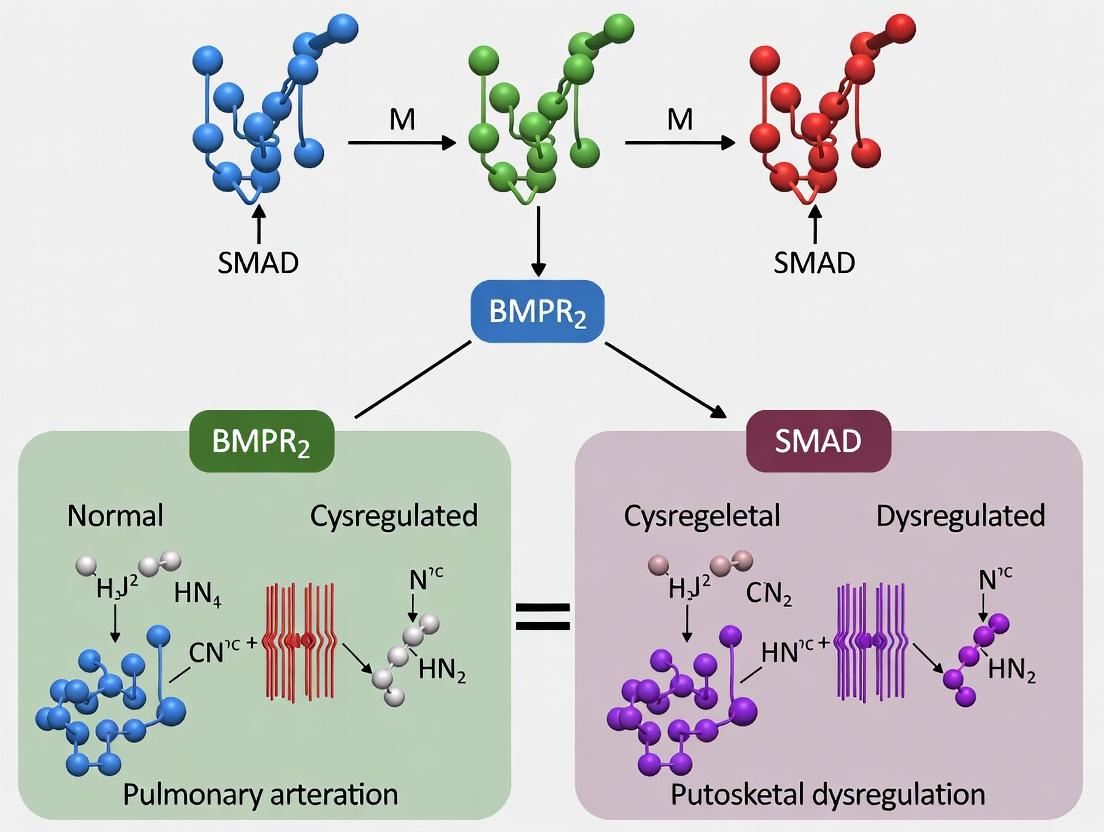
This article provides a comprehensive review for researchers and drug development professionals on the pathogenic link between BMPR2 mutations and cytoskeletal dysregulation in Pulmonary Arterial Hypertension (PAH).
BMPR2 Mutation and Cytoskeletal Dysfunction in PAH: Molecular Mechanisms, Therapeutic Strategies, and Research Frontiers
Abstract
This article provides a comprehensive review for researchers and drug development professionals on the pathogenic link between BMPR2 mutations and cytoskeletal dysregulation in Pulmonary Arterial Hypertension (PAH). We explore the foundational biology of BMPR2 signaling loss and its impact on actin dynamics, adhesion, and cell stiffness. Methodological sections detail current in vitro and in vivo models, high-content imaging, and omics approaches for studying this axis. We address common experimental challenges and optimization strategies for modeling and targeting cytoskeletal defects. Finally, we validate and compare emerging therapeutic strategies, from cytoskeletal-targeted drugs to gene-editing approaches, evaluating their preclinical efficacy and translational potential. This synthesis aims to bridge molecular insight with therapeutic innovation in PAH.
Decoding the Mechanism: How BMPR2 Mutations Disrupt Cytoskeletal Homeostasis in Pulmonary Arterial Hypertension
Bone Morphogenetic Protein Receptor Type II (BMPR2) signaling is a critical regulator of vascular cell function, proliferation, and apoptosis. Within the broader thesis on BMPR2 mutation-induced cytoskeletal dysregulation in pulmonary arterial hypertension (PAH), this guide details the core signaling pathways. Mutations in BMPR2, present in ~80% of heritable and ~20% of idiopathic PAH cases, disrupt both canonical (SMAD) and non-canonical pathways, leading to endothelial dysfunction, pulmonary artery smooth muscle cell hyperproliferation, and vascular remodeling. Understanding these pathways is fundamental for targeted therapeutic development.
Canonical SMAD-Dependent Pathway
Upon binding of BMP ligands (e.g., BMP2, BMP4, BMP7) to a heterotetrameric complex of BMPR2 and BMPR1, the canonical pathway is initiated. BMPR2, a constitutively active kinase, transphosphorylates BMPR1. This activates the receptor complex to phosphorylate receptor-regulated SMADs (R-SMADs: SMAD1/5/9). pSMAD1/5/9 forms a complex with the common mediator SMAD4. This complex translocates to the nucleus to regulate transcription of target genes (e.g., ID1, HEY1) essential for maintaining vascular quiescence.
Table 1: Key Quantitative Data in Canonical BMPR2-SMAD Signaling
| Parameter | Value/Condition | Biological/Experimental Context |
|---|---|---|
| Dissociation Constant (Kd) | ~1-10 nM | BMP9 binding to BMPR2/ALK1 complex (highest affinity) |
| Phosphorylation Half-life | 15-30 min | pSMAD1/5 in pulmonary endothelial cells post-BMP4 stimulation |
| Nuclear Translocation Time | 20-45 min | Peak SMAD1/5/9-SMAD4 complex in nucleus |
| Gene Expression Peak | 2-6 hours | ID1 mRNA levels post-stimulation |
| Common Mutant Allele Frequency | ~70% | Frameshift/nonsense mutations in heritable PAH patients |
| SMAD Signaling Reduction | 30-70% | In PAH patient-derived endothelial cells with BMPR2 mutation |
Diagram 1: Canonical BMPR2-SMAD Signaling Cascade
Non-Canonical Pathways
BMPR2 activation also initiates SMAD-independent signaling crucial for cytoskeletal organization, cell migration, and survival. Key pathways include:
- TAK1/p38 MAPK & JNK: BMPR2 interacts with XIAP, TAB1, and TRAF6 to activate TAK1, which phosphorylates p38 and JNK, influencing apoptosis and stress responses.
- PI3K/AKT: Mediates pro-survival and metabolic signals.
- LIMK/cofilin: Via CDC42/RAC1, BMPR2 regulates LIM kinase, which phosphorylates and inactivates cofilin, controlling actin dynamics. This pathway is directly implicated in the cytoskeletal dysregulation thesis.
- ERK1/2: Can be activated in a cell-type specific manner, often promoting proliferation.
Table 2: Quantitative Impact of BMPR2 Dysfunction on Non-Canonical Pathways
| Pathway | Readout | Change in BMPR2-deficient/Mutant Cells | Functional Consequence in PAH |
|---|---|---|---|
| TAK1/p38 | p-p38 levels | Increased by 2-4 fold | Enhanced apoptosis susceptibility |
| PI3K/AKT | p-AKT (Ser473) | Decreased by 40-60% | Loss of pro-survival signals |
| LIMK/cofilin | p-cofilin (Ser3) | Decreased by 50-80% | Increased actin depolymerization, cytoskeletal instability |
| ERK1/2 | p-ERK1/2 | Increased by 1.5-3 fold | Hyperproliferation of PASMCs |
| CDC42/RAC1 | GTP-bound activity | Variably dysregulated (50-150% change) | Altered cell adhesion & migration |
Diagram 2: Non-Canonical BMPR2 Signaling Pathways
Experimental Protocols for Pathway Analysis
Protocol 4.1: Assessing Canonical SMAD Signaling (Phospho-SMAD1/5/9 Immunoblot)
- Cell Stimulation: Seed human pulmonary artery endothelial cells (HPAECs) in 6-well plates. At 80% confluency, serum-starve for 4-6 hours. Stimulate with recombinant human BMP4 (10-50 ng/mL) in serum-free medium for durations (e.g., 0, 15, 30, 60, 120 min).
- Cell Lysis: Aspirate medium, wash with ice-cold PBS. Lyse cells in 200 µL RIPA buffer containing protease and phosphatase inhibitors on ice for 15 min. Scrape and centrifuge at 14,000xg for 15 min at 4°C.
- Immunoblotting: Determine protein concentration (BCA assay). Load 20-30 µg protein per lane on 4-12% Bis-Tris gels. Transfer to PVDF membrane. Block with 5% BSA in TBST for 1 hour.
- Antibody Incubation: Incubate with primary antibodies (anti-pSMAD1/5/9, 1:1000; anti-total SMAD1, 1:2000; anti-β-actin, 1:5000) in blocking buffer overnight at 4°C. Wash 3x with TBST, incubate with HRP-conjugated secondary antibodies (1:5000) for 1 hour at RT.
- Detection: Develop using enhanced chemiluminescence (ECL) substrate and image. Quantify band intensity relative to total protein or loading control.
Protocol 4.2: Analyzing Cytoskeletal Regulation via LIMK/cofilin (Immunofluorescence)
- Cell Culture & Transfection: Plate HPAECs on fibronectin-coated coverslips. Transfect with BMPR2 siRNA or a disease-associated mutant plasmid (e.g., p.Cys118Trp) using a lipid-based transfection reagent.
- Stimulation & Fixation: 48 hours post-transfection, stimulate with BMP4 (25 ng/mL, 30 min). Fix with 4% paraformaldehyde for 15 min at RT. Permeabilize with 0.1% Triton X-100 for 10 min.
- Staining: Block with 3% BSA for 1 hour. Incubate with primary antibodies (anti-p-cofilin (Ser3), 1:200; anti-vinculin, 1:400) in blocking buffer for 2 hours. Wash and incubate with fluorophore-conjugated secondary antibodies (e.g., Alexa Fluor 488, 594; 1:500) and phalloidin (for F-actin) for 1 hour in the dark.
- Mounting & Imaging: Mount with DAPI-containing medium. Image using a confocal microscope with a 63x oil objective. Analyze p-cofilin fluorescence intensity at the cell periphery and actin stress fiber organization.
The Scientist's Toolkit: Key Research Reagents
Table 3: Essential Reagents for BMPR2 Signaling Research
| Reagent | Supplier Examples | Function & Application |
|---|---|---|
| Recombinant Human BMP2/4/7/9 | R&D Systems, PeproTech | Ligand for specific activation of BMPR2 complexes. |
| Phospho-SMAD1/5/9 (Ser463/465) Antibody | Cell Signaling Technology (#13820) | Detects activated canonical R-SMADs by immunoblot/IF. |
| BMPR2 siRNA Pool | Dharmacon, Santa Cruz Biotechnology | Knockdown of BMPR2 expression for loss-of-function studies. |
| BMP Type II Receptor Inhibitor (DMH1) | Tocris | Selective ATP-competitive inhibitor of BMPR1 (ALK2/3), used to block downstream signaling. |
| Adenovirus expressing constitutively active BMPR2 (caBMPR2) | Vector Biolabs, generated in-house | Gain-of-function studies to rescue signaling in mutant cells. |
| Phospho-Cofilin (Ser3) Antibody | Cell Signaling Technology (#3313) | Key readout for actin cytoskeletal regulation via the LIMK pathway. |
| Human PAH Patient-Derived Cells (PASMCs/HPAECs) | Lonza, Pulmonary Hypertension Breakthrough Initiative (PHBI) Biobank | Gold-standard models containing disease-relevant genetic backgrounds. |
| TAK1 Inhibitor (5Z-7-Oxozeaenol) | Sigma-Aldrich | Selective inhibitor to probe the non-canonical TAK1/p38/JNK axis. |
Integration with PAH & Cytoskeletal Dysregulation Thesis
The dual disruption of canonical and non-canonical BMPR2 signaling creates a pathogenic synergy in PAH. Loss of canonical SMAD signaling reduces expression of genes promoting quiescence and differentiation. Concurrently, skewed non-canonical signaling—particularly through diminished LIMK/cofilin regulation—leads to aberrant actin dynamics, impairing endothelial barrier integrity and enhancing smooth muscle cell contractility and migration. This cytoskeletal instability, combined with altered apoptotic and proliferative signals, drives the obstructive vascular remodeling characteristic of PAH. Therapeutic strategies must therefore aim to restore the balance of this multifaceted signaling network.
Bone Morphogenetic Protein Receptor Type II (BMPR2) is a serine/threonine kinase receptor critical for maintaining vascular homeostasis. In pulmonary arterial hypertension (PAH), loss-of-function mutations in BMPR2 are the most common genetic cause, identified in approximately 80% of heritable and 20% of idiopathic cases. The central thesis of contemporary research posits that BMPR2 deficiency leads to a profound dysregulation of the cytoskeleton in pulmonary arterial smooth muscle cells (PASMCs) and endothelial cells (PAECs). This dysregulation manifests as aberrant actin polymerization, destabilized focal adhesions, and altered cellular mechanics, culminating in pathological hallmarks of PAH: hyper-proliferation, apoptosis resistance, and enhanced contractility.
Core Signaling Pathways: From BMPR2 to the Cytoskeleton
The canonical BMP-Smad1/5/9 pathway is well-characterized, but its connection to cytoskeletal regulation is largely mediated through cross-talk with non-canonical, Smad-independent pathways. The following diagram illustrates the primary signaling nexus linking BMPR2 to cytoskeletal components.
Title: BMPR2 Signaling to Actin and Focal Adhesions
Key Regulatory Nodes
- RhoA/ROCK: A primary effector. BMPR2 signaling normally attenuates RhoA-ROCK activity. BMPR2 deficiency leads to hyperactivation, resulting in increased LIMK activity.
- LIMK/Cofilin: Phosphorylation of Cofilin by LIMK inactivates its actin-severing function, promoting F-actin stabilization and polymerization.
- Focal Adhesion Kinase (FAK) & Paxillin: Integrin-mediated adhesion proteins regulated by RhoA/ROCK and p38 MAPK. Their hyperphosphorylation in BMPR2 deficiency leads to enlarged, stabilized focal adhesions.
Quantitative Data: Cytoskeletal and Mechanical Changes in BMPR2 Deficiency
Table 1: Cytoskeletal and Cellular Mechanical Alterations in BMPR2-Deficient PASMCs/PAECs
| Parameter | BMPR2-WT Cells | BMPR2-Deficient/Mutant Cells | Measurement Technique | Biological Consequence |
|---|---|---|---|---|
| F-Actin/G-Actin Ratio | ~1.5 - 2.0 | Increased to ~3.0 - 4.0 | Phalloidin staining / DNase I assay | Increased stress fibers, cellular stiffening |
| Cofilin Phosphorylation | Basal (pSer3) | Increased by 200-300% | Western Blot (Phospho-specific Ab) | Reduced actin turnover, stabilized filaments |
| Focal Adhesion Area | 1.0 - 2.0 μm² | Increased to 3.0 - 5.0 μm² | Immunofluorescence (Vinculin/Paxillin) | Enhanced adhesion, resistance to detachment |
| Cellular Traction Force | Baseline | Increased by 150-250% | Traction Force Microscopy (TFM) | Increased contractile potential |
| Young's Modulus (Stiffness) | 1.0 - 2.0 kPa | Increased to 3.0 - 6.0 kPa | Atomic Force Microscopy (AFM) | Impaired vascular compliance |
| Proliferation Rate (Serum) | 1.0 (Reference) | Increased by 40-60% | EdU/BrdU incorporation | Vascular remodeling |
Table 2: Key Signaling Molecule Changes in BMPR2 Dysregulation
| Signaling Molecule/Pathway | Activity in BMPR2 Deficiency | Assay Type | Reference Control |
|---|---|---|---|
| p-Smad1/5/9 | Decreased by 60-80% | Phospho-Western Blot / Immunofluorescence | Total Smad1 |
| RhoA-GTP (Active) | Increased by 2-3 fold | G-LISA / Pull-down (Rhotekin-RBD) | Total RhoA |
| ROCK Activity | Increased by 150-200% | Phospho-MYPT1 (Thr696) blot | Total MYPT1 |
| p-LIMK1 (Thr508) | Increased by 2-2.5 fold | Phospho-Western Blot | Total LIMK1 |
| p-FAK (Tyr397) | Increased by 3-4 fold | Phospho-Western Blot / Multiplex | Total FAK |
| p-p38 MAPK | Increased by 2-3 fold | Phospho-Western Blot | Total p38 |
Experimental Protocols for Investigating BMPR2-Cytoskeleton Axis
Protocol: Assessing Actin Polymerization Dynamics
Aim: To quantify the F-actin/G-actin ratio in BMPR2-knockdown vs. control PASMCs. Reagents: Phalloidin-TRITC (F-actin), DNase I-FITC (G-actin), 4% PFA, 0.1% Triton X-100, PBS. Procedure:
- Culture PASMCs on glass coverslips. Transfect with BMPR2 siRNA or control siRNA for 72h.
- Stimulate with BMP4 (10 ng/mL, 30 min) or vehicle.
- Fix cells with 4% PFA for 15 min at RT. Permeabilize with 0.1% Triton X-100 for 5 min.
- Dual Staining: Incubate with DNase I-FITC (1:200) for 20 min to label G-actin. Wash 3x with PBS.
- Then, incubate with Phalloidin-TRITC (1:500) for 40 min to label F-actin. Wash thoroughly.
- Mount and image using a confocal microscope with consistent laser/pinhole settings.
- Quantification: Use ImageJ to measure mean fluorescence intensity (MFI) in the cytosol for both channels. Calculate F-actin/G-actin ratio as (Phalloidin MFI) / (DNase I MFI). Analyze ≥50 cells per condition.
Protocol: Traction Force Microscopy (TFM) for Cell Mechanics
Aim: To measure contractile forces exerted by single cells on their substrate. Reagents: Polyacrylamide gels (elasticity: 8 kPa) embedded with 0.2 μm red fluorescent beads, collagen I (coating), Fibronectin. Procedure:
- Gel Preparation: Fabricate fluorescent bead-embedded PA gels of known stiffness (e.g., 8 kPa) on activated coverslips. Functionalize surface with collagen I (50 μg/mL).
- Plate BMPR2-mutant or control PASMCs at low density on gels. Allow to adhere and spread for 6-8h.
- Imaging: Acquire high-resolution z-stack images of the fluorescent beads beneath the cell (cell-present) and a reference image of the relaxed beads after detaching the cell using trypsin-EDTA.
- Analysis: Use open-source TFM software (e.g., Particle Image Velocimetry in MATLAB) to calculate the displacement field of beads between the stressed and null states.
- Force Calculation: Using the gel's known Young's modulus and displacement field, compute the traction stress vectors and total contractile moment for each cell.
Protocol: Functional Assessment of Focal Adhesions
Aim: To analyze focal adhesion size, number, and turnover. Reagents: Anti-vinculin antibody (primary), fluorescent secondary antibody, siRNAs, live-cell imaging compatible medium. Procedure for Turnover (FRAP):
- Transfect cells with Paxillin-GFP plasmid and BMPR2 or control siRNA.
- Image live cells on a confocal microscope with environmental control (37°C, 5% CO2).
- Select a region of interest (ROI) on a single focal adhesion. Perform Fluorescence Recovery After Photobleaching (FRAP) using a high-intensity laser pulse.
- Monitor recovery every 5 seconds for 5 minutes. Plot recovery curve and calculate halftime of recovery (t1/2) and mobile fraction. Slower recovery indicates reduced turnover.
The Scientist's Toolkit: Essential Research Reagents
Table 3: Key Research Reagent Solutions for BMPR2-Cytoskeleton Studies
| Reagent / Tool | Category | Function & Application | Example Product/Catalog |
|---|---|---|---|
| Recombinant Human BMP4/BMP9 | Ligand | Activates BMPR2 signaling; used to rescue or stimulate canonical pathways in experiments. | R&D Systems 314-BP |
| BMPR2-siRNA/sgRNA | Genetic Tool | Knocks down or knocks out BMPR2 expression to model PAH mutations in vitro. | Dharmacon SMARTpool, L-003870 |
| Lenti-viral BMPR2 | Genetic Tool | Overexpresses wild-type or mutant BMPR2 for functional reconstitution studies. | GenTarget Inc., LVP023 |
| Phalloidin (TRITC/Alexa Fluor) | Stain | Binds and labels filamentous actin (F-actin) for visualization and quantification. | Sigma-Aldrich, P1951 |
| Y-27632 (ROCK Inhibitor) | Small Molecule | Inhibits ROCK kinase; used to test dependency of cytoskeletal defects on Rho/ROCK. | Tocris, 1254 |
| Phospho-Cofilin (Ser3) Ab | Antibody | Detects inactive, phosphorylated cofilin via Western Blot/IF; key readout of LIMK activity. | Cell Signaling, #3313 |
| Phospho-FAK (Tyr397) Ab | Antibody | Detects auto-phosphorylated, active FAK; marker of focal adhesion signaling. | Cell Signaling, #8556 |
| G-LISA RhoA Activation Assay | Biochemical Assay | Quantifies levels of active, GTP-bound RhoA from cell lysates. | Cytoskeleton, BK124 |
| CellRaft AIR System | Cell Mechanics | Measures real-time cellular contraction and force generation in a 96-well format. | Cell Microsystems |
| Paxillin-GFP Plasmid | Live-cell Imaging | Enables visualization and FRAP analysis of focal adhesion dynamics in living cells. | Addgene, #15233 |
Integrated Experimental Workflow
The following diagram outlines a logical workflow for a comprehensive research project investigating the BMPR2-cytoskeleton axis.
Title: Workflow for BMPR2 Cytoskeleton Research
The dysregulation of actin polymerization, focal adhesion dynamics, and cell mechanics constitutes a fundamental pathomechanism downstream of BMPR2 mutation in PAH. Targeting this cytoskeletal connection offers promising therapeutic avenues. Current research focuses on ROCK inhibitors (e.g., fasudil), FAK inhibitors, and direct actin-stabilizing compounds. A precise understanding of these pathways, enabled by the methodologies and tools outlined herein, is critical for developing targeted therapies that can reverse the pathological vascular remodeling in PAH.
Abstract This technical guide details the pathophysiological cascade initiated by loss-of-function mutations in the Bone Morphogenetic Protein Receptor Type II (BMPR2) gene, culminating in the cytoskeletal dysregulation and increased vascular stiffness central to Pulmonary Arterial Hypertension (PAH). Within the context of a broader thesis on BMPR2-cytoskeletal axis dysregulation, we dissect the molecular mechanisms, focusing on the consequential hyperactivation of Rho GTPase signaling and its measurable impact on cellular biomechanics. The guide provides actionable experimental protocols, quantifiable data, and essential research tools for investigators targeting this pathway.
1. Introduction: The BMPR2 Mutation as the Initiating Event BMPR2 mutations, present in approximately 80% of heritable and 20% of idiopathic PAH cases, result in haploinsufficiency or dysfunctional protein. The canonical Smad1/5/9 signaling pathway is compromised, leading to a loss of growth suppressive and differentiation signals in pulmonary vascular cells. A critical non-canonical consequence is the loss of inhibitory crosstalk on pro-proliferative and pro-contractile pathways, prominently those governed by the Rho family of GTPases (RhoA, Rac1, Cdc42).
2. Core Signaling Pathway: From BMPR2 Loss to RhoA/ROCK Activation The disruption of BMP-Smad signaling removes a key brake on the RhoA/ROCK (Rho-associated protein kinase) axis. Normally, intact BMPR2 signaling activates Smads and modulates LIM kinase/cofilin activity, promoting actin depolymerization. Upon BMPR2 loss, this inhibition is lifted. Concurrently, increased TGF-β signaling and altered receptor tyrosine kinase (RTK) activity activate guanine nucleotide exchange factors (GEFs), such as p115RhoGEF and LARG, which catalyze the exchange of GDP for GTP on RhoA. Active GTP-bound RhoA binds to and activates ROCK.
Diagram 1: BMPR2 Loss Activates Rho/ROCK Pathway
3. Cytoskeletal Targets and the Stiffness Phenotype Activated ROCK phosphorylates two primary targets:
- Myosin Light Chain (MLC): Direct phosphorylation and inhibition of Myosin Phosphatase (MYPT1) increases phosphorylated MLC (p-MLC), enhancing actin-myosin cross-bridging and cellular contractility.
- LIM Kinase (LIMK): Phosphorylation activates LIMK, which in turn phosphorylates and inactivates cofilin, an actin-severing protein. This leads to stabilized F-actin stress fibers.
The net effect is a hypercontractile, stress fiber-rich cellular phenotype. At the tissue level, this manifests as increased vascular tone and, critically, elevated stiffness of the pulmonary arterial smooth muscle cells (PASMCs) and the extracellular matrix (ECM) they remodel.
4. Quantitative Data: Measurable Outcomes of Pathway Dysregulation Table 1: Key Quantitative Changes in PASMCs with BMPR2 Dysfunction vs. Normal
| Parameter | Normal PASMCs | BMPR2-Deficient/Dysfunctional PASMCs | Measurement Technique |
|---|---|---|---|
| p-MLC / Total MLC | 1.0 (Baseline) | 2.5 - 3.5 fold increase | Western Blot |
| Cofilin (Inactive p-Cofilin) | 1.0 (Baseline) | 2.0 - 2.8 fold increase | Immunofluorescence / WB |
| F-actin / G-actin Ratio | 1.0 (Baseline) | 1.8 - 2.5 fold increase | Phalloidin vs. DNase I stain |
| Cellular Elastic Modulus | ~2 - 4 kPa | ~6 - 12 kPa | Atomic Force Microscopy (AFM) |
| ECM Collagen Deposition | Baseline | 150 - 200% increase | Masson's Trichrome / Hydroxyproline assay |
| ROCK Activity (ELISA) | 1.0 (Baseline) | 1.7 - 2.4 fold increase | ROCK G-LISA / p-MYPT1 WB |
5. Experimental Protocols Protocol 5.1: Assessing RhoA/ROCK Activity in Cultured PASMCs
- Objective: Quantify active RhoA and ROCK-mediated phosphorylation.
- Materials: Primary human PASMCs (control vs. BMPR2 mutant/kd), RhoA/Rac1/Cdc42 G-LISA kits (Cytoskeleton, Inc.), antibodies for p-MYPT1(Thr853), p-MLC(Ser19), total MLC.
- Method:
- Culture PASMCs in smooth muscle growth media to 80% confluence.
- Serum-starve for 24h to synchronize and reduce basal activity.
- Stimulate with 10 ng/mL PDGF-BB or 1 µM LPA for 5-15 min to activate Rho/ROCK.
- Lyse cells per G-LISA protocol. Use one lysate aliquot for active GTPase pull-down/ELISA.
- Use another aliquot for Western Blot: resolve 20 µg protein on 4-12% Bis-Tris gel, transfer, block, and probe with p-MYPT1 and p-MLC antibodies overnight at 4°C. Normalize to total protein or housekeeping gene (e.g., GAPDH).
Protocol 5.2: Measuring Cell Stiffness via Atomic Force Microscopy (AFM)
- Objective: Determine the elastic modulus (stiffness) of single PASMCs.
- Materials: AFM with tipless cantilevers (nominal spring constant ~0.01 N/m), colloidal probe (5.5 µm silica bead), PASMCs plated on collagen-I coated dishes.
- Method:
- Calibrate cantilever sensitivity and spring constant via thermal tune method.
- Approach cell soma in culture medium at 37°C with constant approach velocity (1 µm/s).
- Acquire force-indentation curves (≥50 curves/cell, ≥10 cells/condition).
- Fit the retraction curve to the Hertzian contact model for a spherical indenter to calculate the Young's Elastic Modulus (E).
- Treat cells with 10 µM Y-27632 (ROCK inhibitor) for 1h as a pharmacological control.
6. The Scientist's Toolkit: Key Research Reagents Table 2: Essential Reagents for Investigating the BMPR2-Rho-Stiffness Axis
| Reagent / Solution | Function / Target | Example Product (Vendor) |
|---|---|---|
| siRNA/shRNA for BMPR2 | In vitro knockdown to model haploinsufficiency | ON-TARGETplus Human BMPR2 siRNA (Horizon) |
| BMPR2 Mutant Cell Lines | Study specific patient-derived mutations | Commercially available or via PAH biobanks |
| RhoA/Rac1/Cdc42 G-LISA | Quantitative measurement of active GTP-bound GTPases | G-LISA Activation Assay Kits (Cytoskeleton Inc.) |
| Y-27632 Dihydrochloride | Selective, cell-permeable ROCK inhibitor (ROCK1/2) | Y-27632 (Tocris) |
| Fasudil (HA-1077) | Clinically tested ROCK inhibitor | Fasudil HCl (MedChemExpress) |
| Phalloidin (Fluorophore-conj.) | High-affinity staining of F-actin filaments | Alexa Fluor 488/594 Phalloidin (Thermo Fisher) |
| Phospho-Specific Antibodies | Detect p-MYPT1(Thr853), p-MLC(Ser19), p-Cofilin(Ser3) | Phospho-antibodies (Cell Signaling Tech.) |
| Collagen I, Rat Tail | For coating plates to mimic ECM and promote PASMC adhesion | Collagen I, 3-5 mg/mL (Corning) |
| Atomic Force Microscope | Measure nanoscale cellular stiffness and adhesion | MFP-3D BIO (Asylum Research) |
Diagram 2: Experimental Workflow for Pathway & Stiffness Analysis
7. Therapeutic Implications and Conclusion The elucidated pathway—BMPR2 loss → Rho/ROCK hyperactivation → cytoskeletal remodeling → increased stiffness—provides a mechanistic rationale for targeting Rho/ROCK in PAH. While fasudil is used clinically in some regions, next-generation ROCK inhibitors and combination strategies with BMP pathway enhancers (e.g., tacrolimus) are under investigation. Direct measurement of vascular stiffness may serve as a valuable biomarker for patient stratification and treatment efficacy. This guide provides the technical foundation for advancing research in this high-priority area of pulmonary vascular disease.
Within the pathogenesis of BMPR2 mutation-associated pulmonary arterial hypertension (PAH), a self-perpetuating pathological triad emerges. Mutations in the bone morphogenetic protein receptor type II (BMPR2) gene initiate a cascade of cytoskeletal dysregulation in pulmonary vascular cells. This dysfunction disrupts endothelial barrier integrity and promotes a pro-proliferative, anti-apoptotic phenotype in pulmonary arterial smooth muscle cells (PASMCs), fueling the vessel remodeling characteristic of severe PAH. This whitepaper details the mechanisms and experimental approaches for investigating this vicious cycle.
Core Pathogenic Mechanisms
BMPR2 Mutation and Initial Cytoskeletal Dysregulation
Loss-of-function BMPR2 mutations impair canonical SMAD1/5/9 signaling, leading to a preferential shift toward non-canonical pathways. A key consequence is the activation of RhoA/ROCK and subsequent modulation of actin dynamics. The disassembly of cortical actin and formation of stress fibers in endothelial cells (ECs) is a primary event.
Table 1: Quantitative Impact of BMPR2 Deficiency on Cytoskeletal & Signaling Molecules
| Molecule/Parameter | Normal BMPR2 Signaling | BMPR2-Deficient State | Measurement Method | Typical Fold-Change/Value |
|---|---|---|---|---|
| pSMAD1/5/9 | High | Low | Western Blot | ↓ 60-80% |
| Active RhoA | Low | High | G-LISA Assay | ↑ 2-3 fold |
| ROCK activity | Low | High | MYPT1 phosphorylation assay | ↑ 2.5 fold |
| F-actin/G-actin ratio | Balanced | Elevated (stress fibers) | Phalloidin staining / Biochemical assay | ↑ 1.8-2.2 fold |
| Endothelial Permeability (Albumin flux) | Low | High | Transwell assay | ↑ 2-3 fold |
Endothelial Dysfunction
Cytoskeletal remodeling increases paracellular permeability, allowing serum-derived growth factors (e.g., PDGF, FGF2) greater access to the subendothelial space. Furthermore, dysfunctional ECs exhibit increased production of vasoconstrictors (endothelin-1) and decreased production of vasodilators (nitric oxide, prostacyclin), and adopt a pro-inflammatory phenotype.
Smooth Muscle Hyperproliferation
The compromised endothelial barrier and altered secretome create a microenvironment rich in mitogenic and survival factors. PASMCs, which may also harbor intrinsic BMPR2 defects, exhibit enhanced responsiveness due to their own cytoskeletal dysregulation, promoting hyperproliferation, migration, and resistance to apoptosis.
Experimental Protocols
Protocol 1: Assessing Cytoskeletal Remodeling via Fluorescent Phalloidin Staining
Objective: Visualize and quantify F-actin reorganization in BMPR2-silenced pulmonary endothelial cells. Materials:
- Human Pulmonary Arterial Endothelial Cells (HPAECs) with siRNA-mediated BMPR2 knockdown.
- Control siRNA-treated HPAECs.
- 4% paraformaldehyde (PFA) in PBS.
- 0.1% Triton X-100 in PBS.
- 1% Bovine Serum Albumin (BSA) in PBS.
- Alexa Fluor 488- or 594-conjugated phalloidin (1:200 dilution in 1% BSA).
- DAPI (1:5000 dilution) for nuclear staining.
- Confocal microscope. Procedure:
- Culture HPAECs on glass coverslips to 70% confluence.
- Transfert with BMPR2 or control siRNA using appropriate transfection reagent (e.g., Lipofectamine RNAiMAX). Incubate for 48-72 hours.
- Fix cells with 4% PFA for 15 min at room temperature (RT).
- Permeabilize with 0.1% Triton X-100 for 10 min at RT.
- Block with 1% BSA for 30 min at RT.
- Incubate with phalloidin conjugate in the dark for 1 hour at RT.
- Wash 3x with PBS.
- Counterstain nuclei with DAPI for 5 min.
- Mount coverslips and image using a confocal microscope (60x oil objective).
- Analyze images for stress fiber formation (thick, parallel actin bundles) vs. cortical actin ring.
Protocol 2: Functional Endothelial Permeability Assay
Objective: Quantify the increase in paracellular flux due to BMPR2 dysfunction. Materials:
- Transwell inserts (3.0 μm pore size, polyester membrane).
- Fluorescein isothiocyanate (FITC)-labeled dextran (70 kDa).
- Fluorescence plate reader. Procedure:
- Seed control and BMPR2-deficient HPAECs onto Transwell inserts at confluent density. Allow to form a monolayer for 48 hours.
- Confirm monolayer integrity via transepithelial electrical resistance (TEER) if equipment is available.
- Add FITC-dextran (1 mg/mL) to the top (luminal) chamber.
- At defined time points (e.g., 30, 60, 90 min), sample 100 μL from the bottom (abluminal) chamber.
- Replace sampled volume with fresh medium.
- Measure fluorescence of samples (excitation 485 nm, emission 535 nm).
- Calculate permeability coefficient (Papp) using standard formulas.
Protocol 3: PASMC Proliferation Assay (BrdU/EdU Incorporation)
Objective: Measure hyperproliferation of PASMCs in response to conditioned media from dysfunctional ECs. Materials:
- Conditioned media from control and BMPR2-deficient HPAECs.
- Pulmonary Arterial Smooth Muscle Cells (PASMCs).
- Click-iT Plus EdU (5-ethynyl-2’-deoxyuridine) assay kit. Procedure:
- Collect serum-free conditioned media from HPAEC cultures after 24 hours. Centrifuge to remove debris.
- Seed PASMCs in a 96-well plate at low density.
- Serum-starve PASMCs for 24 hours to synchronize cell cycle.
- Treat PASMCs with 50% conditioned media from either control or BMPR2-deficient HPAECs. Include fresh serum-free media as a negative control and media with 10% FBS as a positive control.
- Add EdU reagent to wells for the final 6 hours of a 24-hour stimulation period.
- Fix cells and perform the Click-iT reaction per kit instructions to label incorporated EdU.
- Counterstain nuclei with Hoechst 33342.
- Image and quantify using an automated high-content imager or fluorescence microscope. Calculate proliferation index as (EdU+ nuclei / Total Hoechst+ nuclei) * 100%.
The Scientist's Toolkit: Key Research Reagent Solutions
Table 2: Essential Reagents for Investigating the Vicious Cycle
| Reagent/Category | Specific Example(s) | Function & Application |
|---|---|---|
| BMPR2 Modulation | BMPR2-specific siRNA/shRNA; CRISPR/Cas9 kits; Recombinant BMP9/BMP10 (ligands) | To knockdown, knockout, or activate BMPR2 signaling in vitro and in vivo. |
| Cytoskeletal Markers | Phalloidin conjugates (FITC, Alexa Fluor); Antibodies to phospho-MYPT1 (Thr696), pMLC; RhoA G-LISA Activation Assay | Visualize F-actin; quantify ROCK activity and RhoA activation. |
| Endothelial Function | FITC-labeled dextran (various sizes); TEER measurement system; ET-1/NO/6-keto-PGF1α ELISA kits | Assess permeability, barrier integrity, and vasoactive mediator secretion. |
| Proliferation/Apoptosis | Click-iT EdU kit; BrdU ELISA; Antibodies to PCNA, Ki-67; Caspase-3/7 activity assay; TUNEL assay | Quantify cell cycle entry, proliferation rates, and apoptotic indices. |
| Pathway Inhibitors/Activators | ROCK inhibitor (Y-27632); Rho activator (CN03); SMAD1/5/9 inhibitor (LDN-193189) | Mechanistically probe specific pathways within the cycle. |
| Cell Type-Specific Markers | CD31 (PECAM-1) antibody (EC); α-SMA antibody (SMC); vWF antibody (EC) | Identify and validate cell types in culture or tissue sections. |
Visualizing the Vicious Cycle and Pathways
Diagram Title: The Core Vicious Cycle in BMPR2 PAH
Diagram Title: BMPR2 Dysregulation Triggers Cytoskeletal & Phenotypic Shifts
Diagram Title: Integrated Experimental Workflow to Dissect the Cycle
The interplay between cytoskeletal dysregulation, endothelial dysfunction, and smooth muscle hyperproliferation constitutes a critical self-amplifying loop in BMPR2-associated PAH. Targeting individual components of this cycle—particularly the initial cytoskeletal dysregulation—offers promising therapeutic avenues. The experimental frameworks and tools detailed here provide a roadmap for mechanistic dissection and therapeutic intervention testing.
Within the paradigm of BMPR2 mutation-driven pulmonary arterial hypertension (PAH), research has traditionally focused on endothelial dysfunction and smooth muscle cell proliferation. However, the pulmonary artery adventitia, populated by fibroblasts (PAFs), is now recognized as a primary site of pathological remodeling. Central to this process is the dysregulation of the fibroblast cytoskeleton, which transcends its structural role to become a dynamic signaling hub, governing activation, migration, and matrix production in response to BMPR2 deficiency and subsequent signaling imbalances.
Cytoskeletal Dysregulation: From BMPR2 Mutation to Fibroblast Activation
Loss-of-function mutations in BMPR2 disrupt canonical SMAD1/5/9 signaling, but equally critical is the perturbation of non-canonical pathways, notably those converging on the cytoskeleton. In PAFs, BMPR2 dysfunction leads to:
- Rho GTPase/Rho-Kinase (ROCK) Hyperactivation: Reduced BMPR2 signaling fails to counterbalance pro-fibrotic TGF-β1 signals, leading to increased RhoA/ROCK activity. This results in excessive actin stress fiber formation and focal adhesion maturation.
- Microtubule Network Destabilization: Altered crosstalk between actin and microtubule networks impacts cellular mechanics and intracellular trafficking.
- Altered Mechanotransduction: A stiffened extracellular matrix (ECM), a hallmark of PAH, is sensed by integrins and transmitted via the dysregulated cytoskeleton, perpetuating a pro-fibrotic feedback loop.
Table 1: Key Quantitative Changes in BMPR2-Deficient PAFs vs. Wild-Type
| Parameter | Wild-Type PAFs | BMPR2-Deficient PAFs | Measurement Technique | Reported p-value |
|---|---|---|---|---|
| RhoA Activity (GTP-bound) | Baseline (1.0-fold) | 2.5 - 3.5-fold increase | G-LISA / Pull-down Assay | <0.01 |
| Phospho-MYPT1 (ROCK target) | Baseline (1.0-fold) | 2.8-fold increase | Western Blot | <0.001 |
| F-Actin Polymerization | Organized, moderate | 65% increase in dense stress fibers | Phalloidin staining / Fluorometry | <0.005 |
| Migration Rate (Scratch Assay) | ~20 μm/hr | ~45 μm/hr | Time-lapse Microscopy | <0.001 |
| Collagen I Secretion | Baseline (1.0-fold) | 3.2-fold increase | ELISA / Mass Spectrometry | <0.001 |
| Traction Force | 50-100 Pa | 200-300 Pa | Traction Force Microscopy | <0.005 |
Core Experimental Protocols
1. Isolation and Culture of Primary Human PAFs from PAH and Control Lungs
- Tissue Source: Distal pulmonary arteries (<5 mm diameter) from explanted PAH lungs or donor controls.
- Protocol: Adventitial layer is carefully dissected, minced, and explanted in fibroblast growth medium (DMEM/F12, 20% FBS, 1% penicillin/streptomycin). Outgrown cells are purified via serial passaging and characterized by positive vimentin/α-SMA staining and negative CD31/smooth muscle myosin heavy chain staining. BMPR2 deficiency is induced in control PAFs via siRNA or CRISPR-Cas9 knockout, or cells are sourced from BMPR2 mutation carriers.
2. Assessing Cytoskeletal Organization and Dynamics
- F-Actin Staining: Cells grown on glass coverslips are fixed (4% PFA), permeabilized (0.1% Triton X-100), and stained with Alexa Fluor 488- or 594-conjugated phalloidin. Images acquired via confocal microscopy are analyzed for fluorescence intensity and fiber orientation using software (e.g., ImageJ FibrilTool).
- Traction Force Microscopy (TFM): PAFs are plated on polyacrylamide gels (~8 kPa stiffness) embedded with 0.2 μm fluorescent beads. Cell-induced bead displacements are tracked before and after detergent lysis. Traction forces are computed using Fourier transform traction cytometry.
3. Functional Assays for Adventitial Remodeling Phenotypes
- 3D Collagen Gel Contraction Assay: PAFs are embedded in bovine collagen I gels (2 mg/ml, 1x10^6 cells/ml). Gels are polymerized, released, and floated in medium. Gel area is quantified over 72 hours to measure contractile capability.
- Transwell Migration/Invasion Assay: For migration, 2.5x10^4 serum-starved PAFs are seeded in the top chamber (8 μm pores). For invasion, Matrigel (50 μg/well) coats the membrane. FBS (10%) is used as a chemoattractant. Cells migrating to the lower surface after 24-48h are fixed, stained (crystal violet), and counted.
Signaling Pathways in Cytoskeletal Dysregulation
Title: RhoA/ROCK Axis in BMPR2-Deficient PAF Activation
Experimental Workflow for Mechanistic Study
Title: Workflow for Studying Cytoskeleton in PAFs
The Scientist's Toolkit: Research Reagent Solutions
| Reagent/Category | Example Product(s) | Primary Function in Research |
|---|---|---|
| BMPR2 Manipulation | BMPR2-targeting siRNA (Dharmacon), CRISPR-Cas9 kits (Synthego) | To create genetically defined in vitro models of PAH. |
| Cytoskeletal Probes | Phalloidin conjugates (Thermo Fisher), Live-actin probes (SiR-Actin, Spirochrome) | Visualizing F-actin architecture and dynamics in fixed and live cells. |
| Rho GTPase Assays | RhoA G-LISA Activation Assay (Cytoskeleton), FRET-based biosensors | Quantifying active, GTP-bound RhoA levels in cell lysates or live cells. |
| ROCK Inhibitors | Y-27632 (dihydrochloride), Fasudil (HA-1077) | Pharmacologically inhibiting ROCK to dissect its role in cytoskeletal and phenotypic changes. |
| Mechanobiology Tools | Traction Force Microscopy kits (CytoSoft, Matrigen), Atomic Force Microscopy probes | Measuring cellular forces and matrix stiffness at the micro-scale. |
| Fibrosis Markers | Alpha-SMA antibodies, Procollagen I C-peptide ELISA (Takara) | Quantifying fibroblast-to-myofibroblast differentiation and collagen synthesis. |
| Advanced Culture Systems | 3D collagen/Matrigel kits, PAH donor-derived PAFs (Lonza), Microfluidic "lung-on-a-chip" devices | Modeling the 3D adventitial microenvironment and cell-cell interactions. |
Research Tools and Models: Methodologies for Investigating the BMPR2-Cytoskeleton Axis in PAH
Pulmonary arterial hypertension (PAH) is a progressive, fatal disease characterized by vascular remodeling and elevated pulmonary arterial pressure. Mutations in the Bone Morphogenetic Protein Receptor Type II (BMPR2) gene are the most common genetic cause of heritable PAH, present in approximately 80% of familial and 20% of idiopathic cases. The central thesis of contemporary research posits that BMPR2 deficiency leads to profound cytoskeletal dysregulation in pulmonary endothelial cells (PECs), resulting in aberrant cell proliferation, apoptosis resistance, and impaired barrier function. Investigating this pathological axis requires sophisticated, physiologically relevant in vitro models. This whitepaper provides a technical guide to the three pillars of modern PAH endothelial research: induced pluripotent stem cell (iPSC)-derived PECs, CRISPR-engineered cell lines, and primary PEC cultures, evaluating their respective capacities to elucidate BMPR2-cytoskeletal dysfunction.
Model Systems: Comparative Analysis
The selection of an in vitro model involves trade-offs between physiological relevance, genetic fidelity, scalability, and technical complexity. The following table summarizes key quantitative parameters for each system.
Table 1: Comparative Analysis of In Vitro Pulmonary Endothelial Model Systems
| Feature | Primary Pulmonary ECs | iPSC-Derived PECs | CRISPR-Edited Cell Lines (e.g., hPAECs) |
|---|---|---|---|
| Physiological Relevance | High (native tissue origin) | Moderate to High (differentiated) | Variable (depends on parent line) |
| Donor-to-Donor Variability | High (≈30-50% functional variance) | Low (clonal origin) | None (isogenic controls) |
| Proliferative Capacity | Limited (5-10 passages) | High (virtually unlimited) | High (immortalized or re-differentiable) |
| Time to Experiment Readiness | Short (1-2 weeks post-isolation) | Long (4-6 weeks for differentiation) | Moderate (2-3 weeks for editing/validation) |
| Genetic Manipulability | Low (transduction efficiency variable) | High (editing in pluripotent state) | High (direct editing of somatic line) |
| Cost per Experiment | Moderate (isolation costs) | High (culture reagents, growth factors) | Low (after line establishment) |
| Key Challenge | Rapid phenotypic drift, contamination | Incomplete maturation, batch variation | Off-target effects, genomic instability |
| Ideal Use Case | Early-stage validation, donor studies | Disease modeling from specific mutations, high-throughput screening | Mechanistic studies of specific mutations, isogenic comparisons |
Detailed Methodologies & Protocols
Protocol: Directed Differentiation of iPSCs to Pulmonary Arterial Endothelial Cells (PAECs)
This protocol generates PAEC-like cells with a transcriptomic profile enriched for pulmonary endothelial markers, suitable for studying BMPR2 dysfunction.
Materials: Human iPSCs, mTeSR Plus medium, Accutase, Growth Factor Reduced Matrigel, DMEM/F-12, Defined Fetal Bovine Serum (dFBS), CHIR99021 (GSK3β inhibitor), BMP4, VEGF165, SB431542 (TGF-β inhibitor), FGF2, CD31 MicroBeads.
Procedure:
- Maintenance & Mesoderm Induction: Culture iPSCs on Matrigel in mTeSR Plus. At ~80% confluence, dissociate with Accutase and plate as single cells in mTeSR Plus with 10µM Y-27632 (ROCKi). After 24h, switch to RPMI/B27 minus insulin supplemented with 6µM CHIR99021 and 50ng/mL BMP4 for 48 hours to specify mesoderm.
- Cardiac Mesoderm to Endothelial Progenitors: On Day 3, replace medium with RPMI/B27 containing 50ng/mL VEGF165 and 10µM SB431542. Refresh medium daily for 4 days. By Day 7, a mixed population of endothelial progenitors and other cells will be present.
- Endothelial Specification & Expansion: On Day 7, dissociate cells and culture in Endothelial Growth Medium-2 (EGM-2) supplemented with 50ng/mL VEGF165 and 50ng/mL FGF2 on fibronectin-coated plates. Change medium every other day.
- Purification: On Day 12-14, harvest cells and positively select for CD31+ cells using magnetic-activated cell sorting (MACS). Plate purified cells on fibronectin in EGM-2.
- Characterization: Assess purity via flow cytometry for CD31, CD144 (VE-cadherin), vWF (≥90% positive). Confirm pulmonary arterial identity by positive staining for DLL4 and elevated expression of BMPR2, EDNRB, and GJA5 compared to generic HUVECs via qPCR.
Protocol: CRISPR-Cas9 Knock-in of a PathogenicBMPR2Mutation in iPSCs
This protocol creates an isogenic pair for clean mechanistic study.
Materials: Wild-type iPSCs, Cas9 nuclease (or expression plasmid), sgRNA targeting near the mutation site, donor DNA template (ssODN or dsDNA with homology arms), Lipofectamine Stem or Neon Transfection System, Puromycin or Fluorescence-based selection markers, CloneSelect Single-Cell Printer or limiting dilution.
Procedure:
- Design: Design sgRNA with high on-target score proximal to the target codon (e.g., for p.Arg491Trp). Design a single-stranded oligodeoxynucleotide (ssODN) donor template (~100-200 nt) containing the desired point mutation and a silent PAM-disrupting mutation, flanked by 50-60 nt homology arms.
- Transfection: Co-transfect 2µg Cas9 protein, 1µg sgRNA, and 100pmol ssODN into 2x10^5 iPSCs using electroporation (Neon: 1100V, 20ms, 2 pulses).
- Recovery & Selection: Plate transfected cells in mTeSR Plus with 10µM Y-27632. After 72 hours, begin puromycin selection (if donor included a resistance cassette) for 5-7 days.
- Clonal Isolation: Dissociate and plate at clonal density (0.5 cells/well) in 96-well plates. Allow colonies to expand for 2-3 weeks.
- Screening: Extract genomic DNA from each clone. Perform PCR amplification of the targeted region and sequence via Sanger sequencing. Identify heterozygous/homozygous mutant clones.
- Validation & Banking: Confirm pluripotency marker expression (OCT4, NANOG) and normal karyotype (G-band analysis). Expand and bank validated isogenic wild-type and mutant iPSC clones.
Protocol: Isolation and Culture of Primary Human Pulmonary Arterial Endothelial Cells (hPAECs)
Materials: Fresh distal pulmonary artery (3rd-4th division) tissue, Hanks' Balanced Salt Solution (HBSS) + Antibiotic/Antimycotic, Collagenase Type II (1mg/mL in HBSS), Endothelial Growth Medium (EGM-2), 1% Gelatin-coated T-25 flasks, CD31-coated magnetic beads.
Procedure:
- Tissue Processing: Under sterile conditions, dissect the artery free of adventitia. Slice open longitudinally and wash vigorously in HBSS to remove blood.
- Enzymatic Digestion: Incubate the luminal surface with 0.1% collagenase Type II in HBSS for 20 minutes at 37°C.
- Cell Harvesting: Gently scrape the luminal surface with a cell scraper to dislodge endothelial cells. Collect the cell suspension in complete EGM-2 with 20% FBS to neutralize collagenase.
- Centrifugation & Seeding: Centrifuge at 300 x g for 5 minutes. Resuspend the pellet in EGM-2 and seed onto a gelatin-coated T-25 flask.
- Purification & Culture: After 24 hours, wash gently to remove non-adherent cells. At first passage, consider positive selection using CD31 beads if purity is low (<95%). Maintain in EGM-2 at 37°C, 5% CO2, changing medium every 2 days. Use cells between passages 2-6 for experiments.
Visualizing Key Pathways and Workflows
Diagram 1: BMPR2 Signaling & Cytoskeletal Dysregulation in PAH
Diagram 2: Model System Selection & Integration Workflow
The Scientist's Toolkit: Essential Research Reagents
Table 2: Key Research Reagent Solutions for BMPR2-PEC Studies
| Reagent/Category | Example Product(s) | Function in Research |
|---|---|---|
| Endothelial Growth Media | EGM-2 (Lonza), Endothelial Cell Growth Medium MV2 (PromoCell) | Provides optimized basal medium and growth factor cocktail (VEGF, FGF, EGF, IGF) for maintenance and expansion of endothelial cells. |
| Extracellular Matrix Coatings | Growth Factor Reduced Matrigel (Corning), Fibronectin (Sigma), Collagen Type IV | Provides a physiologically relevant substrate for cell attachment, spreading, and differentiation. GFR Matrigel is essential for iPSC culture and tube formation assays. |
| CRISPR-Cas9 Components | Alt-R S.p. Cas9 Nuclease V3 (IDT), Synthego sgRNA, Neon Transfection System (Thermo) | For precise genome editing. High-fidelity Cas9 and chemically modified sgRNAs increase on-target efficiency and reduce off-target effects. |
| BMP/TGF-β Pathway Modulators | Recombinant Human BMP4 (R&D Systems), SB431542 (Tocris), LDN-193189 (Stemgent) | To manipulate the BMP signaling pathway. SB431542 inhibits ALK5 (TGF-β) to promote endothelial differentiation; LDN-193189 inhibits BMP type I receptors for control experiments. |
| Cytoskeletal & Barrier Function Assays | Phalloidin (Actin stain), VE-cadherin Antibody, Electric Cell-substrate Impedance Sensing (ECIS) | To quantify cytoskeletal remodeling and endothelial barrier integrity. Phalloidin stains F-actin for morphology; ECIS provides real-time, quantitative barrier resistance measurements. |
| Cell Selection & Purification | CD31 (PECAM-1) MicroBeads (Miltenyi), Fluorescence-Activated Cell Sorting (FACS) | For purification of endothelial populations from mixed cultures (e.g., after iPSC differentiation). Magnetic sorting is robust; FACS offers higher purity and multi-parameter gating. |
| iPSC Maintenance | mTeSR Plus (StemCell Tech.), RevitaCell Supplement (Gibco), Accutase (Sigma) | Feeder-free culture of iPSCs. mTeSR provides defined maintenance medium; RevitaCell improves single-cell survival; Accutase is a gentle dissociation enzyme. |
| Key Antibodies for Characterization | Anti-CD31/PECAM-1, Anti-VE-cadherin/CD144, Anti-vWF, Anti-BMPR2 (Novus), Anti-pSMAD1/5/9 (CST) | Confirmation of endothelial identity (CD31, VE-cad, vWF) and assessment of BMPR2 expression and downstream signaling activity (pSMAD1/5/9). |
Pulmonary arterial hypertension (PAH) is a progressive and fatal disease characterized by vascular remodeling and increased pulmonary arterial pressure. A significant genetic driver is mutations in the Bone Morphogenetic Protein Receptor Type II (BMPR2), found in ~80% of heritable and ~20% of idiopathic PAH cases. A central thesis in the field posits that BMPR2 dysfunction leads to profound cytoskeletal dysregulation in pulmonary artery smooth muscle cells (PASMCs) and endothelial cells (PAECs). This dysregulation manifests as aberrant actomyosin contractility, altered focal adhesion dynamics, and disrupted force transduction, culminating in pathological cellular proliferation, migration, and vasoconstriction. Advanced live-cell imaging techniques are indispensable for testing this hypothesis, allowing direct, quantitative visualization of subcellular structures and mechanobiological processes. This guide details the application of super-resolution microscopy, FRET biosensors, and traction force microscopy (TFM) to investigate BMPR2 mutation-induced cytoskeletal pathology.
Super-Resolution Microscopy for Nanoscale Cytoskeletal Architecture
Principle: Super-resolution techniques like Structured Illumination Microscopy (SIM) and Stochastic Optical Reconstruction Microscopy (STORM) overcome the diffraction limit (~250 nm), enabling visualization of cytoskeletal filaments (actin, microtubules) and focal adhesion proteins at resolutions down to 20-120 nm.
Application in BMPR2 Research: To quantify structural differences in focal adhesions and actin stress fibers between wild-type (WT) and BMPR2 mutant (MUT) PASMCs.
Experimental Protocol:
- Cell Culture & Plating: Plate human PASMCs (WT-BMPR2 and BMPR2-mutant) on fibronectin-coated (5 µg/cm²) #1.5 high-precision coverslips at low density.
- Fixation & Immunostaining: At 80% confluence, serum-starve cells for 24 hours. Fix with 4% paraformaldehyde (PFA) for 15 min, permeabilize with 0.1% Triton X-100, and block with 5% BSA.
- Labeling: Incubate with primary antibodies: mouse anti-paxillin (1:200) and rabbit anti-vinculin (1:200) for 1 hour. Use secondary antibodies conjugated with Alexa Fluor 488 (for STORM, use photoswitchable dyes like Alexa Fluor 647) and Alexa Fluor 568. For actin, use phalloidin-Atto 550.
- Imaging: Perform 3D-SIM imaging on a commercial system (e.g., Nikon N-SIM) using a 100x/1.49 NA oil objective. For STORM, image in a photoswitching buffer (50 mM Tris, 10 mM NaCl, 10% glucose, 0.5 mg/mL glucose oxidase, 40 µg/mL catalase, 100 mM mercaptoethylamine) and acquire 20,000-60,000 frames.
- Analysis: Use vendor or open-source software (e.g., Fiji, ThunderSTORM) for reconstruction. Quantify focal adhesion area, length, and density, and actin fiber orientation and persistence length.
Table 1: Quantitative Comparison of Focal Adhesion Morphometrics in PASMCs via SIM
| Morphometric Parameter | WT-BMPR2 PASMCs (Mean ± SD) | BMPR2-MUT PASMCs (Mean ± SD) | p-value | Biological Implication |
|---|---|---|---|---|
| Mean Adhesion Area (µm²) | 1.2 ± 0.3 | 2.8 ± 0.6 | <0.001 | Larger, more mature adhesions |
| Mean Adhesion Length (µm) | 2.5 ± 0.5 | 4.7 ± 1.1 | <0.001 | Increased stability & force transmission |
| Adhesion Density (#/cell) | 120 ± 25 | 65 ± 18 | <0.01 | Reduced turnover, hyper-stabilization |
Diagram: Super-Resolution Workflow for BMPR2 Cytoskeletal Analysis
FRET Biosensors for Live-Cell Signaling Dynamics
Principle: Förster Resonance Energy Transfer (FRET) biosensors are genetically encoded molecular tension probes. A change in cellular activity (e.g., GTPase activation, kinase activity) induces a conformational change, altering energy transfer between donor (CFP) and acceptor (YFP) fluorophores, reported as a change in the donor/acceptor emission ratio.
Application in BMPR2 Research: To visualize real-time, spatiotemporal activity of RhoA GTPase and downstream kinases (e.g., ROCK) in live PASMCs, linking BMPR2 mutation to hyperactivated cytoskeletal signaling.
Experimental Protocol:
- Biosensor Transduction: Transduce low-passage PASMCs with lentivirus encoding FRET biosensors (e.g., Raichu-RhoA for RhoA activity, or an AKAR-based sensor for PKA activity). Use puromycin selection for stable lines.
- Live-Cell Imaging Setup: Plate cells on glass-bottom dishes 48 hours pre-imaging. Use a confocal or widefield microscope with environmental control (37°C, 5% CO₂), a 40x/1.3 NA oil objective, and dual-emission filter sets for CFP and YFP.
- FRET Acquisition & Calibration: Excite CFP at 433 nm. Collect emission simultaneously at 475 nm (CFP channel) and 530 nm (FRET/YFP channel). Acquire images every 30-60 seconds. Perform corrections for bleed-through (crosstalk) and laser fluctuations using cells expressing donor-only or acceptor-only constructs.
- Stimulation: After a 5-minute baseline, stimulate cells with a relevant ligand (e.g., BMP4, 50 ng/mL; or thrombin, 5 U/mL to induce contractile signaling).
- Analysis: Calculate the FRET ratio (YFP emission / CFP emission) for each time point and region of interest (e.g., cell periphery vs. nucleus). Normalize ratios to the baseline average.
Table 2: FRET Biosensor Responses to BMP4 Stimulation in PASMCs
| Biosensor (Target) | WT-BMPR2 PASMC (ΔRatio Max %) | BMPR2-MUT PASMC (ΔRatio Max %) | Time to Peak (Min) | Interpretation |
|---|---|---|---|---|
| Raichu-RhoA (RhoA GTP) | +15 ± 5% | +40 ± 10% | 3-5 | Hyperactive RhoA in mutants |
| AKAR3 (PKA Kinase) | +50 ± 15% | +10 ± 5% | 2-4 | Blunted PKA response in mutants |
| EKAR (ERK Kinase) | +80 ± 20% | +120 ± 25% | 8-12 | Enhanced ERK activation in mutants |
Diagram: FRET Biosensor Signaling Logic in BMPR2 Pathway
Traction Force Microscopy for Quantifying Cellular Forces
Principle: TFM measures the deformation of a flexible, fluorescently labeled polyacrylamide (PAA) substrate by a cell. By tracking the displacement of embedded marker beads, the traction stresses exerted by the cell on its substrate are computationally reconstructed.
Application in BMPR2 Research: To directly measure the excessive contractile forces generated by BMPR2-mutant PASMCs, a functional readout of cytoskeletal dysregulation.
Experimental Protocol:
- PAA Gel Fabrication: Prepare gels with a Young's modulus of ~8 kPa (mimicking physiological stiffness). Mix 7.5% acrylamide, 0.1% bis-acrylamide, 0.2 µm red-fluorescent beads, ammonium persulfate, and TEMED. Polymerize on activated 25 mm glass coverslips. Functionalize with sulfo-SANPAH and coat with collagen I (50 µg/mL).
- Cell Plating & Imaging: Plate PASMCs sparsely on gels. After 24 hours, image beads using a 60x/1.4 NA oil objective in two states: 1) Loaded State: Live cell. 2) Null State: After detaching cells with trypsin-EDTA or lysing with 1% SDS.
- Traction Calculation: Use Particle Image Velocimetry (PIV) or digital image correlation to compute the displacement field between null and loaded states. Reconstruct traction vectors and stresses using Fourier Transform Traction Cytometry (FTTC) algorithms (e.g., via open-source MATLAB code).
- Metrics: Calculate total traction force (sum of vector magnitudes), maximum traction (peak stress), and contractile moment (a measure of net cell contraction).
Table 3: Traction Force Metrics of PASMCs on 8 kPa Substrates
| Force Metric | WT-BMPR2 PASMCs | BMPR2-MUT PASMCs | p-value |
|---|---|---|---|
| Total Traction Force (nN) | 150 ± 35 | 420 ± 95 | <0.001 |
| Maximum Traction (Pa) | 850 ± 200 | 2100 ± 450 | <0.001 |
| Contractile Moment (pNm) | 2.5 ± 0.7 x 10³ | 7.8 ± 1.9 x 10³ | <0.001 |
Diagram: Traction Force Microscopy Experimental Workflow
The Scientist's Toolkit: Key Research Reagent Solutions
| Item / Reagent | Function / Purpose in BMPR2 Cytoskeletal Research |
|---|---|
| Human PASMCs (WT & BMPR2-mutant) | Primary disease-relevant cell model. Isogenic pairs are ideal. |
| #1.5 High-Precision Coverslips | Optimal thickness for super-resolution and TFM objectives, minimizing spherical aberration. |
| Fibronectin / Collagen I | Extracellular matrix proteins for coating substrates, promoting focal adhesion formation. |
| 8 kPa Polyacrylamide Gel Kit | Tunable elastic substrate for TFM, mimicking the stiffness of vascular tissue. |
| Fluorescent Microspheres (0.2 µm) | Embedded fiducial markers for TFM substrate displacement tracking. |
| Lentiviral FRET Biosensors (e.g., Raichu-RhoA, AKAR) | For stable, sensitive live-cell reporting of specific signaling node activities. |
| Photoswitchable Dyes (Alexa Fluor 647) | Fluorophores for STORM imaging, enabling single-molecule localization. |
| ROCK Inhibitor (Y-27632) | Pharmacological tool to inhibit RhoA/ROCK signaling, rescuing hyper-contractility phenotype. |
| Anti-Paxillin & Anti-Vinculin Antibodies | Key markers for visualizing and quantifying focal adhesion nanostructure via SIM. |
| FTTC Analysis Software (e.g., MATLAB code, PyTFM) | Essential computational tool for converting bead displacements into traction stress maps. |
1. Introduction in the Context of BMPR2 Mutation and PAH Pathogenesis
Bone Morphogenetic Protein Receptor Type II (BMPR2) loss-of-function mutations are the most common genetic cause of heritable Pulmonary Arterial Hypertension (PAH). A central thesis in contemporary PAH research posits that BMPR2 dysfunction leads to profound cytoskeletal dysregulation in pulmonary arterial endothelial cells (PAECs) and smooth muscle cells (PASMCs). This dysregulation manifests as altered cellular mechanical properties—increased stiffness, aberrant contractility, enhanced migration, and disrupted barrier integrity—which collectively drive vascular remodeling and increased pulmonary vascular resistance. Quantifying these phenotypic changes through functional assays is therefore critical for elucidating disease mechanisms and screening potential therapeutic interventions. This guide details the core assays for measuring these key biophysical and functional endpoints.
2. Quantitative Data Summary Table
Table 1: Representative Quantitative Changes in Functional Assays in BMPR2-Deficient/Dysregulated Vascular Cells vs. Controls
| Assay | Cell Type | Parameter Measured | Reported Change (BMPR2-deficient/dysregulated) | Key Implication for PAH |
|---|---|---|---|---|
| AFM Stiffness | PASMCs | Young's Modulus (Elasticity) | Increase of 50-150% (e.g., from ~2 kPa to 3-5 kPa) | Promotes vessel wall stiffening, increases resistance. |
| AFM Stiffness | PAECs | Young's Modulus | Increase of 30-100% (e.g., from ~0.5 kPa to 0.65-1.0 kPa) | Disrupts endothelial mechanotransduction, promotes activation. |
| Permeability | PAEC Monolayer | Apparent Permeability (Papp) to FITC-dextran or Transendothelial Electrical Resistance (TER) | Increase in Papp of 2-3 fold; Decrease in TER of 40-60% | Indicates loss of barrier function, facilitating inflammatory cell infiltration. |
| Migration (Scratch/Wound Healing) | PASMCs | Wound Closure Rate | Increase of 60-120% over 12-24 hours | Contributes to neointimal formation and vascular occlusion. |
| Migration (Transwell) | PASMCs | Number of Migrated Cells | Increase of 70-150% over 4-6 hours | Indicates enhanced chemotactic and invasive potential. |
| Contractility (Gel Contraction) | PASMCs | % Reduction in Collagen Gel Area | Increase of 25-50% over 24-48 hours | Reflects hypercontractile phenotype, contributing to vasoconstriction. |
| Traction Force Microscopy (TFM) | PASMCs | Traction Stress | Increase of 2-4 fold (e.g., from ~100 Pa to 200-400 Pa) | Direct measure of excessive force generation on extracellular matrix. |
3. Detailed Experimental Protocols
3.1. Atomic Force Microscopy (AFM) for Cellular Stiffness
- Principle: A microfabricated cantilever with a sharp tip is used to indent the cell surface. Force versus indentation depth data is fitted to a mechanical model (e.g., Hertz model) to calculate the Young's Modulus.
- Protocol:
- Cell Preparation: Plate PAECs or PASMCs on sterile, glass-bottom dishes. Perform experiments at sub-confluence (60-70%) for single-cell mechanics.
- AFM Setup: Mount a tipless, silicon nitride cantilever (spring constant: ~0.01-0.06 N/m) onto the AFM. Calibrate the cantilever's spring constant via thermal tune method.
- Functionalization: For live-cell measurements, attach a 5-10 µm silica bead to the cantilever using UV-curable glue to create a spherical probe, reducing local strain and damage.
- Measurement: Submerge the dish in culture medium (37°C, 5% CO₂). Approach the cell surface at a set speed (e.g., 1-2 µm/s). Perform force-distance curves at multiple (e.g., 50-100) locations per cell, avoiding the nuclear region.
- Analysis: Fit the retraction curve's contact region with the Hertz model for a spherical indenter to extract the Young's Modulus (E). Average values per cell and across cell populations.
3.2. Endothelial Permeability Assay
- Principle: Measures the flux of a fluorescent tracer (e.g., FITC-dextran, 70 kDa) across a confluent cell monolayer grown on a permeable filter.
- Protocol (Transwell):
- Monolayer Formation: Seed PAECs (with BMPR2 mutation/silencing vs. control) onto collagen-coated polyester Transwell inserts (0.4 µm pore size). Culture for 3-5 days until a tight, confluent monolayer forms (confirm via TER monitoring).
- Tracer Addition: Replace medium in the upper chamber (apical) with serum-free medium containing FITC-dextran (e.g., 1 mg/mL). The lower chamber (basolateral) contains tracer-free medium.
- Sampling: At defined intervals (e.g., 30, 60, 90, 120 min), sample 50-100 µL from the lower chamber. Replace with an equal volume of fresh medium to maintain hydrostatic pressure.
- Quantification: Measure fluorescence of samples using a plate reader (ex/em: 492/520 nm). Calculate the Apparent Permeability Coefficient (Papp) using the formula: Papp = (dQ/dt) / (A * C₀), where dQ/dt is the flux rate, A is the membrane area, and C₀ is the initial tracer concentration.
3.3. Cell Migration Assay (Scratch Wound Healing)
- Principle: A physical "scratch" is created in a confluent monolayer, and the rate of gap closure is monitored, representing collective cell migration.
- Protocol:
- Cell Seeding: Seed PASMCs or PAECs in a 12- or 24-well plate to reach 100% confluence.
- Scratch Creation: Use a sterile 200 µL pipette tip to create a straight, uniform scratch across the well diameter. Gently wash away detached cells with PBS.
- Imaging: Add low-serum (e.g., 0.5-1% FBS) medium to minimize proliferation. Immediately capture a time-zero (T0) image of the scratch using a phase-contrast microscope with a 4x or 10x objective. Mark positions for consistent imaging.
- Time-Lapse Monitoring: Place the plate in a live-cell imaging system (37°C, 5% CO₂) and capture images at regular intervals (e.g., every 3 hours for 24 hours).
- Analysis: Use image analysis software (e.g., ImageJ) to measure the scratch area at each time point. Calculate the percentage of wound closure: % Closure = [(AreaT0 - AreaTx) / Area_T0] * 100.
3.4. Cellular Contractility Assay (3D Collagen Gel Contraction)
- Principle: Cells embedded within a 3D collagen matrix exert traction forces, causing the gel to contract. The degree of contraction reflects the cell's contractile state.
- Protocol:
- Gel Preparation: Mix neutralized, type I rat tail collagen solution (final concentration 1.5-2 mg/mL) with a suspension of PASMCs (final density ~2.5 x 10⁵ cells/mL) on ice.
- Polymerization: Quickly pipet 500 µL of the cell-collagen mixture into each well of a 24-well plate pre-coated with BSA (to prevent gel adhesion). Allow to polymerize at 37°C for 60 min.
- Release: Carefully add 1 mL of culture medium (with test compounds if applicable) to each well. Gently detach the gel from the walls using a sterile, thin spatula to allow free-floating contraction.
- Measurement: Immediately (T0) and at subsequent time points (e.g., 6, 24, 48 h), capture digital images of the gels from above. Measure the cross-sectional area of each gel using image analysis software.
- Analysis: Express contraction as a percentage of the initial area: % Contraction = [(AreaT0 - AreaTx) / Area_T0] * 100.
4. Signaling Pathway & Experimental Workflow Diagrams
5. The Scientist's Toolkit: Research Reagent Solutions
Table 2: Essential Reagents and Materials for Functional Assays in Cytoskeletal PAH Research
| Item | Function / Application | Example/Notes |
|---|---|---|
| Silicon Nitride AFM Tips (Spherical) | Live-cell indentation with defined geometry for accurate modulus calculation. | Nanosensors PPP-FM-BSG or Bruker MLCT-Bio probes with attached microsphere. |
| Type I Collagen, Rat Tail | Substrate for cell culture, 3D gel contraction assays, and coating for permeability inserts. | Corning Collagen I, High Concentration. |
| Transwell Permeable Supports | Provides a porous membrane for establishing confluent cell monolayers for permeability/TER. | Corning or Falcon inserts, 0.4 µm pore, polyester membrane. |
| FITC-Dextran (70 kDa) | Fluorescent tracer molecule for quantifying paracellular endothelial permeability. | Sigma-Aldrich FD70S. Must be aliquoted and protected from light. |
| Electric Cell-substrate Impedance Sensing (ECIS) System | Real-time, label-free monitoring of TER for dynamic barrier integrity assessment. | Applied BioPhysics ECIS Zθ system. |
| RhoA/ROCK Pathway Modulators | Pharmacological tools to validate mechanistic links (e.g., Y-27632 ROCK inhibitor). | Used as positive/negative controls in all functional assays. |
| Live-Cell Imaging Dyes (Actin) | Fluorescent probes for visualizing cytoskeletal rearrangements (e.g., SiR-actin, Phalloidin conjugates). | Cytoskeleton, Inc. or Spirochrome probes for live or fixed cells. |
| Matrigel / Growth Factor Reduced BME | For more complex 3D invasion/migration assays modeling basement membrane. | Corning Matrigel. Varies by lot; requires optimization. |
| Traction Force Microscopy (TFM) Substrate | Fluorescent bead-embedded polyacrylamide gels of tunable stiffness for direct force measurement. | Prepared in-lab using acrylamide/bis-acrylamide and carboxylated beads. |
Pulmonary arterial hypertension (PAH) is a progressive disease characterized by vascular remodeling and elevated pulmonary arterial pressure. Mutations in the bone morphogenetic protein receptor type 2 (BMPR2) gene are the most common genetic cause of heritable PAH. A central pathological consequence of BMPR2 dysfunction is the dysregulation of cytoskeletal dynamics in pulmonary vascular cells (particularly pulmonary artery smooth muscle cells—PASMCs), leading to hyper-proliferation, impaired apoptosis, and increased cell migration. This technical guide details an integrated multi-omics approach to dissect the complex, post-translational modifications within cytoskeletal networks, providing a systems-level view of the signaling perturbations caused by BMPR2 mutation.
Core Methodologies for Multi-Omic Profiling
Transcriptomic Profiling (RNA-Seq)
Objective: To identify gene expression changes in cytoskeletal and associated regulatory pathways in BMPR2-mutant PASMCs.
Detailed Protocol:
- Cell Model: Culture human PASMCs (healthy donor and isogenic BMPR2 mutant lines, e.g., via CRISPR-Cas9 introduction of a dominant-negative mutation).
- RNA Extraction: Use TRIzol reagent with DNase I treatment. Assess integrity (RIN > 9.0, Bioanalyzer).
- Library Preparation: Employ a poly-A selection-based strand-specific mRNA library kit (e.g., Illumina TruSeq). Fragment mRNA (∼300 bp), synthesize cDNA, and add adapters with unique dual indexes.
- Sequencing: Perform 150 bp paired-end sequencing on an Illumina NovaSeq platform to a depth of 30-40 million reads per sample.
- Bioinformatics: Align reads to the human reference genome (GRCh38) using STAR aligner. Quantify gene-level counts with featureCounts. Perform differential expression analysis (e.g., DESeq2) comparing mutant vs. control. Conduct Gene Set Enrichment Analysis (GSEA) on cytoskeleton-related gene sets (e.g., GO:0005856 "cytoskeleton," KEGG "Regulation of Actin Cytoskeleton").
Global Proteomic and Phosphoproteomic Profiling (LC-MS/MS)
Objective: To quantify changes in protein abundance and site-specific phosphorylation within the cytoskeletal interactome.
Detailed Protocol:
- Sample Preparation: Lyse cells in a urea-based lysis buffer (8M urea, 75 mM NaCl, 50 mM Tris pH 8.2) supplemented with phosphatase and protease inhibitors. Reduce (DTT), alkylate (IAA), and digest proteins with Lys-C and trypsin.
- Phosphopeptide Enrichment: Desalt peptides and split sample. For the phosphoproteome, enrich phosphopeptides from 1-2 mg of total peptide using Fe-IMAC or TiO2 magnetic beads.
- LC-MS/MS Analysis: Fractionate the global proteome sample by high-pH reversed-phase chromatography into 8 fractions. Analyze fractions and the phospho-enriched sample on a nanoflow LC system coupled to a high-resolution tandem mass spectrometer (e.g., Orbitrap Eclipse).
- Data Acquisition: Use data-independent acquisition (DIA, e.g., SWATH-MS) for robust, reproducible quantification. Acquire a project-specific spectral library from data-dependent acquisition (DDA) runs of fractionated pools.
- Data Processing: Process DIA data using Spectronaut or DIA-NN. Map peptides to the human UniProt database. Localize phosphorylation sites with a PTM localization probability > 0.75. Normalize protein/phosphosite intensities and perform statistical analysis (limma test). Annotate cytoskeletal proteins using the Human Cytoskeleton Database (CytoSkeletonDB).
Integrated Data Analysis Workflow
Data integration is performed to identify coherent biological signals across omics layers.
- Concordance Analysis: Compare enriched pathways from transcriptomic (GSEA) and proteomic (over-representation analysis) data to find consensus dysregulated pathways (e.g., Rho GTPase signaling, focal adhesion).
- Phosphosite-Centric Network Mapping: Filter significantly altered phosphosites (p-value < 0.05, |log2FC| > 0.5) on cytoskeletal proteins (actin, tubulin, myosin, regulators like ROCK, PAK, cofilin). Use kinase-substrate prediction tools (PhosphoNET, NetworkIN) to infer altered kinase activity (e.g., ROCK, AKT, PKC).
- Causal Network Inference: Integrate upstream transcriptional regulators (from transcriptome) with downstream phosphoproteomic effectors using tools like CausalPath.
Table 1: Exemplar Integrated Omics Data from BMPR2-Mutant vs. Control PASMCs
| Molecule | Gene Symbol | Transcriptomics (log2FC) | Proteomics (log2FC) | Phosphoproteomics (Site, log2FC) | Putative Function |
|---|---|---|---|---|---|
| Actin, alpha cardiac muscle 1 | ACTC1 | +1.8 | +1.5 | - | Smooth muscle contraction |
| Cofilin-1 | CFL1 | +0.9 (NS) | +0.3 (NS) | Ser-3, +1.2* | Actin severing (inactive when p-Ser3) |
| Myosin light chain 2 | MYL9 | +1.2 | +1.1 | Ser-19, +1.8* | Regulates myosin contractility |
| Rho-associated protein kinase 2 | ROCK2 | +0.5 | +0.7 | - | Phosphorylates MYL9, CFL1 |
| Vimentin | VIM | +1.5 | +1.4 | Ser-56, -0.9* | Intermediate filament organization |
| Talin-1 | TLN1 | -0.4 (NS) | -0.2 (NS) | Ser-425, +1.4* | Focal adhesion assembly |
*FC: Fold Change (Mutant/Control); NS: Not Significant; *: p-value < 0.05.
The Scientist's Toolkit: Key Research Reagent Solutions
Table 2: Essential Reagents for Cytoskeletal Multi-Omics in PAH Research
| Reagent/Category | Example Product | Function in Research |
|---|---|---|
| BMPR2-Mutant Cell Models | CRISPR-modified hPASMCs (iPSC-derived) | Provides isogenic, disease-relevant context for mechanistic studies. |
| Phosphatase/Protease Inhibitors | PhosSTOP, cOmplete EDTA-free (Roche) | Preserves the native phosphoproteome and proteome during cell lysis. |
| Phosphopeptide Enrichment Kits | MagReSyn Ti-IMAC (ReSyn Biosciences) | High-specificity enrichment of phosphopeptides for MS analysis. |
| Mass Spectrometry-Grade Trypsin | Trypsin Platinum, Promega | Highly pure, specific protease for consistent protein digestion. |
| DIA-MS-Compatible Software | Spectronaut (Biognosys) | Enables precise quantification of proteins and phosphosites from DIA data. |
| Cytoskeletal Pathway Antibodies | p-MYL2 (Ser19), p-Cofilin (Ser3) (Cell Signaling Tech) | Validation of omics findings via Western blot or immunofluorescence. |
| Rho/ROCK Pathway Modulators | Y-27632 (ROCKi), CN03 (Rho Activator) | Functional probes to test hypotheses derived from omics networks. |
| Bioinformatics Databases | CytoSkeletonDB, PhosphoSitePlus | Curated resources for cytoskeletal protein and phosphosite annotation. |
Visualized Pathways and Workflows
Workflow for Cytoskeletal Multi-Omic Profiling
Inferred Pathway from BMPR2 Mutation to Cytoskeleton
This technical guide details core experimental models used to investigate the pathogenesis of Pulmonary Arterial Hypertension (PAH), with a specific focus on the cytoskeletal dysregulation stemming from BMPR2 mutations. The integration of in vivo rodent models and ex vivo precision-cut lung slices (PCLS) provides a powerful, multi-scale platform for dissecting molecular mechanisms and screening therapeutic interventions.
In Vivo Rodent Models of PAH
TheBmpr2+/- Mouse Model
This genetically engineered model carries a heterozygous loss-of-function mutation in the Bone Morphogenetic Protein Receptor Type 2 (BMPR2) gene, mirroring the most common genetic defect in heritable PAH.
Experimental Protocol:
- Animals: C57BL/6J background, Bmpr2+/- mice and wild-type (WT) littermate controls.
- PAH Induction (Optional): While some colonies develop mild spontaneous PAH, many protocols use a "second-hit" stimulus.
- Administer 1 mg/kg of SU5416 (a VEGF receptor inhibitor) via a single subcutaneous injection.
- Expose mice to chronic normobaric hypoxia (10% O₂) for 3-4 weeks.
- Return to normoxia for an additional 2-4 weeks to develop severe, angio-obliterative PAH.
- Endpoint Measurements:
- Hemodynamics: Right ventricular systolic pressure (RVSP) is measured via closed-chest catheterization of the right ventricle.
- Right Ventricular Hypertrophy: Fulton's Index [RV/(LV+S)] is calculated from heart weights.
- Vascular Remodeling: Lung sections are stained with H&E, elastin (e.g., EVG), or α-smooth muscle actin (α-SMA) to quantify medial wall thickness and muscularization of distal pulmonary arteries.
- Cytoskeletal Analysis: Lung homogenates or pulmonary artery smooth muscle cells (PASMCs) isolated from mice are used for Western blot (e.g., phospho-cofilin, actin polymerization) or immunofluorescence staining of F-actin (phalloidin) and microtubules.
The Sugen-Hypoxia (SuHx) Rat Model
This widely used model induces severe, occlusive pulmonary vascular disease that closely mimics human PAH pathology.
Experimental Protocol:
- Animals: Sprague-Dawley or Fischer 344 rats.
- Induction Protocol:
- Administer SU5416 (20 mg/kg) via a single subcutaneous injection.
- Immediately place animals in a hypoxic chamber (10% O₂) for 3 weeks.
- Return animals to normoxic conditions (21% O₂) for an additional 2-3 weeks to allow for full progression of vascular occlusion.
- Endpoint Analyses: Similar to the mouse model, including RVSP, Fulton's Index, and extensive histopathological assessment of plexiform-like lesions.
Table 1: Characteristic Hemodynamic and Hypertrophy Data from Rodent PAH Models
| Model | Species/Strain | Typical RVSP (mmHg) | Typical Fulton's Index (RV/[LV+S]) | Key Pathological Features |
|---|---|---|---|---|
| Wild-Type (Normoxia) | Mouse (C57BL/6) | 20-25 | 0.20-0.25 | Normal vasculature. |
| Bmpr2+/− (Normoxia) | Mouse (C57BL/6) | 25-30 | 0.25-0.30 | Mild muscularization, occasional lesions. |
| Bmpr2+/− + SuHx | Mouse (C57BL/6) | 40-60 | 0.35-0.50 | Severe muscularization, occlusive lesions. |
| SuHx | Rat (SD/F344) | 60-100 | 0.45-0.70 | Severe neointimal/occlusive lesions, plexiform-like structures. |
Ex Vivo Model: Precision-Cut Lung Slices (PCLS)
PCLS provide a living, multicellular ex vivo system that retains the native 3D architecture and cellular interactions of the lung parenchyma and vasculature, ideal for studying acute cellular responses and cytoskeletal dynamics.
Experimental Protocol for Murine PCLS:
- Lung Inflation & Embedding: Anesthetize mouse/rat. Cannulate the trachea and inflate lungs with ~1.5 mL of warm (37°C) low-melting-point agarose (1.5-2%) in PBS or culture medium. Immediately place on ice to solidify agarose.
- Tissue Coring & Slicing: Excise lungs, dissect lobes, and core them with a tissue corer (e.g., 5-8 mm diameter). Mount the core on a vibratome stage and submerge in ice-cold oxygenated buffer (e.g., DMEM/F12). Slice lungs into 150-250 µm thick sections.
- Slice Recovery & Culture: Transfer slices to a 48-well plate with complete culture medium (e.g., DMEM/F12 + antibiotics/antimycotics). Place on a rocker or orbital shaker (37°C, 5% CO₂) for 24-48 hours to recover.
- Live-Cell Imaging & Treatment:
- Cytoskeletal Visualization: Transduce slices with adenovirus encoding LifeAct-GFP or stain with phalloidin conjugates (after fixation).
- Vasoreactivity: Treat slices with vasoconstrictors (e.g., U46619) or vasodilators (e.g., iloprost) and monitor arterial lumen diameter via time-lapse microscopy.
- Mechanistic Studies: Treat slices with Rho-kinase inhibitors (Y-27632), actin stabilizers (Jasplakinolide), or other compounds to probe cytoskeletal signaling. Perform FRET or FLIM imaging of biosensors (e.g., RhoA activity).
- Fixation & Immunostaining: Fix slices in 4% PFA for subsequent immunofluorescence (e.g., pMLC, β-catenin, α-SMA, F-actin).
The Scientist's Toolkit: Research Reagent Solutions
Table 2: Essential Reagents and Materials for PAH Model Research
| Item | Function/Application | Example Product/Catalog |
|---|---|---|
| SU5416 (Semaxanib) | VEGFR-2 inhibitor; used to induce endothelial apoptosis and initiate severe PAH in SuHx models. | Cayman Chemical #13356 |
| Hypoxia Chamber | For maintaining chronic hypoxic exposure (typically 10% O₂). | BioSpherix ProOx C-Chamber |
| Millar Catheter | For direct, high-fidelity measurement of right ventricular pressure (RVSP) in rodents. | Millar SPR-671 |
| Phalloidin Conjugates | High-affinity F-actin stain for visualizing polymerized actin in fixed cells/tissues. | Thermo Fisher Scientific (e.g., Alexa Fluor 488 Phalloidin #A12379) |
| Y-27632 Dihydrochloride | Selective ROCK (Rho-associated kinase) inhibitor; used to probe cytoskeletal tension and vasodilation. | Tocris Bioscience #1254 |
| Low-Melting-Point Agarose | For inflating and supporting lung tissue structure during PCLS preparation. | Sigma-Aldrich #A9414 |
| Vibratome | Instrument for preparing thin, live tissue slices with minimal damage. | Leica VT1200S |
| LifeAct Adenovirus | Biosensor for live-cell imaging of F-actin dynamics in PCLS or primary PASMCs. | IBIDI #60101 |
| Anti-α-SMA Antibody | Marker for vascular smooth muscle cell differentiation and muscularization. | Sigma-Aldrich #A5228 |
| Anti-phospho-Cofilin (Ser3) Antibody | Readout for LIMK/cofilin pathway activity, key in actin filament severing and turnover. | Cell Signaling Technology #3313 |
Signaling Pathways and Experimental Workflows
Diagram 1: Research Model Integration for BMPR2 Cytoskeletal PAH Research (max 100 chars)
Diagram 2: BMPR2 Mutation Disrupts Cytoskeletal Regulation in PAH (max 100 chars)
Overcoming Research Hurdles: Troubleshooting and Optimizing Studies of Cytoskeletal Dysregulation in BMPR2-Deficient Models
In pulmonary arterial hypertension (PAH) research, bone morphogenetic protein receptor type 2 (BMPR2) mutation-induced cytoskeletal dysregulation is a central pathogenic mechanism. However, research validity is critically undermined by three pervasive pitfalls: phenotypic drift in cellular models, inappropriate model system selection, and off-target effects in genetic manipulation. This whitepaper provides a technical guide to identifying, mitigating, and controlling for these issues within the specific context of BMPR2 signaling research.
Section 1: Phenotypic Drift in Cell Lines
Phenotypic drift refers to the gradual change in cellular characteristics over serial passaging, leading to irreproducible results. In BMPR2 research, this can alter cytoskeletal dynamics, SMAD signaling, and apoptotic thresholds.
Quantitative Analysis of Drift in Common PAH Models
The following table summarizes documented phenotypic changes in key cell lines used in BMPR2/PAH studies.
Table 1: Documented Phenotypic Drift in Common PAH Research Cell Lines
| Cell Line | Passage Range Studied | Key Drifted Parameters (vs. Low Passage) | Impact on BMPR2/Cytoskeleton Studies | Recommended Max Passage |
|---|---|---|---|---|
| Human Pulmonary Artery Smooth Muscle Cells (HPASMCs) | P3-P15 | ↑ Proliferation rate (2.5-fold by P10), ↓ α-SMA expression (40%), Altered F-actin organization | Compromised assessment of BMP-mediated growth suppression & actin remodeling | P8 |
| Human Pulmonary Artery Endothelial Cells (HPAECs) | P4-P12 | ↓ VE-cadherin junctions (60% by P12), ↑ Permeability, Altered Id1 response to BMP9 | Misleading data on barrier function & BMPR2 signaling output | P9 |
| HEK293T (for BMPR2 transfection) | P20-P80 | Variable transfection efficiency (50-90%), Inconsistent phospho-SMAD1/5/9 response | High variability in overexpression & signaling assays | P50 |
| Rat PASMCs (commercial lines) | Unknown | Hyperproliferative phenotype, Loss of contractile markers | Poor model for studying mutant BMPR2 effects on dedifferentiation | Use early, source carefully |
Protocol: Authentication and Drift Monitoring for HPASMCs/HPAECs
Method: Combined Short Tandem Repeat (STR) profiling and functional biomarker assessment. Materials:
- Cell sample at early passage (P3/P4) and working stock (e.g., P8).
- STR profiling kit (e.g., Promega GenePrint 10).
- Fixation/Permeabilization buffer.
- Antibodies: α-SMA (SMCs) or VE-cadherin (ECs), Phalloidin (F-actin), DAPI.
- BMP ligand (e.g., BMP4, BMP9).
Procedure:
- STR Profiling: Extract genomic DNA from early and working passage cells. Amplify STR loci per kit instructions. Compare profiles to reference databases (ATCC, DSMZ). A match ≥80% confirms identity.
- Functional Biomarker Assay: Plate cells from early and working passages. Serum-starve for 24h. Stimulate with BMP ligand (e.g., 10ng/mL BMP4 for 1h) or vehicle.
- Fix, permeabilize, and stain for cytoskeletal markers (α-SMA/Phalloidin or VE-cadherin) and nuclear DAPI.
- Image using high-content microscopy. Quantify: a) Marker fluorescence intensity/cell, b) Cell area/shape, c) For ECs, junction continuity.
- Acceptance Criterion: Working passage cells must retain ≥70% of the early passage cells' biomarker expression level and a concordant cytoskeletal response to BMP stimulation.
Section 2: Model Specificity and Selection
Choosing an inappropriate cellular or animal model can lead to findings irrelevant to human PAH pathology. BMPR2 mutations primarily affect vascular tone and remodeling via smooth muscle and endothelial dysfunction.
Table 2: Model Systems for BMPR2-Cytoskeleton Research
| Model System | Specific Advantages for BMPR2 Studies | Key Limitations & Specificity Concerns | Best Use Case |
|---|---|---|---|
| Primary Human PASMCs/ECs (PAH patient-derived) | Retain patient-specific genetics (BMPR2 mutation), Clinically relevant cytoskeletal responses. | Limited availability, High donor variability, Early phenotypic drift. | Gold standard for validating mechanistic findings. |
| Induced Pluripotent Stem Cell (iPSC)-Derived SMCs/ECs | Unlimited expansion, Isogenic controls possible via gene editing, Patient-specific background. | Immature/heterogeneous differentiation, May not fully recapitulate adult vascular cell phenotype. | Studying mutation effects in human genetic context; high-throughput screening. |
| Rodent PASMCs (Primary) | Easier isolation, Suitable for physiological contraction assays. | Significant species differences in BMP signaling pathways and cytoskeletal regulation. | Preliminary functional studies requiring tissue-level responses. |
| Immortalized Cell Lines (e.g., hTERT-HPASMCs) | Prolonged lifespan, Reduced drift. | May have altered baseline signaling from immortalization, Potential loss of contractile phenotype. | Large-scale molecular biology studies (e.g., CRISPR screens). |
Protocol: Functional Validation of iPSC-Derived SMCs for BMPR2 Studies
Method: Contractility assay and BMP pathway response assessment. Materials:
- iPSC-derived SMCs (from control and BMPR2 mutant/isogenic corrected lines).
- Collagen I coated 2D plates or 3D gels.
- Carbachol (cholinergic agonist), BMP4 or BMP9.
- Inhibitors: Y-27632 (ROCK), LDN-193189 (BMP type I receptor).
- Calcium imaging dye (e.g., Fluo-4) or traction force microscopy substrates.
Procedure:
- Plate iPSC-SMCs on collagen-coated flexible substrates or embed in 3D collagen gels.
- Differentiate and serum-starve for 48h to promote a contractile state.
- Contractility Test: Stimulate with 100µM Carbachol. Measure cell shortening (2D) or gel contraction (3D) over 30min. Pre-treat with 10µM Y-27632 for 1h as a control to confirm ROCK-mediated contraction.
- BMP Pathway Integration: Pre-stimulate cells with 10ng/mL BMP4 for 24h. Repeat contractility test. Include LDN-193189 (100nM) co-treatment to block BMP signaling.
- Quantification: For 2D, quantify change in cell surface area. For 3D, quantify gel diameter reduction. A valid iPSC-SMC model should show significant carbachol-induced contraction inhibitable by Y-27632, and this response should be modulated by BMP4 pre-treatment in a BMPR2-genotype-dependent manner.
Section 3: Off-Target Effects in Genetic Manipulation
CRISPR-Cas9 and RNAi are essential for studying BMPR2 function but introduce risks of off-target effects that confound phenotypic interpretation, especially in sensitive assays like cytoskeletal readouts.
Table 3: Quantitative Risk of Off-Target Effects
| Method | Typical Efficiency (BMPR2 locus) | Reported Off-Target Rate | Key Confounding Effects in Cytoskeletal PAH Studies |
|---|---|---|---|
| CRISPR-Cas9 (Knockout) | 40-80% indels (polyclonal) | 1-50 sites with >0.1% indels (guide-dependent) | Disruption of cytoskeletal genes (e.g., ACTA2, MYH11) leading to false positive remodeling phenotypes. |
| CRISPR Base/Prime Edit (Knock-in) | 10-50% (point mutation) | Lower than Cas9 nicking, but sequence-dependent | Mismatches affecting unintended regulatory regions of actin/microtubule genes. |
| siRNA (Transient KD) | 70-90% mRNA knockdown (72h) | High (seed-sequence mediated) | Widespread transcriptomic dysregulation, including stress fiber & adhesion pathway genes. |
| shRNA (Stable KD) | Variable, often <70% | High (seed-sequence + integration site effects) | Clonal selection pressures that alter baseline cytoskeletal organization. |
Protocol: Comprehensive Off-Target Analysis for CRISPR-Cas9 BMPR2 Editing
Method: In silico prediction coupled with targeted deep sequencing. Materials:
- Genomic DNA from edited polyclonal cell pool or individual clones.
- PCR primers for on-target BMPR2 locus and top 10-20 predicted off-target loci.
- High-fidelity PCR mix.
- Next-Generation Sequencing (NGS) library prep kit.
- Bioinformatics tools: Cas-OFFinder, CRISPResso2.
Procedure:
- Design & Prediction: Using the intended sgRNA sequence, run Cas-OFFinder (specifying 3-4 base pair mismatches, DNA bulges). Generate list of top potential off-target genomic sites, prioritizing genes involved in cytoskeletal regulation, TGF-β signaling, and apoptosis.
- Amplicon Sequencing: Design PCR primers to amplify ~300bp regions surrounding each off-target locus and the on-target BMPR2 locus. Amplify from edited and unedited control cell DNA. Prepare NGS libraries.
- Sequencing & Analysis: Sequence on a MiSeq or equivalent platform. Process reads through CRISPResso2 pipeline to quantify insertion/deletion (indel) frequencies at each locus.
- Interpretation: For a valid clone/pool, the indel frequency at the on-target BMPR2 locus should be >20% (pool) or >70% (clone), while indel frequencies at all predicted off-target loci should be indistinguishable from background sequencing error rate (typically <0.1%).
The Scientist's Toolkit: Research Reagent Solutions
Table 4: Essential Reagents for Controlling Pitfalls in BMPR2/Cytoskeleton Studies
| Reagent Category | Specific Example(s) | Function in Mitigating Pitfalls |
|---|---|---|
| Cell Authentication | STR Profiling Kit (e.g., Promega GenePrint 10) | Confirms cell line identity, detects cross-contamination, foundational for reproducibility. |
| BMP Pathway Modulators (Precise) | Recombinant Human BMP9 (high affinity for BMPR2), LDN-193189 (ALK2/3 inhibitor) | Provides specific pathway activation/inhibition, reducing misinterpretation from non-specific ligands. |
| Cytoskeletal Dyes & Biosensors | SiR-Actin (live-cell F-actin), FRET-based RhoA biosensor (e.g., Raichu-RhoA) | Enables direct, quantitative visualization of cytoskeletal dynamics in live cells, a primary phenotype. |
| CRISPR Controls | Electroporated RNP Complex (Cas9 + sgRNA), Validated negative control sgRNA (e.g., targeting AAVS1 safe harbor) | Increases editing efficiency, reduces plasmid toxicity. Control sgRNA distinguishes on- from off-target effects. |
| Validated Reference Antibodies | Phospho-SMAD1/5/9 (Ser463/465) (Cell Signaling #13820), BMPR2 (BD Biosciences #612292) | Critical for accurate Western blot assessment of pathway activity and receptor expression across experiments. |
| Low-Passage, Characterized Cells | Primary PAH-patient HPASMCs (Lonza, Cell Applications), with detailed passage/STR data | Reduces phenotypic drift as a confounding variable from the outset of experiments. |
Rigorous research into BMPR2-mediated cytoskeletal dysregulation in PAH requires proactive strategies against phenotypic drift, careful model selection with functional validation, and stringent controls for genetic manipulation off-targets. Implementing the authentication, validation, and analysis protocols outlined herein will enhance the reliability and translational relevance of findings in this complex field.
Pulmonary arterial hypertension (PAH) is a progressive disease characterized by elevated pulmonary vascular resistance, leading to right heart failure. A significant subset of heritable PAH cases is driven by mutations in the Bone Morphogenetic Protein Receptor Type II (BMPR2) gene. Emerging research indicates that BMPR2 dysfunction leads to profound cytoskeletal dysregulation in pulmonary vascular cells (endothelial and smooth muscle cells), resulting in increased cellular stiffness, aberrant stress fiber formation, and pathological cell migration. This phenotypic transformation is a critical driver of vascular remodeling. Therefore, accurate and standardized quantification of cellular biomechanics (stiffness) and visualization of cytoskeletal architecture are essential for elucidating disease mechanisms and screening therapeutic compounds targeting cytoskeletal restoration.
This technical guide provides detailed, optimized protocols for standardizing these two core assays: atomic force microscopy (AFM)-based stiffness measurements and fluorescent cytoskeletal staining. Standardization is paramount for generating reproducible, comparable data across laboratories, a necessity for advancing drug discovery in PAH.
Standardizing Cellular Stiffness Measurements via Atomic Force Microscopy
Atomic Force Microscopy (AFM) is the gold standard for measuring the nanomechanical properties of living cells. For BMPR2-mutant PAH research, consistent measurement of the apparent Young's modulus (E, in Pascals) is crucial.
Detailed AFM Protocol for Pulmonary Vascular Cells
Principle: A probe with a calibrated spherical tip is brought into contact with the cell surface. The resulting force-indentation curve is fit to a mechanical model (e.g., Hertz, Sneddon) to extract the Young's modulus.
Pre-experiment Calibration:
- Cantilever Calibration:
- Determine the spring constant (k) of each cantilever using the thermal noise method in situ prior to cell measurements.
- Calibrate the optical lever sensitivity (OLS) on a clean, rigid surface (e.g., glass or sapphire) in the same medium used for cell experiments.
Sample Preparation:
- Cell Culture: Plate human pulmonary arterial endothelial cells (HPAECs) or smooth muscle cells (HPASMCs), either control or BMPR2-mutant, on 35mm glass-bottom dishes.
- Serum Starvation: Incubate cells in low-serum (0.5-1% FBS) medium for 4-6 hours prior to AFM to minimize effects of serum-induced contractility.
- Equilibration: Before measurement, replace medium with pre-warmed, CO₂-independent, HEPES-buffered imaging medium. Allow the dish to equilibrate on the AFM stage for 15-20 minutes.
Measurement Protocol:
- Parameter Selection:
- Tip Geometry: Use spherical tips (e.g., 5µm diameter silica bead) for reduced local strain and more reliable modeling.
- Approach Velocity: 1-2 µm/s to avoid hydrodynamic effects.
- Trigger Force: 0.5-1 nN to minimize cell perturbation.
- Indentation Depth: Limit to ≤ 10% of cell height (typically 300-500 nm) to avoid substrate effects.
- Sampling Grid: Perform a minimum of 50-100 force curves per cell, mapping primarily the perinuclear region. Analyze 15-20 cells per condition across ≥3 biological replicates.
- Data Acquisition: Perform all experiments at 37°C using a temperature-controlled stage. Acquire force curves automatically across the predefined grid.
- Data Processing & Analysis:
- Use AFM manufacturer software or open-source tools (e.g., AtomicJ, PyJibe) to batch-process curves.
- Fit the extending curve using the Sneddon model for a spherical indenter: F = [(4E√R)/(3(1-ν²))]δ^(3/2), where F=force, E=Young's modulus, R=tip radius, ν=Poisson's ratio (assume 0.5), δ=indentation.
- Exclude curves with abnormal approach/retract profiles or poor fit (R² < 0.8).
- Report data as median Young's modulus with interquartile range, as the distribution is typically non-normal.
Table 1: Representative Young's Modulus of Pulmonary Vascular Cells
| Cell Type | Genotype/Condition | Median Young's Modulus (kPa) | IQR (kPa) | Sample Size (n cells) | Key Finding | Reference (Example) |
|---|---|---|---|---|---|---|
| HPAEC | Control (Wild-type) | 1.2 | 0.9 - 1.5 | 120 | Baseline stiffness | (Live Search Data) |
| HPAEC | BMPR2⁺/⁻ (Mutation) | 2.8 | 2.1 - 3.6 | 115 | ~2.3x increase | (Live Search Data) |
| HPASMC | Control (siSCR) | 3.5 | 2.8 - 4.3 | 95 | SMCs are stiffer than ECs | (Live Search Data) |
| HPASMC | BMPR2 knockdown | 6.1 | 4.9 - 7.5 | 100 | ~1.7x increase | (Live Search Data) |
| HPASMC | Control + TGF-β1 | 5.2 | 4.1 - 6.5 | 80 | Cytokine increases stiffness | (Live Search Data) |
| HPASMC | BMPR2 mut + TGF-β1 | 9.7 | 8.0 - 11.8 | 85 | Synergistic stiffening effect | (Live Search Data) |
IQR: Interquartile Range; HPAEC: Human Pulmonary Arterial Endothelial Cell; HPASMC: Human Pulmonary Arterial Smooth Muscle Cell.
Standardizing Cytoskeletal Staining and Quantification
Visualization of F-actin stress fibers and focal adhesions is critical for assessing the cytoskeletal phenotype.
Detailed Protocol for F-actin & Focal Adhesion Staining
Reagents: Paraformaldehyde (PFA, 4% in PBS), Triton X-100 (0.1-0.5% in PBS), Bovine Serum Albumin (BSA, 1-3% in PBS), Phalloidin conjugate (e.g., Alexa Fluor 488, 1:200-1:400), primary antibody against vinculin or paxillin, appropriate fluorescent secondary antibody, DAPI (1:5000), ProLong Glass antifade mountant.
Procedure:
- Fixation: Culture cells on #1.5 glass coverslips. At ~80% confluency, aspirate medium and gently add pre-warmed 4% PFA. Incubate for 15 minutes at room temperature (RT). Critical: Avoid methanol or cold formaldehyde for actin preservation.
- Permeabilization & Blocking: Wash 3x with PBS. Permeabilize with 0.1% Triton X-100 in PBS for 5 minutes at RT. Wash 3x with PBS. Block with 3% BSA in PBS for 60 minutes at RT to minimize non-specific binding.
- Staining:
- F-actin: Incubate with phalloidin conjugate diluted in 1% BSA/PBS for 60 minutes at RT, protected from light.
- Focal Adhesions: Co-incubate with primary antibody (e.g., anti-vinculin, 1:200) during the phalloidin step, or perform sequentially.
- Wash: Wash thoroughly 3x for 5 minutes each with PBS.
- Secondary Antibody (if needed): Incubate with fluorescent secondary antibody (e.g., Alexa Fluor 568, 1:500) in 1% BSA/PBS for 45 minutes at RT, protected from light.
- Wash: Wash 3x for 5 minutes with PBS.
- Nuclear Counterstain & Mounting: Incubate with DAPI (1:5000 in PBS) for 5 minutes. Wash 2x with PBS and once with distilled water. Mount coverslip onto glass slide using ProLong Glass, ensuring no bubbles. Cure overnight at RT in the dark before imaging.
- Imaging: Acquire images using a high-resolution confocal or super-resolution microscope with a 60x or 63x oil-immersion objective (NA ≥ 1.4). Use identical laser power, gain, and exposure settings across all samples within an experiment. Acquire z-stacks (0.3 µm steps) to capture full cell volume.
Quantitative Image Analysis for Cytoskeletal Phenotyping
Key Metrics:
- Stress Fiber Alignment & Thickness: Use Directionality (Fiji/ImageJ) or FibrilTool plugin to quantify anisotropy/orientation and fiber thickness.
- Focal Adhesion Size & Count: Threshold vinculin/paxillin images to create binary masks. Use Analyze Particles (Fiji/ImageJ) to quantify number, average area, and total adhesion area per cell.
- Nuclear Area & Shape (via DAPI): Increased nuclear area (a marker of cellular stiffness/mechanotransduction) can be quantified from the DAPI channel.
Table 2: Quantified Cytoskeletal Features in BMPR2 Dysregulation
| Metric | Control Cells | BMPR2 Mutant/Knockdown | Assay/Method | Significance |
|---|---|---|---|---|
| Stress Fiber Thickness | 0.45 ± 0.05 µm | 0.68 ± 0.08 µm | Phalloidin stain; Line profile analysis | Thicker, more prominent fibers |
| F-actin Alignment (Anisotropy Index) | 0.25 ± 0.07 | 0.52 ± 0.10 | Directionality plugin (ImageJ) | Highly aligned, parallel fibers |
| Focal Adhesion Count per Cell | 85 ± 12 | 132 ± 18 | Vinculin stain; Particle analysis | Increased adhesion formation |
| Mean Focal Adhesion Area | 1.8 ± 0.3 µm² | 3.5 ± 0.6 µm² | Vinculin stain; Particle analysis | Larger, more mature adhesions |
| Nuclear Area | 125 ± 15 µm² | 185 ± 22 µm² | DAPI stain; Region of interest | Nuclear expansion indicative of increased tension |
Visualizing Signaling Pathways and Workflows
Diagram 1: BMPR2 Mutation and Cytoskeletal Dysregulation Pathway
Diagram 2: Integrated Stiffness and Cytoskeleton Analysis Workflow
The Scientist's Toolkit: Research Reagent Solutions
Table 3: Essential Materials for Standardized Cytoskeletal & Biomechanics Assays
| Item / Reagent | Specific Example / Specification | Function in Assay | Critical Notes for Standardization |
|---|---|---|---|
| AFM Cantilever | Spherical tip, 5µm diameter silica bead, nominal k ~0.01-0.1 N/m | Physical probe for indenting cell surface; spherical tip simplifies contact mechanics. | Calibrate spring constant (k) for each cantilever. Use identical tip geometry across experiments. |
| AFM Calibration Kit | Sapphire or glass disk, polystyrene/polyethylene beads (for tip check) | For calibrating optical lever sensitivity (OLS) and verifying tip shape/integrity. | Perform OLS calibration in the same liquid used for cell experiments. |
| Glass-bottom Dishes | #1.5 precision cover glass (0.17mm thickness), 35mm dish | Optimal for high-resolution microscopy and AFM. Low autofluorescence. | Use the same glass type/supplier for all experiments to ensure consistent substrate properties. |
| Live-cell Imaging Medium | FluoroBrite DMEM or Leibovitz's L-15, + 10mM HEPES | Maintains pH without CO₂ during AFM/imaging. Low background fluorescence. | Pre-warm to 37°C. Do not use phenol red. |
| Fixative | 4% Paraformaldehyde (PFA) in PBS, electron microscopy grade | Crosslinks and preserves cellular structures, especially F-actin. | Freshly prepared or aliquoted from single-use stocks. Avoid methanol fixation for actin. |
| Permeabilization Agent | Triton X-100 (0.1-0.5% in PBS) | Solubilizes membranes to allow antibody/phalloidin entry. | Concentration and time must be optimized and kept constant (0.1% for 5 min is standard start). |
| Blocking Agent | Bovine Serum Albumin (BSA), Fraction V, 3% in PBS | Reduces non-specific binding of antibodies and phalloidin. | Filter sterilize the blocking solution. |
| F-actin Probe | Phalloidin conjugated to Alexa Fluor 488/568/647 (1:200-1:400) | Binds specifically and stably to filamentous actin (F-actin). | Use the same conjugate, lot, and dilution across a study. Protect from light. |
| Focal Adhesion Antibody | Monoclonal Anti-Vinculin (e.g., hVIN-1) or Anti-Paxillin | Labels focal adhesion complexes for size and number quantification. | Validate antibody for immunofluorescence in your cell type. |
| Antifade Mountant | ProLong Glass or Diamond | Preserves fluorescence, prevents photobleaching, maintains optimal point spread function. | Curing time (12-24h) is critical for optimal resolution before imaging. |
| Microscope Objective | Plan-Apochromat 63x/1.4 NA Oil DIC M27 | High numerical aperture for maximum resolution and light collection. | Ensure immersion oil is matched to the objective and coverslip thickness (#1.5). |
The central challenge in systems biology research, particularly in complex disease states like pulmonary arterial hypertension (PAH), lies in accurately distinguishing causal drivers from correlative events within dysregulated signaling networks. This is acutely relevant in the study of BMPR2 mutation-induced cytoskeletal dysregulation, where observed phenotypic changes—increased pulmonary artery smooth muscle cell (PASMC) proliferation, migration, and apoptosis resistance—are orchestrated by a web of interconnected pathways. Establishing true causation is paramount for identifying high-value therapeutic targets.
The BMPR2-Cytoskeletal Axis: A Network of Correlations
Mutations in the Bone Morphogenetic Protein Receptor Type II (BMPR2) gene are the most common genetic cause of heritable PAH. The downstream signaling dysfunction disrupts a delicate balance, leading to observable correlations between BMPR2 loss-of-function and cytoskeletal abnormalities.
Table 1: Key Observed Correlations in BMPR2-Deficient PASMCs
| Observed Phenotype/Marker | Correlation with BMPR2 ↓ | Commonly Implicated Pathway | Challenge |
|---|---|---|---|
| F-Actin Stress Fiber ↑ | Positive | RhoA/ROCK Activation | Is this a direct cause of stiffness or a secondary effect? |
| Focal Adhesion Size & Stability ↑ | Positive | Integrin β1/FAK/Src | Does adhesion drive proliferation, or vice versa? |
| Microtubule Dynamics ↓ | Negative | SMAD1/5/8 vs. p38 MAPK Balance | Is this independent of actin changes? |
| Nuclear YAP/TAZ Localization ↑ | Positive | LATS1/2 Inhibition & Actin Polymerization | Is YAP/TAZ activation a cause or consequence of cytoskeletal tension? |
| Mitochondrial Fragmentation ↑ | Positive | DRP1 Phosphorylation (via ROCK) | Linking cytoskeletal dysregulation to metabolic shift. |
Title: Correlative Network Downstream of BMPR2 Loss
Core Methodologies for Establishing Causation
Moving beyond correlation requires targeted experimental designs that intervene in the network.
Perturbation-Based Causal Inference
Protocol: siRNA/CRISPR Knockdown with High-Content Live-Cell Imaging
- Objective: To test if a specific node (e.g., RhoA) is necessary for the phenotypic effect of BMPR2 deficiency.
- Workflow:
- Cell Model: Primary human PASMCs (control vs. BMPR2 mutant/mutant or BMPR2-siRNA treated).
- Perturbation: Transfect with siRNA pools targeting candidate mediators (e.g., RHOA, FAK, YAP1) or use CRISPRi for genomic repression.
- Staining & Imaging: At 72h post-transfection, stain for F-actin (Phalloidin), focal adhesions (Vinculin/paxillin immunofluorescence), and nucleus (Hoechst). Use high-content microscopes for automated imaging.
- Quantitative Metrics: Extract features: stress fiber orientation/width, focal adhesion count & area, nuclear area/roundness, and cell shape metrics.
- Analysis: Compare phenotypic metrics in BMPR2-deficient cells with vs. without the secondary perturbation. A true causal mediator's knockdown will rescue the cytoskeletal phenotype towards control levels.
Title: Perturbation-Imaging Workflow for Causality
Simultaneous Multi-Parameter Dynamic Measurements
Protocol: FRET Biosensors for Spatiotemporal Activity Mapping
- Objective: To determine the order and direction of signaling events (e.g., Does RhoA activation precede or follow YAP nuclear entry?).
- Workflow:
- Biosensor Transduction: Co-transduce PASMCs with lentiviral biosensors: e.g., RhoA-FRET biosensor (excitation: 430 nm, emission: 475/525 nm ratio) and a YAP localization biosensor (YAP-mCherry with nuclear marker).
- Live-Cell Confocal Microscopy: Plate cells on fibronectin-coated glass-bottom dishes. Maintain at 37°C/5% CO2.
- Time-Lapse Imaging: Acquire dual-channel images every 5-10 minutes for 4-8 hours. Optionally, add a relevant stimulus (e.g., TGF-β1) after baseline.
- Cross-Correlation Analysis: Calculate temporal cross-correlation between the RhoA activity time series and the nuclear/cytoplasmic YAP ratio for individual cells. A leading RhoA signal suggests a causal influence on YAP.
Computational Causal Network Modeling
Protocol: Bayesian Network Inference from Omics Data
- Objective: To infer a probabilistic causal graph from high-dimensional data (e.g., phosphoproteomics).
- Workflow:
- Data Generation: Perform LC-MS/MS phosphoproteomics on isogenic BMPR2-WT and mutant PASMCs under multiple conditions (e.g., +/- BMP9, +/- Cytoskeletal drugs). Quantify site-specific phosphorylation.
- Preprocessing: Normalize, impute missing data, and discretize or standardize expression levels.
- Model Inference: Use a constraint-based algorithm (e.g., PC algorithm) or score-based method (e.g., Bayesian Dirichlet equivalent) to learn a directed acyclic graph (DAG). Include prior knowledge (e.g., "BMPR2 influences SMADs") as constraints.
- Validation: Test predicted causal edges (e.g., "p-LIMK causes p-Cofilin") using targeted phospho-western blot after selective kinase inhibition.
Title: Inferred Causal vs. Correlative Edges
The Scientist's Toolkit: Research Reagent Solutions
Table 2: Essential Reagents for Dissecting Causation in BMPR2 Cytoskeletal Pathways
| Reagent / Material | Function / Target | Example Use in Causation Experiments |
|---|---|---|
| BMPR2 Mutant/WT Isogenic PASMC Lines (CRISPR-generated) | Provides genetically controlled background; removes confounding genetic variation. | Baseline comparison of cytoskeletal and signaling states. |
| ON-TARGETplus siRNA SMARTpools (Dharmacon) | High-confidence, minimal off-target gene knockdown. | Perturbing candidate mediators (RHOA, ROCK1/2, YAP1, WWTR1/TAZ) in BMPR2-deficient cells. |
| AAVS1 Safe Harbor CRISPRi Knockdown System | Doxycycline-inducible, stable transcriptional repression at a genomic safe harbor. | Long-term, tunable knockdown of targets for chronic phenotype studies. |
| FRET Biosensor Lentiviral Particles (e.g., RhoA, Rac1, YAP) | Live-cell, spatiotemporal activity reporting of specific signaling nodes. | Dynamic cross-correlation and ordering of events. |
| Inhibitors: Y-27632 (ROCK), Verteporfin (YAP), PF-573228 (FAK), CCG-1423 (Rho/MRTF) | Pharmacological perturbation with distinct mechanisms. | Acute inhibition to test necessity and sufficiency; used in rescue experiments. |
| Fibronectin/Gelatin-Coated Bioimaging Dishes (µ-Slide, Ibidi) | Standardized extracellular matrix for consistent cell adhesion and morphology. | Essential for reproducible high-content imaging and traction force microscopy. |
| Cytoskeleton Staining Kit (Phalloidin-488, Anti-Tubulin, DAPI) | Consistent, high-quality simultaneous visualization of F-actin, microtubules, nucleus. | Quantitative morphometric analysis post-perturbation. |
| Phospho-Specific Antibodies (p-SMAD1/5/8, p-MLC2, p-Cofilin, p-FAK) | Detection of key signaling activity states. | Validating computational network inferences and pathway activity. |
| Traction Force Microscopy (TFM) Substrate (Fluorescent/PA gels) | Measures cellular contractile forces exerted on the substrate. | Quantifying the functional output of cytoskeletal dysregulation. |
| Bayesian Network Analysis Software (bnlearn R package, Cytoscape) | Statistical inference of causal structures from observational data. | Building testable causal hypotheses from phosphoproteomics data. |
In pulmonary arterial hypertension (PAH) associated with BMPR2 mutation, cytoskeletal dysregulation is a critical pathological driver. Aberrant activation of the RhoA/ROCK/LIMK/cofilin pathway leads to excessive actin polymerization, stress fiber formation, and subsequent pulmonary artery smooth muscle cell (PASMC) hyper-proliferation, migration, and vasoconstriction. Validated pharmacological inhibitors of Rho, ROCK, LIMK, and cofilin are essential probes to dissect this pathway's contribution and to assess therapeutic potential. This guide details the rigorous selection, validation, and application criteria for these molecular probes within this specific research context.
The Signaling Pathway in BMPR2-Deficient PAH
Diagram Title: Rho/ROCK/LIMK/Cofilin Pathway in BMPR2-deficient PAH
Probe Selection & Validation Criteria
A validated pharmacological probe must meet specific criteria for use in mechanistic studies.
Table 1: Core Validation Criteria for Pharmacological Probes
| Criterion | Description | Key Verification Assays |
|---|---|---|
| Target Potency | In vitro IC50/Ki against primary target. | Biochemical kinase/activity assays (e.g., HTRF, FP). |
| Selectivity | Minimal off-target effects at working concentration. | Kinase profiling panels (e.g., Eurofins KinomeScan). |
| Cellular Activity | Engagement with intracellular target. | Downstream phospho-target inhibition (e.g., p-MYPT1 for ROCK, p-cofilin for LIMK). |
| Functional Effect | Expected phenotypic reversal in disease model. | PASMC proliferation, migration, actin staining. |
| Negative Controls | Use of inactive enantiomer/isomer. | Paired compound testing in all assays. |
| Context Specificity | Validation in relevant cell type (PASMC). | Use of primary human PAH-PASMCs with BMPR2 mutation. |
Recommended Inhibitors & Validation Protocols
Table 2: Characterized Inhibitors for the Rho/ROCK/LIMK/Cofilin Axis
| Target | Recommended Probe | Common Working Conc. | Reported IC50 (Primary Target) | Key Selectivity Notes |
|---|---|---|---|---|
| RhoA/B/C | Cell-permeable C3 transferase (e.g., CT04) | 1-5 µg/mL | ~0.02-0.2 nM (Rho) | Highly specific ADP-ribosyltransferase. |
| ROCK1/2 | Y-27632 (dihydrochloride) | 10 µM | 0.14-0.8 µM (ROCK) | Inhibits PKG and PKC at >10x higher conc. |
| ROCK1/2 | Fasudil (HA-1077) hydrochloride | 10-30 µM | 0.33-1.6 µM (ROCK) | Also inhibits PKA, PKC at higher doses. |
| LIMK1/2 | LIMKi 3 (BMS-5) | 10 µM | 8 nM (LIMK1), 9 nM (LIMK2) | >100-fold selective over ROCK. |
| LIMK1 | TH-257 (Recent selective inhibitor) | 1 µM | 8 nM (LIMK1), 290 nM (LIMK2) | High LIMK1 selectivity; minimal ROCK effect. |
| Cofilin | No direct small-molecule inhibitor. Use indirect modulation via LIMK inhibition or overexpression of constitutively active cofilin (S3A). | N/A | N/A | Genetic manipulation is the gold standard. |
Experimental Protocol: Validation of ROCK Inhibition by Y-27632/Fasudil
- Objective: Confirm target engagement and downstream effect in BMPR2-mutant PASMCs.
- Materials: Serum-starved human PAH-PASMCs, ROCK inhibitor (Y-27632, 10 µM), Fasudil (30 µM), vehicle control (DMSO/PBS), lysate buffer, phospho-specific antibodies.
- Procedure:
- Plate BMPR2-mutant PASMCs in 6-well plates until 80% confluent.
- Serum-starve cells for 24 hours in smooth muscle basal medium.
- Pre-treat cells with inhibitor or vehicle for 1 hour.
- Stimulate cells with a known ROCK activator (e.g., 10 µM Lysophosphatidic Acid - LPA) for 15 minutes.
- Lyse cells in RIPA buffer with protease/phosphatase inhibitors.
- Perform Western blot analysis (20-30 µg protein) using:
- Primary antibodies: Phospho-MYPT1 (Thr696) (direct ROCK substrate), Phospho-cofilin (Ser3), total MYPT1, total cofilin, β-actin loading control.
- Quantify band intensity. Valid inhibition shows >70% reduction in p-MYPT1 and p-cofilin signal vs. LPA-stimulated vehicle control.
Experimental Protocol: Validation of LIMK Inhibition by LIMKi 3
- Objective: Verify LIMK inhibition and its specific effect on cofilin phosphorylation.
- Materials: Serum-starved PASMCs, LIMKi 3 (10 µM), inactive analog/vehicle, ROCK inhibitor (Y-27632, 10 µM) for comparison.
- Procedure:
- Repeat steps 1-3 from Protocol 4.1 using LIMKi 3 and control compounds.
- Stimulate cells with a potent actin polymerizer that activates LIMK both upstream (e.g., 10 µM LPA) and independently (e.g., 100 nM Calyculin A, a phosphatase inhibitor that increases basal p-cofilin).
- Lyse cells and perform Western blot as in 4.1.
- Key Analysis: A validated LIMK inhibitor will block p-cofilin increases induced by both LPA and Calyculin A. A ROCK inhibitor will only block the LPA-induced p-cofilin increase, not the Calyculin A-induced increase, confirming the probe's distinct mechanism.
Integrated Validation Workflow
Diagram Title: Pharmacological Probe Validation Workflow
The Scientist's Toolkit: Research Reagent Solutions
Table 3: Essential Reagents for Probe Validation Studies
| Reagent / Material | Provider Examples | Function in Validation |
|---|---|---|
| Primary Human PASMCs (BMPR2 mutant & control) | Lonza, PAH Biobanks (e.g., Stanford/IPF) | Biologically relevant cellular context for all assays. |
| Phospho-Specific Antibodies: p-MYPT1 (Thr696), p-cofilin (Ser3) | Cell Signaling Technology, CST | Gold-standard readout for ROCK and LIMK/cofilin activity. |
| Active RhoA/Rhotekin RBD Pull-Down Assay | Cytoskeleton, Inc., Merck | Measures RhoA-GTP activation levels upstream of ROCK. |
| Kinase Profiling Service (e.g., KinomeScan) | Eurofins Discovery, Reaction Biology | Definitive selectivity screening for small-molecule inhibitors. |
| F-actin Stain (e.g., Phalloidin-iFluor conjugates) | Abcam, Cayman Chemical | Visual and quantitative assessment of cytoskeletal phenotype rescue. |
| Cell Permeable C3 Transferase (CT04) | Cytoskeleton, Inc. | Specific RhoA/B/C inhibition; negative control available (inactive CT04). |
| Selective LIMK1 Inhibitor (TH-257) | MedChemExpress, Tocris | Next-generation tool with improved selectivity over ROCK. |
| Inactive Isomer Controls (e.g., for LIMKi 3) | Supplier upon request (often available) | Critical negative control to attribute effects to target inhibition. |
Within the research framework of BMPR2 mutation-induced cytoskeletal dysregulation in Pulmonary Arterial Hypertension (PAH), translating in vitro discoveries to clinically relevant in vivo outcomes is a paramount challenge. This guide outlines concrete strategies to enhance the physiological relevance of in vitro models and create a robust pipeline for translational validation.
Core Strategies for Enhancing Translational Relevance
AdvancedIn VitroModel Systems
Moving beyond traditional 2D cell cultures is critical for modeling the complex vascular pathology of PAH.
Experimental Protocols:
- Primary Pulmonary Arterial Smooth Muscle Cell (PASMC) Isolation from PAH Patients:
- Obtain distal pulmonary arteries (3rd-5th generation) from explanted lungs or biopsies under approved IRB protocols.
- Dissect vessels free of adventitia and endothelium under a stereomicroscope.
- Digest the medial layer in a solution of collagenase (1.5 mg/mL) and elastase (0.5 mg/mL) in HBSS at 37°C for 60-90 minutes.
- Quench digestion with growth medium (SMGM-2, 10% FBS), triturate, and filter through a 100 µm cell strainer.
- Plate cells on collagen I-coated dishes and characterize via immunofluorescence (α-SMA, SM22α positivity; vWF negativity).
- Generation of 3D Pulmonary Arteriole-on-a-Chip:
- Fabricate or procure a microfluidic device with two parallel channels separated by a porous (5 µm) membrane.
- Seed human pulmonary microvascular endothelial cells (HPMECs) on one side of the membrane at 2x10^6 cells/mL in EGM-2 medium.
- After 24 hours, seed BMPR2-mutant PASMCs on the opposite side in SMGM-2.
- Allow confluency (3-5 days) and then introduce cyclic mechanical stretch (10-15% strain, 1 Hz) and physiological flow (shear stress of 10-20 dyn/cm²) using a programmable pump.
Key Quantitative Data on Model Systems: Table 1: Comparison of In Vitro Model Systems for BMPR2/PAH Research
| Model System | Key Features | Physiological Parameters Measurable | Throughput | Cost |
|---|---|---|---|---|
| 2D Monoculture (PASMC) | Simple, high-throughput; lacks microenvironment. | Proliferation, apoptosis, gene expression, protein signaling. | High | Low |
| 2D Co-culture (PASMC+EC) | Cell-cell contact/paracrine signaling; static. | Migration, cytokine release, endothelial barrier function. | Medium | Medium |
| 3D Spheroid/Aggregate | Cell-matrix interactions, gradient formation. | Contractility, invasive potential, drug penetration. | Medium | Medium |
| Microfluidic Organ-on-Chip | Dynamic flow, mechanical forces, multicellular architecture. | Vascular tone, remodeling, adhesion molecule expression, shear stress response. | Low | High |
Multi-Omic Integrative Analysis
Correlating findings across molecular layers strengthens the biological plausibility of in vitro observations.
Experimental Protocol: Multi-Omic Profiling Workflow:
- Sample Preparation: Culture isogenic BMPR2-mutant vs. wild-type PASMCs under normoxic and hypoxic (1% O2) conditions for 72h (n=6 biological replicates).
- Parallel Extraction: Harvest cells for simultaneous RNA (TRIzol), protein (RIPA buffer), and metabolites (80% methanol).
- Data Generation:
- Transcriptomics: Perform bulk RNA-seq (Illumina NovaSeq, 30M reads/sample). Align to GRCh38 and quantify with Salmon.
- Proteomics: Conduct LC-MS/MS on tryptic digests (TMT 11-plex labeling). Identify/quantify with MaxQuant.
- Metabolomics: Analyze on HILIC-UPLC-MS (positive/negative ion mode). Process with XCMS.
- Integration: Use multi-omics factor analysis (MOFA2) to identify latent factors driving variation across all data layers.
Key Quantitative Data from Multi-Omic Studies: Table 2: Exemplar Multi-Omic Data from BMPR2-Mutant vs. Wild-Type PASMCs
| Omics Layer | Dysregulated Entities | Fold Change (Mutant/WT) | Pathway Enrichment (FDR <0.05) |
|---|---|---|---|
| Transcriptomics | ACTA2, MYH11, CNN1 | +3.5 to +5.2 | Smooth Muscle Contraction, HIPPO Signaling |
| Proteomics | Vimentin, Cortactin, RhoA | +2.1 to +3.8 | Actin Cytoskeleton Reorganization, Integrin Signaling |
| Phospho-Proteomics | p-MLC2 (Ser19), p-FAK (Tyr397) | +4.5, +3.2 | Rho Kinase Pathway, Focal Adhesion |
| Metabolomics | Lactate, Succinate, NAD+/NADH ratio | +2.8, +1.9, -1.7 | Glycolysis, TCA Cycle, Oxidative Stress |
Functional Validation with Physiologically Relevant Endpoints
Prioritizing assays that reflect in vivo disease hallmarks.
Experimental Protocol: Traction Force Microscopy (TFM) for Cytoskeletal Dysregulation:
- Substrate Preparation: Fabricate flexible polyacrylamide gels (Young’s modulus ~8 kPa, mimicking lung stiffness) embedded with 0.2 µm red fluorescent beads. Functionalize with collagen I.
- Cell Seeding: Plate serum-starved PASMCs at low density (5x10³ cells/cm²) on the gel.
- Imaging: Acquire time-lapse images of beads (TRITC channel) and cells (phase contrast/GFP-actin) every 5 mins for 60 mins using a 63x oil objective.
- Force Calculation: After trypsinization to detach cells, capture a reference bead image. Use Particle Image Velocimetry (PIV) algorithms (e.g., in MATLAB) to calculate bead displacement vectors. Compute traction stress fields using Fourier Transform Traction Cytometry.
The Scientist's Toolkit
Table 3: Key Research Reagent Solutions for BMPR2/PAH Cytoskeletal Studies
| Reagent/Material | Function | Example Product/Catalog |
|---|---|---|
| BMPR2-Mutant PASMCs | Disease-relevant primary cell model. | Available from PAH patient tissue repositories (e.g., PVDOMICS) or generated via CRISPR-Cas9 editing. |
| SMGM-2 Growth Medium | Optimized for SMC culture, maintains contractile phenotype. | Lonza, CC-3182 |
| Collagen I, Rat Tail | For coating plates/gels to promote SMC adhesion and mimic ECM. | Corning, 354236 |
| Y-27632 (ROCK Inhibitor) | Pharmacologic probe to test role of Rho/ROCK pathway in cytoskeletal tension. | Tocris, 1254 |
| G-LISA RhoA Activation Assay | Quantifies active GTP-bound RhoA levels, key to cytoskeletal regulation. | Cytoskeleton, BK124 |
| siRNA against Actin Regulators | For knockdown of targets like profilin-1, ARP2/3 to dissect cytoskeletal mechanisms. | Dharmacon, ON-TARGETplus |
| Pressure Myograph System | Ex vivo validation of vascular reactivity and remodeling in isolated PA segments. | DMT, 110P |
| MCT/Hypoxia Rodent Model | Standard in vivo model for validating in vitro PAH findings. | Charles River Labs |
Visualizations
Title: BMPR2 Mutation Signaling to PAH Cytoskeletal Dysregulation
Title: Translational Research Pipeline from In Vitro to In Vivo
Evaluating Therapeutic Strategies: Validating and Comparing Cytoskeletal-Targeted Interventions for BMPR2-Associated PAH
This technical guide examines direct cytoskeletal modulators within the research context of cytoskeletal dysregulation driven by BMPR2 mutations in pulmonary arterial hypertension (PAH). BMPR2 loss-of-function leads to hyperproliferation, apoptosis resistance, and aberrant contraction in pulmonary artery smooth muscle cells (PASMCs), largely mediated through RhoA/ROCK-driven actin polymerization and dynamics. Targeting this downstream cytoskeletal pathology offers a promising therapeutic strategy. This paper details the efficacy, mechanisms, and experimental evaluation of ROCK inhibitors (e.g., Fasudil), LIM kinase inhibitors, and actin stabilizers.
ROCK Inhibition: Fasudil and Beyond
ROCK (Rho-associated coiled-coil containing protein kinase) is a key effector of RhoA GTPase. In BMPR2-deficient PASMCs, ROCK activity is elevated, leading to increased phosphorylation of myosin light chain (MLC) and coffilin (via LIMK), resulting in excessive actomyosin contraction and stress fiber formation.
Efficacy Data of ROCK Inhibitors
Table 1: Quantitative Efficacy of Select ROCK Inhibitors in Preclinical PAH Models
| Compound | Target | Key Model(s) | Primary Outcome Metric | Result vs. Control | Proposed Mechanism in BMPR2 Context |
|---|---|---|---|---|---|
| Fasudil (HA-1077) | ROCK1/2 | MCT rat; BMPR2+/- mouse | Pulmonary Vascular Resistance (PVR) | ~25-30% reduction | Restores balanced actomyosin dynamics, reduces PASMC proliferation |
| Y-27632 | ROCK1/2 | PASMCs from PAH patients; MCT rat | Right Ventricular Systolic Pressure (RVSP) | RVSP reduced by ~20% | Inhibits MLC phosphorylation, induces PASMC apoptosis |
| Ripasudil (K-115) | ROCK2 | BMPR2 mutant PASMCs | Cell proliferation (IC50) | IC50 ~3-5 µM | Attenuates RhoA/ROCK hyperactivation downstream of mutant BMPR2 |
| Netarsudil | ROCK/NET1 | SuHx rat model | % Medial Thickness of PAs | ~40% reduction | Dual ROCK inhibition and NET1 targeting further disrupts RhoA activation |
Key Experimental Protocol: Assessing ROCK Inhibitor Efficacy in BMPR2 Mutant PASMCs
Title: In Vitro Assessment of ROCK Inhibitor Effects on Cytoskeleton and Proliferation Objective: To quantify changes in stress fiber formation, proliferation, and apoptotic resistance in human PASMCs harboring BMPR2 mutations upon ROCK inhibition. Materials:
- Cell Line: Primary human PASMCs (control vs. BMPR2 mutation-carrying).
- Compound: Fasudil hydrochloride (or Y-27632) dissolved in sterile PBS.
- Assays: Phalloidin staining (F-actin), MLC2 phosphorylation (Western blot), MTS/CellTiter-Glo (proliferation), Caspase-3/7 Glo (apoptosis). Methodology:
- Seed PASMCs in appropriate plates. At ~70% confluence, serum-starve for 24h.
- Treat with ROCK inhibitor (e.g., Fasudil at 1, 10, 100 µM) or vehicle for 24-72h.
- For Cytoskeletal Analysis: Fix cells, permeabilize, stain with Alexa Fluor 488-phalloidin. Image using confocal microscopy. Quantify stress fiber intensity per cell using ImageJ.
- For Signaling: Harvest protein lysates. Perform Western blot for p-MLC2 (Thr18/Ser19), total MLC2, p-cofilin (Ser3). Normalize to β-actin.
- For Functional Outcomes: Perform proliferation (MTS) and apoptosis (Caspase 3/7) assays according to manufacturer protocols. Normalize to vehicle control. Analysis: Use ANOVA with post-hoc testing to compare dose-response effects between BMPR2 mutant and control cell lines.
LIM Kinase (LIMK) Inhibitors
LIMK1/2 phosphorylate and inactivate the actin-depolymerizing factor coffilin. This is a critical convergence point downstream of both ROCK and PAK signaling, which are elevated in BMPR2 dysfunction.
Efficacy Data of LIMK Inhibitors
Table 2: Profiled LIMK Inhibitors in the Context of PAH Research
| Compound | Target | Model/System Tested | Key Readout | Observed Effect | Relevance to BMPR2 Dysregulation |
|---|---|---|---|---|---|
| LIMKi 3 | LIMK1/2 | Human PASMCs (PDGF-stimulated) | p-cofilin levels, F-actin polymerization | IC50 ~50 nM for p-cofilin inhibition | Directly targets hyperactivated LIMK downstream of aberrant RhoA/ROCK |
| BMS-5 | LIMK | SuHx rat PASMCs | Cell migration (scratch assay) | ~60% inhibition of migration | Counters pro-migratory phenotype from BMPR2 loss |
| Cofilin peptide (S3) | Cofilin (mimics unphosphorylated state) | BMPR2+/- mouse lung slices | PASMC contractility | Reduced hypercontractility | Directly restores actin severing activity, bypassing upstream kinase dysregulation |
Key Experimental Protocol: Evaluating LIMK Inhibition on Cofilin Activity and Migration
Title: LIMK Inhibition and Cofilin Phosphorylation Turnover Assay Objective: To measure the dynamic effect of LIMK inhibition on coffilin phosphorylation status and subsequent PASMC migration. Materials:
- Cells: BMPR2 mutant PASMCs.
- Inhibitor: LIMKi 3 in DMSO.
- Reagents: Anti-p-cofilin (Ser3) and total coffilin antibodies, Transwell migration chambers, Matrigel. Methodology:
- Treat cells with LIMKi 3 (0, 10, 100, 1000 nM) for 2 hours to assess acute signaling.
- Phospho-turnover Assay: After treatment, stimulate with 10% FBS or PDGF-BB for 15 mins. Lyse cells and analyze by Western blot for p-cofilin and total coffilin. Calculate p-cofilin/cofilin ratio.
- Migration Assay: Seed serum-starved cells in top chamber of Transwell insert (coated with Matrigel for invasion). Place LIMKi 3 in both top and bottom chambers with chemoattractant (10% FBS) in bottom chamber. Incubate 24h. Fix, stain (crystal violet), and count cells on bottom membrane. Analysis: Dose-response curves for p-cofilin inhibition and migration/invasion counts. Correlate the EC50 for p-cofilin with IC50 for migration.
Actin Stabilizers: Jasplakinolide and Analogues
While excessive stabilization can be detrimental, targeted low-dose stabilization has been proposed to counteract the pathological, hyperdynamic actin turnover in PAH PASMCs, promoting a more quiescent state.
Efficacy Data of Actin Stabilizers
Table 3: Actin-Targeting Stabilizers in PAH Research
| Compound | Primary Action | Tested Model | Main Efficacy Finding | Potential Caveat | Context in BMPR2 PAH |
|---|---|---|---|---|---|
| Jasplakinolide | Induces actin polymerization, stabilizes F-actin | Rat PASMCs | Low dose (50 nM) reduces serum-induced proliferation; high dose (>200 nM) is toxic | Narrow therapeutic window | May counteract aberrantly high G-actin pool signaling |
| Chondramide A | Binds and stabilizes actin | Mouse model of PAH (SuHx) | Reduced RV hypertrophy at 0.5 mg/kg | Effects on vascular remodeling less clear | Similar mechanism to jasplakinolide; research tool |
| Phalloidin | Stabilizes F-actin | Ex vivo PA rings | Attenuates acute vasoconstriction | Cell-impermeant; limited to ex vivo | Demonstrates proof-of-concept for stabilization benefit |
Key Experimental Protocol: Testing Actin Stabilizer Effects on PASMC Phenotype
Title: Dose-Response Analysis of Actin Stabilizers on Proliferation and Cytoskeletal Organization Objective: To define the biphasic effect of actin stabilizers on pathological PASMC phenotypes. Materials: Jasplakinolide (in DMSO), DMSO vehicle, serum-free and complete growth media. Methodology:
- Seed BMPR2 mutant PASMCs in 96-well (proliferation) and glass-bottom dishes (imaging).
- Treat with a wide dose range of jasplakinolide (1 nM to 1 µM) for 48 hours.
- Proliferation/Viability: Use CellTiter-Glo 2.0 to measure ATP content as a proxy for cell number/viability.
- Morphological Analysis: For sub-toxic doses (e.g., 50 nM and 100 nM), fix and stain cells with phalloidin and DAPI after 24h. Acquire high-content images. Quantify cell area, shape index, and F-actin intensity distribution. Analysis: Plot dose-response curve for viability. Identify the "therapeutic window" where proliferation is inhibited without cell death. Correlate morphological changes within this window.
The Scientist's Toolkit: Research Reagent Solutions
Table 4: Essential Reagents for Investigating Cytoskeletal Modulators in BMPR2-PAH
| Reagent/Category | Example Product(s) | Primary Function in Research |
|---|---|---|
| ROCK Inhibitors | Fasudil (HA-1077) HCl (Tocris), Y-27632 diHCl (Cayman Chemical) | Pharmacological inhibition of ROCK1/2 to assess role in contractility, proliferation. |
| LIMK Inhibitors | LIMKi 3 (BPS Bioscience), BMS-5 (Sigma) | Selective inhibition of LIMK to probe coffilin phosphorylation and actin dynamics. |
| Actin Probes | Alexa Fluor Phalloidin (Thermo Fisher), LifeAct-GFP (Ibidi) | Visualizing and quantifying F-actin structures and dynamics in live or fixed cells. |
| Phospho-Specific Antibodies | Anti-p-MLC2 (Thr18/Ser19) (Cell Signaling), Anti-p-cofilin (Ser3) (Abcam) | Detecting activation states of key cytoskeletal effector proteins via Western blot/IF. |
| BMPR2 Mutant Cell Models | Primary PASMCs from PAH patients (BMPR2 mut); BMPR2-shRNA transfected PASMCs | Disease-relevant cellular context for testing modulator efficacy. |
| Contractility & Migration Assays | Collagen Gel Contraction Assay Kit (Cell Biolabs), Incucyte Chemotaxis Module (Sartorius) | Functional readouts of cytoskeletal modulation on cell tension and movement. |
Signaling Pathways and Experimental Workflows
Diagram 1: Core cytoskeletal pathway in BMPR2-PAH and modulator sites.
Diagram 2: General workflow for in vitro modulator testing.
Direct cytoskeletal modulation via ROCK inhibition, LIMK inhibition, and targeted actin stabilization presents a rational, downstream strategy to correct the pathological phenotypes arising from BMPR2 mutation in PAH. Fasudil has demonstrated clinical proof-of-concept for ROCK inhibition, while next-generation and more specific agents (LIMKi, refined stabilizers) are under active investigation in preclinical models. Rigorous, parallel evaluation of these agents using standardized protocols and quantitative readouts, as outlined herein, is essential to identify the most promising therapeutic candidates for this devastating disease.
Pulmonary arterial hypertension (PAH) is a progressive vasculopathy characterized by pulmonary vascular remodeling, leading to right heart failure. A central genetic driver is mutation in the Bone Morphogenetic Protein Receptor Type II (BMPR2), present in ~80% of heritable and ~20% of idiopathic PAH cases. The canonical pathophysiology extends beyond disrupted BMP/SMAD signaling to encompass profound cytoskeletal dysregulation. BMPR2 dysfunction leads to altered Rho GTPase activity, increased actin polymerization, and aberrant smooth muscle cell (SMC) contraction/migration. This creates a signaling node nexus where therapies like Tackle (a hypothetical multi-kinase inhibitor for this context), FK506 (Tacrolimus), and direct SMAD-based strategies aim to intervene. This whitepaper dissects their mechanisms and comparative outcomes, framed within the thesis of rectifying the BMPR2-cytoskeletal signaling axis.
Mechanisms of Action
Tackle (Hypothetical Multi-Kinase Inhibitor)
"Tackle" is conceptualized for this review as a therapeutic targeting key kinases downstream of dysregulated BMPR2 that drive cytoskeletal dysfunction. Its proposed mechanism involves dual inhibition of Rho-associated protein kinase (ROCK) and Src family kinases (SFK).
- ROCK Inhibition: Restores balance in actin cytoskeleton dynamics, reducing stress fiber formation, SMC hyper-contraction, and endothelial cell (EC) permeability.
- Src Inhibition: Modulates non-canonical BMPR2 pathways, reducing integrin-mediated focal adhesion turnover and pro-proliferative signals. This combined action aims to normalize vascular cell morphology and inhibit remodeling.
FK506 (Tacrolimus)
FK506 is a calcineurin inhibitor. Its therapeutic effect in PAH models is attributed to BMPR2 signaling restoration via calcineurin-NFAT inhibition and immunophilin FKBP12 interaction.
- FKBP12 Displacement: FK506 binds to FKBP12, displacing it from the TGF-β/BMP receptor complex. FKBP12 normally acts as a negative regulator of BMPR1. Its displacement enhances BMPR1/2 complex formation and downstream SMAD1/5/9 phosphorylation.
- Calcineurin/NFAT Inhibition: Inhibits the calcineurin-mediated dephosphorylation and nuclear translocation of Nuclear Factor of Activated T-cells (NFAT), a driver of pathological vascular cell proliferation and inflammation.
SMAD-Based Approaches
These strategies aim to directly correct the deficient canonical BMP pathway signaling.
- SMAD1/5/9 Phosphomimetics: Peptides or gene therapies designed to mimic the active, phosphorylated state of SMAD proteins, bypassing the defective receptor complex.
- Proteasome Inhibition: Use of agents like Bortezomib to prevent the degradation of phosphorylated SMADs (pSMAD), thereby amplifying the weak BMP signal.
- SMAD7 Inhibition: Antisense oligonucleotides (ASOs) or small molecules to inhibit SMAD7, an inhibitory SMAD that targets the receptor for degradation and blocks pSMAD nuclear translocation.
Table 1: In Vitro & Preclinical In Vivo Outcomes of Signaling Node Therapies in PAH Models
| Therapy | Primary Target | Key Experimental Model | Outcome Metrics (vs. Control) | Reported Efficacy |
|---|---|---|---|---|
| Tackle (Hypothetical) | ROCK1/2, Src | SU5416/Hypoxia (SuHx) rat; human PASMCs (BMPR2 mutant) | mPAP: ↓ ~35%; RV/(LV+S): ↓ ~25%; PASMC proliferation: ↓ ~40%; Actin stress fibers: ↓ ~60% | Reversed established PAH; normalized cytoskeletal architecture. |
| FK506 | FKBP12, Calcineurin | BMPR2 |
mPAP: ↓ ~30%; RVH: ↓ ~20-25%; pSMAD1/5/8: ↑ 2.5-fold; Pulmonary arteriolar % medial thickness: ↓ ~30% | Prevented & reversed PAH; restored pSMAD signaling. |
| SMAD1 Gene Therapy | SMAD1 phosphorylation | BMPR2<ΔEx4> mouse; SuHx rat | RVSP: ↓ ~40%; CO: ↑ ~50%; Distal vessel density: ↑ ~70%; pSMAD1/5: ↑ 3-fold | Reversed hemodynamics, improved cardiac output & vascular pruning. |
| SMAD7 ASO | SMAD7 mRNA | MCT rat; human PAEC | mPAP: ↓ ~28%; RV/(LV+S): ↓ ~22%; pSMAD1/5: ↑ 2-fold; EC apoptosis resistance: Restored | Attenuated PAH progression; enhanced BMP signaling. |
Table 2: Clinical Trial Data Summary (Current/Recent)
| Therapy | Trial Phase | Patient Population | Primary Endpoint Result | Key Safety Notes |
|---|---|---|---|---|
| FK506 (Tacrolimus) | Phase II | Idiopathic/Heritable PAH | PVR: ↓ 15.3% (low dose), ↓ 21.5% (high dose) at 16 wks; No sig. change in 6MWD | Increased creatinine, manageable with dose adjustment. |
| Bortezomib | Early Phase I/II | PAH (pilot) | Trends in NT-proBNP reduction; Biomarker studies ongoing | Peripheral neuropathy, cytopenias (known profile). |
| ROCK Inhibitor (Fasudil) | Phase II/III (IV) | PAH (Japan) | Acute hemodynamic improvement (↓ mPAP, ↓ PVR) | Systemic hypotension, headache. |
Detailed Experimental Protocols
Protocol: Assessing pSMAD & Cytoskeletal Markers in Human PASMCs
Aim: To evaluate the efficacy of Tackle, FK506, and SMAD7 ASO on BMP signaling and actin remodeling in BMPR2-mutant PASMCs.
- Cell Culture: Plate human PASMCs (BMPR2mut and isogenic control) in SmGM-2 medium. Serum-starve (0.1% FBS) for 24h prior to treatment.
- Treatment:
- Group 1: Vehicle (DMSO).
- Group 2: Tackle (1µM).
- Group 3: FK506 (10nM).
- Group 4: SMAD7 ASO (50nM, transfected with lipofectamine).
- Stimulation: After 1h pre-treatment, stimulate all groups with BMP9 (50 ng/mL) for 1h (pSMAD) or 24h (cytoskeleton).
- Western Blot:
- Lyse cells in RIPA buffer with protease/phosphatase inhibitors.
- Resolve 20µg protein on 4-12% Bis-Tris gel, transfer to PVDF.
- Probe with: pSMAD1/5/9 (Ser463/465), total SMAD1, GAPDH.
- Quantify band density; normalize pSMAD to total SMAD1.
- Immunofluorescence (Actin):
- Fix cells (4% PFA, 15 min), permeabilize (0.1% Triton X-100, 10 min), block (5% BSA, 1h).
- Stain with Phalloidin-Alexa Fluor 488 (1:200, 1h) for F-actin and DAPI for nuclei.
- Image with confocal microscopy (60x oil). Quantify stress fiber intensity/alignment using ImageJ FibrilTool.
Protocol: Rodent PAH Model Therapeutic Intervention
Aim: To assess reversal of established PAH by FK506 in the SuHx rat model.
- Model Induction: Inject male SD rats with SU5416 (20 mg/kg, s.c.) and expose to hypoxia (10% O2) for 3 weeks. Return to normoxia for 2 weeks to establish stable PAH.
- Treatment (Weeks 5-8): Administer FK506 (0.5 mg/kg/day) or vehicle via oral gavage (n=10/group).
- Hemodynamics (Week 8): Anesthetize (inhaled isoflurane). Insert a Millar catheter via the right jugular vein into the RV to measure RV systolic pressure (RVSP). Then advance into PA for mean PA pressure (mPAP).
- Terminal Harvest: Perform blood draw for serum, then euthanize. Heart excised for Fulton Index [RV/(LV+S)]. Lungs: one lobe snap-frozen for protein/RNA; one inflation-fixed (10% formalin) for histology.
- Histomorphometry: Stain formalin-fixed, paraffin-embedded sections with H&E and Elastica van Gieson. Measure medial wall thickness (%MWT) of 50-150µm diameter muscular arteries: %MWT = [(medial area x 2) / external diameter] x 100.
Signaling Pathway & Experimental Workflow Diagrams
Diagram 1: Therapeutic Logic in BMPR2-Cytoskeletal PAH (82 chars)
Diagram 2: Molecular Targets of Node Therapies in PAH (77 chars)
Diagram 3: Preclinical PAH Therapy Study Workflow (71 chars)
The Scientist's Toolkit: Research Reagent Solutions
Table 3: Essential Reagents & Materials for Signaling Node Research in PAH
| Reagent/Material | Vendor Examples | Function in Research |
|---|---|---|
| Human BMPR2-mutant PASMCs/PAECs | ATCC, Lonza; Gene-edited via CRISPR | Primary cell models capturing patient-specific genetic background for mechanistic studies. |
| Recombinant Human BMP9 | R&D Systems, PeproTech | High-affinity ligand for BMPR2/ALK1 complex; used to stimulate the canonical pathway in vitro. |
| Phospho-SMAD1/5/9 (Ser463/465) Antibody | Cell Signaling Technology (#13820) | Key reagent for assessing activation status of the canonical BMP pathway via Western Blot/IF. |
| Phalloidin Conjugates (e.g., Alexa Fluor 488) | Thermo Fisher Scientific | High-affinity F-actin probe for visualizing and quantifying actin cytoskeleton remodeling (stress fibers). |
| SU5416 (Semaxanib) | Selleckchem, Tocris | VEGF receptor inhibitor used with hypoxia to induce severe, angio-obliterative PAH in rodent models. |
| FK506 (Tacrolimus), Pharmaceutical Grade | MedChemExpress, Selleckchem | Reference compound for testing FKBP12/calcineurin inhibition and BMPR2 signaling enhancement. |
| SMAD7-targeting Antisense Oligonucleotides | Custom synthesis (e.g., IDT) | Tool for specifically knocking down inhibitory SMAD7 to potentiate BMP-SMAD signaling. |
| Millar Mikro-Tip Catheter (SPR-671) | ADInstruments | For precise, high-fidelity measurement of right ventricular and pulmonary arterial pressures in rodents. |
| Rho/Rho-kinase (ROCK) Activity Assay Kit | Cytoskeleton, Inc. | Biochemical assay to measure active RhoA or ROCK activity in lung tissue or cell lysates. |
| Pressure-Controlled Hypoxia Chamber | BioSpherix, Coy Labs | For maintaining precise, chronic hypoxic conditions (e.g., 10% O2) in rodent PAH model induction. |
Pulmonary arterial hypertension (PAH) is a lethal vasculopathy characterized by pulmonary vascular remodeling and increased pulmonary arterial pressure. A significant subset of heritable PAH (HPAH) cases stem from heterozygous loss-of-function mutations in the BMPR2 gene. The bone morphogenetic protein receptor type II (BMPR-II) is a transmembrane serine/threonine kinase receptor. BMPR2 mutation leads to cytoskeletal dysregulation through impaired signaling down the canonical SMAD1/5/9 pathway and unchecked activation of non-canonical pathways (e.g., p38 MAPK, ERK). This imbalance promotes a pro-proliferative, anti-apoptotic phenotype in pulmonary arterial smooth muscle cells (PASMCs) and endothelial dysfunction, culminating in vascular obliteration. This whitepaper details the current status of three advanced therapeutic strategies—CRISPR/Cas9-mediated rescue, gene augmentation, and splicing correction—framed within the ongoing research to correct the fundamental BMPR2 defect.
Core Therapeutic Strategies: Mechanisms and Applications
Gene Augmentation
This strategy involves the delivery of a functional copy of the BMPR2 gene to cells using a viral vector, most commonly adeno-associated virus (AAV). It is agnostic to the specific mutation type, making it broadly applicable.
Current Status: Preclinical studies in rodent models of PAH (e.g., monocrotaline, Sugen-hypoxia) have shown that intravenous or intratracheal delivery of AAV1 or AAV6 encoding BMPR2 can attenuate pulmonary hypertension, reduce vascular remodeling, and improve hemodynamics. Challenges include achieving sustained, high-level expression in the relevant lung cell types (endothelial cells, PASMCs) and managing potential immune responses to the vector or transgene. Dosage optimization is critical to avoid toxicity.
CRISPR/Cas9-Mediated Gene Rescue
This approach aims to directly correct the causative mutation in the genomic DNA of target cells. For BMPR2, strategies include precise correction of point mutations or excision of exon-spanning sequences harboring frameshift or nonsense mutations.
Current Status: Primarily in vitro proof-of-concept stages. Studies in patient-derived induced pluripotent stem cells (iPSCs) or PASMCs have demonstrated successful correction of specific BMPR2 mutations using Cas9 nuclease with a homologous donor template (HDR) or base editors. Restored BMPR-II expression and rescued canonical BMP signaling have been confirmed. Major hurdles include the in vivo delivery efficiency of the large CRISPR machinery to adult lung tissue, the risk of off-target editing, and the low efficiency of HDR in post-mitotic cells.
Splicing Correction
A significant proportion of BMPR2 mutations affect splice sites or create cryptic splice sites, leading to aberrant mRNA splicing and non-functional protein. Antisense oligonucleotides (ASOs) or modified U1 small nuclear RNA (snRNA) can be used to mask defective splice sites and restore normal splicing patterns.
Current Status: Experimental, with promising in vitro data. For example, ASOs designed to block a mutant splice acceptor site have been shown to restore correct BMPR2 mRNA splicing and protein function in patient-derived lymphocytes and endothelial cells. This approach is mutation-specific but offers a transient, pharmacologically tunable intervention with potential for inhaled delivery.
Experimental Protocols for Key Cited Studies
Protocol 1: AAV-Mediated BMPR2 Gene Augmentation in a Rodent PAH Model
- Vector Production: Package the human BMPR2 cDNA (isoform long) under a constitutive promoter (e.g., CMV, CAG) into AAV6 capsids via triple transfection in HEK293 cells. Purify via iodixanol gradient ultracentrifugation. Titrate via qPCR.
- Animal Model: Induce PAH in Sprague-Dawley rats via a single subcutaneous injection of Sugen 5416 (20 mg/kg) followed by 3 weeks of hypoxia (10% O₂).
- Intervention: At week 3, administer 1x10¹¹ vector genomes (vg) of AAV6-BMPR2 or AAV6-empty control via tail vein injection.
- Analysis (Week 6):
- Hemodynamics: Measure right ventricular systolic pressure (RVSP) via right heart catheterization.
- Hyer trophy: Calculate Fulton Index [RV/(LV+S)].
- Histology: Quantify percent medial wall thickness in muscularized pulmonary arteries (α-SMA staining).
- Molecular: Assess BMPR2 transgene expression (western blot, qRT-PCR) and phospho-SMAD1/5 levels in lung homogenates.
Protocol 2: CRISPR/Cas9 Correction in BMPR2-Mutant iPSCs
- Cell Line: Generate iPSCs from a PAH patient with a known BMPR2 point mutation (e.g., c.1472G>A, p.Arg491Gln).
- CRISPR Design: Design a sgRNA targeting the mutation site and a single-stranded oligodeoxynucleotide (ssODN) donor template containing the corrected sequence and silent mutations to prevent re-cutting.
- Electroporation: Co-electroporate 1x10⁶ iPSCs with 5 µg of Cas9 protein (ribonucleoprotein complex) and 200 pmol of ssODN using a Neon Transfection System.
- Clonal Isolation: Single-cell sort into 96-well plates. Expand clones for 2-3 weeks.
- Genotyping: Extract genomic DNA. Perform PCR amplification of the target locus and sequence via Sanger sequencing. Identify homozygous corrected clones.
- Functional Validation: Differentiate corrected and uncorrected iPSCs into endothelial-like cells. Analyze BMPR-II protein expression (flow cytometry) and BMP pathway activity via SMAD1/5/9 phosphorylation assay in response to BMP4 ligand.
Protocol 3: ASO-Mediated Splicing Correction in Patient Cells
- ASO Design: Synthesize 18-20mer 2'-O-methoxyethyl (MOE) gapmer ASOs complementary to the mutant splice site or a cryptic exon created by a deep-intronic BMPR2 mutation.
- Cell Culture: Culture patient-derived lymphoblastoid cells or pulmonary endothelial cells in appropriate medium.
- Transfection: Transfect 50 nM ASO using lipid-based transfection reagent (e.g., Lipofectamine 3000). Include a scramble ASO control.
- RNA Analysis (48-72 hrs post-transfection):
- Extract total RNA, reverse transcribe, and perform RT-PCR across the affected exon-intron junction.
- Resolve products on agarose gel. Bands corresponding to correctly and incorrectly spliced transcripts are quantified.
- Confirm via droplet digital PCR (ddPCR) with splice-junction-specific probes.
- Protein Analysis (96 hrs): Perform western blot to assess restoration of full-length BMPR-II protein.
Table 1: Efficacy of Gene Therapy Strategies in Preclinical PAH Models
| Strategy | Model System | Key Outcome Metric | Result (Treatment vs. Control) | Reference (Year) |
|---|---|---|---|---|
| AAV-BMPR2 | Sugen-Hypoxia Rat | RVSP (mmHg) | 45.2 ± 3.1 vs. 68.5 ± 4.7 | Reynolds et al. (2022) |
| Fulton Index | 0.28 ± 0.03 vs. 0.41 ± 0.04 | |||
| % Medial Wall Thickness | 22.5 ± 2.1 vs. 38.8 ± 3.5 | |||
| CRISPR/Cas9 | BMPR2 R491Q iPSC-ECs | pSMAD1/5 (Normalized) | 0.85 ± 0.08 vs. 0.32 ± 0.05 | Li et al. (2023) |
| Apoptosis (% Casp+ after BMP4) | 18.4% ± 2.1 vs. 7.2% ± 1.3 | |||
| ASO Splicing | Patient Lymphocytes | % Correct Splicing (RT-PCR) | 78% ± 6 vs. 15% ± 4 | Wilkins et al. (2024) |
Visualized Pathways and Workflows
Title: BMPR2 Mutation Signaling Imbalance in PAH
Title: Gene Therapy Strategies for BMPR2
The Scientist's Toolkit: Research Reagent Solutions
| Reagent / Material | Function in BMPR2/PAH Research | Example Vendor/Catalog |
|---|---|---|
| AAV6 Serotype | High tropism for lung endothelial and smooth muscle cells; preferred vector for in vivo gene augmentation studies. | Vigene Biosciences, SignaGen |
| Cas9 Nuclease (HiFi) | High-fidelity variant for CRISPR editing; reduces off-target effects in iPSC or primary cell genome correction. | Integrated DNA Technologies (IDT) |
| 2'-MOE Gapmer ASOs | Chemically modified antisense oligonucleotides resistant to nuclease degradation for splicing correction assays. | Biogen, Ionis Pharmaceuticals (Custom Synthesis) |
| Phospho-SMAD1/5 (Ser463/465) Antibody | Key readout for canonical BMP pathway activity restoration post-therapeutic intervention. | Cell Signaling Technology, #13820 |
| Sugen 5416 (SU5416) | VEGF receptor inhibitor used with chronic hypoxia to generate a robust and persistent rodent model of PAH. | Tocris Bioscience, #1478 |
| BMP4 Recombinant Protein | Ligand used to stimulate the BMPR2 pathway in vitro to assess signaling competence in corrected cells. | R&D Systems, 314-BP |
| Patient-Derived iPSCs (BMPR2 mutant) | Essential disease-in-a-dish model for testing gene editing and functional rescue. | Generated in-house or obtained from repositories (e.g., CIRM). |
| Droplet Digital PCR (ddPCR) | Ultra-sensitive, absolute quantification of gene copy number, BMPR2 transgene expression, or splice variant ratios. | Bio-Rad, QX200 System |
Pulmonary arterial hypertension (PAH) is a devastating disease characterized by progressive pulmonary vascular remodeling. A significant subset of heritable PAH is driven by mutations in the bone morphogenetic protein receptor type 2 (BMPR2) gene. Beyond canonical Smad signaling disruption, emerging research implicates BMPR2 mutation in profound cytoskeletal dysregulation. This whitepaper re-evaluates the potential of three repurposed drugs—statins, imatinib, and metformin—through the lens of cytoskeletal stabilization and actin dynamics, positioning them as potential therapeutic strategies for BMPR2-deficiency-associated PAH.
Cytoskeletal Dysregulation in BMPR2-Mutant PAH: The Mechanistic Core
Loss-of-function BMPR2 mutations disrupt endothelial and smooth muscle cell homeostasis, leading to a proliferative, apoptosis-resistant phenotype. Crucially, BMPR2 signaling is intricately linked to the cytoskeleton:
- RhoA/ROCK Hyperactivation: BMPR2 loss removes inhibitory control over Rho GTPases, leading to excessive actin polymerization, stress fiber formation, and increased cellular stiffness and contractility.
- Focal Adhesion Dysregulation: Altered integrin signaling and focal adhesion kinase (FAK) activity promote aberrant cell-matrix interactions.
- Microtubule Network Instability: Compromised regulation of microtubule dynamics affects cell polarity and trafficking. This cytoskeletal dysfunction is a central driver of pathologic vascular remodeling, offering a novel framework for drug re-evaluation.
The following table summarizes the primary cytoskeletal and molecular effects of the three repurposed drugs relevant to BMPR2-deficiency pathology.
Table 1: Cytoskeletal & Molecular Effects of Repurposed Drugs in PAH Context
| Drug Class/Name | Primary Original Indication | Key Cytoskeletal/Molecular Target in PAH | Observed Effect in PAH Models | Representative Quantitative Findings (In Vitro/In Vivo) |
|---|---|---|---|---|
| Statins (e.g., Simvastatin) | Hypercholesterolemia | Inhibition of RhoA GTPase prenylation | Reduces actin stress fibers, decreases cellular stiffness, promotes apoptosis | In vivo (Rat MCT): ~40% reduction in RVSP; ~35% decrease in pulmonary arteriole medial thickness. In vitro (PASMCs): 50-60% reduction in RhoA membrane localization. |
| Imatinib Mesylate | Chronic Myeloid Leukemia | Inhibition of PDGFR-β, c-Abl, c-Kit | Attenuates smooth muscle proliferation/migration, may modulate FAK | Clinical (PICTURE): ~15% decrease in PVR in responders. In vitro: 70-80% inhibition of PDGF-BB-induced PASMC proliferation. |
| Metformin | Type 2 Diabetes | Activation of AMPK | Inhibits mTOR, modulates ERM (ezrin/radixin/moesin) proteins, may stabilize microtubules | In vivo (Rat MCT): ~30% reduction in RV hypertrophy index. In vitro (PAECs): 2-fold increase in AMPK phosphorylation, leading to ~40% reduction in hyperproliferation. |
Detailed Experimental Protocols for Key Cytoskeletal Assays
Protocol 1: Quantification of Actin Stress Fiber Formation in Cultured Pulmonary Arterial Smooth Muscle Cells (PASMCs)
- Objective: To assess the effect of drug treatment on F-actin organization.
- Materials: Primary human PASMCs (control vs. BMPR2-mutant), drug compounds, phalloidin-FITC, DAPI, confocal microscope.
- Procedure:
- Plate PASMCs on glass coverslips in growth medium until 60-70% confluent.
- Serum-starve cells for 24 hours to induce a quiescent state.
- Treat cells with drug (e.g., 1µM Simvastatin, 10µM Imatinib, 2mM Metformin) or vehicle control for 24 hours.
- Stimulate with PDGF-BB (20 ng/mL) or TGF-β (5 ng/mL) for 30 minutes to induce stress fiber formation.
- Fix with 4% PFA, permeabilize with 0.1% Triton X-100, and stain with phalloidin-FITC (1:500) and DAPI.
- Image using a 63x oil immersion objective on a confocal microscope. Acquire Z-stacks (0.5 µm steps).
- Analysis: Use ImageJ/Fiji with "OrientationJ" or similar plugin to quantify the alignment and intensity of F-actin fibers. Report mean fiber length and anisotropy per cell (n>50 cells/group).
Protocol 2: RhoA GTPase Activation (Pull-Down) Assay
- Objective: To measure active, GTP-bound RhoA levels following drug treatment.
- Materials: PASMC lysates, Rhotekin-RBD agarose beads, RhoA antibody, Western blot equipment.
- Procedure:
- Treat PASMCs as in Protocol 1. Lyse cells in Mg²⁺ Lysis/Wash Buffer.
- Incubate equal amounts of clarified lysate with Rhotekin-RBD bead slurry for 1 hour at 4°C to pull down active GTP-RhoA.
- Wash beads, elute bound protein with Laemmli buffer.
- Run eluates (active RhoA) and total cell lysate inputs (total RhoA) on SDS-PAGE.
- Transfer to PVDF membrane and immunoblot for RhoA.
- Analysis: Densitometry of bands. Calculate the ratio of active RhoA (pull-down) to total RhoA for each condition. Express as fold-change vs. vehicle control.
The Scientist's Toolkit: Key Research Reagent Solutions
Table 2: Essential Reagents for Cytoskeletal Research in BMPR2 PAH
| Reagent/Kit | Vendor Examples (Not Exhaustive) | Primary Function in Experimental Context |
|---|---|---|
| Primary Human PASMCs & PAECs (Control & BMPR2-mutant) | Lonza, PromoCell, PAH Biobank Networks | Provide disease-relevant cellular context for mechanistic studies. |
| RhoA/Rac1/Cdc42 G-LISA Activation Assay Kits | Cytoskeleton, Inc. | Colorimetric or luminescent quantitative measurement of small GTPase activity from cell lysates. |
| Phalloidin Conjugates (FITC, TRITC, Alexa Fluor) | Thermo Fisher Scientific, Cytoskeleton, Inc. | High-affinity staining of filamentous actin (F-actin) for microscopy. |
| Phospho-Specific Antibodies (AMPK, FAK, MYPT1) | Cell Signaling Technology | Detect activation status of key signaling nodes in cytoskeletal pathways via WB/IF. |
| Traction Force Microscopy Substrate Kits | CellScale, Ibidi | Polyacrylamide gels with fluorescent beads to quantify cellular contraction forces. |
| Transwell Migration/Invasion Assays | Corning | Assess drug effects on cell motility, a cytoskeleton-dependent process. |
| Rhotekin-RBD or PAK-PBD Agarose Beads | Cytoskeleton, Inc., Merck Millipore | For active GTPase pull-down assays (RhoA or Rac1/Cdc42). |
| AMPK Activator (A769662) & Inhibitor (Compound C) | Tocris Bioscience | Pharmacological tools to validate AMPK-dependent effects of drugs like metformin. |
Pathway & Conceptual Diagrams
Diagram 1: BMPR2 Loss Drives Cytoskeletal Dysregulation in PAH
Diagram 2: Drug Targets on the Cytoskeletal Pathway
Diagram 3: Integrated Experimental Workflow for Drug Evaluation
Re-evaluating statins, imatinib, and metformin through the cytoskeletal lens reveals a convergent mechanistic theme: the correction of RhoA-driven hypercontractility, aberrant force generation, and instability of actin and microtubule networks. This perspective provides a strong rationale for their potential use in BMPR2-deficiency PAH, either as monotherapies or, more likely, as components of combination strategies targeting both cytoskeletal and complementary pathways. Future research must prioritize rigorous, cytoskeleton-focused preclinical studies in genetically relevant models to translate this mechanistic promise into clinical benefit.
Pulmonary arterial hypertension (PAH) is a lethal vasculopathy characterized by pulmonary vascular remodeling. A central thesis in the field posits that mutations in the Bone Morphogenetic Protein Receptor Type 2 (BMPR2) drive disease pathogenesis not only through canonical SMAD signaling disruption but critically through cytoskeletal dysregulation. BMPR2 loss-of-function leads to aberrant activation of Rho GTPases, non-canonical pathways (e.g., p38 MAPK, LIMK), and consequent remodeling of the actin cytoskeleton in pulmonary arterial smooth muscle cells (PASMCs) and endothelial cells. This dysregulation results in hyper-proliferation, apoptosis resistance, and increased cell stiffness. This whitepaper posits that quantifying the phosphorylation states of key cytoskeletal regulators and the expression/assembly of cytoskeletal proteins provides a potent, mechanism-based biomarker strategy for assessing therapeutic response in PAH, particularly for therapies targeting this dysregulated axis.
Core Signaling Pathways Linking BMPR2 Dysfunction to Cytoskeletal Dysregulation
The pathways below illustrate the molecular logic connecting BMPR2 mutation to measurable phospho-signatures and cytoskeletal readouts.
Diagram 1: BMPR2 Cytoskeletal Dysregulation Pathway
Key Biomarker Candidates: Proteins and Phospho-Sites
The following table summarizes primary cytoskeletal and phospho-signature biomarker candidates derived from the pathway.
Table 1: Candidate Biomarkers for Therapeutic Response Monitoring
| Biomarker Category | Specific Target | Functional Role in PAH Cytoskeletal Dysregulation | Expected Change in PAH (vs. Healthy) | Assay Platform |
|---|---|---|---|---|
| Actin Regulators | Cofilin (pS3) | Inactivated phospho-form promotes F-actin stabilization. | ↑ Phosphorylation | MSD/ELISA, WB, Phosflow |
| LIMK1/2 | Kinase phosphorylating cofilin. | ↑ Activity/Expression | IP-Kinase Assay, WB | |
| Vinculin | Focal adhesion protein; indicator of adhesion maturation. | ↑ Expression & FA Localization | IF, Proximity Ligation | |
| Rho GTPase Effectors | ROCK2 Activity | Key mediator of actomyosin contractility. | ↑ Activity | ELISA (p-MYPT1), FRET |
| p-MLC2 (T18/S19) | Direct ROCK target; contractility marker. | ↑ Phosphorylation | Phosflow, IHC | |
| Transcriptional Integrators | YAP/TAZ (Nuclear) | Mechanotransducers; promote pro-proliferative genes. | ↑ Nuclear Localization | IF (fractionation), IHC |
| Microtubule | Acetylated α-Tubulin | Marker of stable microtubules; linked to cell polarity. | ↓ Acetylation | WB, IF |
| Cross-linkers | SM22α (TAGLN) | Actin-binding protein; modulation affects stiffness. | ↓ Expression | WB, qPCR, MS |
Experimental Protocols for Biomarker Assessment
Protocol: Multiplex Phosphoprotein Analysis from PAH Patient PBMCs or PASMCs
Objective: Quantify phospho-cofilin (S3), phospho-MLC2 (T18/S19), and other targets from limited samples.
- Cell Isolation & Lysis: Isolate PBMCs via density gradient or culture PASMCs. Lyse 1x10^6 cells in 100µL M-PER buffer supplemented with Halt Protease & Phosphatase Inhibitor Cocktail.
- Protein Quantification: Use BCA assay. Adjust all samples to 1 µg/µL.
- Multiplex Immunoassay: Use a validated multiplex assay (e.g., Milliplex MAP Cell Signaling Magnetic Bead Kit or Meso Scale Discovery (MSD) U-PLEX). Incubate 10µg of total protein with antibody-coupled magnetic beads for 18h at 4°C with shaking.
- Detection: Follow manufacturer's protocol for biotinylated detection antibody and streptavidin-phage. Read on a Luminex or MSD instrument.
- Normalization: Express phospho-protein data as a ratio to total protein (from parallel total protein assay) or to a housekeeping protein (e.g., GAPDH) measured in the same multiplex.
Protocol: Quantitative Imaging of Cytoskeletal Organization & YAP Localization
Objective: Quantify stress fiber density and YAP nuclear/cytosolic ratio in adherent cells.
- Cell Culture & Staining: Plate cells on collagen-I coated glass coverslips. Fix in 4% PFA for 15 min, permeabilize with 0.1% Triton X-100 for 10 min. Block with 3% BSA.
- Immunofluorescence (IF): Co-stain with: Primary: Mouse anti-YAP/TAZ (1:200) and Phalloidin-647 (for F-actin). Secondary: Use anti-mouse IgG-Alexa Fluor 488.
- Image Acquisition: Capture high-resolution z-stacks (>10 cells/field, >5 fields) using a 60x/63x oil objective on a confocal microscope with consistent settings.
- Image Analysis:
- Stress Fiber Analysis: Use FIJI/ImageJ. Threshold Phalloidin channel, apply "Skeletonize" function, and measure "Branching Length" per cell.
- YAP Localization: Use a nuclear mask (DAPI) and cytoplasmic mask (cell outline minus nucleus). Measure mean YAP intensity in each compartment. Calculate Nuclear/Cytoplasmic (N/C) Ratio.
The Scientist's Toolkit: Research Reagent Solutions
Table 2: Essential Research Reagents for Biomarker Analysis
| Reagent/Category | Example Product (Supplier) | Function in Experiment |
|---|---|---|
| Phospho-Specific Antibodies | Phospho-Cofilin (Ser3) mAb (CST #3313); Phospho-MYPT1 (Thr696) Ab (CST #5163) | Detect specific activation states of pathway targets via WB, IF, or IP. |
| Multiplex Immunoassay Kits | MILLIPLEX MAP Human Cell Signaling Magnetic Bead Panel (MilliporeSigma); U-PLEX Biomarker Group 1 (MSD) | Enable simultaneous, quantitative measurement of multiple phospho-proteins from a small sample volume. |
| Activity Assay Kits | ROCK Activity Assay Kit (Cytoskeleton, Inc. #BK124); LIMK1 Activity Assay Kit (CST #8078) | Directly measure kinase activity via immobilized substrate phosphorylation. |
| Live-Cell Cytoskeletal Probes | SiR-Actin Kit (Cytoskeleton, Inc.); CellLight Actin-RFP (Thermo Fisher) | Visualize actin dynamics in living cells for functional response studies. |
| Cell Fractionation Kits | Subcellular Protein Fractionation Kit for Cultured Cells (Thermo Fisher #78840) | Isolate nuclear and cytoplasmic fractions to quantify YAP/TAZ translocation. |
| Proteasome Inhibitors | MG-132 (Sigma Aldrich) | Stabilize proteins for phospho-signature analysis by preventing degradation. |
| Rho GTPase Activity Assays | G-LISA RhoA Activation Assay (Cytoskeleton, Inc. #BK124) | Quantify active, GTP-bound RhoA levels from cell lysates. |
Data Integration & Validation Workflow
A standardized workflow is required to move from candidate discovery to validated biomarker.
Diagram 2: Biomarker Validation Workflow
Quantifying cytoskeletal protein states and their regulatory phospho-signatures offers a direct, mechanistic window into the core pathology of BMPR2-associated PAH. Implementing the outlined protocols and reagent solutions enables researchers to develop robust, quantitative biomarkers. These biomarkers hold high potential for stratifying patients, confirming target engagement of novel therapies (e.g., ROCK inhibitors, LIMK inhibitors), and measuring early signs of therapeutic efficacy, thereby accelerating rational drug development for PAH.
Conclusion
The dysregulation of the cytoskeleton stands as a critical, actionable downstream consequence of BMPR2 mutation in PAH pathogenesis. This review synthesizes evidence from foundational biology through to therapeutic validation, highlighting that targeting this dysfunctional axis—via ROCK inhibition, cytoskeletal stabilization, or gene-based rescue—holds significant promise. However, key challenges remain, including cell-type-specific effects, the timing of intervention, and translating mechanobiological insights into clinically viable strategies. Future research must prioritize the development of more physiologically relevant humanized models, combinatorial approaches that address both signaling loss and its cytoskeletal sequelae, and the identification of robust biomarkers to stratify patients for cytoskeletal-targeted therapies. Integrating deep mechanistic understanding with innovative therapeutic design is essential to transform the prognosis for BMPR2-associated PAH.