Beyond the Cytoskeleton: How Arp4 and Actin-Related Proteins Orchestrate Chromatin Remodeling and Epigenetic Control
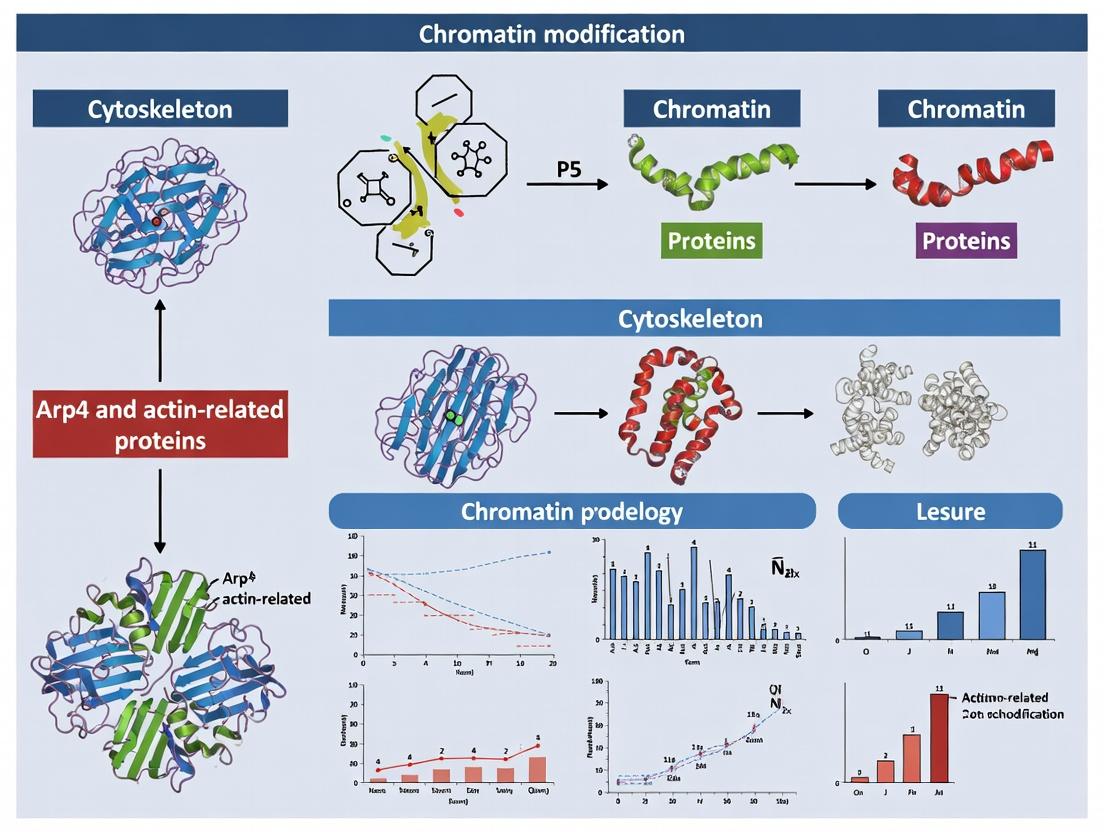
This article provides a comprehensive review of the non-canonical roles of actin-related proteins, with a focus on Arp4, in chromatin modification and remodeling.
Beyond the Cytoskeleton: How Arp4 and Actin-Related Proteins Orchestrate Chromatin Remodeling and Epigenetic Control
Abstract
This article provides a comprehensive review of the non-canonical roles of actin-related proteins, with a focus on Arp4, in chromatin modification and remodeling. We explore the foundational biology of these nuclear ARPs as core subunits of chromatin-regulating complexes like INO80, SWI/SNF, and NuA4/TIP60. Methodological approaches for studying their function, from genetic perturbations to advanced imaging, are detailed, alongside common experimental challenges and optimization strategies. The review also critically evaluates and compares current models of ARP-mediated chromatin dynamics, highlighting their validation in disease contexts. Aimed at researchers and drug development professionals, this synthesis underscores the emerging therapeutic potential of targeting nuclear actin networks in oncology and neurobiology.
Nuclear Actors: Unveiling the Foundational Role of Arp4 and ARPs in Chromatin Biology
Actin-Related Proteins (ARPs) are a conserved family of proteins that share structural homology with conventional actin but have evolved to perform specialized, non-canonical functions. While actin forms the cytoskeleton, ARPs are integral components of multi-protein complexes regulating processes from vesicle trafficking to chromatin remodeling. This guide situates ARP functions within a thesis focusing on Arp4's pivotal role in chromatin modification, a frontier in epigenetic research and therapeutic targeting.
ARP Classification and Core Functions
ARPs are categorized based on sequence homology and functional context.
Table 1: Major ARP Classes, Localization, and Primary Functions
| ARP Class | Key Isoforms | Primary Localization | Core Function | Associated Complex |
|---|---|---|---|---|
| ARP1 | ActR1A, ActR1B | Cytoplasm | Vesicle transport along microtubules | Dynactin complex |
| ARP2 | ACTR2 | Cell Cortex, Lamellipodia | Nucleation of branched actin filaments | Arp2/3 complex |
| ARP3 | ACTR3 | Cell Cortex, Lamellipodia | Nucleation of branched actin filaments | Arp2/3 complex |
| ARP4 | ACTL6A, ACTL6B | Nucleus | Chromatin remodeling, histone exchange | INO80, SWI/SNF, NuA4/TIP60 |
| ARP5 | ACTL8 | Nucleus | Chromatin remodeling | INO80 complex |
| ARP6 | ACTR6 | Nucleus | Histone variant deposition (H2A.Z) | SWR1 complex |
| ARP8 | ACTR8 | Nucleus | Chromatin remodeling | INO80 complex |
| ARP10 | - | Cytoplasm | Unconventional myosin motor function | Myosin cargo complexes |
Nuclear ARPs and Chromatin Dynamics: The Arp4 Paradigm
The thesis context centers on Arp4 (also called BAF53a/b in mammals), a nuclear-localized ARP essential for ATP-dependent chromatin remodeling complexes. It acts as a structural scaffold and a regulatory module, linking the complex to both nuclear actin and histone modifiers.
Key Mechanistic Insights:
- Histone Acetyltransferase (HAT) Recruitment: In the NuA4/TIP60 complex, Arp4 is crucial for recruiting the complex to sites of DNA double-strand breaks, facilitating histone H4 acetylation and repair.
- Nucleosome Sliding/Eviction: Within the INO80 and SWI/SNF (BAF) complexes, Arp4 helps modulate the ATPase activity that drives nucleosome repositioning, altering transcription factor access.
- Linker Role: Arp4's ability to bind both nucleosomal histones and nuclear actin filaments suggests a role in sensing or transducing mechanical or structural signals within the nucleus.
Table 2: Quantitative Data on Arp4-Containing Chromatin Remodeling Complexes
| Complex | Primary Function | Key Enzymatic Activity | Critical Arp4 Interaction Partner | Disease Association |
|---|---|---|---|---|
| NuA4/TIP60 | DNA Repair, Transcriptional Activation | Histone H4/H2A Acetylation | TRRAP/p400 | Cancer, Neurodegeneration |
| INO80 | DNA Repair, Transcriptional Regulation | Nucleosome Sliding, Histone Exchange | Ino80 ATPase, Nuclear Actin | Developmental Disorders |
| SWI/SNF (BAF) | Transcriptional Regulation | Nucleosome Remodeling | BRG1/BRM ATPase, β-actin | >20% human cancers (e.g., ARID1A mutations) |
| SWR1 | Histone Variant Exchange (H2A.Z) | H2A-H2A.Z Exchange | Swr1 ATPase, Arp6 | Autoimmunity |
Experimental Protocols for Investigating Nuclear ARP Function
Protocol: Co-Immunoprecipitation (Co-IP) for Arp4 Complex Analysis
Objective: To identify protein-protein interactions between Arp4 and other components of chromatin remodeling complexes.
- Cell Lysis: Harvest HEK293T or HeLa cells. Lyse in ice-cold IP lysis buffer (50 mM Tris-HCl pH 7.5, 150 mM NaCl, 1% NP-40, 1 mM EDTA, protease/phosphatase inhibitors) for 30 min.
- Pre-clearing: Centrifuge lysate (14,000 x g, 15 min, 4°C). Incubate supernatant with Protein A/G agarose beads for 1 hour at 4°C. Discard beads.
- Immunoprecipitation: Incubate pre-cleared lysate with 2-5 µg of anti-Arp4 (e.g., ACTL6A) antibody or species-matched IgG control overnight at 4°C with rotation.
- Bead Capture: Add Protein A/G beads and incubate for 2 hours.
- Washing: Pellet beads and wash 4x with lysis buffer.
- Elution: Elute bound proteins with 2X Laemmli sample buffer by boiling at 95°C for 10 min.
- Analysis: Resolve by SDS-PAGE and perform Western blotting for suspected partners (e.g., BRG1, Tip60, Ino80).
Protocol: Chromatin Immunoprecipitation Sequencing (ChIP-seq) for Arp4 Localization
Objective: To map genome-wide binding sites of Arp4 and correlate with histone modifications.
- Crosslinking: Treat cells with 1% formaldehyde for 10 min at room temperature. Quench with 125 mM glycine.
- Sonication: Lyse cells and isolate nuclei. Sonicate chromatin to an average fragment size of 200-500 bp.
- Immunoprecipitation: Pre-clear chromatin. Incubate with anti-Arp4 antibody or control IgG overnight at 4°C. Capture with beads, wash, and reverse crosslinks.
- DNA Purification: Treat with RNase A and Proteinase K. Purify DNA using a column-based kit.
- Library Prep & Sequencing: Prepare sequencing library from IP and input DNA. Sequence on an Illumina platform.
- Bioinformatics: Align reads to reference genome (e.g., hg38). Call peaks and perform motif analysis. Integrate with public H3K27ac or H3K4me3 ChIP-seq datasets.
Visualization of ARP Pathways and Workflows
Title: Arp4/TIP60 Role in DNA Damage Repair Pathway
Title: Experimental Workflow for Nuclear ARP Functional Analysis
The Scientist's Toolkit: Key Research Reagent Solutions
Table 3: Essential Reagents for Nuclear ARP Research
| Reagent | Supplier Examples (Catalog # indicative) | Function in Research |
|---|---|---|
| Anti-Arp4/BAF53a Antibody | Cell Signaling (D6O4J), Abcam (ab217684) | Immunoprecipitation, ChIP, immunofluorescence to detect endogenous Arp4. |
| Recombinant Arp4/ACTL6A Protein | Novus Biologicals, Abnova | In vitro biochemical assays (ATPase, nucleosome binding). |
| Arp4/ACTL6A Knockout Cell Line | Generated via CRISPR (e.g., Synthego) | Isogenic control for phenotypic studies (DNA repair, transcription). |
| TIP60/EP400 Inhibitor | Merck (NU9056), Cayman Chemical | Pharmacological perturbation of Arp4-containing NuA4 complex. |
| Nuclear Extraction Kit | Thermo Fisher (78833), Abcam (ab113474) | Isolate nuclear fractions for complex purification or biochemical assay. |
| Chromatin Remodeling Assay Kit | Active Motif (53505) | In vitro measurement of nucleosome sliding/eviction activity. |
| Histone H4 Acetylation ELISA Kit | EpiGentek (P-4007) | Quantify functional output of Arp4/TIP60 activity in cell lysates. |
| Validated siRNAs for ACTL6A/B | Dharmacon, Qiagen | Transient knockdown for functional validation studies. |
Arp4 (Actin-Related Protein 4) is an evolutionarily conserved nuclear actin-related protein and an essential subunit of multiple chromatin remodeling complexes, including INO80, SWR1, and NuA4/TIP60. Within the context of chromatin modification research, Arp4 serves as a structural and functional linchpin, bridging the actin cytoskeleton to nuclear processes such as DNA damage repair, histone variant exchange, and transcriptional regulation. This whitepaper provides a comprehensive technical guide to the core structural features, isoforms, and functions of Arp4, integrating the latest experimental data to frame its critical role in epigenetic machinery.
Actin-related proteins (ARPs) are eukaryotic proteins that share significant structural homology with conventional actin but have diversified into specialized cellular functions. Arp4 (also known as BAF53 in mammals) is a nuclear-localized ARP and a core constituent of several ATP-dependent chromatin remodeling complexes. Unlike its cytoplasmic counterparts involved in filament nucleation (e.g., Arp2/3), Arp4's primary role is within the nucleus, where it contributes to complex integrity, histone binding, and nuclear actin dynamics. Its study is pivotal for understanding how chromatin architecture is dynamically regulated.
Core Structure of Arp4
Arp4 retains the canonical actin fold, comprising four subdomains that form a globular structure capable of ATP binding and hydrolysis. However, specific insertions and deletions differentiate it from conventional actin, tailoring it for nuclear function.
Key Structural Features:
- ATP-Binding Pocket: Located in the cleft between subdomains. The bound nucleotide state influences Arp4's conformation and affinity for binding partners within chromatin complexes.
- Nuclear Localization Signals (NLS): Arp4 contains intrinsic NLS motifs, but its nuclear import is often facilitated and stabilized by binding to other complex subunits like actin or H2A-H2B dimers.
- Unique Insertions: The subdomain-2 insert (the so-called "Arp4 insert") is a distinguishing feature that mediates specific protein-protein interactions absent in conventional actin.
- Histone Interaction Surfaces: Electropositive patches on Arp4 facilitate direct binding to histones, particularly H3 and H4, which is crucial for its role in histone variant deposition (e.g., H2A.Z) and acetylation.
Table 1: Conserved Structural Domains in Arp4 Across Model Organisms
| Organism | Gene Name | Protein Length (aa) | Key Structural Motifs | ATPase Activity |
|---|---|---|---|---|
| S. cerevisiae | ARP4 | 478 | Actin fold, Subdomain-2 insert, NLS (C-term) | Yes, weak |
| A. thaliana | ARP4 | 486 | Actin fold, Subdomain-2 insert, bipartite NLS | Yes, weak |
| D. melanogaster | Arp4 | 430 | Actin fold, Subdomain-2 insert | Yes, weak |
| M. musculus | Actl6a (BAF53A) | 429 | Actin fold, Subdomain-2 insert, NLS | Yes, weak |
| H. sapiens | ACTL6A (BAF53A) | 429 | Actin fold, Subdomain-2 insert, NLS | Yes, weak |
| H. sapiens | ACTL6B (BAF53B) | 435 | Actin fold, Subdomain-2 insert, NLS | Yes, weak |
Arp4 Isoforms: BAF53A vs. BAF53B in Mammals
In higher eukaryotes, two primary isoforms exist, encoded by distinct genes, which exhibit differential expression and functional specialization.
Table 2: Comparison of Mammalian Arp4 Isoforms BAF53A and BAF53B
| Feature | BAF53A (ACTL6A) | BAF53B (ACTL6B) |
|---|---|---|
| Expression Pattern | Ubiquitous; high in proliferating cells and embryonic tissues. | Predominantly neural; high in post-mitotic neurons. |
| Primary Complexes | esBAF, BAF, INO80, TIP60/p400, NuA4. | npBAF (neural progenitor), nBAF (neuron-specific). |
| Critical Function | Essential for embryonic development, cell proliferation, DNA repair. | Crucial for neural development, dendritic outgrowth, synaptic plasticity. |
| Phenotype of Knockout/Loss | Embryonic lethality. | Severe neural defects, impaired learning and memory. |
| Regulation | Downregulated during neuronal differentiation. | Upregulated during neuronal differentiation. |
The switch from BAF53A to BAF53B during neuronal differentiation is a key event in transitioning from proliferative to post-mitotic chromatin remodeling states, highlighting Arp4's role in cell fate determination.
Arp4 is not a standalone enzyme but functions as an integral, non-catalytic subunit of large multi-protein assemblies.
Table 3: Major Chromatin Complexes Containing Arp4/BAF53
| Complex | Organism | Primary Function | Arp4's Role |
|---|---|---|---|
| INO80 | Yeast to Human | Nucleosome sliding, DNA repair, transcription. | Structural scaffold, histone (H3-H4) binding, recruits actin. |
| SWR1/SRCAP/p400 | Yeast to Human | Exchanges histone H2A for variant H2A.Z. | Binds nucleosomal H3-H4, stabilizes complex on substrate. |
| NuA4/TIP60 | Yeast to Human | Histone H4 and H2A acetylation, DNA repair signaling. | Anchors complex to chromatin via histone interaction. |
| esBAF/BAF | Mammals | ATP-dependent nucleosome remodeling, gene regulation. | Core subunit; essential for complex assembly and stability. |
Diagram 1: Functional Roles of Arp4 in Chromatin Complexes (Max 760px)
Key Experimental Protocols for Studying Arp4
Protocol 1: Co-Immunoprecipitation (Co-IP) to Identify Arp4-Containing Complexes
- Purpose: To identify endogenous protein interaction partners and confirm Arp4's presence in specific chromatin remodeling complexes.
- Methodology:
- Cell Lysis: Harvest cells and lyse in a mild non-denaturing buffer (e.g., NETN buffer: 20 mM Tris-HCl pH 8.0, 100 mM NaCl, 1 mM EDTA, 0.5% NP-40) supplemented with protease and phosphatase inhibitors.
- Antibody Coupling: Incubate protein A/G magnetic beads with a high-specificity anti-Arp4/BAF53 antibody (or control IgG) for 1-2 hours at 4°C.
- Immunoprecipitation: Incubate pre-cleared cell lysate with antibody-bound beads overnight at 4°C with gentle rotation.
- Washing: Wash beads stringently 4-5 times with lysis buffer.
- Elution: Elute bound proteins using 2X Laemmli sample buffer at 95°C for 5 minutes.
- Analysis: Analyze by SDS-PAGE and Western blotting for known complex subunits (e.g., INO80, SRCAP, Actin) or by mass spectrometry for discovery proteomics.
Protocol 2: Chromatin Immunoprecipitation (ChIP) for Arp4 Localization
- Purpose: To map the genomic occupancy of Arp4 and correlate it with histone modifications or RNA polymerase II.
- Methodology:
- Crosslinking: Treat cells with 1% formaldehyde for 10 min at room temperature to crosslink proteins to DNA. Quench with glycine.
- Sonication: Lyse cells and shear chromatin to an average fragment size of 200-500 bp using a focused ultrasonicator.
- Immunoprecipitation: Follow Co-IP steps using anti-Arp4 antibody, but perform all washes with RIPA and LiCl buffers to reduce background.
- Reversal & Purification: Reverse crosslinks at 65°C overnight, treat with RNase A and Proteinase K, and purify DNA using a column-based kit.
- Analysis: Quantify target genomic regions by qPCR (ChIP-qPCR) or prepare libraries for next-generation sequencing (ChIP-seq).
Diagram 2: ChIP Workflow for Arp4 Genomic Mapping (Max 760px)
Protocol 3: In Vitro Histone Binding Assay
- Purpose: To demonstrate direct, nucleotide-dependent interaction between recombinant Arp4 and core histones.
- Methodology:
- Protein Purification: Express and purify recombinant GST-tagged Arp4 (wild-type and ATPase mutants) from E. coli. Purify native core histones or recombinant histone octamers.
- Binding Reaction: Incubate immobilized GST-Arp4 on glutathione beads with purified histones in binding buffer (20 mM HEPES pH 7.9, 150 mM KCl, 2 mM MgCl2, 0.1% Tween-20, 10% glycerol) for 1 hour at 4°C. Include 1 mM ATP, ADP, or non-hydrolyzable analog (ATPγS) in respective samples.
- Wash & Elution: Wash beads 3 times with binding buffer. Elute bound proteins with SDS sample buffer.
- Detection: Analyze by SDS-PAGE and Coomassie staining or Western blotting with anti-histone antibodies.
The Scientist's Toolkit: Key Research Reagent Solutions
Table 4: Essential Reagents for Arp4/Chromatin Research
| Reagent/Material | Supplier Examples | Function in Research |
|---|---|---|
| Anti-Arp4/BAF53 Antibodies (ChIP-grade, IP-grade) | Abcam, Cell Signaling Technology, Santa Cruz Biotechnology | For immunoprecipitation, Western blotting, and chromatin immunoprecipitation to detect protein and its genomic localization. |
| Recombinant Arp4/ACTL6 Proteins (WT & mutants) | Abnova, Origene, custom recombinant protein services | For in vitro biochemical assays (ATPase, histone binding) and structural studies. |
| Chromatin Remodeling Complex Kits (e.g., INO80, p400) | Active Motif, BPS Bioscience | Provide pre-assembled or immunopurified complexes for functional enzymatic assays. |
| Histone Binding Assay Kits | Epicypher, Reaction Biology | Standardized platforms to screen and quantify interactions between Arp4 and histone substrates. |
| Validated siRNAs/shRNAs for ACTL6A/B | Dharmacon, Sigma-Aldrich, Origene | For isoform-specific knockdown studies in mammalian cells to investigate functional consequences. |
| Cell Lines with Tagged-Arp4 (e.g., GFP-BAF53A) | ATCC, Kazusa DNA Research Institute | For live-cell imaging, subcellular localization, and streamlined immunoprecipitation. |
| Nucleotide Analogs (ATPγS, ADP-BeFx) | Sigma-Aldrich, Jena Bioscience | To trap Arp4 in specific nucleotide-bound states for structural and functional analysis. |
This whitepaper provides an in-depth technical analysis of chromatin remodeling and modifying complexes that incorporate actin-related proteins (ARPs), framed within the broader thesis on the conserved role of Arp4 and other ARPs in eukaryotic chromatin dynamics. ARPs, particularly Arp4, are critical, evolutionarily conserved subunits that bridge the nuclear actin family with ATP-dependent chromatin remodeling and histone acetyltransferase activities. These complexes—including INO80, SWI/SNF, and NuA4/TIP60—integrate metabolic, DNA damage, and developmental signals to regulate transcription, DNA repair, and replication. Their dysfunction is implicated in oncogenesis and neurodegeneration, making them high-value targets for therapeutic intervention.
Core Complexes: Composition, Function, and Quantitative Data
Table 1: Core Chromatin Complexes Housing ARPs
| Complex | Core ARP Subunit(s) | Primary Function | Key Catalytic Subunit | Conserved Histone Targets | Associated Human Diseases |
|---|---|---|---|---|---|
| INO80 | Arp4, Arp5, Arp8 | Nucleosome sliding, histone variant exchange (H2A.Z), DNA repair | INO80 (SF2 ATPase) | H2A.Z, H3, H4 | Various cancers |
| SWI/SNF (BAF) | Arp4 (β-actin in some variants) | Nucleosome remodeling, eviction | BRG1/BRM (SF2 ATPase) | H3, H4 | ~20% of human cancers (e.g., SNI/SNF subunits mutated) |
| NuA4/TIP60 | Arp4 | Histone H4/H2A acetylation, DNA damage signaling | TIP60/KAT5 (MYST HAT) | H4, H2A | Prostate cancer, neurological disorders |
| SWR1 | Arp4, Arp6 | Histone H2A.Z deposition | Swr1 (SF2 ATPase) | H2A.Z | Cancer pathogenesis |
| CHRAC | Arp4, Arp5 | Nucleosome sliding, chromatin assembly | SNF2H (ISWI ATPase) | H3, H4 | Developmental disorders |
Table 2: Quantitative Biochemical Parameters
| Parameter | INO80 Complex | SWI/SNF Complex | NuA4/TIP60 Complex | Experimental Method |
|---|---|---|---|---|
| Molecular Weight (MDa) | ~1.3 | ~1.5-2 | ~1.1 | Size-exclusion chromatography-MALS |
| ATPase Turnover (min⁻¹) | ~120 | ~90 | N/A (HAT activity) | NADH-coupled ATPase assay |
| Histone Acetylation Rate (pmol/min) | N/A | N/A | ~45 (for H4) | Radiometric HAT assay with ³H-acetyl-CoA |
| Nucleosome Sliding Rate (bp/sec) | ~5-10 | ~3-7 | N/A | FRET-based sliding assay |
| DNA Binding Affinity (K_d, nM) | ~15 (nucleosome) | ~25 (nucleosome) | ~50 (free DNA) | EMSA / Bio-Layer Interferometry |
Experimental Protocols for Key Assays
Protocol 1: Co-Immunoprecipitation (Co-IP) of ARP-Containing Complexes
Purpose: To isolate endogenous chromatin remodeling complexes and identify interacting ARPs.
- Cell Lysis: Harvest HeLa or HEK293T cells. Lyse in IP buffer (20 mM Tris-HCl pH 7.5, 150 mM NaCl, 1% Triton X-100, 10% glycerol, 1 mM EDTA, plus protease/phosphatase inhibitors) on ice for 30 min. Sonicate briefly (3 pulses of 10 sec) to shear DNA.
- Pre-clearing: Incubate lysate with Protein A/G beads for 1 hr at 4°C. Pellet beads.
- Immunoprecipitation: Incubate supernatant with 2-5 µg of antibody (e.g., anti-Arp4, anti-TIP60, anti-BRG1) overnight at 4°C. Add fresh Protein A/G beads for 2 hr.
- Washing: Pellet beads, wash 5x with high-salt wash buffer (IP buffer with 300 mM NaCl).
- Elution & Analysis: Elute proteins with 2X Laemmli buffer at 95°C for 10 min. Analyze by SDS-PAGE and Western blot with relevant antibodies (e.g., anti-actin, anti-IN080, anti-BAF subunits).
Protocol 2:In VitroNucleosome Remodeling Assay (FRET-based)
Purpose: Quantify ATP-dependent nucleosome sliding activity of purified INO80 or SWI/SNF complexes.
- Nucleosome Reconstitution: Assemble mononucleosomes using recombinant human histones, a 255-bp DNA fragment containing a 601 positioning sequence, and a donor (Cy3) and acceptor (Cy5) fluorophore at defined positions. Use salt dialysis.
- Reaction Setup: In a 20 µL reaction, combine 10 nM nucleosomes, 2 nM purified remodeling complex, 1 mM ATP, in remodeling buffer (10 mM HEPES pH 7.9, 50 mM KCl, 5 mM MgCl₂, 0.1 mg/mL BSA, 5% glycerol).
- Kinetic Measurement: Transfer to a quartz cuvette. Monitor FRET efficiency (acceptor/donor emission ratio upon donor excitation) in real-time using a spectrofluorometer at 30°C.
- Data Analysis: Fit the decrease in FRET signal over time to a single exponential to calculate the nucleosome sliding rate.
Protocol 3: Histone Acetyltransferase (HAT) Assay for NuA4/TIP60
Purpose: Measure the enzymatic activity of purified NuA4/TIP60 complex.
- Substrate Preparation: Use recombinant oligonucleosomes or free histones (H4/H2A) as substrate.
- Radioactive Reaction: In a 30 µL volume, mix 2 µg substrate, 0.1-1 µg purified TIP60 complex, 50 µM unlabeled acetyl-CoA, and 0.2 µCi of ³H-acetyl-CoA in HAT buffer (50 mM Tris-HCl pH 8.0, 10% glycerol, 0.1 mM EDTA, 1 mM DTT).
- Incubation: Incubate at 30°C for 15-30 min.
- Capture & Detection: Spot reaction mix onto P81 filter papers. Wash 3x in 50 mM sodium carbonate buffer (pH 9.0) to remove unincorporated ³H-acetyl-CoA. Dry filters, add scintillation fluid, and count in a scintillation counter.
- Quantification: Calculate pmol of acetyl groups transferred per minute using known specific activity of ³H-acetyl-CoA.
Signaling Pathways and Experimental Workflows
The Scientist's Toolkit: Research Reagent Solutions
Table 3: Essential Reagents for ARP-Chromatin Research
| Reagent / Material | Function / Application | Example Product / Source |
|---|---|---|
| Anti-Arp4 Antibody | Immunoprecipitation, ChIP, and Western blot validation of ARP4-containing complexes. | Abcam ab183039 (ChIP-grade) |
| FLAG/HA-Tag Antibody Beads | Affinity purification of tagged chromatin remodeling complexes from cell lines. | Sigma Anti-FLAG M2 Affinity Gel |
| Recombinant Human Histone Octamers | Substrate for in vitro nucleosome reconstitution and remodeling/HAT assays. | NEB #M2508S |
| 601 Widom Positioning Sequence DNA | High-affinity nucleosome positioning sequence for consistent nucleosome assembly. | Synthesized as gBlock (IDT) |
| ³H-Acetyl-CoA | Radioactive tracer for sensitive quantitation of histone acetyltransferase activity. | PerkinElmer NET290250UC |
| Native Chromatin Prep Kit | Isolation of undernatured chromatin for native ChIP or pull-down assays. | Active Motif #54001 |
| ATPase/GTPase Activity Assay Kit | Colorimetric measurement of ATP hydrolysis by remodeling complexes. | Innova Biosciences #601-0120 |
| Cryo-EM Grids (UltraFoil) | For high-resolution structural analysis of large complexes on nucleosomes. | Quantifoil R1.2/1.3 300 mesh Au |
| BAF Complex Inhibitor | Small molecule probe for SWI/SNF function (e.g., ATPase inhibition). | PFI-3 (BRD9/7 bromodomain ligand) |
| TIP60 (KAT5) Inhibitor | Pharmacological inhibition of NuA4 HAT activity for functional studies. | NU9056 |
| siGENOME SMARTpool ARP4 | siRNA for efficient knockdown of ARP4 in human cell lines. | Horizon Discovery M-017800-01 |
| Recombinant INO80 Complex | Purified active complex for in vitro biochemical and structural studies. | REPLILEGEN #INO80-101FN |
The integral role of Arp4 and related ARPs within major chromatin modifying complexes underscores a fundamental mechanistic theme: the harnessing of nuclear actin-fold proteins for regulated chromatin transactions. INO80, SWI/SNF, and NuA4/TIP60 exemplify how these conserved subunits contribute to complex stability, nucleosome recognition, and signal transduction. The experimental frameworks and reagents outlined here provide a roadmap for dissecting their precise functions. As structural insights deepen, particularly from cryo-EM, and chemical probes improve, targeting these complexes and their ARP modules offers a promising, albeit challenging, avenue for next-generation therapeutics in oncology and beyond.
This whitepaper details the core mechanistic functions governing chromatin dynamics, framed within the expanding thesis of Arp4 and actin-related proteins (ARPs) as central regulators. The involvement of nuclear ARPs, particularly within complexes like INO80, SWR1, and NuA4/TIP60, provides a physical and mechanistic bridge between chromatin remodeling, histone modification, and DNA repair pathways—processes essential for genomic integrity and viable therapeutic targets.
Arp4 (Actin-related protein 4) is a conserved nuclear ARP and a canonical subunit of multiple essential chromatin-modifying complexes in eukaryotes. Unlike cytoplasmic actins, nuclear ARPs function as structural and regulatory modules within large macromolecular machines. Their integration positions them as key sensors and effectors, potentially coupling the energy of ATP hydrolysis to nucleosome manipulation and the recruitment of histone-modifying enzymes. This context is critical for understanding the interdependence of the three core functions.
Core Mechanistic Function I: Nucleosome Remodeling
Nucleosome remodeling involves the ATP-dependent sliding, eviction, or exchange of histones to alter DNA accessibility.
Role of ARP-Containing Complexes
The INO80 and SWR1 complexes are prime examples where Arp4, alongside other ARPs (like Arp5, Arp8 in INO80), is integral. Arp4's actin-fold provides a binding surface for histones, particularly the H4 tail, and for nuclear actin, stabilizing the complex on the nucleosome.
Mechanism: INO80 utilizes ATP hydrolysis via its SNF2-family ATPase (Ino80) to slide nucleosomes, often creating nucleosome-free regions for transcription or repair. SWR1 catalyzes the exchange of canonical H2A for the variant H2A.Z, a mark linked to transcriptional poise and genome stability. Arp4 is crucial for the structural integrity and substrate recognition of these complexes.
Quantitative Data on Remodeler Activity: Table 1: Metrics of ARP-Containing Nucleosome Remodeling Complexes
| Complex | Core ATPase | Key ARP Subunits | Primary Function | Reported Sliding/Exchange Rate (in vitro) | Histone Variant Specificity |
|---|---|---|---|---|---|
| INO80 | Ino80 | Arp4, Arp5, Arp8 | Nucleosome sliding, eviction | ~1-3 bp/sec per complex | Binds H3, H4 tails |
| SWR1 | Swr1 | Arp4, Arp6 | H2A.Z deposition | ~1 H2A.Z-H2B dimer exchanged per min/complex | High specificity for H2A.Z-H2B |
| NuA4/TIP60 | TIP60 (KAT5) | Arp4 | H4/H2A acetylation | N/A (Acetyltransferase) | Binds H4 tail for acetylation |
Key Experimental Protocol: In Vitro Nucleosome Remodeling Assay (Sliding)
Purpose: To measure ATP-dependent nucleosome sliding by INO80 complex. Materials:
- Reconstituted Mononucleosomes: Widom 601 positioning sequence DNA, recombinant human histones (H2A, H2B, H3, H4).
- Purified Remodeling Complex: Immunopurified or recombinant INO80 complex (containing FLAG-tagged subunit).
- ATP Regeneration System: ATP, creatine phosphate, creatine kinase.
- Gel Components: Native PAGE (polyacrylamide gel electrophoresis) equipment and reagents. Method:
- Assemble reaction: 10 nM nucleosomes, 2-5 nM INO80 complex, 2 mM ATP, regeneration system in remodeling buffer.
- Incubate at 30°C for time points (e.g., 0, 5, 15, 30, 60 min).
- Stop reaction with excess unlabeled competitor DNA and ATP-γ-S.
- Resolve products on a 5% native PAGE at 4°C.
- Visualize using ethidium bromide or SYBR Gold. Sliding is indicated by a shift in nucleosome position (band mobility) dependent on both INO80 and ATP.
Core Mechanistic Function II: Histone Acetylation
Histone acetylation, catalyzed by histone acetyltransferases (HATs), neutralizes lysine charges, loosening chromatin structure and creating docking sites for reader proteins.
The NuA4/TIP60 Complex and Arp4
The NuA4 (in yeast)/TIP60 (in humans) complex is a primary HAT for histones H4 and H2A. Arp4 is a stable core subunit required for its structural integrity, histone binding, and recruitment to chromatin. TIP60's role in DNA damage response is particularly Arp4-dependent.
Mechanism: Upon DNA damage, sensors like the MRN complex recruit TIP60. Arp4 facilitates the complex's stable association with nucleosomes. TIP60 then acetylates H4/H2A, promoting chromatin relaxation and recruiting repair factors like ATM. This directly links acetylation to repair.
Quantitative Data on Acetyltransferase Activity: Table 2: Activity Profile of the NuA4/TIP60 HAT Complex
| Complex | Catalytic Subunit | Core ARP Subunit | Primary Histone Targets | Reported kcat (min⁻¹) for H4 peptide | Key Regulatory Signal |
|---|---|---|---|---|---|
| Yeast NuA4 | Esa1 | Arp4 | H4, H2A | ~0.5 - 1.0 | Genotoxic stress |
| Human TIP60 | KAT5/TIP60 | hArp4 (ACTL6A) | H4, H2A, H3 | ~1.2 - 2.0 | DNA DSBs, ATM/ATR signaling |
Key Experimental Protocol: Histone Acetyltransferase (HAT) Assay
Purpose: To measure the enzymatic activity of the TIP60 complex purified from cells. Materials:
- Enzyme Source: FLAG-immunoprecipitated TIP60 complex from HeLa cells (with/without Arp4 depletion).
- Substrate: Recombinant oligonucleosomes or synthetic H4 peptide (amino acids 1-24).
- Labeled Acetyl-CoA: ³H-acetyl-CoA or acetyl-CoA conjugated to a colorimetric/fluorometric probe.
- Capture Reagents: Scintillation fluid or streptavidin-coated plates if using biotinylated peptide. Method:
- Incubate purified TIP60 complex with substrate and ³H-acetyl-CoA in HAT buffer.
- For peptide substrates, spot reaction mix onto charged cellulose filters. Wash extensively in 50 mM NaHCO₃ buffer (pH 9.0) to remove unincorporated ³H-acetyl-CoA. Measure retained radioactivity via scintillation counting.
- For nucleosome substrates, separate proteins by SDS-PAGE, perform autoradiography or immunoblot with anti-acetyl-H4 antibody to visualize and quantify acetylation.
Core Mechanistic Function III: DNA Repair
Chromatin modification is a prerequisite for efficient DNA repair, particularly for double-strand breaks (DSBs).
Coordination via ARP-Complexes
Arp4-containing complexes are rapidly recruited to DSBs. INO80 remodels nucleosomes flanking the break to facilitate end resection. SWR1 deposits H2A.Z, which promotes signaling and repair pathway choice. TIP60 acetylates histones, activating ATM kinase and facilitating BRCA1 recruitment. Arp4 is a common, essential component in each step.
Mechanism: The initial γH2AX signal recruits MDC1, which in turn recruits the ARP-containing complexes. Their concerted action—remodeling, variant exchange, and acetylation—creates a specialized, open chromatin domain permissive for repair machinery assembly (Homologous Recombination or Non-Homologous End Joining).
Quantitative Data on Repair Recruitment & Impact: Table 3: Dynamics and Effects of ARP-Complexes in DNA DSB Repair
| Complex | Recruitment Kinetics Post-DSB (min) | Primary Trigger | Key Output at DSB | Impact on Repair Efficiency (if depleted) |
|---|---|---|---|---|
| TIP60 | < 5 | MDC1, NBS1 | H4K16ac, ATM activation | ~60-70% reduction in HR |
| INO80 | 5-15 | γH2AX/MDC1 | Nucleosome clearance for resection | ~50% reduction in resection speed |
| SWR1 | 15-30 | γH2AX | H2A.Z deposition | Altered pathway choice, increased NHEJ usage |
Key Experimental Protocol: Monitoring Protein Recruitment to Laser-Induced DSBs
Purpose: To visualize and quantify the recruitment kinetics of Arp4 and associated complexes to DNA damage sites. Materials:
- Cell Line: U2OS cells expressing GFP-tagged Arp4 (or TIP60/INO80 subunit).
- Damage Induction: Confocal microscope equipped with a 405 nm laser micro-irradiation system.
- Live-Cell Imaging: Phenol-red free medium, environmental chamber. Method:
- Plate cells in glass-bottom dishes. Transfer to imaging chamber (37°C, 5% CO₂).
- Pre-scan a region of interest (ROI) in the nucleus using low-power 488 nm laser.
- Induce DNA damage by micro-irradiating a strip across the nucleus with a high-power 405 nm laser.
- Immediately commence time-lapse imaging (e.g., every 10 sec for 15 min) of the GFP signal.
- Quantify fluorescence intensity within the irradiated ROI over time, normalizing to pre-damage levels. Compare kinetics in control vs. cells depleted of a binding partner (e.g., MDC1).
Integrated Pathway Visualization
Title: ARP-Complex Coordination in DNA Damage Response
Title: Multi-Assay Workflow for Chromatin Mechanistic Analysis
The Scientist's Toolkit: Key Research Reagent Solutions
Table 4: Essential Reagents for Investigating Arp4/Chromatin Functions
| Reagent/Category | Example Product/Specifics | Primary Function in Research |
|---|---|---|
| Recombinant Chromatin | Widom 601 DNA kit; Recombinant human histones (full-length, mutants) | Provides standardized, defined nucleosome substrates for in vitro biochemical assays (remodeling, HAT). |
| Antibodies for ARPs/Modifications | Anti-Arp4/ACTL6A (ChIP-grade); Anti-H4K16ac; Anti-γH2AX (S139) | Detection of protein localization (IF, ChIP), expression (WB), and specific chromatin modification states. |
| Stable Cell Lines | Doxycycline-inducible shRNA against Arp4; CRISPR/Cas9 knock-in for endogenously tagged Arp4 (e.g., GFP-Arp4). | Enables loss/gain-of-function studies and live-cell imaging of protein dynamics with minimal perturbation. |
| Chromatin Remodeling/HAT Assay Kits | EpiQuick Histone HAT Activity Kit; Remodeling assay kits with fluorescent nucleosomes. | Streamlined, quantitative measurement of enzymatic activity from purified complexes or cell extracts. |
| DNA Damage Inducers & Reporters | Pharmaceutical agents (e.g., Zeocin, Etoposide); Laser micro-irradiation systems; DR-GFP reporter for HR. | Controlled induction and quantification of DNA damage and repair efficiency in cellular models. |
| Affinity Purification Tags | FLAG-, HA-, or SNAP-tagged constructs of complex subunits (e.g., Ino80-FLAG). | Isolation of endogenous protein complexes under native conditions for proteomics or functional assays. |
Evolutionary Conservation of Nuclear ARPs from Yeast to Human
This whitepaper details the evolutionary conservation of nuclear Actin-Related Proteins (ARPs) from unicellular eukaryotes like Saccharomyces cerevisiae to complex multicellular organisms, including Homo sapiens. This analysis is framed within a broader thesis investigating the fundamental role of Arp4 and other nuclear ARPs as essential, conserved enzymatic subunits within chromatin remodeling and modification complexes. The conservation of structure, function, and complex membership underscores their non-redundant role in epigenetic regulation, genome stability, and transcription, presenting them as potential, though challenging, targets for therapeutic intervention in diseases driven by epigenetic dysregulation, such as cancer and neurodegenerative disorders.
Evolutionary Conservation: Sequence, Structure, and Complex Association
Nuclear ARPs (primarily Arp4, Arp5, Arp6, Arp7, Arp8, and Arp9) are evolutionarily ancient, with clear orthologs identifiable from yeast to human. Unlike cytoplasmic Arp2/3, they do not nucleate actin filaments but have evolved as integral subunits of ATP-dependent chromatin remodeling complexes.
Table 1: Conservation of Core Nuclear ARPs and Their Chromatin Complexes
| ARP | Yeast (S. cerevisiae) | Human Ortholog | Primary Chromatin Complex | Conserved Function |
|---|---|---|---|---|
| Arp4 | Arp4 / Act3 | ACTL6A (BAF53a) / ACTL6B (BAF53b) | INO80, SWR1 (yeast); INO80, SRCAP, p400 (human) | Histone variant exchange (H2A.Z), DNA repair, complex stabilization. |
| Arp5 | Arp5 | ACTL8 (ARP5) | INO80 (conserved) | DNA double-strand break repair, promoter nucleosome positioning. |
| Arp6 | Arp6 | ACTL6A? / H2A.Z link | SWR1 (yeast); SRCAP, p400 (human) | Essential for H2A.Z deposition machinery. |
| Arp7 | Arp7 | ACTB? / within BAF | SWI/SNF (RSC in yeast); BAF (mammalian SWI/SNF) | ATPase regulator in chromatin remodeling. |
| Arp8 | Arp8 | ACTL8? / INO80 subunit | INO80 (conserved) | Histone binding, complex recruitment to chromatin. |
| Arp9 | Arp9 | ACTB? / within BAF | SWI/SNF (RSC in yeast); BAF (mammalian SWI/SNF) | ATPase regulator in chromatin remodeling. |
Key Insight: While sequence homology can be moderate (~30-50% identity), structural conservation is high. All nuclear ARPs retain the actin fold but possess unique insertions and termini that mediate specific protein-protein interactions within their host complexes. Arp4 is the most ubiquitous, found in multiple complexes, and is essential for viability in yeast.
Detailed Experimental Protocols for Conservation Studies
Protocol: Co-Immunoprecipitation (Co-IP) to Assess Conserved Complex Integrity
Aim: To demonstrate that an orthologous nuclear ARP (e.g., human Arp4/ACTL6A) resides in a chromatin remodeling complex analogous to its yeast counterpart.
- Cell Lysis: Harvest HEK293T or yeast cells. Lyse in IP buffer (20 mM Tris-HCl pH 7.5, 150 mM NaCl, 1% Triton X-100, 1 mM EDTA, protease/phosphatase inhibitors) for 30 min on ice. Sonicate (for mammalian cells) to shear DNA.
- Pre-clearing: Incubate lysate with control IgG and Protein A/G beads for 1h at 4°C. Pellet beads, retain supernatant.
- Immunoprecipitation: Incubate pre-cleared lysate with antibody against the target ARP (e.g., anti-ACTL6A) or a FLAG-tagged version overnight at 4°C. Use species-matched IgG as negative control.
- Bead Capture: Add Protein A/G magnetic beads for 2h at 4°C. Wash beads 4x with high-salt wash buffer (IP buffer with 500 mM NaCl).
- Elution: Elute proteins with 2X Laemmli buffer by heating at 95°C for 5 min.
- Analysis: Analyze by SDS-PAGE and Western blotting for known complex subunits (e.g., INO80, SRCAP subunits like p400 or YL-1).
Protocol: Chromatin Immunoprecipitation Sequencing (ChIP-seq) for Functional Conservation
Aim: To compare the genomic localization of a conserved nuclear ARP complex between species.
- Crosslinking: Treat yeast or human cells with 1% formaldehyde for 10 min at room temperature. Quench with 125 mM glycine.
- Chromatin Preparation: Lyse cells, isolate nuclei. Sonicate chromatin to ~200-500 bp fragments.
- Immunoprecipitation: Pre-clear chromatin. Incubate with anti-ARP antibody or control IgG overnight at 4°C. Capture with beads, wash extensively.
- Reverse Crosslinking & Purification: Elute complexes, reverse crosslinks at 65°C overnight. Treat with RNase A and Proteinase K. Purify DNA with column purification.
- Library Prep & Sequencing: Prepare sequencing library (end-repair, A-tailing, adapter ligation, PCR amplification). Sequence on an Illumina platform.
- Bioinformatic Analysis: Map reads to reference genome (sacCer3 or hg38). Call peaks for the ARP. Compare enrichment at orthologous gene promoters or DNA damage sites.
Key Signaling and Functional Pathways
Nuclear ARPs function within complexes that respond to cellular signals. A key conserved pathway is the DNA damage response.
Title: Nuclear ARP Complex Recruitment in DNA Damage Repair
The experimental workflow for studying this is summarized below.
Title: Workflow: Imaging ARP Recruitment to DNA Damage
The Scientist's Toolkit: Key Research Reagent Solutions
Table 2: Essential Reagents for Nuclear ARP Research
| Reagent / Material | Supplier Examples | Function in Experiments |
|---|---|---|
| Anti-ACTL6A (BAF53a) Antibody | Cell Signaling Tech, Abcam, Santa Cruz | Detection of human Arp4 in Western Blot, Co-IP, ChIP. |
| Anti-FLAG M2 Affinity Gel | Sigma-Aldrich | Immunoprecipitation of epitope-tagged ARP constructs. |
| Protein A/G Magnetic Beads | Pierce, Millipore | Efficient capture of antibody-protein complexes for Co-IP. |
| SimpleChIP Enzymatic Kit | Cell Signaling Tech | Standardized kit for chromatin shearing & ChIP in mammalian cells. |
| Yeast Arp4/6/8 Deletion Strains | EUROSCARF, Horizon Discovery | Genetic models to study ARP function and complex assembly. |
| Human ACTL6A Knockout Cell Lines | Generated via CRISPR-Cas9 (e.g., Synthego) | Isogenic controls for functional rescue assays. |
| Recombinant INO80 or SWR1 Complex | Purified from insect cells (in-house) | In vitro chromatin remodeling and histone exchange assays. |
| H2A.Z Nucleosome Substrates | EpiCypher | Defined nucleosome substrates for biochemical deposition assays. |
| γH2AX (phospho S139) Antibody | Millipore, Abcam | Marker for DNA double-strand breaks in immunofluorescence. |
Current Research Landscape and Key Open Questions in the Field
Abstract This whitepaper synthesizes current research on actin-related proteins (Arps) in chromatin modification, with a focal thesis on the specific and multifaceted roles of Arp4. As a conserved, nuclear-localized component of multiple chromatin remodeling complexes, Arp4 serves as a nexus for integrating nuclear architecture, histone dynamics, and gene regulation. Understanding its precise mechanisms presents both a fundamental challenge and a therapeutic opportunity in epigenetics-driven diseases.
1. Introduction: Arp4 as a Central Node in Nuclear Actin Signaling Arp4 (Actin-related protein 4) is an evolutionarily conserved member of the Arp family that hydrolyzes ATP but lacks filament-nucleating activity. Unlike its cytoplasmic counterparts, Arp4 functions exclusively within the nucleus as an integral subunit of several high-order complexes, including INO80, SWR1 (SWR-C in humans), NuA4/TIP60 histone acetyltransferase (HAT), and the polycomb repressive complex PRC1.1. Its primary thesis context positions it as a structural scaffold, an epigenetic reader, and an energy-transducing module within these machineries, linking the state of chromatin to cellular signaling pathways.
2. Current Research Landscape: Core Functions and Complex Interactions The landscape is defined by three interconnected functional paradigms for Arp4, supported by recent quantitative data.
Table 1: Key Functions and Associated Complexes of Arp4
| Primary Function | Host Complex(es) | Core Molecular Activity | Key Chromatin Outcome |
|---|---|---|---|
| Histone Variant Exchange | INO80, SWR1/SWR-C | ATP-dependent stabilization of complex architecture; binding to histone H3. | Deposition of H2A.Z into nucleosomes, regulating transcriptional plasticity. |
| Histone Acetylation | NuA4/TIP60 | Direct binding to acetylated histones via its HSA domain; allosteric regulation of TIP60 HAT activity. | Acetylation of H4/H2A, promoting DNA repair and gene activation. |
| Chromatin Compaction & Repression | PRC1.1 (ncPRC1.1 in mammals) | Nucleosome binding; facilitating complex targeting and stability. | Monoubiquitination of H2A (H2AK119ub), contributing to facultative heterochromatin formation. |
| DNA Damage Response | All above (esp. TIP60/p400) | Recruitment to double-strand breaks via interaction with γ-H2AX; promotion of chromatin remodeling for repair. | Acetylation and eviction of nucleosomes at break sites, enabling repair factor access. |
Experimental Protocol 1: Mapping Arp4-Chromatin Interactions (CUT&RUN)
- Objective: To identify genome-wide binding sites of Arp4 with high resolution and low background.
- Methodology:
- Cell Preparation: Permeabilize intact nuclei from cells (e.g., HeLa, mouse ES cells) using digitonin.
- Antibody Binding: Incubate with a high-specificity anti-Arp4 antibody.
- pA/MNase Conjugate Recruitment: Add Protein A-Micrococcal Nuclease (pA-MNase) fusion protein, which binds to the antibody.
- Targeted Cleavage: Activate MNase with Ca²⁺ to cleave DNA in proximity to the antibody-bound sites.
- DNA Extraction & Sequencing: Release and purify the cleaved DNA fragments for high-throughput sequencing.
- Bioinformatics: Map sequences to the reference genome to identify peaks representing Arp4 binding loci.
Table 2: Quantitative Insights from Recent Arp4 Studies (2022-2024)
| Study System | Key Finding | Quantitative Measure | Implication |
|---|---|---|---|
| In vivo Mouse Model (Arp4 haploinsufficiency) | Compromised SWR-C recruitment at enhancers. | ~40% reduction in H2A.Z deposition at specific enhancers (p<0.001). | Links Arp4 dosage to developmental gene dysregulation. |
| Human Cell Lines (Arp4 knockdown + DNA damage) | Defective homologous recombination (HR) repair. | 60-70% decrease in RAD51 foci formation post-irradiation. | Establishes Arp4 as a non-redundant factor in HR pathway choice. |
| Biochemical Reconstitution (INO80 complex) | Arp4 stabilizes the Arp8-module interaction. | Kd of module binding weakened by >10-fold in Arp4-ATPase mutants. | ATP hydrolysis by Arp4 regulates complex integrity, not just catalysis. |
| Cancer Genomics (Pan-cancer analysis) | ACTL6A (encoding BAF53a, a mammalian Arp4 paralog) is a significant driver. | Mutated in ~15% of squamous cell carcinomas; amplifications correlate with poor survival (HR=1.8, p=0.01). | Highlights therapeutic relevance of nuclear Arp function. |
3. Key Open Questions and Methodological Frontiers Despite advances, critical questions define the field's frontier:
- The Energy Coupling Conundrum: How is the ATPase cycle of Arp4 mechanistically coupled to distinct outcomes (e.g., eviction vs. deposition of histones) in different complexes?
- Specificity Determinants: What governs the partitioning of Arp4 between competing complexes (INO80 vs. TIP60 vs. PRC1) in a single nucleus, and how is this regulated by signaling pathways?
- Disease-Specific Mechanisms: Do Arp4 complex mutations drive disease primarily through altering specific target genes, global chromatin architecture, or DNA repair fidelity?
- The Actin Filament Paradox: Does Arp4 ever participate in or regulate the formation of transient nuclear actin filaments, or is its role purely as a monomeric subunit within complexes?
Experimental Protocol 2: Probing Complex-Specific Arp4 Function (AID System + IP-MS)
- Objective: To rapidly degrade Arp4 from a specific complex and analyze proteomic consequences.
- Methodology:
- Cell Engineering: Generate a cell line expressing Arp4 fused to an Auxin-Inducible Degron (AID). Tag a unique subunit of a specific complex (e.g., INO80's INO80 subunit) with a distinct epitope (e.g., GFP).
- Acute Depletion: Treat cells with Auxin (IAA) to trigger proteasomal degradation of AID-Arp4 within hours.
- Complex Isolation: Perform GFP-Trap immunoprecipitation from IAA-treated and control cells.
- Mass Spectrometry Analysis: Analyze co-purifying proteins by quantitative LC-MS/MS (e.g., SILAC or TMT labeling).
- Data Interpretation: Identify which complex subunits or interactors are destabilized upon Arp4 loss, defining its complex-specific structural role.
4. Visualizing Key Pathways and Relationships
Diagram 1: Arp4 in Chromatin Remodeling Complexes (79 chars)
Diagram 2: Arp4 in DNA Damage Response Pathway (71 chars)
5. The Scientist's Toolkit: Essential Research Reagents
Table 3: Key Research Reagent Solutions for Arp4/Chromatin Studies
| Reagent Category | Specific Example/Product | Function in Research |
|---|---|---|
| Validated Antibodies | Anti-Arp4 (ACTL6B) antibody (ChIP-seq/CUT&RUN grade) | For mapping genomic localization and protein quantification. |
| Cell Line Models | Haploid (HAP1) cells with ACTL6B knockout; Doxycycline-inducible shRNA lines. | Enables genetic screens and studies of acute protein depletion. |
| Chemical Probes | Remodelin (inhibits NAT10, linked to nuclear actin); Actinomycin D (transcription inhibitor control). | Probes the functional connection between transcription, nuclear actin, and Arp4 function. |
| Recombinant Complexes | Purified recombinant human INO80 or SWR-C complex (wild-type vs. Arp4 ATPase mutant). | For in vitro biochemical assays (ATPase, nucleosome sliding, histone exchange). |
| Live-Cell Imaging Reagents | SiR-Actin (live-cell actin stain); H2B-GFP/mCherry constructs. | Visualizes potential correlation between nuclear actin foci, chromatin dynamics, and Arp4 localization. |
| Proteomic Standards | TMTpro 18-plex or DiGly antibody kits (for ubiquitination profiling). | To quantify changes in complex composition and histone PTMs upon Arp4 perturbation. |
6. Conclusion and Therapeutic Outlook Arp4 epitomizes the deep integration of cytoskeletal components into the epigenetic machinery. The current landscape reveals it as a dynamic, multifunctional adapter, but leaves open profound questions about its regulation and disease-specific mechanisms. Future research, leveraging the protocols and tools outlined, must move beyond correlation to establish direct mechanistic causality. For drug development, targeting Arp4's interface within a specific complex (e.g., in cancers dependent on TIP60 or BAF complexes) presents a challenging but promising avenue for precision epigenetics, aiming to modulate pathological gene expression programs at their structural roots.
From Bench to Insight: Methodologies for Probing ARP Function in Chromatin Dynamics
Within the broader thesis investigating the role of Arp4 and other actin-related proteins (ARPs) in chromatin modification, precise genetic and molecular tools are indispensable. Arp4, a conserved nuclear actin-related protein, is a core component of multiple chromatin remodeling complexes, including INO80, SWR1, and NuA4/TIP60. Its function in ATP-dependent nucleosome editing, histone variant exchange (e.g., H2A.Z deposition), and DNA damage repair necessitates robust models to dissect its mechanisms. This guide details the contemporary knockout/knockdown methodologies and mutant analysis frameworks essential for probing Arp4 function in chromatin dynamics.
Knockout Models: Permanent Genetic Ablation
CRISPR-Cas9 Mediated Knockout
The most common method for generating constitutive Arp4 knockout models utilizes the CRISPR-Cas9 system to induce double-strand breaks (DSBs) followed by error-prone non-homologous end joining (NHEJ).
Detailed Protocol
- gRNA Design: Design two single-guide RNAs (sgRNAs) targeting exonic regions critical for Arp4 function (e.g., the ATPase domain encoded by exons 3-5 in ACTL6A). Use tools like CHOPCHOP or Benchling.
- Component Preparation: Synthesize sgRNA templates via in vitro transcription or purchase as crRNA/tracrRNA complexes. Prepare purified S. pyogenes Cas9 protein.
- Delivery: For cell lines (e.g., HEK293, HeLa, mouse ES cells), deliver ribonucleoprotein (RNP) complexes via nucleofection. For murine models, microinject RNPs into zygotes.
- Screening: 72 hours post-transfection, harvest genomic DNA. Perform PCR amplification of the targeted locus and analyze by Sanger sequencing or next-generation sequencing (NGS) for indel detection. For clonal isolation, single-cell sort and expand colonies.
Table 1: CRISPR-Cas9 Knockout Efficiency in Common Model Systems
| Model System | Target Gene (Arp4 Homolog) | Delivery Method | Average Indel Efficiency (%) | Time to Clonal Validation |
|---|---|---|---|---|
| Mouse Embryonic Stem Cells | Actl6a | Nucleofection (RNP) | 75-90 | 4-5 weeks |
| Human HEK293T Cells | ACTL6A | Lipofection (plasmid) | 60-80 | 3-4 weeks |
| Human HeLa Cells | ACTL6A | Nucleofection (RNP) | 80-95 | 3-4 weeks |
| Drosophila S2 Cells | arp4 | Microinjection | 50-70 | 6-8 weeks |
| Zebrafish Embryos | actl6a | Microinjection (1-cell) | 40-60 (F0 mosaic) | 3 months (F2 generation) |
Knockdown Models: Transient Gene Silencing
RNA Interference (siRNA/shRNA)
Transient knockdown is vital for studying essential genes where knockout is lethal. For Arp4, which is crucial for cell viability, inducible systems are preferred.
Detailed Protocol for Inducible shRNA
- shRNA Design: Design 3-5 shRNA sequences targeting distinct regions of the ACTL6A mRNA. Clone into a doxycycline (Dox)-inducible lentiviral vector (e.g., pTRIPZ).
- Lentivirus Production: Co-transfect HEK293T packaging cells with the shRNA vector, psPAX2 (packaging), and pMD2.G (VSV-G envelope) plasmids using polyethylenimine (PEI).
- Transduction and Selection: Transduce target cells, add puromycin (1-2 µg/mL) 48 hours later to select for stable integrants.
- Induction and Validation: Add Dox (1 µg/mL) to induce shRNA expression. Harvest cells at 72, 96, and 120 hours for western blot (anti-Arp4 antibody) and qRT-PCR validation.
Antisense Oligonucleotides (ASOs) and Morpholinos
Used for rapid knockdown in pre-mRNA splicing modulation or translation blocking, especially in non-mammalian systems or primary cells.
Mutant Analysis: From Genotype to Phenotype
Phenotypic Screening in Arp4 Models
Following knockout/knockdown, systematic analysis is required to link Arp4 loss to chromatin defects.
Key Assays & Protocols
Chromatin Immunoprecipitation Sequencing (ChIP-seq):
- Method: Crosslink cells with 1% formaldehyde for 10 min. Sonicate chromatin to 200-500 bp fragments. Immunoprecipitate with antibodies against H2A.Z, H3K9ac, H3K14ac, or the catalytic subunit of partner complexes (e.g., p400/TIP60). Sequence libraries and map reads to the reference genome.
- Expected Outcome: Arp4 loss reduces H2A.Z incorporation at specific promoters and enhancers, and diminishes histone acetylation marks.
Quantitative ATPase Assay:
- Method: Purify native INO80 or SWR1 complexes from WT and Arp4-KO cells via tandem affinity purification. Incubate complexes with ATP and chromatin/nucleosome substrates. Measure free phosphate release over time using a malachite green assay.
- Expected Outcome: Arp4-deficient complexes show a 60-80% reduction in ATP hydrolysis activity.
Table 2: Phenotypic Consequences of Arp4 Depletion in Mammalian Cells
| Assay Category | Specific Readout | WT Result (Approx.) | Arp4-KD/KO Result (Approx.) | Implication |
|---|---|---|---|---|
| Cell Viability | Long-term Clonogenic Survival | 100% colonies | 20-30% colonies | Essential for proliferation |
| DNA Repair | γH2AX Foci Clearance (post-IR) | 90% clearance in 6h | <50% clearance in 6h | Defective DSB repair |
| Chromatin Remodeling | H2A.Z ChIP-seq Signal (Promoters) | Normal enrichment | 70-80% reduction | Impaired histone variant exchange |
| Histone Acetylation | H3K14ac Level (Western Blot) | 1.0 (relative units) | 0.3-0.5 (relative units) | Disrupted NuA4/TIP60 complex function |
| Gene Expression | RNA-seq of Stress Response Genes | Normal induction | 4- to 10-fold reduced induction | Transcriptional dysregulation |
The Scientist's Toolkit: Research Reagent Solutions
Table 3: Essential Reagents for Arp4/Chromatin Research
| Item | Function/Application | Example Product/Catalog # (Note: Representative Only) |
|---|---|---|
| Anti-Arp4/ACTL6A Antibody | Immunoblotting, Immunofluorescence, ChIP | Rabbit monoclonal [EPR23002-205], Abcam ab245117 |
| H2A.Z Antibody | ChIP-seq to assess histone variant deposition | Rabbit polyclonal, Active Motif 39943 |
| Doxycycline-inducible shRNA Vector | Creation of stable, inducible knockdown cell lines | pTRIPZ (Dharmacon) or pLKO-Tet-On |
| Recombinant Cas9 Nuclease | For CRISPR knockout via RNP delivery | S. pyogenes Cas9, NEB M0386 |
| Chromatin Assembly Kit | Provide nucleosome substrate for in vitro ATPase/remodeling assays | E. coli-based Recombinant Chromatin Assembly, Epicypher 16-0008 |
| Histone Acetyltransferase (HAT) Assay Kit | Measure TIP60/NuA4 complex activity in vitro | Colorimetric HAT Activity Assay Kit, Abcam ab115108 |
| Nuclear Extraction Kit | Isolate nuclear fractions for complex purification | NE-PER Nuclear and Cytoplasmic Extraction Reagents, Thermo 78833 |
| ATPase/GTPase Activity Assay Kit | Quantify ATP hydrolysis by purified remodeling complexes | Malachite Green ATPase Assay Kit, Sigma MAK113 |
Visualizing Pathways and Workflows
Title: Arp4 Perturbation Leads to Chromatin Dysfunction
Title: Workflow for Arp4 Functional Analysis
The integration of CRISPR-based knockout, inducible knockdown, and sophisticated mutant analysis forms the cornerstone of research into Arp4's multifaceted roles in chromatin modification. Quantitative assessment of remodeling deficits, histone modification landscapes, and transcriptional outcomes, as outlined in this guide, allows researchers to precisely map Arp4 function within the epigenetic regulatory network, offering critical insights for therapeutic strategies targeting chromatin dysregulation in diseases like cancer and neurodegeneration.
Actin-Related Proteins (ARPs), particularly Arp4 (also known as BAF53a in mammals and Arp4 in yeast), are essential, evolutionarily conserved nuclear components. They are integral subunits of several chromatin remodeling and modifying complexes, including the INO80, SWR1 (SWR-C in humans), and NuA4/TIP60 histone acetyltransferase complexes. Unlike their cytoplasmic counterparts involved in actin nucleation, nuclear ARPs function as structural modules within these large multi-subunit machines, facilitating their recruitment to chromatin, stabilizing complex architecture, and modulating ATPase activity. Mapping the precise protein-protein interaction networks of ARP-containing complexes is therefore fundamental to understanding their mechanistic roles in gene regulation, DNA repair, and cell fate determination—a core pursuit in modern chromatin biology.
Core Principles: Biochemical Pull-Downs for Complex Isolation
Biochemical pull-downs are affinity purification techniques designed to isolate a protein of interest (the "bait") along with its associated proteins (the "prey") from a native or near-native cellular context. For mapping ARP-containing complexes, two primary strategies are employed:
- Tag-Based Affinity Purification: A genetic tag (e.g., TAP, FLAG, HA, GFP) is fused to a subunit of the complex (e.g., Arp4 itself or a known interacting partner like Ino80). The tagged bait is expressed in cells, and complexes are purified using tag-specific antibodies or resins (e.g., anti-FLAG M2 agarose, GFP-Trap).
- Native Immunoprecipitation (IP): Uses specific antibodies raised against an endogenous subunit of the complex without genetic manipulation, preserving native stoichiometry and avoiding potential artifacts from overexpression.
These purified complexes are then typically identified and quantified using mass spectrometry (MS)-based proteomics.
Integrating Proteomics for Interaction Mapping
Modern proteomics transforms pull-down outputs from simple co-precipitation lists into quantitative interaction maps. Key approaches include:
- Label-Free Quantification (LFQ): Compares MS signal intensities of prey proteins across bait purifications and control samples (e.g., empty tag, irrelevant antibody) to distinguish specific interactors from background contaminants.
- Stable Isotope Labeling (SILAC): Cells are metabolically labeled with "light" or "heavy" amino isotopes. A "bait" sample (e.g., wild-type Arp4 pull-down) is mixed with a "control" sample (e.g., Arp4 mutant or unrelated bait) prior to MS. Ratios of heavy/light peptides directly indicate specific enrichment.
- Cross-Linking MS (XL-MS): Adds a chemical cross-linker to the purification, covalently linking spatially proximal amino acids. MS analysis of these cross-linked peptides provides low-resolution structural data and direct evidence for contacting interfaces within the complex.
Detailed Experimental Protocol: TAP-Tag Purification of Yeast INO80 Complex Followed by LC-MS/MS
This protocol details the purification of the endogenous S. cerevisiae INO80 complex via a C-terminal Tandem Affinity Purification (TAP) tag on the Arp4 subunit for subsequent proteomic analysis.
Materials:
- Yeast strain expressing genomically TAP-tagged Arp4 (ARP4-TAP::His3MX6).
- Control untagged or mock-tagged strain.
- Lysis Buffer: 50 mM HEPES-KOH (pH 7.5), 150 mM KCl, 1.5 mM MgCl2, 0.5 mM DTT, 0.5% NP-40, 10% glycerol, supplemented with EDTA-free protease inhibitors and 1 mM PMSF.
- Wash Buffer: Lysis buffer without NP-40.
- TEV Cleavage Buffer: Wash buffer with 1 mM DTT.
- TEV protease.
- Calmodulin Binding Buffer (CBB): 50 mM HEPES-KOH (pH 7.5), 150 mM KCl, 1.5 mM MgCl2, 1 mM imidazole, 2 mM CaCl2, 0.5 mM DTT, 10% glycerol.
- Calmodulin-Sepharose resin (GE Healthcare).
- Calmodulin Elution Buffer: CBB with 10 mM EGTA instead of CaCl2.
- IgG Sepharose 6 Fast Flow resin (GE Healthcare).
Procedure:
- Cell Culture and Lysis: Grow 4-6 liters of TAP-tagged and control yeast cultures to mid-log phase (OD600 ~0.8). Harvest cells by centrifugation, wash with cold water, and flash-freeze in liquid N2. Lyse cells by cryogenic grinding in a freezer mill or by bead-beating in lysis buffer at 4°C.
- Clarification: Clear the lysate by ultracentrifugation at 100,000 x g for 1 hour at 4°C.
- IgG Affinity Purification: Incubate the clarified supernatant with pre-equilibrated IgG Sepharose resin for 2 hours at 4°C with gentle rotation.
- Wash: Pellet resin and wash 3x with 10 column volumes of Wash Buffer.
- TEV Cleavage: Resuspend resin in TEV Cleavage Buffer. Add AcTEV protease (Invitrogen) and incubate overnight at 4°C with rotation. This releases the bound complex from the IgG beads via cleavage of the TAP tag.
- Calmodulin Affinity Purification: Transfer the TEV eluate (containing the complex with a remaining Calmodulin-Binding Peptide tag) to fresh tubes containing pre-equilibrated Calmodulin-Sepharose resin in CBB. Incubate for 2 hours at 4°C.
- Final Wash and Elution: Wash Calmodulin resin 4x with CBB. Elute the purified INO80 complex with Calmodulin Elution Buffer. Concentrate the eluate using a centrifugal concentrator (e.g., Amicon Ultra, 100 kDa MWCO).
- Proteomic Sample Preparation: Resolve the purified complex by SDS-PAGE (4-12% gradient gel). Visualize with mass-spectrometry compatible stain (e.g., Coomassie R-250 or silver stain). Excise the entire lane, digest in-gel with trypsin, and desalt peptides using C18 StageTips.
- LC-MS/MS Analysis: Analyze peptides by nano-flow liquid chromatography coupled to a high-resolution tandem mass spectrometer (e.g., Q-Exactive HF, Orbitrap Fusion). Use a data-dependent acquisition (DDA) method to fragment the top N most intense ions.
- Data Analysis: Identify proteins using search engines (MaxQuant, Proteome Discoverer) against the S. cerevisiae UniProt database. Apply label-free quantification (LFQ) algorithms. Specific INO80 complex interactors are defined as proteins significantly enriched (e.g., ≥5-fold, p-value < 0.01) in the Arp4-TAP sample over the control, excluding common contaminants (keratins, ribosomal proteins).
Quantitative Data: Proteomic Analysis of Arp4-Containing Complexes
Table 1: Representative Quantitative Proteomics Data from SILAC Experiment: INO80 vs. SWR-C Purification
| Protein (Gene Name) | Known Complex | Heavy/Light Ratio (INO80/SWR-C) | LFQ Intensity (INO80) | LFQ Intensity (SWR-C) | Specificity |
|---|---|---|---|---|---|
| Arp4 (Act4) | INO80, SWR-C, NuA4 | ~1.0 | 1.2 x 10^9 | 1.1 x 10^9 | Common |
| Ino80 | INO80 | > 10.0 | 8.9 x 10^8 | Not Detected | INO80 Exclusive |
| Swr1 | SWR-C | 0.1 | Not Detected | 7.5 x 10^8 | SWR-C Exclusive |
| Arp8 | INO80 | > 8.5 | 5.4 x 10^8 | Not Detected | INO80 Exclusive |
| Esa1 | NuA4 | ~1.5 | 3.1 x 10^8 | 2.0 x 10^8 | NuA4 Common |
| Vps72 (Yaf9) | SWR-C, NuA4 | 0.3 | 1.5 x 10^7 | 5.2 x 10^8 | SWR-C Enriched |
| Rvb1 | INO80, SWR-C | ~1.2 | 6.7 x 10^8 | 5.9 x 10^8 | Common Module |
(Note: Data is illustrative. Actual values vary by experiment.)
Table 2: Key Research Reagent Solutions for ARP Complex Mapping
| Reagent / Material | Function / Role in Experiment | Example Product / Specification |
|---|---|---|
| Tandem Affinity Purification (TAP) Tag | Dual-step purification (IgG/Calmodulin) for high specificity, minimizing background. | Genomic integration cassette (e.g., pBS1479 for yeast). |
| Anti-FLAG M2 Affinity Gel | High-affinity resin for one-step purification of FLAG-tagged bait proteins. | Sigma-Aldrich, A2220. Bead size ~50 μm. |
| GFP-Trap Agarose | Resin with nanobody against GFP for purifying GFP-fusion proteins under mild conditions. | ChromoTek, gtma-20. |
| Cross-linker: DSSO (Disuccinimidyl sulfoxide) | MS-cleavable cross-linker for stabilizing transient interactions and defining contact sites via XL-MS. | Thermo Fisher, A33545. Soluble in DMSO. |
| Protease Inhibitor Cocktail | Prevents proteolytic degradation of complexes during lysis and purification. | Roche, cOmplete EDTA-free. |
| Nuclease (Benzonase) | Degrades nucleic acids to disrupt non-specific protein-DNA/RNA mediated aggregates. | Sigma-Aldrich, E1014. >90% purity. |
| High-Resolution Mass Spectrometer | Identifies and quantifies proteins/peptides with high accuracy and sensitivity. | Thermo Fisher Orbitrap Eclipse or Exploris 480. |
| C18 StageTips | Microscale desalting and concentration of peptide mixtures prior to LC-MS. | Empore C18 disks, packed in 200 μL pipette tips. |
Visualizing Pathways and Workflows
Workflow for ARP Complex Pull-Down & Proteomics
Nuclear Arp4 as a Hub in Chromatin Complexes
Decision Logic for Identifying Specific Interactors
This whitepaper, framed within a broader thesis on Arp4 and actin-related proteins (ARPs) in chromatin modification research, serves as a technical guide for advanced imaging methodologies. Nuclear ARPs, particularly Arp4, are integral components of chromatin remodeling complexes like INO80 and SWR1, regulating transcription, DNA repair, and histone dynamics. Advanced live-cell and super-resolution microscopy are critical for dissecting their fast, transient interactions and nanoscale organization within the nucleus.
Core Imaging Modalities: Principles and Applications
Live-Cell Tracking of Nuclear ARP Dynamics
This technique quantifies the mobility and binding kinetics of fluorescently tagged nuclear ARPs (e.g., Arp4-GFP) in real time.
Experimental Protocol:
- Cell Preparation: Transfect cells with plasmid expressing the nuclear ARP of interest fused to a photostable fluorescent protein (e.g., mEOS3.2, HaloTag). Use cells stably expressing histone tags (e.g., H2B-mCherry) for nuclear reference.
- Imaging: Use a spinning-disk confocal or highly sensitive widefield microscope equipped with an environmental chamber (37°C, 5% CO2). Acquire time-lapse images every 100-500 ms for 1-5 minutes with low laser power to minimize phototoxicity.
- Analysis: Track individual particles or diffusive populations using algorithms (e.g., MOSAIC, TrackMate). Generate mean squared displacement (MSD) plots to classify motion as confined, diffusive, or directed.
Key Quantitative Data:
Table 1: Representative Live-Cell Tracking Parameters for Nuclear ARPs
| ARP Complex | Diffusion Coefficient (D) (µm²/s) | Mobile Fraction (%) | Immobile Fraction (%) | Binding Residence Time (s) | Primary Motion Type |
|---|---|---|---|---|---|
| Free Arp4 | ~2.5 | 85 | 15 | N/A | Brownian |
| INO80-Bound | 0.15 | 45 | 55 | 12.5 | Confined |
| SWR1-Bound | 0.08 | 30 | 70 | 22.1 | Confined |
Fluorescence Recovery After Photobleaching (FRAP)
FRAP measures the turnover and binding stability of nuclear ARPs within specific nuclear compartments or foci.
Experimental Protocol:
- Bleaching: Define a region of interest (ROI) within the nucleus (e.g., a subnuclear focus or a nucleoplasmic area). Acquire 5-10 pre-bleach frames. Bleach the ROI with a high-intensity 488nm laser pulse (100% power, 5-10 iterations).
- Recovery: Immediately resume time-lapse imaging at low laser power (2-5% AOTF) every 250 ms for 30-60 seconds.
- Quantification: Normalize fluorescence intensity in the bleached ROI to a reference unbleached nuclear area and the whole cell to correct for background and total loss. Fit recovery curves to a single or double exponential model to extract half-time of recovery (t₁/₂) and mobile fraction.
Key Quantitative Data:
Table 2: FRAP Recovery Kinetics for Nuclear ARP Complexes
| Bleached Target | Half-Time of Recovery (t₁/₂) (s) | Mobile Fraction (%) | Implication for Function |
|---|---|---|---|
| Nucleoplasmic Arp4 | 4.2 | 92 | Rapid exchange, transient interactions |
| Arp4 in INO80 Focus | 18.5 | 65 | Stable incorporation, longer remodeling cycles |
| Arp4 in DNA Damage Focus | 9.1 | 78 | Dynamic exchange, active role in repair signaling |
Super-Resolution Microscopy (SRM)
SRM techniques like STORM/PALM or STED resolve the nanoscale organization of nuclear ARPs beyond the diffraction limit (~250 nm).
Experimental Protocol (SMLM - PALM/STORM):
- Sample Preparation: Fix cells expressing the nuclear ARP tagged with a photoswitchable protein (e.g., Dendra2, mMaple) or perform immunofluorescence with photoswitchable dyes (e.g., Alexa Fluor 647).
- Imaging Buffer: Use a blinking buffer for dye-based SMLM (e.g., 50-100 mM mercaptoethylamine, glucose oxidase/catalase system in PBS).
- Acquisition: Acquire 10,000-50,000 frames at high laser power. Individual molecule localizations are detected and precision-fitted.
- Reconstruction: Render a super-resolution image from all localized positions. Perform cluster analysis (e.g., Ripley's K-function, DBSCAN) to quantify protein distribution.
Key Quantitative Data:
Table 3: Super-Resolution Spatial Analysis of Nuclear ARP Clusters
| ARP/Complex | Average Cluster Diameter (nm) | Cluster Density (per µm²) | Molecules per Cluster (Mean) | Localization Precision (nm) |
|---|---|---|---|---|
| Arp4 (Total) | 42.3 | 12.4 | 8.2 | 18.5 |
| INO80 Core | 55.1 | 3.8 | 15.7 | 21.2 |
| SWR1 Core | 58.6 | 2.9 | 18.3 | 22.5 |
The Scientist's Toolkit: Research Reagent Solutions
Table 4: Essential Reagents for Nuclear ARP Advanced Imaging
| Reagent / Material | Function & Application |
|---|---|
| mEOS3.2 or Dendra2 Tag Plasmids | Photoswitchable FPs for PALM super-resolution and single-particle tracking. |
| HaloTag System | Enables specific, bright labeling with synthetic dyes (e.g., Janelia Fluor dyes) for SMLM. |
| SiR-Actin / LifeAct Fluorogenic Probes | Low-background live-cell labeling of nuclear actin filaments without perturbation. |
| Optimized FRAP/SMLM Imaging Buffers | Commercial buffers (e.g., from Cytiva or Oxea) ensure consistent photophysics and blinking. |
| DNA Damage Inducers (e.g., NCS, Olaparib) | Pharmacological tools to recruit nuclear ARP complexes to damage sites for functional imaging. |
| Chromatin Remodeler Inhibitors (e.g., PU-H71) | Probe the dependency of ARP dynamics on specific complex activity (e.g., INO80). |
| High-NA Oil Immersion Objectives (100x, 1.49 NA) | Essential for collecting maximum photons for SRM and tracking. |
| Fiducial Markers (e.g., TetraSpeck Beads) | For drift correction during long SRM or live-cell acquisitions. |
Visualizing Workflows and Pathways
Live-Cell Tracking & FRAP Experimental Workflow
Super-Resolution SMLM Imaging Protocol
Nuclear ARP Function in Chromatin Remodeling
Within the broader study of Arp4 and actin-related proteins (ARPs) in chromatin biology, assessing their mechanistic impact requires high-resolution mapping of chromatin states. Arp4, a conserved nuclear ARP and core component of multiple chromatin remodeling complexes (e.g., INO80, SWR1, NuA4/TIP60), is implicated in histone variant exchange, nucleosome positioning, and transcriptional regulation. This guide details three foundational assays—ChIP-seq, ATAC-seq, and MNase-seq—for quantitatively evaluating ARP-mediated changes in chromatin architecture, accessibility, and protein occupancy.
Core Assay Methodologies
Chromatin Immunoprecipitation Sequencing (ChIP-seq)
ChIP-seq identifies genome-wide binding sites for proteins of interest, such as histone modifications, transcription factors, or ARPs like Arp4 itself.
Detailed Protocol:
- Crosslinking: Treat cells with 1% formaldehyde for 10 min at room temperature to fix protein-DNA interactions. Quench with 125 mM glycine.
- Cell Lysis & Chromatin Shearing: Lyse cells (e.g., in SDS lysis buffer) and sonicate chromatin to 200-500 bp fragments. Validate fragment size by agarose gel electrophoresis.
- Immunoprecipitation: Incubate chromatin with antibody against target protein (e.g., anti-Arp4, anti-H2A.Z, anti-acetyl-H4) pre-bound to protein A/G magnetic beads. Include species-matched IgG control.
- Washing & Elution: Wash beads sequentially with low salt, high salt, LiCl, and TE buffers. Elute complexes in elution buffer (1% SDS, 0.1M NaHCO3).
- Reverse Crosslinking & Purification: Incubate eluates at 65°C overnight with 200 mM NaCl to reverse crosslinks. Treat with RNase A and proteinase K. Purify DNA using spin columns.
- Library Prep & Sequencing: Prepare sequencing library (end-repair, A-tailing, adapter ligation, PCR amplification). Sequence on an Illumina platform (≥ 20 million reads per sample).
Assay for Transposase-Accessible Chromatin Sequencing (ATAC-seq)
ATAC-seq maps regions of open chromatin, revealing the impact of ARP-containing complexes on nucleosome occupancy and accessibility.
Detailed Protocol:
- Nuclei Preparation: Harvest 50,000-100,000 cells. Lyse in cold lysis buffer (10 mM Tris-Cl pH 7.4, 10 mM NaCl, 3 mM MgCl2, 0.1% IGEPAL CA-630). Immediately pellet nuclei.
- Tagmentation: Resuspend nuclei in transposase reaction mix (Illumina Tagment DNA TDE1 Enzyme and Buffer). Incubate at 37°C for 30 min. Purify DNA using a MinElute column.
- Library Amplification & Purification: Amplify tagmented DNA with indexed primers using limited-cycle PCR. Determine optimal cycle number via qPCR. Purify final library with SPRI beads.
- Sequencing: Sequence on Illumina platform (paired-end recommended).
Micrococcal Nuclease Sequencing (MNase-seq)
MNase-seq provides a quantitative measure of nucleosome positioning and occupancy by digesting linker DNA, crucial for studying ARP-dependent nucleosome remodeling.
Detailed Protocol:
- Nuclei Isolation: Wash cells in PBS, resuspend in NP-40 lysis buffer. Pellet nuclei.
- MNase Digestion: Resuspend nuclei in digestion buffer (with CaCl2). Titrate MNase enzyme (e.g., 2-20 units) to achieve predominantly mononucleosome fragments. Incubate 5-20 min at 37°C.
- Reaction Stop & DNA Purification: Stop with EGTA/SDS. Treat with RNase A and proteinase K. Purify DNA via phenol-chloroform extraction.
- Size Selection: Isolate mononucleosomal DNA (~147 bp) by agarose gel extraction or size-selective SPRI beads.
- Library Prep & Sequencing: Construct library as per ChIP-seq. Sequence on Illumina platform.
Table 1: Typical Output Metrics and Key Parameters for Chromatin Assays in ARP Studies
| Assay | Typical Read Depth (per sample) | Key Metric for ARP Impact | Common Control | Data Output |
|---|---|---|---|---|
| ChIP-seq | 20-50 million reads | Fold enrichment at target loci; peak shifts/absence in ARP mutant. | Input DNA, IgG IP | Protein-DNA binding peaks. |
| ATAC-seq | 50-100 million reads | Changes in accessibility (peak height/width) at promoters, enhancers. | DNase-seq | Open chromatin regions. |
| MNase-seq | 30-70 million reads | Nucleosome positioning periodicity; occupancy changes (fragment length distribution). | Undigested genomic DNA | Nucleosome occupancy map. |
Table 2: Example Experimental Findings from ARP4 Perturbation Studies
| Perturbation (e.g., Arp4 depletion) | ChIP-seq Observation | ATAC-seq Observation | MNase-seq Observation | Interpretation |
|---|---|---|---|---|
| Arp4 knockdown | Reduced H2A.Z occupancy at promoters. | Increased accessibility at specific enhancers. | Smearing of nucleosome ladder; fuzzy positioning. | Arp4 is required for stable H2A.Z deposition and nucleosome positioning. |
| Arp4 ATPase mutant | Loss of INO80 binding at DSB sites. | Localized decrease in accessibility at repair loci. | Increased nucleosome occupancy at target genes. | Arp4's catalytic activity facilitates nucleosome eviction for repair. |
Visualizing Pathways and Workflows
Title: ChIP-seq Experimental Workflow
Title: Arp4 Complexes Alter Chromatin State
Title: Choosing the Right Chromatin Assay
The Scientist's Toolkit
Table 3: Essential Research Reagent Solutions for ARP Chromatin Studies
| Reagent / Kit | Primary Function | Key Consideration for ARP Studies |
|---|---|---|
| Formaldehyde (37%) | Crosslinking agent for ChIP-seq. | Optimize fixation time to capture dynamic ARP-chromatin interactions. |
| Magnetic Protein A/G Beads | Antibody immobilization for IP. | Ensure compatibility with anti-ARP or anti-histone variant antibodies. |
| Illumina Tagment DNA Enzyme (TDE1) | Transposase for ATAC-seq library prep. | Use on fresh nuclei for accurate accessibility profiling in ARP mutants. |
| Micrococcal Nuclease (MNase) | Digests linker DNA for MNase-seq. | Requires careful titration to assess ARP-dependent nucleosome stability. |
| Anti-H2A.Z Antibody | IP for histone variant ChIP-seq. | Critical for assessing SWR1/INO80 (Arp4-containing) function. |
| Anti-Arp4 Antibody | Direct IP of endogenous ARP4. | Validate specificity via knockdown control for binding site mapping. |
| SPRIselect Beads | Size selection and library clean-up. | Essential for isolating mononucleosomal DNA in MNase-seq. |
| Nuclei Isolation Buffer | Prepares nuclei for ATAC-seq/MNase-seq. | Maintain integrity to prevent artefactual accessibility changes. |
Integrative application of ChIP-seq, ATAC-seq, and MNase-seq provides a comprehensive toolkit for dissecting the multifaceted role of Arp4 and related ARPs in chromatin dynamics. Quantitative data from these assays, framed within the context of specific ARP complex perturbations, can delineate mechanisms of nucleosome editing, histone variant exchange, and their consequent transcriptional outcomes, offering potential pathways for therapeutic intervention in diseases of chromatin misregulation.
Within the broader thesis on Arp4 and actin-related proteins in chromatin modification, in vitro reconstitution emerges as a critical methodology. This approach allows for the deconstruction of intricate chromatin remodeling complexes, such as SWI/SNF, INO80, or TIP60/p400, which often contain actin (Act1) and actin-related proteins (Arps) like Arp4. By isolating and recombining purified components—including histone substrates, recombinant Arp4, ATPases, and modifying enzymes—researchers can precisely dissect the functional contributions of Arp4. This enables the testing of specific hypotheses regarding its role in nucleosome recognition, stabilization of complex architecture, and facilitation of ATP-dependent chromatin remodeling or histone acetylation, free from confounding cellular variables.
Core Principles & Quantitative Data
In vitro reconstitution of chromatin modifying complexes involves the stepwise assembly of purified proteins onto defined DNA or nucleosome substrates. Key quantitative parameters include binding affinities, enzymatic rates, and stoichiometries. The following tables summarize critical data for core components and activities relevant to Arp4-containing complexes.
Table 1: Key Components for Reconstituting Arp4-Related Chromatin Modifying Complexes
| Component | Typical Source | Key Function in Reconstitution | Approximate Stoichiometry in INO80 Complex* |
|---|---|---|---|
| Arp4 (Actin-related protein 4) | Recombinant (Baculovirus) | Nucleosome binding; complex stabilization | 1-2 copies |
| Actin (Act1) | Recombinant or purified | Structural role, potentiates remodeler ATPase | 1 copy |
| Core Histones (H2A, H2B, H3, H4) | Recombinant (E. coli) | Substrate for nucleosome assembly | Octamer per nucleosome |
| Widom 601 DNA | Synthetic | High-affinity nucleosome positioning sequence | 147-200 bp |
| ATP | Biochemical reagent | Energy source for remodeling/chaperone activity | Variable (mM range) |
| INO80 or TIP60 Core ATPase | Recombinant complex (e.g., Ino80, p400) | Catalytic engine for nucleosome sliding/eviction | 1 copy |
Note: Stoichiometries are complex-specific and based on recent structural studies.
Table 2: Measured Biochemical Parameters in Reconstituted Systems
| Assay Type | Complex/Component | Measured Parameter | Typical Value Range | Notes |
|---|---|---|---|---|
| Binding (SPR/EMSAs) | Arp4 + Nucleosome | Kd (Dissociation Constant) | 10-100 nM | Affinity enhanced in full complex context |
| Enzymatic | INO80 Complex | ATPase Activity (kcat) | 50-200 min⁻¹ | Stimulated by nucleosome presence |
| Remodeling | INO80 Complex | Nucleosome Sliding Rate | 1-5 bp/sec | Dependent on [ATP] and substrate |
| Acetylation | TIP60/p400 (with Arp4) | H4 acetylation rate (by HAT module) | 0.5-2.0 mol/min/mol | Arp4 may modulate activity |
Detailed Experimental Protocols
Protocol 1: Recombinant Expression and Purification of Human Arp4
- Cloning: Clone codon-optimized human ACTR4 cDNA into a baculovirus transfer vector (e.g., pFastBac-HT) with an N-terminal His6-tag followed by a TEV protease site.
- Protein Production: Generate bacmid and transfert Sf9 insect cells to produce P1 virus. Amplify to P3 stock. Infect High Five cells (1.5x10⁶ cells/mL) at an MOI of 3 and harvest 72 hours post-infection.
- Purification: Resuspend cell pellet in Lysis Buffer (25 mM HEPES-KOH pH 7.9, 300 mM KCl, 10% glycerol, 0.1% NP-40, 10 mM imidazole, 1 mM DTT, protease inhibitors). Clarify by centrifugation.
- Immobilized Metal Affinity Chromatography (IMAC): Load supernatant onto Ni-NTA resin. Wash with 20 column volumes (CV) of Wash Buffer (25 mM HEPES-KOH pH 7.9, 500 mM KCl, 10% glycerol, 25 mM imidazole, 1 mM DTT).
- Tag Cleavage & Reverse-IMAC: Elute with Elution Buffer (Wash Buffer + 300 mM imidazole). Incubate with His-tagged TEV protease (1:50 w/w) overnight at 4°C. Pass cleaved protein over fresh Ni-NTA to remove protease and uncleaved protein.
- Final Purification: Concentrate flow-through and apply to a Superdex 200 Increase 10/300 GL column in Gel Filtration Buffer (25 mM HEPES-KOH pH 7.9, 150 mM KCl, 10% glycerol, 1 mM DTT). Pool pure fractions, aliquot, snap-freeze, and store at -80°C.
Protocol 2: Reconstitution of Mononucleosome Core Particle (NCP)
- Histone Refolding & Octamer Assembly: Purify individual recombinant human histones from inclusion bodies. Mix H2A, H2B, H3, and H4 in equimolar ratios (typically 1 mg each) in Unfolding Buffer (7 M guanidine-HCl, 20 mM Tris-HCl pH 7.5, 10 mM DTT). Dialyze sequentially against Refolding Buffers with decreasing salt (2 M, 1 M, 0.5 M KCl) in TE buffer (10 mM Tris-HCl pH 7.5, 1 mM EDTA, 5 mM β-mercaptoethanol) at 4°C.
- DNA Preparation: Amplify and purify Widom 601 positioning sequence (147 bp) DNA. Label 5' end with Cy5 for gel-shift assays if required.
- Salt Gradient Dialysis: Combine histone octamer and 601 DNA at a 1.1:1 molar ratio in High Salt Buffer (2 M KCl, 10 mM Tris-HCl pH 7.5, 1 mM EDTA, 1 mM DTT). Place in dialysis tubing and dialyze against 1 L of Low Salt Buffer (10 mM Tris-HCl pH 7.5, 1 mM EDTA, 1 mM DTT) over 24-36 hours with 3-4 buffer changes.
- Purification: Resolve the dialysate on a 5% native PAGE gel. Excise the band corresponding to correctly assembled NCP. Electroelute the DNA-protein complex, concentrate, and store in 10 mM Tris-HCl pH 7.5, 1 mM EDTA, 1 mM DTT at 4°C.
Protocol 3: In Vitro ATP-Dependent Nucleosome Sliding Assay
- Complex Assembly: Pre-incubate purified INO80 (or subcomplex) with Arp4 and actin in Reconstitution Buffer (25 mM HEPES-KOH pH 7.9, 50 mM KCl, 5 mM MgCl₂, 10% glycerol, 0.1 mg/mL BSA, 1 mM DTT) on ice for 15 minutes.
- Reaction Setup: In a 20 μL reaction, combine 10 nM Cy5-labeled NCP (positioned at DNA end) with 20-50 nM reconstituted complex in Reconstitution Buffer. Include an ATP-regenerating system (1 mM ATP, 10 mM creatine phosphate, 0.1 μg/μL creatine kinase).
- Time Course: Incubate at 30°C. Remove 5 μL aliquots at time points (e.g., 0, 5, 15, 30, 60 min) and quench with 5 μL of Stop Solution (20% glycerol, 1% SDS, 100 mM EDTA).
- Analysis: Load quenched samples on a 5% native PAGE (0.5x TBE, 4°C). Run at 100 V for 90 min. Visualize using a fluorescence gel scanner (Cy5 channel). Quantify band shift from "end-positioned" to "centered" nucleosome using image analysis software (e.g., ImageJ) to derive sliding kinetics.
Diagrams
The Scientist's Toolkit: Research Reagent Solutions
| Item | Function in Reconstitution | Example Product/Source |
|---|---|---|
| Recombinant Baculovirus System | High-yield expression of complex eukaryotic proteins like Arp4 and multi-subunit complexes. | Thermo Fisher Bac-to-Bac, FlashBACGREEN |
| Endotoxin-Free Plasmid Kits | Preparation of DNA for nucleosome reconstitution and protein expression vectors. | Qiagen EndoFree Plasmid Maxi Kit |
| Nickel NTA Agarose | Immobilized metal affinity chromatography (IMAC) for purification of His-tagged proteins. | Cytiva HisTrap HP |
| TEV Protease | High-specificity protease for cleaving affinity tags post-purification. | homemade recombinant or commercial (e.g., Sigma) |
| Size Exclusion Columns | Final polishing step for protein purification and analysis of complex assembly. | Cytiva Superdex 200 Increase |
| Widom 601 DNA Plasmid | Template for PCR amplification of high-affinity nucleosome positioning sequence. | Addgene Plasmid #26656 |
| Recombinant Human Histones | Defined source for consistent nucleosome reconstitution; can be wild-type or mutant. | E.g., purified from E. coli expression |
| ATP-Regenerating System | Maintains constant [ATP] during long enzymatic assays (remodeling, acetylation). | Creatine phosphate & creatine kinase (Roche) |
| Native PAGE Gel System | Critical for analyzing nucleosome assembly quality and remodeling/sliding assays. | Bio-Rad Mini-PROTEAN Tetra Cell |
| Fluorescent DNA Labeling Kit | Enables sensitive detection of nucleosomes in gel-shift and binding assays. | Cy5 Mono NHS Ester (Cytiva) |
Within the broader thesis on Arp4 and actin-related proteins (ARPs) in chromatin modification research, a critical translational avenue emerges: modeling human disease pathologies arising from ARP dysfunction. ARPs, integral subunits of chromatin remodeling complexes like INO80, SWR1, and NuA4/TIP60, govern DNA repair, gene expression, and epigenetic regulation. Dysregulation of these processes directly underpins oncogenesis and neural circuit instability. This technical guide details the mechanistic links and provides robust experimental frameworks for modeling these diseases.
Mechanistic Links: ARP Dysfunction in Disease Pathogenesis
Table 1: ARP-Containing Complexes and Associated Disease Pathways
| ARP / Complex | Primary Function | Linked Disease | Key Dysfunctional Pathway | Reported Alteration Frequency/Impact |
|---|---|---|---|---|
| Arp4 (ACTL6A/B) in BAF (mSWI/SNF) | Nucleosome repositioning, transcriptional regulation. | Various Cancers (e.g., ovarian, squamous cell carcinoma), Intellectual Disability. | Loss leads to aberrant oncogene/tumor suppressor expression. | ACTL6A amplification in ~10-15% of squamous cell carcinomas. |
| Arp4 (ACTL6A) in NuA4/TIP60 | Histone H4/H2A acetylation, DNA damage repair. | Neurological Disorders (e.g., Autism Spectrum), Cancer. | Impaired DDR, synaptic gene misregulation. | TIP60 haploinsufficiency reduces histone acetylation by ~40% in neuronal models. |
| Arp5/Arp8 in INO80 | Nucleosome sliding, replication fork stability. | Breast Cancer, Genomic Instability Syndromes. | Defective homologous recombination, replication stress. | INO80 expression correlates with poor prognosis (HR=1.8, p<0.01) in ER+ breast cancer. |
| Arp6 (ACTL6B) in neuronal BAF (nBAF) | Activity-dependent gene expression, synaptic plasticity. | Neurodevelopmental Disorders (e.g., Early Infantile Epileptic Encephalopathy). | Disrupted neuronal differentiation, circuit hyperexcitability. | De novo ACTL6B mutations account for ~0.5% of severe epileptic encephalopathies. |
Detailed Experimental Protocols for Disease Modeling
Protocol 2.1: Modeling ARP-Dysfunction in Cancer Cell Invasion
Aim: To assess the impact of ACTL6A (Arp4) knockdown on metastatic potential via chromatin-mediated EMT regulation. Materials: See Scientist's Toolkit. Method:
- Knockdown: Transfect target cancer cell line (e.g., Cal27) with siRNA targeting ACTL6A or non-targeting control using lipofection reagent. Incubate for 72h.
- Validation: Harvest cells for Western Blot (anti-ACTL6A, anti-H4Ac, anti-SNAI1) and qPCR (EMT markers: CDH1, VIM, SNAI1).
- Functional Assay - Transwell Invasion: 24h post-transfection, seed 5 x 10^4 cells in serum-free media into Matrigel-coated transwell inserts. Place in well with 10% FBS chemoattractant. Incubate 24-48h.
- Fix & Stain: Remove non-invading cells with cotton swab. Fix invaded cells in 4% PFA for 15 min, stain with 0.1% crystal violet for 20 min.
- Quantification: Image 5 random fields per insert under 20x objective. Count cells using ImageJ software. Perform triplicate experiments; analyze significance via Student's t-test.
Protocol 2.2: Assessing DNA Repair Deficits in ARP-Mutant Neuronal Progenitors
Aim: To quantify double-strand break (DSB) repair kinetics in ACTL6B-deficient iPSC-derived neuronal progenitor cells (NPCs). Method:
- Model Generation: Use CRISPR-Cas9 to introduce patient-derived ACTL6B LoF mutation into control iPSC line. Differentiate into NPCs using dual-SMAD inhibition protocol.
- Damage Induction & Time-Course: Treat isogenic NPCs with 5 Gy ionizing radiation (IR) or vehicle. Harvest cells at T=0, 1, 4, 24h post-IR.
- Immunofluorescence for DSB Markers: Fix cells, permeabilize, block. Incubate with primary antibodies: anti-γH2AX (DSB marker) and anti-53BP1 (repair foci). Use Alexa Fluor-conjugated secondaries.
- Imaging & Analysis: Acquire z-stack images on confocal microscope. Use automated foci counting software (e.g., CellProfiler) to quantify foci/nucleus (min. 50 nuclei per condition).
- Data Interpretation: Plot mean γH2AX foci/nucleus over time. Delayed clearance in mutant NPCs indicates repair deficiency. Compare curves via two-way ANOVA.
Visualizing Key Pathways and Workflows
Diagram 1: ARP Dysfunction to Cancer Hallmarks Pathway
Diagram 2: Neuronal DSB Repair Kinetics Workflow
The Scientist's Toolkit: Key Research Reagent Solutions
Table 2: Essential Reagents for ARP-Dysfunction Disease Modeling
| Reagent / Material | Supplier Examples | Function in Experiment |
|---|---|---|
| Validated siRNAs / sgRNAs (for ACTL6A, ACTL6B, INO80 subunits) | Dharmacon, Sigma, IDT | Targeted knockdown or knockout of specific ARPs to model dysfunction. |
| Anti-ACTL6A / ACTL6B Antibody (ChIP-grade) | Abcam, Cell Signaling Tech, Santa Cruz | Validation of protein expression and chromatin immunoprecipitation. |
| Anti-acetyl-Histone H4 (Lys8/Lys16) | MilliporeSigma, Active Motif | Readout for NuA4/TIP60 complex activity in chromatin modification assays. |
| Matrigel Matrix | Corning | Coating transwell inserts to model basement membrane invasion in cancer assays. |
| iPSC Line (Control) | WiCell, ATCC | Baseline cell source for generating isogenic disease models via genome editing. |
| CRISPR-Cas9 System (RNP recommended) | Synthego, Thermo Fisher | Introduction of patient-specific point mutations or knockouts in model cell lines. |
| Neuronal Differentiation Kit (Dual-SMAD Inhibitor-based) | STEMCELL Tech | Robust, standardized generation of neuronal progenitors from iPSCs. |
| Anti-γH2AX (phospho S139) Antibody | MilliporeSigma, Abcam | Gold-standard immunofluorescence marker for identifying DNA double-strand breaks. |
| CellProfiler Image Analysis Software | Broad Institute | Open-source software for automated quantification of nuclear foci in repair assays. |
Navigating the Nuances: Troubleshooting Common Challenges in Nuclear ARP Research
Within chromatin modification research, actin-related proteins (ARPs) present a unique challenge due to their functional dichotomy. While certain ARPs, like Arp4 (ACTL6A), are integral components of nuclear chromatin-remodeling complexes, others primarily regulate cytoplasmic actin dynamics. This whitepaper details methodologies and experimental frameworks to definitively distinguish these compartmentalized roles, a critical step in elucidating their specific contributions to epigenetic regulation and cellular function.
Recent studies highlight the distinct localization and functions of key ARPs. The following table summarizes quantitative data on localization, complex association, and functional outcomes.
Table 1: Comparative Analysis of Select Actin-Related Proteins (ARPs)
| ARP (Gene) | Primary Localization (Fraction) | Key Chromatin Complex | Cytoplasmic Function | Nuclear Function | Reference (Year) |
|---|---|---|---|---|---|
| Arp4 (ACTL6A) | Nuclear (>95%) | INO80, SWI/SNF, NuA4/TIP60 | Minimal | Histone variant exchange, DNA repair, transcription regulation | Watanabe et al. (2023) |
| Arp2 (ACTR2) | Cytoplasmic (>98%) | None (rare reports) | Actin filament nucleation (with Arp3) | Not established | Pollard (2022) |
| Arp3 (ACTR3) | Cytoplasmic (>98%) | None (rare reports) | Actin filament nucleation (with Arp2) | Not established | Pollard (2022) |
| Arp6 (ACTL6B) | Nuclear (>90%) | SWR1 (y), SRCAP (h) | Minimal | H2A.Z deposition, gene silencing | Papamichos-Chronakis (2022) |
| Arp8 (ACTL8) | Nuclear (~85%) | INO80 | Minimal | Chromatin sliding, DNA repair | Aramayo et al. (2023) |
Core Methodologies for Distinguishing Roles
Protocol: Fractionation with Parallel Proteomic Analysis
This protocol separates nuclear and cytoplasmic pools for unbiased identification of ARP-associated complexes.
Materials:
- Cell Line: HeLa or U2OS cells (well-characterized nuclei).
- Buffer A (Hypotonic Lysis): 10 mM HEPES (pH 7.9), 1.5 mM MgCl₂, 10 mM KCl, 0.5 mM DTT, protease/phosphatase inhibitors. Function: Swells cells for gentle cytoplasmic release.
- Buffer C (Nuclear Extraction): 20 mM HEPES (pH 7.9), 25% glycerol, 0.42 M NaCl, 1.5 mM MgCl₂, 0.2 mM EDTA, 0.5 mM DTT, inhibitors. Function: High-salt extraction of nuclear proteins.
- Digitonin: Used at 0.01% in Buffer A for precise plasma membrane permeabilization.
- Anti-Lamin B1 & Anti-GAPDH Antibodies: Western blot controls for nuclear and cytoplasmic fractions, respectively.
- Mass Spectrometry Setup: LC-MS/MS system for label-free quantification (LFQ).
Procedure:
- Harvest 1x10⁷ cells, wash with ice-cold PBS.
- Resuspend pellet in 1 mL Buffer A + 0.01% digitonin. Incubate on ice for 10 min.
- Centrifuge at 1,000 x g, 4°C for 5 min. Collect supernatant as "Cytosolic Fraction."
- Wash pellet with Buffer A, then resuspend in 500 µL Buffer C. Rotate at 4°C for 30 min.
- Centrifuge at 16,000 x g, 4°C for 15 min. Collect supernatant as "Nuclear Fraction."
- Validate fraction purity by Western blot (Lamin B1-nuclear, GAPDH-cytosolic).
- Immunoprecipitate the ARP of interest (e.g., anti-Arp4) from each validated fraction using magnetic beads.
- Elute bound complexes, trypsin-digest, and analyze by LC-MS/MS.
- Identify high-confidence interactors unique to the nuclear fraction (e.g., subunits of INO80) versus the cytoplasmic fraction.
Protocol: Live-Cell Imaging with FLIP (Fluorescence Loss in Photobleaching)
This assay quantifies nucleocytoplasmic shuttling and compartmental residency time.
Materials:
- Plasmid: Expressing ARP of interest fused to a photostable fluorescent protein (e.g., mNeonGreen).
- Confocal Microscope: Equipped with a 488-nm laser and a bleaching ROI module.
- Imaging Chamber: Maintained at 37°C and 5% CO₂.
Procedure:
- Transfect cells with the ARP-FP construct. Image after 24-48 hrs.
- For Nuclear-Cytoplasmic Shuttling Test:
- Define a small bleaching ROI in the cytoplasm.
- Acquire a pre-bleach image.
- Perform high-intensity bleaching pulses in the cytoplasmic ROI.
- Acquire time-lapse images of the entire cell every 5s for 3-5 min.
- Measure fluorescence loss in the nucleus. Rapid nuclear fluorescence loss indicates active shuttling.
- For Compartment Residency:
- Define a bleaching ROI covering the entire nucleus.
- Bleach the nucleus completely.
- Monitor recovery of nuclear fluorescence from the cytoplasmic pool over time.
- Generate a recovery curve and calculate the mobile fraction and half-time of recovery (t₁/₂). A low mobile fraction suggests stable incorporation into nuclear complexes.
The Scientist's Toolkit: Key Research Reagent Solutions
Table 2: Essential Reagents for ARP Localization and Functional Studies
| Reagent / Material | Function / Application | Example Product / Cat. No. |
|---|---|---|
| Digitonin | Selective permeabilization of plasma membrane for clean fractionation. | Millipore Sigma, D141-100MG |
| Crosslinkers (Formaldehyde, DSG) | Stabilize transient protein interactions for ChIP and co-IP of chromatin complexes. | Thermo Scientific, 28908 (DSG) |
| Nuclear Envelope Marker (Anti-Lamin B1) | Essential control for validating nuclear fraction purity in Western blot or IF. | Abcam, ab16048 |
| Cytoplasmic Marker (Anti-GAPDH) | Essential control for validating cytoplasmic fraction purity. | Cell Signaling, 2118S |
| Chromatin Assembly Kit (Recombinant) | Reconstitute nucleosomes in vitro to test ARP-complex remodeling activity. | Active Motif, 53500 |
| Arp4/ACTL6A Knockout Cell Line | Isogenic control for functional rescue assays. | Available from Horizon Discovery via CRISPR generation. |
| H2A.Z Monoclonal Antibody | Readout for functional output of nuclear Arp6/SCRAP complex activity. | Active Motif, 39943 |
| Actin Polymerization Inhibitor (Latrunculin A) | Disrupt cytoplasmic actin network to probe indirect effects on nuclear ARP localization. | Cayman Chemical, 10010630 |
Visualizing Pathways and Workflows
Diagram Title: ARP Role Determination Workflow
Diagram Title: Nuclear Arp4 Chromatin Repair Pathway
Within chromatin modification research, actin-related proteins (Arps), particularly Arp4, present a paradigm of functional redundancy and essentiality. These proteins are integral components of chromatin remodeling complexes such as INO80, SWR1, and NuA4/TIP60, where they facilitate nucleosome dynamics, histone variant exchange, and DNA damage repair. Their overlapping functions and essential nature for cell viability create significant challenges in genetic dissection. This whitepaper provides a technical guide for overcoming these obstacles, focusing on strategies applicable to Arp4 and its paralogs.
The Redundancy and Essentiality Problem in Chromatin Research
Functional redundancy among Arps (e.g., Arp4, Arp5, Arp8 in the INO80 complex) obscures phenotypic outcomes upon single-gene perturbation. Simultaneously, their essential role in fundamental processes like transcription and genome stability often precludes the generation of null lethal mutants. This dual challenge necessitates sophisticated, multi-layered experimental approaches.
Key Methodological Frameworks
Conditional and Acute Depletion Systems
To bypass essentiality, researchers employ systems that allow controlled protein degradation or repression.
- Auxin-Inducible Degron (AID) System: Targets AID-tagged proteins for proteasomal degradation upon auxin addition.
- CRISPRi/KRAB-dCas9 Transcriptional Repression: Enables tunable, reversible gene silencing without altering DNA sequence.
- Shield-1 Dependent Destabilization Domains: Stabilizes fusion proteins; removal of Shield-1 induces rapid degradation.
High-Resolution Epistasis Analysis
To disentangle redundancy, combinatorial genetic perturbations are analyzed using synthetic genetic array (SGA) or CRISPR-based multiplex knockout screens. Quantitative fitness scoring identifies genetic interactions, revealing whether genes function in parallel or sequential pathways.
Domain-Specific Mutagenesis
Instead of full gene knockouts, generating point mutations or truncations in specific functional domains (e.g., the actin-fold, nucleotide-binding domain of Arp4) can create separation-of-function alleles that disrupt a subset of activities.
Experimental Protocols
Protocol 1: Rapid Arp4 Depletion Using the AID System in Mammalian Cells
- Cell Line Engineering: Generate a cell line expressing Arp4 fused to a mini-AID tag and the plant F-box protein TIR1 (or its mutant version, OsTIR1(F74G)) under a constitutive promoter.
- Validation: Confirm tag integration and protein functionality via Western blot (anti-Arp4 antibody) and rescue of wild-type phenotype.
- Degradation Induction: Treat cells with 500 µM indole-3-acetic acid (IAA, auxin) or an analogous compound. A solvent-only control is mandatory.
- Time-Course Analysis: Harvest cells at intervals (e.g., 0, 15, 30, 60, 120 mins). Assess depletion efficiency by Western blot (target >90% loss within 60-90 mins) and monitor phenotypic readouts (e.g., H2AX phosphorylation by flow cytometry, histone acetylation marks by immunoblot).
Protocol 2: CRISPR-Cas9 Mediated Synthetic Lethality Screen with Arp4 Paralogs
- Guide RNA Library Design: Design a pooled sgRNA library targeting chromatin regulators, with emphasis on genes encoding interacting partners and paralogs of Arp4 (e.g., Actl6a, Actr5).
- Base Cell Line: Use a diploid cell line harboring a heterozygous or hypomorphic mutation in Arp4 (or a conditional AID allele maintained in an "off" state).
- Screen Execution: Transduce the sgRNA library at low MOI to ensure single integrations. Maintain cells for ~14 population doublings. Harvest genomic DNA at initial (T0) and final (T14) time points.
- Sequencing & Analysis: Amplify and sequence the integrated sgRNA regions. Use MAGeCK or similar algorithms to compare sgRNA abundance between T0 and T14. Identify sgRNAs depleted in the Arp4-mutant background, indicating a synthetic sick/lethal interaction.
Data Presentation
Table 1: Quantitative Phenotypes Following Acute Arp4 Depletion
| Phenotypic Readout | Measurement Method | Control Cells (Mean ± SD) | Arp4-Depleted Cells (Mean ± SD) | p-value | Time Post-Depletion |
|---|---|---|---|---|---|
| γH2AX Foci Count | Immunofluorescence | 2.1 ± 0.8 / nucleus | 18.7 ± 3.2 / nucleus | <0.001 | 24 hours |
| H4K12 Acetylation Level | Western Blot (Int. Density) | 1.00 ± 0.05 | 0.41 ± 0.07 | <0.001 | 6 hours |
| Cell Viability | ATP-based Assay | 100 ± 5% | 62 ± 8% | <0.01 | 72 hours |
| G2/M Arrest | Flow Cytometry (PI) | 15 ± 3% | 38 ± 6% | <0.001 | 24 hours |
Table 2: Synthetic Lethal Interactions Identified with Arp4 Hypomorph
| Gene (Paralog/Complex Member) | sgRNA Log2 Fold Change (Arp4 hypomorph vs. WT) | FDR | Proposed Functional Relationship |
|---|---|---|---|
| Actl6a (BAF53a) | -3.21 | 2.5e-05 | Redundant in NuA4 complex function |
| Actr5 (Arp5) | -2.87 | 7.8e-04 | Partner in INO80 complex assembly |
| Ep400 (Tip60 counterpart) | -2.15 | 0.012 | Shared pathway in DSB repair |
| Dmap1 (Tip60 subunit) | -1.98 | 0.022 | Shared pathway in DSB repair |
Visualization
Diagram Title: Arp4 Network & Genetic Dissection Strategy
Diagram Title: AID System for Acute Arp4 Depletion
The Scientist's Toolkit: Research Reagent Solutions
| Reagent / Material | Function in Arp4/Chromatin Studies | Key Consideration |
|---|---|---|
| Anti-Arp4 Antibody (ChIP-grade) | Immunoprecipitation and visualization of Arp4 localization and protein levels. Validated for lack of cross-reactivity with other Arps is critical. | Validate specificity via siRNA/rescue or knockout cell lines. |
| AID System Plasmids (pMK288, OsTIR1(F74G)) | For constructing cell lines with auxin-inducible degradation of endogenously tagged Arp4. | F74G mutant allows use of non-toxic auxins like 5 -Ph-IAA in mammalian cells. |
| Histone Modification Antibody Panel (e.g., anti-H4K5/K8/K12ac, anti-γH2AX) | Readout of chromatin state changes upon Arp4 perturbation, linking its function to complex activity. | Use in combination for a multiplexed view of chromatin effects. |
| Pooled CRISPR Knockout Library (e.g., targeting chromatin regulators) | For genome-wide or focused synthetic lethality screens in an Arp4-hypomorphic background. | Ensure high coverage (≥50 guides/gene) and include non-targeting controls. |
| Stable Isotope Labeling by Amino Acids in Cell Culture (SILAC) Media | Quantitative mass spectrometry to identify changes in protein interactions, histone modifications, and chromatin complex composition after Arp4 loss. | Enables precise temporal tracking of proteomic changes post-depletion. |
| Selective ATM/ATR/DNA-PK Inhibitors | To chemically dissect the DNA damage response pathway dependencies of Arp4-deficient cells. | Useful for validating genetic interaction hits from screens. |
The study of actin-related proteins (ARPs), particularly Arp4 (Actin-Related Protein 4, also known as BAF53 in mammalian SWI/SNF complexes), is central to understanding ATP-dependent chromatin remodeling and histone modification. Arp4 is an integral, nuclear-localized component of multiple chromatin-modifying complexes, including INO80, SWR1, NuA4/TIP60, and SWI/SNF. These complexes regulate fundamental processes such as transcription, DNA repair, and replication. A core thesis in this field posits that Arp4 and other nuclear ARPs function as structural scaffolds or "molecular glues" within these mega-Dalton assemblies, facilitating nucleosome recognition, stabilizing complex architecture, and potentially sensing nucleotide states to regulate complex activity.
A significant experimental "Challenge 3" in validating this thesis is the unambiguous detection of specific ARPs, like Arp4, within their native low-abundance nuclear pools. The challenge is twofold: (1) Antibodies must distinguish the target ARP from highly homologous family members (e.g., Arp4 vs. cytoplasmic actin or other ARPs) and (2) techniques must possess sufficient sensitivity and resolution to visualize and quantify these proteins within discrete, often transient, chromatin sub-compartiments. Failure to address this challenge leads to artefactual data, confounding the interpretation of Arp4's specific function in chromatin dynamics.
The Core Issue: Antibody Specificity and Sensitivity
Nuclear Arp4 exists in low stoichiometry within large complexes and may represent only a tiny fraction of the total cellular pool of actin-related proteins. Standard immunofluorescence (IF) or immunoprecipitation (IP) often fails due to:
- Cross-reactivity: Commercial antibodies raised against conserved actin-fold epitopes frequently recognize cytoplasmic β-actin, leading to overwhelming background.
- Low Signal-to-Noise: The signal from the genuine nuclear pool is masked by non-specific binding or background fluorescence.
- Epitope Masking: The target epitope may be buried within the chromatin complex, requiring optimized antigen retrieval.
Table 1: Common Pitfalls in Arp4 Detection and Their Impact
| Pitfall | Typical Cause | Consequence for Data |
|---|---|---|
| Cytoplasmic Cross-reactivity | Antibody binding to cytoplasmic actin | False-positive "nuclear" signal, mislocalization |
| Insufficient Sensitivity | Low antibody affinity, poor amplification | Failure to detect true low-abundance pools |
| Off-target ARP Recognition | Homology with Arp5, Arp8, etc. | Misattribution of complex composition |
| Epitope Inaccessibility | Formaldehyde over-fixation | False-negative results |
Table 2: Comparison of Detection Method Sensitivities for Nuclear Arp4
| Method | Approx. Detection Limit | Advantage for Low-Abundance Pools | Key Limitation |
|---|---|---|---|
| Standard Immunofluorescence | ~10³-10⁴ copies/cell | Spatial context | High background, cross-reactivity |
| Immunofluorescence with PLA | ~10² copies/cell | Single-complex sensitivity, specificity | Requires two specific antibodies |
| Chromatin IP (ChIP) | N/A (targets DNA) | Direct chromatin association data | Indirect protein detection, resolution dependent on antibody |
| Immunoprecipitation-MS | ~fmol levels | Unbiased complex identification | Requires solubilization, loses spatial data |
| Endogenous Tagging (e.g., HALO) | Single molecule | Ultimate specificity & sensitivity | Requires genetic engineering |
Experimental Protocols for High-Fidelity Detection
Protocol: Validation of Antibody Specificity for Immunofluorescence
- Knockdown/Knockout Validation: Perform siRNA-mediated knockdown or CRISPR-Cas9 knockout of the Arp4/BAF53 gene in your cell line. A specific antibody should show a significant reduction in nuclear signal in treated cells compared to controls.
- Peptide Blocking: Pre-incubate the antibody with a 10-50x molar excess of the immunizing peptide (or a recombinant Arp4 protein fragment) for 1 hour at room temperature before applying to fixed cells. Specific signal should be abolished.
- Cross-Reactivity Test: Perform Western blot on whole-cell lysate and purified cytoplasmic/nuclear fractions. A specific antibody should recognize a single band at the correct molecular weight (~47 kDa for human BAF53a) enriched in the nuclear fraction, with minimal reaction to cytoplasmic actin (~42 kDa).
Protocol: Proximity Ligation Assay (PLA) for Detecting Chromatin-Bound Arp4 Complexes
PLA allows in situ detection of protein-protein interactions or post-translational modifications with single-molecule sensitivity, ideal for low-abundance pools.
- Cell Culture and Fixation: Grow cells on chambered slides. Fix with 4% PFA for 15 min at RT. Permeabilize with 0.5% Triton X-100 for 10 min.
- Blocking and Primary Antibodies: Block with 3% BSA for 1 hour. Incubate with TWO primary antibodies raised in different species (e.g., mouse anti-Arp4 and rabbit anti-TIP60 or anti-acetyl-H4) overnight at 4°C. Critical: Each antibody must be individually validated for specificity.
- PLA Probe Incubation: Apply species-specific PLA probes (secondary antibodies conjugated to oligonucleotides) for 1 hour at 37°C.
- Ligation and Amplification: If probes are in close proximity (<40 nm), a circular DNA template can be formed by ligation. Perform rolling-circle amplification using a fluorescently labeled nucleotide for 100 min at 37°C.
- Imaging and Analysis: Mount and image using a fluorescence microscope. Each fluorescent dot represents a single interaction event. Quantify dot number per nucleus using image analysis software (e.g., ImageJ).
Protocol: Sequential Chromatin Fractionation for Biochemical Isolation
This protocol enriches for chromatin-bound proteins, reducing cytoplasmic contaminant interference.
- Harvest Cells: Wash cells in PBS, scrape, and pellet.
- Cytosolic Extraction: Resuspend pellet in hypotonic Buffer A (10 mM HEPES pH 7.9, 10 mM KCl, 1.5 mM MgCl₂, 0.34 M sucrose, 10% glycerol, 1 mM DTT, protease inhibitors) with 0.1% Triton X-100. Incubate 5 min on ice. Pellet nuclei (4,000 g, 4°C, 5 min). Supernatant = cytosolic fraction.
- Nuclear Wash: Wash nuclear pellet in Buffer A without detergent.
- Chromatin-Bound Protein Extraction: Resuspend nuclear pellet in nuclease-containing Buffer (Buffer A with 0.5 U/µL Micrococcal Nuclease, 1 mM CaCl₂). Incubate 10 min at 37°C. Stop with 5 mM EGTA. Centrifuge at 16,000 g for 10 min. Supernatant = soluble chromatin-bound fraction.
- Analysis: Analyze all fractions (cytosolic, nucleoplasmic, chromatin-bound) by Western blot using your validated Arp4 antibody. Expect Arp4 enrichment in the chromatin-bound fraction.
Visualizations
Diagram 1: Proximity Ligation Assay (PLA) Workflow
Diagram 2: Arp4 Nuclear Function & Detection Challenge
The Scientist's Toolkit: Research Reagent Solutions
Table 3: Essential Reagents for Nuclear Arp4 Research
| Reagent/Solution | Function & Specific Role | Critical Consideration |
|---|---|---|
| Validated Anti-Arp4/BAF53 Antibody | Primary detection tool for IF, IP, WB. | Must be validated by KO/Knockdown and peptide block. Check for citations in ChIP-seq studies. |
| Species-Specific PLA Probe Kits | Enable ultrasensitive in situ detection of Arp4-protein interactions. | Requires two high-quality primary antibodies from different species. |
| Micrococcal Nuclease | Enzymatic release of chromatin-bound proteins for fractionation. | Titration is essential to avoid over- or under-digestion. |
| HDAC Inhibitors (e.g., TSA) | Preserve labile histone acetylation marks linked to Arp4 complex function. | Use in lysis buffers for modification-specific studies. |
| Endogenous Tagging System (HALO/CLIP-tag) | Provides genetically encoded, highly specific label for live-cell imaging and pull-downs. | Requires generation of engineered cell lines. Ideal for bypassing antibody issues. |
| Protease/Phosphatase Inhibitor Cocktails | Maintain native protein state and complex integrity during lysis. | Use broad-spectrum, nuclear-optimized formulations. |
| DIGIT Non-Ionic Detergent | Gentle lysis for native complex immunoprecipitation. | Superior to NP-40 or Triton for preserving weak interactions in chromatin complexes. |
Optimizing Chromatin Immunoprecipitation (ChIP) for ARP Complexes
Within the broader study of Arp4 and actin-related proteins (ARPs) in chromatin modification, Chromatin Immunoprecipitation (ChIP) is an indispensable tool. It allows researchers to map the genomic occupancy of ARP-containing complexes like INO80, SWR1, and NuA4/TIP60, which are crucial for histone variant exchange (e.g., H2A.Z deposition), histone acetylation, and nucleosome remodeling. Optimizing ChIP for these large, multi-subunit complexes presents unique challenges due to their dynamic association with chromatin, sensitivity to fixation conditions, and the potential for epitope masking. This guide details a refined ChIP protocol tailored for the study of ARP complexes, ensuring high specificity and signal-to-noise ratio.
Key Challenges in ARP Complex ChIP
- Weak or Transient Chromatin Association: Some ARP complexes bind chromatin transiently during catalytic cycles.
- Fixation Optimization: Over-fixation can crosslink entire complexes, obscuring specific DNA-protein interactions; under-fixation loses critical interactions.
- Antibody Specificity: Antibodies must distinguish the target ARP or complex subunit from free nuclear actin and related proteins.
- Chromatin Shearing Efficiency: The large size and composition of these complexes can require optimized sonication conditions to generate appropriate fragment sizes without disrupting protein-DNA interactions.
Optimized Experimental Protocol
Cell Culture & Crosslinking
Materials: Formaldehyde (1% final concentration), Glycine (125 mM quenching solution), PBS. Procedure:
- Grow cells (e.g., HeLa, yeast) to mid-log phase.
- Add 37% formaldehyde directly to culture medium to a final concentration of 1%. Incubate for 8-10 minutes at room temperature with gentle agitation. Note: For yeast, a 15-minute fixation is often used.
- Quench by adding glycine to a final concentration of 125 mM. Incubate for 5 minutes.
- Wash cells 2x with ice-cold PBS. Pellet and flash-freeze or proceed immediately.
Chromatin Preparation & Shearing
Materials: Lysis Buffers (with protease inhibitors), SDS Sonication Buffer, Bioruptor or Covaris sonicator, magnetic bead-based size selection kit. Procedure:
- Lyse cells in appropriate buffer (e.g., FA Lysis Buffer for yeast; RIPA buffer for mammalian cells).
- Resuspend pellet in SDS Sonication Buffer. Sonication is critical. Use a focused ultrasonicator (Covaris) or a Bioruptor for consistent results. The goal is to shear DNA to 200-500 bp fragments.
- Quantitative Optimization: Pilot shearing experiments must be performed. Analyze 10% of sheared chromatin on a 1.5% agarose gel to verify size distribution.
- Centrifuge to remove debris. Use a portion for DNA concentration quantification and fragment size analysis.
Immunoprecipitation (IP)
Materials: Target-specific antibody (e.g., anti-Arp4, anti-Act3, anti-H2A.Z), isotype control IgG, Protein A/G magnetic beads, IP/Wash buffers. Procedure:
- Pre-clear chromatin lysate with protein A/G beads for 1 hour at 4°C.
- Incubate pre-cleared supernatant with 2-5 µg of specific antibody overnight at 4°C. Critical: Include a parallel IP with control IgG.
- Add pre-washed Protein A/G magnetic beads and incubate for 2 hours.
- Wash beads sequentially with:
- Low Salt Wash Buffer (1x)
- High Salt Wash Buffer (1x)
- LiCl Wash Buffer (1x)
- TE Buffer (2x)
- Perform all washes for 5 minutes on a rotating mixer at 4°C.
Elution, Reverse Crosslinking, & Analysis
Materials: Elution Buffer (1% SDS, 0.1M NaHCO3), Proteinase K, RNase A, PCR purification kit, qPCR primers for positive/negative genomic loci. Procedure:
- Elute chromatin from beads twice with 150 µL Elution Buffer, vortexing at 65°C for 15 minutes.
- Combine eluates and add 5M NaCl to a final concentration of 0.2M. Reverse crosslinks overnight at 65°C.
- Add Proteinase K and RNase A, incubate at 45°C for 2 hours.
- Purify DNA using a silica-membrane-based PCR purification kit.
- Analyze enriched DNA by quantitative PCR (qPCR) using primers for known binding sites (e.g., promoter regions of active genes for the NuA4 complex) and negative control regions. For genome-wide studies, proceed to library preparation for next-generation sequencing (ChIP-seq).
Data Presentation: Optimization Parameters & Expected Outcomes
Table 1: Quantitative Shearing Optimization for Mammalian Cells (Bioruptor Pico)
| Cell Type | Lysis Buffer | Sonication Cycles (30s ON/30s OFF) | Avg. DNA Fragment Size (bp) | Recommended for ARP Complexes |
|---|---|---|---|---|
| HeLa | SDS Sonication Buffer | 6 | 800 | No - too large |
| HeLa | SDS Sonication Buffer | 10 | 450 | Yes - optimal |
| HeLa | SDS Sonication Buffer | 15 | 150 | No - risk of disrupting interactions |
Table 2: Antibody Titration for Anti-Arp4 ChIP in Yeast
| Antibody Amount (µg) | % Input Recovery (Positive Locus) | Signal/Noise Ratio (vs. IgG) | Recommended |
|---|---|---|---|
| 1 | 0.05% | 2.5 | Suboptimal |
| 2 | 0.22% | 11.0 | Optimal |
| 5 | 0.25% | 12.5 | Optimal but costly |
| 10 | 0.30% | 15.0 | Diminishing returns |
Table 3: Comparison of Fixation Conditions for SWR1 Complex (ChIP-qPCR)
| Fixative | Concentration | Time (min) | H2A.Z Enrichment (Fold over IgG) | Background Signal |
|---|---|---|---|---|
| Formaldehyde | 1% | 5 | 8.5 | Low |
| Formaldehyde | 1% | 10 | 12.1 | Low |
| Formaldehyde | 1% | 15 | 9.8 | Medium |
| DSG + Formaldehyde | 2mM + 1% | 10 | 14.5 | High |
The Scientist's Toolkit: Research Reagent Solutions
Table 4: Essential Materials for ARP Complex ChIP
| Item | Function & Rationale |
|---|---|
| High-Quality Anti-ARP Antibodies (e.g., anti-Arp4, anti-Act3) | Target-specific immunoprecipitation. Validation for ChIP (knockout/knockdown controls) is mandatory. |
| Magnetic Protein A/G Beads | Efficient capture of antibody-bound complexes with low non-specific binding, facilitating stringent washes. |
| Focus-Ultrasonicator (Covaris) | Provides consistent, tunable chromatin shearing to the ideal 200-500 bp range with minimal heating. |
| Size-Selection SPRI Beads | Clean up and select for appropriately sized DNA fragments post-IP, crucial for ChIP-seq library prep. |
| Crosslinking Reagents | Formaldehyde (standard); Dual crosslinkers like DSG (disuccinimidyl glutarate) for stabilizing weaker interactions. |
| Validated qPCR Primers | For positive control loci (e.g., active gene promoters) and negative control regions (gene deserts, silent loci). |
| ChIP-Grade Inert Carrier DNA/BSA | Used to block non-specific binding sites on beads during IP, reducing background. |
| Broad-Spectrum Protease Inhibitors | Essential in all buffers to prevent degradation of ARP complexes during sample preparation. |
Visualizing the Workflow and Biological Context
Diagram 1: Optimized ChIP Workflow for ARPs
Diagram 2: ARP Complexes in Chromatin Modification
Best Practices for Preserving Nuclear Architecture in Imaging Experiments
The integrity of nuclear architecture—encompassing nuclear shape, chromatin organization, and the spatial positioning of genomic loci—is paramount for accurate imaging and interpretation of nuclear processes. This guide details best practices for its preservation, framed within a critical research context: the study of Arp4 (Actin-related protein 4) and other nuclear actin-related proteins in chromatin modification. Arp4 is an essential component of several chromatin remodeling complexes (e.g., INO80, SWR1, NuA4/TIP60). Investigating its role in histone variant exchange (e.g., H2A.Z deposition), DNA damage repair, and transcriptional regulation necessitates imaging techniques that faithfully maintain the delicate, actin-influenced nuclear substructures. Artifacts from poor sample preparation can distort the very chromatin dynamics under study, leading to erroneous conclusions about protein localization and function.
Core Principles of Nuclear Preservation
The nucleus is highly sensitive to osmotic stress, pH shifts, and mechanical force. Key principles include:
- Minimizing Extrinsic Stress: Avoid hypotonic or hypertonic buffers during cell processing.
- Stabilizing the Nuclear Matrix: Use crosslinkers and/or controlled extraction to stabilize protein networks without inducing aggregation.
- Rapid Immobilization: Fix cells quickly to "snapshot" the native state, preventing time-dependent reorganization.
- Gentle Permeabilization: Use detergents and conditions that allow antibody penetration while retaining non-extractable nuclear components.
Detailed Methodological Protocols
Protocol 1: Gentle Formaldehyde Fixation for Fluorescence Microscopy (Adherent Cells)
- Objective: To preserve nuclear architecture and protein epitopes for immunostaining of nuclear proteins like Arp4.
- Reagents: 4% formaldehyde (from paraformaldehyde, PFA) in 1x PBS with 2mM MgCl₂ (pH 7.4), pre-warmed to 37°C. Do not use methanol or acetone.
- Procedure:
- Aspirate culture medium and gently overlay cells with pre-warmed 37°C PFA. Avoid letting cells dry.
- Fix for 10 minutes at room temperature (RT).
- Quench with 0.1 M Glycine in PBS for 5 minutes.
- Wash 3x with PBS. Cells can be stored in PBS at 4°C.
- Permeabilize with 0.2% Triton X-100 in PBS for 10 minutes at RT only if required for antibody access. For some nuclear proteins, 0.1% Saponin in PBS may be gentler.
- Rationale: Warm, isotonic PFA rapidly crosslinks proteins, "freezing" nuclear architecture. Cold methanol disrupts nuclear lamina and can cause chromatin clumping.
Protocol 2: Sequential Crosslinking for 3D-SIM or Super-Resolution Imaging
- Objective: Enhanced structural preservation for high-resolution imaging of chromatin domains.
- Procedure:
- Perform Disuccinimidyl Glutarate (DSG) Crosslinking: Treat cells with 2mM DSG in PBS for 30-45 minutes at RT. DSG is amine-reactive and stabilizes protein-protein interactions.
- Wash 2x with PBS.
- Follow with standard 4% PFA fixation (as in Protocol 1) for 10 minutes.
- Quench and wash.
- Rationale: The combination of a protein-protein crosslinker (DSG) and a protein-nucleic acid crosslinker (PFA) provides superior preservation of multi-protein complexes and nuclear volume.
Protocol 3: Controlled Detergent Extraction for Soluble Pool Removal (e.g., to visualize chromatin-bound Arp4)
- Objective: To remove the soluble nuclear pool of proteins while retaining chromatin-associated fractions, clarifying functional localization.
- Reagents: CSK Buffer (10 mM PIPES pH 7.0, 100 mM NaCl, 300 mM Sucrose, 3 mM MgCl₂) with 0.5% Triton X-100, supplemented with protease/phosphatase inhibitors.
- Procedure:
- Place culture dish on ice. Wash cells once with ice-cold PBS.
- Extract with ice-cold CSK + 0.5% Triton X-100 for 3-5 minutes on ice.
- Immediately fix with 4% PFA (as in Protocol 1) to immobilize the remaining, structurally-associated fraction.
- Process for immunostaining.
- Rationale: This mild, isotonic extraction buffer removes soluble proteins without dissolving the cytoskeleton or chromatin-bound complexes, highlighting structurally significant localization.
Table 1: Impact of Fixation Methods on Nuclear Morphometric Parameters
| Fixation Method | Nuclear Area (Relative to Live) | Nuclear Circularity | Intranuclear Signal Dispersion (FWHM) | Suitability for Arp4/Chromatin Imaging |
|---|---|---|---|---|
| 4% PFA (37°C, isotonic) | 0.98 ± 0.05 | 0.92 ± 0.03 | High | Excellent. Preserves native architecture. |
| Methanol (-20°C) | 0.75 ± 0.10 | 0.85 ± 0.07 | Low (clumped) | Poor. Causes chromatin aggregation. |
| Acetone (-20°C) | 0.80 ± 0.12 | 0.82 ± 0.08 | Low | Poor. Disrupts nuclear envelope. |
| DSG + PFA (Sequential) | 1.02 ± 0.03 | 0.94 ± 0.02 | Very High | Optimal for super-resolution. |
Table 2: Effect of Permeabilization on Retention of Nuclear Proteins
| Permeabilization Agent | Concentration | Extraction of Soluble Arp4 | Retention of Chromatin-Bound Arp4 | Antibody Access |
|---|---|---|---|---|
| Triton X-100 | 0.5% | High | Moderate | Excellent |
| Saponin | 0.1% | Low | High | Good (requires saponin in all buffers) |
| Digitonin | 0.005% | Selective (pores) | Very High | Moderate |
| None (for PFA-only) | N/A | Very Low | Very High | Poor |
Visualizing the Workflow and Biological Context
Diagram 1: Sample Prep Workflow & Research Context
Diagram 2: Arp4 Role in Chromatin Pathways
The Scientist's Toolkit: Key Research Reagent Solutions
Table 3: Essential Reagents for Preserving Nuclear Architecture
| Reagent / Kit | Supplier Examples | Critical Function in Experiment |
|---|---|---|
| UltraPure EM Grade 16% PFA | Electron Microscopy Sciences, Thermo Fisher | Provides consistent, high-purity formaldehyde for reproducible, artifact-minimizing fixation. |
| Disuccinimidyl Glutarate (DSG) | Thermo Fisher (Pierce) | A cell-permeable, amine-to-amine crosslinker for stabilizing protein complexes prior to PFA fixation. |
| Cytoskeletal Buffer (CSK) Components | Sigma-Aldrich, Millipore | PIPES, Sucrose, MgCl2 for formulating isotonic extraction buffers that preserve nuclear structure. |
| Protease/Phosphatase Inhibitor Cocktails | Roche (cOmplete, PhosSTOP), Thermo Fisher (Halt) | Prevents degradation and modification of labile nuclear proteins like Arp4 during processing. |
| Digitonin (High Purity) | Millipore Sigma, Cayman Chemical | Creates precise pores in the plasma membrane for gentle, controlled permeabilization. |
| Antibody Validated for IF (Anti-Arp4/ACTL6A) | Abcam, Cell Signaling Technology, Santa Cruz | Specific, high-affinity antibodies crucial for accurate localization of target proteins. |
| Mounting Medium with Antifade (e.g., ProLong Glass) | Thermo Fisher (Molecular Probes) | Preserves fluorescence signal and sample integrity during imaging and storage. |
| Super-Resolution Approved Coverslips (#1.5H) | Marienfeld, Schott | Provides the optical uniformity and flatness required for high-resolution microscopy. |
This whitepaper serves as a technical guide for interpreting complex biochemical data within its cellular phenotypic context. It is framed within a broader thesis investigating the role of Arp4 and other nuclear actin-related proteins (ARPs) in chromatin modification complexes. The central challenge is to move from in vitro measurements of enzymatic activity (e.g., ATPase rates, histone acetylation) to in vivo functional consequences (e.g., altered gene expression, cell cycle defects, differentiation blocks). Correlating these disparate datasets is critical for validating Arp4/ARP function, identifying mechanisms in disease (e.g., cancer, developmental disorders), and informing rational drug design targeting chromatin regulators.
Foundational Biochemical Activities of Arp4-Containing Complexes
Nuclear ARPs, particularly Arp4, are integral, stoichiometric subunits of major chromatin remodeling (e.g., SWI/SNF, INO80) and histone-modifying (e.g., NuA4/TIP60) complexes. Their biochemical activities underpin phenotypic outcomes.
Table 1: Key Biochemical Activities of Arp4-Containing Complexes
| Complex | Core Biochemical Activity | Typical In Vitro Assay | Quantifiable Output |
|---|---|---|---|
| INO80 | ATP-dependent nucleosome sliding, histone H2A.Z exchange | FRET-based nucleosome positioning; H2A.Z incorporation assay | ATP hydrolysis rate (nM/min); % H2A.Z incorporation. |
| SWI/SNF (BAF) | ATP-dependent nucleosome remodeling, ejection | ATPase activity; restriction enzyme accessibility (REA) | ATP consumed (pmol); % DNA accessibility. |
| NuA4/TIP60 | Histone H4/H2A acetyltransferase | Radioactive or ELISA-based acetylation assay | Acetyl groups incorporated (pmol/hr). |
Experimental Protocols for Core Assays
Protocol 3.1: ATPase Activity Assay (for INO80/SWI/SNF)
- Objective: Quantify ATP hydrolysis as a proxy for remodeling complex activity.
- Reagents: Purified chromatin complex, nucleosome substrates, ATP, [γ-³²P]ATP (or colorimetric ATPase kit), MgCl₂, reaction buffer.
- Method:
- Set up reactions containing complex ± nucleosome substrates.
- Initiate with ATP/Mg²⁺ mix. Incubate at 30°C.
- At time points, quench and spot on polyethylenimine-cellulose TLC plates.
- Separate ATP from Pi via chromatography. Visualize/expose phosphorimager screen.
- Quantify released ³²Pi spot intensity. Calculate rate from linear phase.
Protocol 3.2: Histone Acetylation Assay (for NuA4/TIP60)
- Objective: Measure histone acetyltransferase (HAT) activity.
- Reagents: Purified TIP60 complex, recombinant histone octamers or nucleosomes, Acetyl-CoA, ³H-labeled Acetyl-CoA, scintillation fluid.
- Method:
- Mix enzyme, substrate, and ³H-Acetyl-CoA.
- Incubate at 30°C. Stop with trichloroacetic acid (TCA).
- Precipitate proteins onto filter mats, wash.
- Measure ³H incorporation via scintillation counting. Normalize to control.
Correlating Biochemical Data with Cellular Phenotypes
The critical step is linking in vitro activity to in vivo function via targeted cellular experiments.
Table 2: Correlation Matrix: Biochemical Defect vs. Cellular Phenotype (Arp4 Context)
| Biochemical Activity Perturbed (In Vitro) | Expected Chromatin Alteration (In Vivo) | Measurable Cellular Phenotype | Validated Correlation Method |
|---|---|---|---|
| INO80 ATPase/H2A.Z exchange ↓ | Reduced H2A.Z incorporation at promoters. | Dysregulated gene expression (RNA-seq). Impaired DNA repair (γH2AX foci persistence). | ChIP-seq for H2A.Z post-Arp4 depletion; correlate with RNA-seq & repair assays. |
| NuA4/TIP60 HAT activity ↓ | Global loss of H4/H2A acetylation. | Cell cycle arrest (G1/S). Increased sensitivity to DNA damage. Apoptosis. | Western blot for H4ac; flow cytometry for cell cycle; clonogenic survival assays. |
| SWI/SNF remodeling ↓ | Reduced chromatin accessibility at enhancers. | Altered differentiation (flow cytometry for markers). Oncogenic transformation in models. | ATAC-seq/ChIP for accessibility; morphological/ marker analysis. |
The Scientist's Toolkit: Key Research Reagent Solutions
Table 3: Essential Reagents for Arp4/Chromatin Phenotype Correlation Studies
| Reagent / Solution | Function & Application | Example Product / Kit |
|---|---|---|
| Tag-Specific Affinity Beads | Immunopurification of endogenously or exogenously tagged Arp4/complexes for in vitro assays. | Anti-FLAG M2 Agarose, Streptavidin Sepharose. |
| Recombinant Nucleosome Kits | Standardized, pure nucleosome substrates for biochemical activity assays (ATPase, HAT). | EpiDyne Nucleosome Assembly Kits. |
| Activity Assay Kits | Non-radioactive, high-throughput quantification of ATPase or HAT activity. | Colorimetric ATPase Assay Kit (Innova), HAT Activity Fluorometric Kit. |
| ChIP-Validated Antibodies | For mapping chromatin changes in vivo (e.g., H2A.Z, H4ac, Pol II). | Active Motif, Abcam, Cell Signaling Technology antibodies. |
| siRNA/shRNA Libraries | For targeted knockdown of Arp4 or complex subunits to induce phenotypic changes. | Dharmacon SMARTpools, TRC lentiviral shRNA collections. |
| Small Molecule Inhibitors | Chemical perturbation of complex activity (e.g., HAT inhibitors). | MG149 (TIP60 inhibitor), Remodelin (IN80-like). |
| Live-Cell DNA Damage Inducers | To probe functional phenotypes related to chromatin's role in genome integrity. | Zeocin, Neocarzinostatin, Laser micro-irradiation systems. |
Models and Mechanisms: Validating and Comparing Paradigms of ARP-Mediated Chromatin Control
Within the context of chromatin modification research, actin-related proteins (ARPs) are integral, non-polymerizing components of large chromatin-remodeling complexes. Arp4 (Actin-Related Protein 4) serves as a central hub, essential for recruiting histone-modifying enzymes to chromatin. This whitepaper provides a comparative analysis of Arp4 against other nuclear ARPs—Arp5, Arp6, and Arp8—framed within a thesis on their specialized and cooperative roles in epigenetic regulation. Understanding their distinct and overlapping functions is critical for developing targeted therapeutic strategies in diseases driven by epigenetic dysregulation, such as cancer.
Functional Roles and Complex Associations
- Arp4 (BAF53 in mammals): A core subunit of multiple complexes including INO80, SWR1 (SWR-C in yeast), NuA4/TIP60 histone acetyltransferase (HAT), and the NuA4-related piccolo complex. It directly binds histone H3 and H4 tails, facilitating the recruitment of these complexes to chromatin for histone exchange (H2A.Z deposition) and acetylation.
- Arp5: An essential, specific subunit of the INO80 chromatin-remodeling complex. It is proposed to act as a molecular "brake" or stabilizer within the complex, modulating its ATPase and nucleosome-sliding activities.
- Arp6: A specific subunit of the SWR1/SWR-C complex. It is crucial for the integrity of the complex and is directly involved in the recognition and deposition of the variant histone H2A.Z into chromatin.
- Arp8: A specific subunit of the INO80 complex. It binds nucleosomal DNA and is critical for anchoring the INO80 complex to the nucleosome substrate, regulating its recruitment and remodeling activity.
Table 1: Core Functional Comparison of Nuclear ARPs
| Feature | Arp4 | Arp5 | Arp6 | Arp8 |
|---|---|---|---|---|
| Primary Complex(es) | INO80, SWR1/SWR-C, NuA4/TIP60 | INO80 | SWR1/SWR-C | INO80 |
| Key Chromatin Function | Histone (H3/H4) binding, complex recruitment & stabilization | INO80 complex regulation, nucleosome remodeling modulation | H2A.Z variant histone deposition | Nucleosome binding, INO80 anchoring |
| Conserved Actin Fold | Yes | Yes | Yes | Yes |
| ATPase Activity | No | No | No | No |
| Essential for Viability (Yeast) | Yes | Yes | Yes | Yes |
| Role in DNA Repair | Double-strand break repair via HAT recruitment | Double-strand break repair, replication fork progression | Limited role | Double-strand break repair, nucleosome eviction at breaks |
Key Experimental Findings & Quantitative Data
Recent studies highlight distinct structural and functional contributions.
Table 2: Quantitative Biochemical and Cellular Data
| Parameter / Assay | Arp4 Findings | Arp5 Findings | Arp6 Findings | Arp8 Findings |
|---|---|---|---|---|
| Histone Binding Affinity (Kd) | ~0.5 µM for H4 tail (ITC) | No direct binding | Binds H2A.Z-H2B dimer | Binds nucleosomal DNA (~2-5 nM) |
| Impact on Complex ATPase Activity | Loss reduces INO80 activity by ~70% | Loss increases ATPase & sliding by ~200% (derepression) | Loss abolishes SWR-C activity | Loss reduces INO80 activity by ~90% |
| H2A.Z Deposition Efficiency (in vitro) | Required; depletion reduces to <10% of WT | Not directly involved | Essential; depletion reduces to <2% of WT | Not directly involved |
| Localization to DSB (% cells with focus) | ~95% (via TIP60 recruitment) | ~85% (INO80-dependent) | ~30% | ~90% (INO80-dependent) |
Detailed Experimental Protocols
Protocol: Co-Immunoprecipitation (Co-IP) for Nuclear ARP Complex Integrity
Purpose: To validate physical interactions within INO80 or SWR1 complexes. Method:
- Cell Lysis: Harvest HEK293T or yeast cells. Lyse in IP buffer (20 mM Tris-HCl pH 7.5, 150 mM NaCl, 0.5% NP-40, 1 mM EDTA, protease inhibitors) for 30 min on ice. Sonicate (3x 10 sec pulses) and clarify at 16,000g for 15 min.
- Antibody Coupling: Incubate 2-5 µg of specific antibody (e.g., anti-Arp4, anti-Arp8) with Protein A/G magnetic beads for 1 hour at 4°C.
- Immunoprecipitation: Incubate lysate (500-1000 µg total protein) with antibody-bound beads overnight at 4°C.
- Washing: Wash beads 5x with high-salt wash buffer (IP buffer with 300 mM NaCl).
- Elution & Analysis: Elute proteins with 2X Laemmli buffer at 95°C for 5 min. Analyze by Western blot using antibodies against other complex subunits (e.g., INO80, Arp5, Arp8).
Protocol:In VitroH2A.Z Deposition Assay
Purpose: To measure the functional output of the SWR1 complex and the specific role of Arp4 and Arp6. Method:
- Substrate Preparation: Reconstitute fluorescently labeled (Cy3) nucleosome core particles (NCPs) with canonical H2A via salt dialysis.
- Complex Purification: Purify intact SWR1 complex and Arp6-deficient complex (e.g., via FLAG-tagged Swr1 in knockout background) from yeast.
- Reaction Setup: In reaction buffer (30 mM HEPES-KOH pH 7.6, 50 mM KCl, 5 mM MgCl2, 0.1 mg/mL BSA, 1 mM ATP), combine 20 nM NCPs, 50 nM H2A.Z-H2B dimer, and 5-10 nM SWR1 complex.
- Incubation & Termination: Incubate at 30°C for 60 min. Stop reaction with 0.5% SDS.
- Analysis: Run products on a 6% native PAGE gel at 4°C. Visualize Cy3-labeled nucleosomes using a fluorescence gel scanner. Quantify the band shift representing H2A.Z-incorporated nucleosomes.
Pathway and Workflow Visualizations
Nuclear ARP Recruitment in DNA Damage Repair
Co-IP Workflow for Complex Analysis
The Scientist's Toolkit: Key Research Reagents
Table 3: Essential Reagents for Nuclear ARP Research
| Reagent | Function/Application | Key Detail |
|---|---|---|
| Anti-Arp4 (BAF53a) Antibody | Immunoprecipitation, ChIP, Western blot, IF. | Validated for human/mouse; crucial for depleting the subunit from multiple complexes. |
| FLAG/HA-Tagged ARP Expression Vectors | Affinity purification of complexes from engineered cell lines/yeast. | Enables isolation of intact INO80/SWR-C with specific ARP knockouts. |
| Recombinant Histone Octamers & H2A.Z-H2B Dimers | In vitro nucleosome reconstitution and remodeling/deposition assays. | Source (e.g., X. laevis, human) must match experimental system. |
| ATPγS (Non-hydrolyzable ATP analog) | Negative control in ATP-dependent remodeling assays. | Distinguishes ATP-dependent vs. independent binding events. |
| γH2AX (phospho-S139) Inducer (e.g., Zeocin) | Induce DNA double-strand breaks to study ARP recruitment to damage sites. | Used in microscopy (focus formation) and ChIP experiments. |
| Specific siRNA/shRNA Libraries | Knockdown individual ARPs in mammalian cells to study complex-specific phenotypes. | Requires careful off-target effect controls and rescue experiments. |
Validating the 'Actin Scaffold' vs. 'ATPase Driver' Models for Complex Function
Thesis Context: This whitepaper is framed within a broader investigation into the role of actin-related proteins, particularly Arp4, in chromatin remodeling and modification. Understanding whether actin and its nucleators serve as a static structural scaffold or a dynamic ATPase-driven engine is fundamental to elucidating their mechanistic contributions to complexes such as INO80, SWR1, and NuA4.
Nuclear actin and actin-related proteins (ARPs) are integral subunits of several chromatin-modifying complexes. The central debate concerns their primary mode of action:
- Actin Scaffold Model: Proposes that actin/Arps provide a stable, rigid structural framework that facilitates the proper assembly and positioning of complex subunits, analogous to their role in the cytoskeleton. The ATP-bound state may be required only for initial incorporation.
- ATPase Driver Model: Posits that the ATP hydrolysis cycle of actin/Arps (notably Arp4) generates conformational changes or mechanical force that actively powers chromatin remodeling, histone variant exchange, or the modulation of protein-DNA interactions.
Key Experimental Approaches for Model Validation
Validation requires dissecting the structural and enzymatic contributions of actin/Arps. Below are detailed protocols for critical experiments.
ATPase Activity Mutagenesis and In Vitro Remodeling Assays
Objective: To test if ATP hydrolysis by Arp4 is essential for complex function. Protocol:
- Mutant Generation: Introduce point mutations into the ARP4 gene (e.g., the Walker B motif D->N mutation) to produce ATPase-deficient (ATPase-dead) Arp4.
- Complex Purification: Use tandem affinity purification (TAP) from isogenic yeast strains expressing wild-type (WT) or mutant Arp4 to isolate intact complexes (e.g., INO80).
- ATPase Activity Measurement: Perform a NADH-coupled ATPase assay. Monitor the oxidation of NADH to NAD⁺ at 340 nm in a reaction mix containing 50 nM purified complex, 2 mM ATP, 1 mM PEP, 0.2 mM NADH, 10 U/mL PK, and 10 U/mL LDH in remodeling buffer (25 mM HEPES pH 7.6, 50 mM KCl, 5 mM MgCl₂, 0.1 mM EDTA, 10% glycerol).
- Functional Output Assay: In parallel, perform a canonical in vitro chromatin remodeling assay (e.g., mononucleosome sliding assay). Incubate purified complexes with fluorescently labeled nucleosomes (0.5 μM) and ATP (2 mM) at 30°C. Resolve products via native PAGE and quantify gel shifts.
Cross-linking Mass Spectrometry (XL-MS) for Conformational Dynamics
Objective: To detect ATP-dependent conformational changes within the complex. Protocol:
- Sample Preparation: Incubate purified INO80 complex (WT and ATPase-dead Arp4) in the presence of 5 mM ATP, ADP, or non-hydrolyzable ATPγS, or in the absence of nucleotide (apo state).
- Cross-linking: Add the lysine-reactive cross-linker BS³ (bis(sulfosuccinimidyl)suberate) to a final concentration of 1 mM. Quench the reaction after 30 min at 25°C with 50 mM Tris-HCl pH 7.5.
- MS Analysis: Digest cross-linked samples with trypsin, enrich for cross-linked peptides, and analyze by liquid chromatography-tandem mass spectrometry (LC-MS/MS).
- Data Interpretation: Identify cross-linked residues and use computational modeling to map distance constraints. Compare interaction maps between nucleotide states to identify Arp4-dependent conformational shifts.
Data Presentation: Comparative Analysis
Table 1: Functional Consequences of Arp4 ATPase Mutation in the INO80 Complex
| Assay Parameter | Wild-Type (WT) INO80 | ATPase-Dead (Mut) INO80 | Interpretation |
|---|---|---|---|
| ATP Hydrolysis Rate | 12.5 ± 1.8 min⁻¹ | 0.8 ± 0.3 min⁻¹ | Confirms loss of enzymatic activity. |
| Nucleosome Sliding Efficiency | 85% ± 5% | 22% ± 7% | ATP hydrolysis strongly correlates with function. |
| Histone H2A.Z Exchange (FRET) | High efficiency (ΔF/F₀ = 1.5) | Low efficiency (ΔF/F₀ = 0.2) | Active exchange requires hydrolysis. |
| Complex Stability (SEC-MALS) | Stable monodisperse peak | Stable monodisperse peak | Mutation does not disrupt complex assembly (scaffold intact). |
Table 2: Key Research Reagent Solutions for Model Validation
| Reagent/Material | Function in Validation | Example/Supplier |
|---|---|---|
| ATPase-Deficient Arp4 Mutant Strains | Isolate the contribution of ATP hydrolysis from structural incorporation. | Yeast arp4-E657Q knock-in strain. |
| Biotinylated Nucleosomes | Substrate for pulldown and single-molecule assays to assess binding/remodeling. | Widom 601 DNA sequence, recombinant histones. |
| BS³ Cross-linker | Capture transient, nucleotide-dependent protein-protein interactions within complexes. | Thermo Fisher Scientific, #21580. |
| NADH-Coupled ATPase Assay Kit | Quantify ATP hydrolysis kinetics of purified complexes sensitively. | Cytoskeleton, Inc., #COL205. |
| Anti-Arp4 Conformation-Specific Antibodies | Detect nucleotide-induced conformational states via Western or IP. | Custom monoclonal from immunogen with ATPγS. |
| Fluorescent ATP Analogs (e.g., γ-ATP-F) | Visualize ATP binding and release in real-time using FRET or TIRF microscopy. | Jena Bioscience, #NU-901. |
Visualizing Pathways and Workflows
Diagram Title: Logic Flow for Validating Actin Function Models
Diagram Title: Cross-linking MS Workflow for Conformational Analysis
Current quantitative data, particularly the severe functional deficit despite intact complex assembly in ATPase-dead mutants, strongly supports the ATPase Driver Model for Arp4 function within chromatin remodelers. The scaffold property appears necessary but insufficient. This positions Arp4 as a central regulatory engine, whose hydrolysis cycle may be coupled to the transactional work of histone displacement or DNA translocation. For drug development, this suggests targeting the ATPase pocket of nuclear actin/ARPs could be a viable, albeit challenging, strategy for modulating epigenetic states in diseases like cancer. Future work must integrate these in vitro findings with in vivo validation of conformational states during specific genomic transactions.
1. Introduction The functional characterization of conserved protein complexes, such as those involving actin-related proteins (ARPs), necessitates rigorous cross-species validation. Arp4 (Actin-Related Protein 4), a stable component of multiple chromatin remodeling complexes (e.g., INO80, SWR1, NuA4/TIP60), is a paradigm for studying evolutionarily conserved mechanisms in chromatin dynamics. This guide details the systematic validation of Arp4 function across yeast, Drosophila, and mammalian systems, providing a framework for translating fundamental discoveries into therapeutic insights.
2. Core Functions of Arp4 and Conserved Complexes Arp4 is a nuclear actin-family protein integral to ATP-dependent chromatin remodeling and histone acetyltransferase (HAT) complexes. Its primary validated roles include:
- Nucleosome Positioning: Facilitating histone variant exchange (e.g., H2A.Z for H2A).
- DNA Repair: Recruitment of repair machinery to double-strand breaks.
- Transcriptional Regulation: Modulating chromatin accessibility for transcription factors.
Table 1: Conservation of Arp4 Complexes Across Model Systems
| Complex | Yeast | Drosophila | Mammals | Primary Function |
|---|---|---|---|---|
| HAT Module | NuA4 | TIP60 | TIP60/p400 | Histone H4/H2A acetylation |
| Remodeler 1 | INO80 | INO80 | INO80 | Nucleosome sliding, DSB repair |
| Remodeler 2 | SWR1 | Domino (SWR1-like) | SRCAP/p400 | H2A.Z/H2Av deposition |
| Arp4 Identity | Arp4 | BAP55 | BAF53a/b (ACTL6A/B) | Structural scaffold, actin-nucleus link |
3. Experimental Protocols for Cross-Species Validation
3.1. Yeast (S. cerevisiae): Genetic Interaction & Phenotypic Profiling
- Objective: Establish baseline genetic essentiality and interaction networks.
- Protocol:
- Strain Generation: Create a conditional knockout (e.g., arp4∆ with a plasmid-borne ARP4 under a repressible GAL promoter).
- Phenotypic Array: Perform serial dilution spot assays on media with transcriptional repressor (glucose). Test sensitivity to DNA damaging agents (MMS, phleomycin), transcriptional stressors (6-AU), and temperature.
- Genetic Interaction Mapping: Cross arp4∆ with a library of deletion mutants (e.g., non-essential histone H3/H4 tail mutants). Quantify growth defects using synthetic genetic array (SGA) methodology.
- Readout: Colony size analysis; synthetic sick/lethal interactions identify functional partners.
3.2. Drosophila: In Vivo Tissue-Specific Functional Analysis
- Objective: Validate physiological role in a multicellular context.
- Protocol:
- Model Generation: Use UAS-GAL4 system. Generate tissue-specific (e.g., neuron, wing disc) RNAi knockdown of Bap55 (Arp4 homolog).
- Phenotypic Analysis:
- Imaging: Analyze wing disc morphology (confocal microscopy) for proliferation defects (pH3 staining) or apoptosis (TUNEL, cleaved Caspase-3).
- Behavior: For neuronal knockdown, perform larval crawling or adult climbing assays.
- Rescue Experiment: Co-express a RNAi-resistant wild-type Bap55 transgene. A mammalian ACTL6A (BAF53a) transgene can be tested for functional conservation.
3.3. Mammalian Cells (Human): Molecular Mechanism & Druggability
- Objective: Elucidate biochemical mechanism and assess therapeutic potential.
- Protocol:
- Acute Depletion: Transfect HEK293T or HeLa cells with siRNA or CRISPRa/i targeting ACTL6A (BAF53a).
- Functional Assays:
- ChIP-qPCR: 48h post-knockdown, perform Chromatin Immunoprecipitation for H2A.Z, γH2AX, or H4 acetylation at known target loci (e.g., p53 or c-MYC promoters).
- Reporter Assay: Co-transfect a luciferase reporter under control of a TIP60/INO80-regulated promoter.
- DSB Repair Assay: Induce breaks with laser micro-irradiation or etoposide; monitor GFP-tagged repair factor (e.g., 53BP1, BRCA1) recruitment by live-cell imaging.
- Pharmacological Inhibition: Treat cells with a TIP60 inhibitor (e.g., NU9056) and compare phenotypes to genetic ACTL6A depletion.
4. Signaling and Experimental Workflow Diagrams
Diagram 1: Arp4 Complex Role in DNA Damage Repair Pathway
Diagram 2: Cross-Species Validation Workflow
5. The Scientist's Toolkit: Research Reagent Solutions
| Reagent/Tool | Model System | Function & Application |
|---|---|---|
| Conditional Knockout Strain (e.g., arp4Δ + pGAL-ARP4) | Yeast | Allows study of essential gene function via transcriptional shut-off. |
| UAS-Bap55 RNAi Lines | Drosophila | Enables tissue-specific, inducible knockdown of Arp4 homolog. |
| siRNA / shRNA pools targeting ACTL6A | Mammalian | For efficient, transient or stable knockdown of BAF53a in cell lines. |
| CRISPRa/i sgRNA libraries | Mammalian | For targeted transcriptional activation/inhibition of ACTL6A or partner genes. |
| Anti-BAF53a/b Antibody (ChIP-grade) | Mammalian | Chromatin immunoprecipitation to map complex localization and histone marks. |
| TIP60 HAT Inhibitor (e.g., NU9056) | Mammalian | Pharmacological probe to dissect Arp4-TIP60 complex function. |
| H2A.Z-specific Antibody | Cross-species | Key readout for SWR1/SCARP complex activity in nucleosome variant exchange. |
| γH2AX-specific Antibody | Cross-species | Marker for DNA double-strand breaks; used in repair recruitment assays. |
6. Data Integration and Translational Insights Table 2: Quantitative Phenotypes of Arp4/BAF53a Depletion
| Assay / Readout | Yeast (arp4∆) | Drosophila (Bap55 KD) | Mammalian (BAF53a KD) |
|---|---|---|---|
| Viability | Lethal (essential gene) | Larval/pupal lethal | Reduced cell proliferation (>60% decrease) |
| DSB Repair Defect | 95% sensitivity to 0.015% MMS | Not quantified | ~70% reduction in repair focus clearance |
| H2A.Z Occupancy Loss | >80% at tested loci | Not tested | 50-75% at target promoters |
| Transcriptional Dysregulation | 342 genes misregulated (RNA-seq) | Not quantified | >1000 genes misregulated (RNA-seq) |
| Rescue by Human Gene | N/A | Partial rescue by ACTL6A | N/A (self-rescue) |
7. Conclusion The hierarchical validation from yeast to mammals establishes Arp4/BAF53 as a linchpin in conserved chromatin regulatory pathways. Discrepancies, such as varying essentiality, highlight context-dependent functions critical for drug development. Targeting these complexes (e.g., TIP60) in diseases like cancer requires careful consideration of species-specific biology, underscoring the non-negotiable role of cross-species validation in translational research.
Within the burgeoning field of chromatin modification research, actin-related proteins (Arps), particularly Arp4 (also known as BAF53a in mammals and Arp4 in yeast), have emerged as critical players. Arp4 is an integral component of several chromatin remodeling complexes, including INO80, SWR1, and TIP60/p400, which are involved in histone variant exchange (e.g., H2A.Z deposition), DNA damage repair, and transcriptional regulation. Benchmarking the methodologies used to study Arp4's function—its interactions, structural dynamics, and enzymatic consequences—is therefore paramount. This guide provides an in-depth technical analysis of key assays, evaluating their strengths and limitations to inform rigorous investigation into Arp4 and related chromatin modulators.
Key Assays for Studying Arp4 Function
Chromatin Immunoprecipitation Sequencing (ChIP-seq)
Purpose: Maps the genome-wide occupancy of Arp4 or histone variants whose deposition it facilitates (e.g., H2A.Z).
Detailed Protocol:
- Crosslinking: Treat cells (e.g., yeast, mammalian culture) with 1% formaldehyde for 10 min at room temperature to fix protein-DNA interactions.
- Cell Lysis & Sonication: Lyse cells and shear chromatin to an average fragment size of 200-500 bp using a focused ultrasonicator (e.g., Covaris S220). Settings: 10 cycles of 30 sec ON/30 sec OFF, peak power 140W.
- Immunoprecipitation: Incubate sheared chromatin with 2-5 µg of validated anti-Arp4 antibody (or control IgG) coupled to magnetic protein A/G beads overnight at 4°C with rotation.
- Washing & Elution: Wash beads sequentially with Low Salt, High Salt, LiCl, and TE buffers. Reverse crosslinks by adding NaCl to 200 mM and incubating at 65°C for 4-6 hours.
- DNA Purification: Treat with Proteinase K, then purify DNA using silica membrane columns.
- Library Prep & Sequencing: Prepare sequencing libraries (end-repair, A-tailing, adapter ligation, PCR amplification) and perform 50-75 bp single-end sequencing on an Illumina platform.
Strengths: Provides high-resolution, genome-wide binding profiles. Quantitative for occupancy comparisons. Limitations: Highly antibody-dependent. Crosslinking can introduce artifacts. Does not distinguish direct from indirect DNA binding.
Proximity Ligation Assay (PLA) / Duolink
Purpose: Visualizes and quantifies in situ protein-protein interactions, such as between Arp4 and histone H4 within the nucleus.
Detailed Protocol:
- Sample Preparation: Culture cells on chamber slides, fix with 4% PFA for 15 min, permeabilize with 0.5% Triton X-100.
- Blocking & Primary Antibodies: Block with Duolink Blocking Solution for 1h at 37°C. Incubate with two primary antibodies from different hosts (e.g., mouse anti-Arp4, rabbit anti-H4) overnight at 4°C.
- Probe Incubation: Add species-specific PLA probes (PLUS and MINUS) conjugated to oligonucleotides. Incubate for 1h at 37°C.
- Ligation & Amplification: Add ligation solution to join hybridized oligonucleotides into a closed circle if probes are in close proximity (<40 nm). Add amplification solution with fluorescently-labeled (e.g., Cy3) nucleotides and polymerase for rolling-circle amplification.
- Detection: Wash and mount slides. Visualize distinct fluorescent spots (each representing a single interaction event) by confocal microscopy.
Strengths: Single-interaction sensitivity, works in fixed cells and tissues, specificity via dual antibody requirement. Limitations: Semi-quantitative, sensitive to antibody quality and accessibility, proximity does not guarantee direct interaction.
Fluorescence Recovery After Photobleaching (FRAP)
Purpose: Measures the kinetic dynamics and turnover of GFP-tagged Arp4 within subnuclear compartments like sites of DNA damage.
Detailed Protocol:
- Sample Prep: Use a stable cell line expressing endogenous Arp4 tagged with GFP (using CRISPR/Cas9 knock-in).
- Image Acquisition: Use a confocal microscope with a 63x/1.4 NA oil objective, 488 nm laser line, and environmental control (37°C, 5% CO₂).
- Bleaching & Recovery: Define a region of interest (ROI, e.g., a laser-induced DNA damage stripe or a nucleoplasmic region). Acquire 5 pre-bleach images. Bleach the ROI with 100% laser power (488 nm) for 1-2 seconds. Monitor recovery with low-power laser scans every 5 seconds for 3-5 minutes.
- Data Analysis: Normalize fluorescence intensity in the bleached ROI to both an unbleached reference region and the pre-bleach value. Fit recovery curves to a mono- or bi-exponential model to derive the mobile fraction (%) and halftime of recovery (t₁/₂).
Strengths: Quantifies in vivo dynamics in real-time. Can assess binding stability. Limitations: Requires genetically engineered fusions; phototoxicity concerns; indirect measure of binding.
Microscale Thermophoresis (MST)
Purpose: Quantifies the binding affinity (Kd) between purified Arp4 and a ligand (e.g., nucleosomes, histone H3 tail peptides).
Detailed Protocol:
- Labeling: Label purified recombinant Arp4 with a fluorescent dye (e.g., NT-647-NHS) according to manufacturer's protocol. Remove excess dye via desalting column.
- Titration Series: Prepare a 16-step, 1:1 serial dilution of the unlabeled ligand in assay buffer. Mix each dilution with a constant concentration of labeled Arp4 (e.g., 20 nM) in thin-walled glass capillaries.
- MST Measurement: Load capillaries into a Monolith NT.115 instrument. Measure fluorescence at room temperature. Apply an IR-laser to create a microscopic temperature gradient. Monitor the directed movement of molecules via fluorescence change (thermophoresis).
- Analysis: The change in normalized fluorescence (ΔFnorm) is plotted against ligand concentration. Fit the binding curve using the law of mass action to derive the Kd value.
Strengths: Solution-based, requires minimal sample volume, works with a wide range of buffers and molecular weights. Limitations: Requires fluorescent labeling, which may affect activity. Sensitive to buffer composition (salts, detergents).
Comparative Data Tables
Table 1: Quantitative Comparison of Key Assay Parameters
| Assay | Typical Resolution (Spatial/Temporal) | Sample Throughput | Approximate Cost per Sample (USD) | Typical Data Output (Quantitative Measure) |
|---|---|---|---|---|
| ChIP-seq | ~200 bp (genomic) / Snapshot | Low-Moderate | $300 - $500 | Binding peaks, occupancy scores (Read Counts) |
| PLA | ~40 nm / Snapshot | Low | $50 - $100 | Interaction foci per cell (Counts) |
| FRAP | Diffraction-limited / Seconds-Minutes | Very Low | N/A (Equipment heavy) | Mobile Fraction (%), Recovery t₁/₂ (s) |
| MST | N/A / Minutes | Moderate | $20 - $50 | Dissociation Constant, Kd (nM) |
Table 2: Strengths and Limitations for Arp4/Chromatin Research Context
| Assay | Key Strength for Arp4 Research | Primary Limitation for Arp4 Research |
|---|---|---|
| ChIP-seq | Identifies genomic loci targeted by Arp4-containing complexes. | Cannot differentiate Arp4's role from other complex subunits. |
| PLA | Proves nuclear co-localization/interaction with histones in situ. | Challenging in dense chromatin; may miss transient interactions. |
| FRAP | Measures Arp4 exchange kinetics on chromatin after damage. | GFP tag may alter complex incorporation; complex interpretation. |
| MST | Directly measures Arp4's affinity for modified nucleosomes. | Requires purified, stable proteins; may lack cellular context. |
Visualizations
Diagram 1: Arp4 in Chromatin Remodeling Complex Pathways
Title: Arp4 Function in TIP60 Complex Mediated H2A.Z Exchange
Diagram 2: Experimental Workflow for Arp4 ChIP-seq
Title: ChIP-seq Workflow for Arp4 Genomic Mapping
Diagram 3: FRAP Principle for Arp4 Dynamics
Title: FRAP Assay Measuring Arp4 Mobility
The Scientist's Toolkit: Key Reagent Solutions for Arp4 Research
| Reagent/Material | Function & Application in Arp4 Research |
|---|---|
| Validated Anti-Arp4 Antibodies (ChIP-grade, IF-grade) | Essential for ChIP-seq, PLA, and Western blotting to specifically detect Arp4 protein. Species-specific (e.g., mouse monoclonal, rabbit polyclonal) for multiplexing. |
| GFP-Arp4 Knock-in Cell Lines | Generated via CRISPR/Cas9 homology-directed repair. Enables live-cell imaging (FRAP), fluorescence correlation spectroscopy, and affinity purification without overexpression artifacts. |
| Recombinant Arp4 Protein (WT & Mutant) | Purified from insect (baculovirus) or bacterial systems. Used for in vitro binding assays (MST, ITC, SPR), nucleosome binding studies, and structural analysis. |
| Nucleosome Core Particles (with/without H2A.Z) | Substrate for in vitro remodeling assays. Used to test the functional impact of Arp4-containing complexes on histone variant exchange and nucleosome sliding. |
| Specific Kinase/ATPase Inhibitors (e.g., against TIP60, INO80) | Pharmacological tools to dissect the contribution of catalytic activity vs. structural role of Arp4 within its complexes in cellular assays. |
| Duolink PLA Probes & Detection Kits | Standardized, amplified detection system for visualizing Arp4-protein interactions in situ with high sensitivity and signal-to-noise ratio. |
Actin-related proteins (ARPs), particularly Arp4 (ACTL6A/BAF53A/B), are integral, ATPase subunits of chromatin remodeling complexes such as SWI/SNF (BAF) and INO80. Within the broader thesis on Arp4/ARPs in chromatin modification, this guide focuses on their role as critical epigenetic regulators in oncogenesis and chemoresistance. ARPs serve as structural and functional scaffolds, linking nuclear actin dynamics to histone variant incorporation (e.g., H2A.Z), nucleosome positioning, and DNA damage repair. Their dysregulation alters epigenetic landscapes, driving tumor progression and therapy failure, making them high-priority targets for validation.
Core Mechanistic Roles of ARPs in Cancer
ARPs facilitate chromatin remodeling by modulating complex assembly and targeting. Key oncogenic mechanisms include:
- Transcriptional Dysregulation: Arp4 within BAF complexes directs lineage-specific oncogene (e.g., MYC) activation or tumor suppressor silencing.
- Genome Instability: As part of INO80, Arp4 promotes H2A.Z exchange at DNA double-strand breaks; its dysfunction impairs repair, favoring mutagenesis.
- Therapy Resistance: ARPs maintain cancer stem cell (CSC) epigenetic states. Overexpression of ACTL6A is linked to cisplatin, doxorubicin, and radiation resistance across solid tumors.
Live search data indicates consistent overexpression of ACTL6A/Arp4 correlating with poor prognosis.
Table 1: Clinical Correlates of ARP4/ACTL6A Overexpression in Select Cancers
| Cancer Type | Alteration Frequency (% of samples) | Correlation with Overall Survival (Hazard Ratio) | Associated Resistance Phenotype | Primary Cited Complex |
|---|---|---|---|---|
| Glioblastoma | ~35% (Amplification) | HR: 2.1 (95% CI: 1.5-2.9) | Temozolomide, Radiation | BAF, INO80 |
| Ovarian Serous Carcinoma | ~25% (Overexpression) | HR: 1.8 (95% CI: 1.3-2.4) | Platinum-based agents | BAF, INO80 |
| Hepatocellular Carcinoma | ~40% (Overexpression) | HR: 2.3 (95% CI: 1.7-3.1) | Sorafenib | BAF |
| Esophageal Squamous Cell Carcinoma | ~30% (Amplification) | HR: 1.9 (95% CI: 1.4-2.6) | 5-FU, Cisplatin | BAF |
| Triple-Negative Breast Cancer | ~20% (Overexpression) | HR: 2.0 (95% CI: 1.4-2.8) | Doxorubicin, PARPi | BAF, INO80 |
Table 2: In Vivo Efficacy of Targeting ARP4/ACTL6A in Preclinical Models
| Intervention Model | Cancer Type | Key Readout | Result (Mean ± SD) | Control (Mean ± SD) | P-value |
|---|---|---|---|---|---|
| shRNA Knockdown | PDX – Glioblastoma | Tumor Volume (mm³) at Day 30 | 150 ± 45 | 650 ± 120 | <0.001 |
| Dominant-Negative Mutant | Cell Line Xenograft – Ovarian | Metastatic Nodules (Count) | 5 ± 2 | 22 ± 6 | <0.001 |
| Pharmacological Inhibition (Example Compound X) | Cell Line Xenograft – HCC | Survival (Days, Median) | 58 | 41 | <0.01 |
| CRISPR/Cas9 Knockout | GEMM – Lung Adenocarcinoma | Chemo (Cisplatin) Response (% Tumor Reduction) | 78% ± 8% | 40% ± 12% | <0.001 |
Experimental Protocols for Target Validation
Protocol 1: Validating ARP-Dependency via Genetic Perturbation
Objective: Determine oncogenic dependency on a specific ARP (e.g., ACTL6A).
- Knockdown/Knockout: Transfect cells with siRNA pools or CRISPR/Cas9 sgRNAs targeting the ARP of interest. Use non-targeting sequences as controls.
- Phenotypic Assays:
- Proliferation: Seed 2000 cells/well in 96-well plates. Quantify daily for 5 days using CellTiter-Glo.
- Clonogenicity: Plate 500 cells/6-well plate. Stain colonies (>50 cells) with crystal violet after 10-14 days.
- Chemosensitivity: 72h post-genetic perturbation, add titrated chemotherapeutic. Assess viability after 72h to calculate IC50 shift.
- Molecular Validation: Confirm knockdown via western blot (anti-ACTL6A, anti-β-actin loading control) and qRT-PCR.
Protocol 2: Assessing Chromatin Remodeling Function
Objective: Measure changes in nucleosome positioning and histone variant incorporation.
- Micrococcal Nuclease (MNase) Sensitivity Assay:
- Harvest 1x10^6 control and ARP-depleted cells.
- Permeabilize with NP-40 buffer. Digest chromatin with 2U MNase for 5 min at 37°C.
- Stop reaction, purify DNA, and analyze by agarose gel electrophoresis. Altered banding patterns indicate global nucleosome positioning shifts.
- Chromatin Immunoprecipitation Sequencing (ChIP-seq) for H2A.Z:
- Crosslink chromatin with 1% formaldehyde. Sonicate to ~200-500 bp fragments.
- Immunoprecipitate with anti-H2A.Z antibody. Decrosslink, purify DNA, and prepare libraries for sequencing.
- Analyze peaks and differential occupancy at promoters/enhancers (e.g., using MACS2, DiffBind).
Protocol 3: In Vivo Validation Using Xenografts
Objective: Evaluate tumorigenic dependency and therapeutic potential.
- Stable Cell Line Generation: Lentivirally transduce cancer cells with doxycycline-inducible shRNA targeting the ARP.
- Tumor Implantation: Subcutaneously inject 1x10^6 cells into flanks of immunodeficient NSG mice (n=10/group).
- Study Arms: Group A (Control shRNA), Group B (ARP-targeting shRNA ± Dox), Group C (ARP-shRNA + Dox + Standard Chemo).
- Monitoring: Measure tumor volume bi-weekly. Harvest tumors for IHC (Ki67, Cleaved Caspase-3) and western blot analysis.
Pathway and Workflow Visualizations
ARP Dysregulation Drives Chemoresistance Pathways
Five-Step Validation Workflow for ARP Targets
The Scientist's Toolkit: Key Research Reagent Solutions
Table 3: Essential Reagents for ARP Target Validation Studies
| Reagent Category | Specific Product/Assay | Function in Validation | Key Provider Examples |
|---|---|---|---|
| Genetic Perturbation | siRNA pools (ON-TARGETplus), CRISPR/Cas9 sgRNAs (Edit-R), Lentiviral shRNAs (pLKO.1) | Loss-of-function studies to establish oncogenic dependency. | Horizon Discovery, Dharmacon, Sigma-Aldrich |
| Antibodies for Detection | Anti-ACTL6A/BAF53A (WB, IHC), Anti-H2A.Z (ChIP-seq), Anti-H3 (Loading Control) | Protein quantification, complex localization, and chromatin profiling. | Cell Signaling Tech., Abcam, Active Motif |
| Chromatin Analysis Kits | EZ-Magna ChIP A/G Kit, MNase-Based Nucleosome Prep Kit | Standardized protocols for chromatin accessibility and histone variant mapping. | MilliporeSigma, NEB, Diagenode |
| Cell Viability/Phenotyping | CellTiter-Glo 3D, Annexin V FITC Apoptosis Kit, Incucyte Live-Cell Analysis | Quantifying proliferation, chemosensitivity, and cell death in real-time. | Promega, BioLegend, Sartorius |
| In Vivo Models | Patient-Derived Xenograft (PDX) Cells, Immunodeficient Mice (NSG) | Preclinical validation in a pathologically relevant, immunocompromised host. | The Jackson Laboratory, Charles River Labs |
| Small Molecule Probes | (Emerging) Actin-ATPase inhibitors, Protein-protein interaction disruptors | Pharmacological validation of target druggability and mechanism. | MedChemExpress, Tocris |
This whitepaper situates actin-related proteins (ARPs), with a focus on Arp4 (Actin-Related Protein 4), within the interconnected machinery of epigenetic regulation. It presents an integrative model where ARPs are not merely structural components but dynamic facilitators of chromatin modifier recruitment, stability, and genomic targeting. Framed within ongoing thesis research on Arp4, this document provides a technical guide to the experimental paradigms defining this field.
Nuclear ARPs, evolutionarily conserved cousins of actin, are integral subunits of chromatin remodeling and modifying complexes. Arp4 (also known as BAF53a/b in mammals) is a cornerstone component of several essential complexes, including the INO80, SWR1, and NuA4/TIP60 histone acetyltransferase complexes. Its function bridges nuclear actin signaling with the epigenetic control of transcription, DNA repair, and replication.
Quantitative Landscape of ARP-Containing Complexes
Table 1: Core Chromatin Modifying Complexes Containing Arp4/BAF53
| Complex | Primary Function | Key Protein Subunits (Besides Arp4) | Conservation (Yeast to Human) | Essential Genetic Phenotype (Yeast Knockout) |
|---|---|---|---|---|
| INO80 | Nucleosome remodeling, DNA repair | Ino80, Rvb1/Rvb2, Arp5, Arp8 | High | Lethal |
| SWR1 (SERC/p400) | H2A.Z histone variant exchange | Swr1, Swc2, Rvb1/Rvb2 | High | Viable, severe growth defects |
| NuA4 (TIP60) | Histone H4/H2A acetylation | Esa1/Tip60, Tra1, Yng2/ING3 | High | Lethal |
| BRD1/BRPF Complex | Histone acetylation reader/scaffold | Brpf1, KAT6A/MOZ, Hmgb1 | Moderate | Embryonic lethal (mouse) |
Table 2: Quantifiable Impact of Arp4 Depletion on Epigenetic Marks*
| Experimental System | Method | Key Quantitative Change | Biological Outcome |
|---|---|---|---|
| HeLa Cells (BAF53a KD) | ChIP-seq (H4Ac) | ~60% reduction in promoter H4Ac signal | Cell cycle arrest (G1) |
| S. cerevisiae (arp4-ts) | ChIP-qPCR (H2A.Z) | >80% loss of H2A.Z at target loci | Defective transcriptional induction |
| Mouse ES Cells (BAF53a KO) | RNA-seq | Deregulation of >2000 genes (2-fold change) | Failure to maintain pluripotency |
| Drosophila S2 cells (Arp4 RNAi) | Proteomics (Complex IP) | 70% reduced TIP60 complex stability | Increased DNA damage sensitivity |
Core Experimental Protocols
Protocol: Co-Immunoprecipitation (Co-IP) for ARP Complex Analysis
Objective: To identify and validate protein-protein interactions between Arp4 and chromatin modifiers. Detailed Methodology:
- Cell Lysis: Harvest HEK293T or relevant nuclei. Lyse in high-salt IP buffer (300 mM NaCl, 50 mM Tris-HCl pH 7.5, 0.5% NP-40, 1 mM DTT, protease/phosphatase inhibitors) for 30 min on ice. Sonicate briefly to shear DNA.
- Pre-Clearance: Centrifuge at 16,000 x g for 15 min. Incubate supernatant with Protein A/G agarose beads for 1 hr at 4°C.
- Immunoprecipitation: Incubate pre-cleared lysate with 2-5 µg of anti-Arp4/BAF53 antibody (or IgG control) overnight at 4°C. Add Protein A/G beads for 2 hrs.
- Washing: Wash beads 5x with IP buffer.
- Elution & Analysis: Elute proteins in 2X Laemmli buffer at 95°C for 5 min. Analyze via Western blot (e.g., probe for INO80, TIP60, H2A.Z) or subject to mass spectrometry.
Protocol: Chromatin Immunoprecipitation Sequencing (ChIP-seq) for ARP Localization
Objective: To map genomic binding sites of Arp4 and correlate with epigenetic marks. Detailed Methodology:
- Crosslinking: Treat cells with 1% formaldehyde for 10 min at RT. Quench with 125 mM glycine.
- Chromatin Preparation: Lyse cells, isolate nuclei. Sonicate chromatin to ~200-500 bp fragments (validated by agarose gel).
- Immunoprecipitation: Use 5-10 µg of anti-Arp4 antibody per ChIP. Include Input and IgG controls. Follow standard Magna ChIP or similar protocol.
- Library Prep & Sequencing: Reverse crosslinks, purify DNA. Prepare sequencing library using NEBNext Ultra II DNA Library Prep Kit. Sequence on Illumina platform (≥ 20 million reads/sample).
- Bioinformatics: Align reads (Bowtie2), call peaks (MACS2), and integrate with public histone mark datasets (e.g., ENCODE) using bedtools.
Integrative Pathway Diagrams
Diagram 1: Arp4 Integrative Epigenetic Network (100 chars)
Diagram 2: ChIP-seq for ARP Mapping Workflow (99 chars)
The Scientist's Toolkit: Key Research Reagent Solutions
Table 3: Essential Reagents for ARP/Chromatin Research
| Reagent/Material | Supplier Examples (Catalog #) | Function in Experiment |
|---|---|---|
| Anti-Arp4/BAF53a Antibody | Abcam (ab131268), Cell Signaling (12350) | Immunoprecipitation and Western blot validation of ARP protein complexes. |
| HaloTag- or GFP-Tagged ARP4 Constructs | Promega (G7711), Addgene (various) | Live-cell imaging and affinity purification of associated complexes. |
| Recombinant INO80 or TIP60 Complex | Active Motif (31489), custom expression | In vitro chromatin remodeling/acetylation assays to test direct function. |
| Histone Modification Chip Kits | Active Motif (ChIP-IT High Sensitivity) | Standardized protocol for ChIP of associated marks (H4Ac, H2A.Z). |
| Protease/Phosphatase Inhibitor Cocktail | Roche (04906845001) | Maintains complex integrity during lysis and IP by preventing degradation. |
| Protein A/G Magnetic Beads | Pierce (88802/88803) | Efficient capture of antibody-protein complexes for Co-IP and ChIP. |
| Next-Generation Sequencing Kit | Illumina (Nextera), NEB (E7645) | Preparation of sequencing libraries from ChIP or RNA samples. |
| Chromatin Accessibility Assay Kit | CELL (C01010030) | Assess global chromatin state changes upon ARP depletion (ATAC-seq). |
Conclusion
The exploration of Arp4 and its actin-related counterparts has firmly established them as pivotal, ATP-dependent regulators within the nucleus, transcending their traditional cytoskeletal roles. As integral components of major chromatin remodeling and modifying complexes, they serve as critical nodes linking cellular architecture to epigenetic information. For researchers and drug developers, this field presents both a challenge in mechanistic dissection and a significant opportunity. The validated involvement of these proteins in DNA repair, gene expression, and cell fate decisions directly implicates them in pathologies such as cancer and neurodegeneration. Future directions must focus on developing highly specific small-molecule probes or protein-protein interaction inhibitors that can selectively target the nuclear functions of ARPs without disrupting vital cytoplasmic actin networks. Furthermore, integrating high-resolution structural biology with single-cell epigenomics will be essential to unravel the precise, context-dependent rules governing ARP action. Ultimately, mastering the chromatin 'actin code' promises not only deeper fundamental insight but also novel avenues for epigenetic therapy.