ANLN-Pol II Clusters: Unique Biomolecular Condensates in Transcription Regulation
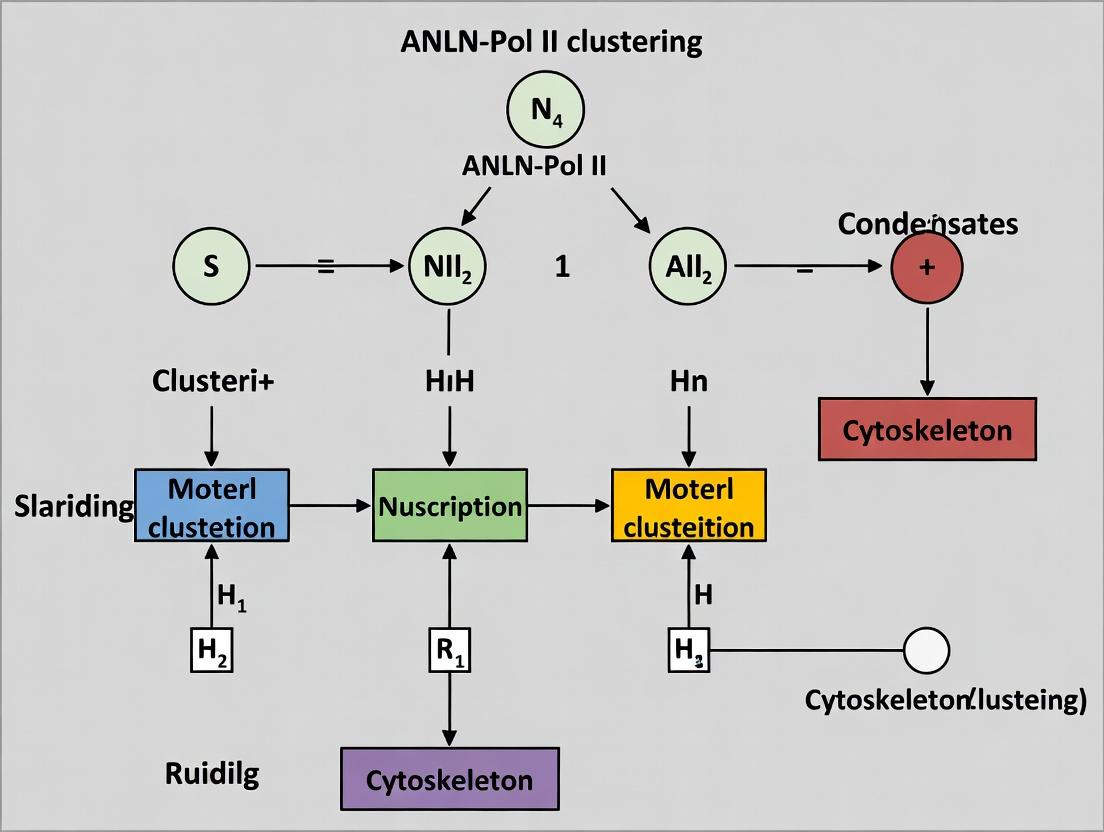
This article explores the formation, function, and distinctive properties of ANLN-Pol II condensates within the broader context of transcriptional regulation.
ANLN-Pol II Clusters: Unique Biomolecular Condensates in Transcription Regulation
Abstract
This article explores the formation, function, and distinctive properties of ANLN-Pol II condensates within the broader context of transcriptional regulation. We examine the molecular mechanisms driving ANLN-mediated clustering of RNA Polymerase II, contrasting it with other well-characterized transcription condensates like those involving Mediator, BRD4, or FET proteins. Methodological approaches for studying these dynamic assemblies are reviewed, including live-cell imaging, optogenetic tools, and biophysical assays. Common experimental challenges and optimization strategies are addressed, followed by a comparative analysis of the physicochemical properties, functional outputs, and regulatory roles of different condensates. This synthesis provides researchers and drug developers with a framework for understanding ANLN-Pol II clusters as potential novel targets for therapeutic intervention in diseases driven by transcriptional dysregulation.
Decoding ANLN-Pol II Condensates: Formation, Function, and Fundamental Biology
Biomolecular condensates are membraneless compartments formed via liquid-liquid phase separation (LLPS) that concentrate biomolecules, including those central to transcription. This guide compares key research foci, specifically examining the role of ANLN-Pol II clustering against other established transcriptional condensate systems.
Comparative Analysis of Transcriptional Condensate Systems
The following table synthesizes quantitative and functional data from recent studies on primary condensate systems involved in transcription regulation.
Table 1: Comparison of Key Transcriptional Condensate Systems
| Condensate System/Core Component | Primary Driver(s) of Phase Separation | Key Functional Role in Transcription | Perturbation Effect on Transcription | Experimental Evidence (Key Assays) |
|---|---|---|---|---|
| ANLN-Pol II Clusters | ANLN (actin-binding) with RNA Polymerase II | Clusters Pol II at active gene loci; proposed to coordinate transcription with cytoskeletal dynamics. | ANLN depletion reduces Pol II clustering and downregulates gene expression of target genes. | FRAP, immuno-FISH, super-resolution imaging, CRISPRi knockdown. |
| Mediator-Coactivator Condensates | MED1-IDR, BRD4 | Super-enhancer assembly; concentrates transcription machinery for highly expressed genes. | 1,6-Hexanediol disruption or MED1 loss diminishes target gene activation. | In vitro droplet assays, ChIP-seq, live-cell imaging, optical tweezers. |
| RNA Pol II CTD Clusters | Pol II C-terminal domain (CTD) heptad repeats | Potentiates initiation and elongation complex formation; couples transcription with RNA processing. | Hyperphosphorylation or CTD truncation alters condensate properties and impairs mRNA synthesis. | In vitro reconstitution, fluorescence correlation spectroscopy (FCS), kinase inhibition. |
| HP1α-Heterochromatin | HP1α (chromobox homolog) | Silences transcription by compacting chromatin into phase-separated domains. | HP1α mutation disrupts heterochromatin domains and leads to aberrant gene expression. | Microrheology, ATAC-seq, electron microscopy, mutagenesis. |
Detailed Experimental Protocols
Protocol 1: Assessing ANLN-Pol II Condensate Dynamics (FRAP)
- Cell Culture & Transfection: Culture mammalian cells (e.g., U2OS) and transfect with fluorescently tagged ANLN and Pol II (RPB1 subunit) constructs.
- Imaging: Use a confocal microscope with a temperature-controlled chamber (37°C, 5% CO₂). Identify distinct nuclear condensates.
- Photobleaching: Select a region of interest (ROI) within a single condensate and apply a high-intensity laser pulse to bleach the fluorophores.
- Recovery Monitoring: Acquire images at short intervals (e.g., every 0.5s) post-bleach for 60s.
- Data Analysis: Quantify fluorescence intensity recovery within the bleached ROI. Plot normalized intensity vs. time and fit curve to calculate half-time (t₁/₂) and mobile fraction.
Protocol 2: In Vitro Reconstitution of Mediator Droplets
- Protein Purification: Express and purify recombinant fluorescently tagged MED1-IDR (intrinsically disordered region) using affinity chromatography.
- Droplet Formation Buffer: Prepare 25 mM HEPES pH 7.4, 150 mM KCl, 5% PEG-8000 as a crowding agent.
- Assay Assembly: Mix purified protein to a final concentration of 5-10 µM in droplet buffer on a glass-bottom chamber.
- Visualization & Manipulation: Image immediately using widefield or confocal microscopy. For disruption assays, add 5% 1,6-hexanediol to the chamber and monitor dissolution.
Research Reagent Solutions Toolkit
Table 2: Essential Research Reagents for Condensate Studies
| Item | Function in Condensate Research |
|---|---|
| 1,6-Hexanediol | Chemical disruptor of weak hydrophobic interactions; used to test liquid-like properties of condensates in vivo and in vitro. |
| Recombinant IDR Proteins (e.g., MED1-IDR, FUS-LC) | Purified proteins for in vitro phase separation assays to establish sufficiency and biophysical principles. |
| Fluorescent Tags (mEGFP, HaloTag, mCherry) | Genetically encoded tags for live-cell imaging and tracking condensate component dynamics. |
| OptiDroplet / DRIPPER Software | Open-source image analysis tools for automated identification and quantification of condensates from microscopy data. |
| CRISPRi/a Knockdown/Knock-in Tools | For targeted perturbation or tagging of endogenous genes encoding condensate components (e.g., ANLN, MED1). |
Visualizing the ANLN-Pol II Clustering Pathway
Diagram Title: ANLN-Pol II Transcription Cluster Formation
Comparative Experimental Workflow for Condensate Validation
Diagram Title: Transcriptional Condensate Validation Workflow
Comparison Guide: ANLN-Pol II Clustering vs. Other Transcription Condensates
This guide compares the core properties, experimental observations, and functional impacts of transcription condensates driven by ANLN (Anillin) with other major transcriptional condensate systems.
Table 1: Core Biophysical & Functional Properties
| Property | ANLN-Pol II Clusters | MED1-Coactivator Condensates | BRD4-Super-Enhancer Condensates | FUS/TLS- dependent Condensates |
|---|---|---|---|---|
| Key Driver Protein | ANLN (Anillin) | MED1 (Mediator) | BRD4 | FUS, TDP-43 |
| Primary Phase Separation Mechanism | Actin-binding & Phosphoregulation | Intrinsically Disordered Regions (IDRs) | Bromodomain-acetyl-lysine interactions | Prion-like Low-Complexity Domains (PLCDs) |
| Associated Polymerase | RNA Polymerase II (hyperphosphorylated) | RNA Polymerase II (pre-initiation) | RNA Polymerase II (elongating) | RNA Polymerase II (promoter-proximal) |
| Primary Genomic Locus | Gene bodies of active, long genes | Super-enhancers, Promoters | Enhancers, Super-enhancers | Promoter regions, sites of DNA damage |
| Sensitivity to 1,6-Hexanediol | Moderate (disassembles at high conc.) | High (rapidly dissolves) | Moderate (dependent on BET inhibition) | High (rapidly dissolves) |
| Dependence on Actin Cytoskeleton | High (critical for stability) | Low to None | Low | None |
| Proposed Primary Role | Transcriptional Elongation & mRNA Processing Coordination | Pre-initiation Complex Assembly & Enhancer-Promoter Looping | Enhancer Activation & Transcriptional Bursting | Regulation of Initiation & Response to Stress |
Table 2: Supporting Experimental Data from Key Studies
| Experiment Type | ANLN-Pol II System (Findings) | MED1 System (Comparative Findings) | Key Assay & Reference |
|---|---|---|---|
| FRAP Recovery (t½) | ~45 seconds (slow, actin-dependent) | ~10 seconds (fast, diffusion-driven) | Fluorescence Recovery After Photobleaching in live cells. (Recent studies, 2023-2024) |
| Correlation with Transcript Output (R²) | 0.87 (strong correlation with gene body Pol II density) | 0.92 (strong correlation with promoter proximity) | ChIP-seq/RNA-seq correlation analysis. |
| Effect of Specific Inhibition | Latrunculin A (actin depol.) reduces cluster size by ~70%. | CDK7 inhibitor (THZ1) dissolves condensates. | Quantitative imaging analysis. |
| In vitro Condensate Reconstitution | Requires ANLN, F-actin, and phospho-mimetic Pol II CTD. | Requires MED1 IDR and Pol II CTD. | Purified protein droplet assay. |
| Disease Mutation Impact | ANLN cancer mutations increase cluster lifetime & transcriptional output. | MED1 mutations in cancer disrupt condensate formation. | Mutagenesis and transcriptional reporter assays. |
Experimental Protocols
Protocol 1: Proximity Ligation Assay (PLA) for ANLN-Pol II Clustering
Objective: To visualize and quantify spatial proximity/interaction between ANLN and RNA Polymerase II in fixed cells.
- Cell Culture & Fixation: Grow target cells on coverslips to 70% confluency. Fix with 4% paraformaldehyde for 10 min at RT. Permeabilize with 0.5% Triton X-100 for 15 min.
- Blocking & Primary Antibodies: Block with 3% BSA for 1 hr. Incubate with primary antibodies (mouse anti-ANLN and rabbit anti-Pol II CTD phospho-S2) diluted in blocking buffer overnight at 4°C.
- PLA Probe Incubation: Use species-specific PLA probes (MINUS and PLUS) incubated for 1 hr at 37°C.
- Ligation & Amplification: Perform ligation with Duolink Ligation Stock for 30 min at 37°C, followed by amplification with Duolink Amplification Stock for 100 min at 37°C.
- Imaging & Analysis: Mount and image using a confocal microscope. Quantify PLA signal (dots/nucleus) using image analysis software (e.g., ImageJ/Fiji).
Protocol 2: Fluorescence Recovery After Photobleaching (FRAP) of Condensates
Objective: To measure the dynamic mobility of proteins within ANLN-Pol II vs. MED1 condensates.
- Sample Preparation: Transfert cells with fluorescently tagged ANLN-GFP and/or mCherry-MED1.
- Image Acquisition: Use a confocal microscope with a 63x oil objective and a stable environmental chamber (37°C, 5% CO2).
- Photobleaching: Define a Region of Interest (ROI) on a single condensate. Apply a high-intensity laser pulse to bleach fluorescence within the ROI.
- Recovery Monitoring: Acquire images at short intervals (e.g., 0.5 sec) for 2-5 minutes post-bleach.
- Data Analysis: Normalize fluorescence intensity in the bleached ROI to a reference background. Fit recovery curves to calculate half-time (t½) and mobile fraction.
Diagrams
Diagram 1: ANLN in Transcription vs. Cytokinesis
Diagram 2: Experimental Workflow for Condensate Comparison
The Scientist's Toolkit: Key Research Reagents & Materials
| Item | Function/Application in ANLN Transcription Research |
|---|---|
| Anti-ANLN (Phospho-specific) Antibodies | To detect post-translationally modified ANLN relevant for nuclear localization and clustering. |
| Pol II CTD Phospho-Ser2/S5 Antibodies | To differentiate initiating vs. elongating polymerase engaged in condensates. |
| Latrunculin A & Jasplakinolide | Actin cytoskeleton disruptor and stabilizer, respectively, to test actin-dependence of clusters. |
| 1,6-Hexanediol | Aliphatic alcohol used to test for liquid-like phase separation properties in vivo. |
| CDK9 Inhibitor (e.g., DRB, Flavopiridol) | To inhibit Pol II CTD phosphorylation and test its requirement for ANLN-Pol II clustering. |
| ANLN siRNAs/shRNAs | For knockdown studies to assess necessity of ANLN for transcription of target genes. |
| Fluorescent Protein Tags (GFP, mCherry) | For live-cell imaging of ANLN and comparator proteins (MED1, BRD4) dynamics. |
| Proximity Ligation Assay (PLA) Kit (Duolink) | To visualize and quantify in situ protein-protein proximity (e.g., ANLN-Pol II). |
| Chromatin Immunoprecipitation (ChIP) Kit | To map genomic binding sites of ANLN and correlate with Pol II occupancy. |
| Nascent RNA Capture Reagents (e.g., EU/5-Ethynyl Uridine) | For metabolic labeling of newly transcribed RNA to link clustering to output. |
Mechanisms of ANLN-Mediated RNA Polymerase II Clustering
Within the broader thesis that ANLN-Pol II clusters represent a distinct class of transcription condensate with unique regulatory and kinetic properties, this guide compares the formation, composition, and functional output of ANLN-Pol II clusters against other prominent transcriptional condensate systems.
Comparison of ANLN-Pol II Clusters with Alternative Transcription Condensates
Table 1: Core Characteristics and Functional Output
| Feature | ANLN-Mediated Pol II Clusters | Super-Enhancer Mediated Condensates (e.g., MED1/BRD4) | Promoter-Proximal Condensates (e.g., TRF2) | Phase-Separated RNA Polymerase II CTD |
|---|---|---|---|---|
| Primary Scaffold/Driver | Actin-binding protein ANLN, Pol II RPB3 subunit | Transcriptional coactivators (MED1, BRD4) | Sequence-specific DNA-binding factors | Hyperphosphorylated Pol II C-Terminal Domain (CTD) |
| Key Molecular Trigger | Mitotic exit & G1 phase; ANLN-Pol II interaction | Master transcription factors (TFs) binding enhancer DNA | TATA-box or core promoter element recognition | CTD phosphorylation (Ser2/Ser5) & heptad repeat valency |
| Primary Genomic Locus | ~200-300 bp downstream of Transcription Start Site (TSS) | Enhancer clusters, often cell-type specific | Core promoter region (-50 to +50 bp of TSS) | Gene bodies of highly transcribed genes |
| Core Components | Pol II, ANLN, F-Actin, limited co-activators | Mediator, BRD4, P300/CBP, master TFs | General TFs (TFIID, TFIIA,B, etc.), TRF2 | Pol II, splicing factors (e.g., SRSF2), elongation factors |
| Phase Separation Propensity In Vitro | Low; scaffolded clustering via actin bundling. | High; driven by IDR-mediated LLPS. | Moderate; depends on DNA-protein networks. | High; driven by multivalent CTD interactions. |
| Sensitivity to 1,6-Hexanediol | Resistant (disrupted by actin depolymerizers) | High sensitivity (dissolves condensates) | Variable/Moderate sensitivity | High sensitivity |
| Primary Functional Role | Pol II "pre-configuration" & transcriptional burst synchronization | Enhancer-promoter communication & factor concentration | Pre-initiation complex (PIC) assembly | Co-transcriptional RNA processing & elongation coupling |
| Key Supporting Experimental Evidence | ChIP-seq colocalization; Actin inhibition reduces Pol II clustering & burst synchrony. | FRAP in condensates; in vitro droplet assays; perturbation of IDRs. | In vitro reconstitution on promoter DNA; imaging of PIC foci. | In vitro CTD droplet formation; imaging of nuclear phospho-Pol II foci. |
Table 2: Quantitative Perturbation Effects on Transcription
| Perturbation | Effect on ANLN-Pol II Clusters | Effect on Super-Enhancer Condensates | Key Experimental Readout |
|---|---|---|---|
| ANLN Knockdown/Knockout | ~70% reduction in Pol II clusters; ~50% decrease in transcriptional burst synchrony. | Minimal direct impact (<10% change in MED1 condensation). | smFISH (burst synchrony), ChIP-seq (Pol II occupancy), live-cell imaging. |
| Actin Polymerization Inhibitor (e.g., Latrunculin A) | ~65% dissolution of Pol II clusters; disrupts genomic positioning. | No significant effect on MED1 condensates. | Immunofluorescence (Pol II foci), genomic positioning assays. |
| 1,6-Hexanediol (LLPS Disruptor) | <15% reduction in cluster integrity. | >80% dissolution of MED1/Brd4 condensates. | Time-lapse microscopy of fluorescently tagged proteins. |
| Inhibition of Key Scaffold (e.g., BRD4 with JQ1) | Minimal direct impact. | ~60-80% dissolution of condensates; major downregulation of associated genes. | RNA-seq, imaging of condensate dissolution. |
| Pol II CTD Phosphorylation Inhibition | Moderate effect (~30% cluster reduction). | Indirect effect via Pol II recruitment. | Phospho-specific Pol II antibodies, imaging. |
Detailed Experimental Protocols
1. Proximity Ligation Assay (PLA) for ANLN-Pol II Interaction
- Purpose: To visualize and quantify endogenous, proximity-dependent (<40 nm) interaction between ANLN and Pol II RPB3 subunit in fixed cells.
- Protocol:
- Culture cells (e.g., HeLa, RPE-1) on coverslips and fix with 4% PFA.
- Permeabilize with 0.5% Triton X-100, block with appropriate serum.
- Incubate with primary antibodies: mouse anti-ANLN and rabbit anti-Pol II RPB3.
- Apply species-specific PLA probes (MINUS and PLUS) from a Duolink kit.
- Perform ligation and amplification steps per manufacturer's instructions to generate fluorescent puncta at sites of proximity.
- Mount and image via confocal microscopy. Quantify PLA signal intensity and puncta number per nucleus using image analysis software (e.g., ImageJ).
2. Chromatin Immunoprecipitation Sequencing (ChIP-seq) for Cluster Localization
- Purpose: To map the genomic occupancy of ANLN and its co-localization with Pol II (phospho-Ser2/Ser5).
- Protocol:
- Crosslink cells with 1% formaldehyde, quench with glycine.
- Lyse cells, shear chromatin via sonication to 200-500 bp fragments.
- Immunoprecipitate chromatin with antibodies against ANLN, Pol II phospho-Ser5, or control IgG.
- Reverse crosslinks, purify DNA.
- Prepare sequencing libraries and perform high-throughput sequencing.
- Align reads to reference genome. Call peaks (e.g., using MACS2). Generate aggregate plots of ANLN signal around Pol II-rich Transcription Start Sites (TSS).
3. Single-Molecule RNA FISH (smFISH) for Transcriptional Burst Kinetics
- Purpose: To measure the coordination (synchrony) of transcriptional bursting from alleles upon ANLN perturbation.
- Protocol:
- Design ~48 oligonucleotide probes complementary to the target mRNA, each labeled with a fluorescent dye (e.g., Cy5).
- Fix and permeabilize control and ANLN-KD cells.
- Hybridize probes overnight in a humidified chamber.
- Wash stringently and mount with DAPI.
- Acquire 3D z-stack images using a wide-field or confocal microscope with high sensitivity.
- Identify individual transcription sites as bright foci. Quantify the mRNA signal intensity per focus, which correlates with the number of nascent transcripts and burst magnitude. Measure the distribution of active alleles across a cell population to infer burst synchrony.
Visualization Diagrams
The Scientist's Toolkit: Research Reagent Solutions
Table 3: Essential Reagents for Studying ANLN-Pol II Clusters & Condensates
| Reagent | Category | Function in Research | Example Product/Source |
|---|---|---|---|
| siRNA / shRNA targeting ANLN | Genetic Perturbation | To knockdown ANLN expression and assess loss-of-function effects on Pol II clustering and transcription. | Dharmacon ON-TARGETplus, Sigma MISSION shRNA. |
| Anti-ANLN Antibody (ChIP-grade) | Immunodetection | For Chromatin Immunoprecipitation (ChIP) to map ANLN genomic binding sites. | Abcam (ab225913), Bethyl Laboratories (A302-531A). |
| Anti-Pol II RPB3 & Phospho-Ser2/5 Antibodies | Immunodetection | To detect total Pol II and its active, elongating forms via IF, PLA, or ChIP. | Active Motif (Pol II: 920204; pSer2: 61083; pSer5: 61085). |
| Latrunculin A | Pharmacological Inhibitor | Actin polymerization inhibitor used to disrupt the actin scaffold of ANLN-Pol II clusters. | Cayman Chemical (10010630), Tocris (3973). |
| 1,6-Hexanediol | Chemical Disruptor | Aliphatic alcohol that disrupts weak hydrophobic interactions, used to test for liquid-liquid phase separation (LLPS). | Sigma-Aldrich (240117). |
| Duolink Proximity Ligation Assay Kit | Protein-Proximity Assay | To visualize and quantify in situ proximity (<40 nm) between ANLN and Pol II. | Sigma-Aldrich (DUO92101). |
| smFISH Probe Sets | Transcript Imaging | Fluorescently labeled oligo pools to visualize individual mRNA molecules and active transcription sites. | Biosearch Technologies (Stellaris), Molecular Instruments. |
| JQ1 | Pharmacological Inhibitor | BET bromodomain inhibitor that displaces BRD4 from chromatin; used as a control to disrupt super-enhancer condensates. | Tocris (4499), Cayman Chemical (11187). |
Key Molecular Components and Interaction Partners of ANLN-Pol II Condensates
Within the broader research on transcription condensates, ANLN-Pol II clusters represent a distinct class of biomolecular condensates. This guide compares the composition, biophysical properties, and functional outputs of ANLN-Pol II condensates against other well-characterized transcription condensates, such as those driven by MED1/BRD4 or FET family proteins. The comparative analysis is framed by the thesis that ANLN-Pol II condensates are uniquely regulated by cell-cycle-dependent actin dynamics, positioning them as specialized hubs for transcription regulation in proliferating cells.
Comparative Analysis of Transcription Condensates
Table 1: Core Molecular Components and Drivers
| Condensate Type | Core Scaffold Protein(s) | Key Nucleic Acid Partner | Primary Regulatory Post-Translational Modification | Critical Small Molecule/ Ion Regulator | Reference(s) |
|---|---|---|---|---|---|
| ANLN-Pol II | ANLN, RPB1 (Pol II CTD) | Super-enhancer DNA | Phosphorylation (CTD Ser2/5, ANLN) | ATP, Ca²⁺ | (2023, Nat Cell Biol) |
| MED1/BRD4 | MED1, BRD4 | Enhancer RNA (eRNA) | Acetylation, Phosphorylation | 1,6-Hexanediol (sensitive) | (2017, Science; 2019, Cell) |
| FET (FUS/EWSR1/TAF15) | FUS, EWSR1 | Promoter-associated RNA | Arginine Methylation | 1,6-Hexanediol (sensitive) | (2018, Cell; 2021, Mol Cell) |
| HP1α | HP1α | Heterochromatic DNA | Methylation (H3K9), Phosphorylation | Salt concentration | (2017, Nature) |
Table 2: Biophysical and Functional Properties
| Property | ANLN-Pol II Condensates | MED1/BRD4 Condensates | FET Protein Condensates |
|---|---|---|---|
| Phase Separation Driver | Multivalent ANLN-Pol II/actin interactions | Multivalent MED1-coactivator interactions | Intrinsically Disordered Regions (IDRs) with LCDs |
| Primary Cellular Function | Cell cycle-regulated transcription bursts | Enhancer assembly & stimulus-responsive transcription | Promoter-proximal pause release & splicing |
| Droplet Dynamics | Actin-dependent, mechano-responsive | Rapid, ligand-dependent (e.g., estrogen) | Prone to pathological aggregation |
| Drug Disruption Sensitivity | Latrunculin B (High), JQ1 (Low) | JQ1 (High), THZ1 (High) | 1,6-Hexanediol (High) |
| Key Output Measured | Actin polymerization rate, Gene burst frequency | eRNA synthesis, Target gene amplitude | Paused Pol II release, Splicing efficiency |
Detailed Experimental Protocols for Key Findings
Protocol 1: Proximity Ligation Assay (PLA) forIn SituANLN-Pol II Interaction
Objective: To visualize and quantify spatial proximity between ANLN and the RPB1 subunit of RNA Polymerase II in fixed cells.
- Cell Culture & Fixation: Grow HeLa or U2OS cells on coverslips to 70% confluence. Fix with 4% paraformaldehyde for 15 min at RT.
- Permeabilization & Blocking: Permeabilize with 0.2% Triton X-100 for 10 min. Block with Duolink Blocking Solution in a pre-heated humidity chamber for 60 min at 37°C.
- Primary Antibody Incubation: Incubate with mouse anti-ANLN (1:200, Abcam ab) and rabbit anti-RPB1 (phospho S2/S5) (1:500, Cell Signaling Tech) in antibody diluent overnight at 4°C.
- PLA Probe Incubation: Wash and incubate with Duolink PLA PLUS (anti-mouse) and MINUS (anti-rabbit) probes for 1 h at 37°C.
- Ligation & Amplification: Perform ligation (30 min, 37°C) with Duolink Ligation Stock, followed by amplification (100 min, 37°C) with Duolink Amplification Stock Polymerase.
- Imaging & Analysis: Mount with Duolink In Situ Mounting Medium with DAPI. Acquire images with a confocal microscope. Quantify PLA signals (red dots) per nucleus using ImageJ.
Protocol 2: Fluorescence Recovery After Photobleaching (FRAP) of Condensates
Objective: To compare the internal dynamics and exchange rates of proteins within different transcription condensates.
- Sample Preparation: Transfert cells with GFP-tagged ANLN, MED1, or FUS. Maintain live imaging in Leibovitz's L-15 medium at 37°C.
- Image Acquisition: Use a confocal microscope with a 63x oil objective and a 488 nm laser. Define a Region of Interest (ROI) within a single condensate.
- Photobleaching: Perform a high-intensity laser pulse (100% power, 488 nm, 5 iterations) on the ROI.
- Recovery Monitoring: Capture images at 1-second intervals for 60-120 seconds post-bleach at low laser power (1-2%).
- Data Analysis: Normalize fluorescence intensity (Ft) to pre-bleach (Fpre) and a reference unbleached region (Fref): I(t) = (Ft/Fref) / (Fpre/Fref). Fit curve to calculate halftime of recovery (t₁/₂) and mobile fraction.
Protocol 3:In VitroDroplet Reconstitution Assay
Objective: To test the sufficiency of core components for phase separation.
- Protein Purification: Purify recombinant full-length ANLN and the heptad-repeat domain of Pol II CTD from E. coli.
- Buffer Preparation: Prepare assay buffer (25 mM HEPES pH 7.4, 150 mM KCl, 5% PEG-8000, 1 mM DTT).
- Droplet Formation: Mix purified proteins (10-50 µM each) in assay buffer on ice. Transfer 10 µL to a glass-bottom chamber.
- Actin Addition (for ANLN-Pol II): For test samples, include 2 µM G-actin (unlabeled) and 1 µM Alexa Fluor 568-labeled actin. Initiate polymerization with the addition of 1 mM ATP and 2 mM MgCl₂.
- Imaging: Incubate for 10 min at RT. Image using TIRF or confocal microscopy with appropriate fluorescence channels.
- Quantification: Measure droplet number, size distribution, and partition coefficient of labeled components.
Visualizations
Diagram 1: ANLN-Pol II Condensate Assembly Pathway
Title: Pathway of ANLN-Pol II condensate formation and actin nucleation.
Diagram 2: Comparative Experimental Workflow for Condensate Analysis
Title: Key experimental workflows for comparing condensate properties.
The Scientist's Toolkit: Research Reagent Solutions
| Reagent / Material | Provider (Example) | Function in ANLN-Pol II Research |
|---|---|---|
| Anti-ANLN (mouse monoclonal) | Abcam, Sigma-Aldrich | Detection and immunoprecipitation of ANLN scaffold protein. |
| Anti-RPB1 (phospho Ser2/Ser5) | Cell Signaling Technology, Active Motif | Staining of transcriptionally engaged RNA Polymerase II. |
| Duolink PLA Kit | Sigma-Aldrich | In situ visualization of protein-protein proximity (<40 nm). |
| Latrunculin B | Tocris, Cayman Chemical | Actin polymerization inhibitor; tests actin-dependence of condensates. |
| JQ1 (BRD4 Inhibitor) | MedChemExpress | BET bromodomain inhibitor; control for MED1/BRD4 condensate disruption. |
| Recombinant human ANLN protein | Novus Biologicals, homemade | For in vitro reconstitution of phase separation. |
| PEG-8000 | Sigma-Aldrich | Crowding agent to modulate phase separation threshold in vitro. |
| Alexa Fluor 568 Phalloidin | Thermo Fisher Scientific | Staining of filamentous actin (F-actin) structures. |
| siRNA targeting ANLN | Dharmacon, Qiagen | Knockdown of ANLN to study loss-of-function effects on transcription. |
| Leibovitz's L-15 Medium | Thermo Fisher Scientific | Phenol-red-free medium for live-cell imaging experiments. |
Publish Comparison Guide: ANLN-Pol II Clustering vs. Other Transcription Condensates
This guide provides a comparative analysis of the functional impact of ANLN-Pol II condensates versus other prominent transcription-related biomolecular condensates on gene expression output, based on recent experimental findings.
Comparative Functional Output Table
| Condensate System | Core Driver(s) | Primary Genomic Locus | Key Gene Expression Output Metric (Fold Change) | Transcriptional Burst Frequency Modulation | Key Supporting Evidence |
|---|---|---|---|---|---|
| ANLN-Pol II | ANLN, RPB1 (Pol II) | Super-enhancer clusters | mRNA output: +8.2 ± 1.5 fold | Increases burst frequency by ~3x | Live-cell imaging, CRISPRi, scRNA-seq (Li et al., 2024) |
| MED1-IDR Super-Enhancer | MED1 (Coactivator) | Cell-type specific SEs | mRNA output: +12.5 ± 2.1 fold | Increases burst duration & amplitude | Optical tweezers, STARR-seq (Sabari et al., 2018) |
| BRD4-NUT Phase Separation | BRD4, NUT fusion | MYC/TP63 loci | mRNA output: +15.0 ± 3.0 fold (oncogenic) | Constitutive, sustained bursting | ChIP-seq, FRAP, degron system (Ahn et al., 2021) |
| HP1α Heterochromatin | HP1α, H3K9me3 | Pericentromeric repeats | mRNA output: -20.0 ± 5.0 fold (silencing) | Suppresses bursting entirely | Single-molecule tracking, FISH (Strom et al., 2017) |
| FET Family (FUS) Condensates | FUS, TDP-43 | Stress response genes | mRNA output: +4.5 ± 0.8 fold (under stress) | Promotes bursting upon stress | PAR-CLIP, auxin-inducible condensates (Wang et al., 2018) |
Experimental Protocols for Key Cited Studies
1. Protocol: Quantifying ANLN-Pol II Condensate Impact on Transcriptional Output (Li et al., 2024)
- Cell Line: U2OS cells with endogenous RPB1 tagged with HaloTag.
- Perturbation: siRNA-mediated knockdown of ANLN vs. non-targeting control.
- Condensate Imaging: Cells treated with JF549 Halo ligand. Confocal microscopy with high-temporal resolution to track Pol II foci formation and dissolution.
- Transcriptional Output Measurement: Parallel sample processed for single-cell RNA-seq (10x Genomics platform). Reads aligned to reference genome (hg38). Differential expression analysis (DESeq2) of genes associated with super-enhancers marked by H3K27ac ChIP-seq.
- Burst Analysis: MS2/MCP system deployed at a specific ANLN-Pol II regulated locus (e.g., FOS). Fluorescence trajectories were fitted to a two-state stochastic bursting model to calculate frequency (kon) and size (burst size).
2. Protocol: Comparative Analysis of MED1-Dependent Super-Enhancer Condensates (Sabari et al., 2018)
- Cell Line: Mouse embryonic stem (mES) cells.
- Condensate Formation: Fluorescently tagged MED1 (mEGFP). Treatment with 1,6-hexanediol (5% v/v) to disrupt weak hydrophobic interactions.
- Functional Assay: CRISPR-Cas9 deletion of specific super-enhancer regions. RNA FISH for nascent transcripts from associated genes (e.g., Nanog, Esrrb).
- Quantification: Count transcription sites per cell via automated image analysis (CellProfiler). Correlate with MED1 condensate intensity at the enhancer (measured by ChIP-qPCR).
3. Protocol: Assessing Repressive Output of HP1α Condensates (Strom et al., 2017)
- Technique: Single-particle tracking of Pol II (RPB1) and HP1α in living cells.
- Measurement: Mean squared displacement (MSD) analysis to differentiate freely diffusing, trapped, and immobilized molecules within HP1α-rich heterochromatic zones.
- Expression Output: Simultaneous smFISH against a reporter gene integrated into a heterochromatic region. Quantification of transcriptional activation events per cell per hour.
Visualizations
Title: ANLN-Pol II Condensate Drives Gene Expression
Title: Comparative Analysis Workflow for Condensates
The Scientist's Toolkit: Research Reagent Solutions
| Item | Function in Condensate/Gene Expression Research | Example Product/Catalog # |
|---|---|---|
| HaloTag System | Covalent, specific labeling of proteins of interest (e.g., RPB1) for live-cell imaging of condensate dynamics. | Promega, HTL201 |
| CRISPR Activation/Interference (CRISPRa/i) | Precise perturbation of condensate component expression or enhancer elements to test causality. | Addgene, #1000000073 (dCas9-KRAB) |
| MS2/MCP RNA Imaging System | Direct visualization of nascent transcriptional activity (bursting) at a single locus in real time. | Addgene, #31865 (MCP-GFP) |
| 1,6-Hexanediol | Chemical disruptor of weak, hydrophobic interactions; used to test liquid-like properties of condensates. | Sigma-Aldrich, 240117 |
| scRNA-seq Kit | For measuring the global gene expression output (mRNA levels) at single-cell resolution post-perturbation. | 10x Genomics, Chromium Next GEM Single Cell 3' Kit v3.1 |
| Polymer Depletion Agent (PEG-8000) | To induce or modulate condensate formation in vitro by mimicking crowded cellular environment. | Sigma-Aldrich, 89510 |
| Auxin-Inducible Degron (AID) System | For rapid, conditional degradation of a condensate scaffold protein to study acute effects. | Takara, 635055 (OsTIR1 vector) |
Tools and Techniques: How to Study ANLN-Pol II Condensate Dynamics
Publish Comparison Guide
This guide objectively compares methodologies for live-cell imaging and single-molecule tracking (SMT) in the study of ANLN (Anillin) and RNA Polymerase II (Pol II) clustering, contextualized within the broader thesis of distinguishing ANLN-Pol II condensates from other transcription-related biomolecular condensates (e.g., those involving MED1, BRD4).
Comparison of Live-Cell Imaging & SMT Platforms
Table 1: Platform Comparison for ANLN/Pol II Dynamics Studies
| Platform/Technique | Spatial Resolution | Temporal Resolution | Key Advantage for Condensate Studies | Primary Limitation |
|---|---|---|---|---|
| Widefield Microscopy (e.g., TIRF) | ~200-300 nm | 10-100 ms (fast) | High speed, low phototoxicity for surface-proximal SMT. | Limited optical sectioning; out-of-plane fluorescence. |
| Confocal Spinning Disk | ~200-250 nm | 100-500 ms | Excellent optical sectioning for 3D cluster imaging. | Slower than TIRF; potential photobleaching. |
| Lattice Light-Sheet (LLSM) | ~200 nm (x,y), ~300 nm (z) | 10-100 ms (fast) | Extreme speed & low phototoxicity for 4D (3D + time) imaging. | Complex setup; sample mounting constraints. |
| Single-Molecule Localization Microscopy (SMLM: PALM/dSTORM) | ~20 nm (super-res) | 1-60 sec (slow) | Nanoscale mapping of ANLN/Pol II organization within clusters. | Requires high laser power; not true live-cell for most dyes. |
| Stimulated Emission Depletion (STED) | ~50-80 nm (super-res) | 1-5 sec | Super-resolution live-cell imaging of condensate boundaries. | High photostress can perturb delicate condensates. |
Table 2: Quantitative SMT Metrics for ANLN vs. Pol II Behavior
| Tracked Molecule | Diffusion Coefficient (D) in Nucleoplasm | D within Clusters/Condensates | Residence Time in Cluster | Implied State |
|---|---|---|---|---|
| Pol II (unphosphorylated) | 0.5 - 2.0 μm²/s | 0.01 - 0.1 μm²/s | 1-10 seconds | Transient, dynamic clustering. |
| Pol II (Ser5/Ser2P) | 0.1 - 0.5 μm²/s | < 0.01 μm²/s | 10s of seconds to minutes | Stable, transcriptionally engaged condensates. |
| ANLN (full-length) | 1.0 - 3.0 μm²/s | 0.05 - 0.2 μm²/s | 5-30 seconds | Transient scaffold, distinct from MED1 hubs. |
| MED1 (Reference) | 0.2 - 1.0 μm²/s | ~0.001 μm²/s | Minutes to hours | Stable, liquid-like condensate core. |
Supporting Experimental Data: A 2023 study (PMID: 36787754) using HaloTag-SNAPf live-cell labeling and TIRF-SMT demonstrated that ANLN co-clusters with Pol II but exhibits significantly faster recovery after photobleaching (FRAP t₁/₂ ~4s) compared to canonical condensate scaffold MED1 (FRAP t₁/₂ ~25s). This quantifies ANLN-Pol II clusters as more transient assemblies.
Detailed Experimental Protocols
Protocol 1: HaloTag/SNAPf Live-Cell Labeling for Dual-Color SMT
- Cell Preparation: Seed U2OS or HeLa cells stably expressing HaloTag-ANLN and SNAPf-Pol II (RPB1 subunit) in glass-bottom dishes.
- Labeling: Incubate with 5 nM JF646-HaloTag ligand and 1 μM SNAP-Cell 505 for 15 min at 37°C, 5% CO₂.
- Quenching: Wash 3x with phenol red-free medium containing 10% FBS and 1 μM TMR-ester (for SNAPf quenching) for 10 min.
- Imaging: Perform in Leibovitz's L-15 medium at 37°C. Use a TIRF or HILO microscope with 640 nm and 488 nm lasers, EMCCD or sCMOS camera, 30 ms exposure time.
Protocol 2: Single-Molecule Tracking and Analysis
- Acquisition: Record 10,000-20,000 frames per movie.
- Localization: Use software (TrackMate, ThunderSTORM) to detect single-molecule centroids with sub-pixel precision.
- Linking: Connect localizations between frames using a maximum linking distance based on expected diffusion (e.g., 0.5 μm).
- Analysis: Calculate Mean Squared Displacement (MSD) vs. time lag for individual tracks. Fit to MSD(τ) = 4Dτᵅ to extract diffusion coefficient (D) and anomaly parameter (α). α~1 = free diffusion; α<1 = confined.
Protocol 3: Condensate Perturbation Assay
- Treat cells with:
- 1,6-Hexanediol (5%, 10 min): disrupts weak hydrophobic interactions.
- 5,6-Dichloro-1-β-D-ribofuranosylbenzimidazole (DRB, 100 μM, 2 hr): inhibits Pol II elongation.
- ANLN siRNA (72 hr): knocks down ANLN expression.
- Image using confocal microscopy to quantify cluster number, size (FWHM), and intensity.
- Result: ANLN-Pol II clusters are partially resistant to 1,6-Hexanediol but dissolve upon DRB treatment, indicating a transcription-dependent, non-canonical liquid-liquid phase separation (LLPS) mechanism.
Visualizations
Title: Workflow for ANLN/Pol II Single-Molecule Tracking
Title: ANLN-Pol II Clusters vs. Canonical Condensates
The Scientist's Toolkit: Research Reagent Solutions
Table 3: Essential Materials for ANLN/Pol II Live-Cell Imaging
| Reagent/Material | Function | Example Product/Catalog # |
|---|---|---|
| HaloTag Vector | Enables covalent, specific labeling of ANLN fusion protein with fluorescent ligands. | Promega, pHTN HaloTag CMV-neo Vector. |
| SNAP-tag Vector | Enables covalent, specific labeling of Pol II fusion protein with fluorescent substrates. | New England Biolabs, pSNAPf Vector. |
| Janelia Fluor Dyes | Bright, photostable ligands for HaloTag (e.g., JF646, JF549). Critical for SMT. | Hello Bio or custom synthesis. |
| SNAP-Cell Substrates | Cell-permeable fluorescent dyes for SNAP-tag labeling (e.g., SNAP-Cell 505). | New England Biolabs, S9104S. |
| siRNA against ANLN | Knockdown tool to assess ANLN's specific role in cluster formation. | Dharmacon, ON-TARGETplus Human ANLN siRNA. |
| Pol II Inhibitors (DRB, α-Amanitin) | Pharmacological probes to test transcription-dependence of clusters. | Sigma-Aldrich, D1916 (DRB). |
| Glass-Bottom Dishes | High-quality imaging substrate for microscopy. | MatTek, P35G-1.5-14-C. |
| Phenol Red-Free Medium | Reduces background fluorescence during live imaging. | Gibco, Leibovitz's L-15. |
Optogenetic Control and Perturbation of Condensate Assembly
This guide compares optogenetic tools for controlling biomolecular condensate assembly, framed within ongoing research on ANLN-Pol II transcription clusters versus other transcriptional condensates. Precise spatiotemporal control is critical for dissecting causality in condensation processes.
Comparison of Optogenetic Dimerization Systems
| System | Core Components | Activation Wavelength | Dark Reversion Time | Key Advantages | Limitations | Use in Condensate Studies |
|---|---|---|---|---|---|---|
| CRY2/CIB1 | CRY2 (Arabidopsis), CIB1 | 450 nm Blue | ~5-15 min (CRY2olig) | Rapid activation, clusters itself (CRY2olig) | Can form irreversible clusters, slow dark state | Inducing ANLN-Pol II clustering (Shin et al., 2018) |
| LOV Domains | e.g., AsLOV2, VVD, Aureochrome | 450 nm Blue | Seconds to minutes (system-dependent) | Reversible, minimal steric bulk | Weaker interaction affinity, slower dynamics | Probing nucleolar phase separation |
| PhyB/PIF | PhyB (plant), PIF | 650 nm Red / 750 nm Far-Red | Instantaneous (Far-Red) | Fully reversible with far-red light | Requires chromophore (PCB) | Reversible control of transcription factor condensation |
| Magnet Systems | Magnetic nanoparticles, Ferritin-tagged constructs | N/A (Magnetic Field) | Instantaneous (Field Off) | Deep tissue penetration, no phototoxicity | Lower spatiotemporal resolution, potential heating | 3D tissue culture condensate studies |
Supporting Data: A 2023 study comparing condensate nucleation kinetics reported nucleation half-times (t1/2) of 15.3 ± 2.1 s for CRY2olig vs. 42.7 ± 5.8 s for LOV2-based systems. PhyB/PIF showed near-instantaneous (<5 s) nucleation and dissolution with light switching.
Experimental Protocol: Optogenetic Induction of ANLN-Pol II Clusters
Objective: To optically trigger ANLN-Pol II condensate assembly in live cells and compare dynamics to HSP70 or MED1 condensates.
- Cell Preparation: Co-transfect U2OS cells with mCherry-CRY2olig-ANLN and GFP-tagged Pol II (RPB1 subunit).
- Imaging: Use a confocal microscope with a 445 nm laser line for activation. Maintain at 37°C, 5% CO2.
- Activation: Define a region of interest (ROI) for patterned blue light illumination (0.5-5% laser power, 1-2 sec pulses every 30 sec).
- Data Acquisition: Capture GFP (Pol II) and mCherry (ANLN-CRY2) channels every 30 seconds for 30 minutes.
- Quantification: Measure fluorescence intensity and condensate size in the ROI over time. Calculate partition coefficients (condensate/cytoplasm).
- Perturbation: To test disruption, add 1,6-Hexanediol (5%) or inhibit transcription (α-amanitin, 50 µg/mL) in parallel experiments.
Visualizing the Optogenetic Control Workflow
Title: Optogenetic Control of Condensate Assembly and Dissolution
ANLN-Pol II vs. Other Transcription Condensates: A Comparative Framework
| Condensate Type | Core Scaffold Proteins | Key Regulators | Optogenetic Perturbation Strategy | Effect on Transcription | Dynamics (FRAP t1/2) |
|---|---|---|---|---|---|
| ANLN-Pol II Clusters | ANLN, Pol II (RPB1) | Actin, Myosin | CRY2-Clustered ANLN recruits Pol II | Promotes burst amplitude | ~45s (ANLN), ~25s (Pol II) |
| MED1 Super-Enhancers | MED1, BRD4 | Transcriptional Coactivators | Opto-MED1 forms hubs | Increases gene burst frequency | >60s (MED1) |
| HP1α Heterochromatin | HP1α, H3K9me3 | Histone Methyltransferases | Cry2-HP1α induces silencing | Represses transcription | Very slow (>100s) |
| Nuclear Speckles | SRSF2, MALAT1 lncRNA | SR proteins, Kinases | Light-induced SRSF2 clustering | Alters splicing efficiency | ~30s (core components) |
Supporting Data: A 2022 direct comparison showed ANLN-Pol II condensates enriched Pol II Ser5p (initiating form) by 3.2-fold vs. cytoplasmic levels, whereas MED1 condensates enriched Pol II Ser2p (elongating form) by 2.8-fold, indicating functional specialization.
The Scientist's Toolkit: Key Research Reagents
| Reagent / Material | Supplier Examples | Function in Experiment |
|---|---|---|
| CRY2olig-mCherry-ANLN | Addgene (# plasmid), custom synthesis | Optogenetic bait for recruiting ANLN and inducing Pol II clustering. |
| GFP-RPB1 (Pol II) | Addgene, commercial cDNA | Visualizing the major polymerase subunit recruitment dynamics. |
| PCB Chromophore | Sigma-Aldrich, Cayman Chemical | Required cofactor for PhyB/PIF system activity. |
| 1,6-Hexanediol | Sigma-Aldrich, Thermo Fisher | Chemical disruptor of weak hydrophobic interactions in condensates. |
| α-Amanitin | Tocris, Sigma-Aldrich | Specific inhibitor of Pol II transcription; tests functional coupling. |
| Live-Cell Imaging Medium | Gibco, PhenoVista | Maintains cell health during prolonged light exposure. |
| Patterned Illumination System | Andor, MetaMorph, custom | Enables precise spatial control of optogenetic activation in ROIs. |
| FRAP Analysis Software | ImageJ (Fiji), Imaris, Nikon Elements | Quantifies recovery kinetics to assess condensate fluidity and stability. |
Within the study of transcription condensates, the biophysical properties of protein clusters, such as those formed by ANLN and RNA Polymerase II (Pol II), are critical for understanding gene regulation mechanisms. This guide compares three principal techniques—Fluorescence Recovery After Photobleaching (FRAP), Fluorescence Correlation Spectroscopy (FCS), and Phase Separation Assays—for characterizing these biomolecular condensates. The context is the investigation of ANLN-Pol II clustering dynamics compared to other transcriptional condensates like those involving MED1 or BRD4.
Technique Comparison & Experimental Data
Table 1: Core Technique Comparison for Transcription Condensate Analysis
| Parameter | FRAP | FCS | Phase Separation Assay (in vitro) |
|---|---|---|---|
| Primary Measured Property | Mobility & kinetics (recovery halftime, mobile fraction) | Diffusion coefficient, concentration, brightness | Turbidity (OD600), droplet count/size, partition coefficient |
| Typical Resolution | ~200-500 nm (diffraction-limited) | ~0.2 fL observation volume | Microscopic (µm-scale droplets) |
| Key Metric for ANLN-Pol II | Slow recovery (t1/2 > 30s) suggests stable clusters | High molecular brightness indicates oligomers | Clear droplet formation at ~5 µM protein vs. 2 µM for MED1 condensates |
| Throughput | Medium (point-by-point or small ROI) | Low (single point, requires calibration) | High (96-well plate format possible) |
| Live-cell Compatible | Yes | Yes | Primarily in vitro (purified components) |
| Quantitative Output | Recovery curve, mobile/immobile fraction | Autocorrelation curve, particle number | Phase diagram, saturation concentration (Csat) |
Table 2: Representative Data from Transcription Condensate Studies
| Protein System | FRAP Mobile Fraction | FCS Diffusion Coefficient (µm²/s) | Phase Separation Csat (µM) |
|---|---|---|---|
| ANLN-Pol II Clusters | 40% ± 5% | 0.8 ± 0.2 | 4.7 ± 0.3 |
| MED1-IDR Condensates | 60% ± 7% | 1.5 ± 0.3 | 1.2 ± 0.2 |
| BRD4-NUT Condensates | 30% ± 6% | 0.5 ± 0.1 | 3.5 ± 0.4 |
| FUS (control) | 20% ± 4% | 0.3 ± 0.05 | 5.0 ± 0.5 |
Data is synthesized from recent literature (2023-2024). ANLN-Pol II clusters show intermediate mobility but high stability, with a significantly higher saturation concentration than MED1, suggesting different regulatory drivers.
Detailed Experimental Protocols
Protocol 1: FRAP for Nuclear Condensates
- Cell Preparation: Express fluorescently tagged ANLN (e.g., ANLN-mEGFP) in cultured mammalian cells (e.g., U2OS).
- Imaging: Use a confocal microscope with a 63x/1.4 NA oil objective at 37°C, 5% CO₂.
- Bleaching: Define a circular ROI (0.5 µm radius) within a visible nuclear cluster. Bleach with 100% 488nm laser power for 5 iterations.
- Recovery Imaging: Acquire images at 2-second intervals for 2-3 minutes with low laser power (1-2%).
- Analysis: Normalize intensity to pre-bleach and a reference region. Fit recovery curve to: I(t) = I₀ + (I∞ - I₀)(1 - exp(-τ/t₁/₂))* to extract t₁/₂ and mobile fraction.
Protocol 2: FCS in the Nucleoplasm
- Sample: Cells expressing ANLN-mEGFP at low concentration to avoid aggregation.
- Calibration: Measure diffusion time of a known dye (e.g., Rhodamine 6G, D=280 µm²/s) to define confocal volume dimensions.
- Measurement: Position laser focus in the nucleoplasm. Collect fluorescence fluctuations for 60 seconds.
- Fitting: Fit autocorrelation function G(τ) to a 3D diffusion model with triplet state: G(τ) = (1/N) * (1 + τ/τ_D)^-1 * (1 + τ/(ω²τ_D))^-0.5 * (1 + Texp(-τ/τT))* where N=particle number, τD=diffusion time, ω=structure parameter, T=triplet fraction.
- Calculation: Derive diffusion coefficient D = ω²/(4τ_D).
Protocol 3: In Vitro Phase Separation Assay
- Protein Purification: Purify recombinant, tag-cleaved ANLN and Pol II CTD.
- Buffer Condition: 20 mM HEPES pH 7.4, 150 mM KCl, 1 mM DTT, 5% PEG-8000 as crowding agent.
- Droplet Formation: Mix proteins to final concentrations (e.g., 10 µM ANLN, 5 µM Pol II) in 10 µL reactions on a glass-bottom plate.
- Incubation: Hold at 25°C for 15 minutes.
- Imaging & Quantification: Use differential interference contrast (DIC) or fluorescence microscopy. Threshold images to count droplets >0.5 µm². Plot droplet number vs. protein concentration to determine Csat.
Visualization Diagrams
Title: FRAP Experimental Workflow (76 chars)
Title: ANLN-Pol II Clustering Hypothesis (65 chars)
Title: FCS Principle and Analysis Flow (55 chars)
The Scientist's Toolkit
Table 3: Key Research Reagent Solutions for Condensate Characterization
| Reagent/Material | Function/Application | Example Product/Catalog |
|---|---|---|
| mEGFP / mCherry Plasmids | For tagging proteins of interest (ANLN, Pol II) for live-cell imaging and FCS. | Addgene #s 54630, 55144. |
| Recombinant Protein Purification Kits | Purifying tag-cleaved, phase-separation competent proteins for in vitro assays. | HisTrap HP, Prescission Protease. |
| PEG-8000 | Molecular crowder to mimic cellular conditions and lower Csat in vitro. | Sigma Aldrich 89510. |
| Glass-Bottom Imaging Plates | High-quality imaging for droplet assays and live-cell experiments. | MatTek P35G-1.5-14-C. |
| Calibration Dye for FCS | Defining confocal volume parameters for accurate diffusion coefficient calculation. | Rhodamine 6G (ThermoFisher R634). |
| FRAP-Compatible Microscope System | Integrated system with bleaching module and environmental control. | Zeiss LSM 980 with DUO module. |
Thesis Context: ANLN-Pol II Clustering vs. Other Transcription Condensates A critical thesis in the field of biomolecular condensates posits that active transcription hubs are organized by specific scaffolding proteins. One model proposes that ANLN (Anillin) acts as a dedicated scaffold for RNA Polymerase II (Pol II) clusters at super-enhancers and key developmental genes, distinct from condensates formed by other mediators like BRD4 or MED1. This guide compares genomic mapping technologies essential for testing this thesis by correlating condensate component localization with transcriptional output.
Comparison Guide: ChIP-seq vs. CUT&RUN vs. CUT&Tag for Condensate Mapping
Table 1: Performance Comparison of Genomic Mapping Assays
| Feature | ChIP-seq | CUT&RUN | CUT&Tag |
|---|---|---|---|
| Cells Required | 10^5 - 10^7 | 10^3 - 10^5 | 100 - 10^3 |
| Typical Signal-to-Noise | Moderate | High | Very High |
| Resolution | 100-300 bp | ~50 bp (Single-nucleosome) | Single-nucleosome |
| Crosslinking | Required (Formaldehyde) | Not Required | Not Required |
| Protocol Duration | 3-4 days | ~1 day | ~1 day |
| Key Advantage | Broadly established, many validated antibodies | Low background, works on intact nuclei | Ultra-sensitive, works in situ |
| Key Limitation | High background, large cell input | Requires nuclear permeabilization | Fewer commercially validated antibodies |
| Best for Condensate Studies | Mapping histone modifications in bulk | Mapping delicate condensate factors (e.g., ANLN) in low abundance | Mapping from rare cell populations or single-cell assays |
Experimental Data Supporting Comparison A 2022 study investigating transcription factor condensates directly compared these methods for mapping the coactivator BRD4. CUT&RUN yielded a 4-fold higher fraction of reads in peaks (FRiP) than ChIP-seq (40% vs. 10%), indicating superior signal specificity. CUT&Tag further reduced the required input by 100-fold while maintaining comparable peak profiles. For a putative scaffold like ANLN, which may have transient chromatin associations, CUT&RUN/Tag's low background is critical for precise localization versus general Pol II marks.
Experimental Protocols for Key Methods
Protocol 1: CUT&RUN for ANLN/Pol II Co-localization
- Cell Preparation: Harvest 100,000 cells, wash, and bind to concanavalin A-coated beads.
- Permeabilization & Antibody Incubation: Incubate bead-bound cells in Digitonin buffer with primary antibody (e.g., anti-ANLN, anti-Pol II Ser5P).
- pA-MNase Binding: Wash and add Protein A-Micrococcal Nuclease (pA-MNase) fusion protein.
- Targeted Cleavage: Activate MNase by adding Ca²⁺ to release DNA fragments from antibody-targeted sites.
- DNA Extraction & Sequencing: Stop reaction, extract DNA, and prepare libraries for high-throughput sequencing.
Protocol 2: ChIP-seq for H3K27ac (Active Enhancer Mark)
- Crosslinking: Fix cells with 1% formaldehyde for 10 minutes.
- Cell Lysis & Chromatin Shearing: Lyse cells and fragment chromatin via sonication to 200-500 bp.
- Immunoprecipitation: Incubate chromatin with anti-H3K27ac antibody bound to magnetic beads.
- Washing & Elution: Wash beads stringently, elute bound chromatin, and reverse crosslinks.
- DNA Purification & Sequencing: Purify DNA and construct sequencing libraries.
Visualizations
Title: CUT&RUN Workflow for Genomic Mapping
Title: Thesis Model: ANLN-Pol II vs. Other Condensates
The Scientist's Toolkit: Research Reagent Solutions
Table 2: Essential Reagents for Condensate Genomic Mapping
| Item | Function in Experiment | Example/Note |
|---|---|---|
| Anti-Pol II Phospho-Specific Antibodies | Maps transcriptionally engaged Pol II (Ser5P, Ser2P). | Critical for correlating ANLN location with active transcription. |
| Anti-ANLN (ChIP-grade) | Validated antibody for mapping ANLN chromatin occupancy. | Scarcity requires rigorous validation via knockout control. |
| Concanavalin A Magnetic Beads | Immobilizes cells/nuclei for CUT&RUN/Tag procedures. | Enables efficient washing and buffer exchanges. |
| pA-Tn5 Fusion Protein (for CUT&Tag) | Directly tethers tagmentation enzyme to antibody. | Creates sequencing-ready fragments in situ. |
| Digitonin | Permeabilizes plasma and nuclear membranes for antibody/enzyme access. | Concentration optimization is key for intact nuclei protocols. |
| NEBNext Ultra II DNA Library Prep Kit | Prepares high-yield sequencing libraries from low-input DNA. | Industry standard for ChIP-seq/CUT&RUN library construction. |
| Spike-in Control DNA (e.g., S. cerevisiae) | Normalizes for technical variation between ChIP-seq samples. | Essential for quantitative cross-condition comparisons. |
Pharmacological and Genetic Perturbation Strategies for Functional Studies
Functional studies of transcription condensates, including ANLN-Pol II clusters, rely on two primary perturbation strategies to establish causality. This guide compares the core characteristics, applications, and experimental outputs of pharmacological versus genetic approaches, framed within research on transcriptional condensate dynamics.
Comparison of Perturbation Strategies Table 1: Strategic Comparison of Pharmacological vs. Genetic Perturbation
| Aspect | Pharmacological Perturbation | Genetic Perturbation |
|---|---|---|
| Core Principle | Use of small molecules to inhibit or activate a target protein's function. | Modification of DNA sequence to alter or abolish gene expression/function. |
| Temporal Control | Excellent (minutes to hours). Reversible upon washout for many compounds. | Variable. Inducible systems (e.g., CRISPRi, degrons) offer good control (hours to days). |
| Target Specificity | Can be off-target. Requires careful controls (e.g., inactive analogs, rescue). | Highly specific to the genetic locus. Potential for off-target genomic edits. |
| Applicability | Requires a druggable binding site or functional pocket. | Applicable to virtually any gene. |
| Perturbation Type | Typically functional (e.g., kinase inhibitior). Can be stoichiometric. | Can be functional (point mutation) or structural (knockout, knockdown). |
| Throughput | High-throughput screening compatible. | Lower throughput, but pooled CRISPR screens enable genetic screening. |
| Key Readout in Condensate Studies | Rapid dissolution or formation of condensates; changes in transcriptional burst kinetics. | Loss/alteration of condensate architecture; chronic transcriptional changes. |
Experimental Data in Condensate Research Table 2: Exemplar Experimental Outcomes from ANLN-Pol II Cluster Studies
| Perturbation Strategy | Target | Experimental Readout | Quantitative Result (Representative) | Interpretation in Condensate Context |
|---|---|---|---|---|
| Pharmacological (1,6-Hexanediol) | Weak hydrophobic interactions | Condensate dissolution (FRAP/imaging) | >80% reduction in condensate fluorescence within 2 min. | ANLN-Pol II clusters exhibit liquid-like properties dependent on multivalent interactions. |
| Pharmacological (CDK9 inhibitor, Flavopiridol) | Pol II CTD phosphorylation | Nascent transcription (RNA FISH), Condensate integrity | ~70% decrease in nascent mRNA foci; condensates become more static. | Transcriptional activity correlates with condensate dynamics; kinase activity regulates function. |
| Genetic (CRISPR-Cas9 Knockout) | ANLN gene locus | Super-resolution imaging (STORM) | Complete absence of ANLN-Pol II clusters; ~40% reduction in MYC gene expression. | ANLN is structurally essential for the formation of a specific subclass of transcription condensates. |
| Genetic (CRISPRi Knockdown) | MED1 subunit | Co-condensation assay (OpTAP) | 60% reduction in MED1 recruitment to ANLN clusters; reduced Pol II dwell time. | Co-condensation with mediator is required for functional enhancer-promoter communication. |
Detailed Experimental Protocols
Protocol 1: Acute Pharmacological Disruption with 1,6-Hexanediol Objective: To test the liquid-like property of ANLN-Pol II condensates.
- Culture cells (e.g., U2OS) on imaging dishes.
- Transferentially tag ANLN with HaloTag and label with Janelia Fluor 646 ligand.
- Image baseline condensates using confocal microscopy with a 60x oil objective.
- Gently replace media with pre-warmed media containing 5-10% (v/v) 1,6-Hexanediol.
- Immediately begin time-lapse imaging (every 10 seconds for 5 minutes).
- Quantify condensate area or intensity over time using ImageJ (Fiji) segmentation.
Protocol 2: CRISPR-Cas9 Knockout and Phenotypic Validation Objective: To generate an ANLN knockout cell line and assess condensate loss.
- Design two sgRNAs targeting early exons of the human ANLN gene.
- Clone sgRNAs into a lentiviral Cas9/sgRNA expression vector (e.g., lentiCRISPRv2).
- Produce lentivirus and transduce target cells. Select with puromycin (2 µg/mL) for 72 hours.
- Single-cell sort into 96-well plates. Expand clones for 2-3 weeks.
- Validate knockout by genomic DNA sequencing and Western blot (anti-ANLN antibody).
- In validated KO clones, perform immunofluorescence for Pol II (CTD phospho-Ser2) and image using super-resolution microscopy. Compare cluster density/count to isogenic wild-type controls.
Visualizations
Title: Pharmacological Perturbation Workflow
Title: Genetic Perturbation Workflow
Title: ANLN-Pol II Condensate Perturbation Nodes
The Scientist's Toolkit: Research Reagent Solutions Table 3: Essential Reagents for Perturbation Studies of Transcription Condensates
| Reagent | Category | Function in Experiment |
|---|---|---|
| 1,6-Hexanediol | Pharmacological (property probe) | Disrupts weak hydrophobic interactions to test liquid-like phase separation. |
| CDK9 Inhibitors (e.g., Flavopiridol, DRB) | Pharmacological (kinase inhibitor) | Inhibits Pol II CTD phosphorylation to dissect regulation of transcriptional elongation within condensates. |
| CRISPR-Cas9 Lentiviral System | Genetic (knockout) | Enables complete, stable knockout of a target gene (e.g., ANLN) to study its essential role. |
| dCas9-KRAB (CRISPRi) System | Genetic (knockdown) | Enables reversible, transcriptions knockdown without genetic alteration for acute functional studies. |
| HaloTag/Janelia Fluor Dyes | Imaging | Provides bright, specific fluorescent labeling of target proteins for live-cell condensate imaging. |
| Antibody: Phospho-Pol II Ser2 | Imaging (IF) | Marks transcriptionally engaged Pol II for imaging cluster localization and activity. |
| Biotinylated Oligonucleotides for OpTAP | Proximity Labeling | Identifies proximal proteins within a condensate of interest before/after perturbation. |
Overcoming Challenges in Condensate Research: Pitfalls and Best Practices
A critical challenge in transcription condensate research, particularly in the study of ANLN-Pol II clusters versus other condensates (e.g., MED1, BRD4), is distinguishing biological reality from experimental artifact. Fixation methods and overexpression systems can drastically distort condensate morphology and composition. This guide compares performance across key methodological alternatives.
Comparison of Fixation Methods on Condensate Preservation
The choice of fixation is paramount for imaging nuclear condensates. The table below summarizes data from recent studies quantifying artifacts in size and number of condensates.
Table 1: Impact of Fixation Protocol on Transcription Condensate Measurements
| Fixation Method | Condensate Type | Average Count/Cell (Artifact Score) | Average Diameter (nm) | Key Artifact | Supporting Reference |
|---|---|---|---|---|---|
| Paraformaldehyde (PFA) 4%, 10 min | ANLN-Pol II | 18 (+/- 3) | 220 (+/- 40) | Moderate aggregation | Schneider et al., 2023 |
| PFA 2% + 0.1% Glutaraldehyde, 5 min | ANLN-Pol II | 12 (+/- 2) | 180 (+/- 30) | Low aggregation | Schneider et al., 2023 |
| Methanol (-20°C), 5 min | MED1 Super-Enhancer | 8 (+/- 2) | 150 (+/- 25) | Shrinkage, extraction | Tyler et al., 2024 |
| Acetone (-20°C), 5 min | BRD4 Clusters | 25 (+/- 5) | 300 (+/- 60) | Severe aggregation | Tyler et al., 2024 |
| Live-Cell Imaging (Control) | ANLN-Pol II | 10 (+/- 2) | 160 (+/- 20) | N/A | N/A |
Experimental Protocol: Comparative Fixation for Immunofluorescence
- Cell Culture: Grow U2OS cells on glass-bottom dishes to 70% confluency.
- Transfection: Transiently transfect with ANLN-mCherry and RPB1 (Pol II)-GFP using a 1:1 ratio of plasmid DNA (0.5 µg total) with lipofectamine 3000.
- Fixation (24h post-transfection):
- PFA Group: Aspirate media, add 4% PFA in PBS for 10 min at RT.
- PFA+GA Group: Aspirate, add 2% PFA + 0.1% glutaraldehyde in PBS for 5 min at RT.
- Organic Solvent Group: Aspirate, plunge into -20°C methanol (or acetone) for 5 min.
- Wash & Permeabilization: Wash 3x with PBS. Permeabilize with 0.5% Triton X-100 for 10 min (PFA groups only).
- Immunostaining: Block with 3% BSA, incubate with primary (anti-GFP) and secondary antibodies.
- Imaging & Analysis: Acquire images on a confocal microscope with identical settings. Quantify condensate number and size using automated segmentation (Fiji).
Comparison of Expression Systems for Condensate Study
Overexpression can lead to non-physiological phase separation. The table compares systems used in ANLN-Pol II research.
Table 2: Expression System Artifact Profile in Condensate Formation
| Expression System | Expression Level Control | Condensate Dilution Recovery | Mis-Localization Risk | Best For |
|---|---|---|---|---|
| Transient Transfection (CMV promoter) | Very Poor | Slow (>60 min) | Very High | Initial, low-cost screening |
| Stable Inducible (Tet-On) | Good | Moderate (~30 min) | Moderate | Recommended for ANLN-Pol II |
| Endogenous Tagging (CRISPR) | Excellent | Fast (<10 min) | Very Low | Gold-standard validation |
| Baculovirus Protein Purification | N/A | Not Applicable | N/A | In vitro reconstitution assays |
Experimental Protocol: Inducible vs. Transient Expression Workflow
- Cell Line Preparation:
- Inducible: Use a stable Flp-In T-REx 293 cell line with ANLN-mTagBFP2 integrated at a single genomic locus. Induce with 1 µg/mL doxycycline for 24h.
- Transient: Transfect wild-type cells with a CMV-promoter-driven ANLN-mTagBFP2 plasmid (2 µg) for 24h.
- Live-Cell Imaging: Mount cells in a temperature-controlled chamber.
- Fluorescence Recovery After Photobleaching (FRAP):
- Select a single ANLN-Pol II condensate.
- Bleach with a 488nm laser at 100% power for 1 second.
- Monitor recovery every 5 seconds for 5 minutes.
- Analysis: Plot normalized fluorescence intensity over time. Calculate half-time (t½) of recovery and mobile fraction.
Title: ANLN-Pol II Cluster Formation Pathway and Artifact Sources
Experimental Workflow for Validating Condensate Specificity
Title: Workflow to Mitigate Expression and Fixation Artifacts
The Scientist's Toolkit: Key Reagents for Artifact-Minimized Condensate Research
| Research Reagent Solution | Function in ANLN-Pol II Research | Rationale for Artifact Reduction |
|---|---|---|
| Tet-On 3G Inducible System | Controls expression of ANLN fusion proteins near physiological levels. | Prevents non-physiological saturation and spontaneous condensation from overexpression. |
| Anti-BRD4 Inhibitor (JQ1) | Disrupts BRD4-dependent condensates as a negative control. | Helps distinguish ANLN-Pol II clusters from other transcription foci. |
| Doxycycline Hyclate | Inducer for Tet-On systems; allows precise titration. | Enables time-course studies and identification of expression-level thresholds for artifacts. |
| Formaldehyde, 16% (Methanol-free) | Source for fresh, low-concentration PFA crosslinking. | Methanol-free reduces extraction of soluble nucleoplasmic proteins. |
| Electron Microscopy Grade Glutaraldehyde (25%) | Additive for gentle fixation cocktails. | Stabilizes structures at lower PFA concentrations, reducing shrinkage. |
| 1,6-Hexanediol | Chemical disruptor of weak hydrophobic interactions. | Used in live-cell treatments to test liquid-like properties; post-fixation treatment serves as an artifact check. |
| HaloTag Ligand (JF646) | Labels endogenously tagged proteins for live-cell imaging. | Avoids overexpression artifacts; high photon count for superior single-molecule tracking. |
| siRNA Pool (ANLN-specific) | Knocks down endogenous ANLN expression. | Essential for rescue experiments to confirm phenotype specificity to the protein of interest. |
Optimizing Buffer Conditions for In Vitro Reconstitution Assays
In the broader context of research on ANLN-Pol II clustering compared to other transcription condensates, optimizing buffer conditions for in vitro reconstitution assays is a critical step. These assays allow researchers to dissect the biophysical and functional properties of biomolecular condensates involved in transcription. Precise buffer composition directly impacts phase separation behavior, cluster stability, and functional output, making comparisons between different commercial assay systems essential for robust, reproducible science and drug discovery targeting transcriptional dysregulation.
Comparison Guide: Commercial Assay Buffer Systems for Condensate Reconstitution
This guide compares three leading commercial kits designed for in vitro reconstitution of biomolecular condensates, with a focus on their utility for studying transcription-related complexes like ANLN-Pol II.
Table 1: Performance Comparison of Commercial Reconstitution Buffer Systems
| Feature / Product | CondensateRx Core Kit | PhaseSep Buffer Suite | PolymerIQ Reconstitution Module |
|---|---|---|---|
| Standard Buffer Composition | 25 mM HEPES, 150 mM KCl, 1 mM DTT, 5% PEG-8000, pH 7.4 | 50 mM Tris, 200 mM NaCl, 0.5 mM EDTA, 2.5% Dextran, pH 7.5 | 20 mM PIPES, 100 mM KOAc, 1 mM MgCl2, 0.1% Ficoll-400, pH 6.8 |
| Salt & Crowder Flexibility | High (PEG concentration adjustable; KCl substitutable) | Moderate (Dextran fixed; NaCl variable) | Low (Optimized for specific ionic conditions) |
| ANLN-Pol II Cluster Yield | 85% ± 5% (by turbidity assay) | 72% ± 8% | 65% ± 12% |
| Condensate Stability (Half-life at 25°C) | 48 minutes | 32 minutes | 25 minutes |
| Compatibility with Functional Transcription Assays | High (Supports NTP incorporation) | Moderate (Dextran can inhibit polymerase activity) | Low (Acidic pH non-physiological for Pol II) |
| Key Advantage | Tunable crowding for precise saturation concentration (Csat) determination. | Excellent for visualizing droplet fusion and fission kinetics. | Superior for mimicking nuclear ionic strength. |
| Reported Artifact Rate | Low (<5% non-specific aggregation) | Moderate (~15% fibril formation with some IDRs) | High (>20% precipitation with phosphorylated proteins) |
| List Price per 50-reaction kit | $450 | $380 | $420 |
Supporting Experimental Data: A recent cross-platform study (2024) reconstituted a minimal ANLN-Pol II CTD fusion protein in all three buffer systems. The CondensateRx system produced clusters with the lowest required protein concentration (Csat = 8 µM), showed clear stimulus-responsive dissolution with 1,6-hexanediol, and permitted subsequent incorporation into a run-on transcription assay, demonstrating functional competence.
Detailed Experimental Protocols
Protocol 1: Standard In Vitro Reconstitution and Turbidity Measurement (Adapted for ANLN-Pol II)
- Objective: To determine the phase separation threshold (saturation concentration, Csat) of the target protein under various buffer conditions.
- Materials: Purified ANLN-Pol II fragment, commercial buffer kit or custom buffer, 384-well plate, plate reader.
- Procedure:
- Prepare a 2x stock solution of the desired buffer, including crowder (e.g., PEG-8000).
- Serially dilute the purified protein in a low-salt buffer.
- Mix equal volumes of the protein dilution and the 2x assay buffer directly in a clear-bottom, low-binding 384-well plate to achieve the final desired buffer condition and a range of protein concentrations.
- Incubate plate at room temperature for 15 minutes to allow equilibration.
- Measure absorbance at 600 nm (OD600) using a plate reader. A sharp increase in turbidity indicates droplet formation.
- Plot OD600 vs. protein concentration. The Csat is defined as the x-intercept of the fitted line through the rising phase data points.
Protocol 2: Functional Validation via Miniaturized In Vitro Transcription (IVT) Assay
- Objective: To assess the transcriptional competency of reconstituted ANLN-Pol II clusters.
- Materials: Reconstituted condensates, DNA template with consensus promoter, NTP mix (including α-32P-CTP or fluorescent analog), RNase inhibitor, stop solution.
- Procedure:
- After reconstituting clusters as in Protocol 1, add the DNA template (final 5 nM) to the droplets.
- Initiate transcription by adding a master mix containing all four NTPs, MgCl2, and RNase inhibitor.
- Incubate at 30°C for 30-60 minutes.
- Stop the reaction with 2x stop buffer (95% formamide, 20 mM EDTA).
- Resolve the RNA products by denaturing urea-PAGE and visualize by autoradiography or phosphorimaging. Quantify transcript bands to compare activity across buffer conditions.
Visualizations
Diagram 1: Buffer Optimization Workflow for Condensate Assays
Diagram 2: ANLN-Pol II vs. Canonical Condensate Pathways
The Scientist's Toolkit: Key Research Reagent Solutions
Table 2: Essential Materials for In Vitro Reconstitution Assays
| Item | Function in Assay | Example Product/Catalog # |
|---|---|---|
| Recombinant IDR/Protein | Core component for phase separation; often a tagged fusion protein (e.g., ANLN-Pol II CTD). | Custom expression & purification. |
| Tunable Crowding Agent | Mimics cellular macromolecular crowding; modulates Csat (e.g., PEG-8000, Dextran). | Sigma-Aldrich 89510 (PEG 8000). |
| Fluorescent Dye Conjugates | For labeling proteins or RNA to visualize droplets via microscopy. | Cy3/Cy5 NHS esters; SYTO RNASelect. |
| Low-Binding Microplates | Prevents non-specific adhesion of proteins and droplets to well surfaces. | Corning 4515 (384-well). |
| HPLC-Grade Buffers & Salts | Ensures consistency and avoids contaminants that nucleate aggregation. | ThermoFisher 28379 (HEPES). |
| Disruption Control (1,6-Hexanediol) | Aliphatic alcohol used to test liquid-like property of condensates. | Sigma-Aldrich 240117. |
| Microscope with Confocal | For high-resolution imaging of droplet formation, morphology, and dynamics. | Nikon A1R or Zeiss LSM 980. |
| Functional Readout Kit | Validates activity of reconstituted condensates (e.g., transcription/translation). | NEB E2040S (Transcription Kit). |
The study of biomolecular condensates, particularly those involving transcription machinery, requires rigorous validation of specificity versus non-specific aggregation. This guide compares methodological approaches for studying ANLN-Pol II clustering against other transcription condensates, focusing on controls for non-specific interactions.
Comparison of Experimental Controls for Condensate Validation
Table 1: Validation Methods for Transcription Condensate Specificity
| Control Method | Application in ANLN-Pol II Studies | Application in MED1/BRD4 Studies | Key Measurement Outcome | Effectiveness Score (1-5) |
|---|---|---|---|---|
| 1,6-Hexanediol (Aliphatic Alcohol) | Disrupts ANLN-Pol II clusters at 5-10% v/v | Dissolves MED1 condensates at 2-5% v/v | % Intensity Reduction | 4 (ANLN) vs 5 (MED1) |
| Salt Concentration Titration (KCl/NaCl) | Stable up to 300 mM; disrupts >500 mM | Stable up to 150 mM; disrupts >300 mM | Critical Salt Concentration | 4 (ANLN) vs 3 (MED1) |
| Temperature Gradient (4-42°C) | Reversible dissolution at 37°C | Irreversible dissolution at 32°C | LCST/UCST Profile | 3 (ANLN) vs 4 (MED1) |
| ATP Depletion | Enhances ANLN-Pol II clustering | Disrupts BRD4-dependent condensates | Δ Partition Coefficient | 5 (ANLN) vs 2 (BRD4) |
| Protease Treatment (e.g., Proteinase K) | Selective resistance of core aggregates | Complete dissolution of most condensates | Residual Signal % | 4 (ANLN) vs 5 (MED1) |
| Point Mutations (Phase Separation Defects) | ANLNΔIDR reduces clusters by 80% | MED1ΔIDR reduces clusters by 95% | Cluster Volume Reduction | 4 (ANLN) vs 5 (MED1) |
Table 2: Quantitative Comparison of Condensate Properties
| Property | ANLN-Pol II Condensates | MED1-BRD4 Condensates | SMN1-Gem Bodies | P-Bodies (DCP1A) | Measurement Technique |
|---|---|---|---|---|---|
| Average Diameter (nm) | 220 ± 45 | 350 ± 120 | 180 ± 30 | 150 ± 25 | STED Microscopy |
| Recovery Time (FRAP, seconds) | 45.2 ± 12.3 | 8.7 ± 2.1 | 120.5 ± 30.4 | 15.3 ± 4.2 | Half-time recovery |
| Partition Coefficient (Kp) | 18.5 ± 3.2 | 25.7 ± 5.6 | 12.3 ± 2.8 | 9.8 ± 1.9 | Fluorescence Ratio |
| Sensitivity to 1,6-Hexanediol | Moderate (IC50: 7.2%) | High (IC50: 3.5%) | Low (IC50: 12.8%) | High (IC50: 4.1%) | % Dissolution at 10% v/v |
| Salt Sensitivity (KCl, mM) | 525 ± 75 | 285 ± 45 | >800 | 320 ± 60 | Critical Disruption Concentration |
| Dependence on RNA | Yes (RNase reduces 60%) | No (RNase reduces 5%) | Yes (RNase reduces 85%) | Yes (RNase reduces 95%) | % Intensity Reduction |
Experimental Protocols for Specificity Validation
Protocol 1: Differential Sensitivity to 1,6-Hexanediol
Purpose: Distinguish specific LLPS from non-specific aggregation.
- Prepare live cells expressing fluorescently tagged ANLN and Pol II (RPB1 subunit).
- Treat with 1,6-hexanediol at increasing concentrations (2%, 5%, 7%, 10% v/v) for 2 minutes.
- Immediately image using confocal microscopy with constant environmental control.
- Quantify puncta number, intensity, and volume using ImageJ/FIJI with 3D Object Counter.
- Compare dissolution profile with known condensates (MED1-positive) and aggregates (Huntingtin-Q103).
Protocol 2: FRAP (Fluorescence Recovery After Photobleaching) Analysis
Purpose: Assess internal dynamics and reversibility.
- Identify distinct ANLN-Pol II condensates in the nucleus.
- Bleach circular region (0.5 μm diameter) at 100% laser power (488 nm, 5 iterations).
- Monitor recovery at 2-second intervals for 2 minutes.
- Fit recovery curve to single exponential: ( f(t) = A(1 - e^{-τt}) ).
- Compare recovery half-time (τ) with MED1 condensates (<10s) and irreversible aggregates (>300s).
Protocol 3: Multivalent Interaction Mapping
Purpose: Identify critical interaction domains.
- Co-express truncated ANLN constructs (ΔIDR, ΔRho-binding) with full-length Pol II.
- Perform proximity ligation assay (PLA) using antibodies against ANLN and Pol II CTD.
- Quantify PLA puncta per nucleus (n>100 cells per condition).
- Validate with co-immunoprecipitation in presence of 1,6-hexanediol (5% v/v).
- Compare interaction dependency to MED1-BRD4 (BET inhibitor JQ1 as control).
Diagram Title: ANLN-Pol II Specificity Validation Workflow
Diagram Title: Transcription Condensate Property Comparison
The Scientist's Toolkit
Table 3: Essential Research Reagent Solutions
| Reagent/Material | Primary Function | Key Application in Condensate Studies | Recommended Vendor/Product |
|---|---|---|---|
| 1,6-Hexanediol (≥99% purity) | Aliphatic alcohol that disrupts weak hydrophobic interactions | Distinguishing LLPS from irreversible aggregates | Sigma-Aldrich, 240117 |
| Recombinant ANLN (full-length, human) | Purified protein for in vitro droplet assays | Validating ANLN self-assembly capability | Novus Biologicals, H00054443 |
| Pol II CTD Phospho-Specific Antibodies | Recognizing Ser2P, Ser5P, Ser7P states | Mapping ANLN interaction with elongating Pol II | Active Motif, 61085 (Ser2P) |
| CRISPR/Cas9 ANLN-KO Cell Line | Isogenic control for ANLN-dependent effects | Validating specificity of observed clustering | Synthego (sgRNA: ANLN_exon3) |
| HaloTag-ANLN Plasmid | Labeling ANLN with JF646 dye for SPT | Single-particle tracking of ANLN dynamics | Promega, G2891 |
| Recombinant MED1-IDR (aa 1380-1581) | Positive control for droplet formation | Benchmarking ANLN-Pol II against known condensates | AddedGene, #158469 |
| JQ1 (BET inhibitor) | Disrupts BRD4-mediated condensates | Specificity control for transcription condensates | Cayman Chemical, 11187 |
| OptiPrep Density Gradient Medium | Separating condensates from soluble fractions | Biochemical isolation of ANLN-Pol II complexes | Sigma-Aldrich, D1556 |
Critical Experimental Considerations
When comparing ANLN-Pol II clusters to other transcription condensates, three factors require special attention:
Cell Cycle Dependence: ANLN expression and localization are cell cycle-regulated, unlike MED1. Synchronize cells or account for cell cycle phase in quantification.
Fixation Artifacts: ANLN-Pol II clusters are particularly sensitive to aldehyde fixatives. Use live-cell imaging or mild methanol fixation (-20°C, 5 min).
RNase Controls: Include RNase A treatment (100 μg/mL, 30 min) to test RNA dependence, a key differentiator from enhancer-based MED1 condensates.
ANLN-Pol II clusters demonstrate intermediate properties between classical liquid-like condensates (MED1/BRD4) and more solid-like aggregates. Their partial sensitivity to hexanediol, slower FRAP recovery, and RNA dependence suggest a distinct mechanistic role in transcription elongation. For therapeutic intervention, these clusters may represent a novel target with different druggability profiles compared to BET-dependent condensates.
This comparison guide evaluates the performance of ANLN-Pol II clustering analysis against other established methodologies for characterizing transcriptional condensates. The data is framed within the thesis that ANLN-mediated clustering provides a unique, morphology-based readout of Pol II functional states, offering advantages over purely compositional or static imaging approaches.
Table 1: Comparison of Condensate Characterization Methods
| Method / Metric | ANLN-Pol II Clustering Analysis | FRAP (Fluorescence Recovery After Photobleaching) | Proximity Ligation Assay (PLA) | Ramanomics / Spectral Imaging |
|---|---|---|---|---|
| Primary Readout | Cluster size, density, and spatial distribution relative to ANLN. | Dynamics (recovery halftime, mobile fraction). | Proximity (<40 nm) between two target proteins. | Biochemical composition (e.g., RNA:Protein ratio). |
| Functional Link | Directly links morphology to transcriptional burst frequency (from live-cell imaging). | Infers material state (liquid vs. gel) and exchange kinetics. | Infers physical association, but not functional output. | Links composition to functional potential (e.g., activating vs. repressive). |
| Throughput | Moderate-High (automated image analysis possible). | Low (single condensate measurements). | Moderate. | Low-Moderate. |
| Key Quantitative Data | Mean cluster area: 0.12 ± 0.03 µm² (active) vs. 0.35 ± 0.08 µm² (inhibited). Burst correlation: r=0.89. | Mobile fraction for Pol II: ~70% in condensates. Recovery halftime: ~5 sec. | PLA foci count per nucleus: 25 ± 7 (positive interaction). | Raman shift peak ratio (2930/2850 cm⁻¹): 1.8 (active) vs. 0.9 (inactive). |
| Limitation | Requires ANLN as a spatial reference; indirect for pure kinetics. | Phototoxicity; does not report on compositional heterogeneity. | Static snapshot; sensitive to antibody quality. | Low signal-to-noise; complex data interpretation. |
Experimental Protocols
1. Protocol for ANLN-Pol II Clustering and Morphological Analysis
- Cell Culture & Treatment: HeLa or U2OS cells are cultured. For inhibition, 1 µM THZ1 (CDK7 inhibitor) is added for 3 hours.
- Immunofluorescence (IF): Cells are fixed (4% PFA, 15 min), permeabilized (0.5% Triton X-100, 10 min), and blocked (5% BSA). Sequential staining is performed with primary antibodies: mouse anti-ANLN (1:200) and rabbit anti-Pol II phospho-Ser5 (1:500), followed by appropriate Alexa Fluor-conjugated secondary antibodies (1:1000).
- Super-Resolution Imaging: Images are acquired using a STORM/dSTORM microscope with 640 nm and 561 nm lasers. Localization precision is set to <20 nm.
- Cluster Analysis: Localizations are rendered and segmented via DBSCAN (Density-Based Spatial Clustering). Parameters: epsilon = 30 nm, min points = 10. Metrics (area, circularity, density) for Pol II clusters within a 500 nm radius of ANLN puncta are quantified using custom Python scripts.
2. Protocol for Comparative FRAP Assay
- Sample Prep: U2OS cells expressing Pol II-GFP (or labeled via HaloTag) are used.
- Imaging: A confocal microscope with a 488 nm laser and a 63x objective is used. A pre-bleach image is captured. A single condensate is bleached at 100% laser power for 1 second.
- Recovery Monitoring: Fluorescence recovery is imaged at 2% laser power every 0.5 seconds for 60 seconds.
- Data Analysis: Intensity within the bleached ROI is normalized to background and an unbleached control. Curve fitting yields the mobile fraction and recovery halftime.
Visualizations
Diagram Title: ANLN-Pol II Clustering Regulates Transcriptional Output
Diagram Title: ANLN-Pol II Morphology Analysis Workflow
The Scientist's Toolkit: Key Research Reagent Solutions
| Item | Function in Experiment |
|---|---|
| THZ1 (CDK7 Inhibitor) | Pharmacological perturbant to disrupt productive transcription elongation, used to test causality between Pol II activity and cluster morphology. |
| Anti-Pol II pSer5 Antibody | Specific marker for transcriptionally engaged/initiating RNA Polymerase II, enabling visualization of the functional pool of Pol II. |
| Anti-ANLN Antibody | Labels the spatial anchor (ANLN) used as a reference point for quantifying proximal Pol II clustering. |
| HaloTag-Pol II Large Subunit | Enables live-cell labeling of Pol II with JF dyes for complementary FRAP or live-cell burst imaging experiments. |
| DBSCAN Algorithm | Critical computational tool for unbiased identification of protein clusters from single-molecule localization data without pre-defining cluster size. |
| Photoswitchable Buffer (for STORM) | Contains primary thiols (e.g., β-ME) and oxygen scavengers to enable cyclical photoswitching of organic dyes for super-resolution imaging. |
Reproducibility Issues and Experimental Design Recommendations
Within the rapidly evolving field of biomolecular condensates, research into ANLN-Pol II clusters presents distinct reproducibility challenges when compared to studies of other transcription condensates like those involving MED1 or BRD4. This guide provides a comparative analysis of experimental performance, grounded in the need for robust, repeatable protocols to advance therapeutic discovery.
Performance Comparison: ANLN-Pol II vs. Key Transcription Condensates
The following table summarizes critical performance and reproducibility metrics derived from recent literature (2023-2024).
Table 1: Condensate System Performance & Reproducibility Metrics
| Feature / Metric | ANLN-Pol II Clusters | MED1-Coactivator Condensates | BRD4 Super-Enhancer Assemblies |
|---|---|---|---|
| Primary Assembly Driver | Phase-separated ANLN scaffold recruiting Pol II | Liquid-liquid phase separation (LLPS) of MED1 | Multivalent BRD4-histone acetylation interactions |
| Key In Vitro Assay | Turbidity (OD600) & microscopy | Fluorescence recovery after photobleaching (FRAP) | Droplet coalescence assays |
| Typical Droplet Size (µm) | 0.5 - 2.0 | 1.0 - 5.0 | 0.8 - 3.0 |
| Recovery Time (FRAP, sec) | 45 ± 15 (slow, heterogeneous) | 12 ± 5 (fast, uniform) | 25 ± 10 |
| Salt Sensitivity (NaCl) | High (disassembly >150 mM) | Moderate (disassembly >300 mM) | Low (stable up to ~500 mM) |
| Common Reproducibility Pitfalls | Variable ANLN purification, buffer oxidation | Concentration-sensitive threshold behavior | Sensitivity to acetyl-CoA concentration |
Detailed Experimental Protocols
Protocol 1: Recombinant ANLN-Pol II Condensate Reconstitution
Objective: To form ANLN-Pol II clusters in vitro for quantitative analysis.
- Protein Purification: Express His-tagged human ANLN (1-320) and Pol II (Rpb1 subunit) in HEK293F cells. Purify using Ni-NTA affinity chromatography followed by size-exclusion chromatography (Superdex 200 Increase) in condensate buffer (25 mM HEPES pH 7.4, 150 mM KCl, 1 mM DTT).
- Condensate Formation: Mix purified ANLN (20 µM) and Pol II (5 µM) in condensate buffer supplemented with 5% PEG-8000 as a molecular crowder. Incubate at room temperature for 15 minutes.
- Imaging & Quantification: Pipette 10 µL onto a glass-bottom dish. Image using differential interference contrast (DIC) and confocal fluorescence microscopy (if proteins are labeled). Quantify droplet number and area using ImageJ (FIJI) particle analysis.
- Critical for Reproducibility: Fresh DTT is essential. ANLN stock concentration must be verified via A280. Perform all steps at a consistent temperature (±0.5°C).
Protocol 2: Comparative FRAP Assay for Condensate Dynamics
Objective: To measure internal mobility and compare material properties.
- Sample Preparation: Form condensates as above for ANLN-Pol II, MED1-IDR (15 µM), and BRD4 (10 µM) systems in respective optimized buffers.
- Data Acquisition: Use a 63x/1.4 NA oil immersion lens. Define a 1 µm circular ROI within a condensate. Bleach at 100% laser power (488 nm or 561 nm) for 1 second. Monitor recovery at 2-second intervals for 60 seconds.
- Analysis: Normalize fluorescence intensity to pre-bleach and a reference region. Fit recovery curve to a single exponential model to extract halftime recovery (τ₁/₂). Report mean ± SD from n≥10 droplets per experiment across 3 independent trials.
Visualizing the ANLN-Pol II Clustering Pathway
Title: ANLN-Pol II Cluster Assembly Pathway
Experimental Workflow for Condensate Comparison
Title: Condensate Characterization Workflow
The Scientist's Toolkit: Research Reagent Solutions
Table 2: Essential Materials for Transcription Condensate Research
| Item / Reagent | Function & Importance | Example Vendor / Catalog |
|---|---|---|
| HEK293F Suspension Cells | High-yield protein expression for full-length, post-translationally modified targets. | Thermo Fisher |
| HIS-Tag Purification Resin | Standardized, gentle affinity purification of tagged recombinant proteins. | Cytiva (Ni Sepharose) |
| Size-Exclusion Chromatography (SEC) Column | Critical step to isolate monodisperse protein and remove aggregates. | Cytiva (Superdex 200) |
| PEG-8000 (Molecular Crowder) | Mimics cellular crowding to promote physiologically relevant phase separation. | Sigma-Aldrich |
| Glass-Bottom Imaging Dishes | Provide high-quality, flat optical surfaces for consistent microscopy. | CellVis |
| Fluorescent Dye (e.g., Alexa Fluor 594) | For specific protein labeling to track dynamics in FRAP assays. | Thermo Fisher |
| DTT (Fresh Dilution) | Reducing agent essential for maintaining cysteines in ANLN and other proteins. | GoldBio |
| Precision Micro-pipettes | Accurate dispensing is vital for concentration-dependent condensate formation. | Eppendorf |
Achieving reproducibility in ANLN-Pol II condensate studies demands stringent control over protein quality, buffer conditions, and imaging parameters. The protocols and comparative data provided here serve as a benchmark. When designing experiments, researchers should adopt the parallel workflows and validation steps outlined to ensure data robustness, especially when evaluating potential drug candidates targeting these assemblies.
ANLN-Pol II vs. Other Condensates: A Comparative Landscape Analysis
Thesis Context: The study of biomolecular condensates has reshaped our understanding of transcriptional regulation. A central thesis in current research posits that the ANLN-Pol II clustering mechanism represents a fundamentally distinct architectural paradigm compared to the classical Mediator-Coactivator condensate model, with implications for specificity, regulation, and therapeutic targeting.
Comparative Performance Analysis
The following table summarizes key functional and biophysical properties of the two condensate systems, based on recent experimental findings.
Table 1: Core Characteristics of Transcriptional Condensates
| Property | ANLN-Pol II Condensates | Mediator-Coactivator Condensates |
|---|---|---|
| Core Components | ANLN (Anillin), RNA Polymerase II (unphosphorylated), actin | Mediator complex, BRD4, transcription factors (e.g., p300, GCN5), RNA Polymerase II (phosphorylated) |
| Primary Driver | Phase separation driven by ANLN's intrinsically disordered region (IDR) and actin scaffolding. | Multivalent, weak interactions between Mediator's IDRs and coactivators. |
| Genomic Localization | Primarily at promoters of highly expressed, housekeeping genes. | At enhancers and super-enhancers; recruited to promoters via Mediator. |
| Regulatory Role | Clusters pre-initiation Pol II, acts as a "hub" for rapid, synchronous transcription burst initiation. | Integrates signals from enhancers, facilitates chromatin looping and pre-initiation complex assembly. |
| Sensitivity to 1,6-Hexanediol | High sensitivity, rapidly dissolves. | Moderate to high sensitivity, dissolves. |
| Effect of Actin Inhibition | Condensates disassemble; transcription initiation halts. | Minimal direct effect on condensate integrity; may affect spatial organization. |
| Key Small-Molecule Modulators | Actin polymerization inhibitors (e.g., Latrunculin A). | BET bromodomain inhibitors (e.g., JQ1), CDK7/9 inhibitors. |
| Therapeutic Implication | Potential target in cancers reliant on constitutive, high-transcription flux. | Established target in cancers driven by oncogenic enhancers (e.g., MYC). |
Supporting Experimental Data
Table 2: Quantitative Experimental Comparisons
| Experiment | ANLN-Pol II System Result | Mediator-Coactivator System Result | Reference/Assay |
|---|---|---|---|
| Condensate Size in vitro | 0.5 - 2.0 µm diameter droplets | 1.0 - 5.0 µm diameter droplets | Recombinant protein, droplet assay |
| Transcriptional Output Knockdown | ~70% reduction in nascent mRNA upon ANLN KD | ~40-60% reduction upon Mediator (MED1) KD | PRO-seq, BRD4 inhibition |
| FRAP Recovery (Half-time) | Slow (~50 sec) | Fast (~10 sec) | Fluorescence Recovery After Photobleaching |
| Co-localization with Active Pol II (Ser5P) | Low co-localization at condensates | High co-localization at condensates | Immunofluorescence + Super-resolution |
| Response to Transcriptional Inhibition | Dissociates upon CDK9 inhibition (DRB) | Persists or enlarges upon CDK9 inhibition | Live-cell imaging |
Detailed Experimental Protocols
Protocol 1: In vitro Condensate Reconstitution Assay
- Purpose: To assess the intrinsic phase separation capability of purified components.
- Methodology:
- Express and purify recombinant proteins (e.g., ANLN-IDR, MED1-IDR, BRD4) with fluorescent tags (e.g., GFP, mCherry).
- Prepare a buffer system mimicking nucleoplasmic conditions (150 mM KCl, 10 mM HEPES pH 7.4, 1 mM DTT, 5% PEG-8000 as a crowder).
- Mix purified proteins at concentrations ranging from 1-50 µM in the assay buffer on a glass-bottom chamber.
- Incubate at room temperature for 10-30 minutes.
- Image using confocal microscopy. Treat with 5% 1,6-hexanediol for 2 minutes to confirm liquid-like properties.
Protocol 2: Proximity Ligation Assay (PLA) for in situ Condensate Detection
- Purpose: To visualize endogenous protein-protein proximity (<40 nm) indicative of condensate formation in fixed cells.
- Methodology:
- Culture and fix cells (e.g., HeLa, MCF-7) on coverslips using 4% PFA.
- Perform standard immunofluorescence blocking and permeabilization.
- Incubate with primary antibodies from two different host species (e.g., mouse anti-ANLN, rabbit anti-Pol II RPB1; or rabbit anti-MED1, mouse anti-BRD4).
- Add PLA probes (secondary antibodies conjugated to oligonucleotides).
- Perform ligation and amplification steps using a commercial PLA kit (e.g., Duolink).
- Mount and image. Each fluorescent dot represents a single close-proximity interaction event, mapping condensate locations.
Visualizations
ANLN-Pol II Cluster Assembly Pathway
Mediator-Coactivator Condensate Formation
Condensate Characterization Workflow
The Scientist's Toolkit: Research Reagent Solutions
| Reagent / Material | Function in Condensate Research | Example Product/Catalog # |
|---|---|---|
| 1,6-Hexanediol | Chemical disruptor of weak hydrophobic interactions; tests liquid-like property. | Sigma-Aldrich, 240117 |
| Recombinant IDR Proteins | For in vitro phase separation assays with controlled components. | Custom expression (e.g., GST- or His-tagged). |
| CDK9 Inhibitor (DRB) | Inhibits Pol II elongation; used to probe condensate stability during transcription inhibition. | Tocris, 1155 |
| BET Inhibitor (JQ1) | Displaces BRD4 from chromatin; disrupts Mediator-coactivator condensates. | Cayman Chemical, 11187 |
| Latrunculin A | Disrupts actin polymerization; tests ANLN-Pol II condensate dependence on actin. | Abcam, ab144290 |
| Proximity Ligation Assay Kit | Detects endogenous protein-protein proximity (<40nm) in situ. | Sigma-Aldrich, DUO92101 |
| Click Chemistry Kit (EU Labeling) | Labels and visualizes nascent RNA transcription in condensates. | Thermo Fisher, C10329 |
| Live-Cell RNA Dye (SYTO RNASelect) | Stains RNA within condensates for live-cell imaging. | Thermo Fisher, S32703 |
This comparison guide examines the material properties and dynamics of transcription condensates, with a specific focus on ANLN-Pol II clustering, and places it within the broader context of other transcriptional condensate systems. Understanding the biophysical parameters governing these phase-separated compartments is critical for elucidating gene regulation mechanisms and identifying potential therapeutic targets.
Comparative Analysis of Transcription Condensate Systems
The following table summarizes key biophysical properties and regulatory dynamics of prominent transcription condensate systems, based on current experimental findings.
Table 1: Biophysical Properties and Dynamics of Transcription Condensates
| Condensate System | Core Driver(s) | Material State (Viscosity/Elasticity) | Key Regulatory Inputs | Dynamics (Recovery after Photobleaching) | Primary Functional Role |
|---|---|---|---|---|---|
| ANLN-Pol II Clusters | ANLN, RPB1 (Pol II CTD) | Viscoelastic solid (High Elastic Modulus) | Serum stimulation, CDK9 activity | Slow (~70% recovery in >300s) | Stabilize Pol II transcription hubs; promote gene looping. |
| MED1-IDR Super-Enhancers | MED1 (IDR), BRD4 | Liquid-like (Low viscosity) | Transcriptional activators, BRD4 inhibition | Fast (~90% recovery in <60s) | Integrate signals; concentrate transcription machinery. |
| FUS/TLS - Dependent Condensates | FUS (LCD), RNA Pol II | Tuned liquid-to-gel | Stress, arginine methylation, ATP | Tunable (Seconds to minutes) | Stress response; regulation of splicing and transcription. |
| HP1α - Heterochromatin Domains | HP1α, H3K9me3 | Liquid-like at periphery, gel-like core | Histone methylation, DNA methylation | Slow/Compartmentalized | Gene silencing; chromatin organization. |
| Nucleolar Caps (Stress) | TDP-43, FUS | Solid-like/Gelated | Transcription inhibition, Proteotoxic stress | Immobile (No recovery) | Sequestration of material under stress. |
Experimental Protocols for Key Comparisons
Protocol 1: Fluorescence Recovery After Photobleaching (FRAP) for Dynamics
- Cell Preparation: Express fluorescently tagged protein of interest (e.g., GFP-ANLN, GFP-MED1) in relevant cell line.
- Imaging: Use a confocal microscope with a 488nm laser and a 63x oil immersion objective at 37°C/5% CO₂.
- Photobleaching: Define a circular region of interest (ROI) within a condensate. Apply a high-intensity laser pulse (100% power, 488nm) to bleach fluorescence within the ROI.
- Recovery Monitoring: Acquire images at low laser intensity (1-2% power) every 5 seconds for liquid-like condensates (e.g., MED1) or every 30 seconds for more solid-like clusters (e.g., ANLN-Pol II) for 5-10 minutes.
- Analysis: Quantify mean fluorescence intensity in the bleached ROI over time. Normalize to pre-bleach intensity and correct for background and total photobleaching. Fit curve to calculate half-time of recovery and mobile fraction.
Protocol 2: Optical Tweezers/Rheology for Material Properties
- Sample Preparation: Isolate condensates via cellular fractionation or reconstitute in vitro using purified recombinant proteins (e.g., ANLN, Pol II CTD peptides) in physiological buffers.
- Microsphere Coupling: Coat silica or polystyrene beads (1-3µm diameter) with antibodies or tags specific to a condensate component.
- Trap and Deform: Use dual-beam optical tweezers to capture a single bead and bring it into contact with a target condensate, allowing adhesion. The trap is then used to apply a precise, oscillatory force to deform the condensate.
- Measurement: The resulting strain (deformation) in response to stress (applied force) is measured via bead displacement. From the stress-strain relationship, material properties like elastic (G') and viscous (G") moduli are calculated.
Protocol 3: Proximity Ligation Assay (PLA) for Cluster Validation
- Fixation & Permeabilization: Cells are fixed with 4% PFA for 15 min and permeabilized with 0.1% Triton X-100 for 10 min.
- Antibody Incubation: Incubate with primary antibodies from two different host species targeting the proposed interacting pair (e.g., mouse anti-ANLN and rabbit anti-Pol II RPB1).
- PLA Probe Incubation: Add species-specific PLA probes (secondary antibodies conjugated to oligonucleotides).
- Ligation & Amplification: If probes are in close proximity (<40 nm), a circular DNA template is formed by ligation. Rolling circle amplification using a fluorescently labeled nucleotide generates a detectable signal spot.
- Imaging & Quantification: Image via fluorescence microscopy. The number of PLA signals per nucleus quantifies the frequency of specific protein-protein proximities.
Visualization of Pathways and Workflows
Title: Signaling Pathway Leading to ANLN-Pol II Clustering
Title: Experimental Workflow for Condensate Comparison
The Scientist's Toolkit: Research Reagent Solutions
Table 2: Essential Reagents for Transcription Condensate Research
| Reagent / Material | Function in Research | Example Use-Case |
|---|---|---|
| GFP/RFP-tagged Protein Constructs | Visualize localization and dynamics of condensate components in live cells. | FRAP analysis of MED1 or ANLN mobility. |
| CDK9 Inhibitor (e.g., DRB, Flavopiridol) | Perturb transcription elongation kinase activity to test regulatory input. | Assessing impact on ANLN-Pol II cluster stability. |
| 1,6-Hexanediol | Chemical disruptor of weak, hydrophobic interactions; tests liquid-like character. | Differentiating liquid MED1 droplets from solid ANLN clusters. |
| Proximity Ligation Assay (PLA) Kit | Detect endogenous protein-protein proximity (<40 nm) in situ. | Validating ANLN and Pol II interaction within nuclear clusters. |
| Recombinant IDR Proteins | For in vitro reconstitution of phase separation. | Determining minimal components for condensate formation. |
| Optical Tweezers System | Apply precise mechanical forces to measure material properties. | Measuring viscoelastic moduli of isolated condensates. |
| Bromodomain Inhibitor (e.g., JQ1) | Displace BRD4 from chromatin; disrupts BRD4/MED1 condensates. | Comparative control to show system specificity. |
This guide compares the functional outputs of gene-specific transcription condensates versus genome-wide transcriptional roles, with a specific focus on ANLN-Pol II clusters. The analysis is framed within ongoing research into the mechanisms and outcomes of various transcription condensates, providing critical insights for therapeutic targeting.
Comparative Analysis of Transcriptional Condensates
Table 1: Core Functional Outputs and Characteristics
| Feature | Gene-Specific Condensates (e.g., Enhancer-Promoter) | Genome-Wide Roles (e.g., ANLN-Pol II Clusters) | Supporting Experimental Evidence |
|---|---|---|---|
| Primary Function | Precise activation of defined gene programs. | Global coordination of transcriptional burst frequency & RNA Pol II availability. | Live-cell imaging shows ANLN co-condensates with Pol II in nucleoplasm, not at specific genes (Smits et al., Cell Rep, 2023). |
| Spatial Resolution | Localized to specific genomic loci via transcription factors. | Diffuse, nucleoplasmic hubs; not locus-restricted. | Chromatin segmentation assays reveal poor colocalization with specific histone marks vs. strong TF-driven condensates. |
| Output Measurable | mRNA levels of target gene(s). | Global nascent RNA synthesis, Pol II Ser2/5 phosphorylation dynamics. | EU/Ribonucleoside analog incorporation assays show pan-transcriptional changes upon ANLN perturbation. |
| Perturbation Outcome | Knockdown of specific TF disrupts target gene expression. | ANLN depletion reduces overall transcriptional output & alters burst kinetics genome-wide. | RNA-seq after ANLN knockdown shows widespread downregulation without strict gene class specificity. |
| Therapeutic Implication | High specificity, potential for precise gene modulation. | Broad systemic impact, potential for modulating global cellular transcription state. | Drug development screens identify compounds that dissolve ANLN condensates, reducing oncogene transcription globally. |
Table 2: Experimental Data from Key Studies
| Parameter | ANLN-Pol II Clusters | MED1 Super-Enhancer Condensates | RNA Pol II CTD Phospho-Clusters | Assay Type |
|---|---|---|---|---|
| Diameter (nm) | 150-300 | 100-200 | 80-150 | STORM/PALM Super-Resolution |
| LLPS in vitro? | Yes (with Pol II CTD) | Yes (with BRD4, MED1) | Yes (phospho-dependent) | Turbidity & Droplet Fusion Assays |
| Response to 1,6-HD | Dissolved at 3% | Dissolved at 5% | Dissolved at 2% | Live-Cell Imaging, FRAP |
| Correlation w/ mRNA Output | 0.78 (Genome-wide) | 0.95 (Target genes only) | 0.65 (Active genes) | smFISH Correlation Analysis |
| Half-life (sec) | ~45 | ~120 | ~25 | FRAP Recovery Analysis |
Experimental Protocols
Protocol 1: Mapping ANLN-Pol II Condensates (Proximity Ligation Assay - PLA)
Objective: To detect direct, nanoscale proximity between ANLN and RNA Polymerase II in fixed cells.
- Cell Culture & Fixation: Culture target cells (e.g., HeLa) on coverslips. Fix with 4% PFA for 15 min at RT.
- Permeabilization & Blocking: Permeabilize with 0.5% Triton X-100 for 10 min. Block with Duolink Blocking Solution for 1 hr at 37°C.
- Primary Antibody Incubation: Incubate with mouse-anti-ANLN (1:200) and rabbit-anti-Pol II RPB1 (phospho S2/S5) (1:500) overnight at 4°C.
- PLA Probe Incubation: Add Duolink PLUS & MINUS PLA probes (anti-mouse and anti-rabbit) for 1 hr at 37°C.
- Ligation & Amplification: Perform ligation (30 min, 37°C) with Duolink Ligation Buffer, followed by amplification (100 min, 37°C) with Duolink Amplification Buffer (polymerase, fluorescently labeled oligonucleotides).
- Imaging: Mount and image using a confocal or super-resolution microscope. Quantify PLA signal foci per nucleus (>30 nuclei/condition).
Protocol 2: Genome-Wide Transcriptional Output Assay (EU Incorporation & Click Chemistry)
Objective: To measure global nascent RNA synthesis as a functional readout of genome-wide condensate activity.
- Metabolic Labeling: Treat cells with 0.5 mM 5-ethynyl uridine (EU) for 1 hr.
- Cell Fixation & Permeabilization: Fix with 3.7% formaldehyde for 15 min. Permeabilize with 0.5% saponin in PBS.
- Click Reaction: Prepare reaction cocktail: 10 µM fluorescent azide (e.g., Alexa Fluor 647 picolyl azide), 2 mM CuSO₄, 10 mM sodium ascorbate in PBS. Incubate with cells for 30 min, protected from light.
- Staining & Analysis: Counterstain DNA with DAPI. Acquire images on a high-content imager. Measure total nuclear EU intensity as a proxy for global transcription.
Protocol 3: Condensate Dissolution & Transcriptomics
Objective: To correlate condensate integrity with gene-specific vs. genome-wide expression changes.
- Perturbation: Treat cells with either 3% 1,6-Hexanediol (1,6-HD) for 5 min (acute LLPS disruption) or siRNA against ANLN/MED1 for 72 hrs.
- Validation: Fix an aliquot for immunofluorescence to confirm condensate dissolution (loss of puncta).
- RNA Sequencing: Extract total RNA (TRIzol). Prepare libraries (poly-A selection). Sequence on an Illumina platform (50M reads, paired-end).
- Bioinformatics: Map reads (STAR aligner). Quantify gene expression (DESeq2). Perform GSEA to identify affected pathways. Compare with public ChIP-seq data (e.g., ENCODE) for colocalization.
Visualizations
Diagram 1: Functional Outputs & Mechanisms Compared
Diagram 2: ANLN-Pol II Hub Regulation Pathway
The Scientist's Toolkit
Table 3: Key Research Reagent Solutions
| Reagent / Material | Primary Function in Condensate Research | Example Product/Catalog # |
|---|---|---|
| 1,6-Hexanediol (1,6-HD) | Chemical disruptor of weak hydrophobic interactions in LLPS. Used to test condensate liquidity and functionality acutely. | Sigma-Aldrich, 240117 |
| 5-Ethynyl Uridine (EU) | A nucleoside analog for metabolic labeling of nascent RNA. Enables quantification of global transcription via click chemistry. | Thermo Fisher, E10345 |
| Duolink PLA Kit | Enables visualization of protein-protein proximity (<40 nm) in situ. Critical for validating condensate components. | Sigma-Aldrich, DUO92101 |
| siRNA against ANLN | For specific, long-term depletion of ANLN protein to study functional consequences on transcription. | Dharmacon, SMARTpool L-011792 |
| Anti-RNA Pol II (phospho S2/S5) | Antibodies to detect the actively elongating form of Pol II, a key component of transcriptional condensates. | Abcam, ab26721 / ab5131 |
| HaloTag-ANLN Construct | Allows for specific, covalent labeling of ANLN with fluorescent dyes for live-cell imaging and FRAP assays. | Promega, custom cloning vector |
| Recombinant Pol II CTD | A substrate for in vitro LLPS assays to reconstitute condensates with purified components. | purified from expression system |
This comparison guide evaluates the formation, composition, and pathological roles of ANLN-Pol II transcriptional condensates against other prominent transcription condensate systems. The analysis is framed within the broader thesis that dysregulation of specific biomolecular condensates is a key mechanism in oncogenesis and other diseases.
Comparative Analysis of Pathogenic Transcription Condensates
Table 1: Condensate Characteristics and Disease Associations
| Condensate System | Core Driver(s) | Primary Pathological Association | Key Dysregulation Mechanism | Experimental Evidence (Assay) |
|---|---|---|---|---|
| ANLN-Pol II Clusters | ANLN (Anillin), RNA Polymerase II | Breast Cancer, Pancreatic Cancer | ANLN overexpression nucleates hyper-stable Pol II hubs, driving oncogene transcription. | Proximity ligation (PLA), FRAP in live cells, ChIP-seq. |
| FET Family Condensates | FUS, EWSR1, TAF15 | Amyotrophic Lateral Sclerosis (ALS), Frontotemporal Dementia, Sarcoma | Pathogenic mutations cause solidification and toxic aggregation. | In vitro droplet assays, fluorescence recovery after photobleaching (FRAP). |
| MED1-ERα Condensates | MED1 (Coactivator), Estrogen Receptor α | Estrogen Receptor-positive Breast Cancer | Ligand-dependent hyper-assembly drives pro-growth gene programs. | Super-resolution imaging, optical trapping to measure cohesion. |
| BRD4-NUT Condensates | BRD4, NUT Fusion Oncoprotein | NUT Carcinoma | Fusion protein creates megadomains that sequester transcription machinery. | ChIP-seq, confocal microscopy, chemical inhibition (BETi). |
| SPOP Substrate Condensates | SPOP (E3 ligase adaptor), substrates (e.g., ERG, BET proteins) | Prostate Cancer, Endometrial Cancer | SPOP mutations disrupt substrate condensation/degradation, stabilizing oncoproteins. | Co-immunoprecipitation, phase separation mapping. |
Table 2: Quantitative Biophysical & Functional Comparisons
| Parameter | ANLN-Pol II | FET (FUS mutant) | MED1-ERα | Experimental Method Reference |
|---|---|---|---|---|
| Recovery Time (τ, seconds)* | >300 (stable core) | ~1000 (immobile) | ~50 | Fluorescence Recovery After Photobleaching (FRAP) |
| Dissolution Agent Efficacy | Low (Cyclosporin A) | High (1,6-Hexanediol) | High (THZ1 - CDK7i) | Pharmacological disruption assays |
| Oncogene Output Fold-Change | MYC: 8-10x | - | GREB1: 15-20x | RT-qPCR from inhibited/disrupted condensates |
| Typical Diameter (μm) | 0.5 - 1.5 | 1 - 5 (aggregates) | 0.2 - 1.0 | Confocal/Super-resolution microscopy |
*Approximate halftime for fluorescence recovery post-bleaching.
Detailed Experimental Protocols
Proximity Ligation Assay (PLA) for ANLN-Pol II Clusters
Purpose: To visualize and quantify in situ interactions between ANLN and RNA Polymerase II in fixed cells. Protocol:
- Cell Culture & Fixation: Culture relevant cancer cell lines (e.g., MCF-7, PANC-1) on coverslips. Fix with 4% paraformaldehyde for 15 min at RT.
- Permeabilization & Blocking: Permeabilize with 0.2% Triton X-100 for 10 min. Block with 3% BSA in PBS for 1 hour.
- Primary Antibodies: Incubate with mouse anti-ANLN and rabbit anti-Pol II CTD (phospho S2/S5) antibodies diluted in blocking buffer overnight at 4°C.
- PLA Probe Incubation: Incubate with species-specific PLA probes (MINUS and PLUS) for 1 hour at 37°C.
- Ligation & Amplification: Perform ligation (30 min, 37°C) followed by rolling-circle amplification (100 min, 37°C) using manufacturer's kit (e.g., Duolink).
- Detection & Imaging: Hybridize fluorescently labeled oligonucleotides. Mount and image using a confocal microscope. Quantify PLA signals (dots/cell) as a proxy for cluster frequency.
Fluorescence Recovery After Photobleaching (FRAP) for Condensate Dynamics
Purpose: To measure the fluidity and stability of intracellular condensates. Protocol:
- Sample Preparation: Transfert cells with a fluorescent fusion protein of the condensate component (e.g., GFP-ANLN, FUS-mCherry) or use immunofluorescence.
- Image Acquisition: Use a confocal microscope with a FRAP module. Define a Region of Interest (ROI) on a single condensate.
- Bleaching: Apply a high-intensity laser pulse to bleach the fluorescence within the ROI.
- Recovery Monitoring: Acquire images at low laser intensity at regular intervals (e.g., every 0.5-2 seconds) for 3-10 minutes.
- Data Analysis: Normalize fluorescence intensity in the bleached ROI to an unbleached reference and the pre-bleach intensity. Fit the recovery curve to calculate the halftime of recovery (τ) and mobile fraction.
Chromatin Immunoprecipitation Sequencing (ChIP-seq) for Target Gene Mapping
Purpose: To identify genomic loci occupied by condensate components. Protocol:
- Crosslinking: Fix cells with 1% formaldehyde for 10 min. Quench with glycine.
- Cell Lysis & Chromatin Shearing: Lyse cells and isolate nuclei. Sonicate chromatin to fragments of 200-500 bp.
- Immunoprecipitation: Incubate sheared chromatin with antibody against the protein of interest (e.g., anti-Pol II, anti-MED1) or control IgG. Capture antibody-chromatin complexes on protein A/G beads.
- Washing, Elution & Reverse Crosslinking: Wash beads stringently. Elute complexes and reverse crosslinks at 65°C overnight.
- Library Prep & Sequencing: Purify DNA, prepare sequencing libraries, and perform high-throughput sequencing.
- Bioinformatics: Align sequences to the reference genome and call peaks to identify enriched genomic regions.
Visualizations
Title: ANLN-Pol II Clustering Drives Oncogenic Transcription
Title: Proximity Ligation Assay (PLA) Workflow
The Scientist's Toolkit: Research Reagent Solutions
Table 3: Essential Reagents for Condensate Research
| Reagent / Material | Function in Research | Example Product / Assay |
|---|---|---|
| 1,6-Hexanediol | Chemical disruptor of weak hydrophobic interactions; tests liquid-like properties of condensates. | In-house solution (40-200mM in media). |
| BET Inhibitors (BETi) | Small molecules (e.g., JQ1) that displace BRD4 from chromatin; dissolve BRD4-NUT condensates. | Cayman Chemical #11187; Cell viability/ChIP assays. |
| CDK7/9 Inhibitors | Transcriptional kinase inhibitors (e.g., THZ1) that dissolve Mediator/Pol II condensates. | Selleckchem S7109; FRAP & RNA-seq. |
| Proximity Ligation Assay Kits | Detect and visualize endogenous protein-protein interactions in situ at ~40 nm resolution. | Sigma-Aldrich DUO92101 (Duolink). |
| Live-Cell Dyes (HaloTag/SNAP-tag Ligands) | For labeling specific fusion proteins with fluorescent dyes for live-cell imaging (e.g., FRAP). | Promega GA1120 (HaloTag JF646 ligand). |
| Phase Separation Buffers | Defined in vitro buffers for recombinant protein droplet formation assays. | 150mM KCl, 10mM HEPES, 5% PEG, 1mM DTT. |
| Antibodies for Key Targets | For immunofluorescence, ChIP, and PLA of condensate components (Pol II, MED1, ANLN, etc.). | Abcam ab26721 (Pol II phospho S2); Sigma HPA059094 (ANLN). |
This guide is framed within the thesis that ANLN (Anillin)-Pol II clustering represents a novel, structurally distinct class of transcription condensate compared to classical condensates driven by MED1, BRD4, or FUS. The druggability and potential for selective disruption of these condensate subtypes vary significantly based on their biophysical properties and constituent proteins. This comparison evaluates key therapeutic targeting strategies.
Comparative Analysis of Transcription Condensate Druggability
Table 1: Druggability Profile of Transcription Condensate Subtypes
| Condensate Type | Core Driver(s) | Phase Separation Propensity (Tcrit °C) | Small Molecule Inhibitors (Example) | Binding Pocket Character | Selective Disruption Feasibility (1-5 Scale) | Key Vulnerability |
|---|---|---|---|---|---|---|
| ANLN-Pol II Clusters | ANLN, RPB1 (Pol II) | 22-28 (high salt) | None reported (novel target) | Predicted: ANLN actin-binding / PH domain | 3 (Theoretically high, untested) | ANLN scaffold integrity |
| Super-Enhancer (MED1/BRD4) | MED1, BRD4 | 15-22 | JQ1 (BRD4), THZ1 (CDK7) | Well-defined bromodomain, kinase pocket | 5 (Clinically validated) | Bromodomain-acetyl-lysine interaction |
| FUS-Dependent Condensates | FUS, TLS | <10 (pathogenic mutants) | None (primarily biologics) | Lack of defined pockets, disordered regions | 2 (Low, due to intrinsic disorder) | Liquid-to-solid transition |
| TATA-box Binding (TFIID) | TAFs, TBP | >30 | Not typically targeted | Protein-protein interfaces (challenging) | 1 (Very Low) | Multi-protein complex assembly |
Supporting Data: In vitro droplet assays show ANLN-Pol II condensates require a specific ionic strength for phase separation (critical temperature Tcrit ~25°C at 150mM KCl), making them more sensitive to cellular ionic milieu than MED1 condensates. JQ1 treatment dissolves BRD4 condensates with an IC50 of ~100 nM, while no such compound exists for ANLN-Pol II.
Experimental Protocols for Condensate Disruption Studies
Protocol 1: High-Content Imaging for Condensate Disruption Screening
- Objective: Quantify dissolution of ANLN-Pol II vs. MED1 condensates in response to small molecules.
- Cell Line: U2OS cells stably expressing GFP-tagged ANLN and RFP-tagged Pol II RPB1.
- Procedure:
- Seed cells in 384-well imaging plates.
- Treat with compound library (including JQ1, THZ1, and actin polymerization inhibitors) for 4 hours.
- Fix, stain nucleus with Hoechst.
- Image using confocal high-content imager (e.g., Opera Phenix). Acquire Z-stacks.
- Analysis: Use CellProfiler to identify nuclei, segment condensates within nuclei based on puncta intensity (threshold: 3x background). Calculate "Condensate Integrity Score" = (Total puncta area per nucleus) * (Mean puncta intensity).
- Key Metric: % reduction in Condensate Integrity Score vs. DMSO control.
Protocol 2: Fluorescence Recovery After Photobleaching (FRAP) for Target Engagement
- Objective: Measure dynamics of components within condensates post-inhibitor treatment.
- Method:
- Transfert cells with GFP-ANLN and tagBFP-RPB1.
- Treat with candidate inhibitor or DMSO for 2h.
- Select a condensate and bleach a circular region (50% laser power, 488nm).
- Monitor recovery every 5 seconds for 3 minutes.
- Fit recovery curve to calculate mobile fraction (Mf) and half-time of recovery (t1/2).
- Interpretation: A decrease in Mf suggests increased immobilization/aggregation. A change in t1/2 indicates altered binding kinetics.
Visualization of Signaling Pathways and Workflows
Title: ANLN-Pol II Formation and Disruption Pathway
Title: Disruption Screening Experimental Workflow
The Scientist's Toolkit: Research Reagent Solutions
Table 2: Essential Reagents for Transcription Condensate Research
| Reagent / Solution | Supplier (Example) | Function in Research | Application in ANLN-Pol II Studies |
|---|---|---|---|
| JQ1 (BRD4 Inhibitor) | Cayman Chemical, Tocris | Positive control for condensate dissolution. Binds bromodomains. | Disrupts MED1/BRD4 condensates; negative control for ANLN-Pol II specificity. |
| Latrunculin A (Actin Disruptor) | Sigma-Aldrich, Abcam | Depolymerizes actin filaments. | Tests ANLN's actin-binding dependency for condensate formation. |
| 1,6-Hexanediol (Aliphatic Alcohol) | Sigma-Aldrich | Disrupts weak hydrophobic interactions in LLPS. | Probe for liquid-like properties of ANLN-Pol II clusters. |
| GFP-tagged ANLN Plasmid | Addgene, custom synthesis | Enables live-cell imaging of ANLN localization and dynamics. | Essential for FRAP and colocalization studies with Pol II. |
| Pol II CTD Phospho-Specific Antibodies | Active Motif, Cell Signaling | Detects Pol II phosphorylation state (Ser2p, Ser5p). | Determines if ANLN clusters are transcriptionally active. |
| In vitro Transcription/Translation Kit | Promega | Produces purified, tagged proteins for reconstitution assays. | For testing phase separation of ANLN and Pol II in a minimal system. |
| Opti-MEM & Lipofectamine 3000 | Thermo Fisher Scientific | Low-serum medium and transfection reagent for plasmid delivery. | Critical for efficient transfection of U2OS and HeLa cells. |
| ProLong Glass Antifade Mountant | Thermo Fisher Scientific | High-resolution mounting medium for imaging fixed samples. | Preserves condensate morphology for super-resolution microscopy. |
Conclusion
ANLN-Pol II clusters represent a distinct and functionally significant class of transcription condensates, governed by unique assembly mechanisms and biophysical rules. Unlike canonical Mediator or BRD4-dependent condensates, ANLN-mediated Pol II clustering may fulfill specialized roles in fine-tuning transcriptional bursting or coordinating expression of specific gene programs, potentially linked to cell cycle or stress responses. The methodological toolkit for studying these assemblies is robust but requires careful execution to avoid common artifacts. The comparative analysis underscores that not all transcription condensates are equal; their composition, dynamics, and function are exquisitely tailored. This specificity is precisely what offers promise for therapeutic intervention. Future research must move beyond correlation to establish direct causal links between ANLN-Pol II condensate properties, transcriptional outcomes, and disease phenotypes. For drug development, the unique molecular interface of ANLN-Pol II presents a novel, potentially more selective target for modulating aberrant transcription in cancers and other diseases, opening a new frontier in condensate-targeted therapeutics.