Seeing the Unseen: How Scientists Visualize the Cellular Skeleton in Eye Blood Vessels
Exploring the breakthrough techniques that reveal the hidden architecture of retinal vasculature
The Hidden Architecture of Our Vessels
Deep within the microscopic blood vessels of the eye lies a remarkable cellular scaffolding system that scientists are only beginning to fully understand. This dynamic framework, known as the cytoskeleton, doesn't just provide structural support—it enables blood vessels to grow, maintain their protective barrier function, and respond to injury.
Microscopic World
Revealing structures at the cellular level that were previously invisible
Genetic Innovation
Using advanced genetic engineering to visualize cellular components
Vision Research
Critical insights into both normal eye function and devastating vascular diseases
For years, researchers struggled to observe this intricate architecture in living organisms, relying instead on isolated cells in laboratory dishes that failed to replicate true physiological conditions.
Recent breakthroughs in genetic engineering and imaging technology have now illuminated this hidden world, revealing how cytoskeletal elements coordinate their actions to build and maintain the delicate retinal vasculature. This article explores the fascinating science behind visualizing the endothelial actin cytoskeleton in the mouse retina—a story of cellular skeletons, genetic innovation, and research persistence.
The Cellular Framework: More Than Just a Scaffold
To appreciate why visualizing the cytoskeleton matters, we must first understand what it is and what it does. The cytoskeleton is often described as a cellular "skeleton," but this analogy falls short. Rather than a static framework, it's a dynamic, ever-changing network of protein filaments that constantly remodels itself in response to cellular needs.
Structural Integrity
The actin cytoskeleton maintains endothelial barrier function, controlling what passes from the blood into surrounding tissues. In quiescent vessels, actin forms a cortical rim beneath the cell membrane, interacting with both cell-cell and cell-matrix adhesion complexes to create a tight seal 5 .
Balance Mechanism
The balance between different actin configurations—the cortical rim versus stress fibers—determines whether a blood vessel remains tightly sealed or becomes leaky. Understanding this balance is crucial for treating vascular diseases.

Visualization of cellular structures using advanced microscopy techniques
The balance between these different actin configurations—the cortical rim versus stress fibers—determines whether a blood vessel remains tightly sealed or becomes leaky. Understanding this balance is crucial, as barrier dysfunction contributes to numerous pathological conditions, including the retinal damage seen in diabetic retinopathy and age-related macular degeneration.
A Scientific Breakthrough: The Experiment That Lit Up the Cytoskeleton
For years, the study of endothelial actin cytoskeleton faced a significant limitation: researchers could only observe it in cultured cells, missing the complex physiological context of a living organism. This changed dramatically with a groundbreaking experiment published in 2012 that successfully visualized the actin cytoskeleton in retinal blood vessels of living mice 4 7 .
Methodology: Genetic Engineering Meets High-Resolution Microscopy
Transgenic Mouse Model
Scientists utilized genetically modified mice expressing Lifeact-EGFP, a fusion protein consisting of a 17-amino-acid peptide (Lifeact) that specifically binds to filamentous actin (F-actin), linked to an enhanced green fluorescent protein (EGFP) 7 .
Tissue-Specific Expression Analysis
Surprisingly, when researchers examined postnatal mouse retinas, they found that Lifeact-EGFP expression was largely restricted to endothelial cells, with minimal expression in other cell types like astrocytes, vascular mural cells, or tissue macrophages 7 .
High-Resolution Imaging
At postnatal days 5-10—a period of intense retinal vascular development—researchers dissected retinas and performed whole-mount immunostaining. They used confocal microscopy and advanced wide-field imaging systems 7 .
Key Findings: A Revealing Look Inside Living Vasculature
| Actin Structure | Location in Cell | Presumed Function |
|---|---|---|
| Junctional actin | Cell-cell borders | Maintaining barrier integrity |
| Filopodia | Leading edges of tip cells | Environmental sensing during migration |
| Stress fiber-like bundles | Cytoplasm | Generating contractile forces |
| Cortical actin rim | Periphery beneath membrane | Maintaining cell shape and tension |
Detailed Actin Architecture
The Lifeact-EGFP labeling enabled clear visualization of actin associated with cell-cell junctions, apical and basal membranes, and distinctive actin-based structures including filopodia and stress fiber-like cytoplasmic bundles 7 .
Developmental Insights
Researchers observed how actin reorganization facilitates key steps in vascular development, including endothelial tip cell migration, cell-cell fusion, and lumen formation 7 .
The Scientist's Toolkit: Essential Resources for Cytoskeletal Research
The visualization of cytoskeletal dynamics relies on a sophisticated collection of research tools and techniques. Here we highlight some of the most important reagents and methods that power this field of discovery.
| Research Tool | Type/Category | Primary Function |
|---|---|---|
| Lifeact-EGFP transgenic mice | Animal model | Enables specific labeling of F-actin in endothelial cells for in vivo imaging |
| Confocal microscopy | Imaging technique | Provides high-resolution optical sectioning of fluorescent samples |
| Light-sheet fluorescence microscopy | Advanced imaging | Allows rapid 3D imaging of cleared tissues with minimal photodamage |
| Tissue clearing protocols | Sample preparation | Renders tissues transparent for deep imaging of intact vascular networks |
| Immunostaining (IB4, VECad, αSMA) | Histological method | Identifies specific cell types and structures within complex tissues |
Tissue Clearing
Combined with light-sheet fluorescence microscopy, these techniques have enabled scientists to visualize the complete 3D architecture of the mouse eye vasculature .
Therapeutic Agents
Ongoing development of cytoskeleton-stabilizing agents like paclitaxel offers potential therapeutic avenues for conditions involving vascular leakage 1 .
Molecular Techniques
Researchers employ various molecular techniques including siRNA approaches to silence specific genes and study cytoskeletal regulation 8 .
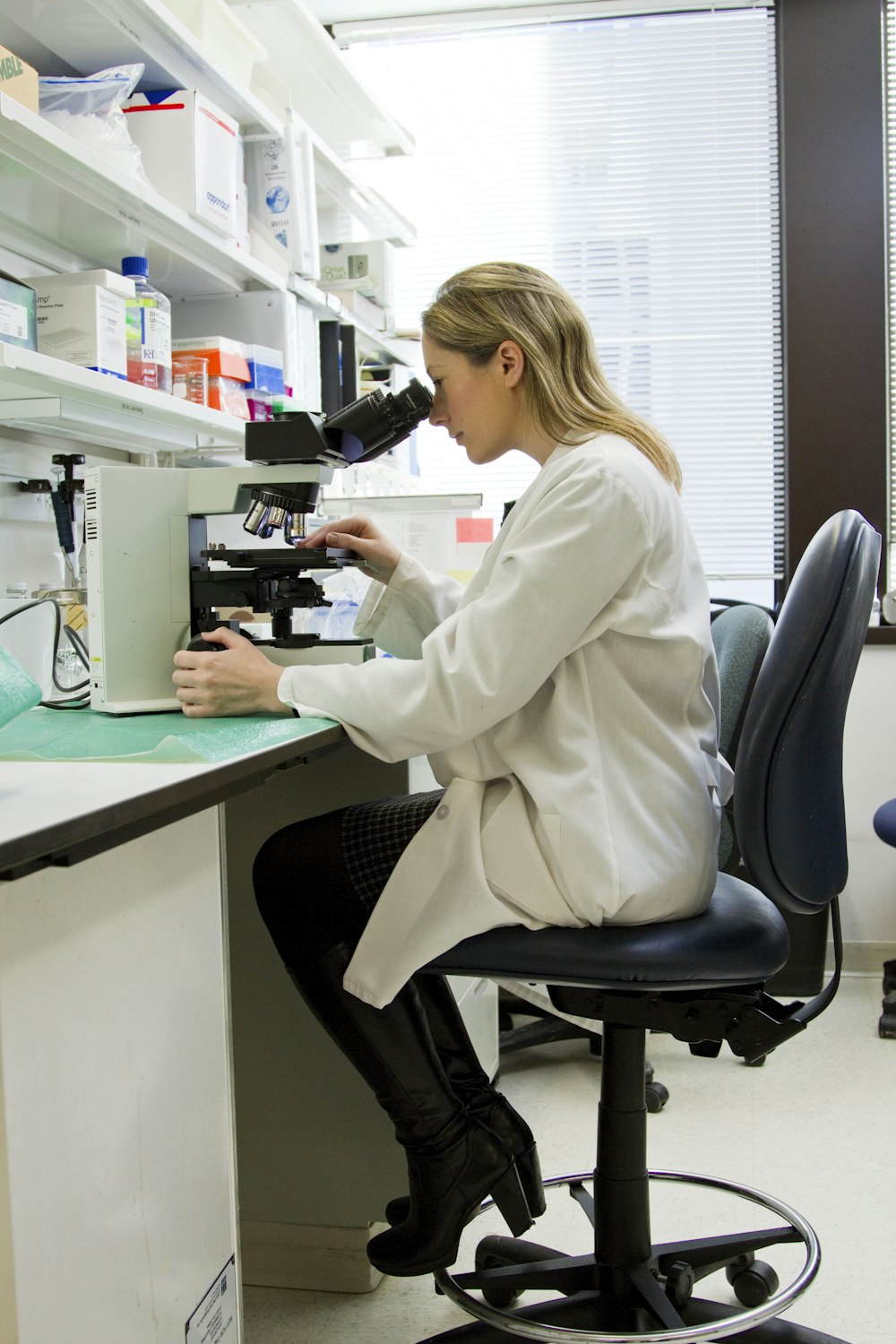
Advanced laboratory equipment enables precise visualization of cellular structures
Interpretation and Significance: Why These Findings Matter
The ability to visualize the endothelial actin cytoskeleton in living retinal tissue has transformed our understanding of vascular biology, with implications ranging from basic science to clinical applications.
Retinal Model System
The retinal vasculature has emerged as an ideal model system for studying general principles of vascular biology. Its laminar organization into distinct plexuses provides a structured yet complex system for investigation 6 .
| Vascular Layer | Position in Retina | Vascular Density (mm/mm²) | Key Features |
|---|---|---|---|
| Superficial plexus | Nerve fiber & ganglion cell layers | 16.14 ± 3.61 | Highest level, receives initial blood flow |
| Intermediate plexus | Inner plexiform layer | 22.14 ± 6.86 | Middle layer, increased density |
| Deep plexus | Outer plexiform layer | 31.01 ± 6.24 | Highest density, serves energy-intensive photoreceptors |
Disruption of the actin balance leads to vascular dysfunction in diseases like diabetic retinopathy, where persistent hyperpermeability causes retinal edema and vision loss.
Recent research has detailed how these layers are interconnected by specific types of bridging vessels with distinct anatomical patterns, creating a sophisticated three-dimensional transport network 6 . Understanding these complex vascular architectures is essential for developing targeted therapies for retinal diseases.
Future Directions and Clinical Implications
As visualization techniques continue to advance, researchers are poised to answer even more fundamental questions about vascular biology. The combination of improved imaging technologies, novel genetic tools, and computational analysis methods is opening new frontiers in understanding how cytoskeletal dynamics support vascular function.
Vascular Coordination
One exciting direction involves studying how different vascular beds—such as the retinal, hyaloid, and iris vasculatures—coordinate their development and remodeling through coordinated cytoskeletal changes .
Neural-Vascular Interactions
Researchers are exploring how neural-vascular interactions guide the precise patterning of retinal blood vessels, with recent evidence highlighting roles for neurotransmitters 3 .
Therapeutic Perspectives
From a therapeutic perspective, understanding cytoskeletal regulation offers promising avenues for treating vascular diseases. Strategies that stabilize the cortical actin rim or prevent excessive stress fiber formation could potentially limit vascular leakage in diabetic retinopathy 1 .
The discovery that proteins like endomucin can regulate the cytoskeleton independently of VEGF signaling is particularly exciting, as it might enable new approaches to control pathological angiogenesis without completely disrupting beneficial VEGF functions 8 .
Conclusion: A Clearer Vision of Vascular Health
The ability to visualize the endothelial actin cytoskeleton in the mouse retina represents more than just a technical achievement—it has given us a fundamentally new way of understanding how our blood vessels are built, maintained, and repaired. From the dynamic rearrangements that enable new vessel growth during development to the precise balance between barrier stability and permissible leakage during inflammation, the cytoskeleton stands as a master regulator of vascular function.
As research in this field advances, we move closer to innovative therapies that could target specific aspects of cytoskeletal regulation to treat devastating vascular diseases.
The continuing evolution of imaging technologies and genetic tools promises to reveal even more detailed views of this cellular machinery in action, potentially unlocking new approaches to preserve and restore vision for millions affected by retinal diseases. Through the ongoing efforts of scientists determined to see the unseen, we are gaining an increasingly clear picture of the elegant architectural principles that underlie our circulatory system—one actin filament at a time.