How Trees Straighten Themselves
The Molecular Sensor Behind Gravitropism
The secret to a tree's remarkable ability to grow upward lies in a special protein that senses gravity at the cellular level.
Imagine a young poplar tree, its stem tilted by a fallen branch or strong wind. Within minutes, molecular sensors detect this change and trigger a process that will gradually straighten the stem upward. This remarkable process of gravitropism — how plants perceive and respond to gravity — has fascinated scientists for decades.
At the heart of this molecular detective story are Wall-Associated Kinases (WAKs)2,9, specialized proteins that act as both mechanical sensors and signaling hubs within plant cells. Recent research has uncovered how these particular proteins enable trees to sense their orientation and initiate the complex wood transformation that allows them to maintain vertical growth.
The Gravity Detectives: Understanding Wall-Associated Kinases
Wall-Associated Kinases are unique transmembrane proteins that span two critical cellular compartments: they extend through the plasma membrane with their intracellular kinase domain inside the cell and their extracellular domain bound to the cell wall matrix. This strategic positioning makes them ideal candidates for monitoring and responding to mechanical stresses, including changes in orientation relative to gravity 2,9.
In the poplar genome, scientists have discovered an unprecedented expansion of the WAK family, with 175 members identified — the largest WAK family known in plants to date 1,10. This substantial expansion, primarily through tandem gene duplications, suggests that WAKs play particularly diverse and crucial roles in tree biology compared to herbaceous plants 10.
WAK Protein Architecture
The architectural design of WAKs is precisely tailored for their sensing function:
- GUB domain: Binds to pectins in the cell wall, allowing detection of cell wall alterations 2,9
- EGF domain: Facilitates protein-protein interactions, potentially helping assemble signaling complexes 2,9
- Transmembrane domain: Anchors the protein in the plasma membrane 2,9
- Intracellular kinase domain: Transmits signals inside the cell through phosphorylation 2,9

Plant cells showing complex internal structures where WAK proteins function
The Gravitropic Response: From Sensing to Straightening
When a stem is tilted, the gravitational vector changes, potentially creating tension between the plasma membrane and cell wall at the upper side of cells, while compression occurs at the lower side 1. According to the gravitational pressure model, this mechanical stress could be directly perceived by WAK proteins positioned at the interface between these cellular compartments 1.
This perception triggers a cascade of events leading to the formation of reaction wood — specialized wood that generates contractile forces to gradually pull the stem upright. In deciduous trees like poplar, this produces tension wood on the upper side of tilted stems, characterized by gelatinous fibers with distinctive cell walls rich in cellulose 3.
What makes WAKs particularly intriguing as gravitropism sensors is their potential to operate independently of the traditional starch-statolith hypothesis, which proposes that gravity sensing occurs through the sedimentation of starch-filled organelles called amyloplasts 1. Research in poplar has revealed WAK expression in young xylem and bark cells that lack these sedimenting organelles entirely, suggesting an alternative or complementary gravity-sensing pathway 1.
Key Concepts
Gravitropism
The growth response of plants to gravity
WAK Proteins
Wall-Associated Kinases that sense mechanical stress
Tension Wood
Specialized wood formed on the upper side of tilted stems
Reaction Wood
Wood that generates force to straighten plant organs
A Groundbreaking Experiment: Isolating Gravity's Signal
Earlier studies struggled to distinguish gravitropic responses from phototropic (light-based) responses and mechanical stresses caused by stem bending. A pivotal 2020 study overcame these limitations using an innovative isotropic lighting system that eliminated directional light cues 3,7.
Methodology: Precision in Gravitropic Stimulation
Plant material
Three-month-old poplars (Populus tremula × Populus alba) with straight stems were loosely staked a week before experiments to prevent mechanical stress 3
Isotropic environment
Plants were placed in specially designed spheres providing uniform lighting from all directions, eliminating phototropic interference 3
Gravistimulation
After 24 hours of acclimation in an upright position, test plants were tilted 35° from vertical while control plants remained upright 3
Tissue sampling
Researchers carefully collected xylem from upper and lower sides of stems at 0, 30, 120, and 180 minutes after tilting, with immediate freezing in liquid nitrogen to preserve RNA integrity 3
Transcriptome analysis
Microarray screening identified differentially expressed genes, with 153 candidates selected for high-throughput qPCR validation 3,7
Key Findings: Early Genetic Reprogramming
The results revealed remarkably rapid genetic responses to gravistimulation:
| Time Point | Differentially Expressed Genes | Key Biological Processes |
|---|---|---|
| 30 minutes | 668 identified, 153 validated | Cell wall reorganization, wood cell expansion, programmed cell death |
| 120 minutes | Continued expression changes | Regulation of gibberellin and brassinosteroid pathways |
| 180 minutes | Sustained differential expression | Flavonoid and phosphoinositide pathway activation |
The study identified five distinct co-expression clusters among the responsive genes, indicating coordinated genetic reprogramming across multiple biological pathways 3,7. Particularly noteworthy was the differential expression of a specific WAK gene between the upper and lower sides of gravistimulated stems, positioning WAKs as early responders in the gravitropic signaling cascade 1,3.
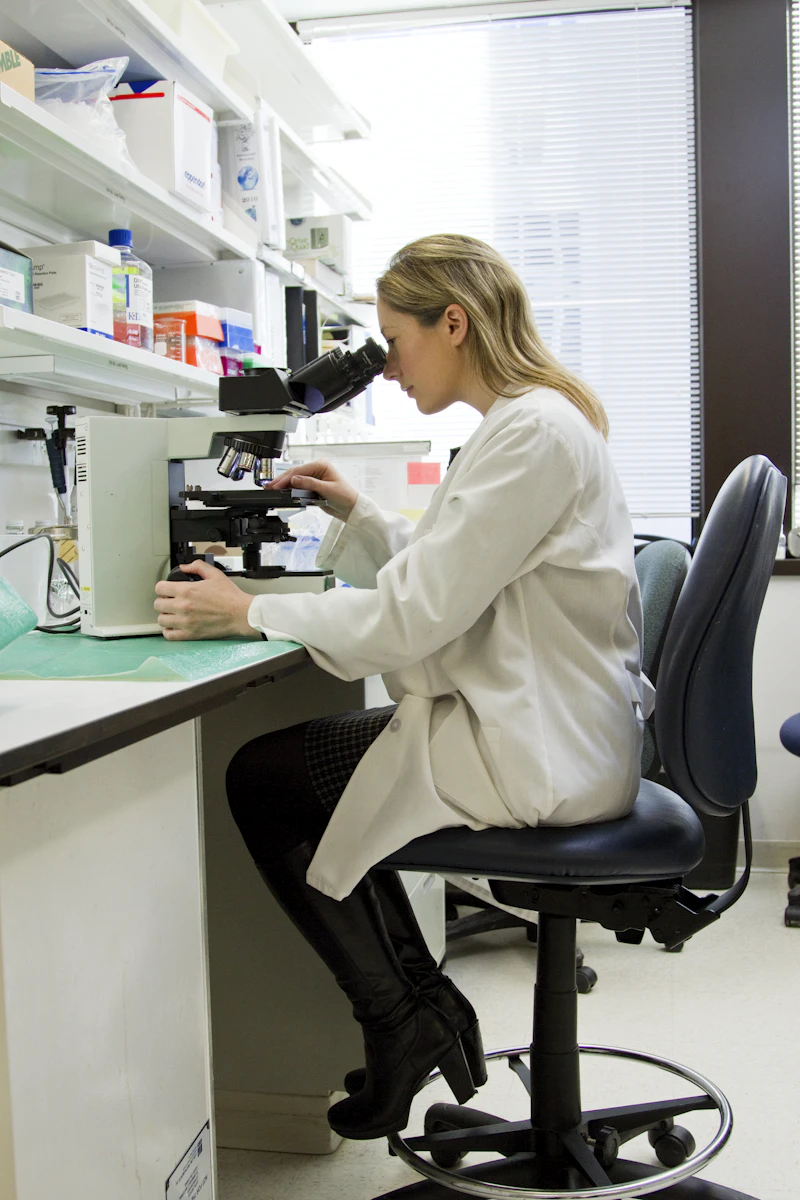
Laboratory setup for plant physiology experiments
The Research Toolkit: Essential Resources for Gravitropism Studies
| Research Tool | Specific Application | Function in Gravitropism Research |
|---|---|---|
| Isotropic lighting spheres | Eliminating phototropic interference | Isolating pure gravitropic response by providing uniform illumination |
| Microarray technology | Transcriptome profiling | Identifying genes differentially expressed after gravistimulation |
| High-throughput qPCR (Fluidigm) | Kinetic expression analysis | Validating and tracking gene expression changes over time |
| Populus tremula × alba (clone 717-1B4) | Model tree system | Consistent genetic background for reproducible experiments |
| Cell wall component analysis | Histochemistry and biochemistry | Characterizing tension wood formation and composition |
Genomic Analysis
Identifying gene families and expression patterns
Microscopy
Visualizing cellular and tissue changes
Bioinformatics
Analyzing complex biological data
Implications and Future Directions: Beyond Basic Biology
Understanding WAKs and their role in gravitropism extends far beyond satisfying scientific curiosity. This knowledge has significant practical applications:
Bioenergy Production
Engineering trees with modified wood properties could optimize biomass for biofuel production 4,8
Carbon Sequestration
Enhancing tree growth and stress resilience could improve carbon capture capabilities 5
Forestry & Agriculture
Developing trees better adapted to environmental stresses 2,6
Biomaterial Innovation
Tailoring wood chemistry for sustainable materials 4,8
Recent research has revealed that the same laccase enzymes involved in lignification also show natural variation across populations adapted to different latitudes, connecting wood chemistry to environmental adaptation 4. Meanwhile, single-cell genomics approaches are uncovering previously unknown cell types in poplar stems, including vessel-associated cells (VACs), that may play roles in wood formation and gravitropic responses 5.
The unexpected discovery of rare C-lignin in poplar trees — previously thought to exist only in certain seed coats — further highlights how much remains to be discovered about wood formation and its regulation 4.
Researcher Insight
"The surprising findings along the way point to a more complex regulation than we initially thought and give us new clues about how trees adapt and protect themselves" 4.
Conclusion: The Upright Mystery
The discovery of WAKs as potential gravitropic sensors in poplar represents a significant advance in understanding how trees maintain their upright growth. These remarkable proteins exemplify nature's elegant solutions to fundamental biological challenges — in this case, how stationary organisms sense and respond to their orientation.
As research continues, each finding reveals additional layers of complexity in what initially appears to be a simple process. The humble poplar tree, with its 175 WAK genes and sophisticated response systems, continues to teach us valuable lessons about biological adaptation — lessons that may one day help us develop more sustainable resources for our growing planet.

A forest of trees demonstrating their remarkable ability to grow upright