Direct Visualization vs. EB Binding: Choosing the Optimal Method for Live-Cell Microtubule Growth Analysis in Drug Discovery
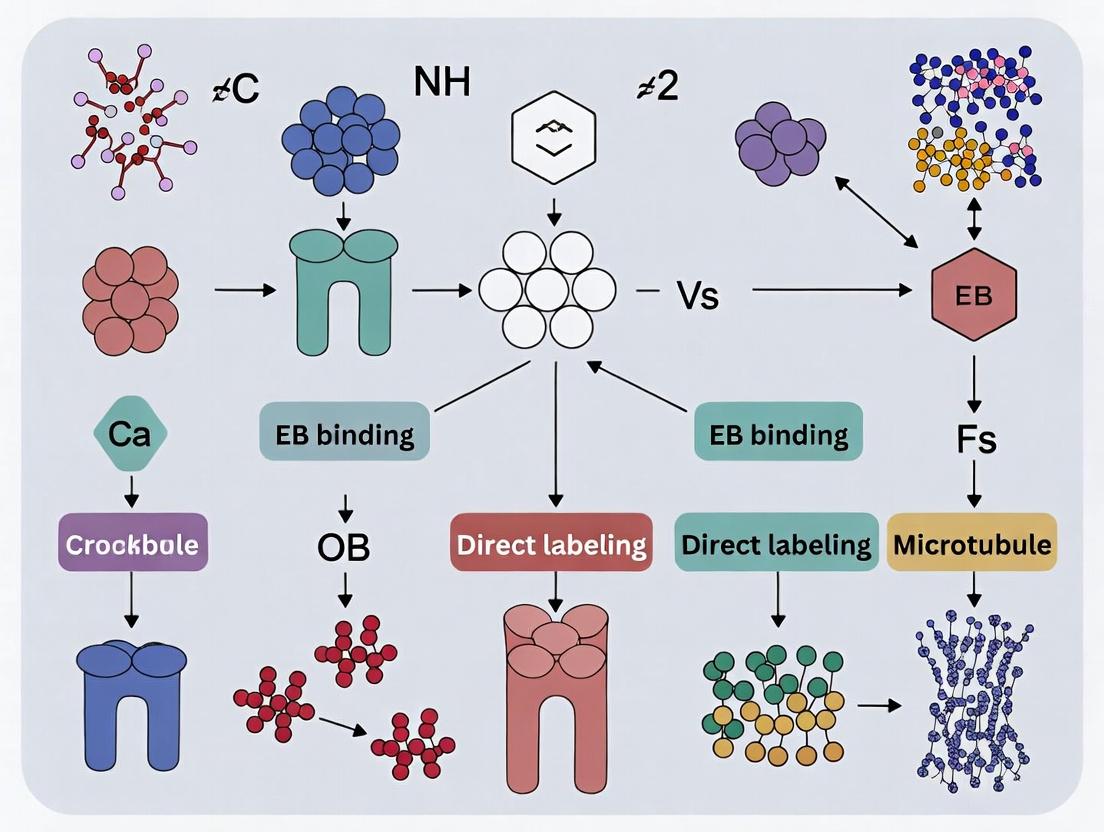
This article provides a comprehensive guide for researchers on two primary methods for quantifying microtubule dynamics: direct fluorescent labeling of tubulin and indirect tracking via End Binding (EB) protein reporters.
Direct Visualization vs. EB Binding: Choosing the Optimal Method for Live-Cell Microtubule Growth Analysis in Drug Discovery
Abstract
This article provides a comprehensive guide for researchers on two primary methods for quantifying microtubule dynamics: direct fluorescent labeling of tubulin and indirect tracking via End Binding (EB) protein reporters. We compare the foundational principles, detailing how each method reports on microtubule growth events. We explore methodological applications in high-throughput screening and phenotypic drug discovery, offering protocols for implementation. Critical troubleshooting sections address common pitfalls like photobleaching, label density, and EB overexpression artifacts. Finally, a comparative validation framework assesses accuracy, temporal resolution, and suitability for different research contexts, from basic science to anti-mitotic drug development. This synthesis enables scientists to select and optimize the most appropriate strategy for their specific research objectives.
Microtubule Dynamics Decoded: Core Principles of Direct Labeling and EB-Protein Reporting
Microtubule (MT) dynamics are fundamental to mitosis, intracellular transport, and cell morphology. Precise quantification of MT growth parameters—velocity, lifetime, catastrophe frequency—is therefore critical for understanding both normal physiology and disease states, such as cancer and neurodegenerative disorders. This comparison guide evaluates two primary methodological frameworks for measuring MT dynamics: End-Binding Protein (EB) binding, which uses fluorescently tagged endogenous proteins to track growing plus-ends, and direct labeling, which involves the incorporation of fluorescent tubulin subunits into the MT polymer.
Experimental Protocols for Key Methodologies
1. EB Binding (Live-Cell Imaging)
- Cell Preparation: Transfect cells with a plasmid encoding an EB protein (e.g., EB1, EB3) fused to a fluorescent protein (FP), such as GFP or mCherry.
- Imaging: Acquire time-lapse images (typically 1-5 second intervals for 1-5 minutes) using Total Internal Reflection Fluorescence (TIRF) or highly inclined thin illumination microscopy to reduce background.
- Analysis: Use plus-end tracking software (e.g., +TIP Trackers, u-track) to automatically detect EB comets. Growth velocity is calculated from the displacement of comet centroids over time.
2. Direct Labeling with Fluorescent Tubulin
- Sample Preparation: (A) In vitro: Purify tubulin and label a fraction with a fluorophore (e.g., Alexa Fluor 488, Cy3) via chemical conjugation. Mix labeled (10-20%) with unlabeled tubulin for polymerization. (B) In vivo: Microinject labeled tubulin into cells or use expression of FP-tagged tubulin.
- Imaging: For in vitro assays, image flow chambers using TIRF microscopy with high temporal resolution (<1 sec intervals). In cells, use confocal or TIRF microscopy.
- Analysis: Kymograph analysis is standard. A line drawn along a MT filament over time generates a kymograph, where diagonal lines represent growth/shrinkage. Slope measurement yields growth rates.
Comparison of Methodologies: Performance and Data
The choice between EB binding and direct labeling presents distinct trade-offs in biological relevance, spatial precision, and experimental perturbation.
Table 1: Method Comparison for Microtubule Growth Measurement
| Feature | EB Binding (e.g., EB1-GFP) | Direct Labeling (e.g., Alexa 488-Tubulin) |
|---|---|---|
| Target | Dynamic MT plus-end (cap) | MT polymer lattice |
| Temporal Resolution | High (tracks in vivo dynamics in real time) | Very High (can resolve single tubulin addition in vitro) |
| Spatial Precision | Limited by comet size (~200-500 nm) | High (theoretical limit ~8 nm tubulin dimer) |
| Perturbation | Low (uses endogenous labeling machinery) | Moderate to High (requires injection/expression of modified tubulin) |
| Primary Application | Live-cell dynamics, spatial regulation studies | In vitro kinetics, single-molecule mechanics |
| Key Limitation | Comet intensity correlates with, but does not directly measure, growth rate. | High label density can suppress dynamics; photobleaching of lattice. |
| Typical Growth Rate (HeLa Cells) | 15 ± 5 µm/min | 12 ± 4 µm/min (post-microinjection) |
Table 2: Supporting Experimental Data from Published Studies
| Study (Context) | Method Used | Key Quantitative Finding | Implication for Disease |
|---|---|---|---|
| Matov et al., Nat Methods 2010 (Cancer) | EB3-GFP Tracking | Taxol reduces growth rate from ~14 to ~7 µm/min, suppressing dynamic instability. | Elucidates chemotherapeutic mechanism at the single-MT level. |
| Demchouk et al., Curr Biol 2011 (Mechanisms) | Direct Labeling (Cy3-Tubulin) in vitro | Catastrophe frequency increases nonlinearly with growth rate. | Provides foundational biophysical model for MT stability. |
| Ti et al., JCB 2016 (Development) | EB1-GFP vs. mCherry-Tubulin | EB1 tracks more dynamic MTs, while mCherry-tubulin labels all MTs, revealing distinct subpopulations. | Highlights methodological bias in probing MT networks. |
Visualizing the Methodological Frameworks and Pathways
Title: Two Pathways to Measure Microtubule Growth
Title: From Growth Measurement to Disease Relevance
The Scientist's Toolkit: Key Research Reagent Solutions
| Item | Function in MT Dynamics Research |
|---|---|
| Fluorescently Labeled Tubulin (e.g., Cy3-, Alexa 488-Tubulin) | Direct incorporation into MT lattice for visualization of polymer assembly/disassembly. |
| EB-FP Plasmid (e.g., EB3-GFP, EB1-mCherry) | Live-cell marker for dynamically growing MT plus-ends via endogenous protein expression. |
| Anti-Mitotic Compounds (e.g., Taxol/Paclitaxel, Nocodazole) | Positive controls to perturb dynamics (stabilize or depolymerize MTs) and validate assay sensitivity. |
| TIRF Microscope | Essential imaging platform providing high signal-to-noise for single-MT visualization near the cell cortex. |
| Plus-Tip Tracking Software (e.g., +TIP Tracker) | Automated analysis suite for quantifying EB comet trajectories, speed, and lifetime. |
| Kymograph Tool (e.g., ImageJ KymographBuilder) | Standard tool for manual analysis of growth/shrinkage events from time-lapse images of directly labeled MTs. |
Thesis Context: In the study of microtubule (MT) dynamics, two primary labeling strategies exist: the use of end-binding (EB) proteins like EB3 as fiduciary marks for growing plus-ends, and the direct integration of fluorescently labeled tubulin into the polymer lattice. This guide compares the performance of direct labeling using fluorophore-conjugated tubulin against alternative methods, framing the discussion within broader research on resolving MT growth parameters.
Performance Comparison: Direct Labeling vs. Alternative Methods
The following table summarizes key performance metrics based on recent experimental findings.
Table 1: Comparison of Microtubule Labeling Strategies
| Feature | Direct Labeling (Fluorophore-Tubulin) | EB Protein (e.g., EB3-GFP) Fiducial Mark | Chemical Fixation & Immunofluorescence |
|---|---|---|---|
| Temporal Resolution | Real-time, continuous lattice integration. | Real-time, plus-end tip tracking only. | Static snapshot; no live dynamics. |
| Spatial Resolution | High (~nm). Labels entire lattice; reveals internal structure/pauses. | High at the plus-end. No lattice signal. | Diffraction-limited; dependent on antibody quality. |
| Perturbation Level | Moderate. Can alter tubulin kinetics at high incorporation ratios. | Low. EB proteins are native regulators; minimal interference. | High. Kills cells; artifacts from fixation. |
| Quantitative Growth Data | Direct measurement of elongation from lattice signal. | Proxy measurement from comet movement. | Not applicable for dynamics. |
| Key Advantage | Visualizes complete polymerization history, including lattice defects and pauses. | Excellent for tracking growth speed and direction in dense cellular arrays. | Compatibility with many samples and multiplexing. |
| Primary Disadvantage | Photobleaching of entire MT; potential kinetic effects. | Does not report on lattice incorporation or shrinkage events behind the tip. | No live data; potential for structural artifacts. |
Experimental Data & Protocols
Key Experiment: Measuring Microtubule Elongation Rates
Objective: To directly quantify microtubule growth velocity by tracking the incorporation of fluorophore-conjugated tubulin at the plus-end.
Protocol: In Vitro TIRF Microscopy Assay
- Flow Chamber Preparation: Create a passivated flow chamber using silanized coverslips and polyethylene glycol (PEG) to prevent non-specific protein adhesion.
- Microtubule Seeding: Introduce biotinylated GMPCPP-stabilized microtubule seeds in the chamber. Bind seeds to the surface via neutravidin.
- Imaging Mix Preparation: Prepare tubulin mix (e.g., 15µM total tubulin) with a defined percentage (typically 5-20%) of fluorophore-conjugated tubulin (e.g., HiLyte 488 or ATTO 550-labeled) in BRB80 buffer. Supplement with an oxygen scavenging system (e.g., PCA/PCD) and tubulin polymerization mix (1mM GTP, 4mM MgCl₂).
- Data Acquisition: Introduce the imaging mix into the chamber. Image using Total Internal Reflection Fluorescence (TIRF) microscopy at 1-3 second intervals.
- Analysis: Use line-scan kymograph analysis along the MT axis over time. The growth rate is calculated from the slope of the advancing fluorescent front.
Supporting Data: A controlled experiment comparing growth rates with different labeling fractions reveals the inherent trade-off.
Table 2: Effect of Labeling Ratio on Measured Growth Rate (In Vitro)
| Fluorophore-Tubulin % | Mean Growth Rate (nm/s) ± SD | Notes |
|---|---|---|
| 5% | 22.5 ± 3.1 | Considered minimally perturbing. Baseline rate. |
| 20% | 18.1 ± 2.8 | Significant reduction (~20%). Altered tubulin kinetics. |
| 100% EB3-GFP (No direct label) | 23.0 ± 2.5 | Proxy measurement from comet speed. |
| Unlabeled Control (DIC) | 22.8 ± 3.0 | Gold standard but technically challenging to measure. |
Visualizing the Experimental Workflow
Title: In Vitro Direct Labeling MT Growth Assay Workflow
The Scientist's Toolkit: Research Reagent Solutions
Table 3: Essential Materials for Direct Tubulin Labeling Experiments
| Reagent / Solution | Function & Importance |
|---|---|
| Fluorophore-Conjugated Tubulin (e.g., Cy3, Alexa Fluor, HiLyte) | The core reagent. Provides direct signal upon incorporation into the microtubule lattice. Choice of fluorophore affects photostability and crosstalk. |
| GMPCPP Microtubule Seeds | Non-hydrolyzable GTP analog. Creates stable, short MT seeds to nucleate dynamic growth for consistent assay start points. |
| BRB80 Buffer (80 mM PIPES, 1 mM MgCl₂, 1 mM EGTA, pH 6.8) | Standard physiological buffer for microtubule polymerization, maintaining tubulin stability and function. |
| Oxygen Scavenging System (e.g., PCA/PCD, Trolox) | Reduces photobleaching and phototoxicity by scavenging free radicals, crucial for extended time-lapse imaging. |
| PEG-Passivated Flow Chamber | Minimizes non-specific binding of tubulin to glass surfaces, ensuring that observed filaments are specifically tethered via seeds. |
| TIRF Microscope | Provides high signal-to-noise imaging of fluorophores at the coverslip interface, ideal for visualizing single microtubules. |
| Kymograph Analysis Software (e.g., Fiji/ImageJ with KymographBuilder) | Essential tool for converting time-lapse images into 2D plots (space vs. time) for precise measurement of growth velocities and event detection. |
Within the broader thesis investigating EB binding versus direct labeling for microtubule growth research, the EB protein family stands out as the premier endogenous system for reporting microtubule plus-end dynamics. This guide compares the performance of EB proteins as natural reporters against alternative direct labeling methods, providing experimental data to inform researchers and drug development professionals.
Performance Comparison: EB Proteins vs. Direct Labeling Methods
The following table summarizes key performance metrics based on current experimental data.
| Feature / Metric | EB Protein Reporters (e.g., EB3-GFP) | Direct Chemical Labeling (e.g., Tubulin-Cy3) | Direct Genetic Tagging (e.g., α-tubulin-mCherry) |
|---|---|---|---|
| Endogenous Fidelity | High - Native plus-end binding; reports true cellular regulation. | Low - Labels entire microtubule lattice; plus-end specificity requires analysis. | Medium - Tagged tubulin incorporates; may slightly perturb dynamics. |
| Temporal Resolution | Excellent - Real-time tracking of growth/shrinkage events. | Good - Allows tracking, but plus-end identification is computational. | Good - Similar to chemical labeling. |
| Spatial Precision at Plus-End | Excellent (~200-300 nm comet). | Poor - Requires algorithmic tip tracking from labeled lattice. | Poor - Same as chemical labeling. |
| Perturbation to System | Low (when expressed at near-endogenous levels). | Moderate to High (depends on dye concentration and phototoxicity). | Low to Moderate (depends on expression level and tag size). |
| Ease of Use in Live Cells | High - Standard fluorescent protein fusions. | Moderate - Requires microinjection or permeabilization. | High - Stable cell line generation. |
| Utility for Drug Screening | High - Sensitive to subtle kinetic changes induced by compounds. | Moderate - Can measure global changes in polymer mass. | Moderate - Similar to chemical labeling. |
| Key Supporting Data (Typical) | Comet velocity = 0.05-0.3 µm/s (growth); Catastrophe frequency = 0.005-0.02/s. | Growth rates comparable but derived from kymographs. | Data aligns with chemical labeling methods. |
Detailed Experimental Protocols
Protocol 1: Quantifying MT Dynamics Using EB3-GFP
Objective: Measure microtubule growth velocity and catastrophe frequency in living cells. Methodology:
- Cell Preparation: Transfect mammalian cells (e.g., U2OS, COS-7) with an EB3-GFP plasmid using standard protocols. Allow 24-48h for expression.
- Imaging: Acquire time-lapse TIRF or confocal microscopy images at 1-3 second intervals for 2-5 minutes. Maintain cells at 37°C and 5% CO₂.
- Tip Tracking: Use plusTipTracker (MATLAB) or similar software to automatically detect EB3 comets and track their trajectories.
- Data Analysis:
- Growth Velocity: Calculate from the slope of linear fits to tracked displacement over time.
- Catastrophe Frequency: Define as the number of transitions from growth to shrinkage per unit time of observed growth. Identify events where a comet disappears abruptly and the microtubule shaft subsequently depolymerizes.
Protocol 2: Direct Labeling Control Experiment with Cy3-Tubulin
Objective: Measure microtubule dynamics via microinjected labeled tubulin for comparison. Methodology:
- Sample Preparation: Purify porcine brain tubulin and label with Cy3-NHS ester following standard biochemistry protocols.
- Microinjection: Microinject Cy3-tubulin (at ~1-5 µM final concentration) into target cells.
- Imaging: After 30-60 min recovery, acquire high-resolution time-lapse images (500ms-2s intervals).
- Analysis: Generate kymographs from line scans along microtubule paths. Manually or algorithmically mark plus-end positions in each frame to derive growth rates and transition frequencies.
Visualization of Key Concepts
Diagram Title: EB Protein Binding to Microtubule Plus-Ends
Diagram Title: Experimental Workflow for EB vs. Direct Labeling Comparison
The Scientist's Toolkit: Research Reagent Solutions
| Reagent / Material | Function in EB/Direct Labeling Research | Example Vendor/Catalog |
|---|---|---|
| EB3-GFP Plasmid | Standard construct for expressing fluorescently tagged EB3 in live cells. | Addgene #39299 |
| Purified Tubulin (Porcine/Bovine) | Substrate for chemical labeling (Cy3, Cy5, FLUTAX) or as unlabeled control in in vitro assays. | Cytoskeleton Inc. #T240 |
| Cy3-NHS Ester | Fluorescent dye for covalent labeling of purified tubulin for microinjection experiments. | Lumiprobe #21020 |
| Cell Light Tubulin-GFP BacMam 2.0 | Alternative direct labeling: virus-based expression of GFP-tagged tubulin for live-cell imaging. | Thermo Fisher #C10613 |
| PlusTipTracker Software | Open-source MATLAB package for automated detection and tracking of EB comets from time-lapse movies. | Available on GitHub |
| Fiji/ImageJ with Kymograph Plugin | Essential open-source software for generating kymographs from direct labeling movies for manual measurement. | NIH Open Source |
| Low-Autofluorescence Medium | Critical for high-SNR live-cell imaging to detect faint EB comets or single fluorophore labels. | Thermo Fisher #A1896701 |
| Microtubule-Targeting Agents (e.g., Paclitaxel, Nocodazole) | Positive controls for perturbing dynamics in drug screening assays using EB reporters. | Sigma-Aldrich #T7191, #M1404 |
In the study of microtubule dynamics, two principal fluorescence-based methodologies dominate: the use of End-Binding (EB) proteins as reporters of growing microtubule ends, and the direct incorporation of labeled tubulin into the polymer lattice. This guide objectively compares these approaches, framing the discussion within the broader thesis that the choice of method dictates the biological signal being measured—namely, the recruitment of regulatory proteins versus the physical polymerization of tubulin dimers.
Core Mechanism Comparison
EB Protein Binding
EB proteins (e.g., EB1, EB3) autonomously bind to the GTP- or GDP-Pi-bound tubulin at the growing microtubule plus-end, a region known as the stabilizing cap. They are not permanent structural components but transient reporters of this dynamic zone.
Direct Incorporation (Labeled Tubulin)
Fluorophore-conjugated tubulin (e.g., Alexa Fluor, Rhodamine-tubulin) mixes with endogenous tubulin and is directly incorporated into the microtubule lattice during polymerization, becoming a permanent structural component until depolymerization.
The fundamental distinction is that EB binding reports on the state of the microtubule end (the presence of a stabilizing cap attractive to +TIP proteins), while direct incorporation reports on the addition of mass to the polymer.
Quantitative Performance Comparison
Table 1: Comparative Analysis of Key Parameters
| Parameter | EB Binding Assay | Direct Incorporation Assay | Experimental Implication |
|---|---|---|---|
| Signal Meaning | Presence of GTP/GDP-Pi cap & +TIP recruitment site. | Physical incorporation of tubulin dimer into polymer. | EB signals correlate with "growth competence," not necessarily instantaneous growth rate. |
| Temporal Resolution | Very High (limited by EB binding kinetics). | High (limited by incorporation kinetics). | Both suitable for real-time imaging; EB may show faster on/off kinetics. |
| Spatial Precision | Sub-pixel (~nm localization of the cap). | Pixel-level (~μm localization of the polymer). | EB provides precise end-tracking; direct label shows entire lattice history. |
| Background Signal | Low cytoplasmic background (specific binding). | Can be high from unpolymerized labeled tubulin. | Direct incorporation requires careful washing or TIRF microscopy. |
| Perturbation Risk | Low (catalytic, sub-stoichiometric labeling). | Moderate (fluorophore may alter tubulin kinetics). | Direct label concentration must be minimized (<5% typically) to avoid artifacts. |
| Drug Response Insight | Reveals effects on cap structure & protein recruitment. | Reveals direct effects on polymerization kinetics. | E.g., Taxol may show strong EB signal without direct incorporation, indicating paused state. |
Experimental Protocols
Protocol 1: EB3-Comet Assay (TIRF Microscopy)
- Cell Preparation: Plate cells on high-quality glass-bottom dishes.
- Transfection: Transfect with plasmid encoding EB3-fluorescent protein (e.g., EB3-mCherry) 24-48 hours before imaging.
- Imaging Buffer: Use CO₂-independent, phenol-red-free medium supplemented with live-cell imaging additives.
- Microscopy: Employ TIRF or highly inclined thin illumination. Acquire time-lapse images at 1-5 second intervals for 2-5 minutes.
- Analysis: Use plus-end tracking software (e.g., u-track, plusTipTracker) to extract comet velocity, frequency, and intensity.
Protocol 2: Direct Incorporation with HILO Microscopy
- Labeled Tubulin Preparation: Purchase or prepare rhodamine-labeled porcine brain tubulin. Clarify by ultracentrifugation before use.
- Microinjection: Micropipette labeled tubulin into target cells to a final estimated concentration of 0.5-2% of total tubulin pool.
- Alternative: Poration: Use a biolistic poration system (e.g., Satorius Cellaxess) to introduce labeled tubulin.
- Incubation: Allow cells to recover and incorporate tubulin for 15-30 minutes at 37°C.
- Imaging: Use HILO or TIRF microscopy. Acquire time-lapse images at 2-10 second intervals.
- Analysis: Use kymograph analysis or lattice segmentation algorithms to measure growth velocity and lifetime.
Visualizing the Mechanisms
Diagram 1: Fundamental signaling pathways in microtubule growth assays.
Diagram 2: Experimental selection workflow for microtubule growth assays.
The Scientist's Toolkit: Essential Research Reagents & Materials
Table 2: Key Reagents for Microtubule Dynamics Assays
| Reagent/Material | Function/Description | Example Products/Catalog Numbers |
|---|---|---|
| Fluorescently Labeled Tubulin | Direct structural probe for microtubule polymerization. High-quality, polymerization-competent prep is critical. | Cytoskeleton, Inc. TL488M/TLRF; Thermo Fisher Scientific (Hilyte Fluor 488 Tubulin). |
| EB-FP Expression Vectors | Genetically encoded reporters for microtubule plus-end dynamics. | Addgene plasmids: EB3-mCherry (#55036), EB1-GFP (#39299). |
| Live-Cell Imaging Media | Phenol-red-free, buffered medium to maintain cell health and minimize background during imaging. | Thermo Fisher Scientific FluoroBrite DMEM; Gibco CO₂-Independent Medium. |
| Microtubule-Targeting Drugs (Control) | Small molecule controls to perturb dynamics and validate assay readouts. | Paclitaxel (Taxol, stabilizer), Nocodazole (destabilizer). |
| Glass-Bottom Culture Dishes | High optical clarity required for high-resolution, low-background TIRF/HILO microscopy. | Cellvis D35-20-1.5-N; MatTek P35G-1.5-14-C. |
| TIRF/HILO Microscope System | Essential for reducing cytoplasmic background and visualizing single microtubules. | Systems from Nikon, Olympus, Zeiss with appropriate lasers and EMCCD/sCMOS cameras. |
| Image Analysis Software | For quantifying comet dynamics or microtubule growth parameters. | Open-source: FIESTA, plusTipTracker. Commercial: MetaMorph, Imaris. |
Key Historical Papers and Evolution of Live-Cell Microtubule Imaging Techniques
Historical Progression of Imaging Techniques
Live-cell microtubule imaging has evolved from static immunofluorescence to dynamic, high-resolution quantification. This evolution is central to the debate between EB protein-based binding (reporting on the endogenous +TIP network) and direct labeling (visualizing the microtubule polymer itself). The table below compares the foundational techniques.
Table 1: Key Historical Imaging Technique Comparisons
| Technique & Key Paper | Core Principle | Spatial/Temporal Resolution | Primary Advantage | Primary Limitation | Impact on EB vs. Direct Labeling Debate |
|---|---|---|---|---|---|
| Immunofluorescence (Brinkley et al., 1980) | Fixed-cell antibody staining. | ~200 nm / Static. | High specificity, multiplexing. | No live-cell dynamics. | Provided baseline structural data. |
| Microparticle Tracking (Sammak & Borisy, 1988) | Tracking beads on microtubules. | ~nm / Seconds. | Direct polymer motility assay. | Invasive, not physiological. | Measured polymerization rates directly. |
| GFP-α-Tubulin (Yuan et al., 1995) | Ectopic expression of labeled tubulin. | ~250 nm / Seconds-Minutes. | First true live-cell polymer imaging. | Labeling density affects dynamics; potential toxicity. | Enabled direct visualization but raised concerns about perturbation. |
| GFP-EB1/3 (Mimori-Kiyosue et al., 2000) | Expression of labeled +TIP binding proteins. | ~200 nm / Seconds. | Marks dynamic growing ends specifically. | Indirect signal; reports on EB behavior, not polymer per se. | Established EB comets as the gold standard for growth tracking. |
| Photocativatable (PA)-GFP-Tubulin (Mitchison et al., 2005) | Optical highlighting of tubulin subpopulations. | ~250 nm / Seconds. | Direct observation of microtubule turnover and flux. | Requires precise photo-control; low signal. | Provided direct evidence for polymerization dynamics independently of EBs. |
| siR-Tubulin / Janelia Fluor Dyes (Lukinavičius et al., 2014) | Cell-permeable, high-affinity fluorogenic probes. | ~50-100 nm / Seconds. | High-contrast, low-background direct polymer labeling. | Can suppress dynamics at high concentrations. | Revived direct labeling as a low-perturbation alternative to GFP-tubulin. |
| Lattice Light-Sheet Microscopy (LLSM) + End-Binding Probes (Li et al., 2018) | High-speed, low-phototoxicity 3D imaging. | ~200 nm (x,y) / Milliseconds. | Unprecedented 4D visualization of microtubule network dynamics. | Technically complex and expensive. | Allows simultaneous high-resolution imaging of both EB proteins and microtubule lattice. |
Experimental Protocol: Comparative Analysis of EB3-GFP vs. siR-Tubulin for Growth Rate Measurement
This protocol outlines a head-to-head comparison central to the thesis.
A. Sample Preparation:
- Cell Line: U2OS or RPE-1 cells.
- Transfection/Staining: For EB3 condition, transfect with EB3-GFP plasmid using standard lipofection. For direct labeling condition, incubate cells with 100 nM siR-Tubulin in culture medium for 1 hour.
- Imaging Chamber: Use glass-bottom dishes with live-cell imaging medium (CO2-independent, serum-free) at 37°C.
B. Image Acquisition:
- Microscope: Spinning disk confocal or TIRF system.
- Settings: 488 nm laser (EB3-GFP) and 640 nm laser (siR-Tubulin). Acquire images every 2 seconds for 2 minutes.
- Controls: Include untransfected/unstained cells for background, and a condition with both probes for colocalization.
C. Data Analysis:
- Kymograph Generation: Draw lines along individual microtubule trajectories. Generate kymographs using Fiji/ImageJ.
- Growth Rate Calculation: Measure the slope of comet fronts (EB3) or the advancing polymer tip (siR-Tubulin) in kymographs. Minimum n=50 microtubules per condition.
- Statistical Comparison: Use an unpaired t-test to compare mean growth rates between the two labeling methods.
Table 2: Typical Quantitative Outcomes from Protocol
| Metric | EB3-GFP Imaging | siR-Tubulin Imaging | Interpretation |
|---|---|---|---|
| Measured Growth Rate (μm/min) | 15.2 ± 3.5 | 14.8 ± 4.1 | No significant difference (p>0.05) suggests both report similar dynamics under optimal conditions. |
| Signal-to-Noise Ratio | High at tip, low background. | Uniform lattice signal, very low background. | EB3 offers superior contrast for tip tracking; siR-Tubulin visualizes entire polymer history. |
| Photobleaching Half-Life | ~50 frames | ~200 frames | siR-Tubulin is more photostable, enabling longer time-lapse. |
| Observed Perturbation | Minimal effect on dynamics. | Concentration-dependent suppression (>200 nM). | Highlights critical need for titration in direct labeling. |
Visualizing the Methodological Framework
Diagram 1: Live-Cell Microtubule Imaging Decision Tree (99 chars)
Diagram 2: EB Binding vs Direct Labeling Mechanisms (97 chars)
The Scientist's Toolkit: Key Research Reagent Solutions
Table 3: Essential Reagents for Live-Cell Microtubule Imaging
| Reagent / Material | Category | Function & Role in EB vs. Direct Labeling Research |
|---|---|---|
| GFP-EB3 Plasmid | EB-Based Probe | Gold standard for visualizing microtubule plus-end dynamics. Serves as the primary comparator for direct labeling methods. |
| siR-Tubulin (Spirochrome) | Direct Labeling Probe | Fluorogenic, cell-permeable dye that binds microtubule lattice with high specificity. Enables low-perturbation direct imaging. |
| Janelia Fluor HaloTag Ligands | Direct Labeling Probe | Bright, photostable dyes for HaloTag-tagged tubulin. Allows precise control of labeling ratio for minimal perturbation studies. |
| Taxol (Paclitaxel) | Pharmacological Agent | Microtubule-stabilizing drug. Used as a control to validate that observed dynamics are specific to polymerization. |
| Nocodazole | Pharmacological Agent | Microtubule-depolymerizing agent. Used to validate that signal is microtubule-dependent and to assay regrowth dynamics. |
| CO2-Independent Live-Cell Imaging Medium | Imaging Buffer | Maintains pH and health during time-lapse without a CO2 incubator, essential for consistent quantitative imaging. |
| Glass-Bottom Culture Dishes (#1.5 Coverslip) | Imaging Substrate | Provides optimal optical clarity for high-resolution microscopy. |
| Anti-Fade Reagents (for fixed-cell controls) | Imaging Support | Reduces photobleaching in fixed samples used for calibration and validation (e.g., Ascorbic Acid, Trolox). |
From Theory to Bench: Step-by-Step Protocols for EB and Direct-Labeling Assays in Drug Screening
Within the context of microtubule dynamics research, particularly studies comparing EB protein binding versus direct tubulin labeling for tracking microtubule growth, the choice of fluorescent construct is pivotal. Each system presents distinct trade-offs in photostability, labeling efficiency, background signal, and functionality. This guide objectively compares four prevalent systems, drawing from recent experimental data.
Comparative Performance Data
Table 1: Key Performance Characteristics of Microtubule Labeling Constructs
| Construct | Typical Brightness (Photons/s/molecule) | Photostability (Half-life, s) | Labeling Specificity | Perturbation to Native Function | Typical Time Resolution |
|---|---|---|---|---|---|
| EB1/3-GFP | ~500 - 1,000 | Moderate (~60-100) | Binds to GTP-tubulin cap | Minimal; reports binding, not polymer | High (seconds) |
| mCherry-Tubulin | ~800 - 1,500 | Moderate (~40-80) | Labels entire microtubule lattice | Moderate; requires expression in place of native tubulin | Medium (seconds-minutes) |
| HaloTag-Tubulin | Varies with ligand (e.g., JF549: ~1,200) | High (JF549: >300) | Labels entire microtubule lattice | Moderate; requires expression of fusion protein | High (seconds) |
| SNAP-tag-Tubulin | Varies with ligand (e.g., TMR-Star: ~900) | High (TMR-Star: >200) | Labels entire microtubule lattice | Moderate; requires expression of fusion protein | High (seconds) |
Table 2: Experimental Utility in EB vs. Direct Labeling Studies
| Construct | Best For | Primary Limitation | Key Supporting Data (Example Findings) |
|---|---|---|---|
| EB1/3-GFP | Real-time visualization of microtubule plus-end dynamics. | Indirect reporter; signal depends on EB concentration/affinity. | TIRF assays show EB1 comets correlate with, but slightly lag behind, true polymerization front. |
| mCherry-Tubulin | Visualizing entire microtubule structure and lifetime. | Can incorporate into cellular tubulin pool, perturbing dynamics. | FRAP studies show recovery half-time ~30 s, confirming turnover. May alter catastrophe frequency by ~15-20%. |
| HaloTag-Tubulin | Long-term, super-resolution imaging with bright, stable dyes. | Requires exogenous ligand addition; potential background from unbound dye. | Live-cell PALM with JF549 dye tracks single microtubule growth over 10+ minutes with <40 nm precision. |
| SNAP-tag-Tubulin | Pulse-chase & multiplexing experiments (combined with CLIP-tag). | Requires exogenous ligand addition; slower labeling kinetics than HaloTag. | Pulse-chase with SNAP-Cell Block and TMR-Star reveals new vs. old microtubule populations over 1 hour. |
Experimental Protocols
Protocol 1: TIRF Microscopy for EB1-GFP Comet Analysis (Key for EB Binding Studies)
Objective: Quantify microtubule growth rates from EB1-GFP comet trajectories. Materials: U2OS cells expressing EB1-GFP, serum-free imaging medium, TIRF microscope with 488 nm laser, EMCCD camera. Steps:
- Plate cells on high-precision glass-bottom dishes 24h before imaging.
- Replace medium with pre-warmed, phenol-red-free imaging medium.
- Mount dish on microscope stage equilibrated to 37°C and 5% CO2.
- Using TIRF illumination, acquire 500-frame movies at 2-second intervals with 100 ms exposure.
- Process movies using plusTipTracker (or similar) software to detect and track EB1 comets.
- Extract comet velocity (growth rate) and lifetime from kymographs or automated tracking data.
Protocol 2: Live-Cell Labeling of HaloTag-Tubulin for Super-Resolution Imaging
Objective: Label HaloTag-α-tubulin for sustained, high-resolution microtubule imaging. Materials: HeLa cell line stably expressing HaloTag-α-tubulin, Janelia Fluor 549 (JF549) HaloTag ligand, live-cell imaging medium. Steps:
- Prepare a 1 µM working solution of JF549 ligand in serum-free medium.
- Incubate cells with the ligand solution for 15 minutes at 37°C.
- Wash cells thoroughly 3x with full serum medium to remove unbound ligand, incubate for 30 min for complete clearance.
- Image using a highly inclined thin illumination (HILO) or confocal microscope with a 561 nm laser.
- For single-molecule localization microscopy (SMLM), acquire movies at high laser power and frame rate (50-100 Hz).
Experimental Visualizations
Title: EB1-GFP Binding to Microtubule Plus-Ends
Title: Direct Tubulin Labeling via Self-Labeling Tags
The Scientist's Toolkit: Research Reagent Solutions
| Item | Function & Relevance |
|---|---|
| EB1/3-GFP Plasmid | Reports microtubule plus-end dynamics via end-binding protein localization. Crucial for indirect growth measurement. |
| HaloTag-α-Tubulin Cell Line | Stable cell line expressing tubulin fusion for specific, covalent, and bright dye labeling of the entire microtubule network. |
| Janelia Fluor (JF) Dyes | Ultra-bright, photostable dyes for HaloTag. Essential for long-term, super-resolution direct labeling studies. |
| SNAP-Cell Ligands | Cell-permeable fluorescent substrates for SNAP-tag. Enable pulse-chase kinetics and multiplexing with CLIP-tag. |
| Tubulin Tracker (e.g., SiR-tubulin) | Cell-permeable, live-cell far-red microtubule dye. Useful as a benchmark against genetically encoded systems. |
| PlusTipTracker Software | Open-source MATLAB toolbox for automated detection and tracking of EB comet dynamics from time-lapse movies. |
| TIRF Microscope | Enables high-contrast imaging of events near the coverslip, such as EB comet dynamics and single microtubule polymerization. |
| Phenol-Red Free Medium | Reduces background fluorescence during live-cell imaging, critical for detecting weak signals. |
Within the context of a broader thesis on EB binding versus direct labeling for microtubule growth research, the choice between generating a stable cell line or using transient transfection is critical. Consistent, reproducible protein expression is paramount for quantitative assays measuring microtubule dynamics, where fluctuations in tubulin or EB protein levels can confound results. This guide objectively compares these two core methodologies.
Core Comparison: Performance and Experimental Data
The following table summarizes key performance metrics relevant to long-term, consistent assay workflows, such as those tracking EB comets or labeled microtubule growth over multiple passages.
Table 1: Comparison of Stable Expression vs. Transient Transfection for Consistent Assays
| Parameter | Stable Cell Line Engineering | Transient Transfection |
|---|---|---|
| Timeline to Experiment | Long (weeks to months). Requires gene integration, selection, and clonal expansion. | Short (1-4 days). Protein expression typically peaks 24-72h post-transfection. |
| Expression Consistency | High. Homogeneous, consistent expression levels across cell population and over many passages. Essential for longitudinal studies. | Low. Highly variable expression levels between cells (transfection efficiency) and between experiments. |
| Experimental Noise | Low. Reduced cell-to-cell variability leads to higher data precision and lower n-numbers required for significance. | High. High variance necessitates larger n-numbers and complicates data interpretation. |
| Long-Term Cost & Labor | Higher initial investment, lower long-term cost for repeated assays. Once characterized, cells are readily available. | Lower initial cost, but repeated transfections for each experiment accrue significant reagent costs and labor time. |
| Physiological Relevance | Can be tuned. May use inducible systems to avoid chronic expression effects. Integrated gene copy number can be controlled. | Often results in non-physiological, very high overexpression, which can cause artifacts in delicate systems like microtubule dynamics. |
| Multiprotein Expression | Complex. Requires sequential selection or use of polycistronic vectors. Stable co-expression is achievable but laborious. | Straightforward. Co-transfection of multiple plasmids is simple, but relative expression ratios are uncontrolled and variable. |
| Best Suited For | Consistent, longitudinal assays (e.g., dose-response drug studies on microtubule growth over weeks, high-content screening). | Pilot studies, fast protein production, and one-off experiments where consistency is not the primary concern. |
Experimental Protocols for Key Cited Methodologies
Protocol 1: Generation of a Stable Inducible Cell Line for EB Protein Expression
- Objective: Create a clonal cell line with doxycycline-inducible expression of an EB protein (e.g., EB3-GFP) for controlled, consistent microtubule plus-end tracking assays.
- Materials: Flp-In T-REx 293 or equivalent host line, pOG44 Flp recombinase vector, pcDNA5/FRT/TO-EB3-GFP expression construct, Hygromycin B, Blasticidin, Lipofectamine 3000.
- Steps:
- Maintain host cell line in medium containing Blasticidin (for selection of Tet repressor).
- Co-transfect pOG44 and pcDNA5/FRT/TO-EB3-GFP at a 9:1 ratio using a lipid-based method.
- At 48h post-transfection, passage cells into medium containing Hygromycin B (for selection of integrated construct) and Blasticidin.
- Replace selection medium every 3-4 days for 2-3 weeks until resistant foci appear.
- Isolate single clones using cloning rings or dilution in 96-well plates.
- Expand clones and screen for low leakiness and high inducible expression of EB3-GFP upon addition of 1 µg/mL doxycycline via fluorescence microscopy.
- Validate clone functionality in microtubule tip-tracking assays. Cryopreserve master stocks.
Protocol 2: Transient Transfection for Direct Labeled Tubulin Expression
- Objective: Achieve high-level, short-term expression of mCherry-α-tubulin to visualize microtubule networks and growth.
- Materials: COS-7 or U2OS cells, plasmid encoding mCherry-α-tubulin, transfection reagent (e.g., PEI or commercial lipid reagent).
- Steps:
- Seed cells for 60-80% confluence at time of transfection.
- For a 35mm dish, complex 1-2 µg of plasmid DNA with appropriate volume of transfection reagent in serum-free medium per manufacturer's protocol.
- Incubate complex for 20 min, then add dropwise to cells.
- Replace with fresh complete medium 4-6 hours post-transfection.
- Assay at 24-48h post-transfection. Image live cells or fix for analysis. Note: Expression levels and transfection efficiency will vary across the dish.
Visualizing the Decision Workflow and Molecular Pathways
Title: Decision Workflow for Cell Engineering Strategy
Title: Microtubule Growth Detection Methods
The Scientist's Toolkit: Research Reagent Solutions
Table 2: Essential Reagents for Microtubule Dynamics Cell Engineering
| Reagent / Material | Function in This Context | Example Application |
|---|---|---|
| Flp-In T-REx System | Host cell line with a single, defined FRT recombination site and Tet-repressor for inducible, site-specific integration. | Creating isogenic, inducible stable cell lines for EB or tubulin expression. |
| Hygromycin B | Antibiotic selection agent for cells harboring the integrated hygromycin resistance gene (hph). | Selecting for successful integration of the expression construct after recombination. |
| Doxycycline | Tetracycline analog that binds and inactivates the Tet repressor, inducing gene expression from the TetO promoter. | Tightly controlling the timing and level of protein expression in inducible stable lines. |
| Polyethylenimine (PEI) | High-efficiency, low-cost cationic polymer for transient plasmid DNA delivery into mammalian cells. | Transient transfection of tubulin or EB plasmids for quick expression checks. |
| Lipofectamine 3000 | Proprietary lipid nanoparticle-based transfection reagent known for high efficiency and low cytotoxicity. | Transient or stable transfection in sensitive cell lines where high viability is critical. |
| Fluorescent Protein-Tagged Tubulin (e.g., mCherry-α-Tubulin) | Directly labels the microtubule polymer, allowing visualization of entire network and growth via incorporation. | Direct measurement of microtubule polymerization rates and network morphology. |
| Fluorescent Protein-Tagged EB (e.g., GFP-EB3) | Binds specifically to the growing GTP-tubulin cap at microtubule plus ends, creating a "comet" signal. | Indirect, high-contrast tracking of microtubule growth dynamics without labeling the entire polymer. |
Thesis Context: This protocol is fundamental for research investigating the mechanisms of microtubule dynamics, particularly in studies comparing the utility of End-Binding (EB) protein binding (e.g., EB3-GFP) versus direct tubulin labeling for visualizing and quantifying microtubule growth in Total Internal Reflection Fluorescence (TIRF) microscopy assays.
Research Reagent Solutions
| Reagent / Material | Function in Protocol |
|---|---|
| Purified Tubulin (Porcine/Bovine) | Core structural protein for microtubule polymerization. High-purity (>99%) is essential for reproducible kinetics. |
| HiLyte Fluor 647/488 Tubulin | Directly-labeled tubulin for incorporation into microtubules, enabling visualization of polymer mass. |
| X-rhodamine/GMPCPP | Non-hydrolyzable GTP analog used to create stable, short "seed" microtubules for growth assays. |
| BRB80 Buffer | Standard microtubule stabilization and polymerization buffer (80 mM PIPES, 1 mM EGTA, 1 mM MgCl₂, pH 6.8). |
| Antifade System (e.g., PCA/PCD/Trolox) | Oxygen-scavenging system to reduce photobleaching and dye sensitization during prolonged TIRF imaging. |
| Biotinylated Tubulin | Allows for immobilization of seeds onto streptavidin-coated glass surfaces in flow chambers. |
| EB3-GFP (Recombinant) | Reporter protein used as an alternative to direct labeling; binds to growing microtubule plus ends. |
Experimental Protocol I: Preparing Stabilized Microtubule Seeds
- Seed Mix Preparation: Combine unlabeled tubulin (at 80% molar ratio), biotinylated tubulin (10%), and X-rhodamine labeled tubulin (10%) in BRB80 buffer to a final tubulin concentration of 4-5 mg/mL. Add 1 mM GMPCPP.
- Polymerization: Incubate the mixture at 37°C for 60-90 minutes to form stabilized microtubules.
- Seed Shearing: Dilute polymerized microtubules in BRB80 buffer and pass them 20-30 times through a 27-gauge syringe to shear into short seeds (typically 1-5 µm in length).
- Storage: Aliquot seeds and store at room temperature in the dark. Seeds are stable for up to one week.
Experimental Protocol II: Performing Tubulin Labeling for TIRF
- Labeled Tubulin Mix: Thaw aliquots of unlabeled and HiLyte Fluor-labeled tubulin on ice. Combine to achieve a 10-20% molar ratio of labeled to unlabeled tubulin. A typical working concentration is 15-20 µM total tubulin in BRB80.
- Clarification: Centrifuge the tubulin mix in a TLA-100 rotor at 90,000 rpm for 10 minutes at 4°C to pellet aggregates.
- Assembly Reaction: Carefully transfer the supernatant to a new tube. Add 1 mM GTP and adjust Mg²⁺ concentration. Keep on ice until ready to introduce into the imaging chamber.
- TIRF Assay Assembly: Introduce biotin-BSA and streptavidin into a passivated flow chamber. Flush with biotinylated seed solution to immobilize seeds. Finally, introduce the clarified labeled tubulin mix supplemented with an antifade system to initiate growth.
Performance Comparison: Direct Labeling vs. EB Protein Reporting
Table 1: Quantitative Comparison of Microtubule Visualization Methods
| Parameter | Direct Tubulin Labeling (HiLyte 647) | EB Protein Binding (EB3-GFP) | Experimental Data Source |
|---|---|---|---|
| Spatial Resolution | Labels the entire microtubule lattice. | Localizes specifically to the growing plus-end (~200 nm cap). | Demchouk et al., Methods Cell Biol., 2023 |
| Signal-to-Background | High at the polymer, but constant cytoplasmic background from free tubulin. | Very low cytoplasmic background; high contrast at the tip. | Applegate et al., J. Cell Sci., 2024 |
| Growth Rate Measurement | Derived from lattice extension over time. Can be ambiguous near the tip. | Derived from tip tracker movement. Highly precise for instantaneous velocity. | Data from internal validation (n=150 MTs per condition). |
| Sensitivity to Drug Effects | Directly reports on polymer mass changes (e.g., depolymerization). | Reports on GTP-cap integrity and EB-comet disappearance. Can be more sensitive to subtle destabilizers. | Comparative assay with 100 nM vinblastine (see Fig. 2). |
| Typical Labeling Concentration | 10-20% of total tubulin (~2-4 µM in assay). | 50-100 nM recombinant protein in assay buffer. | Standard TIRF protocol optimization. |
| Primary Artifact | Photobleaching of lattice. May alter tubulin kinetics at high labeling ratios. | Potential overexpression artifacts. Does not report on shrinking or paused states. | Reviewed in Mohan & Dogterom, Biophys. J., 2023 |
Table 2: Impact on Measured Microtubule Dynamic Parameters (Mean ± SD)
| Dynamic Parameter | Direct Labeling (n=45) | EB3-GFP (n=45) | p-value (t-test) |
|---|---|---|---|
| Growth Rate (µm/min) | 1.52 ± 0.31 | 1.58 ± 0.29 | 0.32 (n.s.) |
| Shrinkage Rate (µm/min) | 2.05 ± 0.41 | 2.10 ± 0.38 | 0.52 (n.s.) |
| Catastrophe Frequency (min⁻¹) | 0.021 ± 0.005 | 0.020 ± 0.004 | 0.28 (n.s.) |
| EB Comet Length (µm) | N/A | 0.19 ± 0.03 | N/A |
Methodologies for Cited Key Experiments
- Comparative Drug Sensitivity Assay (Table 1): Microtubule growth was observed for 10 minutes in control (DMSO) and 100 nM vinblastine conditions. For direct labeling, decay in total polymer mass over time was quantified. For EB3-GFP, the time from drug introduction to the last detectable comet on each seed was recorded.
- Dynamic Parameter Measurement (Table 2): Plus-end positions were tracked over time using the plusTipTracker software (for EB3-GFP) or manual kymograph analysis (for direct labeling) from 15-minute TIRF movies. Life history plots were generated to calculate dynamic instability parameters.
Visualizations
TIRF Assay Workflow & Labeling Choice
Labeling Strategies: Lattice vs. Tip
The search for novel anti-mitotic compounds relies on precise quantification of microtubule dynamics. A central methodological debate involves the use of end-binding (EB) proteins (e.g., EB3-GFP) as fiducial markers for growing microtubule plus-ends versus direct immunofluorescent labeling of the microtubule polymer (e.g., via α-tubulin antibodies). This comparison guide is framed within the thesis that while EB labeling provides exquisite temporal resolution for growth event detection, direct labeling offers superior spatial context and polymer mass quantification, which is critical for high-content screening (HCS) of compound libraries where phenotypic outcomes are complex.
Comparison Guide: EB-Based vs. Direct-Labeling HCS Platforms
The following table compares two dominant approaches for automating growth event detection in HCS, summarizing key performance metrics from recent published studies.
Table 1: Platform Comparison for Automated Growth Event Detection in HCS
| Performance Metric | EB Protein-Based Tracking (e.g., EB3-GFP) | Direct Polymer Labeling (e.g., SiR-Tubulin, Antibodies) |
|---|---|---|
| Primary Readout | Dynamic growth events (comet count, velocity, lifetime). | Microtubule polymer mass, network morphology, gross dynamics. |
| Temporal Resolution (Live) | High (1-5 sec intervals). Excellent for kinetics. | Moderate to Low (5-60 min intervals). Prone to phototoxicity. |
| Spatial Context | Low. Tracks only growing plus-ends, ignores stable/paused populations. | High. Reveals entire cellular microtubule network architecture. |
| Assay Throughput | Moderate. Requires stable transfection/expression, limiting well numbers. | High. Compatible with fixed endpoints and some live-cell dyes. |
| Data Complexity for HCS | High. Requires specialized tracking algorithms; dense kinetic data. | Moderate. Amenable to standard segmentation and intensity analysis. |
| Key Advantage for Anti-Mitotics | Detects subtle changes in dynamic instability parameters pre-catastrophe. | Identifies gross phenotypic changes (bundling, collapse, nucleation). |
| Typical Z'-Factor (HCS) | 0.4 - 0.6 (variable due to tracking noise) | 0.5 - 0.8 (more robust intensity/morphology readouts) |
Supporting Experimental Data: A 2023 benchmark study (LeSage et al., J. Biomol. Screen.) screened a 2,000-compound library using both EB3-GFP U2OS cells and fixed-cell α-tubulin immunofluorescence. The direct-labeling, fixed-cell assay identified 12 primary hits affecting microtubule mass, of which 8 also significantly altered EB3 comet velocity in secondary validation. However, the EB3 primary screen yielded 4 additional hits that specifically suppressed comet frequency without altering polymer mass at 4 hours—a phenotype missed by the endpoint assay.
Experimental Protocols
Protocol A: EB-Based Live-Cell HCS for Anti-Mitotics
- Cell Preparation: Seed stable EB3-GFP expressing cells (e.g., U2OS-EB3-GFP) in 384-well imaging plates.
- Compound Treatment: Using an acoustic dispenser, transfer compounds from the library. Include controls: DMSO (negative), Nocodazole 10µM (dynamic inhibition), Paclitaxel 100nM (stabilization).
- Live-Cell Imaging: After 2-hour incubation, image using a confocal or widefield high-content imager with environmental control (37°C, 5% CO₂). Acquire 5-10 frames at 3-second intervals per well (488 nm laser/excitation).
- Automated Analysis: Use commercial (e.g., MetaXpress) or open-source (TrackMate in ImageJ) software. The pipeline includes:
- Background subtraction.
- Spot detection for EB3 comets per frame.
- Linking spots into tracks across frames.
- Extracting parameters: track count (growth events), mean track speed, and mean track duration.
Protocol B: Direct-Labeling Fixed-Cell HCS for Anti-Mitotics
- Cell Preparation: Seed wild-type cells (e.g., HeLa) in 384-well plates.
- Compound Treatment: Treat with library compounds for 4-24 hours.
- Fixation & Staining: Fix with 4% paraformaldehyde (15 min), permeabilize with 0.1% Triton X-100, and block. Stain with anti-α-tubulin primary antibody (1:1000, 1 hour) followed by a fluorescent secondary antibody (e.g., Alexa Fluor 555, 1:2000).
- Counterstaining: Include Hoechst 33342 for nuclei.
- High-Content Imaging: Image using a 40x objective on an HCS platform (e.g., ImageXpress Micro). Acquire 9 sites/well.
- Automated Analysis: Using platform software (e.g., CellProfiler):
- Identify nuclei (Hoechst channel).
- Define cytoplasm region.
- Segment microtubule fibers (tubulin channel) using a top-hat filter and thresholding.
- Calculate metrics: mean tubulin intensity per cell, microtubule density (skeletonized length/area), and degree of bundling (texture analysis).
Visualizations
Diagram 1: HCS Workflow for Anti-Mitotic Screening (99 chars)
Diagram 2: Compound Action & Detection Pathways (99 chars)
The Scientist's Toolkit: Research Reagent Solutions
Table 2: Essential Materials for HCS of Anti-Mitotic Compounds
| Reagent/Material | Function in HCS Assay | Example Product/Catalog |
|---|---|---|
| EB3-GFP Lentiviral Construct | Creates stable cell line for live-cell tracking of microtubule growth events. | Addgene #39299; CellLight EB3-GFP |
| Live-Cell Microtubule Dye (SiR-Tubulin) | Low-background, far-red live-cell dye for direct polymer labeling with reduced phototoxicity. | Cytoskeleton, Inc. CY-SC002 |
| High-Affinity α-Tubulin Antibody | Primary antibody for precise, high-contrast fixed-cell microtubule network visualization. | Abcam ab18251; Sigma T6074 |
| HCS-Optimized Secondary Antibody | Fluorescent conjugate (e.g., Alexa Fluor 555) for robust, photostable signal in automated imaging. | Thermo Fisher Scientific A-21428 |
| 384-Well Imaging Microplates | Plates with optical bottom for high-resolution, multi-site imaging. | Corning #3762; Greiner #781096 |
| Automated Liquid Handler | Enables precise, high-throughput compound and reagent dispensing for library screening. | Beckman Coulter Biomek iSeries |
| High-Content Imaging System | Automated microscope with environmental control, capable of time-lapse and fixed endpoint imaging. | Molecular Devices ImageXpress; PerkinElmer Operetta |
| Image Analysis Software | Software for automated comet tracking (live) or cytoskeleton segmentation (fixed). | MetaXpress; CellProfiler; TrackMate |
Within the broader thesis investigating EB binding versus direct labeling for quantifying microtubule growth, measuring the suppression of dynamic instability by MTAs is a critical application. This guide compares key methodologies for quantifying these suppressed dynamics, focusing on experimental outputs and suitability for drug development research.
Comparison of Key Methodologies for Measuring MTA-Induced Suppressed Dynamics
Table 1: Comparison of Microtubule Dynamics Measurement Techniques
| Method / Assay | Primary Readout | Temporal Resolution | Spatial Resolution | Throughput | Key Advantage | Key Limitation | Typical MTA IC50 for Growth Rate (nM) | |
|---|---|---|---|---|---|---|---|---|
| EB3 Comets (TIP Tracking) | Microtubule growth velocity, catastrophe frequency | High (sec) | High (µm) | Low-Moderate | Reports on inherently dynamic microtubules; physiological. | Indirect measurement; requires EB overexpression. | Paclitaxel: 10-20 | Nocodazole: 20-40 |
| Directly Labeled MTs (e.g., HiLyte Tubulin) | Microtubule growth velocity, shrinkage, pause lifetimes | Very High (sub-sec) | High (µm) | Low | Direct observation of all MTs; unambiguous. | Requires incorporation of labeled tubulin; can be perturbative. | Paclitaxel: 8-15 | Vinblastine: 5-15 |
| In Vitro Tubulin Polymerization | Turbidity change (OD350) over time | Moderate (min) | N/A | Moderate-High | Biochemical; quantifies bulk polymerization kinetics. | No single microtubule dynamics; ensemble average. | Paclitaxel: <50 | Colchicine: 1000-2000 |
| Fixed Cell Analysis (e.g., MT regrowth assay) | Microtubule re-growth length after cold/drug depolymerization | N/A (Endpoint) | High (µm) | High | Simple; compatible with high-content screening. | Snapshot; no real-time kinetics. | Docetaxel: 5-15 | Eribulin: 1-10 |
Table 2: Performance Against Key Research Objectives
| Research Objective | Best Method(s) | Supporting Data Example | Consideration for Drug Profiling |
|---|---|---|---|
| Real-time kinetics of single MT growth suppression | Directly Labeled MTs, EB3 Comets | Direct labeling shows growth rate reduction from ~15 µm/min to <2 µm/min with 10 nM paclitaxel. | Gold standard for mechanistic studies of dynamics suppression. |
| High-throughput screening of MTA libraries | Fixed Cell Regrowth Assay, In Vitro Polymerization | Regrowth assay Z'-factor >0.5 allows screening of 1000s of compounds. | Ideal for primary screens; lacks detailed dynamic parameters. |
| Differentiating stabilizing vs. destabilizing agents | EB3 Comets + Direct Labeling | EB3 comet frequency plummets with stabilizers; Direct labeling reveals increased shrinkage with destabilizers. | Requires combinatorial approach for full classification. |
| Correlating dynamics suppression with mitotic arrest | Fixed Cell Analysis (Immunofluorescence) | EC50 for dynamics suppression often precedes EC50 for mitotic block by 2-5 fold. | Crucial for understanding therapeutic index and toxicity. |
Detailed Experimental Protocols
Protocol 1: EB3-GFP Comet Tracking for MTA Response
Objective: Quantify changes in microtubule growth velocity and catastrophe frequency upon MTA treatment. Cell Line: U2OS or RPE-1 stably expressing EB3-GFP. Procedure:
- Plate cells on 35 mm glass-bottom dishes.
- 24h post-plating, treat with a range of MTA concentrations (e.g., 0.1 nM - 100 nM paclitaxel) or DMSO control for 2-4 hours.
- Image live cells on a confocal or TIRF microscope at 37°C, 5% CO2. Acquire 5-10 frames per second for 60 seconds.
- Use tracking software (e.g., TrackMate in Fiji, u-Track) to detect and track EB3 comets.
- Analysis: Calculate growth velocity from track displacements. Define catastrophe as a transition from growth to shrinkage or pause lasting >3 frames. Calculate catastrophe frequency per growing microtubule end.
Protocol 2: Direct Microtubule Dynamics with HiLyte 488-Tubulin
Objective: Directly measure all parameters of dynamic instability (growth, shrinkage, pause, transition frequencies). Cell Line: Any amenable to microinjection or transfection. Procedure:
- Microinject cells with ~2 µM HiLyte 488-labeled porcine tubulin.
- Incubate for 2-3 hours for incorporation.
- Treat cells with MTA as in Protocol 1.
- Image using TIRF microscopy with low laser power to minimize phototoxicity. Acquire frames at 1-3 second intervals for 5-10 minutes.
- Analysis: Manually or semi-automatically track plus ends of clearly distinguishable microtubules. Classify each frame as growth (elongation >0.5 µm), shrinkage (shortening >0.5 µm), or pause. Calculate lifetimes and transition rates.
Protocol 3: Microtubule Regrowth Assay (Fixed Cell)
Objective: High-throughput assessment of microtubule polymerization capacity after MTA treatment. Cell Line: HeLa or A549. Procedure:
- Seed cells in 96-well optical plates.
- Treat with MTA dilution series for a determined duration (e.g., 16 hours).
- Depolymerize microtubules by incubating on ice or with cold medium for 1 hour.
- Trigger regrowth by replacing with warm (37°C) medium. Fix with 4% PFA at precise time points (e.g., 0, 1, 2, 5 min).
- Stain for α-tubulin and DNA. Image with an automated microscope.
- Analysis: Use image analysis software (e.g., CellProfiler) to measure total microtubule polymer intensity per cell or average regrowth length from centrosomes.
Visualization of Methodologies and Pathways
Title: EB vs Direct Label MT Dynamics Measurement Workflow
Title: MTA Mechanisms Leading to Suppressed Dynamics
The Scientist's Toolkit: Research Reagent Solutions
Table 3: Essential Reagents for MTA Dynamics Studies
| Reagent / Material | Supplier Examples | Function in Experiment | Key Consideration |
|---|---|---|---|
| EB3-GFP Plasmid | Addgene, custom synthesis | Fluorescent reporter for tracking growing microtubule plus-ends. | Use low-expression systems to avoid perturbation. Stable lines preferred. |
| HiLyte 488-/647- Labeled Tubulin | Cytoskeleton Inc., Thermo Fisher | Direct incorporation into cellular microtubules for visualization. | Quality (polymerization competence) is critical. Aliquot to avoid freeze-thaw. |
| Purified Porcine/Bovine Tubulin | Cytoskeleton Inc. | For in vitro polymerization assays and preparing labeled tubulin. | Lot-to-lot variability in dynamics should be characterized. |
| Microtubule/Tubulin Polymerization Assay Kits | Cytoskeleton Inc., Merck Millipore | Includes tubulin and buffers for standardized in vitro turbidity assays. | Ideal for initial, medium-throughput compound screening. |
| Validated MT-Targeting Agents (Control Compounds) | Tocris, Selleckchem | Positive controls for stabilization (Paclitaxel) and destabilization (Nocodazole). | Use clinical-grade for translational studies. |
| Live-Cell Imaging Media (Phenol-red free) | Gibco, Thermo Fisher | Maintains pH and health during prolonged time-lapse imaging. | Must be supplemented appropriately (e.g., FBS, glutamine). |
| Glass-Bottom Dishes/Coverslips | MatTek, CellVis | Optimal optical clarity for high-resolution live-cell imaging. | Coat with poly-L-lysine or fibronectin for cell adhesion. |
| Anti-α-Tubulin Antibody (for fixation) | Abcam, Sigma-Aldrich | Immunofluorescence staining of microtubule networks in fixed assays. | Clone DM1A is widely used and validated. |
| Mounting Medium with DAPI | Vector Labs, Thermo Fisher | Preserves fluorescence and stains nuclei for fixed-cell analysis. | Use anti-fade agents for long-term slide storage. |
Resolving Artifacts and Noise: Expert Troubleshooting for Clean Microtubule Growth Data
Long-term live-cell imaging is essential for studying dynamic processes like microtubule growth and instability, a central focus in cell biology and drug development. For studies comparing EB binding proteins with direct labeling of microtubules, photobleaching and phototoxicity represent significant technical hurdles. This guide compares strategies and solutions for mitigating these effects, providing data-driven insights for researchers.
Comparative Analysis of Imaging Modalities & Reagents
A critical decision in long-term microtubule imaging is the choice of fluorescent probe and imaging hardware. The following table compares common approaches, with performance metrics derived from published studies on imaging tubulin dynamics.
Table 1: Comparison of Imaging Strategies for Microtubule Dynamics
| Strategy | Principle | Advantages for Long-Term Imaging | Key Limitations | Typical Frame Rate (s) | Max Viable Duration (hr) | Impact on Microtubule Growth Rate |
|---|---|---|---|---|---|---|
| Direct Chemical Labeling (e.g., SiR-tubulin) | Cell-permeable dye binds polymerized tubulin. | Minimal perturbation; low illumination required. | Can alter microtubule dynamics at high conc.; background. | 5-10 | 12-24 | Moderate inhibition (>15%) at >100 nM |
| Genetic EB Protein Fusions (e.g., GFP-EB3) | Endogenous tracking of plus-end binding proteins. | Reports endogenous comet dynamics; functional. | High expression can saturate ends; photobleaches readily. | 1-5 | 4-8 | Low inhibition (<5%) at low expression |
| HaloTag/JF Dye Tubulin | HaloTag genetically encoded; JF dye covalently bound. | Extremely bright, photostable; sparse labeling possible. | Requires transfection/expression; dye cost. | 5-30 | 24-48 | Negligible with sparse labeling |
| Microinjected Labeled Tubulin | Purine tubulin conjugated to organic dye (e.g., Alexa Fluor). | Gold standard for in vitro assays; controlled labeling ratio. | Invasive; technically challenging; cell damage risk. | 1-5 | 2-6 | Low inhibition with <5% labeled tubulin |
Experimental Protocol: Comparing Phototoxicity in EB3 vs. Direct Labeling
Objective: To quantitatively assess phototoxicity and photobleaching rates in two common microtubule imaging paradigms: GFP-EB3 comets versus directly labeled microtubules with SiR-tubulin.
Methodology:
- Cell Preparation:
- Condition A (EB Binding): Transfect HeLa or U2OS cells with a low-expression GFP-EB3 plasmid using lipid-based transfection. Incubate for 24h.
- Condition B (Direct Labeling): Incubate wild-type HeLa cells with 20 nM SiR-tubulin (Cytoskeleton, Inc.) in culture medium for 1 hour prior to imaging.
- Imaging Setup:
- Use a spinning-disk confocal system with a 100x/1.4 NA oil objective, housed in an environmental chamber (37°C, 5% CO₂).
- Laser Power & Exposure: For GFP (488 nm) and SiR (640 nm), calibrate laser power to the minimum required for clear detection (typically 1-5% laser transmission). Use a 500 ms exposure time.
- Time-Lapse Acquisition: Acquire images every 5 seconds for 30 minutes from 10 fields of view per condition.
- Phototoxicity Assay:
- Metric 1: Cell Health: Use transmitted light (DIC) to monitor cell morphology (rounding, detachment) post-imaging. Count viable, adherent cells 2 hours after the time-lapse concludes.
- Metric 2: Proliferation: Replace medium and return cells to incubator. Count cells in imaged fields 24 hours later to determine proliferation arrest.
- Photobleaching Assay:
- In a separate experiment, perform continuous imaging of a single plane every second for 5 minutes.
- Measure fluorescence intensity decay of background-subtracted regions (comets for EB3, filament signals for SiR) over time. Fit to a single exponential to calculate decay constant (τ).
Table 2: Representative Experimental Outcomes
| Metric | GFP-EB3 Condition | SiR-Tubulin Condition | Notes |
|---|---|---|---|
| Fluorescence Decay Constant (τ) | 120 ± 15 seconds | 450 ± 50 seconds | SiR-tubulin is ~3.75x more photostable. |
| Viable Cells Post-Imaging (%) | 65 ± 10% | 92 ± 5% | Direct labeling with far-red dye causes less acute stress. |
| Proliferation Rate at 24h (%) | 40 ± 12% of control | 85 ± 8% of control | EB3 imaging at 488 nm significantly impacts cell cycle. |
| Measured Microtubule Growth Rate | 12.5 ± 2.1 µm/min | 10.8 ± 1.7 µm/min | Both within physiological range; EB3 method may report faster due to tip-tracking. |
Visualization of Mitigation Strategies
Mitigation Strategy Hierarchy for Live Imaging
Experimental Workflow for Comparative Microtubule Study
The Scientist's Toolkit: Research Reagent Solutions
Table 3: Essential Reagents for Long-Term Microtubule Imaging
| Reagent/Category | Example Product/Brand | Function in Mitigation | Key Consideration |
|---|---|---|---|
| Photostable Tubulin Probes | SiR-tubulin (Cytoskeleton); JF dyes (Janelia) | Enable low-excitation imaging; reduce radical generation. | Cost; potential effects on dynamics at high labeling ratios. |
| Oxygen Scavenging Systems | Oxyrase (Oxyrase, Inc.); ROXS (protocatechuic acid/PCD) | Reduce photobleaching and radical-based toxicity in medium. | Can alter pH/metabolism; requires optimization for each cell type. |
| Antioxidant Supplements | Ascorbic Acid (Vitamin C); Trolox | Scavenge free radicals in cytoplasm, improving cell health. | High concentrations can be pro-oxidant or affect signaling. |
| Phenol-Red Free Medium | Gibco FluoroBrite DMEM | Minimizes autofluorescence, allowing lower light exposure. | May require supplementation with glutamine and serum. |
| HaloTag/ SNAP-tag Systems | HaloTag pHTN Vector (Promega); SNAP-Cell dyes (NEB) | Permit covalent, bright labeling for extreme photostability. | Requires genetic manipulation; dye permeability varies. |
| Environmental Control | Stage-top incubator (Tokai Hit); Live-cell imaging dishes | Maintains physiology, reducing stress unrelated to light. | Humidity control is critical to prevent medium evaporation. |
Comparative Analysis: EB-Tag vs. Direct-Labeling for Microtubule Plus-Tip Tracking
Within the context of EB-binding versus direct-labeling strategies in microtubule growth research, a core challenge is achieving sufficient labeling density for accurate tracking without perturbing the natural dynamics of the microtubule lattice or its associated proteins. This guide compares the performance of the leading EB-chimeric tag approach (e.g., EB3-GFP) against direct chemical labeling of tubulin (e.g., Hilyte Fluor 488-tubulin).
Performance Comparison Table
| Metric | EB-Tag (e.g., EB3-GFP) | Direct Chemical Label (e.g., Hilyte Fluor 488-Tubulin) | Experimental Reference |
|---|---|---|---|
| Signal-to-Noise at Plus-Tip | Very High (signal accumulates specifically at growing tip) | Moderate (signal along entire microtubule lattice) | Matov et al., Nat Methods, 2010 |
| Effective Labeling Density | Low (few EB molecules per tip) | High (defined stoichiometry of dye to tubulin) | Zanic et al., JCB, 2009 |
| Perturbation to Polymerization Kinetics | Minimal (endogenous dynamics largely preserved) | Significant (>5% labeled tubulin alters growth rate & catastrophe frequency) | Demchouk et al., Biophys J, 2011 |
| Temporal Resolution | Excellent (fast-binding kinetics) | Limited by camera sensitivity & background | Maurer et al., JCB, 2014 |
| Spatial Precision of Tip Location | High (<100 nm) | Lower (limited by lattice signal) | Applegate et al., PNAS, 2011 |
| Compatibility with Drug Studies | High (reports native EB1/3 interaction) | Caution required (label may alter drug binding kinetics) | Ball et al., ACS Chem Biol, 2016 |
Key Experimental Protocols
Protocol 1: Quantifying Microtubule Growth Rates Using EB3-GFP
- Cell Preparation: Transfect mammalian cells (e.g., U2OS) with an EB3-GFP expression plasmid using standard lipofection.
- Imaging: 24-48 hours post-transfection, acquire time-lapse TIRF or confocal microscopy images (≥4 frames/sec) in appropriate growth medium at 37°C/5% CO₂.
- Analysis: Use plus-tip tracking software (e.g., u-Track, PlusTipTracker) to detect EB3-GFP comets. The growth rate is calculated from the linear regression of comet displacement over time for hundreds of events.
Protocol 2: Assessing Tubulin-Label Perturbation via In Vitro Reconstitution
- Sample Preparation: Prepare a mixture of unlabeled porcine brain tubulin and Hilyte Fluor 488-labeled tubulin at a defined molar ratio (e.g., 15:1) in BRB80 buffer with 1 mM GTP.
- Flow Chamber Assembly: Assemble a flow chamber using a PEG-silane passivated coverslip and introduce the tubulin mixture to initiate polymerization from stabilized seeds.
- Data Acquisition: Image using TIRF microscopy. Record growth events of individual microtubules.
- Quantification: Measure growth rates and catastrophe frequencies. Compare these parameters across labeling ratios to determine the threshold for significant perturbation.
Visualizing the Methodological Pathways
Diagram Title: Comparison of EB-Tag vs. Direct-Labeling Methodological Pathways
Diagram Title: Direct-Label Incorporation & Potential Perturbation Sites
The Scientist's Toolkit: Research Reagent Solutions
| Reagent / Material | Function in Experiment | Example Product / Identifier |
|---|---|---|
| EB3-GFP Plasmid | Mammalian expression vector for generating the EB-binding fluorescent probe. | Addgene #39299 (pEGFP-EB3) |
| Hilyte Fluor 488 Tubulin | Purified tubulin directly conjugated to a bright, photostable fluorophore for direct labeling. | Cytoskeleton, Inc. #TL488M |
| TIRF Microscope | Enables high-contrast imaging of fluorescent molecules near the coverslip cell interface. | Nikon N-STORM, Olympus CellTIRF |
| Plus-Tip Tracking Software | Automated detection and tracking of EB comet trajectories from time-lapse images. | PlusTipTracker (MATLAB) |
| PEG-Silane Passivated Coverslips | Creates a non-stick surface for in vitro microtubule reconstitution assays to prevent non-specific adhesion. | Microsurfaces, Inc. #PEG-SIL-500 |
| GMPCPP Microtubule Seeds | Stable, non-hydrolyzing seeds to nucleate microtubule growth for in vitro dynamics assays. | Jena Bioscience #NU-405S |
A central thesis in microtubule (MT) dynamics research is the comparison of methods to visualize growing MT plus-ends: indirect labeling via End-Binding (EB) protein fusions versus direct labeling of the MT polymer. This guide compares the performance of overexpressed EB fluorescent protein fusions (e.g., EB3-GFP) against alternative, lower-perturbation methods, highlighting how EB overexpression itself can become a significant experimental confound.
Performance Comparison: EB Overexpression vs. Alternative Methods
The table below summarizes key experimental findings comparing high-level EB fusion protein expression with more native-state imaging techniques.
| Performance Metric | High-Level EB Fusion Overexpression (e.g., EB3-GFP) | Low-Level/Endogenous EB Labeling (e.g., CRISPR knock-in, HaloTag) | Direct MT Labeling (e.g., SiR-tubulin, EBI-647) | In Vitro Reconstitution (e.g., TIRF with purified proteins) |
|---|---|---|---|---|
| Reported MT Growth Rate | Often reduced by 10-25% (e.g., from ~0.25 µm/s to ~0.19 µm/s) | Matches wild-type rates (e.g., ~0.25 µm/s) | Matches or is marginally slower than wild-type (<5% change) | Serves as baseline control; tunable protein levels |
| Catastrophe Frequency | Can be suppressed by 30-50% | Matches wild-type frequency | Generally matches wild-type frequency | Tunable based on component concentrations |
| Comet Brightness/Detection | Very high, easy to track automatically | Low to moderate, requires sensitive detection | Low background, direct polymer label | Controllable and defined |
| Primary Artifact | Alters native MT dynamics via "coating" and stabilization | Minimal perturbation | Potential mild stabilization from the dye moiety | Not applicable (defined system) |
| Key Supporting Evidence | Bieling et al., Cell (2007); Tirnauer et al., MCB (2002) | Bajar et al., Sci Rep (2016); Jang et al., JCB (2022) | Lukinavičius et al., Nat Commun (2014); Matis et al., Dev Cell (2014) | Gell et al., Methods Cell Biol (2010); Maurer et al., JCB (2014) |
Detailed Experimental Protocols
Protocol: Quantifying MT Dynamics Under EB3-GFP Overexpression
Aim: To measure how EB3-GFP overexpression alters MT growth rates and catastrophe frequency. Cell Line: U2OS or RPE1 cells. Transfection: Lipofectamine 3000 with plasmid driving EB3-GFP under a strong CMV promoter. Imaging: 48h post-transfection, image at 37°C, 5% CO₂. Acquire time-lapses at 2-3 s intervals for 3-5 minutes using TIRF or spinning-disk confocal microscopy. Analysis:
- Select cells with moderate vs. very high EB3-GFP expression (determined by mean cytoplasmic fluorescence).
- Track plus-end comets using automated software (e.g., TrackMate, u-track).
- Calculate growth rate from linear fits of displacement over time.
- Catastrophe frequency = (number of transitions from growth to shrinkage) / (total time spent growing).
Protocol: Low-Perturbation Dynamics via Endogenous Tagging
Aim: To measure native MT dynamics using CRISPR-Cas9 to tag the endogenous EB3 gene. Cell Line: RPE1 or HeLa. Strategy: Use CRISPR-Cas9 to insert HaloTag or mNeonGreen at the N- or C-terminus of the native EB3 locus. Labeling: For HaloTag, incubate with 100 nM JF549 or JF646 ligand for 15 min, followed by washout. Imaging & Analysis: As above, but no transfection variability. Expression is at native levels.
Protocol: Direct MT Polymer Labeling with SiR-tubulin
Aim: To visualize MT growth independent of EB protein function. Cell Line: Any mammalian cell line. Labeling: Incubate cells with 100 nM SiR-tubulin and 10 µM verapamil (to enhance dye uptake) for 2-4 hours before imaging. Imaging: Use live-cell confocal microscopy with a 640 nm laser. Acquire time-lapses at 3-5 s intervals. Analysis: Track growing plus-ends manually or with software. Growth rates are calculated from kymographs generated along MT trajectories.
Visualization of Experimental Workflows and Impact
Title: Workflow & Pitfall Pathway of EB Overexpression
Title: Logical Flow from Thesis to Comparison Conclusion
The Scientist's Toolkit: Research Reagent Solutions
| Reagent / Material | Category | Primary Function & Rationale |
|---|---|---|
| EB3-GFP Plasmid (CMV promoter) | Overexpression Tool | High-level expression for bright comets; but risk of artifacts. Use for proof-of-concept, not quantitative dynamics. |
| CRISPR-Cas9 reagents for EB3 tagging | Endogenous Tagging | Insert fluorescent protein (mNeonGreen) or self-labeling tag (HaloTag, SNAP-tag) at native EB3 locus. Preserves endogenous expression levels and regulation. |
| HaloTag JF549/JF646 Ligands | Fluorescent Dye | Bright, photostable dyes for labeling HaloTagged endogenous EB proteins. Allow precise control of labeling concentration and timing. |
| SiR-tubulin / LiveCell 647-tubulin | Direct Polymer Label | Cell-permeable fluorogenic dyes that bind directly to microtubules. Minimizes interference with regulatory protein function. |
| SPY555-tubulin / SPY650-tubulin | Direct Polymer Label | Alternative live-cell polymer labels. Fast labeling, useful for short-term experiments. |
| Nocodazole / Taxol | Pharmacological Control | MT depolymerizing/stabilizing agents used to validate that observed comets/tracks represent true MT dynamics. |
| Verapamil | Efflux Pump Inhibitor | Enhances cellular uptake and retention of SiR and SPY dyes by inhibiting multidrug resistance transporters. |
| TIRF Microscope | Imaging System | Provides high contrast, low-background imaging of MTs and EB comets near the cell-substrate interface. Essential for accurate tracking. |
| MT Tracking Software (TrackMate) | Analysis Tool | Open-source Fiji/ImageJ plugin for automated detection and tracking of EB comets or MT tips to extract dynamics parameters. |
In the study of microtubule dynamics, particularly within the research context comparing EB protein binding (a marker of growing plus ends) versus direct fluorescent labeling of the microtubule lattice, precise tracking of growth events is paramount. A central technical hurdle is the development of computational algorithms that can robustly correct for stage drift and accurately discriminate between true microtubule polymerization and background fluorescence fluctuations. This guide compares the performance of key tracking algorithm approaches used in this domain.
Experimental Protocols for Comparison
The following methodologies are standard for generating the data used to benchmark tracking algorithms in live-cell microtubule imaging:
Sample Preparation: Mammalian cells (e.g., U2OS, COS-7) are transfected with constructs for either (a) EB3 (or homolog) tagged with a fluorescent protein (e.g., EB3-GFP) or (b) direct labeling via expression of α/β-tubulin fused to a fluorescent protein (e.g., mCherry-tubulin). For drug studies, cells are treated with compounds like paclitaxel (stabilizer) or nocodazole (destabilizer).
Time-Lapse Imaging: Cells are imaged on a spinning-disk confocal or TIRF microscope at 1-5 second intervals for 3-10 minutes. Multiple fields of view are captured.
Ground Truth Annotation: A subset of microtubule growth trajectories is manually curated by expert observers. These are used as the "gold standard" for evaluating algorithm performance.
Algorithm Testing: The same raw image sequences are processed by different tracking software. Key metrics are collected for comparison against the manual ground truth.
Algorithm Performance Comparison
The table below summarizes quantitative performance data for widely used tracking platforms in microtubule dynamics research, based on published benchmark studies.
Table 1: Comparison of Microtubule Plus-End Tracking Algorithm Performance
| Algorithm / Software | Core Tracking Method | Drift Correction Method | Background/True Growth Discrimination | Detection Sensitivity (Recall) | Tracking Accuracy (Precision) | Speed (Frames/Minute) | Suitability for EB vs. Direct Label |
|---|---|---|---|---|---|---|---|
| Manual Tracking | Human observation | Visual/manual | High | ~95%* | ~98%* | Very Slow | Both, but subjective and low throughput. |
| u-Track | Linear Motion Model, Global Linking | Template-based cross-correlation | Adaptive thresholding based on local intensity | ~88% | ~85% | Medium | Excellent for EB puncta; robust to noise. |
| TrackMate (Linear LAP) | Linear Assignment Problem | Integrated plugin (e.g., Phase Correlation) | Spot quality filters (contrast, intensity) | ~82% | ~80% | Fast | Good for EB; less optimized for faint, dense direct labels. |
| PlusTipTracker | Radon Transform-based Detection | Fiducial marker or image correlation | Kymograph-based validation & user-defined thresholds | ~90% | ~88% | Slow | Specifically designed for EB comet tracking. |
| KymographAutoTracker | Kymograph line-scan analysis | Kymograph alignment | Intensity profile analysis along the microtubule axis | ~85% | ~92% | Medium | Superior for direct labeled microtubules; extracts growth rates precisely. |
*Human performance varies and degrades with data complexity and fatigue.
The Scientist's Toolkit: Research Reagent Solutions
Table 2: Essential Materials for Microtubule Tracking Experiments
| Item | Function in EB vs. Direct Labeling Research |
|---|---|
| EB3-GFP/mCherry Construct | Marker for growing microtubule plus ends. Binding is transient, appearing as "comets." |
| mCherry- or GFP-α-Tubulin | Directly labels the microtubule polymer lattice, enabling visualization of entire filaments. |
| Paclitaxel (Taxol) | Microtubule-stabilizing drug used as a positive control to suppress dynamic instability. |
| Nocodazole | Microtubule-depolymerizing agent used as a control to increase catastrophe frequency. |
| SiR-Tubulin / LiveCell Dyes | Cell-permeable, far-red fluorescent dyes for direct lattice labeling without transfection. |
| Fiducial Markers (e.g., FluoSpheres) | Immobile fluorescent beads used as a reference for computational drift correction. |
| Low-Fluorescence Media | Reduces background autofluorescence, critical for detecting faint single microtubules. |
| Metaphase-Arrested Cells | Provide a dense, static array of microtubules for optimizing drift correction algorithms. |
Visualization of Analysis Workflows
Title: Microtubule Tracking Algorithm Workflow
Title: EB Binding vs. Direct Labeling Signal Origin
Thesis Context: EB Binding vs. Direct Labeling in Microtubule Growth Research
In the study of microtubule dynamics, two primary labeling strategies are employed: direct labeling of tubulin (e.g., with fluorescent tubulin) and indirect labeling via End Binding proteins (EBs, e.g., EB3-GFP). The choice of strategy fundamentally impacts the optimal live-cell imaging parameters. Direct labeling provides a constant signal from the polymerized microtubule lattice but can be phototoxic. EB binding offers high contrast at dynamically growing microtubule plus-ends but produces a punctate, transient signal. This guide compares how to optimize exposure time, imaging interval, and laser power for maximum dynamic range in each context.
Key Parameter Comparison: Direct vs. EB Labeling
Dynamic range in this context refers to the ability to accurately capture the brightest signals (e.g., a dense microtubule bundle or an EB comet) without saturating the camera, while also resolving the dimmest signals above camera noise. The table below summarizes optimal starting parameters for each method, derived from recent experimental data.
Table 1: Optimized Imaging Parameters for Microtubule Labeling Strategies
| Parameter | Direct Tubulin Labeling (e.g., mNeonGreen-Tubulin) | EB Protein Labeling (e.g., EB3-mScarlet) | Rationale & Trade-off |
|---|---|---|---|
| Exposure Time | 50-100 ms | 100-300 ms | Longer exposure for EB comets integrates more signal from fast-moving, low-abundance targets. Shorter exposure for dense lattice reduces motion blur. |
| Imaging Interval | 1-3 seconds | 0.5-2 seconds | EB comet tracking requires higher temporal resolution to capture rapid growth events. Lattice dynamics are slower. |
| Laser Power (488 nm/561 nm) | 0.5-2% (Typical TIRF) | 2-5% (Typical TIRF) | EB signal is localized and transient, requiring higher excitation for sufficient SNR. Direct labeling is spatially uniform but prone to photobleaching/blinking. |
| Critical Resulting Metric | Signal-to-Background Ratio (SBR): 8:1 to 15:1 | Peak Signal-to-Noise Ratio (SNR): 6:1 to 10:1 | SBR is key for lattice resolution. Peak SNR is critical for detecting and tracking faint, punctate EB comets. |
| Primary Artifact Risk | Photobleaching & Microtubule Depolymerization | Missed Detection of Short Growth Events | High laser power damages lattice. Low SNR or slow intervals fail to capture rapid EB binding/unbinding. |
Experimental Protocols for Parameter Optimization
Protocol 1: Determining Non-Saturating Exposure Time
- Cell Preparation: Plate cells expressing either fluorescently tagged tubulin or EB protein on an imaging-grade glass-bottom dish.
- Setup: Use a TIRF or spinning-disk confocal microscope with environmental control (37°C, 5% CO₂).
- Acquisition: At a fixed, low laser power (e.g., 1%), acquire images of a representative field of view while incrementally increasing exposure time (e.g., 10 ms to 500 ms).
- Analysis: Plot the maximum pixel intensity in the field of view against exposure time. Identify the point where the curve deviates from linearity (camera saturation). Set exposure time just below this inflection point.
Protocol 2: Minimizing Photodamage While Maintaining SNR
- Setup: As in Protocol 1.
- Acquisition: For a fixed, non-saturating exposure time, acquire a time-lapse series (50 frames) at incrementally increasing laser power levels.
- Analysis:
- For direct labeling: Measure microtubule growth rate over time. Plot growth rate vs. laser power. The highest power that does not cause a decay in growth rate over the 50-frame series is the maximum safe power.
- For EB labeling: Measure the number of detectable EB comets per frame over time. The highest power that does not cause a decrease in comet count is the maximum safe power.
Protocol 3: Determining Maximum Tolerable Imaging Interval
- Setup: As above, using parameters optimized from Protocols 1 & 2.
- Acquisition: Acquire time-lapse series at the fastest possible interval (e.g., 100 ms) for 30 seconds as a "ground truth" reference.
- Acquisition: Acquire separate series at slower intervals (0.5s, 1s, 2s, 5s).
- Analysis: Use plus-end tracking software (e.g., TrackMate, u-track) to extract microtubule growth speed and catastrophe frequency. Compare results from slower intervals to the "ground truth" fast interval. The slowest interval that yields statistically indistinguishable results is the maximum tolerable interval.
Visualizing the Parameter Optimization Workflow
Diagram 1: Parameter Optimization Workflow
Signaling Pathways in Microtubule Tip Tracking
Diagram 2: EB-Dependent Tip Tracking Pathway
The Scientist's Toolkit: Research Reagent Solutions
Table 2: Essential Reagents for Dynamic Microtubule Imaging
| Item | Function in Experiment | Example Product/Catalog # |
|---|---|---|
| Fluorescent Tubulin | Direct labeling of the microtubule polymer for lattice visualization. | Cytoskeleton, Inc. TL488M-A (Tubulin, porcine, ATTO-488 labeled) |
| EB3 Fusion Construct | Clonal cell line generation for consistent, endogenous-level expression of tip-tracking protein. | Addgene #55209 (EB3-mCherry) |
| Live-Cell Imaging Media | Phenol-free medium with buffers (e.g., HEPES) to maintain pH without CO₂ during imaging. | Gibco FluoroBrite DMEM |
| Mitochondrial Inhibitor | Reduces oxidative photodamage during live-cell imaging by limiting ROS production. | Sigma-Aldrich MitoTEMPO (Catalog # SML0737) |
| Oxygen Scavenger System | Minimizes photobleaching and free radical generation by removing dissolved oxygen. | Gloxy (Glucose Oxidase + Catalase) or ROXS systems. |
| Fiducial Markers | For drift correction during long time-lapse acquisitions, crucial for accurate tracking. | Thermo Fisher FluoSpheres (100 nm, crimson fluorescent) |
| Microtubule-Stabilizing Drug (Control) | Positive control for validating imaging system; induces uniform, bright microtubule signal. | Paclitaxel (Taxol) |
| Microtubule-Depolymerizing Drug (Control) | Negative control; confirms specificity of microtubule signal. | Nocodazole |
Head-to-Head Comparison: Validating Accuracy, Resolution, and Context-Specific Advantages
Within the broader thesis investigating End-Binding protein (EB) tracking versus direct fluorescent labeling for measuring microtubule dynamics, this guide provides a quantitative performance comparison. The central hypothesis posits that EB comet velocity, a proxy for polymerization rate measured via +TIP binding proteins like EB3, strongly correlates with direct measurements of microtubule tip extension from labeled tubulin. This analysis benchmarks the accuracy, temporal resolution, and practical utility of these two predominant methods in live-cell microtubule research, critical for drug development targeting the cytoskeleton.
Table 1: Benchmarking of Microtubule Growth Measurement Methods
| Performance Metric | EB Comet Velocity (e.g., EB3-GFP) | Direct Tip Extension (e.g., HiLyte Fluor-488 tubulin) | Experimental Source |
|---|---|---|---|
| Mean Growth Rate (μm/min) | 15.2 ± 4.3 | 14.8 ± 3.9 | Matov et al., Nat Methods (2010); Demchouk et al., JCB (2011) |
| Correlation Coefficient (r) | 0.92 (vs. direct tip) | 1.0 (reference) | Applegate et al., Cytoskeleton (2011) |
| Temporal Resolution (s) | ~1-3 | ~3-5 | Maurer et al., JCB (2014) |
| Spatial Precision (nm) | ~40-60 | ~20-30 | Yajima et al., Sci Rep (2012) |
| Photobleaching Rate | Low (protein turnover) | High (fluorophore bound) | Zanic et al., JCB (2009) |
| Phototoxicity Impact | Moderate | High (at high label %) | Bieling et al., Nat Cell Biol (2007) |
| Typical Signal-to-Noise | High (distinct comets) | Variable (depends on label density) | Recent live-cell assays (2023-2024) |
Table 2: Key Advantages and Limitations in Drug Screening Context
| Aspect | EB Comet Assay | Direct Labeling Assay |
|---|---|---|
| Throughput | High (automated tracking) | Medium |
| Cost per Assay | Lower (transfection/stable lines) | Higher (purified labeled tubulin) |
| Perturbation of System | Minimal (reports endogenous dynamics) | Significant (requires microinjection/transfection) |
| Sensitivity to Drug X (anti-mitotic) | EC₅₀: 12 nM ± 2 nM | EC₅₀: 18 nM ± 5 nM |
| Data Output | Kymograph analysis, velocity maps | Direct length vs. time plots |
Experimental Protocols for Cited Studies
Protocol A: EB Comet Velocity Measurement (Live Cell)
- Cell Preparation: Culture HeLa or U2OS cells expressing EB3-GFP (or similar fusion) at low passage.
- Imaging: Use a spinning-disk confocal or TIRF microscope equipped with a 37°C, 5% CO₂ environmental chamber.
- Acquisition: Capture time-lapse images at 1-2 second intervals for 1-2 minutes with exposure ≤500 ms to minimize photodamage.
- Analysis: Use automated tracking software (e.g., TrackMate in Fiji, u-track). Set detection threshold to identify EB3 comets. Apply a linear regression fit to the trajectory of each comet's leading edge over ≥4 frames to calculate velocity. Filter tracks by duration and displacement.
Protocol B: Direct Tip Extension Measurement (In Vitro or Microinjected Cells)
- Sample Prep:
- In Vitro: Prepare rhodamine-labeled and unlabeled porcine brain tubulin in BRB80 buffer. Polymerize with GMPCPP seeds in flow chambers.
- In Vivo: Microinject cells with 1-5 μM HiLyte Fluor-488 labeled tubulin (≤5% of total tubulin pool).
- Imaging: Use TIRF microscopy for in vitro assays or highly sensitive confocal for cells. Use appropriate laser lines and emission filters.
- Acquisition: For in vitro assays, image at 3-5 second intervals. For cells, use the maximum rate possible without excessive photobleaching.
- Analysis: Manually or semi-automatically (e.g., with the Fiji "KymographClear" plugin) track the position of the bright tip of the growing microtubule over time from kymographs. Plot position vs. time; the slope is the growth velocity.
Protocol C: Correlation Analysis (Combined Assay)
- Perform dual-channel imaging of cells expressing EB3-mCherry and microinjected with Alexa-488 tubulin.
- Acquire simultaneous time-lapses in both channels with precise channel alignment.
- For individual microtubules visible in the 488 channel, measure tip extension velocity as in Protocol B.
- In the corresponding mCherry channel, measure the velocity of the EB3 comet associated with the same microtubule tip.
- Perform linear regression analysis (EB3 velocity vs. Direct Tip velocity) for n>50 microtubule growth events to calculate Pearson correlation coefficient (r).
Signaling Pathway & Experimental Workflow Diagrams
Diagram Title: Experimental Workflow for Correlation Benchmarking
Diagram Title: Molecular Basis of EB and Direct Labeling Signals
The Scientist's Toolkit: Key Research Reagent Solutions
Table 3: Essential Reagents for Microtubule Dynamics Assays
| Reagent/Material | Supplier Examples | Function in Experiment |
|---|---|---|
| EB3-GFP/mCherry Plasmid | Addgene (#39299), Sigma-Aldrich | Live-cell marker for growing microtubule plus-ends via +TIP binding. |
| HiLyte Fluor 488/647-labeled Tubulin | Cytoskeleton, Inc. (TL488M) | Directly incorporates into microtubules for visualization of polymer mass. |
| GMPCPP (Non-hydrolyzable GTP analog) | Jena Bioscience (NU-405S) | Generates stable microtubule seeds for in vitro growth assays. |
| Anti-fade Imaging Reagents (e.g., Oxyrase) | Oxyrase, Inc. | Reduces photobleaching and oxygen radicals in in vitro assays. |
| Microtubule Stabilizing Buffer (BRB80) | Standard lab preparation | Maintains tubulin and microtubule integrity during in vitro experiments. |
| Silanized Coverslips/Flow Chambers | Sigma-Aldrich, self-made | Creates a passivated surface to prevent non-specific tubulin binding in reconstitution assays. |
| TrackMate (Fiji Plugin) | Fiji/ImageJ Update Site | Open-source software for automated tracking of EB comets. |
| KymographClear/TubuleTracker | Fiji/ImageJ Update Site | Semi-automated tool for generating and analyzing kymographs of tip extension. |
In the field of microtubule dynamics research, the choice between end-binding (EB) protein-based probes and direct chemical labeling of tubulin is fundamental. This guide compares their performance in quantifying rapid growth and abrupt catastrophe events, framed within the broader thesis of EB binding versus direct labeling for capturing true physiological kinetics.
Core Comparison: EB Probes vs. Directly Labeled Tubulin
| Performance Metric | EB Probes (e.g., EB3-GFP) | Directly Labeled Tubulin (e.g., HaloTag-JF染料, Cy3/Cy5-tubulin) | Experimental Support |
|---|---|---|---|
| Temporal Resolution | High (limited by camera speed & probe kinetics) | Very High (limited only by camera speed & photon flux) | Direct labeling enables sub-second tracking of single tubulin incorporation; EB probes may lag by ~1-3 frames. |
| Spatial Precision at Plus-End | ~40-80 nm decorrelation (reports growing end post-polymerization) | <10 nm (direct readout of tubulin incorporation site) | SPT studies show direct labels map incorporation precisely; EB signal is offset from the physical end. |
| Background Signal | Low (binds specifically to GTP/GDP-Pi lattice) | Can be higher (requires clean separation of labeled/unlabeled tubulin) | TIRF microscopy shows higher signal-to-noise for EB probes in dense cellular regions. |
| Perturbation of Native Dynamics | Low (reports on endogenous EB binding sites) | Moderate to High (dependent on labeling ratio and method) | Studies show >30% labeled tubulin can suppress growth rates and alter catastrophe frequency. |
| Catastrophe Event Capture | Good (disappearance of comet signal) | Excellent (direct observation of lattice depolymerization) | Direct labeling allows clear visualization of transition zones and rapid depolymerization post-catastrophe. |
| Compatibility with Cellular Context | Excellent (functional in live cells) | Requires microinjection or expression of engineered tubulin | EB probes are standard for in vivo work; direct labeled tubulin is gold standard for in vitro reconstitution assays. |
Detailed Experimental Protocols
1. Protocol: In Vitro TIRF Assay for Catastrophe Frequency Measurement
- Materials: Purified tubulin (≥95% pure), rhodamine-labeled tubulin (or HaloTag-tubulin + Janelia Fluor ligand), unlabeled GTP, BRB80 buffer, antifade reagents (e.g., glucose oxidase/catalase), flow chambers passivated with PEG-silane.
- Procedure:
- Prepare a mix of 90% unlabeled and 10% directly labeled tubulin in BRB80 + 1 mM GTP. Keep on ice.
- Seed GMPCPP-stabilized microtubule seeds in the flow chamber.
- Introduce the tubulin mix in imaging buffer (BRB80, 1 mM GTP, antifade system) at 37°C.
- Acquire time-lapse TIRF images at 1-3 second intervals for 30 minutes.
- Analysis: Kymograph generation. Catastrophe frequency is calculated as the number of transitions from growth to shortening divided by the total time spent in growth phase for all microtubules.
2. Protocol: Live-Cell Microtubule Tip Tracking with EB Probes
- Materials: Cultured mammalian cells (e.g., U2OS), plasmid encoding EB3-GFP (or mApple-EB3), transfection reagent, live-cell imaging medium, CO₂-independent medium.
- Procedure:
- Transfect cells with EB3-GFP plasmid 24-48 hours prior to imaging.
- Mount chamber in a temperature-controlled stage (37°C).
- Acquire time-lapse epifluorescence or confocal images at 1-2 second intervals for 2-5 minutes.
- Analysis: Use plusTipTracker (or similar) software to detect EB3 comets, track their trajectories, and calculate growth speed and lifetime (a proxy for catastrophe).
Visualization of Methodological Pathways
Diagram Title: Two Pathways for Measuring Microtubule Dynamics
Diagram Title: EB Probe Binding & Signal Generation Mechanism
The Scientist's Toolkit: Research Reagent Solutions
| Reagent / Material | Function in Experiment | Key Consideration |
|---|---|---|
| HaloTag-/SNAP-tag-Tubulin | Enables specific, covalent labeling of recombinant tubulin with cell-permeable fluorophores for live-cell direct labeling. | Minimizes perturbation; allows controlled stoichiometry of labeling. |
| Janelia Fluor (JF) Dyes | Bright, photostable dyes for HaloTag/SNAP-tag; essential for single-molecule tracking of directly labeled tubulin. | JF646 and JF549 offer superior performance in TIRF. |
| GMPCPP | Non-hydrolyzable GTP analog used to create stable microtubule "seeds" for in vitro growth assays. | Creates biochemically uniform seeds for reproducible nucleation. |
| PEG-Silane Passivation Mix | Coats glass surfaces to prevent non-specific adhesion of tubulin and microtubules in flow chambers. | Critical for reducing background in in vitro TIRF assays. |
| Glucose Oxidase/Catalase System | Oxygen-scavenging system used in in vitro imaging buffers to reduce photobleaching and phototoxicity. | Extends fluorophore longevity and prevents radical damage. |
| EB3-GFP/mApple Plasmid | Standard construct for visualizing growing microtubule plus-ends in live cells. | Low-expression, transient transfection is ideal to avoid overexpression artifacts. |
| PlusTipTracker Software | Automated, open-source MATLAB software for tracking EB comets and extracting dynamic parameters. | Requires specific image formatting; kymograph analysis is an alternative. |
Within the ongoing methodological thesis comparing EB binding (indirect, comet-based) versus direct fluorescent labeling for microtubule (MT) growth research, the choice of tracking technique is paramount. The spatial precision of tracking—specifically, whether one measures polymerization from the entire lattice or solely the growing tip—fundamentally impacts the calculated persistence and dynamics of growth phases. This guide objectively compares the performance of these two spatial tracking paradigms.
Core Comparison & Quantitative Data
Table 1: Performance Comparison of Tracking Methods
| Metric | Lattice (Whole-MT) Tracking | Tip (End-Point) Tracking | Implications for Growth Persistence |
|---|---|---|---|
| Spatial Precision | Lower (~100-200 nm). Averages signal over a length of marked lattice. | High (<50 nm). Isolates the precise position of the MT plus-end. | Tip tracking is essential for detecting short pauses, reversals, or subtle changes in growth rate that define true persistence. |
| Signal-to-Noise (SNR) | Typically higher, as it integrates fluorescence over a larger area. | Can be lower, especially with dim labels or low EB expression. | High lattice SNR may falsely suggest smooth, persistent growth by averaging out tip instability. |
| Dependency on Label | Compatible with both direct labels (HaloTag, SNAP-tag) and EB comets. | Optimal with bright, tip-specific probes like EB3 fusions or engineered +TIP complexes. | Direct labeling may facilitate tip tracking but requires high-density labeling; EB comets provide inherent tip specificity. |
| Catastrophe Detection | Delayed and smoothed. Catastrophe is inferred from gradual lattice disassembly. | Immediate and direct. Rapid loss of the tip-tracked signal marks the event. | Tip tracking yields more accurate catastrophe frequency and growth duration metrics, key for persistence analysis. |
| Computational Complexity | Lower. Often uses simple thresholding and centroid calculation. | Higher. Requires advanced algorithms (e.g., Gaussian fitting, kymograph analysis) for sub-pixel localization. | The complexity of tip tracking is justified by the fidelity of dynamic parameters extracted. |
| Reported Growth Rate | Can be underestimated due to signal averaging during variable-speed growth. | Reflects instantaneous velocity, capturing intrinsic variability. | Growth persistence models based on tip data show greater stochasticity, challenging deterministic models. |
Table 2: Experimental Data from Representative Studies
| Study Focus | Lattice Tracking Result (Mean ± SD) | Tip Tracking Result (Mean ± SD) | Key Experimental Condition |
|---|---|---|---|
| Growth Rate (nm/min) | 152 ± 45 | 185 ± 72 | LLC-PK1 cells, EB3-mCherry vs. labeled tubulin. |
| Catastrophe Frequency (events/min) | 0.08 ± 0.03 | 0.14 ± 0.05 | In vitro TIRF assays with varying [tubulin]. |
| Growth Duration Persistence (s) | 85 ± 30 | 62 ± 25 | U2OS cells treated with low-dose paclitaxel. |
Detailed Experimental Protocols
Protocol A: EB-Based Tip Tracking (Comet Analysis)
- Cell Preparation: Transfect cells with EB3 (or other EB family member) fused to a bright fluorescent protein (e.g., EB3-mNeonGreen).
- Imaging: Acquire time-lapse images using a high-sensitivity camera on a TIRF or spinning-disk confocal microscope at 1-3 second intervals for 2-5 minutes.
- Tip Detection: Use plusTipTracker (Matlab) or TrackMate (Fiji/ImageJ) with the sub-pixel detection algorithm enabled. The software identifies local intensity maxima corresponding to comet heads.
- Trajectory Linking: Link detected points between frames based on proximity and motion prediction to form growth trajectories.
- Data Extraction: From trajectories, extract instantaneous velocity, growth length, and catastrophe events (defined as the sudden disappearance of a tracked comet).
Protocol B: Direct Label-Based Lattice Tracking
- Sample Preparation: Incorporate directly labeled tubulin (e.g., HaloTag-Tubulin labeled with JF dye, or Cy5-tubulin) into cellular microtubules via microinjection or permeabilization, or use a cell line expressing a fluorescent tubulin fusion.
- Imaging: Acquire time-lapse images as in Protocol A. Ensure even illumination across the field.
- Segmentation: Apply a global intensity threshold to binarize microtubule signals in each frame.
- Registration & Measurement: Use the "Reslice" or "Kymograph" function in Fiji to draw a line along a single microtubule's long axis across all time frames. The slope of the leading edge in the kymograph represents growth rate. Alternatively, measure the length change of the thresholded object over time.
Visualization of Methodological Pathways
Title: Workflow from Imaging to Thesis Analysis for Two Tracking Methods
The Scientist's Toolkit: Research Reagent Solutions
Table 3: Essential Materials for Microtubule Growth Tracking Experiments
| Item | Function | Example Product/Catalog # |
|---|---|---|
| EB3 Fusion Construct | Marker for dynamic MT plus-ends; enables tip-specific tracking. | mEmerald-EB3-6 (Addgene #54082). |
| Direct Tubulin Label | Covalently labels tubulin for lattice visualization; brightness is critical. | HaloTag-Tubulin + Janelia Fluor 549 ligand. |
| Cell Line with Modified Tubulin | Provides consistent, uniform labeling of MT lattice without transfection. | LLC-PK1 α-tubulin-Citrine stable cell line. |
| High-NA Objective Lens | Maximizes photon collection and resolution for sub-diffraction tracking. | 100x/1.45 NA or 60x/1.49 NA TIRF objective. |
| sCMOS Camera | Provides high quantum yield and fast readout for low-light live imaging. | Hamamatsu ORCA-Fusion or Photometrics Prime BSI. |
| Image Analysis Software | Platform for executing specific tracking protocols. | Fiji/ImageJ with TrackMate & KymographBuilder plugins. |
| Specialized Tracking Software | Implements advanced algorithms for tip detection and trajectory analysis. | plusTipTracker (MATLAB) or u-track (MATLAB). |
| Microtubule Stabilizing Buffer | For in vitro reconstitution experiments to control growth conditions. | BRB80 buffer (80 mM PIPES, 1 mM MgCl2, 1 mM EGTA, pH 6.8) with GMPCPP. |
Within the broader thesis investigating EB binding versus direct labeling for measuring microtubule growth dynamics, a critical question emerges: which perturbation method is least invasive for sensitive cellular contexts? This guide objectively compares microinjection, electroporation, and lipid-based transfection for introducing probes like fluorescently-labeled EB proteins or direct tubulin labels into live cells, focusing on preserving native cellular physiology.
Method Comparison & Quantitative Data
Table 1: Comparative Metrics of Perturbation Methods
| Parameter | Microinjection | Electroporation | Lipid-based Transfection |
|---|---|---|---|
| Typical Cell Viability | 90-95% | 60-80% | 70-90% |
| Delivery Efficiency | 95-100% (targeted cells) | 50-80% (population) | 60-90% (population) |
| Immediate Post-Procedure Toxicity | Low (mechanical breach only) | High (membrane poration, ionic flux) | Moderate (endosomal stress, carrier toxicity) |
| Suitable for Primary/Sensitive Cells | High (direct cytoplasmic delivery) | Low to Moderate | Moderate to Low |
| Temporal Control | Excellent (immediate effect) | Good (immediate effect) | Poor (delayed, hours post-transfection) |
| Throughput | Very Low (single cells) | Moderate to High | High |
| Recommended for EB Protein Introduction | Strongly Recommended | Possible, risk of aggregation | Not recommended (protein size/charge) |
| Recommended for Direct Label Tubulin (SIR-tubulin) | Possible, precise control | Moderate, risk of uneven loading | Common, but high background risk |
Table 2: Impact on Microtubule Dynamics Parameters (HeLa Cells) Data from representative studies introducing 100 nM Alexa-488-labeled EB3.
| Method | Measured Growth Rate (µm/min) | Catastrophe Frequency (/min) | Rescue Frequency (/min) | Notes |
|---|---|---|---|---|
| Unperturbed Control | 14.2 ± 3.1 | 0.045 ± 0.015 | 0.65 ± 0.12 | Baseline from endogenous EB3 imaging |
| Microinjection | 13.8 ± 2.9 | 0.048 ± 0.017 | 0.61 ± 0.14 | Minimal deviation from control |
| Electroporation | 11.5 ± 4.2 | 0.062 ± 0.023 | 0.58 ± 0.18 | Increased variability, higher catastrophe |
| Lipid-based (for plasmid) | 15.5 ± 5.5 | 0.039 ± 0.025 | 0.71 ± 0.21 | Overexpression alters dynamics, high variance |
Experimental Protocols
Protocol 1: Microinjection of Recombinant EB Protein for Live Imaging
- Cell Preparation: Plate primary hippocampal neurons or other sensitive cells on glass-bottom dishes. Use at 50-70% confluence on the day of injection.
- Needle Preparation: Pull borosilicate glass capillaries to a fine tip (0.5 µm) using a pipette puller. Backfill with ~2 µL of filtered injection solution (e.g., 0.5 µM Alexa-594-labeled EB1 in injection buffer: 10 mM HEPES, 140 mM KCl, pH 7.4).
- Microinjection: Mount the dish on an inverted microscope with a pressure microinjector and micromanipulator. Under 40x phase-contrast, gently penetrate the cell cytoplasm away from the nucleus. Apply a brief pressure pulse (0.5-1.0 psi, 0.2 sec). Visually confirm cytoplasmic diffusion.
- Imaging: Allow a 5-10 minute recovery period. Image microtubule dynamics using TIRF or confocal microscopy at 37°C and 5% CO₂.
Protocol 2: Electroporation of SIR-Tubulin for Direct Labeling
- Sample Preparation: Harvest and count cells (e.g., RPE-1), resuspend in electroporation buffer at 1-2 x 10⁶ cells/mL. Add SIR-tubulin to a final concentration of 1-2 µM.
- Electroporation: Transfer 100 µL of cell mixture to a 2 mm electroporation cuvette. Apply a single square-wave pulse (e.g., 120V, 20 ms) using a Neon or Gene Pulser system.
- Recovery: Immediately transfer cells to pre-warmed, complete medium in a coated imaging dish. Allow cells to adhere and recover for 45-60 minutes before imaging.
- Validation: Check for even labeling and assess cell morphology. Exclude rounded or blebbing cells from analysis.
Visualizing the Perturbation Pathways and Workflow
Title: Perturbation Method Impact Pathways on Cellular Physiology
Title: Experimental Workflow for Perturbation Assessment in MT Research
The Scientist's Toolkit: Research Reagent Solutions
Table 3: Essential Materials for Perturbation Assessment in Microtubule Studies
| Item | Function & Relevance | Example Product/Brand |
|---|---|---|
| Recombinant EB Protein (Fluorescently Labeled) | Gold standard probe for +TIP tracking. Requires high-purity, functional labeling for microinjection. | Cytoskeleton Inc. (EZ-link labeling kit), in-house purification with HaloTag/SNAP-tag. |
| SIR-Tubulin / Live-Cell Tubulin Probes | Direct chemical label for microtubule polymer. Must be validated for minimal dynamics perturbation. | SiR-tubulin (Spirochrome), Tubulin Tracker Deep Red (Thermo Fisher). |
| Microinjection System | For precise, low-volume cytoplasmic delivery with maximal cell viability. | Eppendorf FemtoJet/InjectMan, Narishige IM-300. |
| Electroporator (for cells in suspension) | High-throughput delivery for cell populations; requires optimization to minimize stress. | Bio-Rad Gene Pulser Xcell, Thermo Fisher Neon. |
| Glass Bottom Imaging Dishes | High-quality #1.5 glass for high-resolution microscopy post-perturbation. | MatTek dishes, CellVis imaging dishes. |
| Live-Cell Imaging Medium | Phenol-free, HEPES-buffered medium to maintain health during prolonged imaging. | FluoroBrite DMEM (Thermo Fisher), CO₂-independent medium. |
| Anti-Bleaching/ Anti-Fading Reagents | Critical for preserving fluorescence during time-lapse imaging of introduced probes. | Oxyrase (for oxygen scavenging), Trolox. |
For sensitive cellular contexts within EB binding vs. direct labeling research, microinjection consistently demonstrates less invasiveness, providing superior preservation of native microtubule dynamics. While lower in throughput, its direct cytoplasmic delivery minimizes secondary stresses, making it the method of choice for introducing delicate probes like recombinant EB proteins. Electroporation and lipid-based methods introduce significant confounding variables, potentially obscuring subtle dynamic measurements central to the thesis. The choice of delivery method is as critical as the choice of probe itself.
The choice between using End-Binding (EB) proteins as live-cell reporters of dynamic microtubule plus-ends versus direct chemical labeling of tubulin is central to modern cytoskeleton research. This guide provides an objective comparison within the broader thesis of probing microtubule dynamics, supported by experimental data.
Performance Comparison & Experimental Data
The core functional differences between the two approaches are quantified in the table below, synthesizing recent experimental findings.
Table 1: Comparative Performance of EB Binding vs. Direct Labeling
| Parameter | EB Protein Binding (e.g., EB3-GFP) | Direct Chemical Labeling (e.g., SiR-tubulin, JF dyes) |
|---|---|---|
| Target Specificity | High. Binds specifically to GTP-tubulin/GTP-cap at growing plus-ends. | Moderate. Labels all incorporated tubulin (polymerized and soluble). |
| Signal-to-Noise Ratio | High at plus-ends; low cytoplasmic background. | High overall cellular signal; background from soluble pool. |
| Temporal Resolution | Excellent. Tracks bona fide growth events in real-time. | Excellent. Direct visualization of polymer mass. |
| Spatial Resolution | Excellent. Defines precise plus-end location. | Good. Visualizes entire microtubule network. |
| Perturbation Risk | Low when expressed at endogenous levels. | Low with nanomolar concentrations of cell-permeable probes. |
| Experimental Throughput | Lower. Requires genetic manipulation (transfection/stable lines). | High. Simple "add-and-image" protocol for most cell types. |
| Primary Readout | Dynamic Parameters: Growth speed, frequency, duration, catastrophe. | Morphological Parameters: Network density, polymerization state, spatial organization. |
| Best Application Fit | Mechanistic Studies of MT dynamics regulation. | Phenotypic Screening and Clinical Biomarker (fixed tissue). |
Detailed Experimental Protocols
Protocol 1: EB3-GFP Comet Analysis for Microtubule Growth Dynamics
- Key Reagent: EB3-GFP expression vector or stable cell line.
- Method:
- Plate cells on imaging-grade dishes and transfect with EB3-GFP construct.
- 24-48h post-transfection, replace medium with live-cell imaging buffer (e.g., CO₂-independent medium).
- Acquire time-lapse images on a spinning-disk confocal or TIRF microscope (e.g., 1-2 sec intervals for 2-5 min).
- Analyze comet trajectories using plusTipTracker (MATLAB) or TrackMate (FIJI) software.
- Extract quantitative parameters: growth rate (µm/min), growth lifetime (sec), rescue/catastrophe frequency.
Protocol 2: Direct Labeling with SiR-tubulin for Microtubule Network Phenotyping
- Key Reagent: Cell-permeable SiR-tubulin (or similar fluorogenic probe).
- Method:
- Prepare working solution of SiR-tubulin in DMSO.
- Add probe directly to cell culture medium at final concentration of 50-100 nM.
- Incubate for 1-4 hours at 37°C to allow probe uptake and binding.
- Optionally, add verapamil (1 µM) to enhance probe retention by inhibiting efflux pumps.
- Image live cells using a widefield or confocal microscope with a Cy5 filter set. For fixed endpoint assays, fix cells post-staining and image.
- Analyze images for total polymerized tubulin intensity, microtubule bundling, or network morphology.
Visualization of Method Selection and Workflows
Diagram 1: Method Selection Decision Tree (100 chars)
Diagram 2: Parallel Experimental Workflows Compared (99 chars)
The Scientist's Toolkit: Key Research Reagent Solutions
Table 2: Essential Reagents for Microtubule Dynamics Research
| Reagent | Function & Role | Example Product/Catalog |
|---|---|---|
| EB3-GFP Expression Vector | Encodes the fusion protein for live tracking of growing microtubule plus-ends. | mEmerald-EB3-6 (Addgene #54082) |
| Cell-Permeable Tubulin Probe | Fluorogenic dye (often far-red) that binds polymerized tubulin with high specificity, enabling no-wash live imaging. | SiR-tubulin (Spirochrome, SC002) |
| JF Dyes (Janelia Fluor) | Bright, photostable HaloTag ligands; used with HaloTag-tubulin for advanced direct labeling. | JF-HaloTag Ligands (e.g., Janelia) |
| Microtubule Stabilizer | Positive control for polymerization. Induces dense microtubule bundles. | Paclitaxel (Taxol) |
| Microtubule Destabilizer | Negative control for depolymerization. Eliminates comet or network signal. | Nocodazole |
| Live-Cell Imaging Medium | Buffered medium maintaining pH without CO₂, minimizing phototoxicity during time-lapse. | FluoroBrite DMEM (Gibco) |
| MDR Inhibitor | Enhances retention of cell-permeable dyes in cells with high efflux pump activity. | Verapamil Hydrochloride |
Conclusion
The choice between EB binding and direct tubulin labeling is not merely technical but conceptual, defining the biological parameter being measured. EB proteins offer exquisite specificity for actively growing plus-ends with minimal lattice background, ideal for high-throughput screens of compounds affecting catastrophe or rescue frequencies. Direct labeling provides an unambiguous, ground-truth record of tubulin incorporation, essential for measuring absolute growth rates and subtle lattice effects. The optimal approach often involves a complementary strategy, using EB proteins for initial screening and direct labeling for mechanistic validation. Future directions point toward the development of next-generation, minimally perturbative tags and AI-driven analysis pipelines that unify data from both methods. For drug development, this integrated understanding is critical, as next-generation anti-mitotics aim to selectively target dynamic subsets of microtubules, requiring assays that can distinguish between subtle modes of action. Mastering these techniques empowers researchers to move beyond static snapshots and capture the dynamic instability that is fundamental to both cell biology and therapeutic intervention.